Film Review: From the World of John Wick: Ballerina (dir. by Len Wiseman)


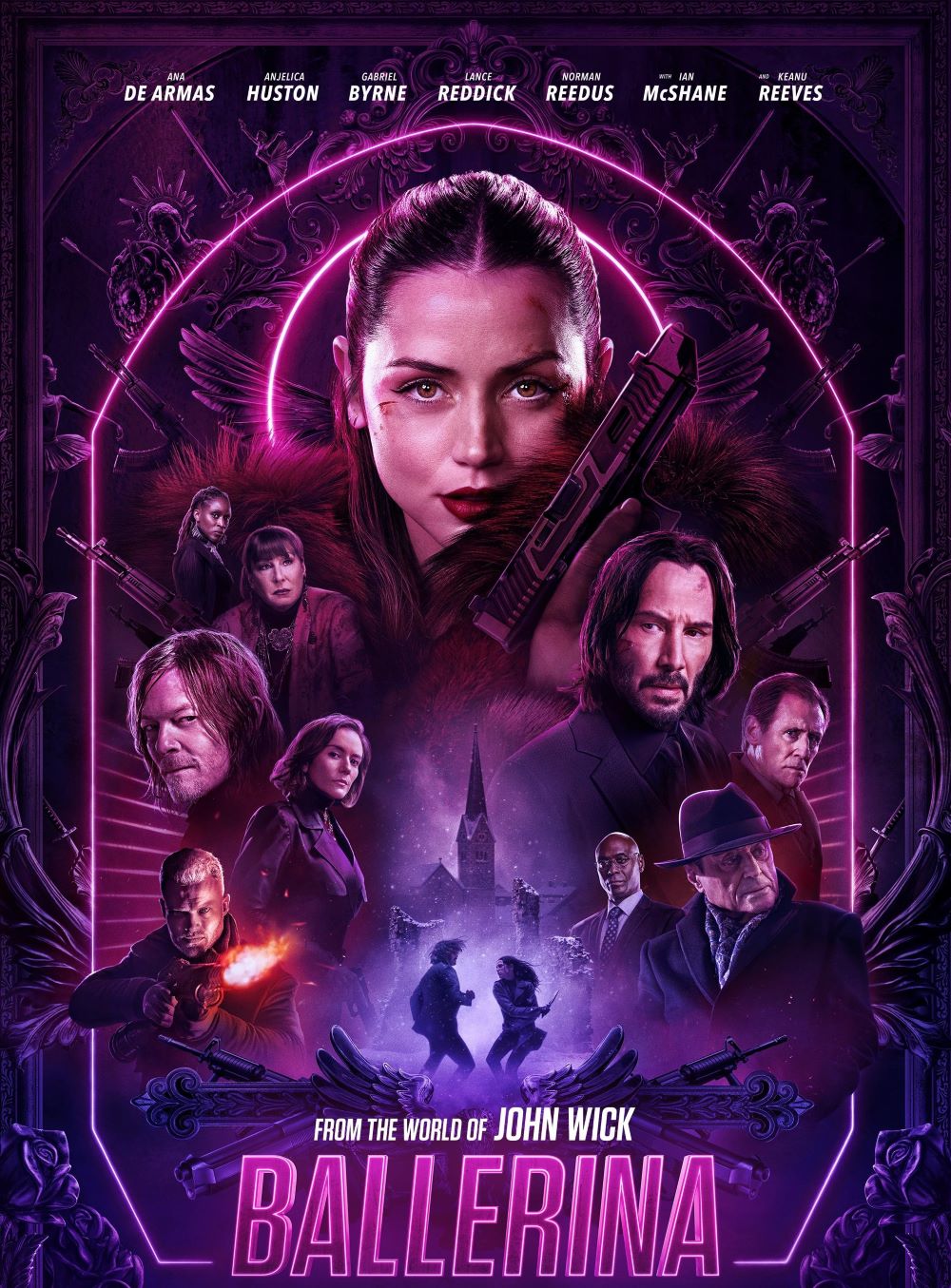
It seems almost inevitable that Ana de Armas would make it into the John Wick franchise. Having worked with Keanu Reeves in multiple films since 2015’s Knock Knock, she has great chemistry with him on camera. De Armas has also proven she can handle action both with 2021’s No Time to Die and 2023’s Ghosted, with the latter also boasting a bit of comedy. From the World of John Wick: Ballerina (or just Ballerina for the sake of this writing) puts Ana in the mix of all the madness as Eve Maccaro. While it doesn’t have the tightest story in the world when compared to the rest of the John Wick saga, Ballerina does hold its own at least as a showcase for the stunt work. If you enjoyed Atomic Blonde or any of the Underworld films, you really won’t have any problems here.

The story for Ballerina takes place during the events of John Wick 3 – Parabellum. As a child, when Eve loses her father to a crew of armed men sporting a brand on their wrists, she is taken in by The Continental’s Winston (Ian McShane). Winston introduces her to the tribe of killers known as the Ruska Roma, lead by The Director (Anjelica Houston), who train her to become like them. Those familiar with the John Wick franchise will recall that the Ruska Roma was John’s tribe before some action caused a split between him and them.

In addition to her pointe practices (which look painful), she’s trained with knives, guns and other tactics. Unlike the assassins that normally frequent The Continental, the Ruska Roma aren’t fully ruthless and can be a force of good. After handling various tests, she discovers a clue leading to the people who killed her father and the man who leads them (ironically played by Point of No Return’s’ Gabriel Byrne, given the film moves in similar circles). Can Eve get her vengeance in the shadow of the legendary Baba Yaga?

While Eve’s story is a still a tale of vengeance as much as Wick’s, there are two distinct differences. As taught by her trainer Nogi (Sharon Duncan Brewster, Dune: Part One), being a girl has some merits and flaws. She might not have the strength to go toe to toe with some of her male opponents (and try telling Ana this, she throws herself deep into the stuntwork), she can move for weakpoints and cheat her way though to victory. “Fight like a girl” becomes the motto. The other difference is that Eve has to work within both the rules of the Ballerinas as well as those the High Table puts on their Hotels. I thought that was an interesting touch to things.

With those stunts, I really would like to know if Ana or any of the stunt team were hurt in any way making this film. Eve goes through a lot and doesn’t have that protective Armani suit of Wick’s. Into walls, over dressers, through glass and even fire, but she keeps getting up and giving that damage right back to her targets. I hope this becomes a contender for the Academy’s new award for stunts. It’s an easy lock for a Nomination.

Casting-wise, you’ll see some familiar faces. Winston and Charon (the late Lance Reddick) are both on hand, as well as stuntman/actor Daniel Bernhardt (The Matrix Reloaded, Nobody, that awesome “ronny/lily’ episode of HBO’s Barry). Some new faces include Norman Reedus (The Walking Dead) and Anne Parillaud (Innocent Blood, La Femme Nikita).

Len Wiseman hasn’t directed a feature film since 2012’s Total Recall, but watching Ballerina you really couldn’t tell. Some of the locales do look like they were borrowed from Wiseman’s Underworld films, but that actually works in Ballerina‘s favor. The film flows well from scene to scene and the action is visible enough that there’s little to miss. There are very few lulls in the action. Though the film was written by both Derek Kolstad and Shay Hatten, who both previously worked on pretty much the entire Wick Franchise along with Nobody, it’s a different flavor to things. You won’t any any major info on the High Table and how all that works, though. This more of a contained story that flutters through the rest of the universe.

I only had one major problem with Ballerina, which was the way in which they chose to cameo Keanu Reeves as John Wick. Unless I’m wrong, I think the story makes a mistake in the John Wick timeline at some point by bringing Wick and Eve face to face (and the trailers already alluded to this). Their meeting appears to occur after Wick’s branding and ex-communication from the Ruska Roma (“You can never come back.”, she told him in John Wick 3), so the events leading up to the meeting didn’t entirely make sense to me (though it was wonderful to watch). It doesn’t mar the film, it’s still enjoyable. It’s just that tiny question that digs in the back of your skull like “If Old Biff gave young Biff the Almanac, and Young Biff changed the future, how did Old Biff exist long enough to return the DeLorean back to a 2015 timeline that shouldn’t exist anymore?” – a question I still ask every now and then.

Overall, Ballerina is a pretty good addition to the John Wick franchise. Ana de Armas gives it her all and deserves all the kudos for that work she puts in. Here’s hoping that we get a bit more of her action (and of that universe) down the road.

Icarus File No. 23: The Last Tycoon (dir by Elia Kazan)


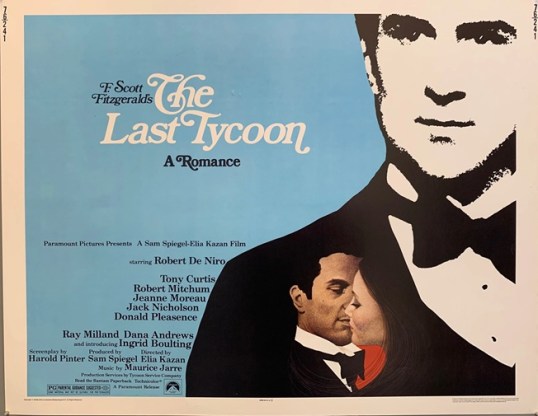
Based on the final (and unfinished) novel by F. Scott Fitzgerald, 1976’s The Last Tycoon tells the story of Monroe Stahr (Robert De Niro).

Monroe Stahr is the head of production at a film studio during the early days of Hollywood.  Stahr is an unemotional and seemingly repressed man who only shows enthusiasm when he’s talking about movies.  He may not be able to deal with real people but he instinctively knows what they want to see on the big screen.  Stahr is a genius but he’s working himself to death, ignoring his health concerns while trying to create the perfect world through film.  He’s haunted by a lost love and when he meets Kathleen Moore (Ingrid Boulting, giving a remarkably dull performance), he tries to find love with her but, naturally, he doesn’t succeed.  Meanwhile, he has to deal with his boss (Robert Mitchum), his boss’s daughter (Theresa Russell), a neurotic screenwriter (Donald Pleasence), an impotent actor (Tony Curtis), and a lowdown dirty communist labor organizer (Jack Nicholson)!  Sadly, for Stahr, McCarthyism is still a few decades away.

There’s a lot of talented people in The Last Tycoon and it’s undeniably interesting to see old school stars — like Mitchum, Curtis, Dana Andrews, Ray Milland — acting opposite a Method-driven, 30-something Robert De Niro.  This is one of those films where even the minor roles are filled with name actors.  John Carradine plays a tour guide.  Jeff Corey plays a doctor.  This is a film about Golden Age Hollywood that is full of Golden Age survivors.  It’s a shame that most of them don’t get much to do.  The Last Tycoon is a very episodic film as Stahr goes from one crisis to another.  Characters show up and then just kind of disappear and we’re never quite sure how Stahr feels about any of them or how their existence really shapes Stahr’s worldview.  Robert De Niro may be a great actor but, as portrayed in this film, Monroe Stahr is a boring character and De Niro’s trademark tight-lipped intensity just makes Stahr seem like someone who doesn’t have much to offer beyond employment.  This is one of De Niro’s least interesting performances, mostly because he’s playing a not-particularly interesting person.  Mitchum, Pleasence, and the old guard all make an impression because they’re willing to coast by on their bigger-than-life personalities.  De Niro is trapped by the Method and a total lack of chemistry with co-star Ingrid Boulting.

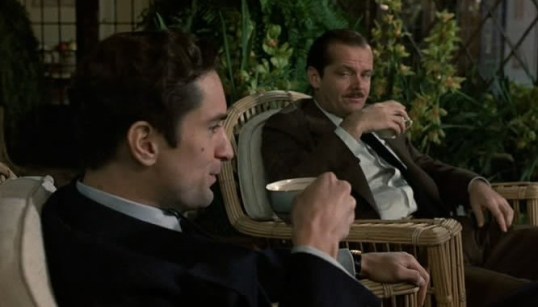
Still, this is the only film to feature both De Niro and Jack Nicholson.  (The Departed was originally conceived as a chance to bring De Niro and Nicholson together, with De Niro being the original choice for the role eventually played by Martin Sheen.)  Nicholson’s role is small and he doesn’t show up until the film is nearly over.  He and De Niro have an intense table tennis match.  Nicholson doesn’t really dig deep into Brimmer’s character.  Instead, he flashes his grin and let’s the natural sarcasm of his voice carry the scene.  It’s nowhere close to being as emotionally satisfying as the De Niro/Pacino meeting in Heat.  That said, Jack Nicholson at least appears to be enjoying himself.  His natural charisma makes his role seem bigger than it actually is.

Why was The Last Tycoon such a disappointment?  Though unfinished, the book still featured some of Fitzgerald’s best work and there’s a huge amount of talent involved in this film.  The blame mostly falls on Elia Kazan, who came out of retirement to direct the film after original director Mike Nichols left the project.  (Nichols reportedly objected to casting De Niro as Stahr.  While it’s tempting to think that Nichols realized that De Niro’s intense style wouldn’t be right for the role, it actually appears that Nichols and De Niro sincerely disliked each other as Nichols also abandoned the next film he was hired to direct when he was told that De Niro wanted the lead role.  Nichols choice for Monroe Stahr was Dustin Hoffman, which actually would have worked.  If nothing else, it would have provided a Graduate reunion.)  Kazan later said that he did the film solely for the money and it’s obvious that he didn’t really care much about the film’s story.  The film has some good scenes but, overall, it feels disjointed and uneven.  Kazan doesn’t really seem to care about Monroe Stahr and, as a result, the entire film falls flat.

Previous Icarus Files:

  1. Cloud Atlas
  2. Maximum Overdrive
  3. Glass
  4. Captive State
  5. Mother!
  6. The Man Who Killed Don Quixote
  7. Last Days
  8. Plan 9 From Outer Space
  9. The Last Movie
  10. 88
  11. The Bonfire of the Vanities
  12. Birdemic
  13. Birdemic 2: The Resurrection 
  14. Last Exit To Brooklyn
  15. Glen or Glenda
  16. The Assassination of Trotsky
  17. Che!
  18. Brewster McCloud
  19. American Traitor: The Trial of Axis Sally
  20. Tough Guys Don’t Dance
  21. Reach Me
  22. Revolution

14 Days of Paranoia #6: The Player (dir by Robert Altman)


1992’s The Player tells the story of Griffin Mill (Tim Robbins).

It’s not easy being Griffin Mill.  From the outside, of course, it looks like he has the perfect life.  He’s a studio executive with a nice house in Hollywood.  He’s young.  He’s up-and-coming.  Some people, especially Griffin, suspect that he’ll be the president of the studio some day.  By day, he sits in his office and listens to pitches from respected screenwriters like Buck Henry.  (Henry has a great idea for The Graduate II!)  During the afternoon, he might attends dailies and watch endless takes of actors like Scott Glenn and Lily Tomlin arguing with each other.  Or he might go to lunch and take a minute to say hello to Burt Reynolds.  (“Asshole,” Burt says as Griffin walks away.)  At night, he might go to a nice party in a big mansion and mingle with actors who are both young and old.  He might even run into and share some sharp words with Malcolm McDowell.

But Griffin’s life isn’t as easy as it seems.  He’s constantly worried about his position in the studio, knowing that one box office failure could end his career.  He fears that a new executive named Larry Levy (Peter Gallagher) is after his job.  Two new screenwriters (Richard E. Grant and Dean Stockwell) keep bugging him to produce their downbeat, no-stars anti-capitol punishment film.  His girlfriend (Cynthia Stevenson) wants to make good movies that mean something.  Even worse, someone is sending Griffin threatening notes.

It doesn’t take long for Griffin to decide that the notes are coming from a screenwriter named Dave Kahane (Vincent D’Onofrio).  Griffin’s attempt to arrange a meeting with Dave at a bar so that Griffin can offer him a production deal instead leads to Griffin murdering Dave in a parking lot.  While the other writers in Hollywood mourn Dave’s death, Griffin starts a relationship with Dave’s artist girlfriend (Great Scacchi) and tried to hide his guilt from two investigating detectives (Whoopi Goldberg and Lyle Lovett).  Worst of all, the notes keep coming.  The writer, whomever they may be, is now not only threatening Griffin but also seems to know what Griffin did.

After spend more than a decade in the industry wilderness, Robert Altman made a critical and commercial comeback with The Player.  It’s a satire of Hollywood but it’s also a celebration of the film industry, featuring 60 celebrities cameoing as themselves.  Everyone, it seems, wanted to appear in a movie that portrayed studio execs as being sociopathic and screenwriters as being whiny and kind of annoying.  The Player both loves and ridicules Hollywood and the often anonymous men who run the industry.  Largely motivated by greed and self-preservation, Griffin may not love movies but he certainly loves controlling what the public sees.  In the end, only one character in The Player sticks to her values and her ideals and, by the end of the movie, she’s out of a job.  At the same time, Griffin has a social life that those in the audience can’t help but envy.  He can’t step out of his office without running into someone famous.

The Player is one Altman’s most entertaining films, with the camera continually tracking from one location to another and giving as a vision of Hollywood that feels very much alive.  Tim Robbins gives one of his best performances as Griffin Mill and Altman surrounds him with a great supporting cast.  I especially liked Fred Ward as the studio’s head of security.  With The Player, Altman mixes melodrama with a sharp and sometimes bizarre comedy, with dialogue so snappy that the film is as much a joy to listen to as to watch.  That said, the real attraction of the film is spotting all of the celebrity cameos.  (That and cheering when Bruce Willis saves Julia Roberts from certain death.)  Altman was a director who often used his films to explore eccentric communities.  With The Player, he opened up his own home.

Previous entries in 2025’s 14 Days Of Paranoia:

  1. The Fourth Wall (1969)
  2. Extreme Justice (1993)
  3. The Lincoln Conspiracy (1977)
  4. Conspiracy (2007)
  5. Bloodknot (1995)

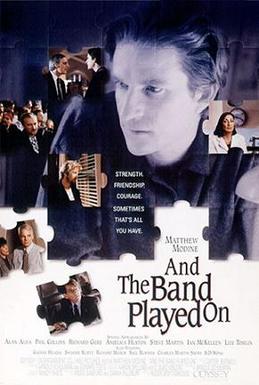
Film Review: And The Band Played On (dir by Roger Spottiswoode)


I live in a very cynical time.

That was one of my main thoughts as I watched 1993’s And The Band Played On.

Directed by Roger Spottiswoode and featuring an all-star cast, And The Band Played On deals with the early days of the AIDS epidemic.  It’s a film that features many different characters and storylines but holding it all together is the character of Dr. Don Francis (Matthew Modine), an epidemiologist who is haunted by what he witnessed during the Ebola epidemic in Africa and who fears that the same thing is going to happen in America unless the government gets serious about the mysterious ailment that is initially called “gay cancer” before then being known as “GRID” before finally being named AIDS.  Dr. Francis is outspoken and passionate about fighting disease.  He’s the type who has no fear of yelling if he feels that people aren’t taking his words seriously enough.  In his office, he keeps a track of the number of HIV infections on a whiteboard.  “Butchers’ Bill” is written across the top of the board.

Throughout the film, quite a few people are dismissive of Dr. Francis and his warnings.  But we, the audience, know that he’s right.  We know this because we know about AIDS and but the film also expects us to trust Dr. Francis because it’s specifically stated that he worked for the World Health Organization before joining the Center For Disease Control in Atlanta, Georgia.  As far as the film is concerned, that’s enough to establish his credentials.  Of course, today, after living through the excesses of the COVID pandemic and the attempts to censor anyone who suggested that it may have begun due to a lab leak as opposed to some random guy eating a bat, many people tend to view both the WHO and the CDC with a lot more distrust than they did when this film was made.  As I said, we live in a cynical time and people are now a lot less inclined to “trust” the experts.  To a large extent, the experts have only themselves to blame for that.  I consider myself to be a fairly pragmatic person but even I now find myself rolling my eyes whenever a new health advisory is issued.

This new sense of automatic distrust is, in many ways, unfortunate.  Because, as And The Band Played On demonstrates, the experts occasionally know what they’re talking about.  Throughout the film, people refuse to listen to the warnings coming from the experts and, as a result, many lives are lost.  The government refuses to take action while the search for a possible cure is hindered by a rivalry between international researchers.  Alan Alda gives one of the best performances in the film, playing a biomedical researcher who throws a fit when he discovers that Dr. Francis has been sharing information with French scientists.

It’s a big, sprawling film.  While Dr. Francis and his fellow researchers (played by Saul Rubinek, Glenne Headly, Richard Masur, Charles Martin Smith, Lily Tomlin, and Christian Clemenson) try to determine how exactly the disease is spread, gay activists like Bobbi Campbell (Donal Logue) and Bill Kraus (Ian McKellen) struggle to get the government and the media to take AIDS seriously.  Famous faces pop up in small rolls, occasionally to the film’s detriment.  Richard Gere, Steve Martin, Anjelica Huston, and even Phil Collins all give good performances but their fame also distracts the viewer from the film’s story.  There’s a sense of noblesse oblige to the celebrity cameos that detracts from their effectiveness.  All of them are out-acted by actor Lawrence Monoson, who may not have been a huge star (his two best-known films are The Last American Virgin and Friday the 13 — The Final Chapter) but who is still heart-breakingly effective as a young man who is dying of AIDS.

Based on a 600-page, non-fiction book by Randy Shilts, And The Band Played On is a flawed film but still undeniably effective and a valuable piece of history.  Director Roger Spottiswoode does a good job of bringing and holding the many different elements of the narrative together and Carter Burwell’s haunting score is appropriately mournful.  The film ends on a somber but touching note.  At its best, it’s a moving portrait of the end of one era and the beginning of another.

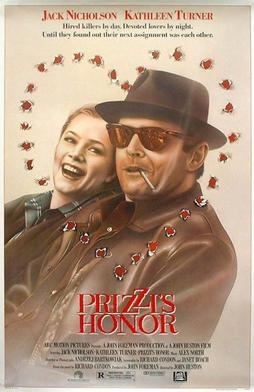
Lisa Reviews An Oscar Nominee: Prizzi’s Honor (dir by John Huston)


First released in 1985, Prizzi’s Honor tells the story of Charley Partanna (Jack Nicholson), a blue collar guy who lives in Brooklyn and who is a hard-working hit man for the Prizzi crime family.  Charley is the son of Angelo (John Randolph), who is the right-hand man to the family’s elderly but still ruthless Don (William Hickey).  In the past, Charley came close to marrying the Don’s daughter, Maerose Prizzi (Anjelica Huston), and he is almost as much a member of the family as the Don’s two sons, Eduardo (Robert Loggia) and Dominic (Lee Richardson).

While attending a family wedding, Charley meets and is immediately infatuated with a woman named Irene Walker (Kathleen Turner).  Later, when Charley is sent to California to kill a man who robbed one of the family’s Vegas casinos, he is shocked to discover that the man is Irene’s husband.  Irene swears that she didn’t have anything to do with the casino theft and, after a whirlwind courtship, Charley and Irene get married in Mexico.  What Charley doesn’t know (but eventually discovers) is that Irene is herself a professional killer.  While Charley and Irene try to balance work and love, Maerose conspires to turn the family against Irene and win Charley back.

Directed by the legendary John Huston, Prizzi’s Honor is pitch black comedy about two hard-working people who kill for a living.  (The film’s big set piece is an extended sequence in which Charley and Irene’s attempt to pull a job together goes wrong in every way and they end up arguing about their relationship while dragging dead bodies from one room to another.)  Though Prizzi’s Honor was released long before the series premiered on HBO, the film feels almost like a companion piece to The Sopranos, full of mobsters who are not as clever as they think they are and who struggle to uphold the old ways in an increasingly complicated world.  Particularly when compared to the gangster who populate a film like The Godfather, the Prizzis are defined by their pettiness.  If Don Corleone epitomized wisdom and honor, Don Prizzi epitomizes someone who holds onto power solely for power’s sake.

Prizzi’s Honor is one of those films that probably seemed a bit more revolutionary when it was first released than it does today.  At this point, we’ve seen so many films about hired killers who have quirky conversations while carrying out their work that the mix of violence and dark humor can feel almost like a cliché.  As well, there are certain parts of the film, like the opening wedding sequence, that feel as if they go on for just a few minutes too long, as if John Huston himself was not always comfortable with the balance between the dark drama and the comedy of mob manners.  That said, Jack Nicholson, Kathleen Turner (who gives a performance worthy of the great femme fatales of film noir), Anjelica Huston, John Randolph, and especially William Hickey all give strong enough performances to hold the audience’s attention and the film’s finale cuts to the point in such a way that it leaves you reconsidering everything that you’ve previously seen.  Prizzi’s Honor has its flaws but Nicholson and Turner have such chemistry that the film’s ending sticks with you.

Prizzi’s Honor was nominated for 8 Oscars, including Best Picture, Best Director, Best Actor, and Best Supporting Actor for William Hickey.  (Oddly, Kathleen Turner was not nominated for playing Irene.)  In the end, it only won one Oscar that year, for supporting actress Anjelica Huston.  The Oscars that year were dominated by a far more convention love story, Out of Africa.

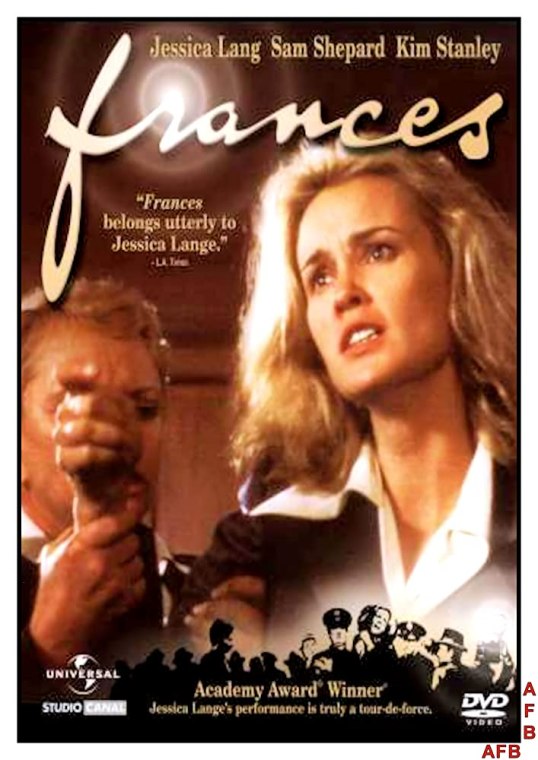
Film Review: Frances (dir by Graeme Clifford)


https://www.youtube.com/watch?v=eilqT7dLoBY

Frances Farmer is one of the more tragic figures to come out of Hollywood’s Golden Age.

A talented and beautiful actress, Frances Farmer came out to Hollywood in the 30s and quickly developed a reputation for being difficult.  She was politically outspoken at a time when stars were expected to either be apolitical or unquestioningly patriotic.  She criticized scripts.  She argued with directors and studio heads.  She had a well-publicized affair with communist playwright Clifford Odets and she also had numerous run-ins with the police.  Some say that she was alcoholic.  Some say that she was bipolar.  Some say that she had a mental collapse as the result of the pressure that her mother put on her to succeed.  Frances Farmer ended up in mental institution, where she was subjected to shock therapy.  After she was released, her film career was basically over, though she did end up hosting a local television program.  She died in 1970, reportedly alone and struggling to make ends meet.  In a posthumously published autobiography called Will There Ever Be A Morning?, she wrote that she was beaten, sexually abused, and eventually given a lobotomy while she was institutionalized.  Over the years, there’s been a lot of doubt about whether or not Farmer was actually lobotomized but there is no doubt that Farmer was a woman who was ultimately punished for being ahead of her time.  Frances Farmer refused to conform to the safe manufactured image that Hollywood prepared for her and, for that, she was nearly destroyed.

The 1983 film, Frances, is a biopic of Frances Farmer, starring Jessica Lange as Frances and Kim Stanley as her domineering mother.  It opens with Frances writing a school essay about why she’s an atheist and it ends with her smiling blankly at a television camera, her independent spirit broken by a lobotomy.  In between, we watch as Frances goes to Hollywood and has a self-destructive affair with Clifford Odets (played by Jeffrey DeMunn).  The infamous moment when Frances was dragged out of a courtroom while screaming at the judge is recreated and Frances’s time in the institution is depicted in Hellish detail.

We also learn about Frances’s relationship with a communist writer named Alvin York (Sam Shepard).  It seems like whenever Frances needs to be rescued or just needs someone to talk to, Alvin York pops up.  In fact, you could almost argue that York pops up too often.  Alvin York was a fictional character, one who was apparently created in order for audiences to have someone to relate to.  It’s unfortunate that the film felt that the audience would only be able to relate to Frances if it viewed her life through the eyes of a fictional character because York’s character is a bit of a distraction.  Sam Shepard does a good job of playing him and I certainly wasn’t shocked to learn that Sam Shepard and Jessica Lange were romantically involved during the filming of Frances (and for a long time afterwards) because Lange and Shepard do have a very real chemistry.  However, from a narrative point of view, Alvin York only works as a character if one accepts that he’s a figment of Frances’s imagination.  The film’s insistence that York is an actual person who just happens to show up at every important moment of Frances’s life just doesn’t work.

What does work is Jessica Lange’s performance.  Lange is amazing in the role of Frances, whether she’s playing Frances as a hopeful idealist, an out-of-control rebel, or, tragically, as a glass-eyed zombie who has been reduced to appearing on television and assuring audiences that her rebellious days are over.  Lange was nominated for Best Actress for Frances.  She lost to Meryl Streep for Sophie’s Choice.  I’ve seen Sophie’s Choice and Meryl was good but Jessica was better.

Frances was originally offered to David Lynch.  He turned the film down so he could work on Dune and instead, the film was directed by Graeme Clifford, who takes a far more straight-forward approach to the material than Lynch would have.  Still, Lynch’s interest in Frances Farmer would later lead to him working on stories that centered around a “woman in trouble.”  One of those stories became Twin Peaks.  Another would become Mulholland Drive.

2017 in Review: The Best of Lifetime


Today, I continue my look back at the previous year with my picks for the best of Lifetime in 2017!  Below, you’ll find my nominations for the best Lifetime films and performances of 2017!  Winners are starred and listed in bold!

(As a guide, I used the credits for the imdb.  If anyone has been miscredited or let out, please feel free to let me know and I’ll fix the error both here and, if I can, on the imdb as well.)

Best Picture

Drink Slay Love, produced by Tina Pehme, Kim Roberts, Sheri Singer, Bella Thorne

From Straight A’s to XXX, produced by Austin Andrews, John Bolton, Anne-Marie Hess, Tina Pehme, Kim Roberts, Sheri Singer

Four Christmases and a Wedding

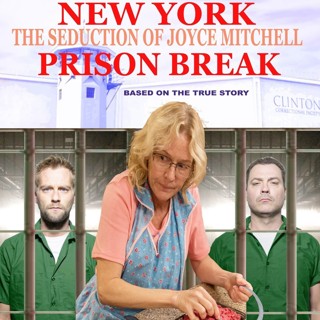
New York Prison Break: The Seduction of Joyce Mitchell, produced by Deen Dioria, David Manzanares, Ron Schmidt, Judith Verno, Frank von Zerneck.

The Rachels, produced by Paige Lauren Billot, Margaret H. Huddleston, Maggie McFarren, Hannah Pillemer, Rebecca G. Stone.

Running Away, produced by Dureyshevar, Jeff Faehnle, Jack Nasser, Jacob Nasser, Joseph Nasser, Bri Noble.

Sea Change. Produced by Sharon Bordas, Alec Chorches, Adam Fratto, Steven Gilder, David MacLeod, A.J. Mendez, Shawn Piller, Lloyd Segan, Stephanie Slack, Fernando Szew

Secrets in Suburbia, produced by Kristopher McNeeley, Jacobo Rispa, Damian Romay, Stephanie Slack, Fernando Szew.

The Watcher in the Woods, produced by Simon Barnes, Alexandra Bentley, Andrew Gernhard, Jennifer Handorf, Paula Hart.

* Web Cam Girls, produced by Tom Berry, Pierre David, Hank Grover, Sheri Reeves, Ken Sanders, Noel Zanitsch* 

Best Director

* Doug Campbell for Web Cam Girls

Michael Civille for The Rachels

Vanessa Parise for From Straight A’s to XXX

Damian Romay for Secrets in Suburbia

Brian Skiba for Running Away

Stephen Tolkin for New York Prison Break: The Seduction of Joyce Mitchell

Best Actor

James Franco in High School Lover

Zack Gold in Psycho Brother-in-Law

Stephen Graybill in Web Cam Girls

Timothy Granderos in The Twin

Ted McGinley in Fatherly Obsession

* Ryan Patrick Shanahan in Sinister Minister

Best Actress

Barbie Castro in Boyfriend Killer

Holly Deveaux in Running Away

Sedonna Legge in Web Cam Girls

* Penelope Ann Miller in New York Prison Break: The Seduction of Joyce Mitchell

Heather Morris in Psycho Wedding Crasher

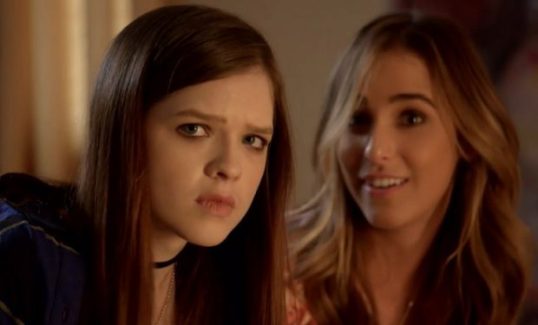
Haley Pullos in From Straight A’s to XXX

Best Supporting Actor

Francois Arnaud in High School Lover

Joe Hackett in Web Cam Girls

William McNamara in Running Away

Patrick Muldoon in Boyfriend Killer

Judd Nelson in From Straight A’s to XXX

* Daniel Roebuck in New York Prison Break: The Seduction of Joyce Mitchell

Best Supporting Actress

Madison Iseman in The Rachels

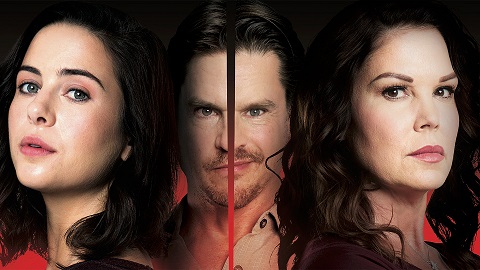
Anjelica Huston in The Watcher in the Woods

* Tonya Kay in Web Cam Girls

Paula Trickey in Running Away

Ashley Wood in Wicked Mom’s Club

Lorynn York in Web Cam Girs

Best Screenplay

From Straight A’s to XXX. Anne-Marie Hess.

New York Prison Break: The Seduction of Joyce Mitchell. Stephen Tolkin.

The Rachels. Ellen Huggins.

* Running Away. Sheri McGuinn.

Secrets in Suburbia. Damian Romay.

Web Cam Girls. Stephen Romano.

Best Cinematography

Drink Slay Love. Vic Sarin.

Four Christmases and a Wedding. Mike Kam.

Off the Rails. Denis Maloney.

Running Away. Patrice Lucien Cochet.

* Sea Change. Jackson Parrell.

Ten: Murder Island. Richard Clabaugh.

Best Costuming

* Drink Slay Love. Liene Dobraja.

From Straight A’s to XXX. Liene Dobraja.

The Lost Wife of Robert Durst. Tina Fiorda.

New York Prison Break: The Seduction of Joyce Mitchell. Maria Bentfield.

The Rachels. Courtney Stern.

Stage Fright. Monique Hyman.

Best Editing

* From Straight A’s to XXX. Rob Grant.

Four Christmases and a Wedding. Paul Ziller.

New York Prison Break: The Seduction of Joyce Mitchell. Mark Stevens.

The Rachels. Brett Solem.

Sea Change. Matthew Anas.

Web Cam Girls. Jordan Jensen.

Best Makeup and Hairstyling

Drink Slay Love. Jessica Green, Catherine Long, Alysha McLoughlin, Sahar Sharelo.

The Lost Wife of Robert Durst. Lorna Bravo, Kelly Grange, Shelly Jensen, Mary Renvall, Melissa Sahlstrom.

* New York Prison Break: The Seduction of Joyce Mitchell. Claudia Breckenridge, Daniel Casillas, Nicole Gabaldon, Pepper J. Gallegos, Madeline McCue, L. Taylor Roberts

The Rachels. Taylor Bennett, Austin Cuccia.

Secrets in Suburbia. Andrea Ahl, Trevor Thompson

The Watcher in the Woods. Chloe Edwards.

Best Score

Drink Slay Love. Justin R. Durban

Fatherly Obsession. Aiko Fukushima.

Sea Change. Shawn Pierce.

* Story of a Girl. Travis Bacon.

Ten: Murder Island. Ceiri Torjussen.

The Watcher in the Woods. Felix Bird.

Best Production Design

New York Prison Break: The Seduction of Joyce Mitchell. Will Albarz, Anthony Medina.

Running Away.   Vincent Albo, Rose Beltran

Secrets in Suburbia. Brendan Turrill.

Ten: Murder Island. Eric Whitney, Caley Bisson.

Tiny House of Terror

* Web Cam Girls. Catch Henson, James W. Thompson Jr., Katherine Bulovic, Valerie Munguia

Best Sound

Britney Ever After

Drink Slay Love

From Straight A’s to XXX

Sea Change.

Under the Bed

* The Watcher in the Woods

Best Visual Effects

* Drink Slay Love

Fatherly Obsession

Sea Change

Stalker’s Prey

Ten: Murder Island

The Watcher in the Woods

And there you have it!  Those are my picks for the best of Lifetime in 2017!  Thank you for your indulgence!  On Friday, I’ll be concluding my look back at 2017 with my picks for the 26 best films of the year!

Previous entries in the TSL’s Look Back at 2017:

  1. 2017 in Review: Top Ten Single Issues by Ryan C
  2. 2017 in Review: Top Ten Series by Ryan C
  3. 2017 In Review: Top Ten Collected Edition (Contemporary) by Ryan C
  4. 2017 In Review: Top Ten Collected Editions (Vintage) by Ryan C
  5. 2017 in Review: Top Ten Graphic Novels By Ryan C
  6. 25 Best, Worst, and Gems I saw in 2017 by Valerie Troutman
  7. My Top 15 Albums of 2017 by Necromoonyeti
  8. 2017 In Review: Lisa Marie’s Picks For the 16 Worst Films of 2017
  9. 2017 In Review: Lisa Marie’s Final Post About Twin Peaks: The Return (for now)
  10. 2017 in Review: Lisa Marie’s 14 Favorite Songs of 2017
  11. 2017 in Review: The Best of SyFy by Lisa Marie Bowman
  12. 2017 in Review: 10 Good Things that Lisa Marie Saw On Television in 2017
  13. 2017 in Review: Lisa Marie’s 12 Favorite Novels of 2017
  14. 2017 in Review: Lia Marie’s 10 Favorite Non-Fiction Books of 2017

Cleaning Out The DVR: The Watcher In The Woods (dir by Melissa Joan Hart)


(Hi there!  So, as you may know because I’ve been talking about it on this site all year, I have got way too much stuff on my DVR.  Seriously, I currently have 163 things recorded!  I’ve decided that, on February 15th, I am going to erase everything on the DVR, regardless of whether I’ve watched it or not.  So, that means that I’ve now have only have a month to clean out the DVR!  Will I make it?  Keep checking this site to find out!  I recorded The Watcher In The Woods off of Lifetime on October 21st, 2017!)

There’s something watching in the woods.

At the very least, that’s what Jan (Tallulah Evans) believes.  Jan and her family are spending the summer in Wales, at the Aylwood Manor.  From the minute that they move in, Jan starts to suspect that something is strange about the place.  Sometimes, she thinks that she can hear whispers coming from the nearby woods.  Her younger sister starts to act strangely.  Their parents are convinced that Jan is just playing tricks and trying to frighten them.  When Jan tries to find out more information about both the woods and her new home, she discovers that most of the people in the village don’t want to talk about it.  Those that do speak to her tend to say things like, “Soon, you’ll be gone too.”

(Other than some shots of the beautiful countryside, I doubt this film will do much for Welsh tourism.)

And then there’s Mrs. Aylwood (Anjelica Huston), the mysterious and stand-offish owner of Aylwood Manor.  Thirty years ago, her daughter disappeared in the woods.  Most people in the village believe that Mrs. Aylwood murdered her own daughter.  At first, Jan suspects that she’s a witch and that she not only sacrificed her daughter but now wants to sacrifice Jan’s sister as well!

Of course, the truth might be something altogether different.  It’s not always so easy to tell who is a witch and who is just a grieving mother.  The only thing that Jan knows for sure is that there’s something in the woods and it’s watching…

I have to admit that the main reason I wanted to see The Watcher In The Woods was because it was directed by Melissa Joan Hart and she’ll always be Sabrina, the Teenage Witch to me.  (Don’t start yelling at me about God’s Not Dead 2.  Actors have bills to pay and Melissa gave about as good a performance as anyone could with that script.)  Hart does a pretty good job directing The Watcher In The Woods.  It’s not particularly scary but, for all the talk of witches and demons, it’s not really meant to be a horror film.  Instead, it’s a coming-of-age story with paranormal elements.  Jan not only learns about what’s watching in the woods but she also learns an important lesson about assuming that people are witches.  And, even if it’s not really a scary movie, it does have some appropriately creepy scenes.  The woods are a great location and there’s a scene where Jan nearly downs that’s especially well-handled.  The film is also well-acted, with a natural and believable performance from Tallulah Evans and an enjoyably stylized one from Anjelica Huston.

All in all, The Watcher in The Woods was an enjoyable October treat.

Lisa Marie’s 12 Favorite Non-Fiction Books of 2013


disaster-artist

I should admit that the title of this post is misleading.  While it is true that listed below are 12 of my favorite non-fiction books of 2013, I’ve specifically limited my picks to books that dealt with entertainment, pop culture, and the creative process.  With that in mind, here are my 12 favorite non-fiction books of 2013:

(And yes, you should read everyone of them.)

1)  The Disaster Artist by Greg Sestero & Tom Bissell

2) Crab Monsters, Teenage Caveman, and Candy Stripe Nurses: Roger Corman: King of the B-Movies by Chris Nashawaty

3) 100 Works of Art That Will Define Our Age by Kelly Grovier

4) The Wes Anderson Collection by Matt Zoller Seitz

5) Odd Type Writers by Celia Blue Johnson

6) Mad Girl’s Love Song: Sylvia Plath and Life Before Ted by Andrew Wilson

7) The Reckoning: Women Artists of the New Millennium by Eleanor Hartney, Helaine Posner, Nancy Princethal, and Sue Scott

8) Difficult Men by Brett Martin

9) A Story Told Lately by Anjelica Huston

10) Slimed: An Oral History of Nickelodeon’s Golden Age by Matthew Klickstein

11) The Secret History of Vladimir Nabakov by Andrea Pitzer

12) Norman Mailer: A Double Life by J. Michael Lennon

crab-monsters_305

Honorable Mention: Lost Cat by Caroline Paul, my favorite non-entertainment related nonfiction book.

Lost Cat

Tomorrow, my look back at 2013 continue with my 12 favorite novels of 2013.

Other Entries In TSL’s Look Back At 2013:

  1. Semtex Skittle’s 2013: The Year in Video Games
  2. 20 Good Things Lisa Marie Saw On Television in 2013
  3. 10 0f Lisa Marie’s Favorite Songs of 2013
  4. Lisa Marie’s 16 Worst Films of 2013
  5. Necromoonyeti’s Top 10 Metal Albums of 2013
  6. Things That Dork Geekus Dug In 2013
  7. Lisa Marie’s Best of 2o13 SyFy