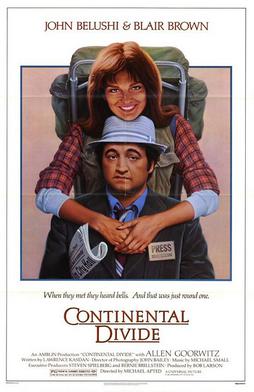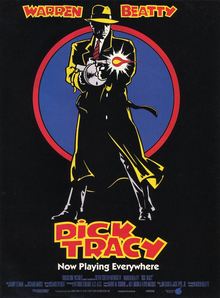
Dick Tracy (1990, directed by Warren Beatty)


The year is 1937 and “Big Boy” Caprice (Al Pacino) and his gang of flamboyant and often disfigured criminals are trying to take over the rackets.  Standing in their way is ace detective Dick Tracy (Warren Beatty), the yellow trench-wearing defender of the law.  Tracy is not only looking to take down Caprice but he and Tess Trueheart (Glenne Headly) are currently the guardians of The Kid (Charlie Korsmo), a young street kid who witnessed one of Caprice’s worst crimes.  Tracy’s investigation leads him through a rogue’s gallery of criminals and also involves Breathless Mahoney (Madonna), who has witnessed many of Caprice’s crimes but who also wants to steal Tracy’s heart from Tess.

Based on the long-running comic strip, Dick Tracy was a labor of love on the part of Warren Beatty.  Not only starring but also directing, Tracy made a film that stayed true to the look and the feel of the original comic strip (the film’s visual palette was limited to just seven colors) while also including an all-star cast the featured Madonna is an attempt to appeal to a younger audience who had probably never even heard of Dick Tracy.  When Dick Tracy was released, the majority of the publicity centered around Madonna’s participation in the film and the fact that she was dating Beatty at the time.  Madonna is actually probably the weakest element of the film.  More of a personality than an actress, Madonna is always Madonna no matter who she is playing and, in a film full of famous actors managing to be convincing as the members of Dick Tracy’s rogue gallery, Madonna feels out of place.  Michelle Pfeiffer would have been the ideal Breathless Mahoney.

It doesn’t matter, though, because the rest of the film is great.  It’s one of the few comic book films of the 90s to really hold up, mostly due to Beatty’s obvious enthusiasm for the material and the performances of everyone in the supporting cast who was not named Madonna.  Al Pacino received an Oscar nomination for playing Big Boy Caprice but equally good are Dustin Hoffman as Mumbles, William Forsythe as Flaptop, R.G. Armstong as Pruneface, and Henry Silva as Influence.  These actors all create memorable characters, even while acting under a ton of very convincing makeup.  I also liked Dick Van Dyke as the corrupt District Attorney.  Beatty knew audience would be shocked to see Van Dyke not playing a hero and both he and Van Dyke play it up for all its worth.  Beatty embraces the comic strip’s campiness while still remaining respectful to its style and the combination of Danny Elfman’s music and Stephen Sondheim’s songs provide just the right score for Dick Tracy’s adventures.  The film can be surprisingly violent at times but the same was often said about the Dick Tracy comic strip.  It wasn’t two-way wrist radios and trips to the Moon.  Dick Tracy also dealt with the most ruthless and bloodthirsty gangsters his city had to offer.

Dick Tracy was considered to be a box office disappointment when it was originally released.  (Again, you have to wonder if Beatty overestimated how many fans Dick Tracy had in 1990.)  But it holds up well and is still more entertaining than several of the more recent comic book movies that have been released.
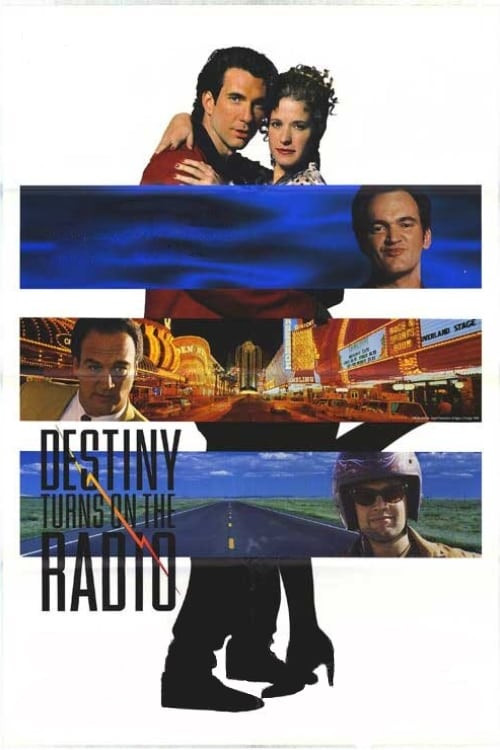
Destiny Turns On The Radio (1995, directed by Jack Baran)


Today, it can be easy to forget what an impact Quentin Tarantino had on pop culture in the 90s.  The one-two punch of Reservoir Dogs and Pulp Fiction inspired a generation of young and aspiring filmmakers to believe that anyone could make their own film.  Suddenly, you didn’t have to be a film school graduate to call yourself a filmmaker.  You could just be someone who loved movies and who was willing to keep hustling until you had something you could slip into Sundance.  That was the feeling, anyway.  The 90s were full of films about eccentric criminals who talked a lot and who loved pop culture, only three of which were directed by Quentin Tarantino.  Some of them were good.  Most of them were not.

Destiny Turns On The Radio was one of the first films to rip-off Pulp Fiction and it felt more cynical than most because it was directed by Jack Baran, who wasn’t even a video store clerk.  He was a producer of films like The Big Easy and Barfly, an industry veteran ripping off two films directed by someone who was, at that time, still an outsider.  The film tells a story that had plenty of Tarantino elements, including Quentin Tarantino himself.  Tarantino signed to play Johnny Destiny right after Pulp Fiction won the Palme d’Or at Cannes.

Johnny Destiny is a gambler who is apparently also a God.  He emerges from a lightning-filled pool and his dialogue is full of pseudo-philosophy.  He is driving through the desert when he picks up Julian (Dylan McDermott) and gives Julian a lift to Las Vegas.  Johnny Destiny is taking prison escapee Julian on a ride so that Julian can face his destiny.  Julian wants to recover some money from a bank job that he pulled off with Thoreau (James Le Gros) but it turns out that, when Johnny Destiny emerged from that pool, he also stole all the money.  (There’s no specific reason for Thoreau to be named after the famous philosopher, beyond the film trying to make itself seem deep by drawing in everyone who read Walden in AP English.)  Julian wants to get back together with Lucille (Nancy Travis), a singer who performs songs more appropriate for a 20s speakeasy than a Las Vegas lounge.  Lucille is involved with a gangster (Jim Belushi).  Belushi sings Vivia Las Vegas but otherwise, this is one of his more boring performances.

Like so many of the Pulp Fiction rip-offs of the 90s, Destiny Turns On The Radio is all self-conscious attitude and cool style, full of references to pop culture that fall flat because there’s no real thought behind them.  Reservoir Dogs and Pulp Fiction were full of style but they also told compelling stories.  Destiny Turns On The Radio is all style and little else and the cast never comes together the way that the actors in Tarantino’s first two movies did.  Watching this film, I realized why Dylan McDermott and Nancy Travis both found more success on television than in feature films.  The film posits Tarantino (as Johnny Destiny) as the epitome of cool but it then burdens him with the type of dialogue that he would have cut by the time he started a second draft.

Coming hot on the heels of the success of Pulp Fiction, Destiny Turns On The Radio actually led to a few years where many critics assumed Tarantino would be a two-trick wonder.  It was thought lightning struck twice but it would never strike a third time and Tarantino would spend the rest of his career as almost a parody of his earlier success.  Luckily, Tarantino proved them wrong and Destiny Turned On The Radio turned out to be not his career’s destination but instead just a detour.

Film Review: My Best Friend’s Birthday (dir by Quentin Tarantino)


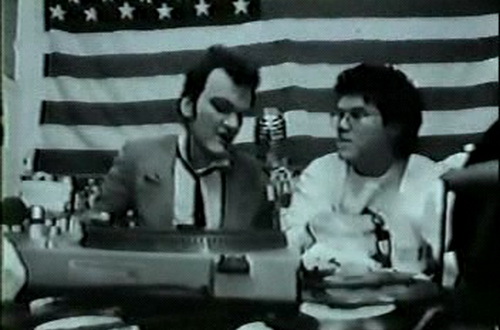
Clocking in at 37 minutes (largely because the majority of the film’s script was either not filmed or the footage itself was lost), My Best Friend’s Birthday tells the story of …. well, it’s not easy to say exactly what it tells the story of.

Clarence (Quentin Tarantino) and Mickey (Craig Hamann)  are two pop culture-obsessed radio DJs.  Clarence tries to snort cocaine while on the air but it turns out to just be itching powder.  The two of them spend a good deal of time talking about the movies that they love.  There’s a scene where Clarence has a conversation with an older man (played by Allen Garfield, who was Tarantino’s acting teacher at the time) who appears to be some sort of exploitation filmmaker.  It’s not always easy to keep track of what Clarence and Mickey are doing, largely because the film’s soundtrack is noticeably muddy.  Mickey is dumped by his girlfriend, Pandora (Linda Kaye), right before his birthday.  (Mickey comes home to find Pandora gathering up all of her belongings.)  Clarence, looking to give his friend a birthday that will cheer him up, ends up hiring a sex worker named Misty Knight (Crystal Shaw), who got into the business after being inspired by Nancy Allen’s performance in Dressed To Kill.  Misty has a pimp named Clifford (Al Harrell).  Mickey keeps getting interrupted whenever he tries to take a shower.  The movie is full of scenes that are linked by everyone’s shared love of pop culture but it never really comes together as a truly coherent story.  Again, this could be because the film was meant to 70-80 minutes long but only 37 minutes appears to have been filmed.

It’s not a totally hopeless film.  Taken individually, the scenes are are generally blocked out well.  Director Quentin Tarantino, who was still working as a video store clerk when he and his friends attempted to make this movie, obviously had a good instinct for camera angels and editing even before he hit it big.  That said, the film is still undeniably amateurish.  The sound quality is terrible.  The actors, most of whom were not professionals, struggle with their dialogue.  Tarantino gave himself a big role and, to put it charitably, Tarantino has always been a better director than actor.  Not surprisingly, Allen Garfield does well in his fast-talking role and Tarantino himself is better in the Gardfield scenes that he is in the rest of the film.  Crystal Shaw is likable as Misty Knight, bringing some much needed energy to her scenes.

This is a film that one watches solely because of who directed it.  If the film has actually been completed, it would have been Tarantino’s first movie.  By most accounts, the film was shot over four years and, eventually, everyone got bored with it and moved on.  It’s perhaps for the best as My Best Friend’s Birthday, with its grainy black-and-white imagery and it sometimes forced humor, feels more like a Kevin Smith film than a Tarantino film.  (Or at least, that’s the feeling one gets from the surviving footage.  Clarence and Misty’s relationship is a lot like the relationship between Clarence and Alabama in True Romance so who knows where My Best Friend’s Birthday would have ended up going.)  That said, if you’re a fan of Tarantino, this film makes for an interesting watch.  It’s a chance to see Tarantino when he was young and still finding his voice.  It’s a project that doesn’t work but there’s enough hints of Tarantino’s talent to make it must-viewing for fans of his work.

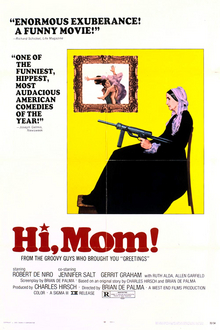
Film Review: Hi, Mom! (dir by Brian De Palma)


Released in 1970, Hi, Mom!, tells the story of Jon Rubin (played by a 26 year-old Robert De Niro).  The somewhat spacey and kind of creepy Jon has just returned to New York City from Vietnam.  After moving into a run-down apartment building and meeting the building’s superintendent (Charles Durning), Jon is hired to direct a pornographic film by producer Joe Banner (Allen Garfield).  Jon’s idea to simply point his camera at his building and to film his neighbors as they go about their day.  As quickly becomes apparent, Jon is mostly just looking for an excuse to watch and film Judy Bishop (Jennifer Salt).

Also living in the building is Gerrit Wood (Gerrit Graham), who is first seen triumphantly putting posters of Che Guevara and Malcolm X up in his apartment.  Gerrit is a freshly-minted political radical and the leader of a group of performance artists who put on a show called Be Black, Baby, in which the white audience members are forced to wear blackface and are then chased, attacked, and assaulted by black actors wearing whiteface.  (Gerrit himself is white.)  Jon is hired to play the police officer who beats and arrests the members of the audience at the end of the performance.  Of course, eventually, the real police show up….

An attempt at an episodic counter-culture comedy, Hi, Mom is definitely a product of the time in which it was made, both in its style and its thematic content.  Today, it’s best-known for being one of Brian De Palma’s early independent films and for featuring Robert De Niro in one of his first starring roles.  De Palma and De Niro aren’t exactly the first names that come to mind when one thinks about comedy and Hi, Mom shows that there’s a good reason for that.  As both a screenwriter who felt he had something important to say and a young director who was obviously eager to show off everything that he could do with a camera, Brian De Palma simply cannot get out of his own way.  Scenes are needlessly sped up.  Scenes are pointlessly slowed down.  The musical cues are obvious.  The dialogue is often so broad that it comes across as being cartoonish.  One gets the feeling that De Palma didn’t trust the audience to get the jokes so he went overboard to make sure everyone knew when to react.  All of the pointless camera trickery serves the same purpose that a laugh track would on an old sitcom.  Interestingly enough, the only sequence that really works as satire is the Be Black, Baby sequence and that’s because De Palma directs it in a semi-documentary fashion.  De Palma gets out of his own way and allow the sequence to develop a natural rhythm.  (Of course, seen today, the scene will bring to mind the upper class white liberals who pay money to have an activist lecture them about their privilege while having their friends over for dinner.)

As for Robert De Niro, he gives a typically nervy performance, one that feels like a dry run for his later work in Mean Streets, Taxi Driver, and King of Comedy.  Despite the reputation of those films, there are some genuinely funny moments to be found in all of them.  Most of them, like the classic Taxi Driver conversation between De Niro’s Travis and Peter Boyle’s Wizard, are funny because of how people react to De Niro’s obviously unhinged characters.  Both Taxi Driver and King of Comedy got mileage out of having normal people try to deal with De Niro’s unstable characters.  In Hi, Mom, everyone is equally wacky and, as such, De Niro doesn’t really have anyone to play off.  No one is really reacting to anything, De Niro-included.  (There is some spark to his scenes with Charles Durning and Allen Garfield but even those scenes seem to drag on forever.)

On the plus side, Hi, Mom! is was shot on the actual streets of New York City, guerilla-style.  (A “Re-Elect Mayor Lindsay” sign in the background confirms that the film was made on location in 1969.)  When De Palma isn’t getting in his own way with all of his fancy camera tricks, he manages to capture so memorably bleak images of New York City.  Hi, Mom! presents New York as being a dirty, crime-ridden, and menacing city but it also captures the odd grandeur of urban decay.  At its best, Hi, Mom! captures the love/hate relationship that many seem to have New York City.  The city feels both alive and dangerous at the same time.  Hi, Mom! is too uneven to work as a sustained satire but, as a documentary about New York at the end of the turbulent 60s, it’s worth watching.

I should mention that this was not the first time that De Palma and De Niro teamed up.  Indeed, De Niro was De Palma’s muse even before he met Martin Scorsese.  Hi, Mom! was a loose sequel to an earlier De Palma/De Niro film called Greetings.  (Like many of De Palma’s future films, both Greetings and Hi, Mom! were originally rated X but later re-rated R.)  De Palma and De Niro, of course, would both go onto have long Hollywood careers.  (They would later reunite for The Untouchables, a big-budget spectacle of a film that’s about as far from the grungy Hi, Mom! as one can get.)  De Palma’s career has had its ups and downs but, as of late, many of his films have been positively reevaluated.  As for De Niro, he can finally kind of play comedy.  That said, I’d rather watch Hi, Mom than Dirty Grandpa.

Footsteps (1972, directed by Paul Wendkos)


Paddy O’Connor (Richard Crenna) is a former football player-turned-coach whose record of success has been overshadowed by his own arrogance and heavy drinking.  O’Connor has such a bad personal reputation that he’s found himself unemployable.  Only one man is willing to give him a chance.  Jonas Kane (Clu Gulager) played football with Paddy and he’s now coaches for a small college.  Kane may not like O’Connor but he knows that O’Connor might be the key to turning around his team’s fortunes and, at the same time, saving Kane’s job.  Kane hires O’Connor to serve as a his defensive coordinator.

At first, O’Connor’s cockiness rubs people the wrong way.  It’s not until O’Connor moves offensive player J.J. Blake (Bill Overton) to defense that the team starts to win.  And once the team stars to win, everyone’s problems with O’Connor disappear.  Kane can only watch helplessly as O’Connor moves in on his girlfriend (Joanna Pettet), knowing that he owes his job to O’Connor remaining at the school.

However, when Blake gets a concussion, O’Connor is forced to decide whether or not to let him play.  Boosters like Bradford Emmons (Forrest Tucker) want Blake to play, regardless the risk.  The NFL scouts, who are looking for the next number one pick, want to see Blake on the field.  Blake says he wants to play but O’Connor can tell that he’s lying about the extent of his injury.  With everyone breathing down his neck and a syndicate of gamblers pressuring O’Connor to shave points so that the spread pays off, O’Connor has to decide what to do.

Though this made-for-TV movie may not be as well-known as some other films, it’s one of the best movies ever made about college football.  Though it may be short (only 74 minutes), it still examines all of the issues that have always surrounded college football.  Despite not getting paid for their efforts, the players risk serious and permanent injury during every game, just on the slight hope that they might someday make it to the NFL.  The coaches, who are supposed to be looking after the players, are more interested in padding out their win-loss record and hopefully moving onto bigger and better-paying jobs.  Meanwhile, aging alumni and boosters demand that the team win at all costs, regardless of what happens to the men on the field.  Footsteps intelligently explores all of those issues and suggests that the risks are ultimately not worth the rewards.

Along with an intelligent script, Footsteps is helped by a talented cast.  Crenna and especially Gulager both give excellent performance as the two rival coaches.  Al Lettieri (Sollozzo from The Godfather) plays one of the gamblers.  Beah Richards plays Blake’s mother, who makes the mistake of believing O’Connor when he says that he’s going to always have Blake’s best interests at heart.  Ned Beatty has a small role as another assistant coach who is forced to make an important decision of his own.  Keep an eye out for Robert Carradine and James Woods, both of whom have tiny roles.

As far as I know, Footsteps has never officially been released on DVD.  I saw it late one night on the Fox Movie Channel.

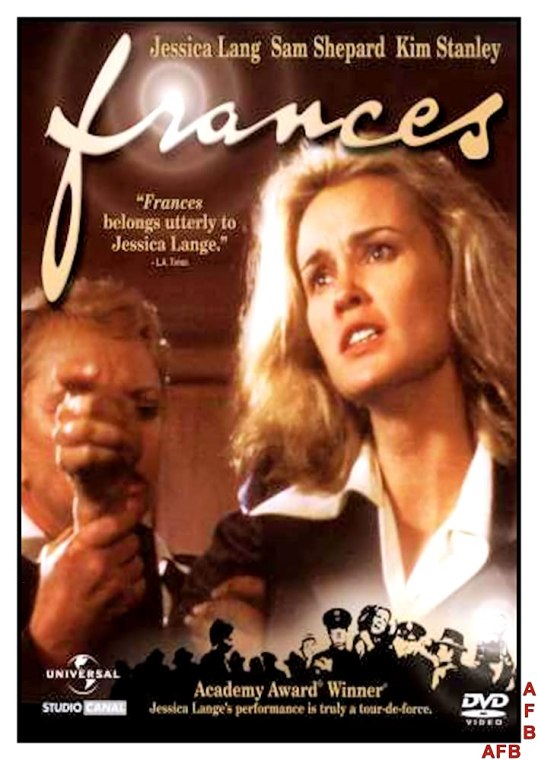
Film Review: Frances (dir by Graeme Clifford)


https://www.youtube.com/watch?v=eilqT7dLoBY

Frances Farmer is one of the more tragic figures to come out of Hollywood’s Golden Age.

A talented and beautiful actress, Frances Farmer came out to Hollywood in the 30s and quickly developed a reputation for being difficult.  She was politically outspoken at a time when stars were expected to either be apolitical or unquestioningly patriotic.  She criticized scripts.  She argued with directors and studio heads.  She had a well-publicized affair with communist playwright Clifford Odets and she also had numerous run-ins with the police.  Some say that she was alcoholic.  Some say that she was bipolar.  Some say that she had a mental collapse as the result of the pressure that her mother put on her to succeed.  Frances Farmer ended up in mental institution, where she was subjected to shock therapy.  After she was released, her film career was basically over, though she did end up hosting a local television program.  She died in 1970, reportedly alone and struggling to make ends meet.  In a posthumously published autobiography called Will There Ever Be A Morning?, she wrote that she was beaten, sexually abused, and eventually given a lobotomy while she was institutionalized.  Over the years, there’s been a lot of doubt about whether or not Farmer was actually lobotomized but there is no doubt that Farmer was a woman who was ultimately punished for being ahead of her time.  Frances Farmer refused to conform to the safe manufactured image that Hollywood prepared for her and, for that, she was nearly destroyed.

The 1983 film, Frances, is a biopic of Frances Farmer, starring Jessica Lange as Frances and Kim Stanley as her domineering mother.  It opens with Frances writing a school essay about why she’s an atheist and it ends with her smiling blankly at a television camera, her independent spirit broken by a lobotomy.  In between, we watch as Frances goes to Hollywood and has a self-destructive affair with Clifford Odets (played by Jeffrey DeMunn).  The infamous moment when Frances was dragged out of a courtroom while screaming at the judge is recreated and Frances’s time in the institution is depicted in Hellish detail.

We also learn about Frances’s relationship with a communist writer named Alvin York (Sam Shepard).  It seems like whenever Frances needs to be rescued or just needs someone to talk to, Alvin York pops up.  In fact, you could almost argue that York pops up too often.  Alvin York was a fictional character, one who was apparently created in order for audiences to have someone to relate to.  It’s unfortunate that the film felt that the audience would only be able to relate to Frances if it viewed her life through the eyes of a fictional character because York’s character is a bit of a distraction.  Sam Shepard does a good job of playing him and I certainly wasn’t shocked to learn that Sam Shepard and Jessica Lange were romantically involved during the filming of Frances (and for a long time afterwards) because Lange and Shepard do have a very real chemistry.  However, from a narrative point of view, Alvin York only works as a character if one accepts that he’s a figment of Frances’s imagination.  The film’s insistence that York is an actual person who just happens to show up at every important moment of Frances’s life just doesn’t work.

What does work is Jessica Lange’s performance.  Lange is amazing in the role of Frances, whether she’s playing Frances as a hopeful idealist, an out-of-control rebel, or, tragically, as a glass-eyed zombie who has been reduced to appearing on television and assuring audiences that her rebellious days are over.  Lange was nominated for Best Actress for Frances.  She lost to Meryl Streep for Sophie’s Choice.  I’ve seen Sophie’s Choice and Meryl was good but Jessica was better.

Frances was originally offered to David Lynch.  He turned the film down so he could work on Dune and instead, the film was directed by Graeme Clifford, who takes a far more straight-forward approach to the material than Lynch would have.  Still, Lynch’s interest in Frances Farmer would later lead to him working on stories that centered around a “woman in trouble.”  One of those stories became Twin Peaks.  Another would become Mulholland Drive.

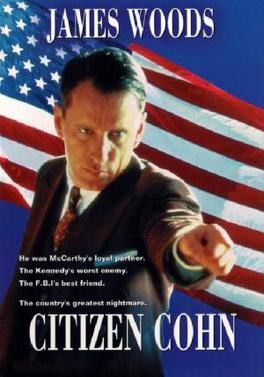
Citizen Cohn (1992, directed by Frank Pierson)


The year is 1986 and the powerful attorney Roy Cohn (James Woods) is dying.  The official story is that Cohn has liver cancer but the truth is that he’s dying of AIDS.  As he lies in his hospital bed, he thinks about his past and the events the led to him becoming one of the most feared and powerful men in America.  He is haunted by the ghosts of his many enemies, people like communist spy Ethel Rosenberg (Karen Ludwig) and his former colleague, Bobby Kennedy (David Marshall Grant).

Not surprisingly, a good deal of Cohn’s memories center around his association with Sen. Joseph McCarthy (Joe Don Baker), a charismatic alcoholic who, in the 50s, charged that he had a list with the names of communist spies deep within the government.  Cohn and Kennedy served as the counsels on McCarthy’s committees.  Cohn is with McCarthy from the beginning and he’s with him until the end of the senator’s career.  In fact, it’s Cohn’s own shadowy relationship with an army private that ultimately leads to McCarthy’s downfall.

Except for one aspect of the film, Citizen Cohn is one of the best films to ever be produced by HBO.  The film covers a lot of history in a little less than 2 hours and it does so in a way that is always interesting and easy to follow.  By including incidents from every phase of Cohn’s life, as opposed to just focusing on his time as McCarthy’, the film also shows how someone like Roy Cohn can become a behind-the-scenes power player despite the majority of the country having no idea who he is.  James Woods gives one of his best performances as the hyperactive and unapologetically corrupt Cohn while Joe Don Baker is perfect as the self-pitying Joseph McCarthy.

The problem with the film, and your mileage may vary on how big an issue this is, is that it almost presents Cohn’s final days — dying of AIDS in a lonely New York hospital room — as being some sort of deserved fate for everything that he did wrong in life.  For me, even in the case of someone like Roy Cohn, that’s a step too far and it comes very close to presenting AIDS as some sort of divine punishment (which, itself, comes dangerously close to mirroring the homophobic statements that were made — and still are being made — by anti-gay activists).  That may not have been the film’s intention but, with the flashback structure and all of his dead enemies materializing to taunt Cohn as he lies dying, it’s still a very valid interpretation.

Some of that is perhaps unavoidable.  Cohn, in both real life and the film, died largely unrepentant for anything he did during his life.  As the central character of a biopic, Cohn never has the type of big moment that you would hope for, where he would realize that it was wrong for him to destroy so many lives and show at least a hint of contrition for his past behaviors.  That Roy Cohn is even a compelling character is a testament to the talent of James Woods because it’s certainly not due to any sort of hidden goodness lurking underneath the surface of Cohn’s snarling personality.  The lack of apologies and regrets that made Cohn a powerhouse in real life also makes him an ultimately unsatisfying subject for a movie.

A Movie A Day #339: Continental Divide (1981, directed by Michael Apted)


Ernie Souchak (John Belushi) is a reporter in Chicago.  He specializes in stories about municipal corruption and Mafia power plays.  Needless to say, living in Chicago, that keeps him busy.  Literally everyone in the city knows him.  Even the two muggers who try to steal his wallet recognize him and share inside information about which street gang is about to make a big move.  From a modern day vantage point, it seems strange to see everyone so excited about meeting a newspaper columnist but this movie was made in 1981, long before an army of bloggers put journalists like Ernie Souchak out of business.
Souchak’s gotten in trouble with the mob so his editor (Allen Garfield) sends him out of Chicago for his own protection.  Chain-smoking city boy Ernie Souchak finds himself in the Rocky Mountains, assigned to track down and get a story on Dr. Nell Porter (Blair Brown).  Dr. Porter has spent the last few years researching and protecting bald eagles.  She doesn’t like reporters but Souchak wins her over.  Despite being two very different people, Nell and Souchak fall in love.  But can a city boy and a country girl stay together, especially when there are people in Chicago who want Souchak dead?

A strange movie, Continental Divide was meant to be an updated version of the romantic comedies that Spencer Tracy and Katharine Hepburn used to make and Blair Brown was even made up to look like a young Hepburn.  It was one of the first films to be produced by Steven Spielberg, who has always been better at picking material as a director than a producer.  It was directed by Michael Apted, a great documentarian who has never shown himself to have much affinity for comedy.  It was written by Lawrence Kasdan, who specialized in homages to classic film genres and who, after this movie, made it a point to direct the majority of his scripts.  And it starred John Belushi, in his only romantic film lead.

Belushi, of course, is the main reason why anyone would want to see this movie.  It was his second-to-last movie, coming out between the popular success of The Blues Brothers and the infamous failure of NeighborsContinental Divide gives Belushi a chance to play a character, instead of just a version of his own wild persona.  The legend has always been that Continental Divide showed the actor that Belushi could have become if not for his tragic death.  The truth is that Belushi frequently looks uncomfortable and it is often evident that he is having to reign back his natural instincts.  Belushi’s best scenes are the ones where Souchak is walking around Chicago and hustling everyone that he meets.  In those scenes, he’s confident and in control and it’s easy to get swept up in his life.  His scenes with Blair Brown, where he has to be sincere and serious, are far more awkward.  Belushi has enough good scenes in Continental Divide to make you regret the performances that we never got but, at the same time, it’s evident that he still had room to grow as an actor.

If Belushi hadn’t died and had instead gone on to make several more movies (and hopefully beat his drug addiction at the same time), Continental Divide would probably be forgotten.  Instead, it now exists as a hint of what could have been.

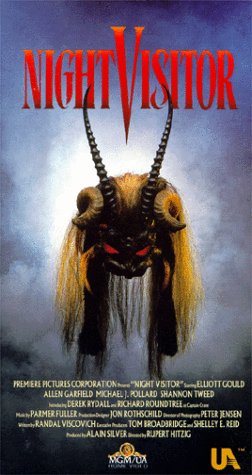
A Movie A Day #289: Night Visitor (1989, directed by Rupert Hitzig)


Billy Colton (Derek Rydall) is a teenager who has a reputation for exaggeration.  Lisa Grace (Shannon Tweed) is his next door neighbor, a high-priced prostitute who does not mind if Billy spies on her.  When Billy tries to tell everyone about his wild new neighbor, no one believes him.  Billy decides to prove his story by grabbing his camera and sneaking next door.  Instead of getting proof that she’s a prostitute, Billy witnesses his neighbor being murdered by a robed Satanist, who just happens to be Zachary Willard (Allen Garfield), Billy’s hated science teacher!  Billy goes to the police with his camera but Captain Crane (Richard Roundtree) points out that Billy forgot to take off the lens cap.
What can Billy do?  He knows that Zachary and his strange brother, Stanley (Michael J. Pollard), are sacrificing prostitutes to Satan but he can’t get anyone to believe him.  Working with his best friend (Teresa Van der Woude) and a burned out ex-cop (Elliott Gould), Billy sets out to stop the Willard Brothers.

Combine Rear Window with late 80s Satanic conspiracy theories and this is the result.  Not as bad as it sounds, Night Visitor is an unfairly obscure movie about Satanism in suburbia. While it has its share of dumb moments (like when Billy uses a watermelon to end a car chase), it also has enough good moments that suggest that Night Visitor is deliberately satirizing the excesses of the Satanic panic that, at the time of filming, was sweeping across the nation.  It also has a once in a lifetime cast.  Along with those already mentioned, keep an eye out for character actor extraordinaire Henry Gibson and future adult film star Teri Weigel.  Allen Garfield is especially good as the evil Mr. Willard.  Any actor can say, “I sacrifice you in the name of Satan.”  It takes a good actor like Allen Garfield to say it without making anyone laugh.

One final note: this movie was originally called Never Cry Devil, which is a much better title than Night Visitor.

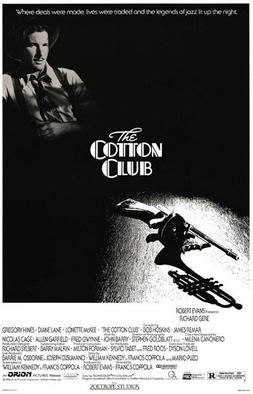
A Movie A Day #264: The Cotton Club (1984, directed by Francis Ford Coppola)


The time is the 1930s and the place is New York City.  Everyone wants to get into the Cotton Club.  Owned by British gangster Owney Madden (Bob Hoskins), the Cotton Club is a place where the stage is exclusively reserved for black performers and the audience is exclusively rich and white.  Everyone from gangsters to film stars comes to the Cotton Club.

It is at the Cotton Club that Dixie Dwyer (Richard Gere) meets everyone from Dutch Shultz (James Remar) to Gloria Swanson (Diane Venora).  Shultz hires Dixie to look after his girlfriend, Vera (Diane Lane).  Swanson arranges for Dixie to become a movie star.  Meanwhile, Dixie’s crazy brother, Vincent (Nicolas Cage), rises up through the New York underworld.  Meanwhile, dancing brothers Sandman and Clay Williams (played by real-life brothers Gregory and Maurice Hines) are stars on stage but face discrimination off, at least until Harlem gangster Bumpy Rhodes (Laurence Fishburne) comes to their aid.

The Cotton Club was a dream project of the legendary producer, Robert Evans, who was looking to make a comeback after being famously charged with cocaine trafficking in 1980.  Having commissioned a screenplay by his former Godfather collaborators, Mario Puzo and Francis Ford Coppola, Evans originally planned to direct the film himself.  At the last minute, Evans changes his mind and asked Coppola to direct the film.  After working with him on The Godfather, Coppola had sworn that he would never work with Evans again. (When he won an Oscar for The Godfather‘s screenplay, Coppola pointedly thanked everyone but Robert Evans.)  However, by 1984, a series of box office flops had damaged Coppola’s standing in Hollywood.  Needing the money, Coppola agreed to direct The Cotton Club.

Evans raised the film’s $58 million budget from a number of investors, including Roy Radin.  Roy Radin was best known for putting together Vaudeville reunions in the 70s and being accused of raping an actress in 1980.  Radin and Evans were introduced to each other by a drug dealer named Lanie Jacobs, who was hoping to remake herself as a film producer.  During the production of The Cotton Club, Radin was murdered by a contract killer who was hired by Jacobs, who apparently felt that Radin was trying to muscle her out of the film production.

While all of this was going on, Coppola fell into his familiar pattern of going overbudget and falling behind schedule.  This led to another investor filing a lawsuit against Orion Pictures and two other investors, claiming fraud and breach of contract.  When the film was finally released, it received mixed reviews, struggled at the box office, and only received two Oscar nominations.

With all of the murder and drama that was occurring offscreen, it is not surprising that the film itself was overshadowed.  The Cotton Club is a disjointed mix of gangster drama and big production numbers.  As always with post-Apocalypse Now Coppola, there are flashes of brilliance in The Cotton Club.  Some of the production numbers are impressive and visually, this movie has got style to burn.   However, among the leads, neither Richard Gere nor Diane Lane seem to be invested in their characters while the talented Hines brothers are underused.  The supporting cast is full of good character actors who are all in a search of a better script.  A few do manage to make an impression: James Remar, Bob Hoskins and Fred Gwynne as veteran gangsters, Nicolas Cage as the film’s stand-in for Mad Dog Coll, and Joe Dallesandro as Lucky Luciano.  The Cotton Club is sometimes boring and sometimes exciting but the onscreen story is never as interesting as what happened behind the scenes.