Film Review: Michael Collins (dir by Neil Jordan)


Released in 1996, Michael Collins tells the story of the early 20th century struggle of Ireland to gain independence from Britain.

Liam Neeson stars as Michael “Mick” Collins, the revolutionary leader who perfected the use of guerilla warfare against the British and then, in the greatest of ironies, found himself fighting some of his former allies during the Irish Civil War.  Aidan Quinn plays Mick’s friend and fellow revolutionary, Harry Boland.  Both Harry and Mick fall in love with Kitty Kiernan (Julia Roberts).  Stephen Rea shows up as Ned Broy, a member of the Dublin police department who is inspired by Mick’s words to become a double agent.  Charles Dance has a cameo as the fearsome Soames, a British intelligence agent who is sent to Ireland to violently put down the Irish insurgency.  Finally, Alan Rickman plays Eamon de Valera, who goes from being one of Mick’s strongest allies to being one of his fiercest rivals.  The film follows Collins from the Easter Rising of 1916 to his eventual assassination in 1922, providing a look at the history of Ireland that is as much directed towards those outside of Ireland as those on the inside.

When watching Michael Collins, it helps to have a working knowledge of Irish history.  Otherwise, it can occasionally be a bit difficult to keep track of who is angry with who at any particular point in time.  Of course, it should be noted that the movie itself is not exactly historically accurate.  In the film, the gentle and likable Ned Broy becomes a victim of British bloodlust.  In real life, Ned Broy outlived Michael Collins by several decades and died peacefully at the age of 84.  For that matter, the film presents Eamon de Valera as being coldly Machiavellian and it suggests that de Valera was jealous of Mick’s popularity.  Though both Rickman and director Neil Jordan later said it wasn’t intentional, the film also seems to suggest that de Valera played a role in Collins’s assassination.  While Eamon de Valera remains a controversial figure for many reasons (including his neutrality during World War II), Jordan has said that he feels de Valera was not necessarily treated fairly in Michael Collins and indeed, de Valera — who plays as big a role in the founding of the Irish republic as anyone — is portrayed as often being ineffectual and unwilling to truly put himself at risk to fight the British.  De Valera’s relationship with Collins was undoubtedly more complex than portrayed in this film but, when one makes a movie for an international audience, nuance is often the first thing that’s abandoned.

Seen today, 29 years after it was released, Michael Collins is an impressively made film that has a few inescapable flaws.  It’s gorgeous to look at, full of moody shots of dark Dublin streets.  The violence is often shocking and Jordan doesn’t shy away from considering the moral implications of Collins’s guerilla warfare.  Michael Collins doesn’t make the mistake of blindly celebrating violence, which would be a valuable lesson for the world’s current crop of self-styled revolutionaries if they were only willing to hear it.  Having gotten used to seeing Liam Neeson cast in one generic action film after another, it was interesting to watch Michael Collins and see what a good actor he truly could be.  Even in 1996, He was perhaps a few years too old to playing a man who was only 31 when he died but Neeson still plays the role with a ferocious charisma that makes him believable as a leader.  His scenes with Aidan Quinn have a joie de vivre that brings out the both in best actors.  Alan Rickman is memorably sinister as Eamon de Valera and Stephen Rea’s gentle style makes Ned Broy into a truly tragic figure.  That said, the very American Julia Roberts feels miscast as Kitty Kiernan.  One gets the feeling that she was cast solely for her box office appeal.  Every film, the feeling goes, needs  a love story and those love stories need to be between people with familiar faces and Roberts is such a familiar face that her every appearance in the film feels like a distraction from the story being told.  That said, the film captures the excitement and danger of being in the middle of history-making events.  It’s a historical epic that’s never boring and manages to hold the viewer’s interest.

Michael Collins is ultimately a flawed but entertaining look at the early days of the Irish republic.

Happy 80th Birthday to Tom Selleck – Celebrate with this clip from QUIGLEY DOWN UNDER (1990)!


Tom Selleck has been a part of my life almost as far back as I can remember. I was seven years old when MAGNUM P.I. premiered on T.V., so I literally grew up on the adventures of Hawaii’s best private eye! Selleck is such a likable and charismatic screen presence.

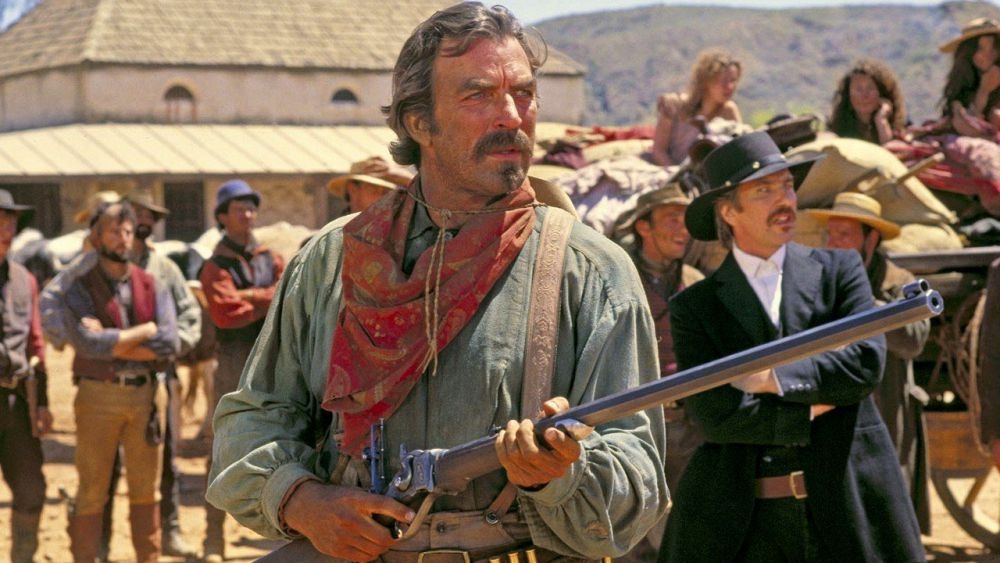
My wife and I are celebrating his birthday by watching my very favorite Tom Selleck movie, QUIGLEY DOWN UNDER (1990). I love this scene where Wyoming cowboy Matthew Quigley first arrives at the Australian ranch of Elliott Marston (Alan Rickman), and then proceeds to prove his prowess with a long distance rifle to a bunch of smirkers. 

Enjoy, my friends, and Happy Birthday, Mr. Selleck! 

10 Oscar Snubs From the 1980s


Ah, the 80s! Ronald Reagan was president. America was strong. Russia was weak. The economy was booming. The music was wonderful. Many great movies were released, though most of them were not nominated for any Oscars. This is the decade that tends to drive most Oscar fanatics batty. So many good films that went unnominated. So many good performers that were overlooked.  Let’s dive on in!

1980: The Shining Is Totally Ignored

Admittedly, The Shining was not immediately embraced by critics when it was first released.  Stephen King is still whining about the movie and once he went as far as to joke about being happy that he outlived Stanley Kubrick.  (Not cool, Steve.)  Well, none of that matters.  The Shining should have been nominated across the board.  “Come and play with us, Danny …. AT THE OSCARS!”

1981: Harrison Ford Is Not Nominated For Best Actor For Raiders of the Lost Ark

Raiders received a lot of nominations.  Steven Spielberg was nominated for Best Director.  The film itself was nominated for Best Picture.  (It lost to Chariots of Fire.)  But the man who helped to hold the film together, Harrison Ford, was not nominated for his performance as Indiana Jones.  Despite totally changing the way that people looked at archeologists and also making glasses sexy, Harrison Ford was overlooked.  I think this was yet another case of the Academy taking a reliable actor for granted.

1982: Brian Dennehy Is Not Nominated For Best Supporting Actor For First Blood

First Blood didn’t receive any Oscar nominations, not even in the technical categories.  Personally, I think you could argue that the film, which was much more than just an action film, deserved to be considered for everything from Best Actor to Best Director to Best Picture.  But, in the end, if anyone was truly snubbed, it was Brian Dennehy.  Dennehy turned Will Teasle into a classic villain.  Wisely, neither the film nor Dennehy made the mistake of portraying Sheriff Teasle as being evil.  Instead, he was just a very stubborn man who couldn’t admit that he made a mistake in the way he treated John Rambo.  Dennehy gave an excellent performance that elevated the entire film.

1984: Once Upon A Time In America Is Totally Ignored

It’s not a huge shock that Once Upon A Time In America didn’t receive any Oscar nominations.  Warner Bros. took Sergio Leone’s gangster epic and recut it before giving it a wide release in America.  Among other things, scenes were rearranged so that they played out in chronological order, the studio took 90 minutes off of the run time, and the film’s surrealistic and challenging ending was altered.  Leone disowned the Warner Bros. edit of the film.  Unfortunately, in 1984, most people only saw the edited version of Once Upon A Time In America and Leone was so disillusioned by the experience that he would never direct another film.  (That said, even the edited version featured Ennio Morricone’s haunting score, which certainly deserved not just a nomination but also the Oscar.)  The original cut of Once Upon A Time In America is one of the greatest gangster films ever made, though one gets the feeling that it might have still been too violent, thematically dark, and narratively complex for the tastes of the Academy in 1984.  At a time when the Academy was going out of its way to honor good-for-you films like Gandhi, it’s probable that a film featuring Robert De Niro floating through time in an Opium-induced haze might have been a bridge too far.

1985: The Breakfast Club Is Totally Ignored

Not even a nomination for Best Screenplay!  It’s a shame.  I’m going to guess that the Academy assumed that The Breakfast Club was just another teen flick.  Personally, if nothing else, I would have given the film the Oscar for Best Original Song.  Seriously, don’t you forget about me.

1986: Alan Ruck Is Not Nominated For Best Supporting Actor For Ferris Bueller’s Day Off

Poor Cameron!

1986: Blue Velvet Is Not Nominated For Best Picture

Considering the type of films that the Academy typically nominated in the 80s, it’s something of a shock that David Lynch even managed to get a Best Director nomination for a film as surreal and subversive as Blue Velvet.  Unfortunately, that was the only recognition that the Academy was willing to give to the film.  It can also be argued that Kyle MacLachlan, Laura Dern, Isabella Rossellini, and Dean Stockwell were overlooked by the Academy.  Dennis Hopper did receive a Supporting Actor nomination in 1986, though it was for Hoosiers and not Blue Velvet.

1987: R. Lee Ermey Is Not Nominated For Best Supporting Actor For Full Metal Jacket

One of the biggest misconceptions about Full Metal Jacket is that R. Lee Ermey was just playing himself.  While Ermey was a former drill instructor and he did improvise the majority of his lines (which made him unique among actors who have appeared in Kubrick films), Ermey specifically set out to play Sgt. Hartmann as being a bad drill instructor, one who pushed his recruits too hard, forgot the importance of building them back up, and was so busy being a bully that he failed to notice that Pvt. Pyle had gone off the deep end.  Because Ermey was, by most accounts, a good drill instructor, he knew how to portray a bad one and the end result was an award-worthy performance.

1988: Die Hard Is Not Nominated For Best Picture, Actor, Supporting Actor, or Director

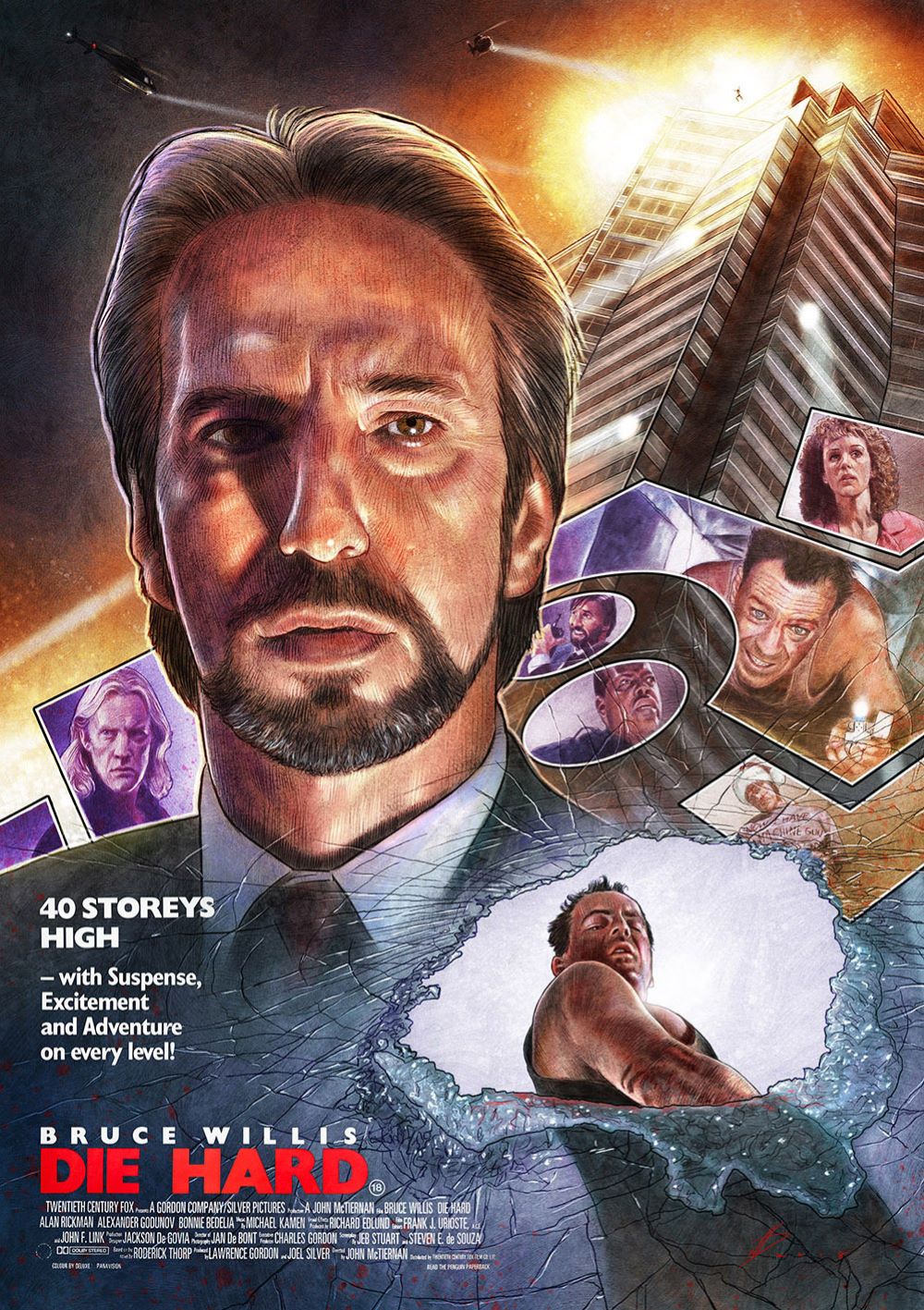
Die Hard did receive some technical nominations but, when you consider how influential the film would go on to be, it’s hard not to feel that it deserved more.  Almost every action movie villain owes a debt to Alan Rickman’s performance as Hans Gruber.  And Bruce Willis …. well, all I can say is that people really took Bruce for granted.

1989: Do The Right Thing Is Not Nominated For Best Picture

Indeed, it would take another 30 years for a film directed by Spike Lee to finally be nominated for Best Picture.

Agree?  Disagree?  Do you have an Oscar snub that you think is even worse than the 10 listed here?  Let us know in the comments!

Up next: It’s the 90s!

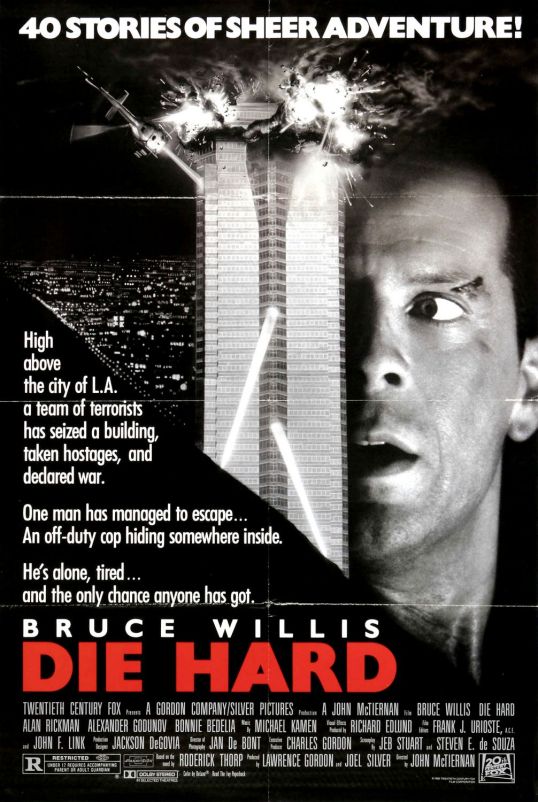
Holiday Film Review: Die Hard (dir by John McTiernan)


Yes, Die Hard is a Christmas movie.

And, in an alternative universe, it was a Frank Sinatra movie.

Released into theaters in 1988, Die Hard was based on a novel called Nothing Lasts ForeverNothing Lasts Forever told roughly the same story as Die Hard, with one of the big exceptions being that the cop fighting the terrorists was not the youngish and quippy John McClane but instead was a weary, aging and retired detective named Joe Leland.  Leland previously appeared in another novel called The Detective.  In 1968, The Detective was turned into a film and the role of Leland was played by Frank Sinatra.  As a part of his contract, Sinatra had the right to play Leland in any sequels to The Detective.  When Die Hard was in pre-production, Sinatra could have demanded that the film be a Joe Leland film and that he be allowed to star in it.  Fortunately, Sinatra did not do that and Joe Leland was instead transformed into John McClane.  And, after the role was was turned down by Arnold Schwarzenegger, Sylvester Stallone, Clint Eastwood, Nick Nolte, Mel Gibson, Don Johnson, Harrison Ford, Burt Reynolds, Paul Newman, James Caan, Al Pacino, and Richard Dean Anderson, popular television actor Bruce Willis finally received the role.

Seriously, just consider that.  Bruce Willis was not only not the first choice for John McClane but even Richard Dean Anderson was offered the role before the filmmakers finally went with Willis.  It’s hard to imagine anyone else starring in Die Hard because, to most of us, Bruce Willis is John McClane.  Growing up and watching Die Hard on television every Christmas, it was very easy to assume that Willis probably spent all of his spare time fighting terrorists and coming up with snarky quips.  Definitely, it’s difficult to imagine Stallone and Schwarzenegger in the role.  What made McClane such a compelling hero was that he wasn’t superhuman.  He was just a blue collar guy who hurt his feet, got tired, and had his moments of frustration just like everyone else.  He was the relatable action hero.  It didn’t matter how many stories that one heard about Bruce Willis having an ego or occasionally being difficult to work with.  Bruce Willis was John McClane and, after everything that McClane had been though, he had every right to occasionally be difficult.

You’ll notice that I haven’t really discussed the plot of Die Hard because …. well, everyone knows that plot.  I mean, this is one of those films that has such a permanent place in pop cultural history that even people who somehow haven’t seen the film still know what it’s about.  John McClane is an NYPD cop who flies to Los Angeles to see his estranged wife, Holly, for Christmas.  Holly (Bonnie Bedelia) works for the Nakatomi Corporation.  During the company’s Christmas party, terrorists led by Hans Gruber (Alan Rickman) take over the skyscraper.  The terrorists claim to be politically-motivated but, actually, they just want to break into the building’s vault and make off with a lot of money.  McClane makes his way through the unfinished skyscraper, killing the terrorists one-by-one.  He only has two allies.  Al Powell (Reginald VelJohnson) is an LAPD sergeant who is outside the building and who communicates with McClane via radio.  Argyle (De’Veroux White) is the friendly limo driver who spends almost the entire siege oblivious in the parking garage.  (The first time I ever watched Die Hard, I was so worried something bad would happen to Argyle.)

McClane has a lot of enemies and not all of them are terrorists.  The Deputy Chief of the LAPD (Paul Gleason) thinks that McClane is making the situation worse.  Two FBI agent, both named Johnson (and played by Robert Davi and Grand L. Bush), seem to view the entire siege as being a game with the older Johnson talking about how much it reminds him of Vietnam.  A reporter (William Atherton) makes the situation worse with his on-the-spot reports.  Meanwhile, there’s Harry Ellis (Hart Bochner).  A coke-addled executive, Ellis actually thinks that he’s helping McClane by trying to negotiate with Gruber.  I know that some people can’t stand Ellis but I always feel sorry for him.  In his way, he was trying to help and you could tell that he was so proud of himself for not telling Gruber that McClane was in Los Angeles to see Holly.

Needless to say, there’s a lot of action in Die Hard.  A lot of people die.  One thing that I appreciate the movie is that the bad guys get as upset over their friends and family being killed as McClane gets over Holly being threatening.  No one in the film is one-dimensional and even the bad guys have their own distinct personalities.  Theo (Clarence Gilyard) gets so excited about the idea of opening the vault that you can’t help but relate.  Karl (Alexander Godonuv) appears to be nearly indestructible.  Hans Gruber may be totally evil but he has a quick wit and there’s something intriguing about how confident he is.  Alan Rickman, famously, was not happy that his first role led to him being typecast as an international villain and one can’t blame him.  Still, almost every action movie villain who has followed has owed something to Alan Rickman.  Just as it’s difficult to imagine anyone other than Bruce Willis as John McClane, it’s impossible to imagine anyone other than Alan Rickman as Hans Gruber.

(That said, I’m sure there’s another alternate universe out there, right next to the Sinatra universe, where Blade Runner was not as troubled a production as it was and, as a result, Die Hard was made with Ridley Scott directing, Harrison Ford starring as McClane, and Rutger Hauer playing Hans.)

For all of the action, there’s also a lot of moments that make me laugh out loud and I’m not just talking about McClane’s one liners.  The two FBI agents don’t get much screentime but Davi and Bush make the most of what they have.  Paul Gleason is wonderfully deadpan as the clueless Chief Robinson.  Even Rickman gets his share of laughs.  “I read about them in Time Magazine” indeed.

Die Hard is a Christmas tradition with my family and a lot of other families as well.  Does Die Hard count as a Christmas movie?  I would say yes.  The terrorists may not respect the holiday but John McClane does.  No one ruins McClane’s Christmas!

Scenes that I Love: Harry Potter Confronts Snape in Harry Potter and the Deathly Hallows, Part 2


Since today is apparently Harry Potter’s birthday (Mazel Tov!), it seems like a good day to share a Harry Potter scene that I love.  Here is Harry Potter confronting the sadly misunderstood Snape in Harry Potter and the Deathly Hallows, Part 2!

Enjoy!

(RIP, the great Alan Rickman)

Playing Catch-Up: Crisscross, The Dust Factory, Gambit, In The Arms of a Killer, Overboard, Shy People


So, this year I am making a sincere effort to review every film that I see.  I know I say that every year but this time, I really mean it.

So, in an effort to catch up, here are four quick reviews of some of the movies that I watched over the past few weeks!

  • Crisscross
  • Released: 1992
  • Directed by Chris Menges
  • Starring David Arnott, Goldie Hawn, Arliss Howard, Keith Carradine, James Gammon, Steve Buscemi

An annoying kid named Chris Cross (David Arnott) tells us the story of his life.

In the year 1969, Chris and his mother, Tracy (Goldie Hawn), are living in Key West.  While the rest of the country is excitedly watching the first moon landing, Chris and Tracy are just trying to figure out how to survive day-to-day.  Tracy tries to keep her son from learning that she’s working as a stripper but, not surprisingly, he eventually finds out.  Chris comes across some drugs that are being smuggled into Florida and, wanting to help his mother, he decides to steal them and sell them himself.  Complicating matters is the fact that the members of the drug ring (one of whom is played by Steve Buscemi) don’t want the competition.  As well, Tracy is now dating Joe (Arliss Howard), who just happens to be an undercover cop.  And, finally, making things even more difficult is the fact that Chris just isn’t that smart.

There are actually a lot of good things to be said about Crisscross.  The film was directed by the renowned cinematographer, Chris Menges, so it looks great.  Both Arliss Howard and Goldie Hawn give sympathetic performances and Keith Carradine has a great cameo as Chris’s spaced out dad.  (Traumatized by his experiences in Vietnam, Chris’s Dad left his family and joined a commune.)  But, as a character, Chris is almost too stupid to be believed and his overwrought narration doesn’t do the story any good.  Directed and written with perhaps a less heavy hand, Crisscross could have been a really good movie but, as it is, it’s merely an interesting misfire.

  • The Dust Factory 
  • Released: 2004
  • Directed by Eric Small
  • Starring Armin Mueller-Stahl, Hayden Panettiere, Ryan Kelly, Kim Myers, George de la Pena, Michael Angarano, Peter Horton

Ryan (Ryan Kelly) is a teen who stopped speaking after his father died.  One day, Ryan falls off a bridge and promptly drowns.  However, he’s not quite dead yet!  Instead, he’s in The Dust Factory, which is apparently where you go when you’re on the verge of death.  It’s a very nice place to hang out while deciding whether you want to leap into the world of the dead or return to the land of the living.  Giving Ryan a tour of the Dust Factory is his grandfather (Armin Mueller-Stahl).  Suggesting that maybe Ryan should just stay in the Dust Factory forever is a girl named Melanie (Hayden Panettiere).  Showing up randomly and acting like a jerk is a character known as The Ringmaster (George De La Pena).  Will Ryan choose death or will he return with a new zest for living life?  And, even more importantly, will the fact that Ryan’s an unlikely hockey fan somehow play into the film’s climax?

The Dust Factory is the type of unabashedly sentimental and theologically confused film that just drives me crazy.  This is one of those films that so indulges every possible cliché that I was shocked to discover that it wasn’t based on some obscure YA tome.  I’m sure there’s some people who cry while watching this film but ultimately, it’s about as deep as Facebook meme.

  • Gambit
  • Released: 2012
  • Directed by Michael Hoffman
  • Starring Colin Firth, Cameron Diaz, Alan Rickman, Tom Courtenay, Stanley Tucci, Cloris Leachman, Togo Igawa

Harry Deane (Colin Firth) is beleaguered art collector who, for the sake of petty revenge (which, as we all know, is the best type of revenge), tries to trick the snobbish Lord Shabandar (Alan Rickman) into spending a lot of money on a fake Monet.  To do this, he will have to team up with both an eccentric art forger (Tom Courtenay) and a Texas rodeo star named PJ Puznowksi (Cameron Diaz).  The plan is to claim that PJ inherited the fake Monet from her grandfather who received the painting from Hermann Goering at the end of the World War II and…

Well, listen, let’s stop talking about the plot.  This is one of those elaborate heist films where everyone has a silly name and an elaborate back story.  It’s also one of those films where everything is overly complicated but not particularly clever.  The script was written by the Coen Brothers and, if they had directed it, they would have at least brought some visual flair to the proceedings.  Instead, the film was directed by Michael Hoffman and, for the most part, it falls flat.  The film is watchable because of the cast but ultimately, it’s not surprising that Gambit never received a theatrical release in the States.

On a personal note, I saw Gambit while Jeff & I were in London last month.  So, I’ll always have good memories of watching the movie.  So I guess the best way to watch Gambit is when you’re on vacation.

  • In The Arms of a Killer
  • Released: 1992
  • Directed by Robert L. Collins
  • Starring Jaclyn Smith, John Spencer, Nina Foch, Gerald S. O’Loughlin, Sandahl Bergman, Linda Dona, Kristoffer Tabori, Michael Nouri

This is the story of two homicide detectives.  Detective Vincent Cusack (John Spencer) is tough and cynical and world-weary.  Detective Maria Quinn (Jaclyn Smith) is dedicated and still naive about how messy a murder investigation can be when it involves a bunch of Manhattan socialites.  A reputed drug dealer is found dead during a party.  Apparently, someone intentionally gave him an overdose of heroin.  Detective Cusack thinks that the culprit was Dr. Brian Venible (Michael Nouri).  Detective Quinn thinks that there has to be some other solution.  Complicating things is that Quinn and Venible are … you guessed it … lovers!  Is Quinn truly allowing herself to be held in the arms of a killer or is the murderer someone else?

This sound like it should have been a fun movie but instead, it’s all a bit dull.  Nouri and Smith have next to no chemistry so you never really care whether the doctor is the killer or not.  John Spencer was one of those actors who was pretty much born to play world-weary detectives but, other than his performance, this is pretty forgettable movie.

  • Overboard
  • Released: 1987
  • Directed by Garry Marshall
  • Starring Goldie Hawn, Kurt Russell, Edward Herrmann, Katherine Helmond, Roddy McDowall, Michael G. Hagerty, Brian Price, Jared Rushton, Hector Elizondo

When a spoiled heiress named Joanne Slayton (Goldie Hawn) falls off of her luxury yacht, no one seems to care.  Even when her husband, Grant (Edward Herrmann), discovers that Joanne was rescued by a garbage boat and that she now has amnesia, he denies knowing who she is.  Instead, he takes off with the boat and proceeds to have a good time.  The servants (led by Roddy McDowall) who Joanne spent years terrorizing are happy to be away from her.  In fact, the only person who does care about Joanne is Dean Proffitt (Kurt Russell).  When Dean sees a news report about a woman suffering from amnesia, he heads over to the hospital and declares that Joanne is his wife, Annie.

Convinced that she is Annie, Joanne returns with Dean to his messy house and his four, unruly sons.  At first, Dean says that his plan is merely to have Joanne work off some money that she owes him.  (Before getting amnesia, Joanne refused to pay Dean for some work he did on her boat.)  But soon, Joanne bonds with Dean’s children and she and Dean start to fall in love.  However, as both Grant and Dean are about to learn, neither parties nor deception can go on forever…

This is one of those films that’s pretty much saved by movie star charisma.  The plot itself is extremely problematic and just about everything that Kurt Russell does in this movie would land him in prison in real life.  However, Russell and Goldie Hawn are such a likable couple that the film come close to overcoming its rather creepy premise.  Both Russell and Hawn radiate so much charm in this movie that they can make even the stalest of jokes tolerable and it’s always enjoyable to watch Roddy McDowall get snarky.  File this one under “Kurt Russell Can Get Away With Almost Anything.”

A remake of Overboard, with the genders swapped, is set to be released in early May.

  • Shy People
  • Released: 1987
  • Directed by Andrei Konchalovsky
  • Starring Jill Clayburgh, Barbara Hershey, Martha Plimpton, Merritt Butrick, John Philbin, Don Swayze, Pruitt Taylor Vince, Mare Winningham

Diana Sullivan (Jill Clayburgh) is a writer for Cosmopolitan and she’s got a problem!  It turns out that her teenager daughter, Grace (Martha Plimpton), is skipping school and snorting cocaine!  OH MY GOD!  (And, to think, I thought I was a rebel just because I used to skip Algebra so I could go down to Target and shoplift eyeliner!)  Diana knows that she has to do something but what!?

Diana’s solution is to get Grace out of New York.  It turns out that Diana has got some distant relatives living in Louisiana bayou.  After Cosmo commissions her to write a story about them, Diana grabs Grace and the head down south!

(Because if there’s anything that the readers of Cosmo are going to be interested in, it’s white trash bayou dwellers…)

The only problem is that Ruth (Barbara Hershey) doesn’t want to be interviewed and she’s not particularly happy when Diana and Grace show up.  Ruth and her four sons live in the bayous.  Three of the sons do whatever Ruth tells them to do.  The fourth son is often disobedient so he’s been locked up in a barn.  Diana, of course, cannot understand why her relatives aren’t impressed whenever she mentions that she writes for Cosmo.  Meanwhile, Grace introduces her cousins to cocaine, which causes them to go crazy.  “She’s got some strange white powder!” one of them declares.

So, this is a weird film.  On the one hand, you have an immensely talented actress like Jill Clayburgh giving one of the worst performances in cinematic history.  (In Clayburgh’s defense, Diana is such a poorly written character that I doubt any actress could have made her in any way believable.)  On the other hand, you have Barbara Hershey giving one of the best.  As played by Hershey, Ruth is a character who viewers will both fear and admire.  Ruth has both the inner strength to survive in the bayou and the type of unsentimental personality that lets you know that you don’t want to cross her.  I think we’re supposed to feel that both Diana and Ruth have much to learn from each other but Diana is such an annoying character that you spend most of the movie wishing she would just go away and leave Ruth alone.  In the thankless role of Grace, Martha Plimpton brings more depth to the role than was probably present in the script and Don Swayze has a few memorable moments as one of Ruth’s sons.  Shy People is full of flaws and never really works as a drama but I’d still recommend watching it for Hershey and Plimpton.

A Movie A Day #346: Closet Land (1991, directed by Radha Bharadwaj)


It has been nearly two years since the death of Alan Rickman and it is a loss that film lovers are still feeling today.  When Rickman was with us, it was easy to take him for granted.  It was only after his death that many started to look at the films he made, both the good ones and the bad ones, and realizing just how much Rickman brought to every role he played.
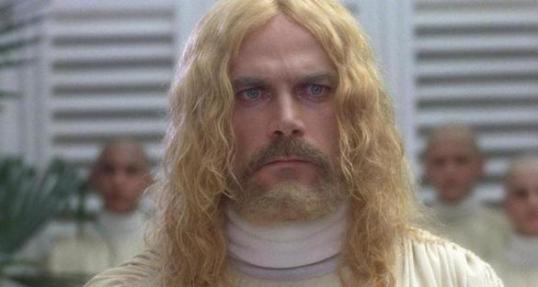
Take Closet Land, for instance.  This was made early in Rickman’s film career.  It is a very theatrical film, all taking place on one set and featuring only two major roles. Madeleine Stowe plays the Victim, a writer of children’s books whose latest autobiographical work deals with a girl who uses her imagination to escape from unhappiness.  Alan Rickman plays the Interrogator, a government functionary who demands that the Victim confess to hiding anti-government propaganda in her books.  When the Victim refuses to sign the confession, the Interrogator continually switches techniques in his attempt to break her, trying everything from physically torturing her to blindfolding her and pretending to be other people to even claiming that he abused her when she was younger.

There are many problems with Closet Land but Alan Rickman’s performance is not one of them.  Rickman is hypnotically malevolent as the otherwise cultured Interrogator and the most fascinating part of the movie is watching him switch back and forth from being a harried bureaucrat just doing his job and a manipulative sociopath who views the Victim’s sanity as a trophy for him to claim.  Closet Land is too stagey and heavy-handed to be effective but Rickman’s performance reminds us of what a great actor we lost when we lost Alan Rickman.

Never Nominated: 16 Actors Who Have Never Been Nominated For An Oscar


Along with being one of the greatest actors who ever lived, the late Peter O’Toole had another, far more dubious achievement.  He holds the record for being nominated the most times for Best Actor without actually winning.  Over the course of his long career, Peter O’Toole was nominated 8 times without winning.

But, at least O’Toole was nominated!

Below are 16 excellent actors who have NEVER been nominated for an Oscar.  10 of these actors still have a chance to get that first nomination.  For the rest, the opportunity has sadly past.

Quicksilver-photo_625px_8col

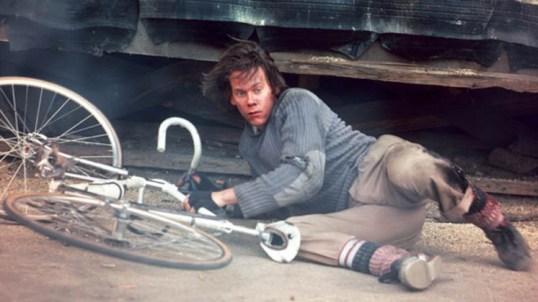
  1. Kevin Bacon

Is there anyone out there who doesn’t like Kevin Bacon?  Amazingly, despite several decades of good performances in good films, Kevin Bacon has yet to be nominated.  That said, he seems destined to be nominated some day.  If nothing else, he deserved some sort of award for being the most successful cast member of the original Friday the 13th.  (As well, 40 years after the fact, his cry of “All is well!” from Animal House has become one of the most popular memes around.)

2. Brendan Gleeson

This brilliant Irish actor deserved a nomination (and probably the win) for his brave performance in Calvary.  But, even if you ignore Calvary, his filmography is full of award-worthy performances.  From The General to Gangs of New York to 28 Days Later to In Bruges to The Guard, Gleeson is overdue for some recognition.

3. John Goodman

John Goodman deserved to be nominated this year, for his performance in 10 Cloverfield Lane.  He brought warmth to both Argo and Inside Llewyn Davis.  And he was absolutely terrifying in Barton Fink.  John Goodman is one of the most underrated actors working today.

4. Malcolm McDowell

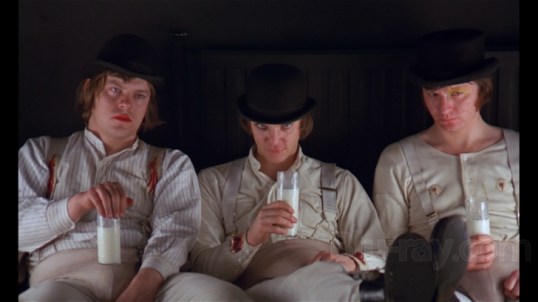
It’s obviously been a while since Malcolm McDowell had a truly great role.  But who could forget his amazing performance in A Clockwork Orange?  For that matter, I liked his sweetly gentle performance in Time After Time.  Someone give this man the great role that he deserves!

5. Ewan McGregor

Ewan McGregor is an actor who is oddly taken for granted.  His performance in Trainspotting remains his best known work.  But, really, he’s been consistently giving wonderful performances for twenty years now.  Sometimes — as in the case of the Star Wars prequels — the films have not been worthy of his talent but McGregor has always been an engaging and compelling screen presence.  When it comes to playing someone who is falling in love, few actors are as convincing as Ewan McGregor.

6) Franco Nero

Franco!  If for nothing else, he deserved a nomination for playing not only Lancelot in Camelot and not only the original Django but also for playing Intergalactic Space Jesus in The Visitor.  I also loved his work in a little-known Italian thriller called Hitchhike.  Nero is still active — look for him in John Wick 2 — and hopefully, he’ll get at least one more truly great role in his lifetime.

7) Sam Rockwell

Let’s just get this out of the way.  In a perfect world, Sam Rockwell would already have an Oscar.  He would have won for his performance in 2009’s Moon.  He also would have received nominations for The Way, Way Back and Seven Psychopaths.  Sadly, Sam’s still waiting for his first nomination.  Again, the problem may be that he’s such a natural that he just makes it look easy.

Andy Serkis

8) Andy Serkis

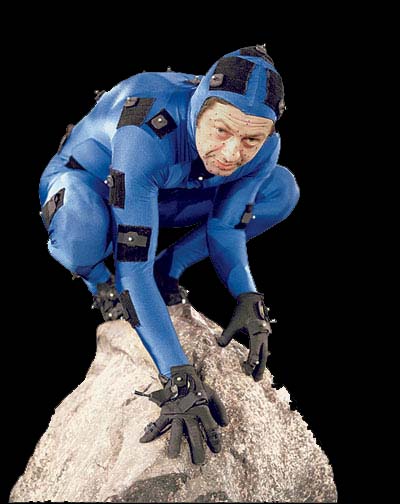
Andy Serkis has never been nominated, despite giving some of the best performances of this century.  He should have been nominated for Lord of the Rings: The Return of the King.  He should have won for Rise of the Planet of the Apes.

9) Harry Dean Stanton

Harry Dean Stanton has been around forever and he’ll probably outlive everyone else on the planet.  He often seems to be indestructible.  Harry Dean is the epitome of a great character actor.  He’s a modern-day John Carradine.  And, just as John Carradine was never nominated, Harry Dean seems to destined to suffer the same fate.  Oscar may have forgotten him but film lovers never will.

10) Donald Sutherland

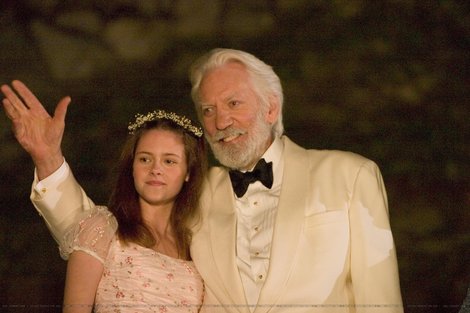
It’s hard to believe that Donald Sutherland has never been nominated for an Oscar but it’s true.  He probably should have been nominated for his work in Ordinary People and JFK.  Even his work in The Hunger Games franchise was an absolute delight to watch.  I imagine that Sutherland will be nominated someday.

Donald Sutherland and Kristen Stewart

Finally, here are 6 actors who sadly were never honored by the Academy and who are no longer with us:

  1. John Carradine

I mentioned John Carradine earlier.  Carradine was a favorite of many directors and he brought his considerable (and rather eccentric) talents to a countless number of films.  Among his best performances: Stagecoach and The Man Who Shot Liberty Valance.

2. John Cazale

Before his untimely death, John Cazale acted in 5 films: The Godfather, Godfather Part II, The Conversation, Dog Day Afternoon, and The Deer Hunter.  All five of them were nominated for best picture.  12 years after his death, archival footage of him was used in The Godfather Part III.  It was also nominated for Best Picture.  Not only is Cazale alone in having spent his entire career in films nominated for best picture but, in each film, Cazale gave a performance that, arguably, deserved to be considered for a Best Supporting Actor nomination.  Cazale was an amazing actor and it’s a shame that he wasn’t able to give us more great performances.

3. Oliver Reed

Oliver Reed was a legendary drinker but he was also an amazingly entertaining actor.  I’m not a huge fan of Gladiator but his final performance was more than worthy of a posthumous nomination.

Alan Rickman

4. Alan Rickman

When it comes to the late Alan Rickman, it’s not a question of whether he should have been nominated.  It’s a question of for which film.  I know a lot of people would say Rickman deserved a nomination for redefining cinematic villainy in Die Hard.  Personally, I loved his performance in Sense and Sensibility.  And, of course, you can’t overlook any of the times that he played Snape.

5. Edward G. Robinson

Edward G. Robinson was never nominated for an Oscar!?  Not even for Double Indemnity?  Or his final performance in Soylent Green?  Horrors!

6) Anton Yelchin

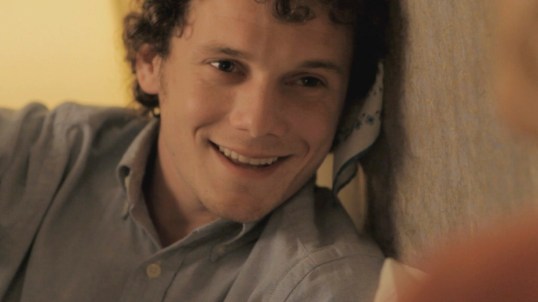
It’s debatable whether or not Anton Yelchin ever got a chance to give a truly award-worthy performance during his lifetime.  I would argue that his work in both Green Room and Like Crazy were pretty close.  But, if Yelchnin had lived, I’m confident he would have eventually been nominated.  We lost a wonderful talent when we lost him.

like-crazy-still02


Playing Catch-Up With The Films of 2016: Eye In The Sky (dir by Gavin Hood)


Eye in the Sky is many things.  It’s a tense and involving drama.  At times, it’s a satire of the bland and often cowardly bureaucracy that controls so much of the world.  Occasionally, it’s an angry polemic and a sad-eyed look at the state of the world today.  It’s a film about drone warfare, one that is remarkably honest about both the costs and the benefits of being able to randomly blow people up on the other side of the world.  It’s a film that will make you think and it will make you cry and it will even make you laugh in a resigned sort of way.

But, at heart, it’s ultimately the story of two houses in Nairobi, Kenya.

In the first house, terrorists are plotting their next attack.  The film leaves little doubt as to what they are planning.  Thanks to a miniature drone controlled by Jama Farah (played by Barkhad Abdi and it’s good to see him giving as good a performance here as he did in Captain Phillips), both American and British intelligence are aware of what’s happening in that house.  A British jihadist is planning her next attack.  Guns are being loaded.  Suicide vests are being prepared.  If nothings done to stop their plans, hundreds of people are going to die.

Sitting nearby is the other house.  And, in this other house, an apolitical Kenyan family is going about their day with zero knowledge of what’s happening just a few doors down.  11 year-old Alia Mo’Allim (Aisha Takow) twirls a hula hoop while her father watches.  Later, in the day, she’ll go out in her village and, while the local militia harasses anyone who doesn’t look right to them, Alia will attempt to sell bread.  She’ll set up her table directly outside of the first house.

And what no one in that village realizes is that an armed drone is hovering above them.  As they go about their day, they have no idea that there are men and women in America and Britain who are debating whether or not to blow them up.

Colonel Katherine Powell (a steely and totally convincing Helen Mirren) is determined to blow up that house and the terrorists within, even if it means blowing up Alia in the process.  However, before Powell can give the order, she has to get permission from Lt. Gen. Frank Benson (Alan Rickman, at his weary best) and Benson has to get permission from the government.  And the government is full of people who are eager to take credit for killing terrorists but who don’t want to be blamed for any of the inevitable collateral damage.  Everyone passes responsibility to someone else.

Powell may be the most determined of everyone to blow up that house but she is not the one who will actually be firing the missiles.  That responsibility falls on two Americans, Lt. Steve Watts (Aaron Paul) and Carrie Gershon (Phoebe Fox).  As the teorrists prepare and Alia tries to sell bread and the bureaucrats debate, Watts and Gershon are the only ones who seem to truly understand what’s about to happen.  If they fire the missiles, Alia will probably die.  If they don’t, hundreds of other definitely will.

It all makes for incredibly tense and thought-provoking film, one that is all the more effective because it actually allows both sides to make their case.  In Eye in the Sky, no one is presented as being perfect.  On the one hand, Powell may be willing to manipulate the data to get permission to fire that missile.  But, on the other, the film doesn’t deny that Powell is right when she says that if they don’t blow up the terrorists when they have a chance, hundreds of innocent people are going to die.  Towards the end of the film, Alan Rickman says, “Never tell a soldier that he doesn’t understand the cost of war,” and Eye in the Sky appears to understand that cost as well.  Nobody escapes this film untouched.

Well-acted and intelligently written and directed, Eye in the Sky was one of the most thought-provoking films of the previous year.  See it if you haven’t.