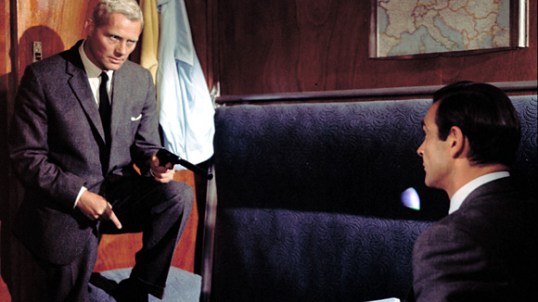
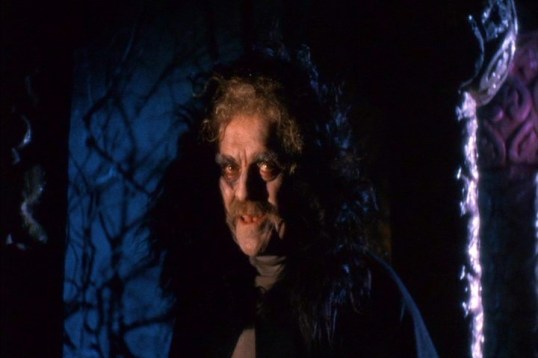
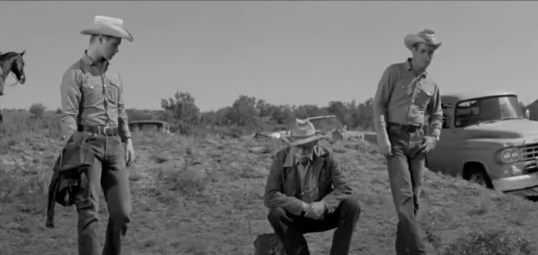
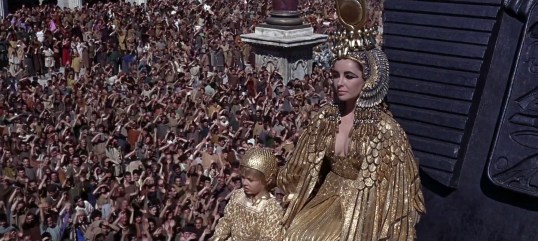
4 Shots From 4 Films is just what it says it is, 4 shots from 4 of our favorite films. As opposed to the reviews and recaps that we usually post, 4 Shots From 4 Films is all about letting the visuals do the talking.
Real Men Magazine ran from 1956 to 1975. It was a magazine full of pin-ups and stories about war, crime, and adventure. You can probably guess what the magazine was about just by looking at the covers below. If you think some of the covers below are racy, you should see the ones that I couldn’t include in this post!
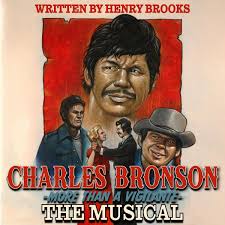
A young man named Henry Brooks has written a musical about the life of Charles Bronson. I’m sharing this post to make sure you are aware of it. It’s a memorable take on certain key moments and movies in Bronson’s life and career. The album is produced by Stephen Glickman (Big Time Rush), with Steven Weber (Wings) and Lisa Loeb (Stay: I Missed You) contributing their immense talent to this interesting project as Charles Bronson and Jill Ireland. As a lifelong fan of Bronson’s, I love seeing a younger generation embrace his unique talent. I think my personal favorite song on the album is called “Toshiro and I,” which is Henry’s amusing take on Bronson’s film with iconic Japanese actor Toshiro Mifune, RED SUN. There are many other good songs as well, with “You Oughta be an Actor,” “There’s Never Been So Few,” “Death Wish,” and “Couldn’t Beat the Cancer” all sticking out to me. There are a total of 16 songs on the album, and the songs take Bronson from a boy working in the coal mines all the way to a man mourning the loss of his beloved wife.
I’ve linked to YouTube versions of the songs below! Take a moment to subscribe if you get the chance. You can also find the album on Spotify and Apple Music. In the next couple of months, it should be available to purchase for your collection. I for one will be buying the album on vinyl as soon as I can!
I’m including a link to the episode of the “This Week in Charles Bronson” podcast where we discuss the project with Henry Brooks. We’re so happy to help spread the word on this exciting project!
There’s something to say about an individual who follows a code of behavior and has a moral compass that may seem archaic for today’s sensibilities, but when one really thinks about it…well, they’re not wrong.
We may hate that such people may be correct in their way of thinking and that it may offend certain sensibilities but that doesn’t necessarily means its wrong.
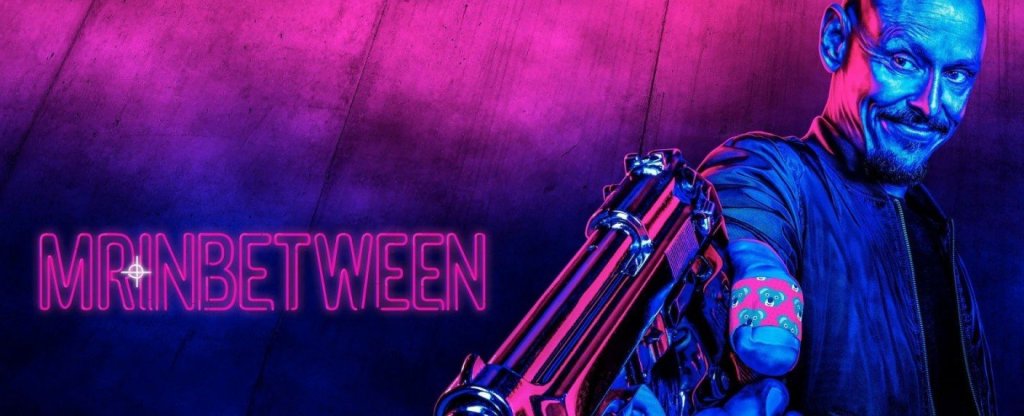
And on that note let me introduce you to Ray Shoesmith aka Mr Inbetween. This scene of him attending an anger management class best describes not just who Ray is but sets the tone for what this series is all about.
I woke up this morning and chose the beauty of combat.
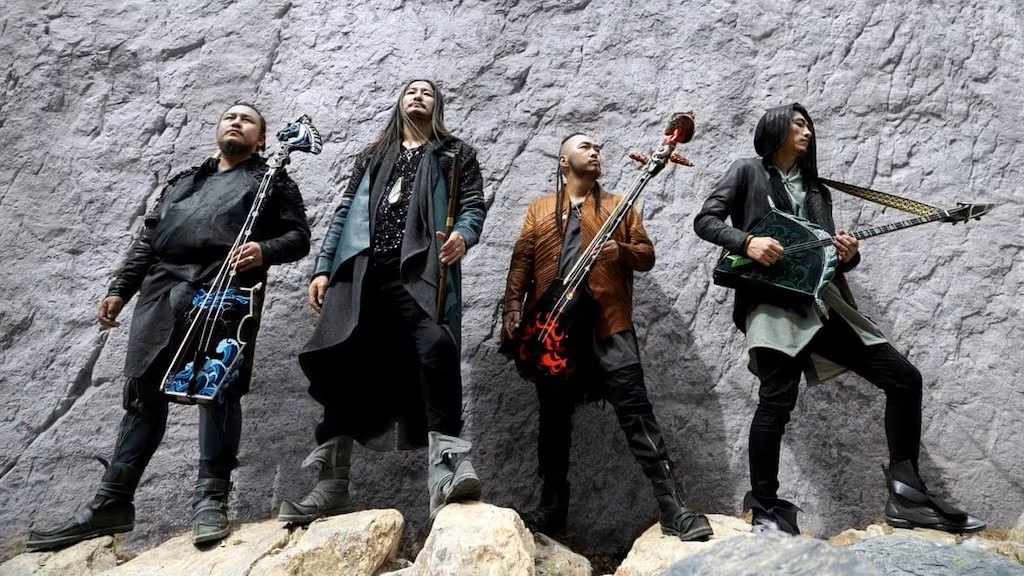
Well, that would be the beauty and majesty of traditional Mongolian throat-singing and instrumentation combined with the modern styling of metal and you get The Hu.
The Hu is the popular, at least with metal and folk music fans, Mongolian folk metal band created in 2016 by members Gala, Jaya, Enkush and Temka. In addition to the requisite electric guitars and drums we find with rock and metal bands, The HU also incorporates traditional Mongolion instruments such as the Morin khuur (a two-stringed, horsehead fiddle with strings made from horsehair), Tovshuur (a three-stringed Mongolian guitar), Tsuur (Mongolian flute) and the Tumur khuur (a jaw harp) just to name a few.
Throat-singing is at the forefront of most of The HU’s songs. While The Hu is not the first Mongolian band to find success with music fans (I was first introdcued to Mongolian rock scene with the Mongolian folk rock band Altan Urag), they have been the most successful in crossing over to a somewhat mainstream success in the West.
There are other songs that are probably better musically structured, but I always go back to the song that introduced me to the band: Wolf Totem.
Laws of Man opens with two U.S. marshals driving through the desert of Utah. Tommy Morton (Jackson Rathbone) is young and impulsive, a Korean war vet who is quick to open fire. Frank Fenton (Jacob Keohane) is older and more cautious. He also served in the military, though his service was during World War II. Frank is haunted by flashbacks to a particularly gruesome battle. Tommy and Frank may spend most of their time wearing black suits in the desert but neither one breaks a sweat.
The year is 1963. Kennedy is in the White House. The communists are on the move. And Tommy and Frank are busy executing arrest warrants in the most desolate part of the country. An attempt to arrest Mormon cult leader Crash Mooncalf (Ricard Brake) leads to a bloody shootout that leaves Mooncalf and his followers dead. Their next assignment leads them to a small town in Nevada, where Bill Bonney (Dermot Mulroney) and his violent family is suspected of killing local ranchers and stealing their land.
From the minute that Tommy and Frank arrive in Nevada, something feels off. They stay at a cheap motel, where Tommy picks up a woman named Dinah (Ashley Gallegos) and Frank spends his time talking to a bartender named Callie (Kelly Lynn Reiter). An old rancher named Don Burgess (Forrie J. Smith) shows off his gun and says that he would rather suffer a violent death than give up his land. A traveling preacher named Cassidy Whitaker (Harvey Keitel) approaches Frank in the parking lot and starts talking about sin and redemption. Meanwhile, FBI agent Galen Armstong (Keith Carradine) appears to be curiously unconcerned with the Bonneys and their reign of violence. As for the sheriff (Graham Greene), he spending his time sitting outside a burned-out ranch house. The charred bodies of the owners are still inside, seated around the dinner table.
An attempt to arrest Bill Bonney at his home leads to a violent shootout, one in which no one is killed but Bill is still not happy about having a bunch of bullet holes in his roof. Tommy and Frank attempt to serve the arrest warrant, just to discover that it’s not going to be as easy as they thought. Frank, whose World War II flashbacks are getting more and more intense, wants to leave town. Tommy, however, is obsessed with discovering what exactly everyone is hiding.
And, through it all, people who know their history will notice that the film is taking place in November of 1963 and the 22nd is rapidly approaching….
Laws of Man gets off to a strong start but begins to meander about halfway through. Luckily, the film’s final third features a wonderfully insane twist that recaptures the viewer’s attention. No matter what you may think is going on in the film, it can’t prepare you for just how weird things eventually get. Laws of Man is an entertaining film, one that is occasionally a bit too self-consciously quirky for its own good but which ultimately works. Jackson Rathbone and Jacob Keohane both give strong performances in the lead roles and the familiar faces in the film’s supporting cast all do their best to bring the film’s often surreal world to life. Dermot Mulroney and Keith Carradine give especially strong performance while Harvey Keitel appears to be having fun as the offbeat preacher.
Laws of Man managed to truly take me by surprise. For fans of paranoid cinema, it’s definitely worth making time for.
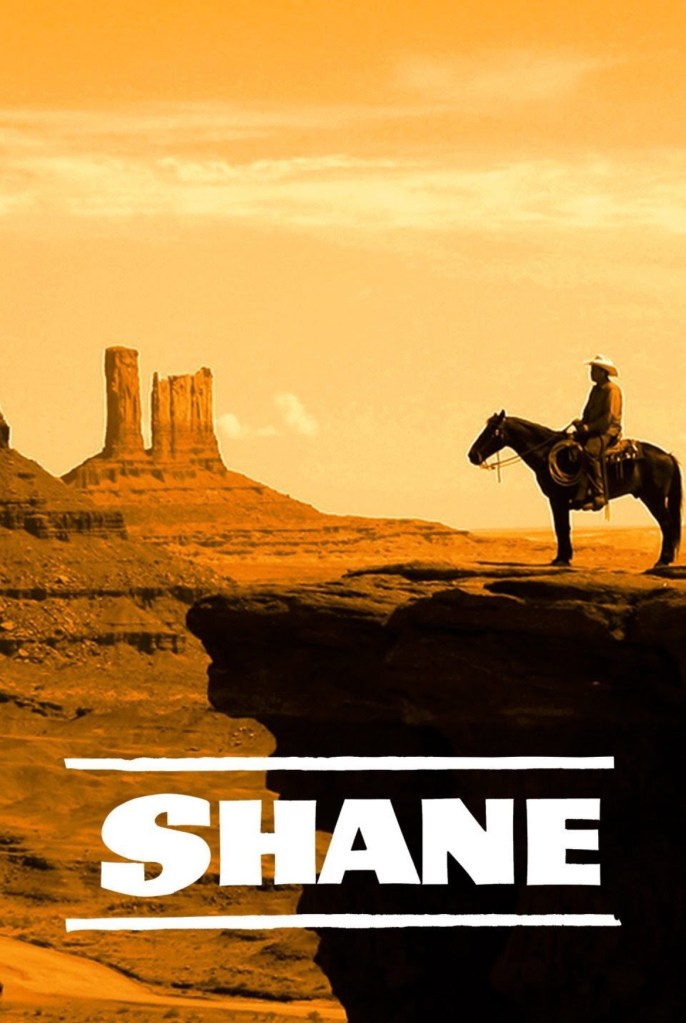
Episode 3 opens with Shane (David Carradine) and Joey (Christopher Shea) watching as geese are flying over the ranch on their way south. Joey wonders how the geese know to go south. Shane tells him that it’s instinct, almost like they have an internal clock telling them when it’s time to go. It seems like we’re supposed to be reading something deeper into this conversation, like maybe it’s time for Shane to be heading out.
In the next scene, Shane and Marian Starett (Jill Ireland) are at Sam Grafton’s General Store. Sam (Sam Gilman) agrees to loan the Starett’s money for the purchase of some hogs. It seems that disease has struck their stock. They offer a 20 acre stand of wheat to Sam as their collateral. Unfortunately, soon after the deal is made, a herd of cattle stampede the wheat, destroying any potential crop and leaving them with no ability to purchase the hogs. Shane and the Staretts immediately suspect that Rufe Ryker (Bert Freed) is behind the stampede based on his desire to have their land at any cost. Threats are made, but Ryker denies it.
With these financial difficulties as a backdrop, a group of men show up at Sam’s saloon looking for Shane. The leader of the bunch is Johnny Wake (Don Gordon), a guy Shane has ridden with in the past. He’s come to see if he can buy Shane and his gun for $300 to help with a range war they’re involved in. Normally, Shane would be able to say no, but with the Starett’s farm in trouble, it may now be time for Shane to leave. Is Shane like one of the wild geese? Did Ryker stampede the wheat field? Will Shane go back to his old ways with Johnny Wake and the funky bunch? We’ll soon find out.
I liked this episode. Ryker was set up to be such an A-hole in the pilot, but I found myself believing him when he told Shane that he was not responsible for the stampede that ruined the Starett’s wheat. He’s still an A-hole though. I also liked that there’s some tension between Shane and Marian in this episode. She makes it clear that no matter how bad things are financially for their family, she will never accept “blood money” as help. They look at each other longingly several times over the course of the episode’s 45 minutes. Is this heading towards a big smooch at some point? I like that little Joey gets to say “I love you, Shane” as he’s leaving the farm in this episode. Finally, I like that Shane gets to actually use his gun here. I won’t spoil who it’s used on, but I will admit that it’s satisfying.
Three episodes in, and I’m really enjoying the series! I can’t wait to check out Episode 4!
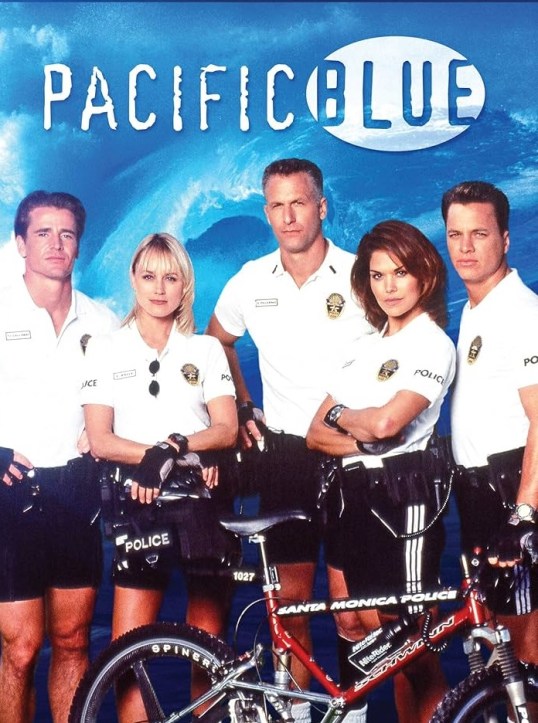
Welcome to Late Night Retro Television Reviews, a feature where we review some of our favorite and least favorite shows of the past! On Tuesdays, I will be reviewing Pacific Blue, a cop show that aired from 1996 to 2000 on the USA Network! It’s currently streaming everywhere, though I’m watching it on Tubi.
This week, the bicycle cops continue to expect to be taken seriously.
Episode 1.2 “First Shoot”
(Dir by Michael Levine, originally aired on March 9th, 1996)
It’s a busy time for the bicycle cops of Santa Monica.
Elvis (David Lander), the bicycle repairman who speaks with an indecipherable accent, is paranoid because a group of Bulgarian men are wandering the beach and asking if anyone knows where they can find him. It turns out that the men are not dangerous but instead, they are the members of Bulgaria’s Olympic bicycling team. They want Elvis to be their official team repairman. However, Elvis previously had an affair with the girlfriend of one of the Olympians so he declines the offers. He prefers the glamour of California.
Meanwhile, a pickpocket is robbing people on the boardwalk. When he makes the mistake of grabbing the wallet of an old Italian man named Mr. Tataglia (Joseph Campanella), Tataglia goes to Lt. Palermo and explains that he wants the wallet back because it contains a picture of his wife. He would consider it a matter of personal respect if Palermo retrieved the wallet and he promises to repay the favor. Fortunately, the brave bicycle cops do catch the pickpocket. Mr. Tataglia watches from a distance and nods. I guess Mr. Tataglia is meant to be a mobster. Believe it or not, not all Italians are in the Mafia. I’m a fourth-Italian and I’m fairly sure that side of my family is not mob-related.
While that’s going on, Chris and Del Toro ride their bikes out to a film set and provide security for a spoiled movie star named Scott Magruder (Bojesse Christopher). Chris is the one who has a crush on Magruder but it’s Del Toro who is seduced by the prospect of fame. When Magruder gives Del Toro a line in the movie, Del Toro has visions of movie stardom in his head. But then the scene gets cut. Sorry, Del Toro, looks like you’re just going to have to spend the rest of your life riding around the beach on a Schwinn like a dumbass. Scott later gets arrested in a bar fight but it turns out it was a publicity stunt. Chris is saddened to learn that celebs aren’t as likable in real life as they are in the gossip pages. Myself, I’m just wondering why Chris has gone from being the smart and driven character that she was in the pilot to being a total airhead just one episode later.
Finally, Cory and the bike cops help the real cops bust a group of drug dealers. Cory shoots an aspiring rapper named Rasheed (Jeremiah Birkett). Rasheed claims that he didn’t have a gun. Cory is determined to prove that he did. Apparently, this was the first time that Cory ever shot anyone. Strangely, it doesn’t seem to rattle her at all that she nearly ended someone else’s life. I mean, it seems like most people would have a more emotional reaction to nearly killing a man, even if that guy was a criminal with a gun. Cory, however, is cool and calm and kind of creepy about it. It’s established that Cory comes from a family of cops so maybe that’s why the shooting doesn’t faze her.
There was a lot going on in this episode. Actually, there was probably too much going on. This is only the second episode of the show and it’s not like any of the characters have really developed much of an individual personality. Everyone is still pretty much interchangeable. As a result, none of the action in this show carried much of an emotional impact. The characters are all still strangers to me.
Maybe things will improve next week.
(Seriously, let’s hope so! I’ve got a lot of episodes to make my way through before I’m done with Pacific Blue.)



 Through the Shattered Lens