To be absolutely honest with you, I’m starting to think that the Amityville films aren’t exactly being honest about the whole “based on a true story” thing.
I mean, on the one hand, it is true that, in the early 70s, a teenage heroin addict named Ronald DeFeo murdered his family in their home in Amityville, New York. Perhaps realizing that there was no way anyone was going to buy his original claim that the Mafia killed his entire family but somehow left him alive, Ronald DeFeo eventually claimed that he had been possessed by a demon. Some people believed that story because some people will believe anything that involves demon possession.
It’s also true that a family called the Lutzes moved into the Amityville murder house and then moved out a few weeks later and claimed that they had been haunted by the same demons that drove Ronald DeFeo to kill. It was a stupid story but it played into the 70s’s obsession with the apocalypse and demonic possession. It was the decade of The Exorcist and The Omen. A non-fiction novel was published and it became a best-seller. In 1979, a movie was made and it became a hit. And, in the years since, there have been over 50 films with the words “Amityville” in the title. Some of those films have been actual Amityville films and some of them have just been generic low-budget horror flicks that just borrowed the term. What they all have in common is the claim that the Ronald DeFeo was possessed by Satan and that the Lutzes weren’t lying about the house being haunted. Of course, if there really is an Amityville Demon, it’s probably seriously pissed off by now, These films do not make him look good.
The current popular gimmick is the idea that even things that used to be in the Amityville house have been filled with demonic energy that they still carry with them, even outside of the house. 2016’s Amityville Toolbox features Mark (played by Mark Popejoy) receiving a toy monkey for his 50th birthday. No sooner has he unwrapped the monkey then he’s acting moody, drinking alcohol after years of sobriety, and then chopping wood with an axe. His family, who have gathered at his country home for the weekend, watch him and wonder if anything’s wrong with Dad. Well, he’s wandering around with an axe and now he’s loading a shotgun so what do you think?
Directed by Dustin Ferguson, Amityville Toolbox is a low-budget film that features dialogue that feels like it’s been improvised. Up until Mark finally listens to the vengeful ghost of his father (Colby Coash) and finally starts doing the full DeFeo to his family, the pace is almost torturously slow. That said, the film actually has a few fairly good shots. A tracking shot down the foggy road leading to Mark’s home is a hundred times more creepy than it has any right to be. Colby Coash is properly intimidating as the evil spirit and Mark Popejoy does a credible-enough job as the disturbed father who handles his midlife crisis in the worst way possible. Mark snaps and it’s actually a bit disturbing. The rest of the cast is struggles with their underdeveloped characters but some of the visuals are primitively effective.
That said, I think Mark was more to blame for his actions than the Amityville house or the toy monkey. Sometimes, even murderers need to take responsibility for their choices.
The year is 1972 and the news is grim. The fighting continues in Vietnam. The protests continue at home. Crime is rising. The economy is struggling. Groups like the Weathermen and the SLA are talking about taking the revolution to the streets. In New York, the notorious murderers Krug Stillo (David Hess) and Fred “Weasel” Podowksi (Fred Lincoln) have broken out of prison and are one the run. They are believed to be traveling with Krug’s drug-addicted son, Junior (Marc Sheffler), and a woman named Sadie (Jeramie Rain), who is said to be feral and bloodthirsty.
However, Mari Collingwood (Sandra Cassel) doesn’t care about any of that. She’s just turned seventeen and she can’t wait to go to her first concert with her best friend, Phyllis (Lucy Grantham). Mari is naive, optimistic, and comes from from a comfortably middle-class family. Phyllis is a bit more worldly and tougher. As she explains it, her family works in “iron and steel.” “My mother irons, my father steals.”
While Mari’s parents (Richard Towers and Eleanor Shaw, though they were credited as Gaylord St. James and Cynthia Carr) bake a cake and prepare for Mari’s birthday party, Mari heads into the city with Phyllis. Before they go to the concert, they want to buy some weed. When they see Junior Stillo hanging out on a street corner, they assume he must be a dealer and they approach him. Junior takes them to an apartment, where they are grabbed by Weasel and Krug.
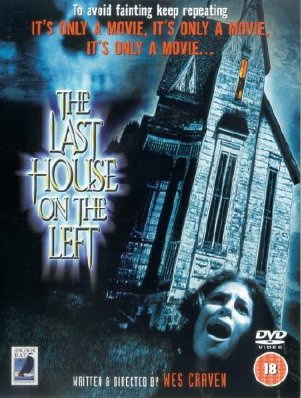
1972’s The Last House On The Left was advertised with the classic (and much-repeated line), “To avoid fainting, keep repeating, ‘It’s only a movie …. it’s only a movie…. it’s only a movie….” That advice is easy to remember during the first part of the film because, up until Mari and Phyllis approach Junior, the movie is fairly cartoonish, with Richard Towers giving an incredibly bad performance as Mari’s father. This film was Wes Craven’s debut as both a director and a writer. By his own admission, Craven had no idea what teenage girls would talk about and, as such, he just wrote a lot of dialogue in which Mari talked about her breasts and Mari’s mother complaining that young women no longer wore bras. (On the commentary that he recorded for the film’s DVD release, Craven succinctly explained, “I guess I was obsessed with breasts.”) This part of the film plays out like a weird counter-culture comedy. Even when we first meet Krug, he’s using his cigar to pop a little kid’s balloon.
The Last House On The Left (1972, dir by Wes Craven, DP: Victor Hurwitz)
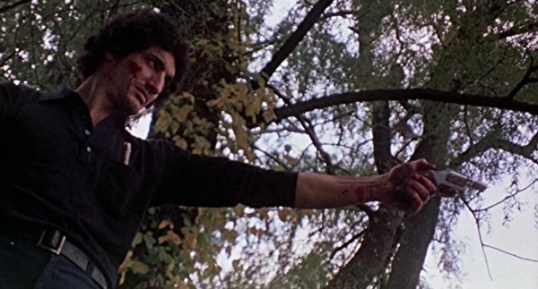
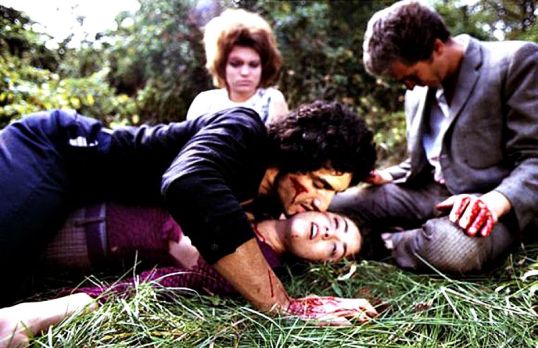
The tone of the film jarringly shifts the minute that Mari and Phyllis step into that apartment. That’s largely due to the performances of David Hess and Fred Lincoln, who are both so convincing in their roles that it can be difficult to watch them. In real life, Fred Lincoln was a stuntman (he’s in The French Connection) and an adult film actor. David Hess, meanwhile, was a songwriter who was looking to break into acting. (Hess’s songs — some of which are beautifully sad and some of which are disturbingly jaunty — are heard throughout the movie.) Hess, in particular, is so frightening as Krug that he spent the rest of his career typecast as sociopathic murderers. The middle part of the film alternates between disturbingly realistic scenes of Mari and Phyllis being tortured and humiliated and cartoonish scenes involving two incompetent cops (one whom is played by Martin Kove) and Mari’s parents. Phyllis is murdered and dismembered in a graveyard and the gore effects remains disturbingly realistic even when seen today. Mari, after being raped by Krug, recites a prayer, and then wades into a nearby lake. Krug shoots her three times. Afterwards, Krug, Weasel, and Sadie try to wash the blood off of themselves, the expression on their faces indicating that even they understand that they’ve gone too far.
Eventually, Krug, Weasel, Sadie, and Junior stop off at a nearby house, claiming to be salespeople who just had a little car trouble. What they don’t realize is that the people who are generously welcoming them to spend the night are also the parents of Mari Collingwood….
Basing his script on Ingmar Bergman’s The Virgin Spring, Wes Craven has often said that The Last House On The Left was meant to be a commentary on the Vietnam War and the way that other films had glamourized violence. That may or may not be true. (Craven has also said that, at the time, he was so desperate to direct a movie that he would have filmed almost anything.) What is true is that the violence in Last House On The Left is not easy to watch. Once it starts, it’s relentless and, at no point, is the audience given an escape. David Hess is so committed to playing a sadist that he never takes a moment to wink at the audience and say, “Hey, we’re just playacting here!” Craven shot the film in a guerilla style and the shaky camera, the natural light, and the grainy images leave you feeling as if you’re watching some sicko’s home movies. At the end of the movie, when Mari’s parents take the same joy in attacking her killers as Krug took in attacking their daughter, it’s hard not to feel that Mari has been forgotten. Everyone has been consumed by the violence that has erupted around them. Even though Richard Towers’s nearly blows the ending with a few hammy line readings, the film still leaves you exhausted.
The Last House on the Left (1972, dir. by Wes Craven, DP: Victor Hurwitz)
Not surprisingly, The Last House On The Left was attacked by most reviewers when it was originally released. The movie played the drive-in and grindhouse circuit for three years, with producer Sean Cunningham often taking out advertisements in local newspapers that read: “You will hate the people who perpetrate these outrages—and you should! But if a movie—and it is only a movie—can arouse you to such extreme emotion then the film director has succeeded … The movie makes a plea for an end to all the senseless violence and inhuman cruelty that has become so much a part of the times in which we live.” The film’s advertisements also contained a warning that no one under 30 should see the movie. Needless to say, The Last House On The Left was a huge hit, especially with viewers under 30.
(One of the great ironies of film criticism is that one of the few critics to defend Last House On The Left was Roger Ebert. Ebert, who would later be one of the slasher genre’s biggest attackers, gave Last House On The Left a very complimentary review and praised it for its political subtext.)
Seen today, The Last House On The Left still packs a punch. It’s a shocking and shamelessly sordid film, one that shows hints of the talent that would make Wes Craven one of the most important directors to work in the horror genre. It’s flawed, it’s exploitive, it’s thoroughly unpleasant, and yet it’s also a film that sticks with you. It’s powerful almost despite itself. It’s not a movie that I would necessarily chose to watch on a regular basis but, at the same time, I can recognize it as being a historically important film. For better or worse, much of modern American horror owes a debt to Wes Craven’s Last House On The Left. Even today, when one is regularly bombarded with horrific images, Last House On The Left still has the power to shock.
At a college that appears to be located on a beach in Hawaii, Dean Whitman (Eric Roberts) is about to lose his job. He’s been accused of taking advantage of his female students, something that he admits is true. Somewhat drunk and disillusioned with the world, Whitman has a conversation with a creepy clown doll. (The doll comes out a box that specifically says that it was made by voodoo priestess.) Whitman decides to play with a gun and — whoops! — shoots himself in the head. Whitman’s mind is transferred into the doll’s body. In the form of the clown doll, Whitman goes after the sorority that he blames for his downfall.
Eric Roberts is only onscreen for a handful of minutes in 2015’s Sorority Slaughterhouse but we hear his voice throughout the film. It turns out that doll is a total pervert! What’s odd is that the doll is also really small and it moves somewhat stiffly, leading me to wonder just how exactly it manages to effortlessly kill so many people. Admittedly, most of the deaths are edited in such a way that we never actually see the doll and the victim in the same shot but it’s still hard to look at that doll and imagine it as a killer. Of course, the victims are all just dumb enough to fall victims to a killer doll. One girl uses the doll as a vibrator. A guy is suffocated with a balloon animal. Someone else is murdered by having Drain-O poured over her. I can’t imagine that product placement was appreciated.
This is a David DeCoteau film and I’m pretty sure that the sorority house was the same house that DeCoteau used in Bigfoot vs D.B. Cooper. It’s hard not to appreciate DeCoteau’s determination to make mockbusters for next to no money. This film obviously owed a lot to Child’s Play and the DeCoteau-directed Puppet Master films and DeCoteau wasn’t going to let a lack of special effects get in the way of the particular killer doll movie. That said, the action moves very slowly and the doll is in no way intimidating, even if it does sound like Eric Roberts reading dirty DMs. Personally, when it comes to collaborations between Eric Roberts and David DeCoteau, I prefer A Talking Cat!?!
Previous Eric Roberts Films That We Have Reviewed:
It’s easy to forget that Doctor Who was originally meant to be an educational show for children.
When the BBC’s Head of Drama, Sydney Newman, first developed Doctor Who, he envisioned it as being a show in which an eccentric old man known as the Doctor and his granddaughter, Susan, would travel to past eras and meet actual historical figures and witness great events firsthand. Accompanying them would be two teachers, Ian Chesterton and Barbara Wright, who would make sure the kids at home understood what they were watching. While Newman allowed that, in order to keep the kids watching, there would be occasional episodes that would focus more an adventure than learning, he also said that the show would not feature any “bug-eyed monsters.”
The first serial, An Unearthly Child, stayed true to Newman’s concept. After stumbling across the TARDIS while investigating the homelife of their newest pupil, Ian and Barbara found themselves traveling to pre-historic times with The Doctor and Susan. Susan was played by Carole Ann Ford while Ian and Barbara were played by William Russell and Jacqueline Hill. Playing the role of the Doctor was veteran actor William Hartnell. Hartnell was 55 years old when he first played the Doctor but he looked and came across as being much older. He played the Doctor as being a crotchety old man, one who resented being saddled with two new companions and who could be quite rude to those he considered to be his inferior. This was early in the series so there was no talk of Time Lords or anything else that Doctor Who fans now take for granted. Susan even took credit for naming The TARDIS, the Doctor’s time machine that, on the outside, appeared to be a blue police call box.
An Unearthly Child introduced the UK to the Doctor. It got respectable ratings and reviews. Viewed today, it’s also pretty boring and it’s easy to see the limitations in Newman’s original concept. Hartnell plays the Doctor as being so ill-tempered that it was a surprise that he didn’t just jettison Ian and Barbara into space. (I used to watch Doctor Who on PBS with my father. The first episodes that we got were the Tom Baker years, followed by the Peter Davison and the Jon Pertwee episodes. It was only then that PBS started showing the Hartnell episodes. To go from Baker, Davison, and Pertwee to the grouchy Hartnell was indeed jarring.) If the show had continued in the style of An Unearthly Child, it probably would not have lasted for more than two series.
Fortunately, the second serial changed everything.
Written by Terry Nation and originally called The Mutants, the second serial introduced The Daleks, the shrill-voiced cyborgs whose cries of “Exterminate! Exterminate!” made them almost as popular as The Doctor himself. Squid-like creatures who lived in tank-like robotic shells and who spoke in electronic voices, the Daleks lived on the planet Skaro. Centuries of nuclear war against the Thals had left the Daleks mutated and trapped in their shells but they were still obsessed with exterminating all of the Thals and eventually conquering the universe. With their robotic exteriors, the Daleks were bulky and often moved awkwardly. (The recurring joke is that all the Doctor has to do to escape the Daleks is find a staircase.) But because the Daleks were so relentless and so determine to exterminate everyone who wasn’t a Dalek, they were still intimidating. Writer Terry Nation based the Daleks on the Nazis, a comparison that was undoubtedly easy for British audiences in 1963, less than 20 years after the end of World War II, to see.
A seven-episode serial, The Daleks premiered on December 21st, 1963 and ran through February 1st, 1964. While the serial was airing, word spread about The Daleks. The first episode was watched by six million viewers. The seventh and final episode was watched by ten million. Four million people were brought to the show by The Daleks. Sydney Newman may not have wanted bug-eyed monsters on Doctor Who but no one could argue with ratings like that. While the First and the Second Doctor would still have a few strictly historical adventures, The Daleks paved the way for the future of the series. The Daleks would return many times. The cavemen from An Unearthly Child were never seen again.
The Daleks opens with TARDIS materializing on the planet that will later be identified as Skaro. The Doctor and Susan want to explore. Ian and Barbara are upset because they want to go back to 1963. (Ian and Barbara always annoyed me but, of all the companions on the original series. they probably did have the most realistic reaction to being swept up in the Doctor’s adventures.) The Doctor flat-out lies about needing to get mercury to repair the TARDIS and uses it as an excuse to explore a nearby city. Soon, The Doctor, Ian, and Barbara are the prisoners of the Daleks while Susan meets the peaceful Thals in the forest. The Daleks and the Thals have been at war for centuries and it has destroyed their world. The Doctor tries to broker a peace, which just leads to the Daleks killing even more Thals. The Doctor can be excused because this was his first meeting with the Daleks. The Thals should have known better than to trust the people who specifically decided to become cyborgs because they didn’t want to ever have to stop fighting.
Seen today, The Daleks holds up fairly well. At seven episodes, it runs a bit long and, for those of us who grew up with Tom Baker and Peter Davison in the lead role, William Hartnell’s Doctor takes some getting used to. The nonstop bickering between The Doctor and Ian gets old quickly. The Thals are almost too naive to be believed.
But the Daleks themselves remain a brilliant creation and, even when seen in grainy, black-and-white, it is easy to understand why they became a phenomenon. Their relentless determination to destroy and exterminate make them intimidating but what really stands out about the Daleks is how forthright they are about what they want. It’s not just that the Daleks want to exterminate you. It’s that they’ll tell you that they want to exterminate you, as if it’s the most reasonable desire that any creature could have. (One reason why The Thals are so unsympathetic is that they keep falling for Dalek tricks, despite the Daleks being pretty honest about their hatred of the Thals.) From the minute that the Daleks make their first appearance, cornering Barbara in their city, they give Doctor Who a jolt of energy that it very much needed.
This serial ends with The Doctor convinced that the Daleks have been destroyed and will no longer be a threat. Of course, The Doctor had never been so wrong. The Daleks would return and Doctor Who would never be the same.
On the distant planet Eternia, the evil Skeletor (Frank Langella) has finally taken over Castle Grayskull and imprisoned the Sorceress (Christina Pickles). When He-Man (Dolph Lundgren) and his allies Teela (Chelsea Field), Man-At-Arms (Jon Cypher), and Gwildor (Billy Barty) launch a rescue mission, they find themselves overwhelmed by Skeletor’s forces and are forced to use an interdimensional key to escape.
He-Man and his friends end up in 1980s California. The key is lost in the process and discovered by two teenagers, one of whom is played by a pre-Friends Courteney Cox. Skeletor sends Evil-Lyn (Meg Foster), Beast Man (Tony Carroll), and a host of other henchmen after the key.
The first (and, as of this writing, only) live action film to be based on the famous Mattel action figures, Masters of the Universe was produced by Cannon and it should have been a lot better than it actually was. The idea of He-Man and Skeletor in modern-day California was a good one and it’s easy to imagine scenes of He-Man and Skeletor wandering around downtown Los Angeles and being as shocked by the locals as the locals are by them. Big, blonde Dolph Lundgren seemed like the ideal pick for the role of He-Man. Best of all, from the perspective of many, is that there was no Orko. The most annoying member of the He-Man ensemble was left out of the film. (Billy Barty’s Gwildor may have sometimes been annoying but he was still better than Orko.)
Unfortunately, the movie did not live up to anyone’s expectations. Taking more inspiration for Star Wars and Conan than from any of the He-Man mythology, Cannon’s version of Masters of the Universe is a generic action movie in which He-Man is reduced to being just another forthright hero with a sword. (He’s not Prince Adam in this movie. He’s just He-Man.) Teela doesn’t even wear her famous costume. The main problem with Masters of the Universe is that so few of the Masters actually appear in the movie. This was a Cannon/Mattel co-production but apparently, Mattel was stingy when it came to delivering their half of the budget. There wasn’t enough money to bring He-Man’s rogue’s gallery (not to mention the majority of his allies) to life. The means no Trap-Jaw and no Mer-Man. Not even Ram Man makes the cut and this movie could have really used Ram Man.
Fortunately, Skeletor and Evil-Lyn are present to pick up the slack. (When it came to the Masters of the Universe franchise as a whole, the villains were always more entertaining than the heroes.) With the help of a surprisingly convincing makeup job that give him a skull face, Frank Langella appears to be having the time of his life as the evil Skeletor and I wasn’t surprised to recently read that this was one of Langella’s favorite roles. Langella seems to having a blast playing such a thoroughly evil and cartoonish character and his scenes have a playful energy that the rest of the film is lacking. Meg Foster, she of the piercing eyes, is the perfect choice for Evil-Lyn and is magnetically evil. They provide some of the most entertaining villainy since Max von Sydow announced, “Klytus, I’m bored,” at the start of Flash Gordon.
Masters of the Universe was a critical failure when it was released in 1987, which isn’t a surprise. A film based on a toy line and a children’s cartoon? Maybe that would be an Oscar nominee today but, in 1987, there was no way the critics were going to go for it. But Masters of the Universe was also a box office failure, one of many high-profile Cannon films that failed to score when it was first released. (It did find a cult following when it was released on video.) A proposed sequel — in which Lundgren would be replaced as He-Man by surfer Laird Hamilton — was abandoned. The sets that had been built for Masters of the Universe 2 were instead used for Cyborg, starring Jean-Claude Van Damme.
A new live action Masters of the Universe film is scheduled to be released in 2026. Jared Leto will be playing Skeletor. That is probably all that needs to be said.
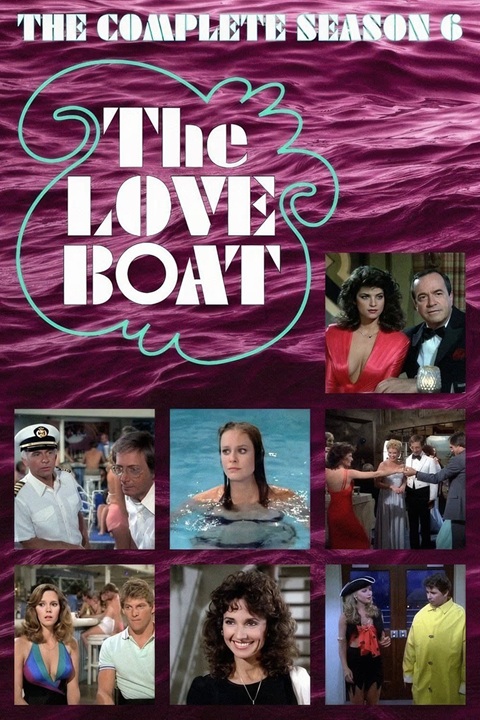
Welcome to Retro Television Reviews, a feature where we review some of our favorite and least favorite shows of the past! On Wednesdays, I will be reviewing the original Love Boat, which aired on ABC from 1977 to 1986! The series can be streamed on Paramount Plus!
Set a course for adventure, your mind on a new romance!
Episode 6.20 “The Zinging Valentine/The Very Temporary Secretary/Final Score”
(Dir by Richard Kinon, originally aired on February 12th, 1983)
It’s a Valentine’s Day cruise!
A football player (John Amos) tries to romance an intellectual college professor (Jayne Kennedy) who doesn’t care about sports. The professor is impressed when the player reveals that he’s written a book. But she’s shocked when she reads it and discovers how much time the player spent scoring off-the-field.
The head of a temp agency (Don Adams) comes on the boat to inform a magazine editor (Fannie Flagg) that he hasn’t been able to find a secretary for her. But, when he meets her, Adams pretends to be the secretary, even though he doesn’t know how to take dictation or type.
Don Most is a cocky jerk who is informed by a singing telegram girl (Suzie Scott) that his girlfriend is dumping him. Most gets upset. Scott goes to look for him so she can apologize but — uh oh! The ship sets sail! Scott is stuck on the boat but, believe it or not!, she and Don Most eventually end up falling in love.
This was a sweet, uncomplicated, and likably lightweight episode. At its best, The Love Boat was the epitome of television comfort food. It’s a show that you watch because you know exactly what’s going to happen and you also know that everyone is going to get a happy ending. This episode features likable guest stars (and yes, I’m including Don Adams, who was a lot more likable here than he was on Check It Out) and all the romance that you could hope for. Personally, I loved that the ship was decorated for Valentine’s Day. All of those hearts? They totally made me want to take a cruise next February. (Hint, hint….)
This episode also featured scenes in which all of the guest stars interacted with each other and discussed their problems. I don’t think I’ve ever seen that on The Love Boat before. Usually, the guest stars only interact with the people in their stories. Instead, for this episode, we got scenes of Jayne Kennedy telling Fannie Flagg about how much she liked her magazine. Suzie Scott told Kennedy and Flagg about how tough it was having to delivers singing messages for people. Seeing Don Most, John Amos, and Don Adams sitting in the Pirate’s Cove and discussing their problems while Isaac watched was surprisingly entertaining. In this episode, the boat felt truly alive and active. It seemed like a genuinely fun cruise and a reminder that the Love Boat offers something for everyone.
This was a likable episode. I enjoyed it. Listen, just because I love horror movies, that doesn’t mean I can’t love my weekly cruise on the Love Boat!
Hi, everyone! Well, as you can tell by looking around the site today, it’s October and it’s also the start of our annual Horrorthon here at the Shattered Lens! This is my favorite time of year and one of the things that truly makes it special is that it provides me with an excuse to write about some of my favorite horror films. When it comes to Horrorthon, there’s always time for one more story.
Today’s Horror Scene of the Day is the opening of John Carpenter’s 1980 classic, The Fog. When John Houseman says that there’s time for one more ghost story, you know you better listen.
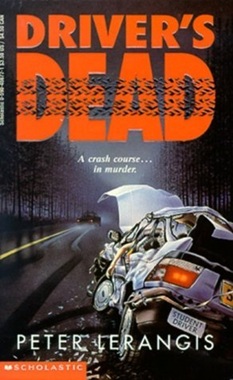
In the 1994 novel Driver’s Dead, teenage Kirsten is not only currently living in a house that she thinks might be haunted by the ghost of the son of the previous owners but she’s also somehow gotten a reputation for being a bad driver! (Ironically enough, the son of the previous owners was also killed in a car crash …. or was he?)
When it come to having one’s driving unfairly criticized, I could relate to Kirsten. I can still remember the pain of those days when I was “learning” how to drive. Learning is in quotes because, quite frankly, I already knew how to drive. I had seen enough TV shows and gone on enough road trips with my family to know which pedal to push and how to turn the steering wheel. And yet, every driving instructor that I had to deal with insisted on being like totally critical of me. One of the first times that I drove on the road, I got yelled at by the instructor because I didn’t look both ways before making a lane change.
“I looked in the rearview mirror!” I snapped.
Apparently, that was not the right answer because she kept yelling at me until I finally said, “How am I supposed to concentrate on driving with you talking all the time!?”
That also did not go over well. That particular instructor refused to ride with me anymore. I went home in tears so my mother went up to the school and yelled at all of the instructors for being rude to me. The next time I drove, it was with the owner of the school, who was much nicer to me. The owner of the school asked me if I had a lazy eye. “Not anymore,” I replied.
Anyway, you get my point. I somehow managed to get my license despite having to deal with some pretty clueless driving instructors.
Anyway, back to Driver’s Dead. Kirsten decides to deal with her driving struggles by getting some help from Rob. Rob shows her how to drive but it turns out that his father is a big-time racist and Rob is kind of a jerk as well. When Rob tries to grope her, Kirsten tells him to get lost. (Yay!) Then Rob turns up dead. Uh-oh.
Who murdered Rob and how is it connected to the blood that keeps seeping out from underneath the closet in Kirsten’s bedroom? And what to make of Mr. Busk, the alcoholic driver’s teacher who has apparently never gotten over his experiences in Vietnam?
Driver’sDead is a YA book from the mid-90s so it’s definitely a bit dated. Check out the reference to floppy disks and running DOS on a computer! Check out Kirsten’s crush on Jason Priestly! But I still found it to be entertaining because Kirsten was a likable character and the plot neatly mixed the supernatural with a standard YA mystery story.
Plus, who can’t relate to being a better driver than most people realize? Ghosts and murder aside, I shared Kirsten’s struggle.
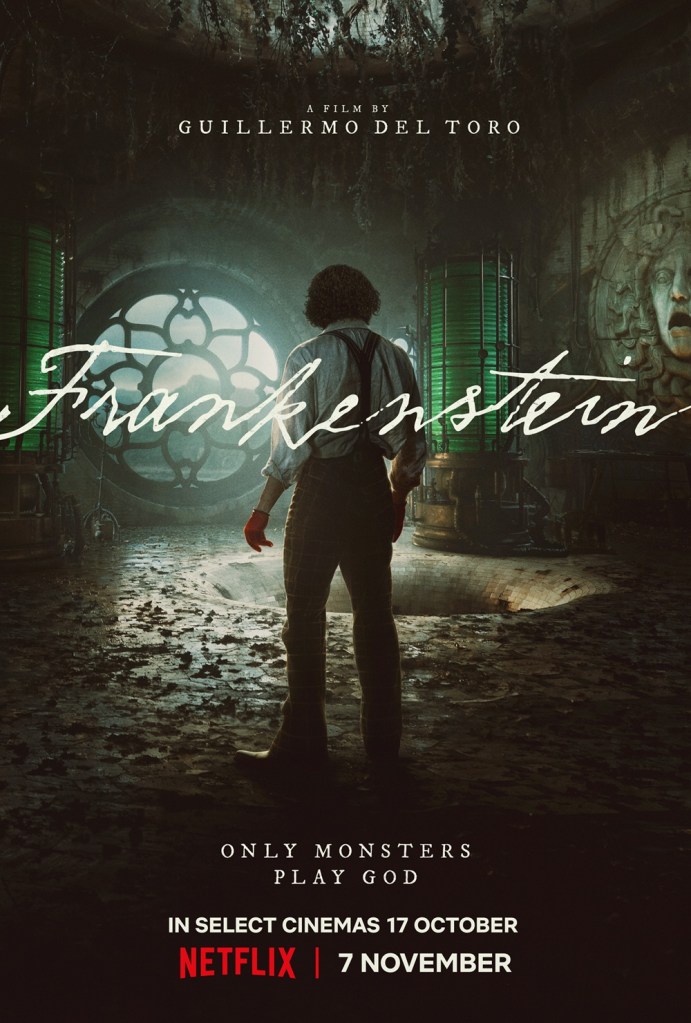
The official trailer for Guillermo Del Toro’s take on the Mary Shelley’s classic gothic horror Frankenstein has finally been released.
An earlier teaser was sent out months ago, but that was mostly played off like sizzle reel of what Del Toro had been up to with this latest adaptation. This official trailer gives us a much more closer look at the type of adaptation Del Toro decided to take with Shelley’s novel of the tortured scientist and his creation.
Even though it will be show up on Netflix on November 7, 2025, I do believe that this film needs to be seen on the big screen when a select cities get them on October 17, 2025.
In 1959, the Clutter Family was murdered in Holcomb, Kansas.
Herbert Clutter was a farmer and was considered to be prosperous by the standards of small-town Holcomb. Neither he nor his wife nor his teenage son and daughter were known to have any enemies. The brutality of their deaths took not just the town but the entire state by surprise. People like the Clutters were not supposed to be brutally murdered. They certainly weren’t supposed to be brutally murdered in a tight-knit community like Holcomb or in a state like Kansas.
The Clutters
The author Truman Capote traveled to Holcomb with his friend Harper Lee, looking to write a story about how the heartland was dealing with such a brutal crime. Six weeks after the murders, while Capote and Lee were still conducting their interviews, two small-time criminals named Dick Hickock and Perry Smith were arrested for the crime. Capote’s proposed article about Holcomb instead became the basis for his best-known book, In Cold Blood. Capote followed the case from the initial investigation to the eventual execution of both Hickok and Smith. He examined the backgrounds of the two criminals, especially Perry Smith’s. (Indeed, there were some who felt that Capote saw something of himself in the mentally-fragile Smith.) In Cold Blood was Capote’s most successful book and it also launched the entire “true crime” genre. It also may have been Capote’s downfall as Capote reportedly spent the rest of his life haunted by the feeling that he would never top the book and that he had potentially exploited Perry Smith while writing it. In Cold Blood may be critical of the death penalty but, if Smith and Hickok hadn’t gone to the gallows, Capote would never have had an ending for the book.
(The writing of In Cold Blood and Capote’s subsequent struggles are dramatized in the excellent Capote.)
When it was published in 1965, In Cold Blood shot up the best seller lists. A film version was an inevitability. Otto Preminger — who had already made films out of Anatomy of a Murder, Exodus, Advice and Consent, and The Cardinal — was eager to turn the book into a film and one can imagine him churning out some epic version with his usual all-star cast. (Sal Mineo as Perry Smith? Peter Lawford as Dick Hickok? With Preminger, anything was possible.) However, Capote sold the rights to Richard Brooks, an independent-minded director who was also an old friend. Brooks decided to duplicate Capote’s “non-fiction novel” approach by actually shooting his film in Holcomb and having several residents of the town play themselves. He also rejected Columbia’s suggestion that Smith and Hickok should be played by Paul Newman and Steve McQueen. Instead, he cast former child actor Robert Blake as Perry Smith and an up-and-coming character actor named Scott Wilson as Dick Hickok. The only “star” who appeared in the film was television actor John Forsythe, who played the Kansas detective who was placed in charge of the investigation.
The story plays out in deliberately harsh black-and-white. (Legendary cinematographer Conrad Hall made his debut with this film.) The opening contrasts scenes of Smith and Hickok, both recently released from prison, meeting up in Kansas with scenes of the Clutter family innocently going about their day. Perry Smith is neurotic and quick to anger, a wannabe tough guy who wears a leather jacket and whose greasy hair makes him look less like a cunning criminal and more like an understudy in a regional production of West Side Story. Dick Hickok is friendly and slick, a compulsive shoplifter who claims that his smile can get him out of anything. In jail, Hickok heard a story that suggested that Mr. Clutter kept a lot of money hidden away in a safe on his farm. Hickok’s plan is to tie up and rob a family of strangers, with the assumption being that, by the time the Clutters get loose and call the police, he and Smith will already be far out of town. Neither he nor Smith seem like natural-born murderers. Smith seems to be too sensitive. Hickok seems like the epitome of someone who brags but doesn’t follow through. And yet, the morning after the robbery, four of the Clutters are discovered murdered in their own home.
The film delves quite a bit into Perry Smith’s background. Throughout the film, he has flashbacks to his abusive father and his promiscuous mother. When Alvin Dewey (played by John Forsythe) investigates Smith’s family, the recurring theme is that Perry never really had much of a chance to become anything more than a criminal. We learn less about Dick Hickok’s background, beyond the fact that he was a popular high school jock who turned mean after a car accident. And yet, despite the fact that the film is clearly more interested in Perry Smith than Dick Hickok, it’s Scott Wilson who dominates the film. It’s not that Robert Blake gives a bad performance. It’s just that Perry is such a neurotic mess and Blake gives a performance that is so method-y that occasionally, you’re reminded that you’re just watching a movie. Scott Wilson, on the other hand, gives a very natural performance as Dick Hickok. There’s nothing particularly showy about his performance and that makes Hickok all the more disturbing as a criminal and a potential murderer. If you’ve spent any time in the country, you’ve met someone like Dick Hickok. He’s the friendly guy who always knows that right thing to say but there’s something just a little bit off about him. He’s likable without being trustworthy.
A few years ago, when I saw that In Cold Blood was going to be airing on TCM, I told my aunt that I was going to watch the film. She replied that I shouldn’t. She saw the film when it was originally released and she described it as being incredibly disturbing. Despite her warning, I watched the film and I have to admit that she was right. Even though it’s nearly 60 years old and not particularly explicit when compared to the true crime films of today, In Cold Blood is still a disturbing viewing experience. Towards the end of the film, we finally see the murders in flashback and the image of Smith and Hickok emerging from the darkness of the farmhouse will haunt you. There’s not a lot of blood. The camera often cuts away whenever the actual murders occur (we hear more gunshots than we see) but the Clutters themselves are sympathetic and innocent victims and their deaths definitely hurt. Indeed, considering that the film falls on the more liberal side of the question of root causes, In Cold Blood deserves a lot of credit for not shying away from the brutality of the crimes. After spending 90 minutes emphasizing Perry Smith’s terrible childhood, it was important to remind the audiences of what he and Dick Hickok actually did.
The murder scene is so nightmarish that it actually makes it a bit difficult to buy into the film’s anti-death penalty argument. The film may end with Smith remorseful and a reporter (Paul Stewart) talking about how revenge is never the answer but the film’s liberal talking points feel hollow after witnessing the murder of four innocent people. (Ironically, it turned out there was no safe so those four people died so Smith and Hickok could steal about forty dollars.) A few years ago, I probably would have been very moved by the film’s anti-death penalty message. While I’m still opposed to the death penalty because I think there’s too much of a risk of a wrongly convicted person being executed, I’m long past having much personal sympathy for the Perry Smiths of the world.
Overall, In Cold Blood remains a powerful and disturbing movie. It was a film that was nominated for several Oscars, though it missed out on Best Picture due to 20th Century Fox’s huge campaign for Dr. Dolittle. Neither Blake nor Wilson were nominated, which is evidence that they were perhaps too convincing as Smith and Hickok for the Academy’s taste. While Robert Blake would go on to have the more storied career, Scott Wilson was a dependable character actor up until his death in 2018. A whole new generation of fans knew him not as Dick Hickok but instead as The Walking Dead‘s beloved Herschel Greene.
One final note: Both the book and the film present the murders as being an aberration, something that neither Smith nor Hickok originally planned. In 2013, new evidence was released that revealed the Smith and Hickok were the number one suspects in the murder of Christine and Cliff Walker and their two children, a crime that occurred in Florida shortly after they fled Kansas. The two of them were questioned at the time and given a polygraph test, which they both passed. The bodies of Smith and Hickok were exhumed for DNA testing, The tests came back inconclusive.





 Through the Shattered Lens