4 Shots From 4 Films: Special Robert Altman Edition


4 Shots From 4 Films is just what it says it is, 4 shots from 4 of our favorite films. As opposed to the reviews and recaps that we usually post, 4 Shots From 4 Films lets the visuals do the talking!

Today, we celebrate what would have been the 101st birthday of the great director, Robert Altman!  It’s time for….

4 Shots From 4 Robert Altman Films

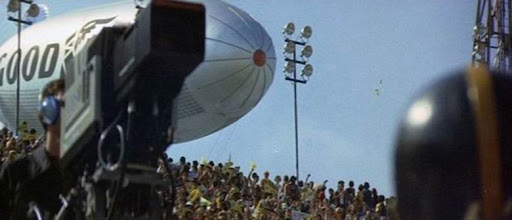
MASH (1970, dir by Robert Altman, DP: Harold E. Stine)

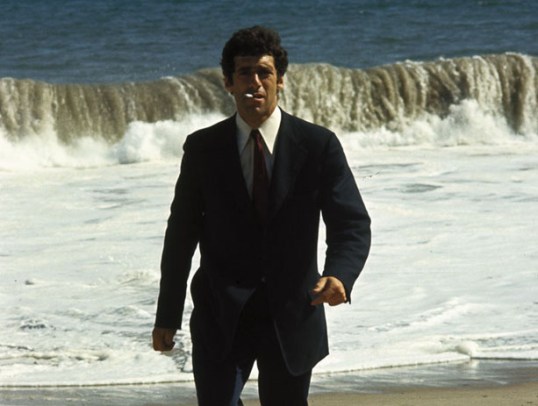
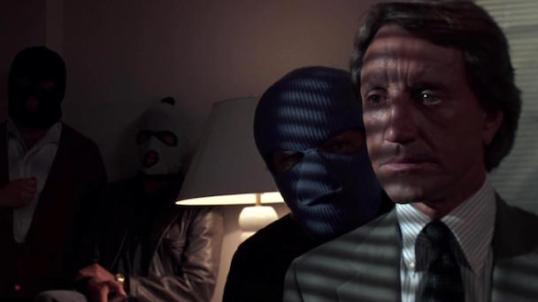
The Long Goodbye (1973, dir by Robert Altman, DP: Vilmos Zsigmond)

Nashville (1975, dir by Robert Altman, DP: Paul Lohmann)

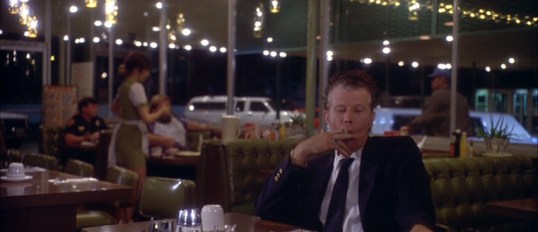
Short Cuts (1993, dir by Robert Altman, DP: Walt Lloyd)

Music Video of the Day: Because I Do by X (1982, dir by Peter Haskell)


Here’s a classic music video from X.

When I was looking for a music video to share today, I discovered that the majority of the music videos had recently been uploaded to YouTube were AI.  It wasn’t just that the videos were made with AI.  It was that the singers and the songs were often AI as well!  That was disturbing, especially since most of the AI artists didn’t sound that different from their autotuned real-life counterparts.

Needless to say, I was happy to find this from Exene and X.

Enjoy!

Late Night Retro Television Review: Highway to Heaven 5.8 “Goodbye, Mr. Zelinka”


Welcome to Late Night Retro Television Reviews, a feature where we review some of our favorite and least favorite shows of the past!  On Thursdays, I will be reviewing Highway to Heaven, which aired on NBC from 1984 to 1989.  The entire show is currently streaming on Tubi and several other services!

This week, it’s time for yet another student protest.

Episode 5.8 “Goodbye, Mr. Zelinka”

(Dir by Michael Landon, originally aired on June 23rd, 1989)

The students at Lincoln High are upset to learn that beloved English teacher Mr. Zelinka (Lew Ayres) is going to have to retire because he’s reached the mandatory age of 70.  The school’s new maintenance workers — Jonathan Smith and Mark Gordon — suggest that they should all conduct a walk-out to demand that Zelinka be allowed to keep his job.  The evil school board president (James Karen) says that Zelinka can stay if he takes and passes an exam.  However, the exam is rigged for Zelinka to fail.  Jonathan uses “the stuff” to make sure that Zelinka not only passes but that he also gets the highest score ever.  In the past, Jonathan always refused to use “the stuff” to help people cheat.  Instead, Jonathan would have shown the school board president the error of his ways.  But, for this episode, Jonathan rigs the rigged exam and the villain is left in power so that he can presumably continue to make Mr. Zelinka’s life miserable.

I did not like this episode.  Yeah, it’s heart was in the right place but the entire school walking about in support of Mr, Zelinka just felt kind of silly.  I mean, did every student at the school have Mr. Zelinka for English?  What did everyone’s parents think about the protest?  If Mr. Zelinka had been a compelling character, may be I would have felt differently but  Mr. Zelinka was instead a pretty passive character and I have to admit that I wondered about all the other good teachers who had been forced to retire at 70.  Why didn’t Jonathan show up to help any of them out?  What made Mr. Zelinka so special?  It didn’t help that Lew Ayres was 80 years old when he played Mr. Zelinka and that he looked and sounded even older.  The obviously frail Ayres comes across as someone who maybe does need to retire.

I’ve sat through a lot of Highway to Heaven episodes about clean-cut teenagers walking out of class so that they can protest injustice.  Highway to Heaven was a very earnest show and that was one of the things that made it likable.  But, by the fifth season, Highway to Heaven‘s formula was a bit less effective than it had been in the past.  This is an episode just just seems to be going through the motions.  This is also the rare Highway to Heaven episode in which I wanted someone to tell Jonathan and Mark to just mind their own business.

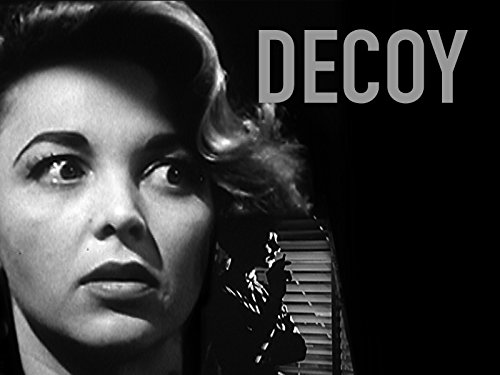
Retro Television Review: Decoy 1.21 “The Showplace”


Welcome to Retro Television Reviews, a feature where we review some of our favorite and least favorite shows of the past!  On Thursdays, I will be reviewing Decoy, which aired in Syndication in 1957 and 1958.  The show can be viewed on Tubi!

Casey goes under cover at yet another cocktail lounge.

Episode 1.21 “The Showplace”

(Dir by David Alexander, originally aired on March 3rd, 1958)

There’s been a murder at a cocktail lounge.  One of the girls who worked there has been found in alley, strangled.  That means that it’s time for Casey to go undercover as a clip-joint girl, convincing men to buy her drinks.  It’s a sleazy place, run by two brothers (Bill Hayes and Lewis Troy) and featuring a sad-eyed bartender (Lou Polan) with a mysterious past.  Casey’s investigation uncovers all sorts of nefarious dealings.  In the end, the murderer is revealed and it’s not who you might have thought.  In a cocktail lounge full of largely ugly people, the murderer is the one handsome man.  Casey mentions that he may have been handsome on the outside but, on the inside, there was nothing.

This was a great episode, a moody slice of downbeat noir that featured Casey doing actual undercover work.  The cocktail lounge was a wonderfully atmospheric location, the supporting cast was full of strong character actors, and Beverly Garland did a great job as Casey both empathized and suspected the men with whom she was working.

This episode ended, as the best ones always did, with Casey talking about the tragedy of it all.  Casey’s New York is a city of dreams but it can also be a nightmare.

Song of the Day: Keep Hope Alive by Crystal Method


Today’s song of the day is from Crystal Method.  Though Keep Hope Alive was featured in the film The Replacement Killers, it was actually inspired by a 1992 speech from Jesse Jackson, which is heard throughout the song.

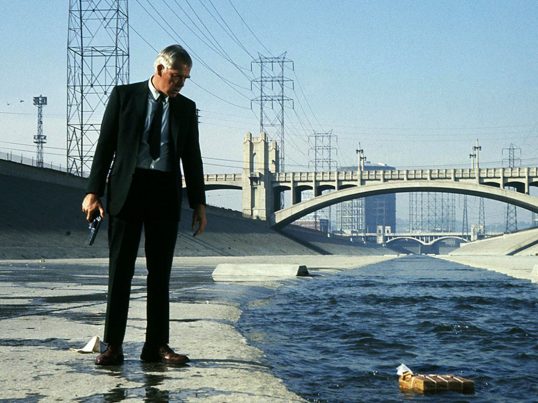
Scenes That I Love: Lee Marvin on Point Blank


102 years ago today, Lee Marvin was born in New York City.  One of the great screen tough guys, Lee Marvin played stoic and determined men who you didn’t want to upset.

That was certainly true of his role as Walker in 1967’s Point Blank.  A thief who was double crossed by his partner and the organization to which his partner was in debt, Walker is determined to get back the money that he stole from someone else.  Relentlessly, Walker moves from one mob boss to another and repeatedly, those bosses make the mistake of thinking that they can double cross him again.

Point Blank (1967, directed by John Boorman)

In this scene, which was reportedly considered to be shockingly violent by 1967 standards, Carter (Lloyd Bochner) attempts to fool Walker, just to discover that Walker is smarter and far more ruthless than anyone realizes.

4 Shots From 4 Films: Special John Frankenheimer Edition


4 Shots From 4 Films is just what it says it is, 4 shots from 4 of our favorite films. As opposed to the reviews and recaps that we usually post, 4 Shots From 4 Films lets the visuals do the talking!

John Frankenheimer was born 96 years ago today, in New York City.  He got his start working in live television and went on to become one of the best directors of thrillers around.  After getting off to a strong start in the 60s, directing several classic films (many of which had a political subtext), Frankenheimer struggled in the 70s (though even that decade saw him directing the classic Black Sunday) before making a comeback in the 90s.  (1998’s Ronin is regularly cited as having one of the best car chases ever captured on film.)  He was also one of the first film directors to make the transition to regularly working for cable channels like TNT and HBO.  Indeed, the films that he made for HBO played no small part in establishing HBO’s reputation as being a “prestige” network.

It’s time for….

4 Shots From 4 John Frankenheimer Films

The Manchurian Candidate (1962, dir by John Frankenheimer, DP: Lionel Lindon)

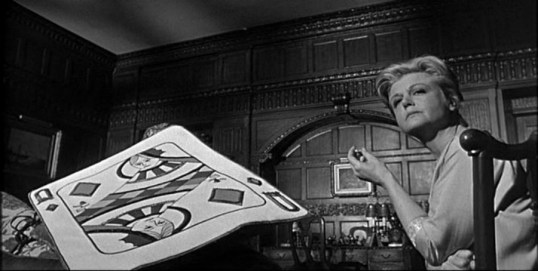
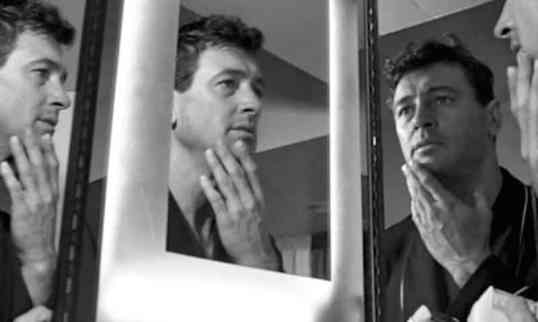
Seconds (1966, dir by John Frankenheimer, DP: James Wong Howe)

Black Sunday (1977, dir by John Frankenheimer, DP: John A. Alonzo)

52 Pick-Up (dir by John Frankenheimer, DP: Jost Vocana)

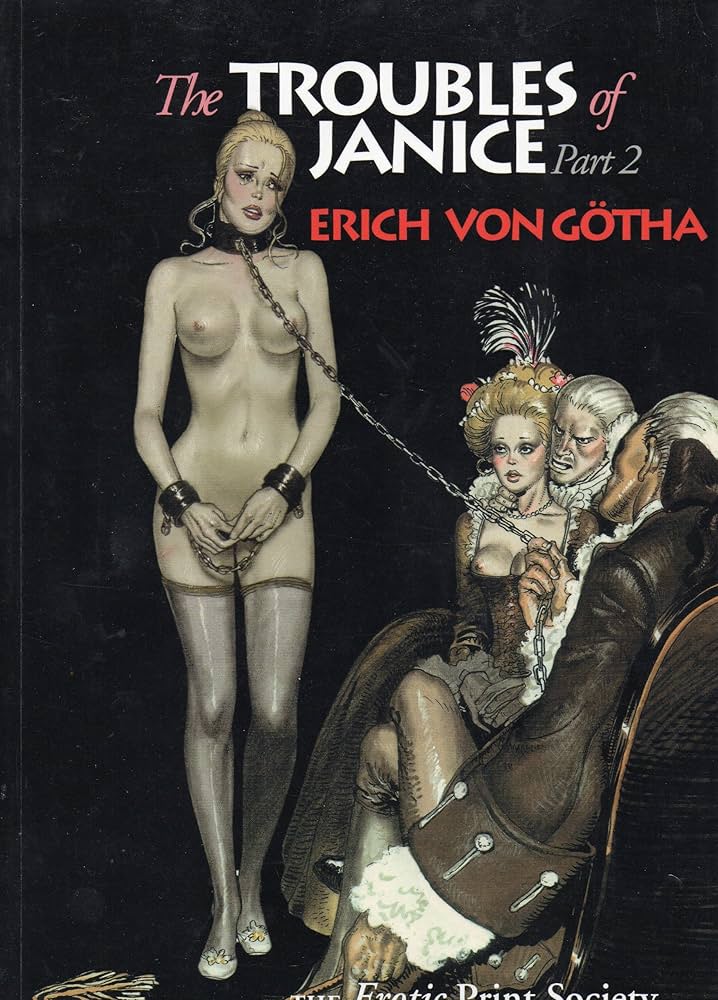
Guilty Pleasure No. 106: The Troubles of Janice (by Erich von Götha)


The Troubles of Janice by Erich von Götha remains one of the most infamous works in erotic comics, a multi-volume series spanning 1987 to 1996 that draws readers into a vivid world of sadomasochistic intrigue amid the lavish decay of 18th-century England. Janice McCormick, a curvaceous young woman released from Newgate Prison, soon finds herself ensnared by the sadistic Duke Viscount Vauxhall of Nether Wallop, whose experiments in female discipline propel her through a cascade of blackmail, assassinations, and sensual escapades—from the clandestine Hellfire Club to the shimmering waterways of Venice. Serialized initially in French magazines and later compiled into albums such as Parts 1 through 4, the narrative echoes the spirit of the Marquis de Sade’s Philosophy in the Bedroom, pitting innocence against unbridled authority in panels brimming with exaggerated forms and explicit encounters that straddle the edge of terror and desire.

This series thrives squarely in guilty pleasure territory, offering a procession of BDSM scenarios tailored for indulgent, after-hours reading—Janice bound and enduring floggings, group violations, and ceremonial degradations at the hands of depraved aristocrats, clergy, and a imposing black servant named Horace, whose prominence marks the early chapters. The artwork begins with a raw, straightforward style, its stark lines accentuating phallic prominence and voluptuous contours, but evolves across the run into more refined techniques, incorporating nuanced shading, occasional full-color pages, and fluid compositions that convey genuine motion. Under the pseudonym of British artist Robin Ray, von Götha refined his craft from earlier projects like the sporadic Torrid comic of the 1980s, achieving here a theatrical intensity that elevates rote erotica into something akin to a decadent opera. Janice’s subjugation under Vauxhall builds to extravagant bacchanals, her figure a stage for boundless transgression, sustained by slender plotlines: a doomed union with Lord Mitchcombe, clerical extortion of her fortune, and a desperate flight to Venice. It delivers unvarnished pornographic fantasy, where non-consent heightens the illicit allure, interwoven with dated racism, sexism, and brutality that clash with contemporary standards.

Nevertheless, amid its sensationalism, The Troubles of Janice carries a sly undercurrent that resonates as guilty pleasure, while dedicated admirers in specialized erotica and Sadean circles regard it as elevated art for its bold dissection of dominance and moral corruption. Enthusiasts praise von Götha’s fidelity to historical particulars—powdered periwigs, flickering chambers, and rigid social strata—which grounds the excess in authenticity, recasting Janice’s sufferings as a pictorial meditation on control and yielding. The work’s longevity, evidenced by deluxe reprints into 2008 via publishers like Dynamite and Priaprism/Last Gasp, underscores this devoted following, as initial stark visuals mature into polished depictions of perspiration, anguish, and rapture rendered with technical finesse. Partnership with writer Bernard Joubert lends philosophical weight reminiscent of Sade’s justifications for indulgence, complemented by von Götha’s advertising and design heritage, which infuses each frame with compelling, voyeuristic magnetism.

The episodic structure fosters escalating drama without pause: Janice’s journey from captive to bereaved inheritor to elusive temptress parallels gothic archetypes, her physique weathering not only corporal trials but subtle emotional fissures that suggest deeper psyche amid the torment. Venetian interludes in subsequent volumes add worldly elegance, with Janice alluring period luminaries amid carnivalesque revels and canal rendezvous, a momentary reprieve prior to recapture. Visually, the shift from monochrome austerity to vivid palettes enlivens flesh tones and intensifies ominous depths. Fair assessment reveals shortcomings, however: proportions veer toward the grotesque, recurring motifs dull the initial impact, and pervasive misogyny, though fitting the fantastical milieu, borders on excess even for 1980s sensibilities. Stereotypes such as Horace’s portrayal jar in modern light, affirming its roots in London’s pre-PC erotic underbelly.

Within insular communities, such elements paradoxically enhance its stature—collectors and forums acclaim von Götha as a virtuoso of restraint, his standalone prints and mythic illustrations perpetuating the legacy, bolstered by exhibitions in Bologna and Paris that confer artistic validity. To the broader audience, it embodies quintessential guilty pleasure—discreetly concealed material that fulfills taboo yearnings sans apology. The Troubles of Janice persists by unflinchingly engaging the subconscious, compelling confrontation with shadowed impulses through line and shade. Whether approached for its carnality or its Sadean resonances, The Troubles of Janice endures as a divisive masterpiece, ideally encountered with caution.

Previous Guilty Pleasures

  1. Half-Baked
  2. Save The Last Dance
  3. Every Rose Has Its Thorns
  4. The Jeremy Kyle Show
  5. Invasion USA
  6. The Golden Child
  7. Final Destination 2
  8. Paparazzi
  9. The Principal
  10. The Substitute
  11. Terror In The Family
  12. Pandorum
  13. Lambada
  14. Fear
  15. Cocktail
  16. Keep Off The Grass
  17. Girls, Girls, Girls
  18. Class
  19. Tart
  20. King Kong vs. Godzilla
  21. Hawk the Slayer
  22. Battle Beyond the Stars
  23. Meridian
  24. Walk of Shame
  25. From Justin To Kelly
  26. Project Greenlight
  27. Sex Decoy: Love Stings
  28. Swimfan
  29. On the Line
  30. Wolfen
  31. Hail Caesar!
  32. It’s So Cold In The D
  33. In the Mix
  34. Healed By Grace
  35. Valley of the Dolls
  36. The Legend of Billie Jean
  37. Death Wish
  38. Shipping Wars
  39. Ghost Whisperer
  40. Parking Wars
  41. The Dead Are After Me
  42. Harper’s Island
  43. The Resurrection of Gavin Stone
  44. Paranormal State
  45. Utopia
  46. Bar Rescue
  47. The Powers of Matthew Star
  48. Spiker
  49. Heavenly Bodies
  50. Maid in Manhattan
  51. Rage and Honor
  52. Saved By The Bell 3. 21 “No Hope With Dope”
  53. Happy Gilmore
  54. Solarbabies
  55. The Dawn of Correction
  56. Once You Understand
  57. The Voyeurs 
  58. Robot Jox
  59. Teen Wolf
  60. The Running Man
  61. Double Dragon
  62. Backtrack
  63. Julie and Jack
  64. Karate Warrior
  65. Invaders From Mars
  66. Cloverfield
  67. Aerobicide 
  68. Blood Harvest
  69. Shocking Dark
  70. Face The Truth
  71. Submerged
  72. The Canyons
  73. Days of Thunder
  74. Van Helsing
  75. The Night Comes for Us
  76. Code of Silence
  77. Captain Ron
  78. Armageddon
  79. Kate’s Secret
  80. Point Break
  81. The Replacements
  82. The Shadow
  83. Meteor
  84. Last Action Hero
  85. Attack of the Killer Tomatoes
  86. The Horror at 37,000 Feet
  87. The ‘Burbs
  88. Lifeforce
  89. Highschool of the Dead
  90. Ice Station Zebra
  91. No One Lives
  92. Brewster’s Millions
  93. Porky’s
  94. Revenge of the Nerds
  95. The Delta Force
  96. The Hidden
  97. Roller Boogie
  98. Raw Deal
  99. Death Merchant Series
  100. Ski Patrol
  101. The Executioner Series
  102. The Destroyer Series
  103. Private Teacher
  104. The Parker Series
  105. Ramba

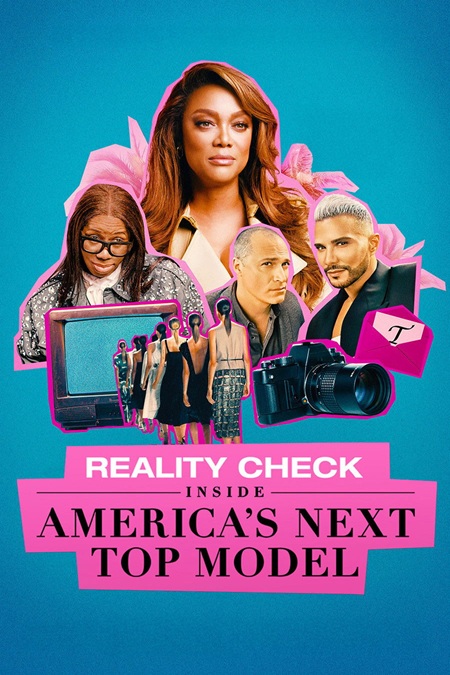
Docuseries Review: Reality Check: Inside America’s Next Top Model


Reality Check: Inside America’s Next Top Model is the latest three-episode docuseries from Netflix.  It takes a look at the history of the groundbreaking reality show that was once loved and which has since been declared problematic.  It features interviews with some of the  models, most of whom share some very harrowing stories about how they were treated while appearing on the show.  (Shandi Sullivan’s story epitomizes everything that is exploitive about reality television.)  Producer Ken Mock talks about how the show’s format was inspired by the first season of Making the Band.  (Ken seems to be under the impression that O Town is currently a beloved cultural institution.)  Jay Manuel talks about being a part of the show and how he was treated by Tyra Banks after he tried to leave.  J Alexander talks about how, after he suffered a stroke, Tyra never reached out to him.  Nigel Barker pretends to be ashamed of some of the challenges that he photographed and judged.  We get clips of TikTokers watching the show during the COVID lockdown and complaining about …. well, everything.

Tyra Banks is also interviewed.  The series paints Banks as a villain and yet, she not only consents to be interviewed but actually seem to enjoy it.  That’s because Tyra Banks isn’t stupid.  She apologizes without actually apologizing because she understands that a real apology would be seen as a sign of weakness, even by those demanding one.  Even more importantly, she understands that reality television demands a villain.  It demands someone who can say outrageous things with style.  It demands someone that people will watch so that they can be shocked and scandalized.  While being interviewed, Tyra mentions that she’s trying to put together at least one more season of America’s Next Top Model.  If you look at the online reactions, you’ll find a lot of people and entertainment reporters who claim to be angered by her audacity but let’s be honest.  If Tyra gets her 25th season of America’s Next Top Model, most of the people complaining about the show will watch.  The sites that are currently posting lists of the “Most Disturbing Revelations From Inside America’s Next Top Model” will recap the entire season and post galleries of “Tyra’s Most Outrageous Looks.”  They might complain about it.  They would definitely make room in their reviews to post the usual litany of complaints.  (To be honest, whenever I hit those paragraphs, I always skip over them because it’s always the same thing.)  They might claim to hate the show but they would still recap it and they would still get the clicks and they would accept the money the comes from those clicks.

For all the criticism to be found in this docuseries, it was ultimately a commercial for America’s Next Top Model.  There’s a reason why you can find the first sixteen seasons on Disney Plus, Hulu, and Pluto TV.

Oh yeah, I thought as I watched, I remember the crime scene photo shoot!  Yeah, you’re right, that was totally insensitive.  And the photoshoot were the girls had to pretend to have an eating disorder!  That was so messed up!  And which episodes were those again?

In the end this docuseries doesn’t so much inspire outrage as much as it inspires nostalgia for a time before outrage.  Some people would consider that to be a good thing.  Some people definitely wouldn’t.  But the end result is the same.  The viewer wants to go back and rewatch, either to bask in the nostalgia or to have an excuse to get angry.

As for the docuseries itself, it’s only three episodes long.  The first episode and the first half of the second episode are effective.  Then, the series falls apart as it tries to cram ten years worth of scandal and drama into the remaining 90 minutes.  The interviews with Jay Manuel are interesting, though Jay seems to be even worse than Tyra when it comes to dodging responsibility for the show’s more infamous moments.  (He says that he asked not to take part in a blackface challenge but, significantly, he did not threaten to quit.)  My heart broke for Miss J and for Shandi Sullivan and for Dani Evans, the model who was ordered to close between her front teeth.  There was so much wrong with America’s Next Top Model and yet, we’ll all be watching Season 25.

And if Tyra offers him enough money, she can probably get Jay Manuel back.