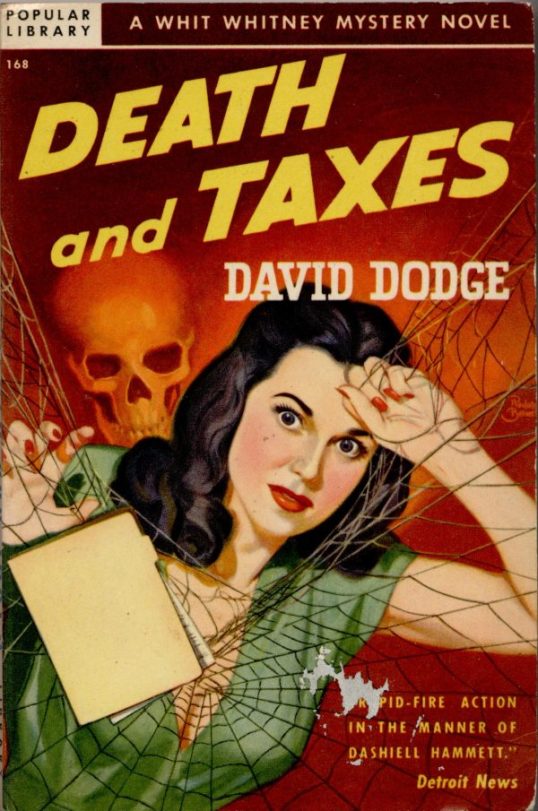
by Rudolph Belarski
Did you remember?
by Rudolph Belarski
Did you remember?
Today is Tax Day here in the States so this music video of the day feels especially appropriate.
George Harrison originally wrote this song in 1966. It appeared on Revolver. The song was inspired by the fact that, even tough the Beatles were making a huge amount of money, they were also expected to give a huge amount of that money to the government. Harrison said that the music was inspired by the theme song for the Batman TV series and once you learn that, it’s impossible to listen to this song without thinking, “Batman!”
Enjoy!
Welcome to Late Night Retro Television Reviews, a feature where we review some of our favorite and least favorite shows of the past! On Tuesdays, I will be reviewing Pacific Blue, a cop show that aired from 1996 to 2000 on the USA Network! It’s currently streaming everywhere, though I’m watching it on Tubi.
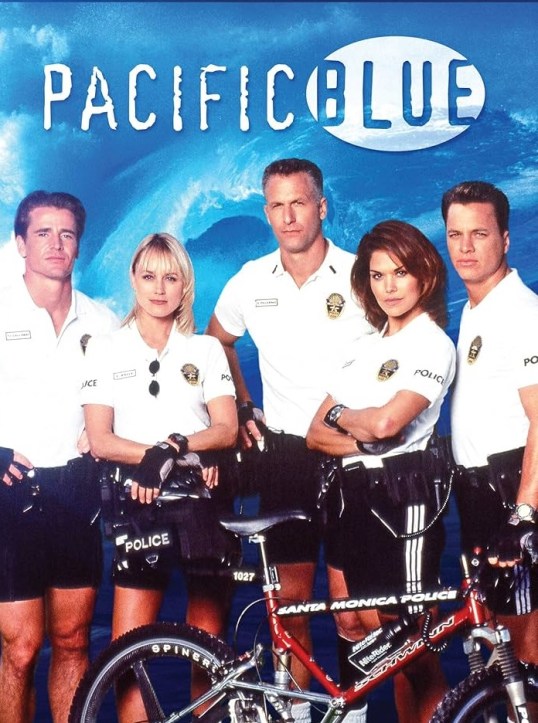
This week, a loved one dies.
Episode 3.21 “Till Death Do Us Part”
(Dir by Michael Levine, originally aired on April 12th, 1998)
When two robbers invade a high-end clothing store and shoot a security guard, they also accidentally shoot and kill Linda, Victor’s fiancée. In fact, Linda was trying on a wedding dress when she was shot. She was accompanied by Chris. In typical Pacific Blue style, even though Victor is the one who has just lost his fiancée, Chris also gets a chance to tell everyone that it’s also something that she’ll never recover from because she was the one who was actually there when it happened. Chris is so upset that she initially refuses to even change her clothes, even though they’ve been splattered with Linda’s blood. The show seems to think that this makes Chris into a strong character. Personally, I think it makes her someone who is so self-centered that she even has to make the death of someone else’s fiancée all about her. I can only imagine how Victor feels seeing Linda’s blood all over Chris’s shirt.
As for Victor, he goes on a rampage, tearing up Santa Monica until he finds the man who shot Linda. Victor ignores regulations. He breaks rules. He nearly shoots the killer in a parking lot and his partner Cory promises to back him up if he pulls the trigger. In the end, Victor is not a cold-blooded murderer. He allows the killer to be arrested. He tells the killer that he can’t wait to witness his execution. (Good luck, Victor. You’re in California!) But, as the episode ends, it’s mentioned that Internal Affairs is going to want his badge.
(Apparently, that will be dealt with in next week’s episode, which is also the season three finale.)
Watching this episode, I can found myself asking myself if all the other cops in Santa Monica have been fired. I didn’t see anyone other than the bicycle cops investigating the robberies or the shootings. I didn’t see anyone from Homicide looking into Linda’s murder. Instead, the entire episode was full of people trying to look tough while wearing bicycle shorts.
It just can’t be done!
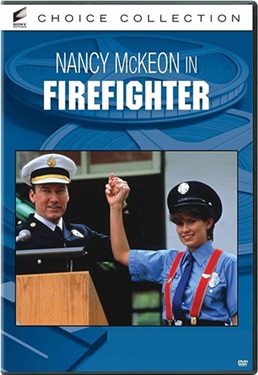 Nancy McKeon gives a good performance as Cindy Fralic, the first woman to become a firefighter in Los Angeles County. The film follows her as she takes the written exam, passes the physical exam (becoming the first woman to do so in the 60 years history of the Los Angeles Fire Department), and proves herself as both a firefighter and paramedic. She also finds love after her unsupportive husband divorces her.
Firefighter‘s story is bookended by a scene of Cindy telling a group of kids about what it is like to be a female firefighter. The film was made to inspire more women to pursue a career as a firefighter and sometimes, it seems like it pulls its punches when it comes to portraying just how difficult it probably was for the real-life Cindy to be Los Angeles’s first female firefighter. With the exception of her husband and one sexist captain, every man on the force is portrayed as being open-minded and rooting for Cindy from the start. No one at the firehouse has any trouble adjusting to a woman suddenly sharing their quarters. Almost everyone is supportive. The only time Cindy gets truly upset is when she has to get her hair cut. Sometimes, the film makes it seems like it was almost too easy for Cindy to be a groundbreaker.
It’s a good for what it is, though. Nancy McKeon gives a good performance. Ed Lauter plays her supportive boss and Amanda Wyss plays her best friend. It’s a made-for-TV movie so don’t go into it expecting a raging inferno. Instead, it’s just a sincere story about a woman who made history and who can maybe inspire others to do the same.
Welcome to Retro Television Reviews, a feature where we review some of our favorite and least favorite shows of the past! On Tuesdays, I will be reviewing Saved By The Bell: The New Class, which ran on NBC from 1993 to 2o00. The show is currently on Prime.
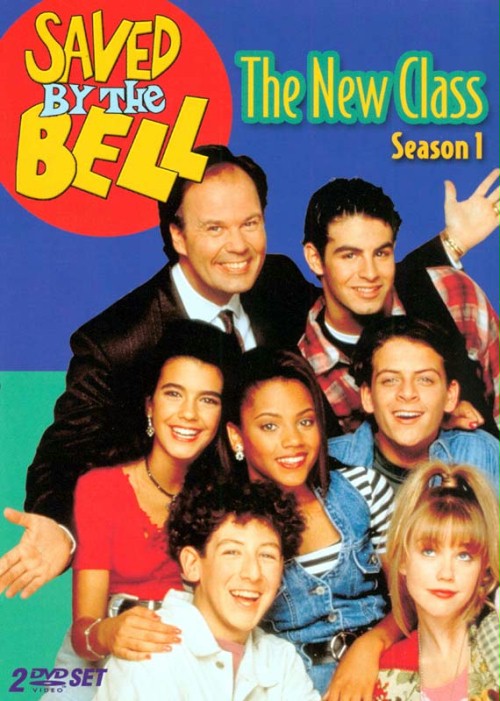
This week, Weasel’s found love again. Or has he?
Episode 1.11 “Weasel Love”
(Dir by Don Barnhart, originally aired on November 20th, 1993)
Weasel’s online girlfriend, Natalie (Stephanie Dicker), moves to California and enrolls at Bayside. At first, she looks and acts just like Tori Spelling during Tori’s time on the original Saved By The Bell. However, Megan, Vicki, and Lindsay give her a makeover that …. actually, makes her look significantly worse. But everyone at Bayside insists that it makes her look better so Weasel starts to feel insecure. Tommy D, Scott, and Mr. Belding (really?) give Weasel a makeover to team him how to be cool. That coolness goes to Weasel’s head and soon, he and Natalie aren’t speaking.
Uh-oh! Natalie and Weasel are both in the school band! Natalie plays piano. Weasel plays saxophone. (Needless to say, we never actually see Natalie’s hands when she’s playing piano.) How is the band going to win that trip to New York if Natalie and Weasel aren’t capable of performing a duet together?
Well, maybe Tommy can hop on the computer and send Natalie a message “from Weasel” apologizing. Natalie is touched but later, Weasel reveals that he didn’t write the message. But Weasel and Natalie still talk through their differences and the band wins that New York trip!
As for this episode’s B-plot, Tommy D and Scott trick two of the nerd characters into leaving the band so that they can replace them. As I watched Scott and Tommy trick the nerds into thinking that they were losing their hearing, it occurred to me that it takes a lot of charisma to make a schemer likable. Mark-Paul Gosselaar and Mario Lopez had that charisma, which is why the first Saved By The Bell worked despite Zack being a sociopath. Robert Sutherland Telfer and Jonathan Angel on the other hand….
(Actually, in all honesty, Jonathan Angel was likable as Tommy. He had the goofy dumb guy thing down. Telfer, however, didn’t have Gosselaar’s cocky charm. As a result, Scott usually comes across as being more desperate than confident.)
Anyway, this was another dumb episode. There’s no consistency when it comes to how characters like Weasel are portrayed so it’s really had to care about their lives one way or another. This episode, Weasel got a girlfriend. Even though I haven’t seen the remaining season one episodes yet, I can guarantee that she will never be mentioned again.
Finally, the band sounded terrible. Leave them in New York.
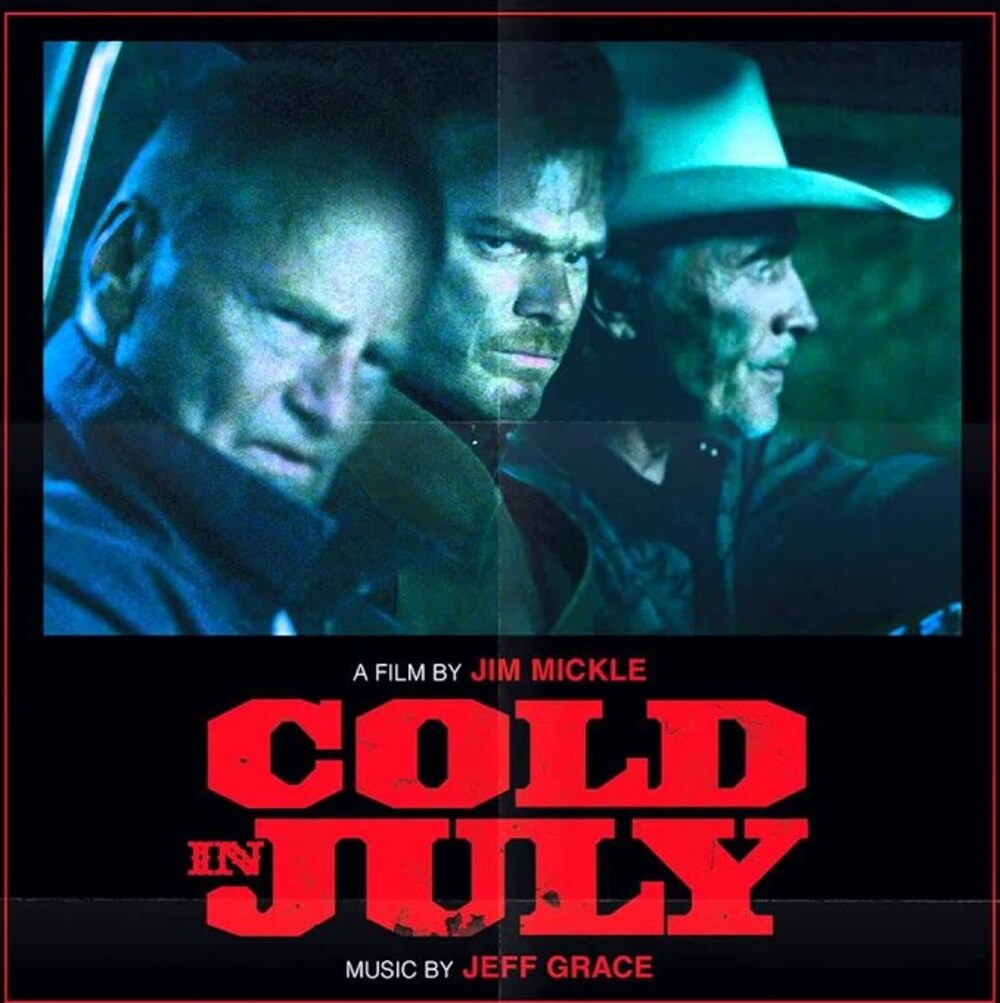
“Cosmo Black” by Dynatron is one of those synthwave pieces that sounds like it could’ve been pulled right out of a 1980s sci-fi or neo-noir VHS tape. It appears on the Cold in July soundtrack, which uses those pulsing analog synths to build atmosphere rather than just nostalgia. What grabs you first is the mood: it’s dark but hypnotic, driving forward on a steady, arpeggiated bassline while shimmering pads fill out the background. You can almost picture glowing city streets at midnight or the dashboard lights of a speeding Trans Am cutting through fog.
Dynatron doesn’t just imitate the retro vibe—he channels it with a sense of cinematic purpose, clearly taking cues from the work of John Carpenter. Carpenter’s music, especially for films like Escape from New York and Halloween, was built around simple but suspenseful synth motifs that hooked your attention through repetition and tone. Cosmo Black borrows that same philosophy; it’s rhythmically tight and emotionally precise. The track feels like it’s telling a story—one that’s unfolding over neon grids and empty highways, with tension simmering beneath its glossy surface.
The production is clean but deliberately vintage. You can hear the analog warmth in every sustained note, which gives it that authentic mid-80s texture fans of synthwave love. Dynatron layers just enough distortion and reverb to mimic the synth machines Carpenter once used, yet brings modern depth and clarity to the mix. There’s no excessive layering or sampling—it’s minimalist by design, which lets the vibe breathe. It’s that perfect balance between mechanical precision and moody drift that seduces listeners.
Listening to Cosmo Black feels like stepping into an alternate cinematic universe—one where retro futurism never went out of style. It’s not just an homage to Carpenter, though; it shows how those eerie, propulsive soundscapes still resonate decades later, especially when reinterpreted through contemporary synthwave. The song captures the thrill of that timeless aesthetic: a mix of fear, nostalgia, and cool-headed resolve. If you’ve ever loved the way old soundtrack compositions make you feel like you’re inside the movie itself, Dynatron’s Cosmo Black delivers that sensation effortlessly.
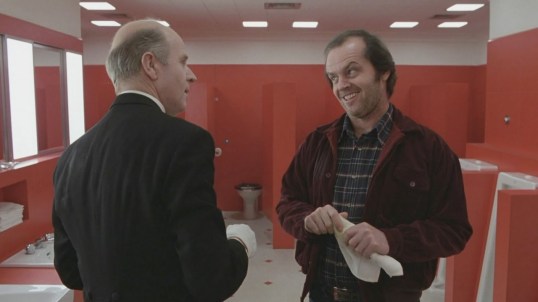
The Shining (1980, dir by Stanley Kubrick)
Today would have been the 102nd birthday of character actor Philip Stone. While Stone appeared in a lot of films, he’ll probably always be best-remembered for his subtly menacing turn as the ghostly Grady in 1980’s The Shining. Here he is, having a conversation with Jack Torrance (Jack Nicholson) and letting him know that he’s always been caretaker.
4 Or More Shots From 4 Or More Films is just what it says it is, 4 shots from 4 of our favorite films. As opposed to the reviews and recaps that we usually post, 4 Shots From 4 Films lets the visuals do the talking!
Today would have been Rod Steiger’s birthday. It’s time for….
4 Shots From 4 Rod Steiger Films
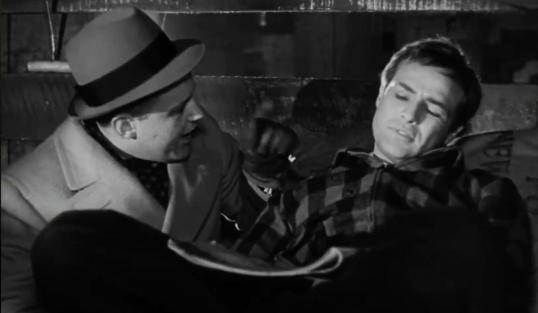
On The Waterfront (1954, dir by Elia Kazan, DP: Boris Kaufman)
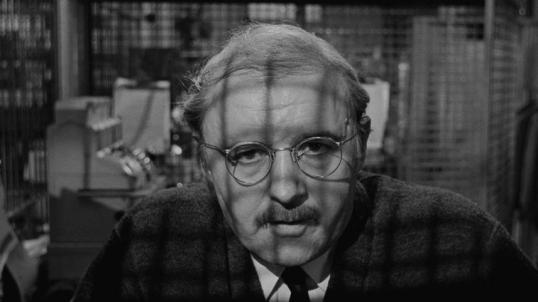
The Pawnbroker (1965, dir by Sidney Lumet, DP: Boris Kaufman)
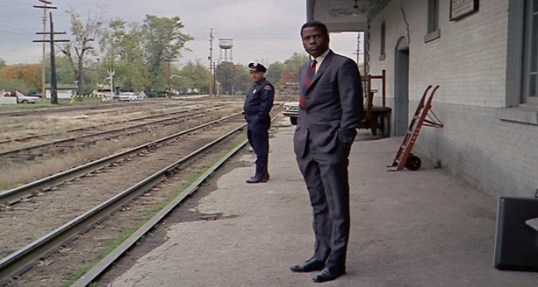
In The Heat of the Night (1967, dir by Norman Jewison, DP: Haskell Wexler)
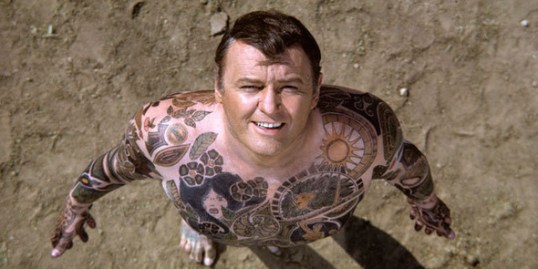
The Illustrated Man (1969, dir by Jack Smight, DP: Philip H. Lathrop)
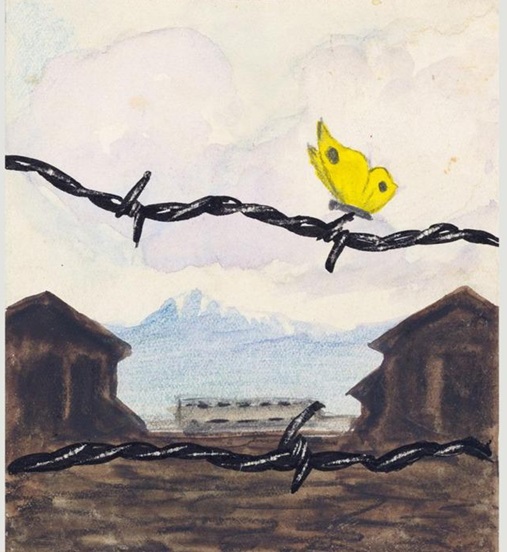
by Karl Bodek and Kurt Conrad Low
This simple drawing was a collaboration between two artists. In 1941, both Karl Bodek and Kurt Conrad Low were being in the Gurs Internment Camp in Southern France. This was the view they had: a butterfly sitting on barbed wire with the Spanish mountains in the background. Kurt Conrad Low managed to escape to Switzerland. Karl Bodek died at Auschwitz.
Never forget.
This is one of the best-known of They Might Be Giants’s songs. Though the song was released first, it also appeared on their 1990 album, Flood.
Director Adam Bernstein was a frequent They Might Be Giants collaborator. He also directed music videos for everyone from Public Enemy to Dead Milkmen to BareNaked Ladies and Sir Mix-A-Lot. He’s also a television director, having won an Emmy for his work on Fargo.
Enjoy!
 Through the Shattered Lens