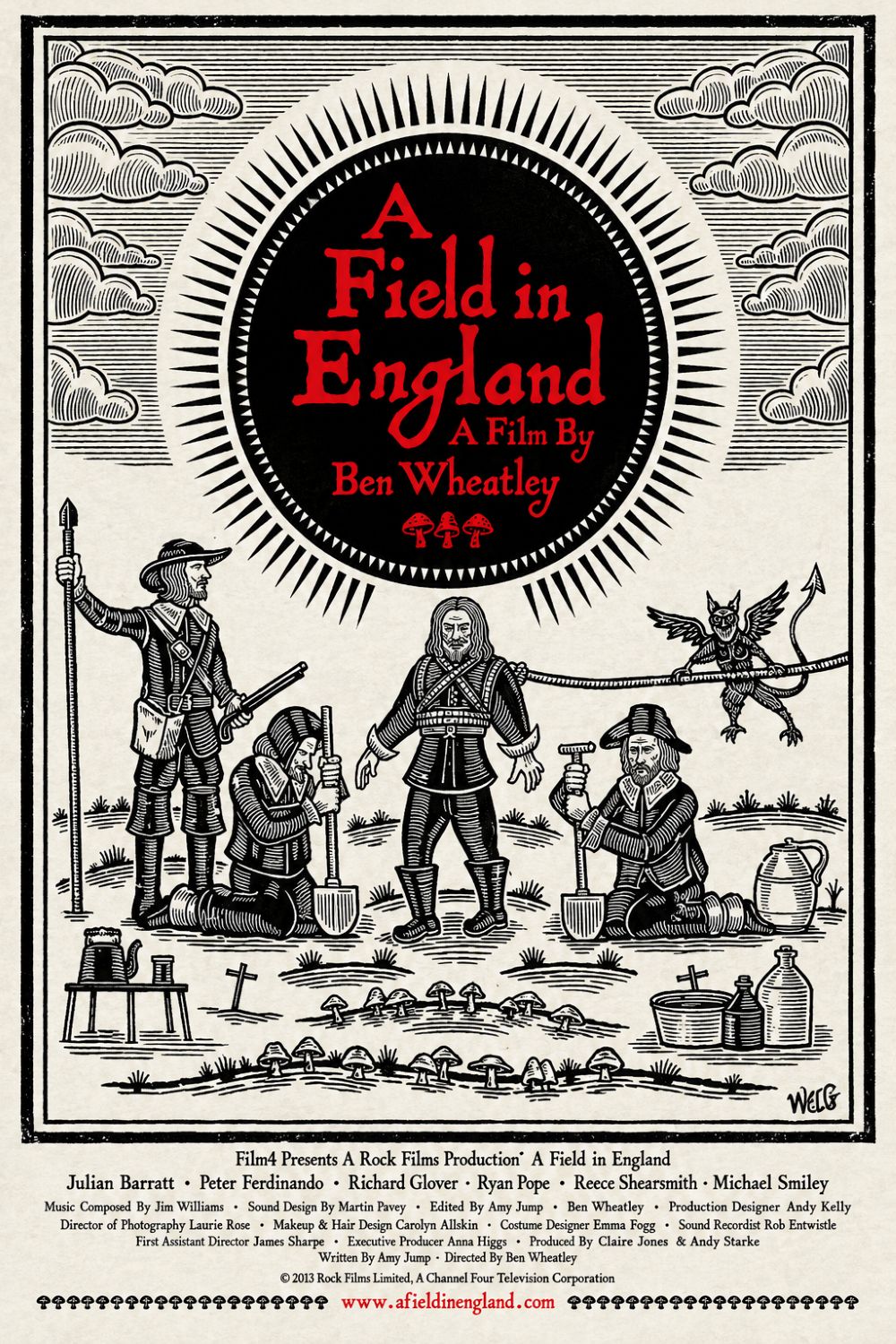
Horror Film Review: A Field in England (dir. by Ben Wheatley)


“It does not surprise me that the Devil is an Irishman. Though I thought perhaps he might be a bit taller.” — Friend

There is something deeply unsettling about a horror film that takes place almost entirely in broad daylight, and A Field in England uses that unease to devastating effect. Ben Wheatley’s 2014 release is a black-and-white nightmare about deserters, mushrooms, occult power, buried treasure, and men slowly losing whatever grip they had on reality. It is cryptic, abrasive, occasionally funny, deliberately repetitive, and sometimes so visually and sonically intense that it feels less like watching a film than being trapped inside a bad trip with several deeply unpleasant Englishmen.

Set during the English Civil War, A Field in England begins with Whitehead, played by Reece Shearsmith, fleeing an unseen battle. He is an educated man and an apprentice to an alchemist, although he is not particularly brave, heroic, or prepared for the chaos around him. Whitehead soon falls in with a small group of deserters: the blunt Cutler, the nervous Friend, and the worldly Trower. Their immediate goal is basic survival. They want food, ale, somewhere safe to rest, and preferably no more involvement in the war. Naturally, things do not work out that way.

The group crosses an enormous field and encounters O’Neill, played with unnerving authority by Michael Smiley. O’Neill is an alchemist, a manipulator, and possibly something more supernatural. He claims there is treasure buried in the field and forces the men into helping him dig for it. From there, the story gets progressively stranger, particularly after the men consume mushrooms that may or may not be supernatural in origin. The film’s central question is never simply whether the characters are hallucinating. Wheatley keeps pushing the viewer toward a more uncomfortable possibility: what if the hallucinations are revealing something real?

That ambiguity is the movie’s greatest strength and its biggest obstacle. A Field in England gives the audience fragments rather than firm answers. There are references to stolen papers, alchemical knowledge, magical control, a rival master, buried riches, and rituals that may have been going on long before these men stumbled into the field. But Wheatley and screenwriter Amy Jump never stop to explain the rules. The field seems both ordinary and impossible. It is a place where history, warfare, class resentment, religious anxiety, superstition, and psychedelic terror all collapse into one ugly patch of grass.

The setting is especially impressive because it is so limited. Much of the film takes place in one open field, but Wheatley makes that restriction feel like a trap rather than a budgetary compromise. The wide, empty landscape should offer freedom, yet it becomes increasingly claustrophobic. There is nowhere to hide, no landmark to guide anyone out, and no real sense that walking away would accomplish anything. The field becomes a purgatory, a prison, and an altered state of mind all at once. The characters are technically outdoors the whole time, but they might as well be locked in a dungeon.

Laurie Rose’s black-and-white cinematography is essential to that effect. The movie is beautiful in a harsh, unfriendly way. The high-contrast images turn grass, clouds, trees, faces, and dirt into something almost mythic. Instead of giving the Civil War setting a polished historical-drama look, the monochrome photography makes it feel ancient and unstable, like a series of damaged photographs or illustrations pulled from a cursed old book. The lack of color also helps detach the film from realism. Blood, mud, sweat, and the field itself lose their normal visual identity, making everything feel one step removed from the world the audience recognizes.

The film’s most famous stylistic choices arrive during its hallucinatory stretches. Wheatley uses strobing images, freeze frames, abrupt flashes, distorted sound, overlapping dialogue, and violently fractured editing to turn the characters’ mushroom-induced breakdowns into sensory assaults. These sequences are not designed to be pleasant or even easily readable. At times, they are exhausting. That is clearly the point. The men are losing control of time, memory, language, and physical space, and the film wants the viewer to feel that disorientation rather than observe it safely from a distance.

This can make A Field in England a demanding watch. There are stretches where the characters repeat themselves, argue in circles, dig holes, pull ropes, or speak in riddles that do not immediately add up. Some viewers will probably find this fascinating, while others will feel that Wheatley is testing their patience for the sake of being weird. Both reactions are fair. The film occasionally comes close to mistaking opacity for depth. Not every bizarre image carries the same force, and the narrative sometimes feels like it is daring the audience to keep watching rather than drawing them in naturally.

Still, the performances keep the movie from floating completely away into abstraction. Shearsmith is especially good as Whitehead, whose intelligence does not save him from terror or humiliation. He plays the character as someone who desperately wants to understand the occult forces surrounding him but may be too frightened and compromised to confront them. There is something deeply sad about Whitehead’s weakness. He is not a clean-cut innocent, but he is also clearly outmatched by O’Neill.

Michael Smiley, meanwhile, is fantastic as O’Neill. He does not play the role as a standard screaming madman. That would be too easy. Instead, he is controlled, smug, and almost conversational, which makes him much more threatening. O’Neill treats cruelty like an intellectual exercise. He speaks as though he is always several steps ahead, and his certainty becomes frightening because nobody else in the film can confidently say whether he is a fraud, a sorcerer, or a man who has simply learned how to exploit frightened people. Smiley gives the character the exact kind of ugly charisma needed for a villain who may be entirely human but feels almost demonic.

The supporting cast also deserves credit. Peter Ferdinando, Richard Glover, and Ryan Pope give the film its rougher, more grounded energy. Their banter provides an odd kind of dark humor, especially early on, before the nightmare fully takes over. Wheatley has always had a talent for making people sound casually vicious and absurd at the same time, and A Field in England contains that familiar bite. These are not noble historical figures delivering grand speeches. They are exhausted, hungry, crude men trying to survive a war they barely understand.

What makes the movie linger is how it turns that survival instinct into something ugly. The field strips away the characters’ supposed identities. Religion, social rank, education, loyalty, and military allegiance all become flimsy protections. Whitehead may be literate and knowledgeable; O’Neill may possess real occult power; Cutler may be physically capable; Trower may seem more practical than the others. None of it guarantees safety. Everyone is vulnerable to fear, manipulation, and the possibility that they have walked into a place where ordinary rules no longer apply.

As horror, A Field in England is less interested in jump scares than spiritual contamination. It is about the horror of not knowing whether you are seeing reality, madness, divine punishment, or the Devil at work. Wheatley uses the English countryside not as a comforting pastoral image, but as something ancient, indifferent, and possibly hostile. The movie shares some DNA with folk horror, but it is rougher and less traditionally structured than something like The Wicker Man. It also has the psychedelic aggression of a 1960s or 1970s experimental film, filtered through Wheatley’s mean streak and dark sense of humor.

Ultimately, A Field in England is not an easy movie to love, but it is difficult to dismiss. It is too committed to its mood, too visually striking, and too full of uneasy ideas to be written off as empty weirdness. Wheatley makes the viewer work, and sometimes he pushes that demand to the point of frustration. But when the film locks into its nightmare rhythm, it is genuinely haunting. The sound design rattles around in your head, the images feel burned into your memory, and the field itself starts to seem like the kind of place you would never want to wander into alone.

For viewers who want a straightforward historical horror movie, A Field in England may feel like a punishing experience. For anyone willing to follow Ben Wheatley into a muddy, surreal, pitch-black vision of war, magic, and madness, it is one of the strangest British horror films of its era. It does not explain itself, it does not comfort the audience, and it definitely does not care whether everyone comes out of it satisfied. That stubbornness is exactly what makes it memorable.
Hero Of The Day: John Nada (They Live)


“I have come here to chew bubble gum and kick ass. And I’m all out of bubble gum.”

— John Nada (Roddy Piper)

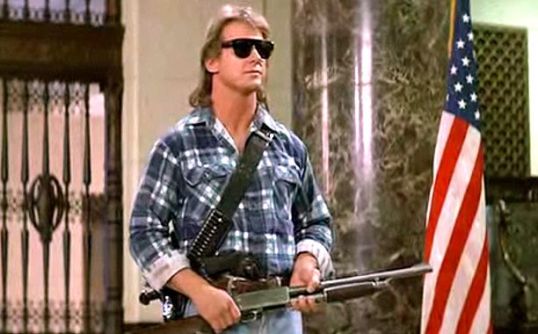
Roddy Piper improvised the most famous line in 1988’s They Live.

When John Carpenter was casting They Live, he specifically sought someone who was not a film star to play John Nada. The character was meant to be a drifter, an often-homeless man who lived on the fringes of society and did what he had to do to survive. Carpenter viewed John as the epitome of “the forgotten man,” and he knew that casting a big star would sabotage what he was going for. Ultimately, Carpenter cast professional wrestler Roddy Piper as Nada, and history, as they say, was made. Piper showed up on set with a notebook full of one-liners he had jotted down but hadn’t gotten a chance to use while wrestling. The famous line was not in the script. Piper came up with it on his own and spontaneously used it in the bank scene. Carpenter kept it in the film.

The line worked because of its combination of unhinged humor and genuine bravado. It was a line that would have worked before a wrestling match but, even more importantly, a line that perfectly captured John Nada’s worldview after he put on the dark glasses and saw the reality of the world around him. The line was pure John Nada.

John Nada. John Nothing. It was the perfect name for a man with no home, no family, and, until he meets Keith David’s Frank Armitage, no real friends. He’s the 1980s version of Clint Eastwood’s Man with No Name. John has nothing, and once he puts on those glasses, that becomes his greatest strength. John has nothing to lose, and therefore the aliens who have convinced everyone else to “Obey” have nothing to offer him. Because society has given him nothing, he’s far less susceptible to being manipulated. He’s too angry to be controlled, and once he sees the truth, he becomes determined to share it with everyone. When he and Frank fight in the alley, it’s not just a fight scene. It’s John committing to opening his friend’s eyes, no matter how much pain it may cause. John, who lives on the fringes, who has no home, and who would probably get the police called on him if he ever showed up in the suburbs, sacrifices his life for humanity. He still manages to give the finger to the aliens before he goes, and somehow that feels like the character’s greatest triumph. He remains defiant to the end. No one brainwashes John Nada.

They Live works because of John Nada, and John Nada works as a character because he’s vulnerable throughout. If he were played by a traditional star, we would have no doubt about his ability to defeat the aliens. But with Piper in the role, we’re not quite sure. John Nada doesn’t set out to be a hero, but by the end of They Live, he definitely is one.

Hero of the Day

Horror Film Review: They Live (dir by John Carpenter)


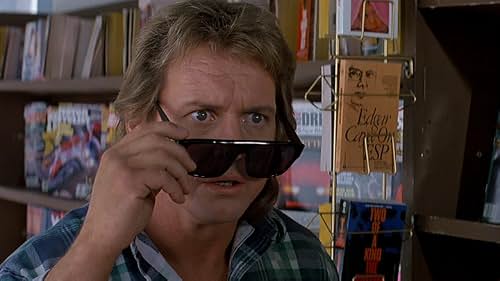
When it comes to John Carpenter’s 1988 masterpiece, They Live, everyone remembers the moment that a drifter named Nada (Roddy Piper) first puts on the dark glasses.

They remember him putting them on and suddenly seeing that the city of Los Angeles is stark black-and-white. They remember the mix of humans and skeletal-looking aliens that surrounded Nada and they remember how the aliens were the ones who went out of their way to be rude. What they especially remember are the billboards and the magazine covers reduced to simple orders like “OBEY,” “CONFORM/STAY ASLEEP,” “CONSUME,” “DO NOT QUESTION AUTHORITY,” and “NO INDEPENDENT THOUGHT.”

What is often forgotten is that it takes a while for the film to get to that point. Carpenter starts the film with a rather lengthy first act, in which Nada arrives in Los Angeles, tries to find work, tries to stay fed, and ends up camping out at a shanty town. Nada is one of America’s forgotten people, a drifter with no real home, no past, and it would appear no future. Nada hears a blind street preacher (Raymond St. Jacques) talking about how the rich and the powerful have been recruited to control humanity and he agrees, even before he puts on the glasses. It’s not until the shanty town has been destroyed in a police raid and Nada has put on the glasses that he sees just who exactly has been doing the recruiting.

After he puts on the glasses and sees the way the world really looks (it’s even suggested that what we perceive as color is something artificial that the aliens are using to distract us), Nada hardly ever takes them off. Some of that is for self-preservation. Wearing the glasses allows him to see who is an alien and who is not. But even more importantly, it’s a sign that having now seen the truth, Nada cannot return to the lie. Instead, Nada tries to win his freedom and expose the aliens. It’s not easy. It takes a lengthy and deservedly famous fight in an alley for him to convince his friend Frank (Keith David) to wear the glasses as well. Once Frank does put them on, he automatically understands what is happening. Wearing the glasses doesn’t leave one confused. Instead, wearing them makes everything suddenly make sense.

If this is not a traditional film review, that’s because They Live is one of those films that everyone seems to already know. Even those who have not watched the entire film know what happens when Nada puts on the glasses. For a film that was not a box office hit and which was initially dismissed by many critics, They Live has become very much a part of our shared culture. Today, everyone knows the messages that are being sent through media. Unlike Nada, most people don’t try to rebel. They don’t announce that they’re all out of gum. We’ve become used to it all.

They Live is often described as being an anti-capitalist film, though John Carpenter has said that it’s not. Carpenter has also been quick to say that it’s not meant to be a Marxist film either, regardless of what the film professors may say. Indeed, the messages of “NO INDEPENDENT THOUGHT” and “CONFORM” are about as Marxist as you can get. (Wearing the glasses can be compared to taking the red pill in The Matrix, except of course leaving The Matrix means becoming a part of Zion, a community whose slogan might as well be “DO NOT QUESTION AUTHORITY.”) They Live is a film that celebrates rebellion against the establishment, regardless of how that establishment might disguise itself. In They Live, the right and the left are different sides of the same manipulative coin. The aliens and their human allies thrive regardless of who might technically be in charge. It’s not really a surprise that my more Libertarian-minded friends tend to view They Live as being a sacred text.

It should be noted that there’s a savage humor running through They Live. It’s present in the first time that Nada puts on the glasses. It’s there in his one-liners. But it’s also present at unexpected moments. I love that this movie gives George “Buck” Flower an actual character to play and, when he shows up during the third act in a suit, I can’t help but smile. The aliens, when they are gathered together, still speak in the language of sales and stockholder meetings. They’re in business and business is good.

They Live is one of those films that feels even more relevant today than when it was first released. Anyone who lived through the COVID era will be able to relate to the media telling them to obey authority and to conform with everyone else. It’s easy to imagine that, if one put on the glasses today, they would see a lot of aliens. The sad truth is that there are no aliens to blame things on. The actions of the past few years were done without any help. Carpenter ended They Live with humanity waking up. Escape from L.A. ended with Kurt Russell shutting down the country. One can only imagine how things would end today.

Horror on the Lens: Destroy All Planets (dir by Noriaki Yuasa)


Aliens are trying to conquer Earth.  It’s a pretty good thing that we’ve got a giant, fire-breathing turtle to protect us!

In Japan, this film was released as Gamera vs Viras.  In 1969, when it aired on American television, the Japanese actors were dubbed and the title was changed to Destroy All Planets, presumably to try to capitalize on the success of Destroy All Monsters.  As any true kaiju fan can tell you, Gamera and Godzilla exist in different cinematic universes but that’s not something that the average American was worried about, especially in 1969!  Myself, I love both Gamera and Godzilla.  That said, my favorite remains Jet Jaguar.  Whatever happened to that robot?

Here, for your viewing pleasure, is today’s Horror on the Lens!  Enjoy Destroy All Planets!


Horror Song of the Day: The Winner by Lance Owg, Gabriel Rohels, and David Cole


Today’s song of the day comes from the 1981 slasher classic, Graduation Day!

Just try not to sing along!

Everybody wants to be the winner….

Horror Scene That I Love: Charlton Heston And Woodstock In The Omega Man


Today would have been the 103rd birthday of actor Charlton Heston.

This scene that I love comes from one of the few horror films in which Heston appeared.  An adaptation of Richard Matheson’s I Am Legend, 1971’s The Omega Man featured Charlton Heston as Robert Neville.  By night, Neville protects his house against the mutant horde.  By day, he tracks those sleeping mutants down and watches Woodstock over and over again.

“They don’t make them like that anymore,” Neville says.

This scene gets a lot of attention because of the contrast between the conservative Heston and the hippies in the film.  To me, the reason that it works is because Woodstock is a documentary.  Neville isn’t watching an actor pretending to be a character in a film.  He’s watching an actual human being who went to the Woodstock music festival and who is presumably either now a mutant or dead.  Imagine being the hippie interviewed by this scene and seeing yourself in The Omega Man and knowing you didn’t survive the apocalypse.  For that matter, we also have to assume that all of the Woodstock performers have been turned into mutants as well.  Write a song about that, Country Joe.

(I choose to believe that Arlo Guthrie made it to safety.  Sha Na Na, though?  Doomed.)

Neville’s right.  They don’t make them like this anymore.


4 Shots From 4 Films: Special Anne Rice Edition


4 Or More Shots From 4 Or More Films is just what it says it is, 4 shots from 4 of our favorite films. As opposed to the reviews and recaps that we usually post, 4 Shots From 4 Films lets the visuals do the talking!

Today would have been the 86th birthday of author Anne Rice.  It’s time for….

4 Shots From 4 Anne Rice Adaptations

Interview With A Vampire (1994, dir by Neil Jordan, DP: Phillippe Rousselot)

Exit to Eden (1994, dir by Garry Marshall, DP: Theo van de Sande)

Queen of the Damned (2002, dir by Michael Rymer, DP: Ian Baker)

The Young Messiah (2016, dir by Cyrus Nowrasteh, DP: Joel Ransom)


Music Video of the Day: Bloodletting (The Vampire Song) by Concrete Blonde (1990, dir by ????)


I just know that someone’s going to be like, “Actually, Lisa, this is song isn’t about vampires, it’s about someone sucking the happiness out of life.”

Listen, I don’t care.  It’s October.  It’s horrorthon.  The lead singer of Concrete Blonde says that she was inspired to write the song by Interview with a Vampire, which is something that’s very obvious when you watch the video.  And today would have been Anne Rice’s birthday.  For our purposes,  it’s a vampire song.

Enjoy!

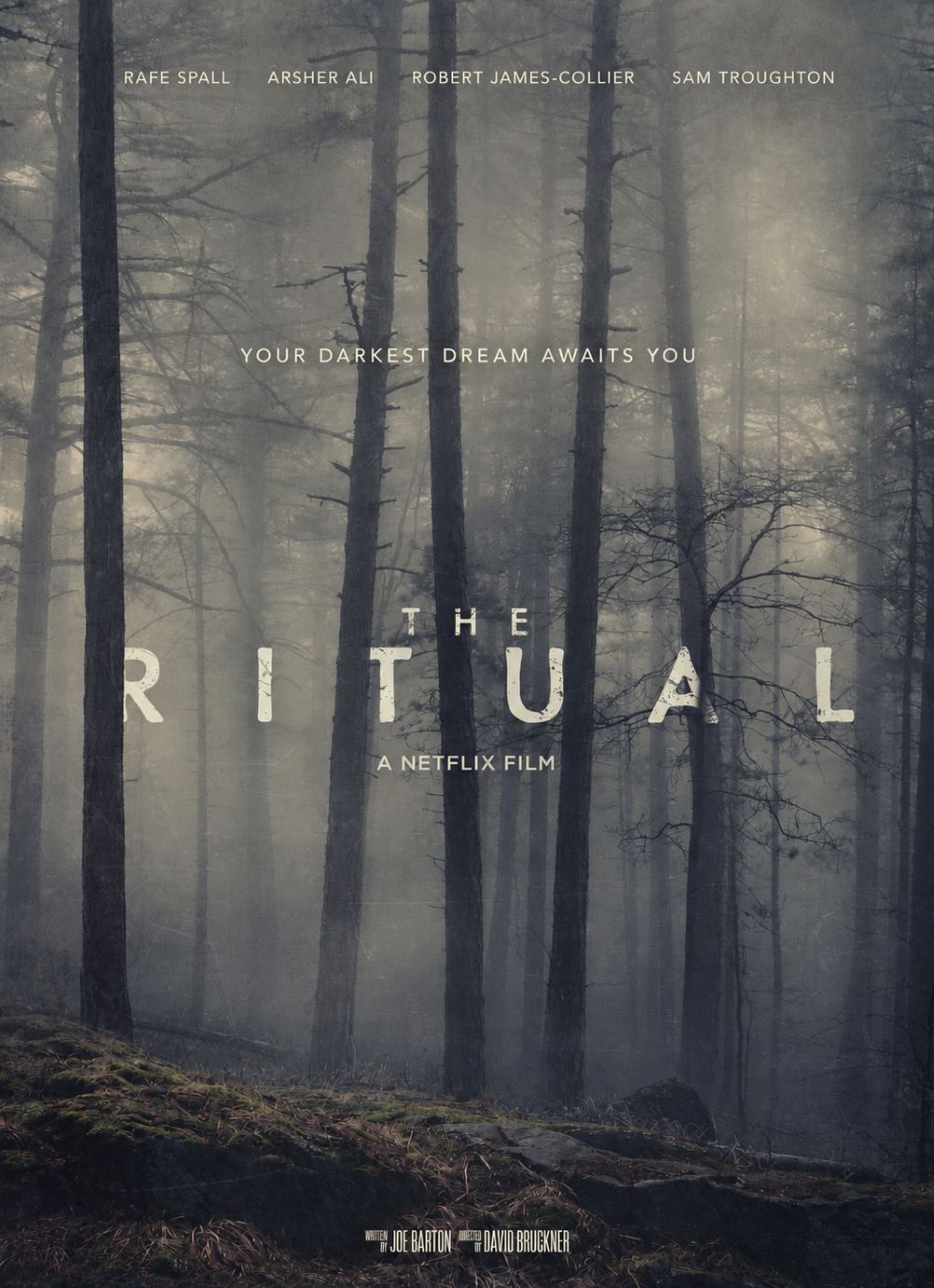
Horror Review: The Ritual (dir. by David Bruckner)


“Oh, this is awful in almost every conceivable way.” — Phil

David Bruckner’s The Ritual turns a seemingly straightforward hiking-trip nightmare into a bleak, character-driven story about grief, guilt, and the fear of being judged by the worst thing you have ever done. Released in 2017, the film takes the familiar setup of friends becoming lost during a hiking trip and turns it into something far more tense, emotionally bruised, and unsettling. It is part of the wave of folk horror that began emerging in the late 2000s, with filmmakers returning to remote landscapes, old belief systems, pagan imagery, and the frightening idea that modern people are badly unprepared for places ruled by ancient customs. The Ritual contains the expected genre material—an ominous Scandinavian forest, strange symbols, a decaying cabin, and an isolated community—but its real strength is how tightly those elements connect to its characters’ unresolved guilt and resentment.

The film follows Luke, played by Rafe Spall, who is still deeply traumatized by the death of his friend Rob. In the opening sequence, Luke and Rob enter a liquor store after a night out and become caught in the middle of a robbery. Luke hides while Rob is killed trying to resist the attackers. It is an immediately harsh and effective opening because the film does not treat Luke’s inaction as something simple or easy to judge. He is terrified, frozen, and unable to process the situation. Even so, he cannot forgive himself for surviving. That moment becomes the defining wound of his life, and everything that happens afterward pushes him back toward it.

Luke eventually joins Phil, Dom, and Hutch on a hiking trip through Sweden that is meant to honor Rob’s memory. It becomes clear early on that the group’s friendship is not as solid as it once was. They know each other well enough to trade jokes and insults, but there is a lot of buried frustration underneath the banter. When Dom injures his knee, he argues that they should take a shortcut through the forest rather than continue along the longer established trail. The decision makes sense on a practical level, but it puts them in a setting where the normal rules of direction, distance, and safety quickly stop applying. The trip that is supposed to help them mourn Rob instead becomes a pressure cooker for every unresolved issue they have with one another.

That tension is what makes the first half of The Ritual more interesting than a routine “people get lost in the woods” movie. The men are not written as interchangeable victims waiting for the plot to remove them one by one. They have the worn-down chemistry of friends who have known one another for years but may have outgrown the version of themselves that first brought them together. Luke is defensive and emotionally closed off. Dom can be abrasive, especially when pain and fear make him more volatile. Phil is cynical and exhausted. Hutch is the closest thing the group has to a stabilizing influence, but even he cannot keep the old resentments from surfacing.

Bruckner gives their arguments a messy, lived-in quality. They do not stop to explain their entire friendship history for the audience; instead, the viewer picks up on it through accusations, half-finished insults, and the way everyone reacts when Rob’s death comes up. Luke’s guilt is the most obvious source of conflict, but the others are carrying their own anger toward him as well. They cannot openly say what they think without admitting that they may blame him for what happened. As the hike becomes more dangerous, that tension becomes harder to contain. The film understands that fear makes people meaner, more selfish, and more honest than they want to be.

The Swedish wilderness is easily one of the movie’s greatest assets. Bruckner and cinematographer Andrew Shulkind make the forest feel huge and claustrophobic at the same time. The woods are not shot like a scenic tourist destination. They are wet, dark, muddy, and disorienting, filled with thin trees that block the characters’ view and make every direction seem identical. The lack of clear landmarks matters because it slowly strips the group of confidence. At first, they are annoyed hikers trying to save time. Before long, they are struggling to tell where they have been, where they are going, or whether the forest is allowing them to leave at all.

The film excels at building dread through details rather than relying on constant jolts. The friends discover unnerving signs scattered through the woods: an animal carcass hanging impossibly high in the trees, crude figures made from sticks, unfamiliar markings, and evidence that somebody—or something—has been watching them. One of the most memorable sequences takes place in an abandoned cabin that the group uses for shelter. Inside, they find a grotesque shrine and signs of an old ritualistic practice that seem completely out of place in the modern world. The scene is disturbing because of how wrong it feels. These men have not just stumbled into an empty house; they have crossed into a space defined by beliefs they do not understand.

That atmosphere is where The Ritual most clearly earns its place in modern folk horror. The movie is not simply interested in isolated woods as a convenient backdrop for scares. It treats the forest as a place with a history and a set of rules that exist independently of the characters. Luke, Dom, Phil, and Hutch arrive with backpacks, maps, phones, and ordinary personal problems, but those things become almost useless once the landscape begins to feel hostile. Their modern routines and assumptions do not protect them. The horror comes partly from the idea that they are outsiders who have entered a world where their explanations mean nothing.

The later sections introduce an isolated group whose beliefs are rooted in an older, more ritualized worldview. This element can feel more direct than the earlier ambiguity, but it still fits the movie’s larger themes. The people Luke encounters represent a twisted alternative to the kind of shame and grief that have been consuming him. Their world offers a warped version of survival: submit to fear, accept the rules, and give up the parts of yourself that make resistance possible. It is an ugly kind of community, one that turns spiritual tradition into coercion and treats personal suffering as something to be exploited.

Rafe Spall is the key to why the film works as more than an exercise in atmosphere. Luke is not an idealized horror protagonist. He is stubborn, defensive, and sometimes hard to like, particularly when he tries to avoid talking about Rob. But Spall makes his guilt feel immediate and human. Luke is not haunted just because he saw someone die; he is haunted because he believes that his failure in that moment reveals who he really is. The forest repeatedly forces him to confront that belief through hallucinatory transitions that blur the wilderness with the liquor-store robbery. Doors in the forest become entrances to the shop. The wooded darkness gives way to fluorescent aisles. Luke seems to be reliving the same failure from different angles, unable to escape the moment he most wishes he could change.

Those surreal flashbacks are some of Bruckner’s best directing choices. They are visually simple but highly effective, placing Luke’s internal guilt directly into the physical environment around him. The movie never turns into a vague psychological-horror story that dismisses everything as a dream, but it uses Luke’s trauma to make the supernatural setting feel more personal. The threat in the woods is frightening because it seems to recognize his weakness. It does not just want to harm him; it wants him to surrender to the version of himself that he already hates.

If The Ritual has a flaw, it is that the final act loses a little of the earlier section’s mystery once the film begins explaining more about what is happening in the forest. The strongest passages are often the quietest ones: the men arguing while lost, the unsettling evidence in the trees, the cabin sequence, and the growing suspicion that they are being pushed in a direction they cannot understand. Still, the conclusion works because it brings the movie back to Luke’s personal struggle. His escape is not simply about reaching safety. It is about refusing to let guilt define his identity forever.

By the end, The Ritual delivers a satisfying sense of catharsis without pretending that Luke has been completely healed. He survives an experience that forces him to face the fear he has been carrying since Rob’s death, but that does not erase the loss or make him a different person overnight. What changes is his willingness to stop living as though one terrible moment has permanently decided who he is. That emotional resolution gives the film more weight than many survival-horror stories.

Overall, The Ritual is a smart, atmospheric, and surprisingly character-driven horror film. Its strongest qualities are its oppressive forest setting, its believable group dynamics, its gradual escalation, and Rafe Spall’s deeply uncomfortable performance. Most importantly, it recognizes that folk horror becomes powerful when the ancient and supernatural elements expose something painfully human. Bruckner turns a memorial hike into a nightmare about guilt, masculinity, friendship, and the terror of being unable to outrun your own past.