Cinemax Friday: Dead By Dawn (1998, directed by James Salisbury)


Tim Marsh (Bill Ferrell) makes a lot of money and is married to the sexy and beautiful Wendy (Shannon Tweed) but he still thinks of himself as being a loser.  He’d much rather have the life of his old high school buddy, Don White (Ted Prior).  Don is a former baseball player who is opening his own car dealership and is married to a much younger woman named Kim (Jodie Fisher).

One day, Don lets Tim drive his BMW, which Don brags was a gift from Ed McMahon.  Tim loves the car and, while driving it, feels more alive than he has in years.  Don then offers to allow Tim to sleep with his wife.  Tim says that there’s no way that he would ever cheat on Wendy but Don insists.  Eventually, after a party to celebrate Don’s new business, Tim takes Don up on his offer.  The next morning, after Tim has returned home to Wendy, someone murders Kim in her sleep.

Guess who the police suspect?

Dead By Dawn is typical of the low-budget, erotic thrillers that used to dominate late night Cinemax.  Most of these films had plots that could best be described as neo-noir and Dead By Dawn is no different.  Not much happens in Dead By Dawn.  Since there are only four main characters and one of them dies about an hour into the movie, it’s pretty easy to figure out who is double crossing who.  The main problem with the film is that it asks us to believe that Tim would cheat on Shannon Tweed instead of getting down on his knees every day and thanking God that a loser like him managed to marry … well, Shannon Tweed.

Not surprisingly, Shannon Tweed gives the film’s best performance.  Because of her background as a Playboy playmate and her relationships with Hugh Hefner and Gene Simmons, it’s often overlooked that Shannon Tweed was a fairly good actress who had the ability to be both sexy and believable.  She had a down-to-Earth quality to her that was lacking in most of the other direct-to-video vixens of the 90s.  She was the sex symbol who you could imagine running into at the grocery store.

When compared to some of the other films that we all remember from late night Cinemax, Dead By Dawn is fairly tame but aficionados of Shannon Tweed’s film career should enjoy it.

The Alliance of Women Film Journalists Name Parasite The Best of 2019


With the Oscar nominations approaching, the Alliance of Women Film Journalists have announced their picks for the best of 2019 and it’s another victory for Parasite!

Check out the AWFJ’s winners below:

  • Best Film
    PARASITE
  • Best Director
    Bong Joon-ho, PARASITE
  • Best Screenplay, Original
    PARASITE, Bong Joon-ho
  • Best Screenplay, Adapted
    LITTLE WOMEN, Greta Gerwig
  • Best Documentary
    APOLLO 11
  • Best Animated Film
    I LOST MY BODY
  • Best Actress
    Lupita Nyong’o, US
  • Best Actress in a Supporting Role
    Florence Pugh, LITTLE WOMEN
  • Best Actor
    Adam Driver, MARRIAGE STORY
  • Best Actor in a Supporting Role
    Brad Pitt, ONCE UPON A TIME…IN HOLLYWOOD
  • Best Ensemble Cast – Casting Director
    LITTLE WOMEN, Kathy Driscoll and Francine Maisler
  • Best Cinematography
    1917, Roger Deakins
  • Best Editing
    THE IRISHMAN, Thelma Schoonmaker
  • Best Non-English-Language Film
    PARASITE

EDA FEMALE FOCUS AWARDS
These awards honor WOMEN only.

  • Best Woman Director
    Celine Sciamma, PORTRAIT OF A LADY ON FIRE
  • Best Woman Screenwriter
    Greta Gerwig, LITTLE WOMEN
  • Best Animated Female
    Bo Peep, Annie Potts in TOY STORY 4
  • Best Breakthrough Performance
    Florence Pugh, MIDSOMMAR, LITTLE WOMEN and FIGHTING WITH MY FAMILY
  • Outstanding Achievement by A Woman in The Film Industry
    Ava DuVernay for creating ARRAY and championing women in film

EDA SPECIAL MENTION AWARDS

  • Actress Defying Age and Ageism
    Zhao Shuzhen, THE FAREWELL
  • Bravest Performance
    Aisling Franciosi, THE NIGHTINGALE
  • Actress Most in Need Of A New Agent
    Anne Hathaway, THE HUSTLER and SERENITY
  • Most Egregious Lovers’ Age Difference Award
    THE PUBLIC: Emilio Estevez (57) and Taylor Schilling (35)
  • Remake or Sequel That Shouldn’t Have Been Made
    CHARLIE’S ANGELS
  • AWFJ Hall of Shame Award
    HFPA for excluding women nominees in major Golden Globe categories.

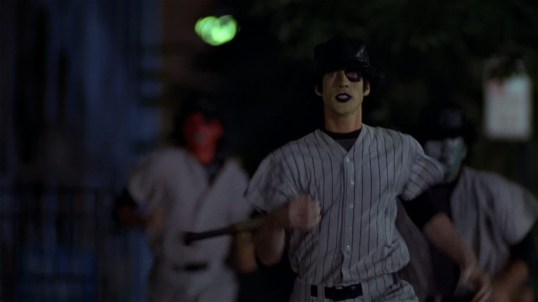
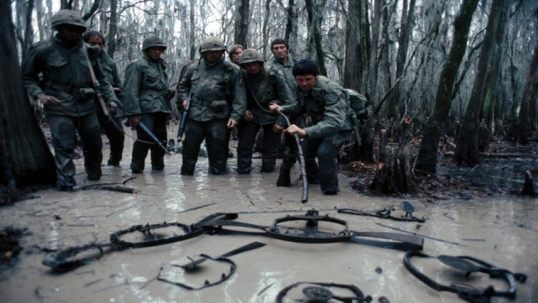
4 Shots From 4 Films: Happy Birthday Walter Hill!


4 Shots From 4 Films is just what it says it is, 4 shots from 4 of our favorite films. As opposed to the reviews and recaps that we usually post, 4 Shots From 4 Films lets the visuals do the talking.

Today is Walter Hill’s birthday!

Can you dig it?

4 Shots From 4 Films

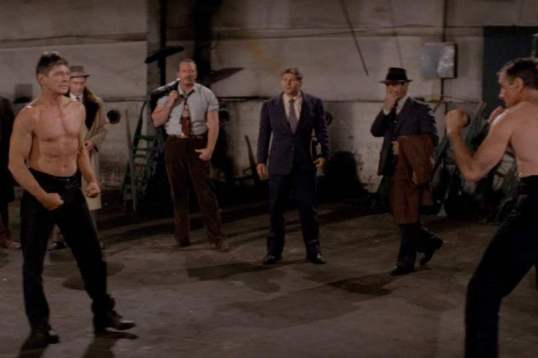
Hard Times (1975, directed by Walter Hill)

The Warriors (1979, directed by Walter Hill)

The Long Riders (1980, directed by Walter Hill)

Southern Comfort (1981, directed by Walter Hill)

Lisa Reviews An Oscar Nominee: Raging Bull (dir by Martin Scorsese)


This is not my favorite Martin Scorsese film.

I feel like I have to make that clear from the start because, for many people, this is their favorite Scorsese film.  Though it may have gotten mixed reviews when it was first released, it is now regularly described as being the high point of Scorsese’s fabled collaboration with Robert De Niro.  This was also the first film that Scorsese made with not only Joe Pesci but at also Frank Vincent as well.  (In fact, the whole scene in Goodfellas where Pesci and De Niro nearly stomp Vincent to death is a bit of an homage to a scene in Raging Bull.  Of course, Vincent got his revenge on Pesci in Casino.)  This film earned Martin Scorsese his first Oscar nomination for best director and it’s regularly cited as being one of the greatest film ever made.

Even more importantly, 1980’s Raging Bull has been described — by none other than the director himself — as the film that saved Martin Scorsese’s life.  Like a lot of his contemporaries, Scorsese got hooked on cocaine during the 70s.  He even nearly died of an overdose.  De Niro, who has been on Scorsese to direct Raging Bull for years, visited him in the hospital, brought him the script, told him to clean up his act, and make the film.  When Scorsese started to work on the film, he assumed it would be his last.  Whether Scorsese thought he would be dead or if he just thought he’d retire, I’m not sure.  Still, if Raging Bull had not rejuvenated Scorsese’s love of cinema, he wouldn’t have subsequently directed some of the greatest films ever made.  So, regardless of anything else, we have to be thankful that De Niro kept pushing Scorsese to direct Raging Bull.

The film itself is a biopic of Jake LaMotta (Robert De Niro), a brutal boxer who destroys opponents in the ring while destroying everyone who loves him outside of the ring.  He’s the type of guy who takes joy in destroying one opponent’s face just because his wife, Vicki (Cathy Moriarty), said that the guy was handsome.  When he’s forced to take a dive in order to win a title shot, he sobs in the locker room and it’s as close to being sympathetic as Jake gets.  The rest of the movie, he spends his time terrorizing his wife and taking out his frustrations on his loyal brother, Joey (Joe Pesci).

Most boxing films tend to present boxers as being lovable lugs, guys who might not be too smart but who have found the one thing that they’re good at.  (Think of the pre-Creed Rocky films.)  In Raging Bull, there’s nothing lovable about Jake.  He’s an animal, an angry man who fights because that’ the only way that he knows how to relate to the world.  He’s the type of guy who spends all of his time looking for an excuse to get mad and throw a punch.  The most dangerous thing you can do is make a joke in the presence of Jake LaMotta because, as portrayed in this film, he’s such an idiot that his reaction will always be to see it as a provocation.  From beginning to end, he’s a loathsome figure but the young De Niro was such a charismatic actor that you keep watching because — much like Vicki — you keep hoping that you’ll see some glimmer of humanity and some chance of redemption.

Reportedly, Scorsese and De Niro feel that the end of Raging Bull does provide Jake with some redemption.  Having lost everyone that ever loved him, an overweight Jake runs a sleazy nightclub and makes a fool of himself reciting dramatic monologues.  The production actually shut down so that De Niro could overeat and gain all the extra weight and it is shocking to see him go from being a handsome, athletic man to a fat slob whose shirt can’t even cover his belly.  No longer a boxer, Jake is now a faded D-list celebrity.  Now that he can’t fight and he can’t make money for the mob and the gamblers, no one cares about him.  That’s unfortunate for Jake but I have to say that I’ve never seen much redemption in Jake’s fate.  If anything, I was just happy that Vicki finally got away from him.

Raging Bull is a film that’s easier to admire than to actually like.  It’s impossible not to appreciate the black-and-white cinematography or the performances of De Niro, Pesci, and Cathy Moriarty.  As directed by Scorsese, the boxing scenes are horrifying brutal, to the extent that you find yourself wondering how anyone could enjoy the sport.  (When a spray of Jake’s blood hits the people in the first row, you can’t help but think that they’re all getting what they deserved.)  That said, the film’s never been a favorite of mine because, as well done as it is, Jake LaMotta never seems like he’s worth spending two hours with.

Obviously, a lot of people disagree with me on that.  Raging Bull received 8 Oscar nominations.  Robert De Niro won Best Actor.  Raging Bull, itself, lost Best Picture to Robert Redford’s Ordinary People.

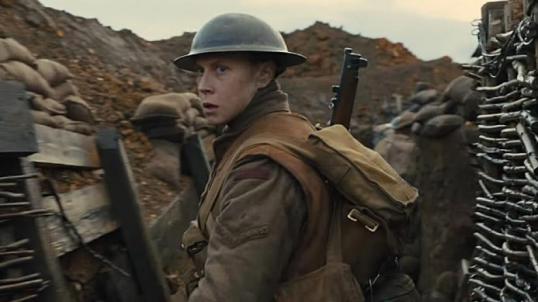
The Hollywood Critics Association Honors 1917!


On Thursday night, the Hollywood Critics Association named their picks for both the best of 2019 and the best of the decade!  Following it’s previous Golden Globe win, 1917 notched up another win with the HCA.  After being something of an also-ran during the first half of awards season, 1917 is closing strong and we’ll see if that carries through to the Oscars in February.

Here are the winners:

  • Best Picture – “1917″
  • Best Actor – Joaquin Phoenix, “Joker”
  • Best Actress – Lupita Nyong’o, “Us”
  • Best Supporting Actor – Joe Pesci, “The Irishman”
  • Best Supporting Actress – Jennifer Lopez, “Hustlers”
  • Best Adapted Screenplay – Taika Waititi, “Jojo Rabbit”
  • Best Original Screenplay – Han Jin-won and Bong Joon Ho, “Parasite”
  • Best Male Director – Noah Baumbach, “Marriage Story”
  • Best Female Director – Olivia Wilde, “Booksmart”
  • Best Performance by an Actor 23 and Under – Noah Jupe, “Honey Boy”
  • Best Performance by an Actress 23 and Under – Kaitlyn Dever, “Booksmart”
  • Breakthrough Performance Actor – Kelvin Harrison Jr., “Waves”
  • Breakthrough Performance Actress – Jessie Buckley, “Wild Rose”
  • Best Cast Ensemble – “Knives Out”
  • Best First Feature – “Honey Boy”
  • Best Independent Film (Tie) – “The Farewell” & “Waves”
  • Best Action/War Film – “1917”
  • Best Animated Film – “Toy Story 4”
  • Best Blockbuster – “Avengers: Endgame”
  • Best Comedy/Musical (Tie) – “Rocketman” & “Booksmart”
  • Best Documentary – “Apollo 11”
  • Best Foreign Language Film – “Parasite”
  • Best Horror – “Us”
  • Best Animated or VFX Performance – Rosa Salazar, “Alita: Battle Angel”
  • Best Cinematography – Roger Deakins, “1917”
  • Best Costume Design – Julian Day, “Rocketman”
  • Best Editing – Lee Smith, “1917”
  • Best Hair and Makeup – Kazu Hiro, Anne Morgan, and Vivian Baker, “Bombshell”
  • Best Original Song – “Glasgow,” “Wild Rose”
  • Best Score – Hildur Guðnadóttir, “Joker”
  • Best Stunt Work – “John Wick: Chapter 3 – Parabellum”
  • Best Visual Effects – Dan Deleeuw, Matt Aitken, Russell Earl, and Dan Sudick “Avengers: Endgame”

2020 Hollywood Critics Association Honorary Awards

  • Actor Achievement Award – Anton Yelchin (posthumously)
  • Filmmaker Achievement Award – Bong Joon Ho
  • Artisans Achievement Award – Ruth E. Carter
  • Game Changer Award – Paul Walter Hauser
  • Star on the Rise – Taylor Russell
  • Newcomer – Zack Gottsagen
  • Trailblazer – Olivia Wilde

End of a Decade Awards Recipients

  • Actor of the Decade – Adam Driver
  • Actress of the Decade – Kristen Stewart
  • Director of the Decade – Denis Villeneuve
  • Producer of the Decade – Daniela Taplin Lundberg
  • Next Generation of Hollywood – Kelvin Harrison Jr., Geraldine Viswanathan, Brooklynn Prince, Millicent Simmonds, Mckenna Grace, Jack Dylan Grazer, Thomasin McKenzie, Zoey Deutch, Noah Jupe, Kaitlyn Dever, Lana Condor, and Shahadi Wright Joseph

Here Are The Winners of The Dorian Awards!


The Dorian Awards are awarded by GALECA: The Society of LGBTQ Entertainment Critics.  This year, the Dorain for Best Film went to …. Parasite!

Check out all the winners below:

Film of the Year
Hustlers
Little Women
Once Upon a Time in … Hollywood
Pain and Glory
*Parasite
Portrait of a Lady on Fire

Director of the Year
Pedro Almodovar, Pain and Glory
Greta Gerwig, Little Women
*Bong Joon-ho, Parasite
Sam Mendes, 1917
Celine Sciamma, Portrait of a Lady on Fire

Film Performance of the Year — Actress
Awkwafina, The Farewell
Scarlett Johansson, Marriage Story
Lupita Nyong’o, Us
Alfre Woodard, Clemency
*Renée Zellweger, Judy

Film Performance of the Year — Actor
*Antonio Banderas, Pain and Glory
Adam Driver, Marriage Story
Adam Sandler, Uncut Gems
Joaquin Phoenix, Joker
Taron Egerton, Rocketman

Film Performance of the Year — Supporting Actress
Laura Dern, Marriage Story
Florence Pugh, Little Women
*Jennifer Lopez, Hustlers
Margot Robbie, Bombshell
Zhao Shuzhen, The Farewell

Film Performance of the Year — Supporting Actor
Tom Hanks, A Beautiful Day in the Neighborhood
Al Pacino, The Irishman
Joe Pesci, The Irishman
Brad Pitt, Once Upon a Time in … Hollywood
*Song Kang-ho, Parasite

LGBTQ Film of the Year
Booksmart
End of the Century
Pain and Glory
*Portrait of a Lady on Fire
Rocketman

Foreign Language Film of the Year
The Atlantics
Pain and Glory
*Parasite
Portrait of a Lady on Fire
The Farewell

Screenplay of the Year
Noah Baumbach, Marriage Story
*Bong Joon-ho, Han Jin-won, Parasite
Greta Gerwig, Little Women
Céline Sciamma, Portrait of a Lady on Fire
Rian Johnson, Knives Out

Documentary of the Year
American Factory
Apollo 11
For Sama
*Honeyland
One Child Nation

LGBTQ Documentary of the Year
Circus of Books
Gay Chorus Deep South
The Gospel of Eureka
5B
*Scream, Queen! My Nightmare on Elm Street

Visually Striking Film of the Year ** TIE
Midsommar
*1917
The Lighthouse
Parasite
*Portrait of a Lady on Fire

Unsung Film of the Year
*Booksmart
Her Smell
Gloria Bell
The Last Black Man in San Francisco
Waves

Campy Flick of the Year
*Cats
Greta
Knives Out
Ma
Serenity

TV Drama of the Year
Chernobyl
Euphoria
*Pose
Succession
Unbelievable

TV Comedy of the Year
*Fleabag
The Other Two
PEN15
Russian Doll
Schitt’s Creek

TV Performance of the Year — Actor
Bill Hader, Barry
Dan Levy, Schitt’s Creek
Jharrel Jerome, When They See Us
*Billy Porter, Pose
Jeremy Strong, Succession

TV Performance of the Year — Actress
Natasha Lyonne, Russian Doll
Catherine O’Hara, Schitt’s Creek
Mj Rodriguez, Pose
*Phoebe Waller-Bridge, Fleabag
Michelle Williams, Fosse/Verdon

LGBTQ TV Show of the Year
Euphoria
The Other Two
*Pose
Schitt’s Creek
Tales of the City

Unsung TV Show of the Year
Gentleman Jack
On Becoming a God in Central Florida
*The Other Two
PEN15
Years and Years

TV Current Affairs Show of the Year
Full Frontal with Samantha Bee
The Rachel Maddow Show
Last Week Tonight with John Oliver
The Late Show with Stephen Colbert
*Leaving Neverland

TV Musical Performance of the Year
*Bradley Cooper, Lady Gaga, “Shallow,” The 91st Academy Awards
Lizzo, “Truth Hurts,” VMAs 2019
Megan Mullally, “The Man That Got Way,” Will & Grace
Annie Murphy, “A Little Bit Alexis,” Schitt’s Creek
Michelle Williams, “Who’s Got the Pain?,” Fosse/Verdon

Campy TV Show of the Year
American Horror Story 1984
Big Little Lies
RuPaul’s Drag Race
*The Politician
Riverdale

The “We’re Wilde About You!” Rising Star Award
Roman Griffin Davis
Kaitlyn Dever
Beanie Feldstein
*Florence Pugh
Hunter Schafer

Wilde Wit of the Year
(Honoring a performer, writer or commentator whose observations both challenge and amuse)
Dan Levy
Billy Porter
Randy Rainbow
Taika Waititi
*Phoebe Waller-Bridge

Wilde Artist of the Decade (Special Accolade)
*Lady Gaga
Greta Gerwig
Ryan Murphy
Billy Porter
Phoebe Waller-Bridge

Timeless Star (Career achievement award)
*Catherine O’Hara

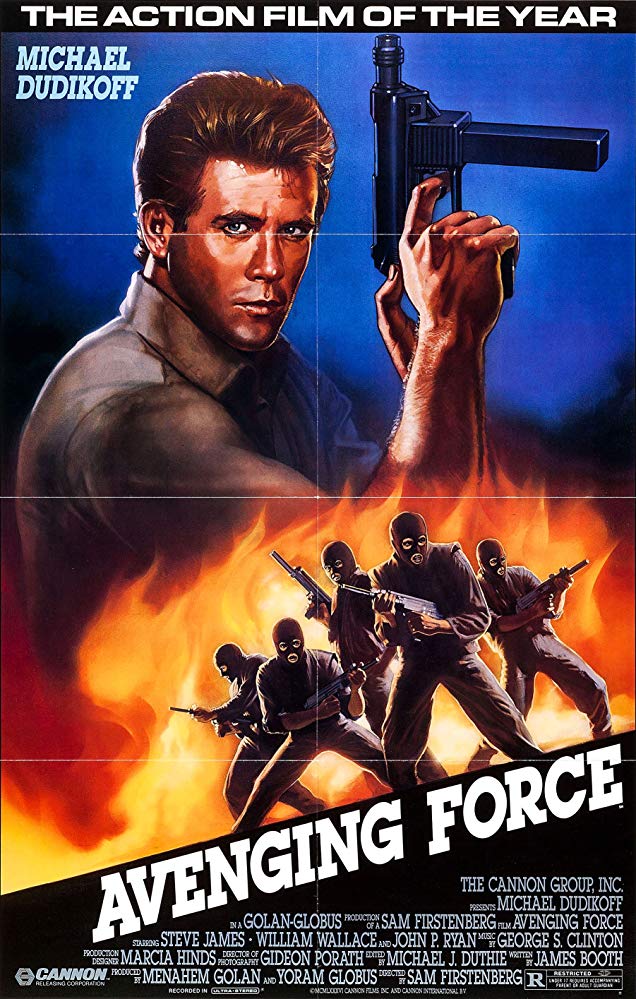
Avenging Force (1986, directed by Sam Firstenberg)


If you think this year’s elections are messed up, just watch Avenging Force and see what happens when two martial artists run against each other for a seat in the U.S. Senate.

Steve James plays Larry Richards, a former military commando who is now running for the Senate in Louisiana.  His opponent is Wade Delaney (Bill Wallace), who is described as being “the South’s youngest senator” and who is also secretly one of the world’s greatest martial artists.  Wade is a member of Pentangle, a Neo-Nazi cult that is made up of wealthy businessmen and other politicians.  When Larry and his family are invited to ride a float in the most sedate Mardi Gras parade of all time, the Pentangle attempts to assassinate him.  While Larry escapes injury, his oldest son does not.

Larry’s best friend, Col. Matt Hunter (Michael Dudikoff), is also in town and Hunter just happens to be another one of the world’s greatest martial artists.  (This film leave you wondering if there’s anyone in Louisiana who isn’t secretly a ninja.)  Matt tries to protect Larry and the remaining members of his family from Pentangle.  Matt fails miserably.  With Larry and the entire Richards family now dead, Matt goes deep into the Louisiana bayou, seeking both to rescue his sister (who has been kidnapped and is set to be sold at some sort of Cajun-run sex auction) and avenge Larry’s death.

As you probably already guessed, Avenging Force is a Cannon Film and it’s crazy even by that company’s fabled standards.  It’s not often that you come across a movie about a U.S. Senator who is also a neo-Nazi ninja who spends his spare time stalking people through the bayous.  What makes this plot point even more memorable is that no one in Avenging Force seems to be shocked by it.  Matt isn’t surprised in the least when an elected official suddenly lunges out of the fog and attempts to drown him in swamp water.  Of course, Senator Delaney isn’t the only villain in the film.  In fact, he’s not even the main bad guy.  That honor goes to Prof. Elliott Glastenbury (John P. Ryan), who lives in a huge mansion and who sees himself as a real-life version of The Most Dangerous Game‘s General Zaroff.  He not only wants to secretly rule the world but he also wants to hunt human prey in the bayou.  When Matt shows up at Glastenbury’s mansion, he is greeted by a butler who complains that Matt hasn’t bothered to wipe the blood off his shirt before showing up.

Avenging Force was originally planned as a sequel to Invasion U.S.A., with Chuck Norris reprising the role of Matt Hunter.  When Norris declined to appear in the film, the connection to Invasion U.S.A. was dropped and Michael Dudikoff of the American Ninja films was cast in the lead role.  (Of course, they didn’t bother to change anyone’s name in the script so the hero of Avenging Force is still named Matt Hunter, even if he’s not meant to be the same Matt Hunter from Invasion U.S.A.)  What Dudikoff lacked in screen presence, he made up for in athleticism and Avenging Force features some Cannon’s best fight scenes.  The plot may be full of holes but the idea of ninjas in the bayou is so inherently cool that it carries the film over any rough patches.

The critics may not have loved Avenging Force when it was first released but it holds up well as a fast-paced and weird action film.  It is perhaps the best Cajun ninja film ever made.

Lisa Reviews An Oscar Nominee: In Which We Serve (dir by Noel Coward and David Lean)


“This is the story of a ship….”

The 1942 British war film, In Which We Serve, opens with footage of the HMS Torrin, a destroyer, being constructed in a British shipyard.  When the Torrin is finally finished, the men who worked on it cheer as it leaves on its maiden voyage.  The film then abruptly jumps forward to the year 1941.  The Torrin is sinking, the victim of German bombers.  The surviving members of her crew float in the ocean, holding onto debris and watching as their home for the past few years capsizes and slowly goes underneath the surface of the water.  Even as the Torrin sinks, German planes continue to fly overhead, firing on the stranded men and killing several of them.

As the men fight to survive both the ocean and the Germans, they remember their time on the Torrin.  Captain Kinross (Noel Coward, who also wrote the script and co-directed the film) thinks back to 1939, when he was first given command of the Torrin.  He remembers the early days of the war and the time that he spent with his wife (Celia Johnson) before leaving to do his duty.  As the captain of the ship, Kinross was a tough but compassionate leader.  He expected a lot out of the men but he also came to view them as his second family.  Meanwhile, Shorty Blake (John Mills) thinks about his wife and his newborn son back in London.  Everyone on the Torrin has left their families behind.  Some of them even lose their loved ones during the war, victims of the relentless German Blitz.  But, even as they float in the ocean, everyone continues to fight on, knowing that there will be bigger ships to replace the Torrin and that Britain will never surrender.

In 1942, British film producer Anthony Havelock-Allan approached Noel Coward and asked him if he would be interested in writing the screenplay for a morale-boosting propaganda film.  Coward agreed, on the condition that he be given complete control of the project and that the film deal with the Royal Navy.  Though one might not immediately think that the author of drawing room comedies like Easy Virtue and Private Lives would be the obvious choice to write a war film, Coward’s family actually had a long tradition of serving in the Navy and Coward based a good deal of the film’s action on the wartime exploits of his friend, Lord Mountbatten.  Though there was initially some concern about Coward’s insistence that he should play the lead role on top of everything else, the Ministry of Information fully supported the production of In Which We Serve.

However, Corward knew that he would need help directing the film.  He asked his friend, John Mills, for advice and Mills suggested that Coward should bring in, as co-director, “the best editor in Britain,” David Lean.  Though Lean was initially only meant to handle the action scenes, Coward quickly discovered that he didn’t particularly enjoy all of the detail that went into directing a film.  As a result, David Lean ended up directing the majority of the film.  This would be Lean’s first film as a director and he would, of course, go one to become one the top British directors of all time.

(Also of note, frequent Lean collaborator Ronald Neame served as the film’s cinematographer.  Neame later went on to have his own career as a director.  In 1972, Neame directed another film about a capsized ship, The Poseidon Adventure.)

As for the film itself, In Which We Serve is an unapologetic propaganda film, carefully crafted to inspire the British people to support the war effort and also to win over the sympathy of American viewers.  (During the film’s production, America had finally entered the war but there were still skeptics, at home and abroad.)  Along with being a war film, In Which We Serve is also a rather touching and heartfelt tribute to the strength and determination of the British people.  Though it’s a rather grim film at times and it doesn’t shy away from the fact that lives are going to be lost in the battle to defeat Hitler, it’s also a rather inspiring film.  The sacrifice will be great, In Which We Serve tells us, but it will also be worth it.  The entire ensemble — including future director Richard Attenborough, making his film debut as a frightened sailor — does an excellent job of creating memorable characters, some of whom only appear for a few fleeting moments before meeting their fate.

In Which We Serve was a box office hit in both the UK and the US.  It was Oscar-nominated for Best Picture of the year, though it ultimately lost to another film about World War II, Casablanca.

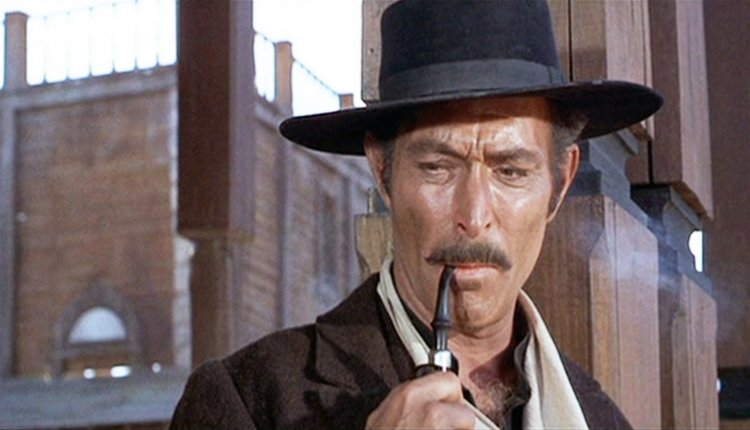
4 Shots From 4 Films: Happy Birthday Lee Van Cleef!


Lee Van Cleef in The Good, The Bad, and the Ugly

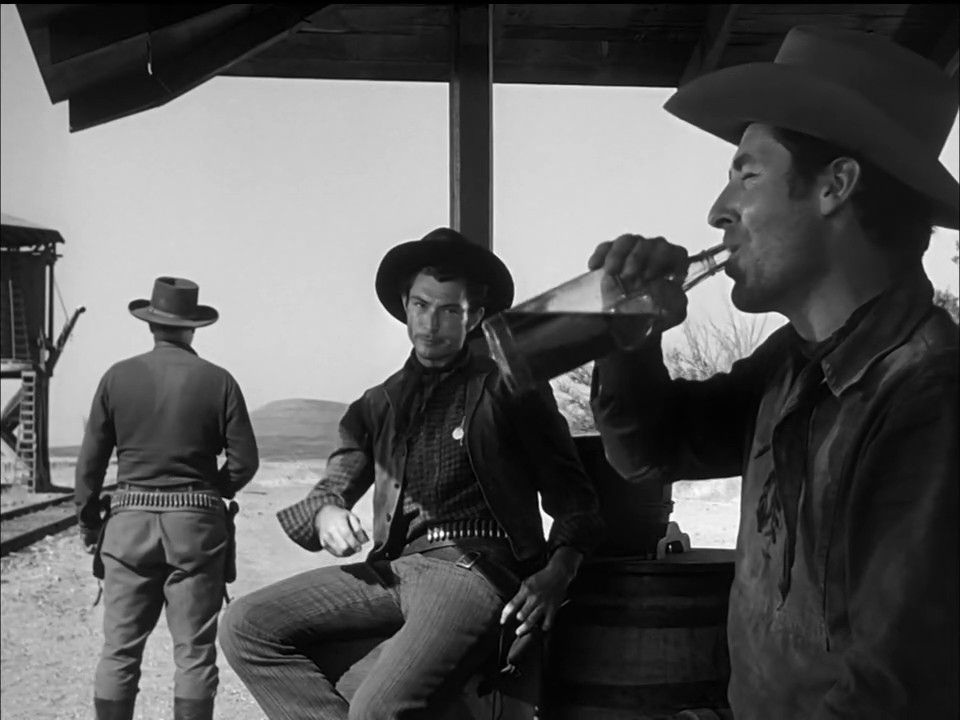
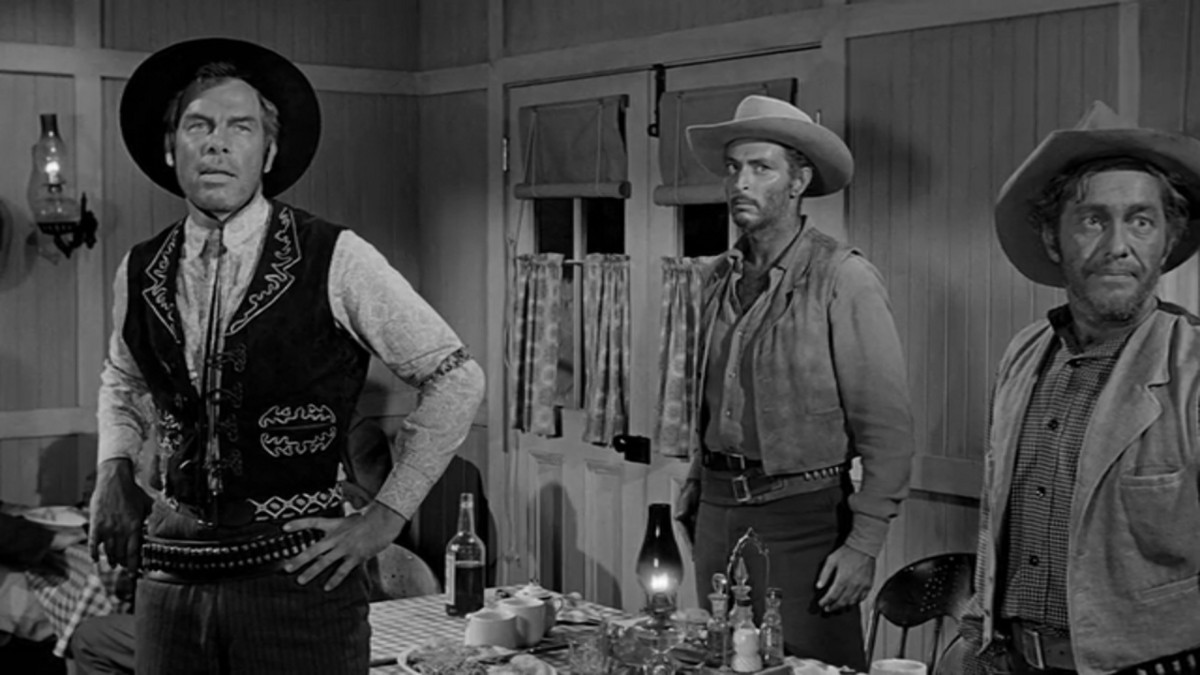
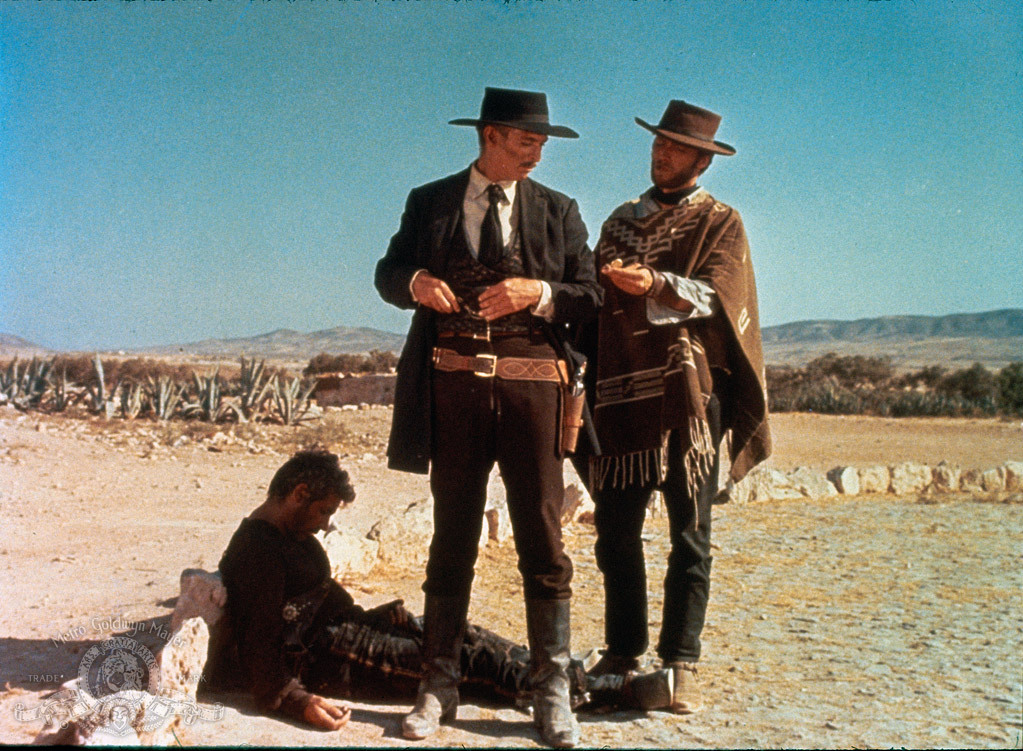
4 Shots From 4 Films is just what it says it is, 4 shots from 4 of our favorite films. As opposed to the reviews and recaps that we usually post, 4 Shots From 4 Films lets the visuals do the talking.

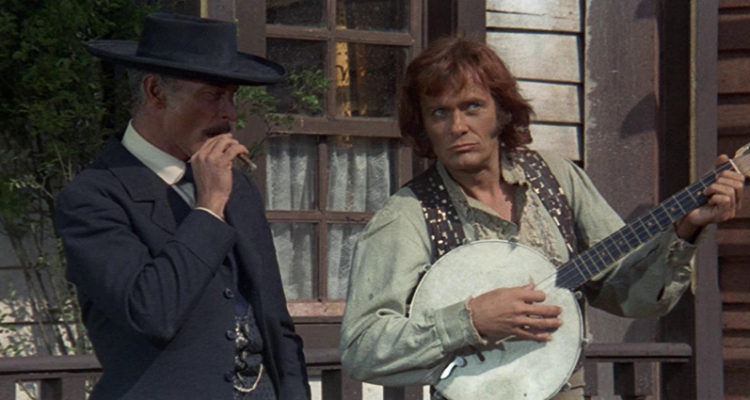
Today is the 95th birthday of the great, late Lee Van Cleef!  Van Cleef got his start playing western outlaws in Hollywood westerns like High Noon and The Man Who Shot Liberty Valance.  In the 1960s, Van Cleef did what many American actors of the time.  He went overseas to find better roles and bigger paychecks.  A series of roles in Spaghetti westerns made Van Cleeef one of the biggest stars in Europe and it also made him a timeless film icon.

In honor of the career and legacy of Lee Van Cleef, here are 4 shots from 4 films.

 4 Shots From 4 Lee Van Cleef Films

High Noon (1952, directed by Fred Zinnemann)

The Man Who Shot Liberty Valance (1962, directed by John Ford)

For A Few Dollars More (1965, directed by Sergio Leone)

Sabata (1969, directed by Gianfranco Parolini)


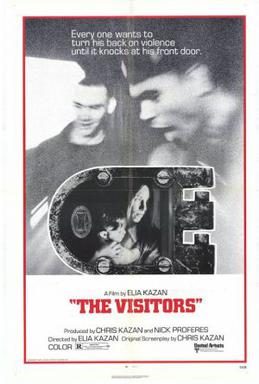
The Visitors (1972, directed by Elia Kazan)


Haunted by his experiences in Vietnam, Bill Schmidt (James Woods) lives in an isolated farmhouse with his girlfriend, Martha (Patricia Joyce), their young son, and Martha’s tyrannical father, Harry Wayne (Patrick McVey).  Harry is a hard-drinking writer who is proud of his previous military experiences and who is frustrated by Bill’s reluctance to talk about his time in Vietnam.  Harry views Bill as being a wimp who lost a war that America should have won.

One wintry night, two visitors show up at the house.  Mike (Steve Railsback) and Tony (Chico Martinez) served in Bill’s platoon.  The three of them were once friends but then something happened in Vietnam that changed all that, something that Bill refuses to talk about.  Harry is happy to welcome Mike and Tony into the household and he enjoys hearing their war stories.  While the hapless Bill watches, Mike flirts with Martha.  However, as the night continues, it becomes obvious that Mike and Tony aren’t paying an innocent visit on a friend.  Instead, they’re looking for revenge.  Bill testified against Mike at a court-martial and, in the process, ruined both of their lives.

The idea of “bringing the war home” was a popular one in the late 60s and the early 70s.  Radical groups like the Weathermen justified their terroristic actions by saying that they were forcing complacent Americans to face what every day was like in Vietnam.  Books like David Morrell’s First Blood featured psychologically damaged vets waging war on an America that they felt had abandoned them while the new wave of counterculture filmmakers made films that were groundbreaking in their portrayal of death and violence.  The Visitors, which features one traumatized vet being victimized by two other angry vets, was one of those films that was meant to bring the war home.

Directed by Elia Kazan and written by Kazan’s son, Chris, The Visitors is a simple film that sometimes seems more like a stage play than a movie.  The script is talky and heavy-handed, the characters are thinly drawn, and the film’s portrayal of Martha comes close to being misogynistic.  Chris Kazan’s script is openly critical of the United States’s role in the Vietnam War but Elia Kazan is more concerned with presenting Bill as a martyr.  Elia was a former communist who infamously named names during the McCarthy era and, from On the Waterfront on, every film that he made was more or less an attempt to justify his actions.  Like Waterfront‘s Terry Malloy. Bill loses everything because he testifies.  Unlike Malloy, no one comes to Bill’s aid afterwards, which suggests Kazan’s bitterness only grew over the years following his testimony.

The Visitors is a lesser film in Kazan’s filmography but notably, it was the first film for both James Woods and Steve Railsback.  Railsback plays Mike as a charismatic brute, giving a performance that owes more than a little to Marlon Brando’s performance as Stanley Kowalski in Kazan’s A Streetcar Named Desire.  James Woods brings his nervous intensity to the role of Bill, making him a far more intelligent but no less victimized version of Brando’s Terry Malloy.  Though The Visitors was Kazan’s second-to-last film, both Woods and Railsback would go on to emerge as two of the most interesting character actors in Hollywood.