Spring Breakdown: Love In A Goldfish Bowl (dir by Jack Sher)


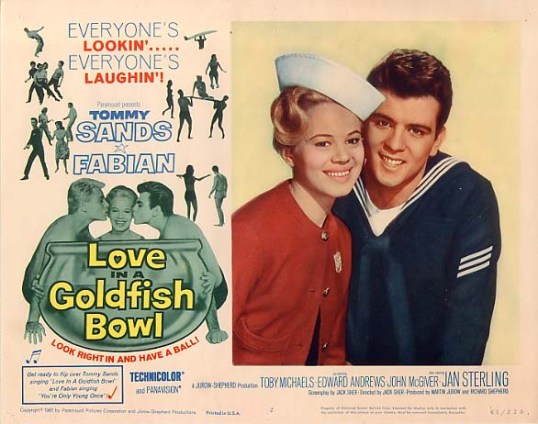
The 1961 film, Love in a Goldfish Bowl, tells the story of two college students.

Gordon Slide (Tommy Sands) and Blythe Holloway (Toby Michaels) are best friends.  Their relationship is strictly platonic, though everyone at the college assumes that they’re more than just friends.  Gordon and Blythe both share the common bond of coming from broken but wealthy families and they both want to do something more with their lives than just following the rules.  Blythe is a good student, the daughter of a senator.  Gordon is styles himself as being a cynic, or at least what was considered to be a cynic by the standards of 1961.  (James Dean would have probably called him a phony.)  The school’s headmaster (John McGiver) suspects that 1) Gordon and Blythe are more than just friends and 2) that Gordon is a bad influence on Blythe.  He even orders them to stop seeing each other, which I guess is something that headmasters could get away with in 1961.

Still, it’s going to take more than some stuffy authority figure to keep Gordon and Blythe for enjoying their Spring Break!  Especially when Gordon’s mother happens to own a beach house, which would be the perfect place for the two of them to hang out.  Despite knowing that each of their parent probably wouldn’t approve of them spending the break together, Gordon and Blythe decide to do just that.  Blythe even gets permission for her father, albeit by duplicitous means.  (Gordon imitates the headmaster on the phone.  Wow, that wild and crazy Gordon.)

At first, the beach house seems like the perfect place for Gordon and Blythe to unwind.  But when they meet Giuseppe La Barba (Fabian Forte), things start to change.  A member of the Coast Guard, Giuseppe plots to steal Blythe away from Gordon, with his schemes causing Gordon and Blythe to reconsider their feelings for each other.

Considering that this film is 60 years old, it’s perhaps not surprising that Love In A Goldfish Bowl often feels like it’s a rusty time capsule that someone buried in the sand on a California beach.  Everything from the intrusive headmaster to the scandal of divorce to the domestic routine that both Gordon and Blythe naturally slip into as soon as they arrive at the beach house makes this film feel almost as if it comes from another planet.  While the film is critical of adults who don’t understand what it’s like to be young and idealistic, it also ultimately ends with the suggestion that the adults might not be so clueless themselves.  It’s a bit of a wishy-washy approach to what little conflict the film has to offer up.

My point here is that Love In A Goldfish Bowl is an amazingly innocent little film, the type of Spring Break movie that would cause even your grandma to say, “Those kids really need to loosen up and live a little.”  Usually, I kind of like time capsule films like this, just because I’m a history nerd and I’m always interested in seeing how people used to live and communicate.  Unfortunately, Love In A Goldfish Bowl is a remarkably slow 88 minutes and neither Tommy Sands nor Toby Michaels have enough chemistry to be interesting as friends, let alone as a chaste couple waiting for their wedding night.  Fabian has a little bit more screen presence than Tommy Sands but overall, this is a pretty bland affair.

Ultimately, this film is mostly interesting as an example of what beach movies were like before AIP reinvented the genre with the Frankie and Annette beach party films.  Thank goodness people finally learned how to celebrate being young and on the beach.
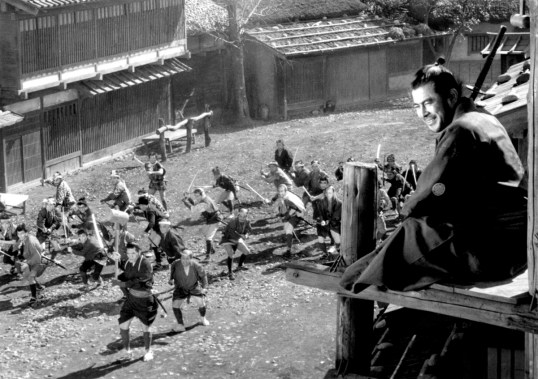
Scene that I Love: The Finale of Akira Kurosawa’s Yojimbo


Yojimbo (1961, directed by Akira Kurosawa)

The great filmmaker, Akira Kurosawa, was born 111 years ago today, in Tokyo.  Kurosawa would go on to become one of the most influential directors of all time, making 30 films over a career that lasted 57 years.  Though Kurosawa is often cited as an influence on westerns (Seven Samurai became The Magnificent Seven, Yojimbo inspired Serigo Leone to create The Man With No Name), Kurosawa’s influence goes for beyond just one genre.  He directed action films.  He directed gangster films.  He directed social problem films.  He directed historical epics.  Kurosawa taught an entire generation of future film film directors the language of cinema.

In honor of the anniversary of Akira Kurosawa’s birth, here is a scene that we all love from his 1961 masterpiece, Yojimbo.  Playing the lead role of the lone swordsman is, of course, Kurosawa’s frequent star, Toshiro Mifune.


4 Shots From 4 Films: Special Michael Haneke Edition


4 (or more) Shots From 4 (or more) Films is just what it says it is, 4 (or more) shots from 4 (or more) of our favorite films. As opposed to the reviews and recaps that we usually post, 4 (or more) Shots From 4 (or more) Films lets the visuals do the talking.

Today, the Shattered Lens wishes a happy 79th birthday to the great Austrian director, Michael Haneke!  One of the most thought-provoking and visually proficient directors of all time, Haneke has been challenging viewers for decades.  His films may sometimes be controversial but no one can deny their importance.  Here are….

4 Shots From 4 Michael Haneke Films

Benny’s Video (1992, dir by Michael Haneke, DP: Christian Berger)

Time of the Wolf (2003, dir by Michael Haneke, DP: Jurgen Jurges)

Cache (2005, dir by Michael Haneke, DP: Christian Berger)

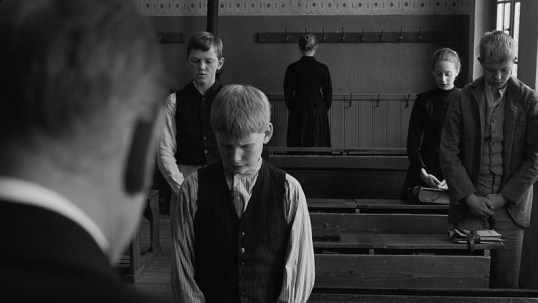
The White Ribbon (2009, dir by Michael Haneke, DP: Christian Berger)

Spring Breakdown: Hunk (dir by Lawrence Bassoff)


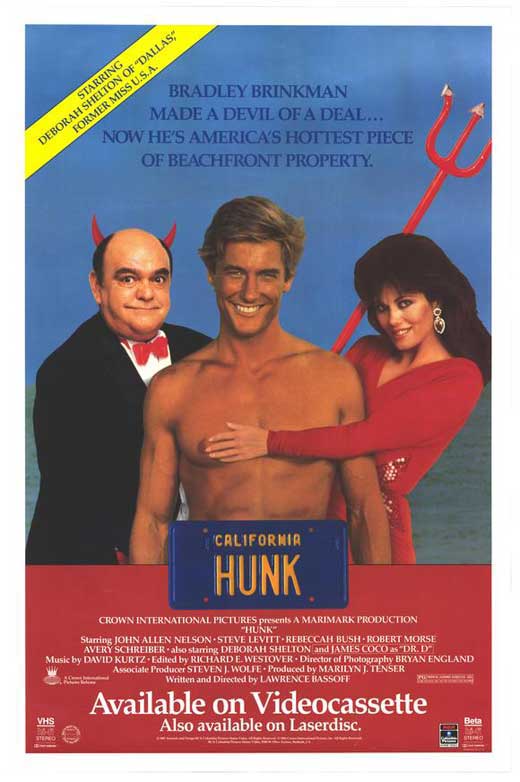
Released in 1987, Hunk tells the story of Hunk Golden (John Allen Nelson).

At first glance, Hunk seems to have everything.  He lives in a huge house on the beach and he’s good-looking and muscular enough that he can actually pull off the rainbow speedo look.  Women want to be with Hunk and men want to be Hunk.  He’s rich.  He can eat all the food in the world without putting on a single pound.  He’s got a great smile and wonderful tan and he even knows karate!  Hunk drives a red convertible that has a personalized license plate, one that reads: HUNK.  If anyone else did it, it would seem narcissistic but Hunk can pull it off.

However, Hunk is deeply dissatisfied with his life.  As he explains to his psychiatrist, Dr. Sunny Graves (Rebecca Bush), he wasn’t always Hunk Golden.  He used to be a nerdy writer named Brady Brinkman (played by Steve Levitt).  After Brady’s girlfriend left him for an aerobics instructor, he somehow managed to write a guide to how to become rich.  Brady’s wasn’t sure where his inspiration came from but he was still able to make a fortune off of it.  After Brady moved to the beach to work on his next project, he discovered that being wealthy didn’t mean anything unless he also had the right look.

That’s when he was approached by O’Brien (Deborah Shelton), an emissary of the devil (James Coco).  O’Brien turned Brady Brinkman into Hunk Golden and taught him how to be …. well, how to be a hunk.  The only condition was that, after a number of months, Hunk would have to give up his soul to the devil.  Hunk agreed but now, with the deadline approaching, Hunk isn’t so sure that he wants to condemn his soul to eternal damnation.  Is being the hottest guy on the beach really worth an eternity of burning in fire and being poked with those little pitchfork things?

Now, it probably won’t come as a surprise to our regular readers to discover that this film was produced and distributed by Crown International Pictures.  From the 70s through the 80s, Crown International specialized in low-budget exploitation films, with a surprisingly large number of them taking place on the beach.  Nowadays, of course, the Crown International filmography can be found in countless Mill Creek boxsets.  Hunk can be found in several.  I own enough Mill Creek boxsets that I’ve probably got a dozen copies of Hunk in my DVD and Blu-ray collections.

That said, while the film’s low budget is obvious in every frame, Hunk is actually slightly better than the typical Crown International beach film.  While it seems to take forever for Brady to become Hunk, the film has got a likable cast and it actually delivers its message about self-acceptance with a surprising amount of sincerity.  This is the rare Crown International Film with a heart and, for every joke that falls flat (and there’s several), there’s at least a few unexpectedly clever moments.  The film takes an especially strange turn once Hunk becomes a celebrity and starts to wonder if he should accept the devil’s invitation to become a demon and help start a world war.  Steve Levitt and John Allen Nelson both do a good job playing Brady and his alter ego, though all of Nelson’s dialogue appears to have been dubbed.  James Coco delivers his evil lines with a properly devilish glee.  Incidently, this was also Brad Pitt’s first movie.  While he had no dialogue and went uncredited, he can be easily spotted as an extra in one of the beach scenes.

See him?

If you’re looking for silly and occasionally strange 80s beach movie, you could do worse than to check your Mill Creek boxsets for a copy of Hunk.

The Writers Guild Honors Promising Young Woman And, For Some Unfathomable Reason, Borat


The Writers Guild of America has announced their picks for the best written films and TV shows of 2020.  Below are the three film awards.  I’m happy to see Promising Young Woman won for Best Original Screenplay.  As for Borat winning for Best Adapted Screenplay …. yeah, okay.  The WGA can honor whoever they want but just don’t pretend like Borat won for any reason other than the whole Rudy Guiliani thing.  (Does it really take a lot of effort and skill to make Rudy Guiliani look foolish?)  That Borat beat both One Night In Miami and Ma Rainey’s Black Bottom is embarrassing.

Anyway, here’s the winners:

ORIGINAL SCREENPLAY
Judas and the Black Messiah – Screenplay by Will Berson & Shaka King, Story by Will Berson & Shaka King and Kenny Lucas & Keith Lucas (Warner Bros.)
Palm Springs – Screenplay by Andy Siara, Story by Andy Siara & Max Barbakow (Hulu)
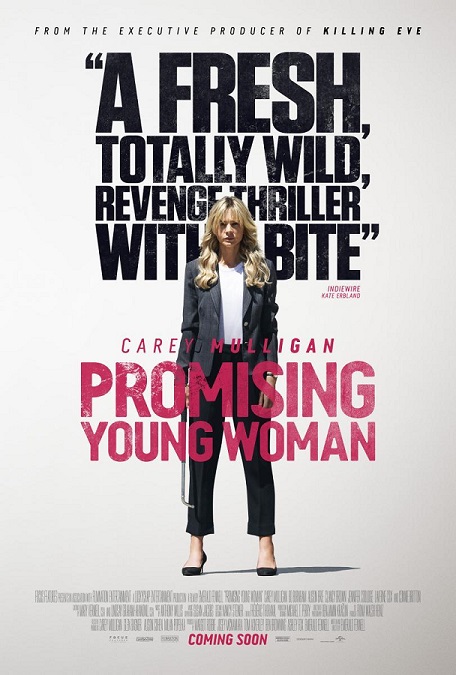
Promising Young Woman – Written by Emerald Fennell (Focus Features)
Sound of Metal – Screenplay by Darius Marder & Abraham Marder, Story by Darius Marder & Derek Cianfrance (Amazon Studios)
The Trial of the Chicago 7 – Written by Aaron Sorkin (Netflix)

ADAPTED SCREENPLAY
Borat Subsequent Moviefilm – Screenplay by Sacha Baron Cohen & Anthony Hines & Dan Swimer & Peter Baynham & Erica Rivinoja & Dan Mazer & Jena Friedman & Lee Kern, Story by Sacha Baron Cohen & Anthony Hines & Dan Swimer & Nina Pedrad, Based on Characters Created by Sacha Baron Cohen (Amazon Studios)
Ma Rainey’s Black Bottom – Screenplay by Ruben Santiago-Hudson, Based on the Play Written by August Wilson; (Netflix)
News of the World – Screenplay by Paul Greengrass and Luke Davies, Based upon the Novel by Paulette Jiles (Universal Pictures)
One Night in Miami – Screenplay by Kemp Powers, Based on the Stage Play “One Night in Miami” by Kemp Powers (Amazon Studios)
The White Tiger – Screenplay by Ramin Bahrani, Based on the Book “The White Tiger” by Aravind Adiga (Netflix)

DOCUMENTARY SCREENPLAY
All In: The Fight for Democracy – Written by Jack Youngelson (Amazon Studios)
The Dissident – Written by Mark Monroe and Bryan Fogel (Briarcliff Entertainment)
Herb Alpert Is… – Written by John Scheinfeld (Abramorama)
Red Penguins – Written by Gabe Polsky (Universal Pictures)
Totally Under Control – Written by Alex Gibney (Neon)

Spring Beakdown: The Thirsty Dead (dir by Terry Becker)


So, imagine this.

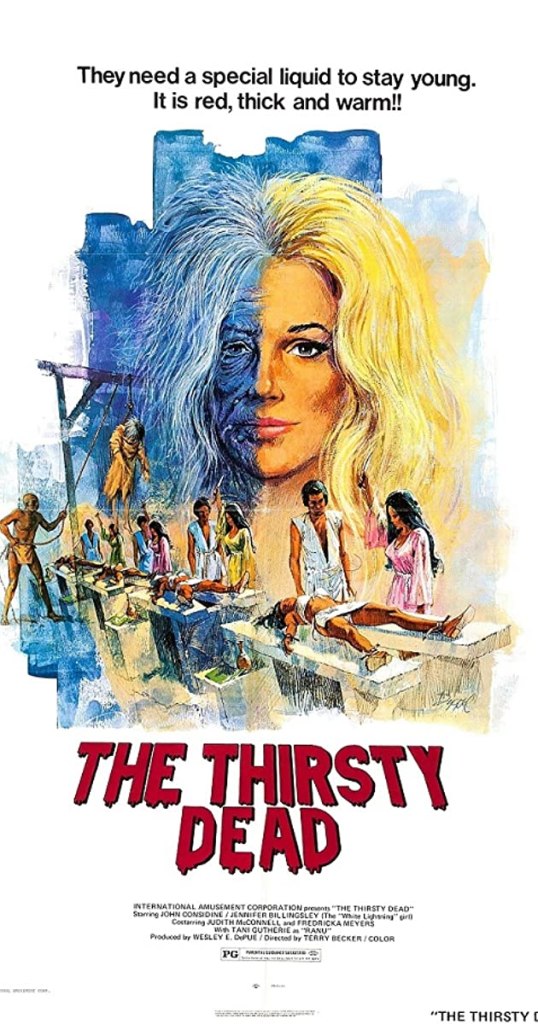
You’re on vacation in a tropical paradise.  (Maybe you’re even there on Spring Break, just so we can justify including this review in my series of Spring Break film reviews.)  One night, while wandering around the city, you get grabbed by a bunch of robe-wearing monks.  The monks proceed to tie you up and then force you to take a canoe ride from the sewer to the middle of the jungle.  Once you reach the jungle, you’re informed that you’ve been kidnapped by a cult that worships a shrunken head in a box.  The members of the cult have been around for centuries but they’ve managed to retain their youth by drinking the blood of the women who they kidnap off the streets of the city.  Like you, for example.

That would probably freak most people out.  That would certainly freak me out.  Not only do I not particularly care for the jungle but I’m also pretty attached to my blood.  However, when this exact same thing happens in the 1974 film The Thirsty Dead, no one seems to be particularly shocked to hear about it.  Instead, the kidnapped women all kind of shrug and accept their fate as if it all makes total sense.

In fact, Claire (Judith McConnell) appears to develop Stockholm Syndrome within record time.  She’s a dancer in Manila who, within hours of being kidnapped, is soon joking with her abductors.  She makes it clear that she’s apparently fine with being kidnapped and donating her blood to a good cause.  It’s never really clear why she’s okay with that but Claire is so determined to do what she wants to do (even if that means being subservient to a bunch of 100 year-old cultists) that it’s hard not admire her stubbornness.

On the other hand, Laura (Jennifer Billingsley) is determined to escape.  Even though the members of the cult believe that she’s the reincarnation of one of their goddesses, Laura wants to get back to civilization.  She thinks that one of the cultists, Baru (John Considine), might be willing to help her.  However, as Baru explains, if he goes too far into the jungle, he’ll lose his youth and basically just waste away.

(Just in case there’s any doubt on the part of anyone reading this review, the cult is right about the whole eternal youth thing.  One cultist makes the mistake of venturing too far out into the jungle and transforms from 49 to 50 right in front of our eyes!)

The Thirsty Dead is an odd film.  On the one hand, the first few minutes of the film is undeniably sordid.  Claire dances in a cage.  Laura gets knocked over the head by a cultist and ends up with her hands tied behind her back.  The camera lingers on a doll of a baby floating in a sewer.  When the women first find themselves in the jungle, Claire jokes about being sold into prostitution and the whole film, up until that point, has had a rather icky feel to it.  However, once the cult shows up, The Thirsty Dead suddenly becomes a rather tame film, one that’s almost totally free of graphic gore and sexual innuendo.  The Thirsty Dead ultimately feels less like a film and more like an extended episode of some 70s sci-fi show.  For a film about a blood-sucking cult, there’s surprisingly little blood.  It feels a bit off and, to be honest, it’s a little boring.  This is the type of film that calls out for a sleazier approach.

Despite being rather forgettable, The Thirsty Dead has achieved the dubious immortality of being included in several Mill Creek box sets, the ones with names like 100 Horror Classics or 50 Chilling Thrillers.  So, in all probability, you’ve got The Thirsty Dead on DVD or Blu-ray without even realizing it.  If you somehow don’t already have The Thirsty Dead in your film collection, you can always watch it on YouTube or Prime or probably a hundred other streaming sites.  The Thirsty Dead will never die.

The Austin Film Critics Association Honors Minari


Today the Austin Film Critics Association announced their picks for the best of 2020 and it was another victory for Minari!

Here are the winners in Austin:

Best Film
First Cow
Never Rarely Sometimes Always
Nomadland
Minari
Promising Young Woman

Best Director
Lee Isaac Chung, Minari
Emerald Fennell, Promising Young Woman
Eliza Hittman, Never Rarely Sometimes Always
Kelly Reichardt, First Cow
Chloé Zhao, Nomadland

Best Actress
Nicole Beharie, Miss Juneteenth
Viola Davis, Ma Rainey’s Black Bottom
Frances McDormand, Nomadland
Elisabeth Moss, The Invisible Man
Carey Mulligan, Promising Young Woman

Best Actor
Riz Ahmed, Sound of Metal
Chadwick Boseman, Ma Rainey’s Black Bottom
Anthony Hopkins, The Father
Delroy Lindo, Da 5 Bloods
Steven Yeun, Minari

Best Supporting Actress
Maria Bakalova, Borat Subsequent Moviefilm
Olivia Coleman, The Father
Amanda Seyfried, Mank
Youn Yuh-jung, Minari
Helena Zengel, News of the World

Best Supporting Actor
Daniel Kaluuya, Judas and the Black Messiah
Leslie Odom Jr, One Night in Miami
Paul Raci, Sound of Metal
David Strathairn, Nomadland
Glynn Turman, Ma Rainey’s Black Bottom

Best Original Screenplay
Minari
Palm Springs
Promising Young Woman
Sound of Metal
The Trial of the Chicago 7

Best Adapted Screenplay
The Father
The Invisible Man
Ma Rainey’s Black Bottom
Nomadland
One Night in Miami

Best Cinematography
Da 5 Bloods
Mank
Minari
Nomadland
Tenet

Best Original Score
Da 5 Bloods
Mank
Minari
Soul
Tenet

Best Foreign Language Film
Another Round
Bacurau
Beanpole
La Llorona
Minari

Best Documentary
Boys State
Collective
Crip Camp
Dick Johnson is Dead
Time

Best Animated Film
Over the Moon
Onward
A Shaun the Sheep Movie: Farmageddon
Soul
Wolfwalkers

Best Ensemble
Da 5 Bloods
Ma Rainey’s Black Bottom
Minari
One Night in Miami
The Trial of the Chicago 7

Best Editing
The Father
Mank
Nomadland
Tenet
Sound of Metal

Best Motion Capture/Special Effects Performance
Luke Davis, The Invisible Man
Andrew Jackson, Tenet
Oliver Jackson-Cohen, The Invisible Man
Matt Kasmir, The Midnight Sky
Elisabeth Moss, The Invisible Man
Terry Notary, Call of the Wild

Best Stunts
Birds of Prey
Extraction
The Invisible Man
The Old Guard
Tenet

Best First Film
Miss Juneteenth
One Night in Miami
Palm Springs
Promising Young Woman
The 40-Year-Old Version

The Robert R. “Bobby” McCurdy Memorial Breakthrough Artist Award
Radha Blank, The 40-Year-Old Version
Lee Isaac Chung, Minari
Sidney Flanigan, Never Rarely Sometimes Always
Alan Kim, Minari
Cathy Yan, Birds of Prey

Austin Film Award
Bull
Greenland
The Orange Years
Pahokee
We Can Be Heroes

Special Honorary Award: Honoring “Miss Juneteenth” with a “Texas Spirit” award, for exemplifying the creative output of the film industry here in the Lone Star State, as well as embodying the character of our community.

The Phoenix Critics Circle Honors Minari


Though I think a lot of people have kind of tuned out now that the Oscar nominations have finally been announced, the critics groups and the guilds are still announcing their picks for the best of 2020 and the first two months of 2021.  Yesterday, the Phoenix Critics Circle announced that Minari was their selection for best film of the year!

Here are the winners from Phoenix:

BEST PICTURE
FIRST COW
MINARI
NOMADLAND
ONE NIGHT IN MIAMI
PROMISING YOUNG WOMAN
SOUND OF METAL

BEST COMEDY FILM
THE 40-YEAR-OLD VERSION
ANOTHER ROUND
BORAT SUBSEQUENT MOVIEFILM
ON THE ROCKS
PALM SPRINGS

BEST SCIENCE FICTION FILM
POSSESOR
SPUTNIK
TENET
THE VAST OF NIGHT

BEST HORROR FILM
ANTEBELLUM
THE INVISIBLE MAN
LA LLORONA
POSSESOR
RELIC

BEST ANIMATED FILM
THE CROODS: NEW AGE
ONWARD
OVER THE MOON
SOUL
WOLFWALKERS

BEST FOREIGN LANGUAGE FILM
ANOTHER ROUND
BACURAU
COLLECTIVE
LA LLORONA
MINARI

BEST DOCUMENTARY
BOYS STATE
CRIP CAMP
DICK JOHNSON IS DEAD
GUNDA
TIME

BEST ACTOR
RIZ AHMED – SOUND OF METAL
CHADWICK BOSEMAN – MA RAINEY’S BLACK BOTTOM
DELROY LINDO – DA 5 BLOODS
MADS MIKKELSEN – ANOTHER ROUND
GARY OLDMAN – MANK
STEVEN YEUN – MINARI

BEST ACTRESS
VIOLA DAVIS – MA RAINEY’S BLACK BOTTOM
ANDRA DAY – THE UNITED STATES VS. BILLIE HOLIDAY
SIDNEY FLANIGAN – NEVER RARELY SOMETIMES ALWAYS
FRANCES MCDORMAND – NOMADLAND
CAREY MULLIGAN – PROMISING YOUNG WOMAN

BEST SUPPORTING ACTOR
CHADWICK BOSEMAN – DA 5 BLOODS
SACHA BARON COHEN – THE TRIAL OF THE CHICAGO 7
DANIEL KALUUYA – JUDAS AND THE BLACK MESSIAH
LESLIE ODOM JR. – ONE NIGHT IN MIAMI
PAUL RACI – SOUND OF METAL

BEST SUPPORTING ACTRESS
MARIA BAKALOVA – BORAT SUBSEQUENT MOVIEFILM
OLIVIA COLMAN – THE FATHER
DOMINIQUE FISHBACK – JUDAS AND THE BLACK MESSIAH
AMANDA SEYFRIED – MANK
YUH-JUNG YOUN – MINARI
HELENA ZENGEL – NEWS OF THE WORLD

BEST DIRECTOR
LEE ISSAC CHUNG – MINARI
EMERALD FENNELL – PROMISING YOUNG WOMAN
DAVID FINCHER – MANK
REGINA KING – ONE NIGHT IN MIAMI
CHLOE ZHAO – NOMADLAND

BEST SCREENPLAY
LEE ISAAC CHUNG – MINARI
EMERALD FENNELL – PROMISING YOUNG WOMAN
KEMP POWERS – ONE NIGHT IN MIAMI
AARON SORKIN – THE TRIAL OF THE CHICAGO 7
CHLOE ZHAO – NOMADLAND

BEST CINEMATOGRAPHY
ERIK MESSERSCHMIDT – MANK
JOSHUA JAMES RICHARDS – NOMADLAND
NEWTON THOMAS SIGEL – DA 5 BLOODS
HOYTE VAN HOYTEMA – TENET
ŁUKASZ ŻAL – I’M THINKING OF ENDING THINGS

BEST SCORE
LUDWIG GÖRANSSON – TENET
JAMES NEWTON HOWARD – NEWS OF THE WORLD
EMILE MOSSERI – MINARI
TRENT REZNOR, ATTICUS ROSS – MANK
TRENT REZNOR, ATTICUS ROSS, JON BATISTE – SOUL

Spring Breakdown: Jaws: The Revenge (dir by Joseph Sargent)


The 1987 film, Jaws: The Revenge, opens with Amity Island (last seen in Jaws 2) preparing to celebrate Christmas.  Longtime police chief and veteran shark hunter Martin Brody has died but his widow, Ellen (Lorraine Gary), still lives on the island.  Also living on the island is Ellen’s youngest son, Sean (Mitchell Anderson).  Sean is now a deputy and he spends a lot of time patrolling the ocean.  This worries Ellen because the Brodys don’t exactly have the best luck when it come to the water….

Or continuity for that matter!  Anyone who has seen Jaws 3-D knows that Sean Brody moves down to Florida, became a cowboy, hooked up with Lea Thompson, and worked with his older brother at Sea World.  And yet, as Jaws: The Revenge opens, Sean is suddenly back in Amity, he’s not a cowboy, and he’s engaged to someone who is not Lea Thompson.  Throughout the film, no mention is made of Sean having ever gone to Florida or going through a cowboy phase.  Basically, this film ignores the entire existence of Jaws 3-D.  That would be okay if Jaws: The Revenge was actually a better film than Jaws 3-D but it’s not.  That’s right, Jaws The Revenge fails to even improve on Jaws 3-D.

Anyway, Sean goes out on patrol and promptly gets eaten by a shark.  Ellen loses her mind at the funeral and announces that she doesn’t want her oldest son, Michael (Lance Guest), going anywhere near the water.  Unfortunately, Michael is working in the Bahamas as a marine biologist so …. well, sorry, grandma.

Perhaps to try to help Ellen get over her fear of water, Michael brings Ellen back to the Bahamas with him.  Ellen gets a chance to spend some time with her daughter-in-law, Carla (Karen Young) and her granddaughter, Thea (Judith Barsi).  Ellen also pursues a tentative romance with the local pilot, Hoagie (Michael Caine, who gives a likable performance but who also has absolutely zero romantic chemistry with Lorraine Gary).  However, Ellen still has nightmares about the ocean and she suspects that the shark that killed Sean might be on its way to the Bahamas.  Why?  Because this time it’s personal!

Actually, as crazy as that sounds, it turns out that Ellen’s right.  Unfortunately, it takes the shark a while to get down there and, as such, the audience spends a lot of time watching Ellen, who was always the least interesting character in all of the Jaws films, wander around the Bahamas.  The island scenery is lovely but when you’re watching a Jaws movie, you’re watching for the shark action.  Jaws: The Revenge is only a 90-minute film and the shark doesn’t make its second appearance until the 50 minute mark.

Once the shark does show up, of course, it gets right down business.  It eats a swimmer.  It eats an airplane.  It sinks a boat.  At one point the shark bites someone in half and someone off-screen is heard to shout, “Get a doctor!” as if a doctor is going to be able to do much in that situation.  Ellen sets out to get some revenge of her own, which would be a thrilling moment if Ellen was as iconic a character as Jaws: The Revenge seems to think that she is.  My favorite moment is when Michael Caine reveals that, despite the odds, he somehow managed to avoid getting eaten by the shark.  When someone asks him how he did it, he replies, “It wasn’t easy …. bloody Hell,” and that’s pretty much all that’s said about it.

Ultimately, though, this is the least of the four Jaws films, duplicating neither the suspense of the first two films nor the camp silliness of the third film.  Fortunately, though this film may have been the last official sequel to Jaws, the legacy of the classic original will live forever.

Lisa Reviews An Oscar Nominee: Sound of Metal (dir by Darius Marder)


What’s it like to lose the thing that you felt was the most important part of your life?  That’s one of the many questions that Sound of Metal left me considering.

The story opens with Ruben (Riz Ahmed) and Lou (Olivia Cooke) traveling the country in a cluttered RV.  Lou is a singer.  Ruben is a drummer.  They perform under the name Blackgammon.  Their life is about traveling from gig to gig, playing their own unique music.  It’s not exactly a glamorous life but, as the first few minutes of Sound of Metal makes clear, it’s a life that they both love.

Or, at least, they do until Ruben starts to lose his hearing.  (When Ruben goes to see a doctor, he’s told that he’s basically only picking up on 20% of the sounds around him and that it’s only going to get worse.)  At first, Ruben tries to keep Lou from discovering what’s happening but it doesn’t take long for Lou to realize that something’s wrong.  Ruben argues that he can still play the drums by memory, even if he can no longer hear what he’s playing.  Lou is more concerned that Ruben is going to slip back into his previous bad habits and once again start using heroin.

Eventually, the two of them go their separate ways.  Lou returns to her family in Belgium and reinvents herself as an artist.  Meanwhile, Ruben ends up at a center specifically for deaf recovering addicts.  The center is run by Joe (Paul Raci), a kind but no-nonsense man who lost his hearing in Vietnam and who is a recovering alcoholic.  At first, Ruben is bitter and angry and refuses to accept that his old life is over.  When Joe order Ruben to spend hours sitting in a room and writing down whatever pops into his head, it takes Ruben a while to see that Joe is helping him to come to terms with living in a world without sound.  Even as Ruben starts to accept his new reality, he still finds himself wanting to reunite with Lou.  He finds himself tempted to get a cochlear implant, despite Joe explaining that doing so will mean that Ruben will have to leave his new home.

In the hands of a lesser director and a lesser cast, Sound of Metal could have become mawkish or overly sentimental, the type of film that tries so hard to be uplifting that it ends up condescending instead.  However, director Darius Marder emphasizes the gritty details of his story, showcasing Ruben’s emotional growth while also acknowledging that Ruben will never truly be at peace with his hearing loss.  This is a film that acknowledges what Ruben’s gained from his new circumstances while never ignoring the pain of losing his former life.  The film’s soundtrack is designed so that we hear exactly as much or as little as Ruben can hear.  We feel his frustration and his fear as sound fades away while, at the same time, we also come to appreciate everything that he finds in the silence.

The Academy has rightfully nominated Riz Ahmed for best actor for his performance in Sound of Metal.  That was expected as Ahmed’s been honored by several critics groups and probably the only thing that will keep Ahmed from winning thr Oscar is the Academy’s understandable desire to honor the legacy of Chadwick Boseman.  Ahmed does a wonderful job capturing all of Ruben’s emotions, from his fear to his anger to finally his reluctant acceptance.

Olivia Cooke was not nominated for her role, though I think she should have been.  It’s perhaps understandable why Cooke wasn’t nominated as she’s actually off-screen for a good deal of the film but she still does a great job capturing both Lou’s love for Ruben and also portraying the way the Lou grows as both a person and an artist in his absence.

That said, the best performance in the film comes from Paul Raci.  I have to admit that I cheered a little when I heard that the Academy had nominated Raci for Best Supporting Actor.  The previously unknown Raci, who has been acting for years but who had never had a film role as big or as important as this one, is the son of deaf parents and he brings a tough but heartfelt authenticity to the role of Joe.  As played by Raci, Joe sincerely cares about Ruben but, at the same time, he’s also not going to let Ruben get away with self-pity.  Raci gives a quietly authoritative performance as Joe, rarely raising his voice but still turning the character into the film’s moral center.

Sound of Metal was one of my favorite films of 2020.  It was nominated for Best Picture, along with 5 other nominations.  Personally, while I know the film probably won’t beat Nomadland for the main prize, I’m still hoping that Paul Raci will be able to pull off an upset and take home the Oscar that he definitely deserves.