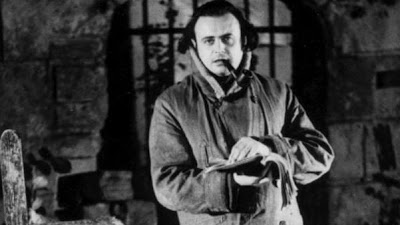
The Island of Dr. Moreau (1977, directed by Don Taylor)


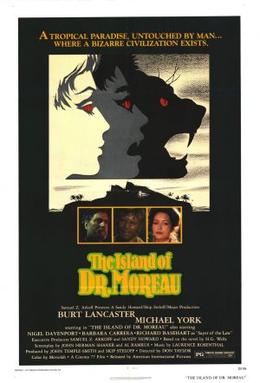
After the ship that he’s working on sinks, engineer Andrew Braddock (Michael York) washes up on an uncharted island. It’s a beautiful island but it quickly proves dangerous as another survivor of the sinking is killed by wild animals. The injured Braddock passes out and when he wakes up, he’s being cared for by a mysterious scientist named Moreau (Burt Lancaster).

Braddock discovers that the island is populated by creatures that are half-human and half-animal. Led by the Sayer of the Law (Richard Basehart), these creatures are the results of experiments conducted by Moreau and his assistant, Montgomery (Nigel Davenport).  Moreau’s experiments are expected to obey Moreau’s laws.  Should they fail, they will be taken to the House of Pain and punished.  When Baddock objects to Moreau playing God, Moreau plots to reverse the experiment on Braddock and turn him into an animal. Even as he falls in love with a former cheetah (played by Barbara Carrera), Braddock realizes that he must escape the Island of Dr. Moeau.

This is the forgotten adaptation of H.G. Wells’s classic novel, as well as being the most faithful. The Island of Lost Souls, from 1932, is considered to be a classic. The third version, directed by John Frankenheimer and starring Marlon Brando and Val Kilmer, is a legendary disaster. This version, though, is usually overlooked. It’s also my favorite of the three but that might be because it was the first version that I ever saw. It’s a straight-forward version of H.G. Wells’s story of science gone mad with director Don Taylor not wasting any time getting the action started. Michael York, always an underrated actor, convincingly portrays Braddock’s outrage and his struggle to maintain his humanity after Moreau starts to experiment on him while Carrera is beautiful and mysterious as Maria. Probably the film’s biggest surprise is Burt Lancaster, who turns out to be ideally cast as Moreau. More subdued than either Charles Laughton or Marlon Brando, Lancaster plays Moreau as a brilliant but callous man who is too arrogant to realize that he’s become as much of an animal as those he claims to be perfecting.  What makes Lancaster’s Moreau so disturbing is that he doesn’t have the excuse of being insane.  Instead, he’s just too stubborn to admit that he’s potentially made a huge mistake.

It may be forgotten but this still the version of The Island of Dr, Moreau that I would recommend.
(Trailer courtesy of Classic Movie Reviews)

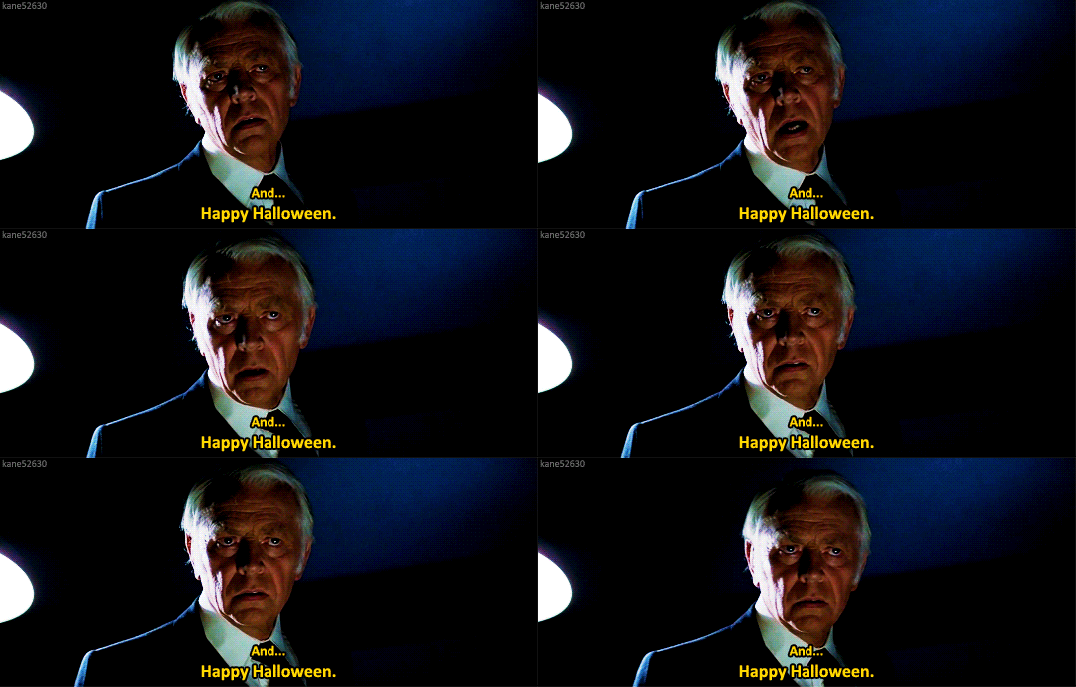
Horror Scenes That I Love: The Silver Shamrock Commercial for Halloween 3: The Season of the Witch


Only 8 more days to Halloween!

That, of course, is from 1982’s Halloween 3: The Season of the Witch. The makers of the new Halloween films might not care for the original sequels but just try to get that Silver Shamrock song out of your head! Even more importantly, just try to listen to it without thinking about the mask melting into your face and turning into a bunch of spiders and snakes. It can’t be done. That’s the sign of an effective horror movie. An effective horror movie is all scaring the audience and not about worrying about whether or not the critics are going to get it.

Speaking of horror, just 8 more days til Halloween Halloween! Just 8 more days til Hallowen! Silver Shamrock!

4 Shots from 4 Jean Rollin Films


4 Shots From 4 Films is just what it says it is, 4 shots from 4 of our favorite films. As opposed to the reviews and recaps that we usually post, 4 Shots From 4 Films lets the visuals do the talking.

With only a week to go until the big day, now is a good time for me to honor one of my favorite horror directors, the French surrealist Jean Rollin.  Now is the time for….

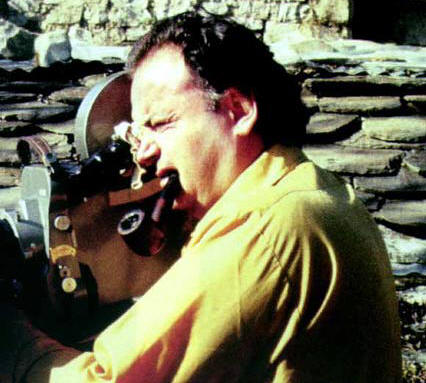
4 Shots From 4 Jean Rollin Films

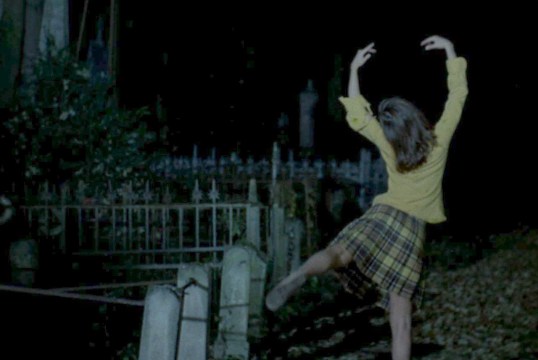
The Iron Rose (1973, dir by Jean Rollin)

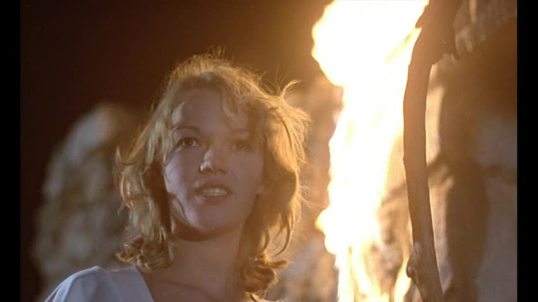
The Grapes of Death (1978, dir by Jean Rollin)

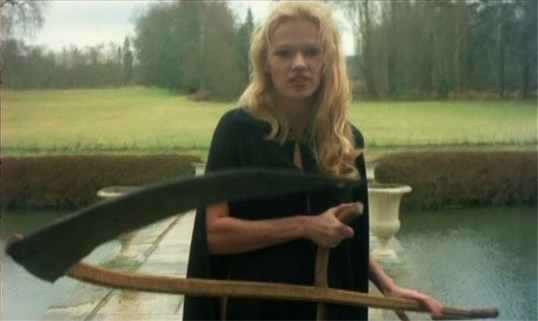
Fascination (1979, dir by Jean Rollin)

Night of the Hunted (1980, dir by Jean Rollin)

Thank you, Jean Rollin, for the dreams.

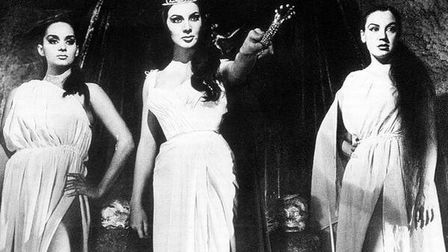
Horror on the Lens: Samson vs. The Vampire Women (dir by Alfonso Corona Blake)


If a group of vampires are determined to ruin your night, what should you do?  Well, according to the classic Mexican film Santo vs. las Mujeres Vampiro, your first move should be to call a wrestler.

What to know more?  Well, you can read my full review of the film by clicking here!

And you can watch the movie below because it’s today’s horror on the lens!

The TSL’s Grindhouse: Parents (dir by Bob Balaban)


An odd little film, 1989’s Parents is.

It takes place in the 50s of the pop cultural imagination, with neatly laid out suburban neighborhoods and perfectly mowed lawns and big cars driving down the street.  Nick (Randy Quaid) and Lily (Mary Beth Hurt) seem like the perfect couple.  Lily stays at home and spends a lot of time in the kitchen.  Nick is an engineer who works for a company called Toxico and who is helping to develop what will become known, during the Vietnam War, as Agent Orange.  Nick and Lily are friendly, well-mannered, and they love to eat meat.  Lily explains, at one point, that she didn’t really love to eat meat until she married Nick and he showed her how wonderful it could be.

Their son, ten year-old Michael (Bryan Madorsky), is a bit less conventional.  He’s a quiet boy who never smiles and who, when asked to draw a picture of his family, freaks out his school’s guidance counselor (played by Sandy Dennis).  Michael has frequent nightmares.  Michael doesn’t like to eat meat and, in fact, it’s hard to think of a single scene in the movie where Michael is seen eating anything.  Michael is haunted by the sight of his parents making love in the living room.  He’s also haunted by a growing suspicion that his parents are cannibals.

Are they?  Perhaps.  It’s hard to say.  The first time you watch the movie, it seems deceptively obvious that Nick and Lily are exactly what Michael says they are.  The second time, you start to notice a few odd things.  For one thing, we never see Michael actually going from one location to another.  Instead, he just seems to magically show up wherever he needs to be to hear something that will confirm his suspicions.  When his teacher and his guidance counselor discuss his home life, Michael just happens to be in a nearby closet.  When his mother is preparing something that looks like it might be a human organ, Michael just happens to be standing in the pantry.  Are we seeing reality or are we just seeing what Michael thinks is reality?  When Nick starts to threaten Michael and later claims that there’s no way Michael is his son, is he really saying that or is Michael just imagining his fatherr confirming all of Michael’s insecurities?  How much of the film is real and how much of it is in Michael’s head?

It’s an odd film, Parents.  It’s also the directorial debut of character actor Bob Balaban.  Balaban has spent the majority of his career playing shy, slightly repressed characters.  Parents, with the withdrawn Michael as the main character, is a film that feels autobiographical.  That’s not to say that Balaban’s parents were cannibals but the scenes where Nick goes from being a loving father to an abusive monster are too intense and suffused with too much pain for them to be anything other than personal.  Balaban’s direction is heavily stylized.  At times, it’s a bit too stylized but ultimately, it works.  The final 30 minutes of the film feel like a nightmare that has somehow been filmed.

A satire of conformity and suburbia, Parents is also a portrait of an alienated child struggling to figure out where he fits into his family.  He’s given the choice of either indulging in his family’s sins or living life alone.  Except, of course, it really isn’t a choice.  Nick expects Michael to do what he’s been told, no matter what.  Randy Quaid and Mary Beth Hurt are both terrifying as the parents but, at the same time, Balaban makes good use of the fact that both of those performers — at least at the time this movie was made — were naturally likable.  You want Nick to be the perfect father that he pretends to be and you share Michael’s anger and disillusionment when he turns out to be something very different.

Parents may be a strange film but it’s not one that you’re going to forget.

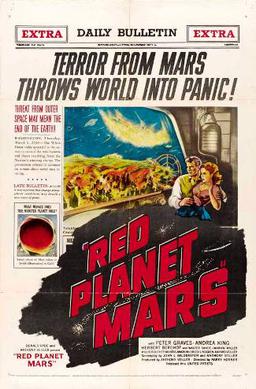
Red Planet Mars (1952, directed by Harry Horner)


Chris Cornyn (Peter Graves) and his wife, Linda (Andrea King) are two scientists who have spent the years since World War II listening to transmissions from Mars.  The technology that they use was developed by a scientist who may have been a Nazi but the Cornyns feels that the greater good of learning about Mars outweighs the problematic background of their equipment.

One day, the transmitters pick up a message from Mars, announcing that Mars is a Socialist paradise where there is no fear of nuclear war.  The Soviets are gleeful because they think the Martian messages will lead to the collapse of NATO.  But then the Martians start sending out religious messages, which lead to riots in the USSR and Eastern Europe.

Are the Martians really contacting Earth?  Is God really transmitting a message from Mars?  Or is a more sinister figure responsible?

Red Planet Mars is one of those films that only could have been made at the height of the Cold War.  Despite the title, the film is decidedly Earth-bound and full of stock footage of the nations of the world reacting to the Martians.  The main theme is that, Martians or not, nothing is more important than protecting the American way of life. even if that means sacrificing your own life and misleading the world.  Even if it is now impossible to listen to his dialogue without thinking about the “Do you like movies about gladiators?” conversations from Airplane!, Peter Graves was the perfect, no-nonsense messenger.  An artifact of a different time, the movie’s greatest strength is that it takes its ridiculous story seriously and even today, it leaves you wonder how we would react to messages from Mars.  Hopefully, we would today be more skeptical.  People in 1953 would believe anything.

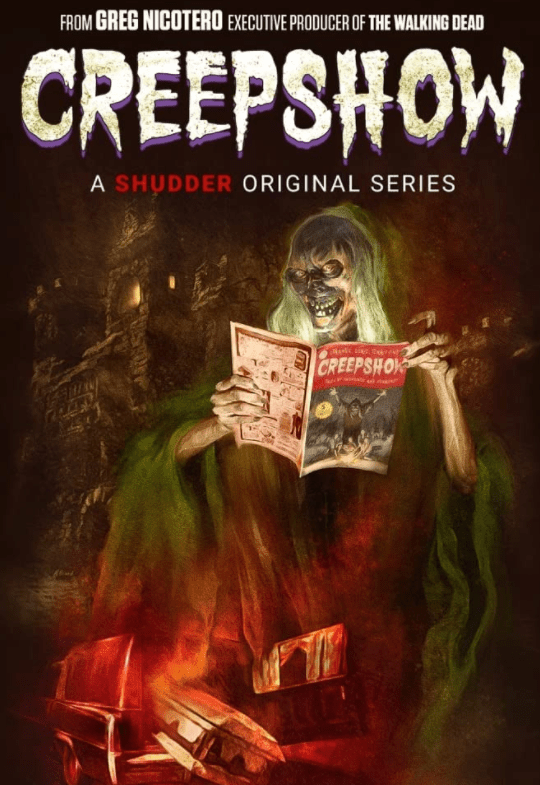
Creepshow, “Time Out”, “The Things in Oakwood’s Past”


Maybe I’m getting cantankerous, but my tolerance for incompetence is at a nadir. Not to say that these were the worst stories I’ve seen, but they were up there. Maybe making a horror series is a way to pass the time? The budgets must be REALLY small. For example, look at this guy’s truly FAKE beard:

Santa as a Pederast

It looks like if Party City fell on hard times or Santa Claus became a Ginger Pederast. That is a CREEPY beard and that’s not what they were going for, but it’s what they got.

The B-Story didn’t even have live action! It was just animated!

Not to say that big budget studios don’t cut corners. Netflix can’t afford lights. I’m assuming that’s the case because every show looks like it was filmed with a Key Chain Maglite. EG:

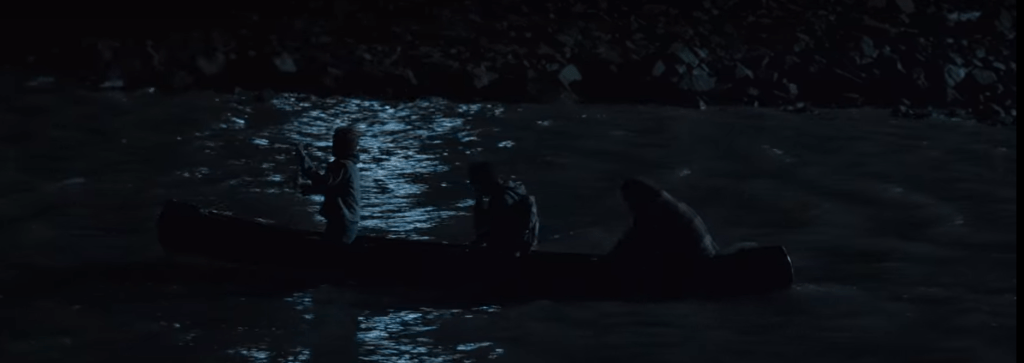
The above is from a Netflix show called Midnight Mass and I guess that they heard Chairman Mao’s saying, “It’s always darkest, just before it goes completely black” and just leaned in. I can’t tell what’s going on here. I guess these….Three?? guys are in a canoe or maybe that’s just a really big raccoon in flannel on the end there. Who knows? It could be a raccoon; I’ve seen raccoons in Texas as big as Labrador Retrievers and they’re really organized too! I saw one raccoon with a hat and clipboard directing 8 enormous raccoons and these were just ordinary suburban raccoons! Could imagine what these mutant raccoons could do with some funding?!

Anywho, back to this aggressively mediocre program – Creepshow. It’s created by Greg Nicotero who also created The Walking Dead, which was just ok on it’s best day! I’m glad to see that Greg is consistent. Don’t let success go to your head- aim low. Greg, thanks for delivering another Center of Mass performance review! As Casey Kasem’s mediocre brother – Chad Kasem would say, “Keep reaching for the remote, but keep your ass on the couch.”

These two episodes were both varying degrees of stupid. The first episode was about Tim and his magical armoire. Really. Instead of the wardrobe showing where the wild things were, it was more of a desk that caused time to do stupid things. He would go into the magical closet and time would zoom by for him, but slow down for everyone on the outside of the closet. This is general relativity in reverse because the writer fell asleep in basic physics. If Tim did go into a black hole or whatever, time would slow down for him, but not for the folks outside of the closet. Tim should’ve returned and everyone would be way older, but nope. He never seemed to grasp that he was aging A LOT every time he went into the closet. Shocker, he dies- *eyeroll* I cared not!

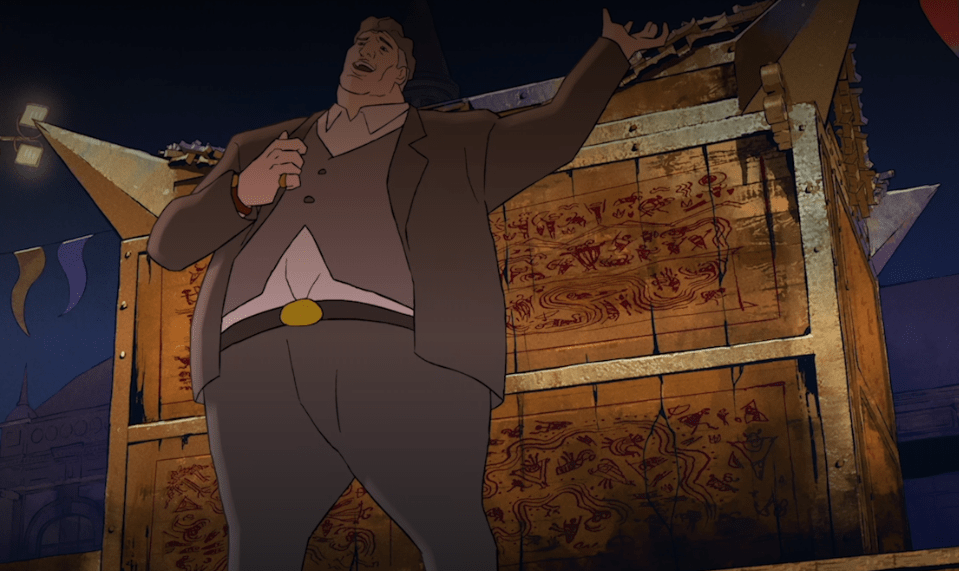
The second story was like if an 8th grader got a very small budget to make an 18 minute scary cartoon. The town of Oakwood is about to celebrate is bi-centennial and they decide to open a really scary looking box to celebrate. It looked haunted and gross. This is the box that everyone thought it would be great to open:

I won’t write that everyone dies….most do though. If you’re bored and really want to watch something that’s the equivalent of a day old room temperature Chick-Fil-A sandwich, this is for you!

Scenes That I Love: Christopher Lee as Lord Summerisle in The Wicker Man


Over the course of his long career, Christopher Lee often cited his performance as the charismatic but ultimately sinister Lord Summerisle in 1973’s The Wicker Man as one of his personal favorites.  It’s easy to see why.  The role not only showcased Lee’s ability to be menacing but it was also one of the few films that allowed him to be witty as well.  Lord Summerisle may be a pagan who maintains his power by sacrificing virgins but he’s still quite charming.  With his longish hair, sideburns, and turtleneck, Lord Summerisle is the perfectly aristocratic 70s rogue.

Today’s scene that I love comes from the original The Wicker Man.  (Sorry, the Nicole Cage “bees” scene from the remake will have to wait for next year’s horrorthon.)  In this scene, Lord Summerisle expalins the ways of the island to a skeptical police detective.  Little does the detective know that he’s already been selected to be the next sacrifice.  Lee’s avuncular performance holds up wonderully.

What If Oscar Season Started And No One Noticed, Part 2: Here Are The Gotham Award Nominations


As a sign of how wrapped up I am in this year’s Horrorthon, consider this: the 2021 Gotham Nominations — the first precursor of Awards Season! — were announced on Thursday and I totally missed them!  This is actually not the first year that this has happened.  October is a busy month for me and sometimes, the Gotham noms get missed.

The Gothams, of course, only honor independent films and they have pretty strict rules as far as what they consider to be independent.  The budget has to come in at a certain relatively low amount, for one thing.  So, as a result, a lot of Oscar nominees are not Gotham eligible.  But, at the same time, those Gotham rules also allow some films that otherwise might get overlooked a chance to get some precursor love.  Being nominated for a Gotham is hardly a guarantee that the Academy will remember you.  But it certainly doesn’t hurt.

Better late than never, here are the 2021 Gotham Nominations!  As you’ll notice, the Gotham’s performance awards are gender neutral.  This is the first year that the Gothams have done this.  They also added categories for supporting performances and best performance in a series.

Anyway, here are the nominees:

Best Feature
“The Green Knight”
“The Lost Daughter”
“Passing”
“Pig”
“Test Pattern”

Best Documentary Feature
“Ascension”
“Faya Dayi”
“Flee”
“President”
“Summer Of Soul (…Or, When The Revolution Could Not Be Televised)”

Best International Feature
“Azor”
“Drive My Car”
“The Souvenir Part II”
Titane
“What Do We See When We Look at the Sky?”
“The Worst Person In The World”

Bingham Ray Breakthrough Director Award
Maggie Gyllenhaal for “The Lost Daughter”
Edson Oda for “Nine Days”
Rebecca Hall for “Passing”
Emma Seligman for “Shiva Baby”
Shatara Michelle Ford for “Test Pattern”

Best Screenplay
“The Card Counter,” Paul Schrader
“El Planeta,” Amalia Ulman
“The Green Knight,” David Lowery
“The Lost Daughter,” Maggie Gyllenhaal
“Passing,” Rebecca Hall
“Red Rocket,” Sean Baker & Chris Bergoch

Outstanding Lead Performance
Olivia Colman in “The Lost Daughter”
Frankie Faison in “The Killing of Kenneth Chamberlain”
Michael Greyeyes in “Wild Indian”
Brittany S. Hall in “Test Pattern”
Oscar Isaac in “The Card Counter”
Taylour Paige in “Zola”
Joaquin Phoenix in “C’mon C’mon”
Simon Rex in “Red Rocket”
Lili Taylor in “Paper Spiders”
Tessa Thompson in “Passing”

Outstanding Supporting Performance
Reed Birney in “Mass”
Jessie Buckley in “The Lost Daughter”
Colman Domingo in “Zola”
Gaby Hoffmann in “C’mon C’mon”
Troy Kotsur in “CODA”
Marlee Matlin in “CODA”
Ruth Negga in “Passing”

Breakthrough Performer
Emilia Jones in “CODA”
Natalie Morales in “Language Lessons”
Rachel Sennott in Shiva Baby”
Suzanna Son in “Red Rocket”
Amalia Ulman in “El Planeta”

Breakthrough Series – Long Format (over 40 minutes)
“The Good Lord Bird”
“It’s A Sin”
“Small Axe”
“Squid Game”
“The Underground Railroad”
“The White Lotus”

Breakthrough Series – Short Format (under 40 minutes)
“Blindspotting”
“Hacks”
“Reservation Dogs”
“Run the World”
“We Are Lady Parts”

Breakthrough Nonfiction Series
“City So Real”
“Exterminate All the Brutes”
“How To with John Wilson”
“Philly D.A.”
“Pride”

Outstanding Performance in a New Series
Jennifer Coolidge in “The White Lotus”
Michael Greyeyes in “Rutherford Falls”
Ethan Hawke in “The Good Lord Bird”
Devery Jacobs in “Reservation Dogs”
Lee Jung-jae in “Squid Game”
Thuso Mbedu in “The Underground Railroad”
Jean Smart in “Hacks”
Omar Sy in “Lupin”
Anya Taylor-Joy in “The Queen’s Gambit”
Anjana Vasan in “We Are Lady Parts”