4 Times The Academy Got It Right: 1920s


In previous years, I’ve used Oscar Sunday as a chance to write about what the Academy has gotten wrong over the years, the snubbed classics and the unworthy winners.  This year, though, I want to do something a little different.

I want to take a look at the time that the Academy made the right decision, either by picking the best film for Best Picture or even just by giving a nomination to someone who actually deserved it.  Consider this to be my attempt to add some positivity to what has otherwise been a pretty negative awards season!  We all love to criticize the Academy and goodness knows that much of that criticism has been deserved over the years but occasionally, they do get it right!

Here are 4 times the Academy got it right during the 1920s!

(Before anyone thinks that I’m condemning the Academy with faint praise, the first Oscars were handed out in 1928 so, for this decades, there are really only a handful of winners and nominees to choose from.)

  1. All Quiet On The Western Front Wins Best Picture

All Quiet On The Western Front was the third film to win the Oscar for Best Picture and it was the first truly great film to win the award.  If Wings and Broadway Melody were rewarded largely because of internal politics, All Quiet On The Western Front won because it truly deserved it.

2. Sunrise Wins The Academy Award For Unique And Artistic Picture

At the first Oscar ceremony, two awards for Best Picture were given out.  Best Picture went to Wings, which is good but not great.  The award for Unique and Artistic Picture, however, went to F.W. Munrau’s sublime Sunrise.

3. The Racket Is Nominated For Best Picture

The Racket was one of the three films to be nominated for the very first Best Picture Oscar in 1928.  It’s nearly forgotten today but it still remains significant because it was the first gangster film to be nominated for Best Picture and it was also the first genre film.  The Racket started a long tradition of American movies about organized crime, one that includes The Godfather, Goodfellas, The Irishman, and so many other films.  As well, The Racket was long considered to be a lost film until someone stumbled across the last remaining copy in the 70s.  Never stop searching for those lost films!

4. Warner Baxter Win Best Actor For In Old Arizona

The 2nd Academy Awards ceremony was a strange one, largely because only the winners were announced and no one is quite sure how the Academy settled on those winners.  That said, Warner Baxter’s award for starring in In Old Arizona does feel historically significant.  He was the first actor to win for appearing in a western and he won for playing not a lawman but an outlaw.  In fact, his amoral character served as a template for many of the characters who would populate the Spaghetti westerns of the 60s and the 70s.

Up next: the 1930s!

Scenes That I Love: The Opening of Reservoir Dogs


In honor of Quentin Tarantino’s birthday, today’s scene of the day is the opening coffeeshop scene from Tarnatino’s directorial debut, 1992’s Reservoir Dogs. 

While Tarantino will always be better appreciated as a director than an actor, it does seem somewhat appropriate that the very first lines in the very first Tarantino film are spoken by Tarantino himself.  There’s also something undeniably likable about Tarantino laughing at the sound of his own dialogue.

From Reservoir Dogs:

4 Shots From 4 Film: Special Quentin Tarantino Edition


4 Or More Shots From 4 Or More Films is just what it says it is, 4 shots from 4 of our favorite films. As opposed to the reviews and recaps that we usually post, 4 Shots From 4 Films lets the visuals do the talking!

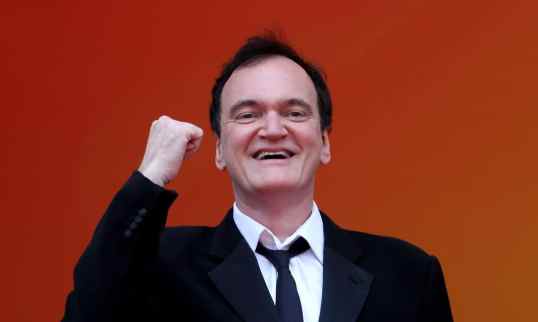
Today is not just Oscar Sunday!  It’s also Quentin Tarantino’s 59th birthday!  Since Tarantino is one of the favorite filmmakers of this site, it only makes sense to celebrate with….

4 Shots From 4 Quentin Tarantino Films

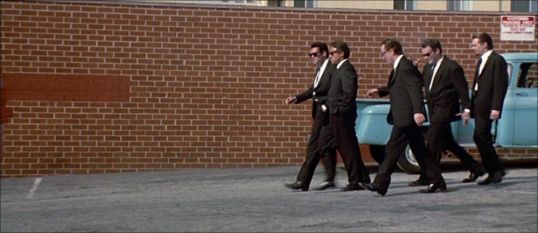
Reservoir Dogs (1992, dir by Quentin Tarantino, DP: Andrzej Sekuła)

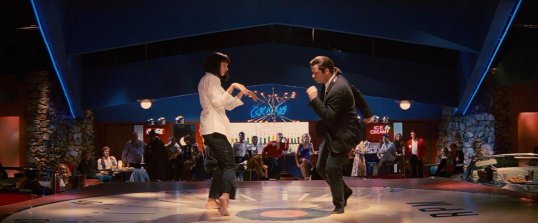
Pulp Fiction (1994, dir by Quentin Tarantino, DP: Andrzej Sekuła)

Kill Bill Volume 1 (2003, dir by Quentin Tarantino, DP: Robert Richardson)

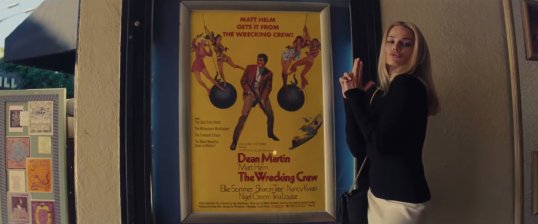
Once Upon A Time In Hollywood (2019, dir by Quentin Tarantino, DP: Robert Richardson)

Music Video of the Day: Shallow, performed by Lady Gaga and Bradley Cooper (2019, dir by whoever directed the Oscars that year)


Who knows what tonight’s Oscar telecast will be like but I’m pretty sure it won’t come anywhere close to providing a moment as powerful as this.

Enjoy!

It Is Oscar Sunday


It’s Oscar Sunday. Again.

Can you tell how excited I am?

Yes, cats don’t really care about the Oscars or the movies. But some humans do! Actually, according to the flame-haired once, less humans care about the Oscars this year than ever before. It sounds like the Oscar humans really messed things up and now everyone is mad at them. As long as I get fed, I don’t get mad at anyone. Humans should be more like me. If you’re one of the few remaining humans who cares about the Oscars, the Shattered Lens has you covered today!

Happy Oscar Sunday to those who observe. If you watch the ceremony, don’t forget that the cat needs some attention too!

As for who I think is going to win this year …. meh. I haven’t seen any of the nominees but I’m sure they needed more scenes featuring hunting, stalking, and napping. Lots and lots of napping.

My Oscar Predictions


Well, since the big show is tomorrow, I guess it’s time for me to try to predict what I think will win. Up until four weeks ago, I would thought Power of the Dog would be the obvious front runner but CODA seems to be the film that people are responding too. The same is true of Penelope Cruz, who went from being an also-ran to the new front runner in just a matter of days.

In short, this Oscar race is up in the air. Almost anything could happen. It should be exciting, though I think most people will be tuning in not to see who wins but to see how bad the show is.

Anyway, here are my predictions! We’ll see how right I am (or how wrong I am) tomorrow night!

Best Picture — CODA

Best Director — Jane Campion, The Power of the Dog

Best Actor — Will Smith, King Richard

Best Actress — Penelope Cruz, Parallel Mothers

Best Supporting Actor — Troy Kostur, CODA

Best Supporting Actress — Ariana DeBose, West Side Story

Best Original Screenplay — The Worst Person In The World

Best Adapted Screenplay — CODA

Best Animated Feature Film — Encanto

Best International Film — Drive My Car

Best Documentary Feature — Attica

Best Documentary Short Subject — Audible

Best Live Action Short Film — The Long Goodbye

Best Animated Short Film — Affairs of the Art

Best Original Score — Dune

Best Original Song — Dos Origuitas from Encanto

Best Sound — West Side Story

Best Production Design — Dune

Best Cinematography — The Power of the Dog

Best Costume Design — Nightmare Alley

Best Makeup and Hairstyling — The Eyes of Tammy Faye

Best Film Editing — Don’t Look Up

Best Visual Effects — Spider-Man: No Way Home


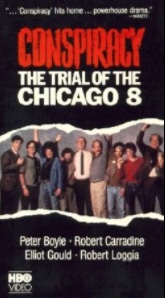
Conspiracy: The Trial of the Chicago 8 (1987, directed by Jeremy Kagan)


The year is 1969 and, in an Illinois courtroom, 8 political radicals stand accused of conspiring to disrupt the 1968 Democratic Convention.  The prosecution is putting the entire anti-war movement on trial while the defendants are determined to disrupt the system, even if it means being convicted.  The eight defendants come from all different sides of the anti-war movement.  Jerry Rubin (Barry Miller) and Abbie Hoffman (Michael Lembeck) represent the intentionally absurd Yippies.  Tom Hayden (Brian Benben) and Rennie Davis (Robert Carradine) are associated with the Students for a Democratic Society.  Bobby Seale (Carl Lumbly) is one of the founders of the Black Panthers while David Dellinger (Peter Boyle) is a longtime peace activist.  John Friones (David Kagan) and Lee Weiner (Robert Fieldsteel) represent the common activists, the people who traveled to Chicago to protest despite not being a leader of any of the various organizations.  Prosecuting  the Chicago 8 are Richard Schulz (David Clennon) and Tom Foran (Harris Yulin).  Defending the 8 are two radical lawyers, Leonard Wienglass (Elliott Gould) and William Kunstler (Robert Loggia).  Presiding over the trial is the fearsome and clearly biased Judge Julius Hoffman (David Opatoshu).

Conspiracy: The Trial of the Chicago 8 is a dramatization of the same story that inspired Aaron Sorkin’s The Trial of the Chicago 7 but, of the two films, it’s Jeremy Kagan’s The Trial of the Chicago 8 that provides a more valuable history lesson.  By setting all of the action in the courtroom and recreating only what was said during the trial, director Jeremy Kagan and his cast avoid the contrived drama that marred so much of Sorkin’s film.  Kagan trusts that the true story is interesting enough to stand on its own.  Kagan includes documentary footage from the convention protest itself and also interviews with the people who were actually there.  While Kagan may not have had the budget that Sorkin did, his film has the authenticity that Sorkin’s lacked.  Kagan also has the better cast, with Michael Lembeck and Barry Miller both making Abbie Hoffman and Jerry Rubin into something more than the mere caricatures that they are often portrayed as being.

The Trial of the Chicago 8 was a film that Jeremy Kagan spent a decade trying to make.  When he first tried to sell the idea behind the film to CBS in 1976, Kagan had Marlon Brando, Walter Matthau, George C. Scott, and Dustin Hoffman all willing to work for scale and take part in the production.  CBS still passed on the project, saying that no one was interested in reliving the 60s.  It wasn’t until 1987 that Jeremy Kagan was finally able to revive the film, this time with HBO.  It actually worked out for the best because, with HBO, there was no need to try to come up with a “clean” version for the language that was used in the courtroom or in the interviews with the actual participants.  The defendants could be themselves.

Though it has been overshadowed by Sorkin’s subsequent film, The Trial of the Chicago 8 is the definitive film about what happened in the aftermath of the the 1968 Democratic Convention.

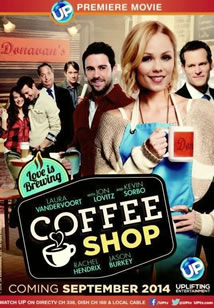
I Watched Coffee Shop (2014, dir. by Dave Alan Johnson)


Donavan (Laura Vandervoort) owns a coffee shop in a small town.  Everyone loves her shop but she’s not making any money because she’s not a good manager and she lets her staff and her customers walk all over her.  When Ben (Cory M. Grant) comes in the shop and tries to order tea, Donavan thinks that he’s the businessman who wants to buy her shop and turn it into a parking garage.  She yells at him but then it turns out that he’s a playwright from New York who is just on vacation after his latest flop.  Donavan and Ben fall in love but then the real businessman shows up and it looks like Donavan might lose her business.  And then, on top of everything else, Donavan discovers that Ben is writing a play about her situation so she breaks up with him and tells him that he’s not welcome in her shop, even if he has the perfect plan to save it.  Who thinks like that!?  He’s so inspired by her and how much everyone in town loves her that he wants to immortalize her on stage.  How is that a bad thing?

Even though this wasn’t made for Hallmark, it basically is a Hallmark film.  There’s no profanity.  There’s no sex.  I don’t know why it was even rated PG.  I liked the small town and the coffee shop looked like it would be a nice place to hang out.  The story was too predictable and a lot of Donavan’s financial problem were due to her just being really bad at her job so I had a hard time feeling sorry for her.  She should have let someone else run the coffee shop if she was that incompetent.

On a personal note: I’d like to own a coffee shop but I would want it to be located near a baseball stadium.  Coffee and baseball is a combo I can get behind.

Scene I Love: Klaus Kinski in David Lean’s Doctor Zhivago


The 1965 film, Doctor Zhivago, is not only notable as one of the many David Lean-directed films to be nominated for Best Picture. It’s also remembered as being one of two Best Picture nominees to feature, albeit in a small role, the madman of European cinema, Klaus Kinski.

In this scene, set in the aftermath of Russia’s communist revolution, Kinski explains why he, despite being a prisoner, is the only free man on the train. Due to his German accent, Kinski was dubbed by actor Robert Rietty and he doesn’t have much screen time but he still manages to steal the movie.

Guilty Pleasure No. 53: Happy Gilmore (dir by Dennis Dugan)


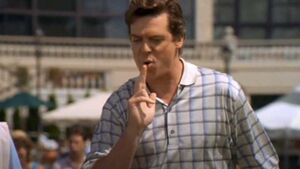
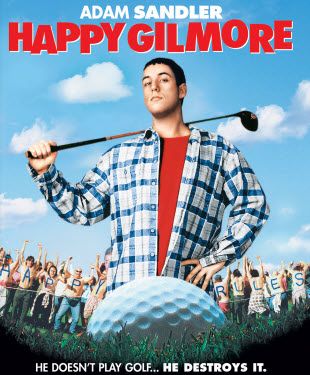
Poor Shooter McGavin!  As played by the great Christopher McDonald, Shooter McGavin is the often unacknowledged hero of the 1996 comedy classic, Happy Gilmore.

I know, I know.  Most people will tell you that Shooter is actually the bad guy.  He’s the snooty pro golfer who tries to keep aspiring hockey player-turned-golfer Happy Gilmore (Adam Sandler) from competing on the PGA tour.  And it is true that he does allow himself to get consumed with jealousy over Happy’s popularity.  And he does definitely cross the line when he buys and holds hostage the house where Happy’s grandmother has spent almost her entire life.  (“She’s so old!  Look at her!  She’d old!” Happy exclaims at one point.)  But try to look at it from Shooter’s point of view.

Shooter has spent years playing golf.  He’s practiced.  He’s paid his dues.  He’s done what he had to do to earn his spot as America’s best golfer.  And now, he finally has a chance to win his first championship.  And what happens?  A very loud hockey player shows up from out-of-nowhere and totally changes the sport.  What really has to be galling is that Happy’s not even a good player.  He can’t putt.  He has no strategy.  His only skill is the distance that he can hit the ball.  And yet, despite all that, Happy becomes a media superstar.  The only people willing to stand up to Happy and defend the honor of the game are Bob Barker and …. Shooter McGavin.

Really, Shooter doesn’t really start to go after Happy until Happy’s fans starts to purposefully antagonize him.  Remember Happy’s ex-boss showing up to heckle Shooter even though he still had that nail in his head?  Seriously that’s not right.  I mean, who shows up to support the dude who put a nail in your head?  Shooter McGavin had every reason to be concerned about that.

Despite the fact that Shooter was treated rather unfairly, Happy Gilmore is definitely a favorite of mine.  I pretty much love the entire film, from Carl Weathers’s enjoyably demented performance as Happy’s mentor to the famous scene of Bob Barker beating Happy to a pulp.  For those who only know Adam Sandler from his later, lazier comedies, Happy Gilmore will be a bit of a revelation because Sandler and the entire cast actually seem to be making an effort to make a good and funny comedy.  The staid world of golf turns out to be the perfect foil for Sandler’s manchild antics.  And for those who prefer Sandler when he’s playing serious roles, he actually does a pretty good job in Happy Gilmore’s few sincere moments.  His scenes with his grandmother are actually rather sweet.

Happy Gilmore remains Sandler’s best comedy and it’s a personal favorite of mine.  Every time I watch it, I laugh and that’s a good thing.  I also like to think that Shooter and Happy eventually set aside their differences and got their own talk show on ESPN.  They deserved it.

Previous Guilty Pleasures

  1. Half-Baked
  2. Save The Last Dance
  3. Every Rose Has Its Thorns
  4. The Jeremy Kyle Show
  5. Invasion USA
  6. The Golden Child
  7. Final Destination 2
  8. Paparazzi
  9. The Principal
  10. The Substitute
  11. Terror In The Family
  12. Pandorum
  13. Lambada
  14. Fear
  15. Cocktail
  16. Keep Off The Grass
  17. Girls, Girls, Girls
  18. Class
  19. Tart
  20. King Kong vs. Godzilla
  21. Hawk the Slayer
  22. Battle Beyond the Stars
  23. Meridian
  24. Walk of Shame
  25. From Justin To Kelly
  26. Project Greenlight
  27. Sex Decoy: Love Stings
  28. Swimfan
  29. On the Line
  30. Wolfen
  31. Hail Caesar!
  32. It’s So Cold In The D
  33. In the Mix
  34. Healed By Grace
  35. Valley of the Dolls
  36. The Legend of Billie Jean
  37. Death Wish
  38. Shipping Wars
  39. Ghost Whisperer
  40. Parking Wars
  41. The Dead Are After Me
  42. Harper’s Island
  43. The Resurrection of Gavin Stone
  44. Paranormal State
  45. Utopia
  46. Bar Rescue
  47. The Powers of Matthew Star
  48. Spiker
  49. Heavenly Bodies
  50. Maid in Manhattan
  51. Rage and Honor
  52. Saved By The Bell 3. 21 “No Hope With Dope”