Today’s song of the day comes from the 1981 slasher classic, Graduation Day!
Just try not to sing along!
Everybody wants to be the winner….
Today’s song of the day comes from the 1981 slasher classic, Graduation Day!
Just try not to sing along!
Everybody wants to be the winner….
Today would have been the 103rd birthday of actor Charlton Heston.
This scene that I love comes from one of the few horror films in which Heston appeared. An adaptation of Richard Matheson’s I Am Legend, 1971’s The Omega Man featured Charlton Heston as Robert Neville. By night, Neville protects his house against the mutant horde. By day, he tracks those sleeping mutants down and watches Woodstock over and over again.
“They don’t make them like that anymore,” Neville says.
This scene gets a lot of attention because of the contrast between the conservative Heston and the hippies in the film. To me, the reason that it works is because Woodstock is a documentary. Neville isn’t watching an actor pretending to be a character in a film. He’s watching an actual human being who went to the Woodstock music festival and who is presumably either now a mutant or dead. Imagine being the hippie interviewed by this scene and seeing yourself in The Omega Man and knowing you didn’t survive the apocalypse. For that matter, we also have to assume that all of the Woodstock performers have been turned into mutants as well. Write a song about that, Country Joe.
(I choose to believe that Arlo Guthrie made it to safety. Sha Na Na, though? Doomed.)
Neville’s right. They don’t make them like this anymore.
4 Or More Shots From 4 Or More Films is just what it says it is, 4 shots from 4 of our favorite films. As opposed to the reviews and recaps that we usually post, 4 Shots From 4 Films lets the visuals do the talking!
Today would have been the 86th birthday of author Anne Rice. It’s time for….
4 Shots From 4 Anne Rice Adaptations

Interview With A Vampire (1994, dir by Neil Jordan, DP: Phillippe Rousselot)

Exit to Eden (1994, dir by Garry Marshall, DP: Theo van de Sande)

Queen of the Damned (2002, dir by Michael Rymer, DP: Ian Baker)

The Young Messiah (2016, dir by Cyrus Nowrasteh, DP: Joel Ransom)
“Oh, this is awful in almost every conceivable way.” — Phil
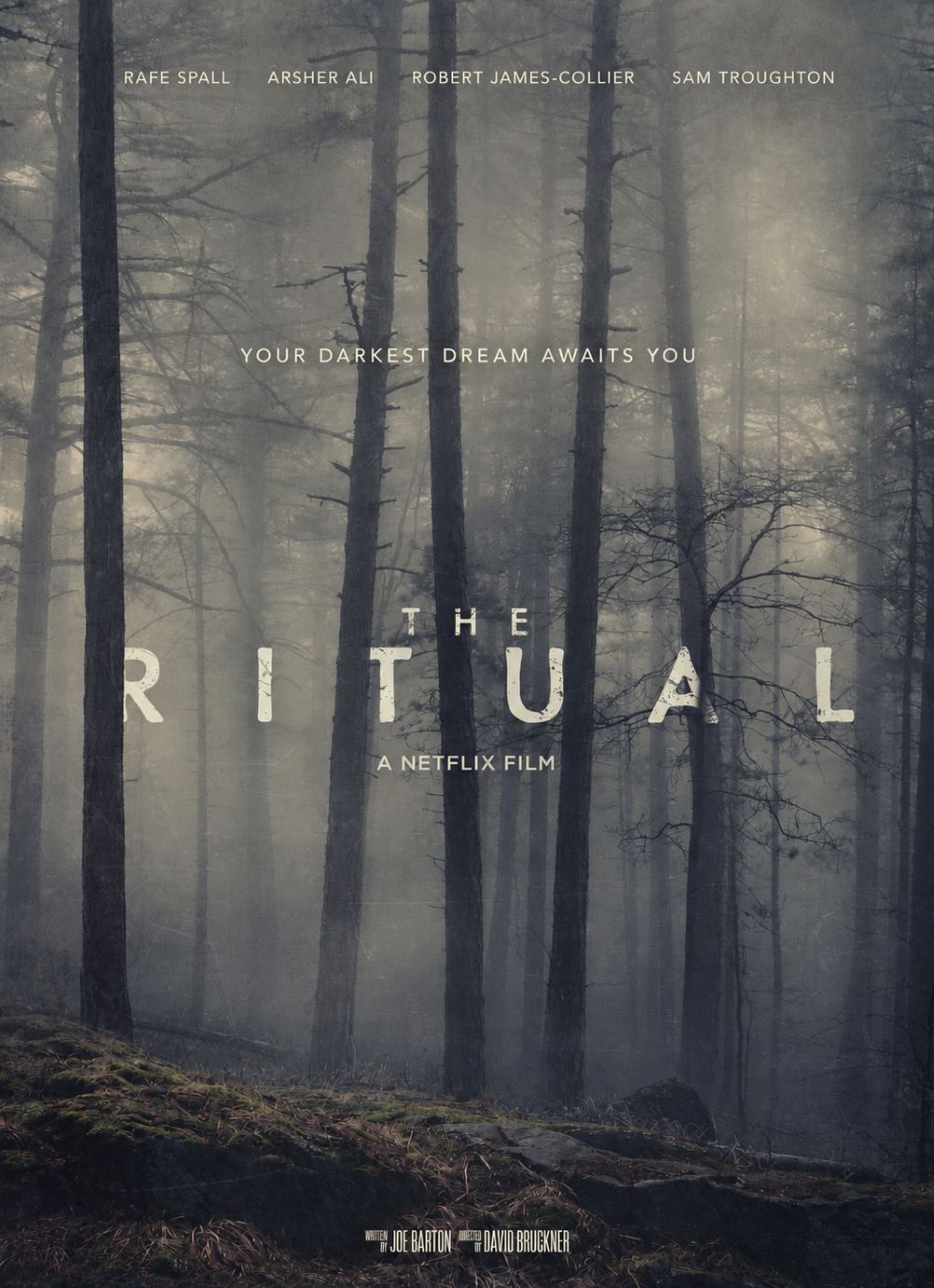
David Bruckner’s The Ritual turns a seemingly straightforward hiking-trip nightmare into a bleak, character-driven story about grief, guilt, and the fear of being judged by the worst thing you have ever done. Released in 2017, the film takes the familiar setup of friends becoming lost during a hiking trip and turns it into something far more tense, emotionally bruised, and unsettling. It is part of the wave of folk horror that began emerging in the late 2000s, with filmmakers returning to remote landscapes, old belief systems, pagan imagery, and the frightening idea that modern people are badly unprepared for places ruled by ancient customs. The Ritual contains the expected genre material—an ominous Scandinavian forest, strange symbols, a decaying cabin, and an isolated community—but its real strength is how tightly those elements connect to its characters’ unresolved guilt and resentment.
The film follows Luke, played by Rafe Spall, who is still deeply traumatized by the death of his friend Rob. In the opening sequence, Luke and Rob enter a liquor store after a night out and become caught in the middle of a robbery. Luke hides while Rob is killed trying to resist the attackers. It is an immediately harsh and effective opening because the film does not treat Luke’s inaction as something simple or easy to judge. He is terrified, frozen, and unable to process the situation. Even so, he cannot forgive himself for surviving. That moment becomes the defining wound of his life, and everything that happens afterward pushes him back toward it.
Luke eventually joins Phil, Dom, and Hutch on a hiking trip through Sweden that is meant to honor Rob’s memory. It becomes clear early on that the group’s friendship is not as solid as it once was. They know each other well enough to trade jokes and insults, but there is a lot of buried frustration underneath the banter. When Dom injures his knee, he argues that they should take a shortcut through the forest rather than continue along the longer established trail. The decision makes sense on a practical level, but it puts them in a setting where the normal rules of direction, distance, and safety quickly stop applying. The trip that is supposed to help them mourn Rob instead becomes a pressure cooker for every unresolved issue they have with one another.
That tension is what makes the first half of The Ritual more interesting than a routine “people get lost in the woods” movie. The men are not written as interchangeable victims waiting for the plot to remove them one by one. They have the worn-down chemistry of friends who have known one another for years but may have outgrown the version of themselves that first brought them together. Luke is defensive and emotionally closed off. Dom can be abrasive, especially when pain and fear make him more volatile. Phil is cynical and exhausted. Hutch is the closest thing the group has to a stabilizing influence, but even he cannot keep the old resentments from surfacing.
Bruckner gives their arguments a messy, lived-in quality. They do not stop to explain their entire friendship history for the audience; instead, the viewer picks up on it through accusations, half-finished insults, and the way everyone reacts when Rob’s death comes up. Luke’s guilt is the most obvious source of conflict, but the others are carrying their own anger toward him as well. They cannot openly say what they think without admitting that they may blame him for what happened. As the hike becomes more dangerous, that tension becomes harder to contain. The film understands that fear makes people meaner, more selfish, and more honest than they want to be.
The Swedish wilderness is easily one of the movie’s greatest assets. Bruckner and cinematographer Andrew Shulkind make the forest feel huge and claustrophobic at the same time. The woods are not shot like a scenic tourist destination. They are wet, dark, muddy, and disorienting, filled with thin trees that block the characters’ view and make every direction seem identical. The lack of clear landmarks matters because it slowly strips the group of confidence. At first, they are annoyed hikers trying to save time. Before long, they are struggling to tell where they have been, where they are going, or whether the forest is allowing them to leave at all.
The film excels at building dread through details rather than relying on constant jolts. The friends discover unnerving signs scattered through the woods: an animal carcass hanging impossibly high in the trees, crude figures made from sticks, unfamiliar markings, and evidence that somebody—or something—has been watching them. One of the most memorable sequences takes place in an abandoned cabin that the group uses for shelter. Inside, they find a grotesque shrine and signs of an old ritualistic practice that seem completely out of place in the modern world. The scene is disturbing because of how wrong it feels. These men have not just stumbled into an empty house; they have crossed into a space defined by beliefs they do not understand.
That atmosphere is where The Ritual most clearly earns its place in modern folk horror. The movie is not simply interested in isolated woods as a convenient backdrop for scares. It treats the forest as a place with a history and a set of rules that exist independently of the characters. Luke, Dom, Phil, and Hutch arrive with backpacks, maps, phones, and ordinary personal problems, but those things become almost useless once the landscape begins to feel hostile. Their modern routines and assumptions do not protect them. The horror comes partly from the idea that they are outsiders who have entered a world where their explanations mean nothing.
The later sections introduce an isolated group whose beliefs are rooted in an older, more ritualized worldview. This element can feel more direct than the earlier ambiguity, but it still fits the movie’s larger themes. The people Luke encounters represent a twisted alternative to the kind of shame and grief that have been consuming him. Their world offers a warped version of survival: submit to fear, accept the rules, and give up the parts of yourself that make resistance possible. It is an ugly kind of community, one that turns spiritual tradition into coercion and treats personal suffering as something to be exploited.
Rafe Spall is the key to why the film works as more than an exercise in atmosphere. Luke is not an idealized horror protagonist. He is stubborn, defensive, and sometimes hard to like, particularly when he tries to avoid talking about Rob. But Spall makes his guilt feel immediate and human. Luke is not haunted just because he saw someone die; he is haunted because he believes that his failure in that moment reveals who he really is. The forest repeatedly forces him to confront that belief through hallucinatory transitions that blur the wilderness with the liquor-store robbery. Doors in the forest become entrances to the shop. The wooded darkness gives way to fluorescent aisles. Luke seems to be reliving the same failure from different angles, unable to escape the moment he most wishes he could change.
Those surreal flashbacks are some of Bruckner’s best directing choices. They are visually simple but highly effective, placing Luke’s internal guilt directly into the physical environment around him. The movie never turns into a vague psychological-horror story that dismisses everything as a dream, but it uses Luke’s trauma to make the supernatural setting feel more personal. The threat in the woods is frightening because it seems to recognize his weakness. It does not just want to harm him; it wants him to surrender to the version of himself that he already hates.
If The Ritual has a flaw, it is that the final act loses a little of the earlier section’s mystery once the film begins explaining more about what is happening in the forest. The strongest passages are often the quietest ones: the men arguing while lost, the unsettling evidence in the trees, the cabin sequence, and the growing suspicion that they are being pushed in a direction they cannot understand. Still, the conclusion works because it brings the movie back to Luke’s personal struggle. His escape is not simply about reaching safety. It is about refusing to let guilt define his identity forever.
By the end, The Ritual delivers a satisfying sense of catharsis without pretending that Luke has been completely healed. He survives an experience that forces him to face the fear he has been carrying since Rob’s death, but that does not erase the loss or make him a different person overnight. What changes is his willingness to stop living as though one terrible moment has permanently decided who he is. That emotional resolution gives the film more weight than many survival-horror stories.
Overall, The Ritual is a smart, atmospheric, and surprisingly character-driven horror film. Its strongest qualities are its oppressive forest setting, its believable group dynamics, its gradual escalation, and Rafe Spall’s deeply uncomfortable performance. Most importantly, it recognizes that folk horror becomes powerful when the ancient and supernatural elements expose something painfully human. Bruckner turns a memorial hike into a nightmare about guilt, masculinity, friendship, and the terror of being unable to outrun your own past.

2013’s In Gramps’ Shoes opens with Ty (Donald James Parker) praying that his daughter, Amy (Francine Locke), will finally call him. It’s been 20 years since they last spoke. Amy felt that Ty — or “Gramps” as he’s eventually known — was too controlling when she was growing up. He didn’t approve of her music. He didn’t approve of the man she married. When she left home, she went to Tennessee and promised herself that she would never look back.
However, Amy is now in some trouble. Her husband has left her. Her teenage son, Scott (Andrew Wilson Williams), is a slacker who smokes on the porch with his loser friends and who refuses to even consider getting a part-time job to help pay the bills. Her daughter, Sally (Brittany Blades), is a bit more responsible but she’s been reading Harry Potter and that could lead to her becoming a witch. Amy is also nearly broke. She finally swallows her pride and calls Gramps to ask for help.
Soon, Gramps has moved down to Tennessee. At first, Scott and his friends are dismissive of Gramps. But then they watch as Gramps beats Scott in a two-mile race. They watch as Gramps does pull-ups at a local park. They all marvel at how athletic Gramps is. Scott decides that he wants to run just like Gramps. But first, Scott is going to have to work on his attitude and start going to church….
This film has a lot of problems, from the poor ADR to the bad acting to the script that allows certain scenes to drag on without end. This film is nearly two hours long and you will definitely feel every one of those 115 minutes. Even the running scenes are a bit disappointing because no one really looks like they’re in good enough condition to be a track star. Everyone in the film talks about how good Gramps looks but Gramps actually spends the majority of the film looking like he might collapse at any moment.
The main problem with the film is Gramps is a kind of a jerk. From the minute he shows up in Tennessee, he’s giving orders and we can tell why his daughter thought he was too controlling. He moves in and immediately starts to tell Amy how to raise her son. Because Gramps goes to church, he demands that his grandchildren come with him. (Keep in mind, he doesn’t ask them to go to a church. He tells them that they have to come to his church.) He makes it clear that his grandchildren won’t be watching anything fantasy-related (like a Harry Potter movie) as long as he’s around. Gramps isn’t just opinionated. Instead, he comes across as being angry and rather aggressive. And yet, everyone just loves to be around him.
In this film, Parker appears to be playing the same character that he played in Gramps Goes To College. However, there’s a plot development that makes it impossible for this to be a prequel to Gamps Goes To College. At the same time, Gramps first gets his nickname in this film which means that Gramps Goes To College also couldn’t be considered a sequel. It’s not the film’s biggest problem but it is something that bothers a continuity nerd like me.
Despite all of those problems, this film does end with a priceless final line. Is Scott going to go prom with his new girlfriend? Actually, Scott might “lead a protest against Harry Potter …. because it’s what Gramps would have wanted.” The film is almost worth watching just to hear that one line.
Almost.
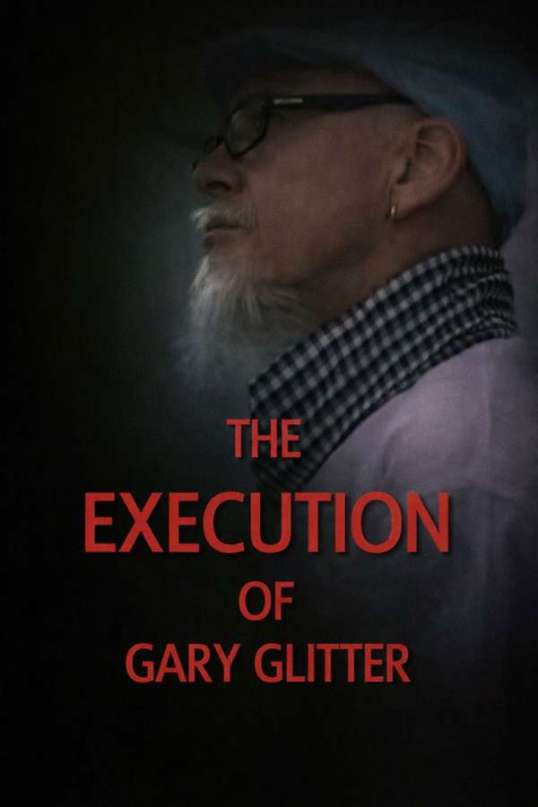
Made for British television, 2009’s The Execution of Gary Glitter opens with disgraced former rock star Gary Glitter (played by Scottish actor Hilton McRae) returning to the UK after serving a three-year prison sentence in Vietnam. When he was younger, Glitter was one of the most popular men in the UK, a rock star who was liked by both parents and — ahem — their children. His song “Rock and Roll Part 2,” with its chorus of “Hey!”, became a mainstay at sporting events. However, everything fell apart in the late ’90s when he was arrested and subsequently convicted of possessing child porn. After he was released from prison, Glitter went abroad and swore he would never return to Britain. In 2005, while living in Vietnam, he was convicted of having sex with underage girls. While he could have faced the firing squad as a result, he was instead given a three-year prison sentence. When he was released, he attempted to relocate to Hong Kong and Taiwan, only to be told that he was not welcome. Eventually, he had no choice but to return to the UK because every other country banned him from entering.
That’s all a matter of public record. The Execution of Gary Glitter imagines what would have happened if Glitter — or Paul Gadd, to use his real name — returned to a UK that had recently reinstated the death penalty. In this film, as soon as Gadd arrives in the UK, he’s placed under arrest. He’s been out of the country for so long that he totally missed the fact that Britain is once again hanging people. He’s also surprised to hear that he can be tried for crimes that were committed outside of British territory and that he can be executed if found guilty of the same crimes for which he was convicted in Vietnam.
The Execution of Gary Glitter is a mix of dramatic scenes and mockumentary-style interviews with people who were involved in Glitter’s criminal case. Though Gary Glitter is played by Hilton McRae, a few British journalists and politicians appear as themselves and talk about their feelings concerning the reinstatement of the death penalty. British MP Ann Widdecombe appears and makes the case for bringing back hanging. (Seventeen years after this special aired, Widdecombe would be brutally murdered in her own home, a victim of the political violence we’re always told isn’t actually occurring.) The film ends with a title card saying that, in 2009, polling showed that 53% of Britons supported bringing back capital punishment. It’s interesting how people always want the opposite of whatever it is they have. In America, the anti-death penalty movement is having a moment, but I can guarantee that, if capital punishment ever was outlawed here, you’d have people demanding that it be brought back within a month.
As for this film, it’s weird. Making a film like this about an actual person is weird. I honestly can’t tell you whether this film is for or against the death penalty. On the one hand, the scenes featuring the hangman and the gallows are rather cold and disturbing. The cold mercilessness of hanging is emphasized and with it, the idea that people who support the death penalty run the risk of becoming just as cold. (Of course, considering what’s currently happening in Tennessee as a result of the botched lethal injection of Christa Pike, some viewers would today undoubtedly appreciate the cool precision of a hanging.) On the other hand, Gary Glitter is about as unsympathetic a character as you can imagine and, in the film, he’s portrayed as being someone who lacks the self-awareness to understand why people are even upset at him. He makes plenty of excuses but they all ring hollow. At one point, the film mentions that Europe is uniformly condemning and sanctioning the UK for bringing back the death penalty. That would probably be a big deal in the UK. In America, we really don’t care what Europe thinks. Annoying Brussels is our national pastime.
What the film definitely does get right is the carnival atmosphere that would accompany the execution of a celebrity. The film imagines people selling T-shirts outside of the prison, macabre remixes of Glitter’s song playing on the radio, and Glitter himself receiving letters from people who continue to be fans despite the crimes for which he’s been convicted. Hilton McRae does a good job in the lead role. He starts out as arrogant and cocky and then gradually, as the reality of his situation dawns on him, he grows more and more desperate.
As for the real-life Gary Glitter, he was not amused by this film and tried to keep it from airing. Six years after the film aired, he was arrested and convicted of several more sex crimes that came to light as a result of the inquest into Jimmy Savile’s crimes. He was sentenced to a 16-year prison term. Just this year, the still-incarcerated Glitter was charged in a new set of historic sex crimes. He has pled not guilty.
In 2024’s Trap, Cooper Abbott (Josh Hartnett) is a Philadelphia fireman taking his teenage daughter, Riley (Ariel Donoghue), to a concert. Riley has been having a difficult time at school after recently falling out with two other girls, so seeing her favorite singer, Lady Raven (Saleka Night Shyamalan, daughter of the film’s director), should be just the thing to cheer her up.
However, when Cooper and Riley arrive at the stadium, Cooper is surprised by all the police officers and FBI agents milling around. After some checking, he discovers that the FBI believes a serial killer known as The Butcher will be at the concert. Under the leadership of profiler Josephine Grant (Hayley Mills), the authorities plan to check out every male at the show. As one helpful vendor puts it, “the entire show is a trap.”
Cooper is not happy to hear this because he is The Butcher. In fact, his latest victim is currently tied up in a basement somewhere. (Cooper occasionally uses his phone to check on how he’s doing.) However, Cooper is also a good father and wants to make sure Riley enjoys the concert. Can Cooper find a way to escape the stadium without ruining Riley’s special day?
That’s a pretty good premise for a suspense thriller, and the first hour of Trap works like a charm. Even though Cooper is a serial killer and the viewer knows he’s not someone they should root for, it’s hard not to be impressed with the way he skillfully manipulates everyone at the concert. He manages to steal a vendor badge. He learns the codeword venue employees are supposed to use to identify themselves to the police. He even steals a police radio so he can listen to Dr. Grant give orders to the cops. And he does it all while Riley enjoys the show. He’s just so diabolically clever that it becomes rather fascinating to watch.
Unfortunately, the film suffers a bit during the second hour. That’s when Lady Raven goes from being a figure performing on stage to an important supporting character. (Unfortunately, it turns out Saleka Night Shyamalan is a much better singer than actress.) Both Lady Raven and Cooper end up making some decisions that, in the grand scheme of things, don’t make much sense. The film is still entertaining, but the second half is not as tightly plotted as the first. Considering that M. Night Shyamalan is famous for his twist endings, it’s a bit strange that it ultimately feels like he never really figured out how he wanted Trap to end.
That said, the first hour of Trap is an enjoyably macabre mix of suspense and dark humor. That first hour is strong enough to make up for the weaker second half. Josh Hartnett puts his everyman charm to good use as a friendly family man who just happens to be a deranged serial killer. At its best, Trap is all about people trying to disguise their true nature. Cooper puts on an act of being a loving father while trying to find a way to continue killing. Lady Raven’s mentor (played by Kid Cudi) is friendly to his fans but a spoiled diva backstage. Even Lady Raven spends the second half of the film pretending to know less than she does. Probably the only character in the film who is truly genuine is Riley. She just wants to see her favorite singer.
Trap may not be Shyamalan’s best. It doesn’t hit you emotionally like The Sixth Sense and it’s nowhere near as icky as Old or Split. But it’s still an entertaining little thriller.

2025’s Bikini Guillotine is a slasher film that features plenty of bikinis but not one guillotine. The motiveless killer is a man who wears a mask that was put together with duct tape. He’s definitely a bad guy, but the true villain of this film is whoever was responsible for recording the dialogue.
The first half of this 65-minute movie is made up of footage of several bikini-clad girls hanging out in a pool. They’re all carrying red Solo cups, which they pretend to drink from despite the fact that they’re obviously empty. Every few minutes, they all hold up their Solo cups and go, “Whoo!” The majority of the dialogue is incoherent. Either you can’t hear a word that they’re saying, or you can hear the sound of their voices but you still can’t make out what they’re actually saying. Occasionally, there’s a strange echo effect that does nothing to make the dialogue any more legible. Strangely, we can hear the Solo cups. One girl taps a finger against her Solo cup and it’s suddenly the loudest thing in the movie. Whenever anyone puts their Solo cup down, the sound of the cup hitting the tile reverberates. The weird soundtrack gives certain moments a dreamlike feel, but for the most part, it just feels incredibly shoddy.
(On a personal note, it was impossible for me to look at all of these Solo cups without thinking about the Flipadelphia episode of It’s Always Sunny in Philadelphia. Flip! Flip! Flipadelphia!)
A coherent, non-muddy soundtrack is something that filmgoers tend to take for granted. It’s not until you watch a film like this that you really appreciate just how important sound actually is. I sat through this entire film, but I couldn’t tell you the names of any of the characters or how they even knew each other. Maybe that was revealed in the dialogue. Maybe it wasn’t. I’m not sure what anyone was actually talking about.
As for the killer, who knows why he was even there or why the word “guillotine” is even in the title. The killer does not carry a guillotine. Instead, he carries what appears to be a chakram with a bunch of rubber worms attached to it. A chakram is a flying disc that is supposed to have sharp edges. Traditionally, one uses a chakram by throwing it. Our killer uses his chakram like a knife. Or at least, I think he does. There are many scenes in which he’s seen plunging the chakram down, but apparently there wasn’t any money in the budget for fake blood, so who knows what he’s actually supposed to be doing with it.
The killer also has the power to hypnotize his victims just by looking at them. As such, every victim simply stops moving as soon as he looks at them. Not only does it rob the victims of their agency, but it also makes for a pretty boring slasher film. It’s just one victim after another, with no personality or variety. That said, at least we can actually understand the dialogue inside the house. “Hello?” “Are you guys here?” Spellbinding stuff, as I’m sure you can tell.
Whatever else one might say about it, this film does offer two important lessons to the aspiring filmmaker. Don’t promise a guillotine if you can’t deliver. Hire someone who knows how to record sound.

1988’s Hollow Gate begins with a Halloween party that almost goes terribly wrong. When he feels that his son Mark is not properly bobbing for apples, a drunken father (Richard London) shoves Mark’s face into the water and yells at him for embarrassing the family. Mark nearly drowns, and hopefully the family learns an important lesson about being overly competitive.
Ten years later, Mark (Addison Randall) is working at a gas station on Halloween night. An obnoxious man drives up with his girlfriend. The man wants some gas put in his car and he hands Mark his girlfriend’s panties. (I guess that’s how you tip in New Jersey.) Mark proceeds to stuff the panties into the car’s gas tank and then set them on fire. The man laughs as he drives away. However, he’s not laughing when the car blows up.
Two years after that, Mark harasses a woman at a Halloween shop. Everyone in town agrees that Mark has obviously been driven mad by the incident at the Halloween party, but nothing can be done about it because Mark’s wealthy grandmother (Pat Shalsant) owns the entire town. Mark is released to her care.
The next Halloween, four teenagers are invited to a party at Mark’s mansion. They discover that Grandma has been murdered and that Mark wants them all to put on some costumes that he ordered. When they are understandably reluctant to play Mark’s game, Mark decides that he’ll just wear each costume and kill his guests, one by one….
As far as SOV horror films are concerned, Hollow Gate is not a bad one. Director Ray Di Zazzo is able to capture a few memorable images. If none of the performances are exactly convincing, a few of them are so over-the-top that they’re entertaining. The gore is splattery enough to be effective, even if it’s not particularly realistic. The plot is not particularly original, but there are still enough scenes of lawyers and police officers discussing how Mark would be in prison if not for his wealthy family that you can at least argue that the film pretended to have something more on its mind than just cheap kills.
What truly makes this film memorable is the flamboyant killer. Mark not only changes costumes, but his methods are a bit more original than the typical hack-and-slash killer. Yes, he can use a knife and an axe, and he does just that in one scene. But he can also run you over with a thresher while dressed as a cowboy. Or he can dress up like an English gentleman and have two golden retrievers maul you to death. The dog scene is probably the most memorable one in the film, if only because the dogs themselves are very cute and seem to be having great fun as they lick their unfortunate victim to death. They’re the adorable canines of doom!
It’s a cheap movie with a predictable plot, but it also appears to be a film that is truly in love with Halloween and all of the customs that go along with it. The owner of the local costume store is ultimately just as important as the killer. In the true Halloween tradition, the story ends on an ambiguous note. Was that the boogeyman? Perhaps he was.
In 1973’s Psychomania, Tom Latham (Nicky Henson) is the leader of The Living Dead, a motorcycle gang identified by their skull masks, their bad attitude, and their bizarre love of folk music. Under Tom’s leadership, the members of The Living Dead terrorize the small English town in which they live. They also spend a lot of time hanging out at the cemetery. Tom is death-obsessed. While talking to his girlfriend, Abby (Mary Larkin), Tom suggests that they should kill themselves. “Not that again, Tom,” Abby sighs.
One of the more clever aspects of Psychomania is that, for all of his attempts to be a nihilistic rebel who refuses to conform to the demands of society, Tom is actually a spoiled rich kid who is devoted to his mother (Beryl Reid) and who is still looked after by his butler, Shadwell (George Sanders). Tom’s followers may all be from the lower classes, but Tom most definitely is not. Instead, Tom is very much aware that his mother and Shadwell worship a toad god that can give its followers eternal life, but only if they kill themselves first. After Tom does kill himself, the members of The Living Dead bury him sitting on his motorcycle. He later bursts out of the ground on that same motorcycle and leads his followers on a rampage. Soon, nearly every member of The Living Dead has committed suicide and come back to life as an immortal. The only holdout is Abby.
Psychomania is an enjoyable, chaotic combination of genres. When they first appear, Tom and The Living Dead feel as if they came straight over from one of the many British films about the ’60s rivalry between the rockers and the mods. The Living Dead love their motorcycles and their leather jackets, and they’re not going to let anyone tell them what to do. They’re the type of characters who have appeared in countless biker films. It’s easy to imagine Tom looking at himself in a mirror and trying to imitate Marlon Brando as he says, “What have you got?” However, the film then adds a dash of the witchcraft films popularized by Hammer and Amicus in the late ’60s. Indeed, Tom’s fussy mother and the urbanely sinister Shadwell almost feel like parodies of the type of characters who appeared in those films. (It’s impossible not to smile when the giant toad appears.) The Living Dead then literally become the living dead and prove themselves to be just as relentless as the zombies in the films of George Romero. (That said, the self-amused bikers have more in common with the sanity-deprived characters in Romero’s The Crazies than with the shambling corpses of Night of the Living Dead.) The film ends on a note of sudden reversal, one that brings to mind countless Roger Corman films that featured villains who just didn’t know when to quit.
With all those different genres mashed together, it’s no surprise that Psychomania’s tone is all over the place. Moments of humor and parody are mixed with scenes of the resurrected Living Dead terrorizing their small town and Tom’s mother worrying, along with Shadwell, that perhaps Tom was too immature to be given immortality. Between the suicide montage, the giant toad, and the sight of Tom being buried while sitting on his motorcycle, Psychomania is relentlessly strange and all the more enjoyable for it. Director Don Sharp doesn’t let the action lag, and the film’s mix of bright color, biker imagery, and campy magic combine to make it a truly enjoyable work of pop art.
George Sanders committed suicide shortly after completing this film. He left behind a note that reportedly read, “I’m bored.” He doesn’t have a huge role in Psychomania, but his performance is one of the most memorable things about the film. He imbues Shadwell with a wonderful sense of arch disdain. He may have raised Tom, but that doesn’t mean he has to like him.

