Cannes Film Review: I, Daniel Blake (dir by Ken Loach)


As I watched the 2016 film, I, Daniel Blake, two thoughts ran through my head.

First: This is one of the saddest, most powerful films that I’ve ever seen.

Second: It’s a pity that, for all of his talent, Ken Loach is such an anti-Semitic twat.

Daniel Blake (Dave Johns) is a carpenter who lives in Newcastle.  He’s a widower who lives alone in a small flat, keeps an eye on his neighbors, and always tries to do the right thing.  As he explains it, he’s never asked for nor accepted charity.  He’s worked hard all of his life and all he’s ever asked is to be treated with respect in return.  After suffering a heart attack, he is told by his doctor that it will be a while before he can safely return to work.  However, when Blake goes to the Department of Work and Pensions, he is told that he had been evaluated and he only “scored 12 points.”  In order to receive an employment and support allowance, he would need to score 14 points.  How does one score 14 points?  No one seems to be quite sure.  Fortunately, there is an appeals process but no one appears to be willing to give Dan a straight answer as to how the process works.  He’s told that it can’t even start until he gets an official call informing him that his application for the allowance has been denied.  Of course, Dan already knows that he’s been denied because, through a bureaucratic snafu, Dan received a letter telling him that he’s been denied.  However, it doesn’t matter that he already knows it.  What matters is that he wait for the official phone call.

In the meantime, it is continually suggested that Dan go online to solve all of his problems, despite the fact that Dan is 59 year-old and has next to no idea how to work a computer.  (When he does go online, he’s forced to ask strangers for help with everything from using the mouse to submitting his forms.)  Broke, Dan applies for a jobseeker’s allowance and is told that he had to spend 35 hours a week looking for employment, despite the fact that his doctor has not cleared him to work.  Whenever someone is willing to hire Dan, Dan is forced to admit that he can’t take the job, adding to the list of his daily humiliations.

Meanwhile, Dan befriends a single mother, Katie (Hayley Squires), who is literally starving herself so that her children will have enough to eat.  (In one of the film’s most powerful scenes, Katie has a breakdown at a food bank.)  When she’s caught shoplifting, a security guard offers to help her out but his help comes with a price of its own.

And through it all, the state continues to grind both Dan and Katie into the ground.  With its harrowing portrayal of two people literally being destroyed by a combination of poverty and authoritarian bureaucracy, I, Daniel Blake is the rare movie that can be enjoyed by both socialists and libertarians.  At no point does I, Daniel Blake romanticize the poverty of its characters.  From the minute we first see Daniel, he is obviously a very ill man and the film does not flinch from showing the personal toll of the daily humiliations of his struggle to just get someone to listen to his voice.  As we watch, we hope things will work out for Dan and Katie, even though we know they won’t.  Katie is fond of saying that she’s going to go back to school and Dan even makes her a bookcase for her future school books but again, we know it’s a dream that will probably never come true.  It’s not a happy film but it is a powerful one.

That said, I nearly didn’t watch I, Daniel Blake because of the fact that it is a Ken Loach film.  Loach is one of the world’s most acclaimed directors, a filmmaker and activist who has been making movies since the late 1960s.  Loach is known for his willingness to make films that both deal with social issues and challenge the British status quo.  Though he may not be well-known in the States, he’s a controversial figure in the UK.  He’s also one of the leading supporters of the despicable BDS movement and, when one looks over his public comments, it’s hard not to get the impression that his criticism of Israel is motivated by more than just disagreement with Israeli government policy.

But I did watch because, ultimately, I feel that art can be separated from the artist.  Ken Loach may be loathsome but this film is not.  I, Daniel Blake won the Palme d’Or at the 2016 Cannes Film Festival, beating out such films as American Honey, Elle, The Neon Demon, and Toni Erdmann.

Cannes Film Review: The Mission (dir by Roland Joffe)


(With this year’s Cannes Film Festival coming to a close, I figured that I would start of today by looking at some previous winners of the Palme d’Or.  We start things off with 1986’s The Mission.)

The Mission opens with a man stoically plunging over a waterfall.  That man is a priest who, in the 1740s, has been sent to convert the natives of the Paraguayan jungle to Christianity.  The natives’ reaction to the priest’s arrival was to tie him to a wooden cross and send him over the falls.  It’s an opening that perfectly captures one of the main themes of The Mission: the contrast between the beauty of nature and the savagery of man.

The majority of the film deals with two men.  Father Gabriel (Jeremy Irons) is the Spanish Jesuit who replaces the martyred priest.  Father Gabriel is a pacifist who manages to win the trust of the natives through a shared love of music.  Gabriel plays the oboe and, when it is snatched away from him, reacts not with anger but with acceptance.  With the help of Father John Fielding (Liam Neeson), Father Gabriel builds a mission and works to educate the natives.  This brings him into conflict with the local plantation owners, the majority of whom just see the natives as being potential slaves.

That’s where Mendoza (Robert De Niro) comes in.  A brutish and violent man, Mendoza makes his living kidnapping natives and selling them into slavery.  When Mendoza discovers that his fiancée, Carlotta (Cherie Lunghi), has fallen in love with his younger brother, Felipe (Aidan Quinn), Mendoza snaps and, in a moment of anger, kills his brother.  Seeking forgiveness for his violent past, Mendoza travels to Father Gabriel’s mission, dragging all of his armor and weaponry in a bundle behind him.  When Mendoza finally reaches the mission, he is not only forgiven by the natives but he also eventually ends up becoming a Jesuit himself.

And, for a while, everything is perfect.  That is until the Spanish turn over their land in South America to the Portuguese and the new colonials decide that having a mission around will make it a little bit too difficult to enslave the natives.  When Father Gabriel is ordered to close the mission, he refuses to do so.  He says that he will stay and that he is willing to be martyred if the Portuguese forces attack.  Gabriel believes that violence is a sin against God.  Mendoza, on the other hand, announces that he will stay and he is prepared to once again pick up weapons to defend the mission…

Dramatically, The Mission is uneven.  While Jeremy Irons and Liam Neeson are both believable and sympathetic as Father Gabriel and Father Fielding and fit right in with the film’s period setting, Robert De Niro seems miscast and out-of-place.  As good an actor as De Niro is, he just doesn’t belong in the jungles of South America.  Whenever he shows up or speaks, your mind immediately goes to New York City.  The film tries to juggle so many theological and political issues that it can get a bit exhausting trying to keep up with it all.  Watching the film, it was hard not to wish for a chance to see what a director like Werner Herzog or Terrence Malick would have done with the same material.

That said, The Mission is a visually impressive film, one that captures the beauty, the innocence, and the danger of the jungle.  The scenes of both Gabriel and Mendoza climbing the waterfall are stunning to watch and, in the end, the film does have a sincere message about the ongoing fight for the rights of indigenous people.  That counts for something.

The Mission received an Oscar nomination for Best Picture, though it lost to Platoon.  It also won the Palme d’Or, beating out such films as After Hours, Down by Law, Mona Lisa, Runaway Train, and The Sacrifice.

4 Shots From 4 Films That Won The Palme d’Or: Wild At Heart, Barton Fink, The Piano, Pulp Fiction


4 Shots from 4 Films is just what it says it is, 4 shots from 4 of our favorite films. As opposed to the reviews and recaps that we usually post, 4 Shots from 4 Films lets the visuals do the talking!

All four of these films have one thing in common: they all won the Palme d’Or at Cannes!

4 Shots From 4 Films

Wild At Heart (1990, dir by David Lynch)

Barton Fink (1991, dir by the Coen Brothers)

The Piano (1993, dir by Jane Campion)

Pulp Fiction (1994, dir by Quentin Tarantino)

Film Review: Anonymous 616 (dir by Mike Boss)


Anonymous 616 opens with the camera panning over a fairly upscale living room.  It’s tastefully decorated, with a nice white couch and a coffee table and even a painting of the house’s owner.  Unfortunately, all of the furniture and decorations are now splattered with blood.

It doesn’t take long to realize that we’re looking at the aftermath of something terrible.  There are four people in the room.  One is lying naked on the couch.  One is slumped in a chair.  Another has literally been nailed to the wall.  One person wanders through the scene, in an apparent daze.  Is that person a survivor or was that person the perpetrator?

The film flashes back to the hours before the massacre happened.  The room is now clean and happy.  Four friends are having a reunion.  The owner of the house is Eric (David Abramsky), who is very proud of his possessions and his money.  (The fact that Eric is so open and honest about his materialism makes him far more likable than you might originally expect.)  Eric’s girlfriend is an artist named Monica (Lena Roma).  She’s the one who painted the picture of Eric that decorates the living room.  And then there’s Jason (Daniel Felix de Weldon) and his girlfriend, Jenna (Jessica Boss).  Jason is in the Army and will soon be going to Iraq for his third tour of duty.  Jason is proud of his service.  He also proudly states that, unlike so many others, he’s never suffered from PTSD.

The reunion starts out friendly enough, though there’s an undercurrent of tension from the beginning.  Whenever a group of characters all claim to be happy with their lives, you know that something bad is going to happen.  While Monica’s 12 year-old daughter (Bella Shepard) relaxes in her room, the four adults talk.  There are hints of dark secrets lurking in the past and flashes of paranoia.  After passing around a joint, Eric explains that there’s a new drug, one that’s described as being like DMT with “an extra kick.”  Everyone gives it a try.

And the reunion continues.  One person steps into an office and finds an anonymous message waiting on a computer.  “i’m the one who knows everything about u,” the message reads before suggesting that it’s time for the person to finally do what they truly want to do.  “B like God!” the message reads.  “Don’t deny your impulses for the next 4 minutes.”

Anoynmous 616 is a low-budget but effective horror film, one that will keep you guessing whether the messages are real or fake, supernatural or just a reflection of a drug-addled psychosis.  The violence is bloody and disturbing but, at the same time, it’s not just violence for the sake of violence.  There’s a lot of going on underneath the surface, much of which I can’t reveal without running the risk of spoiling the film.  In the end, Anonymous 616 is about more than just blood.  It’s about guilt, anger, repression, and betrayal.  It’s a film that invites you to wonder how well you know your best friends.  Well-directed and acted, It’s not always easy to watch (I had to avert my eyes during a scene involving a mallet) but it definitely makes an impression.

Anoynmous 616 is currently available from Amazon.


The Secret Batman-James Bond Connection – Revealed!


gary loggins's avatarcracked rear viewer

FLASH! This breaking news story is brought to you by Cracked Rear Viewer, serving the film community since 2015!

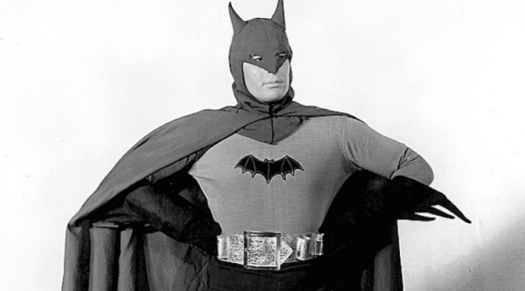
It’s the story America (and the world) has been waiting for – the hitherto secret link between The Caped Crusader and Secret Agent 007. Proving once again this blog will go to any lengths to create some content  bring you the truth behind the Hollywood scenes! Our trail begins in the year 1943. WWII was raging across both oceans, and America needed heroes to defend the homefront. Columbia Pictures secured the rights to the popular comic book BATMAN, and presented a 15-chapter serial starring one Lewis Wilson (1920-2000) as Bruce Wayne/Batman, battling the evil Japanese saboteur Dr. Daka, played by the villainous J. Carrol Naish:

Wilson was married to the former Dana Natol (1922-2004), and in 1942 they had a son named Michael. Though the Wilson’s film career went nowhere, they…

View original post 164 more words

Bond Is Back!: FROM RUSSIA WITH LOVE (United Artists 1963)


gary loggins's avatarcracked rear viewer

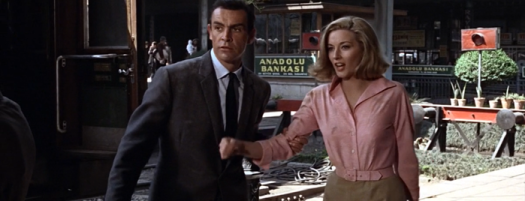
The Cold War got really hot when James Bond returned to the screen in FROM RUSSIA WITH LOVE, second in the film series starring Sean Connery as Ian Fleming’s Secret Agent 007. Picking up where DR. NO left off, the film is popular with Bond fans for its more realistic depiction of the spy game, though there’s still plenty of action, romance, and quick quips, along with the introduction of several elements soon to be integral to the series.

FROM RUSSIA WITH LOVE has Bond falling for Soviet defector Tatiana Romanova (Daniela Bianchi), who’s willing to help steal a Russian Lektor decoding machine for Her Majesty’s Secret Service. But both she and Bond are just pawns in a larger game, with the international crime cartel SPECTRE making all the moves. Their goal is to not only posses the decoder and ransom it back to the Russians, but to eliminate 007…

View original post 340 more words

My (extremely late) Black Panther Review


What I loved: The film was a successful genre mashup IMO: it was a super hero flick infused with spy film and Shakespearean drama element. Shuri served as T’Challa’s Q supplying him with advanced technology.  T’Chaka’s slaying of his brother and abandonment of his nephew felt like Hamlet with N’Jadaka serving as the title character.  Loved that the significance of Klaue and shades of N’Jadaka’s and M’Jobu’s connection to him were preserved  in the MCU.  Wakanda and its people were a wonder to behold with the Afrofuture aesthetics! I loved how seeming primitive items like a spear & the border tribe’s cloth were quite advanced.  Those war rhinos stole the show during the final battle scene! Can you get more epic than riding a war rhino into battle (maybe a cyborg raptor riding a rocket rhino)?  Also loved how elements from Priest & Texeira’s run (the Dora Milaje), Hudlin & Romita Jr’s run (Shuri), Coates & Sprouse’s run (Djalia) and Coates & Stelfreeze’s run (kinetic energy redistributed through the Panther suit and the technologically advanced beads) were seamless incorporated into the film.
What I didn’t dig: The death of Klaue & N’Jadaka because that they were such great villains and their absence created a void.  In the same manner that Cottonmouth’s death in the Luke Cage series created a void in the sense such a rich and complex character was snuffed out too quickly.  I rather Klaue or N’Jadaka get the Wilson Fisk treatment in imprisonment and rebuilding a base of power.  Imagine if N’Jadaka was sent to a Wakandan prison and rallied his prisoners (W’Kabi in that number) and possibly prison officials to his cause.  This could build up to the recent Nation Under Our Feet arc on film.  Revealing Wakanda’s true status to the globe would put a massive target on the nation.  It would make the super powers suspicious of them and probably institute plans to destabilize their nation (using men with training similar to Killmonger to accomplish it).   I also don’t believe that sharing Wakandan technology with the world will improve it, especially in nations where a huge divide between poverty & prosperity exist.  The rich would be the only ones that benefited and would probably try to make more money from their ingenuity.  On the flip side, unstable & warlike nations would more than likely try to weaponize those innovations as well.
Where can you get: Your local BestBuy/Walmart/Where ever DVD or Blu-rays are sold

James Bond Begins!: Sean Connery as 007 in DR. NO (United Artists 1962)


gary loggins's avatarcracked rear viewer

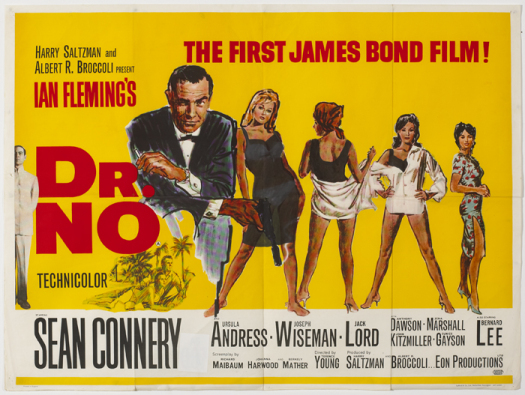
Ian Fleming’s secret agent 007, James Bond, was introduced in the 1953 novel Casino Royale, and was a smashing success, leading to a long-running series of books starring MI-6’s “licensed to kill” super spy. No less than President John F. Kennedy was a huge fan of Fleming’s books, and since the early 60’s were all about “Camelot”, producers Albert Broccoli and Harry Saltzman decided to cash in and bring James Bond to the big screen (the character had appeared in the person of Barry Nelson in an adaptation of CASINO ROYALE for a 1954 episode of TV’s CLIMAX!, with Peter Lorre as the villain Le Chiffre).

DR. NO was the first Bond movie, and the producers wanted Patrick McGoohan, star of the British TV series SECRET AGENT, to play the suave, ruthless Bond. McGoohan declined, and Richard Johnson was considered. He also turned them down, leading Broccoli and Saltzman…

View original post 534 more words

Here’s The Trailer For Spike Lee’s BlacKkKlansman!


Earlier today, Spike Lee’s BlackkKlansman was screened at the Cannes Film Festival to enthusiastic reviews and a ten minute standing ovation.

Not coincidentally, the first trailer was released today as well.  And here it is:

Amazingly enough, this film is based on a true story.  In Colorado, an African-American cop named Ron Stallworth really did manage to not only infiltrate the local chapter of the Ku Klux Klan but also eventually became the head of the chapter.  In the film, Stallworth is played by John David Washington, son of Denzel.  His partner is played by Adam Driver, who seems to be destined to get an Oscar nomination at some point in the near future.  And David Duke is played by Topher Grace, who has certainly come a long way since That 70s Show.

BlacKkKlansman is due to be released in August of this year.  Both Awards Watch and Awards Circuit currently have it listed as a probable Oscar contender and, going by the initial reaction for Cannes, it very well may be.


RIP, Margot Kidder


Margot Kidder was born in Yellowknife, a mining town in Northern Canada that was so remote that it didn’t even have a movie theater.  She didn’t see her first movie until she was 12, when she and her mother were visiting New York City.  Kidder later said, “I saw Bye Bye Birdie, with people singing and dancing, and that was it. I knew I had to go far away.”

Kidder started her career in her native Canada, appearing in 1968’s The Best Damn Fiddler from Calabogie to Kaladar and going on to appear in films like Black Christmas and Quackser Fortune Has A Cousin In The Bronx.  Even after Kidder found stardom in the United States, she continued to appear in Canadian films and won two Canadian Film Awards and one Genie Award for her performances.

In 1973, she played dual roles in Brian DePalma’s Sisters.  As detailed in Peter Biskind’s Easy Riders, Raging Bulls, it was during this time that she and her Sisters co-star Jennifer Salt shared a Malibu beach house that became a gathering place for such up-and-coming Hollywood directors as DePalma, John Milius, Martin Scorsese, George Lucas, and Steven Spielberg.  Briefly, she and Spielberg even dated.


For a generation of filmgoers, though, Margot Kidder will always be Lois Lane!  In 1978, Kidder beat out over 100 other actresses for the role of Lois.  (Among the others who tested:  Anne Archer, Susan Blakely, Lesley Ann Warren, Deborah Raffin and Stockard Channing.)  Superman was the first great comic book film.  In the aftermath of both Watergate and Vietnam, Superman made audiences that a man could fly.  As important as Christopher Reeve was to the success of Superman, Margot Kidder was just as important.  In many ways, Kidder’s Lois was the audience surrogate.  We saw Superman through her eyes.  At the same time, Kidder gave such a lively performance that it was impossible not to join Superman in falling in love with Lois.  When Superman spun the world backwards to bring her back to life, nobody questioned it because they would have all done the same thing.

Kidder was even better in Superman II but, unfortunately, she was also forever typecast as Lois.  In her later years, she would be better known for her health struggles than her acting.  After having a widely publicized manic episode in 1996, Kidder became just as well-known as an outspoken mental health activist as an actress.  Though her acting career may have slowed down, Kidder never stopped working, appearing in movies and television shows up until her death.

Margot Kidder died yesterday in Montana, at the age of 69.  To many, she’ll always be Lois but she was so much more as well.  Rest in Peace, Margot Kidder.