The Adventures of the Man With No Name: A Fistful Of Dollars, For A Few Dollars, The Good, The Bad, and the Ugly


Originally, Sergio Leone envisioned none other than Henry Fond as The Man With No Name.

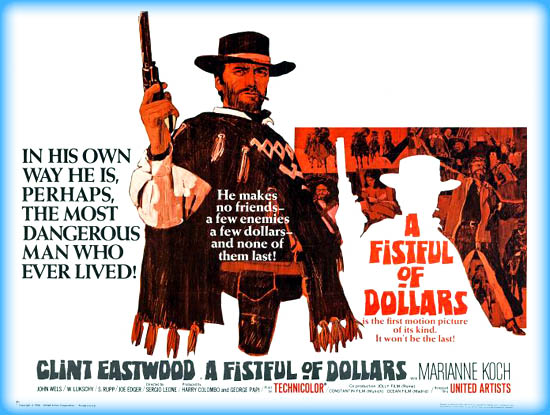
The year was 1964 and Sergio Leone was searching for the right actor to star in the movie that would become A Fistful Of Dollars.  The film, which reimagined Akira Kurosawas’s Yojimbo as a western, centered around a mysterious, amoral gunslinger whose name was unknown.  Leone needed an American or a British name to star in the film so that it could get distribution outside of Italy.  Leone had grown up watching Henry Fonda movies, all dubbed into Italian.  He later said he wanted to cast Fonda because he always wondered what Fonda’s voice actually sounded like.

After realizing that a major Hollywood star would never agree to star in a low-budget Italian western, Leone then offered the role to Charles Bronson.  Bronson read the script and said it didn’t make sense to him.  Leone went on to offer the role to Henry Silva, Rory Calhoun, Tony Russel, Steve Reeves, Ty Hardin, and James Coburn.  Everyone was either too expensive or just not interested.  Finally, it was actor Richard Harrison who, after tuning down the part himself, suggested that Leone offer the role to Clint Eastwood.  Eastwood, then starring on the American western Rawhide, could play a convincing cowboy.  Leone followed Harrison’s advice and Eastwood, eager to break free of his nice guy typecasting and hoping to restart his film career, accepted.  The rest is history.

Eastwood would only play The Man With No Name in three films but, in doing so, he changed the movies and the popular conception of the action hero forever.

All three of the Man With No Name movies have been reviewed on this site.  But, since today is Clint’s birthday, I thought I’d take a look at how these classic films are holding up, over 60 years since the Man With No Name made his first appearance.
A Fistful Of Dollars (1964)

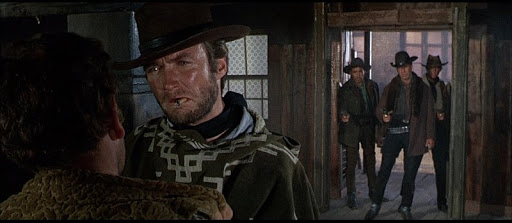
Having now seen both this film and Yojimbo, it’s remarkable how closely A Fistful of Dollars sticks to Kurosawa’s original film.  Interestingly, it’s clear that Eastwood patterned his performance of Toshiro Mifune’s in Yojimbo and yet, at the same time, he still managed to make the role his own.  The Man With No Name rides into a western town, discovers that there are two groups fighting for control of the area, and he coolly plays everyone against each other.  Whether it’s planting the seeds of distrust, exploiting an enemy’s greed, or being the quickest on the draw, the Man With No Name instinctively knows everything that he has to do.  Even when he’s getting beaten up by the bad guys, The Man With No Name always seems to be one step ahead.  Today, a western in which everyone is greedy and looking out for themselves isn’t going to take anyone by surprise.  But if you’ve watched enough westerns from the 40s and 50s, you’ll understand how unique of a viewpoint Leone brought to the genre.  Eastwood’s amoral gunslinger was such a surprise that, when the film aired on television, a scene was shot by the network in which Harry Dean Stanton played a prison warden who released The Man With No Name (seen only from behind) on the condition that he clean up the town.
For A Few Dollars More (1965)

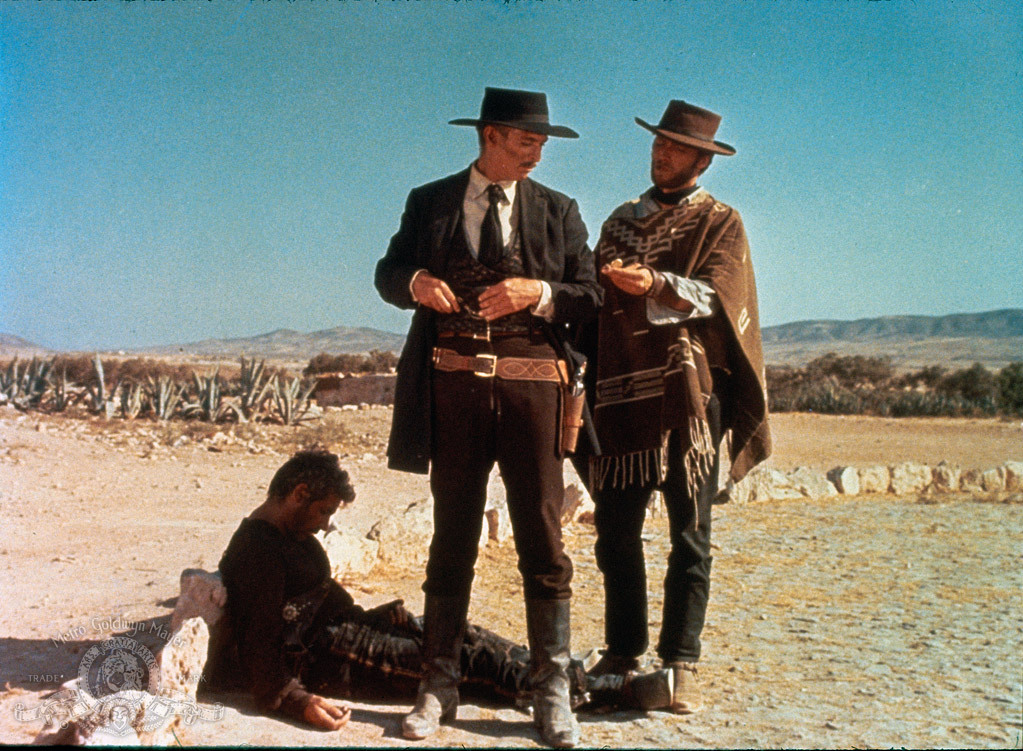
For A Few Dollars More finds The Man With No Name working as a bounty hunter and teaming up with Colonel Mortimer (Lee Van Cleef) to take down El Indio (Gian Maria Volonte) and his gang (including Klaus Kinski as a hunchback.)  This is my least favorite of the trilogy but that doesn’t mean that For A Few Dollars More is a bad film.  Being the least of three masterpieces is nothing to be ashamed of.  Eastwood and Van Cleef were two of the best and it’s interesting to see them working together.  El Indo is a truly loathsome villain and the members of his gang are all memorably horrid.  If it’s my least favorite, it’s just because I prefer the wit of A Fistful of Dollars and the epic storytelling of The Good, The Bad, and The Ugly.  Speaking of which…
The Good, The Bad, and The Ugly (1966)

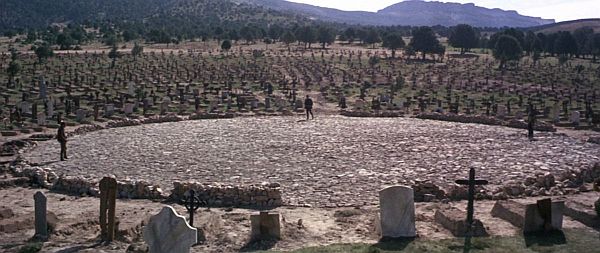
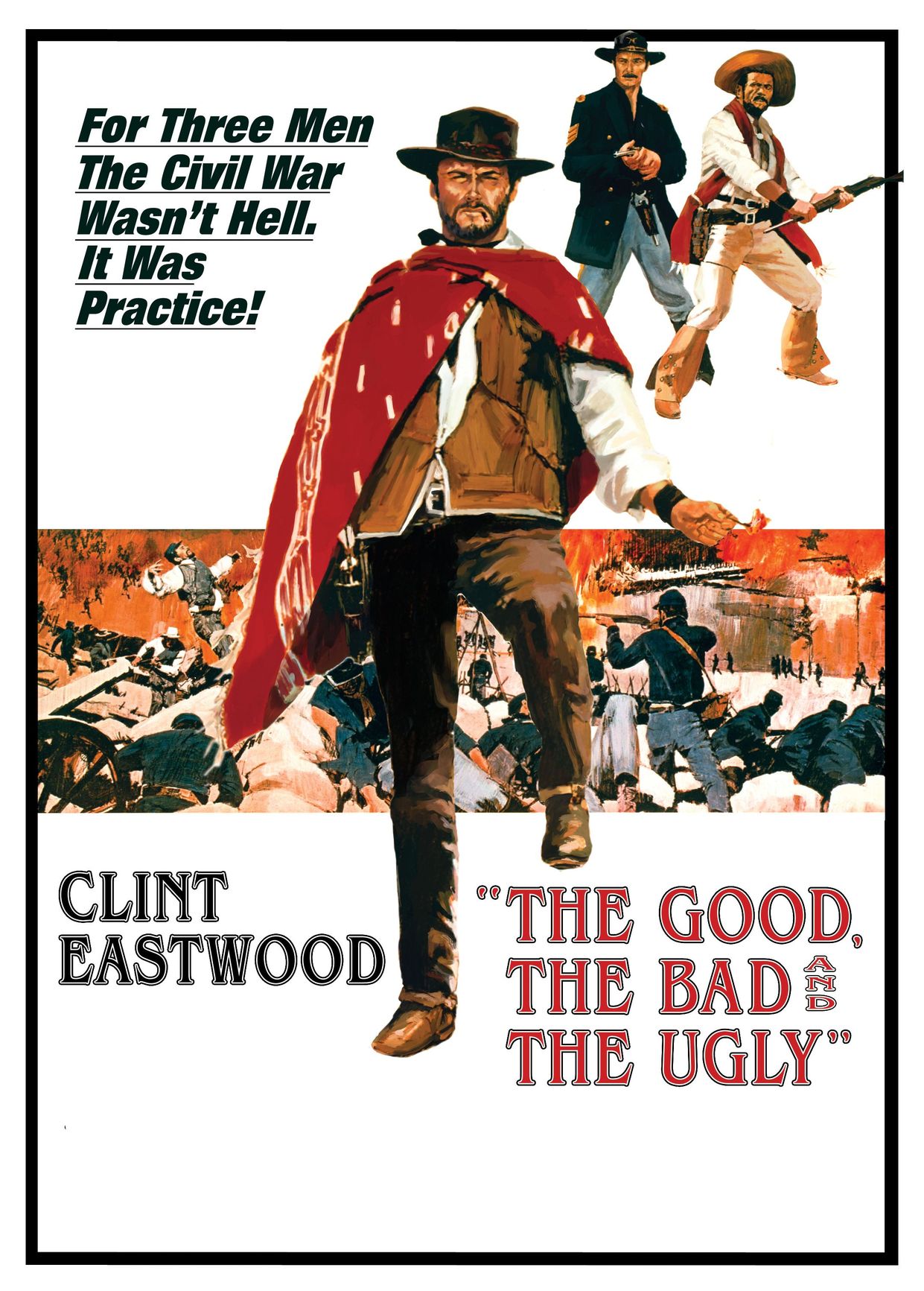
This is it.  The greatest western ever made, an epic film that features Leone’s best direction, Ennio Morricone’s greatest score, and brilliant performances from Eastwood, Van Cleef, and especially Eli Wallach.  It’s hard to know where to start when it comes to praising The Good, The Bad, and The Ugly.  It’s a nearly three-hour film that doesn’t have a single slow spot and it has some of the most iconic gunfights ever filmed.  Leone truly found his aesthetic voice in this film and that it still works, after countless parodies, is evidence of how great it is.  I appreciate that this film added a historical context to the adventures of The Man With No Name.  (Personally, I think this film is meant to be a prequel to A Fistful of Dollars, just because The Man With No Name is considerably kinder in this film than he was in the first two movies.  The Man With No Name that we meet in A Fistful of Dollars would never have gotten Tuco off that tombstone.)  The Good, The Bad, and The Ugly takes place during the Civil War and, along with everything else, it’s an epic war film.  While America fights to determine its future, three men search for gold.  The cemetery scene will never be topped.

American critics did not initially appreciate these films but audiences did.  Clint Eastwood may have been a television actor when he left for Italy but he returned as an international star.  And, to think, it all started with Sergio Leone not being able to afford Henry Fonda.
Film Review: Francis In The Navy (dir by Arthur Lubin)


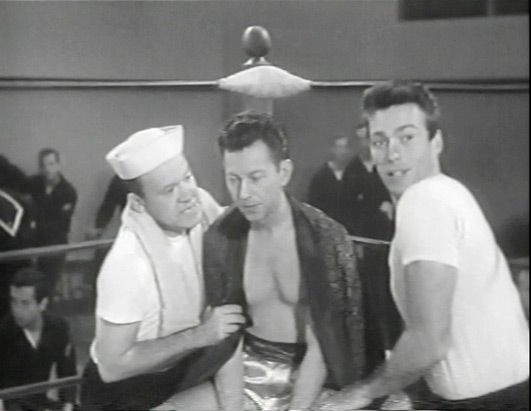
In 1955’s Francis In The Navy, Donald O’Connor plays Lt. Peter Sterling, an officer in the U.S. Army who gets word that his best friend, a talking mule named Francis (voice of Chill Wills), is about to be auctioned off by the U.S. Navy.  Sterling rushes to the Naval base but, along the way, his wallet gets stolen, he gets mistaken for an AWOL soldier, and Francis gets sold to a laboratory.

Hold on, I’m re-reading that last paragraph to make sure that I didn’t hallucinating typing all that…

Peter argues that he’s not the AWOL soldier, he’s just someone who looks just like him.  Peter gets tossed into the psychiatric ward.  Francis advices Peter …. yes, the mule that can talk gives Peter advice on how to get out of the mental ward …. to pretend to be the AWOL sailor.  Unfortunately, the sailor is a champion boxer so that means Peter will have to enter the ring.  Peter, needless to say, is not a boxer.  Peter also falls for a nurse (Martha Hyer) but — uh oh! — she’s the sister of the AWOL soldier.  Well, that’s kind of awkward.  I don’t have a brother but if I did, I doubt I would ever want to make out with anyone who looked like him.  Like seriously….

Hold on, I’m re-reading that last paragraph to see if there’s anything that I need to add.

Like, seriously, what the Hell?  This movie has a talking mule, an oddly incestuous subtext, and Donald O’Connor playing two roles.  Doing some research, I discovered that this was the sixth film to deal with the adventures of Peter Sterling and Francis.  This was the last one of them to star Donald O’Connor, who apparently resented getting upstaged by a mule.  There was one more Francis movie after this one and it starred Mickey Rooney.  It was called Francis In The Haunted House so who knows?  Maybe I’ll review it for our October horrorthon.  (Don’t count on it.)

As weird as this film is, it’s kind of likable.  Donald O’Connor is a favorite of mine and this one featured O’Connor in two roles, as both the hapless Peter and also the sailor who goes AWOL and repeatedly refuses to help Peter out.  And, while I’m not really sure why he’s talking, Francis was actually cute.  I enjoyed the boxing scene where he attempted to help Peter out.  Unfortunately, there’s only so much a mule can do.

As for why I’m reviewing this movie, it’s because Clint Eastwood is in the cast.  He plays Jonesy, a friend of the AWOL sailor who becomes a friend of Peter’s.  Now, to be clear, Clint doesn’t do a lot in the movie.  He works Peter’s corner during the boxing match.  Otherwise, he spends most of the time in the background and he has a few scenes where he hangs out with the rest of the AWOL sailor’s friends.  That said, Clint does make an impression.  Even in this very early role, he had an impressive screen presence.  He’s the tallest guy there and he’s got the best hair.  Once you spot him in a scene, it’s hard to look away.

Francis In The Navy is historically significant because it’s the first film for which Clint Eastwood received on-screen credit.  (Eastwood previously appeared in films like Revenge of the Creature and Tarantula but his name wasn’t included in the credits.)  It’s an odd film, one that’s likable if you’re in an undemanding mood and you enjoy goof — extremely goofy — humor.  It would be forgotten if not for Eastwood’s appearance.  Seen today, this film, like Eastwood’s other early appearances, reminds us that everyone started somewhere.

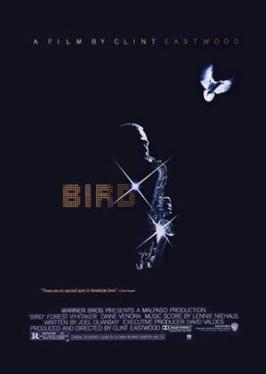
Bird (1988, directed by Clint Eastwood)


Forest Whitaker stars as the legendary saxophonist Charlie “Bird” Parker.  The film, which is structured around flashbacks and time jumps and features some of the most beautifully-done transitions that I’ve ever seen, follows Parker as he plays his saxophone, challenges the jazz purists who his own individual style, and looks for work in both America and France.  Along the way, we watch as he befriends and learns from Dizzy Gillespie (Samuel Wright), mentors a young trumpet player named Red Rodney (Michael Zelniker), and has a complex relationship with a white jazz lover named Chan Parker (Diane Venora).  Throughout his life, Charlie Parker struggles with his addiction to heroin and alcohol, occasionally getting clean to just then fall back into his habit.  To its credit, the film avoids most of the biopic cliches when it comes to portraying Parker’s addiction.  Parker accepts that he’s an addict, just as he accepts that he has a talent that is destined to revolutionize American music.

Director Clint Eastwood has always been a fan of jazz and he actually saw Charlie Parker perform when he was a young man.  His love of jazz had been present in almost every modern-era film that he has directed, staring with Play Misty For Me’s lengthy trip to the Monterey Jazz Festival.  Bird was a passion project for Eastwood, the first film that Eastwood directed without also appearing in.  (Eastwood doesn’t star in his second directorial effort, Breezy, but he does have a brief and silent cameo as a man standing on pier.)  Eastwood takes a nonlinear approach to telling the story, eschewing the traditional bopic format and instead putting the focus on Parker’s music.  Eastwood was able to get several never bef0re-released recordings of Parker performing and, when Whitaker is blowing into his saxophone in the film, we’re actually hearing Parker.  Eastwood’s direction captures the smoky atmosphere of the jazz clubs where Parker and Gillespie made their name while the nonlinear style reflects the feeling of just letting a song take you to wherever it’s going.  This is a movie about jazz that plays out like a jazz improvisation.

Forest Whitaker gives an amiable and charismatic performance as Charlie Parker, playing him as someone who has found both an escape and peace in his music, even as he physically struggles with the ravages of his drug addiction.  Whitaker won the Best Actor at Cannes for his performance in Bird.  Eastwood received the Golden Globe for Best Director.  Bird feels like it was labor of love for both of them.  Bird may not have set the box office on fire when it was originally released but it remains one of the best jazz films.

I review TIGHTROPE (1984) – starring Clint Eastwood! 


In TIGHTROPE, a psychiatrist makes the following comment to New Orleans police detective Wes Block (Clint Eastwood) while he’s trying to catch a serial killer who’s targeting sex workers:

“There’s a darkness inside all of us, Wes; you, me, and the man down the street. Some have it under control. Others act it out. The rest of us try to walk a tightrope between the two.”

This statement definitely hits home to Wes, whose personal life has gotten rather dark. His wife has recently left him and their two daughters (Alison Eastwood and Jenny Beck), and the detective seems to be drowning himself in his work, at times in a bottle, and at other times in the arms of some of the local ladies of the night. Whenever he does try to plan something with his girls, his job always seems to get in his way. As he investigates the murders in a variety of the seediest locations in New Orleans, we learn that Wes is very much into the kinds of women who inhabit these places, and he gives into his secret desires on multiple occasions. This becomes personal when the killer, who knows that Wes is the detective in charge of the case, begins targeting and killing some of the very same women who helped ease Wes’ emotional pain, and then taunts him about it. It becomes even more personal when the killer goes after his daughters and his new “legitimate” lady friend Beryl Thibodeaux (Geneviève Bujold), a rape counselor Block has gotten to know as part of the broader investigation. As the bodies continue to pile up, will Wes be able to stop the killer in time to save the most precious people in his life?!!

TIGHTROPE is a special movie to me. I’ve mentioned this before in other reviews, but FOX-16 out of Little Rock played a lot of good movies in the mid to late 80’s when I was a teenager. Some of those movies hold a strong nostalgic value in my life because I first discovered them and my true love of movies during those years. The channel advertised and showed TIGHTROPE, and many other Eastwood films, quite often. Of course, the movie broadcast on FOX-16 was heavily edited, and I didn’t realize the true sexual complexity of detective Wes Block until I was quite a bit older. In the original DIRTY HARRY, there’s a running gag where different people ask Eastwood’s iconic character, “Why do they call you Dirty Harry?” From what we see in TIGHTROPE, if someone asked, “Why do they call you Dirty Wes,” the answer would be more than obvious as he engages in various kinky forms of sexual relations with at least three of the sex workers he hits up for information. The killer knows of his sexual activities with these women, even watching on occasion. The movie leans hard into this connection between Wes’ kinky sex that often involves handcuffs, and the kinship that the killer feels with Wes when he’s perpetrating violence on these same women. It adds an uneasy and unsettling quality to the proceedings when the killer publicly taunts his rival, who understandably doesn’t want his peers to know of his more private nocturnal activities. He can’t fool his new lady friend, the tough as nails Beryl Thibodeaux, who senses his hidden desires and accepts him for who he is, especially after spending some quality time with him and his daughters. I like Genevieve Bujold in the role and the French-Canadian actress is able to even nail the local accent on a couple of occasions. I also wanted to mention the excellent chemistry between Clint Eastwood and his real-life daughter Alison, who play father and daughter in the movie as well. Alison was only 12 years old when TIGHTROPE was released, but she gives a strong performance as the older daughter who’s still trying to come to terms with her parents’ divorce. The killer really messes up when he targets her. 

I’ll tell anyone who’s willing to listen that I love the city of New Orleans as a movie location. I personally love to visit the city and partake in its fun atmosphere and wide variety of excellent cuisine. TIGHTROPE hits many of the highlights of New Orleans in 1984… Bourbon Street, Jackson Square, the Super Dome, the Creole Queen, a warehouse full of Mardi Gras floats, the famous cemeteries, Randi Brooks in a hot tub, etc. etc. One thing about New Orleans is that its famous streets like Bourbon Street have not been cleaned up or become “family friendly” in the same way as a place like Times Square in New York City. To this day, it retains that same feeling of sexual decadence that is portrayed here in 1984. 

I personally consider TIGHTROPE to be a must-see film for fans of Clint Eastwood, as Wes Block is a wholly unique addition to his cavalcade of tough cop characters, and he makes us justifiably uncomfortable at times. Eastwood’s conflicted performance, the serial killer storyline and the fun New Orleans locations add up to a very good movie that’s aimed squarely at adults. 

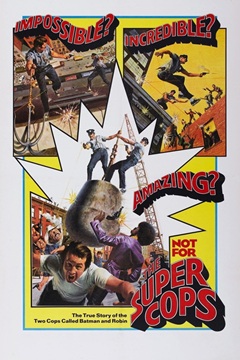
The Super Cops (1974, directed by Gordon Parks)


David Greenberg (Ron Liebman) and Robert Hantz (David Selby) are two tough and smart New York City cops who become detectives and play by their own rules.  They make arrests off-duty.  They drive their lieutenants crazy.  They bust drug dealers and prostitutes and single-handedly clean up their police precinct.  They’re the Super Cops and they’re even nicknamed Batman and Robin.  When they throw punches, a graphic “POW” appears on screen with a sound effect.

There’s an old saying about how, when the truth is different from the legend, always print the legend.  That’s certainly the case here.  The real-life David Greenberg went into politics and ended up doing time for mail fraud, insurance fraud, and obstruction of justice.  Robert Hantz was busted for possessing marijuana while he was on vacation in the Bahamas.  The arrest led to a demotion and Hantz quit the force as a result.  The film hints at Greenberg and Hantz’s involvement with the Knapp Commission, which investigated police corruption in the 70s.  (Lisa wrote about it when she reviewed Serpico.)  But the film does not mention that the Knapp Commission suspected that Greenberg and Hantz murdered two drug dealers.

You don’t get any of that with The Super Cops, which tries to mix the grittiness of films like The French Connection, The Seven-Ups, and Serpico with moments of cartoonish comedy and it really doesn’t work.  (Years after The Super Cops was released, Hill Street Blues proved that gritty drama and dark comedy could be mixed but it has to be done just right.)  Ron Liebman overacts while David Selby doesn’t seem to be acting at all.  (Liebman and Selby are both good actors but you wouldn’t know that from this movie.  For Liebman, I suggest checking out his performance in Night Falls On Manhattan.  For Selby, I recommend an overlooked dark comedy called Headless Body in Topless Bar.)  It’s hard to believe that Gordon Parks went from doing Shaft to doing this.  Shaft would have tossed the Super Cops through a window.  Popeye Doyle would have given him an assist.

There is one good thing to note about The Super Cops.  Edgar Wright is a fan of this film and it partially inspired the far superior Hot Fuzz.


I review BLOOD WORK (2002) – starring Clint Eastwood and Jeff Daniels!


Here at The Shattered Lens, we’re celebrating Clint Eastwood’s 95th birthday on May 31st. As part of that celebration, I decided to revisit his 2002 film, BLOOD WORK. 

BLOOD WORK finds Clint Eastwood as retired FBI profiler, Terry McCaleb (Clint Eastwood), a man who has recently had a heart transplant. Despite the wishes of his doctor Bonnie Fox (Angelica Huston), the beautiful Graciella Rivers (Wanda De Jesus) is able to guilt McCaleb into investigating the death of her sister, Gloria, when she reveals to him that it’s her sister’s heart that is now beating in his chest. Unable to drive due to his heart condition, McCaleb hires his goofy next-boat neighbor Buddy (Jeff Daniels) as his driver. The two set out to find any clue or follow any lead they come across. Eventually McCaleb is able to uncover that Gloria’s killer may be the “Code Killer,” the very same killer that he was after when his heart gave out on him, forcing his retirement. He’s going to do everything he can to catch the killer this time, even if it kills him in the process! 

BLOOD WORK puts Clint Eastwood smack dab in the middle of one of my favorite genres, the serial killer film, and the result is somewhat of a mixed bag. On the positive side, it contains a really good performance from a 72 year old Clint Eastwood as the retired FBI guy and recent heart transplant recipient. This character trait strips away Eastwood’s ability to be a Superman as he has been so many times before in his career. As a matter of fact, we feel his pain when a big Russian throws him down, or when he has to dive out of the way of a car trying to run him over. We worry for him when he gets a fever, which could actually kill him. But even in his fragile state, every so often he’ll grab a shotgun and start blasting away at the inhabitant of a car he sees watching him. His character has to rely on his intellect more than his strength and Eastwood is fun to watch in the role, with his performance the highlight of the movie. Of the other performances, I really like Angelica Huston in the relatively small role of his doctor. You believe that she really wants him to get better, and she’s pissed off that he’s gotten himself involved in this murder investigation. I’m not that impressed with Jeff Daniels here. I normally like his work, so I think the problem is that his character isn’t written that well. Wanda De Jesus is a lovely woman, and she has some good moments, but there are a couple of times that she’s way over dramatic, and I couldn’t help but roll my eyes. 

As I mentioned earlier, I usually enjoy serial killer movies, and I did enjoy BLOOD WORK. It hits most of the expected notes of the genre… the serial killer taunting the lawman, the visits to the family members of the victims, the sudden discovery of clues / evidence, the eleventh hour reveal of the killer, etc. With Eastwood at the center of it all as both actor and director, you can’t really go wrong even if the movie does drag some during its middle portion. And even though it’s presented as a whodunit, there’s not a lot of mystery to the identity of the killer. I suspect most filmgoers will figure it out before the final reveal. But at the end of the day, BLOOD WORK is definitely worth a viewing for fans of Clint Eastwood and fans of serial killer movies. Not his best work, but still better than most! 

I’ve included the trailer for BLOOD WORK below:

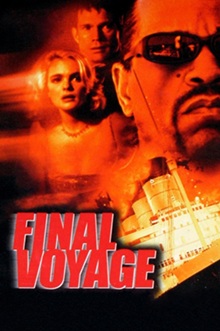
Final Voyage (1999, directed by Jim Wynorski)


Aaron (Dylan Walsh) has been hired to sever as a bodyguard for spoiled heiress Gloria (Erika Eleniak) while she takes a cruise.  Things go wrong when Josef (Ice-T) and Max (Claudia Christian) hijack the cruise.  They think that they’ll make a fortune by taking everyone hostage and searching the boat.  Little do they know that the boat is very slowly sinking.  (They would known except they killed the engineers when they first took over.)  Aaron and Gloria have to defeat the terrorists before the boat sinks.

Imagine Die Hard or Under Siege made not with expensive special effects but instead with a healthy supply of stock footage and built not around proven action stars like Bruce Willis and Steven Seagal but instead around the charisma-free Dylan Walsh and you have a pretty good idea why Final Voyage is one of the more forgettable movies to be ripped off from either one of those two films.  At least Dylan Walsh has the excuse of being miscast.  Erika Eleniak actually was in Under Siege and still seems clueless as to what she’s supposed to be doing during Final Voyage.  Ice-T is an amusing villain and the movie opens with a gunfight on an airplane that is so poorly choreographed and improbable that it becomes entertaining to watch.  Otherwise, Final Voyage is a cruise best not taken.

This is a Jim Wynorski film so there’s plenty of gratuitous bra and cleavage shots for those who are specifically looking for that.  Jim Wynorski definitely has a style and he manages to bring it to every film that he makes, even when it doesn’t really make sense for the story being told.  Give Wynorski this, he understands why people are watching his movies.

I review THE EIGER SANCTION (1975) – starring Clint Eastwood and George Kennedy!


Here at The Shattered Lens, we’re definitely celebrating Clint Eastwood’s May 31st  birthday. As part of that celebration, I decided to revisit his 1975 film, THE EIGER SANCTION. 

Clint Eastwood is art professor Jonathan Hemlock, a retired assassin, who agrees to take one last “sanction” from a shadowy agency to avenge his friend’s death. A skilled mountain climber, Hemlock learns that the killer is part of a group of men who are attempting to climb the treacherous Eiger mountain in Switzerland. The Eiger has defeated Hemlock two times already, but he’s hoping the third time will be the charm. He goes to see his friend Ben (George Kennedy) in Arizona, who gets him in the shape he needs to be in to climb the Eiger. The time finally comes to go to Switzerland, climb the mountain, identify the man who killed his friend, and take him out. None of it goes easy, and Hemlock can only hope he will live long enough to avenge his friend! 

THE EIGER SANCTION finds Clint Eastwood in James Bond territory. The “agency” is run by the over-the-top albino villain “Dragon,” who can never see any daylight, but seems to enjoy the sanctioning of death. He sends a beautiful woman named Jemima Brown (Vonetta McGee) to steal Hemlock’s money and put him in no position to turn down the agency’s request. Luckily for Hemlock, in true Bond fashion, the beautiful “Aunt” Jemima decides to bed him as part of her assignment. I must admit that I found myself quite enraptured by the beautiful Vonetta McGee. This is some pretty good stuff, but I prefer my 70’s Bond action to come from Sean Connery or Roger Moore. Eastwood is always great (the man had the best head of hair in the business), but I enjoy his movies more when they’re set in the real world of cops and criminals. It’s still a fun movie, and I especially like Hemlock’s relationship with Kennedy. There are some amazing shots of Eastwood and Kennedy in Arizona’s Monument Valley as they prepare for the Eiger and drink some warm beer together on the Totem Pole rock formation! The shots of the men climbing the Eiger are also amazing, but we don’t really know the characters so the drama isn’t strong during this portion of the film. The visuals are absolutely amazing though. The final reveal of the man that Hemlock is after isn’t very surprising. Any person who has seen more than a couple of “mystery” films will figure it out quite easily. 

At the end of the day, I enjoyed THE EIGER SANCTION. Eastwood is always worth watching and this film contains several moments of his unique toughness and dry sense of humor. It’s just not as engaging as his very best work. Eastwood is tying to do something a little different, and while I commend him for that, it’s not quite as good as his other work during this time. I’d still give a solid 7 out of 10. The trailer is included below:

They Were Expendable (1945, directed by John Ford)


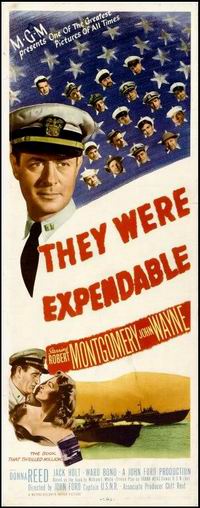
In December of 1941, Lt. John Brickley (Robert Montgomery) commands a squadron of Navy PT boats, based in the Philippines.  Brickley is convinced that the small and agile PT Boats could be used in combat but his superior officers disagree, even after viewing a demonstration of what they can do.  Brickley’s second-in-command, Rusty (John Wayne), is frustrated and feels that he will never see combat.  That changes when the Japanese attack Pearl Harbor and then turn their attention to the Philippines.  Brickley gets his chance to show what the PT boats can do but both he and his men must also deal with the terrible risks that come with combat.  Brickley and his men have been set up to fight a losing battle, only hoping to slow down the inevitable Japanese onslaught, because both they and their boats are considered to be expendable.  The hot-headed Rusty learns humility when he’s sidelined by blood poisoning and he also falls in love with a nurse, Sandy (Donna Reed).  However, the war doesn’t care about love or any other plans that its participants may have.  With the invasion of the Philippines inevitable, it just becomes a question of who will be sent with MacArthur to Australia and who will remain behind.

One of John Ford’s best films, They Were Expendable is a tribute to the U.S. Navy and also a realistic look at the realities of combat.  The movie features Ford’s trademark sentimentality and moments of humors but it also doesn’t deny that most of the characters who are left behind at the end of the movie will not survive the Japanese invasion.  Even “Dad’ Knowland (Russell Simpson), the fatherly owner of a local shipyard who does repair work on the PT boats, knows that he’s expendable.  He resolves to meet his fate with a rifle in hand and a jug of whiskey at his feet.  Rusty, who starts out thirty for combat, comes to learn the truth about war.  Ford was one of the many Hollywood directors who was recruited to film documentaries during World War II and he brings a documentarian’s touch to the scenes of combat.

Robert Montgomery had previously volunteered in France and the United Kingdom, fighting the Axis Powers before America officially entered the war.  After the war began, he entered the Navy and he was a lieutenant commander when he appeared in They Were Expendable.  Montgomery brought a hardened authenticity to the role of Brickley.  (Montgomery also reportedly directed a few scenes when Ford was sidelined with a broken leg.)  John Wayne is equally good in the role of the hot-headed Rusty, who learns the truth about combat and what it means to be expendable.  The cast is full of familiar faces, many of whom were members of the John Ford stock company.  Keep an eye out for Ward Bond, Cameron Mitchell, Leon Ames, Jack Holt, and Donald Curtis.

They Were Expendable is one of the best of the World War II movies.  It’s a worthy film for Memorial Day and any other day.

I review SPACE COWBOYS (2000) – starring Clint Eastwood, Tommy Lee Jones, Donald Sutherland and James Garner!


Here at The Shattered Lens, we’re definitely celebrating Clint Eastwood’s May 31st birthday. As part of that celebration, I decided to revisit his 2000 film, SPACE COWBOYS. 

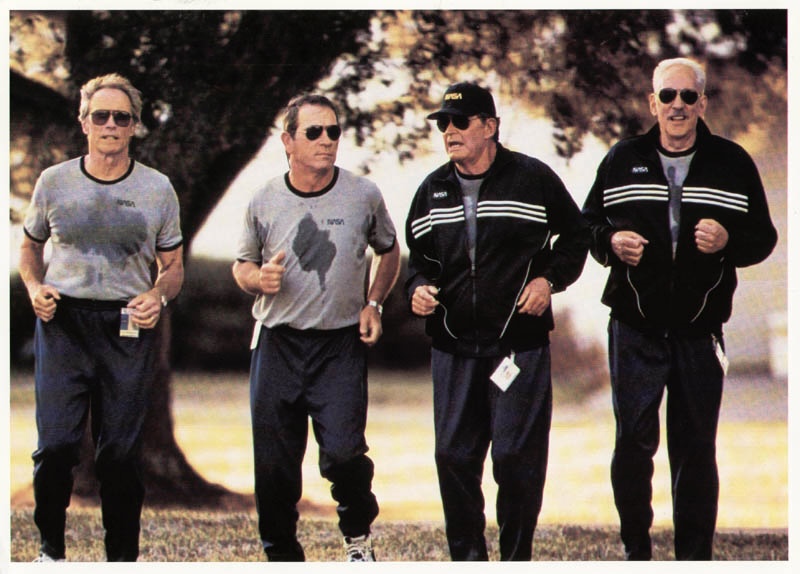
SPACE COWBOYS opens in 1958 on the day that Air Force Test Pilot Frank Corvin (Clint Eastwood) and his team of Hawk Hawkins (Tommy Lee Jones), Jerry O’Neill (Donald Sutherland), and Tank Sullivan (James Garner) find out that their test program is being shutdown due to the formation of NASA. Their dreams of someday making it to space are crushed, and to make it worse, they were stabbed in the back by their leader Bob Gerson (James Cromwell) and not invited to be part of NASA’s new testing program. Fast forward to the present time, where a Soviet communications satellite seems to be unresponsive and NASA is working with Russian General Vostov (Rade Serbedzija) to figure out how to keep it from crashing back to Earth. The satellite is a relic of the Cold War that somehow ended up with a guidance system on board that’s so old that it was designed by Frank, and the young folks don’t know how to work with it. And to complicate things even further, the guidance system can only be fixed on site, which means in space. So it seems that NASA finally needs Frank after all this time, and he’ll only agree to help if he’s able to bring his old team on board. Their old nemesis Bob, the project’s manager at NASA, reluctantly agrees. We see that he’s still the same bastard he’s always been as he and General Vostov are holding back critical information about the cargo of the satellite. So let the training and preparation for the mission begin! 

The premise of SPACE COWBOYS may not be very realistic, but I think it’s one hell of a fun movie, especially during its first half. I really enjoy watching this amazing cast of veteran actors do their thing. Of course they get the cool walk into NASA headquarters wearing sunglasses and leather jackets, while N’ Sync’s “Space Cowboy” plays over the soundtrack. Clint Eastwood plays the character he has perfected over his career, that of the tough, grizzled leader with a dry sense of humor. Tommy Lee Jones is the fearless hotshot who has never been good at following orders, but has the kind of talent that everyone wishes they had. Jones is actually by far the youngest of the primary cast, a full 16 years younger than Eastwood. Donald Sutherland gets some of the best laughs as the ladies man of the team. The scene where he answers Jay Leno’s question about his reputation as a lothario made me laugh out loud! James Garner’s character became a Baptist minister after his days with the Air Force and prays often for the group. He’s good here, but his character is the least memorable. With their mission labeled “The Ripe Stuff” by the media, watching these great older actors go through their training, and deal with their much younger counterparts and the NASA brass, is a joy. I also want to shout out William Devane as the NASA flight director for the mission. He has a couple of really strong scenes. 

The legendary cast of this film can’t help but give a seasoned moviegoer like me a warm sense of nostalgia based on their amazing body of work. I remember introducing KELLY’S HEROES to my son when he was a boy. He watched my DVD over and over again. Seeing Eastwood and Sutherland together here brought those memories back. One of my very favorite revenge films is ROLLING THUNDER with William Devane and Tommy Lee Jones. Seeing them together here helps me remember just how great they are in that badass classic. Heck, Garner’s character name of “Tank” Sullivan takes me back to one of the very first movies our family rented when we got our VCR in the mid-80’s! Do y’all remember Garner’s film TANK from 1984? I certainly do! 

I will admit that once the crew takes off and begins the actual mission, which comprises about the last 45 minutes of the film, the entertainment level goes down a couple of notches for me. The technical aspects of completing the mission are not as interesting to me as the character interplay in the earlier portions of the film. With that said, there are still some exciting moments to be had, including the nailbiter of a landing at the end. 

I enjoyed revisiting SPACE COWBOYS after quite a few years. This movie is ultimately a crowd pleaser, and for me, it does its job well. Enjoy the trailer below: