Tonight was the season finale of Game of Thrones season 4. It was another great piece of storytelling that managed to juggle several subplots and giving each one their own time to shine.
The latest “Guilty Pleasure” is the 1980 epically mind-numbing fantasy film Hawk the Slayer starring the great Jack Palance in the the villainous role of Voltan the evil elder brother to the film’s title character, Hawk the Slayer. This film is in the other side of the quality spectrum of tonight’s Game of Thrones season finale.
Hawk the Slayer was part of the 80’s flood of sword and sorcery films that included such titles as Conan the Barbarian, Beastmaster and Ladyhawke. To say that this film was bad would be an understatement. Yet, I’m quite drawn to it whenever I see it on TV. In fact, it was on syndication that I first saw this when I was just a wee lad. I might have been around 9 or 10 when I came across it halfway through.
Maybe it was the fact that I was just discovering Advanced Dungeons & Dragons, but this film spoke to me. It had that timeless story of brother against brother. The evil tyrant with legions of evil ne’er do wells against a small band of class-specific heroes and rogues. I mean this had it all. We had the hero of the film who I would probably place in the swordsman class. Then we had Ranulf with his repeating crossbow that would be the band’s rogue. Of course, there’s Gort the giant with his mighty hammer and Baldin the dwarf skilled in the art of the whip. But the one character that really shouted RPG for me throughout this film was Crow the Elf who could fire his bow as fast as any machine gun I’ve ever seen.
I think it’s very awfulness is why I keep returning to it whenever I see it on TV. The acting is atrocious with special effects that even in 1980 would be seen as laughable. The characters themselves were so one-note that one wonders if the person who wrote the screenplay was actually a trained monkey. Yet, the film was fun for all those reasons. It’s one of those titles that one would express as being so bad it’s good. Even now, with childhood several decades past, I still enjoy watching Hawk the Slayer and always wonder when they plan to get the sequel set-up and made.
Oh, the synth-heavy disco-fantasy-western soundtrack was also something to behold.
Hi there and good morning! Well, in case you don’t have a calendar nearby, today is June 13th! Today is also Friday, which means that it’s the luckiest day of the year! Not only is this the day when teenagers traditionally gather in the woods, smoke weed, have unprotected sex, and go skinny dipping but, for this year only, there is also going to be a full moon tonight!
(Okay, it’s not for this year only. In 2048, there will be another full moon on Friday the 13th…)
Now, I know what you’re thinking! Today would be the perfect day for us to review all of the films in the Friday the 13th film franchise!
Well, guess what?
We’ve already done it!
Back when this site was much younger and we were lucky to get even a 1,000 views a week, I reviewed every single Friday the 13th.
In honor tonight’s full moon, here are links to those reviews for those of you who might have missed them the first time around:
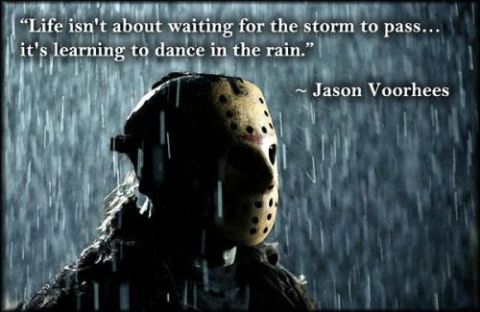
Friday the 13th, in which Mrs. Voorhees loses her head, Kevin Bacon gets an arrow through the neck, and I am forced to consider whether or not I would actually survive a horror movie.
Is it just me, or is this year’s summer blockbuster season incredibly front-loaded? Not only did it get off to a ridiculously early start in April with the release of Captain America : The Winter Soldier, but it seems that, with the notable exception of Dawn Of The Planet Of The Apes, which is slated for a July release, everything that I was interested in seeing came out prior to the Memorial Day weekend — which was, in years past, the time when Hollywood’s blockbuster onslaught usually began.
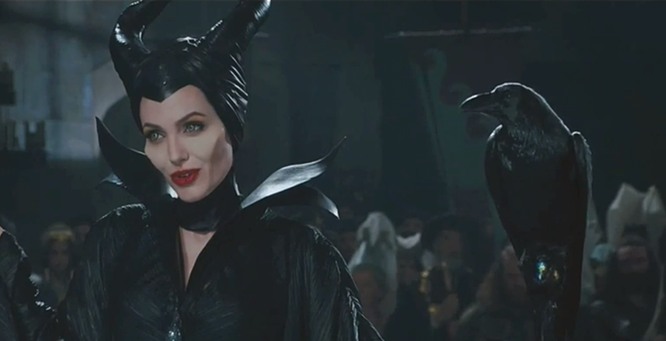
Oh well. I guess there’s still some stuff I have some sort of low-level semi-interest in hitting theaters, with Disney’s Maleficent being a prime example of what I’m talking about. I wasn’t “hyped” for it, per se, but on a rainy Saturday afternoon with nothing else going on, what the hell — it’ll do in a pinch. Anybody with a functioning neural cortex pretty much knows what they’re getting into with something like this — a purportedly “modern re-telling” of a classic fairy tale (in this case Sleeping Beauty) that’s also, perhaps paradoxically, billed as being “truer to the roots” of the story than the universally-known animated version. Maybe everything that’s old really is new again.
In any case, the pattern these kinds of thing inevitably follow was set fairly firmly by Snow White And The Huntsman a couple summers back, and with a live (well, okay, live plus lots of CGI) action version of Cinderella already in the pipeline, it looks like “modernized fairy tales” (that are, again, supposedly “closer” to the “source material”) is a full-blown trend in Tinseltown. At least until one flops spectacularly.
Maleficent is too precise, clinical, and by-the-numbers to be that first big flop, of course, as this is thoroughly audience-tested material from start to finish, and while that same uber-conservative approach definitely sucks any sort of life or individuality from the proceedings, it does ensure that Disney will almost certainly turn a healthy profit off this thing, even with a budget estimated in the neighborhood of $200 million. It is, for all intents and purposes, a can’t-miss investment, and that’s what it plays out as.
Which isn’t the same thing as me saying that Maleficent is actively bad — it’s just that it’s not particularly good, either. Oh, sure, Angelina Jolie is perfect in the title role (there’s already Oscar talk) and it really does feel like it’s a part she was born to play, and the CGI work is spectacular and breathtaking and jaw-dropping and all that, and yeah, Elle Fanning as Aurora ( that’s what we call her now, folks, not “Sleeping Beauty”) leads a very talented supporting case that also includes the likes of Imelda Staunton, Sharlto Copley, Juno Temple, and Brenton Thwaites, all of whom do good work, but it’s all in service to the most pedestrian, production-line cinematic engineering possible. First-time director Robert Stromberg, who hails from a CG effects background, most likely knows what he’s doing here, but he’s given so little room to maneuver that failure just simply isn’t an option. This is a film that literally could have been directed by nearly anyone with at least some sort of cinematic background and turned out okay.
And maybe that’s what bugged me about it the most : just that sort of hyper-aggressive okay-ness. Given the opportunity to completely re-set the table, the Disney execs who originated and then green-lit this idea were more than happy to just tinker around the edges and “update” things without actually changing them. We all know the story, and while we’re admittedly getting a heavily-padded version of it told from the perspective of the “bad guy,” the fact remains that at the end of the day, all we’re left with is a more expensive, glitzier take on what we’ve already seen.
Maybe I missed a bit by just seeing this in 2-D, but let’s face it : any flick that leans upon the crutches of 3-D,Imax, and all that crap to “get the most from it” is one that’s entirely reliant upon bells and whistles — and while those bells and whistles are, no two ways about it, most impressive in this case, there’s just no substitute for a genuinely involving script, and Maleficent doesn’t have one. Mind you, it doesn’t have a bad script, either, it just — has a script. And the job of that script is to provide some sort of plausible set-up for one admittedly magnificent effects sequence after another. It’s cool and all for about a half hour, but after two full hours of Stromberg and company having to top themselves every five to ten minutes, you just end up feeling sort of worn down by events rather than invested in them.
Still, I suspect that Maleficent is going to prove to be pretty well “review-proof” and enjoy a healthy run in theaters before going on to do equal, if not even greater, business on home video. This is a film that’s precisely engineered to do exactly what it’s supposed to and nothing less (or more). Kinda like a robot. And it’s that robotic, auto-pilot, cruise control sensation that prevents this movie from being at all memorable — for good or ill.
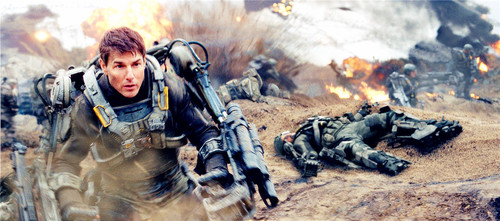
‘Edge of Tomorrow’, the new sci-fi action blockbuster by Doug Liman (‘The Bourne Identity’, ‘Mr. & Mrs. Smith’), mashes together the time-loop story concept with an alien invasion action flick with incredibly great results. What could have been clichéd and repetitive instead feels fresh and streamed lined in a way that I think will surprise most.
The film stars Tom Cruise as Major William Cage, a man with a very limited military background who essentially made his way through the ranks with his public relations skills. In the film’s opening we see briefly, through news clips, that the world has been invaded by an alien race known as “Mimics” who have taken control of much of Europe. They are quick and intelligent and seem to evolve to always be one step ahead of the human forces trying to keep them out of Asia, Africa and the United States.
When the UDF (United Defense Force), a joint military unit that utilizes mechanical exoskeletons to create “super soldiers”, decides to go on the offensive with a surprise assault on Mimic forces in Germany, Cage inadvertently finds himself on the front lines, and it is a slaughter. The Mimics again appear to have anticipated the surprise assault. Cage is killed quickly, but in doing so manages to take out a Mimic at the same time. Seconds after his death he awakens to find himself back on base as the whole day starts over again.
More confused and afraid than before he relives the day, dying once again…only to wake back up on base. This repeats and repeats and Cage is clueless as to why. That is until he manages to save Rita Vrataski, a special forces solider who has become the face of the UDF movement after she managed to lead their only victory.
Rita realizes what Cage is experiencing and tells him to find her the next time his day resets, which he does. She explains to him that the Mimics have the ability to control time, to reset the day to continually evolve to get the upper hand. Cage now possesses this ability, and he must use it to find the source of the Mimics power and end the invasion once and for all. In order to do so Cage must continue to live and die, repeating the day over and over again, until he is skilled enough to make his way through the Mimic forces.
What makes ‘Edge of Tomorrow’ so much more effective and so much better than many similar films is its confidence in its story right up to the very last frame. It never once sways from its initial concept or goes out of its way to manipulate the audience’s emotions. Instead, it sticks to its guns with a tone and ending that make logical sense considering the progression and emotions of the story. I think this is mainly due to the fact that everyone involved is on board. They give it there all for great laughs, kick ass action sequences, and even an emotional undertone that makes you actually want to see these characters succeed. The actors are clearly having fun, while also making sure the seriousness of the film’s themes are not lost below all the mayhem.
This makes ‘Edge of Tomorrow’ one of those rare blockbusters that have an emotional weight making it more than just eye candy. That emotion is most prominent when we see Cage bear the burden of witnessing those around him die over and over again. It weighs heavily on him, especially as he begins to realize that he might not be able to both save those he cares about and accomplish his mission to save humanity. What could have just been mindless fun instead becomes an existential tale of human perseverance, sacrifice and courage against seemingly impossible odds. Through Cage we begin to care for those around him as well. Honestly, I cannot remember the last time a film introduced a group of rather one-dimensional characters, especially a cliché band of roughneck soldiers, and by the third act I was actually caring if they lived or died.
That said, this isn’t some “downer”. There are some BIG laughs to be had. Seeing Cage early in the film being killed, in all sorts of fashions, is a blast. The action sequences are fast paced and exciting; and there are even a few scares here and there to keep it all fun and thrilling.
What’s even better is ‘Edge of Tomorrow’ doesn’t beat you over the head with these themes or emotions. They stay just below the surface and naturally flow through the story and characters. Because of this I really have to applaud Doug Liman for pulling this all off. It is no easy feat to create a time looping sci-fi alien invasion action film without being repetitive or shallow; or worse, being so convoluted that everything except the action gets lost along the way, which was my biggest worry going in.
I also have to applaud its two stars. Tom Cruise is great as Major Cage, and this is easily my favorite film and performance of his since ‘Minority Report’. He gets a bad rap for his personal life, but at the end of the day he is still an actor with great talent and star power. He does a fantastic job here in showing the development – verbally, emotionally and physically – of Cage as he goes from a cowardly officer, visibly weighed down by the suit and scared of a pin drop in the films opening – to the courageous, skilled and determined soldier in the third act who is the world’s only hope.
That being said, the real star of the film, as far as I am concerned, was Emily Blunt who plays the kickass Rita Vrataski, aka The Angel of Verdun, aka The Full Metal Bitch! …and boy does she do those nicknames justice! (see below) Her goal is to win no matter the costs, because she has gone through hell and back and it has taken its toll, and Blunt expresses this effortlessly. Even better is the fact that she isn’t just a female companion for our hero to swoon over.
At this point it is probably clear that I enjoyed ‘Edge of Tomorrow’, but “enjoyed” would be an understatement. I LOVED it. This is easily my favorite blockbuster so far this summer, and quite possibly my favorite one in the last few years. We have been swamped by so many sequels and remakes that it is truly a joy to watch something that feels so fresh. It is the sort of film I can see myself watching again and again and again. So, if you are in the mood for an entertaining and creative sci-fi flick, with action, laughs, a few scares and an emotional weight behind it all, then this is a must see.
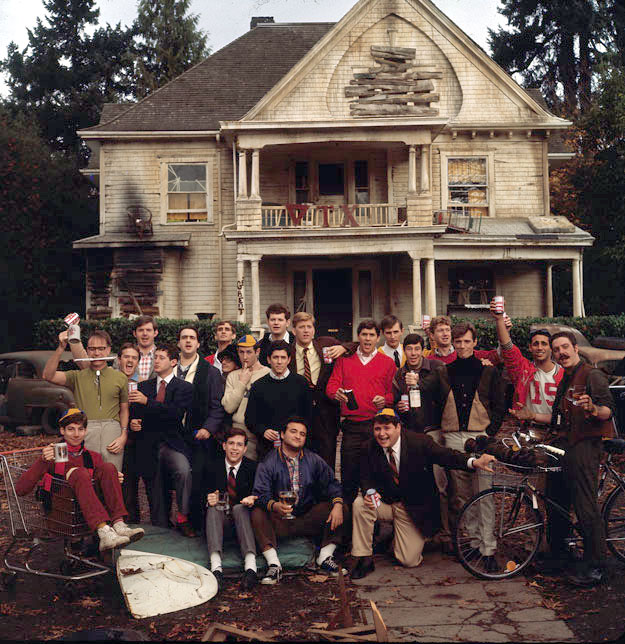
Well, all good things must come to an end and that includes my cinematic trip back to college. Now, just in case you’re feeling that my trip back was a bit too overly critical and snarky, allow me to conclude things with a scene that I truly love. This is a scene that so epitomizes everything that’s great about college. The film takes places in the 60s and was filmed in the 70s but National Lampoon’s Animal House is a truly a timeless film.
At this point, during my cinematic journey back to college, I paused and considered the films that I had already watched. I had watched three films about campus political activists and one film about a college tennis team and the results had been mixed. How, I wondered, could it be that watching none of these films, with the possible exception of R.P.M., was as much fun as actually attending college?
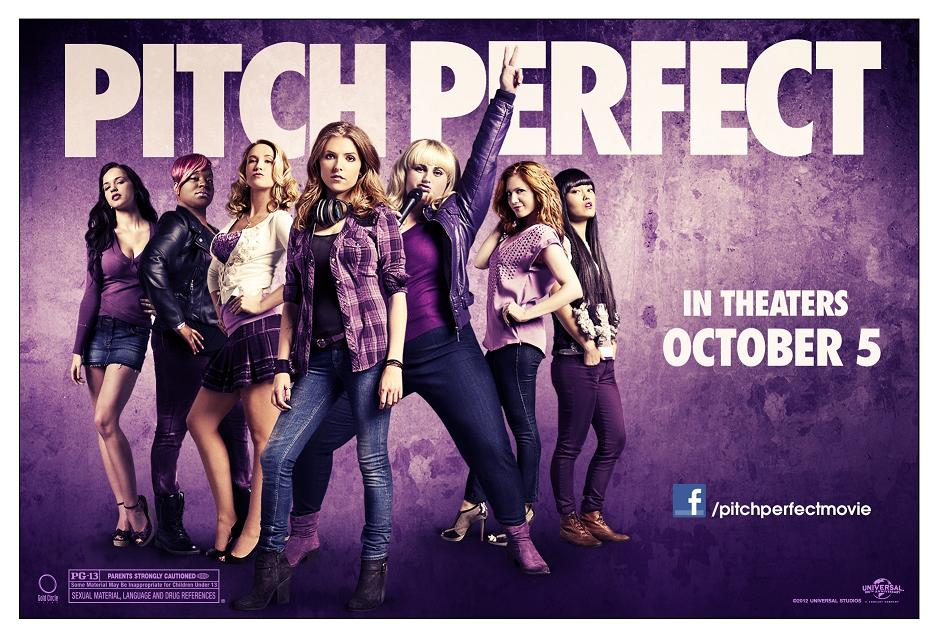
And then it occurred to me that a huge part of the problem was that I really couldn’t relate to any of the characters in the previous films I had watched. Political activists bore me to tears and, for that matter, so do jocks. So, for my next college film, I decided to take care of that problem by re-watching a movie that I actually could relate to — 2012’s Pitch Perfect.
I was recently shocked when a male acquaintance of mine told me that he loved Pitch Perfect. Don’t get me wrong — I love Pitch Perfect, too. But it’s never really struck me as a film that guys would like.
“Really?” I said, “I love Pitch Perfect! What was your favorite part?”
“The shower,” he said.
And suddenly, it all made sense.
In Pitch Perfect, alienated college student Beca (Anna Kendrick) is taking a shower at her dorm and, thinking she’s alone, she starts singing. Earlier in the day, she had turned down a chance to audition for an all girls a capella group, saying that she really couldn’t sing. However, as this scene shows, she actually has a wonderful voice.
However, one of the members of the a capella group — Chloe (Brittany Show) — is over in the next shower stall and, as soon as she overhears Beca singing, she confronts her with, “I knew you could sing!” and she and the reluctant Beca end up singing Titanium together.
(And, of course, they’re both naked while doing it, which I imagine is the reason why, whenever I mention Pitch Perfect around any guy, the shower scene always seems to come up. Of course, none of them ever mentions my favorite part of the scene, which is when the cute guy who was taking a shower with Chloe pops up and tells the girls that they sound really good.)
Even though I’ve never been invited to be a member of an a capella singing group, I could relate to that scene, if just because I also sing in the shower and, during my first year at college, I lived in a dorm with a communal shower as well. Every time I took a shower, I would sing — not to be obnoxious but just because that’s what I had always done and, when I was living at home, nobody ever seemed to have a problem with me singing.
And, like anyone who has ever spontaneously broke out into song, I guess there was always a part of me that hoped it would inspire a complete stranger to tell me how talented I was. I didn’t necessarily want anyone to interrupt my shower but there was a part of me that always hoped someone would say, “I knew you could sing!”
So, one morning, I was down in the Bruce Hall cafeteria and I overheard two girls who lived on the same wing as me talking.
“Oh my God,” I heard one of them say, “did you hear her singing in the shower this morning?”
“Oh my God,” the other replied, “she has got the worst voice I have ever heard. I’m just like, ‘Bitch, will you shut the fuck up?'”
Now, I’d like to say that I stood up for myself and told both of them off, because that’s what would have happened in a movie like Pitch Perfect. Unfortunately, however, I wasn’t in a movie. I was in the real world, I was 18, I was insecure, and I was living away from home for the first time. So, instead of turning around and challenging those two mean girls to a sing-off, I went back to my room and cried. Then I got mad and said “Fuck them!” Then I cried some more. And this went on for a while.
Finally, my roommate Kim got tired of watching me pace back and forth, alternatively crying and cursing. Standing in front of me, she said, “Lisa, do you like to sing?”
“Yes,” I replied, in between sobs, “and how dare they–”
“If you like singing, then sing!”
To this day, those six words make up some of the best advice I’ve ever been given. As soon as I heard them, I felt better. And yes, I did take Kim’s advice. Every time I took a shower, I would sing. Of course now, I made it a point to sing as loudly and as with much twang in my voice as possible. If I couldn’t be the best, then I was happily going to embrace being the worst. The important thing is that I enjoyed singing so that was what I was going to do and if they didn’t like it, that was their problem.
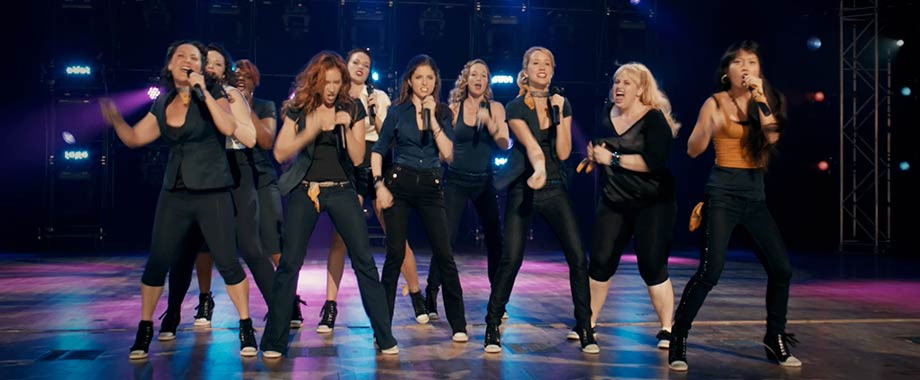
But anyway, this review is supposed to be about Pitch Perfect and what can I say other than it’s one of my favorite films of all time. The plot is predictable — of course, Beca joins the a capella group and of course, she, Fat Amy (played by Rebel Wilson, who is like a hilarious force of nature in this film), and a bunch of other unlikely singers go on to compete and win. And yes, in the end, Beca also gets a really cute boyfriend.
Pitch Perfect really is pretty much Bring It On with a capella replacing cheerleading. But, who cares? The music is great, the cast is full of good actors (and Elizabeth Banks has a hilarious cameo as a commentator), and it’s just a very likeable and enjoyable movie. If you’re not happy after watching Pitch Perfect, then there’s probably no hope for you.
In other words, it’s a movie that makes me want to sing.
Having already watched 3 campus protests from 1970, I decided that maybe I should watch something a little bit less heavy-handed for my next college film. But I knew that, in order to find a college film that would have nothing serious on its mind, I would have to find a film that was made after the 70s.
That’s what led to me getting out my Too Cool For School DVD boxset and watching Jocks, a “comedy” from 1987. As you can probably guess from the sarcastic use of quotation marks, I probably would have been better off staying in the 70s.
Christopher Lee (!) plays the President White, the strict president of L.A. College. President White is upset because the athletic department has failed to win a championship in over ten years so he gives Coach Bettlebom (played by veteran character actor R. G. Armstrong) an ultimatum: win a championship or lose his job. Bettlebom argues that the rest of the athletic department would be able to win if it wasn’t for the financial obligation of supporting the school’s tennis team. Bettlebom then tells tennis Coach Williams (played by Shaft himself, Richard Roundtree) that he’s canceling the tennis program and all of the tennis players are going to lose their scholarships. Williams responds by making a bet. If the tennis team wins the national championship, the tennis program will continue. And if they don’t, the team will cease to exist, Williams will be out of a job, and the members of the tennis team will all be forced to drop out of college and have their lives totally ruined…
Wait a minute.
That makes absolutely no sense.
What the Hell is Coach Williams thinking!?
That’s the sort of thinking that leads students to protest and occupy buildings and basically act like they’re extras in Getting Straight, Zabriskie Point, and R.P.M.
But anyway, let’s just move on and not worry about things like logic and narrative sense. It’s time to meet the tennis team!
There’s Tex (Adam Mills), who doesn’t have a Texas accent. Tex doesn’t really do much but he’s certainly in a lot of scenes.
There’s Andy (Stoney Jackson), the flamboyant black guy who freaks out his opponents by pretending to be gay, because this film was made in the 20th Century.
There’s Chito (Trinidad Silva), who speaks Spanish and dramatically crosses himself before playing each set.
There’s Ripper (Donald Gibb), who has a thick beard, growls a lot, and appears to be in his 40s.
There’s Jeff (Perry Lang), the nice guy. In a film full of unlikable characters, Jeff seems to be, at the very least, a decent guy. Plus, he has a fairly funny drunk scene and, when you’re watching a film like Jocks, you come to appreciate fairly funny.
And then there’s The Kid (Scott Strader), who apparently doesn’t have a name. Seriously, even President White calls him “The Kid.” As you might guess about someone with a permanent nickname, The Kid is a master tennis player.
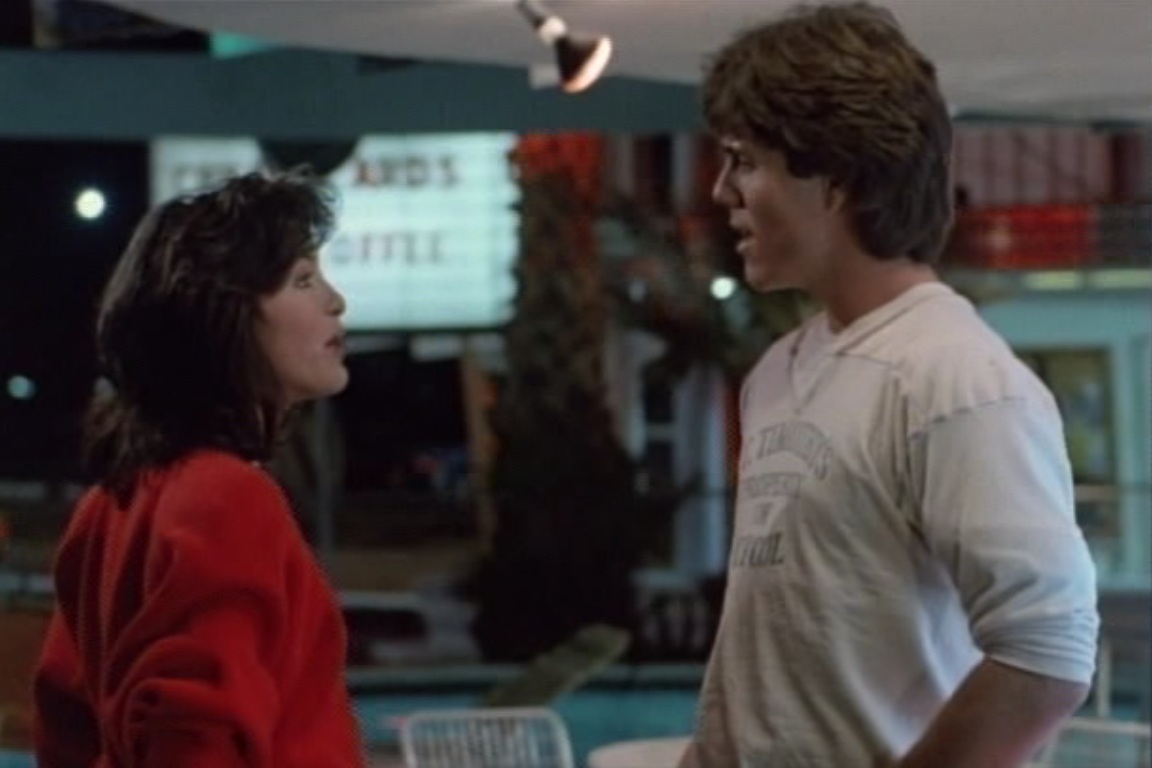
Anyway, the team goes to the championships in Las Vegas where they engage in the usual drunken hijinks and basically act like a bunch of jerks. They also play some rather boring tennis games. The Kid falls for a tennis groupie played by future Law & Order: SVU star Mariska Hargitay. Eventually, it all comes down to whether or not the team can beat Dallas Tech and, as a proud Texas girl, I’m not ashamed to admit that I was saying, “Go Dallas!” the entire time.
So, is Jocks worth watching?
If you’re a Christopher Lee fan, maybe. But, honestly, I think Sir Christopher would forgive you if you skipped this one.
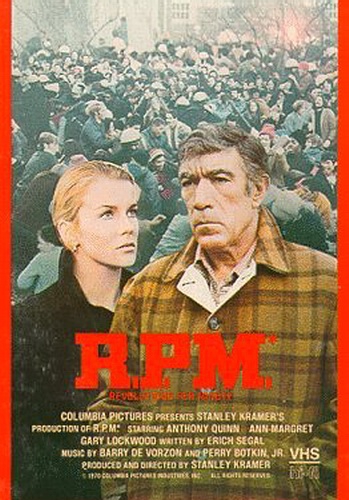
For my next return-to-college film, I ended up watching R.P.M. Like both Getting Straight and Zabriskie Point, R.P.M. was released in 1970 and deals with political unrest on campus.
Directed by Stanley Kramer (who also gave us such respectable and middlebrow liberal films asGuess Who’s Coming To Dinner and Judgment at Nuremberg),R.P.M. takes place at prestigious college. Students radicals led by Rossiter (Gary Lockwood) and Dempsey (Paul Winfield) have taken over a building on campus. When the university’s president goes to confront the students, one of them yells out, “Buzz off!” Well, you know how sensitive college presidents are. He quickly resigns his post and the students demand that he be replaced either by Che Guevara, Eldridge Cleaver, or Paco Perez.
Unfortunately, Guevara is dead and Cleaver is in Algeria. Fortunately, left-wing sociology professor Paco Perez (Anthony Quinn) is available and he just happens to teach on campus! Perez is named interim president of the college. Now, Perez has to bring peace to the campus, despite the fact that the protestors now see him as a sell-out because he accepted the position. Perez also has to deal with nonstop snarky comments from his girlfriend, a grad student named Rhoda (played by Ann-Margaret).
Especially when compared to Getting Straight and Zabriskie Point, R.P.M. is something of a forgotten film. I haven’t found many reviews online and the majority of them mostly seem to focus on the fact that the film is dated and that director Stanley Kramer’s portrayal of the student protestors is incredibly negative. And, in many ways, those criticisms are perfectly valid. And yet, with all that in mind, I still loved R.P.M. Of the three 1970 campus protest films that I watched last weekend, R.P.M. was my personal favorite.
Why do I so love R.P.M?
Well, let’s check out some of the dialogue.
When Paco first comes to see the protestors, one girl literally sings, “Look what the revolution dragged in!”
Later, another demonstrator is heard to philosophically ask, “Why is the good ass never radical and the radical ass never good?” (And that’s certainly a question that was asked by everyone who drove by Occupy Dallas back in 2011.)
About the college administration, one girl announces, “They’ve got empty scrotes!”
When Paco tells Dempsey that the college is finally going to hire a black admissions offer, Dempsey replies, “How black? Is this cat an oreo cookie? Is he related to my uncle Tom?”
When Paco asks how long it will take for the protestors to peacefully leave the building, one of them loudly announces, “It would take to the 12th of never!” Of course, everyone applauds.
And that’s not counting all of the times that random protestors say, “Right on!”
But even better than listening to the protestors is listening to Paco and Rhoda discuss their relationship.
When Rhoda tells Paco that she knows the real him because she sees him without his pajamas, Paco replies, “That’s not reality. That’s flab.” With a world-weary sigh, Rhoda replies, “Flab is reality.”
When Paco complains about Rhoda’s cooking, she sensibly tells him, “Next semester, hump a home economics major.” Paco replies, “I did. The food is great but the talk is lousy.”
After being taunted by a student, Paco asks Rhoda, “Did you tell the kids I was a lousy lay?” Rhoda laughs and replies, “I may have thought it but I never said it!”
Finally, in one heart-warming scene, Paco informs Rhoda that, “The whole campus calls you Paco’s Pillow.”
Seriously, how can you not love a movie with dialogue this overwritten and over-the-top? It’s obvious the Kramer and screenwriter Erich Segal were desperate to sound hip and contemporary and, as a result, nobody speaks like a normal person. Instead, listening to R.P.M. is a bit like listening to a party to which every 60s stereotype has been invited.
And yet, it’s not just the dated dialogue that causes me to love R.P.M. As opposed to the histrionic Getting Straight and the artistically detached Zabriskie Point, R.P.M. is an attempt to seriously deal with the issue of student protest. For every three moments that ring false, there’s one that works and that’s a lot more than most films about campus unrest can say. Anthony Quinn gives a good performance as a man who doesn’t realize quite how complacent he has become. He and Gary Lockwood have a wonderfully tense scene together where they sincerely and intelligent debate their different worldviews. It’s the best scene in the film and one that is so well-done that it excuses any previous missteps.
R.P.M. occasionally shows up on TCM. Keep an eye out for it.
Now, you may be thinking that after reading my reviews of Getting Straight and Zabriskie Point, that we here at the Shattered Lens are encouraging you to overthrow the United States. Nothing could be further from the truth! To quote Michael Scott, nobody here is subversive. Everyone is thoroughly versive. (Michael Scott said that once, didn’t he?)
Anyway, just in case anyone is having any dangerous thoughts, here’s a 30-minute short film from 1972. In Brink of Disaster, Johnny, a college students who sympathizes with the n0-goodniks of the world, breaks into the library so that he cans study late at night and protect it from rampaging campus radicals.
(Wait? What? That makes no sense but, then again, it was 1972…)
Anyway, as Johnny attempts to smoke and study, the ghost of his great-great-great-great grandfather, John Smith, materializes out of thin air and tells him everything that’s wrong with his generation. Johnny attempts to argue but he’s no match for his wiser ancestor.
“Don’t compare to the founding fathers to that riff raff!” John Smith exclaims at one point, “We want to worship God and they want to deny God!”
You tell him, John Smith!
Anyway, you know me. Whether I agree or disagree with the message, there’s nothing that I love more than an old school propaganda film. So, watch and enjoy Brink of Disaster and think twice before you try to overthrow the establishment because you might end up getting haunted by a condescending ghost.
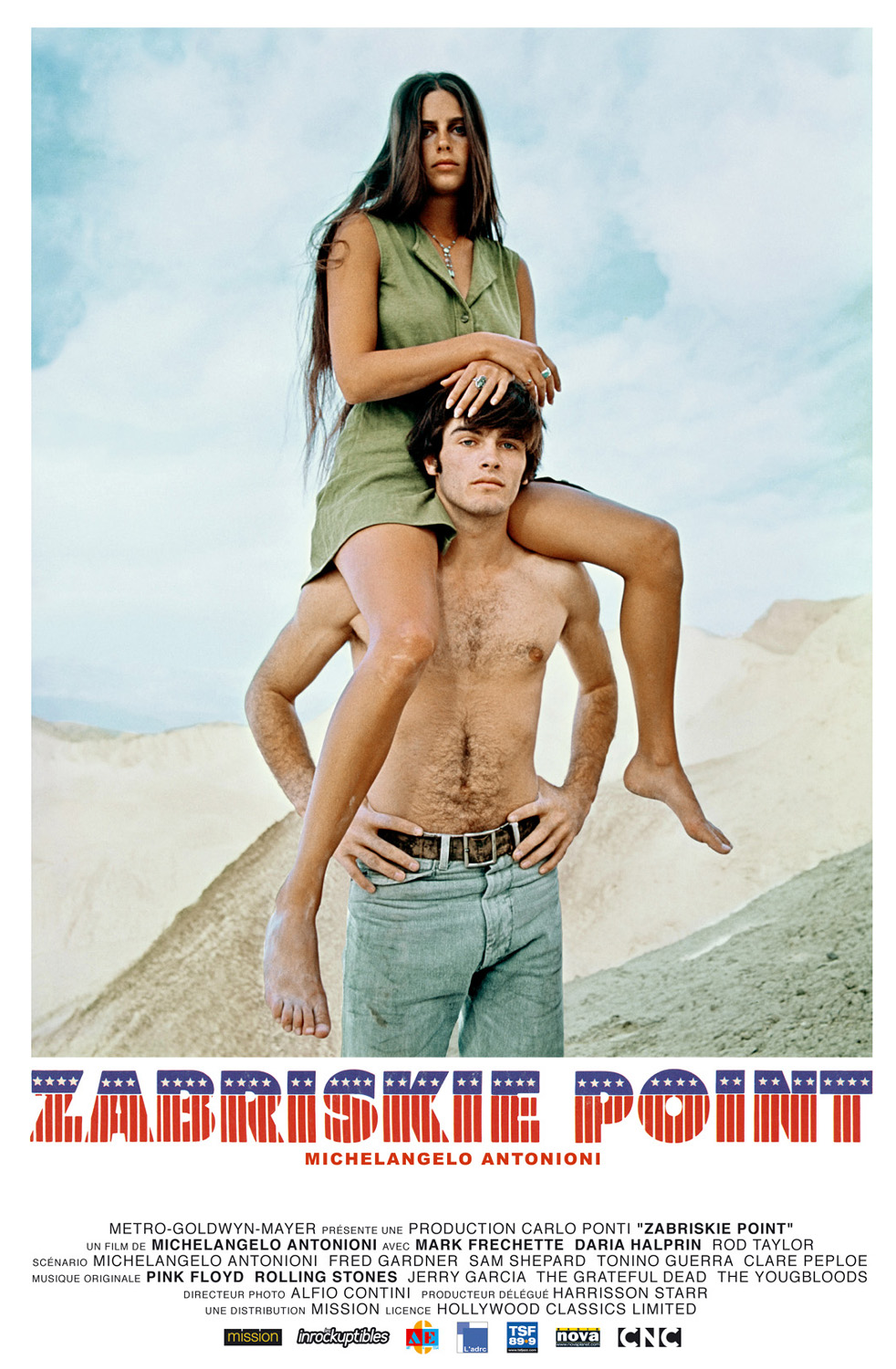
After watching Getting Straight, I decided to watch another student protest film from 1970, Michelangelo Antonioni’s Zabriskie Point. Much like Otto Preminger’s Hurry Sundown, Zabriskie Point is a film that frequently gets mentioned when film bloggers are trying to list the worst films of all time. Unlike Hurry Sundown, Zabriskie Point is not quite as terrible as some reviewers seem to think.
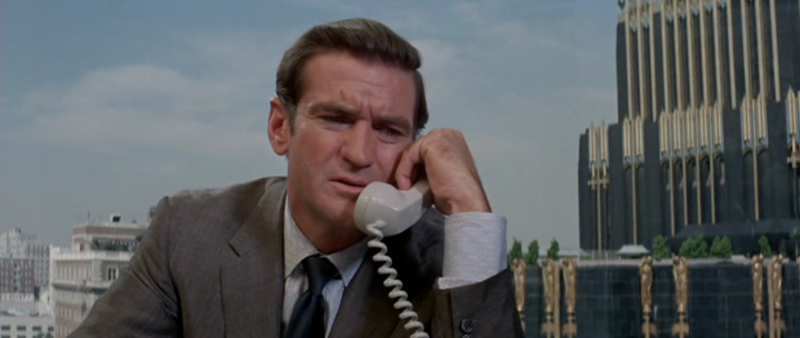
It’s probably a mistake to describe Zabriskie Point as being as a college film. Only one of the main characters — Mark (played by Mark Frechette) — is a college student and he drops out early in the film. The film’s other main character — Daria (played by Daria Halperin) — is a secretary who may (or may not) be the mistress of venal real estate developer Lee Allen (played by Rod Taylor, the sole professional actor out of the starring cast). However, the film does start on a college campus, it deals with political protest (which was apparently the only thing happening on campuses back in 1970), and the movie’s message and style was obviously meant to appeal to campus radicals.
Mark Frechette, star of Zabriskie Point
Zabriskie Point opens with the type of lengthy scene that will be familiar to anyone familiar with counter-culture filmmaking. A bunch of very serious college students sit in a conference room and have a very long conversation about how to best bring about the revolution. All of the white, middle class students argue for petitions, manifestos, and civil disobedience. A black woman with a gigantic afro replies that all of the white students are phonies who aren’t truly committed to the revolution. Some of the students cheer. Some of the students boo. The meeting goes on for an eternity and, for the most part, it served to remind me of why I could never stand hanging out with any of the student activists back at the University of North Texas.
Yet, at the same time, it’s an effective scene because it’s one of the rare moments in the film that feels authentic. For the most part, Antonioni cast this film with nonactors. (Though apparently — just like in Getting Straight — a young Harrison Ford can be seen in the background of some of the scenes.) Watching the opening, I got the feeling that I was experiencing what a political gathering in the 70s was truly like. And, by the end of it, I was happy to have been born long after the 70s were over.
The scene ends when a student named Mark announces that he’s prepared to die for the revolution and then walks out of the meeting. Mark proceeds to drop out of school, buy a lot of guns, and set up an apartment safe house. When he gets arrested at a protest, Mark gives his name as “Karl Marx,” which the booking officer proceeds to spell as “Carl Marx.” Eventually, Mark ends up shooting a police officer. (Or maybe he didn’t — the film is deliberately vague about whether Mark actually fired his gun or if the officer was shot by somebody else.) He then steals an airplane, flies out to the desert, and meets Daria.
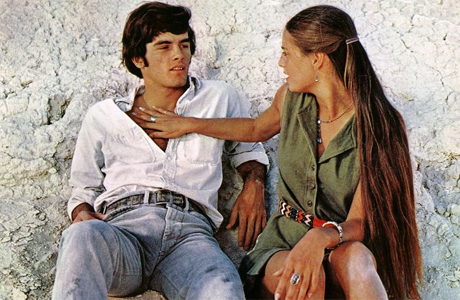
Mark and Daria
In the film’s most famous scene, Daria and Mark walk around the desert and talk about — well, nothing in particular. One of the most frequent criticisms of Zabriskie Point is that neither Mark nor Daria were particularly good actors and that’s certainly true. However, that’s only a problem if you assume that Antonioni means for you to view these characters as individuals. As becomes clear during their desert walk, Mark and Daria are meant to be archetypes. Mark Frechette and Daria Halperin may have been terrible actors but they had the right look and they had the right attitude. You may not care about them as individuals but Mark and Daria work perfectly as symbols for alienation. Mark and Daria stand in for everyone who has reached the point where they have to decide whether to join the establishment (represented by Lee Allen and the university) or whether to overthrow it. In the scenes in the desert, Antonioni presents Mark and Daria less as being people and more as being parts of the American landscape, as permanent as the mountains that surround them.
Mark and Daria end up making love in the middle of the desert and, as they have sex, they are suddenly surrounded by hundreds of other hippie couples having sex and it all becomes one big orgy in the middle of Death Valley. And yes, this scene is totally over-the-top, pretentious, and ludicrous but yet, how can you condemn something so gloriously silly?
Orgy in the desert
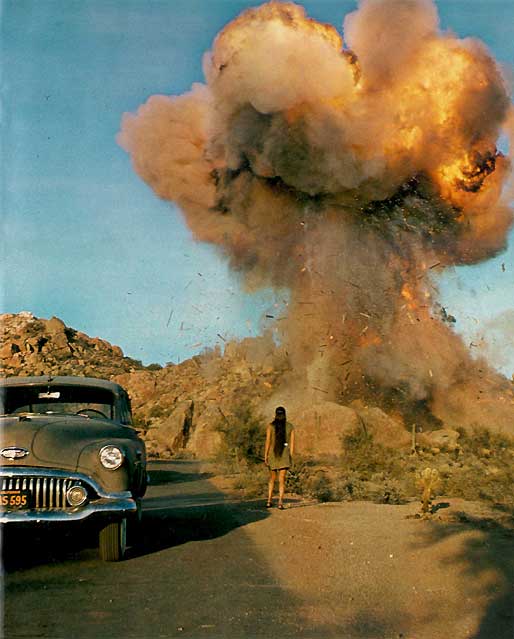
Anyway, after the orgy, Mark and Daria paint his plane and then go their separate ways. Mark tries to return the plane. Daria stares at a house in the mountains and imagines it exploding over and over again.
Zabriskie Point is an interesting misfire. Michelangelo Antonioni (who is best known for directing the classic Blow-Up) originally intended for the film to end with an airplane skywriting “Fuck you, America.” However, MGM made him cut that from the film. That Antonioni meant for this film to be an attack on America is pretty obvious. Antonioni, after all, was a committed Marxist and the film goes out of its way to try to present businessman Lee Allen as being the epitome of capitalist evil. (Unfortunately, Rod Taylor is such a likable actor that I know, if I had to make a choice between the two, I’d rather spend a day with Lee Allen than Mark Frechette).
Rod Taylor as Lee Allen
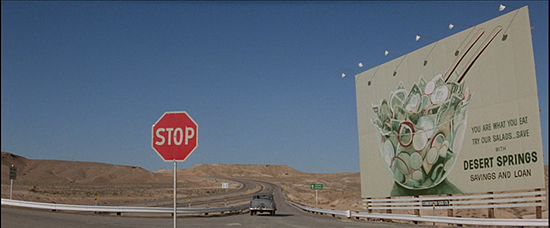
However, at the same time, Antonioni appears to have been fascinated and confused by the material excesses of America as well. In the first half of the film, as Mark walks through the small town setting, the camera lingers on the billboards that dot the landscape and, as a result, those billboards take on a beauty of their very own. Even when Daria is walking through Lee Allen’s mansion, the camera can’t help but linger over every opulent detail, almost as if it can’t decide whether it is seeking to condemn or celebrate. In many ways, Zabriskie Point reminded me of Lars Von Trier’s Dogville. Both films attempts to condemn America just to end up accidentally celebrating it.
Celebrating America While Condemning It
Zabriskie Point may not be a good film but it’s an endlessly fascinating and visually beautiful one. If nothing else, it serves as a record of the time when it was made. And, as such, it deserves better than to be dismissed as one of the worst.