Lisa Goes Back To College: Getting Straight (dir by Richard Rush)


Am I too young to start feeling nostalgic for the past?

It’s been 6 years since I graduated from the University of North Texas and, as much as I enjoy officially being an adult and all that good stuff, I have to admit that there’s a part of me that misses being in college.  Even though I know that I will be returning to school to work on my master’s, there’s a part of me that really regrets that I’ll never again get to be an undergrad with the rest of my life in front of me.

Fortunately, I review movies so, whenever I start to feel nostalgic for the past, I can just watch and review a movie.  Last week, I was missing college.  So, I watched a few films about college.  The first film that I watched was from 1970 and it was called Getting Straight.
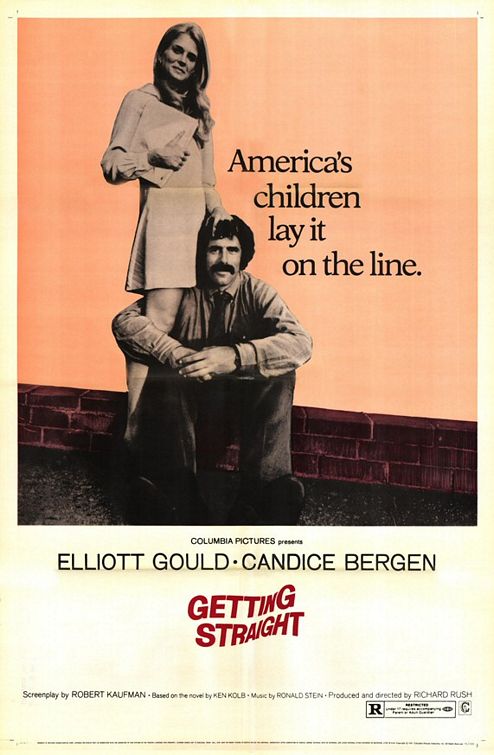
Getting Straight

One of the first things that you notice while watching Getting Straight is that director Richard Rush apparently made the decision to film nearly the entire movie in extreme close-ups.  When Nick, a spaced-out hippie played by Robert F. Lyons, steps into a room and starts laughing, the camera zooms in so close that you can practically see down the back of his throat.  When Jan (played by a very young Candice Bergen) breaks down into tears after getting beaten up at a political demonstration, the camera so obsessively lingers over her tear-stained face that the viewer is left with little choice but to consider just how terrible a performance Bergen is actually giving.  When Harrison Ford shows up in an early role, the camera zooms into his face, as if to force us to say, “Hey, that’s Harrison Ford!”  Meanwhile, the star of the film, Elliott Gould, is in almost every scene and, thanks to Rush’s love of extreme close-ups, it’s hard not to focus on the fact that his thick sideburns and his walrus mustache looks like they are threatening to devour his entire face.

Elliott Gould plays Harry Bailey, a grad student at an unnamed California university.  In his undergraduate days, Harry was a political activist who, we’re told, marched for civil right as Selma.  Then he served in Viet Nam and not as some conscientious objector either (though that would have made sense, considering his political beliefs).  No, Harry saw combat.  And, while doing all of that, Harry also somehow found time to be in Paris during the 1968 student strike.  However, Harry is now back in America and all he wants to do is get his master’s in education so that he can teach the underprivileged.

Along with his prominent facial hair and his colorful past, the main thing that you notice about Harry is that he yells.  A lot.
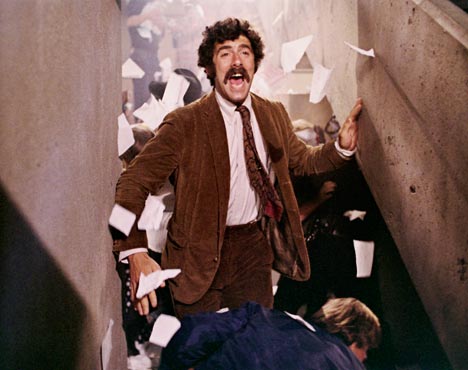
Elliot Gould in Getting StraightHarry yells because his professors expect him to show up for classes that he doesn’t care about.  When those same out-of-touch professors expect Harry to take a test that he doesn’t consider to be important, he gets his friend Nick to take it for him.  Nick, being an idiot, signs his name to the test but then marks it out and writes down Harry’s name instead.

Harry yells because a bunch of student activists expect him to join their protests.  Harry tells them that they’re shallow and the only reason they care about politics is because “protests are sexy.”  Despite his condescending attitude, the rest of the student body continues to look up to Harry.  I imagine it has something to do with the hypnotic power of his mustache.

Harry yells because a professor suggests that F. Scott Fitzgerald might be gay.  Harry also says that Arizona is the best state of the union because it has the lowest occurrence of homosexuality.  If nothing else, all of this serves to remind us that this film was made in 1970.

Mostly, however, Harry just yells at his girlfriend, Jan.  Jan lies about being pregnant and Harry yells.  Jan says that she’s thinking about getting married.  Harry yells that she is a “dumb broad.”  Jan says she’s on her period.  Harry yells that she’s lying and that he’ll be over later that night.  Harry yells when Jan breaks up with him.  Harry yells when Jan introduces him to her new boyfriend, despite the fact that Harry has been screwing — in extreme close-up — every other undergrad on campus.  Harry yells at her that she might as well just be a “man with a hole.”

In other words, Harry is a self-righteous jerk.  Harry is a misogynist.  Harry is a hypocrite.  Harry is an asshole.  And yet — probably because this film was made in 1970 — Harry is also supposed to be the film’s hero.  Harry is supposed to be the character that we sympathize with and, indeed, every other character in the film is totally charmed by Harry and his behavior.  Even poor abused Jan continues to come to Harry, despite the fact that her next door neighbor is Harrison Ford!

Harrison Ford in Getting Straight

Harrison Ford in Getting Straight

Yes, there are many very valid criticisms to be made about Getting Straight.  Harry is unlikable.  Candice Bergen gives an amazingly bad performance.  Richard Rush’s direction shows an overdependence on close-ups and rack focus shots, techniques that he uses so frequently that they eventually lose all meaning but instead simply come across as being nervous tics.  Like so many of the counter cultural films of the early 70s, Getting Straight is an excruciatingly sexist film.  That’s one thing that the films of both the counter-culture and the establishment had in common, a deep disdain and fear of women in general.  Harry may claim that the student protestors are only into politics because they want to get laid but it’s hard to see how he’s any better.  The middle stretch of Getting Straight could have just as easily have been called Harry Must Get Laid.

However, Getting Straight does get one thing right.  It perfectly captures the atmosphere of college.  From the pompous and out-of-touch professors to the creepy old grad students (that would be Harry) to the portentous seriousness of the student activists, Getting Straight captures all of that perfectly.  As such, Getting Straight might not really work as a dramatic film but it’s definitely worthwhile as a record of a specific time and place.  Much of what today seems annoying about a film like Getting Straight is really nothing more than a recording of what was once considered to be culturally acceptable.

Getting Straight is a portrait of 1970 that makes me glad that I was born in 1985.

And you can watch it below!

What Lisa Watched Last Night #104: Petals on the Wind (dir by Karen Moncrieff)


Last night, I watched the Lifetime original film, Petals On The Wind.

Why Was I Watching It?

It’s the sequel to one of the greatest Lifetime films of all time, Flowers in the Attic.  How could I not watch it?

What Was It About?

10 years have passed since the Dollanganger children escaped from the attic.  Christopher (Wyatt Nash) is a medical student who, despite being engaged, is still attracted to his sister, Cathy (Rose McIver).  Cathy is a dancer who finds herself trapped in an abusive relationship with the handsome but controlling Julian (Will Kemp).  And finally, Carrie (Bailey Buntain) is still struggling with her memories of being held prisoner.  After several tragedies occur outside of the attic, Cathy returns to Foxworth Hall, looking to get revenge on both her grandmother (Ellen Burstyn) and her mother (Heather Graham).

What Worked?

Heather Graham and Ellen Burstyn reprised their roles from Flowers in the Attic and both of them gave Emmy-worthy performances.  Burstyn, in particular, managed to invoke some sympathy for a potentially monstrous character while Graham brought a great combination of immaturity and evil to her character.

On a personal level, I appreciated all of the dancing.  It brought back a lot of good memories.

What Did Not Work?

Watching Petals On The Wind really made me appreciate Flowers in the Attic, which was great for Flowers but not so good for Petals.  As I sat there, trying to figure out why Petals just wasn’t working for me, it occurred to me that the strength of Flowers in the Attic was that the attic itself became as much a character as any of the Dollangangers.  Even more importantly, being trapped in that attic, gave all of the characters a link that went beyond family and sex.  For the viewer, that attic allowed us to know when the story had truly begun (when the kids were first locked up there) and when the story was over (when they finally got to leave).  In Petals, without the attic, the story of Dollangangers often felt formless and random.  As a result, the film may have been watchable but it was rarely compelling.

Since Petals was supposed to take place ten years after the end of Flowers, all of the Dollanganger children were recast.  And while Rose McIvar and Wyatt Nash are both talented, they didn’t have much chemistry when they were on screen together (especially when compared to their predecessors in Flowers).  That lack of chemistry made all of the incest even ickier than it would normally be.

“Oh my God! Just like me!” Moments

All of the dancing, of course!  I also have to admit that, like Cathy, I’ve known a few Julians.

Lessons Learned

From a narrative point of view, it is sometimes better to just stay in the attic.

Petals on the Wind

Film Review: Burn! (dir by Gillo Pontecorvo)


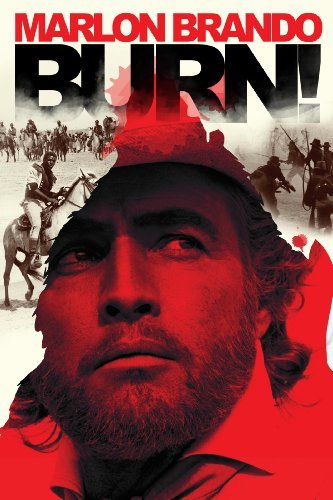
Burn!Earlier, I criticized Otto Preminger’s Hurry Sundown for taking a rather timid approach to the politics of race and class.  To see just how politically safe Hurry Sundown was, one need only compare it to 1969’s Burn, an Italian film that is perhaps one of the most politically radical films ever made.

Though the story told in Burn is a fictional one, it will still be familiar to anyone who has studied the history of South America.  Set in the 19th century, Burn takes place on the island of Quiemada, a colony of Portugal that is largely populated with black slaves who are forced to work on sugar plantations.  As the film makes clear, sugar was as economically valuable in the 19th century as oil is today.  So, it really shouldn’t be surprising that, as the film opens, Sir William Walker (Marlon Brando) has been sent to the island on a mission to overthrow the colonial government and replace it with one that will be friendly to British sugar companies.

Walker does this by inspiring the slaves to revolt.  To serve as a figurehead leader for the revolution, he selects a porter named Jose Delores (played by Evaristo Marquez, a nonactor who was both illiterate and working as a herder when he was selected for the role and who made up for his lack of experience and training by bringing a raw authenticity to the role).  Under Walker’s direction, Jose quickly becomes known as a fearsome and great leader.  Along the way, the two of them develop a paternalistic relationship with Jose looking up to Walker and Walker openly taking pride in Jose’s transformation from slave to general.

When the Portuguese eventually leave the island, the British set up a corrupt puppet government.  When Jose argues for more of a role in the new government, Walker explains that none of the former slaves have the education necessary to lead a country.  As Jose quickly realizes, the entire revolution was actually fought to benefit the British.  Walker leaves the island and Jose and the former slaves return to working on the sugar plantations.  They may no longer be slaves but they’re definitely not free.  (Or, as Jose puts it towards the end of the film, one cannot be given freedom.  Instead, freedom has to be grabbed.)

10 years later, Jose is leading another revolution, this time against the British-backed government.  Walker is sent back to the island with a new mission, to track down and defeat Jose.  When Walker first arrives back at the island, he assumes that, despite his earlier betrayal, he and Jose are still friends.  As quickly becomes obvious, Jose doesn’t feel the same way…

Now, I have to admit that I didn’t see Burn under the best of circumstances.  Not only did I see it on TV with regular commercial interruptions for that Risperdal lawsuit but, upon doing some online research, it also became obvious that I had watched a version of the film that was heavily edited prior to its American release.  20 minutes of footage was crudely taken out of Burn before it played in American theaters.  As a result, the version of Burn that I saw had a jagged and rather crude feel to it.  It was obvious that important scenes had been dropped and the end result felt disjointed.

And yet, despite all of this, Burn was still a powerful and memorable film.  I say this despite the fact that rigidly political films (which this one definitely is) usually tend to bore me to tears.  Even in its crudely edited form, Burn was full of powerful scenes that both made a political point and also displayed enough humanity to transcend the limits of ideology.  Consider the scene where, after having just learned that his revolution has accomplished nothing, Jose is hailed as a hero by his fellow revolutionaries.  In a matter of minutes, Jose goes from feeling like a failure to feeling triumphant to again feeling like a failure as he realizes that their freedom is going to be short-lived.  Or how about the scene where William Wallace crudely but effectively explains how the economy works by comparing a housewife to a prostitute?  And finally, there’s the film’s final scene, which is one of the most powerful that I’ve ever seen.

And then there’s Brando.

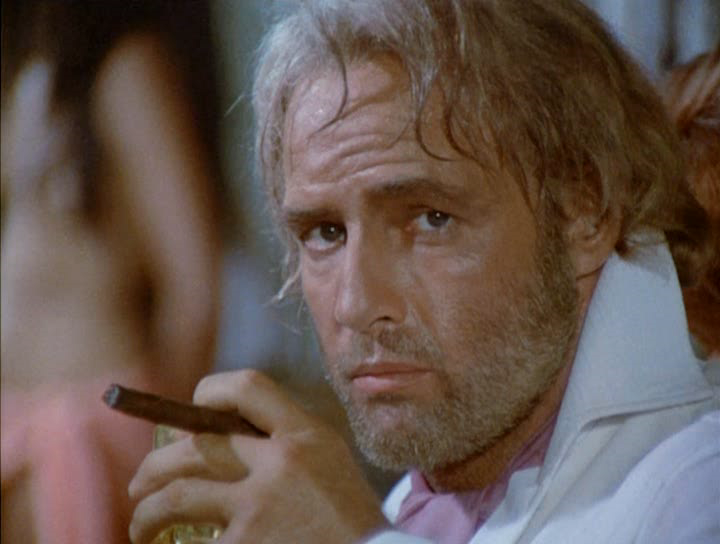
As played by Marlon Brando, William Walker comes to epitomize both cynicism and self-loathing.  Reportedly, director Gillo Pontecorvo wanted to portray Walker as being a much more obvious villain and Brando fought for a more ambiguous approach to the character.  What’s interesting is that, by hinting that Walker does what he does despite his guilty conscience, Brando makes the character into a much more loathsome monster than he would have been if he had been played as an unrepentant villain.  Brando’s best moments come towards the end of the film, when Walker struggles to understand how Jose could be willing to sacrifice himself for a greater cause.

Whenever we discuss Brando nowadays, its to talk about his eccentricities and his weight.  We talk about the fact that he was known for being difficult and that he eventually reached the point where he openly boasted about no longer caring.  What should be discussed is that, regardless of what he became later in his life, Marlon Brando was a great actor.  A film like Burn reminds us of that fact.

Marlon

Scenes That I Love: William Shatner Deals With The Explosive Generation


101440_1020_A

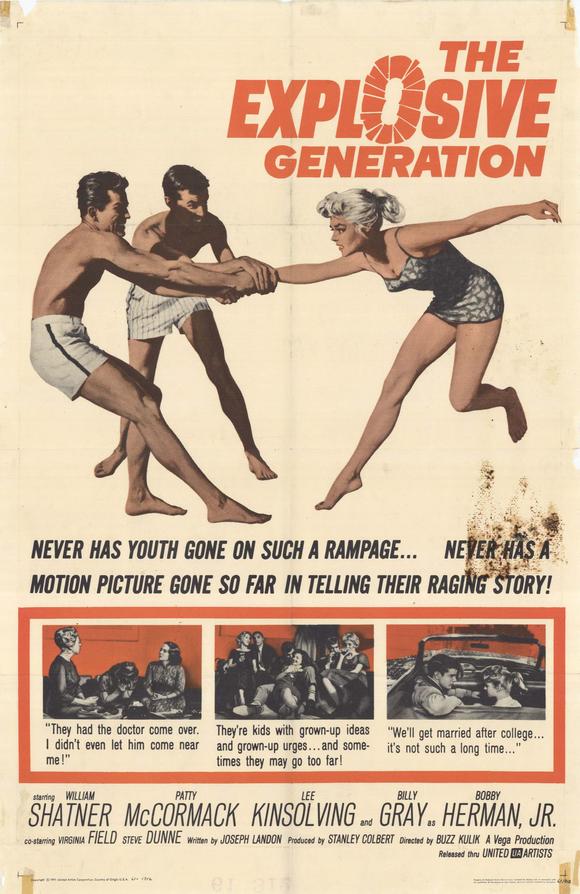
Ever since I first saw it on TCM last year, The Explosive Generation has been a favorite of mine.

This 1961 film deals with sex, peer pressure, censorship, juvenile delinquency, and civil disobedience.  The Explosive Generation is one of those films that was made to try to understand the wild and crazy youth of the early 60s, with their crazy rock and roll music, hip way of talking, and their habit of occasionally showing up for high school in a coat and tie.  As is typical of low-budget youth films of the period, the film is occasionally clueless and occasionally insightful.  In short, it’s a lot of fun and, if you’re a history nerd like I am, it’s a valuable time capsule for the way the world used to be (or, at the very least, the way that people used to think the world was).

Even better, it stars a youngish, intense, and slim William Shatner as an idealistic high school teacher who encourages his students to have a frank and honest discussion about sex.  If The Intruder (which was made roughly around the same time) is a film that proves that Shatner was capable of being an intelligent and insightful actor, The Explosive Generation is all about Shatner being Shatner.  This performance is everything that you’ve probably come to expect from William Shatner and, as a result, it transcends mundane concepts like good and bad.

Below are two scenes of William Shatner dealing with the Explosive Generation.  Be sure to keep an eye out because I’m sure The Explosive Generation will show up on TCM again at some point in the near future!

Were the critics right? A Review of Otto Preminger’s Hurry Sundown


It seems like whenever film bloggers and reviewers are making out a list of the worst films of all time, somebody always mentions Hurry Sundown.

Now, don’t get me wrong.  It doesn’t get mentioned as often as Battlefield Earth or Adam Sandler’s latest comedy.  And, when it does get mentioned, it’s done with little of the warmth that’s given to Troll 2, The Room, or Birdemic.  Instead, one gets the impression that Hurry Sundown is a film so bad that even those of us who appreciate bad films would find little to love about it.

But y’all know me.  I’m the type that prefers to judge for herself and I’m also someone who rather enjoys being a contrarian.  There’s a reason why one of my most read posts on this site is entitled 10 Reasons Why I Hated Avatar.  Add to that, Hurry Sundown was directed by Otto Preminger who also directed one of my favorite films of all time, Anatomy of a Murder.  How, I asked myself, could the man who made Anatomy of a Murder possibly also direct one of the worst films of all time?  As a result, every time that I saw someone claiming that Hurry Sundown was one of the worst films of all time, I grew more and more determined to someday see the film and judge for myself.

Well, I finally got my chance this weekend.  Hurry Sundown was on one of my newest favorite channels, The MOVIES! TV Network.  And I proceeded to watch it.  I sat through all four hours of this film (that’s including commercials and, oh my God, was I thankful for the distraction that those commercials provided).  I watched Hurry Sundown and …. wow.  Was it ever bad.

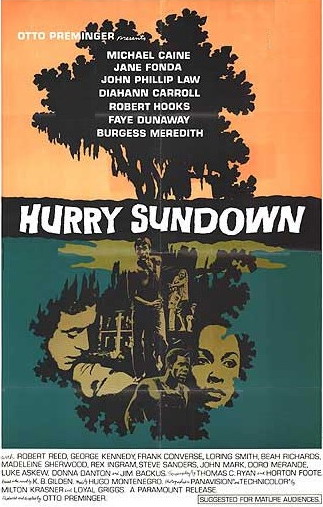
Hurry SundownReleased in 1967, Hurry Sundown was Otto Preminger’s attempt to take a look at race relations in the deep south.  It’s a film full of good, liberal intentions and an apparent lack of knowledge about — well, about everything.  As I watched this slow, almost formless blob of a film, I found myself wondering how the director who gave us Laura and Anatomy of a Murder could have possibly directed a film with a gigantic cast but absolutely no interesting characters.  I wondered how the director who had been willing to challenge the racist assumptions of 1950s Hollywood by directing Carmen Jones could have been responsible for the corny and subtly condescending look at race relations that was Hurry Sundown.

Hurry Sundown takes place in 1946 and is set in rural Georgia.  The war is over, the soldiers are coming home, and nobody in the film can maintain a convincing Southern accent for more than a line or two.  (Seriously — I’ve heard a lot of really bad Southern accents in a lot of really bad films but none of those accents were as bad as what I heard in Hurry Sundown.)  It’s a brand new world but the South is clinging to the old ways of racism and classism.

Preminger slowly (and clumsily) introduces us to the huge cast of characters who populate the slice of Hollywood Georgia.

There’s the sheriff (George Kennedy) who is so stupid that he can be distracted by an offer of fried chicken.  Kennedy actually gives a good comedic performance but his character seems like he belongs in another movie and you have to wonder how civil rights activists in 1967 — many of whom had undoubtedly been arrested and harassed by Southern sheriffs much like this one — reacted to Kenendy’s character being presented as harmless comic relief.

There’s the racist judge (Burgess Meredith) who, much like the sheriff, is presented as being a comedic buffoon as opposed to an actual threat.  The judge uses the n-word in every other sentence, which should be shocking and infuriating but, as a result of Meredith’s over-the-top delivery, instead simply comes across as being gratuitous and tasteless.

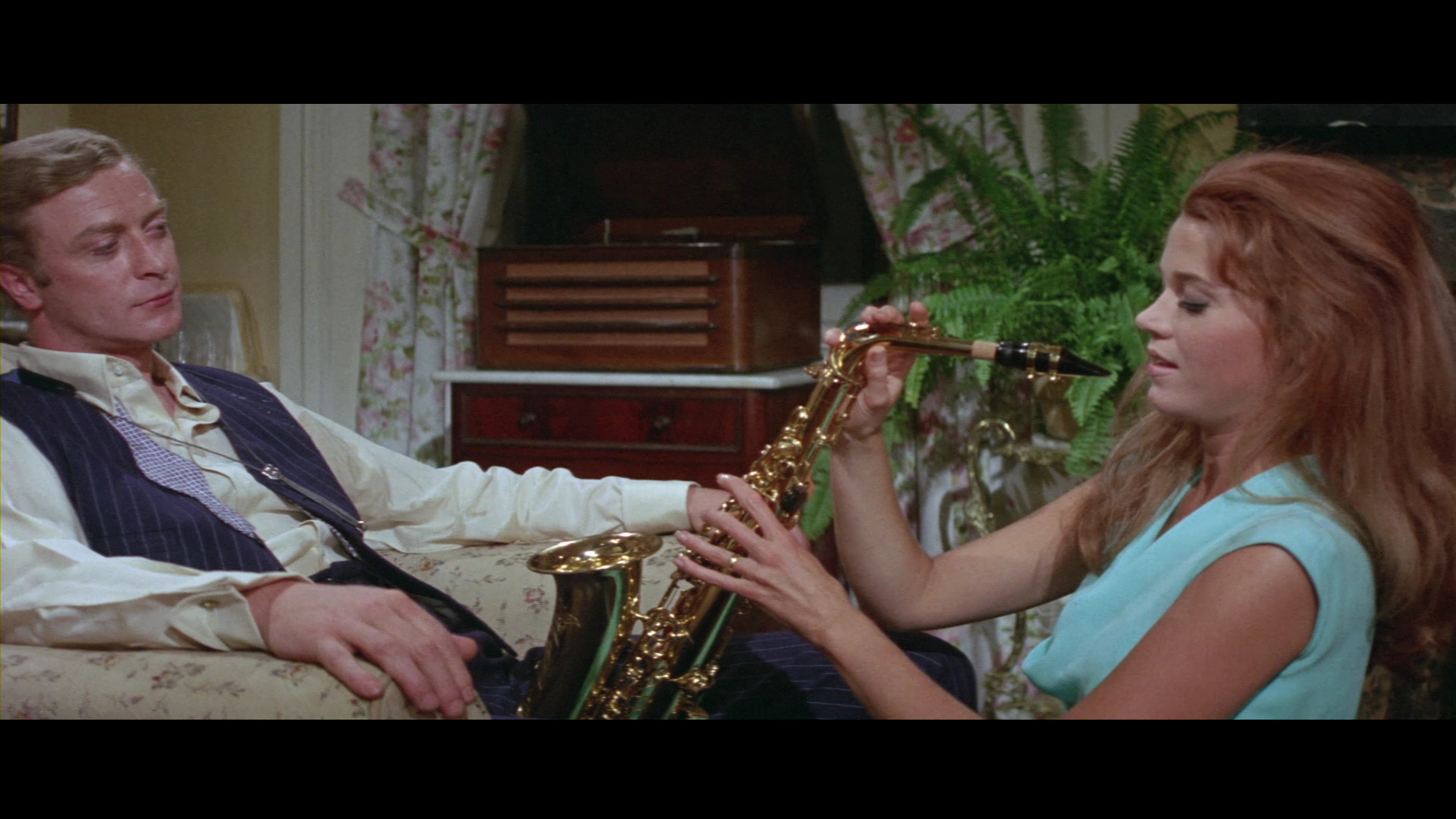
Then there’s Henry.  Henry is a businessman who dodged the draft, cheats on his wife, and who has a son who literally spends the entire movie screaming at the top of his lungs.  (Whenever that kid was on-screen, I imagined Preminger standing behind the camera and going, “More!  More!  Scream more!”)  Henry is also a racist, though for some reason he loves jazz and often plays the saxophone.  I kept waiting for someone in the movie to point out to him that jazz was created by black musicians but nobody did.  (If Henry had appeared in Anatomy of a Murder, someone would have.)

Did I mention that Henry is played by Michael Caine?  And did I also mention that Caine is the most cockney-sounding Southerner that I’ve ever heard?  Because he totally is.

Henry’s wife is named Julie and is played by Jane Fonda.  At one point, she suggestively blows on Henry’s saxophone.  One can only imagine how audiences in the 60s reacted to that.  (Actually, they probably didn’t.  They probably just said, “Good thing she’s pretty because she ain’t no musician…”)

Michael Caine and Jane FondaAnyway, Harry wants to buy up some farmland but half of that land is owned by Henry’s poor cousin Rad (John Phillip Law) and Rad doesn’t want to move.  Rad has just returned from fighting in the war and he views Harry as being a cowardly draft dodger.  Rad is married to Lou (Faye Dunaway) and wow, are they ever a boring couple!  Dunaway was under a five-picture contract to Preminger when she made this film and apparently, she had such a terrible time on the set of Hurry Sundown that she sued to get out of ever having to make another movie with Otto.  Dunaway’s misery comes through in every scene.

The other half of the farmland is owned by Reeve (Robert Hooks), a black farmer whose mother (played by Beah Richards) is Julie’s former mammy.  Julie goes down to the farmhouse to convince Reeve to sell and Reeve’s mother responds by having the most (over)dramatic heart attack in the history of cinema.  Saddened by death of his mother, Reeve is definitely not going to sell.  When he’s not chastely romancing the local teacher (played by Diahann Carroll, who appears to have wandered over from a different, far more glamorous movie), Reeve is singing sprituals and working out in the fields.

One of the things that Reeve does not do — no matter how many times he gets called the n-word or is treated unfairly — is get mad.  Rad gets mad.  Julie gets mad.  A liberal white preacher (Frank Converse) gets mad.  But Reeve and the other black characters in the film are never really allowed to get mad or do anything that might make the film’s white audience feel nervous.  Watching a film like Hurry Sundown, you can understand why — in just a few more years — Blaxploitation films would suddenly become so popular.  It was probably the first time that black film characters were actually allowed to not only get angry over the way they were being treated but to fight back, as opposed to reacting in the Hurry Sundown-way of passive acceptance.

Anyway, Rad and Reeve come together to protect their land and Henry and the evil judge conspire to cheat them out of their land and — well, let’s just say that Hurry Sundown is one of those films that has a lot of plot and very little action.  Preminger directs with a stunning lack of pace or grace, the actors deal with a poorly written script by either engaging in histrionics or going catatonic, and Michael Caine’s attempt at a Southern accent will amuse anyone who has ever been south of the Mason-Dixon.

I have to admit that I was really hoping that Hurry Sundown would turn out to be a sordid and tawdry little masterpiece, the type of overheated misfire that you love despite your better instincts.  But, no.  Hurry Sundown is just boring.  The film is such a misfire that it doesn’t even work as a piece of history.  The critics were right.  Hurry Sundown sucks.

Hurry_sundown_moviep


Trash Film Guru Vs. The Summer Blockbusters : “X-Men : Days Of Future Past”


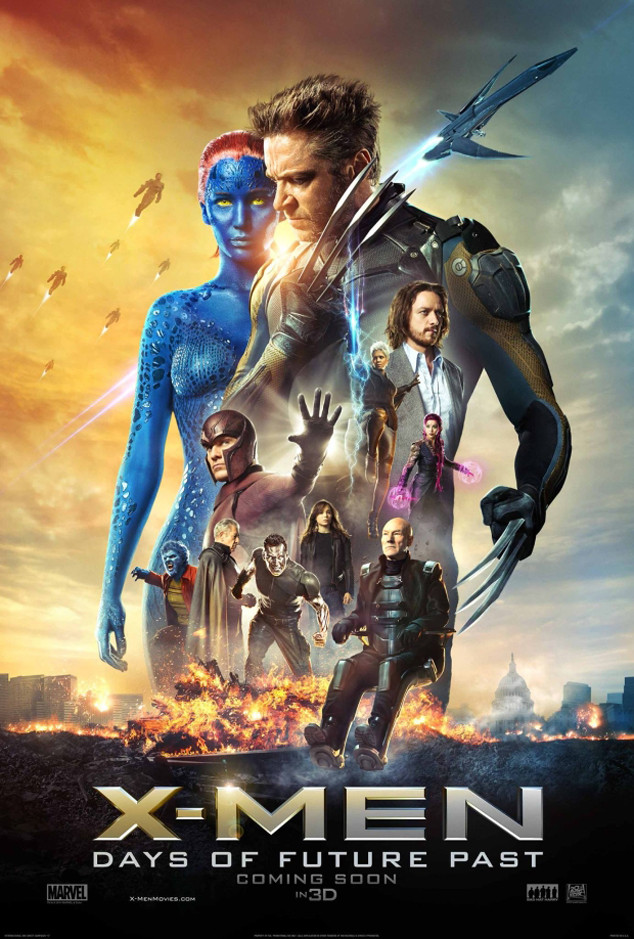
rs_634x939-140324091106-634.jennifer-lawrence-x-men.ls.32414

At this point, I freely admit to being a little bit confused : X-Men : Days Of Future Past opens to a somewhat lower box office take than The Amazing Spider-Man 2 did, which was only slightly behind the opening-frame receipts generated for Captain America : The Winter Soldier, and yet Cap and the X-Men are both considered “successes,” while Spidey’s considered a “disappointment” — even though, last I checked, its’ total gross ticket sales were only about $50 million behind Cap’s despite the fact that it opened a full month later?    Chances are probably good  that it will even end up closing the gap here at some point, but no matter — the die appears to have  already been cast. The stench of that rat I mentioned smelling in my Spider-Man review a couple weeks back? It’s getting a lot stronger now.

Needless to say, I’ve got a theory as to what’s going on here, and it builds upon my theory already expounded upon in that just-mentioned prior review : Disney/Marvel actively wants the Spider-Man franchise back, but the X-Men? Not so much. At least not yet.

How else to explain this clearly-orchestrated PR campaign? Look, internet movie critics are an easy bunch to buy off : for a free ticket, or even the promise of some kind of other free swag in the future, you can get thousands of people to say whatever you want them to. And from there, you can get thousands of others to mimic the already-established meme of whether a given flick is “successful” or not, because gosh, who would dare contradict the well-established critics and box-office analysts who have already passed judgment on the merits of a particular work? For the price of probably less than $10,000 in either payments or promises, DisMar has the movie-going public right where they want us, echoing their nonsensical party line and unsupported-by-the-facts pronouncements.

Needless to say, I don’t feel like playing along — for the most part. But there’s one area where I do agree with the general consensus, even if the fix is in : X-Men : Days Of Future Past is a really good superhero flick. And that might just throw a wrench in Marvel’s “this one’s dying on the vine, let’s just wait it out and see what happens” game plan.

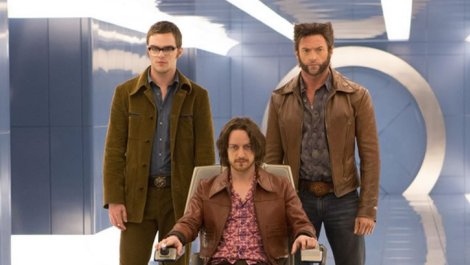
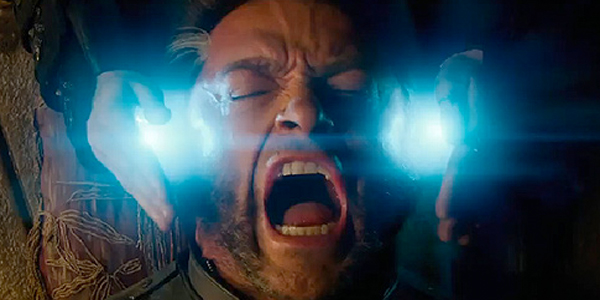
hugh-jackman-stars-in-final-trailer-for-x-men-days-of-future-past-watch-now-161013-a-1397628564


Seriously, friends, this one has everything and the kitchen sink going on, but somehow returning director Bryan Singer (more on him in a minute) juggles every ball thrown in the air and makes it work : the “divergent timelines” conceit that forms the core of the plot never gets confusing even though it easily could; the action sequences are brisk and spectacular; the characters are uniformly believable and compelling; and the performances, from perhaps the most star-studded cast ever assembled for a comic-book film, are all first rate. When you’ve got Hugh Jackman, James McAvoy, Patrick Stewart, Ian McKellen, Ellen Page, Jennifer Lawrence, Michael Fassbender, Nicholas Hoult, Peter Dinklage, Shawn Ashmore, Halle Berry, Michael Lerner, Booboo Stewart, Omar Sy, Kelsey Grammer, Anna Paquin, James Marsden and Famke Janssen all punching the same time clock, it goes without saying that  some are going to have more to do than others, but nobody seems intent on stealing the show for themselves, which is no mean feat considering the sheer number of sizable egos that must be involved here. Sure, the script puts most of the onus of Wolverine, the young Professor Xavier, the young Magneto, the young Beast, the young Mystique,  and the villainous Dr. Bolivar Trask, but that doesn’t mean everybody else doesn’t give their admittedly smaller parts at least a reasonable effort. Shit, I’m not sure how you even get stars of the stature of Page, Berry and Paquin to even accept what are essentially tertiary-at-best roles (does Paquin even have a line of dialogue?), but somehow they keep showing up for X-Men flicks, and in this case the place doesn’t even seem that crowded. Shit, Singer even manages to sneak in quick cameo for Wolverine co-creator Len Wein.

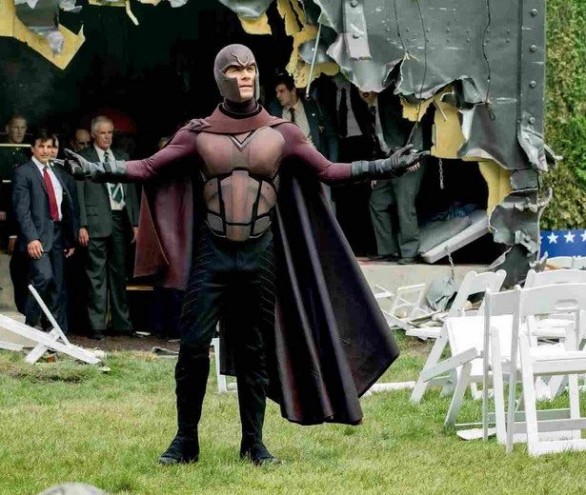
X-Men-Days-Of-Future-Past-Magneto3-586x495

In many ways what makes  Days Of Future Past so successful is that fact that it’s actually more a direct sequel to First Class (which I also thoroughly enjoyed) than it is the initial X-trilogy, and some of the continuity changes that the end results of this film apparently seal into place even seem to undo how those first three films “wound up,” but whatever — the end result here is a franchise that feels like it’s been given a new lease on life after treading water for a good half-decade or so. I mentioned just a moment ago that I really dug First Class, but you can’t get by on prequels forever. At some point a movie needed to come along that propelled the X-Men franchise forward, and this does so with plenty of style and flair.

Plus, the whole thing’s a lot of fun — sure, some of the dialogue is overly- verbose and clunky and painfully expository, but those instances are rare, and actually stand out in contrast to the general ease and flow of the rest of the film. And while the premise itself requires a heavy dose of suspension of disbelief, let’s be honest here — what super-hero movie doesn’t? At least this one rewards your willingness to go with the flow in ways that even highly-touted fare like Joss Whedon’s The Avengers (a favorite target of my ire, I admit, but only because it really does suck, no matter what anyone else thinks) could never hope to manage. Plus, audiences get a chance so see Dinklage prove that he can” bring it”  in each and every role he takes on, not just on Game Of Thrones — something those of us who have been fans of his work ever since The Station Agent have long maintained.

x-men-days-of-future-past-trailer

In case it weren’t painfully obvious already, I thoroughly enjoyed X-Men : Days Of Future Past, and after appearing to flounder in the wake of the risible Valkyrie, my faith in Bryan Singer as a director has probably never been higher — unfortunately (here’s where that “more on him in a minute” comes in), I can’t say the same in regards to my faith in Bryan Singer as a human being. I won’t kid you — the sexual abuse allegations that have been leveled against him really bother the shit out of me. And no, it has nothing to do with Singer’s sexual orientation : I don’t care if a person is straight, gay, or somewhere in between, any and all relationships — whether serious, casual, or less than casual — between consenting adults are fine by me. Everybody likes to get laid, have at it. But age of consent laws are there for a reason, and kids and teens are, and should be, off limits to grown adults. The fact that  the “fan” community seems so eager to point out that Singer’s accuser has filed civil rather than criminal charges and that he’s apparently done so in the past is both irrelevant to the reality of what may or may not have occurred,  and represents a clear case of reprehensible victim-shaming of the highest order. Sure, everyone’s innocent until proven guilty, but assuming, or even implying, that somebody who’s been brave enough to come forward with claims this serious just has to be a liar because they’re choosing to address this issue in ways that others either don’t understand or approve of is beneath contempt. Maybe we’ll never know the whole truth of this matter, but if Singer did what’s he’s been accused of, then he’s got some serious issues and needs some serious help and sure,  I feel some amount if sympathy for whatever turmoil is boiling away inside his mind — but not half as much as I do for the teen boy (s) that he’s victimized (if he has). I don’t want to see him condemned in the court of public opinion if he’s completely innocent, but I don’t want to see his accuser condemned, either, and that’s what’s been happening. Sex between adults and those not legally deemed to be adults (in most states that’s 18, in some 16) is against the law, period, and if Singer did, in fact, engage in the sort of behavior that’s been alleged,   then I’m done with him from here on out. End of rant.

Regardless of what’s he’s done in his off-hours, though, the perhaps-tragic fact (depending on how legal proceedings play out) remains that what he’s done while on company time just can’t be denied in this case. I wish I could love X-Men : Days Of Future Past with a totally clean conscience, sure, but I can’t deny that I loved it just because it may have been directed by a guy whose personal behavior is both sleazy and illegal. It’s a complex set of circumstances to weigh in one’s mind, to be sure, but so goes life. I wish its murky waters were easier to navigate, but they never have been, and they’re never going to be.

As for the future of all things X-Men, I’ll make one easy prediction right now : when this thing hits home viewing “platforms” in a few months’ time, look for a bevy of reviews along the lines of “ya know, maybe this this isn’t quite as good as we thought at first” and “on second viewing, the flaws in this one are obvious” — not because such sentiments will be true, but because Days Of Future Past is so well-done, and opens up so many possible avenues for the franchise going forward, that Marvel’s gonna want to start one of their infamous “whisper campaigns” to try to undermine the public’s confidence in having it in “other hands” and get it back in their own  grubby, greedy paws.

Film Review: Godzilla vs. Mothra (dir by Takao Okawara)


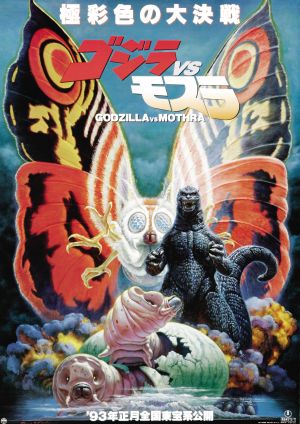
Godzillamothra1992

Last night, I watched a marathon of Godzilla films on Chiller and, perhaps somewhat foolishly, I took it upon myself to review each film that I saw.  Following Godzilla vs. Mechagodzilla, I watched the 19th film in the franchise, 1992’s Godzilla vs. Mothra.

If you’ve seen any previous Godzilla films, you will not be surprised to discover that Godzilla vs. Mothra opens with a random ecological disaster.  A meteorite strikes the Earth, causing a mudslide on Infant Island that reveals a very large egg.  As you can probably guess from the title, the egg contains the latest incarnation of Mothra, the giant moth who protects human civilization.

And human civilization needs to be protected because that meteorite has also woken up Battra, another ancient insect that serves as a bit of an anti-Mothra.  Battra was created by the Earth to maintain a balance between the planet and the humans who lived on it.  Whenever the Earth feels threatened, Battra destroys the menace.  Unfortunately, mankind is now the biggest threat to the planet.

And, finally, when that meteorite struck, Godzilla was hibernating under the sea.  Now, Godzilla is awake and he’s not particularly happy about it.  One thing that I always find interesting about Godzilla films is that the film’s human heroes are always 1) so shocked to discover that Godzilla has woken up and 2) so incapable of tracking Godzilla down once he does wake up.  Seriously, how hard is it to find a gigantic lizard that breathes radioactive fire?

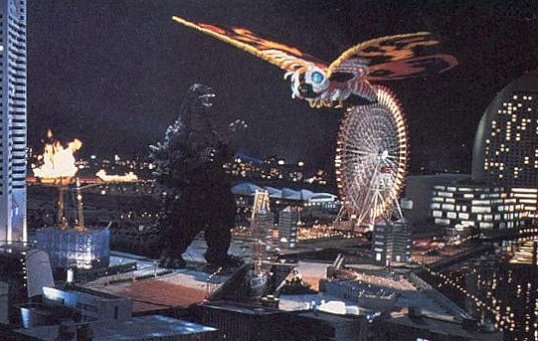
godzilla_vs_mothra_2

Godzilla vs. Mothra has its good points (for example, the idea behind Battra is a fascinating one and, as is to be expected from a Godzilla film, the monster fights are handled well) but, for the most part, it’s one of the more uneven of the Godzilla films.  The film is maybe 10 minutes too long, the heavy-handed ecological message makes Godzilla vs. Hedorah look subtle and nuanced, it drags whenever the monsters are not on-screen, and, as far as the English language version is concerned, the dubbing is so atrocious that I almost suspect that it was done poorly on purpose.

But, that said, Godzilla vs. Mothra has one big thing going for it.  Mothra kicks ass!  Of all the various monsters that often play sidekick (or rival) to Godzilla, Mothra is my favorite.  (I even like her more than that armadillo from Godzilla vs. Gigan.)  Whereas the rest of the Toho monsters can never seem to decide whether they want to destroy the Earth or save it, Mothra is the franchise’s warrior queen.  She is the one who serves not only as the voice of reason but she is also usually the only one who can convince Godzilla to stop destroying Tokyo long enough to defeat the aliens or Ghidorah or whatever other threat has invaded Japan this week.  And, during those rare times when Godzilla ignores her (like in this film, for instance), Mothra puts him in his place.

Best of all, Mothra may start out as an ugly larvae but you always know that, halfway through the film, she’s going to emerge as a beautiful moth.  There’s a valuable life lesson there for all of us.

Seriously, Mothra — you go, girl!

Mothra13

Other Godzilla Reviews:


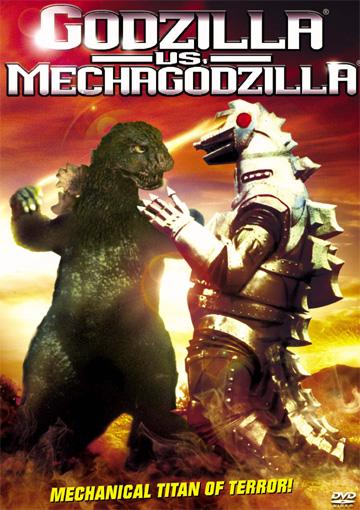
Film Review: Godzilla vs. MechaGodzilla (dir by Jun Fukuda)


godzilla-mechagodzilla1974

The Godzilla marathon on Chiller is continuing.  Immediately following Godzilla, Mothra, and King Ghidorah, we were treated to the 14th film in the Godzilla franchise, 1974’s Godzilla vs. Mechagodzilla.

There’s no way that I can start this review without pointing out a mistake made by Chiller.  In both the programming guide and at the start and end of each commercial break, Chiller insisted that they were showing a film from 2002 called Godzilla Against MechaGodzilla.  However, from the minute the film started, it was obvious that we were watching something from the 70s.  Between the jazzy score and unfortunate male hair choices, this film was so 70s that it might as well have been snorting coke and listening to progressive rock.  Mind you, that’s not a complaint on my part.  In general, films from the 70s are a lot of fun.

And that’s a pretty good description of Godzilla vs. Mechagodzilla.  It’s a fun movie, especially if you’re watching it with a group of snarky friends.  Some movies were specifically made to be watched with a group and Godzilla vs. Mechagodzilla is one of those films.

When, in Godzilla vs. Mechagodzilla, Godzilla emerges from Mt. Fuji, he is greeted by his armadillo friend from Godzilla vs. Gigan.  Godzilla reacts by savagely attacking his armadillo friend.  “No,” I shouted at the TV, “bad Godzilla!”  Seriously, it may just be because I live in Texas and I always feel bad whenever I see one of his relatives laying dead in the middle of the street but I love that giant armadillo!

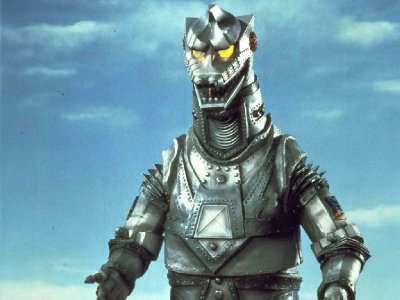
Anyway, Godzilla decides to live up to his new identity as Jerkzilla by going on yet another rampage through Japan.  Suddenly, Jerkzilla is confronted by … Godzilla!  That’s right, it turns out that Jerkzilla isn’t Godzilla at all.  Instead, he’s a giant robot named Mechagodzilla!

Mechagodzilla!

Mechagodzilla!

As you may have guessed, the blame all lies with aliens.  In Godzilla Vs. Gigan, the trouble was the result of intergalactic cockroaches that had taken on human form.  In Godzilla vs. Mechagodzilla, the villains are space monkeys who have taken on human form.  And I do have to say — and I mean no offense to the space cockroaches — but the space monkeys seem to have a much better shot at conquering the planet than those roaches ever did.

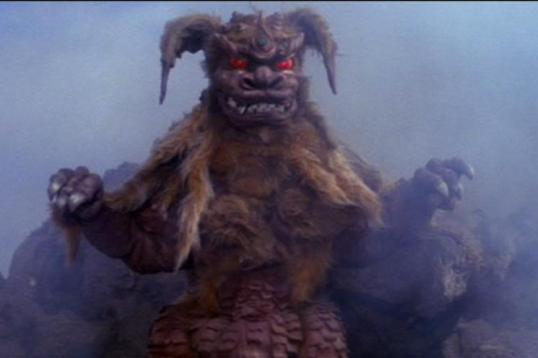
However, Mechagodzilla is not the only new monster to be found in this movie.  There’s also King Caesar, an ancient creature who, if you believe prophecy, is destined to rise out of the mountains.  (And, as we all know, one of the first rules of cinema is that prophecy always comes true!)  Through the efforts of a group of typical Godzilla movie humans, King Caesar does wake up.  Will he work with Godzilla or Mechagodzilla?

King Caesar

King Caesar

Godzilla vs. Mechagodzilla is a strange one and, judging from some of the comments that I’ve read online, that’s exactly why it’s a personal favorite of a lot of Godzilla fans.  Myself, I enjoyed it.  I wouldn’t necessarily recommend it to anyone who isn’t already a fan of the franchise but those of you who enjoy a good Godzilla movie will find a lot to appreciate here.  The monsters are silly but charming, the story moves quickly, and the film even has a big musical number for no particular reason.

Seriously, is a world that can’t appreciate a big robot Godzilla a world that any of us want to live in?

Other Godzilla Reviews:

Trash Film Guru Vs. The Summer Blockbusters : “Godzilla”


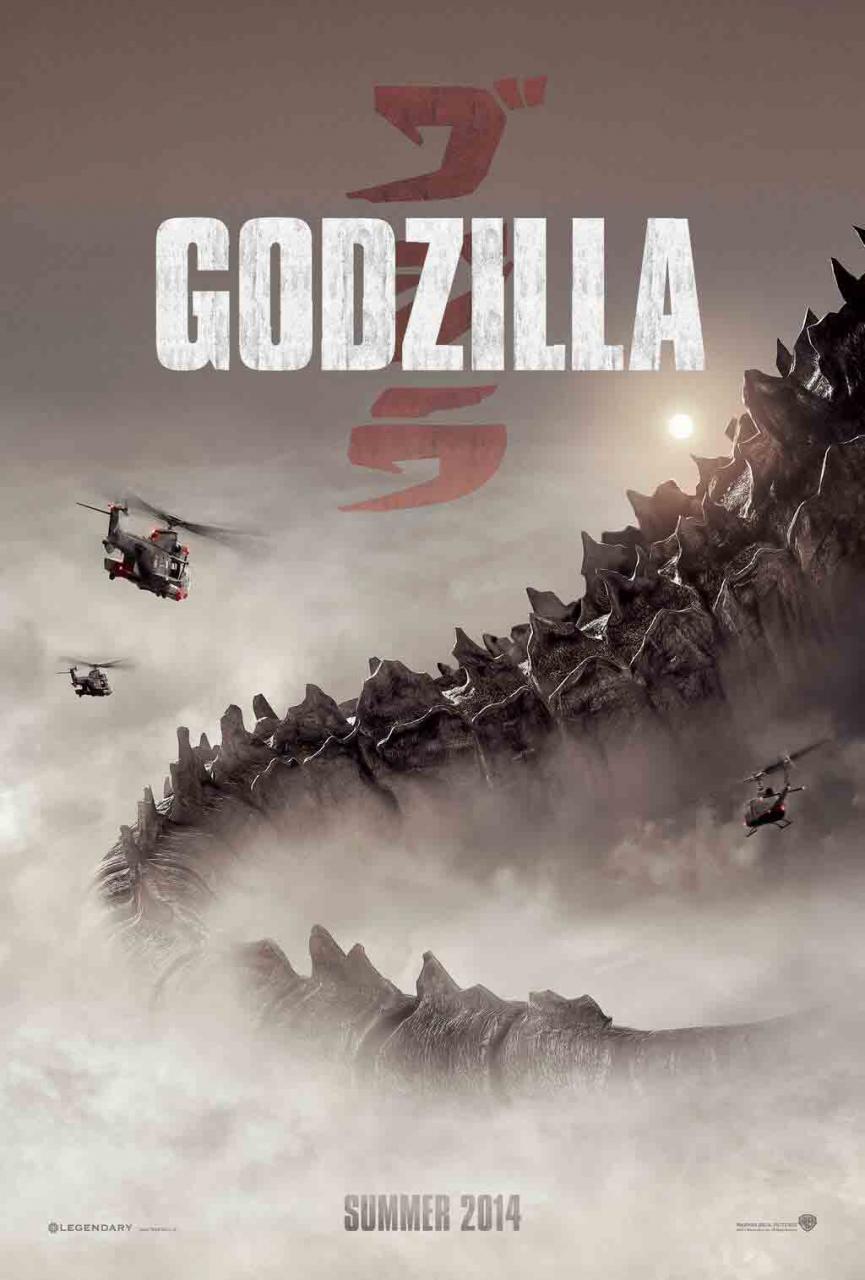
godzilla2014_poster2

Here’s the thing when it comes to any and all Westernized takes on Japan’s most famous movie monster — Hollywood’s just never going to “get it” because, frankly, it can’t. Oh, sure, Gareth Edwards’ 2014 Godzilla is head and shoulders above Roland Emmerich’s 1998 abomination of a film, but the simple fact is that the Big Green Guy and all of his scaly, serpentine brethren that came to us courtesy of the venerable Toho studios were, at their core, celluloid manifestations of a deep-seated atomic angst that only a country that had been on the receiving end of, as Sting put it, “Oppenheimer’s deadly toy” could ever really give birth to. And while Ken Watanabe’s Dr. Ichiro Serizawa character does, in fact, explicitly mention Hiroshima and Nagasaki in this flick, it’s pure window dressing — Edwards and screenwriters Max Borenstein and Dave Callaham didn’t actually live through a time when they had to actively wonder what sort of nuclear fission-induced mutations were lurking beneath the waves just a few miles offshore, so they just can’t communicate that sort of unease with the same authenticity that the original Godzilla did.

And to those who would argue that a young Japanese filmmaker wouldn’t be able to imbue a project such as this with any more immediacy than Edwards does because they wouldn’t have lived though those horrific final days of WWII either, I’ve got one word for you : Fukushima.

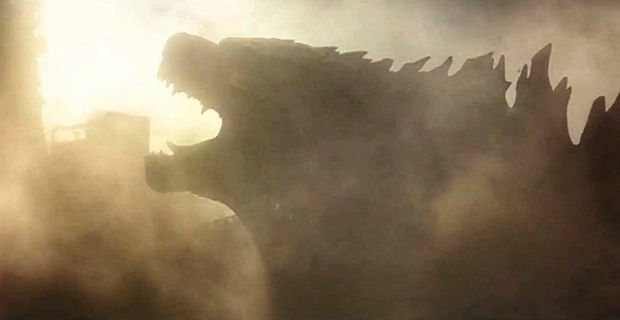
Godzilla-2014-Roar

There’s also something about CGI in these flicks that always has, and always will, suck, no matter how “good” it is : you know, in the back of your mind, that it’s just not there. To be sure, Edwards and his visual effects crew do a bang-up job of realizing their monster once they do, finally, reveal him, but no matter how “unrealistic” watching the original Godzilla smash cardboard miniatures of buildings may be by today’s standards, it still feels more “real” than the essentially flawless computer graphics of 2014 can ever hope to. But maybe that’s just me —-

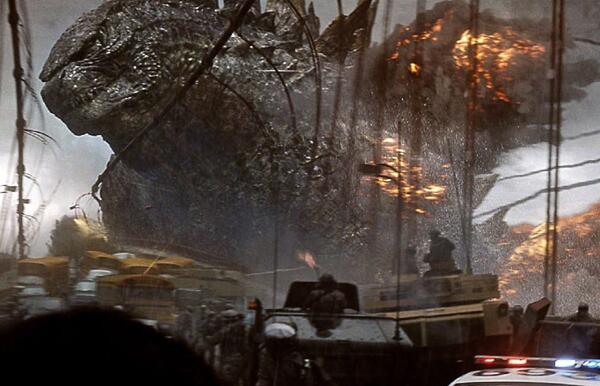
godzilla-trailer-02

Still, don’t get the wrong idea : I’m not so much “down on” the new Godzilla as I am completely indifferent to it. To be sure, Edwards’ heart seem to be in the right place here, and he’s very likely doing the best job that he can do — it’s just that his best is nowhere near good enough. A slow-burn plot doesn’t help matters much, either, and while I’m all for a prolonged buildup that leads to a big payoff, frankly the “character arcs” of all the principal players are so dull and uninvolving that when Compu-Zilla finally does make the scene, it feels more like a relief from soap opera-style tedium than anything else. Thankfully, there’s some effectively-realized mass destruction to bump up the “wow” factor a bit, and Godzilla doesn’t turn out to a solo act (that’s all I’ll say about that), but it’s still definitely a case of “too little, too late” as far as excitement here goes and a smorgasbord of good performances (Bryan Cranston, Juliette Binoche, David Strathairn, Sally Hawkins, and the aforementioned Ken Watanabe) and bad (Aaron Taylor-Johnson, Elizabeth Olsen) find themselves having equally gone, more or less, to waste when the proverbial train finally leaves the station.

Plot recaps probably make as much sense here as they do for a Hulk comic book — sure, the set-up matters on some level, but it’s all about “Hulk smash!” at the end of the day, isn’t it? Suffice to say that the main reason the various intermingling sub-plots here really don’t work is because the film goes from small-scale to so-big-it’s-off-the-scale at the drop of hat, with no transition period in between for either the characters or the audience. It’s all just a bit jarring — but maybe that’s not such a bad thing when I think about it because, truth be told, I was getting a little sleepy.

The “who are the real monsters?” theme that Edwards toys with is frankly a little bit old, too, and honestly represents something of a cop-out ( and here’s where my “Westerners will never get this right” thesis comes into play, by the way) :  sure, humans are bad news, we’re destroying everything, etc. I know that. But some of us are worse than others, and any side willing to drop a nuclear bomb and murder hundreds of thousands of innocent people in order to “win” a war is due for some special criticism, in my view . The makers of the original Godzilla understood that fact, even if they couldn’t say so explicitly, while in the franchise’s 2014 iteration we just all suck. No one, specifically, is to blame, and hey, it’s too late for recriminations anyway when you’ve got an overgrown reptile tearing up the town. Or something like that.

godzilla-attacks-golden-gate

Still, the film’s third act is enough to make even a hardened cynic like me gasp in awe on numerous occasions, and the “childlike wonder factor,” for lack of a batter term, really does kick into high gear here as events steamroll toward their conclusion. It’s worth the price of admission for the awesome (even if it is computer-generated) spectacle the final 45-or-so-minutes deliver. Sure, I wish we’d gotten nothing but a bad ride on a  bumpy road from start to finish, but I guess I’m still willing to take what I can get. Felling like you’re 12 years old all over again for even a little while is better than never feeling like it at all.

And yet — in addition to being this film’s greatest (perhaps even only) saving grace, perhaps that last act is also its greatest weakness, because it exposes the essential, unavoidable truth at the heart of Edwards’ Godzilla : it’s good enough to make you remember why you love monster movies in the first place, but nowhere near good enough to actually be one of those monster movies  that you love.

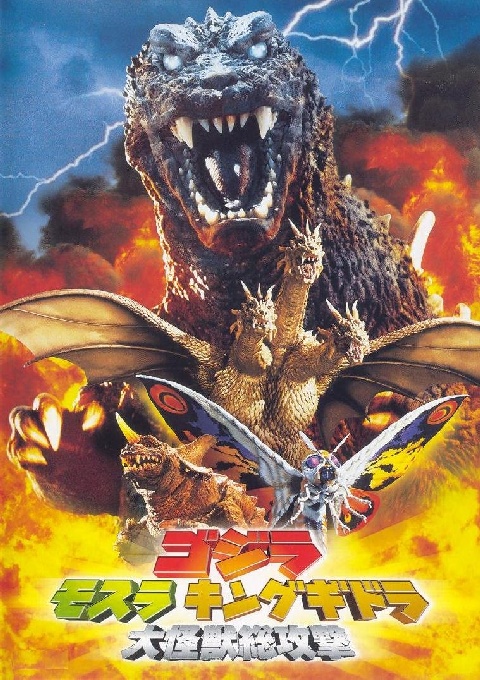
Film Review: Godzilla, Mothra, and King Ghidorah: Giant Monsters All-Out Attack (dir by Shusuke Kaneko)


gmk1-1

In honor of the opening of the new American version of Godzilla, Chiller is showing a marathon of Godzilla films today. While I was out and about during the first few films, I did make it home and turn on the TV in time to catch Godzilla, Mothra, and King Ghidorah: Giant Monsters All-Out.

That Godzilla is one moody lizard!  Half of the time, he’s Earth’s protector and you can’t help but love the big guy, no matter how many cities he destroys.  However, whenever Godzilla is in a bad mood — well, that’s when you better start looking out.

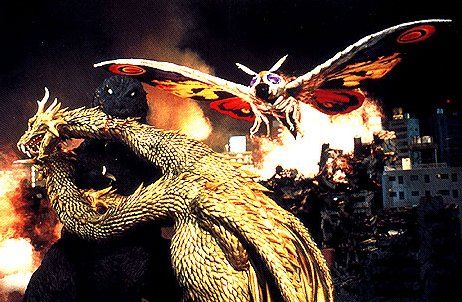
2001’s Godzilla, Mothra, and King Ghidorah: Giant Monsters All-Out Attack finds him in one of his bad moods but, at least he has an excuse.  He’s been possessed by the spirits of Japanese soldiers who were killed in World War II.  Convinced that Japan has forgotten them and their sacrifice, they are now determined to use Godzilla to get their vengeance.

Fortunately, there are three ancient guardian monsters who, once awoken, can protect the Earth from Godzilla.  Those three monsters are a dinosaur named Baragon, Mothra the giant Moth, and Ghidorah, the three-headed dragon with no arms.  With Godzilla attacking, it’s up to Ghidorah to save mankind and…

Wait a minute!

Isn’t Ghidorah supposed to be like the epitome of pure evil?  In fact, back when Godzilla was still the Earth’s protector, wasn’t Ghidorah the monster that Godzilla was always protecting us from?

Seriously, what the Hell…

Well, it really doesn’t matter.  You don’t watch a Godzilla film for continuity.  You watch them to enjoy all of the rubber-suited mayhem and that’s exactly what this film delivers.  And you know what?  Godzilla is actually a lot better at being a villain than a hero.  Whereas the heroic Godzilla always had to watch his step to make sure that he didn’t actually step on any of his human friends, the villainous Godzilla does not care.  Villainous Godzilla is a force of pure destruction and, as a result, is a lot more exciting to watch than heroic Godzilla.

And, perhaps not coincidentally, Godzilla, Mothra, and King Ghidorah: Giant Monsters All-Out Attack is one of the more entertaining entries in the Godzilla franchise — a nonstop thrill-ride of monster mayhem that also happens to feature interesting and compelling human characters as well.  Seriously, try not to be emotionally moved by the scenes of reporter Yuri and her father Admiral Tachibana working through their relationship while Tokyo burns around them.  There’s a reason why this movie ends with a close-up of a beating heart!

And, it should be noted, it also happens to have the best title of any film in the Godzilla franchise.

11088621-gal-jpg