Horror Film Review: Dracula, Prince of Darkness (dir by Terence Fisher)


Draculaprinceofdarkness“My master is dead but he left instructions that the house should always be ready for visitors.”

“Who was your master?”

“His name was Count Dracula…”

— A snatch of dialogue from Dracula, Prince of Darkness (1966)

Dracula, Prince of Darkness is notable for many reasons.

First off, this movie marked Christopher Lee’s return to the role that he played 8 years earlier in The Horror of Dracula.  After being forced to make one Dracula film without Dracula, Hammer Films was finally able to make a direct sequel to The Horror of Dracula.

As a result of Lee returning, this was also the first of the Hammer Draculas to feature the previously destroyed Lord of the Vampires being revived through a splash of blood.  This was a plot element that all subsequent films in the series would feature and, to a certain extent, you have to admire Hammer’s efforts maintain some form of continuity.  Whereas it would have been easy enough to just have Dracula show up with no explanation as to why he’s back, the Hammer films at least  tried to make sure everything followed some sort of identifiable logic.  (Or, at least they did until Dracula A.D. 1972 but we’ll get to that movie later…)

This was the first Dracula film not to feature (with the exception of the footage from Horror of Dracula that opens the film) Peter Cushing in the role of Van Helsing.  And while the film probably would have been improved by the presence of Cushing, the film does come up with a more than adequate substitute in the form of Andrew Keir’s Father Sandor.  Whereas Cushing’s Van Helsing always seemed to be a rather rational vampire hunter, Keir brings a truly demented energy to the role.

And finally, Dracula, Prince of Darkness is probably best remembered for being the Dracula film in which Dracula does not speak.  He does hiss a few times but, for the most part, Dracula is silent throughout this entire film and, instead, relies on his servants Klove (Philip Latham) and Ludwig (Thorley Walters) to do most of the talking.

Why Dracula doesn’t speak is a matter of debate.  Christopher Lee has claimed that he refused to say any of the dialogue that had been written Dracula while screenwriter Jimmy Sangster wrote, in his autobiography, that Dracula was specifically written to be a silent role.  (Or, as Sangster put it, “Vampires don’t chat.”)

Regardless of why Dracula is silent, it actually works quite well.  Sangster’s right.  Vampires don’t chat and Christopher Lee’s haughty Dracula would be the least likely of all to make small talk.  Dracula’s silence both reminds us of the contempt with which he views the living and it also plays up the animalistic aspects of the character.  It helps, of course, that Christopher Lee is one of those actors who can do more with one dismissive glare than most actors could do with 20 pages of the most florid and overwritten dialogue.

As for the film itself, it serves as a reminder that the only thing that need happen for evil to be triumphant is for stupid tourists to take a holiday in Transylvania.  Ignoring the warnings of practically everyone else on the planet, the Kents — Alan (Charles Tingwell) and wife Helen (Barbara Shelley) and Charles (Francis Matthews) and wife Diana (Suzan Farmer) — spend the night at Dracula’s castle.  Dracula’s servant, Klove, murders Alan and drains his blood over Dracula’s ashes.  Soon, Helen is a vampire, Diana has been selected to be Dracula’s latest bride, and it’s up to Sandor and Charles to save everyone’s soul.

Dracula, Prince of Darkness is a lot of fun.  It’s full of all the usual Hammer touches — melodramatic dialogue, ornate castles, pretty costumes, plentiful gore, unfriendly villagers, and not-quite-brilliant heroes — and, best of all, it’s got Christopher Lee proving that Dracula doesn’t need to speak to be frightening.  Subsequent films in the Hammer Dracula series would grow increasingly uneven but Dracula, Prince of Darkness is a worthy entry.

Horror Film Review: The Brides of Dracula (dir by Terence Fisher)


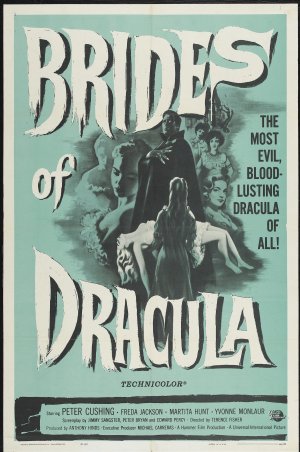
The-Brides-of-Dracula-posterSo, imagine this.  Two years have passed since your film company released a low-budget film called Horror of Dracula.  To the surprise of many, the film became an international hit that not only revived interest in the character of Dracula but also made a star out of an imposing and opinionated actor named Christopher Lee.  Naturally, being a smart film mogul, you want to make a sequel to Horror of Dracula.  Both director Terrence Fisher and screenwriter Jimmy Sangster have agreed to return to make a second part of the franchise.  Now, all you have to do is recruit your star…

…and Christopher Lee doesn’t want to do the film!

There are conflicting reports on just how much Christopher Lee disliked the Hammer Dracula films.  Lee, himself, has been inconsistent on the subject, occasionally claiming that he hated all of them and then other times saying that he only disliked the sequels.  One thing that does remain consistent is that Lee reportedly feared being typecast as Dracula and, as a result, he initially declined to be a part of any sequel.

Nowadays, they’d probably just recast the role with Nicolas Cage.  But this was the late 50s/early 60s and, instead of recasting, Hammer just made a Dracula film without Dracula.  Yes, the film may have been called The Brides of Dracula but, beyond being mentioned in the film’s prologue, Dracula never makes an appearance.  For that matter, there really aren’t any brides of Dracula either.  There are three female vampires but none of them are turned into vampires by Dracula.  Instead, the vampire in question is Baron Meinster (David Peel, who does a pretty good job in the role but who, needless to say, is no Christopher Lee).

Dracula does not return for The Brides of Dracula but his nemesis Prof. Van Helsing (Peter Cushing) does.  Cushing was so well-cast as Van Helsing and brought such a sense of righteous fury to the role that his presence goes a long way towards making up for the absence of Christopher Lee.  When you look at and listen to Cushing’s Van Helsing, you’re left with little doubt that this is a man who has dedicated his life to destroying vampires and that he’s quite good at it.

And it’s a good thing that Van Helsing shows up because, regardless of whether Dracula is directly involved or not, Transylvania has some issues.  The Brides of Dracula opens with a French school teacher named Marianne (Yvonne Monlaur) finding herself stranded at an old castle.  The owner of the castle — Baroness Meinster (Martita Hunt) — allows Marianne to spend the night but asks her to please refrain from releasing her son, Baron Meinster, from the chains that hold him prisoner.  Naturally, Marianne does exactly the opposite.  She steals a key and sets the Baron free.

Of course, the Baron is a vampire and soon he’s feeding on the inhabitants of a nearby village.  The Baron has also decided that Marianne should be his bride.  Will Prof. Van Helsing be able to save Marianne’s soul and defeat a second vampire?  You’ll have to watch the movie to find out!

And you certainly should.  Once you get over the fact that Brides of Dracula does not feature Lee’s iconic Dracula, the film itself is surprisingly entertaining, filled with all of the gothic touches, creepy scenery, evil villains, bloody throats, and heaving cleavage that you would expect from a Hammer film.  Peel, Hunt, and Monlaur are all well-cast and best of all, Peter Cushing is Dr. Van Helsing!

In short, it’s not bad for a Dracula film that doesn’t actually feature Dracula.


Horror Film Review Repost: The Horror of Dracula (dir by Terrence Fisher)


(As some of our longtime readers might remember, I originally posted this review on October 11th, 2013.  I’m going to be posting reviews of all of the Hammer Dracula films today so I figured I would start things off by reposting my thoughts on the very first of them, 1958’s Horror of Dracula.  Add to that, I happen to really like this review!)

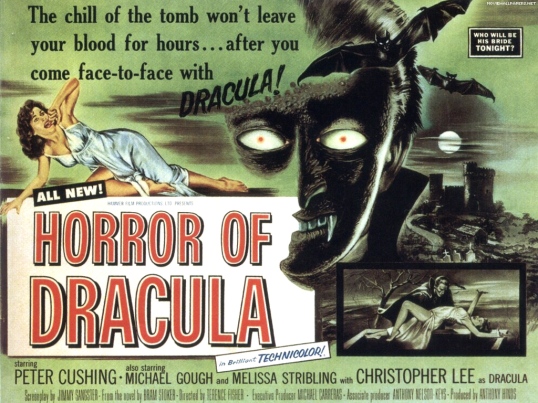
horrorofdracula

Of all the monsters who have appeared in horror cinema, Count Dracula is perhaps the most iconic.  Reportedly, Dracula first appeared on film in 1920, in a silent Russian film that is now considered to be lost.  In 1921, he would appear in a Hungarian film called Dracula’s Death and in 1922, he would be renamed Count Orlok for the German masterpiece Nosferatu.  Indeed, by the time Bela Lugosi gave his famous performance in Tod Browning’s Dracula, the count had been appearing in films for at least 11 years.  In nearly 100 years of filmmaking, a countless number of actors have brought Dracula to life.

We could spend hours debating who was the best Dracula and certainly, there are some worthy contenders.  Bela Lugosi brought a continental sophistication to the role, while John Carradine was properly intimidating and theatrical.  Udo Kier, Gary Oldman, Thomas Kretschmann, Leslie Neilsen, Zandor Vorkov, and Frank Langella have all played the prince of darkness, to varying degrees of success.

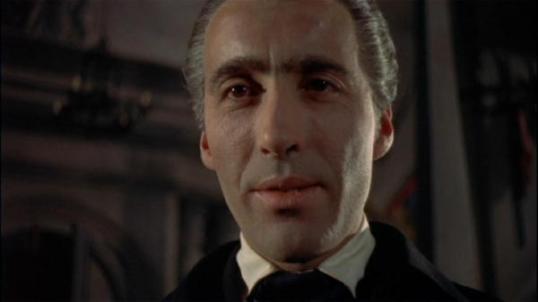
Yet for me, as worthy as any of those actors may be, there is only one true Dracula and he was played by Christopher Lee.

Lee famously played Dracula in seven movies for Hammer Films and, though he has often complained about the quality of these films (especially the later ones, which tended to mix Dracula with hippies), they were largely responsible for making Christopher Lee into the iconic figure that he remains today.  It’s also largely due to Lee’s performance that horror fans like me continue to discover and appreciate the films of Hammer today.

As played by Christopher Lee, Dracula was pure evil.  Lee’s Dracula had no use for self-pity and one can only imagine what his reaction would have been if he had ever run into the self-torturing vampires of Twilight.  Lee’s Dracula had no use for doubt or regret.  Instead, he was a determined animal who was driven by a singular lust for blood.

And yet, at the same time, Lee brought an intelligence to the role that was often lacking in previous performances.  Lee’s Dracula may have been an animal but he was a cunning animal.  Whereas it’s easy for me to imagine escaping from the clutches of Bela Lugosi, I know that if Lee’s Dracula wanted me then he would have me.  There’s no escape from Lee’s Dracula.  He’s too quick, determined, and intelligent.

Christopher Lee Is Dracula

His animal nature made Lee’s Dracula frightening but it was his cunning and determination that made him dangerous and, ultimately, even sexy.  (While I’ve read that audiences in 1931 swooned over Bela Lugosi, whatever sex  appeal he may have had is lost on modern viewers like me.)  It has often been argued that Bram Stoker meant for Dracula to be a symbol of all the desires that were repressed by Victorian society.   That’s certainly true when it comes to Christopher Lee’s carnal and viscous portrayal of the character.

Of the seven Dracula films that Christopher Lee made for Hammer Films, the first remains the best.  Released in 1958 and known as Dracula in the UK and the Horror of Dracula in the US,  it revitalized the horror genre and helped to make stars of both Christopher Lee and Peter Cushing.  Especially when compared to some of the sequels that Hammer subsequently produced, it remains one of the best Dracula films ever made.

Horror of Dracula

The film is a very loose adaptation of Stoker’s original novel.  Jonathan Harker comes to Dracula’s castle in Romania.  Though posing as a librarian, Harker has actually come to the castle to drive a stake through the heart of both Dracula and his vampire bride.  However, no sooner has Harker staked the bride than he’s overpowered and bitten by Dracula.  Significantly, all of this occurs within the first 10 minutes of the film.  As opposed to certain other Dracula films, Horror of Dracula gets straight to the point.  And why shouldn’t it?  After all, anyone watching the film already knows that Dracula’s a vampire so why waste time trying to convince us otherwise?  We don’t watch Dracula for the familiar story as much as we watch to discover how different filmmakers will choose to tell that story.

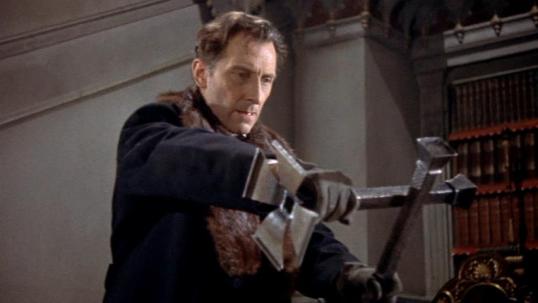
When Harker’s colleague, Prof. Van Helsing (played with the perfect amount of intensity by Peter Cushing) shows up at the castle, he discovers that Harker is now a vampire and that Dracula is nowhere to be found.

Dracula, needless to say, is out for revenge.  He stalks Harker’s fiancee Lucy, as well as Lucy’s brother Arthur Holmwood (Michael Gough) and his wife Mina (Melissa Stribling).  Much as in Stoker’s original novel, Lucy is eventually turned into a vampire and it’s up to Van Helsing and Arthur to stop both her and her new master.

(Of course, in Stoker’s original novel, Harker is not turned into a vampire and instead marries Mina while the aristocratic Arthur is one of Lucy’s three suitors.  However, I have to say that I always thought the literary Harker was a bit on the dull side and that Arthur was always my favorite character so I’m happy that he gets to be the hero here.)

If I had to pick one film to epitomize everything that I love about the Hammer brand of horror, it would be Horror of Dracula.  As directed by Terrence Fisher, the film moves at an exciting, non-stop pace while the traditionally lush cinematography is almost bombastically colorful.  Cushing and Lee, who were the best of friends off screen, make for formidable opponents, with Cushing embodying good just as effective as Lee embodied evil.  Though it’s been over 50 years since Horror of Dracula was originally released, the film remains effective and, not coincidentally, a lot of fun.

Peter Cushing as Dr. Van Helsing

Quite simply put, this is a film that, for so many reasons, remains a true pleasure to watch.

One final note — I often find myself lamenting that I was born several decades too late and I realize just how true that is whenever I watch a film like Horror of Dracula.  Seriously, I would have loved to have been a Hammer girl, showing off my cleavage and getting hypnotized by Christopher Lee.

Seriously, what more could you want?

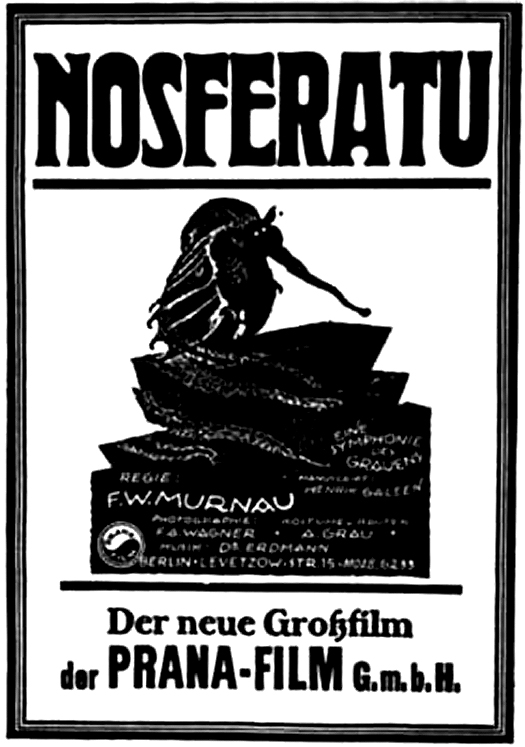
Horror on the Lens: Nosferatu (dir by F.W. Murnau)


Nosferatuposter

This isn’t the first time that we’ve shared the classic 1922 silent vampire film Nosferatu here on the Lens but who cares?  It’s not only one of the most influential films ever made but it’s also something of a Halloween tradition around these parts!  Directed by the great German expressionist F.W. Muranu and featuring an iconic performance from Max Schreck, Nosferatu is a film that everyone should see at least once.

And here’s your chance!


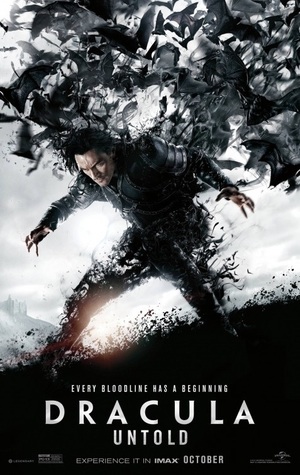
Horror Film Review: Dracula Untold (dir by Gary Shore)


Dracula_Untold_poster

Last night, I finally got a chance to see Dracula Untold, the new film that claims to show us not only who the world’s most famous vampire used to be but also how he became a vampire in the first place.  And I have to admit that I had strong hopes for Dracula Untold.  I certainly did not think that it would be a great film but I was hoping that it would at least be fun.

And can you blame me?

After all, it is October and what better time of the year is there to see a film about the early days of a horror icon?  Add to that, the film’s commercials all hinted that, at the very least, Dracula Untold would be full of over-the-top action, melodramatic performances, and ornate costumes.  Sure, there was no hint to be found that Dracula Untold would actually turn out to be a good movie but how can you go wrong with the promise of a little baroque spectacle?

As well, who doesn’t love vampires?  Who hasn’t, at some point, been intrigued by the mix of romance and morbid dread that epitomizes the vampire legend?  And, of course, long before there was ever an Edward Cullen or a Lestat, there was Dracula.

So, yes, I had high expectation for Dracula Untold but I don’t think they were unrealistic.  Ultimately, I was just hoping to see a fun and entertaining vampire film.

And, in all fairness, there were a few moments when Dracula Untold managed to be just that. Unfortunately, those moments were few and far between.  For the most part, this latest Dracula film turned out to be rather bland and predictable, a well-produced film that failed to leave much of an impression.  It was neither good enough to be memorable nor bad enough to be enjoyable.  Instead, it just kind of was.

Dracula Untold opens in the Middle Ages, with the man that we know as Vlad the Impaler (Luke Evans) ruling Transylvania.  Despite his fearsome reputation, we quickly see that Vlad is actually a very wise and benevolent king who truly loves his wife (Sarah Gadon) and his young son (Art Parkinson).  However, when the new sultan of Turkey (played by Dominic Cooper) demands that Transylvania send him 100 young men to serve as slaves (much as Vlad himself was forced to do when he was younger), Vlad goes to war against the Ottomon Empire.

With his forces outnumbered, Vlad does what any self-respecting ruler would do.  He goes to a cave and he talks to the Master Vampire (Charles Dance, under a ton of makeup).  The Master Vampire agrees to give Vlad all the powers of a vampire but there’s a condition.  In order to become human again, Vlad must go for three whole days without drinking any blood.  If Vlad does drink blood, he will be cursed to be a vampire for the rest of his life.

Vlad takes the deal, fully intending not to drink any blood.  As a result, Vlad can do all sorts of neat CGI tricks, like turning into a bat and fighting his enemies in slow motion.  However, he can’t go out in the sun without his skin starting to burn and silver causes his eyesight to go all blurry.  And, of course, he starts to crave blood almost immediately.  As Vlad tries to defeat the Turks before losing his special powers, he also discovers that his own soldiers now fear him and his dark powers…

I don’t want to be too hard on Dracula Untold because, while my overall reaction was one of disappointment, there are still bits and pieces of the film that works.  Charles Dance, for instance, gives a great performance as the Master Vampire.  Dominic Cooper camps it up as the film’s nominal villain and, as a result, he’s a lot of fun to watch.  Luke Evans is pretty to look at.  The final showdown between Evans and Cooper is well-directed.

But, ultimately, the things that worked in Dracula Untold were the exception to the rule.  For the most part, Dracula Untold is uninspiring and forgettable.  Clocking in at 92 minutes, Dracula Untold is almost too short and quick for its own good.  You never really find yourself becoming immersed in the film’s world and the majority of the film’s supporting characters were so thinly drawn that I struggled to keep straight who was who.  (I swear, at first, it seemed as if one of Dracula’s friends was actually killed three separate times.  It was only afterward, as I looked over the film’s credits, that I discovered that “friend” was actually three different characters who were so indistinguishable from each other that I had just naturally assumed that they were all meant to be the same guy.)  There are occasionally hints of an intriguing political and sexual subtext, particularly in the scenes between Evans and Cooper, but the film is always in such a hurry to get to the next battle scene that those hints are often pushed to the side within minutes of having been brought up.  It becomes obvious early on that Dracula Untold was mostly made to serve as the cornerstone of a new franchise and, as such, the film ultimately feels like a 90-minute prologue to a story that you’re not really sure will be worth all the build-up.

It’s not so much that Dracula Untold was a terrible film as much as it was just a painfully generic and predictable one.  And a character as iconic as Dracula deserves better.

Horror on The Lens: Grave of the Vampire


In this 1972 film (which was reportedly made for $50,000), exploitation vet William Smith plays James Eastman, a young man who just happens to be half-vampire and who has dedicated his life to tracking down and destroying his father.  And who is his father?  None other than serial killer-turned-bloodsucker Caleb Croft (Michael Pataki) who is now teaching a course down at the local college!  What choice does James have but to enroll in his father’s class and then make plans to destroy him?

While it’s pretty obvious that Grave of the Vampire was made for next to no money, it’s still got a few atmospheric scenes.  While the film really doesn’t do as much as one might hope with the whole idea of James between half-vampire and half-human, it’s still worth seeing for Michael Pataki’s performance.  He is one intimidating vampire!

Horror on the Lens: The Return of Dracula (dir by Paul Landres)


In this independent 1958 film, Dracula (Francis Lederer) comes to a small town in California in the guise of being an artist.  As you can probably guess, a lot of typical Dracula things start to happen, especially after Dracula meets the lovely Rachel Mayberry (Norma Eberhadt).

The Return of Dracula came out around the same time that Hammer Film’s brought new life to the Dracula legend with The Horror of Dracula.  As a result, The Return of Dracula has always been overshadowed by its British cousin.  And that’s a shame because, while undoubtedly being a low-budget affair, The Return of Dracula has a lot of atmosphere and is effective when taken on its own terms.  The film features a great musical score and Francis Lederer makes for an imposing Dracula.

Watch it below!


Duke Tries A Halloween Marathon…Part Three


So, I have made it 11 days! I am going to try to keep it up, but there are some personal changes, job wise, possibly going on in the next week or so and I might not be able to continued watching 1  horror film a day. I will still continue to watch as many as possible, and keep posting the reviews in parts such as this – there just might not be as many films, or they might not be as frequent.

Duke Tries A Halloween Marathon…Part One

Duke Tries A Halloween Marathon…Part Two

October 7th: ‘Willow Creek’ (dir. Bobcat Goldthwait)
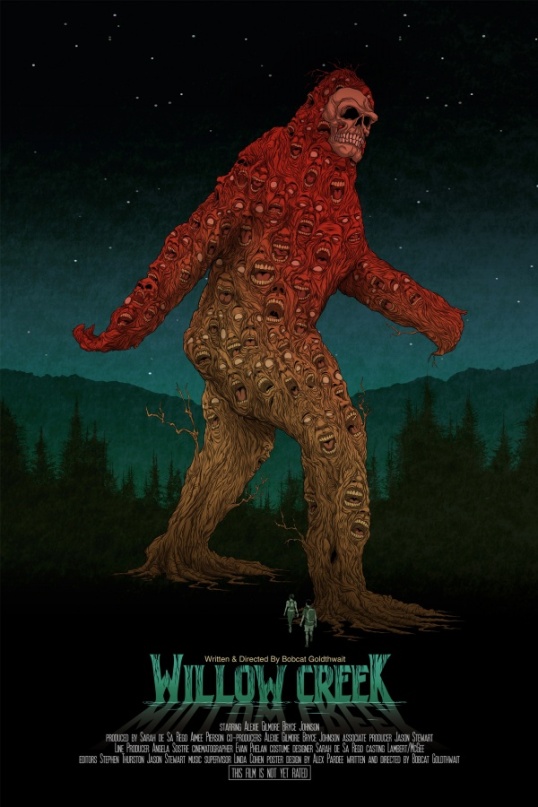
willowcreekmedium__span

‘Willow Creek’ is a found footage horror film that is essentially ‘The Blair Witch Project’ meets Bigfoot and it is pretty damn effective…for about 20 minutes.

The story here is simple, a couple is filming an excursion into the Six Rivers National Forest to find the site of the infamous Patterson-Gilmin film (you know, that grainy footage of some dude in a fur coat). Before trekking into the wilderness they interview locals of Willow Creek, a town that is filled with believers and non-believers, both of which pretty much make their living off the Bigfoot image. Things begin to get fishy when a group of locals start to threaten the couple and tell them to go home. Of course they don’t take this advice, and instead head into the woods. Things turn from bad to worse pretty quickly as something, or someone, starts to terrorize them during the night.

This is a film that takes a very long time for anything to really happen. Much of it is just spent trying to build some level of suspense, and set up some possible mystery about what or who is in the woods. It doesn’t really work for a few reasons.

Mainly, because like most found footage films this one has a lot of scenes that have NO real reason to be filmed. Many of which just involve the two characters driving, talking about whether or not they believe in Bigfoot. They are supposed to be making a documentary apparently. Most of what they are filming is interviews; so why the hell would they be filming conversations that aren’t interesting footage in regards to either the film, and aren’t worth recording even if they are possibly trying to remember the trip? It seems like the sole purpose of it is to show tension building between the couple…but it kills the logic of the style, taking you out of the “reality” they are trying to create.

Once things do get going it basically just becomes another ‘The Blair Witch Project’, with characters in a tent hearing noises and movement outside – but are the scares during these scenes effective? Hell yes. There is one incredible 20 minute long shot of the characters just sitting in a dimly lit tent as something outside is making noises and throwing things at them. It is quite an unsettling scene that gets right under the skin. Unfortunately it doesn’t last. By the time the next morning arrives things become a little too familiar, going from homage to straight up copying, and it isn’t hard to predict where things are going from there as the characters find themselves going in circles and losing their cool.

Other than that 20 minute stretch the film doesn’t really have anything else going for it. Sure the leads are likable and manage to keep you invested when tension is low. But that is only until their personal problems come to the surface. These two really need a whole different film to work things out. This is a bit of a spoiler, but like, yeah dude, really smart to propose to your girlfriend in the woods after receiving weird threats and finding your camp ransacked…oh, she rejected you? She says it is too soon? Maybe cause YOU DON’T EVEN LIVE TOGETHER? Why this scene is even included makes no sense to me. We don’t care enough about these characters to want to see their romantic life. And this minor conflict has NO bearing whatsoever on what came before it or what follows.

It all ultimately resulted in a film that is worthy of admiration for one great and truly eerie scene, but nothing more. It was just impossible for me to get over so many of the glaring character and film making issues to consider it anything special. And as the dust settles, I find myself now more annoyed than anything by how just disappointing it was. Because it DID have something there for a few minutes. If only. So I don’t really recommend it. Honestly, you are probably better off just checking YouTube for the long take I mentioned.

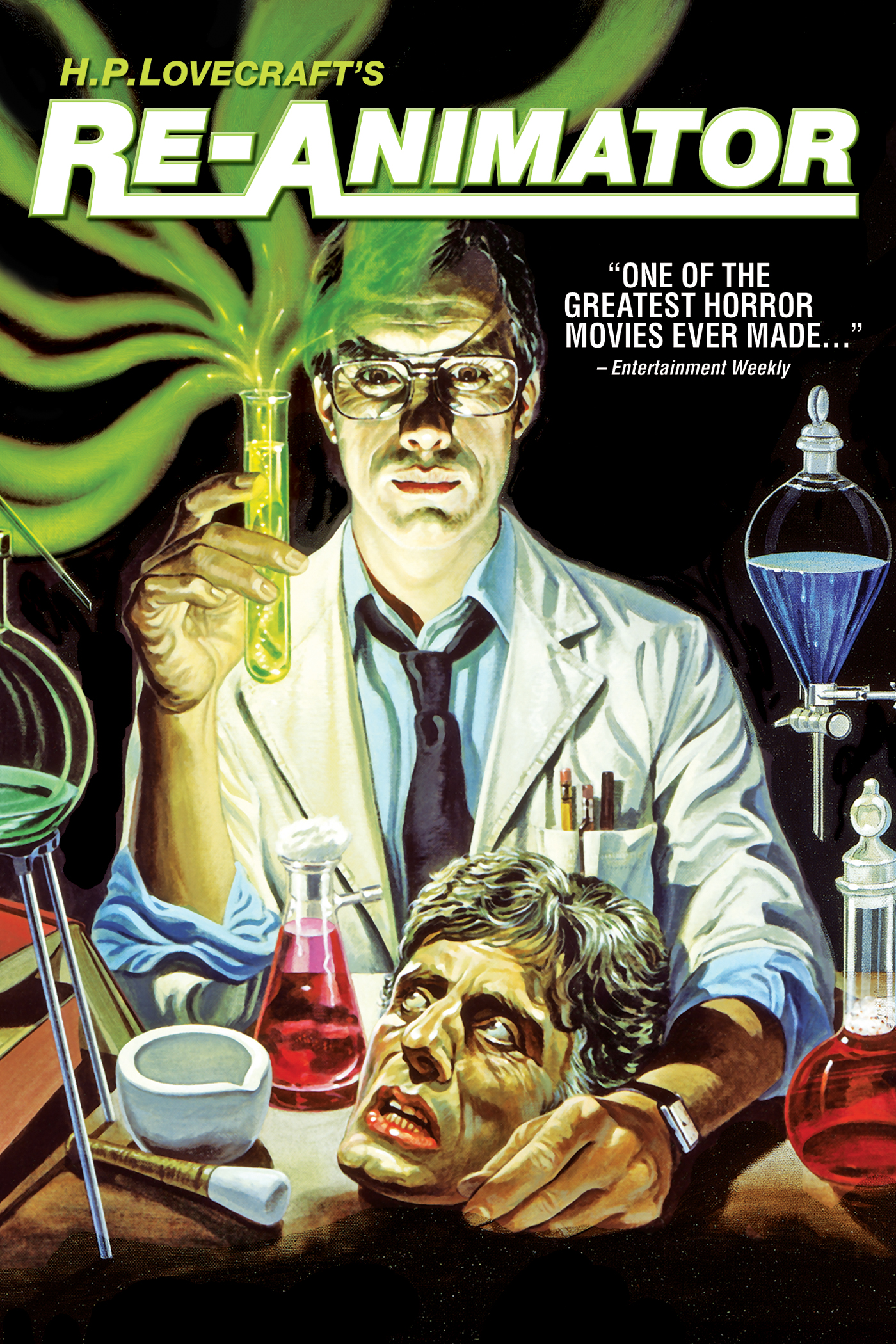
October 8th: ‘Re-Animator’ (dir. Stuart Gordon)
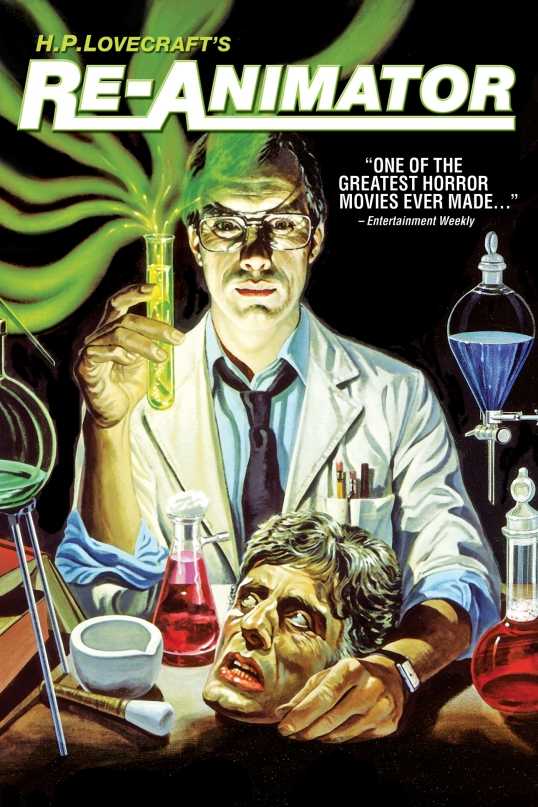
re-animator-poster-artwork-jeffrey-combs-bruce-abbott-barbara-crampton

‘Re-Animator’ is an utterly ridiculous horror “comedy”, in the vein of ‘Dead Alive’, that relies almost completely on some crazy visual gags to create a fun and bat shit crazy – but also totally hollow – viewing experience.

The film is about a medical student whose new roommate is secretly working on a formula that he believes can bring the dead back to life. When he finds out – after a hilarious mishap with a zombie cat – he gets caught up in the weird experiments his roommate is doing in their basement. As they progress, their target for test subjects grows from cats to humans; at the same time their egotistical professor discovers their work and wants to claim it as his own.

There isn’t much to say here. The story is rather simple and moves at a very fast pace. This leaves no room for any sort of reasonable character development. I understand this isn’t trying to be some serious horror film, but the gore, effects and humor alone weren’t enough to keep me truly invested. With so much on the line for the characters, I just wished I cared at all about any of them.

Still, it is a fun watch, mainly because of how cartoonish it gets at times, so I’d recommend it if you are looking for something with a light tone, simple narrative and plenty of gore.

October 10th (Watched two to make up for missing the 9th): ‘Hellraiser’ (dir. Clive Barker)
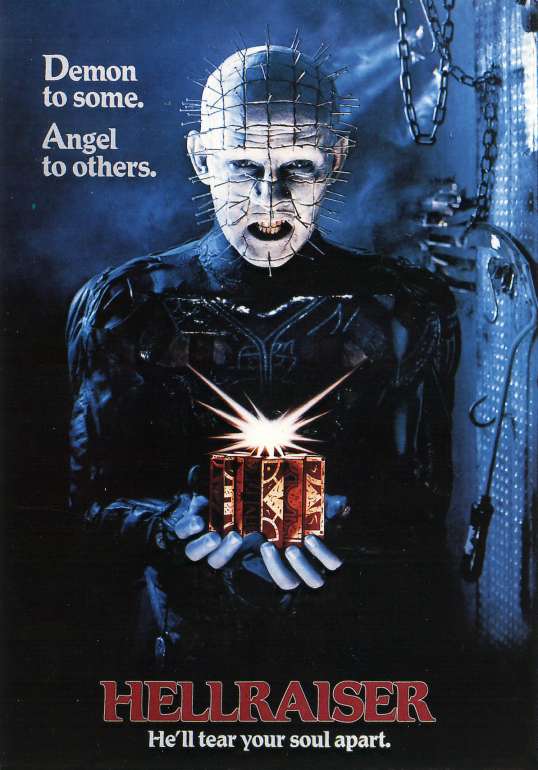
Hellraiser_Poster

‘Hellraiser’ is at times a grisly horror film with some great truly grotesque visual effects. It is almost completely ruined however by a lackluster and poorly paced first hour.

The film is about a man who moves into his childhood home with his wife; a wife who had a secret affair with her husband’s brother. Little do either of them know that the brother died in the house’s attic while opening a mysterious puzzle box, known as the Lament Configuration, disappearing without a trace. After an accident, the blood of the husband lands on the attic floor causing the brother’s body to re-materializes as a bloody skeleton. He uses the wife to secretly bring men to the attic so he can kill them and slowly regenerate his body. All the while, the husband’s daughter Kirsty suspects something weird is going on and tries to find out what. She discovers that the puzzle box opens a portal to some other dimension filled with “demon” Cenobites – who essentially dabble in the most extreme forms of sadomasochism one could imagine. They want to take the brother back, and also have their eyes on Kirsty.

Practically nothing eventful happens throughout much of the story. I understand a lot of it is to set up the finale, but it could have easily been condensed to allow for more to happen in the third act. There is no development of the characters in the first hour. We know fairly quickly who the adult characters are, as well as their intentions, and so did not need so much time focusing on them. The first hour is literally just the wife bringing men to the brother to be killed. Instead, the film should have focused more on Kirsty, the young daughter, who is the focus of the film in the final 30 minutes. She is the only character anyone could really care for in the whole film and yet she is thrust into danger with so little time spent developing her that any real sense of suspense over her safety is absent.

I think why I found this so disappointing was that it sets up such an interesting horror universe that did intrigue me. There is definitely a lot more to these Cenobites than we are told; and they are frightening enough to have been present and a source of scares for more than the little screen time they get here. These are all really personal gripes, and the film is not a failure. As a whole I quite enjoyed it, I just think it missed a chance to be truly great. With that said, for what seems like one of the first times in a while, I am actually now interested in seeing what the sequel of a horror film has in store.

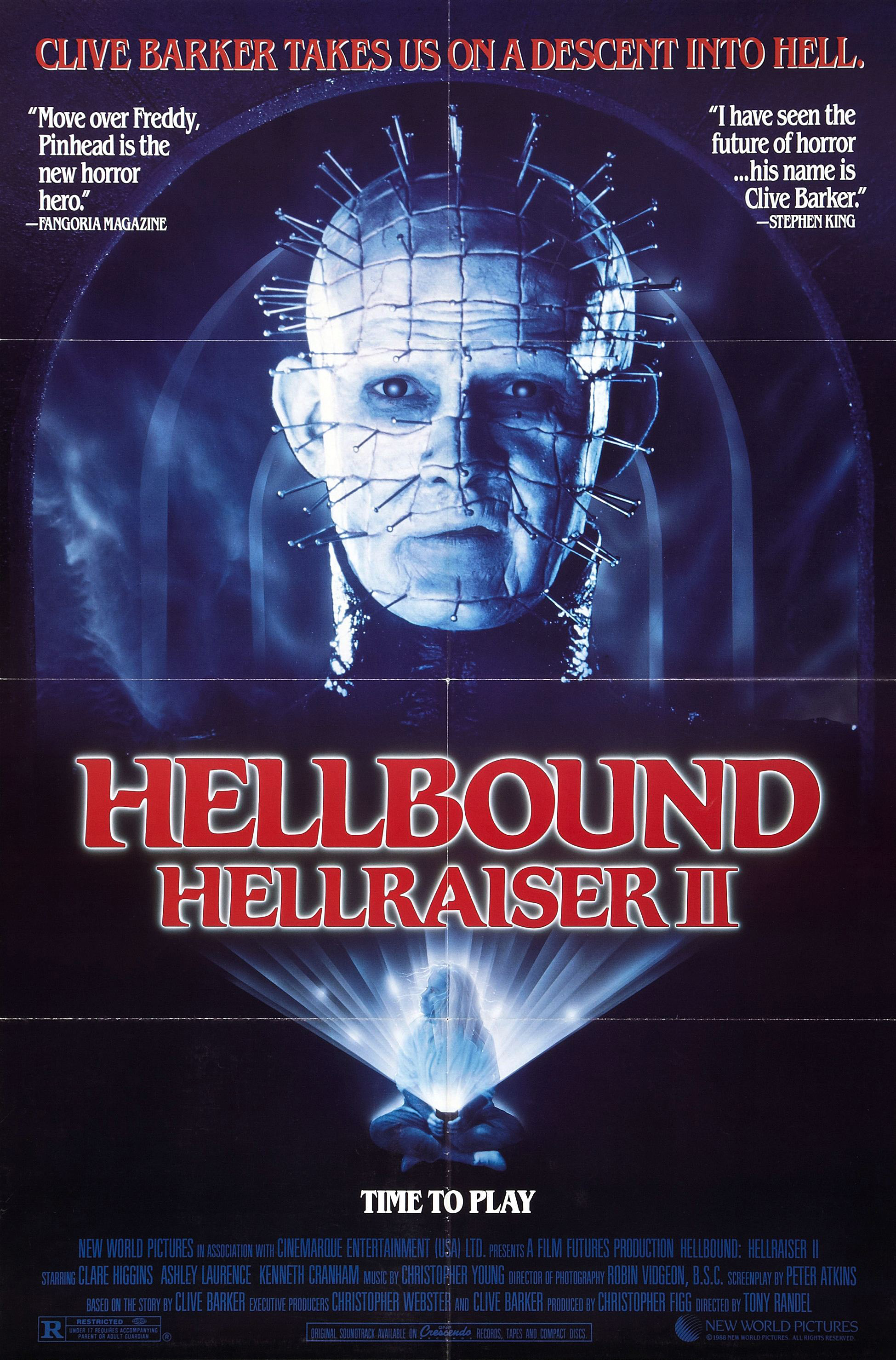
October 10th: ‘Hellbound: Hellraise II’ (dir. Tony Randel)
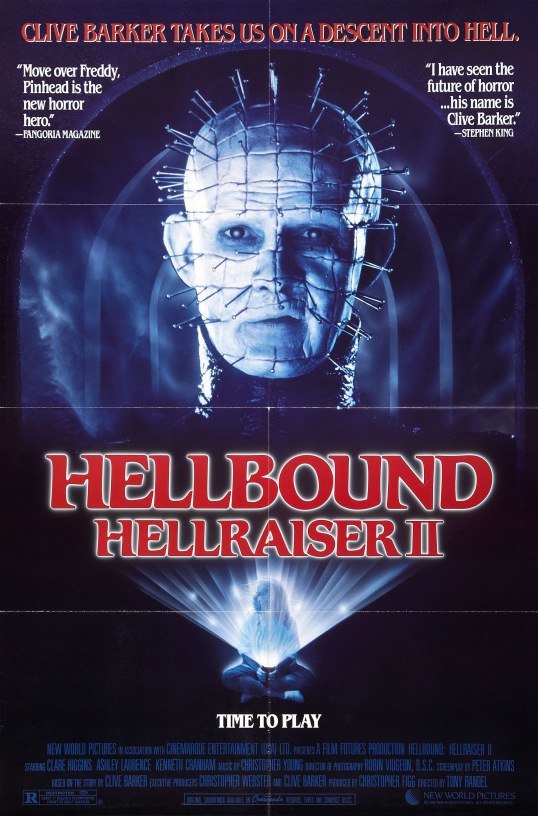
hellraiser_2_poster_01

‘Hellbound: Hellraiser II’ is the sequel to the first ‘Hellraiser’ film, and like the first is a wonderfully sick, twisted and gory horror flick that luckily, in my opinion, puts the focus were the first should have.

The film takes place right after the original left off with Kirsty in a mental ward. She tries to explain to the doctors and police what happened to her parents, but of course no one seems to believe her. No one except one doctor who has studied the Lament Configuration, the puzzle box that started it all. Based on the information he gets from Kirsty’s story, he uses the bloody mattress of Kirsty’s mother in law to bring her back to life and open the Lament Configuration. In doing so he, Kirsty and another girl at the ward – Tiffany – get trapped within the realm of the Cenobites, essentially a labyrinth of horror. Kirsty tries to find her way out with Tiffany, while also fighting off her evil mother in law, and the doctor who is turned into a Cenobite.

The first half hour was truly disappointing. It spends pretty much the entire time flashing back to the events of the first film. Considering this came out shortly after the original – and because I can only imagine those that saw this were people who already saw ‘Hellraiser’ – there was absolutely no need for any of this. Plus, because the ending to the first was were all the action was, I was hoping that would have carried over. Sadly, it was just more waiting around for something interesting to actually occur. Luckily this time it didn’t take an hour.

Once things did get going, the film turns into a twisted and warped mind trip, with the Labyrinth using nightmarish memories and gruesome visuals to confuse and frighten Kirsty and Tiffany. It is not really at all scary, but the craziness of it all is so fun to watch. Plus, it expands on the background of the Cenobites, actually making them more than two dimensional villains.

As with the first, the visuals here – specifically the make up and costumes – are very well done. In particular, I love the way the muscles were constructed when there is ever a skinless body. With all the detail that went into them, along with the creativity of some of the demons, it offset how grotesque the gore could be. In other words, I’d have been more grossed out if not for the fact that I admire it all so much.

Despite the issues I had with the first half hour the film works. It works even better when watched back to back with the first. I do ultimately think I liked this one more, but I highly recommend both ‘Hellraiser’ films…a sentence I didn’t think I’d ever say. Now I have to decide whether I want to delve deeper into the franchise…

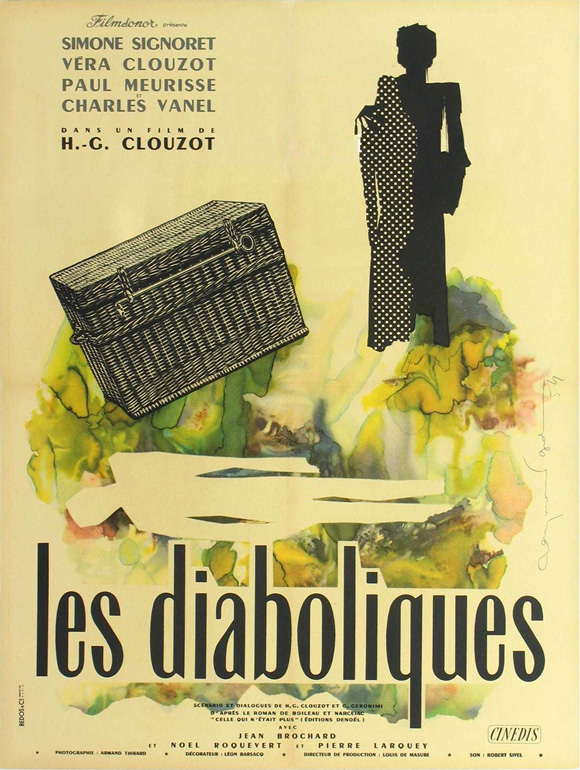
October 11th: ‘Les Diaboliques’ (dir. Henri-Georges Clouzot)
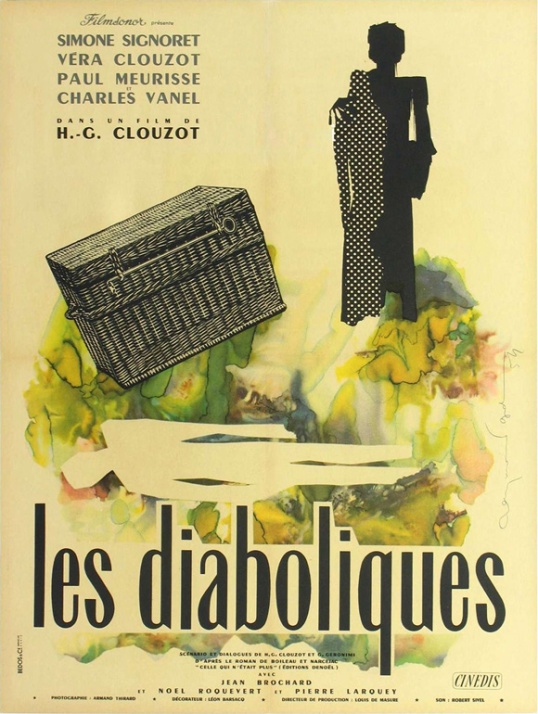
diabolique-movie-poster-1955-1020417623

‘Les Diaboliques’ is a cold, dark, clever and meticulous horror thriller. One that slowly lays out its plot, piece by piece, reaching an unnerving level of confusion and suspense. All ending in a wonderfully twisted, and at one point quite terrifying, finale.

To go into much detail about the plot would ruin the experience, and to give away the ending would be criminal – the film actually ends with a plea from the filmmakers for the audience to not give anything away. So I will just say that it has to do with the wife and mistress of a barbarous school Headmaster, plotting to rid themselves of his cruelty. But things do not go as planned, and a mystery filled to the brim with suspicion and fear slowly unfolds.

It might sound simple or familiar – and I am guessing at the time it wasn’t viewed that way – but ignore that, because the film is neither; instead it is truly quite brilliant and near perfect. It contains a totally adsorbing narrative that requires, and earns, every bit of the viewers attention. It creates a genuine atmosphere of suspense and uncertainty that is hard to shake.

It does it all through its technical excellency. The direction, fixating on certain locations or items to ratchet up the tension of already thrilling situations, is phenomenal and sets the tone very early on. The performances are also very good, as is the writing, with almost every character having some flaw or secret, which may or may not implicate them in the mystery at hand. It does its best to keep you guessing, and it works right up to the very last frame.

Looking back, I guess I should not be surprised by just how great the film is. It was directed by Henri-Georges Clouzot who also made ‘Wages of Fear’ – arguably the tensest film ever made. It was also a masterpiece, and although I might not yet place ‘Les Diaboliques’ in that category, it is definitely not far from it.

Horror on The Lens: Dark Prince: The True Story of Dracula (dir by Joe Chappelle)


So right now, if you wanted to, you could go down to your local theater and you could watch Dracula Untold and maybe learn about the origin of Count Dracula.

Or you could just sit here and watch the 2000 film Dark Prince: The True Story of Dracula below!  As directed by Joe Chappelle, this film is definitely low-budget but undeniably effective.  Rudolph Martin does a good job playing the title character and it’s always fun to see Peter Weller in a film like this.

Guilty (Horror) Pleasure #23: Meridian (dir by Charles Band)


You know how there are certain films that you just know you shouldn’t like but yet, you do?  These are the films that you know you should reject but yet, right when you’re on the verge of condemning them, you suddenly realize that you’d rather watch them for a second or a third time.

For me, Meridian is one of those films.

meridian (1)

Meridian presents a twisted take on the Beauty and the Beast fairy tale.  Catherine (Sherilyn Fenn) and Gina (played by an actress who is credited simply as being “Charlie”) are recent art school graduates who have moved to Italy.  Gina has come to Italy to work in art restoration while Catherine has inherited her father’s castle!  That right — Catherine owns her very own castle!

I wish I owned a castle in Italy.  In fact, the first person to buy me a castle in Italy (preferably one in Southern Italy) will get a special shout out from me on this site.  Get to it!

Anyway, Catherine is pretty happy to be living in her very own castle.  Not only does she have a lot of servants but one of them happens to be her childhood nanny (Hilary Mason) who, for reasons that don’t become clear until late in the film, is still very protective of Catherine.  Catherine was a little apprehensive about moving into the castle because, when she was little, she used to see the ghost of a dead girl wandering about.  However, with her nanny there to protect her and Gina visiting for the weekend, what is there to worry about?

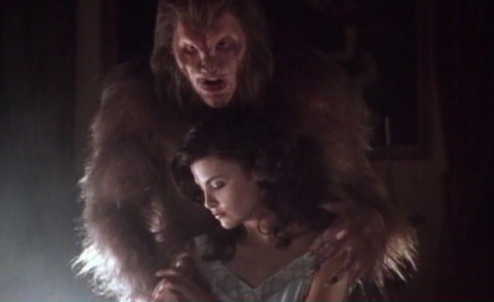
However, one morning, Catherine and Gina discover that a traveling circus has been set up near the castle.  Catherine finds herself intrigued by the leader of the circus, the mysterious Lawrence (Malcolm Jamieson).  She invites Lawrence and all the performers to have dinner at the castle.  With the help of magic, wine, and drugs, the dinner turns into an orgy with a nearly unconscious Catherine being taken by Lawrence’s twin brother, Oliver (Jamieson again).  While atop of Catherine, Oliver reverts to his true form, as seen above…

Naturally, it all has to do with family curses and ghosts and all the rest.  The morning after, Catherine wakes up with little memory of what happened.  The performers are gone and Gina soon leaves the castle.  Left with only her servants, Catherine starts to see the ghost of that dead girl again.  And, of course, both Oliver and Lawrence show up once again.  At no point does the plot make any sense but, then again, life is usually kinda messy so why should movies be any different?

Meridian


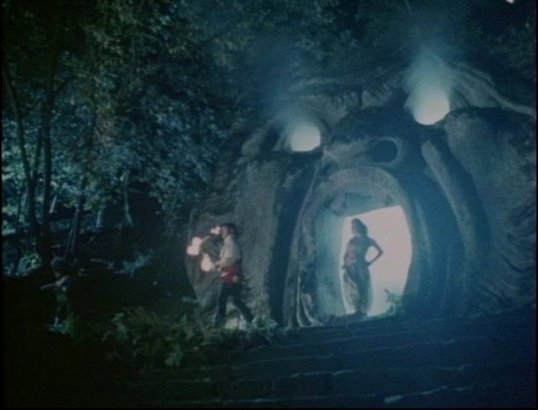
So, look — there’s a lot of negative things that I could say about Meridian.  Catherine is not a strong heroine, the film’s overly complicated plot is full of holes, and some of the acting is inconsistent.  But yet, oddly enough, those flaws ultimately work to Meridian‘s advantage.  It really is one of the most dream-like films that I’ve ever seen and often times it truly does come across like not only a fantasy but a fantasy that you might not want the world to know about.  (Which, I think, would make it the epitome of a guilty pleasure…hmmm…)  Working with what was undoubtedly a small budget, Charles Band tells his story with a lot of atmosphere and haunting imagery.  Taking place in a beautiful country and featuring a beautiful cast, Meridian is a lot better than one might otherwise expect.

Meridian was first released in 1990.  The version I saw was included as part The Midnight Horror DVD Collection, along with the original Prom Night and 6 other films, none of which were as good as either Meridian or Prom Night.

Previous Guilty Pleasures:

  1. Half-Baked
  2. Save The Last Dance
  3. Every Rose Has Its Thorns
  4. The Jeremy Kyle Show
  5. Invasion USA
  6. The Golden Child
  7. Final Destination 2
  8. Paparazzi
  9. The Principal
  10. The Substitute
  11. Terror In The Family
  12. Pandorum
  13. Lambada
  14. Fear
  15. Cocktail
  16. Keep Off The Grass
  17. Girls, Girls, Girls
  18. Class
  19. Tart
  20. King Kong vs. Godzilla
  21. Hawk the Slayer
  22. Battle Beyond The Stars