Lisa Watches An Oscar Nominee: Auntie Mame (dir by Morton DaCosta)


Oh Lord, Auntie Mame.

There were two reasons why I watched the 1958 film Auntie Mame.

First off, as I’ve mentioned before, TCM has been doing their 31 Days of Oscar this month.  They’ve been showing a lot of films — both good and bad — that were nominated for best picture.  Since it’s long been my goal to see and review every single film that has ever nominated for best picture, I have made it a point to DVR and watch every best picture nominee that has shown up on TCM this month.  Auntie Mame was nominated for best picture of 1958 and was broadcast on TCM this month so I really had no choice but to watch it.

My other reason for wanting to see Auntie Mame was because, when I was 19, I was cast in a community theater production of Mame.  (Mame, of course, is the musical version of Auntie Mame.)  Though everyone who saw the auditions agreed that I should have played the role of Gloria Upson, I was cast in the ensemble.  (Gloria was played by the daughter of a friend of the director.  Typical community theater politics.)  As a member of the ensemble, I didn’t get any lines but I still had fun.  In the opening party scene, I dressed up like a flapper and I got to show off my legs.  And then in another scene, I was an artist’s model and I got show off my cleavage.  (If you don’t use being in the ensemble as an excuse to show off what you’ve got, you’re doing community theater wrong.)  Towards the end of the play, I appeared as one of Gloria’s friends and whenever she delivered her lines, I would make sure to have the most over-the-top reactions possible.  She may have stolen the part but I stole the scene.  It was a lot of fun.

But, even while I was having fun, I have to admit that I didn’t care much for Mame.  It was an extremely long and kind of annoying show and there’s only so many times you can listen to someone sing We Need A Little Christmas before you’re tempted to rip out the hair of the actress who stole the role of Gloria Upson from you.

So, when I recently sat down and watched Auntie Mame, I was genuinely curious to see if the story itself worked better without everyone breaking out into song.  After all, Auntie Mame was the number one box office hit of 1958, it was nominated for best picture, and it was apparently so beloved that it inspired a musical!  There had to be something good about it, right!?

Right.

Auntie Mame tells the story of Mame Dennis (Rosalind Russell, attempting to be manic and just coming across as hyper) who is rich and quirky and irrepressibly irresponsible.  When her brother dies, Mame suddenly finds herself entrusted with raising his son, Patrick (played, as a child, by the charmless Jan Hadzlik and, as an adult, by the stiff Roger Smith).  Mame is a wild nonconformist (which I suppose is easy to be when you’ve got as much money as she does) and she tries to teach Patrick to always think for himself.  However, once Patrick grows up and decides that he wants to marry snobby Gloria Upson, Mame decides maybe Patrick shouldn’t think for himself and goes out of her way to prevent the wedding.

Auntie Mame is an episodic film that follows Mame as she goes through a series of oppressively zany adventures.  When the Great Depression hits, she’s forced to work as an actress, a saleswoman, and a telephone operator and she’s not very good at any of them.  She does eventually meet and marry the wealthy Beauregard Jackson Pickett Burnside (Forrest Tucker).  As you can probably guess from the man’s name, he’s supposed to be from the south.  (And yet Tucker plays the role with a western accent…)  He loves Mame but then he ends up falling off a mountain.  So much for Beau.

(In the production of Mame that I appeared in, Beau was played by this 50 year-old guy who simply would not stop hitting on me and every other girl in the cast and who was always “accidentally” entering the dressing room while we were all changing.  Whenever Mame mentioned Beau’s death, all of us ensemble girls would cheer backstage.)

Anyway, as a film, Auntie Mame doesn’t hold up extremely well.  I can understand, to an extent, why it was so popular when it was first released.  It was an elaborate adaptation of a Broadway play and, in 1958, I’m sure that its theme of nonconformity probably seemed somewhat daring.  When you watch it today, though, the whole film seems almost oppressively heavy-handed and simplistic.  It’s easy to embrace Mame’s philosophy when everyone else in the film is essentially a sitcom creation.

As I mentioned previously, Auntie Mame was nominated for best picture.  However, it lost to the musical Gigi.

Hallmark Review: Valentine Ever After (2016, dir. Don McBrearty)


IMG_3548

Note About Music: If you have come looking for the song at the end, then your answer is This Girl by Justin James. Thanks to Kayla Holder in the comments and Robert Carli for responding to her request about the song. You can find the song here on Justin James’ YouTube channel.

I’ve seen Northern Exposure, Doc Hollywood (1991), Finding Normal (2013), and Christmas Under Wraps (2014). All four of these use the same plot of a doctor who either gets in trouble in a small town or through normal unlucky circumstances winds up having to perform their doctoring services in a small town for a certain amount of time. In Northern Exposure, the doctor simply didn’t read the conditions of his scholarship and wound up being a doctor in a small town in Alaska. In Doc Hollywood, a doctor nearly hits a couple of people walking cattle on a street, but swerves to avoid them and destroys most of a judge’s fence so he has to do a handful of days as doctor in the town. In Finding Normal, a woman taking a cross country trip is pulled over by a cop for speeding and has a litany of past unpaid tickets as well as a warrant out for her arrest. She is sentenced to work as a local doctor in the town she was speeding through. In Christmas Under Wraps, a woman ends up getting an internship at the last minute which means just like Northern Exposure, it’s to Alaska she goes to serve as a local doctor. In all four of those movies/TV Shows, working as a doctor there meant helping to save lives and those towns were in need of a doctor. So let’s see Valentine Ever After’s rehashing of this story.
IMG_3586

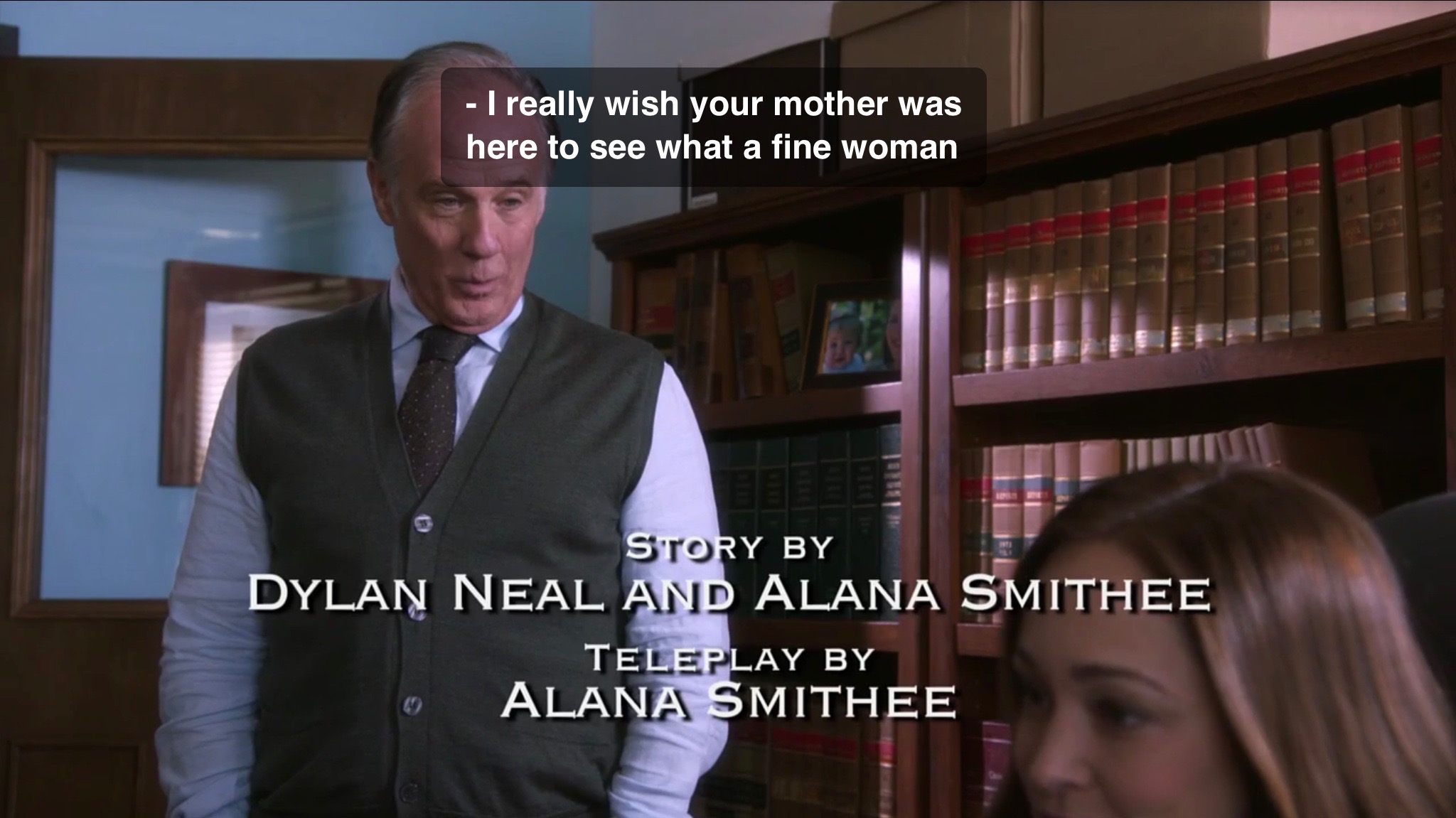
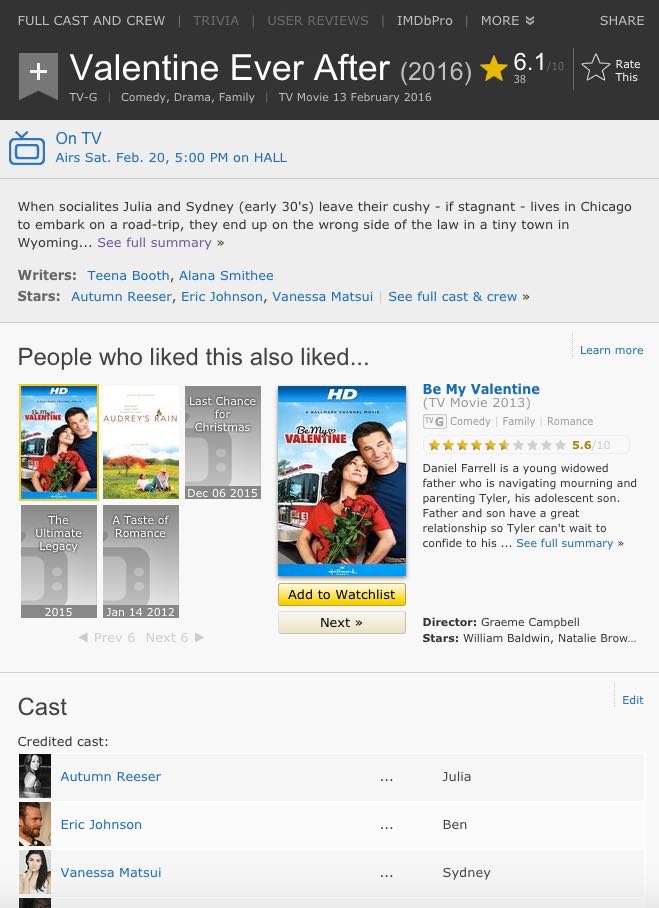
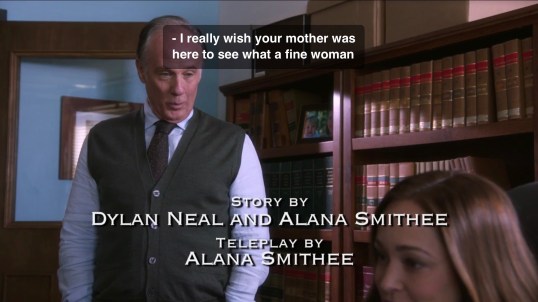
First off, take a look at those credits. Dylan Neal we know from The Gourmet Detective series. However, Alana Smithee is a new one on me and IMDb…sort of. It is a long standing tradition for people working on films, especially directors, to ask to be credited as Alan Smithee because the film was so taken away from them, recut, or basically changed so heavily that they don’t want to be associated with the movie. Alana Smithee sure reads like that is what happened here to the person who wrote the teleplay for this film and co-wrote the story with Dylan Neal. What’s really interesting is that until I changed it last night on IMDb to match the onscreen credits–you can still find the name on other sites–Teena Booth who has written numerous Hallmark movies was credited as one of the writers. She could be this Alana Smithee since I have no reason to believe there is an actual person with that name who has a completely blank profile with this film as their only credit.
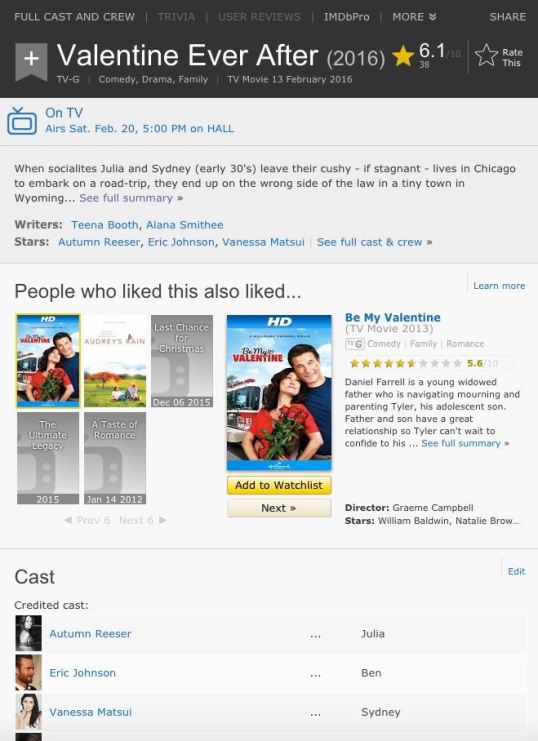
The way it looked last night on IMDb before I updated the page myself.

The way it looked last night on IMDb before I updated the page myself.

This could mean that Teena Booth is Alana Smithee. It could also be a simple mis-crediting. However, there are some other things that are a little funny here. If you go to the plot summary on IMDb, you will find it is written by Becky Southwell. Becky Southwell is Dylan Neal’s wife.
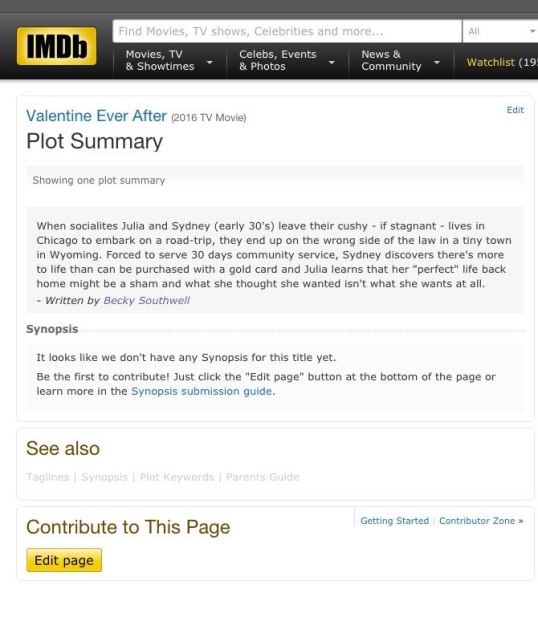
Screen Shot 2016-02-15 at 12.10.27 PM

It’s a little weird to me that she would have put in the plot summary, but not noticed that her husband doesn’t have writing credits listed on IMDb.

Then if you go to IMDb and look at the full credits for the film you will see Dylan Neal listed as an executive producer for the film.

Screen Shot 2016-02-15 at 2.25.40 PM

There is no onscreen credit for Dylan Neal as an executive producer. There are three onscreen credits for producing the film: Steve Solomos, Jonas Prupas, and Joel S. Rice.

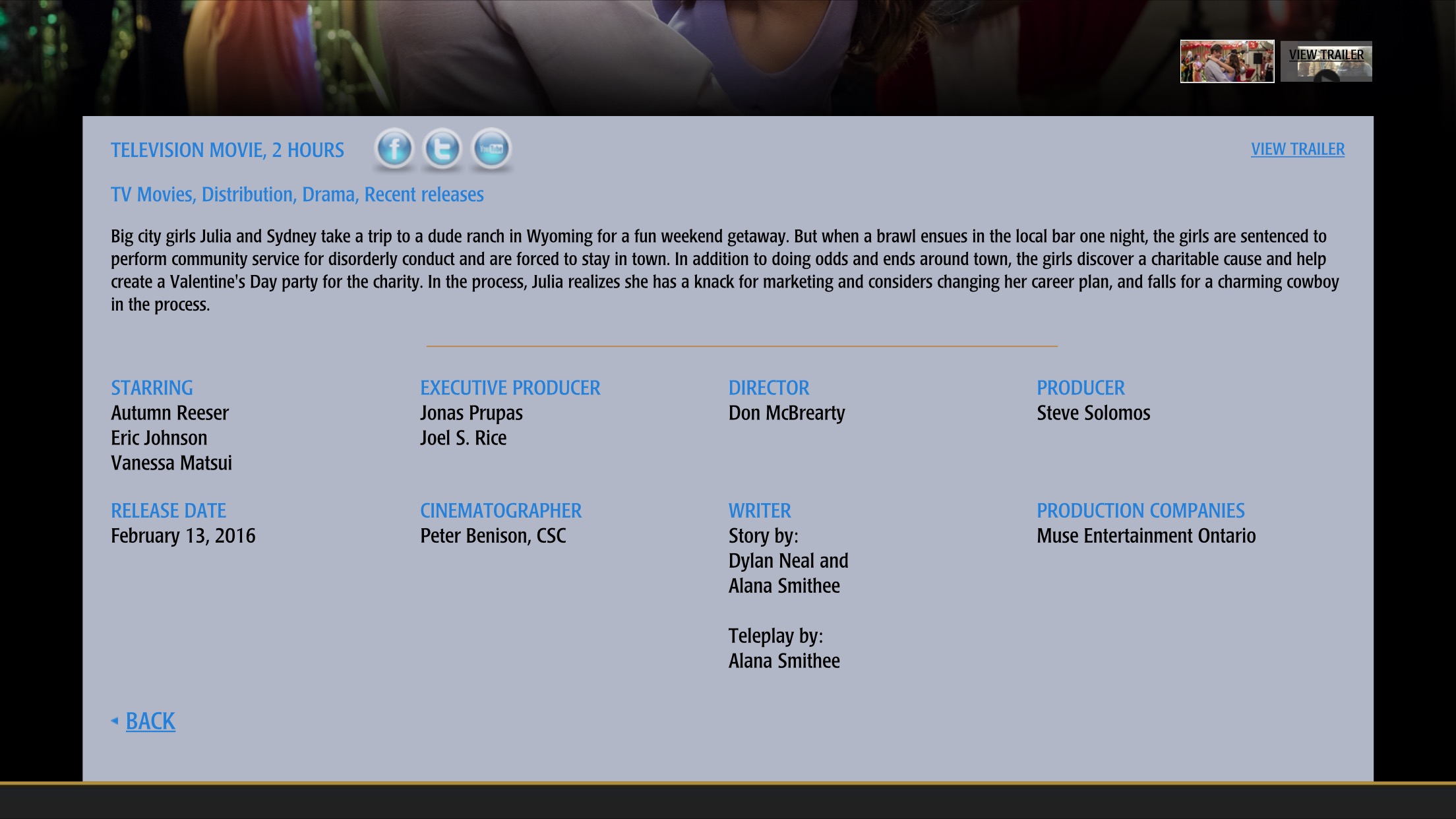
Adding even more confusion to the matter, if you go to Muse Entertainment’s website, who was the production company, they list only Jonas Prupas and Joel S. Rice as Executive Producers.
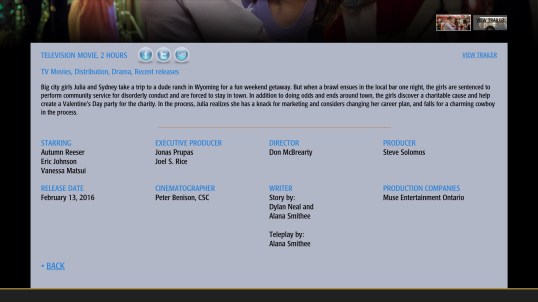
IMG_0505

It’s a mess. At the very least, I think it’s highly likely that unless an actual person named Alana Smithee comes forward, then this is probably someone who wanted nothing to do with this film. If you look at the film Hidden 3D (2011) you can see the writers used the names Alan Smithy and Alana Smithy. Considering the material of this movie, I get why someone wouldn’t want to be credited for it. I thought I should lay this out there for you since even last night a question about it had already popped up on IMDb’s message boards for the movie.

Now let’s talk about the actual film. If you know that you are going to watch this movie no matter what I have to say, then skip to the end of the review where I give my advice about how to do that and spare yourself some trouble. I know this is a long review and all. I also mention a list of tactics for figuring out the music in a Hallmark movie. I have noticed that quite a few people look for that information.

The movie opens up in a lawyer’s office and we meet our leading lady named Julia (Autumn Reeser). We find out that not only has her mother passed on, but that she is planning to become a lawyer herself but hasn’t passed the bar exam the first two times. She is working on the website for her father’s firm. The dad offers to have her come over for the weekend so he can help her study to take the bar exam again in a couple of weeks. He is proud of her and says he wishes her mother were here to see how well she has done “filling the empty space in this office” left by her dead mother. The scene began with him congratulating her on a brief she wrote for a case that reminded him of how her mother used to construct an argument. But now it’s off to meet her current boyfriend Gavin (Damon Runyan).

He proposes to her. The movie makes sure we know he is a little odd seeing as he starts the proposal by saying “if there’s one thing you know about me it’s that I pick winners.” On the surface, I will grant you that’s not the most romantic way to begin a proposal. Hallmark movies like to setup the wrong boyfriend with these less than subtle hints that the guy doesn’t see it as a union of two people who love each other, will make a great team together, and will do great things, but simply the latter two parts.

His parents jump in and are little rude about the wedding. Standard stuff for a Hallmark movie.
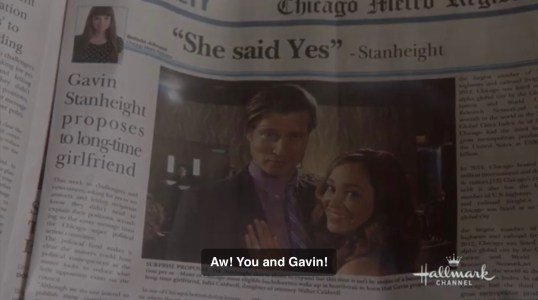
IMG_3704

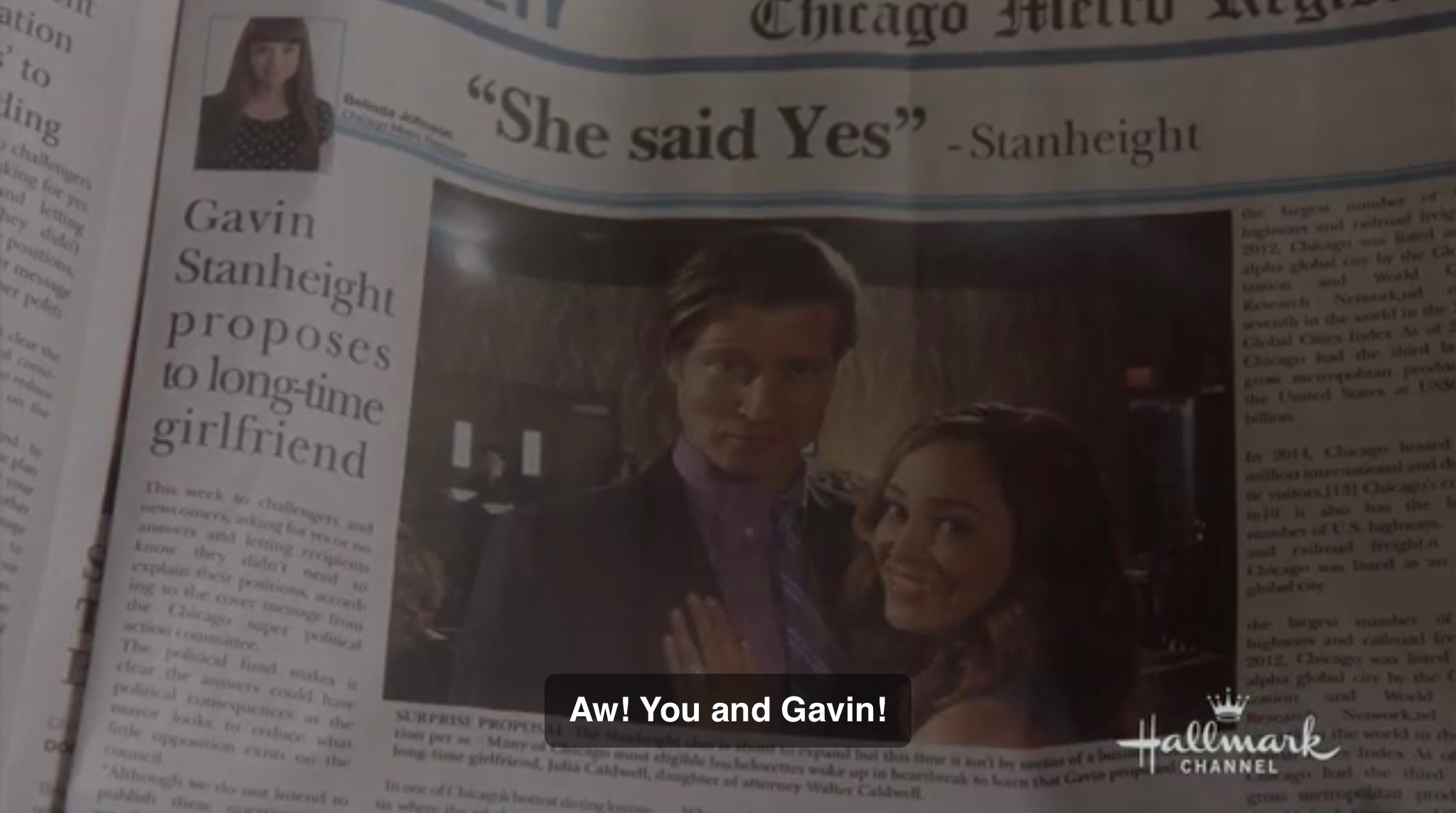
Now we go to meet Julia’s friend Sydney (Vanessa Matsui). We also see that Julia’s wedding made the papers so we know that she is well known in Chicago where she lives. Sydney speaks tells us her cousin announced at her father’s birthday party that a man named Chad was cheating on her. We also find out that people are calling her all the time about it. Sydney tells her, “Welcome to the upper crust. Say hello to five-star restaurants and goodbye to privacy.” We find out that while Sydney was born into the upper crust lifestyle, Julia had to work her way to get where she is. They decide it would be fun to get out of town for a while and visit Wyoming to go skiing. Sounds neat to me.

Gavin is a little mad that she just suddenly decided to leave town right after he proposed to her. I can understand. He even offers to just drop all the crazy wedding stuff if that is what’s bothering her and just simply go get married now. She doesn’t want to and so he says as long as she comes back. Again, not the perfect choice of words, but nothing here to indicate this is a bad guy. Off to Wyoming we go!

This means we get a shot of a plane and driving on one of those beautiful highways that take you through the mountains. Makes me long for the days when I used to take trips to Lake Tahoe with my parents. Then Sydney tells Julia that the GPS says turn right.

IMG_3805

I’m grateful that this is one of those Hallmark movies that knows how GPS works. It doesn’t require cell towers, but just visibility by a couple of satellites orbiting the Earth. However, sometimes the maps can fail you. I haven’t had it happen often, but it does occur. The United States is big. It also doesn’t help when you apparently think you can clear a rock, but it hits the underside of your car. Course they don’t show it cause budget and it really isn’t necessary. Seeing as they really got themselves lost, they are out of range of any cell coverage. To my knowledge, rare in 2016. Even in rural areas where having a way to call for help is rather important.
IMG_3865

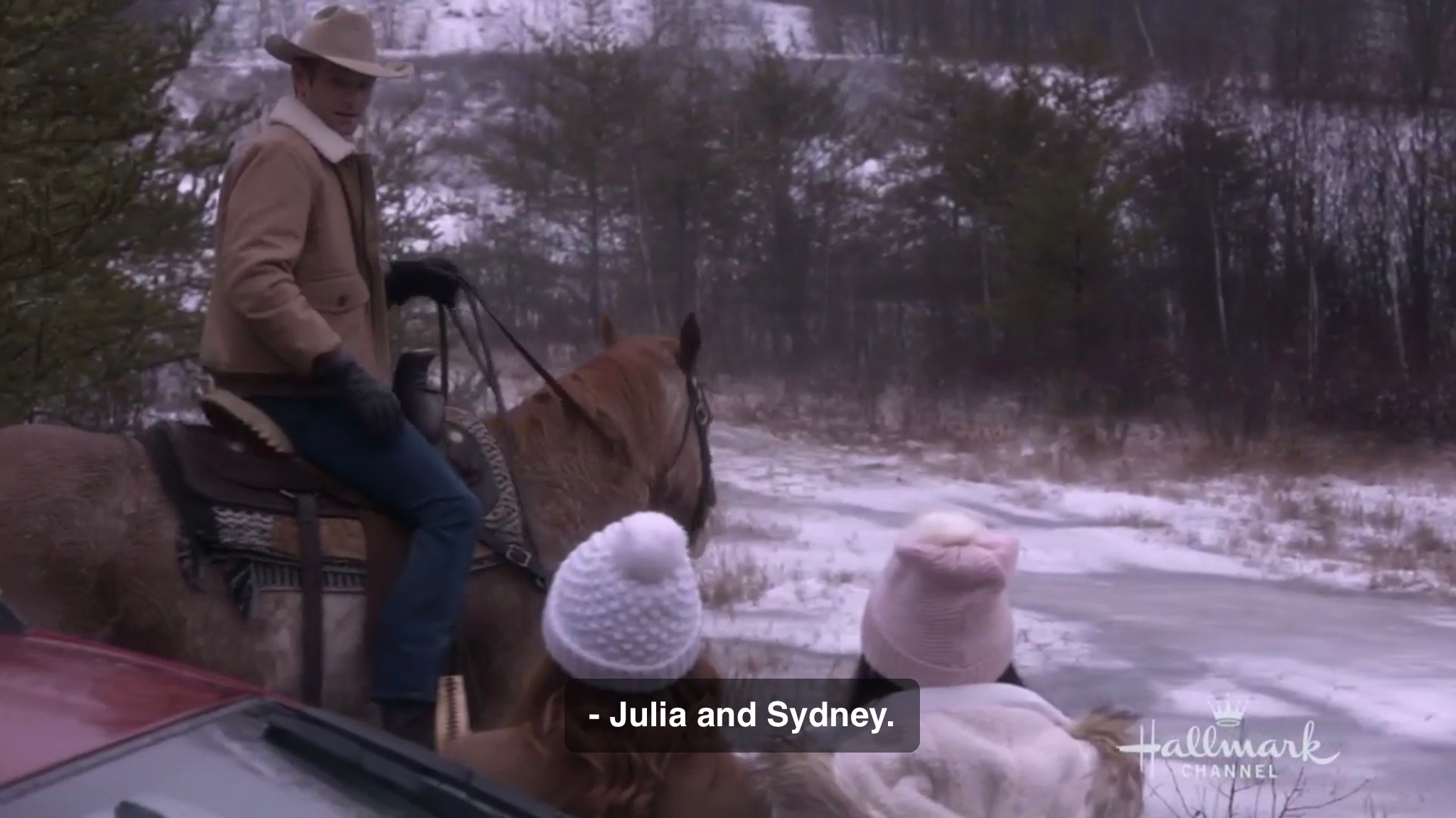
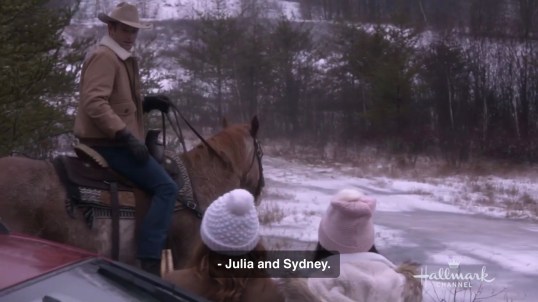
Lucky for them, a cowboy shows up named Ben (Eric Johnson). I love that he knows about this rock that they hit. Why don’t they move it seeing as they obviously have had other people who have hit it and probably have been stranded out there? Well, don’t worry. It will fit right along with the logic of the upcoming scenes. He helps to take them back to his family ranch called the “Destiny Ridge Ranch”.

Now we have a surprisingly normal conversation around the dinner table. We even find out that Ben wants to make the place a dude ranch. Seems like a great idea to me. He’s quite enthusiastic about it actually. One of the great things about living even next door to San Francisco in a suburb, I can’t tell you how wonderful it is to be able to go only a few miles and encounter endless parks. Even if places like “Destiny Ridge Ranch” aren’t somewhere you’d want to live, they are great places to visit and help to support the people who do want to live there. However, Sydney stumbles upon something that I guess Ben didn’t think of. That being the question of what are these people going to do at night. All the activities he lists are daytime ones. I can honestly see Ben completely missing that himself. Given where he lives he must be exhausted come night time and probably checks out early to sleep. However, this is when mom chimes in and things start to get weird.
IMG_3942

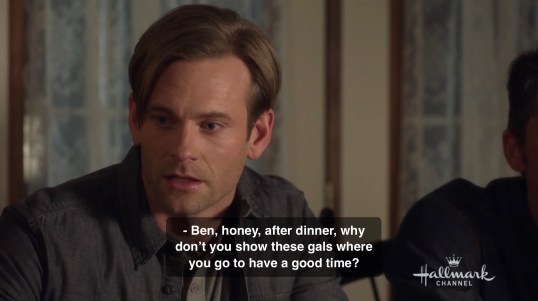
His mom tells him to take the ladies where he goes to have a good time. He takes them to a place called “Million Dollar Cowboy Bar”.

IMG_3945

Seems innocent enough. He tells them “it’s a little different than the bars you’re used to.” Doesn’t seem that different to me. We see a waitress serving alcohol. There’s pool tables. There’s live music. There’s a dance floor. I guess because the live music is country music? Definitely a stereotype, but he’s kind about it. He doesn’t call them hicks or drop lines about Italian boots like Autumn Reeser did in the film A Country Wedding. Sydney makes a beeline for the dance floor and Julia sits down at a table with Ben. She takes notice of a statue in the bar.
IMG_3960

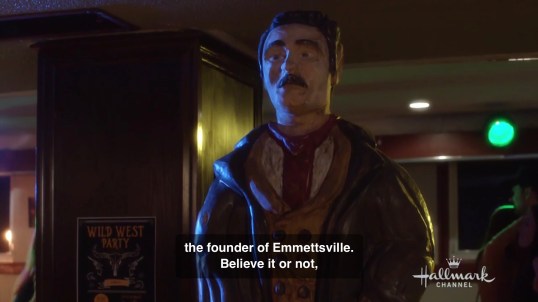
It’s an important and historical statue for the community. Like the kind of statue a town would keep in a town square or at the local historical society so that it doesn’t get damaged or anything. It’s even worth a “pretty penny”. She asks the obvious about why would you keep it in a bar. Ben tells her that they keep it there where they serve drinks and place it right next to a dance floor so that it’s “where people will be to enjoy it.” Does that sound anywhere near logical to you? Does that mean the bar is the most popular place in town? That statement also doesn’t explain away why something worth a “pretty penny” would be somewhere that even an innocent stumble by a waitress could spill a drink on it. Not to mention all the other hazards introduced by keeping such a important and expensive statue uncovered and in the middle of a bar. But that is enough for Julia and she doesn’t follow this up with any more lines.

We also get a brief appearance by an old school friend of Ben’s who wants to dance, but he obviously doesn’t share her feelings. He doesn’t say that, but just that he’s known her since grade school. Julia says she’s obviously waiting on you to get a clue and notice her. True. Not the best choice of words, but we get no impression that he has told her no and doesn’t respond to Julia’s statement except with the grade school comment. Earlier at dinner there is a little girl who likes to “dote” on him. Julia refers to this lady as another woman who dotes on him. The point being that he is a hot item in town and well liked. He’s also responsible and only orders a club soda since he’s going to be doing the driving.

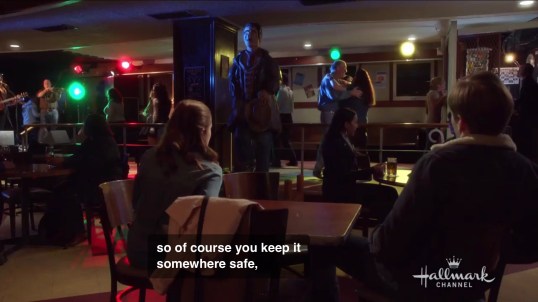
Here’s a nice shot of how things are laid out in the bar.
IMG_3963

Note where the table, Julia (on the left), Ben (on the right), the statue, and the dance floor all are in relation to each other. Now comes the incident.

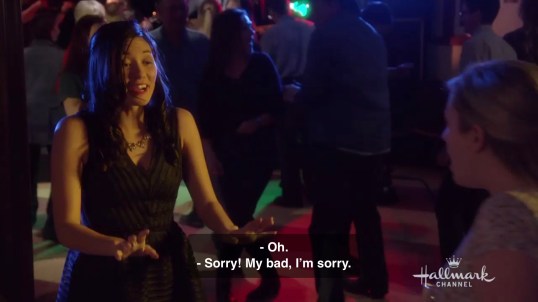
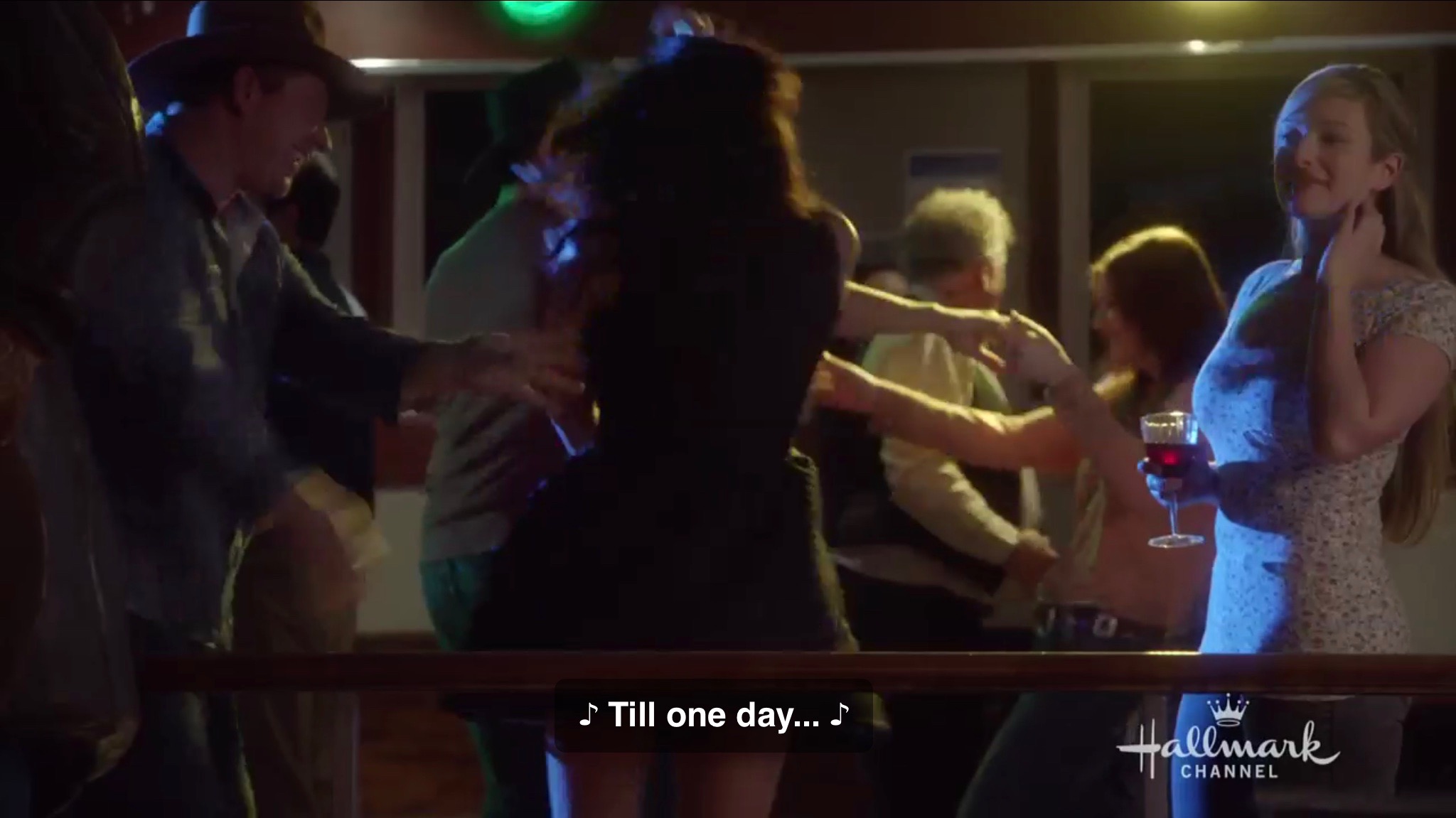
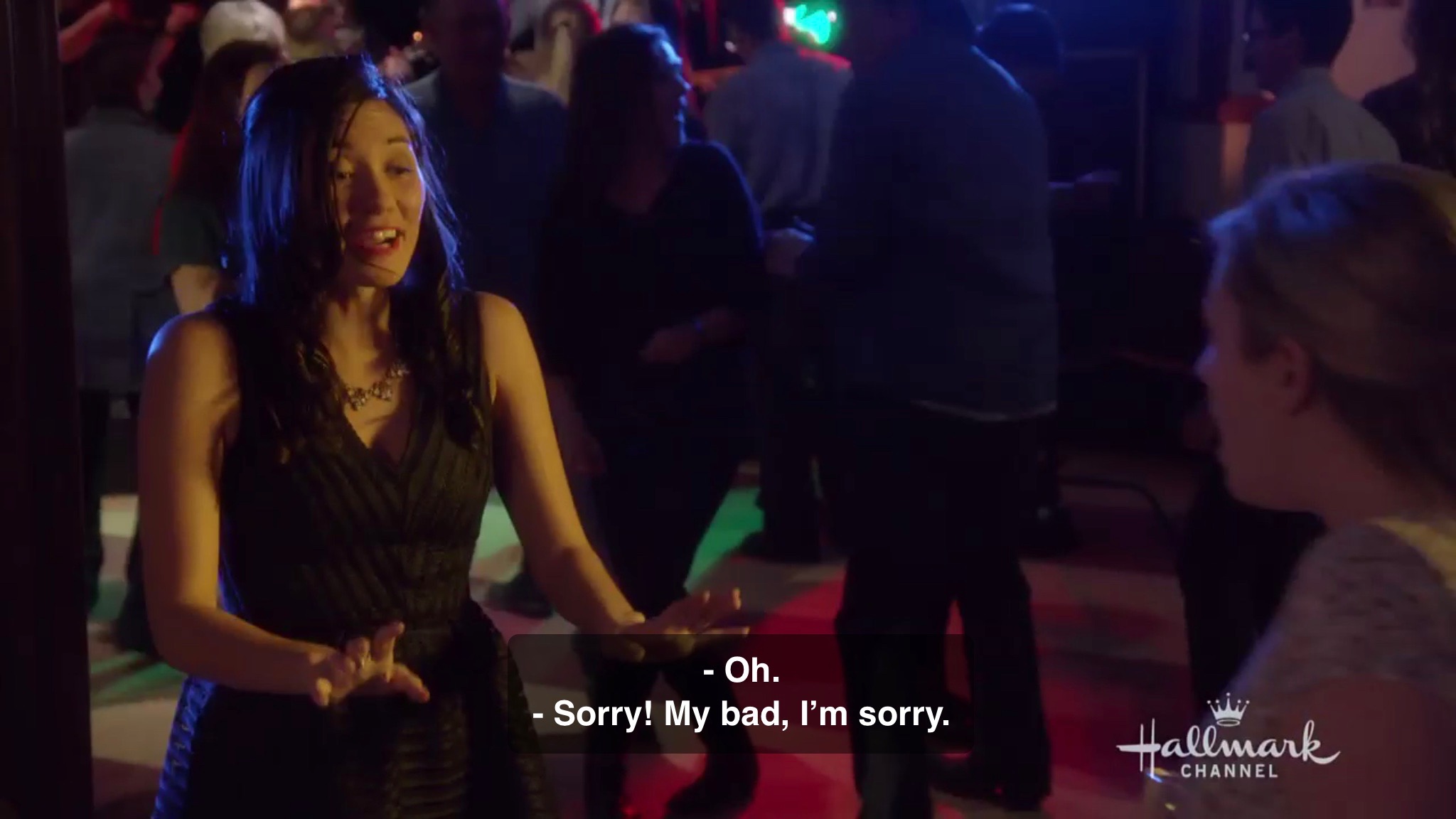
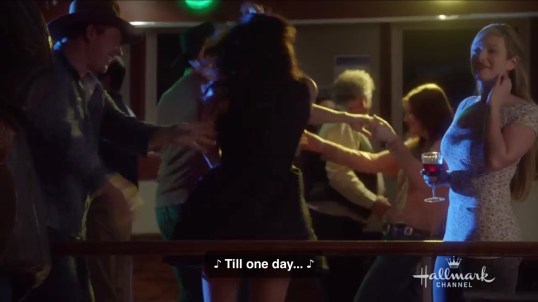
Sydney is dancing with a man. The man appears to twirl her, but it’s not a full handholding thing. It’s more like she twirled on her own. It causes her to bump into the woman standing behind her holding a drink which spills onto her shirt. The woman asks “What’s wrong with you?!” Sydney apologizes to the woman. She even offers to pay to replace the woman’s shirt. I would call this a simple incident that both of them are at fault for, but it’s the right thing to do on Sydney’s part to offer to pay to replace the shirt she potentially damaged. The woman responds with “I’m asking what you think you’re doing, waltzing in here wearing that getup and flailing all over the place.”

Here is the shot showing Sydney “flailing all over the place” while the woman behind her is flung way far out by her partner.
IMG_4001

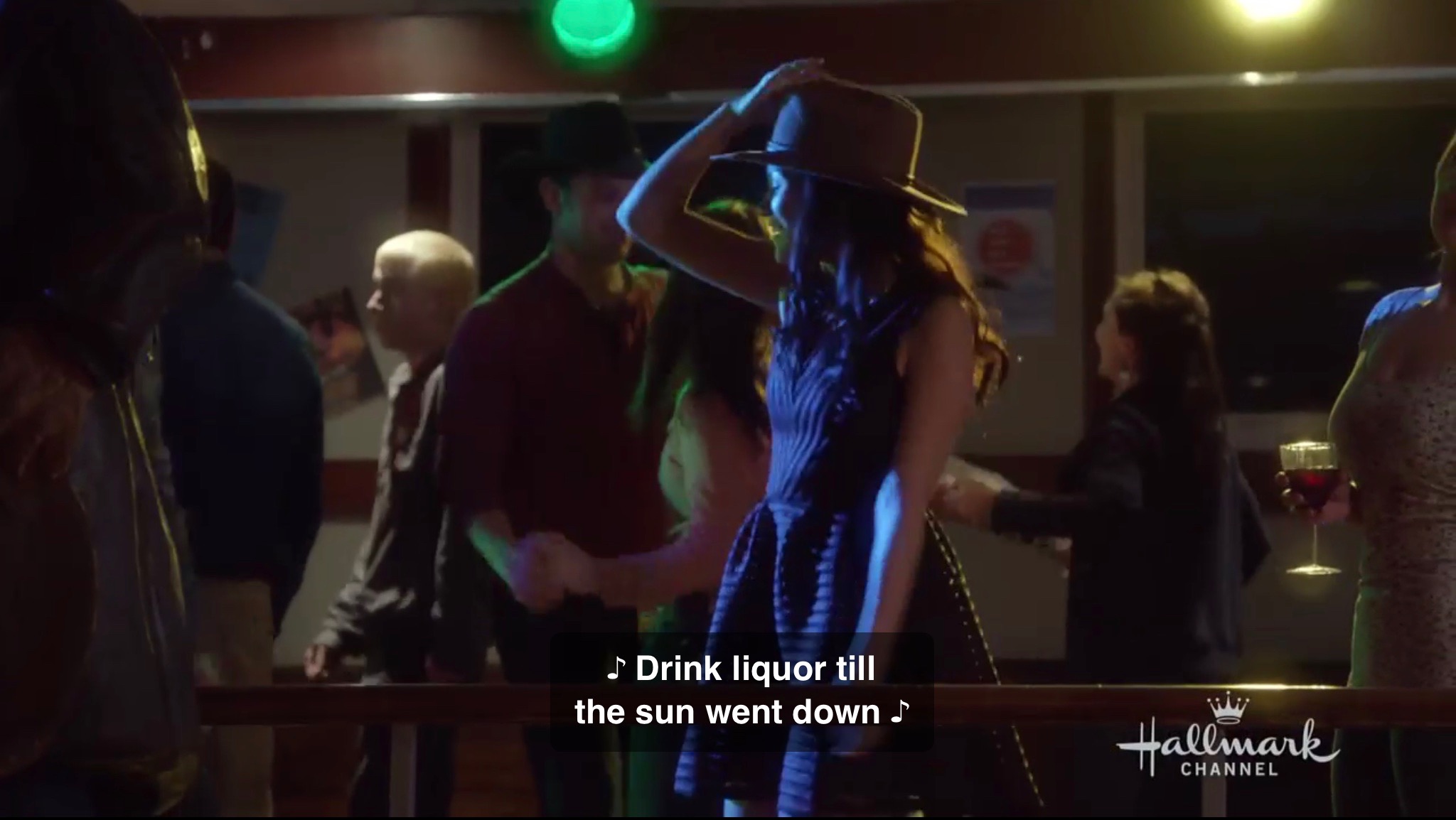
Here are two shots of the “getup” Sydney is wearing.
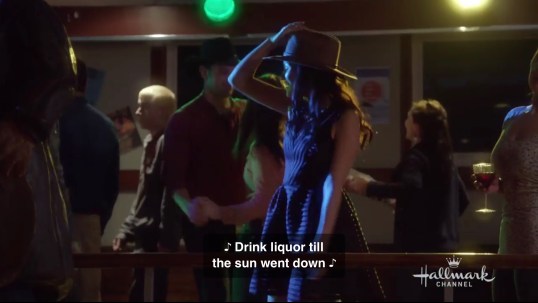
IMG_3996

IMG_4003

She waltzed in there because Ben’s mother told him to take them there. That’s why they are at this bar. Sydney didn’t do anything wrong by dancing on a dance floor.

Now Sydney says, “Ok. You can insult my dancing, but not my fashion sense. I’m not the one wearing country floral in the winter.” Very restrained response to an insult that implies Sydney is a big city slut for simply wearing an expensive dress and dancing on a dance floor.

At this point, Ben and Julia stand up from the table. The lady now says, “This is my favorite shirt. Let’s see how you like it.” The woman throws her drink onto Sydney.
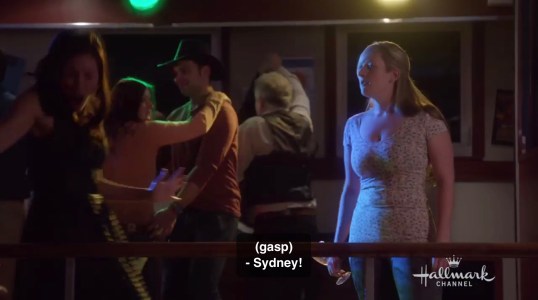
IMG_5826

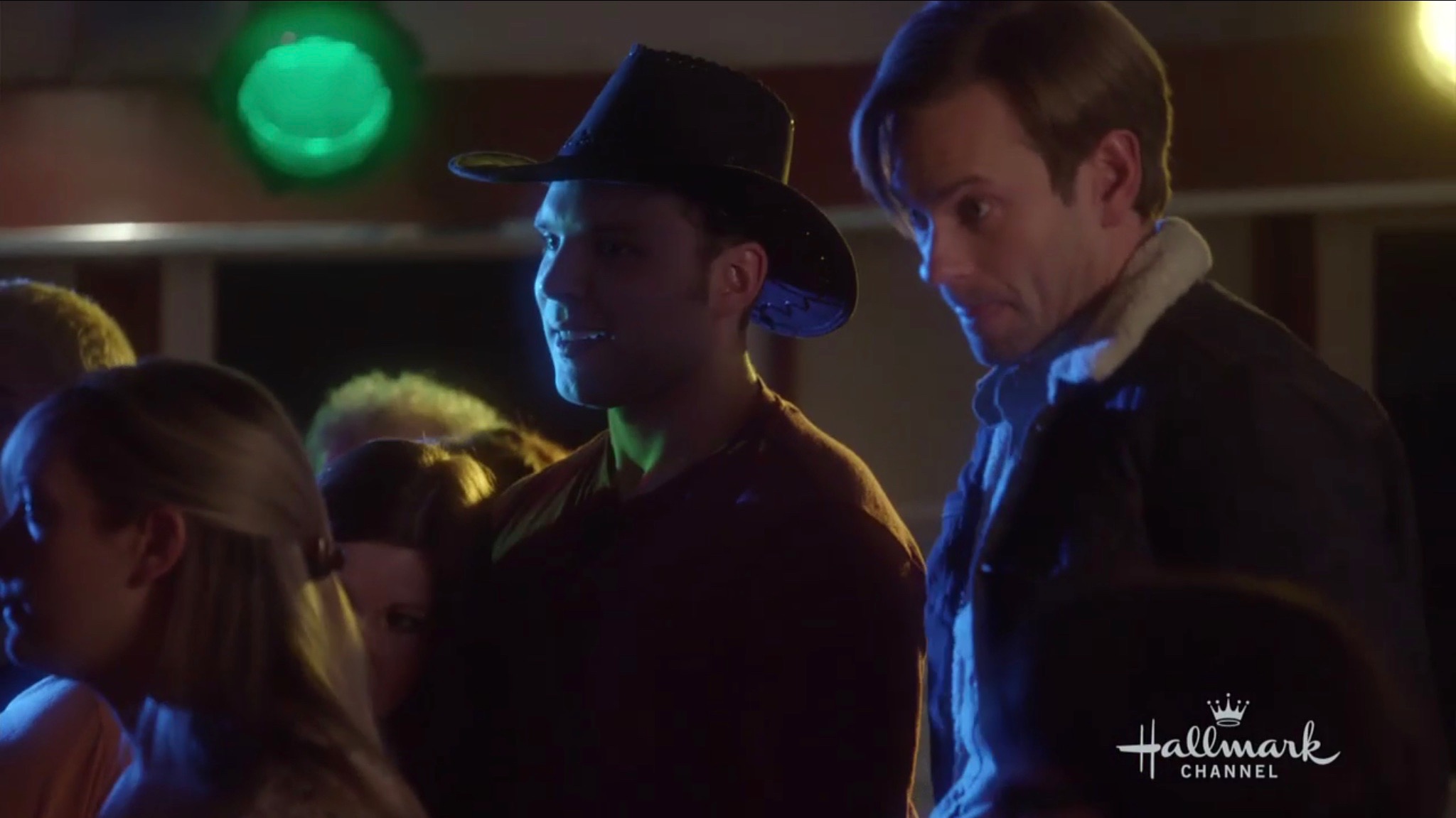
Sydney is surprised by this, stumbles back, and reaches out for something to stabilize her after she has been attacked by the this other woman. She of course ends up touching the statue which causes it to fall over. Julia appears to get up and try and save the statue from falling, but can’t move quickly enough from the table to do so. We don’t see Ben do anything here. The next shot we get of him shows him appearing to be on the dance floor.
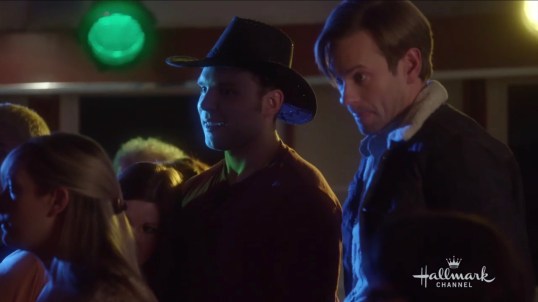
IMG_5880

That means he appears to have done nothing to stop the statue from falling over even though he was only a few steps from it and was already standing. So of course this goes right where you think it does. The woman who threw her drink on Sydney is arrested, Sydney and Julia are questioned by the cops, and Ben who witnessed the whole thing explains what happened. Nope!
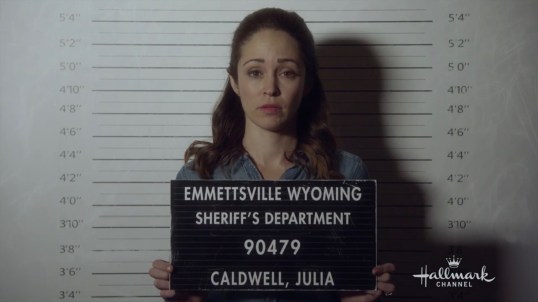
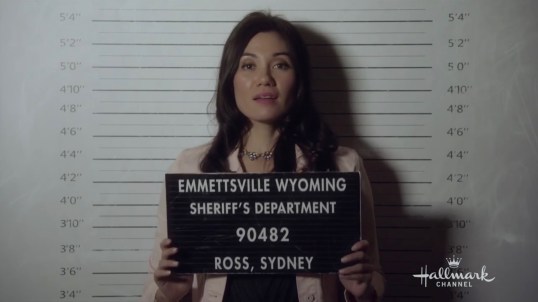
IMG_5881

IMG_4017

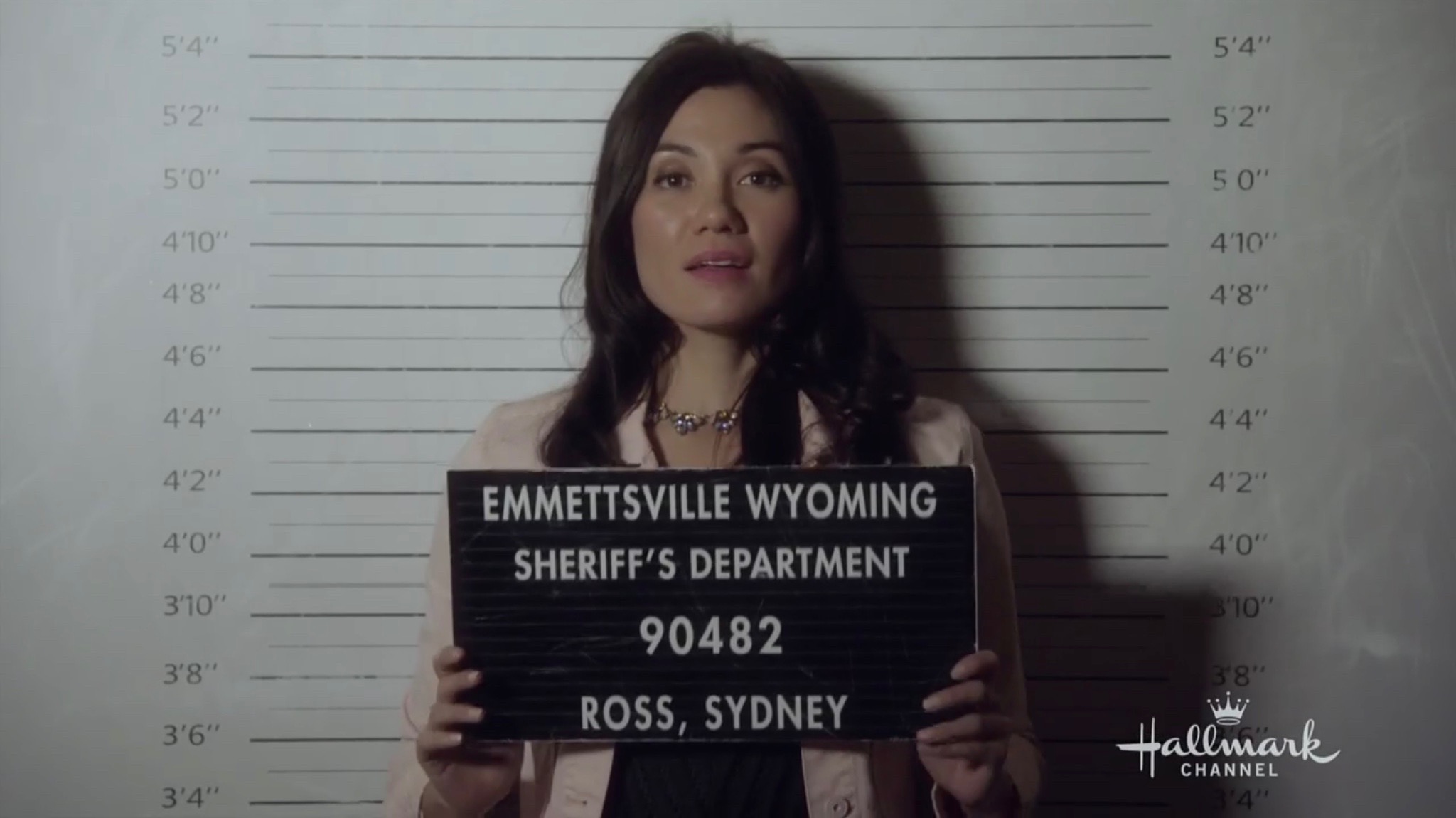
Sydney, who was attacked, is booked and has a mug shot taken of her. Julia, who was sitting at a table, stood up, and tried to stop the statue from falling is also booked and has a mug shot taken of her. Nothing happens to Ben and the girl who attacked Sydney. This all occurred in a room filled with witnesses. Most notably Ben, who saw the whole thing.
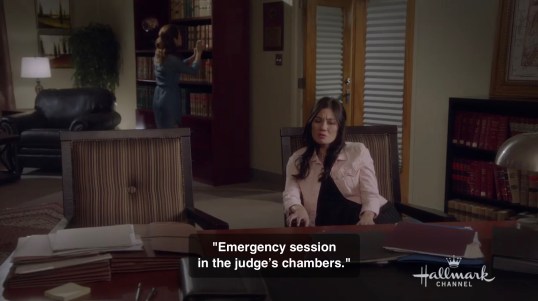
IMG_4021

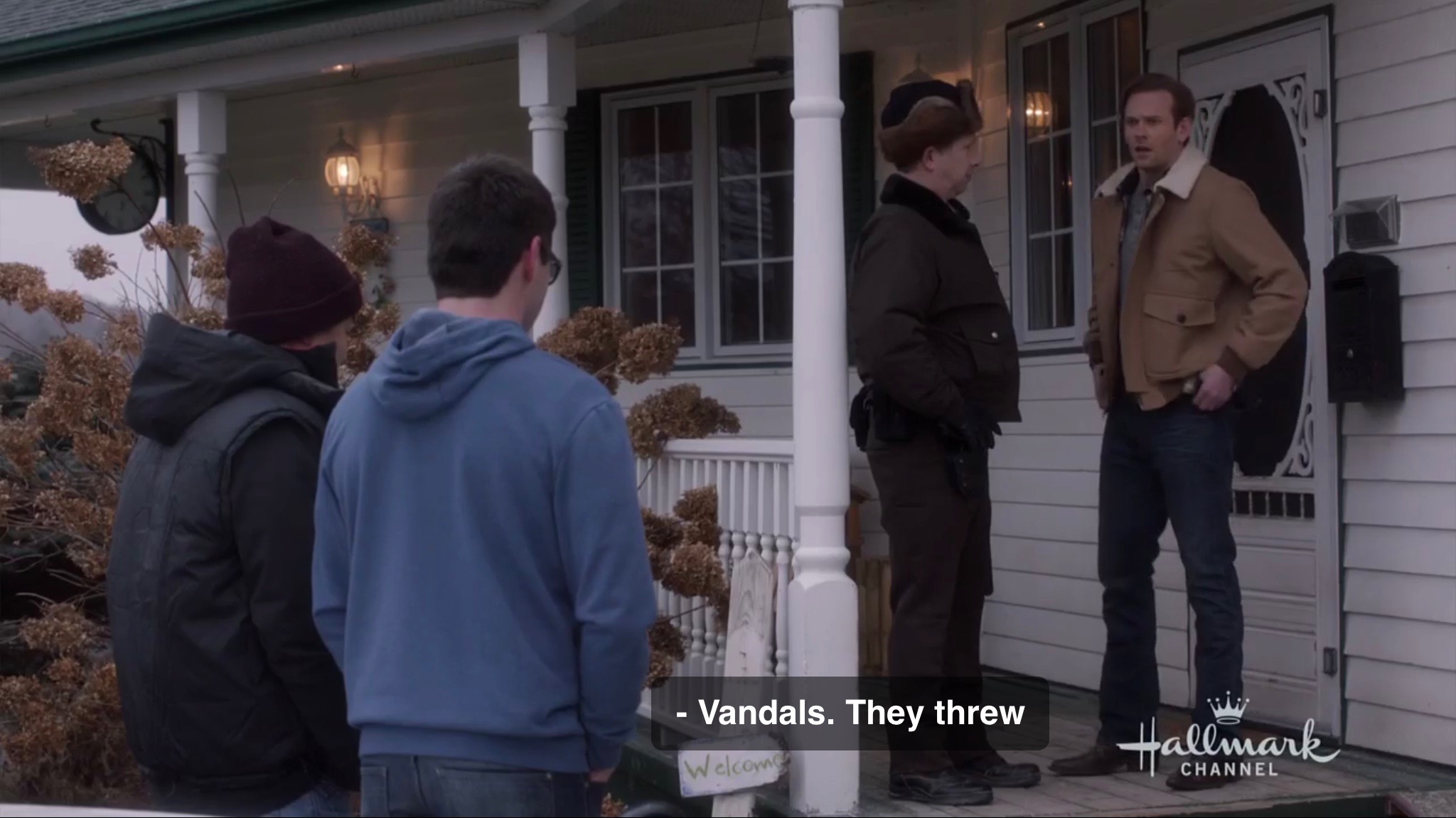
Now Julia and Sydney are dragged into the judge’s chamber for an “emergency session”. Note that Julia who is going to become a lawyer is looking at the law books on the shelf. She says, “It means they’re not sure they arrested us on the right charge and they want the judge to weigh in,” when Sydney says she doesn’t understand what an “emergency session” with the judge means. Guess what Julia is looking for on that shelf? She is looking for and finds the “Emmettsville Municipal Code”. That’s when the judge enters the room and immediately takes the book away from her telling her “this is not a library”. The judge, his deputy, and Ben follow in after him.
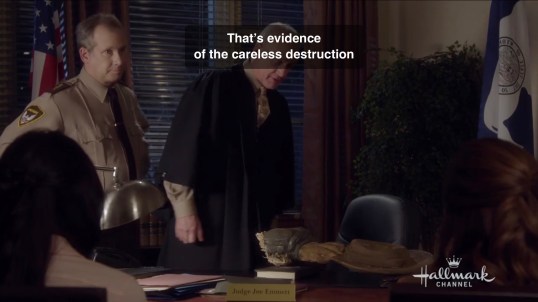
IMG_4031

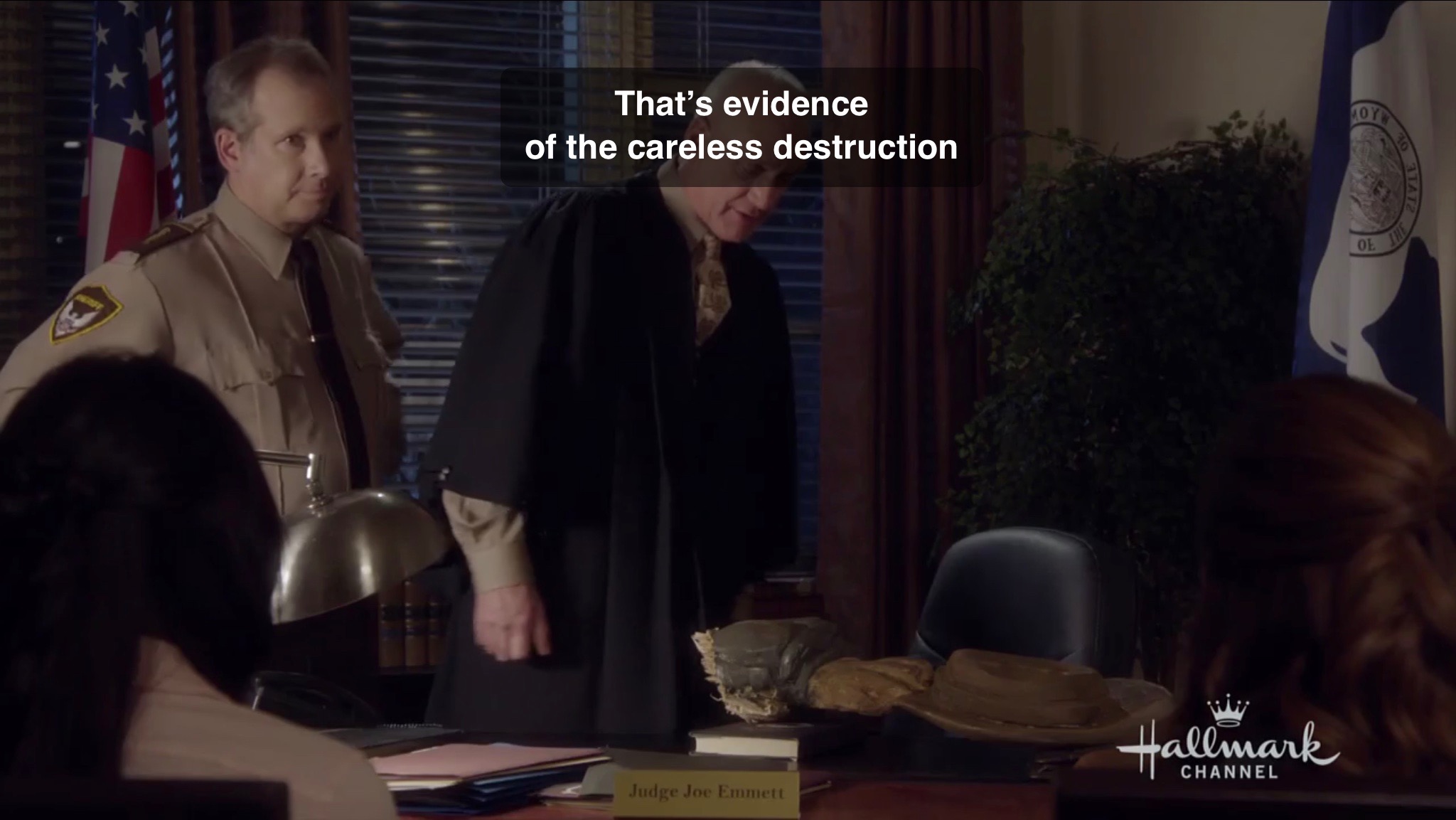
The judge lays down the hand of the statue and tells them it’s “evidence of the careless destruction of a historical monument. And that’s a felony.” To that Sydney tells the judge it was “an accidental felony”. I would have mentioned that a drink was thrown at me, but the next thing we hear is the deputy tell her that witnesses saw Julia “rush at the statue and push it right over.” Not Sydney who reached out for something to stabilize herself, but Julia who got up and barely had a chance to move towards the statue.

Now we find out from the judge that the “statue was a monument to my great-grandfather, with an appraised value of $30,000.” When Julia asks to see the statute covering this situation because it might be being misinterpreted, she receives a response from the judge saying “are you saying I don’t know the laws of my own county?” She tries to speak, but is interrupted by the judge who tells her “you two are responsible for the willful destruction of this town’s most cherished possession” which they keep in a bar next to a dance floor. And note that he now blames both of them for this supposed felony even though the deputy just said they only have witnesses that said Julia rushed the statue and pushed it over. Ben still hasn’t said a word even though he saw the whole thing.

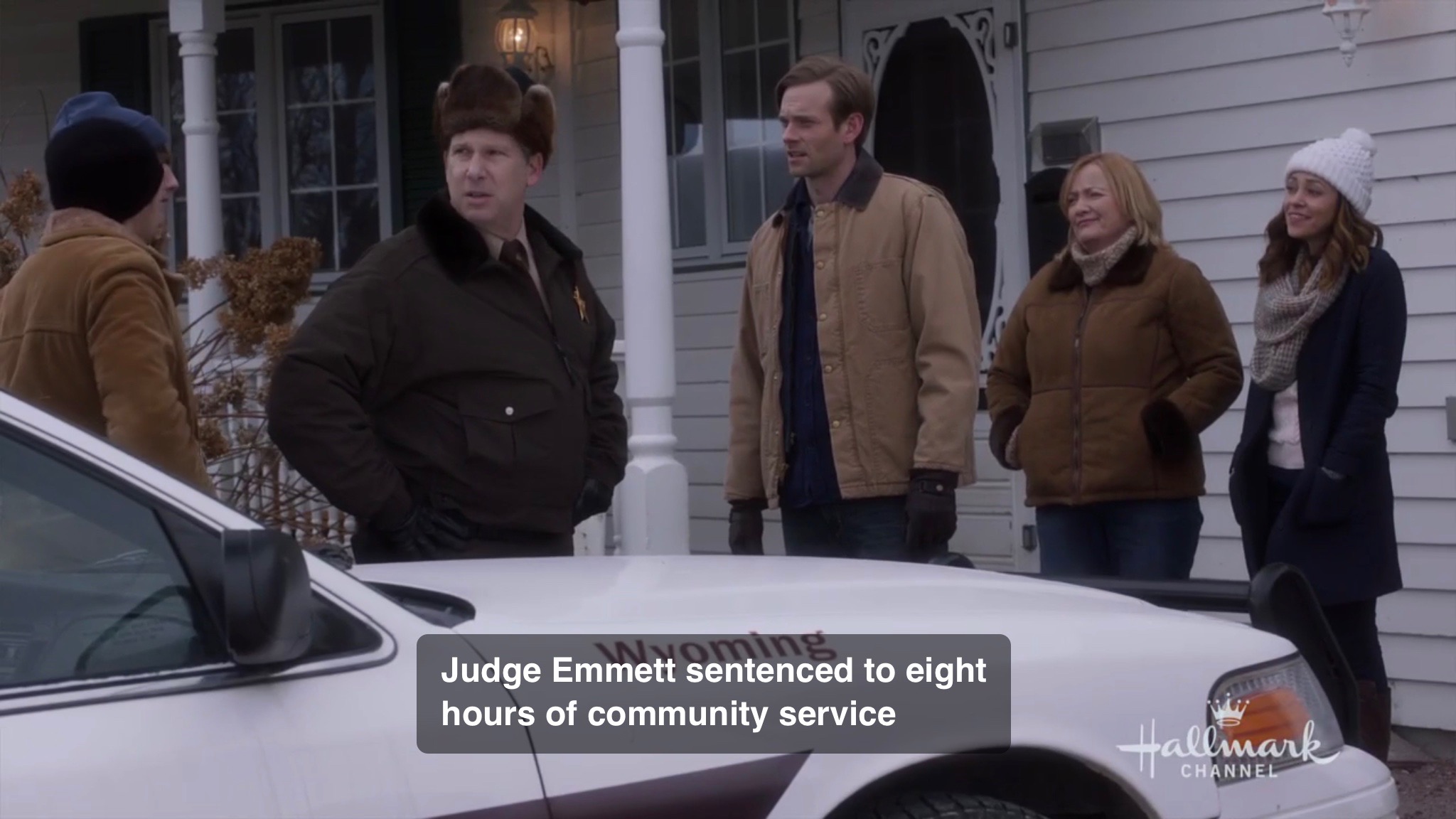
Now the judge says he’s not an unreasonable man. He threatens to send them to two years in prison. However, he’s willing to be so reasonable and in this room located in the middle of nowhere where they have been dragged to they are going to be offered a plea bargain. He says the charge would be “disorderly conduct”. Apparently, that would only be a misdemeanor and it would give them 30 days in jail. After being asked if this could be settled by a fine, we find out that the judge doesn’t like fines. “He doesn’t feel that people actually learn their lesson that way.”

Finally, Ben actually speaks up. He says why not community service instead of jail. He says he can “personally vouch for these two, that they meant your granddaddy’s statue no harm.” He is willing to “vouch” that they meant his “granddaddy’s statue no harm”, but he’s not going to speak up in their defense as the only witness to this supposed felony. That’s too much for Ben apparently.

The judge finds this reasonable. He says that would be fine with him if Ben kept them at his place. Where? The judge says, “put them in one of those worker’s cabins you got.” He seems to like the fact that it would save “the town the cost of putting them up.” Shockingly Ben responds that it sounds like the judge is trying to punish him, not them. So he considers having to spend any more time with these women as a punishment, but has no problem with them being sent to jail for two years for an accident he witnessed. What’s the judge’s response to this?
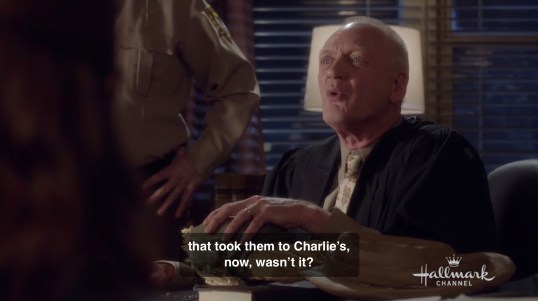
IMG_4080

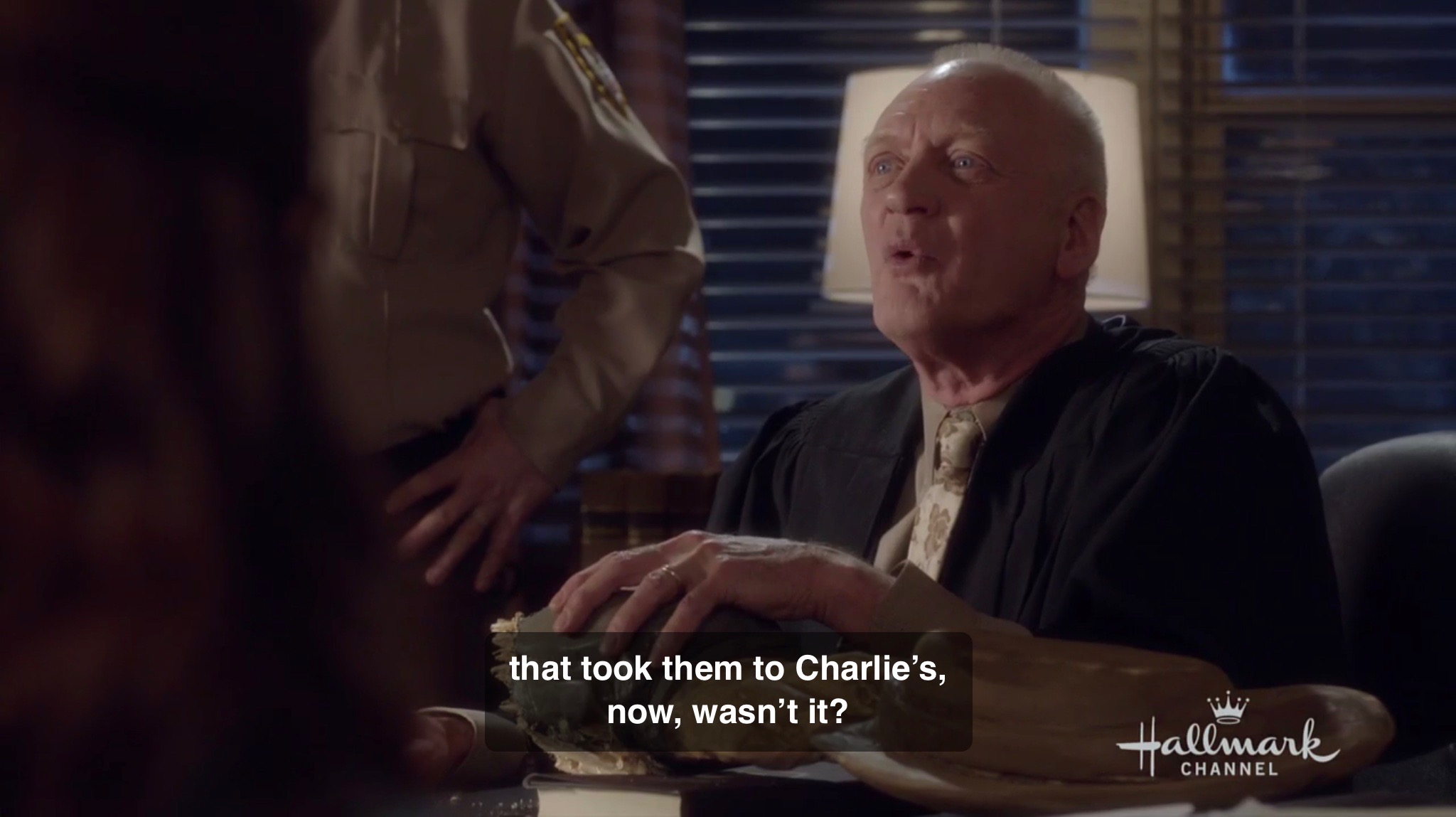
He condemns Ben for taking them Charlie’s, which by the way, isn’t even the name of the bar as is clearly seen in the shot of the town. As you can see in the screenshot above, the bar is called the Million Dollar Cowboy Bar actually located in Jackson, Wyoming. It even had a big sign saying WELCOME. Also, it wasn’t Ben who even suggested the idea. His mother told him to take them there. Now it’s time to lay into them a little more for being from Chicago.
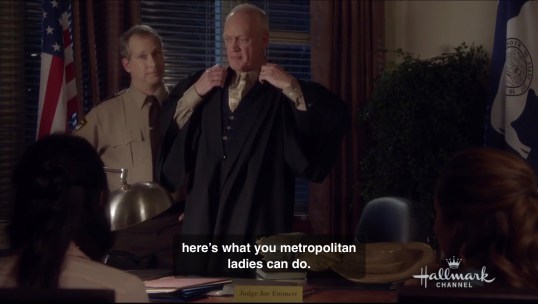
IMG_4083

He gives them a choice between jail or “community service”. So what’s Julia’s response?
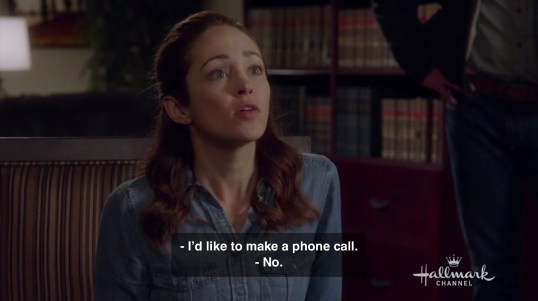
IMG_4092

She asks to make a phone call before being forced to be charged with a felony or take a plea bargain. He refuses her request. No opportunity to defend herself. No legal representation. No opportunity to call for legal representation. She just takes the plea bargain. Who knows how long they would actually be held in the county jail for a felony they didn’t commit.

So let’s sum this up. A woman and her friend get lost and a nice man helps them to get to town. The mother of this man tells him to take them to a bar. This bar has a statue valued at $30,000 sitting in the middle of a place that serves liquid that causes you to lose control of your mind and body. They also place it next to a dance floor. Then one of these woman twirls on the dance floor, doesn’t fling out far from her partner, but bumps a drink another woman is holding behind her. She offers to pay to replace this woman’s shirt. That woman responds by attacking her by throwing her drink at her. While shocked by the drink thrown on her, she reaches out, and touches this statue. As the statue begins to fall, this woman’s friend tries to prevent it from falling. These two woman, not the woman who caused the incident, are arrested and dragged before a judge. The judge threatens, insults, and intimidates them into either spending two years in jail or serving 30 days of labor with the suggestion they be held in “worker’s cabins”.

And that is only 21 minutes and 23 seconds into this film. Are you happy or want to sit through this Valentine’s Day romance film? I sure as hell wasn’t and didn’t want to. No wonder it appears the screenwriter didn’t want their name on this. The original title of the movie was Disorderly Conduct. I can only imagine the screenplay laid this out in a manner that makes sense, but after seeing how the filmmakers actually implemented it, they didn’t want anything to do with it.

I’ve taken up a lot of your time so let’s try and get through the rest of this fast.

The two ladies are then put up in the cabin and given a heater. Then the next morning comes and someone must have realized they really needed a way to explain away the previous scenes. Julia wakes up to a call on her cellphone. It’s her fiancee. He can’t believe she took a plea bargain on a “bogus charge”. He asks if she called her father who runs a legal firm. She says yes, but that he told her “that in a small town, the judge can basically do anything he likes.” Julia then says, “Technically, we did break the law, even though we didn’t do it on purpose, and we were lucky to get this offer.” Any follow up on that? Nope, just implications that maybe she took this judge’s offer because she didn’t want to marry him. Also, no I’m on my way honey from the father because you should have at least been allowed legal defense, you’re my daughter, and I should come there. None of that. The movie is now setup for the typical woman from the city discovers she prefers country life that Hallmark has done so many times over.

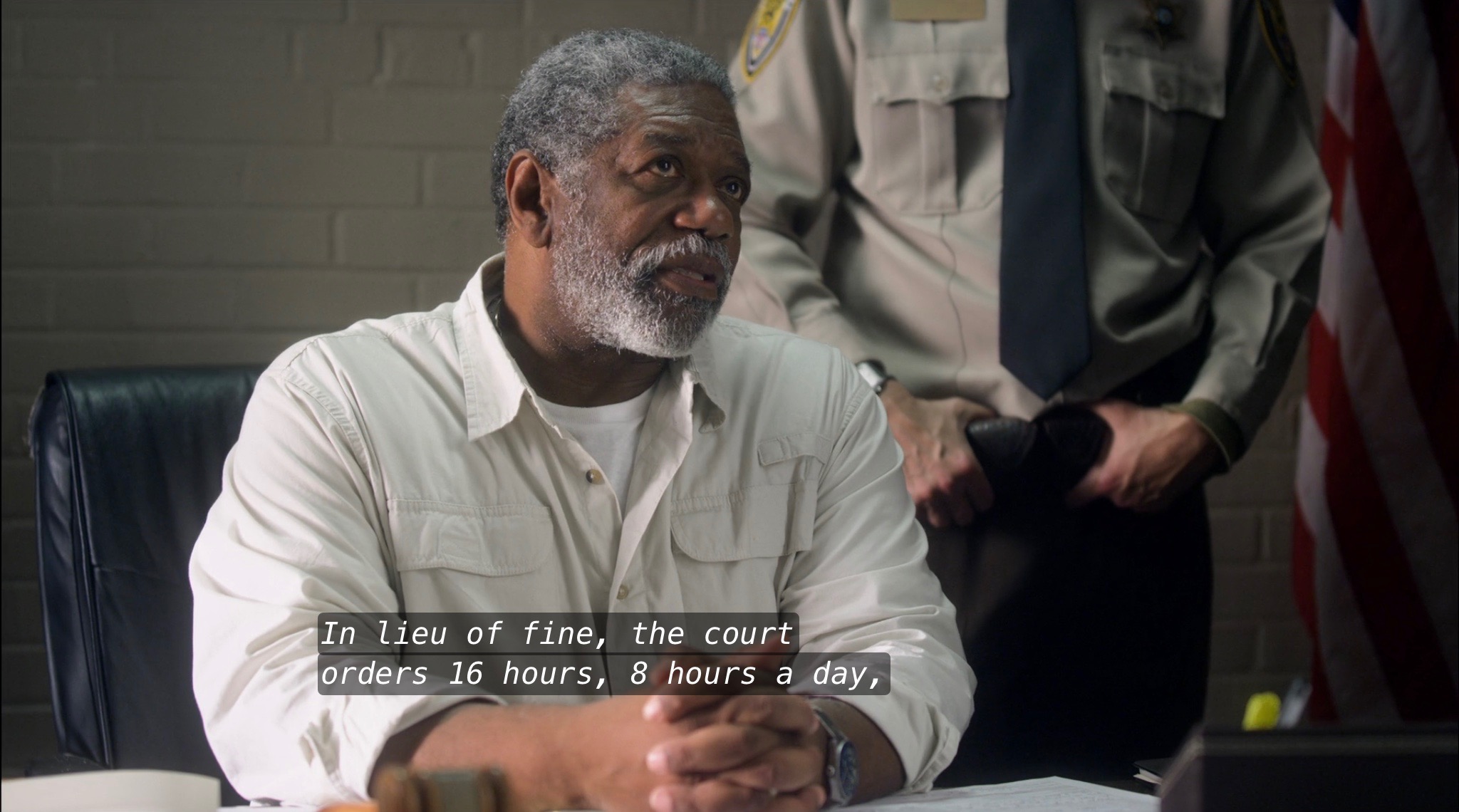
In Finding Normal (2013) they had the judge be smart, kind, reasonable, and offer her the option to pay a fine. Also, his charge is “16 hours, 8 hours a day, community service”.
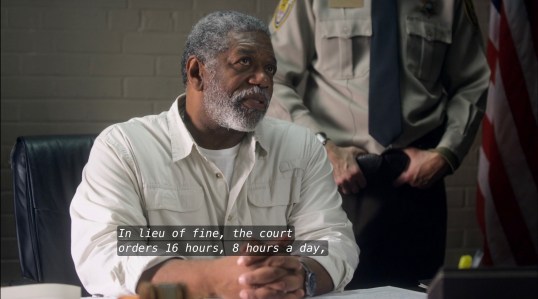
IMG_5874

Finding Normal (2013, dir. Brian Herzlinger)

Now you get the normal stuff. The ladies learn the typical duties on a ranch. Some are fun like learning to ride horses. Some are not so fun, but they are the realities of living on a ranch. They also are able to help out in the community. Julia even overhears that Ben’s ranch isn’t doing so well and tries to help. Of course you know he’s stubborn about that, but she pushes. The mother gives Julia some backstory one how the ranch ended up in the financial predicament it’s in. Basically, the big corporations are to blame, development in the town, and one thing lead to another. The recession didn’t help either. Strangely, the mother tells her that’s why he won’t take her money to help out. No mention of this dude ranch he was obviously trying to put together to transform his place into a source of revenue.

During this stuff they make sure to show that Sydney is clumsy by having her mess up driving a tractor and dropping a window. Nope, she was attacked in that bar. This doesn’t change that fact.

There’s a scene during this that I actually like. Sydney gets assigned to work with a stubborn old guy at a hospital. Well, not stubborn for long. Sydney is checking Twitter instead of talking to him. He says that the last girl “was so chatty, she got on my nerves but right now, I’m starting to miss her.” To her response that she is checking Twitter, he says he knows what Twitter is. He is even interested in what she is doing on there. But it gets better. He asks her exactly how she ended up having to do this for him. As she starts to explain that it was “just a disorderly accident” and that it was at Charlie’s bar he interrupts her and calls the place a dump.
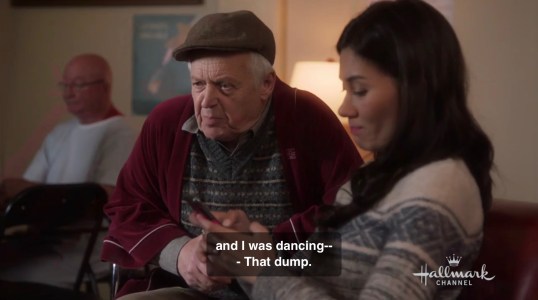
IMG_4582

Yeah, this guy calls the place with this apparent town treasure “a dump”. It’s like the screenwriters came in after those earlier scenes and tried to rewrite the remainder of the film to try and make up for it. Or this is some of the original screenplay. Don’t believe me? After a brief conversation with the mother we cut to the judge.
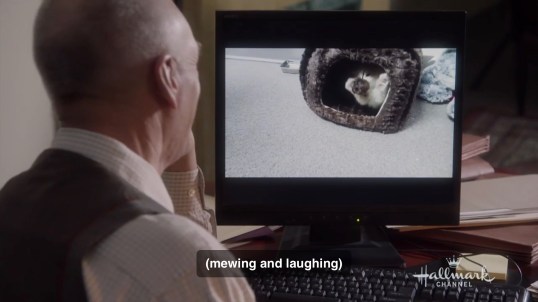
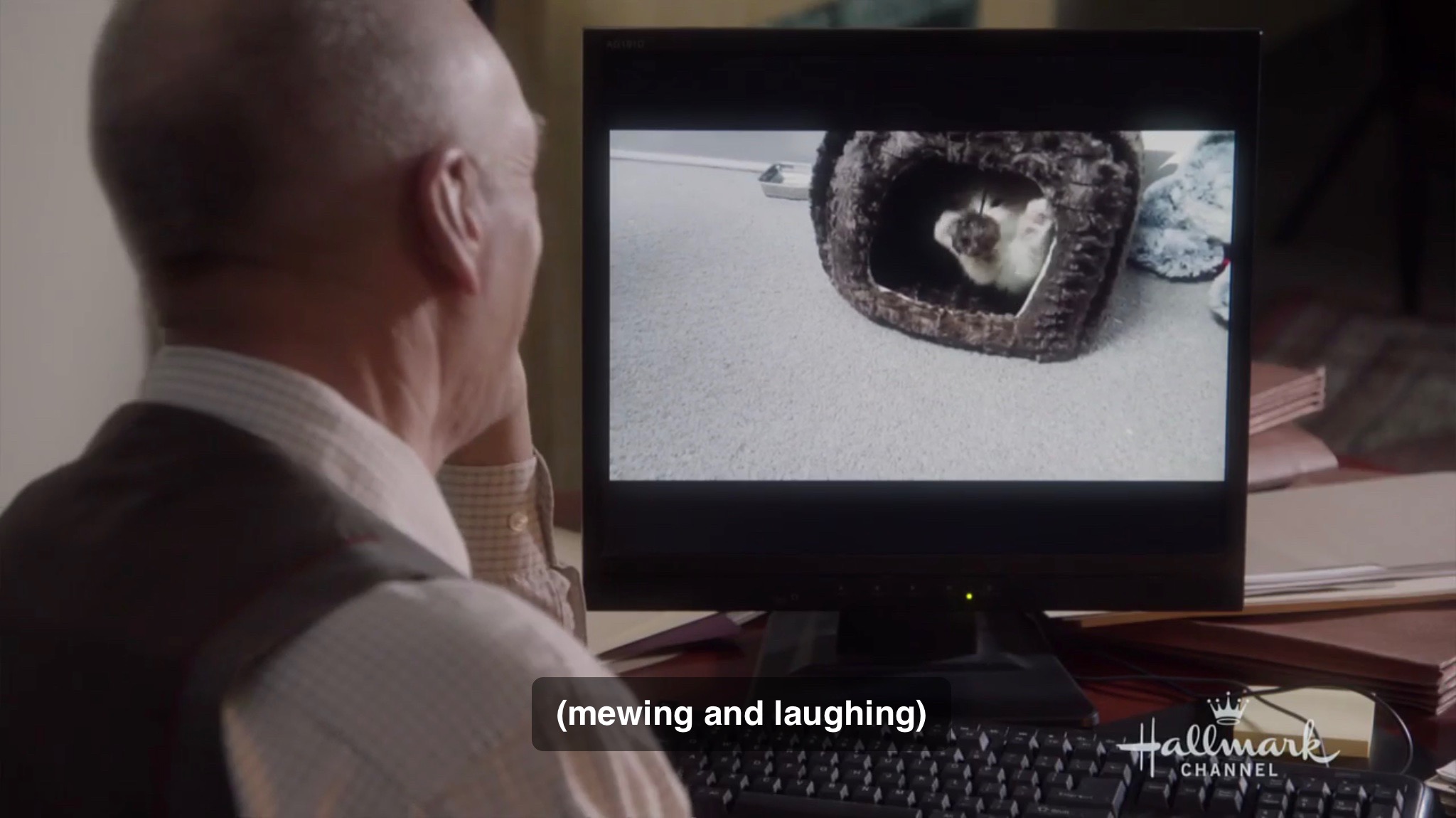
IMG_4653 (1)

He’s watching cat videos. We even get the girls visiting him in a comical matter as if he is actually a lovable judge who really does have a kind heart. The girls come to him because they want to do something a little unusual to raise money for the hospital that is need. The ranch is going to host it. The judge even likes the idea. However, then we get two more sets of people who are sent by the judge to the ranch for community service.
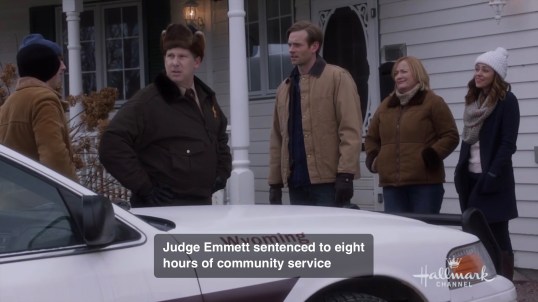
IMG_4819

Umm…considering how Julia and Sydney wound up there it makes me wonder if these people’s “multiple parking tickets” are real. This happens one more time too.
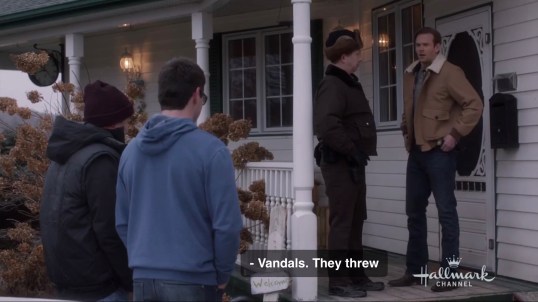
IMG_4890

I get a weird feeling that we are supposed to read these as volunteers that are sent there under the cover of doing community service cause the judge knows they need the help, but considering the beginning, I don’t know.

Now the film goes on auto-pilot. All you really need to know is that the fiancee shows up along with Julia’s family for this grand fundraiser. That’s when we get the scene to make the fiancee a villain. After starting out kind, then being a little nasty talking about Julia, he says “but if Julia develops a taste for the coddling the downtrodden, well, I’ll just have to put my foot down.” Sound familiar? There is a near identical scene in Unleashing Mr. Darcy. Except there it’s not to vilify Mr. Darcy, but simply to provide a last minute romantic speed bump. Unleashing Mr. Darcy was written by Teena Booth. I can’t help but wondering if she is Alana Smithee.

Now the film has Julia kick Gavin to the curb and go after Ben. She buys him in a cowboy auction, and they dance. What’s weird is how uncomfortable he is dancing with her. It’s probably nothing, but in addition to his behavior around the woman he knew from grade school at the bar, it seems a little odd. Regardless, they end up together.
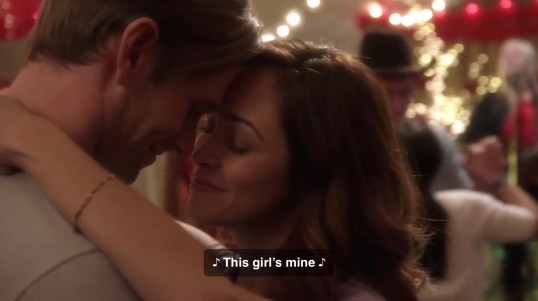
IMG_5800

So why the setup that I’m sorry, is offensive. It could have been fixed so easily too. That’s what angers me more than anything. I felt the same way about A Gift Of Miracles. The simplest thing would have been to have Julia just decide this town is an interesting place to take her vacation after accidentally ending up there. I know there are stupid people out there, but I don’t expect the movie to make me believe that two girls on vacation must be forced to spend time in the town or they would leave. The place where the bar is located is in Jackson, Wyoming. That’s a town surrounded by a bunch of large parks including Yellowstone National Park. If they wanted to keep as much of the script as possible, then start by having the girl who attacked get punished appropriately. If you carefully watch the scene at the bar when the incident occurs then you’ll notice they made sure to direct all the non-principle actors to be completely oblivious to what is going on till Julia has rushed forward to try and save the statue. It’s a little ridiculous, but it’s also a movie and I think most people would have let that slide if they were paying attention to notice that everyone else was just minding their own business. Have Ben go use the restroom and come out just afterwards so he isn’t shown as lying to the judge and his deputy. Have the judge suggest the community service in the first place. I wouldn’t like the judge so much for not offering or even demanding the money to repair the statue, but again, it’s a movie and I can let that slide. These would have all been little changes that wouldn’t have cost a dime to make. They wouldn’t even have had to have the lady who threw the drink appear in the movie again and thus potentially pay her more. Ugh! It’s not as bad as Your Love Never Fails/A Valentine’s Date. That one is disturbing. I still do not recommend this movie.

If you are going to watch this anyways, then I highly recommend recording it or in some way not coming till after 22 minutes of the movie. The rest really isn’t bad at all.

I said it already, but I’ll say it again. The guy at the hospital is pretty awesome. He really is. I loved him. The character’s name is George and he is played by actor Eric Peterson. Kudos, Eric! The world needs more small, but excellent character actors like you.

For those who are looking for things like the songs in this or any Hallmark movie: I try to pay attention to the search terms on my reviews and also always try to respond to comments. I have noticed people looking for the name of songs in Hallmark movies and winding up on my reviews. Luckily for the person who did so to find out the song at the end of Dater’s Handbook, it was an REO Speedwagon song and was prominently featured in the movie and my review. Another time I was asked kindly in the comments section if I knew who did a particular song in a Hallmark Christmas movie. I bent over backwards trying to find the answer for them. I did and responded to them. I didn’t receive a thank you, but was suddenly greeted by a down vote on my review the very next day instead. Regardless of whether it was the same person or a coincidence, I’m going to give you a little lesson on how to figure this stuff out for yourself. Here’s what I would do:

1. Check the movie’s credits. This doesn’t always work, but some Hallmark movies do credit the songs that are in the film.
2. Get to the relevant scene, turn up the volume, and use an app such as SoundHound. That’s an application for phones that is amazingly powerful at listening to small snippets of a song and managing to find out exactly who the song is by and on what album you can find it. That’s how I was finally able to answer the person who had asked for my help.
3. Turn on captioning so if the song has lyrics then you have something to Google. Make sure you get the words right and place them within quotes. Sometimes adding the word “lyrics” outside the actual lyrics can help. Again, surprisingly effective. It helps if the song is well known, but it’s Google. They have reached into every dark corner of the Internet.
4. This one is a little bit of a long shot, but not too much. Try contacting someone involved in the movie. Hallmark has an official Twitter account and I’m sure has a presence on Facebook. Shoot the production company a message if you can find them. Sometimes you can get really lucky and there is actually an official Twitter account for the movie in question. I know The Christmas Note and Love On The Sidelines have/had them. Also, you can find people who worked on the film on social media. It can’t hurt to ask. People can be remarkably responsive and kind if you are to them.

I probably should create a whole post to lay out these instructions, but I have gone ahead and included them here as well.

I know that the majority of people appreciate me not acting like a PR department, but trying to give you my honest opinion about Hallmark films I see. However, my disabilities make it very hard for me to take things such as totally anonymous down votes when I can clearly see exactly what in my review triggered it. I have disabled my ability to see those so I can continue to write these reviews. I hope you can understand.

If you’ve reached here, then I thank you for putting up with me.

Lisa Reviews An Oscar Nominee: Imitation of Life (dir by John M. Stahl)


Louise Beavers and Fredi Washington in Imitation Of Life

Louise Beavers and Fredi Washington in Imitation Of Life

The 1934 film Imitation of Life opens with Delilah Johnson (Louise Beavers) standing on the back porch of a house owned by widowed mother Bea Pullman (Claudette Colbert).  Delilah says that she’s come for the housekeeping position.  Bea tells her that there is no housekeeping position and quickly figures out that Delilah has the wrong address.  As Delilah wonders how she’s going to get to the other side of town in time to interview for the job, Bea hears her toddler daughter falling into the bathtub upstairs.  After Bea rescues her daughter, she agrees to hire Delilah as a housekeeper.

The rest of the film tells the story of their friendship.  It turns out that, because she knows an old family recipe, Delilah can make the world’s greatest pancakes.  Bea decides to go into business, selling Delilah’s pancakes and using Delilah as the product’s mascot.  Soon Delilah’s smiling face is on billboards and she’s known as Aunt Delilah.  When it comes time to incorporate the business, Bea and her partner, Elmer (Ned Sparks), offer Delilah 20% of the profits.  They tell Delilah that they’re all going to be rich but Delilah protests that she doesn’t want to be rich.  She just wants to take care of Bea and help to raise Bea’s daughter.

Delilah, incidentally, is African-American while Bea is white.

Despite the fact that Imitation of Life is considered to be an important landmark as far as Hollywood’s depiction of race is concerned, I have to admit that I was really uncomfortable with that scene.  First off, considering that Delilah was the one who came up with recipe and her face was being used to sell it, it was hard not to feel that she deserved a lot more than just 20%.  Beyond that, her refusal felt like it was largely included to let white audiences off the hook.  “Yes,” the film says at this point, “Delilah may be a servant but that’s the way she wants it!”

It was a definite false note in a film that, up to that point and particularly when compared to other movies released in the 30s, felt almost progressive in its depiction of American race relations.  Up until that scene, Bea and Delilah had been portrayed as friends and equals but, when Delilah refused that money, it felt like the film had lost the courage of its convictions.

However, there’s a shot that occurs just a few scenes afterwards.  Several years have passed.  Bea is rich.  Delilah is still her housekeeper but now the house has gotten much larger.  After having a conversation about Delilah’s daughter, Bea and Delilah walk over to a staircase and say goodnight.  Bea walks upstairs to her luxurious bedroom while, at the same time, Delilah walks downstairs to her much smaller apartment.  It’s a striking image of these two women heading different directions on the same staircase.  But it also visualizes what we all know.  For all of Delilah’s hard work, Bea is the one who is sleeping on the top floor.  It’s a scene that says that, even if it couldn’t openly acknowledge it, the film understands that Delilah deserves more than she’s been given.  It’s also a scene that reminds us that even someone as well-intentioned and kind-hearted as Bea cannot really hope understand what life is truly like for Delilah.

The film itself tells two stories, one of which we care about and one of which we don’t.  The story we don’t care about deals with Bea and her spoiled child, Jessie (Rochelle Hudson).  Jessie develops a crush on her mom’s boyfriend, Steve (Warren William).  It’s really not that interesting.

The other story is the reason why Imitation of Life is a historically important film.  Delilah’s daughter, Peola (Fredi Washington), is of mixed-race ancestry and is so light-skinned that she can pass for white.  Throughout the film, Peola desperately denies being black and, at one point, stares at herself in a mirror and demands to know why she can’t be white.  When Peola goes to school, she tells her classmates she is white and is mortified when Delilah shows up at her classroom.  When Peola gets older, she attends an all-black college in the South but, eventually, she runs away.

When Delilah tracks her daughter down, Peola is working as a cashier in a restaurant.  When Delilah confronts her, she is almost immediately confronted by the restaurant’s owner, who angrily tells her that the restaurant is a “whites only” establishment.  Peola pretends not to know her mother.

Beyond the confrontation between Peola and Delilah, that scene in the restaurant is important for another reason.  It’s the only time that the film provides any direct evidence as to why Peola wants to pass for white.  Oh, don’t get me wrong.  We all know why Peola thinks that society will treat her differently if it believes that she’s white.  (And we also know that she’s right.)  But this scene is the first time that the film itself acknowledges the fact that, in America, a white girl is going to have more opportunities than a black girl.  Up until that point, white audiences in 1934 would have been able to dismiss Peola as just being selfish or unappreciative but, with this scene, the film reminds viewers that Peola has every reason to believe that life would be easier for her as a white girl than as an African-American.  It’s a scene that would hopefully make audiences consider that maybe they should be angrier with a society that allows a restaurant to serve only whites than they are with Peola.  It’s a scene that says to the audience, “Who are you to sit there and judge Peola when you probably wouldn’t even allow Delilah to enter the theater and watch the movie with you?”

Imitation of Life was nominated for best picture of the year and, though it lost to It Happened One Night,  Imitation of Life is still historically important as the first best picture nominee to attempt to deal with racism in America.  (Despite a strong pre-nomination campaign, Louise Beavers failed to receive a nomination.  It would be another 5 years before Hattie McDaniel would be the first African-American nominee and winner for her role as Mammy in Gone With The Wind.  Interestingly enough, McDaniel got the role after Beavers turned it down.)

Following the box office success of Imitation of Life, there were several films made about “passing.”  The majority of them starred white actresses as light-skinned African-American characters.  Imitation of Life was unique in that Fredi Washington, who played Peola, actually was African-American.  As will be obvious to anyone who watches Imitation of Life, Fredi Washington had both the talent and the beauty to be a major star.  However, she was considered to be too sophisticated to play a maid or to take on any of the comedy relief roles that were usually given to African-American performers.  (And, as an African-American, no major studio would cast her in a lead or romantic role.)  As such, her film career ended just three years after Imitation of Life and she spent the next 50 years as a stage performer and a civil rights activist.  (For an interesting look at the history of African-Americans in the film industry, I would suggest checking out Donald Bogle’s Bright Boulevards, Bold Dreams: The Story of Black Hollywood.)  

Like Peola, Washington herself could have passed for white.  She was often asked if she was ever tempted to do so.  I’m going to end this review with the answer that she gave to a reporter from The Chicago Defender:

“I have never tried to pass for white and never had any desire, I am proud of my race. In ‘Imitation of Life’, I was showing how a girl might feel under the circumstances but I am not showing how I felt.  I am an American citizen and by God, we all have inalienable rights and wherever those rights are tampered with, there is nothing left to do but fight…and I fight. How many people do you think there are in this country who do not have mixed blood, there’s very few if any, what makes us who we are, are our culture and experience. No matter how white I look, on the inside I feel black. There are many whites who are mixed blood, but still go by white, why such a big deal if I go as Negro, because people can’t believe that I am proud to be a Negro and not white. To prove I don’t buy white superiority I chose to be a Negro.”

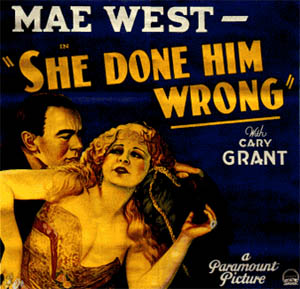
Lisa Reviews An Oscar Nominee: She Done Him Wrong (dir by Lowell Sherman)


She-done-him-wrong

When watching the 1933 film She Done Him Wrong, it helps to know a little something about American history.

It helps to know that the film was made at the tail end of the failed progressive experiment known as prohibition, an attempt to ban liquor in the U.S. which only served to make people idolize criminals and feel nostalgic for the time when you could just safely hang out in a saloon and get drunk with bunch of shady characters.

It helps to know that this film was made at a time when America was struggling through the Great Depression and, more than ever, movies were seen as an escape from reality.  The Depression also created a situation where, much like today, most Americans felt as if they were on the outside of the good life and, as a result, the most successful films of the time deal with outsiders getting something over on the smug and judgmental insiders.

It also helps to know that She Done Him Wrong was one of the last of the pre-Code films.  Though, by modern standards, the film may seem outwardly tame, the innuendo and subtext is anything but.  In fact, She Done Him Wrong was considered to be so racy that some people were actually scandalized when it became the biggest box office success of 1933.  (These were largely the same people who, 13 years before, celebrated the passage of prohibition.)  The infamous production code was largely instituted to make sure that a film like She Done Him Wrong could never be given another chance to corrupt filmgoers.

What exactly made She Done Him Wrong so controversial?

Well, it took place in a saloon in 1890s.  The saloon is owned by Gus (Noah Beery), who uses it as a front for prostitution and counterfeiting.  This is a film that features a lot of people drinking a lot of alcohol and it’s also a film that goes so far as to suggest that having a drink or two is not necessarily the worst thing in the world.  Captain Cummings (Cary Grant) runs a city mission that has opened up next to the bar and the film devotes a lot of time to poking fun at Cummings’s upright morality.  (Of course, Cummings has a secret of his own, one which suggests that his crusading attitude is just a convenient disguise.)  Though it would be repealed by the end of the year, Prohibition was still the law of the land when She Done Him Wrong was released and it’s fun to see how much the film has at the law’s expense.  That’s the type of fun that would basically be banned by the Production Code.

The Production Code would also require that all criminals be punished for their crimes by the end of a film.  In She Done Him Wrong, singer Lady Lou (Mae West) stabs to death the viscous Russian Rita (Rafaela Ottiano) and basically gets away with it.  It’s true that Lou was acting in self-defense but what makes She Done Him Wrong unique (for its time) is that Lou shows no remorse and that the killing is handled rather flippantly.  When the police, who have been searching the saloon for another criminal, burst into the room after Rita has been stabbed, Lou fools them by placing Rita’s corpse in a chair and combing her hair.  (“Haven’t you ever seen anyone comb someone’s hair before?”)  After the police leave, Lou has her bodyguard dispose of the body and Rita is never mentioned again.  Again, this is something that would never be allowed happen under the Production Code.

And then there’s the naked painting of Lou that hangs in the saloon.  Whenever it’s shown a screen, a man in a hat happens to be standing in just the right position to block the viewer from seeing the entire portrait.  Again, this would never have been allowed to happen under the Production Code.

And perhaps the biggest indication that this is a Pre-Code film is Mae West herself.  Reportedly, She Done Him Wrong was an extremely toned down version of West’s stage act but what was heard on-screen would certainly be enough to throw the guardians of decent society into a panic.  Nearly every line that she utters in this film is a double entendre but it’s not only what Mae West says.  It’s the way that she says it.  West may not have been a great actress but she had enough attitude that she didn’t need to be.  With every line, with every glance, with every movement, Mae West announces that she not only has sex but she enjoys it too.  In the Pre-Code days, that was unusual.  Once the Production Code went into effect, such a portrayal would be impossible.

As for the film itself — well, it’s pretty much just an excuse for Mae to be Mae.  There’s a plot, of course.  Lady Lou has many suitors and they all converge on the saloon at the same time.  However, Lou’s got her eye on the upstanding Captain Cummings.  (He’s a man in uniform, after all.)  It’s not a great film by any stretch of the imagination but, if you’re into film history or if you’re curious to see how American social mores have changed (and occasionally, not changed) over the years, She Done Him Wrong is a must see.
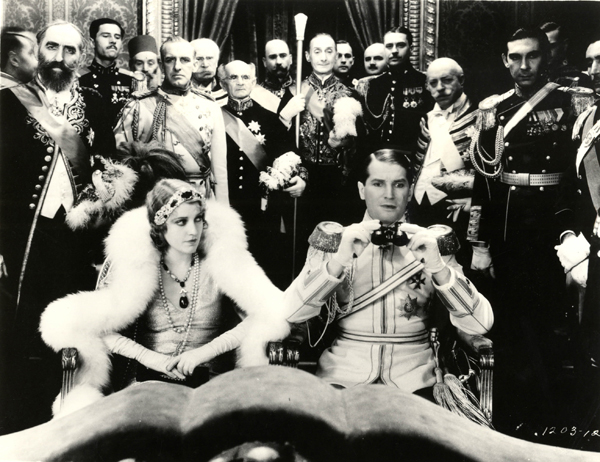
She Done Him Wrong is only 66 minutes long and it’s the shortest film to ever receive an Oscar nomination for best picture.  It received no other nominations and lost to Cavalcade.

Lisa Reviews An Oscar Nominee: A Farewell to Arms (dir by Frank Borzage)


220px-Poster_-_A_Farewell_to_Arms_(1932)_01

Reportedly, Ernest Hemingway hated the 1932 film adaptation of his great novel, A Farewell To Arms.  The novel, of course, tells the story of ambulance driver Frederic Henry (played in the film by Gary Cooper), his service in World War I, and his doomed love affair with an English nurse named Catherine (played by the very American Helen Hayes).  The novel was acclaimed for being tough and unsentimental.  The film is the exact opposite, revealing itself to be more typical of the work of director Frank Borzage than Ernest Hemingway.

How romantic was Borzage’s adaptation of A Farewell to Arms?  It was so romantic that it even changed the novel’s famous ending.  The novel ended with Catherine dying and Frederic Henry walking away, alone and in the rain.  The film, however, ended with Catherine miraculously recovering.  Never mind, of course, that having Catherine survive pretty much defeated the entire purpose of the story.  What was important was to give American audiences a happy ending!

However, European audiences got a more downbeat ending.  In the European version, Catherine does die.  After she dies, Frederic picks up her body and looks up into heaven, which is certainly far more dramatic (and, in its way, sentimentally spiritual) than anything to be found in Hemingway’s novel.  If, like me, you see A Farewell To Arms on TCM, you’ll see the European ending.

So, yes, I can understand why Hemingway would have hated this film.  But I have to admit that I rather enjoyed it.  The film adaptation makes for terrible Hemingway but it’s great Borzage.  Borzage specialized in making grand, lyrical, and sweeping romantic melodramas and that’s what his version of A Farewell To Arms truly is.  Helen Hayes may not be convincingly English and Gary Cooper may be a bit overly earnest for a Hemingway hero but they both look good together and they have great chemistry.  (Plus, Adolphe Menjou gives a good supporting performance as Frederic’s best friend.)  As a director, Borzage keeps the story moving at a steady pace and plays up the romance in every single scene.  There’s a great sequence that’s filmed entirely from the wounded Frederic’s point-of-view as he’s brought into a hospital and looked over by a series of officious nurses.  We see everything through Frederic’s eyes until Catherine finally enters the room and kisses him.  Only then do we see Frederic and Catherine together, leaving us with no doubt that these two belong together.  A Farewell To Arms may not be a great literary adaptation but it is a great cinematic romance.

A Farewell To Arms was nominated for best picture but it won to a largely forgotten film called Cavalcade.

Cleaning Out the DVR Pt 6: All-Star Horror Edition!


gary loggins's avatarcracked rear viewer

allstar1

As many of you Dear Readers know by now, classic horror has always been my favorite genre. From the Universal Monsters to Bug-Eyed Aliens to Freddie Krueger and friends (fiends?), a good scary movie is a good time! Even a bad scary movie can be fun, if I’m in the right mood. So here are six (count ’em), yes six horror films I’ve recently watched, with some great horror actors and directors at their best (and worst!):

allstar2

MIRACLES FOR SALE

(MGM 1939, D: Tod Browning)

The first great horror director, Browning teamed with Lon Chaney Sr. in the silent era to shock audiences with films like LONDON AFTER MIDNIGHT and THE UNHOLY THREE. He kicked off the Golden Age of Sound Horror with DRACULA, followed by the controversial FREAKS. MIRACLES FOR SALE was his last film, and while it’s more of a locked-room mystery, it’s loaded with those bizarre Browning…

View original post 760 more words

Lisa Reviews An Oscar Nominee: The Love Parade (dir by Ernst Lubitsch)


Love_Parade

Recently, as a part of TCM’s 31 Days of Oscar, I watched the 1929 musical The Love Parade.

Now, I have to admit that this was one of those movies that I started watching with a lot of pre-conceived notions.  While I happen to enjoy movies from all eras, I sometimes have a hard time adjusting to the style of the films that were made in the early days of the sound era.  Often times, it’s obvious that these films were made by directors and actors who were still struggling to make the transition from silent to sound cinema.  As a result, it’s not uncommon for films of this era to come across as being stiff and stagey.

But I needn’t have worried.  While The Love Parade does have its occasionally stagey moments, it actually holds up remarkably well.  For a film that was made 89 years ago, The Love Parade is still a lot of fun and surprisingly entertaining.  It helps, of course, that The Love Parade was made before the adoption of the infamous Production Code and, as such, it’s allowed to show off a racy sense of humor that keeps the film from feeling too dated.

As for the film itself, it deals with Queen Louise (Jeanette MacDonald), the young ruler of the European kingdom of Sylvania.  Despite the fact that Louise is a capable ruler, her subjects worry that she has yet to get married.  When her advisors inform her that she is running the risk of never marrying, Louise dismisses their concerns in a very Pre-Code way.  She lifts up her skirt, shows off her left leg, and says that there’s only one other leg as perfect as her left leg.  She then extends her right leg.  Since I basically do the same thing every single day, that was the moment when I realized that she might be the Queen and I might just be an outspoken redhead but I could still totally relate to Louise.

After showing off her legs, Louise deals with the issue of Count Alfred (Maurice Chevalier), a diplomat at Sylvania’s Paris embassy.  Apparently, Alfred ended up having an affair with every woman at the embassy (including the ambassador’s wife) and he has been recalled to Sylvania.  After reading the details of his sexual exploits, Louise decided that she has to meet Alfred for herself.

(And again, we’re reminded that this is a Pre-Code film.)

Alfred and Louise meet, fall in love, and marry.  However, Alfred has a hard time dealing with the fact that, as Queen, Louise has all the power in their marriage.  Even his attempts to draw up an economic plan are dismissed by the Queen’s advisors.  Feeling emasculated, Alfred sings a song called Nobody’s Using It Now.

Three guess what “it” is.

Can this marriage be saved?  Louise’s maid (Lillian Roth) and Alfred’s servant (Lupino Lane) are determined to make sure that it can be!

If the plot description and my review of The Love Parade sounds in any way similar to my review of The Smiling Lieutenant, that’s because both films were directed by Ernst Lubitsch.  In fact, The Love Parade was Lubitsch’s first sound film and, in many ways, his assured direction here played a huge role in helping Hollywood make the transition from the silents to the talkies.  Both Jeanette MacDonald and Maurice Chevalier give assured (and sexy) performances that hold up well today and the film’s opulent sets and costumes remain a visual delight.  The end result feels like a wonderfully entertaining fairy tale.

The Love Parade was nominated for best picture but it lost to the far more grim All Quiet On The Western Front.  But, regardless of what awards it won or did not win, The Love Parade is a delightful little film that works both as a historical document and a terrifically entertaining musical comedy.

Late Night Cable Horror: College Coeds vs. Zombie Housewives (2015, dir. Dean McKendrick)


Sylvester Stallone, Russ Meyer, Jill Clayburgh, Ron Jeremy, David Duchovny, Abel Ferrara, Frankie Cullen, Catherine Bell, Zalman King, Lloyd Kaufman, Roger Ebert, Ed Wood, Jacqui Holland, Andy Warhol, Jim Wynorski, and many others have worked in erotica, softcore, and/or hardcore. That’s all I have to say about the stupidity that happened today.

IMG_1990

Since this movie didn’t have the courtesy to start with a usable title card and I’m still refusing to resort to black boxes, I am beginning where the movie actually starts. We have a black screen and hear a woman say, “What the hell is wrong with you bitches?!” Then we cut to cheerleaders, such as that one played by Erika Jordan, beating up the “zombies”. I put zombies in quotations because they are about as much zombies as the zombies were in the Pierre Kirby movie Zombie vs. Ninja (1989). By that I mean people moving stiff as a board and that’s about it. You’d think they’d go for the obvious joke here, but they don’t.

Funny fact: According to the credits, Erika was the fight choreographer for this movie.

We are now taken back three days so the movie can introduce us to our main couple.

IMG_2023

For those of you who have seen Invisible Centerfolds, yes, that is Frankie Dell. Yes, he once again plays a scientist. And yes, that does mean this is a wacky Dean McKendrick movie like Invisible Centerfolds. Just thankfully they don’t dress Frankie Dell in such a way that he becomes porno Bill Nye. However, this is one where they have music that sure sounds similar to Santana’s Smooth. They don’t directly rip it off, but if you watch this, then you’ll hear what I’m talking about.

The setup here is that Jennings (Frankie Dell) isn’t getting laid at home by his wife any more. Being a scientist he decides that if men get Viagra, then surely he can come up with something similar to help out women. Of course he’s as bright as the guy in the first part of Pietro Germi’s The Birds, The Bees, and the Italians (1966). By that I mean he just leaves his friend with his wife to go to work not even thinking there might be something going on there. Of course there is.

There’s a documentary called Aroused (2013) where the director Deborah Anderson interviews numerous female porn stars. I don’t recommend it. It’s self-serving and the cinematography is headache inducing. However, an interesting piece of information slipped out from one of the ladies. She mentioned that people usually don’t realize that it’s actually harder on the guys. Of course that wasn’t on the agenda so it wasn’t followed up on. I mention it because several times in this movie you can see the guys go into a Buddhist-like meditation to keep going for the scene.

IMG_2147

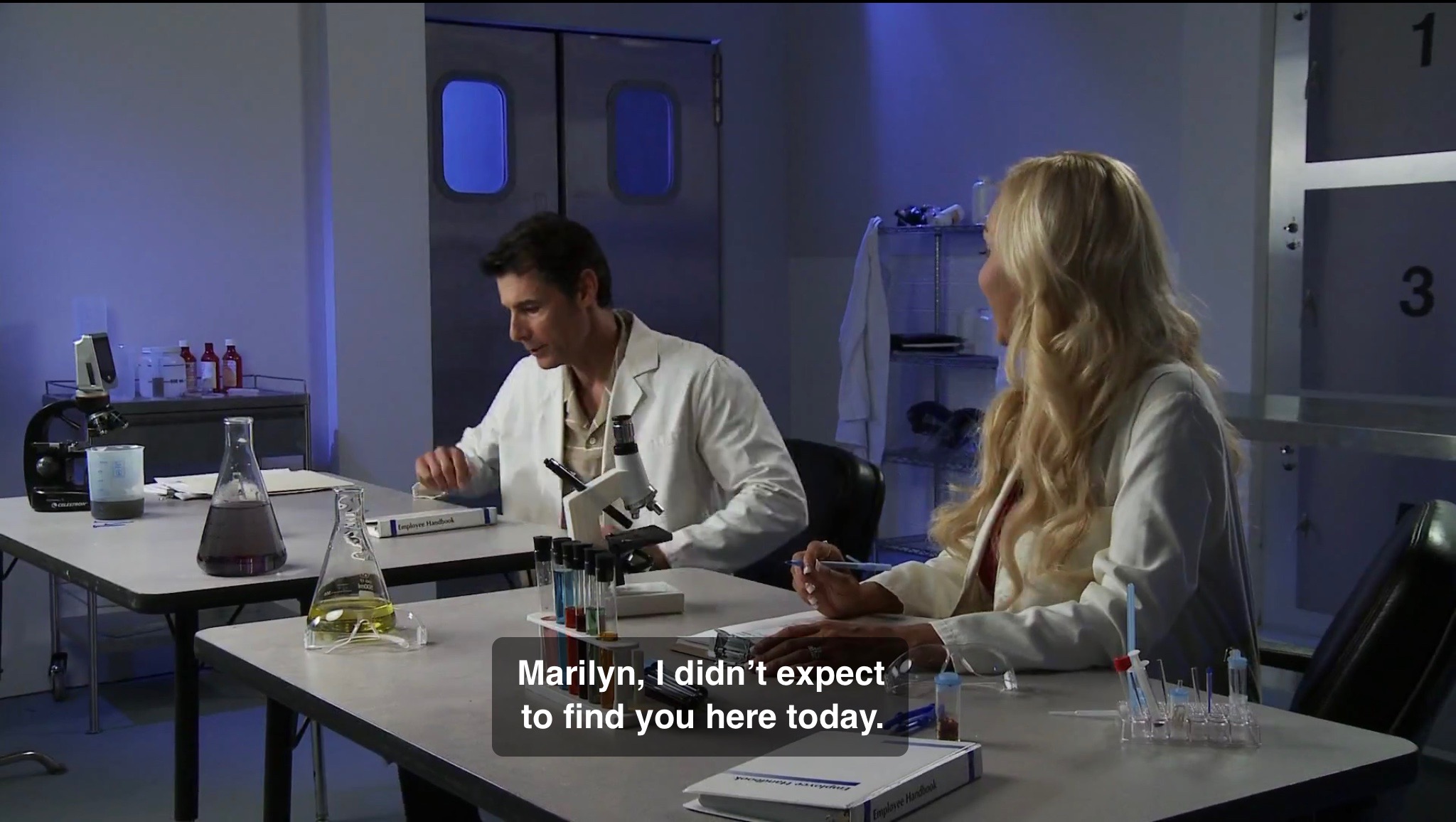
Now we go to the lab and meet Jennings’ assistant Marilyn (Mary Carey). Apparently, they have brought in rats, monkeys, rabbits, raccoons, chipmunks, and beavers to test out this stuff on. There is actually a payoff later in the movie for them stopping to list those animals.

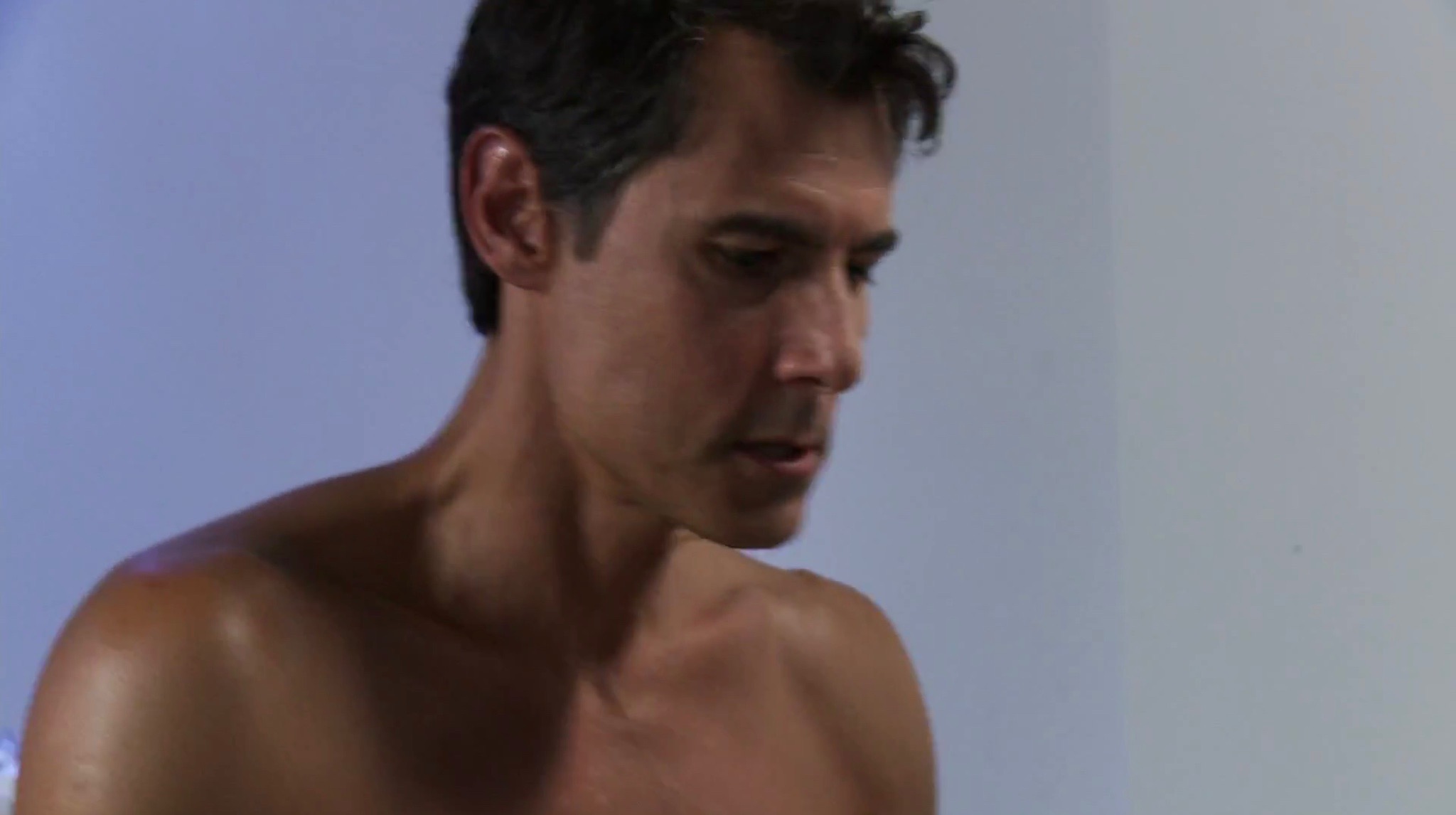
Mary decides to be a guinea pig herself and drinks the stuff even though there are apparently some early signs of a secondary effect. She pretends that it works and has sex with Jennings. Of course he does it in the name of science. By the way, here’s what I mean by a Buddhist-like trance state.

IMG_2287

That is not the face of a happy man. That’s the face of either a man who can’t go off at all or is desperately trying to work in a symbiotic relationship with it rather than a parasitic one. People may tell you myths about it, but that it has a mind of it’s own is not one of them. It doesn’t control you, but it sure does its own thing.

However, it’s not all fun and games. After Jennings leaves the room, that secondary effect kicks in, but only for a moment.

IMG_2313

She acts like she is partially possessed by a spirit. She bumps into a few things before regaining control. I love that one of the things she bumps into is a bottle of the very pain killer I take for fibromyalgia.

IMG_2332

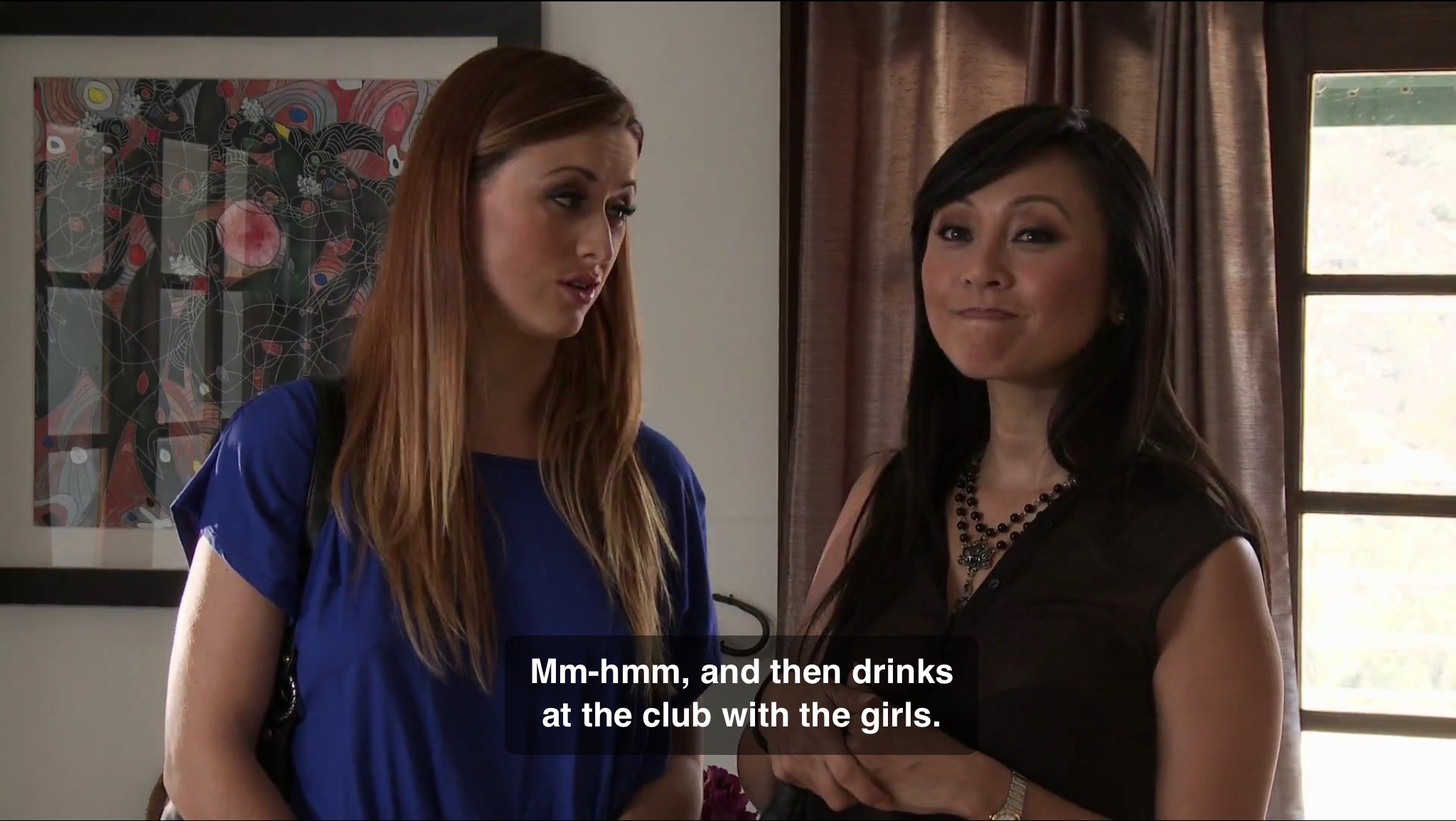
Meanwhile, back at what I’m pretty sure was Atomic Hotel Erotica (2014), we meet two of the housewives. That’s Tracy (Karlie Montana) and Carrie (Christine Nguyen). Jennings convinces them to have a drink, which of course spikes with the experimental drug. Seeing as they have no reaction whatsoever, he figures Marilyn was lying to him.

After tennis so that the guy boning Jennings wife can rub it in how about much better his sex life is, we finally meet the “coeds” of the title.

IMG_2423

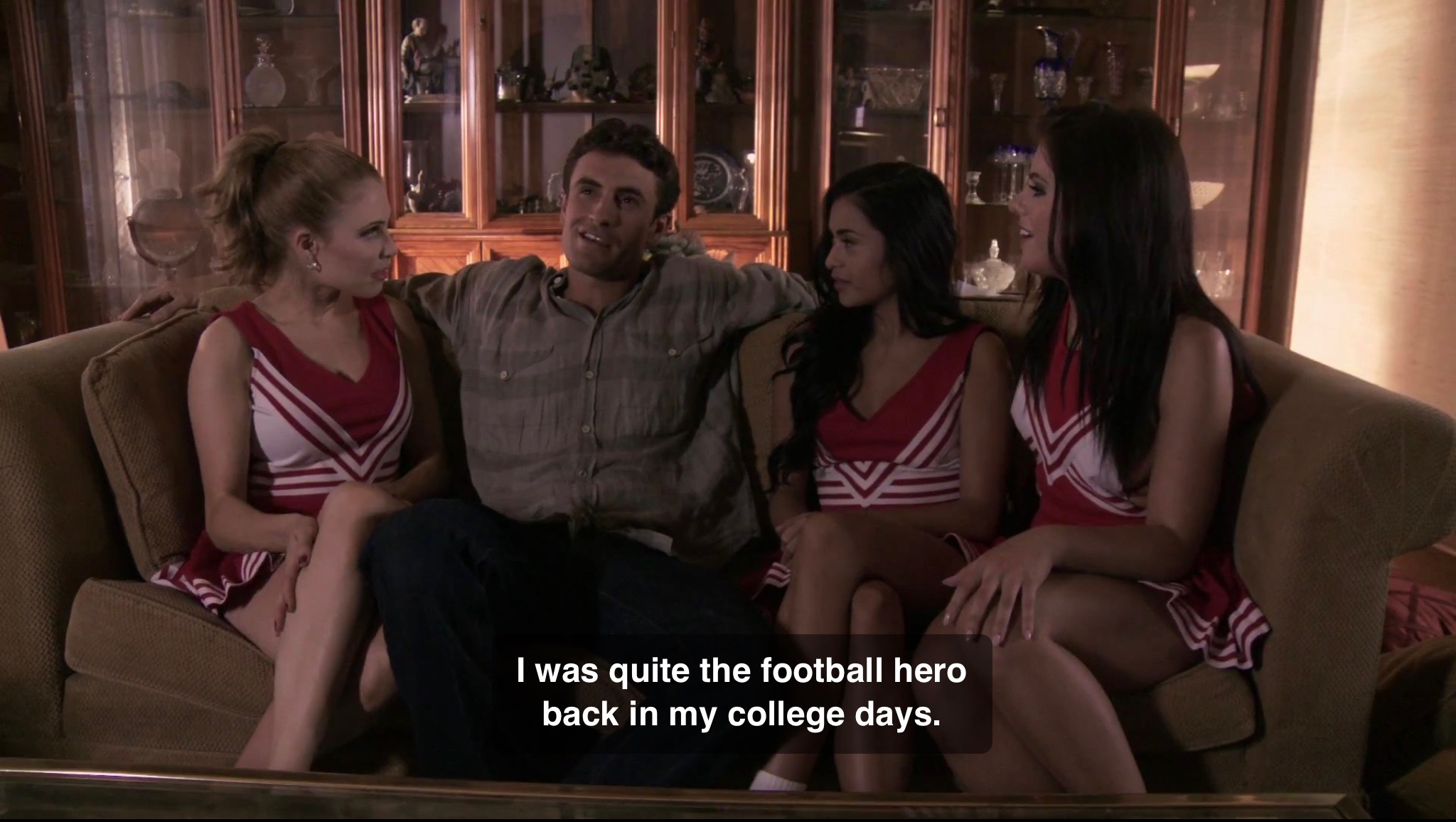
By that I mean cheerleaders who have apparently moved in next door. Guess it could be worse. Could be vampires who suddenly become your neighbors like in Erotic Vampires of Beverly Hills. Oh, and yes, they are terrible cheerleaders. And that’s coming from someone who suffered through the last two Bring It On movies without having seen any of the others. That is definitely Erika Jordan in the center. You can always tell it’s her. She’s the porn star who looks like she went back in time to 1915 and was branded by Sessue Hayakawa in The Cheat (1915). Course while he’s over there getting googly eyed at cheerleaders, Jennings’ formula kicks in.

IMG_2449

After they are done giving each other thorough cleanings and inspections for lumps, we cut back to the lab and Marilyn receives a call. I have to mention that they even bothered to put in a quick line here that Marilyn has no boyfriend. I can’t tell you how nice it is when any movie that prominently features sex provides a reason for it to occur. Even if it’s something wacky like a potion. He has the bad news that the stuff she drank does after awhile induce a trance-like state. This is going on as we crosscut to the couples playing tennis when…

IMG_2626

zombie housewives!

Then Erika leaves two of the other cheerleaders to go meet with their coach. Then as Bring It On: Quest For The Mighty Spirit Stick taught me, cheerleaders do need to limber up. Yeah, that is a weak excuse, but these movies often do try to have a reasonably equal mix of both girl-on-girl as well as guys with girls.

Some stuff happens now that doesn’t matter. But we do get this line from Jennings’ wife.

IMG_2789

Could be worse. Could be the potion that turns you into a gorilla Frankie Dell made in Invisible Centerfolds.

Then we get a call to Steve played by Mike Gaglio. By the way, among other things, Mike Gaglio is in the religious movie God’s Club (2015).

IMG_2824

He’s not having a good time over there. According to him he’s “got a roomful of killer zombie rabbits over here.

IMG_2828

I got squirrels going after raccoons. The rats have overtaken the commissary. I don’t even want to tell you what the monkeys are up to!” But he does comfort her that he has someone working on an antidote.

Back home, Frankie Dell has a short scene that once again reminds us that he really doesn’t belong in these movies. Frankie Cullen could make a career in these films if he wants to, but Frankie Dell should jump ship ASAP. He is just a comedian. Heck, one of his earliest roles was as a voice on Daria. He doesn’t belong here at all.

IMG_2883

Then we go to Andrew Espinoza Long who played G.W. Bushwhacker in Bikini Model Mayhem and plays Hank who is married to Carrie hanging out with the cheerleaders. This leads exactly where you think it does. I just wonder a bit of how the girl on the bottom is getting any fun out of the situation.

Now we get a little zombie action out of Marilyn.

IMG_3027

Then Carrie complains to Marilyn about her husband hanging out with those cheerleaders. Of course this means Carrie needs to give Marilyn her annual checkup.

After Carrie points out the obvious to Jennings that the cheerleaders are closer to his martial problems than any stupid formula, we finally have our stand down between the college coeds and zombie housewives.

IMG_3242

IMG_3293

It’s kind of funny, but pretty stupid. I was much more interested in Mike Gaglio who shows up in the lab with the antidote. He’s been dealing with “killer zombie raccoons, and killer zombie squirrels.” I wanted to see that!

They do get the antidote to the girls in time and Jennings wife breaks up with him. You know, it is appropriate that I review these movies and Hallmark movies cause aside from, of all movies today, Carnal Wishes is the only one I remember that doesn’t have a super happy ending like Hallmark movies do. Even Jennings ends up with Judy (Erika Jordan) six months later after losing his wife. He is still up to his experimental hijinks too.

IMG_3489

This is not as good as Bikini Model Mayhem or Carnal Wishes. See those first, then come back for this. It’s Dean McKendrick in fine form. Also, Frankie Dell is a funny man. I strongly hope he starts showing up in other kinds of movies. It’s kind of sad that since he has done some of these films he most likely can’t make the jump to a Disney Channel show. He would make for a very humorous supporting character on one of those shows as a bumbling scientist at the kids’ school. Oh, well.

Lisa Reviews An Oscar Nominee: Blossoms In The Dust (dir by Mervyn LeRoy)


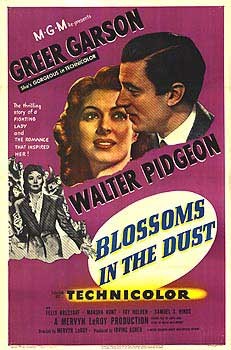
Blossoms_dust_movieposterDid you know that up until the year 1936, if a child was born to unwed parents, it was common practice to actually put the word “illegitimate” on that child’s birth certificate?  As you all know, I am perhaps the biggest history nerd in the world and, while I knew that there was once a huge stigma associated with being born outside of marriage, I did not know just how institutionalized that stigma was.

I’m also proud to say that my home state of Texas — the state that all the yankees love to bitch about — was the first state to ban the use of the word “illegitimate” on birth certificates.  This was largely due to the efforts of Edna Gladney, an early advocate for the rights of children.  Along with starting a home for orphans and abandoned children in Ft. Worth, Edna also started one of the country’s first day care centers for the children of working mothers.

That’s right — there was a time when day care was itself a revolutionary concept.

I have TCM to thank for my knowledge of Edna Gladney, largely because TCM broadcast a 1941 biopic called Blossoms in The Dust.  According to Wikipedia, the film was a highly fictionalized look at Edna’s life but, to be honest, I would have guessed that just from watching the movie.  While Blossoms In The Dust gets the important things right (and it deserves a lot of credit for sympathetically dealing with the cultural stigma of being born to unwed parents at a time when it was an even more controversial subject that it is today), it’s also full of scenes that are pure Hollywood.

In real life, Edna knew firsthand about the challenges faced by children of unwed parents because she was one herself.  Apparently, at the time, that was going too far for even a relatively progressive film like Blossoms In The Dust so, in Blossoms, Edna (played by Greer Garson) is given an adopted sister named Charlotte (Marsha Hunt).  When the parents of Charlotte’s fiancée discover that she was born outside of marriage, they refuse to allow Charlotte to marry their son.  In response, Charlotte commits suicide.

In real life, Edna was born in Wisconsin but, following the death of her stepfather, moved to Ft. Worth to stay with relatives.  Edna was 18 at the time and eventually met and married a local businessman named Sam Gladney.  In Blossoms in The Dust, Edna is already an adult when she first meets Sam (played by Walter Pidgeon, who played Greer Garson’s husband in a number of films) and they meet in Wisconsin.  It’s only after Charlotte dies that Edna marries Sam and it’s only after they’re married that Edna moves to Texas.  Whereas the real life Edna had relatives in Texas, the film’s Edna is literally a stranger in a strange land.

That said, the film is actually rather kind to my home state.  The film spend a lot of time contrasting the judgmental snobs up north with the more straight-forward people who Edna meets after she moves to Ft. Worth and it’s occasionally fun to watch.  (Of course, I would probably feel differently if I was from Wisconsin.)

Blossoms In The Dust was nominated for best picture but it lost to How Green Was My Valley.  Greer Garson was nominated for best actress but she lost to Joan Fontaine in Suspicion.  However, just one year later, Garson would win an Oscar for her performance in the 1942 best picture winner, Mrs. Miniver.  Incidentally, her husband in that film was played by none other than Walter Pidgeon.

Ultimately, Blossoms in the Dust is typical of the type of movies that you tend to come across while watching films that were nominated for best picture.  Some best picture nominees were great.  Some were terrible.  But the majority of them were like Blossoms in the Dust, well-made, respectable, and just a little bit bland.  Blossoms in the Dust is not bad but it’s also not particularly memorable.  If, like me,  you’re a student of history and social mores, Blossoms in the Dust has some historical interest but, when taken as a piece of cinema, it’s easy to understand why it’s one of the more forgotten best picture nominees.

Hallmark Review: The Good Witch’s Garden (2009, dir. Craig Pryce)


vlcsnap-2016-02-11-16h54m29s169

This is actually the first Hallmark movie I’ve watched on DVD. I only mention that for others who might watch it on their computer using VLC like I did because it makes taking screenshots easy. This movie’s particular DVD really gave me trouble and I had to force it to bypass the menu in order to get it to play. Sadly, the captions on the DVD were not very good so if that’s important to you then I’m sorry. They drop out at times and get wonky. At least that was my experience.

This now means there is only one more Good Witch film for me to see. That would be The Good Witch’s Gift (2010). If I didn’t notice it before, then I definitely did this time after recently watching Garage Sale Mystery: Guilty Until Proven Innocent. That one introduced Good Witch style subplots to it that I really didn’t like and should be taken out from future installments. I remember them being in, I believe, all of these Good Witch films. I have never watched the TV Show, but I get the strong feeling that this works far better as a TV Show than it did as a yearly series of films. The main plots and subplots are fine for a TV Show and even if they are completely self-contained to a single episode almost always would add to a character in some way. However, when I watch these Good Witch movies I just wanna scream: “Please have a single self-contained plot that all of the characters are involved in and which moves them all forward to a state that we will pick up in the next film.” The Signed, Sealed, Delivered movies do just that. I’m theorizing here, but that’s probably why that went from a show to a series of movies and the Good Witch franchise did the opposite. Let’s talk about the movie now.

vlcsnap-2016-02-11-16h56m05s741

The movie starts off and we have Martha Tinsdale (Catherine Disher) once again in full busybody mode. Luckily, she starts to come around by the end of this installment. She is joined by her friend Gwen (Elizabeth Lennie). I love the drastic difference in their faces here. Gwen is certainly interested in Grey House, but she acts like a reasonable person. Martha actually has some priceless nonsense that she comes up with here to say. First off though, yes, just like For The Love Of Grace, this one also prominently features a Nikon camera. The only other product I ever recall showing up in a bunch of Hallmark movies was the Wii and once the Wii U.

Anyways, they are there to scout out a location for the bicentennial of their town called Middleton. They decide to take a look at Cassie’s (Catherine Bell) house since it is 200 years old. Martha bumps into a creeper plant on the ground, freaks out, and runs to Jake Russell (Chris Potter) who is the top cop in town. He also happens to be dating Cassie.

There is a brief little period here where they quickly reintroduce us to Cassie, George (Peter MacNeill), and Lori (Hannah Endicott-Douglas). This time they tone down the she’s a little girl, get it, she’s a little girl, can we remind you one more time she’s a little girl stuff, but without changing the character. It’s just the way they present her. She fits in better this time around than she did in the first film.

Now we get probably the best part of this movie. Martha shows up at Jake’s office and among other stupid things, she actually alludes that Cassie is growing pot. She says she suspects some of her plants are “illegal”.

vlcsnap-2016-02-11-17h00m36s007

Can’t think of something else reasonable that she could be referring to in talking to a police officer and using that particular word. She also talks about this vine on the ground that she bumped into like she just saw the movie The Crawlers (1993). She seems to really believe that Cassie may have plants that are like the roots in that movie which will reach out to kill you. I think Chris Potter’s face gets across how hilariously ridiculous these lines are.

vlcsnap-2016-02-11-17h00m25s467

Disher does a great job delivering them. I just love her line that Cassie may be growing illegal plants. I can’t get over that.

Now we kick off the main plot and the subplots. Let’s do the subplots first.

vlcsnap-2016-02-11-17h16m03s464

That’s George meeting Gwen. I’m sorry, does that need an explanation?

vlcsnap-2016-02-11-17h17m48s276

That’s Lori on the right who has been assigned to do a paper with Jess (Jordy Benattar). However, you can see that Jess has gotten up to flee. For an adult audience the reason is immediately understood. Jess can’t read. Lori doesn’t find this out till a little later. Up till then she thinks Jess is just trying to get her to do all the work, which is understandable. People do that.

vlcsnap-2016-02-11-17h34m18s574

That’s Brandon (Matthew Knight) on the right and his two new “friends”. His subplot is these two guys are pushing him around to do something stupid to I guess be initiated into the stupid kids society. It’s similar to the one in the most recent Garage Sale Mystery movie except this time it’s not filled with humorous goofs, lines, and a resolution that had his friends looking like Bill Pullman from Ruthless People (1986). This time Cassie does almost the same thing she did in the first film. She gives him a mirror and just before they do their stupid thing, she shows up causing the item she gave him to come into play.

With the subplots going, this guy shows up to be our main attraction.

vlcsnap-2016-02-11-17h12m03s906

He’s Nick Chasen (Rob Stewart) and he has his eyes set on Grey House. He presents himself as the true heir to the house.

Again, Catherine Bell does the Jadzia Dax thing here. She always comes across as wise and with years of experience, but never appearing in some super state of nirvana above us mere mortals. She definitely has her suspicions, but still needs help and has to work through the situation with Jake and his family. She doesn’t just foresee it all and play along. That would make for a rather bland film in my opinion.

As you know from the later films, he does propose at the end of the movie.

vlcsnap-2016-02-11-20h17m19s057

There are a couple of little goofs, but nothing worth mentioning. Most of it seems to have been shot around Hamilton, Ontario. That’s really it in that department. I did not see the goof listed on IMDb about Martha’s shoes. Apparently the opening shot shows them as black, but after she goes in the gate of Grey House they are leopard print. Here’s the two shots. I didn’t see it.

vlcsnap-2016-02-11-16h55m55s508

vlcsnap-2016-02-11-16h56m37s472

With these Good Witch movies there really isn’t much else to talk about except to lay out the plots for you. That’s how these films work.

It’s not as good as the first film. That one felt like it could have been self-contained. This feels like what it is really: the second episode of a TV Show rather than a new film that continues a saga. The acting is good all around as usual. I actually forgot that Matthew Knight was on My Babysitter’s A Vampire. I liked that show.

I recommend this one, but I could tell it was already starting to drop off in quality from the first one more than I would have liked. I want to hear from anyone who has seen the show to tell me if it does seem to work better that way than as an annual TV Movie.

Footnote: Since I brought it up in a past review of a Good Witch movie, let me put it to rest. I did track down the relevant scenes from the one episode Catherine Bell did of Hot Line back in the 1990’s. It’s just really generic 90’s late night erotica. Nothing special or interesting at all. I thought there might be something, but there isn’t. Often when you come across an entry in someone’s filmography that is so different from their usual, then it turns out to be worth seeing if you are a fan of their work. Not here. I would only recommend this for Catherine Bell completionists who must see everything she has ever done. It certainly wasn’t even worth the couple of minutes it took me to find it. The clip I saw from an episode of Dream On that she was on looked like a much more interesting example of her really early work if that’s what you want to see. Just wanted to bring that to a close.