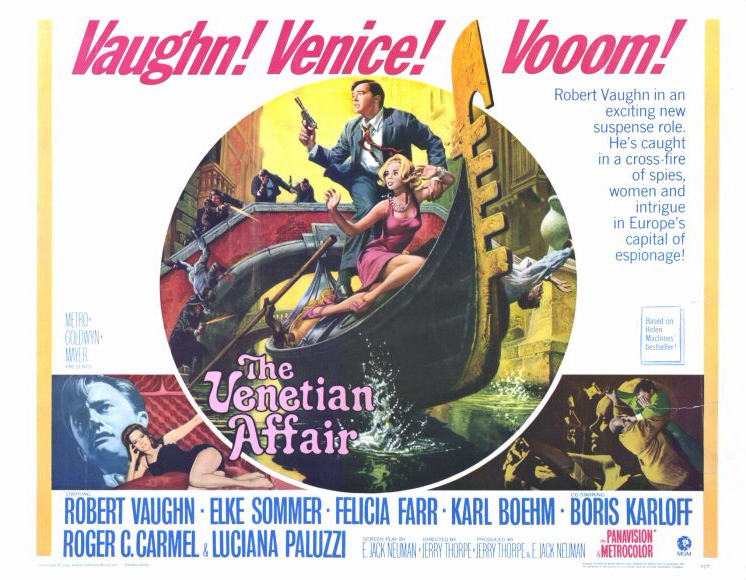
Robert Vaughn played superspy Napoleon Solo on TV’s THE MAN FROM U.N.C.L.E. from 1964 to 1968. The series was inspired by the James Bond craze, filled with outlandish gadgets and evil supervillains. Vaughn’s popularity led to a starring role in THE VENETIAN AFFAIR, a Cold War spy thriller with a much more adult theme. Here, he plays Bill Fenner, ex-CIA agent, now a hard-drinking reporter who gets caught up in international intrigue.
Fenner is sent to Venice after a U.S. diplomat supposedly sets off a bomb at an international nuclear disarmament conference. He soon learns the assignment was arranged by his former CIA boss, “Rosey” Rosenfeld (Edward Asner). Rosey wants to use Fenner to smoke out old flame Sandra Fane (Elke Sommer), a Communist agent with a mysterious link to the bombing. Fenner’s odyssey takes him through double-and-triple crosses in the world of international espionage he once left behind.
I had high hopes for Pride and Prejudice and Zombies, the just-released film which, like the novel upon which it is based, attempts to combine Jane Austen and The Walking Dead. The source material was good. The cast — with Lilly James as Elizabeth Bennet, Jack Huston as Wickham, and Matt Smith as Parson Collins — was impressive. The trailers looked great, promising a combination of zombies, ornate costumes, and a very British sense of humor. Sadly, however, the ultimate film is a bit of disappointment.
Actually, it’s more than just a bit of a disappointment. It is a HUGE disappointment. To have so much promise and then to turn out so bland — well, it’s enough to make you wonder if maybe zombies have become so common place in popular culture that they’re no longer as interesting as they once were. Don’t get me wrong, as a symbol of the impossibility of escaping death, zombies are great nightmare fuel. But, when you see them in a relatively bloodless PG-13 film like this, you realize that it takes more than just a few random zombies to make an effective horror film.
Plotwise, Pride and Prejudice and Zombies is exactly what it says it is. It tells the same basic story as Pride and Prejudice, with the exception being that England is now under siege from zombies, the Bennet sisters have now been trained in how to kill zombies, Mr. Darcy (played by Sam Riley) is now Col. Darcy and he’s an expert at tracking down zombies and killing them, and Wickham is now more than just a cad, he’s a cad who wants to help the undead overthrow the living. As I typed all that out, I realized I was probably making the film sound a lot more fun than it actually is. And really, the movie should be fun but it’s not.
Director Burr Steers never manages to capture the proper tone for telling this story. The satire is never as sharp as it needs to be. The scenes that are meant to pay homage to Austen try a bit too hard to capture Austen’s style without contributing any of her insight and the romance between Elizabeth and Darcy is sabotaged by the fact that Sam Riley and Lilly James had absolutely no chemistry together. The scenes with the zombies are bland, largely because this is a PG-13 rated film and bloodless zombies aren’t particularly scary. A typical episode of The Walking Dead is more graphic than anything you’ll see in Pride and Prejudice and Zombies.
Which is not to say that there aren’t a few moments when Pride and Prejudice and Zombies kind of works. It has moments but they’re isolated and they never really come together to build any sort of narrative momentum for the film as a whole. Sam Riley is a bit of a dud as Darcy but Lilly James, Jack Huston, and especially Matt Smith all give good performance. (Smith, in particular, is so good as Collins that I would like to see him play the role in an actual adaptation of Pride and Prejudice.) Early on in the film, there’s a fun scene where the Bennet sisters destroy a horde of zombies and it actually strikes the right balance between comedy and horror. Before that, we get the traditional scene that we get in all Austen adaptations, of the Bennet sisters preparing for a ball and, in between lacing up corsets and discussing whether they will all be able find husbands, they also carefully conceal the daggers and knives that they will be carrying just in case they happen to run into any of the undead. It’s one of the few scenes that suggests what Pride and Prejudice and Zombies could have been if it had only found a consistent tone.
For that matter, I also liked the animated opening credits, which wittily explained how the zombies first appeared in England and, not surprisingly, suggested that it was all the fault of the French. And the film also had a fairly effective scene that shows up in the middle of the end credits and suggested what would might happen if Pride and Prejudice and Zombies 2 is ever put into production.
But ultimately, even those moments that worked only left me frustrated that the rest of the film did not. For all of its potential, Pride and Prejudice and Zombies disappoints.
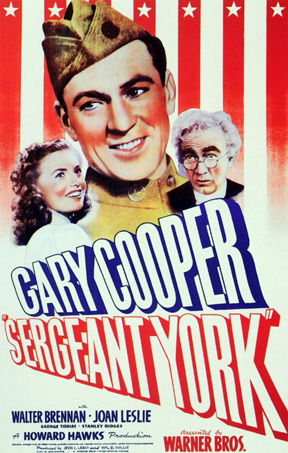
The 1941 film Sergeant York was the American Sniper of its day. A biopic of Alvin York, one of the most decorated American soldiers of World War I, Sergeant York was not only a huge box office hit but it was a film that celebrated American patriotism in the type of unabashed fashion that you would never see in a film made today. Though Sergeant York went into production at a time when the United States was officially pursuing a policy of international neutrality, it was released shortly before the Japanese attacked Pearl Harbor and, whether intentionally or not, Sergeant York served as a strong recruiting tool. According to Wikipedia (and we all know that Wikipedia is never wrong), there were reports of young men going straight from the movie to the nearest military recruitment office.
Clocking in at nearly two and a half hours (and running at least 40 minutes too long), Sergeant York is two films in one. The second half of the film deals with the military career of Alvin York (Gary Cooper), a plain-spoken and honest Tennessee farmer who, because of his strong religious beliefs, unsuccessfully attempts to register as a conscientious objector. Forced into the Army, York is, at first, dismissed as a simple-minded hillbilly. (His fellow soldiers are amused to discover that York doesn’t know what a subway is.) However, to the shock of his commanding officers, he proves himself to be an expert marksman. As he explains it, being from the country means that he’s been shooting a rifle his entire life.
On the basis of his skills as a marksman, York is given a promotion but he still says that he refuses to kill. It’s not until his superior officer reminds him of the sacrifices that past Americans have made that York starts to reconsider his position. Then, a gust of wind opens York’s bible to a verse about giving unto Caesar what is Caesar’s and York realizes that he can go to war and, if need be, he can kill.
And it’s a good thing that he can! Because World War I is heating up and York may be the only guy around with the strength and confidence to single-handedly defeat and capture over 170 German soldiers.
The army section of Sergeant York is predictable but well-done. As you’d expect from a film directed by Howard Hawks, a lot of emphasis is put on how the soldiers work together. York is portrayed not as being super human but instead as just an honest man who is exceptionally good at his job. There’s nothing surprising about the second half of Sergeant York but Hawks keeps the action moving and Cooper gives a good performance.
To be honest, I preferred the first half of the film, which examined York’s life before he joined the Army. When we first meet Alvin York, he drinks too much, he fights too much, and he’s totally irresponsible. It’s not until he falls in love with Gracie Williams (Joan Leslie) that York starts to change his ways. The scenes of York in the backwoods of Tennessee had a lively feel to them and it was enjoyable to see Cooper play a somewhat disreputable character. Cooper seemed to be having fun playing a ne’er-do-well and, in the scenes before York finds God, his bad behavior was a lot of fun to watch.
Considering its success at the box office, it’s not surprising that Sergeant York was nominated for best picture of the year. While Gary Cooper won the Oscar for best actor, the award for Best Picture went to How Green Was My Valley.
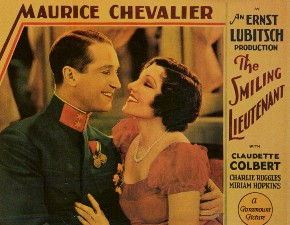
Last night, I watched The Smiling Lieutenant, a musical comedy from 1931. I recorded it off of TCM as a part of the 31 Days of Oscar and I have to admit that I really was not expecting much. While I love old movies and I have a special place in my heart for pre-code movies and their obsession with lingerie and suggestive winks, I was concerned that The Smiling Lieutenant was a musical that was made at a time when the Hollywood studios were still figuring out how to use sound to tell a story. I worried that the film would be one of those extremely creaky and overly theatrical movies that you always run the risk of coming across whenever you explore the cinema of the early 30s.
But you know what? I was pleasantly surprised. The Smiling Lieutenant is an undeniably old-fashioned film and yes, there were a few scenes that felt a bit too stagey. Compared to what modern audiences are used to, some of the acting does seem stilted. This is a film that will demand a bit of adjustment on the part of the viewer. But, with all that in mind, The Smiling Lieutenant is still an enjoyable little movie.
The story is charmingly simple. In Vienna, Lt. Nikki von Preyn (Maurice Chevalier) is in love with Franzi (Claudette Colbert), the worldly and free-spirited orchestra leader. However, Nikki makes the mistake of winking at Franzi while in the presence of Princess Anna (Miriam Hopkins). When Anna takes offense, Nikki says that he was only winking because Anna is so beautiful. Anna immediately falls in love with Nikki and demands to marry him. She explains that if Nikki doesn’t marry her, she’ll marry an American suitor which would totally scandalize Vienna.
Doing his patriotic duty, Nikki marries Anna. However, Nikki still longs for the more experienced Franzi and spends his time pining for her. Realizing that her husband is in love with another woman, Anna confronts Franzi and this is exactly where, if this was a modern film, there would be either be a huge cat fight or Anna and Franzi would team up to destroy Nikki. However, since this is a 1931 pre-code film, Franzi realizes that Anna loves Nikki. As a result, Franzi decides to help her boyfriend’s wife win back his interest.
And how does Franzi do this? By giving Anna a makeover! As Franzi explains in song, it’s time for Anna to “jazz up (her) lingerie!”
The Smiling Lieutenant is an entertaining movie. I suppose that many would probably consider it to be the epitome of “fluff” but so what? I imagine that for audiences in 1931, a film like The Smiling Lieutenant provided a nice escape from the Great Depression and isn’t escape one of the best things that a good film can provide? Colbert, Hopkins, and Chevalier all give likable performances and, even 85 years after it was first released, it’s a fun little movie.
The Smiling Lieutenant was a huge box office hit and it was nominated for best picture of the year. However, it lost to Grand Hotel.
I did make it out of South Korea for three films in Japan, but then was thrown back there. I feel like this is turning into MASH on me.
High Kick Angels (2014, dir. Kazuhiro Yokoyama) – Hmmm…can’t say I have. I unfortunately can say an elementary school girl tried to grab my genitals when I was in the 4th grade, but I don’t think that counts. Well, with a poster like that you might be thinking Sailor Moon.
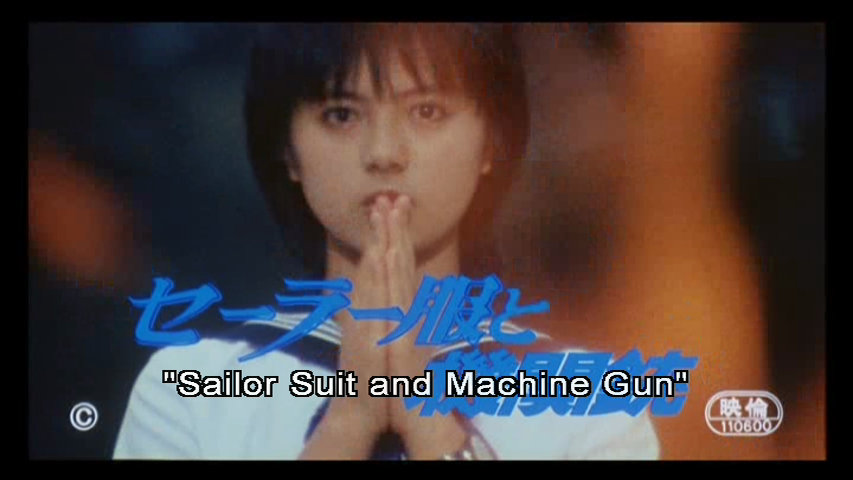
Maybe Sailor Suit and Machine Gun (1981)?
Perhaps even Lollipop Chainsaw?
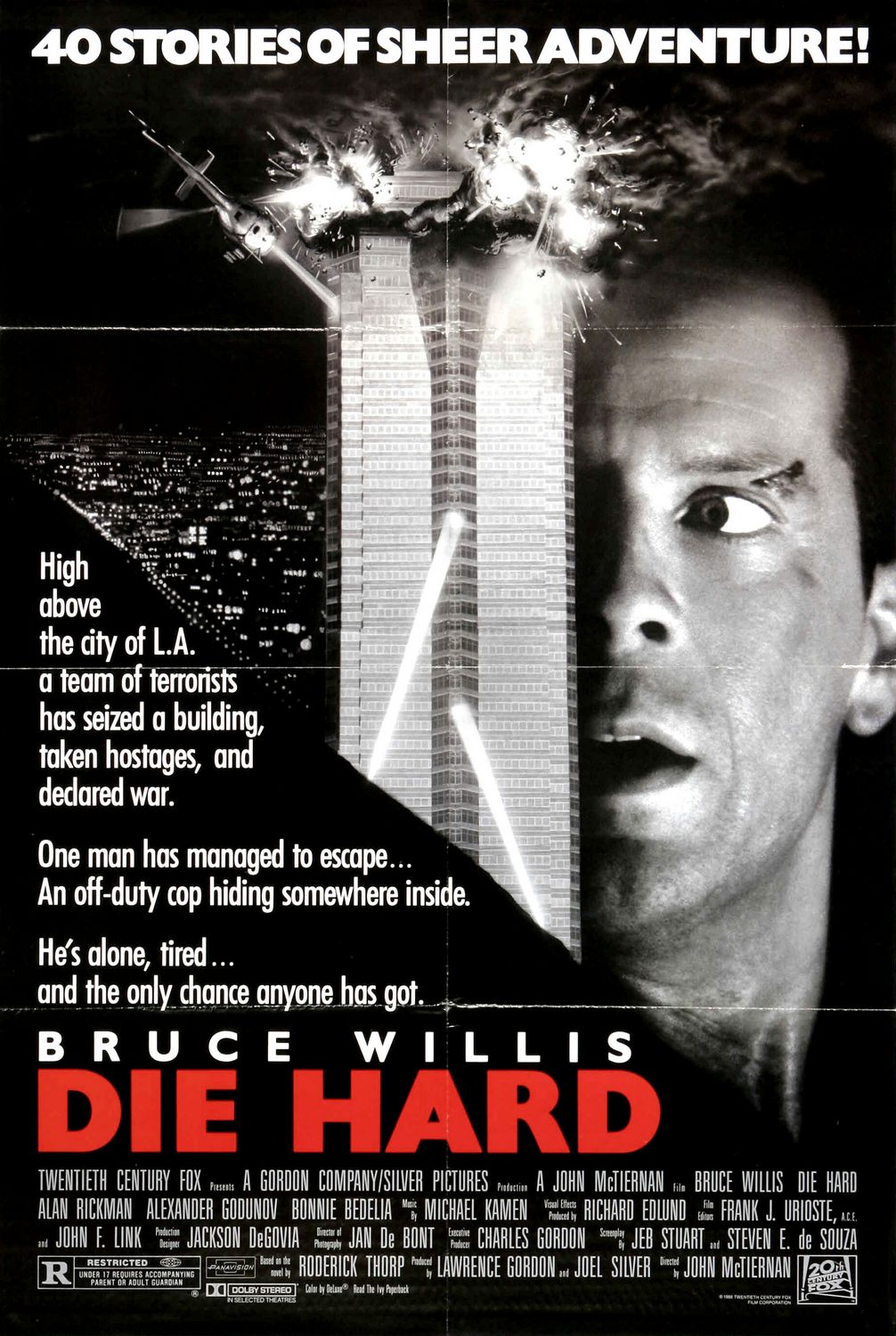
Nope, it’s Die Hard (1988).
Seriously, it’s Die Hard with schoolgirls in a school rather than a tower. It even recreates two scenes very obviously just to make sure you know this. And we have trailer this time!
If you are thinking you probably just saw all the fighting scenes in the movie, then you’re pretty much right. There are a few more, but not many.
The movie starts with some girls filming a zombie movie at a school when I guess no one is there. I really wasn’t sure if this school was abandoned or if everyone else was just on vacation. It doesn’t matter. All you need to know is that a girl they admire who knows martial arts shows up for some reason and bad guys show up looking for treasure or something.
The two scenes explicitly recreated are the safe lock bit and the body with writing on it dropped down to the bad guys. The body part is self-explanatory. The lock bit is done by having a little tower that requires several USB sticks which will allow the bad guys to see where this treasure is in the school. Of course the schoolgirls get one of the USB sticks and need to be tracked down. Basically it comes down to the big girl who knows martial arts working with these girls out of a safe room a la Die Hard. Really, what you see in the trailer is what you get besides conversations among the girls about not being very confident, but finding the strength to go kick some ass.
The only scene that really stuck with me is when the big martial arts girl convinces the girl who does ballet dancing that she can curl her toes and use them like a spear. I expect to read about Lisa doing this to someone who liked The Leisure Class any day now.
I really can’t recommend this one. It’s a bit of a letdown.
The Pinkie (2014, dir. Lisa Takeba) – Ever wanted to see a comedy by someone who wants to make a David Cronenberg movie from before his tragic accident when he lost the ability to make good movies while high on whatever Nobuhiko Ôbayashi was on when he made House (1977)? Too bad! Cause director Lisa Takeba essentially did just that with this weird slightly dark and bizarre romantic comedy with echoes of Cronenberg’s Dead Ringers (1988).
The movie is about guy who gets his pinkie cut off. It had something to do with the Yakuza. I learned back in the 90’s thanks to the TV Show The Pretender that they take your finger as punishment. What didn’t happen in The Pretender though is for that finger to wind up in the hands of a crazy stalker girl who then uses it to make a clone of a guy she is obsessed with. Having two of these guys going around made me think of Dead Ringers at the time, but in retrospect it also makes me think of Hirokazu Koreeda’s Air Doll (2009). That’s the one with Doona Bae from Cloud Atlas (2012) playing a blow up sex doll come to life.
Air Doll (2009, dir. Hirokazu Koreeda)
The movie is as wacky as that trailer makes you think, but it also definitely has it’s more Cronenberg-ey dark moments. In particular, the clone finding out it’s a clone and the issues that raises. The real guy is there too and actually uses the clone as sort of slave labor. He even has him prostitute himself as, I hate to use the expression since I’m trans but, a chick with a dick.
Oh, and did you notice the lightning near the end of the trailer around the guy? Yeah, that’s cause the clone shows up like The Terminator in a ball with lightning around him.
The problems with the clone basically start when she makes the clone aware it’s a clone and of course when the real guy shows up. From then on the movie just gets more wacky.
I kind of recommend it. It’s not that great, but I like really bizarre things and Japan is great at them. Plus, the movie is only about an hour long. It’s not going to take up much of your time. Unlike the next movie and the one after that!
The Ravine of Goodbye (2013, dir. Tatsushi Ohmori) – I’m sure I’ve mentioned it before, but I will again, and probably again and again. I used to watch a lot of the established film canon. Basically that’s all I watched from about 2005 to 2012. I mean it’s not normal for someone to just know right off the top their head that Italian director Michelangelo Antonioni was commissioned by 1970’s China to make a documentary about the country, they hated it with a vengeance, and so they basically got Dutch director Joris Ivens to make another one for them. That’s really not a good thing. However, I bring it up cause is this is that kind of movie.
Let me be straightforward cause the movie sure as hell isn’t. The film is about two cops looking into how exactly this couple got together. Turns out he raped her, and neither of them really got over it, so they got together as a couple. There’s also something about a dead kid as well. Honestly, despite what IMDb says, that’s not really important. In my opinion, what the film does is try to reflect the confusion created by trying to follow a story as the facts slowly trickle out in the way its story unravels. The jumping to conclusions before all the information has come in thing. It does this by basically backing it’s way into what I told you in a couple of sentences. However, for me, it felt like the narrative structure was reflecting the experience of being a small child forced to watch Godfrey Reggio’s Koyaanisqatsi (1982), and then explain it. In other words, watching this was for me like how the children look in Godfrey Reggio’s anti-TV BS propaganda film Evidence (1995).
Actually, in that the kids were supposed to be watching Dumbo (1941). Yeah, right!
If you enjoy films like those of Michelangelo Antonioni, then you might enjoy this. The same probably goes for the next film as well. Amazon Prime doesn’t make these recommendations based on nothing. Just expect a lot of still shots on things that made me think of why I don’t enjoy a majority of Hsiao-Hsien Hou’s films.
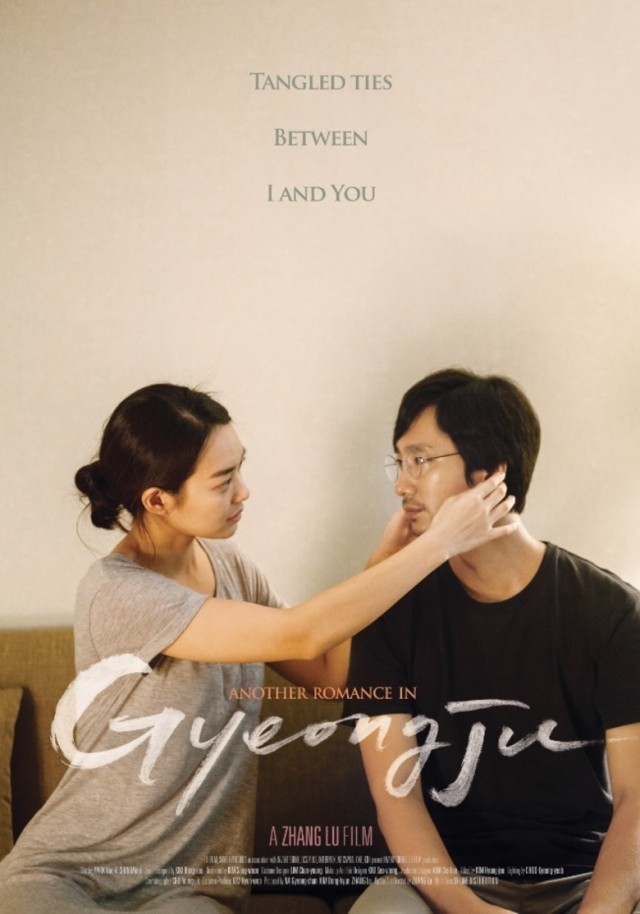
Gyeongju (2014, dir. Lu Zhang) –
Wow! That may be the most deceptive trailer I’ve ever seen! It appears to be real, but it’s like a fake trailer that takes Antonioni’s L’Avventura (1960) and makes it look like a romantic comedy. That movie had someone mysteriously disappear. Then a man and a woman wander around drifting towards each other as the architecture/environment around them changes to reflect the state of their characters. It’s the first in his trilogy of alienation. Sound like a romantic comedy?
This movie is about a Korean professor on Asian relations living in China who goes back home for a funeral and basically wanders around with a woman from a tea shop. Sound like a romantic comedy? It isn’t!
That really is the movie. I have a feeling that just like Tarkovsky’s The Mirror (1975) is only fully understood by Russians, this movie is only fully understood by Koreans. I believe the movie is a long mediation on what it’s like for a Korean born person to return home to a place divided in two and in other ways pushes itself away from other parts of Asia as well. The movie reminds you of the conflict with Japan via a Japanese woman who wants to forgive the professor and the tea shop owner for the crimes committed against their country by Japan. Another time a man will ask the professor how long he thinks North Korea will stay in business and flips out when the professor says a century. North Korea potentially attacking is brought up too, but I’m not sure if it’s serious or not. It almost comes across as a joke. Of course technically to the best of my knowledge, South Korea is the only country I’m aware of that is in a constant state of war because I believe they never signed the treaty ending the Korean War. Perhaps that’s why this film seems to evoke Antonioni’s trilogy of alienation with it’s cinematography.
It likes to use still shots of the environment and a lot of pans. There’s at least one 360 degree pan in it. It also breaks the 180 degree rule. It just stops and freezes on a pole in the tea shop for no discernible reason. I think there’s a scene that’s out of order. Also, near the end it appears to flash black for a less than a second. I’m really not sure what to make of that last one.
I would say this film is for cinematic explorers. I won’t say it’s bad, nor recommend it. You know who you are if this is your kind of thing. I’m just telling you as somebody who’s seen quite a few of these sort of movies that you probably won’t be disappointed.
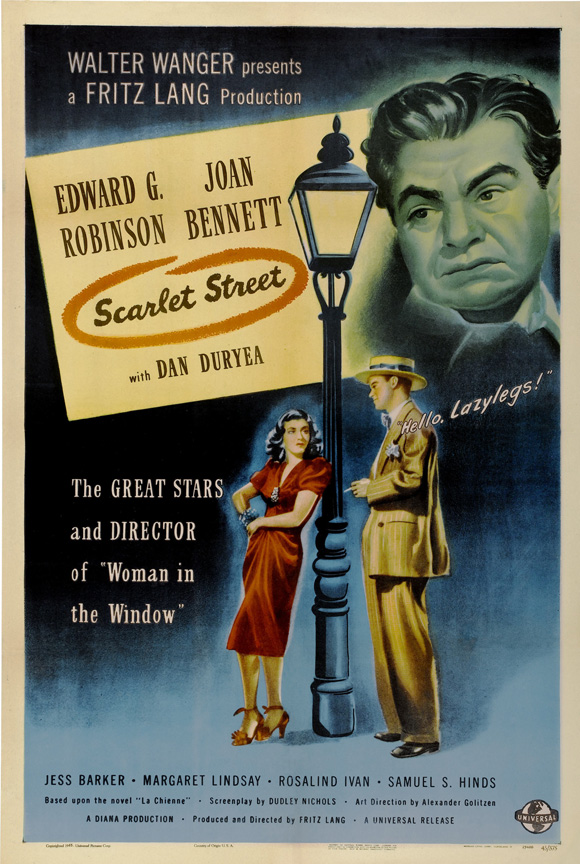
One of my favorite movies of any genre has always been SCARLET STREET. I used to watch the grainy Public Domain print on my local cable access channel over and over. When I saw that TCM was running the film last October, I recorded it for future reference, as I was in the midst of my “Halloween Havoc” marathon. I finally got the chance recently to sit down and enjoy this beautiful, crispy clear print and watch the film as it was meant to be seen.
Meek, mousey cashier Christopher Cross receives a gold watch at a party honoring his 25 years of service to J.J. Hogarth’s company. Chris has done his boring, repetitious job without complaint, though his dream has always to be a successful painter. When Hogarth leaves the party, Chris watches him get into a car with a pretty young girl. Walking home with friend and co-worker Pringle, Chris muses aloud what it would be like…
The Godfatheris such a classic film that it’s always somewhat surprising to be reminded that it wasn’t exactly an Oscar powerhouse. When the Academy Awards for 1972 were handed out, The Godfather may have won Best Picture, Adapted Screenplay, and Actor but, out of 10 nominations, that’s all it won. Francis Ford Coppola did not win Best Director, Gordon Willis was not even nominated for Best Cinematography, and neither Al Pacino, James Caan, nor Robert Duvall won Best Supporting Actor. According to the fascinating book Inside Oscar, Godfather producer Al Ruddy started his acceptance speech by acknowledging that, “We were getting a little nervous there.”
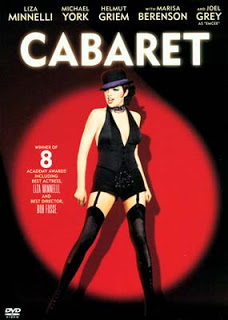
When you look at the 1972 Academy Awards, what quickly becomes obvious is that the year’s big winner was Cabaret. All of those Oscars that people naturally assume went to The Godfather? They went to Cabaret. Out of ten nominations, Cabaret won eight. It set a record for the most Oscars won by a film that did not win best picture.
If it hadn’t been for The Godfather, Cabaret would have won best picture and it would have totally deserved it. Oh my God — how I envy all of our readers who were alive in 1972! How wonderful it must have been to have not one but two legitimately great and groundbreaking films released in the same year! Five years ago, I was lucky enough to see both The Godfather and Cabaret on the big screen and it was an amazing experience but I can only imagine what it was like to discover these two films for the very first time, with no preconceived notions.
Seriously, I need a time machine and I need it now.
Cabaret takes place in Berlin in 1931. Germany is still struggling to recover from World War I. When the reserved English academic Brian (Michael York) first arrives in the city, he barely notices the buffoonish men standing on street corners, handing out anti-Semitic pamphlets. He’s more interested in earning his doctorate. When he moves into a boarding house, he meets and cautiously befriends Sally Bowles (Liza Minnelli), a free-spirited American actress who dances at the Kit Kat Klub. When Sally tries to seduce Brian, he is curiously passive. Finally, after she asks him if he doesn’t like girls, Brian tells her that he’s tried to have sex with three separate women and each time, he failed. However, Sally is not one to give up and eventually she does manage to seduce Brian, telling him that the other women were just the “wrong three girls.”
To make money, Brian gives English lessons. One of his students is the wealthy and innocent, Natalia (Marisa Berenson). While Brian teachers her English and Sally gives her advice about sex and love, Natalia finds herself more and more of an outsider in Berlin. She’s Jewish and as a result, her dog is murdered. Fritz Wendel (Fritz Wepper) falls in love with Natalia but marrying her means publicly revealing that he’s Jewish and putting both of their lives in danger.
Sally performs at the Kit Kat Klub, where the Emcee (Joel Grey) gives the wealthy audiences a taste of decadence. At first, the audience is full of well-dressed and upper class people but, with each performance, we notice that the audience is changing. More humorless men in uniforms appear at the tables, like constantly multiplying cancer cells. Outside the Klub, men are attacked in the streets but the show inside continues. Though they may not know it (and Sally would certainly never admit it), we watch the performances in Kit Kat Klub with the full knowledge of what is going to eventually happen to the majority of the people who we see on stage. (That the Emcee is played by an actor who is both Jewish and gay only serves to drive the point home.) As a result, the performances are both entertaining and ominous at the same time.
It’s easy to be critical of Sally. In fact, I think it’s a little bit too easy for some critics. Sally may be apathetic and she may be self-centered and apolitical but how different is she from most of us? With the exception of Natalia, Sally may be the only truly honest character in the film. She alone understand that life is a nonstop performance and that there’s nothing she can do to change the world in which she’s found herself. All she can do is look out for herself.
Sally and Brian eventually meet and enter into a brief ménage à trois with Max (Helmut Griem), a wealthy baron. Sally occasionally allows herself to dream of being a baroness while Brian struggles to deal with the jealousy he feels towards both Max and Sally.
Of the three of them, Brian is the only one to eventually become alarmed by the rise of the National Socialism. Sally refuses to take consider anything that’s happening outside of her own life and her own dreams. Meanwhile, Max holds the Nazis in disdain but insists that the aristocracy can control them and that the Nazis are useful for keeping the lower classes in line.
And then this happens:
This scene is one of the most important in the history of cinema and it’s one that is even more relevant today than ever. With the U.S. currently in the middle of a bitter and angry election cycle, everyday seems to bring more of the political mob mentality that this scene epitomizes. In Cabaret, the mob sang in a beer garden. In the modern world, they hop on twitter and start hashtags.
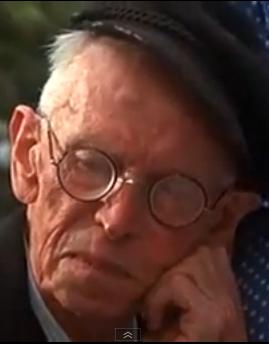
Whenever I watch Cabaret, I always think about that old man in the beer garden. He alone sits there and does not sing. He alone seems to understand.
Cabaret is a powerful and important film, now more than ever.
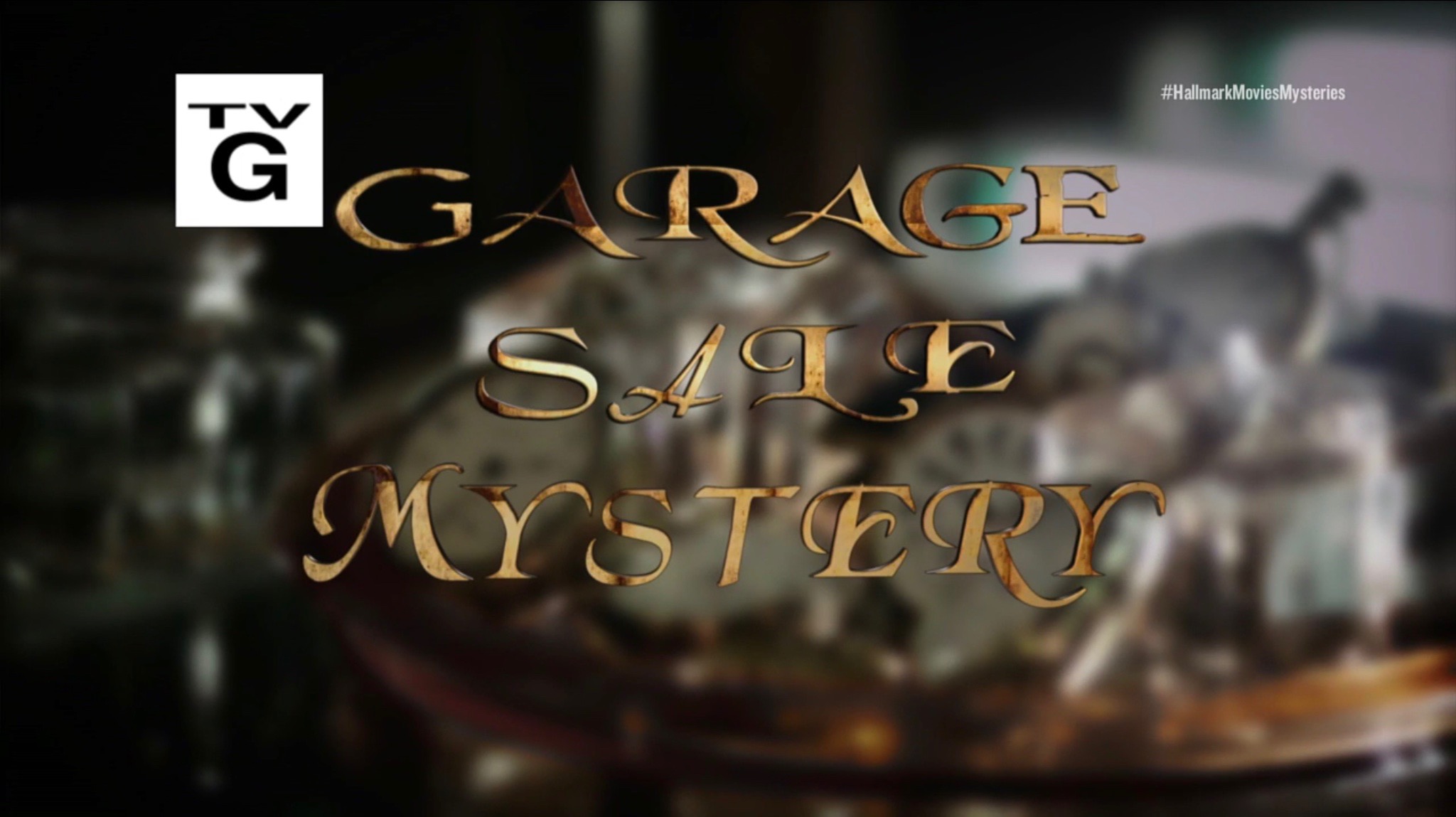
Okay, technically the movie doesn’t start by just showing that title card. We first get random shots of things with newspaper clippings in the background while Lori Loughlin looks at a key before we get this title card with a wacky “A” in “Sale”.
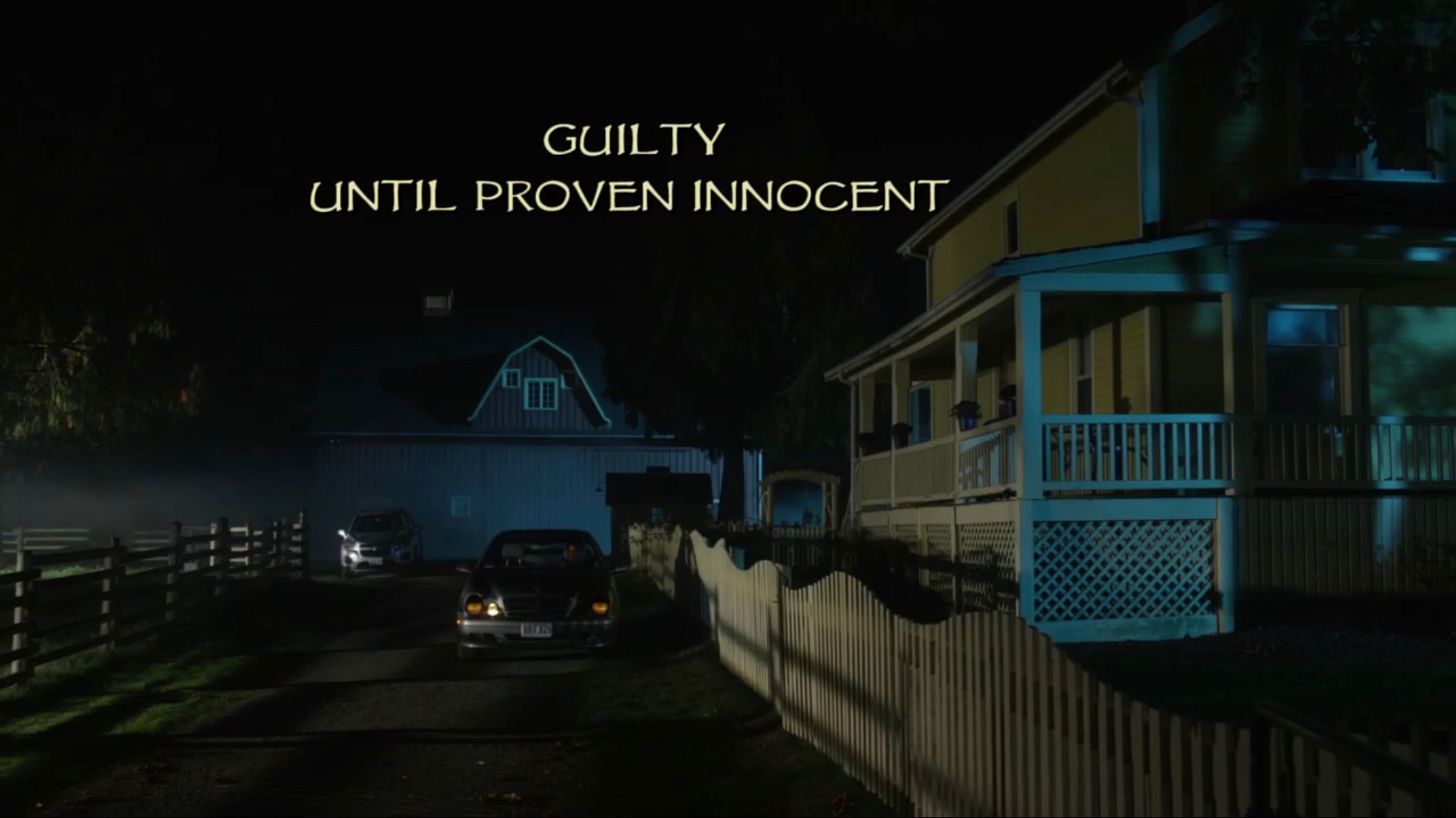
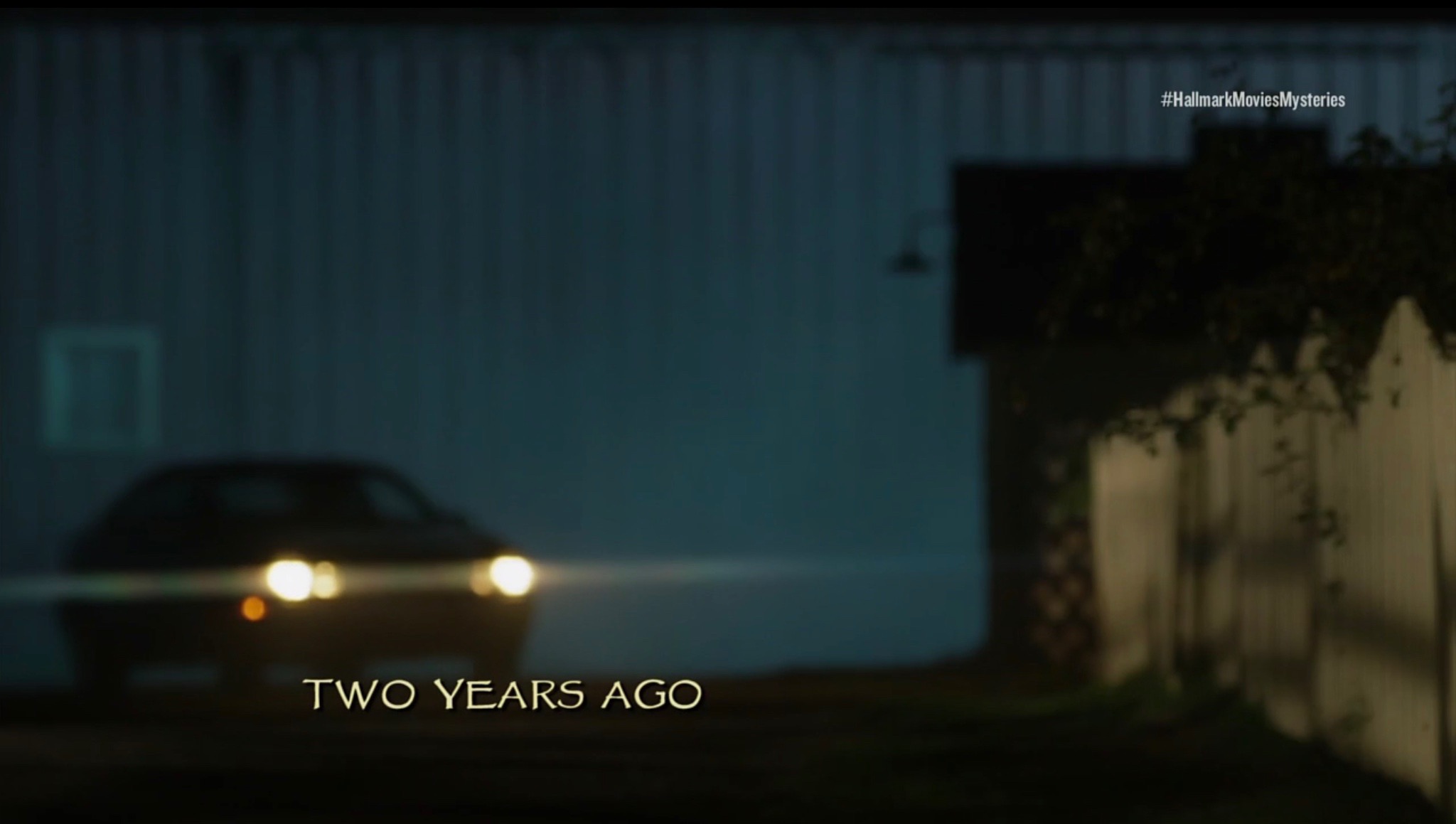
Now we see a car begin to pull up next to a house when it comes up and says “Two Years Ago”.
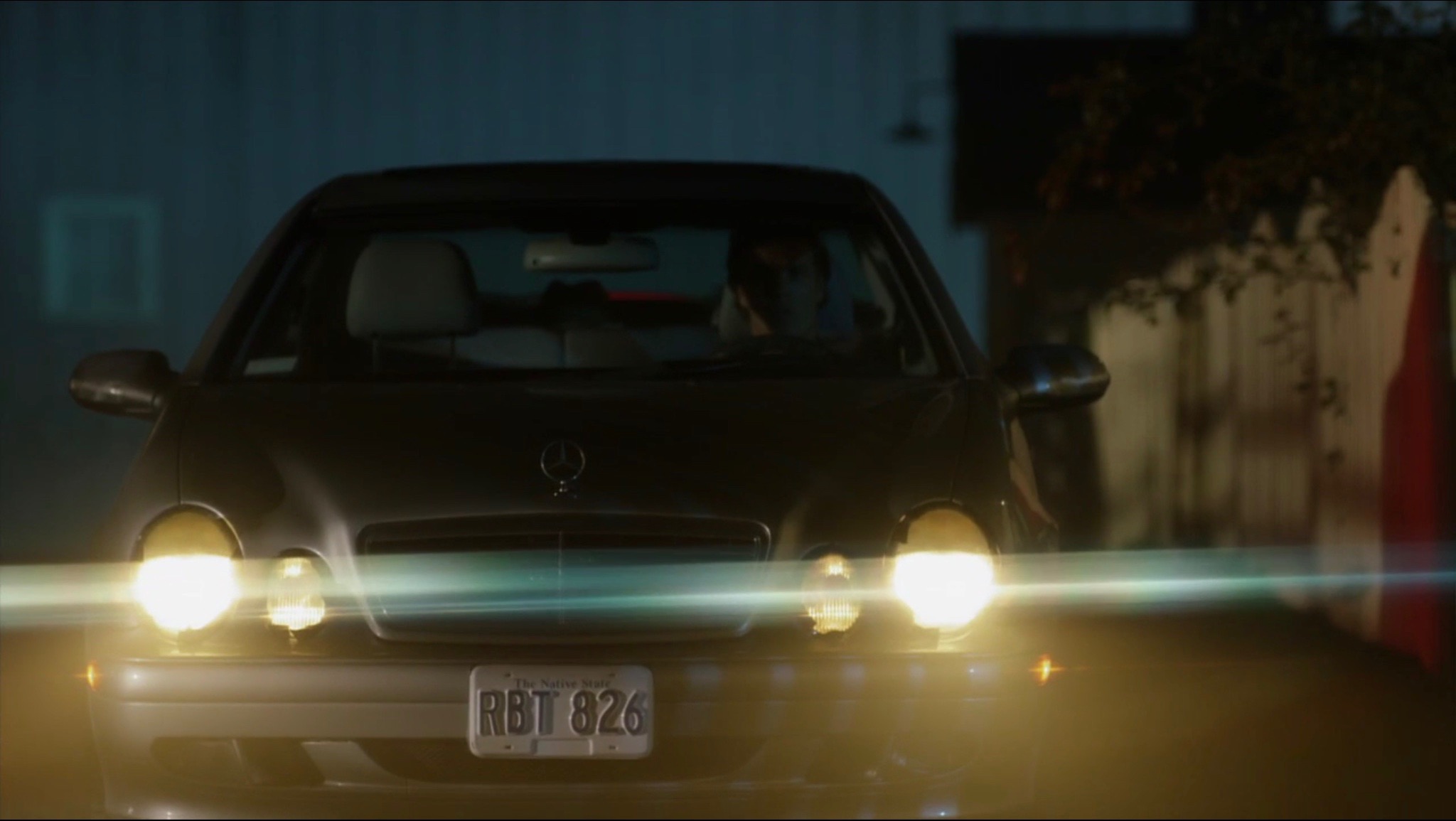
Hmmm….that seems a little unusual. I mean I expect a fake license plate that says “The Native State”…
but don’t movies usually start, then after showing something they cut to the present and say “Two Years Later”? No matter, a guy snoops around, there’s a lady in bed who opens her eyes, baseball cards, and somebody gets shot. Then we cut to “Present Day”.
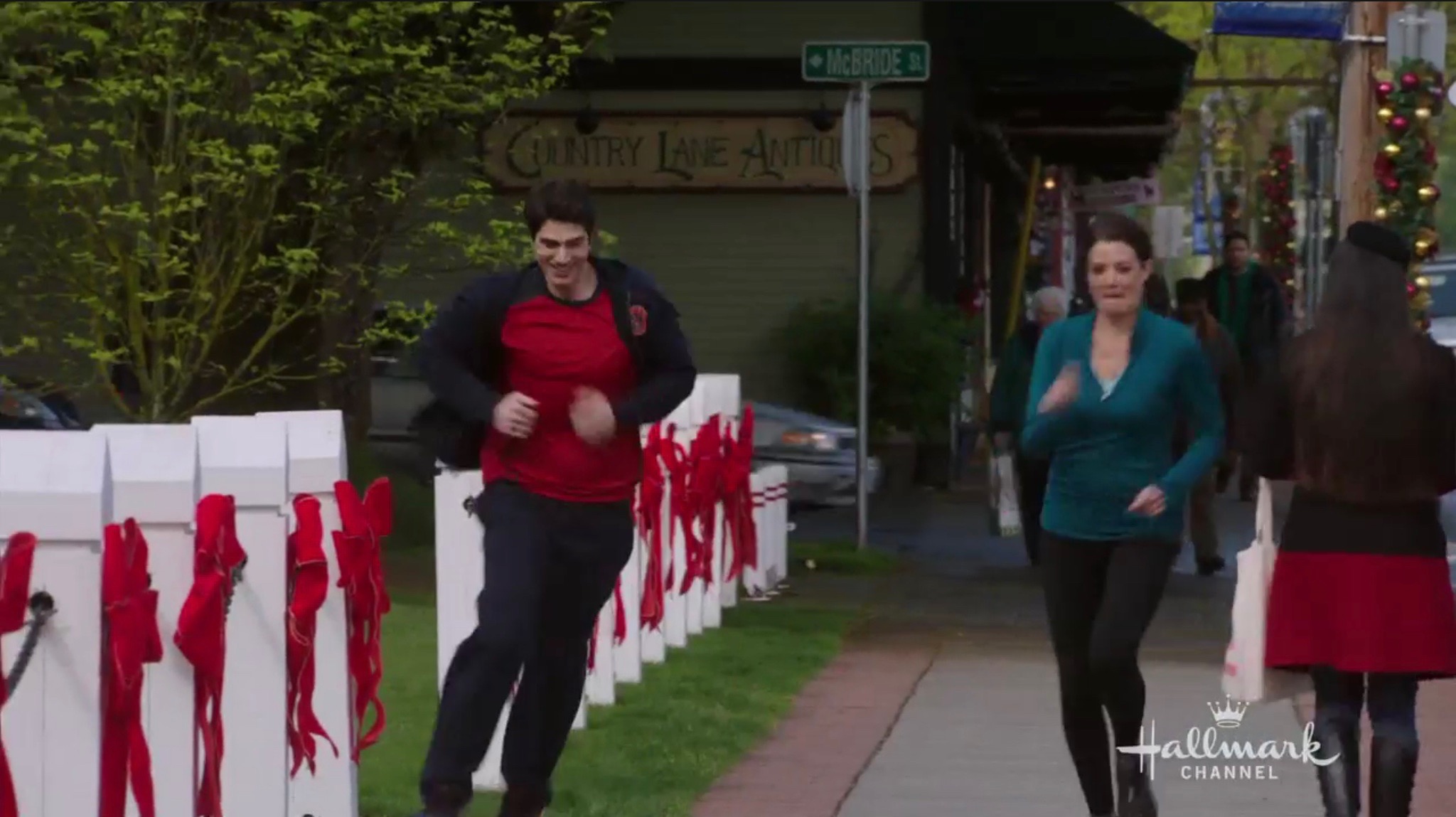
I love that Loughlin’s shop is a real world antique shop called Country Lane Antiques in Fort Langley, British Columbia. Oh, but it gets better. The name Country Lane Antiques may sound familiar if you watched The Nine Lives Of Christmas cause Superman and McKenna from All Things Valentine ran near it.
The Nine Lives Of Christmas (2014, dir. Mark Jean)
Also, if you follow Glover Rd, which the shop is on, one block up, turn right, then go one block you will reach what used to be the Village Coffee & Tea shown in June In January.
June in January (2014, dir. Mark Griffiths)
Back to the movie though. An old friend of Jennifer’s (Lori Loughlin) comes into the store to tell her some good news. She’s closing her shop and is willing to give Jennifer first dibs on her stuff. What does Jennifer think of this?
Then Jennifer goes home to remind us that Lori Loughlin has been cast as a mother to K-12 children in four separate decades and is still believable in the role. Now we setup a Good Witch style subplot when Jennifer comes into her son’s room and makes sure we know he is good with computers.
Don’t be so hard on yourself, Jennifer! Looks like it’s just a couple of screenshots the art department sent over to be looked at using IrfanView. The one is some modeling program and the other is some Java code written in a text editor. I have to wonder why they went with an image viewer that happens to use such a recognizable mascot/icon. IrfanView is the image viewer with the red roadkill cat as it’s icon. You don’t forget that once you’ve seen it. Also, where did this code come from? You can see the name Jeff and Jeffrey in there. Makes one wonder.
Anyways, after Jennifer and her husband speak in exposition dialog to tell us more about the lady closing her shop, we get to the next day at Jennifer’s shop. Just as her husband did, Jennifer’s employee Dani (Sarah Strange) warns her about just going over to this lady’s shop and buying everything. It’s cause of this.
Look, all you need to know is that those random numbers in an Excel spreadsheet means the shop isn’t doing so well and that Dani hasn’t taken her salary for the last three months. Doesn’t matter because getting her friend’s stuff might help turn the business around. So Jennifer is off to her friend’s place called Past Perfect.
It’s also known as Sadie Ann McMurray Antiques and is located in Mission, British Columbia. The only thing better than that they left the actual phone number of the place on the building is that they gave it the same name as the database that museums and historical societies use to catalog their collections. My city’s historical society uses it.
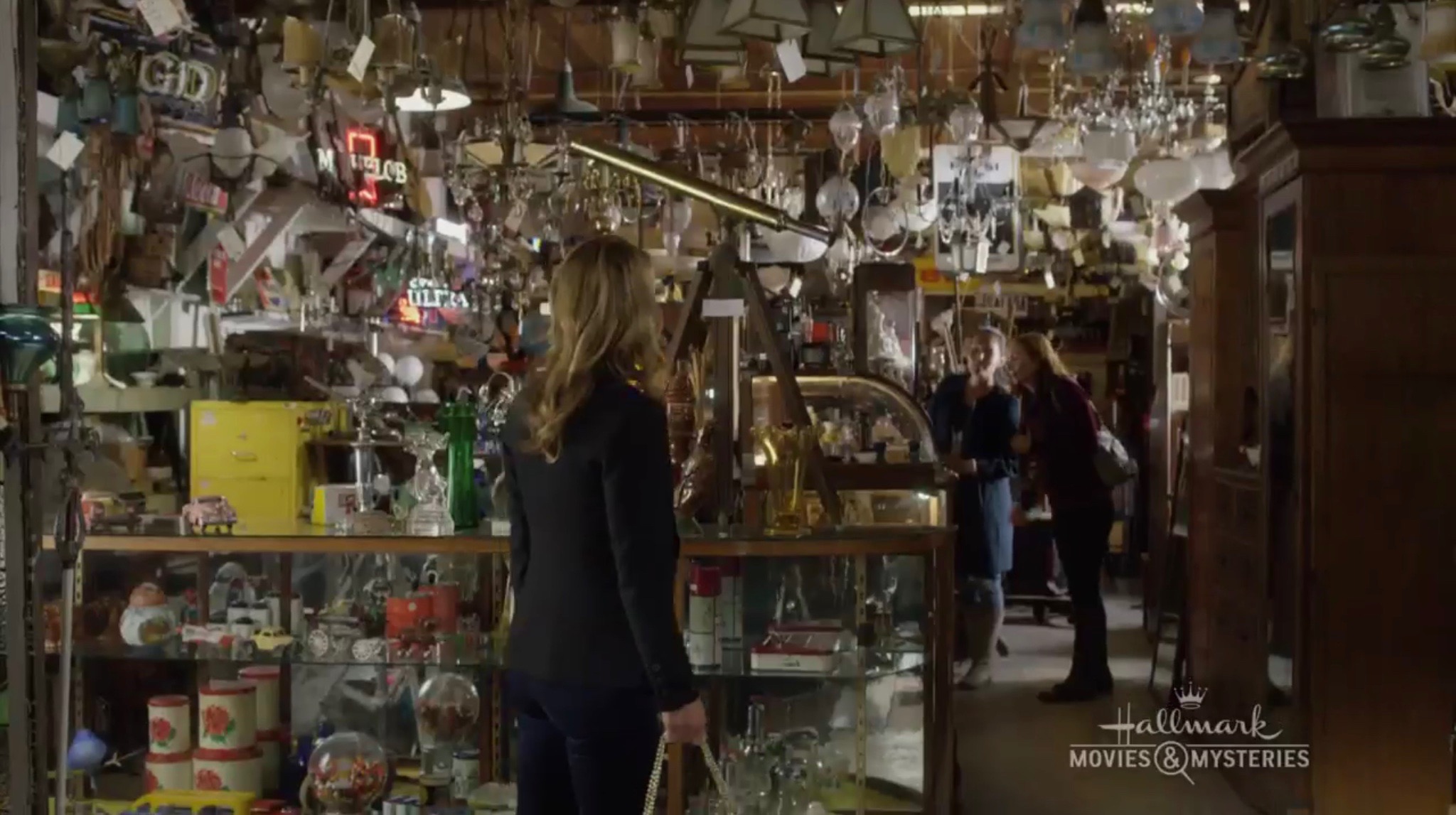
Inside, Jennifer is in Canadian Pickers heaven. Unfortunately, she can’t possibly buy everything in there because there really is a lot of stuff. The lady tells Jennifer that’s not a problem, they should go eat, and she will explain.
They go to eat at the Mission Lighthouse Cafe, which is of course in Mission as well.
Before I explain the deal here, let me point out a humorous casting thing going on here. I am awful at remembering character’s names and even worse at going from IMDb glamour shots to the way they look in a movie so I don’t know which role Johannah Newmarch plays in this. However, I find it hilarious that she has been in three of the Garage Sale Mystery movies and happened to be in Lifetime’s The Unauthorized Full House Story.
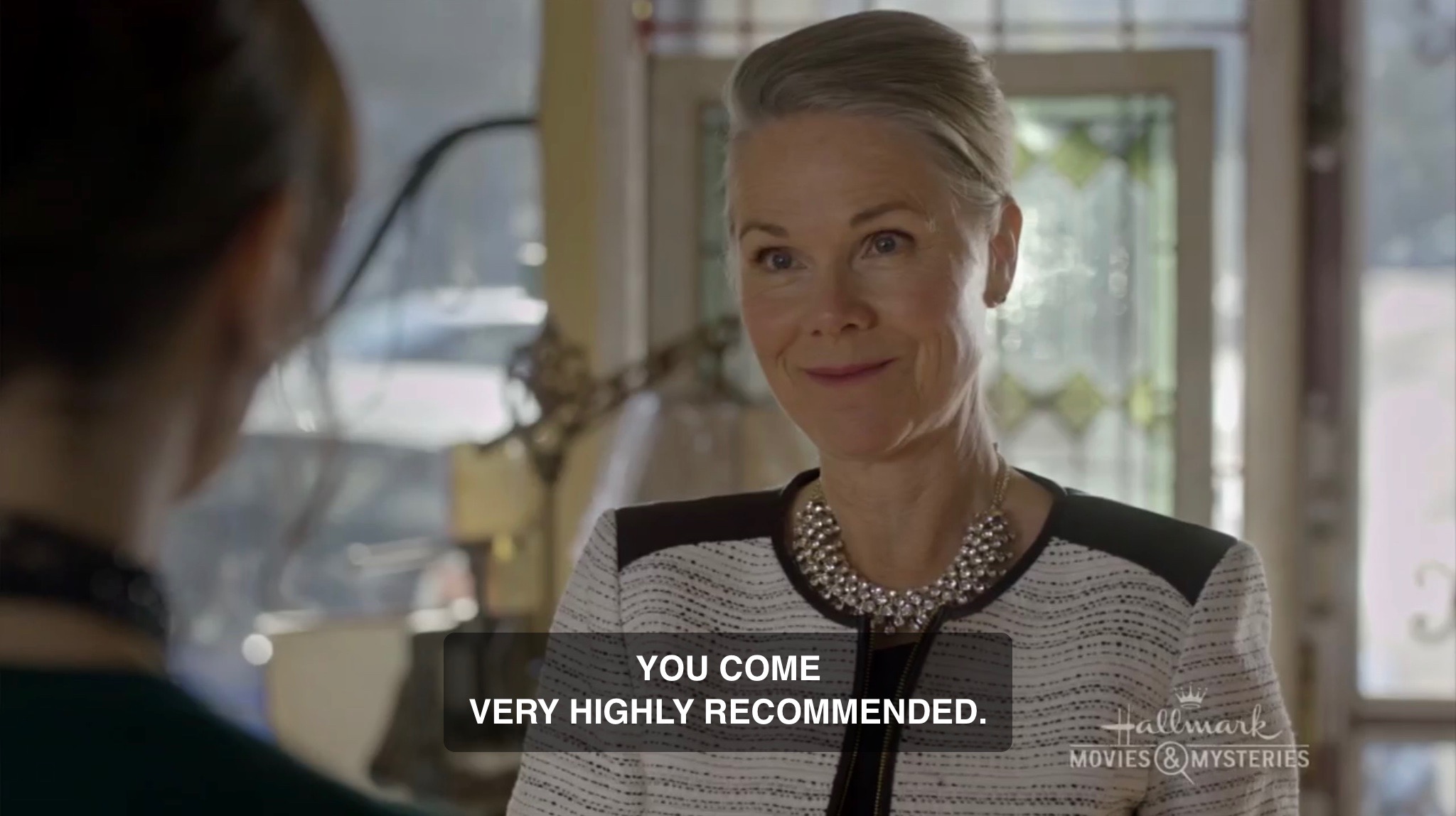
Okay, the deal is this lady was once engaged and she thinks he ran off with another woman two years ago. She has hooked up with a new guy and has decided to move away. She remembered Jennifer and figured she’d just give her everything on consignment. Anything Jennifer happens to sell, she’s to send her 20%. Sounds like a good deal, but first we need to setup another Good Witch style subplot for Dani as they have done with Jennifer’s son Logan (Connor Stanhope).
Actress Valerie McNicol, who obviously stole my first name before I picked it out last year, comes into the store. She’s dressed up like she should be saying racist and anti-Semitic comments at a country club. She’s there to try and lure Dani away from the store. Spoiler alert! Dani ultimately declines her offer. Of course she does! Actress Sarah Strange doesn’t need what this lady has to offer. I mean she is going to be in Kindergarten Cop 2 with Dolph Lundgren after all!
Meanwhile, Logan’s subplot is playing out. I really think screenwriter Walter Klenhard may be a little bit of a fan of WarGames (1983). Just maybe. The deal here is that Logan’s friends want to break into the school’s computer system to change their grades. They want Logan’s help since apparently he’s got skillz! Even his friend’s DDOS attacks don’t work and apparently all the backdoors are closed up. It’s even got 64-bit encryption. What this means is that typing “Joshua” (the backdoor password from WarGames) won’t get you in, some technical jargon, and that apparently his friends have a bot net that they used to attack the school’s computer system. Yeah, his friends just casually mention this. To bring it down to plain terms, it means they have a bunch of computers that they have hacked so that they can use them to attack a particular computer or computers on the Internet to prevent people from reaching it and/or causing things like firewalls to crash. Hence the name Distributed Denial Of Service attacks. The school would have been all over this by now. Guess that’s better than Crackle’s movie The Throwaways (2015) where the hacker character warns a guy going into a night club that Bulgarian hackers are known for anti-virtualization. Yeah, somehow knowing that these hackers are good at writing viruses and malware that operate differently when being looked at by security professionals in order to make their jobs more difficult is important information to know when confronting them in person.
Before we return to the main plot, let’s follow this subplot to its end cause it’s kind of awesome. So with all this buildup, how does he get in? He just keeps trying passwords till he hits the right one. No explanation given. They didn’t even have him do it the same way as Matthew Broderick in WarGames. I mean sure, they couldn’t have him tell his biology teacher that his wife came up with asexual reproduction to get sent to the principal’s office and look at where they write down the password, but still. They could have done something here instead of him just typing in passwords.
He gets in and I believe his friends actually had gotten in on their own before this because what he does is go in to change their grades from A’s back to C’s. That’s an element from WarGames where Broderick changed Ally Sheedy’s grade to an A. Except here it’s done to show that he’s a good kid. Take a look at his computer screen just before he gets into the school system.
It actually says that the screenshot we are looking at is called “Logan’s hacking screen”. That’s just so great. Bravo, Hallmark! I don’t care if this was done on purpose or not. It’s a great easter egg in the movie.
So how do his friends respond to getting C’s? They want to tell the school they broke in and how they did it to become “cyber-security advisors”. That’s movie jargon for Pen Testers or Penetration Testers. They do what Robert Redford’s firm did in the movie Sneakers (1992) by having companies hire them to break into their systems, then tell them how to shore up their security to fix the holes. It’s what the infamous hacker Kevin Mitnick now does for a living. Of course he had to be saved by things like the “Free Kevin” movement to keep from being ridiculously punished by the federal government. These kids not only would get in trouble for breaking in, but would be charged with all the crimes of breaking in and setting up the bot net. I could give you Logan’s face after his friends say this, but I’m pretty sure “the stupidest person on the face of the Earth” clip from Ruthless People (1986) is still up and will do just fine.
Getting back to Jennifer, she finds out that not only does her friend have all the stuff in the store, but a barn full of stuff as well. However, Loughlin is in a series of movies made by people who are probably big fans of Murder, She Wrote. As a result, she stumbles on an underground area that even this lady says she didn’t know existed and there’s a body down there. This movie, just like Murder, She Baked: A Peach Cobbler Mystery, has a part where someone gives Jennifer the “another body!” line. Here’s what Jennifer thinks of that!
The rest plays out like the title suggests. The lady ends up getting arrested for the crime since the body turns out to be the guy she thought ran away with another woman 2 years prior. Jennifer works to figure out who really did it. The mystery is okay. It’s not too cryptic and basically tells you who did it pretty quickly. Jennifer is basically doing the Columbo thing of figuring out how this murder played out while having her strong suspicions of who it is. I’m not a mystery person, but my Dad is, and he seemed to enjoy it well enough. Of course I say this as a person who spent Super Bowl Sunday watching 7 murder mystery movies from the 1930s and 1940s. I’m weird.
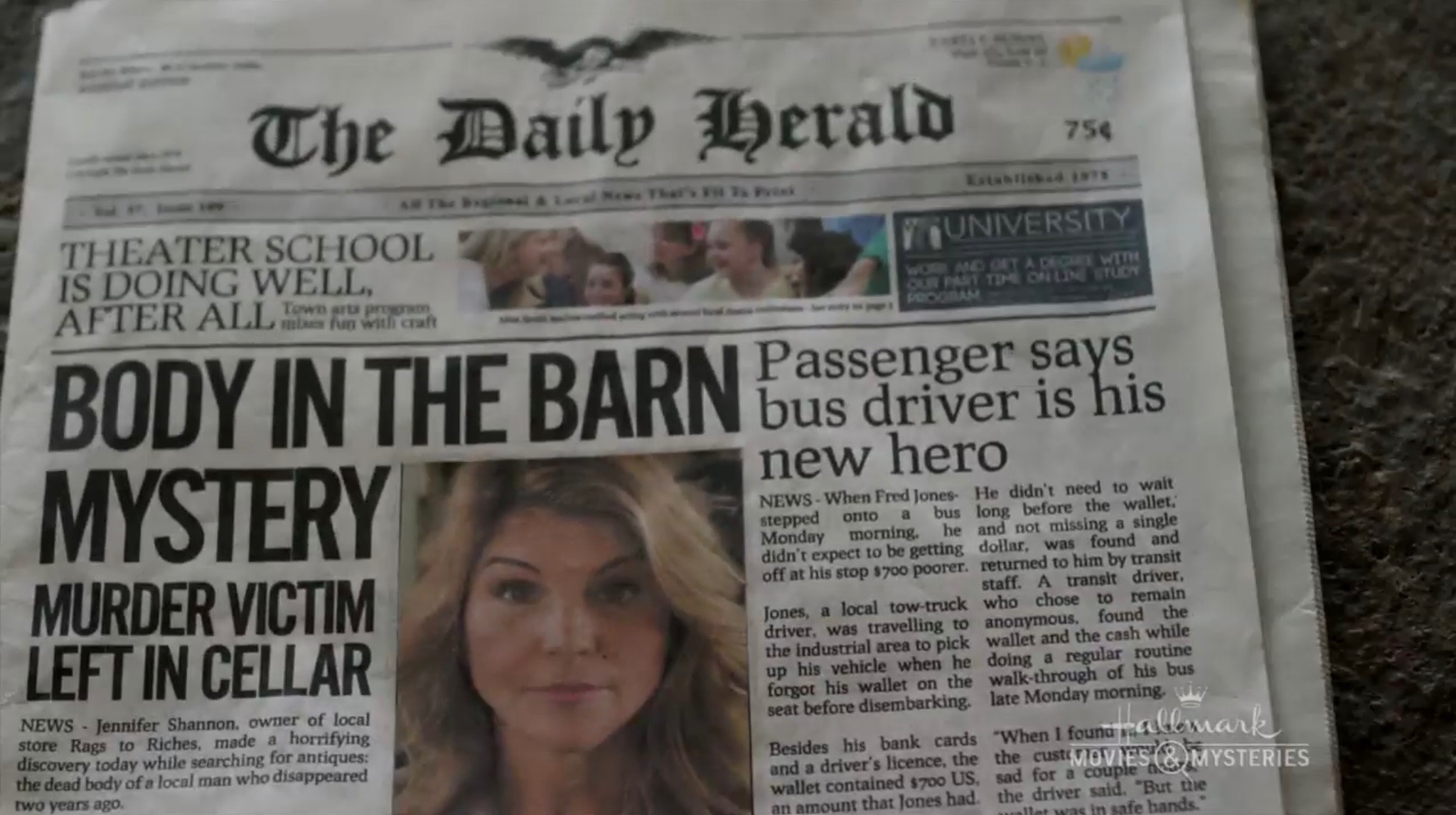
There are only a couple of more things to mention. There are a few more locations that are from Mission, British Columbia. There are also a couple more computer screens, but they had nothing I think is worth noting. What I did like is the newspaper.
That story on the right is an actual story from the Calgary Herald with some of the names and facts changed. It’s actually a nice little story about a tow-truck driver who left a wallet with money he promised a friend to send to that friend’s mother in Ghana. The driver found it and turned it in. That’s why Fred Bediako considers bus driver Mustaf Gashi his hero. I wonder why they made the changes they did. I keep spotting Hallmark movies using actual articles from newspapers or official documents posted online. I wonder if they get permission, or need to, in order to use them like this.
All in all, I recommend this one. I just think they need to drop the subplots thing. That was stupid in the Good Witch movies and doesn’t need to be added here. If you want those characters to have a purpose in the story, then actually involve them in the mystery.
Just as with Meet My Mom, here’s Lori Loughlin judging me for taking too long to get to her movie.
Here’s the Super Bowl TV spot for 10 Cloverfield Lane! I have to admit that, after some initial skepticism, I am really looking forward to this film. It’s got a great cast and it looks intense!
I know way too much about the crimes of Charles Manson.
I realized that, earlier tonight, as I watched the latest Lifetime original film, Manson’s Lost Girls. It was one of the better films that I’ve recently seen on Lifetime and it was certainly superior to NBC’s Aquarius, the TV show that tried to turn Manson into some sort of sexy anti-hero. (Memo to NBC: Walter White was a great anti-hero. Charles Manson was just a grubby little serial killer.) Manson’s Lost Girls was well-acted and it did a fairly good job of portraying the 60s without falling back on too many of the usual clichés (at no point was White Rabbit heard on the soundtrack), and it also did a pretty good job of portraying how certain lost people can be brainwashed by one cunning sociopath.
Yet, with all that in mind, I found myself watching the film and thinking, Where is Bruce Davis? Where’s Clem Grogan? What about Catherine Share, whose parents were both members of the resistance during the Nazi occupation of Germany just for their daughter to end up a brainwashed member of Manson’s Family?” For whatever reason, the Family portrayed in Manson’s Lost Girls was considerably smaller than the real-life Family and seriously, how disturbing is that? I mean, the 10-member cult in Mason’s Lost Girls was bad enough but, in real life, there were even more of them! How disturbing is that!? But, in retrospect, it’s even more disturbing that I knew enough about the Family to know that Bruce Davis, Clem Grogan, and Catherine Share were all missing from the film.
(Actually, I just looked at the credits on the imdb and I saw that Diana Irvine is credited as playing Catherine. So, perhaps Catherine Share was included as a character and I just didn’t notice.)
When I was 16, I took a sociology class in high school. One of the class assignments was to do a report on a subculture. I did my report on vampires and the less said about that the better. However, the hot and troubled guy who sat in front of me did his report on the Manson Family. As a part of his report, he handed out a little booklet that had pictures of all the Family members in it. I can remember looking through those pictures and thinking that Charles Manson looked scary and that Tex Watson was kind of hot, in a rebellious son of an evangelical preacher sort of way. (Tex Watson spent a semester at North Texas State University. Four decades later, I went to NTSU — or UNT as its now called. Around the campus, you can find pictures of famous former students like Joe Don Baker, Peter Weller, Pat Boone, and Roy Orbison. For obvious reasons, you will never find a picture of Charles “Tex” Watson.) But, as I listened to the details of Manson’s crimes and his belief that the Beatles were sending him secret messages and that those messages justified murder, I found myself wondering how any of the fresh-faced people in those pictures could have possibly believed a word that Manson said. It just seemed so weird and …. stupid.
(By the end of the presentation, Tex Watson no longer looked hot.)
And I have to admit that I was a bit intrigued by it all. It wasn’t that I had any sympathy for those murderers. But I found myself wondering how they could have done what they did. I wondered how so many different people from different background could come together and all buy into the same stupid bullshit. Though I didn’t realize it at the time, I was struggling to understand the very nature of evil. To most people, it was easy enough to say that Manson and his followers were evil but I wanted to know how they had become evil. I wanted to understand why and, though I may not have wanted to admit it, I wanted to make sure that I never woke up to discover that I had made the same mistake of surrendering my free will to a some nut just because he was able to look at me and tell that I had issues with my father.
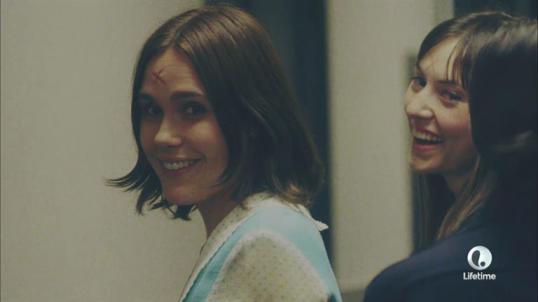
By telling the story of Linda Kasabian (played quite well by MacKenzie Mauzy), Manson’s Lost Girls attempts to answer that question. Linda was a young mother who, after her drug dealing husband deserted her, found herself living on the Spahn Movie Ranch with Manson and the Family. Linda spent a month with Manson. At first, she felt as if she had a found a new home and a new family but soon, things started to unravel. In hopes of bringing about a race war (and also looking for vengeance over his own failure to become a rock star), Manson ordered his followers to commit murder. Linda witnessed the tragic and brutal murder of actress Sharon Tate and her friends. After the murders, Linda fled the Family and she would later serve as the prosecution’s star witness in Manson’s murder trial.
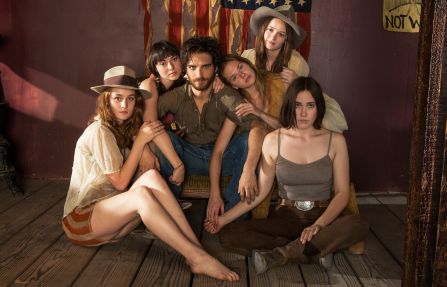
Manson’s Lost Girls is told almost totally from Linda’s point of view. It’s through her that we are introduced to Manson and his Family. The film doesn’t quite succeed in giving us a definitive answer as to how Manson could get people to kill for him but, then again, there may not be a definitive answer. Fortunately, Manson’s Lost Girls does provide hints. In her narration, Linda emphasizes that Manson kept everyone perpetually wasted. But, even more importantly, the film highlights that, for these brainwashed future murderers, the Family truly was a family. They were lost. They were rejected by conventional society. And when they met Manson, they were given a chance to belong. The film suggests that need to belong and to be a part of something greater than what they had left all the members of the Family vulnerable to Charlie’s manipulations.
Manson was played by Jeff Ward, who did a pretty good job in the role. Wisely, the film didn’t overplay Manson’s charisma or attempt to turn him into some sort of supervillain. (In short, it didn’t make the same mistake as Aquarius.) Instead, it portrayed him as what he probably was — a grubby hustler with a massive chip on his shoulder. As played by Ward, Manson is less a messiah and more an extremely lucky con artist. Manson’s Lost Girls deserves credit for portraying Manson without a hint of glamour.
The film suggests that Manson’s rampage was largely motivated by his bitterness over not being able to get a record contract. As I watched, I found myself what would have happened if Manson had gotten that contract. Would he now be remembered as one of those obscure musicians from the 60s and 70s whose later career was made up of performing at fairs and cheap clubs? Or, if he had found success, would he have eventually ended up as a mentor on an early episode of American Idol?
Far more importantly, I found myself wondering what the future would have held for his most famous victim, Sharon Tate? Sharon gave a such good performance in Valley of the Dolls, one that suggested she was capable of a lot more than she had been given credit for. Would she have continued to grow and develop as an actress? And what of her unborn son? If not for Manson and his followers, Paul Polanski would now be 46 years old.
Manson’s Lost Girls does not linger on the murders. They largely happen off-screen and, for that, I’m thankful. But, at the same time, it never shies away from the real-life tragedy of Manson’s crimes. And, even if the film did not have all the answers, it did remind us why the questions must be asked. In the end, Manson’s Lost Girls reminds us of what evil can come from surrendering our independence and our free will.
It’s a film that reminds us that no matter how lost we may be, we must always be careful about those who claim to have found us. Instead of waiting for others to find us, we must find ourselves.