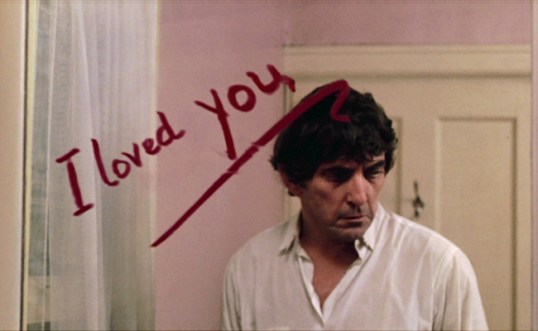
Today’s horror on the lens is a made-for-TV movie from 1985!
In Deadly Messages, Kathleen Beller plays a woman named Laura who witnesses a murder and then becomes convinced that the murderer is after her. She also finds a Ouija board that continually sends her the same message: “I am going to kill you.” The police are skeptical of Laura. Even worse, her boyfriend (Michael Brandon) is skeptical! And, needless to say, Laura may have some secrets of her own…
Deadly Messages is a lot of fun. Thank you to frequent TSL commenter Trevor Wells for suggesting this movie!
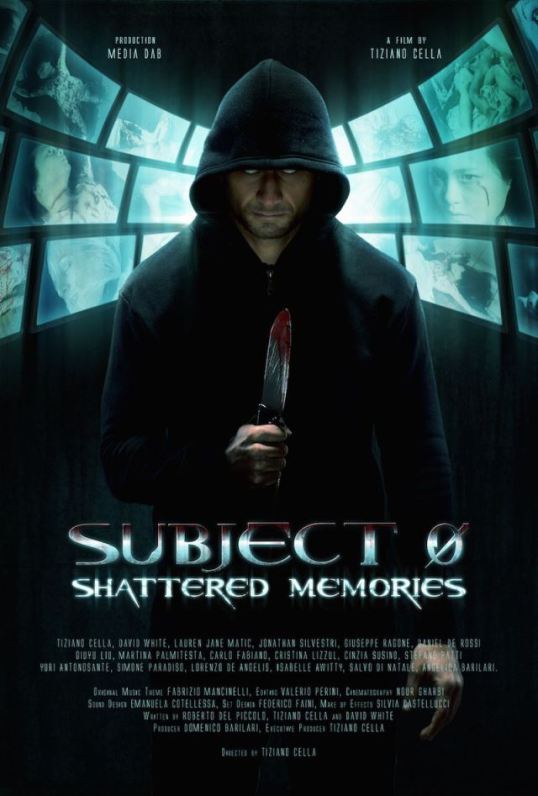
Last year, I had the chance to watch Subject 0: Shattered Memories, the feature-length debut of director Tiziano Cella.
Subject 0 is a film that juggles several different but ultimately connected storylines. In Rome, a woman wakes up one morning to discover that her lover has been murdered while she was asleep. Her husband, at first, acts as if he’s shocked to discover that she was cheating on him but, as the film progresses, we have reason to doubt anything that he says. As the film progresses, more and more people turn up murdered. A police inspector tries to solve the crime but he has no idea that one his colleagues has an agenda of her own.
Meanwhile, Josh (played by the film’s director) divides his time between his apartment and work. He has a crush on a co-worker but she already has a boyfriend. Josh’s neighbor continually threatens to call the police on him for making too much noise. All the while, Josh finds himself having hallucinations and comes to realize that there are huge chunks of his day that he cannot remember. Is Josh the murderer or is there something else going on?
And could it have anything to do with a group of sinister business executives who have been working on a project to develop a super soldier?
As a lot of our readers I know, I absolutely love old school Italian thrillers. Whether it’s the classic giallo films of Mario Bava, Dario Argento, and Sergio Martino or the gore-filled waking nightmares of Lucio Fulci, I love Italian horror. Subject 0 is a throwback to those old horror films, which is one reason why I enjoyed it. It combined the gore of Fulci with the suspense of Bava and the imagery of Argento and, as a result, Subject 0 is a tribute to everything that we love about Italian horror.
With the way that Subject O combined multiple storylines, body horror, conspiracy paranoia, and domestic drama, it also reminded me a bit of the classic British horror film, Scream and Scream Again. Much like that film, Subject 0 demands a little patience. Not all of its mysteries are immediately solveable. The clues are provided but, often times, it is up to the audience to put them together. (Subject 0 respects the intelligence of the audience and isn’t that a nice change of pace?) But for the observant viewer, Subject 0 delivers a powerful and, in its way, thought-provoking payoff.
In the end, Subject 0 is a nice combination of visceral shock and more subtle psychological thrills. Tiziano Cella does excellent work as both a director and an actor in this film and I look forward to seeing what he brings us in the future!
Ten years after making horror history as DRACULA, Bela Lugosi signed a contract with Monogram Studios producer Sam Katzman to star in a series of low-budget shockers. The films have been affectionately dubbed by fans “The Monogram Nine” and for the most part are really terrible, redeemed only by the presence of our favorite Hungarian. Two of the films were with the East Side Kids, SPOOKS RUN WILD and GHOSTS ON THE LOOSE, making them sort of Poverty Row All-Star Productions for wartime audiences.
I won’t go too deeply into all the Dead End Kids/East Side Kids/Bowery Boys variations here. Suffice it to say original Dead Enders Leo Gorcey (Muggs), Huntz Hall (Glimpy), and Bobby Jordan (Danny) landed at Monogram after their Warner Brothers contracts expired, much to Jack Warner’s relief. The young actors were a rowdy bunch, and Jack was probably glad to be rid of them! Anyway, the trio were popular with the masses, and…
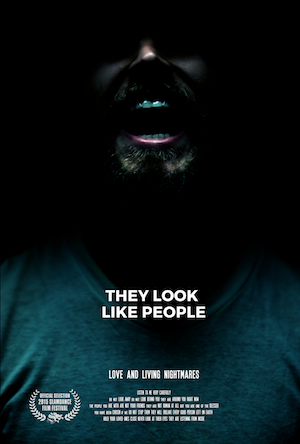
I am sure that there are some people would probably be willing to debate me on whether or not They Look Like People should be considered a horror film. That’s fair enough. They Look Like People is a film that, in many ways, defies easy characterization. It’s a drama that is occasionally very comedic. It’s a love story that isn’t necessarily romantic. It’s an undeniably eerie film, one that keeps you guessing. It’s a film that left me feeling very uneasy. It made me jump and it made me doubt the shadows in the house and, for that reason, I feel comfortable calling it a horror film.
I can’t tell you too much about They Look Like People, not without spoiling it. This is a film where unanswered questions hang over every scene. The film eventually answers those questions but it would not be right for a reviewer to do the same thing. Usually, I hate it when people go crazy over spoilers but They Look Like People is not a film that I would ever dream of spoiling.
It’s an indie film, about two old friends. Christian (Evan Dumouchel) is still dealing with the insecurities of his youth. He obsessively listens to self-help tapes. He goes out of his way to present an image of hypermasculinity. The thing is, as hard as he tries to come across as being an alpha male, he’s not very good at it. The weakness and the insecurity is always right underneath the surface. He has a crush on his boss (Margaret Ying Drake) and, despite his issues, she seems to like him as well.
One day, Christian happens to run into his childhood friend, Wyatt (MacLeod Andrews). Wyatt, who used to have everything, now appears to be nearly homeless. Christian invites Wyatt to stay with him at his apartment. Wyatt claims that he has friends to stay with but soon, he is crashing on Christian’s couch.
Christian and Wyatt spend a lot of time talking about old times and there’s something undeniably charming about watching these two embrace the geekiness of their youth. However, what Christian does not know is that Wyatt rarely sleeps through the night. Instead, he’s regularly woken by intense nightmares. Once awake, Wyatt wanders around the apartment, hiding weapons under chairs. Occasionally, Wyatt gets a phone call from a mysterious voice that informs him that the demons will be invading soon. The demons look like people. The only way to expose them is to pour sulphuric acid on their face…
Is Wyatt crazy? Or are the demons truly coming? You’ll have to watch the movie to find out! (Look for it on Netflix. It’s there.)
They Look Like People is an amazingly creepy little film, one that repeatedly catch you off guard. (At the same time, the film does eventually provide a definitive answer to its questions. Admirably, this is not a film that tries to have it both ways.) Deliberately paced and well-acted, They Look Like People is an excellent film that will keep you guessing.
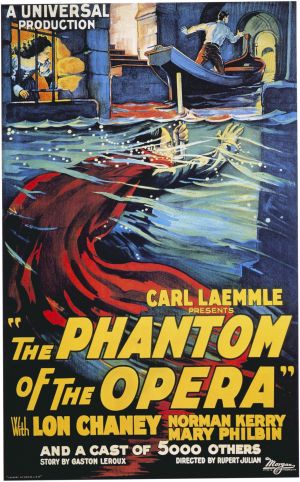
Today’s horror movie on the Shattered Lens is both a classic of silent era and one of the most influential horror films ever made. It’s one that I previously shared in 2013 and 2o15 but it’s such a classic that I feel that it is worth sharing a second time. Add to that, the original video that I embedded has been taken off of YouTube.
First released in 1925, The Phantom of the Opera is today best known for both Lon Chaney’s theatrical but empathetic performance as the Phantom and the iconic scene where Mary Philbin unmasks him. However, the film is also a perfect example of early screen spectacle. The Phantom of the Opera was released during that period of time, between Birth of the Nation and the introduction of sound, when audiences expected films to provide a visual feast and Phantom of the Opera certainly accomplishes that. Indeed, after watching this film and reading Gaston Leroux’s original novel, it’s obvious that the musical was inspired more by the opulence of this film than by the book.
This film is also historically significant in that it was one of the first films to be massively reworked as the result of a poor test screening. The film’s ending was originally faithful to the end of the novel. However, audiences demanded something a little more dramatic and that’s what they got.
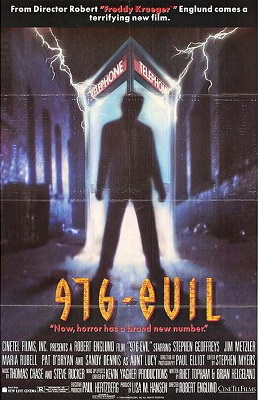
Ewwwwww! The movie reeks of stale cigarettes and Axe body spray!
976-Evil tells the story of two teenagers named Spike (Patrick O’Bryan) and Hoax (Stephen Geoffreys). You know what? Whether your parents decide to name you Spike or to name your Hoax, your life is pretty much fucked up from the minute either name is entered on your birth certificate. Anyway, Spike and Hoax are cousins. Spike is the dangerous bad boy who rides a motorcycle and wears a leather jacket. Hoax is the really nerdy kid who worships Spike and who lives with his ultra-religious mother (Sandy Dennis). Hoax can’t wait until the day he and Spike ride across the country on their motorcycles. Spike is just busy trying to get laid and looking forward to heading out on his own.
Anyway, Hoax eventually gets tired of being picked on all the time so he decides to call the phone number mentioned in the film’s title. Hoax discovers that he has a direct line to Hell and the voice on the other end has some definite ideas for what Hoax could do to even the score. For instance, Hoax could cause spiders to attack a Spike’s girlfriend. And, after that, Hoax could transform into a monster and attack the local bullies at their poker game.
“That’s a dead man’s hand!” Hoax announces, while literally holding up a dead man’s hand.
(That’s right! Turning evil means becoming a master of puns!)
Uh-oh! It looks like Hoax has been possessed by evil! Even worse, the phone bill is HUGE! Those calls to the Devil aren’t cheap, you know! Can Spike defeat his cousin or will evil rule the day?
Now, I will say this for 976-Evil: as annoying as Stephen Geoffreys is when he’s playing nerdy Hoax, he actually is a bit frightening as evil Hoax. For that matter, Patrick O’Bryan is probably does about as good a job as you can do while playing a character named Spike.
But otherwise, 976-Evil is nearly unwatchable. I mean that literally. The entire film appears to be covered by a layer of grime. Between the unappealing visuals, the poor dialogue, and the lack of appealing characters, there’s really not much in 976-Evil to hold our attention. It might help if we felt bad for Hoax but, even before he calls the phone number, he’s such a weirdo perv that you just kind of want him to go away. Hoax is basically the type of loser who thinks that an Axe body spray commercial is a documentary. You can imagine him desperately spraying himself before he goes to school every day and announcing, “I smell like Axe! I’m losing my virginity next period! And then me and Spike are going to ride our motor scooters to Toronto!”
Released in 1989, 976-Evil was also the directorial debut of Robert Englund. I kinda hate to be so negative about the film because Robert Englund is such a good actor and he always comes across as being such a nice guy. If you haven’t already, be sure to get a copy of Englund’s autobiography, Hollywood Monster. Englund tells a lot of good stories and is admirably positive about being a horror icon. But, though Robert Englund’s a great guy, 976-Evil just doesn’t work.
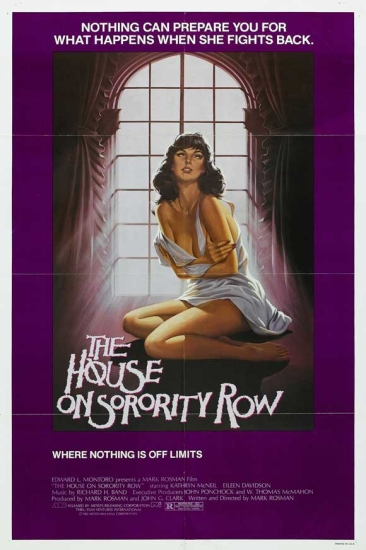
The 1983 film, The House on Sorority Row, is one of the best (and sadly, one of the more underrated) slasher films to be released during the slasher boom of the early 1980s. Yes, I know that the poster above probably makes it look a little generic. And “Where Nothing Is Off Limits” sounds more like a tagline for a film about snowboarders than a rather engaging and occasionally even witty suspense film.
But no matter!
The House on Sorority Row is a masterpiece of the genre. (Avoid the remake, Sorority Row. ALWAYS AVOID THE REMAKE … except for The Maltese Falcon, the Hammer Draculafilms, The Departed … you know what? Use your own damn judgement. )
Seven sorority sisters are excited about graduating and want to throw a big party. However, their strict and slightly insane house mother, Mrs. Slater (Lois Kelso Hunt), has a strict no party policy. She also has a strict “everyone out of the house once the semester ends” policy and she’s not very happy when she discovers that the seven girls are planning on staying for the weekend! She demands that they all leave. She then proceeds to use her cane to destroy a waterbed while one girl is on it with her boyfriend. As the hallway floods, the girls wonder what’s wrong with Mrs. Slater.
Of course, what they don’t know is that Mrs. Slater has a tragic past. Well, actually, they kind of do know it. At the very least, they suspect it. They know that Slater does have a reason for always closing the house on the weekend immediately following the end of the semester. They know but they don’t care. Instead, they plan an elaborate hoax. That’s right! V for Vengeance!
How does the hoax work out? Well, like most college hoaxes, it ends up with two laughing girls, five angry and/or worried girls, and one dead house mother floating in the pool. OH NO! They’ve got to both throw a party and hide a dead body! See, this is why I never joined a sorority. I can throw a party. And I can hide a dead body. But not both in one night!
At first, things go okay. Nobody discovers the body. The party goes off as planned. Everyone’s having as good a time as you can while trying to cover up a future-ruining felony. But then suddenly, the body disappears. And then the girls start to disappear, one-by-one…
So, let’s just be honest here. Plotwise, The House on Sorority Row is not going to win points for originality. Though the film does include a few clever twists, it’s pretty much your standard slasher film and it has its share of scenes where the girls stupidly split up, drop knives that they really shouldn’t drop, and hide in silly places. I always feel bad for the girl killed in the bathroom stall because seriously, that’s the last place I would want to die. (Add to that, her head later turns up in a toilet. BLEH!)
While the plot may be familiar, The House on Sorority Row is a triumph of style. Director Mark Rosman may have told a familiar story but he told it well, putting more emphasis on suspense than gore. Regardless of how silly the story may be, you still get caught up in it. Rosman is at his best towards the end of the film when the final survivor has to fight off the murderer while under the influence of a hallucinogenic drug.
Finally, the film is far better acted than your typical slasher film. Though the majority of the characters are definitely familiar types (there’s the bitchy girl, the slightly less bitchy girl, the best friend, the mousy girl, the smart girl, the dumb girl, etc), the actresses who play them are all sympathetic and likable. You actually care about them. Yes, you even care about self-centered, immature Vicki, even though she’s the one who came up with the hoax in the first place. Vicki is played by Eileen Davidson and she gives one of the best performances in slasher film history. It’s hard not to relate to her exasperation as it turns out to be harder to cover up a murder than she originally assumed.
That said, having watched the film, I’m glad that I never joined a sorority. Between the waterbed and the murders, I don’t know how I ever would have ever graduated.
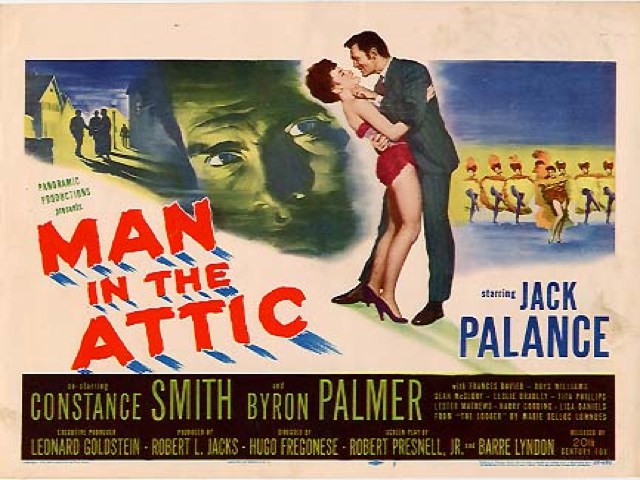
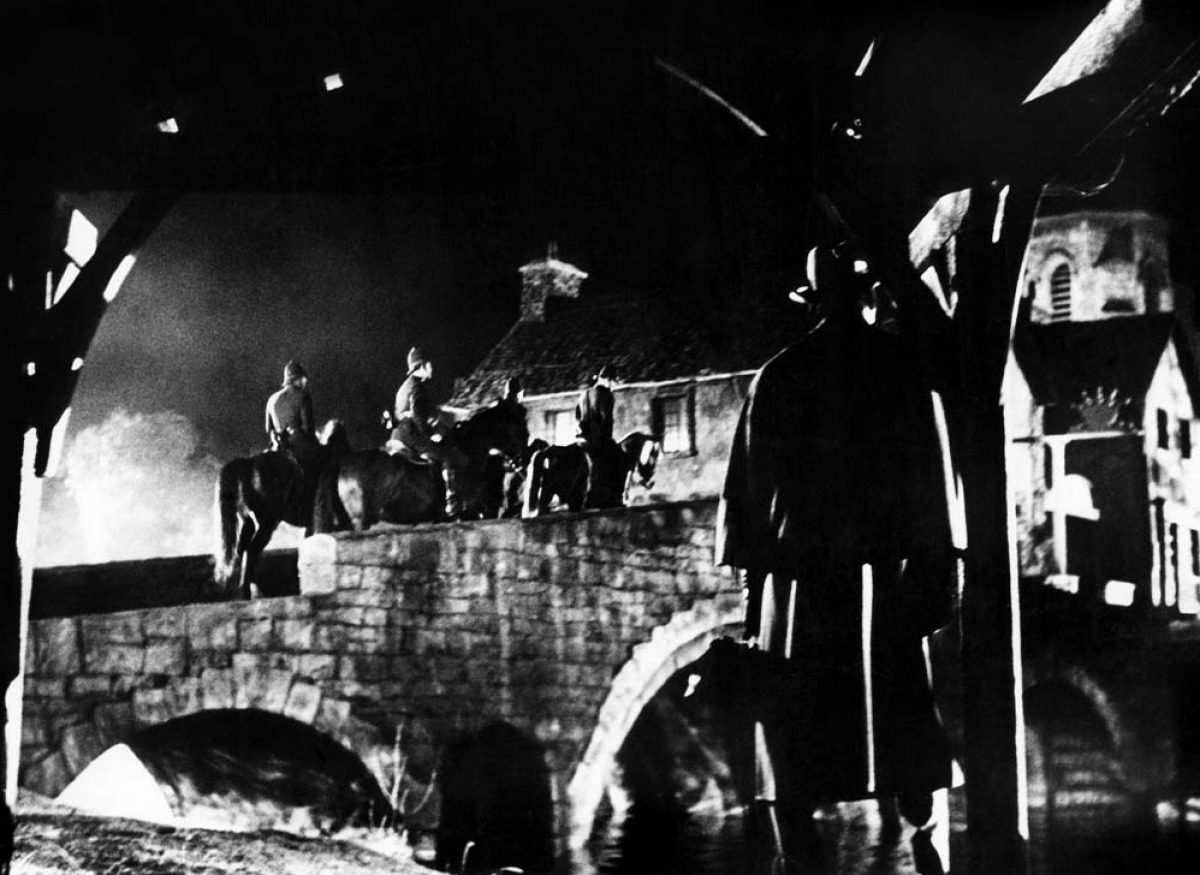
The story of notorious 19th Century serial killer Jack the Ripper has been told countless times on the screen. The case has never been officially solved, and there are probably more theories about Jack’s identity than there were victims. Author Marie Belloc Lowndes wrote “The Lodger”, a speculative fiction novel based on the Ripper murders, that was in turn made into a silent film by the Master of Suspense, Alfred Hitchcock in 1927. The film was remade in 1932 with the same star, Ivor Novello, then again in what’s probably the most famous version, 1944’s THE LODGER , starring Laird Cregar, Merle Oberon, and George Sanders. Almost a decade later, the tale was again remade, this time with Jack Palance as the mysterious MAN IN THE ATTIC.
Fog shrouded London’s Whitechapel District is being terrorized by a fiend known in the press as Jack the Ripper. Scotland Yard is baffled, police patrols have been…
Everyone had to start somewhere and, long before he became one of the leading political provocateurs of American cinema, Oliver Stone was just another struggling film school grad who was looking for a chance to make a name for himself. Like many aspiring filmmakers, Stone made his directorial debut with a low-budget horror film.
Filmed in Quebec and featuring an eclectic cast that included a soap opera star, a former Warhol superstar, a faded teen idol, a past Bond girl, and a future Bond villain, Seizure stars Jonathan Frid (of Dark Shadows fame) as Edmund Blackstone. Edmund is a horror novelist who is described as being “a modern-day Edgar Allan Poe.” When Edmund’s rich friends get together for the weekend, they are terrorized by three maniacs: the Queen of Evil (Martine Beswick), a mute giant called the Jackal (Henry Judd Baker), and a psychotic dwarf named The Spider (Hervé Villechaize).
All of Edmund’s guests face the inevitability of death in a different way. Playboy Mark Frost (Troy Donahue) is too concerned with pursuing pleasure to realize that he’s in danger. Businessman Charlie Hughes (Joseph Sirola) gets out his wallet and tries to buy his way out of trouble. Mikki (Mary Woronov), Charlie’s much younger wife, strips down to her underwear and runs away. Eunice Kahn (Anne Meachem) jumps out of a window after the Spider ticks her into using an aging cream. Eunice’s husband, philosopher Serge (Roger de Koven), faces death with stoicism. Edmund’s brother-in-law, Gerald (Richard Cox), is a long-haired hippie who accidentally gets shot in the head by Edmund and dies saying, “You bastard!” Edmund’s wife (Christina Pickles) tries to protect her son (Timothy Ousey) and Edmund reveals himself to be the first of the many flawed father figures who would appear in Stone’s films.
If not for the identity of its director, Seizure would be a forgotten film. In fact, it seems to be a film that Stone wishes was forgotten. He rarely mentions it in interviews and usually describes Seizure as being a “learning experience” and there’s really nothing about Seizure that would make you think the director would go on to win three Oscars. It’s a slow and talky movie that is just occasionally weird enough to be interesting. Seizure‘s philosophical digressions are pure Stone but otherwise, it’s hard to see any sign of the director that Stone would become in Seizure.
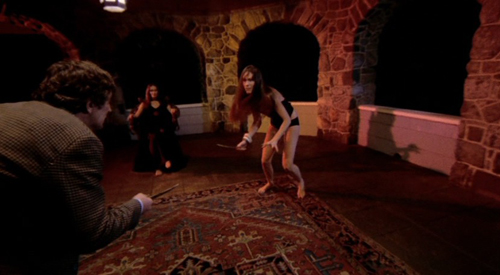
Still, what other movie features Jonathan Frid and Mary Woronov having a knife fight while Martine Beswick and Hervé Villechaize watch?
This creepy little story of paranoia and murder in the London fog features an excellent performance from Laird Cregar and is definitely one of the best films ever made about Jack the Ripper!


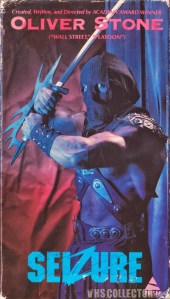 Everyone had to start somewhere and, long before he became one of the leading political provocateurs of American cinema, Oliver Stone was just another struggling film school grad who was looking for a chance to make a name for himself. Like many aspiring filmmakers, Stone made his directorial debut with a low-budget horror film.