Long before the rise of trash TV, reality television, Jerry Springer, Maury Povich, Fox News, and MSNBC, there was The Morton Downey, Jr. Show. Airing at the end of the 1980s, The Morton Downey, Jr. Show featured its host railing against liberals, vegetarians, communists, feminists, libertarians, animal rights activists, teenagers, and pot smokers. Though the show only lasted for two seasons and ended after a bizarre incident in which Downey faked being the victim of a hate crime, The Morton Downey, Jr. served as a forerunner to the rise of our current toxic political culture.
At least, that is the claim made by Evocateur, a documentary about both the show and the controversial showman who hosted it. Since I was too young to watch the show when it originally aired, it was interesting, for me, to watch the many clips that were featured in this documentary. Downey would chain-smoke and shout, while kicking people off his stage. At one point, Downey literally wrapped himself in an American flag and ordered a guest to kiss his ass. On another show, Downey provoked then-Libertarian presidential candidate Ron Paul into shouting at him to shut up. One of the high points of the documentary comes when guest Roy Innis loses his temper and sends Al Shaprton falling to the floor. The audience would into it, chanting “Mort! Mort! Mort!” in the same way that the audience of The Jerry Spring Show chant “Jerry!” whenever a fight breaks out or a guest takes a spin on a the stripper pole. As way of comparison, a clip of Phil Donahue respectfully interviewing a professional foot model (and promising to let his audience know if maybe they could become a foot model too) is used to illustrate just how different The Morton Downey, Jr. Show was from everything else on the air at the time. It is a stretch to try to connect (as this film attempts to do) The Morton Downey, Jr. Show to the rise of the Tea Party but it is true that both Donald Trump and Morton Downey, Jr. borrowed a page from the same populist playbook.
Through home video footage and candid interviews, the documentary attempts to show how Morton Downey, Jr. went from being the son of a famous Irish crooner and a friend of Ted Kennedy’s to being the forerunner of trash tv. There is a lot of speculation about what motivated Downey, some parts of which are more credible than others. A lot of attention is given to Downey’s relationship with his father and his early attempts to have a musical career of his own. As a singer, Mort was always overshadowed but, as a political provocateur and, later, as an anti-smoking activist, Mort was able to establish an identity of his own. Along with archival footage and talking head clips, Evocateur uses animation to tell a good deal of the story. It’s distracting but that currently seems to be the trendy thing to do when it comes to documentaries.
Despite its flaws, Evocateur is an interesting profile of a man whose influence is still being felt even if he has largely been forgotten.
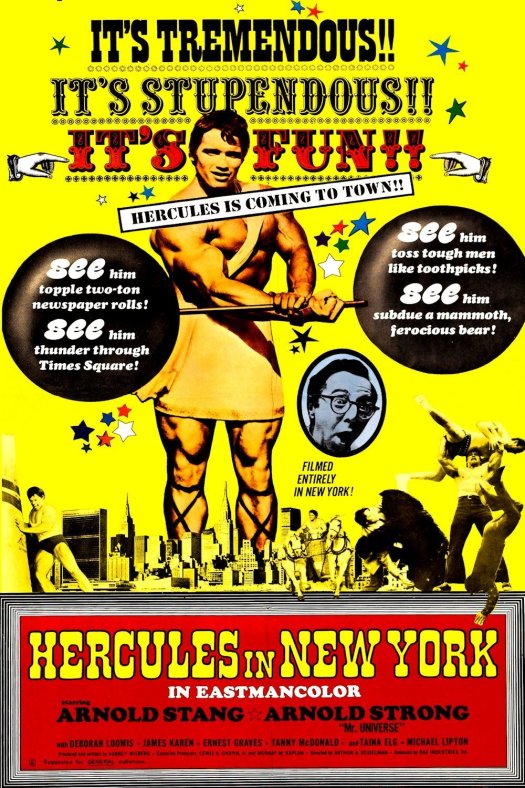
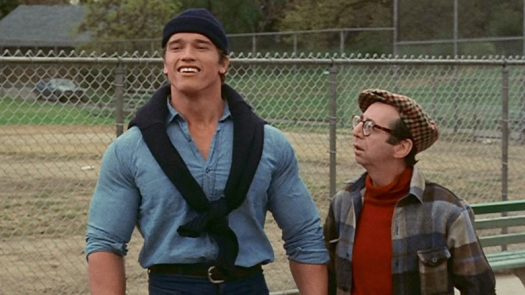
Well, I can finally cross HERCULES IN NEW YORK off my bucket list. This fantasy-comedy starred the team of bespectacled, scrawny comic actor Arnold Stang and musclebound ‘Mr. Universe’ Arnold Strong. Who? Why, none other than the Governator himself, Arnold Schwarzenegger, making his film debut as the Greek Demi-God paying a visit to modern-day Earth. Hercules is all-powerful, and can only be defeated by one thing… a lousy script!
The plot, if you can call it that, has half-human Herc pining to go to Earth against father Zeus’s wishes. Zeus finally relents and transports the headstrong Herc to Terra Firma, where he befriends Stang playing Pretzie, so named because he sells pretzels. Brilliant! The two then have a series of adventures. Herc battles an anemic looking grizzly bear in Central Park! Herc becomes a pro wrestler! Herc falls in love with a mortal! Meanwhile, on Mount Olympus, Juno conspires with Pluto to get rid…
— Phillip Jeffries (David Bowie) in Twin Peaks: Fire Walk With Me (1992)
Even among fans of the show, Twin Peaks: Fire Walk With Me is controversial.
If you read Reflections: An Oral History of Twin Peaks, you’ll discover that many members of the television show’s cast either didn’t want to be involved in the film or didn’t care much for it when it came out. Fearful of being typecast, Kyle MacLachlan only agreed to play Dale Cooper on the condition that his role be greatly reduced. (Was it that fear of being typecast as clean-cut Dale Cooper that led to MacLachlan later appearing in films like Showgirls?) Neither Lara Flynn Boyle nor Sherilyn Fenn could work the film into their schedules.
When Twin Peaks: Fire Walk With Me premiered at Cannes, it was reportedly booed by the same critics who previously applauded Lynch’s Wild at Heart and who, years later, would again applaud Mulholland Drive. When it was released in the United States, the film was savaged by critics and a notorious box office flop. Quentin Tarantino, previously a fan of Lynch’s, has been very outspoken about his hatred of Twin Peaks: Fire Walk With Me. When I first told people that we would be looking back at Twin Peaks for this site, quite a few replied with, “Even the movie?”
And yet, there are many people, like me, who consider Twin Peaks: Fire Walk With Me to be one of David Lynch’s most haunting films.
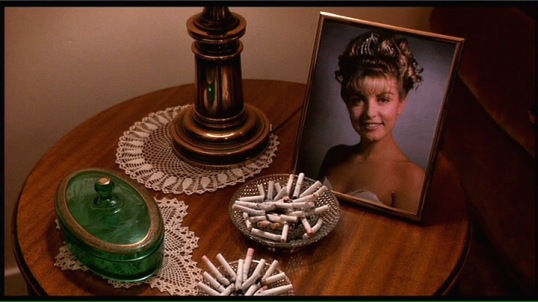
It’s also one of his most straight forward. Twin Peaks: Fire Walk With Me is a prequel, dealing with the events leading up to the death of Laura Palmer. Going into the film, the viewer already knows that Laura Palmer (Sheryl Lee) is full of secrets. They know that she is using drugs. They know that she is dating Bobby (Dana Ashbrook), while secretly seeing James (James Marshall). They know about her diary and her relationship with the reclusive Harold (Lenny Von Dohlen). They know that she is a friend to innocent Donna Hayward (Moria Kelly, somewhat awkwardly taking the place of Lara Flynn Boyle). Even more importantly, they know that she has spent the last six years of her life being abused by BOB (Frank Silva) and that BOB is her father, Leland Palmer (Ray Wise). The viewer starts the story knowing how it is going to end.
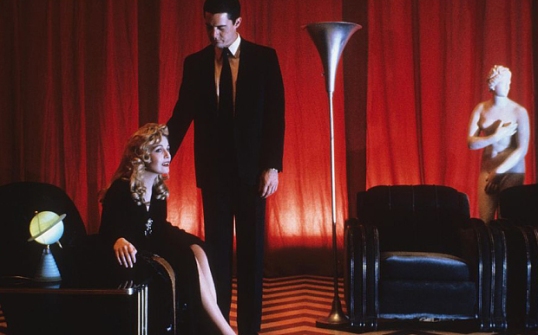
Things do get off to a somewhat shaky start with a nearly 20-minute prologue that basically plays like a prequel to the prequel. Theresa Banks, who was mentioned in the show’s pilot, has been murdered and FBI director Gordon Cole (David Lynch) assigns agents Chester Desmond (Chris Isaak) and Sam Stanley (Kiefer Sutherland) to investigate. Chester and Sam’s investigation basically amounts to a quick reenactment of the first season of Twin Peaks, with the agents discovering that Theresa was involved in drugs and prostitution. When Chester vanishes, Dale Cooper is sent to investigate. Harry Dean Stanton shows up as the manager of a trailer park and David Bowie has an odd cameo as a Southern-accented FBI agent who has just returned from the Black Lodge but otherwise, the start of the film almost feels like a satire of Lynch’s style.
But then, finally, we hear the familiar theme music and the “Welcome to Twin Peaks” sign appears.
“And the angel’s wouldn’t help you. Because they’ve all gone away.”
— Laura Palmer (Sheryl Lee), Twin Peaks: Fire Walk With Me (1992)
A year has passed since Theresa Banks was murdered. The rest of the film deals with the final few days of the life of doomed homecoming queen Laura Palmer. Laura smiles in public but cries in private. She is full of secrets that she feels that she has to hide from a town that has literally idolized her. She has visions of terrifying men creeping through her life and each day, she doesn’t know whether it will be BOB or her father waiting for her at home. She knows that the world considers her to be beautiful but she also know that, within human nature, there is a desire to both conquer and destroy beauty. When she sleeps, she has disturbing dreams that she cannot understand but that she knows are important. At a time when everyone says she should be happy to alive, all she can think about is death. Everywhere she goes, the male gaze follows and everything that should be liberating just feels her leaving more trapped. For all the complaints that Twin Peaks: Fire Walk With Me is somehow too strange to be understood, it’s not a strange film at all. This is David Lynch at his most straight forward. Anyone who thinks that Laura’s story is incomprehensible has never been a 17 year-old girl.
This is the bleakest of all of David Lynch’s films. There is none of broad humor or intentional camp that distinguished the TV show. After the show’s occasionally cartoonish second season, the film served as a trip into the heart of the darkness that was always beating right underneath the surface of Twin Peaks. It’s interesting how few of the show’s regulars actually show up in Twin Peaks: Fire Walk With Me. None of the characters who represented goodness are present. There’s no Doc Hayward. No Sheriff Truman. No Deputies Andy or Hawk. No Pete Martell. No Bookhouse Boys. Scenes were filmed for some of them but they didn’t make it into the final cut because their tone did not fit with the story that Lynch was seeking to tell. The Hornes, Dr. Jacoby, Josie, none of them are present either.
Instead, there’s just Larua and her father. As much as they try to deny it, Laura knows that she is going to die and Leland knows that he is going to kill her. Killer BOB and the denziens of the Black Lodge may be scary but what’s truly terrifying is the sight of a girl living in fear of her own father. Is Leland possessed by BOB or is BOB simply his way of excusing his own actions? If not for Leland’s sickness, would BOB even exist? When Laura shouts, “Who are you!?” at the spirit of BOB, she speaks for every victim of abuse who is still struggling to understand why it happened. For all the talk of the Black Lodge and all the surreal moments, the horror of this film is very much the horror of reality. Leland’s abuse of Laura is not terrifying because Leland is possessed by BOB. It’s terrifying because Leland is her father
David Lynch directs the film as if it where a living nightmare. This is especially evident in scenes like the one where, at the dinner table, Leland switches from being kindly to abusive while Laura recoils in fear and her mother (Grace Zabriskie) begs Leland to stop. It’s a hard scene to watch and yet, it’s a scene that is so brilliantly acted and directed that you can’t look away. As brilliant as Ray Wise and Grace Zabriskie are, it’s Sheryl Lee who (rightly) dominates the scene and the rest of the film, giving a bravely vulnerable and emotionally raw performance. In Reflections, Sheryl Lee speaks candidly about the difficulty of letting go of Laura after filming had been completed. She became Laura and gave a performance that anchors this absolutely terrifying film.
“Mr. Lynch’s taste for brain-dead grotesque has lost its novelty.”
— Janet Maslin
“It’s not the worst movie ever made; it just seems to be”
— Vincent Canby
If you need proof that critics routinely don’t know what they’re talking about, just go read some of the original reviews of Twin Peaks: Fire Walk With Me.
And yet, having just rewatched the show and now the movie, I can understand why critics and audiences were baffled by this film. This is not Twin Peaks the TV show. There is no light to be found here. There is no comic relief. (Even Bobby Briggs, who had become something of a goofy anti-hero by the time the series ended, is seen here shooting a man in the head.) There is no exit and there is no hope. In the end, the film’s only comfort comes from knowing that Laura was able to save one person before dying. It’s not easy to watch but, at the same time, it’s almost impossible to look away. The film ends on Laura’s spirit smiling and, for the first time, the smile feels real. Even if she’s now trapped in the Black Lodge, she’s still free from her father.
Since this was a prequel, it didn’t offer up any answers to the questions that were left up in the air by the show’s 2nd season finale. Fortunately, those questions will be answered (or, then again, they may not be) when the third season premieres on Showtime on May 21st.
In Zero Tolerance, Robert Patrick plays Jeff Douglas, an FBI agent who is sent down to Mexico to pick up a recently captured drug dealer. Ray Manta (Titus Welliver) is the head of the White Hand drug cartel and he is not happy about having been arrested. When Ray tells Jeff that his entire family is being held hostage and will be killed unless Ray is allowed to escape, Jeff demands that Ray give him his word that no harm will come to his wife and children. Ray gives his “word of honor,” not realizing that his associates have already killed Jeff’s family. Jeff is now out for revenge and he is not going to let the FBI, with its rules and procedures, stand in his way. Jeff is not only out to get Ray. He is also going to track down and kill every member of the White Hand, which includes everyone from Mick Fleetwood (yes, that Mick Fleetwood) to Jeffrey Anderson-Gunter (playing almost exactly the same role that he played in Marked for Death and Only The Strong) to Ator the Invincible himself, Miles O’Keeffe.
(How much keeffe is in this movie? Miles O’Keeffe! Ha ha, that never gets old!)
Robert Patrick is one of those actors who can make any movie worth watching and Zero Tolerance, an otherwise forgettable revenge flick, is proof of that. No one plays a revenge seeking killing machine with as much panache as Robert Patrick. After his family is killed, Patrick crosses the country, stopping everywhere from New Orleans and Las Vegas and seeing vengeance with a determination that almost makes Charles Bronson and Clint Eastwood seem mellow by comparison. This is the type of movie where Robert Patrick literally drives his car through the side of a helicopter and, even after the helicopter explodes, still emerges unscathed.
Last night, I finally saw the latest Werner Herzog film to be released in the United States, Queen of the Desert.
Queen of the Desert has actually been around … well, I was going to say forever but actually, I first started to hear about it in 2014. It premiered (to less-than-enthusiastic reviews) at the Berlin International Film Festival in February of 2015 and was released in Germany later that same year. Originally, it was going to get a wide release in America but then IFC acquired the distribution rights and ended up sitting on it for two years. (During that time, Herzog went on to direct another film, Salt and Fire.) Only last month did Queen of the Desert finally get a very limited theatrical and VOD release here in the United States.
Despite all of the bad things that I had heard, I was still looking forward to seeing Queen of the Desert. Why not? Werner Herzog is one of my favorite directors. The star of Queen of the Desert, Nicole Kidman, is one of my favorite actresses. Of course, there was also the Franco factor. I knew that Queen of the Desert featured James Franco in a small role and, if you’ve been reading this site for a while, y’all know how I feel about James Franco.
Having now watched it, I can say that Queen of the Desert is not the disaster that so many have been insisting. That doesn’t mean that it’s a great film or even a good film. It’s a very middle-of-the-road film, one that is too well-made to really be a disaster but, at the same time, is never as memorable as it should be.
Queen of the Desert tells the story of Gertrude Bell (Nicole Kidman), who abandoned a safely comfortable but restrictive life in turn-of-the-century Britain so that she could explore the world. In the film, Gertrude falls in love twice and, following the unhappy (and tragic) conclusions of those affairs, she always returns to the Middle East, where surviving the harshness of the desert and exploring the ruins of past civilizations brings her peace and gives her life a greater meaning.
That’s a theme that should be familiar to anyone who has watched any of Herzog’s documentaries or feature films. The problem is that, as told in this film, there’s no real spark to the story or to Gertrude as a character. Herzog’s best work has often dealt with people driven to the point of madness by their obsessions. Think about Nicolas Cage in Bad Lieutenant: Port of Call New Orleans. Think about Timothy Treadwell, obsessively living with the grizzlies until one them ate him in Grizzly Man. Consider the introverted eccentrics who explored The Cave of Forgotten Dreams or even Christian Bale’s refusal to allow himself to be broken in the POW film, Rescue Dawn. Think about Klaus Kinski in just about every film he ever made with Herzog. For that matter, just think about Werner Herzog himself is Les Blank’s documentary, The Burden of Dreams. Nicole Kidman would seem like an ideal choice for Gertrude and she does a good job with the role but, as written, Gertrude never has that touch of madness. Unlike Aguirre, she’s not looking to conquer nature. Unlike Fitzcarraldo, she’s not trying to bring “civilization” to the isolated spot in the world. Unlike Timothy Treadwell, she’s not even trying to literally become one with nature. Instead, she’s just someone who deals with heartache by going on a trip. I do that every time I spend the weekend up at Lake Texoma.
(The real-life Gertrude Bell died, under somewhat mysterious circumstances, of an overdose of sleeping pills. Whether it was suicide or an accidental overdose is not known. In the film, the circumstances of her death — which seem very Herzogian, to be honest — are glossed over by an end title card that simply informs us that she died in 1926.)
As I said earlier, Queen of the Desert is disappointing but it’s not terrible. Visually, it’s quite stunning and the scenes of the sand blowing in the desert are often a hundred times more interesting than the film’s storyline. Whenever Herzog is letting his camera focus on the desert or glide over the ruins of an ancient palace, you can understand why Herzog wanted to make this film. But, unfortunately, the film keeps returning to a story that’s about as middling as an old soap opera.
Nicole Kidman does a good job as Gertrude but she runs into the same problem that she ran into with Grace of Monaco. She’s stuck with a script that repeatedly tells us that the lead character is fascinating without ever really giving her a chance to prove it. (Before I get any angry comments, I know that Grace Kelly was fascinating and I’m sure that Gertrude Bell was too. I’m merely talking about the way that they were portrayed in their biopics.) As the men in her life, James Franco and Robert Pattinson are both ideal but Damian Lewis is a bit on the dull side.
All in all, this is not one of Werner Herzog’s best but, with all that said, I’ll still follow him anywhere that he chooses to go.
When game designer Milton Parker (Vincent Price) dies, all of his greedy relatives and his servants gather for the reading of his will. Parker’s lawyer, Benstein (Robert Morley), explains that Parker is leaving behind a $200 million dollar estate to whoever can win an elaborate scavenger hunt. Dividing into five teams, the beneficiaries head out to track down as many items as they can by five o’clock that evening. Among the items that they have to find: a toilet, a cash register, an ostrich, a microscope, and an obese person. Hardy har har.
The five teams are made up of a who’s who of sitcom and television actors who had time to kill in 1979. The Odd Couple‘s Tony Randall is Henry Motely, who is Parker’s son-in-law and who works with his four children. Soap‘s Richard Mulligan plays a blue-collar taxi driver named Marvin Dummitz (because funny names are funny) who teams up with his friend, Merle (Stephen Furst). The Mary Tyler Moore Show‘s Cloris Leachman (an Oscar winner, no less) gets stuck with the role of Milton’s greedy sister, Mildred. She works with her conniving lawyer (Richard Benjamin) and her stupid son (Richard Masur). Maureen Teefy plays Milton’s niece while his nephews are played by Willie Aames and Dirk Benedict. Cleavon Little, James Coco, Roddy McDowall, and Stephanie Faracy play the servants.
It doesn’t stop there, though. Avery Schreiber plays a zookeeper. Meat Loaf plays a biker who beats up Richard Benjamin. Ruth Gordon, Stuart Pankin, Pat McCormick, and Scatman Crothers all have cameos. Even Arnold Schwarzenegger makes an appearance as a gym instructor who knocks Tony Randall out of a second story window.
There are a lot of famous people in Scavenger Hunt. It’s just too bad that the movie itself is barely watchable and not at all funny. It tries to go for the zaniness of It’s A Mad, Mad, Mad, Mad World but, unless watching Willie Aames steal a clown head from Jack in the Box is your idea of hilarity, the film never comes close to succeeding. Michael Schultz directed some classic films (like Car Wash) during the 1970s but, unfortunately, he also directed Sgt. Pepper’s Lonely Hearts Club Band and this.
Scavenger Hunt used to show up on a late night television, where it was always advertised as starring Arnold Schwarzenegger. (He barely has five minutes of screentime.) It was released on DVD/Blu-ray earlier this year but watching for the cameos is the only reason to take part in this Scavenger Hunt.
Everybody knows the 1941 Humphrey Bogart/John Huston classic THE MALTESE FALCON, but only true film fanatics watch the original 1931 version. Since I fall squarely into that category, I recently viewed the first adaptation of Dashiell Hammet’s seminal private eye yarn. The film, like it’s more famous remake, follows the novel’s plot closely, with the added spice that Pre-Code movies bring to the table.
Cortez is no Bogie, but he’ll do
The odds are six-two-and-even if you’re reading this post, you don’t need a plot recap. What I intend to do is go over some of the differences between the two versions. Let’s start with Sam Spade himself, the prototype hard-boiled detective. Suave, slick-haired Ricardo Cortez interprets the role as a grinning horndog who’s never met a skirt he didn’t like. We meet Spade in the opening shot, clinching a dame in silhouette at the door to his office. Then the door…
Well, it’s May 1st! Not only is it International Worker’s Day but, here in the United States, it is also Loyalty Day!
What are you supposed to do on Loyalty Day? To be honest, I’m not really sure. I actually didn’t even know there was such a thing as Loyalty Day until about two years ago. I guess I’ll spend this Loyalty Day as I spent previous Loyalty Days, ironically commenting on the fact that it’s Loyalty Day.
So, with all that in mind, here’s a rather odd blast from the past (1948, to be exact) called Make Mine Freedom. It’s a cartoon about why America rules and the rest of the world sucks. Woo hoo! Praise the Lord and pass the ammunition! USA! USA! USA!
As for the cartoon itself, it’s charmingly odd and will be best enjoyed by people who have a sense of humor about their ideology. (Good luck finding anyone like that in 2017. Those of us who think that both the left and the right are worthy of ridicule are becoming an endangered species.) This cartoon was produced by Arkansas’s Harding College and, online, there seems to be some debate over who actually directed it. Some sources claim that this was one of the first projects on which Joseph Barbera and William Hanna ever worked. Others insist that this film should be properly credited to either Fritz Freling or Fred Moore.
Well, whoever directed it, did a good job of exposing that mean old Dr. Utopia…
Four years after she played the mysterious (and dead) Laura Palmer in Twin Peaks, Sheryl Lee starred as another mysterious (and possibly dead) woman in Mother Night.
Lee is cast as Helga Noth, the German wife of American expatriate Harold W. Campbell (Nick Nolte). Harold is a playwright, living in Berlin and doing propaganda broadcasts for the Nazis. Working with Frank Wirtanen (John Goodman), a military intelligence officer, Campbell has developed a series of verbal tics that are meant to secretly deliver information to the Allied Forces. It is never clear whether Harold’s information serves any real purpose just as it is left ambiguous as to whether Harold believes any of the anti-Semitic propaganda that he broadcasts over the airwaves. Working as both a propagandist and a double agent, Harold serves both the Allies and the Axis.
In the final days of the war, Helga is reportedly killed on the Eastern Front and Harold is captured by the Americans. Frank arranges for Harold to be quietly sent to New York City but tells him that the government will never admit that they used him as a double agent.
Harold spends the next fifteen years living an isolated life in New York. His only friend is an elderly painter, Kraft (Alan Arkin), with whom he plays chess. Eventually, Harold opens up to the painter and talks about his past. Kraft, for his own shady reasons, reveals Harold’s identity to a group of neo-Nazis. Though Harold initially wants nothing to do with them, this changes when they reveal that they have Helga.
Or do they? Almost no one in Mother Night is who they claim or what they seem to be, especially not Harold.
Based on a novel by Kurt Vonnegut, Mother Night suffers from the same uneven quality that seems to afflict most films based on Vonnegut’s work. It is easy to go overboard when it comes to bringing Vonnegut’s unique mix of drama and satire to the screen and Mother Night does that in a few scenes, especially once Harold reaches New York. It is still an intriguing and thought-provoking film, though. Nick Nolte gives one of his best performances as Harold and Sheryl Lee does a good job in a difficult role.
The pinnacle of Vonnegut films remains George Roy Hill’s version of Slaughterhouse-Five but Mother Night is still superior to something like Alan Rudolph’s adaptation of Breakfast of Champions.
Last night, as thunder rumbled outside and the skies were lit up by lighting, I curled up on the couch and I watched the latest Lifetime original film, Manny Dearest!
Why Was I Watching It?
A Canadian film called Manny Dearest? As soon as I saw the title, I assumed that it had to be a sequel to Degrassi: The Next Generation, one that would follow Manny Santos as she searched for love and success in Hollywood.
(Before you say that was a silly assumption on my part, just consider the number of Degrassi actors who regularly appear on the Lifetime network.)
Anyway, it turned out that I was wrong but I was already live-tweeting the movie so I kept watching.
What Was It About?
Karen (Ashely Scott) needs someone to help watch her two sons. Alex (Mitch Ryan) is a male nanny, otherwise known as a manny. Now, if this was a Hallmark film, Karen and Alex would fall in love and Alex would end up dumping her fiancée, a recovering alcoholic named Greg (Woody Jeffreys). But, since this is a Lifetime film, Alex turns out to be just a little crazy. Not only does he become obsessed with Karen and plot to get Greg out of the picture but he also teaches Karen’s sons some questionable lessons about how to deal with bullies.
What Worked?
This was actually one of the better Lifetime films that I’ve seen this year. Yes, it was obvious that Alex was going to turn out to be crazy but that’s Lifetime. When you sit down to watch a Lifetime movie, you know that the nanny is always going to turn out to be crazy. It would have been a betrayal of the audience to not have Alex turn out to be just a little insane.
Mitch Ryan did an excellent job playing Alex. Even though he was crazy and a murderer and he regularly drugged other people, Alex was still strangely likable. Last night, the majority of twitter was Team Alex. We especially enjoyed it when he scared the Hell out of a bully who was giving Karen’s son a hard time. Take that, bully! Add to that, Alex cooked, he did the dishes, he cleaned the house, and, whenever he showed up at the house at 3 in the morning, he was very careful about not waking anyone up.
My favorite character was Cori (Jordan Largy), a single mother who took one look at Alex and decided that she liked what she saw. The thing I liked about Cori is that she always said exactly what was on her mind and she didn’t let anything hold her back. Cori was the type of person who, when she brought her daughters over to play with Karen’s sons, greeted Alex by saying, “We thought we’d come by for a quickie.”
At this point, it’s a bit of a cliché for me to praise a Lifetime film for taking place in a nice house but, seriously, Karen had a really nice house.
What Did Not Work?
I guess some people would say that it was a problem that the villain was a hundred times more likable than the people he was menacing but not me. This is was a fun and entertaining Lifetime movie. As far as I’m concerned, it all worked.
“Oh my God! Just like me!” Moments
At one point, when Alex tells Cori that he’s not interested, Cori responds with, “Your loss.” I once said the same thing while breaking up with someone and I felt good about myself for a whole month afterward.
Lessons Learned
I like to think that, between watching Degrassi and Lifetime films like this one, I’ve learned a good deal about Canada. For me, the most Canadian moment of Manny Dearest came when the police approached Alex and, despite having guns, did not open fire on him. Restraint, it’s very Canadian.
 Long before the rise of trash TV, reality television, Jerry Springer, Maury Povich, Fox News, and MSNBC, there was The Morton Downey, Jr. Show. Airing at the end of the 1980s, The Morton Downey, Jr. Show featured its host railing against liberals, vegetarians, communists, feminists, libertarians, animal rights activists, teenagers, and pot smokers. Though the show only lasted for two seasons and ended after a bizarre incident in which Downey faked being the victim of a hate crime, The Morton Downey, Jr. served as a forerunner to the rise of our current toxic political culture.


 In Zero Tolerance, Robert Patrick plays Jeff Douglas, an FBI agent who is sent down to Mexico to pick up a recently captured drug dealer. Ray Manta (Titus Welliver) is the head of the White Hand drug cartel and he is not happy about having been arrested. When Ray tells Jeff that his entire family is being held hostage and will be killed unless Ray is allowed to escape, Jeff demands that Ray give him his word that no harm will come to his wife and children. Ray gives his “word of honor,” not realizing that his associates have already killed Jeff’s family. Jeff is now out for revenge and he is not going to let the FBI, with its rules and procedures, stand in his way. Jeff is not only out to get Ray. He is also going to track down and kill every member of the White Hand, which includes everyone from Mick Fleetwood (yes, that Mick Fleetwood) to Jeffrey Anderson-Gunter (playing almost exactly the same role that he played in Marked for Death and Only The Strong) to Ator the Invincible himself, Miles O’Keeffe.
 When game designer Milton Parker (Vincent Price) dies, all of his greedy relatives and his servants gather for the reading of his will. Parker’s lawyer, Benstein (Robert Morley), explains that Parker is leaving behind a $200 million dollar estate to whoever can win an elaborate scavenger hunt. Dividing into five teams, the beneficiaries head out to track down as many items as they can by five o’clock that evening. Among the items that they have to find: a toilet, a cash register, an ostrich, a microscope, and an obese person. Hardy har har.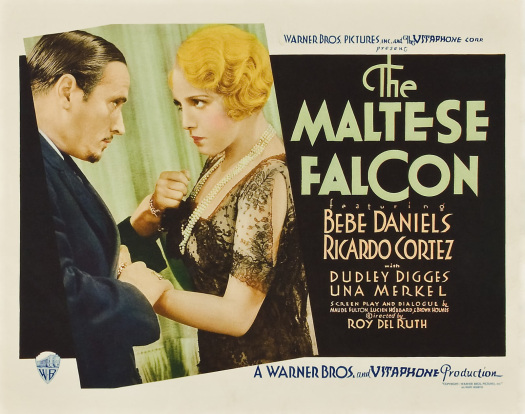

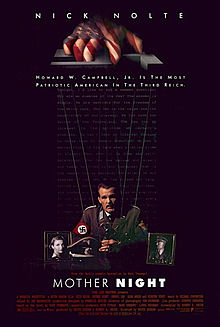 Four years after she played the mysterious (and dead) Laura Palmer in Twin Peaks, Sheryl Lee starred as another mysterious (and possibly dead) woman in Mother Night.
 Through the Shattered Lens