When high school student Dan Bartlett (John Cusack) is late arriving at the airport, he finds himself watching as the plane taking his girlfriend (Wendy Gazelle) and her parents (Monte Markham and Shelley Fabares) to the Caribbean takes off without him. Dan catches the next available flight and tries to track down his girlfriend and her family. Helping him out is a Ganja-smoking islander (Keith David) and a crusty sea captain (Robert Loggia). Complicating matters is that Dan’s girlfriend has been kidnapped by pirates (Jerry Stiller and his son, Ben)!
John Cusack got his start appearing in dopey 80s teen comedies and Hot Pursuit shows why he eventually declared that he would never appear in another one. Hot Pursuit relies on the idiot plot. If everyone in the movie didn’t act like an idiot, there wouldn’t be much of a movie. Cusack seems bored in his role, only waking up towards the end of the movie when he gets to pick up a machine gun and blow away the pirates’ hideout. (Cusack even gets to do a Rambo-style yell while riddling the building with bullets.) This was Ben Stiller’s film debut and he has a few funny scenes. The movie probably would have worked better if Stiller and Cusack had switched roles.
One final note; Hot Pursuit was produced by Pierre David, who also produced several of David Cronenberg’s early films. It’s probably not a coincidence that Wendy Gazzelle’s character is named Lori Cronenberg.
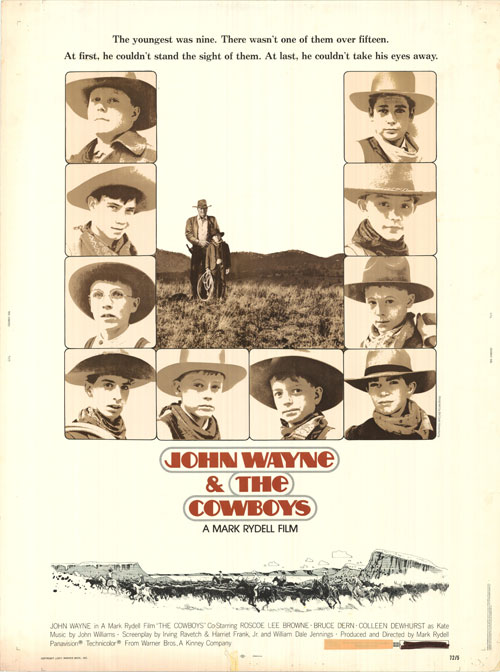
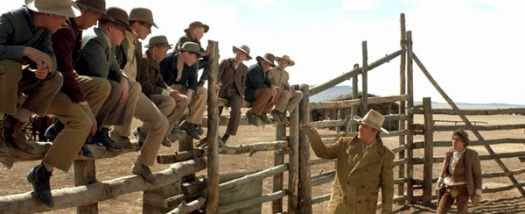
THE COWBOYS is not just another ‘John Wayne Movie’ from the latter part of his career. Not by a long shot. Duke had read the script and coveted the part of Wil Andersen, who’s forced to hire a bunch of wet behind the ears adolescents for a 400 mile cattle drive across the rugged Montana territory. Director Mark Rydell wanted George C. Scott for the role, but when John Wayne set his sights on something, he usually got what he wanted. The two men were at polar opposites of the political spectrum, and the Sanford Meisner-trained Rydell and Old Hollywood Wayne were expected to clash. They didn’t; putting their differences aside, they collaborated and cooperated to make one of the best Westerns of the 70’s.
Andersen’s regular hands have all deserted him when gold is discovered nearby, leaving the aging rancher in the lurch. He heads for Boseman to look…
The time is World War II, shortly before D-Day. Lucy Rose (Kate Nelligan) lives on an isolated island with her crippled husband, David (Christopher Cazenove), their young son, and a sheep herder named Tom (Alex McCrindle). Embittered by the accident that left him in a wheelchair, David is abusively violent and emotionally shut off. One night, during a sudden storm, a man who says his name is Henry Faber (Donald Sutherland) turns up on the island. Henry claims that the storm caught him by surprise and left him stranded. David doesn’t trust him and it turns out that, for once, David is right. Faber is actually a semi-legendary German spy, code-named The Needle because his preferred instrument of murder is a stiletto. Faber has discovered the plans for the Allied Invasion of Normandy. He’s only on the island because he is waiting for a German u-boat to arrive and take him back to Berlin. Complicating matters is that a romance has developed between Faber and Lucy.
Based on a novel by Ken Follett, Eye of the Needle is an old-fashioned spy thriller, distinguished by Kate Nelligan’s sensual turn as Lucy and Donald Sutherland giving what might be his career best performance in the role of Henry Faber. Until he meets Lucy, Faber is a remorseless sociopath who is willing to kill anyone who discovers the truth about his identity. For the majority of the film, it is left ambiguous whether Faber loves Lucy or if he’s just using her and Sutherland plays the role as if Faber himself is not really sure. The final confrontation between Faber and Lucy is both suspenseful and exciting and will convince you to never stick your hand through a window unless you’re sure about what’s on the other side. Eye of the Needle is a World War II thriller that deserves to be better known.
Following the success of this film, Richard Marquand was hired to direct Return of the Jedi., a film that is light years away from the gloomy world portrayed in Eye of the Needle. He later directed another well-regarded thriller, Jagged Edge, before passing away from a stroke in 1987 at the age of 49.
(Hi there! So, as you may know because I’ve been talking about it on this site all year, I have got way too much stuff on my DVR. Seriously, I currently have 193 things recorded! I’ve decided that, on January 15th, I am going to erase everything on the DVR, regardless of whether I’ve watched it or not. So, that means that I’ve now have only have a month to clean out the DVR! Will I make it? Keep checking this site to find out! I recorded the 1999 romantic comedy Just The Ticket off of Epix on October 13th!)
Just The Ticket tells the story of Gary Starke (Andy Garcia).
Gary lives in New York City. He is a tough, streetwise character, loyal to his friends and quick to anger if he feels that anyone is trying to take advantage of him. He has no time for pretentious posturing or snobbish social gatherings. Gary’s a man of the people. He works with and takes care of an aging former boxer named Benny (Richard Bradford). He looks after a pregnant, former drug addict named Alice (Laura Harris). When the slick and dangerous Casino (Andre B. Blake) starts to do business in Gary’s territory, Gary is the only person with the guts to stand up to him. Having never had a family (he’s never even seen his birth certificate and has no idea who his parents were), Gary has adopted the street people as his surrogate family.
That’s not all. Gary is also a lapsed Catholic who, when he goes to confession, opens by saying that it’s been 25 years since his last confession and that he’s taken the Lord’s name in vain 20 to 30 times that morning. Gary needs some help because his girlfriend, an aspiring chef named Linda (Andie McDowell), has left him and Gary wants to win her back. The priest asks Gary if he can get him tickets to see the Knicks…
Why does he ask that?
You see, Gary is a legendary ticket scalper and…
Okay, I probably just lost you when I used the terms “legendary” and “ticket scalper” in the same sentence. And I’ll admit that, when I discovered this movie was about ticket scalpers, it nearly lost me as well. Just The Ticket treats ticket scalping with a dignity and reverence that I’m not quite sure it deserves. I wasn’t surprised to discover that director/writer Richard Wenk apparently based the character of Gary on an actual ticket scalper that he knew. A lot of bad movies have been made as the result of a director, writer, or producer coming across some mundane activity and thinking, “Wow, this would make a great movie!”
(That’s one reason why, every few years, we suddenly get a dozen movies about race car drivers.)
However, I was pleasantly surprised to discover that Just The Ticket is not a terrible movie. Admittedly, it’s totally predictable and there are a lot of scenes that don’t work. For instance, there’s a lengthy scene where Gary and Linda destroy a snobbish food critic’s kitchen. I could imagine Gary doing that because he has nothing to lose. But Linda is actually hoping to become a chef in New York City. Would she really run the risk of making a permanent enemy at the New York Times? There’s nothing about Andie McDowell’s performance that suggests she would. The scenes between Gary and his aging partner also tend to overplay their hand. Richard Bradford gives a good performance as Benny but we all know what’s going to end up happening to him as soon as he starts crying after Gary insults him.
With all that in mind, Just The Ticket still has an undeniable charm. Some of it is due to Andy Garcia’s dedicated performance. He is frequently better than the material and he and Andie McDowell have enough chemistry that you do want to see Linda and Gary get back together. Some of it is because Just The Ticket is not afraid to shy away from being sentimental. It’s hard to think of any other romantic comedy in which the Pope plays such an important supporting role. It’s a sweet movie. It has a good heart.
Ernie Souchak (John Belushi) is a reporter in Chicago. He specializes in stories about municipal corruption and Mafia power plays. Needless to say, living in Chicago, that keeps him busy. Literally everyone in the city knows him. Even the two muggers who try to steal his wallet recognize him and share inside information about which street gang is about to make a big move. From a modern day vantage point, it seems strange to see everyone so excited about meeting a newspaper columnist but this movie was made in 1981, long before an army of bloggers put journalists like Ernie Souchak out of business.
Souchak’s gotten in trouble with the mob so his editor (Allen Garfield) sends him out of Chicago for his own protection. Chain-smoking city boy Ernie Souchak finds himself in the Rocky Mountains, assigned to track down and get a story on Dr. Nell Porter (Blair Brown). Dr. Porter has spent the last few years researching and protecting bald eagles. She doesn’t like reporters but Souchak wins her over. Despite being two very different people, Nell and Souchak fall in love. But can a city boy and a country girl stay together, especially when there are people in Chicago who want Souchak dead?
A strange movie, Continental Divide was meant to be an updated version of the romantic comedies that Spencer Tracy and Katharine Hepburn used to make and Blair Brown was even made up to look like a young Hepburn. It was one of the first films to be produced by Steven Spielberg, who has always been better at picking material as a director than a producer. It was directed by Michael Apted, a great documentarian who has never shown himself to have much affinity for comedy. It was written by Lawrence Kasdan, who specialized in homages to classic film genres and who, after this movie, made it a point to direct the majority of his scripts. And it starred John Belushi, in his only romantic film lead.
Belushi, of course, is the main reason why anyone would want to see this movie. It was his second-to-last movie, coming out between the popular success of The Blues Brothers and the infamous failure of Neighbors. Continental Divide gives Belushi a chance to play a character, instead of just a version of his own wild persona. The legend has always been that Continental Divide showed the actor that Belushi could have become if not for his tragic death. The truth is that Belushi frequently looks uncomfortable and it is often evident that he is having to reign back his natural instincts. Belushi’s best scenes are the ones where Souchak is walking around Chicago and hustling everyone that he meets. In those scenes, he’s confident and in control and it’s easy to get swept up in his life. His scenes with Blair Brown, where he has to be sincere and serious, are far more awkward. Belushi has enough good scenes in Continental Divide to make you regret the performances that we never got but, at the same time, it’s evident that he still had room to grow as an actor.
If Belushi hadn’t died and had instead gone on to make several more movies (and hopefully beat his drug addiction at the same time), Continental Divide would probably be forgotten. Instead, it now exists as a hint of what could have been.
On June 27th, 1976, four terrorists hijacked an Air France flight and diverted it to Entebbe Airport in Uganda. With the blessing of dictator Idi Amin and with the help of a deployment of Ugandan soldiers, the terrorists held all of the Israeli passengers hostage while allowing the non-Jewish passengers to leave. The terrorists issued the usual set of demands. The Israelis responded with Operation Thunderbolt, a daring July 4th raid on the airport that led to death of all the terrorists and the rescue of the hostages. Three hostages were killed in the firefight and a fourth — Dora Bloch — was subsequently murdered in a Ugandan hospital by Idi Amin’s secret police. Only one commando — Yonatan Netanyahu — was lost during the raid. His younger brother, Benjamin, would later become Prime Minister of Israel.
Raid on Entebbe, a docudrama about the operation, was originally produced for NBC though it subsequently received an overseas theatrical release as well. It’s an exciting tribute to the bravery of both the hostages and the commandos who rescued them. Director Irvin Kershner directs in a documentary fashion and gets good performances from a cast full of familiar faces. Charles Bronson, James Woods, Peter Finch, Martin Balsam, Stephen Macht, Horst Buchholz, Sylvia Sidney, Allan Arbus, Jack Warden, John Saxon, and Robert Loggia show up as politicians, commandos, terrorists, and hostages and all of them bring a sense of reality and humanity to their roles.
The film’s best performance comes from Yaphet Kotto, who plays Idi Amin as a strutting buffoon, quick to smile but always watching out for himself. In the film, Amin often pays unannounced visits to the airport, where he lies and tells the hostages that he is doing his best to broker an agreement between the terrorists and Israel. The hostages are forced to applaud Amin’s empty promises and Amin soaks it all up with a huge grin on his face. Forest Whitaker may have won the Oscar for Last King of Scotland but, for me, Yaphet Kotto will always be the definitive Idi Amin.
Los Angeles in the 80s. Beneath the California glamour that the rest of America thinks about when they think about L.A., a war is brewing. Bloods vs Crips vs the 21st Street Gang. For those living in the poorest sections of the city, gangs provide everything that mainstream society refuses to provide: money, a chance to belong, a chance to advance. The only drawback is that you’ll probably die before you turn thirty. Two cops — veteran Hodges (Robert Duvall) and rookie McGavin (Sean Penn) — spend their days patrolling a potential war zone. Hodges tries to maintain the peace, encouraging the gangs to stay in their own territory and treat each other with respect. McGavin is aggressive and cocky, the type of cop who seems to be destined to end up on the evening news. With only a year to go before his retirement, Hodges tries to teach McGavin how to be a better cop while the gangs continue to target and kill each other. The cycle continues.
Colors was one of the first and best-known of the “modern gang” films. It was also Dennis Hopper’s return to directing, 17 years after the notorious, drug-fueled disaster of The Last Movie. Hopper took an almost documentary approach to Colors, eschewing, for the most part, melodrama and instead focusing on the day-to-day monotony of life in a war zone. There are parts of Colors that are almost deliberately boring, with Hodges and McGavin driving through L.A. and trying to stop trouble before it happens. Hopper portrays Hodges and McGavin as being soldiers in a war that can’t be won, combatants in a concrete Vietnam. Colors is nearly 20 years old but it holds up. It’s a tough and gritty film that works because of the strong performances of Duvall and Penn. The legendary cinematographer Haskell Wexler vividly captures the harshness of life in the inner city. Actual gang members served as extras, adding to the film’s authentic, documentary feel. Among the actors playing gang members, Don Cheadle, Trinidad Silva, Glenn Plummer, and Courtney Gains all make a definite impression. In a small but important role, Maria Conchita Alonso stands in for everyone who is not a cop and who is not a gang member but who is still trapped by their endless conflict.
One person who was not impressed by Colors was future director John Singleton. Boyz ‘n The Hood was largely written as a response to Colors‘s portrait of life in South Central Los Angeles.
New York in the 1930s. Jake LaMotta (Morean Aria) is a tough street kid who is pushed into fighting by his abusive father (Paul Sorvino) and who is taught how to box by a sympathetic priest (Ray Wise). When Jake finally escapes from his Hellish home life, it is so he can pursue a career as a professional boxer. Ironically, the same violent nature that nearly destroyed him as a youth will now be the key to his future success.
In the late 60s, a middle-aged Jake LaMotta (William Forsythe) testifies before a government panel that is investigating that influence of the Mafia in professional boxing. LaMotta testifies that, during his professional career, he did take a dive in one of his most famous matches. LaMotta goes on to pursue an entertainment career which, despite starring in Cauliflower Ears with Jane Russell, never amounts too much. He drinks too much, fights too much, and gets into arguments with a ghost (Robert Davi). He also gets married several times, to women played by everyone from Penelope Ann Miller to Alicia Witt. The movie ends with Jake happily walking down a snowy street and a title card announcing that Jake is now 95 years old and married to his seventh wife. (The real Jake LaMotta died on September, 9 months after the release of The Bronx Bull.)
The Bronx Bull is a largely pointless movie about the later life of the antisocial boxer who was previously immortalized in Martin Scorsese’s Raging Bull. In fact, The Bronx Bull was originally announced and went into production as Raging Bull II. Then the producers of the original Raging Bull found out, filed a lawsuit, and the film became The Bronx Bull. Because of the lawsuit, The Bronx Bull could cover every aspect of Jake’s life, except for what was already covered in Raging Bull. In fact, Scorsese’s film (which undoubtedly had a huge impact on LaMotta’s later life) is not even mentioned in The Bronx Bull.
William Forsythe does what he can with the role but, for the most part, Jake just seems to be a lout with anger issues. With a cast that includes everyone from Tom Sizemore to Cloris Leachman to Bruce Davison, the movie is full of familiar faces but none of them get too much of a chance to make an impression. Joe Mantegna comes the closest, playing Jake’s best friend. The Bronx Bull was not only shot on the cheap but it looks even cheaper, with studio backlots unconvincingly filling in for 1930s Bronx. The film’s director, Martin Guigui, occasionally tries to throw in a Scorsesesque camera movement and there are a few black-and-white flashbacks but, for the most part, this is the mockbuster version of Raging Bull.
The Brothers Warner never shied away from social issues of the Depression Era in their films, from bootlegging gangsters (LITTLE CAESAR, THE PUBLIC ENEMY) to “yellow” journalism (FIVE STAR FINAL, PICTURE SNATCHER) to rampant illicit sex (BABY FACE, CONVENTION CITY)… even the musical GOLD DIGGERS OF 1933 featured an ode to the unemployed and destitute, “Remember My Forgotten Man”. THE MAYOR OF HELL tackles the juvenile justice system, as a gang of slum kids get tossed in a reform school run by a crooked superintendent and suffer extremely harsh conditions, until a political hack takes over and implements change. The hack… why, it’s none other than Jimmy Cagney !
Cagney bursts on the scene in typical Cagney fashion about a third of the way into the movie, pulling up to the prison gate as the guard demands to know who goes there: “Gargan, the new deputy commissioner, ya screw!”. Patsy…
The year is 1963. The month is November. The city is Dallas. The President of the United States, John F. Kennedy, is coming to visit and two very different men have very different reactions. An eccentric and lonely strip club owner, Jack Ruby (Michael Lerner), worries about an anti-Kennedy ad that has just appeared in the Dallas Morning News. Another loner, a strange man named Lee Harvey Oswald (Frederic Forrest), is busy making plans of his own. When Kennedy is assassinated, history brings Ruby and Oswald together in a way that a shattered nation will never forget.
This is a curious one. It was made for television and, according to Wikipedia, its original running time was 180 minutes. The version that I saw, on VHS, was barely 90 minutes long so obviously, the version I saw was heavily edited. (In the 70s, it was common for made-for-TV movies to be reedited for both syndication and overseas theatrical release.) Maybe that explains why Ruby and Oswald felt do disjointed. In the version I saw, most of the emphasis was put on Jack Ruby running around Dallas and getting on people’s nerves. Very little time was devoted to Oswald and the film was almost entirely stolen by Lerner. Michael Lerner is a familiar character actor. You may not know his name but you will definitely recognize his face. Lerner was convincing and sometimes even sympathetic as the weaselly Ruby. Ruby and Oswald supported the Warren Commission’s findings, that Oswald killed Kennedy and Ruby shot Oswald out of a sense of loyalty to Jackie Kennedy. Michael Lerner’s performance was so good that he almost made that theory plausible.
One final note, for fans of WKRP in Cincinnati: Gordon Jump and Richard Sanders, best known as Arthur Carlson and Les Nessman, were both in Ruby and Oswald, though they did not share any scenes together.
 When high school student Dan Bartlett (John Cusack) is late arriving at the airport, he finds himself watching as the plane taking his girlfriend (Wendy Gazelle) and her parents (Monte Markham and Shelley Fabares) to the Caribbean takes off without him. Dan catches the next available flight and tries to track down his girlfriend and her family. Helping him out is a Ganja-smoking islander (Keith David) and a crusty sea captain (Robert Loggia). Complicating matters is that Dan’s girlfriend has been kidnapped by pirates (Jerry Stiller and his son, Ben)!
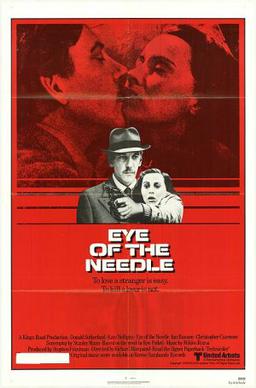 The time is World War II, shortly before D-Day. Lucy Rose (Kate Nelligan) lives on an isolated island with her crippled husband, David (Christopher Cazenove), their young son, and a sheep herder named Tom (Alex McCrindle). Embittered by the accident that left him in a wheelchair, David is abusively violent and emotionally shut off. One night, during a sudden storm, a man who says his name is Henry Faber (Donald Sutherland) turns up on the island. Henry claims that the storm caught him by surprise and left him stranded. David doesn’t trust him and it turns out that, for once, David is right. Faber is actually a semi-legendary German spy, code-named The Needle because his preferred instrument of murder is a stiletto. Faber has discovered the plans for the Allied Invasion of Normandy. He’s only on the island because he is waiting for a German u-boat to arrive and take him back to Berlin. Complicating matters is that a romance has developed between Faber and Lucy.
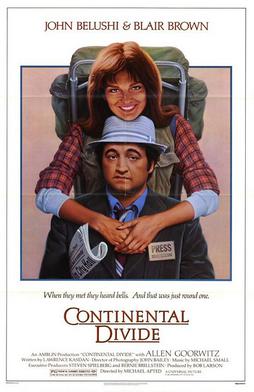 Ernie Souchak (John Belushi) is a reporter in Chicago. He specializes in stories about municipal corruption and Mafia power plays. Needless to say, living in Chicago, that keeps him busy. Literally everyone in the city knows him. Even the two muggers who try to steal his wallet recognize him and share inside information about which street gang is about to make a big move. From a modern day vantage point, it seems strange to see everyone so excited about meeting a newspaper columnist but this movie was made in 1981, long before an army of bloggers put journalists like Ernie Souchak out of business.
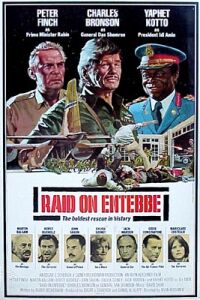 On June 27th, 1976, four terrorists hijacked an Air France flight and diverted it to Entebbe Airport in Uganda. With the blessing of dictator Idi Amin and with the help of a deployment of Ugandan soldiers, the terrorists held all of the Israeli passengers hostage while allowing the non-Jewish passengers to leave. The terrorists issued the usual set of demands. The Israelis responded with Operation Thunderbolt, a daring July 4th raid on the airport that led to death of all the terrorists and the rescue of the hostages. Three hostages were killed in the firefight and a fourth — Dora Bloch — was subsequently murdered in a Ugandan hospital by Idi Amin’s secret police. Only one commando — Yonatan Netanyahu — was lost during the raid. His younger brother, Benjamin, would later become Prime Minister of Israel.
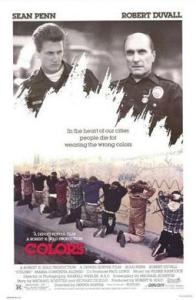 Los Angeles in the 80s. Beneath the California glamour that the rest of America thinks about when they think about L.A., a war is brewing. Bloods vs Crips vs the 21st Street Gang. For those living in the poorest sections of the city, gangs provide everything that mainstream society refuses to provide: money, a chance to belong, a chance to advance. The only drawback is that you’ll probably die before you turn thirty. Two cops — veteran Hodges (Robert Duvall) and rookie McGavin (Sean Penn) — spend their days patrolling a potential war zone. Hodges tries to maintain the peace, encouraging the gangs to stay in their own territory and treat each other with respect. McGavin is aggressive and cocky, the type of cop who seems to be destined to end up on the evening news. With only a year to go before his retirement, Hodges tries to teach McGavin how to be a better cop while the gangs continue to target and kill each other. The cycle continues.
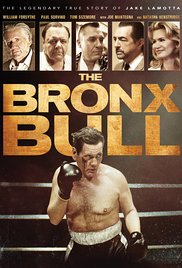 New York in the 1930s. Jake LaMotta (Morean Aria) is a tough street kid who is pushed into fighting by his abusive father (Paul Sorvino) and who is taught how to box by a sympathetic priest (Ray Wise). When Jake finally escapes from his Hellish home life, it is so he can pursue a career as a professional boxer. Ironically, the same violent nature that nearly destroyed him as a youth will now be the key to his future success.

 The year is 1963. The month is November. The city is Dallas. The President of the United States, John F. Kennedy, is coming to visit and two very different men have very different reactions. An eccentric and lonely strip club owner, Jack Ruby (Michael Lerner), worries about an anti-Kennedy ad that has just appeared in the Dallas Morning News. Another loner, a strange man named Lee Harvey Oswald (Frederic Forrest), is busy making plans of his own. When Kennedy is assassinated, history brings Ruby and Oswald together in a way that a shattered nation will never forget.
 Through the Shattered Lens