The Things You Find On Netflix: 6 Balloons (dir by Marja Lewis-Ryan)


Poor Katie (Abbi Jacobson)!

All she wants to do is throw a surprise party for her new boyfriend and enjoy the 4th of July.  Is that too much to ask?  However, things are never easy.  Her friends are ruthless in their critique of what she’s planning to wear.  Her mother (Jane Kaczmarek) keeps pressuring her to go down to CVS and buy more makeup.  As for her father (Tim Matheson) — well, he’s just too damn good-looking.  All of her friends want to know if it was difficult for Katie to grow up with a “hot dad.”  Katie says it was.

You know what’s even more difficult though?

Trying to throw a surprise birthday party while also trying to take care of your niece and your junkie brother!

From the minute we meet Seth (Dave Franco) it’s obvious that he’s on something.  As soon as Katie orders him to roll up his sleeves, we know that this is not a new thing with Seth.  Seth is a junkie, the type who shoots up in grocery store bathrooms and who buys his heroin from a man who lives in a yellow tent.  Seth isn’t one of those charming junkies, either.  He’s not Ewan McGregor in Trainspotting.  He’s a manipulative, self-centered asshole who agrees to go to detox but only if Katie agrees to pay for it and not tell anyone that he’s using again.  He’s the type who thinks nothing of begging his sister to leave the party that she’s spent weeks planning because he needs a ride to get one last hit before “getting clean.”

6 Balloons is a short film, one that takes place over the course of one long night.  While the party goes on without her, Katie drives Seth around the city.  Whenever Katie objects to what Seth is asking her to do, Seth guilts her.  He continually assures her that he just needs to get high one last time and then he’ll be able to do detox.  Meanwhile, Seth’s daughter sits in her car seat and begs to be taken home.

The acting is okay.  Both Dave Franco and Abbi Jacobson are best known for their comedic work so it’s interesting to see them taking on such dramatic roles here.  At the same time, it sometimes seems like both of them are trying too hard.  The same could be said of  6 Balloons.  This is a film that could have used a little dark humor.  Instead, it’s relentlessly grim and serious and, as a result, a bit of a chose to sit through.  For a 70 minute film, 6 Balloons seems to go on forever.

The problem with films about junkies is that, for the most part, hardcore junkies are dull people and not much fun to be around.  Christiane F, Trainspotting and several of the films influenced by them dealt with this problem by featuring a propulsive soundtrack and some imaginative cinematography.  (Trainspotting also wisely devoted more screen time to Mark and Sick Boy than to Spud.  Just imagine how difficult it would be to watch Trainspotting if the entire film had centered on Spud getting high and crawling underneath cars.)  With its hand-held camerawork and it’s subdued soundtrack, 6 Balloons takes more of a documentary approach.  The film will leave you with no doubt that heroin is bad and it’s not good to be an enabler but, at the same time, it’ll probably also inspire you to glance at the time and ask yourself, “Is this thing over yet?”

Insomnia File #37: Evita (dir by Alan Parker)


What’s an Insomnia File? You know how some times you just can’t get any sleep and, at about three in the morning, you’ll find yourself watching whatever you can find on cable? This feature is all about those insomnia-inspired discoveries!

Last night, if you were in a hotel room in Alabama and you discover that you couldn’t get to sleep despite having a busy day ahead of you, you could have always turned on the TV and watched the 1996 musical extravaganza, Evita.

That’s what I did!

Evita, of course, is based on the award-winning musical by Tim Rice and Andrew Lloyd Webber.  Opening in 1952, with Argentina being thrown into mourning and chaos by the death of Eva Peron (Madonna), the film then flashes back to follow Eva as she goes from being a child of poverty to a well-known actress to eventually the wife of Argentina’s president, Juan Peron (Jonathan Pryce).  The majority of her story is told to us by Che (Antonio Banderas), a cynical observer who pops up in various disguises and who is always quick to accuse Eva of selling out the poor while, at the same time, professing to be as obsessed with her as everyone else.  Much as they did with the story of Jesus in Jesus Christ Superstar, Rice and Lloyd Weber use the story of Eva Peron to explore what it means to be a celebrity in an unstable world.

(If anyone ever decides to produce a musical about the Kardashians, they would be fools not to approach Rice and Lloyd Webber to write it.)

Evita is kind of a strange film.  On the one hand, it’s a wonderful spectacle.  Director Alan Parker does a wonderful job visually interpreting the music.  The sets are huge and ornate.  The costumes are to die for.  There’s never a moment when you don’t want to look at the screen.  Parker keeps the action moving and, regardless of how cynical one may be about politics, it’s hard not to be impressed by the army of extras that march through the film, chanting “Peron.”  While both the musical and film undoubtedly took liberties with the actual story (and don’t watch this film expecting to see any acknowledgment of the countless number of Nazi war criminals that Peron welcomed to Argentina after the fall of the Third Reich), it still does a great job of capturing the sweep of change and revolution.  You watch the film and you understand why the citizens of an unstable country would put their faith in messianic leaders like the Perons.  Jonathan Pryce does a good job playing Peron and Antonio Banderas is absolutely on fire as Che.

(In some stage productions, Che is specifically portrayed as being a young Che Guevara.  Guevara, of course, was a racist mass murderer who became an icon because he was photogenic.  Fortunately, the film is content to portray Che as simply being a politically active citizen of Argentina.)

And yet, there is an emptiness at the center of this adaptation of Evita and that emptiness is named Madonna.  Strangely, for someone who has been a star longer than I’ve been alive, Madonna has absolutely zero screen presence.  She looks glamorous enough for the part and she’s got a good enough voice for the songs but, whenever she actually has to act, Madonna’s performance feels awkward and forced.  Her performance is too obviously calculated, and, as a result, there’s nothing natural about her or her interpretation of Evita.  To put it simply, she tries too hard.  She comes across as the type of performer who doesn’t so much smile as she acts the process of smiling.  When Madonna performs opposite Pryce and Banderas, they’re both good enough to carry her through their shared scenes.  But whenever Madonna has to hold the screen on her own, the film falls strangely flat.

The end result is a strangely uneven film, one that leaves little doubt that Eva Person was loved while, at the same time, never seeming to understand why.

Previous Insomnia Files:

  1. Story of Mankind
  2. Stag
  3. Love Is A Gun
  4. Nina Takes A Lover
  5. Black Ice
  6. Frogs For Snakes
  7. Fair Game
  8. From The Hip
  9. Born Killers
  10. Eye For An Eye
  11. Summer Catch
  12. Beyond the Law
  13. Spring Broke
  14. Promise
  15. George Wallace
  16. Kill The Messenger
  17. The Suburbans
  18. Only The Strong
  19. Great Expectations
  20. Casual Sex?
  21. Truth
  22. Insomina
  23. Death Do Us Part
  24. A Star is Born
  25. The Winning Season
  26. Rabbit Run
  27. Remember My Name
  28. The Arrangement
  29. Day of the Animals
  30. Still of The Night
  31. Arsenal
  32. Smooth Talk
  33. The Comedian
  34. The Minus Man
  35. Donnie Brasco
  36. Punchline

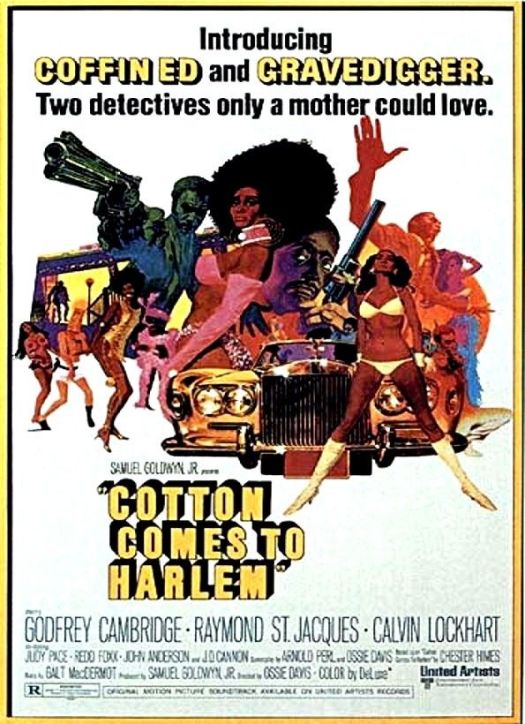
That’s Blaxploitation! 12: COTTON COMES TO HARLEM (United Artists 1970)


gary loggins's avatarcracked rear viewer


I’m not really sure if COTTON COMES TO HARLEM qualifies as a Blaxploitation film. Most genre experts point to Melvin Van Peebles’ SWEET SWEETBACK’S BADASSSSS SONG and/or Gordon Parks’s SHAFT , both released in 1971, as the films that kicked off the Blaxploitation Era. Yet this movie contains many of the Blaxploitation tropes to follow, and is based on the works of African-American writer Chester Himes.

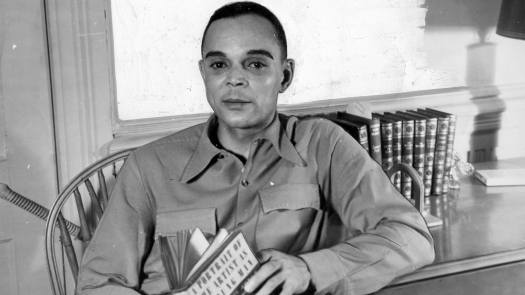
Hardboiled author Chester Himes

Himes (1909-1984) began his writing career while doing a prison stretch for armed robbery. After his short stories started being published in Esquire, he was paroled in 1936, and soon met poet Langston Hughes, who helped him get established in the literary world. Reportedly, Himes worked for a time as a screenwriter for Warner Brothers in the 40’s, but was let go when a racist Jack Warner declared he “don’t want no n*ggers on this lot” (1). His first …

View original post 591 more words

Return of the American Soldier: Americana (1983, directed by David Carradine)


The year is 1973.  The American Solider (played by David Carradine, who also directed) has just been discharged from Vietnam and is now hitchhiking across an America that he no longer understands.  When he reaches a small town in Kansas, he stumbles across a run-down carousel sitting in an overgrown field.  The Soldier decided to spend the night camping in the field and, the next morning, he sets out to rebuild the old merry-go-round.

No one in town can understand why the Soldier is doing what he is doing.  The local teenagers harass him while a silent and beautiful girl in a white dress (played by Carradine’s then-partner, Barbara Hershey) brings him a toolbox but runs away whenever the Soldier tries to speak with her.  Some of the older townspeople, led by gas station owner Mike (Michael Greene), help the Soldier by giving him odd jobs and deals on equipment and tools.   But, when the Soldier refuses to attend a weekly cockfight, both Mike and eventually the entire town turns against him.

Even with the community refusing to help, the Soldier continues his work.  Finally, the Soldier needs only one last piece to complete the restoration.  Mike agrees to give it to him on the condition that the Soldier first fight a dog.

Based on the 1948 novel, The Perfect Round, Americana was a passion project for both David Carradine and Barbara Hershey.   They first learned of the book and its story in 1969.  Four years later, using the money that he made starring in Kung Fu, Carradine purchased the rights to the novel and set out to the bring the story to the screen.  As producer, director, editor, and star, Carradine had complete artistic control over the project.  This was both a blessing and a curse because Carradine spent a total of 8 years editing his film.  It then took another two years for Americana to finally be picked up by a distributor, Crown International Pictures.  Ten years after filming began, Americana was finally released in 1983.  Carradine was shooting new scenes up until two weeks before the film’s release, which explains why the Soldier suddenly and dramatically ages an hour into the completed movie.

Americana may be strange but it’s not bad.  In some ways, it reminded me of what First Blood would have been like if, instead of going on a rampage, Rambo had taken the Sheriff’s advice and moved on to the next town.   It has its share of pretentious moments but the overall story, about a man who, having seen so much destruction in Vietnam, now just wants to build something good, shines through.  Even if her character never makes sense, Barbara Hershey is stunningly beautiful and Carradine is effectively low-key as the Soldier.  Even Americana‘s controversial ending works as a statement about sacrifice.  Much like the characters played by John Wayne in The Searchers and The Man Who Shot Liberty Valance, The Soldier’s role is to defend and improve a society that has no place for him inside of it.

If Americana had been released in 1973, it probably would have been ahead of its time.  Few people wanted to talk about Vietnam, much less go to a movie that was a metaphor for the entire conflict.  When Americana was was released in 1983, people were more interested in refighting the war and achieving victory with Sylvester Stallone and Chuck Norris and had little interest in Carradine’s more thoughtful approach.  Americana got pushed into obscurity but David Carradine’s vision of post-war America is still worth watching.

Film Review: The Howling (dir by Steven M. Smith)


Horror is all about atmosphere.

It doesn’t matter how bloody or gory a film is.  It doesn’t matter how creative the filmmakers gets when it comes to creating their monster or plotting out their haunting.  It doesn’t matter how meta the dialogue is or how many references are tossed in to other horror movies.  It all starts with atmosphere.

The right atmosphere keeps us, the viewers, off-balance throughout the entire film.  The right atmosphere leaves us wondering what’s lurking behind every corner and it makes us jump at every unexpected sound.  The right atmosphere tells us that something terrifying could happen at any minute.  The right atmosphere makes us feel as if we’re watching a filmed nightmare.  The right atmosphere keeps us watching even when we might want to look away.

The Howling is full of atmosphere.

Now, before anyone asks, this British film is not a remake of the classic American werewolf movie.  Instead, it deals with the legend of Dr. Rathbone (Jon-Paul Gates).  Rathbone, it’s said, was a scientist who lived in a mansion outside of a small English village.  Everyone suspected that, inside of his mansion, Rathbone was performing horrific experiments on both animals and humans.  When Rathbone mysteriously disappeared, no one regretted his absence.  In fact, many people suspected that perhaps Rathbone had been killed by one of his experiments and, if so, good riddance!  Of course, the only problem was that, with Rathbone gone, no one was quite what had actually happened to his experiments.  Were they now living in the woods or was the whole thing just an urban legend?

Dr. Rathbone, at work


As Halloween approaches, three teenagers — Jason (Erik Knutsvik), his girlfriend Kristy (Tiffany-Ellen Robinson), and their friend Sophia (Maria Austin) — camp in the woods, hoping to discover the truth.  After all, there’s a lot of online clicks and youtube views to be captured by hunting the paranormal.  One need only watch Mystery, Uncovered with Ben Tramer (Matthew Fitzthomas Rogers) to understand that!

(I assume that Ben Tramer was named after Laurie’s unfortunate crush in the first two Halloween films.)

When it starts storming and their car disappears, Jason, Kristy, and Sophia are forced to seek refuge in what appears to be some sort of decrepit asylum.  They’re met by the caretaker, Shelley (Hans Hernke), who says he works for the Master and who, when an inmate suddenly makes an appearance, says, “Don’t mind him, he’s harmless.”

Of course, no one that they’ll meet that night is harmless…

The Howling plays out like a filmed dream, full of strange characters and nicely surreal images.  The film starts with a series of overhead shots, all of which suggest that not only the main characters but the entire world is being watched and stalked by some ominous and unknown force.  With the exception of a few key scenes, the majority of the film is in black-and-white and some of the images captures, especially in the doctor’s lab, are striking in their starkness.  (There are also a few brief scenes where the asylum is so dark that it’s hard to visually make out what’s happening.  Instead, we only hear voices in the blackness, an effective reminder of why so many people sleep with at least one light on.)  The few times when color does intrude on the film, like when Shelley lights a candle or when we see an episode of Mystery, Uncovered, the effect is a disquieting one.  In perhaps the film’s strongest sequence, several of Rathbone’s “patients’ suddenly appear in full, vibrant color, a nightmarish montage that seems to literally explode from the film.  There’s also a nicely down black-and-white scene involving a rather haunting dance.

Lest I give you the wrong idea, The Howling definitely has a sense of humor about itself.  In many ways it’s an homage to the gloriously over-the-top horror films of the past.  It’s a film that obviously was made for horror fans by horror fans and, as a result, the 83 minute running time is full of references to other classic horror films.  Shelley, for instance, will be a familiar character to anyone who has ever seen a haunted house film from the 40s or 50s.  There’s always a mysterious caretaker.  As for the Asylum itself, it feels like it could have been transported in from the twisted, psychological landscape of German Expressionism.

I liked The Howling.  It’s a low-budget horror film that makes pays homage to some of my favorite horror films and makes good use of a dream-like atmosphere.  And, as I said before, atmosphere is everything….


Games People Play: Alfred Hitchcock’s DIAL M FOR MURDER (Warner Brothers 1954)


gary loggins's avatarcracked rear viewer

Alfred Hitchcock  wasn’t afraid to take chances. When the 3-D craze hit in the 1950’s, the innovative director jumped on the new technology to make DIAL M FOR MURDER, based on Frederick Knott’s hit play. The film is full of suspense, and contains many of The Master’s signature touches, but on the whole I consider it to be lesser Hitchcock… which is certainly better than most working in the genre, but still not up to par for Hitch.

Knott adapted his play for the screen, and keeps the tension mounting throughout. The story is set in London, and revolves around ex-tennis pro Tony Wendice, whose wife Margot is having an affair with American mystery writer Mark Halliday. Tony comes up with an elaborate plot to have her murdered by stealing a love letter Mark has written and blackmailing her, then setting up his old school acquaintance C.A. Swann, a man…

View original post 403 more words

The Conquering Hero: Baby Blue Marine (1976, directed by John D. Hancock)


The year is 1943 and America is at war.  All young men are expected to join the Marines and fight for their country but the Corps is not willing to accept just anyone.  Marion (Jan-Michael Vincent) wants to continue a family tradition of service but, as his drill sergeant (Michael Conrad) puts it, Marion just is not pissed off enough to be a Marine.  Marion is kicked out basic training and told to go home.  He is given a blue uniform to wear on his jury so that anyone who sees him will know that he couldn’t cut it.

Ashamed of his failure and in no hurry to confront his family, Marion takes the long route home.   While having a drink in California, he meets a Marine (Richard Gere) who did not get kicked out of basic training.  Though not yet 30, this shell-shocked Marine already has a head of gray hair, which he says he got from the horrors of war.  The Marine is due to return to the fighting in Europe but, upon meeting Marion, he sees a way out. When Marion gets drunk, the Marine knocks him out, switches uniforms with him, and goes AWOL.

When Marion comes to, he discovers that everyone that he meets now judges him by his new uniform.  Strangers buy him drinks.  Other servicemen try to pick fights with him.  When he stops off in a small Colorado town, a local waitress (Glynnis O’Connor) falls in love with him and nearly everyone that he meets assumes that he must be a hero.  Marion doesn’t exactly lie about his past.  Instead, he simply allows people to believe whatever they want to believe about him.  It seems like an idyllic situation until three prisoners from a nearby Japanese internment camp escape and the towns people expect Marion to help capture them.

Loosely plotted and sentimental, Baby Blue Marine is a dramatic version of Preston Sturges’s Hail The Conquering Hero.  Though the film has a gentle anti-war message, it’s actually more about nostalgia for a simpler and more innocent time.  If the film had been made at height of the Vietnam War, it might have been more angrier and more cynical.  But, instead, this is one of the many post-Watergate films that wistfully looked back upon the past.  When Marion settles into the town, he finds what appears to be a perfect and friendly home.  Only the nearby internment camp and the town’s hysteria over the escape prisoners serve as reminders that things are never as ideal as they seem.  Jan-Michael Vincent gives one of his best performances as the well-meaning Marion and actors like Richard Gere, Bert Remsen, Katherine Helmond, Dana Elcar, Michael Conrad, Bruno Kirby, and Art Lund all make strong impressions in small roles.

One of the few films to be produced by television mogul Aaron Spelling, Baby Blue Marine is not easy to find but worth the search.

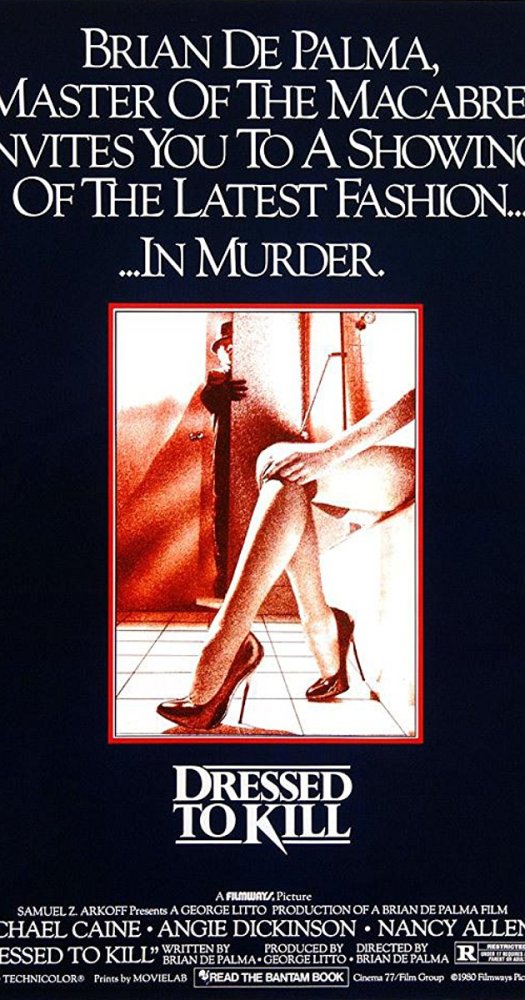
Slashed To Thrill: Brian De Palma’s DRESSED TO KILL (Filmways 1980)


gary loggins's avatarcracked rear viewer

Brian De Palma was a big deal back in the 70’s and 80’s, and his films like CARRIE, SCARFACE, and THE UNTOUCHABLES are still discussed. Yet works such as SISTERS, PHANTOM OF THE PARADISE, OBSESSION, BLOW OUT, and BODY DOUBLE seem unjustly neglected today, and some critics deride him for his over the top sex and violence. DRESSED TO KILL finds De Palma in full Hitchcock mode, an homage to PSYCHO that The Master of Suspense himself cited as more like a “fromage”, but one I find still entertaining.

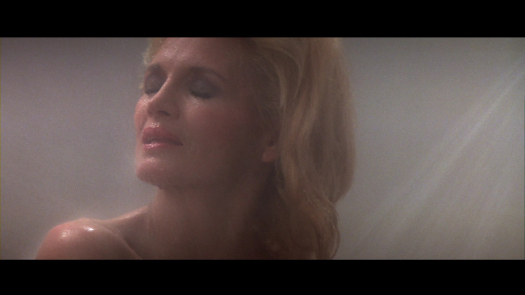
The film begins with a sizzling hot shower scene with Angie Dickinson as Kate Miller, remarried mother of  science nerd Peter  (Keith Gordon, CHRISTINE ). Kate has problems in her marriage and with her own mom,  not to mention being a nymphomaniac! She’s seeing psychiatrist Dr. Robert Elliott (Michael Caine ), but seemingly getting nowhere. We follow her to  New York’s…

View original post 597 more words

Flat Broke In The ’70s: Americathon (1979, directed by Neal Israel)


The year is 1998 and America is flat broke.  Paper currency is now worthless and, to the joy of Ron Paul supporters everywhere, all transactions are done in gold.  After the country ran out of oil, people started using skateboards and bicycles for transportation and many turned their cars into homes.  While the citizenry spends their time consuming a steady diet of sitcoms and reality television, the government tries to figure out how to pay back the loan that it took from Sam Birdwater (Chief Dan George), a Native American who made billions after buying Nike.  Birdwater wants his money back and he is prepared to foreclose on the entire country.
Newly elected President Chet Roosevelt (John Ritter) is not helping.  A combination of Jack Tripper and Jerry Brown (who was gearing up to challenge Jimmy Carter in the Democratic primaries when Americathon was first released), Chet Roosevelt is a spaced-out former governor of California who speaks in 70s self-help slogans and who is more interested in getting laid than leading the country.  Roosevelt governs out of The Western White House, a condo in California.  When an ad exec named Eric McMerkin (Peter Reigert) suggests a month-long telethon to raise the money to pay off the loan, Roosevelt leaps at the chance.

Hosted by Harvey Korman, the telethon (which is called, naturally, the Americathon) features a wide variety of acts.  There’s a ventriloquist.  Jay Leno boxes his grandmother.  Meat Loaf destroys a car.  Even Elvis Costello and Eddie Money make brief appearances.  While Chet falls in love with one of the performers, his chief-of-staff (Fred Willard) plots, with the leaders of a new Middle Eastern superstate, to sabotage the telethon.

Based on a play by the Firesign Theater, Americathon has a big, talented cast that is let down by Neal Israel’s uncertain direction and a script that is only rarely funny.  The idea of America hosting a tacky telethon to pay its debts sounds like a good SNL skit (especially if Bill Murray played the host) but the premise is too thin for a feature film.  Like Airplane! or The Naked Gun films, Americathon is a movie that tosses every joke it can against the wall to see what will stick.  If the jokes are good, like in Airplane!, that formula can lead to a comedy classic.  If the jokes are bad, not even John Ritter, Harvey Korman, and Fred Willard can make them funny.

Today, if Americathon is remembered, it’s because it supposedly predicted several future events.  Americathon does take place in a future where China is an economic superpower, Nike is a huge conglomerate, and reality game shows are very popular.  But, even with those correct predictions, Americathon is a such a film of its time that it was probably dated from the minute that it was released.  Just the sight of John Ritter in a condo permanently marks Americathon as a film of and about the ’70s.

George Carlin does score a few laughs as the narrator and Elvis Costello performs both Crawlin’ To The USA and (I Don’t Want To Go To) Chelsea.  Eagle-eyed viewers might want to keep an eye out for the tragic Playboy playmate, Dorothy Stratten, who has a brief non-speaking role.  Otherwise, Americathon is as hopeless as the country it’s trying to save.

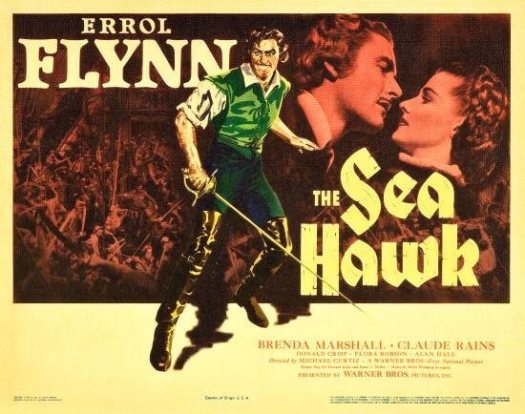
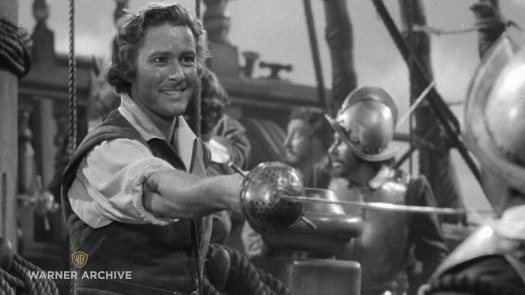
On Her Majesty’s Secret Service: Errol Flynn in THE SEA HAWK (Warner Brothers 1940)


gary loggins's avatarcracked rear viewer

Warner Brothers pulled out all the stops for their 1940 epic THE SEA HAWK. There’s dashing Errol Flynn swashbuckling his way across the Silver Screen once again, the proverbial cast of thousands, high seas action, romance, political intrigue, superb special effects, and a spirited score by Erich Wolfgang Korngold. The only thing missing that could’ve possibly made this movie better is Technicolor, but since Jack and his bros had already spent $1.7 million (equivalent to almost thirty million today) to produce it, why quibble?

Flynn is in fine form as privateer Geoffrey Thorpe, captain of the pirate ship Albatross, in service to Her Majesty Queen Elizabeth I. When they attack and plunder a Spanish ship carrying Ambassador Don Alvarez de Cordoba and his beautiful niece Maria, Captain Thorpe is reprimanded and told to lay off the Spanish. Spain, however, is building up their Armada with world conquest in mind, and…

View original post 603 more words