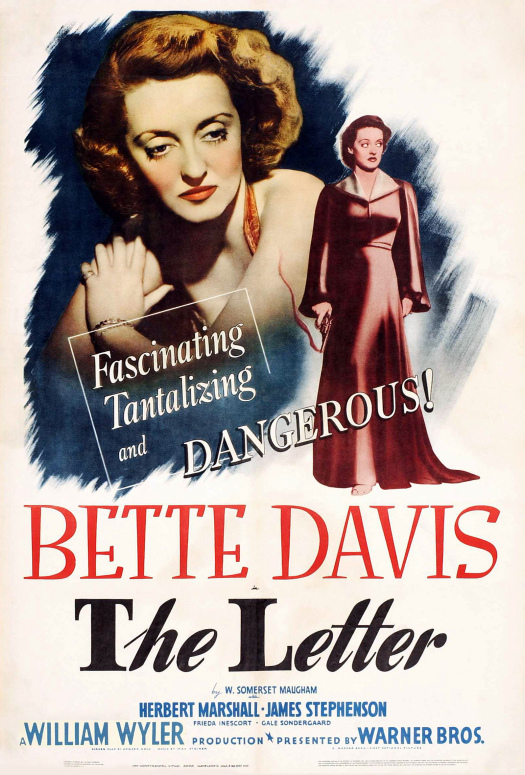
Happy Birthday Bette Davis: THE LETTER (Warner Brothers 1940)


gary loggins's avatarcracked rear viewer

Film noir buffs usually point to 1940’s STRANGER ON THE THIRD FLOOR as the first of the genre. Others cite 1941’s THE MALTESE FALCON as the film that launched the movement. But a case could certainly be made for William Wyler’s THE LETTER, released three months after STRANGER, but containing all the elements of what would be come to called film noir by future movie buffs. THE LETTER also features a bravura performance by Miss Bette Davis , who was born on this date in 1905, as one hell of a femme fatale.

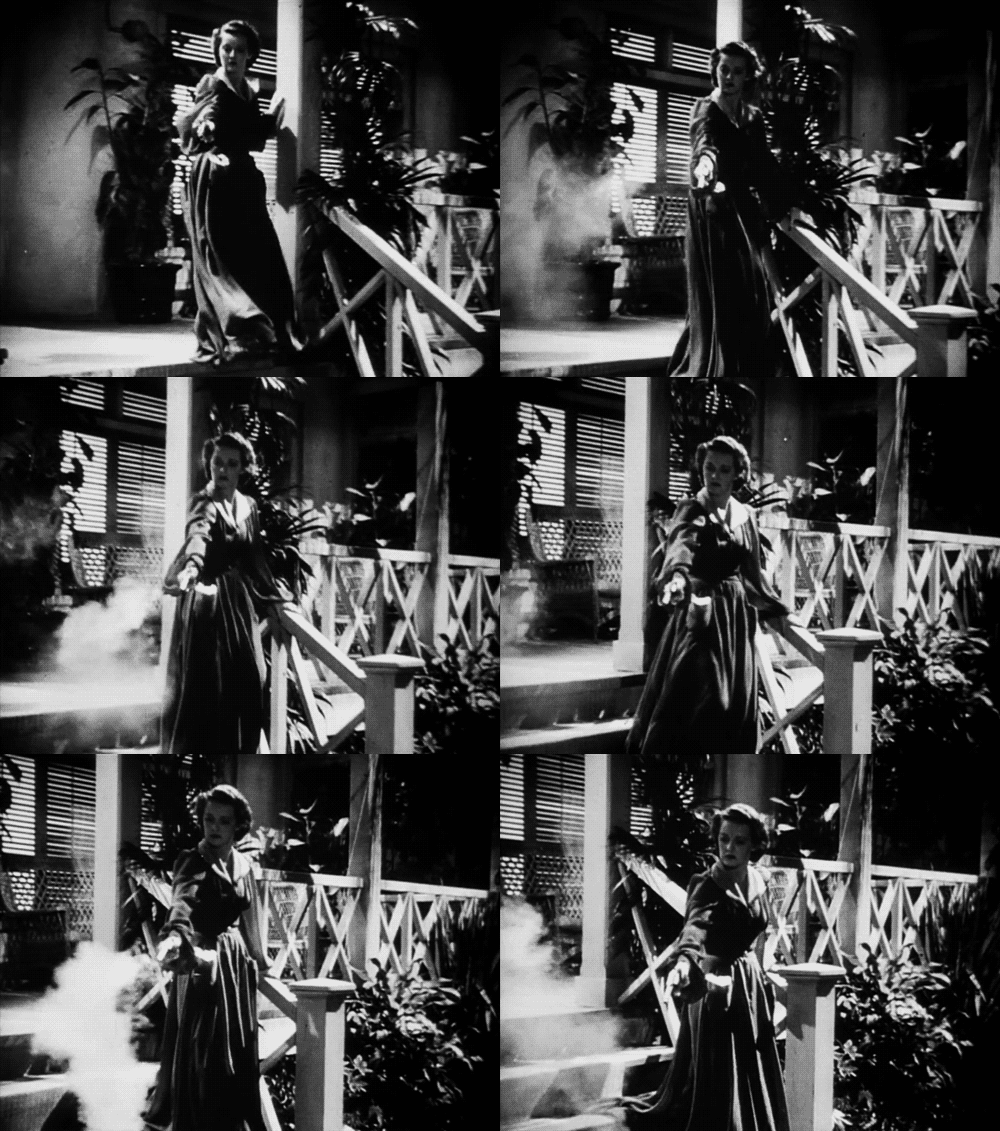
The movie starts off with a bang (literally) as Bette’s character Leslie Crosbie emerges from her Malaysian plantation home pumping six slugs into Geoff Hammond under a moonlit night sky. The native workers are sent to fetch Leslie’s husband, rubber plantation supervisor Robert, from the fields. He brings along their attorney Howard Joyce, and it’s a…

View original post 607 more words

A Dragon’s Tale: Ron Van Clief in BLACK DRAGON’S REVENGE (Madison World Films 1975)


gary loggins's avatarcracked rear viewer

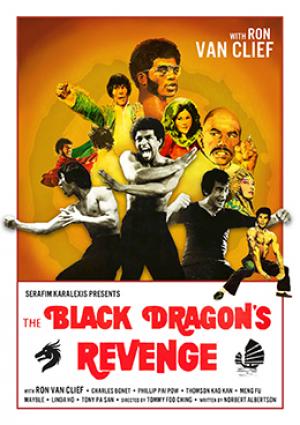
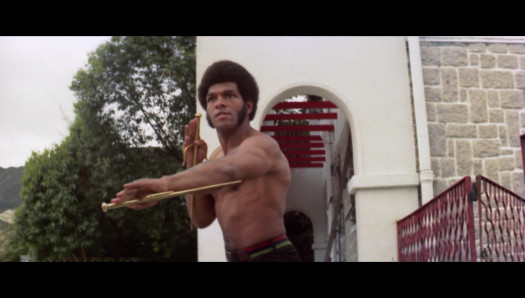
I thought I’d seen all the 70’s Kung-Fu movie greats – Bruce Lee , Jackie Chan , Jim Kelly , Sonny Chiba – but I’d never even heard of Ron Van Clief until I watched BLACK DRAGON’S REVENGE. Guess his films never played at my neighborhood Grindhouse, which is a shame, because Mr. Van Clief is one serious ass-kicker! The former Marine, Vietnam vet, NYC cop, and multiple-time martial arts champion starred in a series of action-packed films showcasing his dazzling technique, and BLACK DRAGON’S REVENGE makes for one helluva introduction.

Dig those crazy 70’s sideburns!

No, BLACK DRAGON’S REVENGE is not a sequel to Bela Lugosi’s 1942 Monogram flick BLACK DRAGONS, but a continuation of the badass character Van Clief played in his film debut, 1974’s BLACK DRAGON. Here, Van Clief is sent by an Exploitation film producer from San Francisco to Hong Kong to investigate the death of…

View original post 298 more words

Film Review: First Blood (dir by Ted Kotcheff)


First Blood was not what I was expecting.

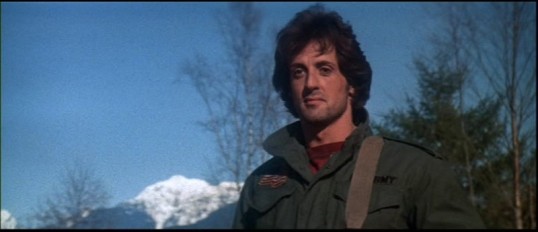
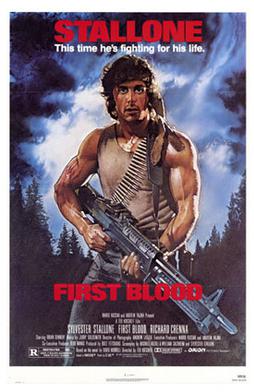
From everything that I had heard and seen over the past few years, I was under the impression that this 1982 film was the ultimate in mindless action.  I figured that the film was basically just two hours of Sylvester Stallone hiding in the woods, firing a machine gun, riding a motorcycle, and eventually blowing up a small, bigoted town.  It wasn’t a film that I was in any particular hurry to experience but I knew it was one that I would have to watch eventually, if just because of how many filmmakers have cited the film as an influence.  On Sunday night, First Blood aired on the Sundance Channel and, for the first time, I watched it all the way through.  What I discovered is that there’s a lot more to First Blood than I had been led to believe.

Now, don’t get me wrong.  It’s definitely an action film.  Stallone spends a lot of time hiding in the woods, firing a machine gun, riding a motorcycle, and blowing up a town.  Somewhat improbably, only one character actually dies over the course of the film, though quite a few end up getting maimed and wounded.  There’s even a close-up of Stallone stitching up a nasty gash on his arm, which totally made me cringe.  But, even with all the gunfire and explosions, First Blood has more on its mind than just carnage.  It’s a brooding film, one that angrily takes America to task for its treatment of its veterans and outsiders.  In its way, it’s an action film with a heart.

Sylvester Stallone plays John Rambo, a troubled drifter who is still haunted by not only his experiences in Vietnam but also by the feeling that his own country doesn’t want him around.  When Rambo, with his unkempt hair and wearing a jacket with an American flag patch prominently displayed, shows up in the town of Hope, Washington, it’s not to cause trouble.  He just wants to see an old friend, a man with whom he served.  Unfortunately, his friend has died.  The man’s bitter mother says that he got cancer from “that orange stuff they were spraying around.”  Even though the war is over, it’s still killing the only people who can possibly understand how Rambo feels about both his service and his uncertain place in American society.

As Rambo walks through the town, he’s spotted by Sheriff Will Teasle (Brian Dennehy).  Rambo just wants to get a cup of coffee and relax.  Teasle, however, views Rambo as being a stranger and, therefore, a possible threat to his town.  Teasle wants Rambo to leave.  Rambo wants to know why, after everything that he’s sacrificed for his country, he’s being told that he needs to get a haircut.  From this simple conflict — a misunderstanding really, as Teasle doesn’t know that Rambo is mourning the death of his friend and instead interprets Rambo’s sullen silence as being a threat — an undeclared and unwinnable war soon breaks out.

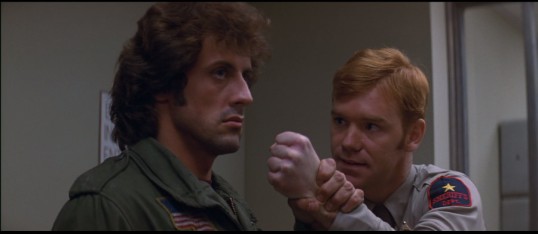
Technically, Teasle is the film’s villain.  He’s the one who arrests Rambo for vagrancy.  It’s his abusive deputies who cause Rambo to have the flashbacks that lead to him breaking out of jail.  It’s Teasle’s arrogance that leads to him ignore the warnings of Rambo’s former commanding office, Sam Trautman (Richard Crenna).  And yet, Teasle himself is never portrayed as being an evil man.  Instead, Dennehy plays Teasle as being well-meaning but stubborn.  It’s been written that the most compelling villains are the ones who don’t realize that they’re the villain and that’s certainly true in Teasle’s case.  Teasle’s job is to protect the town and its citizens and that’s what he’s determined to do.  If his actions become extreme, it has less to do with any deliberate cruelty on his part and everything to do with the fact that, towards the end of the film, he finally figures out that he’s in way over his head.

Once Rambo has disappeared into the woods and maimed (but not killed) all of Teasle’s deputies, he only has one request and that’s to be left alone.  He simply wants to stay in the woods, hunting for food and free from a society that has nothing to offer him during peacetime.  What’s interesting is that, at the start of the film, everyone wants Rambo to just disappear.  He’s a reminder of not just the turmoil of the Vietnam era but also the fact that Vietnam was the first war that America lost.  Rambo’s presence is viewed as being like an ugly scar that you wish would just fade away.  However, once Rambo does actually vanish, people won’t stop looking for him.  As opposed to the later films in the franchise, the Rambo of First Blood doesn’t want to fight anyone.  Rambo just wants to be left alone in solitude and considering the way that he’s treated by the town of Hope, it’s hard to blame him.

And so, you end up sympathizing with this John Rambo.  Even thought he’s blowing up a town during the Christmas season and there’s a few scenes where he’s kind of scary, it’s impossible not to feel that he has a right to his anger.  You find yourself wishing that the Sheriff had just left him alone or that maybe Rambo had just taken Teasle’s earlier advice and left town.  Because, as you watch the film, you know that 1) there was no good reason why any of this had to happen and 2) things probably aren’t going to end well for either John Rambo or Will Teasle.

First Blood was based on a novel that was first published in 1972.  The film spent nearly a decade in development, as various directors, screenwriters, and actors circled around the project.  At one point, First Blood was envisioned as an anti-war film that would have been directed by Sidney Lumet and which would have featured a bearded Al Pacino lurking through the wilderness and killing not only Teasle but also several deputies and national guardsmen.  When Stallone agreed to star in the film, he also rewrote the script, transforming Rambo into a sympathetic outsider who goes out of his way not to kill anyone.  The end result was an underdog story that audiences could embrace.

Seen today, it’s interesting to see how many familiar faces pop up in First Blood.  For instance, a young and really goofy-looking David Caruso pops up and totally overacts in the role of the only sympathetic deputy.  A less sympathetic deputy is played by Chris Mulkey, who would go on to play other unsympathetic characters in a huge number of movies and TV shows.  Interestingly enough, the most sadistic of the deputies was played by Jack Starrett, who directed a several classic B-moves in the 70s.  (One of Starrett’s films was The Losers, in which a bunch of bikers were sent to Vietnam to rescue an American diplomat.)

As opposed to many of the films that it subsequently inspired, First Blood holds up surprisingly well.  It may be violent but it’s violence with a heart.

The TSL’s Grindhouse: Red Sonja (dir by Richard Fleischer)


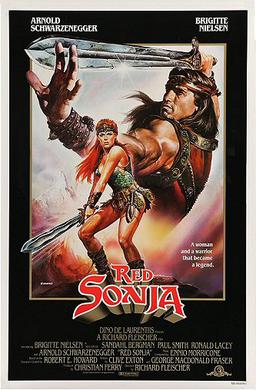
The 1985 film, Red Sonja, invites us to take a journey to a forgotten age, a time of a mythical kingdoms, evil sorcery, epic sword fights, and annoying little child kings who spent a lot of time shouting.  It’s a time of wonder, danger, heroism, and, of course, Arnold Schwarzenegger.

Reportedly, the once and future governor of California has frequently named Red Sonja as being the worst film in which he ever appeared.  When you consider some of the other films that have featured Gov. Schwarzenegger, that’s indeed a bold statement.  In Red Sonja, Schwarzenegger plays Lord Kalidor.  Interestingly enough, Lord Kalidor is absent for the majority of the film.  He shows up briefly at the beginning of the film and then he vanishes for quite a bit of Red Sonja‘s 89-minute running time.  Whenever Schwarzenegger does show up, he wears the smirk of a man who knows that he’s going to get paid a lot of money for doing very little actual work.

The majority of the film focuses on Sonja (Brigitte Nielsen), a warrior who lives in one of those vanished ages, perhaps after the War of the Rings but before the sinking of Atlantis.  When we first see her, she’s being spoken to by what appears to be a puff of smoke, which is apparently meant to be some sort of warrior goddess.  The puff of smoke fills tells Sonja about everything that happened to her before the start of the movie, though we never do learn why Sonja needs to be told her own backstory.  After rejecting the sexual advances of the evil Queen Gedren (Sandahl Begman), Sonja was forced to watch as her parents and brother were murdered and then she was raped and left for the dead by the Gedren’s soldiers.  The Goddess promises to make Sonja into a superior warrior, on the condition that Sonja agree to never have sex with a man unless that man can first beat her in fair combat.  Sonja agrees and is sent off to get trained by the Grand Master.  It’s kinda like Kill Bill, if Bill was a puff of smoke.

Jump forward to …. well, I’m not sure how many years pass.  To be honest, it’s next to impossible to really discern any sort of coherent logic to the film’s narrative progression so let’s just give up on that.  What’s important is that there’s this temple and, inside the temple, there’s a glowing green talisman.  Apparently, the talisman created the world but now it needs to be carefully watched over before being destroyed.  Only women are allowed to handle the talisman (Yay!) but they’re not allowed to destroy it unless directed by a man.  (Booooo!)  The temple priestesses are waiting for Lord Kalidor to arrive so that they can get rid of the talisman.  However, Queen Gedren shows up first.  Not only does she steal the talisman but she kills the priestesses as well.

One of the priestesses was Varna (Janet Agren, who you might recognize from Lucio Fulci’s City of the Living Dead).  Varna just happens to be the sister of Sonja.  (Sonja is now known as Red Sonja, because she had red hair.  From now on, I want to be known as Red Lisa.)  Now, Sonja has yet another reason to want to kill Gedren!  Rejecting Kalidor’s help, Sonja heads off for revenge.  Along the way, she meets an annoying child king named Tarn (Ernie Reyes, Jr.), who is upset that Gedren previously destroyed his kingdom.  Despite hating him, Sonja allows Tarn and his guardian, Falkon (Paul L. Smith), to tag along with her.  Despite not being an official member of the revenge party, Kalidor decides to follow after them because he wants to beat Red Sonja in fair combat, if you get what I mean.

Red Sonja is a spectacularly silly film.  The dialogue is stilted.  Even by the standards of the 1980s ,the special effects are poorly executed.  This the type of film where the evil Queen nearly destroys the world not because she has any sort of grand scheme but instead, just because she’s evil and that’s what evil people do.  Brigitte Nielsen delivers her lines with a forced solemnity while Schwarzenegger, Bergman, and the great Paul L. Smith seem to be struggling not to start laughing.

And yet, there’s a sneaky charm to be found in all of the silliness.  For instance, when Sonja does finally reach the queen’s castle, she has to cross a bridge that appears to basically be the skeleton of giant rhinoceros.  No none in the film seems to be surprised to come across a skeleton a giant rhinoceros and, to be honest, there’s no reason for it to be there.  It’s just there and it’s so wonderfully out-of-place that it becomes rather fascinating.  Add to that, while the portrayal of the evil lesbian queen is problematic in all sorts of ways, this is a film about a strong female warrior who doesn’t need a man to rescue her and that was probably even more rare in 1985 than it is today!

Watching Red Sonja, you get the feeling that nobody involved in the film took it all that seriously and that perhaps the best way to handle the movie is to just sit back and have a laugh.  It’s dumb, it’s campy, it often makes no sense but, at the same time, it’s still a lot easier to follow than Game of Thrones.   Like many bad films, it’s only bad if you watch it alone.  Watch it with a group of your snarkiest friends and you’ll have a totally different experience.

A Tasty Spaghetti Ragu: A REASON TO LIVE, A REASON TO DIE (MGM 1974)


gary loggins's avatarcracked rear viewer

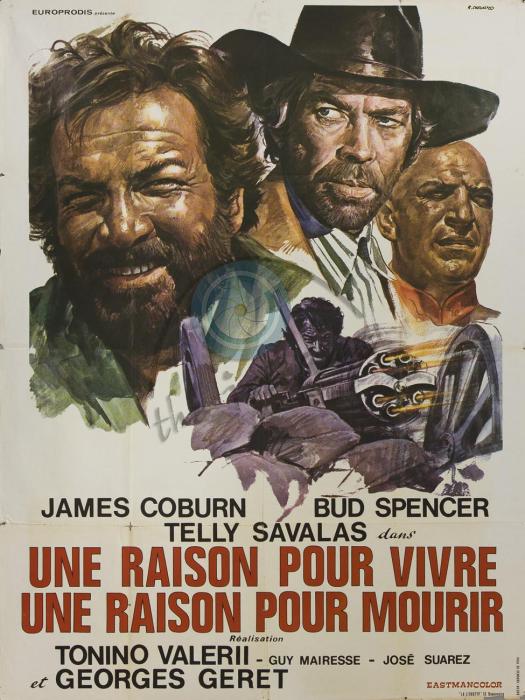
James Coburn, at the height of his career, moved from American movies to international productions with his trademark elegance and ease. He worked for the Maestro of Spaghetti Westerns Sergio Leone in 1972’s DUCK, YOU SUCKER , then appeared for Leone’s former Assistant Director Tonino Valerii in A REASON TO LIVE, A REASON TO DIE, a revenge tale disguised as a caper film that costars Telly Savalas and Spaghetti icon Bud Spencer. The version I viewed was the truncated American cut, missing about a half hour of footage and released stateside in 1974. If the complete version is as good as this one, I need to hunt it down and see it!

The Civil War-set drama finds Coburn as Col. Pembroke, recently escaped from a Confederate prison after surrendering Fort Holman without a fight to Rebel Major Ward (Savalas) and his forces. Fort Holman is a crucial piece of real…

View original post 415 more words

The Great American Pastime: IT HAPPENED IN FLATBUSH (20th Century-Fox 1942)


gary loggins's avatarcracked rear viewer

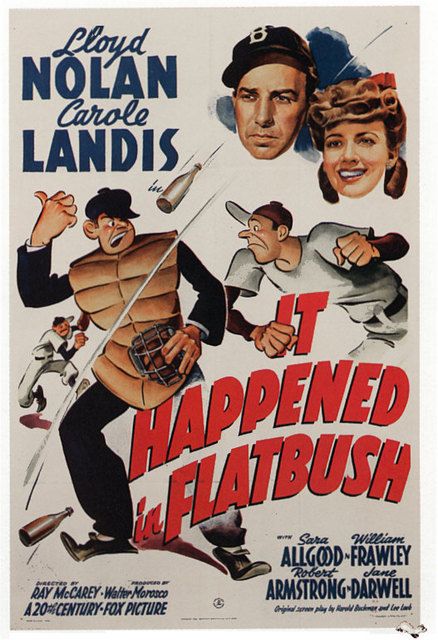
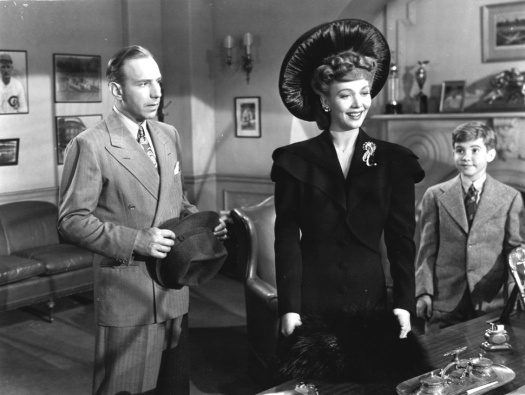
Major League Baseball’s Opening Day has finally arrived! It’s a tradition as American as Apple Pie, and so is IT HAPPENED IN FLATBUSH, a baseball movie about a lousy team in Brooklyn whose new manager takes them to the top of the heap. The team’s not explicitly called the Dodgers and the manager’s not named Leo Durocher, but their improbable 1941 pennant winning season is exactly what inspired this charmingly nostalgic little movie.

When Brooklyn’s manager quits the team, dowager team owner Mrs. McAvoy seeks out ex-player Frank Maguire, who seven years earlier was run out of town when an unfortunate error cost the team the pennant. She finds him running a club out in the sticks, and convinces him to come back to the Big Leagues. He does, bringing along his faithful bat boy/sidekick ‘Squint’, and just before the season’s about to begin, Mrs. McAvoy abruptly dies. Her family…

View original post 501 more words

Crashing Out: Humphrey Bogart in HIGH SIERRA (Warner Brothers 1941)


gary loggins's avatarcracked rear viewer

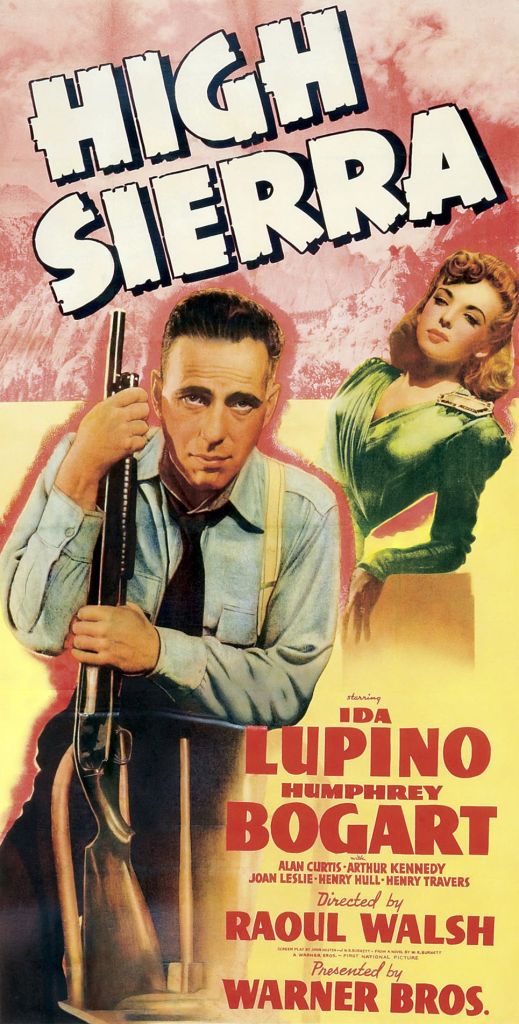
Humphrey Bogart played yet another gangster in Raoul Walsh’s HIGH SIERRA, but this time things were different. Bogie had spent the past five years at Warner Brothers mired in supporting gangster parts and leads in ‘B’ movies, but when he read John Huston and W.R. Burnett’s screenplay, he knew this role would put him over the top. James Cagney and Paul Muni both turned it down, and George Raft was penciled in to star, until Bogie put a bug in his ear and Raft also refused it. Bogart lobbied hard for the role of Roy Earle, and his instincts were right: not only did HIGH SIERRA make him a star at last, it led to him getting the lead in his next picture THE MALTESE FALCON , the directorial debut of his good friend Huston.

Roy Earle is an old-school criminal pardoned from an Indiana prison thanks to the machinations…

View original post 698 more words

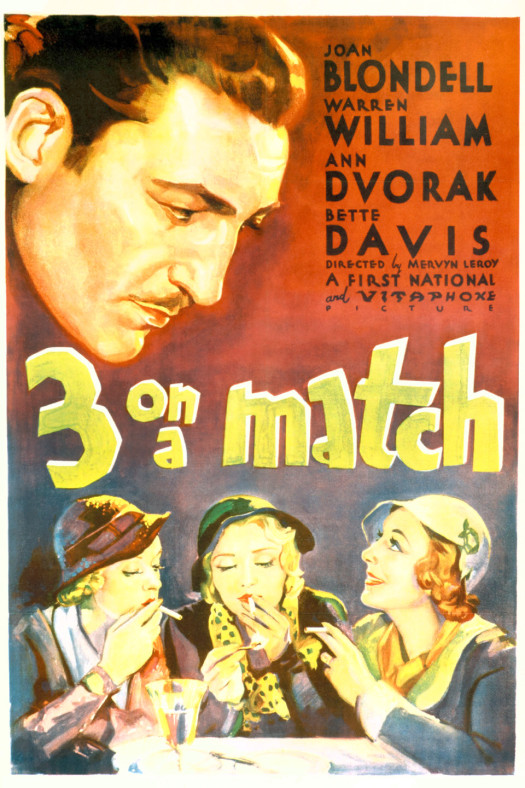
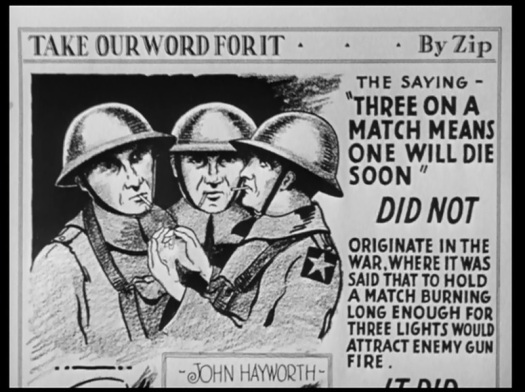
Pre Code Confidential #26: THREE ON A MATCH (Warner Brothers 1932)


gary loggins's avatarcracked rear viewer


Mervyn LeRoy is usually talked about today as a producer and director of classy, prestige pictures, but he first made his mark in the down-and-dirty world of Pre-Code films. LeRoy ushered in the gangster cycle with LITTLE CAESAR, making a star out of Edward G. Robinson, then followed up with Eddie G in the grimy tabloid drama FIVE STAR FINAL . I AM A FUGITVE FROM A CHAIN GANG tackled brutal penal conditions in the South, GOLD DIGGERS OF 1933 featured half-naked showgirls and the Depression Era anthem “Remember My Forgotten Man”, and HEAT LIGHTNING was banned by the Catholic Legion of Decency! LeRoy’s style in these early films was pedal-to-the-metal excitement, and THREE ON A MATCH is an outstanding example.

The film follows three young ladies from their schoolgirl days to adulthood: there’s wild child Mary, studious Ruth, and ‘most popular’ Vivien. I loved the way writer Lucien Hubbard’s…

View original post 554 more words

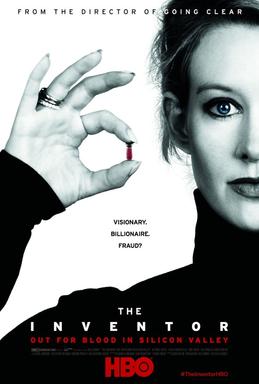
Film Review: The Inventor: Out For Blood In Silicon Valley (dir by Alex Gibney)


Oh my God, this was such a creepy documentary!

The Inventor tells the story of the rise and fall of Elizabeth Holmes, who, at one point, Forbes named the wealthiest self-made female billionaire in America, and who is currently facing criminal charges of defrauding not only her investors but also a countless number of doctors and patients.  After dropping out of college, Elizabeth Holmes founded Theranos, a Silicon Valley-based company that claimed it had devised a method that would revolutionize how blood was tested and which would lead to people leading longer and healthier lives.  (“No one will have to say an early goodbye,” as Elizabeth put it.)  It all had to do with a blood-testing device called the Edison, a device that Holmes designed, patented, and made a fortune by licensing.  That the Edison didn’t actually do what Holmes claimed that it did put lives at risk and ultimately led to her downfall.

So, what makes The Inventor such a creepy documentary?  A lot of it has to do with the fact that Elizabeth Holmes herself comes across as being so creepy.  With her endless supply of black turtlenecks and her rather monotonous (not to mention notably deep) voice, she comes across as being a cult leader in the making.  When we see archival footage of her being interviewed or of her giving a speech to her worshipful employees, she has the type of demented gleam in her eye that one would normally associate with a particularly enthusiastic Bond villain.  When her former employees talk about her, they not only mention her drive and her dedication but they also mention the fact that she rarely blinked.  In fact, she so rarely blinked that other people also felt as if they shouldn’t blink in her presence.  Theranos was a company full of people with thousand-yard stares.

Despite the fact that, as many people point out, Elizabeth Holmes had no experience in the medical field and that the majority of her lies were easily exposed, she still had little trouble getting wealthy and powerful men to invest in her company.  Among those who invested in Theranos and sat on its board of directors: two former secretaries of state, one former and one future secretary of defense, and several prominent businessmen.  Though the documentary doesn’t explore this angle as perhaps it should have, it’s interesting to note that the majority of Holmes’s backers and defenders were 1) elderly and 2) male.  The one female investor that Holmes tried to bring in easily saw through Holmes’s lies.  On the other hand, former Secretaries of State Henry Kissinger and George Shultz became enthusiastic backers of Holmes and her “vision.”  Meanwhile, attorney David Boies — who was best-known for being Al Gore’s personal attorney and who later was hired to head up Harvey Weinstein’s defense team — is on hand to intimidate any Theranos employees who might be on the verge of turning into a whistleblower.  Elizabeth Holmes may currently be an indicted pariah but, before that, she spent many years as a proud member of the American establishment.

In fact, several other members of the Establishment makes cameo appearances in The Inventor.  At one point, we see Holmes being interviewed by Bill Clinton.  At another point, Joe Biden stops by Theranos and praises the company.  We see pictures of Elizabeth Holmes in the Oval Office, visiting with Barack Obama.  Holmes is put on the covers of magazines.  Numerous publications declare her to be the next Steve Jobs.  She’s held up as the future of not just blood testing but also the future of business.  It’s only after one reporter has the courage to actually investigate her claims and two employees risk their futures to tell the truth about what they saw at Theranos that Elizabeth Holmes is revealed to be a fabulist and a con artist.  Was she ever sincere in her desire to make the world a better place or was that just another part of her carefully constructed persona?  The Inventor is full of people still struggling to answer that question for themselves.

The Inventor was directed by Alex Gibney.  Gibney previous directed the Going Clear, an expose of Scientology.  Watching The Inventor, it’s hard not to make comparisons between Scientology and the cults of Silicon Valley.  Watching Elizabeth Holmes give a speech to her employees is like watching that infamous video of Tom Cruise pay homage to L. Ron Hubbard.  And just as Scientology takes advantage of those with a need to believe in something bigger than them, Elizabeth Holmes did the same thing.  Everyone wanted the promises of Homes, Theranos, and the Edison machine to be true.  They wanted it to be true so much that they became blind to the reality that was right in front of them.

The Inventor is a fascinating documentary about power, wealth, fraud, and the prison of belief.  It can currently be seen on HBO.


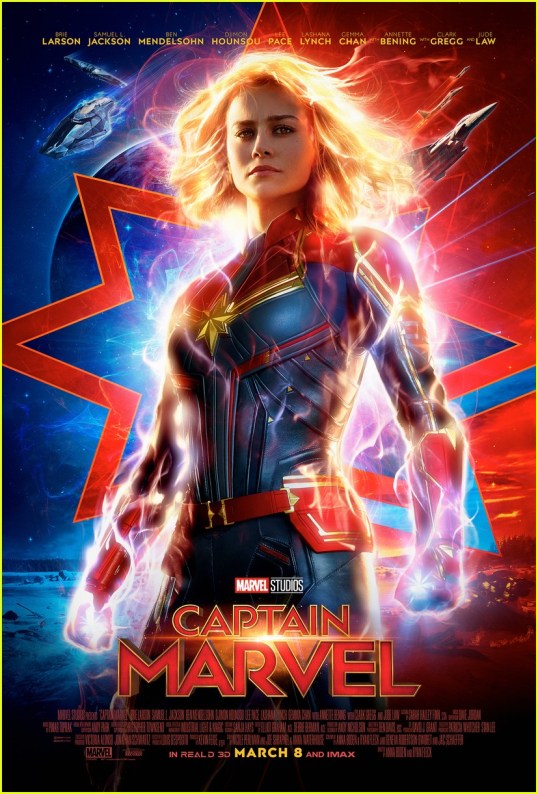
Film Review: Captain Marvel (dir by Anna Bolden and Ryan Fleck)


Captain Marvel was …. well, it was okay.

I know that’s potentially a controversial opinion.  Since the movie was released last week, I’ve seen it described as being the greatest comic book movie ever made.  I’ve also seen it described as being, if not the worst film of all time, than certainly the worst chapter in the Marvel Cinematic Universe.  Really, it depends on who you ask and how they voted in 2016.  Myself, I would argue that both sides are incorrect.  Captain Marvel is neither the greatest nor the worst movie ever made.  Instead …. it’s okay.  It’s a middle of the road MCU film, one that has more in common with the first Thor, Ant-Man, and The Incredible Hulk than with Black Panther or Doctor Strange.  It has its moments but there’s a reason why everyone’s favorite character is a cat who only has about 15 minutes of screen time.

Brie Larson plays Vers, who is an elite warrior for the Kree Empire.  The Kree are an alien race.  We know they’re aliens because they have blue blood and their planet looks like a more cheerful version of Blade Runner.  The Kree are at war with another group of aliens, the Skrulls.  The Skrulls are green shape-shifters and, for some reason, they have Australian accents.

Anyways, Vers can’t remember anything about her past but she’s haunted by nightmares that suggest that she might not be a Kree at all.  Instead, she might be an Earthling!  Vers gets a chance to investigate that possibility when, while escaping the forces of the Skrull general Talos (Ben Mendelsohn), Vers plummets to Earth and ends up crashing into a Blockbuster Video.  Working with a youngish Nick Fury (Samuel L. Jackson), Vers sets out to discover the truth about her past.
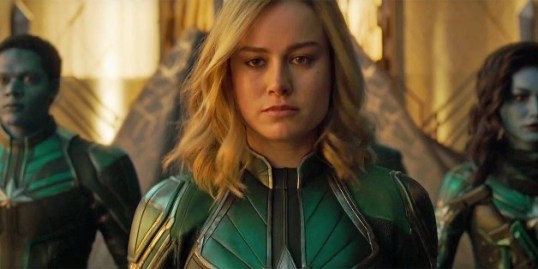
Ever since this film was first announced, Brie Larson has been the target of a lot of unfair criticism.  A lot of it has centered around the fact that Larson rarely smiles in the film but you know what?  Brie Larson’s resting bitch face is the most empowering thing about Captain Marvel.  Vers is a warrior and she’s on a mission.  She has no reason to smile and giggle and jump around like some sort of manic pixie dream girl.  When Vers responded to a man telling her to smile by stealing his motorcycle, I wanted to jump up and cheer.  I mean, hell yeah!  Not only did she refuse to be pushed around but she also got a sweet ride out of it!  Seriously, the next guy who tells me that I need to smile more is losing his car.

Actually, regardless of what some people on twitter seem to believe, Vers does smile in the film.  She smiles when she’s talking to her best friend, Maria Rambeau (Lashanna Lynch).  She smiles when she’s talking to Maria’s daughter, Monica (Akira Akbar).  She smiles when there aren’t any men — or Skrulls — around, demanding all of the attention.  Both Maria and Vers are smiling because, finally, they can both be themselves.  It’s a scene that, like Vers stealing that motorcycle, feels far more honest and empowering than some of the film’s other more obvious and on-the-nose girl power moments.  Maria is a rather underused character, which is a shame because the brief scenes between Maria and Vers are some of the best scenes in the film.

That said, I still had mixed feelings about Brie Larson’s overall performance.  As good as Larson has been in so many other films, she often comes across as rather wooden and awkward here.  Larson delivers almost all of her lines in a rather flat monotone and she’s not helped by some painfully clunky dialogue.  Larson’s awkwardness is painfully obvious whenever she shares a scene with more experienced co-stars like Jackson, Mendelsohn, Jude Law, or Annette Bening.  Bening practically steals the entire film, to the extent that I would have preferred the film has been about her rather than Vers.

(Again, it’s easy to compare this film to the first Thor.  Just as it took the MCU a while to figure out what to do with Thor, one gets the feeling that they’re still not quite sure who Captain Marvel is supposed to be.)

The film’s main weakness is that, when compared to the more recent MCU films. there’s no sense of wonder to Captain Marvel.  Compare the blandness of the Kree homeworld to the vivid worlds of Guardians of the Galaxy or Thor: Ragnarok.  Ben Mendelsohn brings a little bit of depth to General Talos but, beyond the shape-shifting, there’s not much to the Skrulls, either.  When Captain Marvel flies into space, there’s nothing transcendent about the moment.  It’s actually kind of boring.  Whereas previous MCU films made space feel alive, the universe feels flat in Captain Marvel.

To cite just one example, one of the film’s biggest battle scenes is over the possession of a lunchbox.  The villains think that there’s something important in the lunchbox.  However, what they don’t know is that Vers has already emptied the lunchbox and is just using it to distract them.  For some reason, directors Ryan Fleck and Anna Bolden show Captain Marvel emptying the lunchbox before the big battle.  As a result, there’s no stakes to the battle and, from the start, we know that it doesn’t matter who wins.  When, after a lengthy fight, the lunchbox is revealed to be empty, Brie Larson mutters a weak one liner that has no impact because there was never any suspense to begin with.  This is pretty basic stuff and it’s somewhat shocking that this film manages to screw it up.

Despite those flaws, Captain Marvel is occasionally diverting.  Samuel L. Jackson brings flair to even the lamest of lines and Clark Gregg has a welcome cameo as Phil Coulson.  Annette Bening plays two different roles and she kicks major ass in both of them.  (One of her characters is named Intelligence, which leads to this hilariously awkward exchange of dialogue between Larson and Bening: “Vers.”  “Intelligence.”)  Despite being buried under a ton of makeup and prosthetics, Ben Mendelsohn does a good job and Jude Law is amusingly arrogant as Vers’s mentor.  Hopefully, Lashawn Lynch will get a bigger role in a future MCU film.

And then there’s the cat.

The cat is named Goose and …, well, look, I won’t spoil it.  Let’s just say that he’s a very special cat and he steals every scene.  In this film, we discover that Nick Fury loves cats, as well he should!

Anyway, Captain Marvel is okay.  There’s a few good scenes and there’s a few clunky ones and finally, there’s Goose and that stolen motorcycle.  One gets the feeling that the most remembered scenes will probably be the ones that were inserted during the end credits.  Captain Marvel will return in Avengers: Endgame and I hope that she doesn’t smile once.