Cowboys & Aliens (Super Bowl TV Spot)


Super Bowl XLV hasn’t even started and the very first summer blockbuster tv spot has already been released by its producers. While it still hasn’t premiered on tv it has already aired on the internet as Jon Favreau and crew continues to build up the hype the film got from its panel at 2010’s San Diego Comic-Con.

The tv spot that will air during the game is only half a minute long, but during that small time frame we see a lot more action with clear glimpses of the alien machines/spacecrafts that will be doing some abducting and probing in the Old West.

If this film end ups being as fun as the original Men In Black then I’m there. But part of me fears that it could turn out to be something like Wild, Wild West which would definitely make it a major fail. Here’s to hoping it’s more like the former and not the latter when it comes out on July 29, 2011.

Hottie of the Day: Jessica Canizales


JESSICA CANIZALES


It is Super Bowl Sunday and while most of the nation and also others around the world will be watching this event as if their life depended on it for some it’s just another Sunday. These people, some of them at least would rather be watching the Lingerie Bowl. In honor of the latest Lingerie Bowl we have a new “hottie of the day”. The hottie chosen is the lovely model and Playboy Playmate Jessica Canizales.

Ms. Canizales was born in Brazil, but spent most of her childhood growing up in Panama and Idaho as her family moved several times. Once she was 18 she moved to Miami where she began to go to school to become an interior designer. While going to school she worked part-time at the local Hooters. It would be while she was employed at Hooters that she began modeling for the Hooters calendar.

It sounds cliche but she was discovered by a Playboy scout while walking down South Beach and asked her if she was interested in posing for the magazine. Her decision to take the offer would payoff for Jessica as she became a Playmate for the Spanish version of Playboy. She has since appeared many times on special editions of the magazine and has begun working for Playboy TV.

Jessica has now begun to branch out and started her own official website where she interacts with her fans.

Official Website: Planet Jessie

Songs of the Day: Anvil of Crom & Riddle of Steel/Riders of Doom (by Basil Poledouris)


For the latest song of the day I couldn’t make up my mind on which of the two I had picked I should post so I decided to just treat the two as a pair thus the latest “song of the day” is, for today, “songs of the day”. Once you hear what I had chosen you will realize why they had to be together.

The latest song of the day is from film score composer Basil Poledouris and comes from his best work and what many consider as one of the best film scores ever put up on the big-screen. They are “Anvil of Crom” and “Riddle of Steel/Riders of Doom” from Poledouris’ score for Conan the Barbarian. These two pieces, especially from the Varese Sarabande release of the soundtrack, form the very powerful introduction to the Hyperborean world that Conan inhabits.

“Anvil of Crom” starts off the film and does it with such a bombastic combination of timpani drums setting the rhythm with French horns (a massive 24 in total) keeping up to speed with some very strong brass work. This intro to the film has become synonymous with the film and has become famous for being used by other filmmakers to score trailer for their own films. While the piece is just under 3 minutes in length the power of the sound Poledouris creates helps set the tone for the rest of the film and what audiences should expect.

Following up “Anvil of Crom” is what will turn out to be the motifs for the two main characters in the film. “Riddle of Steel/Riders of Doom” comes in in a peaceful manner which builds up to become Conan’s theme. This is the riddle of steel of the tracks title. But this doesn’t last long as “Riddle of Steel” is suddenly joined by the more orchestral and doom-laden sound of “Riders of Doom” which will forever become the theme for Conan’s nemesis, Thulsa Doom. This second track bears a significant resemblance to Carl Orff’s own orchestral masterpieces, “Carmina Burana”. While there’s still a few people out there who thinks that Poledouris cheated somewhat in using Orff’s work as too much of a guide I would have to disagree. Poledouris might have used “Carmani Burana” as a template but the overall execution and final product stands on its own and have become one of the most iconic piece of film music ever heard.

When listened to back-to-back it would come to no suprise why the two had to be picked together. “Anvil of Crom” and “Riddle of Steel/Riders of Doom” belong together and should be listened together. Everytime I listen to it I instantly imagine times of high adventure and lands long-forgotten by the march of time.

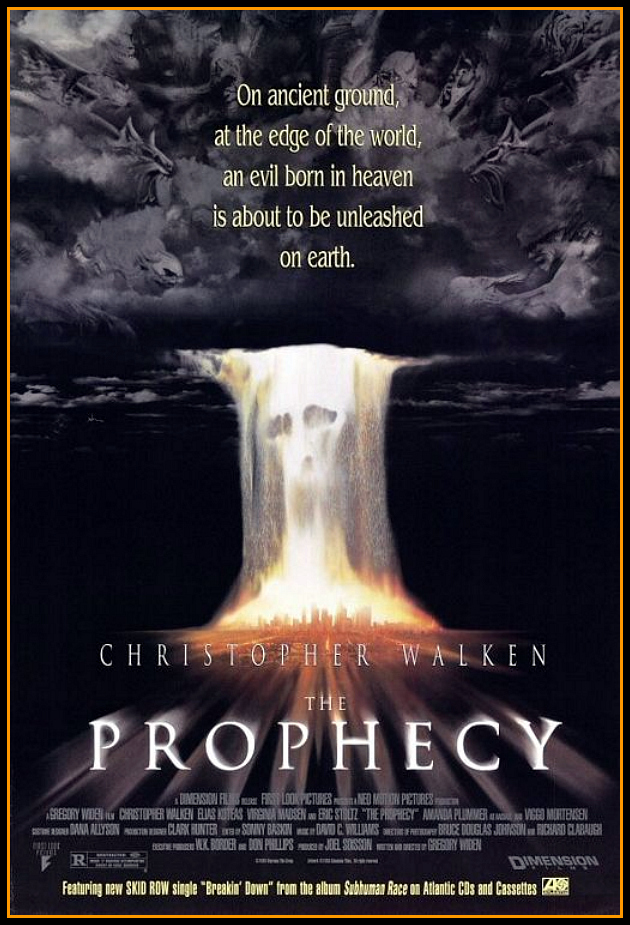
Film Review: The Prophecy (dir. by Gregory Widen)


I first found out about this little cult film starring the very awesome Christopher Walken around 1993 or so when I was at the local Waldenbooks (yes there used to be bookstores not named Barnes & Noble or Borders back in the day) looking at the latest issue of Fangoria. Inside the magazine they were doing a brief feature on an upcoming horror film tentatively called God’s Army. All I saw was that it was to star Christopher Walken and it had gore and angels in it. That alone peaked my interest and I was looking forward to seeing it in the theaters. Almost two years passed and nothing about it was ever heard again until I visited the video rental place near my house and saw a VHS tape (yeah, those big videocassette thingies) with the title of The Prophecy and starring Christopher Walken.

This was the film I was so hyped to seeing in the theaters. The title had changed from it’s earlier (and much cooler) one of God’s Army. It would seem that it’s film distributor had little to no faith in the box-office potential of the film and just delayed it’s release to the point that when it did come out no one knew about it barely anyone saw it. It was a real damn shame since filmmaker Gregory Widen made such a good film that was able to mash-up horror, angels and a detective story all in one without creating a mess of things.

The Prophecy was about the war in heaven we were never taught about in Sunday school. We all know about the war in heaven where Lucifer and the rebel angels who followed him tried to overthrow God. That didn’t go over so well for Lucifer and he and his band of fallen angels were cast out into Hell by God and his right-hand man the Archangel Michael. This film talks about the second war in heaven soon thereafter which no one outside those who wrote little-known apocryphal texts about it (and being apocryphal they never were included in the Bible). This war now had a new group of angels led by the Archangel Gabriel rebelling against God for choosing humans (talking monkeys as these new rebels called them) above all living creatures including the angels themselves for God’s love. This war was now in a state of stalemate after countless millenia, but a prophecy about a soul so dark and evil was to be the tipping point for either side. This particular soul was to be found on Earth and whoever acquires it would break the stalemate and finally bring this second war to an end.

With this in mind we have Walken as the Archangel Gabriel coming down to Earth to look for this soul so he can finally win the war for his side (which also means the end of mankind). It’s the angel Simon (played by Eric Stoltz) who comes down to stop him from getting this soul or, at the very least, hide it from Gabriel. With these two factions of angels vying to acquire this soul we have a Detective Thomas Daggett smack in the middle of the case investigating all the weird happenings and deaths surrounding the battle between these two factions. The dead bodies of angels begin to appear on morgue slabs looking like eyeless, hermaphroditic specimens and angelic script found in crime scenes brings Daggett back to his time studying to be a priest before images of angels warring amongst themselves breaks him down and he quits the seminary to become a cop instead.

It would come down to these three factions racing against time to acquire this dark soul.

The film is not as gory as it’s feature in Fangoria made it out to be, but it is quite violent and bloody that I understand why it got the horror label attached to it. It’s more a dark fantasy thriller more than horror. It’s rare in today’s film that we see angels portrayed as the bloodthirsty beings that the really are. The film even points out this oft-ignored detail of God’s messengers. Angels are always the ones God sends to punish or send a very serious message to his chosen beings that is Man. The Prophecy shows this aspect of angels in full light and how their attitudes about humanity might lead some of them to hate God for raising Man above even them.

Christopher Walker does a great job conveying Gabriel’s hate and contempt for humans. His Gabriel is like one of those pundits always on tv (both liberal and consevative) who are so into their sides’ message that they never see the other side as anything but the enemy. One could almost say that Walken’s Gabriel is like then apocalypse-hungry version of Glenn Beck and Keith Olbermann in one body. This is not to say that Walken goes over-the-top with his performance. In fact, he’s quite subdued in how he uses those many tics and voice mannerisms a whole cottage industry has grown around in.

Walken’s portrayal of Gabriel infuses what could’ve become a one-note villain with lots of layers and complexities that the rest of the cast were able to play off from. His character would be terrifying one moment then smoothly switch over to being funny and charming then back to terror. It’s due to his great performance that the other cast members like Stoltz as the weary, loyal angel Simon and Koteas as the fallen religious cop Daggett were able to bring their own performance to another level. This is quite a feat since the dialogue in the film was a mixed bag of horror cliches and interesting Biblical-speak about secret wars, apocryphal books and prophecies. The film even has a nice appearance of the first fallen angel himself and none other than Viggo Mortensen plays Lucifer.

The Prophecy does have a feeling that it was always one misstep away from becoming an awful film. This had happened with 2010’s Legion and did that film about angels and the apocalypse turn out to be a huge steaming pile of shit-turd. But while Dimension Film saw the film fall over on the side of bad for myself and those who have come to admire and love this cult classic the film stayed balance between good and bad. Widen’s film never went over to the side of becoming a truly great film, but it also never fell on the side that Legion ended up on. What Prophecy ended up becoming was a film that was almost grindhouse in nature, but even then it still looked too good with too many good performances to be given that label. The fact that it contains one of Christopher Walken’s best performances speaks well of a film that many critics during it’s early days had dismissed as just another bad horror film.

In the end, this film became just one of the many little-gems that got lost in film studio money politics. I definitely would recommend this cult film to people who haven’t seen it, but I would tell them to stop at just this film and not even go near the four sequels which came after it.

Captain America: The First Avenger (Official Poster)


After a couple weeks of Marvel Studios and Paramount releasing official pics from the set of Captain America: The First Avenger we finally get to the first official film poster for the film. The poster itself is all about Chris Evans as Steve Rogers in the Captain America suit with the shield. The helmet is nowhere in sight, but previous released pics have already shown it and this image picked for the poster really shows off the suit.

The poster’s image is grittier in nature than I was expecting, but if one believes the rumors about which Captain America writers have influenced the script then the gritty look fits. It definitely brings to mind much of how Ed Brubaker of Marvel wrote the character just a couple years ago right before his death after the Civil War crossover in Marvel Comics.

So far, all the things Marvel has released about this film has done nothing but assuage whatever doubts fans may have about the film. Here’s to hoping that these pics and releases of information about the film will lead to a successful film.

Quickie Review: Running Scared (dir. by Wayne Kramer)


Director Wayne Kramer’s follow-up to his directorial debut (The Cooler) shows that he has a flair for drama and suspense that borders the line between reality and surrealism. Running Scared has such a gritty, washed out look right from the get-go that one starts to think it’s a film lifted right out of the 70’s. But that is only part of what Kramer does in creating a look and feel for Running Scared. Kramer actually uses every kind of trick in a director’s book to give his film such an over-the-top sense that the audience really doesn’t know what to expect just around the next dark corner.

Running Scared‘s first ten minutes sets up what the rest of the next two hours are going to be like. Kramer direct’s this ten minutes like a man possessed. The direction and editing is frantic and frenetic. Some have said that it’s all been done before by Tarantino, Woo and a dozen other action-stylists out of Hong Kong, but I disagree. Kramer’s style owes alot more to the grandfather of excessive film violence and that’s Sam Peckinpah. I’m not comparing Running Scared to Peckinpah’s seminal classic The Wild Bunch, but the pace and look of the chaotic shoot-out in the tiny apartment to start the film brings to mind the opening and closing shoot-outs of Peckinpah’s film.

Kramer knows he’s not making a social statement or even an intellectually relevant film. What he does know is that he wants to tell a fairy tale of one man’s hectic day and all the craziness he has to go through during that day. And this is what Running Scared really has turned out to be. A fairy tale set in an modern, dank, urban landscape where our hero (though anti-hero is more like it) and the two kids in his life must travel a surreal place filled with mack-daddy pimps, hooker with a heart of gold, corrupt cops and even a pair of child pedophiles who also turn out to be husband and wife. Running Scared is a like Grimms fairy tale as seen and told in a modern setting.

The cast of actors Kramer has assembled all do a good job in populating this violent, profane modern fairy tale. I’d be the last to think that Paul Walker was an actor who had any talent, but his performance in this film has given me pause to think that maybe its not him, but the projects he’s been doing that’s given him a bad reputation as an actor (which continues to this day as he continues to put himself in bad projects). Gone is the California surfer dude persona he seems to saddle himself with in most of his roles. He actually inhabits the low-level mobster soldier he plays as Joey Gazelle. This film may not be his breakout performance but it will open up some eyes. The boy’s got some skill he’s never been able to show before. The other actor who makes a standout performance is one Cameron Bright who plays Oleg. The neighbor kid whose theft of a mob gun Joey is suppose to make disappear turns Joey’s life upside down. Cameron’s almost like Pinocchio in that its through him that we see all the crazy characters he runs across. It’s a testament to Kramer’s direction that he’s able to get such good performances from Walker, Bright and the rest of the cast in a film that’s as confusing, complicated and surreal as this film turned out to be.

Running Scared was a wonderful surprise of a film for 2006. It’s an unabashed fun, thrilling urban fairy tale that goes for broke in everything it does. Wayne Kramer’s direction shows that his very good work in filming The Cooler wasn’t a fluke and one-time deal. He’s no Tarantino and surely not in the same league as Sam Peckinpah whose films this one owes alot to in style and feel, but he’s slowly making a name for himself as one who can do good work. Oh, Paul Walker does a good job in it as well.

The Dark Lord of the Sith is also a Televangelist


After seeing this video highlighted on G4TV’s Attack of the Show a couple days ago I just had to go to Youtube and favorite the video.

What else is there to say other than I knew televangelists were actually Dark Lords of the Sith in sheep’s clothing. My favorite part is close to the end where the hapless congregation just filed into his lightsaber strikes one after the other like they wanted to die.

Source: YouTube

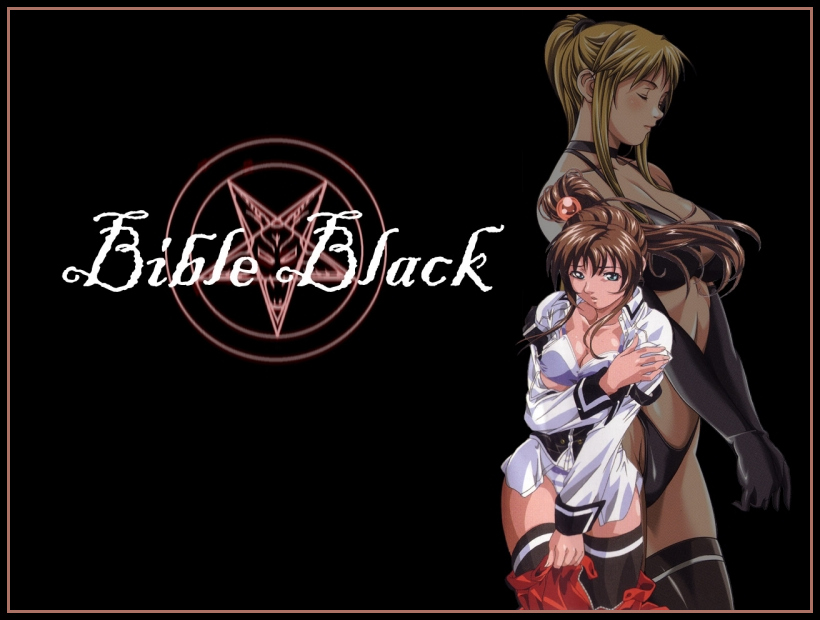
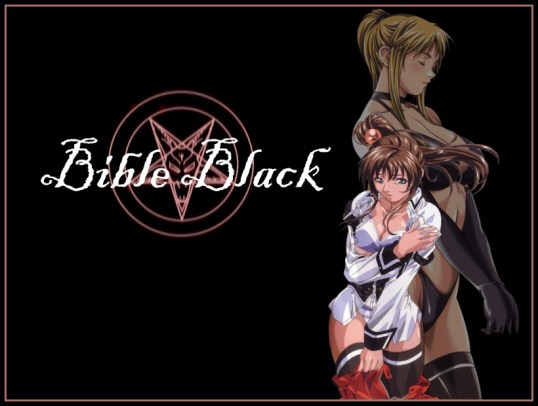
Anime You Should Be Watching: Bible Black (Baiburu Burakku)


eroge: is a portmanteau of erotic game. It is a Japanese video or computer game that featured erotic content (usually pornographic in nature) and used anime-style artwork in a visual novel format.

Hentai as a genre first reached wide recognition through the notorious Chōjin Densetsu Urotsukidōji, a 1980s OVA that fused graphic sexual imagery with apocalyptic horror and violent fantasy. That work established many of the conventions that would define adult anime for decades—its blend of mythology, grotesque excess, and surreal eroticism pushing the boundaries of animation’s narrative potential. Bible Black represents a later evolution of that tradition, taking the transgressive energy of Urotsukidōji and refining it through a more contained setting, structured storytelling, and psychological tension. Where its predecessor reveled in grandiose chaos, Bible Black turned inward, exploring horror through ritual, secrecy, and moral decay within familiar, everyday environments.

Originally developed as an eroge visual novel, Bible Black featured the artwork of its creator, Shoujo Sei. The game’s popularity within Japan’s adult gaming market grew rapidly, fueled by its striking blend of erotic storytelling, occult imagery, and a sinister undercurrent that set it apart from typical romantic visual novels of its time. Its success inevitably drew the attention of Milky Studio, an animation company already known for adapting adult-oriented games into OVAs. Within a few years, Milky Studio produced the first Bible Black anime series—a six-episode OVA that closely followed the storylines and choices from the original game.

The anime adaptation centers on a high school caught in a web of witchcraft and forbidden rituals. While the premise may sound familiar to fans of the supernatural or occult genres, Bible Black distinguished itself by merging sexual and mystical elements in a way that felt both deliberate and unsettling. The first OVA mirrors the game’s basic storyline, introducing viewers to a world where innocent facades collapse under the weight of temptation and corruption. Later sequels and prequels expanded on this mythology, delving into the origins of the dark book that drives the narrative and introducing new characters entangled in its influence. In doing so, the series built a continuity resembling a twisted mythos—an interconnected body of stories that deepened its immoral mystique.

To describe Bible Black merely as “popular” within its niche would be an understatement. Its reputation extends far beyond its target audience, circulated through anime forums, recommendation threads, and cultural commentary as a kind of benchmark for erotic horror. It is the title almost universally cited when discussing adult-oriented anime, whether out of reverence for its artistic boldness or infamy for its transgressive imagery. For many viewers—particularly Western audiences in the early 2000s—it represented their first exposure to Japanese erotic animation beyond parody or rumor, granting it a strange, almost legendary status within the genre’s history.

What separates Bible Black from lesser works is the precision with which it fuses its erotic and occult motifs. The narrative’s backbone—the pursuit and misuse of a magical grimoire—offers an allegory for unchecked desire and the cost of power. Rituals blend seamlessly with acts of seduction, and the visual motifs of pentagrams, candles, and bloodstained rites serve as metaphors for obsession and spiritual decay. This combination gives the anime an intensity uncharacteristic of typical adult fare, as every encounter is charged not only with physical desire but also with moral and supernatural consequence. Rather than treat sexuality as isolated spectacle, the series enfolds it within its darkly coherent world, ensuring that sin and pleasure remain inseparable.

The “harem” narrative structure, common to many eroge and visual novels, is used here with a more perverse edge. The typical male protagonist surrounded by female admirers becomes a focal point not of romantic fulfillment, but of temptation and corruption. In Bible Black, that dynamic is steeped in manipulation and control—sex as both a weapon and a spiritual act. This inversion of a familiar trope contributes to the series’ enduring fascination, as it refuses to comfort the viewer with the conventions of fantasy romance. Instead, it constructs an atmosphere of moral ambiguity and psychological pressure, leaving few characters untainted.

The setting amplifies the discomfort. By situating its story within the environment of a high school—a space symbolically associated with innocence and growth—Bible Black subverts expectations. The classrooms and corridors that should represent order and safety become arenas for forbidden rites and hidden depravity. This juxtaposition between the mundane and the macabre intensifies the sense of violation that defines the series. It’s not only a story of erotic ambition but of how institutional and moral structures collapse when confronted by unchecked desire and occult power.

Visually, the anime reflects its early-2000s production values with surprising sophistication. Milky Studio preserved the visual style of Shoujo Sei’s original artwork—marked by angular features, bold contrasts, and expressive eyes—while enriching the material with atmospheric lighting and strong sense of color. The palette alternates between the sterile brightness of school life and the dim, saturated tones of ritualistic scenes, crafting a visual rhythm that heightens tension between two worlds. Despite the limited resources typical of an OVA, the series achieved a memorable aesthetic identity, merging the glossy surfaces of contemporary anime with the raw suggestiveness of eroge art.

As Bible Black expanded into sequels like Bible Black: New Testament and various side stories, its universe deepened both narratively and tonally. The newer installments explored different perspectives and timeframes, revealing the long shadow of the original events. This serial approach—rare for hentai productions—allowed the franchise to form a loose continuity, almost like a dark fantasy saga built around erotic and esoteric principles. The cumulative effect was that Bible Black ceased to be a one-off novelty and became a defining thread in the history of animated erotic horror.

Its cultural impact extends further still. Bible Black served as one of the first major adult anime titles to gain substantial attention outside Japan during the rise of online fan communities. Through fan distribution and unofficial translations, it became many Western viewers’ first encounter with themes such as futanari—depictions involving gender transformation or dual sexual anatomy—which had previously remained obscure outside Japan. The OVA thus became not only a product of its domestic industry but also a cultural export that introduced global audiences to the specialized lexicon and aesthetics of Japanese hentai.

Critically, Bible Black remains an object of contention. Its explicitness renders it indefensible to some, yet others recognize within it a degree of thematic intent that surpasses mere sexual provocation. It approaches the occult not with romantic mysticism, but as an allegory for moral erosion and human vulnerability. Erotic acts in the series often parallel spiritual corruption, suggesting that the boundary between pleasure and damnation is perilously thin. The result is an anime that provokes both physical and intellectual reactions—equally discomforting in its carnality and symbolism.

Even after more than two decades, Bible Black maintains relevance and recognition. Later works have tried to replicate its formula—mixing fetishes with supernatural dread—but few possess its coherence or audacity. Its imagery, tone, and structure continue to influence adult creators seeking to merge explicit content with narrative ambition. Moreover, the series exemplifies a moment in anime history when the medium’s adult side dared to pursue storytelling complexity rather than rely solely on erotic novelty.

Viewed today, Bible Black endures as both time capsule and touchstone. It captures an era when the boundaries between mainstream anime and adult experimentation briefly blurred, and when eroge culture translated successfully to animation with both narrative depth and artistic conviction. Whether judged as an expression of taboo horror, a stylistic artifact of its generation, or a benchmark for the fusion of sex and the supernatural, Bible Black stands as one of the most distinctive and controversial works in anime’s underground lineage. Its lasting infamy, like its allure, lies in its refusal to separate desire from darkness—a union as seductive as it is terrifying.


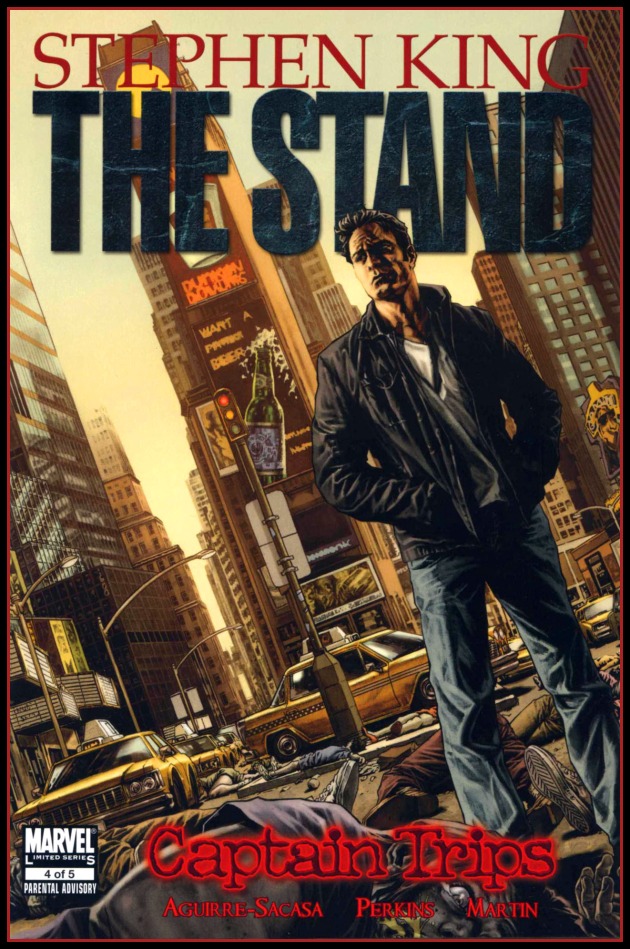
Stephen King’s The Stand to Trip Up Onto the Big-Screen


Stephen King properties sure has been heating up around Hollywood of late. For the past month or so we’ve had almost weekly news about Ron Howard’s plans for King’s massive book series, The Dark Tower. Today news that the role of Roland Deschain, the Gunslinger, has been offered to Spanish-actor Javier Bardem shows that the planned film adaptation of The Dark Tower is moving forward.

Now, according to The Hollywood Reporter blog Heat Vision, Warner Brothers and CBS Films are planning to co-produce the film adaptation of another Stephen King property and one many of his fans consider as their favorite. I consider myself one of those fans and I’m actually quite excited that these two studios are looking to adapt the epic, apocalyptic novel The Stand.

The novel already was adapted into a mini-series by Mick Garris in 1994, but that adaptation didn’t satisfy the book’s fans as its producers were hoping for. This planned film adaptation looks to give The Stand a grand stage to be shown to its old and new fans. While trying to adapt a novel that is over 1200 pages long might seem daunting the same was said about trying to adapt a novel that was three times it’s length and that one succeeded beyond anyone’s expectations. If Peter Jackson can take The Lord of the Rings and create an epic masterpiece out of such a dense piece of literature I think King’s The Stand should make just as good a transition.

Here’s to hoping that this particular apocalyptic project gets on the fast track and doesn’t get bogged down in development hell the way another apocalypse-themed film project has found itself in: Max Brook’s zombie epic novel, World War Z.

Source: The Hollywood Reporter

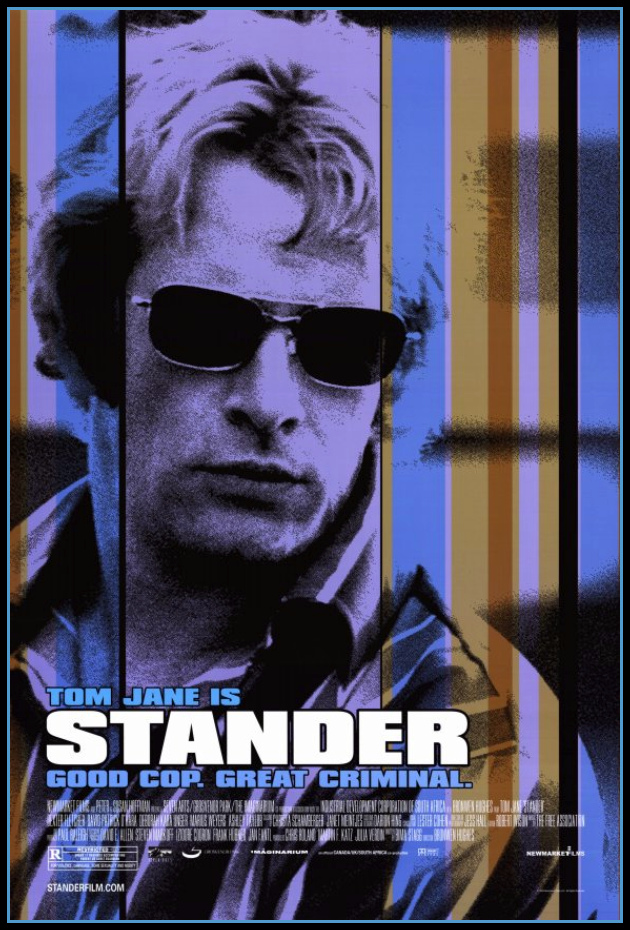
Quickie Review: Stander (dir. by Bronwen Hughes)


Stander was a very good film about the real-life exploits of Andre Stander, Lee McCall and Allan Heyl who were known collectively as The Stander Gang. The Stander Gang was well-known for their daring and reckless bank robberies in their homeland of South Africa. The film stars Thomas Jane (The Punisher, The Mist) as the title character with Dexter Fletcher (Band of Brothers and Lock, Stock and Two Smoking Barrels) and David Patrick O’Hara (Braveheart, Doomsday) rounding out the rest of the Stander Gang.

The film starts off introducing Andre Stander as a highly decorated member of the South African Police Force in the late 1970’s and the beginning of the anti-apartheid movement. It shows Andre Stander’s growing disgust and disenchantment in his government’s racist apartheid policies and his own role in enforcing it. After a violent and brutal break-up of an anti-apartheid protest gathering where Stander kills a protestor, the film begins to move into meat of the story. Stander’s disenchantment with the government causes him to commit bank robberis in audacious fashion as a way to rebel and defy the very state he has sworn to protect and serve.

The scenes where Stander commits these bank robberies were shot well and showed just how daring Andre Stander really was in his exploits. There’s even a sequence where he returns to the scene of his most recent crime to investigate the robbery. A robbery he just committed just hours before during his lunchtime. These scenes and the later ones when he’s joined by two other bank robbers shows Tom Jane at his finest. I think many would be hard-pressed not to think Jane’s performance as a South African, accent and all, wasn’t authentic. His charisma ruled throughout the film and was mostly evident through the many bank robbing sequences. He truly gave Andre Stander the air of a Robin Hood character who, despite his criminal acts, became a sort of folk antihero.

The second half of the film details the exploits of Stander after his incarceration for his bank robberies while a captain of the South African Police Force. It’s here that we meet the rest of Stander’s Gang as he recruits fellow inmate and outlaws Lee McCall and Allan Heyl. Even the way Stander engineers his escape from the work-prison he has been sent to shows his daring in thumbing his nose at the state and the police he used to be a part of. Dexter Fletcher was very good as the twitchy and less stable Lee McCall whose nerves begin to fray the bolder and bolder the gangs bank robberies become. David Patrick O’Hara was also good as the very professional bank robber Allan Heyl. Heyl didn’t have the charisma that Stander had, but he was the rock which kept the robberies from spiraling out of their control. It was great to see O’Hara in another strong role. Some might recognize him as the scene-stealing Stephen, the Irish rebel who joins William Wallace’s fight against the English during Mel Gibson’s Braveheart.

The rest of the film was pretty much one bank robbery after the other with the Stander Gang always one step ahead of the police task force put together to capture them. In a twist of fate, the task force was headed by Stander’s former friend in the police force Cor Van Deverter whose intimate knowledge of Stander’s tactics and thought-processes helps in slowly closing the noose around the gang. There’s abit of a repetition in the robberies and the getaways, but they serve an important purpose of slowly building up the Stander Gang’s folk hero status amongst the population. It also showed the effect it had on some of the members of the gang. As popular and infamous the gang had become they were still outlaws who knew that sooner or later their luck would run out and they’d either be put back into prison or killed outright. For some it was the latter and for others the former.

Throughout the film, one could sense that some of the motivations behind Andre Stander’s actions as a bank robber was to assuage his guilt over the sanctioned acts of brutality he had to perform to protect the apartheid government of his nation. The film and the story being told was almost a full-length film of Stander’s attempt to make up for his past transgressions. And what better way to do this than use the system of the state against itself. He himself points out that a white man could get away with anything when most of the policemen in the city were called away to deal with an emergency regarding the black majority population. Stander realizes this to be true and his second career as a bank robber was born. The film only hints at him being a very good policeman, but the majority of the film shows just how much better he was as a criminal.

The film was expertly directed by Bronwen Hughes and as said earlier had strong performances from all the main leads in the film. The story rarely slowed down to the point that the story lost its direction. Every scene always led to the next part of the story being told until the very bitter end. Stander was a very good film anchored by a fine performance from Thomas Jane. The film showed a brief glimpse into South Africa’s apartheid past and how one individual’s decision to defy the state led to a brief, but daring life of a modern-day Robin Hood.