TV Review: The Dropout 1.6 “Iron Sisters” (dir by Francesca Gregorini)


This week’s episode of The Dropout opens with Elizabeth Holmes staring at a camera. 

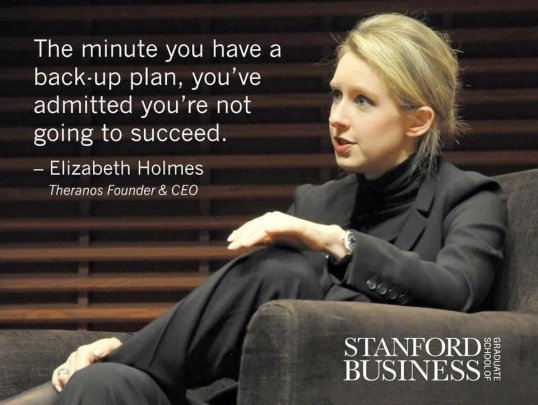
She’s got the black turtleneck on.  She’s speaking in the voice.  She’s doing the un-blinking stare.  She’s a bit awkward whenever she has to talk to anyone but that awkwardness now feels much more calculated than it did when we first met her.  Offscreen, we hear the voice of famed documentarian Errol Morris telling her which camera to look at.  Elizabeth tells Morris that she’s a huge fan of his work.  Though we don’t see Morris’s reaction, he certainly sounds thrilled by the compliment.  Of course, those of us who have been watching The Dropout from the start and who have also watched Alex Gibney’s documentary about Holmes, can guess what it probably the truth.  In all probability, Elizabeth Holmes had never seen any of Errol Morris’s documentaries.  For the most part, Elizabeth Holmes doesn’t appear to have had many interests beyond maintaining her carefully constructed public persona.  When Errol Morris makes mention of friends, a look of confusion crosses Elizabeth’s face.  Friendship is something that can only be shared between real people and, at this point, there’s nothing real about Elizabeth Holmes.

Friendship is a recurring theme throughout the sixth episode of The Dropout.  In fact, the episode returns so frequently to the theme that, for all of the show’s strengths, it actually runs the risk of getting a bit heavy-handed.  George and Charlotte Schultz are busy preparing Elizabeth’s 30th birthday party and they ask Elizabeth who they should invite.  They ask her who her friends are.  Elizabeth laughs and replies that the Schultzes are her friends.  The Schultzes laugh it off but to Elizabeth, her relationship with the Schultzes and the other members of the Board are really the only thing that she has.  For her, friendship is all about the validation of being praised by older, powerful people and, as this episode shows, men like George Schultz had a need to feel as if they were supporting her “good” work and ensuring that their final legacy will be a positive one.  Mix that with the stubborn refusal to admit to one’s mistake when one is old, wealthy, and well-connected and the end result is the type of environment that’s perfect for someone like Elizabeth Holmes.  

Indeed, the only vaguely real relationship that Elizabeth has is with Sunny and that relationship is one that she insists on keeping a secret.  (Though Charlotte instinctively understands what’s going on with Elizabeth and Sunny, George is clueless and complains, to Elizabeth, that Sunny just doesn’t have enough class.  In this case, George is right.)  In this episode, we see a bit more of Elizabeth and Sunny’s life together.  Sunny is resentful and manipulative.  Elizabeth needs him because she needs someone to actually be the bad boss while she’s busy shooting commercials and hanging out with the board of directors.  They enable each other, with Elizabeth almost using Sunny’s amorality as a shield from having to deal with the consequences of her own behavior.  If Elizabeth seems to be in deep denial about the extent of her fraud, Sunny seems to be convinced that he will always be able to outsmart anyone who tries to uncover the truth.  (Of course, as the show has repeatedly demonstrated, Sunny isn’t really that smart.)

Meanwhile, over the course of the episode, a much more unlikely friendship develops between Richard Fuisz, Phyllis Gardner, and Rochelle Gibbons.  All three of them are linked by a common desire to see Elizabeth revealed as a fraud.  Richard feels that Elizabeth treated him disrespectfully, Phyllis is offended by Elizabeth’s faux feminism, and Rochelle saw first-hand how Elizabeth and Sunny drove her husband to suicide.  Throughout the episode, the three of them try to get a Wall Street Journal reporter interested in the story but they struggle to find concrete evidence of Elizabeth’s fraud.  William H. Macy, Kate Burton, and especially Laurie Metcalf brought some much-needed moral clarity to last night’s episode.  In the past, I’ve complained that, as played by William H. Macy, Richard was almost too cartoonish to be believed but, as of last night’s episode, I stand corrected.  Richard is just as socially clueless as Elizabeth but, unlike Elizabeth, he has no idea how to use that to his advantage.  Instead of being cartoonish, Macy’s performance is instead a perfect counterpoint to Amanda Seyfried’s more tightly controlled performance as Elizabeth.

And finally, the episode’s most important friendship was the friendship between two new Theranos employees, Tyler Schultz (Dylan Minette) and Erika Cheung (Camryn Mi-Young Kim).  Erika began the episode in awe of Elizabeth, just to discover that Theranos was faking results and that the Edison was just a repurposed Siemen machine. Tyler and Erika took on the role of whistleblowers, just to discover that no one — especially not Tyler’s grandfather, George — had any interest in listening.  In the end, they both ended up losing the jobs.  That’s not a big deal for Tyler, who is a scion of the establishment.  For Erika, an idealist who shared much in common with the pre-Theranos Elizabeth Holmes, it’s very much a big deal.  As this episode makes clear, people will look the other way if it means being able to pay the rent and put food on the table.  It takes true bravery to do the right thing when you actually need the job, as Erika does.  Erika does the right thing and asks the right question and ends up by escorting out of Theranos by security guards.

There was a lot going on in this week’s episode but, ultimately, what I’ll always remember was Elizabeth’s birthday party, which featured the elderly members of the American establishment all wearing expressionless Elizabeth Holmes masks.  It was a sight of almost Cronenbergian horror.  Things only got more awkward as Elizabeth and George demanded that Tyler sing a song that he had written in honor of her birthday.  Of course, by this point, Tyler knew that Elizabeth was a fraud and Elizabeth knew that Tyler knew.  It was truly a moment of supreme cringiness but also one that apparently actually happened.  

The episode ends as it began, with Elizabeth Holmes staring straight at a camera and announcing that Theranos is the future.  #IronSisters!
 

Music Video of the Day: For My Friends by King Princess (2022, dir by Nick Harwood)


(For Evelyn, Emma, Amy, Shay, Katrina, Jenny, Ellie, Regina, Jackie, and all the rest of you)

Enjoy!

We go too far back
You wouldn’t leave me now
To find someone like that
It wouldn’t be easy now

Cuz I been thinking bout getting drunk again
at the same house where it all started
and i love you so much that i didn’t care when you stained the carpet
finding your clothes cuz you know I stole them
you know I own them now

It’s how it’s gonna be
Face it, loving me takes patience

When I think about us just leaving
I think about us just coming home
You hate it, but loving me takes patience
We lose touch when I’m faded
And it can get dark but still I know
You’re waiting and loving me takes patience

We’ve had every fight
There is no score to keep
Chase down every sidewalk
You’re walking home with me
Talkin bout honesty

I been thinkin ’bout getting drunk again
at the same house where it all started
and i love you so much going up the stairs at your new apartment

It’s how it’s gonna be
Face it, loving me takes patience

When I think about us just leaving
I think about us just coming home
You hate it, but loving me takes patience
We lose touch when I’m faded
And it can get dark but still I know
You’re waiting and loving me takes patience

No one else could care
It’s a waste of time
To pretend I’d find someone out there
I wouldn’t scare, cuz loving me takes patience

When I think about us just leaving
I think about us just coming home
You hate it, but loving me takes patience
We lose touch when I’m faded
And it can get dark but still I know
You’re waiting and loving me takes patience

You wouldn’t leave me now

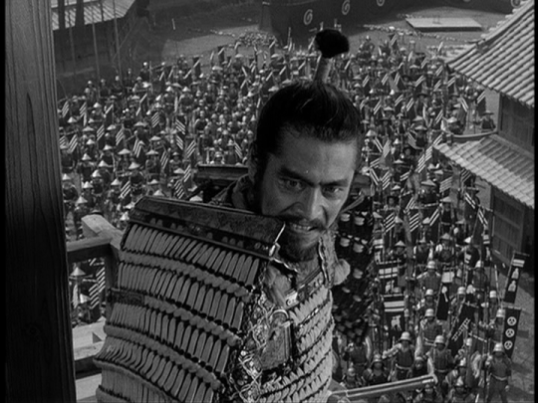
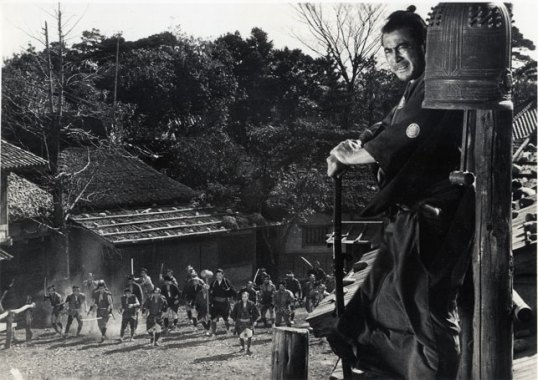
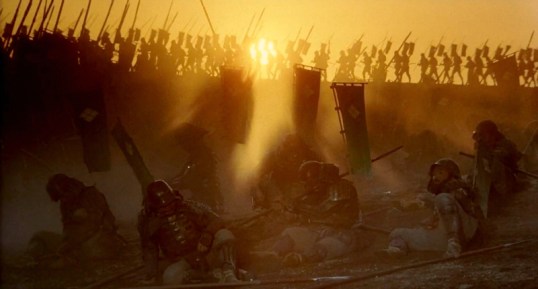
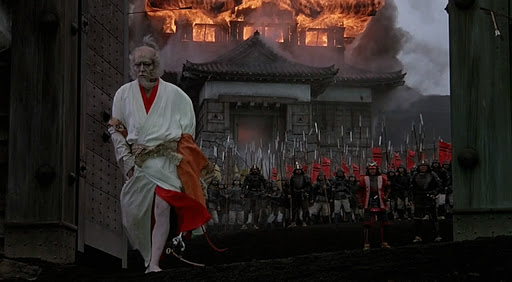
4 Shots From 4 Films: Special Akira Kurosawa Edition


4 Or More Shots From 4 Or More Films is just what it says it is, 4 shots from 4 of our favorite films. As opposed to the reviews and recaps that we usually post, 4 Shots From 4 Films lets the visuals do the talking!

Today, the Shattered Lens honors both the birth and the legacy of the great filmmaker, Akira Kurosawa!  It’s time for….

4 Shots From 4 Akira Kurosawa Films

Throne of Blood (1957, dir by Akira Kurosawa, DP: Asakuza Nakai)

Yojimbo (1961, dir by Akira Kurosawa, DP: Kazuo Miyagawa)

Kagemusha (1980, dir by Akira Kurosawa, DP: Takao Saito and
Masaharu Ueda )

Ran (1985, dir by Akira Kurosawa, DPs: Takao Saito, Masharu Ueda, and Asakazu Nakai)

Music Video of the Day: Aurora Sogna by Subsonica (2018, dir by FOREVER DATA)


This music video has kind of an end of the world feel to it.  I found myself suspecting that a comet probably crashed into Earth after filming stopped.

Enjoy!

Si sveglia che fa buio ormai d’abitudine
La notte le regala un’aria più complice

Detesta il vuoto dei rumori della realtà (Aurora sogna)
Ma col volume a stecca può sopravvivere (Aurora sogna)
Sogna una carne sintetica
Nuovi attributi e un microchip emozionale
Sogna di un bisturi amico che faccia di lei
Qualcosa fuori dal normale
Qualche gelato al giorno forse la nutrirà
Non crede nell’amore in cio’ è molto semplice
Come si chiama questa voglia di vivere (Aurora sogna)
Che nel suo corpo ha bisogno di espandere (Aurora sogna)
Sogna una carne sintetica
Nuovi attributi e un microchip emozionale
Occhi bionici più adrenalina
Sensori e cibernetica neurale
Sogna una carne sintetica
Nuovi attributi e un microchip emozionale
Labbra cromate ricordi seriali
Emozioni e un nuovo impianto sessuale

Senza più mangiare, senza più dormire

Sogna una carne sintetica
Nuovi attributi e un microchip emozionale
Sogna di un bisturi amico
Che faccia di lei qualcosa fuori dal normale
Sogna una carne sintetica
Nuovi attributi e un microchip emozionale
Occhi bionici più adrenalina
Sensori e cibernetica neurale
Le stesse facce che ogni giorno fanno male
Le stesse voci recitanti giudicare
Posa l’orecchio sul bicchiere e sente il mare
Ma non il suono della musica che piace a lei
La solitudine che indossa è più normale
Di una prudente saggia e isterica morale
Aurora sogna e nei suoi sogni sa cercare
Senza paura un’esclusiva felicità

Sogna una carne sintetica
Nuovi attributi e un microchip emozionale
Sogna di un bisturi amico che faccia di lei
Qualcosa fuori dal normale
Sogna una carne sintetica
Nuovi attributi e un microchip emozionale
Occhi bionici più adrenalina
Sensori e cibernetica neurale
Sogna una carne sintetica
Nuovi attributi e un microchip emozionale
Labbra cromate ricordi seriali
Emozioni e un nuovo impianto sessuale
Sogna una carne sintetica

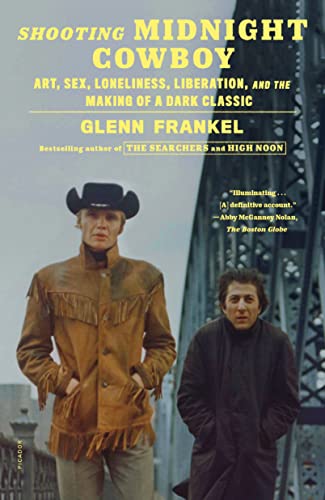
Book Review: Shooting Midnight Cowboy: Art, Sex, Loneliness, Liberation, and the Making of a Dark Classic by Glenn Frankel


As you can probably guess from the title, Glenn Frankel’s Shooting Midnight Cowboy: Art, Sex, Loneliness, Liberation, and the Making of a Dark Classic is all about the making of one of the darkest films to ever win the Oscar for Best Picture, Midnight Cowboy.

Released in 1969 and based on a novel by James Leo Herlihy, Midnight Cowboy stars Jon Voight as Joe Buck.  Joe is a simple-minded but handsome man from a small-town in Texas.  After both he and his girlfriend are raped by some local rednecks, Joe puts on his cowboy hat, hops in a bus, and heads for New York City.  Joe figures that he can make a lot of money as a hustler but he soon discovers that New York is a far more dangerous, nightmarish, and depressing place than he ever realized.  Not only is he not smart enough to make it as a hustler but he’s not even the only cowboy hanging out around Times Square.  Eventually, Joe meets Ratso Rizzo (Dustin Hoffman), who has a bad leg, a hacking cough, and the worst apartment in New York.  Joe and Rizzo become unlikely roommates and eventually, they even become friends.  (And depending on how you interpret certain scenes and lines of dialogue, they might even become more.)  Rizzo helps Joe to survive in New York but Rizzo himself is dying.  Not even a chance to hang out with a group of Warhol superstars can cure Rizzo of what ails him.  Rizzo wants to see Florida and Joe wants to get out of New York.  How far will Joe go to escape and save his only friend?

Midnight Cowboy was controversial when it was first released, with some critics calling it a masterpiece and other claiming that the film was a symbol of America’s cultural and moral decay.  It went on to become the first and only X-rated film to win Best Picture.  Midnight Cowboy‘s victory over films like Hello Dolly! and Anne of the Thousand Days was seen as a sign that mature and adult-themed films could actually find both acclaim and an audience.  Midnight Cowboy‘s success helped to bring Hollywood into the modern era.  For many, it was also responsible for establishing New York as being the dirty and heartless city that would appear in so many of the films that followed.  Indeed, there’s many different lessons that one can take from Midnight Cowboy but the main one seems to be that everyone should stay the heck out of New York.  Seen today, Midnight Cowboy is no longer all that shocking and director John Schlesinger occasionally seems to be trying too hard to establish his auteur credentials.  But the film’s story still remains effective, as do the lead performances of Hoffman and Voight.  Though being very much a film of its time, Midnight Cowboy is still watchable today.  It’s not only an effective film but it’s also a milestone in Hollywood history.

As for Shooting Midnight Cowboy, it tells you pretty much everything you need to know about both the film and the controversy that has surrounded it over the years.  Starting with the novel that was written by James Leo Herlihy, Shooting Midnight Cowboy meticulously follows the production of the film, exploring not only how both Voight and Hoffman came to star in the film but also how these two very competitive actors came together to create an unforgettable portrait of an unlikely friendship.  It also explores everything from director John Schlesinger’s efforts to bring his vision to life to the concerns that mainstream audiences would refuse to see the film because of its adult context to the writing of the film’s famous theme song, Everybody’s Talkin’.  Perhaps the most harrowing chapter deals with the ordeal that Jennifer Salt suffered through while playing the small role of Joe Buck’s Texas girlfriend, Annie.  Shooting Midnight Cowboy puts the movie into its proper historical and cultural context, showing how the film commented on the issues of the time while also telling a story that remains effective even when viewed outside of the 60s.  It makes for an interesting and informative read, for both the film lover and the cultural historian.

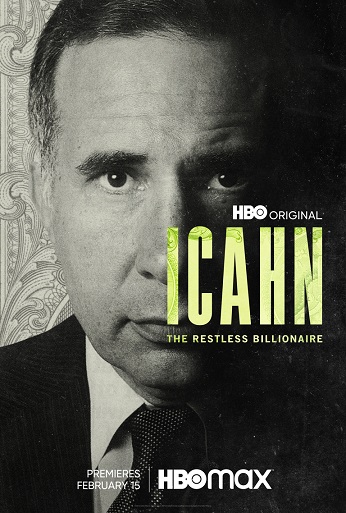
Film Review: Icahn: The Restless Billionaire (dir by Bruce David Klein)


Before I actually talk about Icahn: The Restless Billionaire, I should probably confess something.  Well, actually, this is a reconfession because I explain this every time that I review any movie or documentary the deals with stocks and investments and big shorts and corporate takeovers and all the rest.  The Stock Market confuses the heck out of me.

Seriously, I have no idea how it works.  Everything that I hear about it just confuses me.  How can you invest money that you don’t have in order to make or lose money that might not actually exist?  How can people keep buying stock in the same company?  It just seems like a company should eventually run out of stock.  And what is stock anyways?  And don’t even get me started on this whole thing where people can apparently secretly buy everyone’s stock and then force a company’s founder to resign or sell the company itself.  That’s just weird to me.

I will also admit that I actually do own stock.  I didn’t buy any of it.  Some of it, I inherited.  Some of it was gifted to me.  Some of it, I got through work.  Off the top of my head, I really couldn’t tell you much about any of the stock that I own.  I’ve been told that my stock’s doing well, which is fine with me.  Nobody ever tells me if my stocks aren’t doing well, which is also fine with me.  I don’t really need that pressure.

Some people, however, love the pressure.  Carl Icahn, for instance, has made billions by playing with the stock market and by taking over struggling companies and then selling them for a profit.  Icahn’s detractors call him a pirate or a raider.  Icahn claims that he’s an activist, taking over poorly managed companies and then selling them for a profit so that people, like me, who have no idea how any of this works can also make a profit.  (And, of course, Icahn makes a huge amount of money off of it as well.)  Carl Icahn is thought to have been one of the role models for Wall Street’s Gordon Gekko.  Consider that Wall Street was released in 1987 and you can see just how long Carl Icahn has been doing this.

Icahn: The Restless Billionaire is a documentary about both the man and his controversial career.  It delves a little into his childhood and features plenty of scenes of Icahn at his mansions and in his ornate office.  For the most part, though, it’s a collection of scenes of Icahn and some of his associates discussing the various takeovers and battles that Icahn has been involved with over the years.  The documentary is unapologetically pro-Icahn.  If you’re expecting to see AOC or Bernie pop up and start going on about taxing the rich or condemning billionaires, you’re out of luck.  In fact, the documentary is so pro-Icahn that it almost feels like a relic from a different era.  For that matter, so does Carl Icahn.  Icahn is happily pro-capitalism and he makes no apologies for that.  A lot of viewers aren’t going to be used to seeing that in a contemporary documentary, especially not one produced by HBO.  Myself, I’m a fan of capitalism and free enterprise so it didn’t bother me and the documentary, at the very least, worked as a change of pace.  Still, I can’t help but imagine that a lot of my friends would have ended up throwing something at the TV.

Carl Icahn is obviously a smart guy and he’s made a lot of money.  I enjoyed looking at the house.  At the same time, he’s not exactly the most charismatic billionaire in the world and the scenes that attempt humanize him come across as being stiff and staged.  The documentary is probably at its best when its just Icahn and his associates talking about the battles that he’s fought.  I honestly couldn’t follow what they were talking about but I also couldn’t deny that they all seemed to be having fun.

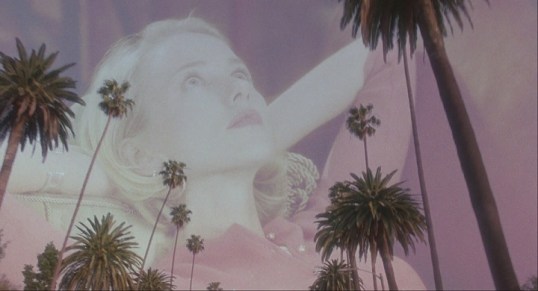
Scene That I Love: The Opening of Mulholland Drive (Happy Birthday, Angelo Badalamenti)


Happy birthday, Angelo Badalamenti!

This great composer is probably best known for his dream-like and haunting work for the films of David Lynch.  Among the many songs and musical pieces that he’s done for Lynch, he composed the jitterbug music that opened David Lynch’s 2001 film, Mulholland Drive.  The scene below features the perfect mix of Lynch’s visual vision and Badalamenti’s musical ear.  What I especially like about this scene is that the music starts out as a very cheerful and vaguely generic but then it grows steadily more ominous as the scene plays out.

Here it is.  The haunting opening of one of the best films of the current century:

4 Shots From 4 Films: Special Stardom Edition


4 Or More Shots From 4 Or More Films is just what it says it is, 4 shots from 4 of our favorite films. As opposed to the reviews and recaps that we usually post, 4 Shots From 4 Films lets the visuals do the talking!

With the Oscars approaching, it seems appropriate to pay tribute to stardom with 4 shots from 4 films!

4 Shots From 4 Films About Being A Star

Mulholland Drive (2001, dir by David Lynch, DP: Peter Deming)

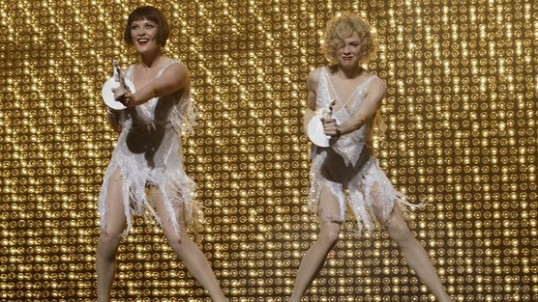
Chicago (2002, dir by Rob Marshall, DP: Dion Beebe)

Maps to the Stars (2014, dir by David Cronenberg, DP: Peter Suschitzky)

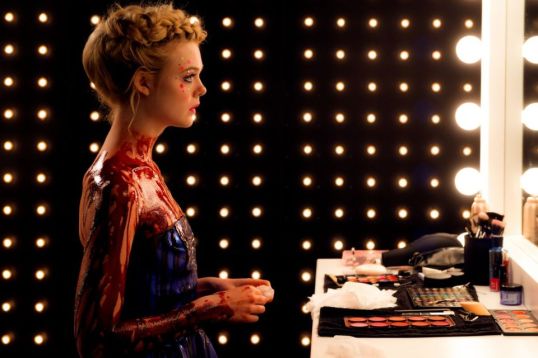
The Neon Demon (2016, dir by Nicolas Winding Refn, DP: Natasha Braier)

Music Video of the Day: Somehow You Do, performed by William Shatner (2021, dir by John Ottman)


Today, the Shattered Lens wishes a happy 91st birthday to William Shatner!  Not only is William Shatner an actor, a director, a writer, a famed wit, and a legendary Canadian but he’s also a singer!

Here is William Shatner performing Somehow You Do.  This song was written by Diane Warren and the video was directed by John Ottman.

Enjoy!

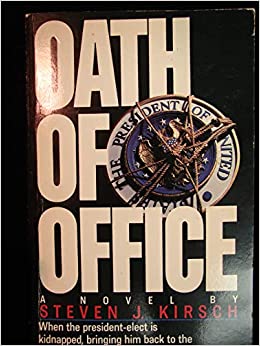
Novel Review: Oath of Office by Steven J. Kirsch


Last week, I returned to exploring my aunt’s old collection of paperback books and I read Oath of Office, a political thriller that was originally published way back in 1988.

U.S. Sen. Jonathan Starr has just been elected to the presidency of the United States of America.  As the first Jewish person to win the presidency, Starr is set to make history as soon as he’s sworn in.  However, there’s a problem.  Starr’s been kidnapped!  The morning after his upset victory, Starr finds himself in the trunk of a car and later confined to a cell.  With no knowledge of who has kidnapped him or what his ultimate fate is going to be, Starr can only wait and have numerous flashbacks to the events that led to him winning the presidency.

Meanwhile, the man that Starr defeated, President Sutherland, is trying to figure out who is behind the kidnapping.  Was Starr abducted by the Russians?  Or perhaps the kidnapping is the work of one of the Middle Eastern terrorist groups who is trying to thwart Sutherland’s efforts to bring peace to region?  Maybe it’s the senator from Texas whose dialogue consists of stuff like, “Ah’ve been workin’ on this deal …. we’ll git it through befo’ the election.”  (That’s an actual quote from the book, by the way.  It seems like it would have been simpler just to say that the man had an accent but some writers just have to be cute about things.)  There’s a lot of possibilities but we know that Starr’s kidnapping was masterminded by an imprisoned mobster, largely because the book tells us early on.  I personally would have dragged out the suspense but no matter!

While secret service agent Andy Reynolds is trying to track Starr down, the Speaker of the House is plotting to take power for himself.  He and his people have come across what they believe to be a loophole in the Constitution, which will keep the electoral college from being able to vote for either Starr or his running mate.  In which case, the Speaker will automatically become president as soon as the incumbent’s term expires.  So, yes, this is another political thriller where the plot largely hinges on a reading of the Constitution that any halfway experienced attorney would easily be able to shoot down.

As you can probably guess, this book has its flaws.  According to the blurb on the back, this was the author’s first novel and I have no idea if he ever wrote a second one.  There are a lot of points in the story that don’t ring true, especially in the flashbacks to Starr’s early political career and the author has a bad habit of telling us things as opposed to showing them.  And, of course, there’s that terrible attempt to capture the Texas accent.  Don’t even get me started on that. 

That said, the idea behind the book is an interesting one.  Only two people of Jewish descent have ever been nominated by a major political party.  Barry Goldwater was an Episcopalian while Joseph Liebermann found himself being opposed by the anti-Semites in his own party.  Of course, neither one of those men made it to the White House.  Oath of Office does make an attempt to seriously consider the challenges that would face the first Jewish president and it’s also honest about how anti-Semitism is a prejudice that is often overlooked by even those who brag about their progressive credentials.  As I said, the book has an interesting idea but the plot just keeps getting in the way.