Today’s enjoyably creepy music video of the day comes to us from Finland!
Enjoy!
Today’s enjoyably creepy music video of the day comes to us from Finland!
Enjoy!

Zardoz (1974, dir by John Boorman, DP: Geoffrey Unsworth)
Today, the Shattered Lens wishes a happy 90th birthday to the great British filmmaker, John Boorman! Here is a scene that we love, the opening of Boorman’s 1974 film, Zardoz! Fresh from directing and receiving an Oscar nomination for Deliverance, Boorman turned down a chance to direct the original Exorcist so he could bring Zardoz to cinematic life.
(Of course, Boorman would direct the first sequel to The Exorcist.)
Directed by John Boorman and featuring Sean Connery, here is the opening of Zardoz!
Welcome to Retro Television Reviews, a feature where we review some of our favorite and least favorite shows of the past! On Wednesdays, I will be reviewing the original Love Boat, which aired on ABC from 1977 to 1986! The series can be streamed on Paramount Plus!

It’s time to once again experience the magic of The Love Boat!
Episode 1.21 “Taking Sides/Going By The Book/A Friendly Little Game”
(Dir by Richard Kinon, originally aired on February 18th, 1978)
This week’s episode begins with the extremely nerdy Howard Wilson (Harvey Jason) preparing to board the ship. Before he does so, he’s approached by his best friend, Bernie (Paul Sylvan). Bernie gives Howard a book on how to talk to women. Apparently, this is something that Howard’s not good at but Bernie swears that the book will change his life. There’s a Roy Lichtenstein-style picture of a man and a woman kissing on the cover of the book so Howard decides that Bernie knows what he’s talking about.
On the boat, Howard immediately notices Sheila Lawrence (Georgia Engel). However, Sheila’s overprotective father (Herb Voland) has specifically asked Captain Stubing to make sure that no one seduces his daughter. The captain assigns Doc Bricker (Bernie Kopell) to keep an eye on her, which makes absolutely no sense. Over the course of the last twenty episodes, Doc has yet to meet a woman who he has not hit on. Doc is a walking HR nightmare and quite frankly, I would be kind of uncomfortable going to him for a medical examination. He seems like he would be a little bit handsy, if you get my drift.
Anyway, Doc turns out to be pretty bad at his job because Howard still manages to hit on Sheila. Of course, Howard’s just doing what the book tells him to do. Eventually, though, he realizes that he doesn’t need the book and Shelia realizes that she needs to spend more time on her own happiness and stop worry about what her father wants. Yay! It’s another Love Boat success story,
Meanwhile, Scott (Robert Urich) and Ellen (Diana Canova) are newlyweds who seem to be totally in love until they make the mistake of having dinner with an old married couple, Max (Robert Mandan) and Gladys (Audrey Meadows). Listening to Max and Gladys bicker soon leads to Scott and Ellen bickering and it looks like their marriage might be over. But again, the magic of The Love Boat leads to everyone realizing that bickering is a part of marriage and that you can still love someone even if you disagree with them. Yay! Robert Urich and Diana Canova were such a cute couple. They just looked like they belonged together.
Finally, poor old Wendell Snead (Harry Morgan) is taking his wife on a cruise that he can’t really afford. In fact, he secretly took out a mortgage on their house in order to buy the tickets. Wendell has plan, though! He has a set of marked playing cards and he beats Gopher at several games of gin rummy. When the crew discovers that he’s been cheating, their initial reaction is to cheat back. But when they learn why he’s been cheating, they give him all the money from the ship’s emergency fund. Awwwwww!
This was a sweet episode. Yes, the stuff with the book and the overprotective father was pretty stupid but the other two stories were entertaining. Harry Morgan’s melancholy performance was the episode’s stand-out. The fact that the crew gave him money instead of calling the cops brought tears to my mismatched eyes. Nicely done, Love Boat.
What will happen next week? We’ll find out in seven days!
Let’s do it!
I love Public Service Broadcasting. I also love dancing on a rooftop in a rainy city.
Enjoy!

The Seattle Film Critics Society has announced its picks for the best of 2022! You can see all the nominees by clicking here and you can check out the winners below!
Best Picture
Everything Everywhere All At Once (A24)
Best Director
Daniel Kwan, Daniel Scheinert – Everything Everywhere All At Once
Best Actor in a Leading Role
Colin Farrell – The Banshees of Inisherin
Best Actress in a Leading Role
Cate Blanchett – TÁR
Best Actor in a Supporting Role
Ke Huy Quan – Everything Everywhere All At Once
Best Actress in a Supporting Role
Kerry Condon – The Banshees of Inisherin
Best Ensemble Cast
Glass Onion: A Knives Out Mystery – Bret Howe, Mary Vernieu, casting directors
Best Action Choreography
RRR
Best Screenplay
The Banshees of Inisherin – Martin McDonagh
Best Animated Feature
Marcel the Shell With Shoes On – Dean Fleischer-Camp, director
Best Documentary Feature
Fire of Love – Sara Dosa, director
Best Film Not in the English Language
Decision to Leave – Park Chan-wook, director
Best Cinematography
Top Gun: Maverick – Claudio Miranda
Best Costume Design
Elvis – Catherine Martin
Best Film Editing
Everything Everywhere All At Once – Paul Rogers
Best Original Score
Babylon – Justin Hurwitz
Best Production Design
Babylon – Florencia Martin (Production Design); Anthony Carlino (Set Decoration)
Best Visual Effects
Avatar: The Way of Water – Joe Letteri, Richard Baneham, Eric Saindon, Daniel Barrett
Best Youth Performance (18 years of age or younger upon start of filming)
Frankie Corio – Aftersun
Villain of the Year
Lydia Tár – TÁR – portrayed by Cate Blanchett
2022 Achievement in Pacific Northwest Filmmaking
Sweetheart Deal, Elisa Levine, Gabriel Miller
Welcome to Retro Television Reviews, a feature where we review some of our favorite and least favorite shows of the past! On Tuesdays, I will be reviewing the original Fantasy Island, which ran on ABC from 1977 to 1986. The entire show is currently streaming on Tubi!
We learn a little bit more about Fantasy Island in this week’s episode. It’s a strange place!
Episode 2.5 “I Want To Get Married/The Jewel Thief”
(Dir by George McGowan, originally aired on October 21st, 1978)
You know what the best thing about Fantasy Island is?
The Disco Dancing!

Cindy Barker (Meredith McRae) is a big fan of the disco dancing. That’s because her fantasy is to come to the island and meet the man that she’s going to marry. In fact, she wants to marry the guy at the end of the weekend and she’s already spent $20,000 to reserve the island for her wedding. (Tattoo is excited about that.)
Of course, one possible problem with Cindy’s fantasy is that she already has a boyfriend. She’s been dating Eddie (Ken Berry) for a while now. However, Eddie refuses to get married. Every time that they schedule a wedding ceremony, Eddie finds an excuse to cancel. He can’t even say the word “married” without sneezing. Still, Eddie is in love with Cindy and he comes to the Island to try to convince her to give him another chance. He also tells all of her potential suitors that Cindy is actually a prostitute.
Now, to be honest, that’s not the sort of thing that I could forgive. I don’t care who you are or how much you love me, that’s just not something that I’m going to be able to overlook. However, this somehow convinces Cindy that Eddie really does love her so she decides to teach him a lesson by putting on a slit leather skirt and hanging out on a street corner in Fantasy Island’s red light district.
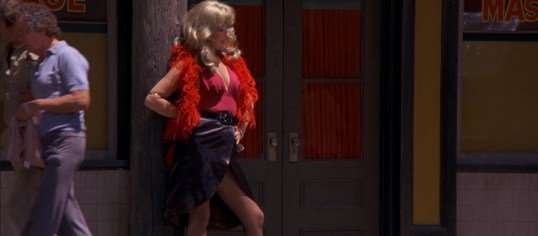
At this point, I said to myself, “Since when has Fantasy Island had a red light district?” Seriously, last week revealed that the island has a desert where the Egyptians buried their pharaohs. This week, we learn that the island has a red light district. Fantasy Island is a strange place. Stranger still, Eddie lying about Cindy and then Cindy pretending to be a prostitute leads to Eddie and Cindy getting married.
While that’s going on, Jordan Montgomery (Steve Forrest) is living out his fantasy of being an international jewel thief and …. wait, what? What type of fantasy is this? You can commit crimes in your fantasies? This island gets stranger and stranger! Anyway, Jordan steals a necklace from Leslie Tarleton (Leigh Taylor-Young), just to discover that the necklace didn’t actually belong to her and his thievery is going to cause her to lose her job. When Jordan attempts to retrieve the necklace so that he can return it, he discovers that it’s been stolen yet again! This time, crime lord Carl Dekker (Peter Mark Richman) has stolen the necklace and is keeping it on his boat, which is heavily guarded and which is also floating off the coast of the island.
So, for those keeping track, Fantasy Island has a desert, a pharaoh’s tomb, a red light district, and a Mafia. It seems like the island’s kind of gone downhill since the end of season one!
Anyway, this was actually a fun episode. Neither story was particularly deep but the action moved quickly and Steve Forrest made for a properly dashing jewel thief. I still don’t think that Cindy should have forgiven Eddie, let alone married him. But it was 1978 and I guess times were different back then.
Finally, Tattoo tried to start his own greeting card company. He was looking to corner the market on sarcastic and downbeat greeting cards. He was just a few decades too early!
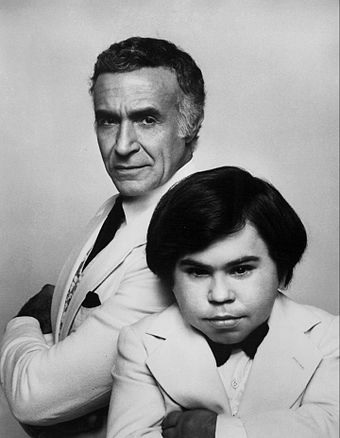
As this Icelandic song and video proves, Godzilla is indeed universal.
Enjoy!
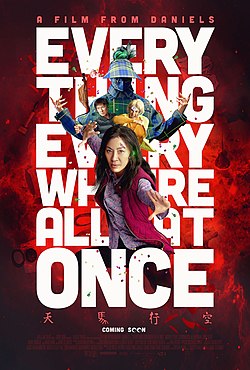
The Portland Critics Association has announced their picks for the best of 2022!
And here they are!
Best Picture
Everything Everywhere All at Once (WINNER)
Guillermo del Toro’s Pinocchio (RUNNER UP)
Tár
The Banshees of Inisherin
Top Gun: Maverick
Best Director
Daniel Kwan and Daniel Scheinert, Everything Everywhere All at Once (WINNER)
James Cameron, Avatar: The Way of Water
S.S. Rajamouli, RRR
Todd Field, Tár (RUNNER UP)
Best Actor in a Leading Role
Adam Driver, White Noise
Austin Butler, Elvis
Brendan Fraser, The Whale
Colin Farrell, The Banshees of Inisherin (WINNER)
Park Hae-il, Decision to Leave (RUNNER UP)
Tom Cruise, Top Gun: Maverick
Best Actress in a Leading Role
Cate Blanchett, Tár (RUNNER UP)
Margot Robbie, Babylon
Mia Goth, Pearl
Michelle Yeoh, Everything Everywhere All at Once (WINNER)
Best Actor in a Supporting Role
Anthony Hopkins, Armageddon Time
Brad Pitt, Babylon (RUNNER UP)
Ke Huy Quan, Everything Everywhere All at Once (WINNER)
Paul Dano, The Fabelmans
Rory Kinnear, Men
Best Actress in a Supporting Role
Dolly De Leon, Triangle of Sadness
Hong Chau, The Whale
Keke Palmer, Nope (RUNNER UP)
Stephanie Hsu, Everything Everywhere All at Once (WINNER)
Best Ensemble Cast
Amsterdam
Babylon
Everything Everywhere All at Once (RUNNER UP)
Glass Onion (WINNER)
Jackass Forever
The Menu
Best Animated Feature
Beavis and Butt-Head Do the Universe
Guillermo del Toro’s Pinocchio (WINNER)
Mad God
Marcel the Shell With Shoes On
Puss In Boots: The Last Wish
Turning Red (RUNNER UP)
Best Documentary Feature
All the Beauty and the Bloodshed (RUNNER UP)
Fire of Love
Good Night Oppy
Moonage Daydream (WINNER)
Best Film Not in the English Language
Athena
Decision to Leave (WINNER)
EO
Happening
RRR (RUNNER UP)
Best Comedy Feature
Bros
Everything Everywhere All at Once (WINNER)
Jackass Forever
The Unbearable Weight of Massive Talent (RUNNER UP)
Triangle of Sadness
White Noise
Best Horror Feature
Barbarian (WINNER)
Bones and All
Men
Pearl
X (RUNNER UP)
Best Science Fiction Feature
After Yang
Avatar: The Way of Water (RUNNER UP)
Everything Everywhere All at Once
Nope (WINNER)
Prey
Best Screenplay
Daniel Kwan and Daniel Scheinert, Everything Everywhere All at Once (RUNNER UP)
Jeong Seo-kyeong and Park Chan-wook, Decision to Leave
Martin McDonagh, The Banshees of Inisherin
Rian Johnson, Glass Onion (WINNER)
Todd Field, Tár
Best Cinematography
Claudio Miranda, Top Gun: Maverick (WINNER)
Greig Fraser, The Batman
Hoyte van Hoytema, Nope
Kim Ji-yong, Decision to Leave (RUNNER UP)
Linus Sandgren, Babylon
Russell Carpenter, Avatar: The Way of Water
Best Original Score
Alexandre Desplat, Guillermo del Toro’s Pinocchio (WINNER)
Justin Hurwitz, Babylon
M.M. Keeravaani, RRR
Michael Giacchino, The Batman (RUNNER UP)
Best Costume Design
Catherine Martin, Elvis (WINNER)
Mary Zophres, Babylon
Ruth E. Carter, Black Panther: Wakanda Forever
Shirley Kurata, Everything Everywhere All at Once (RUNNER UP)
Best Production Design
Avatar: The Way of Water (RUNNER UP)
Babylon
Elvis
Everything Everywhere All at Once (WINNER)
Glass Onion
Best Sound Design
Avatar: The Way of Water (RUNNER UP)
Babylon
Elvis
Everything Everywhere All at Once
Nope
Top Gun: Maverick (WINNER)
Best Visual Effects
Avatar: The Way of Water (WINNER)
Doctor Strange in the Multiverse of Madness
Everything Everywhere All at Once (RUNNER UP)
Nope
Top Gun: Maverick
Best Stunts or Action Choreography
Avatar: The Way of Water
Everything Everywhere All at Once (RUNNER UP)
RRR
The Batman
Top Gun: Maverick (WINNER)
Top 10 Films Of 2022
1. Everything Everywhere All at Once
2. Tár
3. Decision to Leave
4. Guillermo del Toro’s Pinocchio
5. Top Gun: Maverick
6. RRR
7. Avatar: The Way of Water
8. Glass Onion
9. The Banshees of Inisherin
10. The Whale

The African American Film Critics Association has announced their picks for the best of 2022! And here they are:
Best Picture: “The Woman King”
Best Director: Gina Prince-Bythewood (“The Woman King”)
Best Actor: Jeremy Pope (“The Inspection”)
Best Actress: Danielle Deadwyler (“Till”)
Best Supporting Actor: Brian Tyree Henry (“Causeway”)
Best Supporting Actress: Angela Bassett (“Black Panther: Wakanda Forever”)
Emerging Face: Jaylin Hall (“Till” & “Bruiser”)
Emerging Filmmaker: Carey Williams (“Emergency”)
Best Independent Feature: “Nanny”
Best Animated Feature: “Wendell & Wild”
Best Documentary: “Sidney”
Best Ensemble: “Glass Onion: A Knives Out Mystery”
Best Writing: Rian Johnson (“Glass Onion: A Knives Out Mystery”)
Best International Feature: “Saint Omer”
Best Song: “Lift Me Up” (“Black Panther: Wakanda Forever”)
Best Live Action Short: “We Cry Together”
Best Animated Short: “New Moon”
SPECIAL ACHIEVEMENT HONOREES | 14TH ANNUAL AAFCA AWARDS
Impact Award: “Till”
The Innovator Award, presented by Nissan: Composer, Michael Abels (“Nope”)
Building Change Award, presented by Lowes: Production Designer, Hannah Beachler (“Black Panther: Wakanda Forever”)
The Beacon Award: Antoine Fuqua and Will Smith (“Emancipation”)
The Ashley Boone Award: Producer, Nate Moore (“Black Panther: Wakanda Forever”)

The North Dakota Film Society has announced their picks for the best of 2022! You can see the nominees by clicking here and you can check out the winners below!
Best Picture
AFTERSUN – Mark Ceryak, Amy Jackson, Barry Jenkins, Adele Romanski, producers (A24)
Best Director
Daniel Kwan & Daniel Scheinert – EVERYTHING EVERYWHERE ALL AT ONCE (A24)
Best Actress
Cate Blanchett – TÁR (Focus Features)
Best Actor
Brendan Fraser – THE WHALE (A24)
Best Supporting Actress
Dolly De Leon – TRIANGLE OF SADNESS (Neon)
Best Supporting Actor
Ke Huy Quan – EVERYTHING EVERYWHERE ALL AT ONCE (A24)
Best Screenplay
THE BANSHEES OF INISHERIN – Martin McDonagh (Searchlight Pictures)
Best Production Design
BABYLON – Anthony Carlino, Florencia Martin (Paramount Pictures)
Best Cinematography
TOP GUN: MAVERICK – Claudio Miranda (Paramount Pictures)
Best Film Editing
AFTERSUN – Blair McClendon (A24)
Best Visual Effects
AVATAR: THE WAY OF WATER – Richard Baneham, Daniel Barrett, Joe Letteri, Eric Saindon (20th Century Studios)
Best Sound
TOP GUN: MAVERICK – Chris Burdon, James H. Mather, Al Nelson, Mark Taylor, Mark Weingarten (Paramount Pictures)
Best Costume Design
BABYLON – Mary Zophres (Paramount Pictures)
Best Makeup and Hairstyling
THE WHALE – Anne Marie Bradley, Judy Chin, Adrien Morot (A24)
Best Original Score
BABYLON – Justin Hurwitz (Paramount Pictures)
Best Original Song
“Ciao Papa” Alexandre Desplat, Roeban Katz, Guillermo del Toro – GUILLERMO DEL TORO’S PINOCCHIO (Netflix)
Best International Feature
ALL QUIET ON THE WESTERN FRONT – Germany
Best Documentary Feature
ALL THE BEAUTY AND THE BLOODSHED – Howard Gertler, Nan Goldin, Yoni Golijov, John S. Lyons, Laura Poitras, producers (Neon)
Best Animated Feature
GUILLERMO DEL TORO’S PINOCCHIO – Alexander Bulkley, Corey Campodonico, Lisa Henson, Guillermo del Toro, Gary Ungar, producers (Netflix)

