
Today, Chuck Norris celebrates his 83rd birthday and it only feels appropriate that today’s scene that I love should come from one of his greatest films. From 1985’s Invasion U.S.A., watch as Chuck Norris saves America from Richard Lynch!
Today, Chuck Norris celebrates his 83rd birthday and it only feels appropriate that today’s scene that I love should come from one of his greatest films. From 1985’s Invasion U.S.A., watch as Chuck Norris saves America from Richard Lynch!
“Michael Corleone says hello!”
Seriously, it’s amazing what you can come across on the YouTube when you’re searching for a music video of the day. This single appeared on an album called I Just Want To Hear The Words. Apparently, this was one of several albums that the actor Danny Aiello released during his lifetime. As a singer, Danny Aiello sounds …. well, he sounds exactly how you would expect an old school New York crooner to sound. Considering that most of his roles involved him doing a lot of bellowing, Aiello had a rather pleasant singing voice.
With the Oscars coming up, I should mention that Danny Aiello was nominated for Best Supporting Actor for his role in Spike Lee’s Do The Right Thing. He also appeared as one of the Rosato Brothers in The Godfather Part II. Reportedly, Aiello improvised the line, “Michael Corleone says hello!”
Enjoy!
Welcome to Retro Television Reviews, a feature where we review some of our favorite and least favorite shows of the past! On Thursdays, I will be reviewing City Guys, which ran on NBC from 1997 to 2001. The entire show is currently streaming on Tubi!

Time for this again.
Episode 4.4 “Presumed Innocent”
(Dir by Frank Bonner, originally aired on September 30th, 2000)
Jamal is convinced that Louis (Mike Bowman), a student who we’ve never seen before, is a skinhead. Louis has a shaved head and appears to have a bunch of new tattoos on his neck and hiding under his short-sleeved shirts. Jamal also says Louis was super aggressive the one time that they played basketball. “He was always trying to foul a brother hard,” Jamal says, “If it looks like a duck and talks like a duck and walks like a duck,,,,”
“Then shucky ducky quack quack!” L-Train exclaims.
Later, in class. Jamal tosses aside a backpack and claims the chair that in which it was sitting. That backpack belonged to Louis and, in Louis’s opinion, so did the chair. Louis proceeds to call Jamal a …. JERK! That’s right. He used the word “jerk.” I considered whether or not to give everyone a trigger warning before revealing what Luke said but I decided to take the risk and just reveal what Louis said, as ugly as it may be. Now, in Manny High, calling someone a “jerk” is obviously the worst thing that you can do. Ms. Noble is able to prevent Louis and Jamal from getting into a fight in the classroom but later, Jamal discovers that someone has spray-painted “JERK” on his locker. Jamal immediately accuses Louis, telling him, “You’ve messed with the wrong brother.”
Louis laughs and says, “At least now you’ll always be able to find your locker.”
Bad move, Louis! Jamal throws the first punch, Louis throws the second, and then Ms. Noble finally runs up and shouts, “Stop …. or you’ll have to fight me!” Realizing that neither one of them has the skills necessary to defeat a middle-aged high school principal, Jamal and Louis stop fighting. When Jamal says that Louis tagged his locker, Louis replies that Jamal doesn’t have any proof. “This ain’t Judge Judy!” Jamal replies.
Inspired, Ms. Noble decides to have a mock trial so the students can decide whether or not Louis defaced Jamal’s locker. (And to think, some principals would have just punished both of them for fighting in the hallway.) Chris represents Jamal while Cassidy and Dawn are assigned to defend Louis. Ms. Noble serves as the judge and the other students serve as the jury and are probably bored to death. I mean, seriously, this is a lot drama over a locker that’s been defaced with one of the mildest insults known to man.
(Add to that, this was already done in that episode of Saved By The Bell where Ms. Bliss’s tacky sweater got paint on it and Screech was put on trial.)
When Chris turns out to be a terrible lawyer, Jamal resorts to sending Al to get proof that Louis is a skinhead. Al returns with a picture of Louis at a bus stop with several other bald people. When Jamal (having fired Chris) enters the photos into evidence, even Ms. Noble looks like she’s ready to sentence Louis to life imprisonment. Louis explains that all of the people in the photos have cancer, “like me.” And he also reveals that his tattoos aren’t skinhead tattoos. They’re marks that are used to guide the radiation. Louis gets mad and walks out of the classroom.
“Case dismissed,” Ms. Noble says, which doesn’t really make any sense because Louis could have still defaced Jamal’s locker while also having cancer. The two things are not mutually exclusive.
“I can’t believe I judged Lou by how he looked,” Jamal says, “I mean, me, a brother!”
Chris and Jamal go to the cancer clinic and apologize to Louis. We never find out who wrote “Jerk” on Jamal’s locker.
Actually, this isn’t a terrible episode. Mike Bowman (who, as far as I know, is not related to me) did a pretty good job as Louis and the show’s message was ultimately a worthy one. There was even a slightly funny B-plot about Al and L-Train trying not to use any slang on their radio show. City Guys is definitely not my favorite show to review but this episode was okay.
Episode 4.5 “The Third Wheel”
(Dir by Frank Bonner, originally aired on October 7th, 2000)
Al’s birthday is coming up and Dawn wants to celebrate it without L-Train coming along. However, when Al tries to tell L-Train that he’s not invited to celebrate his birthday with him and Dawn, L-Train mishears and thinks that Al is complaining about Dawn being clingy. Al gets upset. “I have to choose between my best friend and my girlfriend.” Al, are you really so stupid as to not know that you spend your birthday with your girlfriend? Apparently so. Anyway, Dawn and L-Train realize that Al is too stupid to choose between them so they collaborate on the party, which is a pretty simple solution. You have to wonder why it took so long for them to come up with that.
Meanwhile, Chris and Jamal want to put on a horror-themed radio show and, of course, Cassidy and Ms. Noble decided to get involved. Doesn’t Ms. Noble have a wedding to plan?
This episode was dumb and I don’t want to waste any more time on it.
This is probably the most energetic song about a crash that’s ever been written. Of course, the song is actually about a relationship that’s a lot like a car crash. The important thing is that Gwen Stefani’s a natural-born star, even when she’s dressed like someone who just broke out of prison. This is a fun song to sing and dance along too. Just don’t drive while listening to it, for obvious reasons.
This song was written by Linda Perry, who writes songs for everyone. She probably wrote a song while you were reading this post. Ariana Grande will probably record it next week and everyone will describe it as being “her most personal song yet!”
Enjoy!
4 Shots From 4 Films is just what it says it is, 4 shots from 4 of our favorite films. As opposed to the reviews and recaps that we usually post, 4 Shots From 4 Films lets the visuals do the talking!
Director Bert I. Gordon, the original Mr. Big, has passed away at 100 years old. In honor of his life and legacy, here are….
4 Shots From 4 Bert I. Gordon Films

The Amazing Colossal Man (1957, dir by Bert I. Gordon, DP: Joseph Biroc)
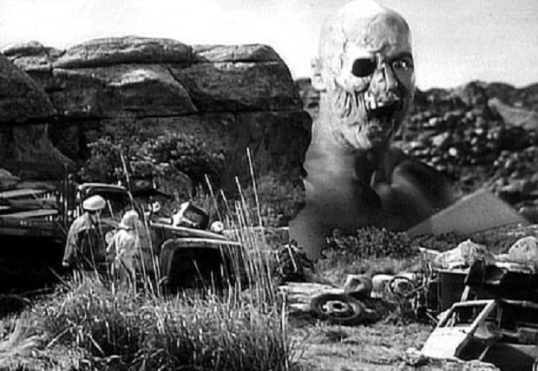
War of the Colossal Beast (1958, dir by Bert I. Gordon, DP: Jack A. Marta)

Village of the Giants (1965, dir by Bert I. Gordon, DP: Paul Vogel)
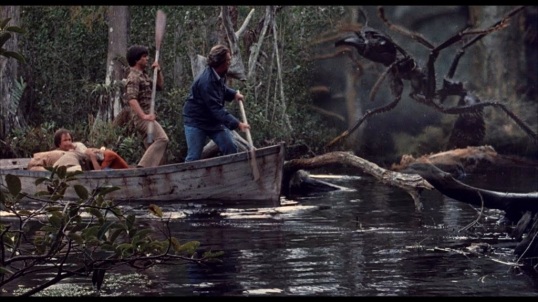
Empire of the Ants (1977, dir by Bert I. Gordon, DP: Reginald H. Morris)
Welcome to Retro Television Reviews, a feature where we review some of our favorite and least favorite shows of the past! On Wednesdays, I will be reviewing the original Love Boat, which aired on ABC from 1977 to 1986! The series can be streamed on Paramount Plus!

Come aboard!
Episode 2.4 “The Man Who Loved Women / A Different Girl / Oh, My Aching Brother”
(Dir by Allen Baron, originally aired on September 30th, 1978)
This week’s cruise is all about deception …. and love!
For instance, Joe (Marty Ingels) and Harold Nash (Sonny Bono) are two brothers who thrive on deception. Harold specializes in pretending to get injured. Joe specializes in threatening to sue until the brothers get paid off. Apparently, it’s a scheme that works well for them, though Joe seems to be a lot more enthusiastic about it than Harold. In fact, Harold seems to be a nice guy who mostly just wants to enjoy the cruise and flirt with another passenger, Rita (Judy Landers). Still, Joe insists that Harold pretend to hurt his back so Harold takes a dramatic fall on the shuffleboard course.
Of course, the crew can spot a fake injury from miles away. For once, Doc Bricker actually does his job and announces that, despite all of his yelling and groaning, there does not appear to be anything wrong with Harold’s back. Still, if Harold goes through the entire cruise without walking, the Pacific Princess will probably pay a settlement. Joe’s happy about that. Harold’s unhappy because he wants to get up and walk over to Rita’s cabin. In the end, it is Harold’s love for Rita that defeats the scheme. When he sees Rita actually trip and take a fall, Harold can’t stop himself from jumping out of his wheelchair to help her. Awwwwwww!
This storyline was dumb but kind of sweet. Sonny Bono was not a particularly good actor but there was something rather genuine about his chemistry with Judy Landers.
Meanwhile, the Captain Stubing’s godson, Dave Stanton (Grant Goodeve), is taking the cruise with his wife, Laura (Bess Armstrong). Though they’ve been married for two years, they are only now getting to take their honeymoon. (Dave was in the army and Laura was caring for her terminally ill mother.) During the trip, they discover that they’ve both changed over the past two years. Laura’s more independent now. Plus, she had an affair while Dave was gone. Dave gets pretty upset but Captain Stubing asks Dave if he can really say that he’s never cheated on Laura. Dave admits that he cheated on her too. Now that they know that they’re both cheaters, Dave and Laura’s marriage is strong than ever!
This storyline was defeated by the fact that neither Dave nor Laura were particularly sympathetic characters. At one point, Dave actually says that his cheating was different from Laura’s cheating because he’s a guy and she’s a woman. AGCK! Probably the most interesting part of this story is that it gave Stubing a chance to talk about why his own marriage fell apart. This show has often hinted that there is a lot of darkness and trauma in Stubing’s past and Gavin MacLeod always brings a lot of sincerity to the scenes where the captain admits that he has regrets.
Finally, Charlotte (Cathryn Damon), Bonnie (Jo Ann Pflug), and Anita (Brett Sommers) are three divorcees who take the cruise together. All three of them end up meeting a man. Charlotte meets a man named Alvin, who she decides to call him by his middle name, “Cornelius.” Bonnie meets a man who she calls Vinny. Anita meets a man who she calls by his last name, “McNair.” What they don’t know is that all of them have met the same man, Alvin Cornelius McNair (David Doyle). Alvin goes out with all three of the women but he starts to feel guilty when he realizes that they’re all cabinmates. However, Charlotte, Bonnie, and Anita tell him that it doesn’t matter to them because Alvin was always honest with them and didn’t try to manipulate any of them. Awwwww! I liked this story. Damon, Pflug, and Sommers were believable as old friends and Doyle was likable as Alvin.
This was actually a pretty enjoyable episode. It may not have been perfect but it was a pleasant trip.
I’ve always liked this song, perhaps even more so than The Wallflowers’s best known song, One Headlight. Jakob Dylan (who certainly has the talent necessary to be worthy of being known as something more than just “Bob’s son”) was inspired to write this song by a homeless man who he used to see on 6th Avenue. One day, the homeless man was gone but all of his possessions were still sitting on the sidewalk. As the days passed, the man’s possessions disappeared one-by-one. Jakob considers this to be the first true song that he ever wrote.
This music video, which features the band walking around New York City and 6th Avenue, was directed by David Fincher, who you may have heard of.
Welcome to Retro Television Reviews, a feature where we review some of our favorite and least favorite shows of the past! On Tuesdays, I will be reviewing the original Fantasy Island, which ran on ABC from 1977 to 1986. The entire show is currently streaming on Tubi!

This week, Fantasy Island is invaded by Nazis and Angels!
Episode 2.3 “Charlie’s Cherubs/Stalag 3”
(Dir by Cliff Bole, originally aired on December 9th, 1978)
Today’s episode begins with Mr. Roarke noticing that Tattoo is carrying a calculator with him.
“What is that, Tattoo?” he asks.
“A mini-computer,” Tattoo replies, “My cousin Igor sent it to me. Computers can take away a lot of guess work.”
Mr. Roarke, obviously thinking that these “computer” things are but a mere fad, replies, “So can bikinis. Let us meet our guests.”
This week, all of the guests have dangerous fantasies. For instance, Danny Ryan (Cornel Wilde) is a World War II veteran who has never really been able to make it in the post-War world. So, he invites three fellow vets to return with him to the French town in which they spent 1944. During the War, they were POWS at Stalag 3 but they were famous for continually outsmarting Commandant Horst Von Stern (Nehemiah Persoff). In fact, Von Stern’s career and reputation never really recovered from the time that Danny and his friends escaped. (I imagine that, after the war, Von Stern’s reputation was also damaged by the fact that he was a freaking Nazi commandant.) Not only has Mr. Roarke arranged for the old French village — complete with Fifi of the Resistance (played by Yvonne DeCarlo) — to be moved to Fantasy Island but he also brought over the old POW camp. Unfortunately, Von Stern decides to come over as well and get his revenge by tossing Danny and friends back in the camp.
“You see,” Von Stern announces, “generals have fantasies too.”
What the Hell is going on with this Island? Does Mr. Roarke just give anyone a fantasy, even a Nazi war criminal? Actually, it appears that Mr. Roarke doesn’t know that Von Stern has come to the Island nor does he know that there is a treasure of stolen diamonds hidden in the village. Apparently, Roarke decided to just let this fantasy run on autopilot without actually bothering to check in with what was going on.
Both Mr. Roarke and Tattoo are more concerned with the three secretaries (Melinda Naud, Brenda Benet, and Bond Gideon) who want to be Charlie’s Angels and solve a crime. The crime involves a theft on Fantasy Island and …. well, it’s really not much of a mystery. It’s basically a 20-minutes episode of Charlie’s Angels, with a bit less action but a lot more scenes of people saying stuff like, “He knows about electronics so he’s the thief!” It was really a weak fantasy, which is a shame because, if I ever went to Fantasy Island, I would probably want to be a detective as well!
The show ends with Von Stern being sent to Germany to be put on trial for war crimes and the Angels saying that they’re ready to be secretaries again. Roarke informs them that most angels fantasize about being secretaries. Uhmmm, Mr. Roarke …. the proper term is administrative professional. Everything appears to be wrapped up but, as the show ends, Tattoo announces that someone has stolen his mini-computer and Mr. Roarke laughs at his assistant’s misfortune. Perhaps Tattoo losing his most prized possession was Roarke’s fantasy.
This was a weird episode. Mr. Roarke might need to pay closer attention to what’s happening on his island!


The last of the Oscar precursors, the American Society of Cinematographers, have announced their picks for the best of 2022.
And here they are!
Feature
Roger Deakins, ASC, BSC for “Empire of Light” (Searchlight Pictures)
Greig Fraser, ASC, ACS for “The Batman” (Warner Bros.)
Darius Khondji, ASC, AFC for “Bardo, False Chronicle of a Handful of Truths” (Netflix)
Claudio Miranda, ASC for “Top Gun: Maverick” (Paramount Pictures)
Mandy Walker, ASC, ACS for “Elvis” (Warner Bros.)
Spotlight
Sturla Brandth Grøvlen, DFF for “War Sailor” (DCM Film)
Kate McCullough, ISC for “The Quiet Girl” (Super)
Andrew Wheeler for “God’s Country” (IFC Films)
Documentary
Ben Bernhard and Riju Das for “All That Breathes” (HBO/HBO Max)
Adam Bricker for “Chef’s Table: Pizza” – “Franco Pepe” (Netflix)
Wolfgang Held, ASC for “This Stolen Country of Mine”
Motion Picture, Limited Series, or Pilot Made for Television
Todd Banhazl, ASC for “Winning Time: The Rise of the Lakers Dynasty” – “The Swan” (HBO/HBO Max)
Jeremy Benning, CSC for “Guillermo del Toro’s Cabinet of Curiosities” – “The Outside” (Netflix)
Anastas Michos, ASC, GSC for “Guillermo del Toro’s Cabinet of Curiosities” – “The Autopsy” (Netflix)
C. Kim Miles, ASC, CSC, MySC for “Lost Ollie” – “Bali Hai” (Netflix)
Sean Porter for “The Old Man” – “I” (FX)
Episode of a One-Hour Television Series – Non-Commercial
John Conroy, ASC, ISC for “Westworld” – “Années Folles” (HBO/HBO MAX)
Catherine Goldschmidt for “House of the Dragon” – “The Lord of the Tides” (HBO/HBO MAX)
Alejandro Martinez for “House of the Dragon” – “The Green Council” (HBO/HBO MAX)
M. David Mullen, ASC for “The Marvelous Mrs. Maisel” – “How Do You Get to Carnegie Hall?” (Prime Video)
Alex Nepomniaschy, ASC for “The Marvelous Mrs. Maisel”– “Everything is Bellmore” (Prime Video)
Nikolaus Summerer for “1899” – “The Calling” (Netflix)
Episode of a One-Hour Television Series – Commercial
Marshall Adams, ASC for “Better Call Saul” – “Saul Gone” (AMC)
Jesse M. Feldman for “Interview With the Vampire” – “Is My Very Nature That of the Devil” (AMC)
Christian “Tico” Herrera, CCR for “Snowfall” – “Departures” (FX)
Jules O’Loughlin, ASC, ACS for “The Old Man” – “IV” (FX)
Jaime Reynoso, AMC for “Snowpiercer” – “Bound by One Track” (TNT)
Episode of a Half-Hour Television Series
Adam Bricker for “Hacks” – “The Click” (HBO/HBO MAX)
Carl Herse for “Barry” – “Starting Now” (HB0/HBO MAX)
Stephen Murphy BSC, ISC for “Atlanta” – “New Jazz” (FX)
Ula Pontikos, BSC for “Russian Doll” – “Matryoshka” (Netflix)
Christian Sprenger, ASC for “Atlanta” – “Andrew Wyeth. Alfred’s World.” (FX)

On Sunday night, the Writers Guild of America announced their picks for the best of 2022! And here they are:
FILM AWARDS
ORIGINAL SCREENPLAY
Everything Everywhere All At Once – Written by Daniel Kwan & Daniel Scheinert; A24
The Fabelmans – Written by Steven Spielberg & Tony Kushner; Universal Pictures
The Menu – Written by Seth Reiss & Will Tracy; Searchlight Pictures
Nope – Written by Jordan Peele; Universal Pictures
Tár – Written by Todd Field; Focus Features
ADAPTED SCREENPLAY
Black Panther: Wakanda Forever – Screenplay by Ryan Coogler & Joe Robert Cole, Story by Ryan Coogler, Based on the Marvel Comics; Walt Disney Studios Motion Pictures
Glass Onion: A Knives Out Mystery – Written by Rian Johnson; Netflix
She Said – Screenplay by Rebecca Lenkiewicz, Based on the New York Times Investigation by Jodi Kantor, Megan Twohey and Rebecca Corbett and the Book She Said by Jodi Kantor and Megan Twohey; Universal Pictures
Top Gun: Maverick – Screenplay by Ehren Kruger and Eric Warren Singer and Christopher McQuarrie, Story by Peter Craig and Justin Marks, Based on Characters Created by Jim Cash & Jack Epps, Jr.; Paramount Pictures
Women Talking – Screenplay by Sarah Polley, Based upon the Book by Miriam Toews; Orion Pictures/MGM
DOCUMENTARY SCREENPLAY
2nd Chance – Written by Ramin Bahrani; Showtime Documentary Films
Downfall: The Case Against Boeing – Written by Mark Bailey & Keven McAlester; Netflix
Last Flight Home – Written by Ondi Timoner; MTV Documentary Films
Moonage Daydream – Written by Brett Morgen; Neon
¡Viva Maestro! – Written by Theodore Braun; Greenwich Entertainment
TELEVISION AWARDS
DRAMA SERIES
Andor – Written by Dan Gilroy, Tony Gilroy, Stephen Schiff, Beau Willimon; Disney+
Better Call Saul – Written by Ann Cherkis, Vince Gilligan, Peter Gould, Ariel Levine, Thomas Schnauz, Gordon Smith, Alison Tatlock; AMC
The Crown – Written by Peter Morgan; Netflix
Severance – Written by Chris Black, Andrew Colville, Kari Drake, Dan Erickson, Mark Friedman, Helen Leigh, Anna Ouyang Moench, Amanda Overton; Apple TV+
Yellowjackets – Written by Cameron Brent Johnson, Katherine Kearns, Jonathan Lisco, Ashley Lyle, Bart Nickerson, Liz Phang, Ameni Rozsa, Sarah L. Thompson, Chantelle M. Wells; Showtime
COMEDY SERIES
Abbott Elementary – Written by Quinta Brunson, Ava Coleman, Riley Dufurrena, Justin Halpern, Joya McCrory, Morgan Murphy, Brittani Nichols, Kate Peterman, Brian Rubenstein, Patrick Schumacker, Justin Tan, Jordan Temple, Garrett Werner; ABC
Barry – Written by Emma Barrie, Alec Berg, Duffy Boudreau, Bill Hader, Emily Heller, Nicky Hirschhorn, Jason Kim, Liz Sarnoff; HBO/HBO Max
The Bear – Written by Karen Joseph Adcock, Joanna Calo, Rene Gube, Sofya Levitsky-Weitz, Alex O’Keefe, Catherine Schetina, Christopher Storer; FX Networks
Hacks – Written by Lucia Aniello, Jessica Chaffin, Paul W. Downs, Ariel Karlin, Andrew Law, Joe Mande, Aisha Muharrar, Pat Regan, Samantha Riley, Jen Statsky; HBO/HBO Max
Only Murders in the Building – Written by Matteo Borghese, Rachel Burger, Kirker Butler, Valentina Garza, Madeleine George, Joshua Allen Griffith, John Hoffman, Noah Levine, Stephen Markley, Kristin Newman, Ben Philippe, Ben Smith, Rob Turbovsky; Hulu
NEW SERIES
Abbott Elementary – Written by Quinta Brunson, Ava Coleman, Riley Dufurrena, Justin Halpern, Joya McCrory, Morgan Murphy, Brittani Nichols, Kate Peterman, Brian Rubenstein, Patrick Schumacker, Justin Tan, Jordan Temple, Garrett Werner; ABC
Andor – Written by Dan Gilroy, Tony Gilroy, Stephen Schiff, Beau Willimon; Disney+
Bad Sisters – Written by Brett Baer, Dave Finkel, Sharon Horgan; Apple TV+
The Bear – Written by Karen Joseph Adcock, Joanna Calo, Rene Gube, Sofya Levitsky-Weitz, Alex O’Keefe, Catherine Schetina, Christopher Storer; FX Networks
Severance – Written by Chris Black, Andrew Colville, Kari Drake, Dan Erickson, Mark Friedman, Helen Leigh, Anna Moench, Amanda Overton; Apple TV+
LIMITED SERIES
The Dropout– Written by Hilary Bettis, Liz Hannah, Liz Heldens, Dan LeFranc, Sofya Levitsky-Weitz, Matt Lutsky, Elizabeth Meriwether, Wei-Ning Yu; Hulu
Fleishman Is In Trouble – Written by Taffy Brodesser-Akner, Cindy Chupack, Allison P. Davis, Mike Goldbach, Boo Killebrew; FX Networks
Pam & Tommy – Written by Brooke Baker, Matthew Bass, Theodore Bressman, D.V. DeVincentis, Sarah Gubbins, Robert Siegel; Hulu
The Staircase – Written by Aisha Bhoori, Antonio Campos, Maggie Cohn, Aja Gabel, Emily Kaczmarek, Craig Shilowich, Sebastian Silva; HBO/HBO Max
The White Lotus – Written by Mike White; HBO/HBO Max
TV & NEW MEDIA MOTION PICTURES
Heart of the Matter – Written by Karen Struck; Hallmark Channel
Honor Society – Written by David A. Goodman; Paramount +
Ray Donovan: The Movie – Written by David Hollander & Liev Schreiber; Showtime
Torn Hearts – Written by Rachel Koller Croft; Epix
Weird: The Al Yankovic Story – Written by Al Yankovic & Eric Appel; The Roku Channel
ANIMATION
“Girls Just Shauna Have Fun” (The Simpsons) – Written by Jeff Westbrook; Fox
“The Pain Garden” (Tuca & Bertie) – Written by Lisa Hanawalt; Adult Swim
“Pixelated and Afraid” (The Simpsons) – Written by John Frink, Fox
“Rectify” (Undone) – Written by Elijah Aron & Patrick Metcalf; Prime Video
“The Sound of Bleeding Gums” (The Simpsons) – Written by Loni Steele Sosthand; Fox
“To Bob, or Not To Bob” (Bob’s Burgers) – Written by Lizzie Molyneux-Logelin & Wendy Molyneux; Fox
EPISODIC DRAMA
“A Hard Way to Go” (Ozark) – Written by Chris Mundy; Netflix
“The End of Everything” (The Good Fight) – Written by Robert King & Michelle King; Paramount+
“Plan and Execution” (Better Call Saul) – Written by Thomas Schnauz; AMC
“The Prick” (Bad Sisters) – Teleplay by Sharon Horgan and Dave Finkel & Brett Baer; Apple TV+
“Rock and Hard Place” (Better Call Saul) – Written by Gordon Smith; AMC
“The We We Are” (Severance) – Written by Dan Erickson; Apple TV+
EPISODIC COMEDY
“The Beginning” (Grace and Frankie) – Written by Marta Kauffman & Howard J. Morris; Netflix
“Braciole” (The Bear) – Written by Joanna Calo & Christopher Storer; FX Networks
“Foie Gras” (Julia) – Written by Daniel Goldfarb & Chris Keyser; HBO/HBO Max
“Private School” (What We Do in the Shadows) – Written by Ayo Edebiri & Shana Gohd; FX Networks
“The One, The Only” (Hacks) – Written by Lucia Aniello & Paul W. Downs & Jen Statsky; HBO/HBO Max
“Wide Net” (Reservation Dogs) – Written by Tazbah Rose Chavez; FX Networks
COMEDY/VARIETY TALK SERIES
“Full Frontal With Samantha Bee”
“Hell of a Week With Charlamagne Tha God”
“Jimmy Kimmel Live!”
“Late Night With Seth Meyers”
“Last Week Tonight With John Oliver”
“The Problem With Jon Stewart”
“Stephen Colbert Presents Tooning Out the News”
COMEDY/VARIETY SKETCH SERIES
“Inside Amy Schumer”
“Pause With Sam Jay”
“Saturday Night Live”
COMEDY/VARIETY SPECIALS
“The National Memorial Day Concert”
“Stand Out: an LGBTQ+ Celebration”
“The Problem With Jon Stewart: Election Wrap-Up Special”
“Jerrod Carmichael: Rothaniel”
QUIZ AND AUDIENCE PARTICIPATION
“Baking It”
“Capital One College Bowl”
“Jeopardy!”
“Weakest Link”
DAYTIME DRAMA
“Days of Our Lives”
CHILDREN’S EPISODIC, LONG FORM AND SPECIALS
“A Perilous Journey” – “The Mysterious Benedict Society”
“Thursday” – “Life by Ella”
“Pilot” – “Amber Brown”
“Prison or Palace” – “Life by Ella”
“Test Subject Thirteen” – “Circuit Breakers”
SHORT FORM NEW MEDIA
“Breakwater”
“Carpool Karaoke: The Series”
“Three Busy Debras”
DOCUMENTARY SCRIPT — CURRENT EVENTS
“Episode Two: Resilience” – “Hiding in Plain Sight: Youth Mental Illness,” PBS
“Inside the Alleged Sexual Assault Cover Up in Charlotte Schools” – “Vice News Tonight”
“Lies, Politics and Democracy” – “Frontline”
DOCUMENTARY SCRIPT — OTHER THAN CURRENT EVENTS
“Episode Two: An American (1775-1790)” – “Benjamin Franklin,” PBS
“Episode One: The Golden Door (Beginnings-1938)” – “The U.S. and the Holocaust,” PBS
“Lucy and Desi”
“Ocean Invaders” – “Nova”
“Pelosi’s Power” – “Frontline”
“Plague at the Golden Gate” – “American Experience,” PBS
NEWS SCRIPT — REGULARLY SCHEDULED, BULLETIN, OR BREAKING REPORT
“Massacre in Buffalo” – “CBS Weekend News”
“Shooting at Robb Elementary” – “World News Tonight With David Muir”
“Special Edition: From the Ukraine Border” – “World News Tonight With David Muir”
“The Water Crisis in Jackson, Mississippi” – “CBS Evening News With Norah O’Donnell”
NEWS SCRIPT — ANALYSIS, FEATURE, OR COMMENTARY
“Battle for Ukraine” – “20/20”
“City of Lions” – “60 Minutes”
“The Green Jacket – Golf’s Ultimate Prize” – “CBS Saturday Morning”
“Harvest of War” – “60 Minutes”
“The Longest Running Oil Spill” – “60 Minutes”
“Targeting Americans” – “60 Minutes”
DIGITAL NEWS
“America’s Only LGBTQ Historic District Is Falling Apart,” Vice
“How Oregon’s Prison System Retaliated Against Its Most Effective Jailhouse Lawyer,” HuffPost
“I Spent 72 Depraved Hours Searching for the Gnarliest Dive Bar in Las Vegas,” Vice
“The Most Unexpected Consequence of the Texas Abortion Ban,” Slate
“What’s So Scary About a Transgender Child,” Vox
RADIO/AUDIO DOCUMENTARY
“Dr. GIFT” – “One Year: 1995”
“Like a Lion with No Teeth” – “Crime Show”
“Making Sense: How Sound Becomes Hearing” – “Unexplainable”
“The Most Famous Poet No One Remembers” – “Decoder Ring”
“No Peace” – “Slow Burn: The L.A. Riots”
“The Ultimate Field Trip” – “One Year: 1986”
“The War in Jennifer Weiss” – “Crime Show”
RADIO/AUDIO NEWS SCRIPT — REGULARLY SCHEDULED, BULLETIN, OR BREAKING REPORT
“CBS World News Roundup”
“Hail And Farewell: Saluting 5 Who Made a Difference,” CBS Radio
“Newsline – 11am 9/9/22,” CBS Radio
“World News This Week – Week of September 9, 2022,” ABC Radio
“World News This Year 2021,” ABC News Radio
RADIO/AUDIO NEWS SCRIPT — ANALYSIS, FEATURE, OR COMMENTARY
“2021 Law and Justice Year End Reports” – ABC News Radio
“Was the Women’s March Successful?” – “The Waves”
“WCBS Author Talks Summer Reads” – WCBS Radio
“What I Wish I Knew Before I Started IVF” – “The Waves”
“You Will Be Found: The Impact of Dear Evan Hansen” – (“Somalia Suffering From Starvation” – “Perspective”) ABC Audio
ON-AIR PROMOTION
“Amazon Bessemer Campaign: This Time I’m Voting Yes; Union Difference; Union Yes,” Facebook
“CBS Celebrates Juneteenth,” CBS News

