Film Review: Father Stu (dir by Rosalind Ross)


I don’t care what all the other critics said when Father Stu was first released in April.  It’s not that bad.

Now, of course, I should be upfront and mention that I come from a Catholic background.  My father’s side of the family is Irish.  My mother’s side is Italian/Spanish.  Am I saying that you have to have been raised Catholic to appreciate Father Stu?  Not at all.  But it does help.

And when I say that Father Stu is not that bad, what I mean is that’s actually pretty good.

Based on a true story, Father Stu stars Mark Wahlberg as Stuart Long.  When the movie opens, Stu is in a boxing ring, beating up his opponents while taking a lot of punishment himself.  From that opening scene, we learn a few things about Stu.  He’s a fighter.  He’s determined.  He’s willing to take a beating.  And he really doesn’t know when to quit.  We then meet his no-nonsense mother, Kathleen (Jacki Weaver), and his father, Bill (Mel Gibson).  Bill is an alcoholic truck driver, the type who shouts at other drivers and who gets into an argument with a random child about who is the worse driver.

When Stu is informed that he could very well die if he continues to box, he decides that it’s time to pursue another profession.  The 30-something Stu announces to his mother that he’s going to be an actor.  He may not have any training but he has a lot of personality.  Stu’s mother suggests that it might be a little late in life for Stu to pursue a career as a film star but Stu packs up and leaves for Montana for California.

He does manage to land one gig, a commercial for a mop.  But Stu’s acting career never really takes off.  Instead, he gets a job working in a deli.  It’s there that he first spots Carmen (Teresa Ruiz), a Sunday school teacher.  When Carmen tells Stu that she wouldn’t even consider dating a man who was not baptized, Stu begins RCIA at the local parish.  Eventually, he’s baptized into the parish but it’s not until he’s nearly killed in a motorcycle accident and has a vision of Mary that he truly starts to believe.  He also comes to feel that he’s been called to the priesthood, despite the fact that it means ending his relationship with Carmen.  Stu enters the seminary, under the watchful eye of the initially skeptical but eventually supportive Monsignor Kelly (Malcolm McDowell).  However, Stu soon finds himself facing his greatest challenge when he’s diagnosed with inclusion body myositis, a disease that will eventually rob him of his ability to care for himself.

When Father Stu was first released in April, it received a lot of attention for being an R-rated film about faith.  But the fact that the characters frequently (and colorfully) curse is actually one of the best things about Father Stu.  People curse.  Both the religious and the non-religious curse.  Catholics especially curse.  When you find out that you have an incurable disease that’s going to kill you by the time you turn 50, you’re going to curse regardless of how much faith you may or may not have.  Far too many films about religion seem to take place in some strange world where the 50s never ended and people still say, “Darn,” when faced with the world’s problems.  To its credit, Father Stu‘s characters never lose their edge.

Father Stu also received a lot of negative attention for the involvement of Mel Gibson.  That’s understandable but, at the same time, there’s probably no contemporary actor who is more convincing as a self-destructive alcoholic than Mel Gibson.  For better or worse, Gibson brings a certain authenticity to the role and that authenticity is what a film like Father Stu needs.

In the lead role, Mark Wahlberg brings a lot of sincerity to the role of Stu.  When we’re first introduced to Stu, he’s earnest but he’s not particularly smart.  He doesn’t think things through.  He’s the type of guy who will work hard in his job without understanding that it’s still not a good idea to show up at work looking like you’ve spent the weekend fighting people in an alley for loose change.  As a result of Wahlberg’s performance, it’s easy to see why everyone in Stu’s life is skeptical when he announces that he’s going to become a priest.  However, it’s also due to his performance that Stu’s eventual transformation is undeniably moving.  Wahlberg’s rough-edged sincerity keeps the film from becoming overly mawkish after Stu discovers that he’s ill.  He remains a fighter from beginning to end and it’s hard not to want to see him win.

Father Stu is probably the epitome of the type of film that audiences love but critics hate.  But you know what?  Sometimes, the audiences are right and sometimes, critics try way too hard to be cynical.  Father Stu is a touching movie, one that serves as an antidote to the God’s Not Dead-style of movies about religion.  It’s a good movie that, like its protagonist, never stops fighting.

Moments #2: His Name Was Zac by Lisa Marie Bowman


His name was Zac and, for a few weeks during my freshman year of college, I thought that I might be very deeply in love with him.  He was a tall, muscular 23 year-old with thick blonde hair that fell clumsily down to his shoulders.  His face wasn’t really handsome.  The sight of his pink lips surrounded by his messy blonde beard always left me wanting to buy him a razor.  I often told myself that, whenever we had grown close enough, I would talk him into shaving his beard and revealing his true face, scars and all.  I assumed he had scars though, in retrospect, I guess the beard could have just been there to try to disguise the fact that he actually had the face of a 12 year-old.

Zac wasn’t handsome but that was his appeal.  I was 19.  I was away from home for the first time and I was desperately trying to not to let anyone see just how scary that was for me.  I’d already given the socially acceptable, alcoholic frat boys a try.  I’d had my flirtations with the painfully sensitive types who wore their hearts on their sleeves and cried whenever I said I didn’t see myself getting married before I was legally old enough to drink.  I’d had the fantasy men.  Now, I was ready for a real man and I was convinced that reality was hiding underneath Zac’s grotesque mask of a beard.

I sat directly behind him in Intro. To Creative Writing and the first day of class, I sat there and I stared at the blonde hair cascading down over his shoulders.  Over the winter break, I’d had a very brief fling with an aspiring screenwriter who, even at the age of 20, already had a bald spot.  It had reminded me of the importance of a thick head of hair and, if nothing else, Zac had that.

The first day of class, each student took a turn going up to the front of the room, sitting on top of the teacher’s desk, and telling the class who we were and what we hoped to express with our writing.  When Zac was had his turn, he told us that Jack Kerouac was a major influence on his life and that “No one is going to tell me how to write!”  His nostrils flared as he spoke.  When my name was called, I briefly stopped fantasizing about running my hands through the thick head of hair in front of me and I went up to the front of the room.  I hopped up on the desk and I immediately mentioned that my ancestors came from Ireland, Italy, and Spain.  No one appeared to be impressed by that unique combination.  I said that I was a city girl with a lot of country inside of me.  I paused and waited for a reaction that did not come.  In my usual rambling manner, I continued to go on about myself.  I was already feeling awkward and it didn’t help that it was obvious that, despite my best efforts to be cute in a flighty way, none of my fellow classmates were really listening to a word I had to say.  Some were talking amongst themselves, some were looking over the class syllabus, and a few were just staring blankly at the wall behind me.

No one was paying attention to me.  No one was looking at me as I spoke.

Except for Zac.  As I rambled through my introduction, Zac never stopped looking at me and soon, I felt as if I was talking to him and him only.  Of course, looking back, I also remember that I was wearing a short black skirt on that day and Zac wasn’t quite looking me in the eye.  In retrospect, it’s probably a lot more realistic to assume that Zac was more fascinated by the color of my panties than anything I had to say about myself.  If I remember correctly, they were hot pink.  I always made it a point to wear colorful underwear whenever I was otherwise dressed in all black.  It was my way of embracing the duality of nature.

But, on that day and at that moment, I wasn’t thinking about the duality of anything.  All that mattered was that he paid attention to me and after that one class period, I decided I was in love with him.

As the semester continued, I would look forward to every Tuesday and Thursday because I knew I’d get to sit behind Zac and stare at his lion’s mane of blonde hair.  Some days, he was very talkative in class as he would tell us why another student’s story was or wasn’t honest.  Other days, he would sit in a sullen silence and I would wonder what inner darkness he was wrestling with.  As the days passed, I wondered when he would finally read us something he had written.  What mysteries would be revealed when he finally opened his soul.

One day, he came into class, turned around in his chair to face me, and held up a thick bundle of papers.

“I wrote this last night,” he said.

“Are you going to read it?” I asked, trying to hide my near-giddy excitement.

“No,” he replied before suddenly ripping the pages in half, “a true artist has to be willing to destroy what he creates.”

I sat there, shocked.  I wondered if I would have the courage to be a true artist.  I wondered if Zac would ever trust me enough to let me know what he had just destroyed.  Yes, I decided, he would trust me.  If I had to, I would spend the rest of the semester earning that trust.

Unfortunately, at our next class, Zac did read us the story he had previously “destroyed.”  It was about an angry, rebellious, bearded 23 year-old who, one night, spotted a dead dog in the middle of the road and it caused him to reconsider everything that he felt he knew about his girlfriend, his friends, and the father who never understood why his son didn’t want to take over the family hardware store.  It was a long, angry narrative about crushed idealism, spiritual ennui, and lots of profanity.  The main character had a habit of responding to every comment with an angry one-liner and no one could ever refute his arguments, which I guess is the advantage of writing about yourself.  It included a lengthy sex scene between Zac’s doppelganger and a high school cheerleader who was secretly fed up with being popular and I had to swallow a giggle when Zach hit the line, “His hands found her breasts,” as if they had previously gone missing.  In short, it was really, really bad.

That was pretty much the end of things for me and Zac.  The beard, the intensity, the self-righteous anger; it was all kind of annoying without any talent to go with it.  Still, it was a good few weeks.

Zac read a few more stories over the course of that semester, all of which were about the same angry and profane 23 year-old who didn’t get along with his Dad and who spent his time “telling it like it is.”  Usually, I zoned out whenever he was reading.  Occasionally, he would still talk to me about his artistic insights and I would nod and smile without actually hearing what he was saying.  He mentioned Keroauc a lot but I couldn’t help but get the feeling that Zac would have been one of the fans that Keroauc complained about in Big Sur, always dropping by unannounced and demanding to know if Kerouac had written anything else about Dean and Sal.  About halfway through the semester, I think Zac finally figured out that I was bored with him because his stare became a bit less intense.  I caught him rolling his eyes once as I read a story about an angry 19 year-old who always knew the perfect thing to say and who spent a lot of time considering the duality of nature.  After the end of the semester, he disappeared from campus.  Whether he graduated or dropped out or transferred somewhere else, no one knew.  Actually, to be honest, no one cared.

I do sometimes wonder what happened to Zac.  Is he still writing or did he eventually take over the family hardware store?  And did he ever shave that ridiculous beard?

Previous Moments:

  1. My Dolphin by Case Wright

Live Tweet Alert: Join #FridayNightFlix for Uncommon Valor!


As some of our regular readers undoubtedly know, I am involved in a few weekly live tweets on twitter.  I host #FridayNightFlix every Friday, I co-host #ScarySocial on Saturday, and I am one of the five hosts of #MondayActionMovie!  Every week, we get together.  We watch a movie.  We tweet our way through it.

Tonight, at 10 pm et, I will be hosting #FridayNightFlix!  The movie?  1983’s Uncommon Valor!

Gene Hackman, Patrick Swayze, Robert Stack, Tim Thomerson, Reb Brown, Randall “Tex” Cobb, and Fred Ward return to Vietnam to save the POWs who were left behind by the American government.  This action film features a once-in-a-lifetime cast and it even features a bit of dancing from both Tim Thomerson and Tex Cobb!

If you want to join us this Friday, just hop onto twitter, start the movie at 10 pm et, and use the #FridayNightFlix hashtag!  I’ll be there tweeting and I imagine some other members of the TSL Crew will be there as well.  It’s a friendly group and welcoming of newcomers so don’t be shy.

Uncommon Valor is available on Prime!

See you there!

4 Shots From 4 Films: Special Michael Powell Edition


4 (or more) Shots From 4 (or more) Films is just what it says it is, 4 (or more) shots from 4 (or more) of our favorite films. As opposed to the reviews and recaps that we usually post, 4 (or more) Shots From 4 (or more) Films lets the visuals do the talking.

Today, TSL celebrates the 117th anniversary of the birth of Michael Powell, the British visionary who changed the face of cinema, both on his own and through his collaboration with Emeric Pressburger.  It seems appropriate that we pay tribute to Powell on the day before October, as his 1960 film Peeping Tom is considered by many to be the first slasher film.  (It’s not but it’s influence on the genre cannot be overstated.)

In honor of Michael Powell, TSL is proud to present….

4 Shots From 4 Michael Powell Films

I Know Where I’m Going (1945, dir by Michael Powell and Emeric Pressburger, DP: Erwin Hillier)

Black Narcissus (1947, dir by Michael Powell and Emeric Pressburger, DP: Jack Cardiff)

The Red Shoes (1948, dir by Michael Powell and Emeric Pressburger, DP: Jack Cardiff)

Peeping Tom (1960, dir by Michael Powell, DP: Otto Heller)

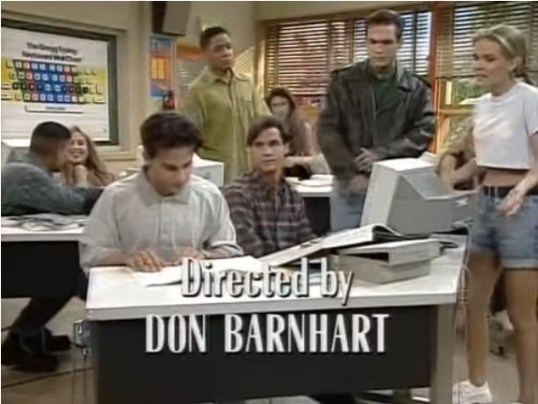
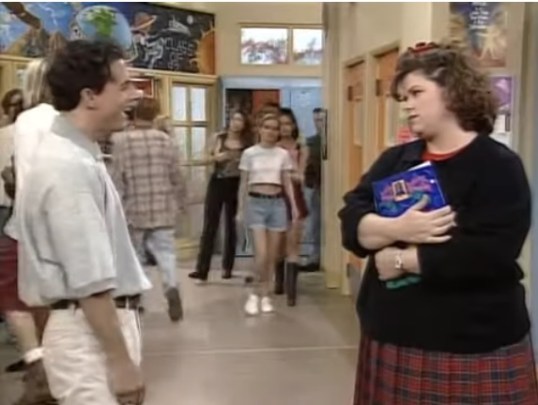
Retro Television Review: City Guys 1.9 “Future Shock” and 1.10 “Easy Money”


Welcome to Retro Television Reviews, a feature where we review some of our favorite and least favorite shows of the past!  On Thursdays, I will be reviewing City Guys, which ran on NBC from 1997 to 2001.  The entire show is currently streaming on Tubi!

Believe it or not, there’s a “lost” episode of City Guys.

According to Wikipedia, an episode called “The Movie” aired on November 1st, 1997.  Here’s the plot description: Jamal and Chris decide to make a film using the school’s video camera. Things gets hairy when Ms. Noble wants to see their progress on the yearbook video.  

Sound like fun, right?  Unfortunately, it appears that “The Movie” was not included in City Guys‘s syndication package and, as a result, it’s also not available to stream on Tubi or anywhere else online.  So, we’ll just have to accept that “The Movie” is lost to us.  That said, it is nice to see that the show apparently attempted to return to the video yearbook storyline.  For something that was supposed to be a big, year-long project, it certainly doesn’t appear that Chris and Jamal spent much time working on it.

For instance, in the two episodes that are reviewed below, they both manage to develop a gambling addiction and Jamal faces his own mortality.  But no one says a damn thing about the video yearbook.

Anyway, roll with the city guys!

City Guys 1.9 “Future Shock”

(Directed by Frank Bonner, originally aired on November 8th, 1997)

“Meet Charlie Gresham,” Ms. Noble tells Jamal after he runs into Charlie (Corey Parker) in Noble’s office, “your class president.”

But wait a minute?  Didn’t they elect a new class president in the previous episode?  As you may remember, Cassidy, Dawn, and El-Train were all running for the office.  Who the Hell is this Charlie Gresham guy?  I’ve already pointed out that, even in its first season, City Guys struggled with continuity but this has got to be one of the show’s most glaring examples of just not keeping track of stuff.  Did no one involved in the production care?  I mean, even Saved By The Bell managed to remember that Jessie was class president.

Charlie is a lovable and charismatic class clown who is also a straight A student.  He’s even got a scholarship to Harvard!  He and Jamal meet and become best friends the same day!  But then, the next morning, Ms. Noble announces that Charlie has been killed by a drunk driver.  Bye, Charlie!

Jamal is so upset over the death of someone who he’s known for less than 24 hours that he decides that there’s no point of studying to do well on his PSATs.  Character actor Clyde Kusatsu shows up as the therapist who is brought in to help everyone come to the terms with the death of a universally loved classmate whom none of them had ever mentioned before.  Kusatsu is always good.

Actually, the entire cast does a good job in this one.  It perhaps would have been more powerful if Charlie had actually been seen (or even referred to) prior to this episode but, given the show’s lack of concern with continuity, I wouldn’t be surprised if Charlie turns up alive in a future episode.  That said, Ms. Noble asking Jamal to deliver the eulogy at Charlie’s memorial service felt a bit weird.  They’d know each other for about 8 hours before Charlie died.  “I don’t know what to say!” Jamal says.  Yeah, I wouldn’t know what to say at a complete stranger’s funeral either.

Anyway, Charlie’s ghost comes back and encourages Jamal to keep on studying.  That was nice of him.  This episode ends with a totally unironic performance of Kumbaya.  That takes guts.

City Guys 1.10 “Easy Money”

(Directed by Frank Bonner, originally aired on November 15th, 1997)

Chris and Jamal start making bets on football games!  They make a ton of money and they’re even able to go out and buy totally happening portable televisions!

Unfortunately, when they try to become bookies themselves (don’t ask), they end up owing $400 to El-Train and his cousin.  Yes, El-Train returns in the episode.  When we last saw him, he was running for class president and determined to turn his life around.  In this episode, he’s back to being the much feared school bully.  He’s so intimidating that Chris and Jamal steal $400 from the school raffle.  These city guys may be smart and streetwise but are they really the neat guys?  I’m having my doubts.

Anyway, everyone confesses in the end and Ms. Noble punishes them by forcing them to clean the school furnace for free.  Unfortunately, Chris and Jamal also had to give back their portable televisions.  What a shame.

The message is don’t gamble but the subtext is that Jamal didn’t learn a damn thing from Charlie Gresham’s death.  Hopefully, next week’s episodes will find him behaving in a way that would have made Charlie proud.

Book Review: Altamont: The Rolling Stones, the Hells Angels, and the Inside Story of Rock’s Darkest Day by Joel Selvin


First published in 2016, Altamont: The Rolling Stones, the Hells Angels, and the Inside Story of Rock’s Darkest Day takes a look at the infamous free concert that was held at California’s Altamont Speedway in 1970.

The Free Concert was meant to be a sequel of sorts to Woodstock, with bands like Jefferson Airplane, Santana, Crosby Stills Nash and Young, The Grateful Dead, and the Flying Burrito Brothers teaming up with the Rolling Stones in order to give everyone a free day and night of good music and good vibes.  While the music may have good (seriously, what a line up!, even if the Dead ultimately refused to take the stage), the vibes were anything but.  Not only was the concert hastily put together but someone came up with the bright idea of getting the Hell’s Angels to provide security.  After a day that was frequently marred by violence (among the victims was Jefferson Airplane’s Marty Balin, who was actually knocked unconscious while the band was performing), Altamont came to an apocalyptic conclusion with the murder of a young concertgoer named Meredith Hunter.  The concert may have been sold as a west coast Woodstock but, instead, it become one of the events that is regularly cited as signifying the end of the 60s.

There’s a spectacular documentary called Gimme Shelter, which contains not only footage of the violence while it happened but also features scenes of lawyer Melvin Belli setting up the concert and performing for the camera.  (“I’m opening for the Stones,” he says at one point.)  While the documentary does a good job of showing what happened, it doesn’t dig into why it happened.  Fortunately, Joel Selvin’s Altamont provides a good, in-depth history of not just what happened at Altamont but also how it all came to be.  Selvin explores what led the Stones to holding a free concert in the first place and also how a mix of 60s naivete and greed led to catastrophe.  While the Stones come across as being a bit too detached from the counter culture to actually understand what they were dealing with at Altamont, the Grateful Dead come across as being in denial about the violence lurking underneath the scene.  Meanwhile, the other performers simply try to complete their set without getting sucked in to the bad vibes all around them.  Jefferson Airplane’s performance, which was vividly captured in Gimme Shelter, is revealed in its full horror in Selvin’s book.  (Having forgotten to put in her contact lenses, Grace Slick found herself trying to calm people who she could barely see.)  Of course, as bad as the Airplane’s experience was, they still had no problem leaving their drummer behind when they finally escaped the concert.  Poor Spencer Dryden.  (Apparently, the other members of the band had decided that they didn’t particularly Dryden so why not abandon him with the Hell’s Angels?  Someday, someone will make a very good movie about Jefferson Airplane.)

Selvin not only writes about the bands and the Hell’s Angels but also about some of the people at the concert, many of whom found themselves in a war zone.  Perhaps most importantly, he writes about Meredith Hunter and the life he led before that terrible night at Altamont.  As a writer, Selvin is compassionate but also honest.  Every character, from the famous to the forgotten, emerges from Selvin’s narrative as a complex and interesting human being.  Selvin humanizes the people involved with Altamont without ever trivializing the tragedy of it all.

Altamont is often held up as being the reverse image of Woodstock.  Of course, Woodstock ’99 ended up having more in common with Altamont than with the original three days of peace, love, and music.  Joel Selvin’s book is a fascinating look at how that happened and what it all means.

Cleaning Out The DVR: Urban Cowboy (dir by James Bridges)


Last night, I watched the 1980 film, Urban Cowboy.  This was a film that had been sitting on my DVR for over a year.  For some reason, I had never actually gotten around to watching it.  There were many times when I started to watch it but I always ended up stopping after a few minutes.  I was never quite sure why as everything that I had heard about the film was positive.  Having finally watched it last night, I think I hesitated because I instinctively knew that John Travolta would look silly wearing a cowboy hat.

And let’s just be honest.  He does.  I mean, Travolta actually gives a fairly good performance in Urban Cowboy.  He plays Bud, a kid from West Texas who moves to Houston so that he can work on an oil rig with his uncle, Bob (Barry Corbin).  At first, he only wants to stay in Houston long enough to raise the money to buy some land back home.  But, he soon falls in love with the Houston nightlife and the local country-western bar.  (He’s Travolta so, of course, he can dance.)  He also falls in love with and eventually marries Sissy (Debra Winger).

Travolta is believable as an impulsive young adult who might not be particularly smart but who makes up for it with a lot of determination.  And he even does an okay job when it comes to capturing the country accent of West Texas.  But that said, whenever he puts on that cowboy hat, the viewer is immediately reminded that Travolta is actually from New Jersey and probably never even attended a rodeo until he was cast in Urban Cowboy.  The hat feels like an affectation, an attempt by a city boy to be more country as opposed to a country boy trying to hold onto his identity in the city.  Ironically, the term “urban cowboy” has come to mean someone who, despite having never left the city, dresses like they’re heading out to herd the cattle and rope some steers.  However, in the film itself, the hat is meant to be a natural part of Bud’s persona but it never quite feels that way.

Far more credible as a cowboy is a youngish Scott Glenn, who plays Wes Hightower.  After Bud’s chauvinistic and abusive behavior drives Sissy away, she ends up with Wes.  Wes teaches Sissy how to ride a mechanical bull, which is something Bud tried to forbid her from doing.  Wes is confident and dangerously sexy and he can even make the fact that he lives in a run-down trailer work for him.  Unfortunately, Wes also turns out to be even more controlling and abusive than Bud.  Even though Bud still loves Sissy and Sissy still loves him, Bud soon hooks up with Pam (Madolyn Smith), the daughter of a wealthy oilman.

Many more complications follow and, of course, there’s one big tragedy that causes Bud to reexamine his life.  Not surprisingly, the film’s conclusion all comes down to who can stay on that mechanical bull for the longest….

The best thing that Urban Cowboy has going for it is not Travolta or Glenn but instead, it’s Debra Winger, who gives a believable and relatable performance as Sissy, playing her as someone who may not have much but who refuses to surrender her pride.  She knows that she deserves better than both Bud and Wes, even if she is hopelessly in love with one of them.  Winger has chemistry with both Travolta and Scott Glenn, which makes the film’s love triangle feel like something more than just a typical story about a girl who can’t resist a bad boy.  She grounds the film in reality and, as such, there are real stakes to the film’s story.  Thanks to Winger, Urban Cowboy becomes about something more than just a fight over a mechanical bull.

The second best thing that Urban Cowboy has going for it is that it does manage to capture the atmosphere of a good country-and-western bar.  It’s place where people go to relax after a hard day’s work.  Unlike the discotheques  that Travolta frequented in Saturday Night Fever, the bars in Urban Cowboy eschew glamour and artifice.  Instead, they’re all about proving yourself not on the dance floor but on the back of a mechanical bull.  For Sissy, the bull symbolizes freedom.  For men like Bud and Wes, it symbolizes survival.  Myself, I’m not a drinker so my bar experience is limited.  And, though I may be from Texas and I spent a lot of time in the country while I was growing up, I’ve never been a fan of country music.  That said, I’ve danced to a few country songs and I’ve certainly stopped by a few bars, even if I was usually the one who annoyed my family and friends by just asking for a glass of water.  I’ve been to the rodeo and I’ve seen people get trampled.  I’ve also seen a few people get tossed off a mechanical bull.  I’ve never been on a mechanical bull myself but I did buy one for my Sims.  (They loved it but, sadly, I had to get rid of it because they spent so much time riding it, they kept missing work and getting fired.)  From my limited experience, I can say that Urban Cowboy got most of the details right.  Even though it was made 42 years ago, it still feels authentic.

That said, Travolta still looks odd wearing a cowboy hat.

Film Review: Honk For Jesus. Save Your Soul. (dir by Adamma Ebo)


In Honk for Jesus Save Your Soul, Sterling K. Brown plays Lee-Curtis Childs, a once-popular and powerful preacher who is looking to make a comeback after his career and his church were both hit by a scandal.

Regina Hall plays Trinitie Childs, Lee-Curtis’s wife and the “first lady” of Wander The Great Paths Church.  She is just as determined as Lee-Curtis to make a comeback.

Together, they solve crimes!

Actually, they don’t.  They really don’t do much of anything, beyond trying and usually failing to talk people into returning to their church.  In archival footage, we see Lee-Curtis preaching the prosperity gospel and claiming that his faith in God is the reason why he not only has expensive clothes and a big house but that it is also the reason why he deserves them.  We see footage of Lee-Curtis in the past, condemning homosexuality from the pulpit but, in the present, Lee-Curtis seems to hit on almost every man that he meets.  Lee-Curtis is quick to smile and to speak of how he’s made his mistakes but he’s been forgiven by God.  At the same  time, he also always seems to be just one minute away from having a complete meltdown.

Trinitie spends her time trying to keep that meltdown from occurring.  She is someone who knows how to play the loving wife.  A meeting her mother establishes that being a loving wife is what Trinitie was raised to do.  It’s only in private that Trinitie reveals how difficult it is to be married to Lee-Curtis.  She wants the respect that comes from being married to a powerful man, enough so that she’ll even humiliate herself by standing on a street corner while holding a sign that requests for drivers to honk if they love Jesus.  When others attack her over her husband’s infidelities, she smiles and argues with them until she eventually reaches a point where she can smile no longer.

Regina Hall and Sterling K. Brown both give excellent performances, with Hall doing an especially good job of capturing Trinitie’s conflicting emotions over being the wife of Lee-Curtis Childs.  As played by Hall, Trinitie is someone who knows that she deserves better but who has also become addicted to the lifestyle that comes from being the first lady of a megachurch.  As such, she’ll do anything to help Lee-Curtis regain his former popularity.  While Lee-Curtis practices vapid sermons and wallows in self-pity, Trinitie is the one who is left to talk to the people that Lee-Curtis victimized.  Brown has the magnetism necessary to be credible as a man who could convince others that he was without sin.  Hall has the determination necessary to be credible as the power behind the pulpit.

Unfortunately, as good as both Hall and Brown are, the rest of the film is a complete mess.  It starts out as a mockumentary but then it includes scenes that are clearly not meant to have been filmed by the documentary film crew.  Unfortunately, there’s rarely any indication whether we’re watching a mockumentary scene or a “behind the scenes” scene and it’s left to the audience to sort out which is which.  Ultimately, the film’s main flaw is one that is shared by many films that have attempted to satirize the excesses of organized religion.  Honk for Jesus Save Your Soul doesn’t really bring anything new to the table.  At this point, is anyone shocked to discover that some pastors are corrupt?  Is anyone shocked to discover that religious people can also be hypocrites?  None of the criticism is quite as groundbreaking or shocking as the film seems to think that it is.  The movie feels like the equivalent of the atheist who thinks that he’s the first person to make the “But if God created everything, who created God?” argument.  When it comes to making an argument one way or another about organized religion, Honk for Jesus is as shallow and predictable as the God’s Not Dead franchise.  This wouldn’t matter, of course, if the film’s satire had any bite or was, at the very least, consistently humorous.  Unfortunately, this is pretty much a one joke movie.  It is, admittedly, funny the first time that Hall switches from yelling to smiling when she realizes that she’s on camera.  But, at one hour and 40 minutes, a satire needs more than one good joke.

The film is partially redeemed by Hall and Brown but ultimately, there’s little here that hasn’t been done better before.

Scenes That I Love: The Conclusion of The Passenger


Today’s scene that I love comes from 1975’s The Passenger, a film directed by Michelangelo Antonioni.  Antonioni was born 110 years ago today, in what was then the “Kingdom of Italy.”

In The Passenger, Jack Nicholson plays a journalist who, because he’s bored with his life, impulsively assumes the identity of a deceased American businessman.  What he discovers is that the businessman was an arms dealer and that the people that the arms dealer were doing business with still expect to get their weapons.  Despite the fact that he knows that it might cost him his life, Nicholson is still drawn to see just how far he can take his new existence.

The film’s enigmatic final scene, in which Nicholson goes to a hotel to wait as both the people who double-crossed and his wife search for him, is Antonioni at his best.

4 Shots From 4 Films: Special Nicolas Winding Refn Edition


4 (or more) Shots From 4 (or more) Films is just what it says it is, 4 (or more) shots from 4 (or more) of our favorite films. As opposed to the reviews and recaps that we usually post, 4 (or more) Shots From 4 (or more) Films lets the visuals do the talking.

Today, the Shattered Lens wishes a happy 52nd birthday to Danish director Nicholas Winding Refn!  Drive was one of the first films to really be celebrated on this site, receiving reviews from several contributors.  Personally, I preferred The Neon Demon.

In honor of of the man and his work, it’s time for….

4 Shots from 4 Nicolas Winding Refn Films

Bronson (2008, dir by Nicolas Winding Refn, DP: Larry Smith)

Drive (2011, dir by Nicolas Winding Refn, DP: Newton Thomas Sigel)

Only God Forgives (2013,dir by Nicolas Winding Refn, DP: Larry Smith)

The Neon Demon (2016, dir by Nicolas Winding Refn, DP: Natasha Braier)