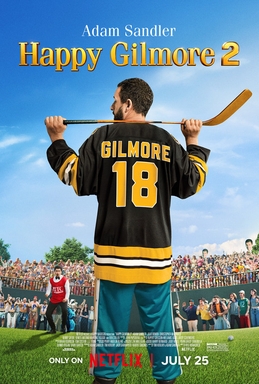
The Films of 2025: Happy Gilmore 2 (dir by Kyle Newacheck)


I love 1996’s Happy Gilmore and, over the past few months, I have very much been looking forward to the release of the long-delayed sequel, Happy Gilmore 2.  Still, I was a bit concerned when I opened the film on Netflix and discovered that the sequel had a nearly two-hour running time.  (The original clocked in at an efficient and fast-paced 90 minutes.)  Comedy is all about timing and, in general, shorter is funnier.  I know that Judd Apatow and Adam McKay might disagree with me on that but let’s be honest.  For all of the acclaim that it was met with, when was the last time you actually felt any desire to rewatch The King of Staten Island?  For that matter, if you have to pick between Anchorman or Anchorman 2, which are you going to pick?  The 90 minute original or the sequel that takes more than two hours to tell essentially the same story?

Having now watched the film, I can say that Happy Gilmore 2 does run a bit too long.  There are a few sequences that could have been trimmed without hurting the film.  I can also say that I thoroughly enjoyed the film.  I laughed more often than not.  It’s a funny film but it’s also a surprisingly touching one.

Taking place 29 years after the first film, Happy Gilmore 2 features an older and slightly more mature Happy.  It also features an older and slightly more mature Adam Sandler and, to its credit, the film acknowledges that.  It doesn’t try to convince us that Sandler and Gilmore are still the young hell-raisers that they once were.  (Happy’s Happy Place has changed considerably.)  I’ve often written that there are two Adam Sandlers.  There’s the youngish Sandler who made silly and often stupid films where he basically just hung out with his friends and didn’t seem to put much effort into anything.  That’s the Sandler who has won multiple Razzie awards.  And then there’s the older and wiser Adam Sandler, the sad-eyed character actor who gives sensitive performances as world-weary characters.  This is the Adam Sandler who seems to be overdue for an Oscar nomination.  If an alien came to Earth and only watched Adam Sandler’s serious films, they would probably think he was one our most-honored actors.  While Happy Gilmore 2 is definitely a comedy, it still features quite a bit more of the serious Sandler than I was expecting.

At the start of the movie, Happy is not in a happy place.  His grandmother has passed away.  His wife, Virginia, was killed by an errant tee shot.  He has four rambunctious sons and a daughter, Vienna (played by Sunny Sandler, who was so good in You Are So Not Invited To My Bat Mitzvah).  After Virginia’s death, Happy gave up golf.  He lost his money.  He lost his grandmother’s house.  Now, he’s working in a grocery store and he’s an almost forgotten figure.  He’s also an alcoholic, keeping bottles of liquor hidden around the house.  (A tiny liquor bottle is hidden in the cuckoo clock.)  And while this film is certainly not Uncut Gems or even The Meyerowitz Stories, Sandler still does a good job of capturing the reality of Happy’s depression.  There’s a true sense of melancholy running through the film’s first hour, as Happy returns to golf to try to make enough money to pay for Vienna to attend a prestigious dance academy.  The second hour, in which Happy leads a team of pro golfers against a team of “extreme” athletes is far more goofier but Happy’s love for his family is a theme that runs through the entire film.

Aging is the other theme that runs through the film.   Forced to play with three younger players (including Eric Andre and Margaret Qualley) at a local golf course, the rusty Happy grimaces when he hears one of them say, “Is he trying to do the Happy Gilmore swing?”  When Happy rejoins the PGA, he discovers that all of the younger players now hit the ball as hard as he used to.  An obnoxious tech bro (Benny Safdie) wants to start a new, extreme golf league, one that will “continue the revolution” that Happy started.  Happy finds himself defending traditional golf and it’s an acknowledgement that both Gilmore and Adam Sandler have grown up and have come to appreciate that not everything needs to change.  Sometimes, you just want to play a nice round of golf on a pretty course without having to deal with the sensory overload of the 2020s.

It’s a funny movie.  Even when he’s playing it straight, Sandler still knows how to deliver a funny line.  Ben Stiller returns as Hal L., who is now an addiction recovery specialist.  (His techniques include ordering people to wash his car.)  Christopher McDonald also returns as Shooter McGavin, having escaped from a mental asylum and now fighting, alongside Happy, to save the game that they both love.  As someone who always felt that Shooter kind of had every right to be upset during the first film, I was happy to see him get a bit of redemption.  Several professional golfers appear as themselves.  A running joke about Scottie Scheffler getting arrested and then forcing all of his cellmates to watch golf made me laugh a lot more than I was expecting it too.

The sequel is full of shout-outs to the first film.  A fight in a cemetery reveals that everyone who died during and after the first film just happens to have a gravestone and it was actually kind of a nice tribute.  (Even the “Get Me Out Of Here” Lady gets a headstone.)  It’s a sequel that truly appreciates and values the legacy and the fans of the first film.  It’s also a sequel that seems to truly love the game of golf, which is not necessarily something that could be said about the first film.

Happy Gilmore 2 is a worthy sequel, even if it is a bit long.  It made me laugh but, at the same time, it was hard not to be touched by the obvious love that Happy had for his family and that they had for him.  (It didn’t hurt that Happy’s daughter was played by Sandler’s daughter.)  In the first film, Happy played golf for his grandmother.  In the second film, he returns to the game for his daughter.  It’s all about family, as Adam Sandler’s unexpectedly heartfelt performance makes clear.

Scene That I Love: Bob Barker Beats Up Happy Gilmore


Happy Gilmore 2, the sequel to my favorite golf movie, is currently available on Netflix.  I’ll be watching it later today.  I have no idea if it’s any good or not.  I’m hoping for the best, though.

Anyway, this seems like a good time to share the best scene from the original Happy Gilmore.  In this scene, Happy and Bob Barker team up for a celebrity tournament.  It does not go well.  Reportedly, Barker initially turned down this cameo and only changed his mind after he was assured that he would win the fight.

4 Shots From 4 Films: Special 1974 Edition


4 Or More Shots From 4 Or More Films is just what it says it is, 4 shots from 4 of our favorite films. As opposed to the reviews and recaps that we usually post, 4 Shots From 4 Films lets the visuals do the talking!

Today, we pay tribute to a great year in cinema.  It’s time for….

4 Shots From 4 1974 Films

The Godfather Part II (1974, dir by Francis Ford Coppola, DP: Gordon Willis)

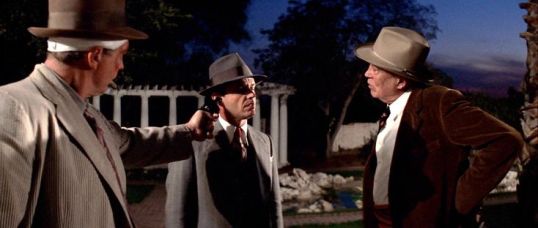
Chinatown (1974, dir by Roman Polanski, DP: John A. Alonzo)

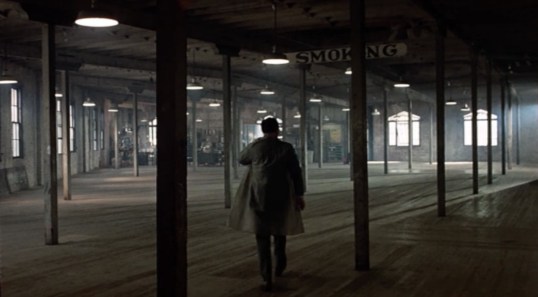
The Conversation (1974, dir by Francis Ford Coppola, DP: Bill Butler and Haskell Wexler)

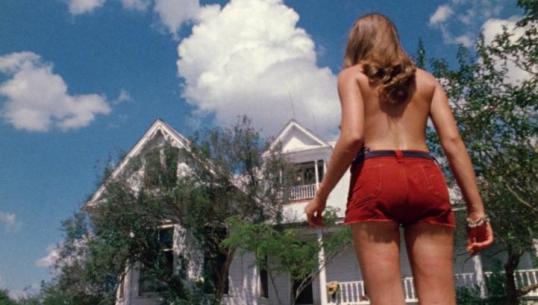
The Texas Chainsaw Massacre (1974, dir by Tobe Hooper, DP: Daniel Pearl)

Late Night Retro Television Review: Highway to Heaven 4.6 “Playing for Keeps”


Welcome to Late Night Retro Television Reviews, a feature where we review some of our favorite and least favorite shows of the past!  On Thursdays, I will be reviewing Highway to Heaven, which aired on NBC from 1984 to 1989.  The entire show is currently streaming on Tubi and several other services!

This week, Highway to Heaven makes a mockery of legitimate theater.

Episode 4.6 “Playing for Keeps”

(Dir by Michael Landon, originally aired on November 4th, 1987)

Jonathan and Mark are directing a play!

The play stars movie star Rhett Clark (Eric Douglas, the least talented son of Kirk Douglas).  Rhett plays a young man who is struggling to come to terms with the impending death of his father.  In the play, Rhett’s father is played by his actual father, Jackie Clark (Donald O’Connor), a old-time comedian who can’t get work anymore.

It’s not an easy rehearsal process.  Rhett resents his father.  Jackie wants to tell jokes.  He wants to put on  a dress and a wig because, according to him, all of his fans will want to see him play “Aunt Jackie.”  Rhett explains that the play is not a comedy.  There’s no room for Aunt Jackie.  Really, explaining all of that should have been Jonathan’s job.  He’s the director!

The problem with this episode is that we’re supposed to be angry at Rhett for not supporting his father’s attempts to turn the play into a vaudeville comedy but actually, Jackie’s a jerk.  Rhett’s a jerk too but he’s a jerk who understands that, when you’re doing a dramatic play, the actor playing a dying man can’t suddenly get out of his hospital bed, duck into a closet, and then come out as Aunt Jackie.  An actor ad-libbing dialogue and then turning the play into a comedy because he’s petulant and insecure is not the type of behavior that would be tolerated in all-volunteer community theater, much less on a professional stage.  The fact that Jackie is getting paid to appear in the show makes his unprofessional conduct all the more annoying.

This episode puts on the blame on Rhett.  We’re meant to see Rhett as the ungrateful son who refuses to see things from his father’s point of view.  Because Rhett is being played by Eric Douglas, an actor who did not exactly have the most likable screen presence, it’s easy to blame him.  I mean, everyone loves Donald O’Connor,  But honestly, Jackie is the jerk here.

How big of a jerk is Jackie?  On opening night, he gets mad at his son and does his Aunt Jackie schtick.  Somehow, this leads to Rhett and Jackie reconciling and hugging it out while the audience applauds.  Honestly, though, it should have led to Jackie being fired.  If you’re not going to be professional, you have to go.  This episode would have been far more touching if Jackie had been willing to put his ego aside and actually allow his son to have the spotlight for once.

This episode will definitely not be remembered as one of my favorites of the series.  In the past, I’ve defended this show’s tendency to go for sentimentality over realism but this episode just pushed things a little too far.

Retro Television Review: Malibu CA 2.23 “The Houseguest”


Welcome to Retro Television Reviews, a feature where we review some of our favorite and least favorite shows of the past!  On Thursdays, I will be reviewing Malibu CA, which aired in Syndication in 1998 and 1999.  Almost the entire show is currently streaming on YouTube!

Yes, this is from the first season. I don’t care. I refuse to waste my time looking for a second season advertisement.

This week, it’s competition to see who can be the worst character.

Episode 2.23 “The Houseguest”

(Dir by Gary Shimokawa, originally aired on April 29th, 2000)

A recurring theme for these reviews is that Lisa (the character, not me) is the worst.  Amazingly, in this episode, she’s only the third worse.

The second worse is Jason.  When Murray announces that he’s going to be spending the week at a convention for surfers, he leaves the key to his apartment with Lisa at the Surf Shack so that Lisa can give the key to the house sitter.  Jason and Scott, wondering why they’ve never been invited to Murray’s apartment, steal both the key and the note that Murray left.  Along with Lisa, they go to his apartment and break in.  It turns out that Murray, who is the son of a multi-millionaire, has a really nice apartment that has a hot tub in the living room!  In other words, he’s a rich guy with a rich apartment.

Now, there’s a few things to consider, when it comes to deciding who is the worst of these three.  First off, all three of them are breaking into Murray’s apartment despite the fact that he’s made it clear that he doesn’t want them there.  Secondly, thanks to Jason and Scott, Murray’s house sitter is now out of a job because they didn’t get the key or the note telling them where the apartment was located.  Third, Jason decides to move into the apartment and pretend that he owns it because he has a crush on the lingerie model living next door.

When Murray comes back unexpectedly, Jason tells Murray that Peter’s aunt just died and Peter would appreciate it if Murray spent a week living at the Collins house.  Jason then tells Peter and Scott that Murray’s aunt died and that he needs a place to stay for a week.  This is the dumbest freaking thing I have ever seen.  Why would Jason come up with two lies that would definitely fall apart as soon as Murray or Peter or Scott, for that matter, had any sort of casual conversation?

Regardless of his logic (or lack of it), it’s all enough to position Jason as being worse than both Scott and even Lisa.

And yet,  of all the character in this particular episode, Jason is only the second worse.  Alex (Suzanne Davis) is even more terrible than Jason in this episode.  When soap opera star Traycee says that she needs to hire an assistant, Alex volunteers for the job.  At first, Traycee tells Alex to fill in for Lisa at the Surf Shack so Traycee can take Lisa to the new Matt Damon movie.  (I hope they enjoyed The Talented Mr. Ripley.)  Then Tracyee orders Alex to “detail” Peter’s car.  That all made me laugh but then Alex insisted on helping Traycee out on the show.  Traycee lets Alex read the latest script for her show.  Alex gets offended by the script, telling Traycee that, since she’s playing a doctor, she needs to stand up for herself and tell the producer that she’s not going to wear a bikini in all of her scenes.  Even though Traycee doesn’t want to, she tells the producer exactly what Alex told her to say.  And Traycee gets fired.

Why is Alex the worse?  Alex is correct that the soap opera is exploitive and sexist and not a realistic portrayal of life in hospital.  However, Alex is not the one on the show.  Traycee is one on the show and she’s happy with her job and she’s certainly making more money as an actress on a soap opera than Alex is making as lifeguard or Lisa is making as a waitress.  It’s not Alex’s place to tell Traycee to refuse to do a scene, especially when Traycee herself doesn’t have any objection to anything in the script.  Traycee does get her job back, on the condition that she fire Alex.  “Okay,” Traycee said, “you’re fired.”  YAY, TRAYCEE!

(To be honest, there’s something a little hypocritical about Malibu CA criticizing a show for featuring women in bikinis when every episode of Malibu CA might as well have been shot with ogle cam.)

This was a bad episode but, to give credit where credit is due, Brandon Brooks and Priscilla Inga Taylor once again showed that they were the only two consistently good things about Malibu CA.  Even though they were playing caricatures, both Brooks and Taylor brought a lot of energy and sincerity to their performances.  It made Murray and Traycee the only likable characters on both this particular episode and the series overall.

Only three more episodes to go!  My nightmare will soon be over.

Scenes That I Love: The Airport Showdown From Bullitt


96 years ago today, the English director Peter Yates was born in Aldershot, Hampshire.  Yates would go on to direct films in almost every genre but today, he’s perhaps best-remembered for directing what is considered to be one of the first great cop films, 1968’s Bullitt.  I already shared the film’s classic car chase film for Steve McQueen’s birthday so today, I’m going to share the airport showdown.

4 Shots From 4 Films: Special Gus Van Sant Edition


4 Or More Shots From 4 Or More Films is just what it says it is, 4 shots from 4 of our favorite films. As opposed to the reviews and recaps that we usually post, 4 Shots From 4 Films lets the visuals do the talking!

Today the Shattered Lens wishes a happy birthday to one of the pioneers of American independent cinema, Gus Van Sant!

It’s time for….

4 Shots From 4 Gus Van Sant Films

Drugstore Cowboy (1989, dir by Gus Van Sant, DP: Robert Yeoman)

To Die For (1995, dir by Gus Vant Sant, DP: Eric Alan Edwards)

Gerry (2002, dir by Gus Van Sant, DP: Harris Savides)

Elephant (2003, dir by Gus Van Sant, DP: Harris Savides)