Late Night Retro Television Review: Friday the 13th: The Series 3.8 “Night Prey”


Welcome to Late Night Retro Television Reviews, a feature where we review some of our favorite and least favorite shows of the past! On Fridays, I will be reviewing Friday the 13th: The Series, a show which ran in syndication from 1987 to 1990. The entire series can be found on YouTube!

This week on Friday the 13th: The Series, Micki and Jack come across vampires in their city but the real threat comes from the man who has dedicated his life to destroying them.

Episode 3.8 “Night Prey”

(Dir by Armand Mastroianni, originally aired on November 13th, 1989)

Back in 1969, Kurt Bachman (Michael Burgess) could only watch helplessly as his wife was abducted and turned into a creature of the night by vampire Evan Van Hellier (Eric Murphy).  Kurt has spent twenty years searching for Evan and trying to kill other vampires.  (Jill Hennessy makes her second appearance on Friday the 13th, this time playing a vampire who lures an unsuspecting victim into an alley.)  However, Kurt now has a new tool at his disposal.  He has a cursed crucifix that can destroy a vampire but only after it is first used to kill an innocent person.  Kurt may be trying to do the right thing by ridding the world of vampires but, as is so often the case with this show, it’s impossible to do the right thing while using a cursed object.  Kurt gets his revenge but at the cost of his own life.  Spilling blood to destroy a bloodsucker just doesn’t work in the long term.

This is another episode in which Jack gets involved after a friend of his is killed.  Poor Jack.  He friends were always dying.  In this case, Jack’s friend was a priest who attempted to keep Kurt from stealing the crucifix.  (Kurt, for all that he’s suffered, doesn’t really seem to be too upset over killing an innocent priest.  Maybe his obsession got the better of him.  Maybe Kurt was just a jerk.)  Jack and Micki investigate the local decadent vampire scene while Johnny stays at the store and has pizza and beer.  Jack confesses that he sometimes envies the vampires but fear not, Jack does not go over to the dark side.  For that matter, neither does Micki.  They both learned their lesson the last time they had to deal with a vampire.

This was a stylish episode, though the idea of vampires being decadent, leather-clad nightclubbers is not really as shocking an idea as the show seems to think it is.  Michael Burgess gives a good performance as the obsessed Kurt.  In  the end, he destroys the vampire who abducted his wife but at the cost of his own soul as his now vampiric wife puts the bite on him and soon, Kurt is a vampire himself.  Fortunately, Jack has some holy water to take care of that.  People spend so much time on stakes and crucifixes that they overlook the power of holy water.  This episode was full of atmosphere and I always like it when Jack gets to do something more than just wait back at the store.  This was a good Friday.
Shattered Politics: The Front Runner (dir by Jason Reitman)


Based (loosely, I assume) on a true story, 2018’s The Front Runner tells the story of a politician named Gary Hart (played by Hugh Jackman).

The year is 1987 and former U.S. Sen. Gary Hart is preparing to announce that he will be seeking the Democratic nomination for the Presidency of the greatest nation of all time, the United States!  (YAY!)  Hart is widely seen as the front runner, for both the nomination and the general election.  He’s got the youth vote sewn up.  He’s energetic.  He’s supposed to be intelligent.  We are told that he is handsome and charismatic.  (I say “told” because, in this film, they seem to be informed attributes as Hugh Jackman is given a truly terrible haircut and his performance here is a bit on the dull side.)  Hart announced his candidacy while standing in the Rocky Mountains.  His wife (Vera Farmiga) is behind him, even if she chooses not to join him on the campaign trail.  His campaign manager (J.K. Simmons) is welcoming new and idealistic volunteers to the campaign headquarters and encouraging them to remember that all of the difficulties of the campaign will be worth it after Gary Hart is elected president.  As for the press, they’re investigating long-standing rumors that Hart is a womanizer.  “Follow me around, you’ll get bored,” Hart says.  So, two reporters from the Miami Herald (Bill Burr and Steve Zissis) do just that they catch a young woman named Donna Rice (Sara Paxton) apparently staying over at Gary Hart’s Florida townhouse.

“It’s nobody’s business!” Hart snaps, when asked about his private life and it’s obvious that the film expects us to take Hart’s side.  The problem, as Hart’s campaign manager points out, is that a lot of people are volunteering for Hart’s campaign and have sacrificed a lot to help him out and now, if Hart doesn’t figure out some way to deal with the story, it looks like it was all for nothing.  Even if Hart didn’t cheat with Rice, he still showed remarkably poor judgment in spending time alone with her in Florida while his wife was back in Colorado.  The film argues that the press went overboard pursuing the story and perhaps they did.  The press tends to do that and really, no politician has any excuse not to realize that.  But, even if we accept the argument that the press acted unethically, that doesn’t exactly exonerate Gary Hart, though this film certainly seems to think that it does.  To a certain extent, this film reminded me a bit of James Vanderbilt’s Truth, in which it was assumed we would be so outraged that Cate Blanchett’s Mary Mapes was fired for producing a story about George W. Bush’s time in the National Guard that we would overlook that Mapes and CBS news tried to build a major story around a bunch of obviously forged documents.

(Of course, if Hart had been running today, I doubt the scandal would have ended his campaign.  If anything, Donald Trump’s personal scandals seemed to play to his advantage when he ran in 2016 and 2024.  To a find a 21st Century equivalent to Hart’s scandal, you’d probably have to go all the way back to John Edwards in 2008.  Of course, Edwards was cheating on his wife while she was dying of breast cancer, which makes Edwards a special type of sleaze.)

As for the film itself, director Jason Reitman tries to take a Altmanesque approach, full of overlapping dialogue and deceptively casual camera moments.  There are a few moments when Reitman’s approach work.  The start of the film, in which the camera glided over hundreds of journalists reporting from outside the 1984 Democratic Convention, was so well-handled that I briefly had hope for the rest of the film.  Reitman gets good performances from dependable veterans like J.K. Simmons and Alfred Molina.  But, at the heart of the film, there’s a massive blank as Hugh Jackman gives an oddly listless performance as Hart.  The film expects us to take it for granted that Gary Hart would have been a good President but there’s nothing about Jackman’s performance to back that up.  It’s odd because, typically, Hugh Jackman is one of the most charismatic actors around.  But, as Gary Hart, he comes across as being petulant and a bit whiny.

It’s an interesting story but ultimately, The Front Runner doesn’t do it justice.


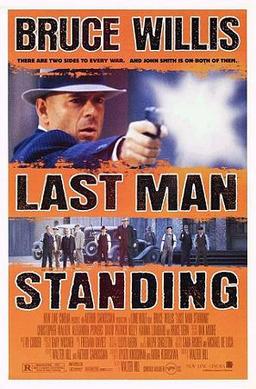
Last Man Standing (1996, directed by Walter Hill)


During the 1920s, at the height of prohibition, a mysterious man named John Smith (Bruce Willis) arrives in the dusty town of Jericho.  Jericho sits on the border, between Texas and Mexico, and it is the site of a gang war.  The Italian mob, led by Fred Strozzi (Ned Eisenberg) and Giorgio Carmote (Michael Imperioli), is trying to move in on the Irish mob, led by Doyle (David Patrick Kelly) and his fearsome gunman, Hickey (Christopher Walken).  After the members of the Irish mob destroy his car and leave him stranded in town, Smith offers his services as a gunman to the Italians.  Strozzi hires him but it turns out that Smith has his own agenda and soon, he is manipulating both gangs against each other.

Last Man Standing was Walter Hill’s remake of Yojimbo, with Bruce Willis playing an Americanized version of Toshiro Minfune’s wandering ronin.  (Hill does the right thing and gives Kurosawa credit for the film’s story.)  Now, it should be understood that this is in no way a realistic film.  It makes no sense for two Chicago-style gangs to be fighting over a ghost town in Texas.  Even when it came to smuggling in liquor during the prohibition era, most of it came over the Canadian border rather than the Texas border.  But Walter Hill has always been more about filming the legend than worrying about realism.  He’s the ultimate stylist, creating movies the come together to create an American mythology.  Last Man Standing is a work of pure style, a combination western/gangster movie that pays tribute to the ultimate samurai film.  Gangsters meeting in the desert while tumbleweed rolls past may not make sense but Hill knows a good visual when he sees one and he makes it work.  The plot is taken from Yojimbo.  The western setting is taken from A Fistful of Dollars.  And the gangsters are pure Americana.

Willis, back in his action star heyday, is quick with a gun and a quip and he gets a few scenes that show that, while he may be bad, he’s not as bad as the gangsters in charge of the town.  Hill surrounds Willis with a cast of great character actors, including Bruce Dern as the cowardly sheriff and William Sanderson as the owner of the hotel.  Though he might not be as well-known as some members of the cast, I especially liked Ken Jenkins as the Texas Ranger who informs Willis that he has ten days to finish up his business before the Rangers come to town and kill whoever is still standing.  And then you’ve got Walken, in one of his best villainous roles.  Hickey doesn’t show up until pretty late in the movie but we’ve spent so much time hearing about him that we already know he’s the most dangerous man in Texas and Walken gives a performance that lives up to the hype.

Unappreciated when it was first released, Last Man Standing has stood the test of time as one of Walter Hill’s best.

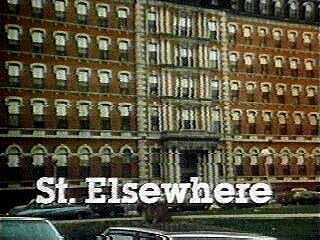
Retro Television Review: St. Elsewhere 1.17 “Brothers”


Welcome to Retro Television Reviews, a feature where we review some of our favorite and least favorite shows of the past! On Fridays, I will be reviewing St. Elsewhere, a medical show which ran on NBC from 1982 to 1988.  The show can be found on Hulu and, for purchase, on Prime!

Another day, another death in Boston.

Episode 1.17 “Brothers”

(Dir by Mark Tinker, originally aired on March 15th, 1983)

I swear, St. Eligius must have the worst security guards in Boston.

In this episode, Walter Schaefer (Pat Hingle), a blue collar fisherman, manages to smuggle a freaking hunting rifle into the hospital so that he can use it to kill his brother, Arthur (Richard Hamilton).  Arthur was dying of cancer and didn’t have much time left.  Walter had previously begged Dr. Westphall to cease giving Arthur chemotherapy and to just let his misery come to an end.  Westphall declined to do so so Walter killed his brother.  The episode was designed to make the viewer feel that Walter had no choice but …. eh, I don’t know.  I’m not a fan of euthanasia and I find the enthusiasm for it in television and film to be a bit icky.  This episode’s treatment of the issue was about as heavy-handed as they come.  And seriously, couldn’t Walter have just smothered Arthur with a pillow or something?  Shooting a man is dramatic but now I’m wondering about who had to clean up the room afterwards.  Plus. Arthur was hooked up to a bunch of medical equipment that was probably ruined as well.

(I don’t know, it’s hard for me to judge this storyline.  My Dad died in hospice care and I had to sign a DNR order before he could start it.  The aggressiveness that those people showed in demanding that I sign the order still haunts me.)

On a lighter note, Ehrlich managed to get another date with Shirley, despite the fact that their previous date ended with Ehrlich drunk and making a fool of himself.  Fiscus recommended a nice romantic restaurant.  Of course, when Ehrlich couldn’t make the date due to his work as a doctor, Fiscus took Shirley to the restaurant.  The end result is that Shirley has a crush on Fiscus and Fiscus needs to find a new place to stay because Ehrlich responded by kicking him out of the apartment.

Speaking of relationships, Dr. White is such a sleaze!  He’s separated from his wife so he’s now involved with a nurse.  While talking to that nurse on the phone, White was flirting with another nurse.  But then, Dr. White happened to see his wife out with another man and decided he had the right to get all jealous.  Ugh!  What a jerk!

Finally, the episode ended with Nurse Rosenthal on the operating table, about to undergo a mastectomy.  This was the subplot that actually got to me, not all of the stuff about Walter murdering his brother.  Christina Pickles, who has been such a steady presence during the first season, gave a wonderful performance as Rosenthal tried to keep it together as the day of her surgery approached.  This storyline brought tears to my eyes and that’s really all I have to say about it.

This was an uneven episode.  The stuff with the brothers didn’t do much for me but, when the episode just focused on the doctors and the nurses, it shined.

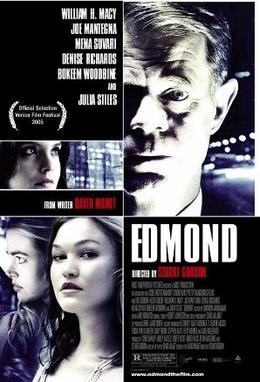
Days of Paranoia: Edmond (dir by Stuart Gordon)


Based on a one-act play by David Mamet, 2005’s Edmond tells the story of Edmond Burke (William H. Macy).

Edmond shares his name (if not the actual spelling) with the philosopher Edmund Burke.  Edmund Burke was a strong believer that society had to put value in good manners to survive and that religious and moral institutions played an important role in promoting the idea of people treating each other with respect and decency.  Edmund Burke knew what he believes and his writings continue to influence thinks to this day.  Edmond Burke, on the other hand, doesn’t know what he believes.  He doesn’t know who he wants to be.  All he knows is that he doesn’t feel like he’s accomplished anything with his life.  “I don’t feel like a man,” he says at one point to a racist bar patron (played by Joe Mantegna) who replies that Edmond needs to get laid.

On a whim, Edmond steps into the shop of a fortune teller (Frances Bay), who flips a few Tarot cards and then tells Edmond that “You’re not where you’re supposed to be.”  Edmond takes her words to heart.  He starts the night by telling his wife (played by Mamet’s wife, Rebecca Pidgeon) that he’s leaving their apartment and he won’t be coming back.  He goes to the bar, where he discusses his marriage with Mantegna.  He goes to a strip club where he’s kicked out after he refuses to pay $100 for a drink.  He goes to a peep show where he’s frustrated by the glass between him and the stripper and the stripper’s constant demand that he expose himself.  He gets beaten in an alley by three men who were running a three-card monte scam.  Edmond’s problem is that he left home without much cash and each encounter leads to him having less and less money.  If he can’t pay, no one wants to help him, regardless of how much Edmond argues for a little kindness.  He pawns his wedding ring for $120 but apparently, he just turns around and uses that money to buy a knife.  An alley-way fight with a pimp leads to Edmond committing his first murder.  A one-night stand with a waitress (a heart-breaking Julia Stiles) leads to a second murder after a conversation about whether or not the waitress is actually an actress leads to a sudden burst of violence.  Edmond ends up eventually in prison, getting raped by his cellmate (Bookem Woodbine) and being told, “It happens.”  Unable to accept that his actions have, in one night, led him from being a businessman to a prisoner, Edmond says, “I’m ready to go home now.”  By the end of the film, Edmond realizes that perhaps he is now where he was meant to be.

It’s a disturbing film, all the more so because Edmond is played by the likable William H. Macy and watching Macy go from being a somewhat frustrated but mild-mannered businessman to becoming a blood-drenched, racial slur-shouting murderer is not a pleasant experience.  Both the play and the film have generated a lot of controversy due to just how far Edmond goes.  I don’t see either production as being an endorsement of Edmond or his actions.  Instead, I see Edmond as a portrait of someone who, after a lifetime of being willfully blind to the world around him, ends up embracing all of the ugliness that he suddenly discovers around him.  He’s driven mad by discovering, over the course of one night, that the world that is not as kind and well-mannered as he assumed that it was and it all hits him so suddenly that he can’t handle it.  He discovers that he’s not special and that the world is largely indifferent to his feelings.  He gets overwhelmed and, until he gets his hands on that knife, he feels powerless and emasculated.  (The knife is an obvious phallic symbol.)  It’s not until the film’s final scene that Edmond truly understands what he’s done and who he has become.

Edmond is not always an easy film to watch.  The second murder scene is truly nightmarish, all the more so because the camera remains on Edmond as he’s drenched in blood.  This is one of William H. Macy’s best performances and also one of his most disturbing characters.  That said, it’s a play and a film that continues to be relevant today.  There’s undoubtedly a lot of Edmonds out there.

The Eric Roberts Collection: Beyond The Trophy (dir by Daniel J. Gillin)


Does this plot sound familiar?

There’s a gang war brewing.  An undercover cop is sent into one of the gangs and ends up falling in love.  Another cop is involved in the undercover operation but he’s actually working for one of the mob bosses.  And then there’s a Russian mob boss who keeps complicating things.  The whole thing plays out with a lot of scenes of people pointing guns at each other and randomly shouting before gunfire erupts.  No one can trust.  There’s plenty of twists.  There’s narration from one of the mob bosses.  The plot is actually pretty confusing as one person after another turns out to be working for someone else.  The whole thing leads to so many betrayals that it almost become comical in its indulgence.

The Departed, you say?

No, this isn’t a Scorsese film.  Instead, this is 2012’s Beyond The Trophy, which  has a plot that borrows a lot from The Departed.  Then again, the film actually borrows a lot from every other mobster film that’s ever been made.  Most gangster films aren’t really about the activities of real-life gangsters as much as they’re about recreating the classic film scenes that the director enjoyed while growing up.  As a result, we get a few Scorsese-style freeze frames to go along with the narration.  We get plenty of Tarantino-style stand-offs.  We got the Russian mob because every film has to have the Russian mob nowadays.

We also get Michael Madsen and Eric Roberts.  Roberts plays Sgt. Bachman and his role is small.  He smiles while barking out orders and he looks after his daughter, another undercover cop named Chastity (Brooke Newton).  Roberts doesn’t get to do much and I’m not sure how many big city police departments are run by people with long hair but he’s Eric Roberts.  You can’t help but love him.  As for Madsen, he narrates in his trademark threatening whisper.  Madsen is one of those actors who was born to play tough guys so he’s credible as a mob boss, even if he doesn’t really put much effort into the film.  You can usually tell whether or not Madsen is invested in a film by whether or not he bothers to wash his hair.  For the most part, his hair look pretty oily in this film.

The majority of the film revolves around Stephen Cloud and Michael Masini as the two cops and they both give credible-enough performances.  Because the script is basically just a recreation of scenes from other mob films, neither one really gets a chance to surprise us.  The one member of the cast who actually does manage to break free and make an impression is Robert Miano, who makes his Vegas mob boss into a somewhat sympathetic figure.

File this one under standard mafia nonsense.

Previous Eric Roberts Films That We Have Reviewed:

  1. Star 80 (1983)
  2. Runaway Train (1985)
  3. Blood Red (1989)
  4. The Ambulance (1990)
  5. The Lost Capone (1990)
  6. Love, Cheat, & Steal (1993)
  7. Voyage (1993)
  8. Love Is A Gun (1994)
  9. Sensation (1994)
  10. Dark Angel (1996)
  11. Doctor Who (1996)
  12. Most Wanted (1997)
  13. Mercy Streets (2000)
  14. Wolves of Wall Street (2002)
  15. Mr. Brightside (2004)
  16. Six: The Mark Unleased (2004)
  17. Hey You (2006)
  18. Amazing Racer (2009)
  19. In The Blink of an Eye (2009)
  20. Enemies Among Us (2010)
  21. The Expendables (2010) 
  22. Sharktopus (2010)
  23. The Dead Want Women (2012)
  24. Deadline (2012)
  25. The Mark (2012)
  26. Miss Atomic Bomb (2012)
  27. Bonnie And Clyde: Justified (2013)
  28. Lovelace (2013)
  29. The Mark: Redemption (2013)
  30. Self-Storage (2013)
  31. A Talking Cat!?! (2013)
  32. This Is Our Time (2013)
  33. Inherent Vice (2014)
  34. Road to the Open (2014)
  35. Rumors of War (2014)
  36. Amityville Death House (2015)
  37. A Fatal Obsession (2015)
  38. Stalked By My Doctor (2015)
  39. Enemy Within (2016)
  40. Joker’s Poltergeist (2016)
  41. Prayer Never Fails (2016)
  42. Stalked By My Doctor: The Return (2016)
  43. The Wrong Roommate (2016)
  44. Dark Image (2017)
  45. Black Wake (2018)
  46. Frank and Ava (2018)
  47. Stalked By My Doctor: Patient’s Revenge (2018)
  48. Clinton Island (2019)
  49. Monster Island (2019)
  50. The Reliant (2019)
  51. The Savant (2019)
  52. Seven Deadly Sins (2019)
  53. Stalked By My Doctor: A Sleepwalker’s Nightmare (2019)
  54. The Wrong Mommy (2019)
  55. Exodus of a Prodigal Son (2020)
  56. Free Lunch Express (2020)
  57. Her Deadly Groom (2020)
  58. Top Gunner (2020)
  59. Deadly Nightshade (2021)
  60. The Elevator (2021)
  61. Just What The Doctor Ordered (2021)
  62. Killer Advice (2021)
  63. The Poltergeist Diaries (2021)
  64. The Rebels of PT-218 (2021)
  65. A Town Called Parable (2021)
  66. Bleach (2022)
  67. My Dinner With Eric (2022)
  68. Aftermath (2024)
  69. The Wrong Life Coach (2024)
  70. When It Rains In L.A. (2025)

Live Tweet Alert: Join #FridayNightFlix for Top Gun!


As some of our regular readers undoubtedly know, I am involved in a few weekly watch parties.  On Twitter, I host #FridayNightFlix every Friday and I co-host #ScarySocial on Saturday.  On Mastodon, I am one of the five hosts of #MondayActionMovie!  Every week, we get together.  We watch a movie.  We tweet our way through it.

Tonight, at 10 pm et, I will be hosting #FridayNightFlix!  The movie?  1986’s Top Gun, with Tom Cruise and Val Kilmer!

If you want to join us this Friday, just hop onto twitter, start the movie at 10 pm et, and use the #FridayNightFlix hashtag!  I’ll be there tweeting and I imagine some other members of the TSL Crew will be there as well.  It’s a friendly group and welcoming of newcomers so don’t be shy.

Top Gun is available on Prime!

See you there!

Song of the Day: Iron Man by Black Sabbath


Why not?

I am Iron Man

Has he lost his mind?
Can he see or is he blind?
Can he walk at all
Or if he moves will he fall?

Is he alive or dead?
Has he thoughts within his head?
We’ll just pass him there
Why should we even care?

He was turned to steel
In the great magnetic field
When he travelled time
For the future of mankind

Nobody wants him
He just stares at the world
Planning his vengeance
That he will soon unfurl

Now the time is here
For Iron Man to spread fear
Vengeance from the grave
Kills the people he once saved

Nobody wants him
They just turn their heads
Nobody helps him
Now he has his revenge

Heavy boots of lead
Fills his victims full of dread
Running as fast as they can
Iron Man lives again

Writer/s: Anthony Frank Iommi, John Michael Osbourne, Terence Michael Butler, William Ward

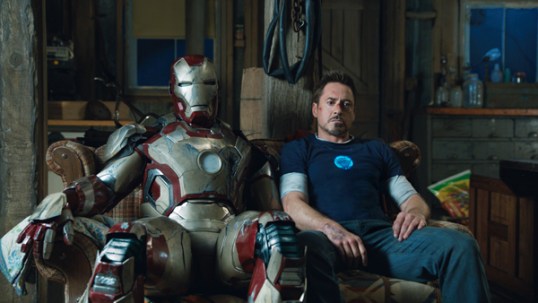
Scenes That I Love: Robert Downey, Jr in Less Than Zero


Today, the Shattered Lens wishes a happy birthday to Oscar-winner Robert Downey, Jr.

This scene that I love comes from 1987’s Less Than Zero.  It features Downey as the self-destructive drug addict, Julian.  Downey has said that this role wasn’t too far from his real life at the time.  Julian’s father is played by the great character actor, Nicholas Pryor.

Happy birthday to Robert Downey, Jr!  I’m thankful that, unlike Julian, he got a second chance.

4 Shots From 4 Films: Special Andrei Tarkovsky


4 Or More Shots From 4 Or More Films is just what it says it is, 4 shots from 4 of our favorite films. As opposed to the reviews and recaps that we usually post, 4 Shots From 4 Films lets the visuals do the talking!

On this date, 93 years ago, Andrei Tarkovsky was born in Russia.  Before he was murdered by the KGB in 1986, Tarkovsky was responsible for some of the most intriguing and visually stunning films ever made.  Today, we pay tribute to Tarkovsky’s art and his legacy.  It’s time for….

4 Shots From 4 Andrei Tarkovsky Films

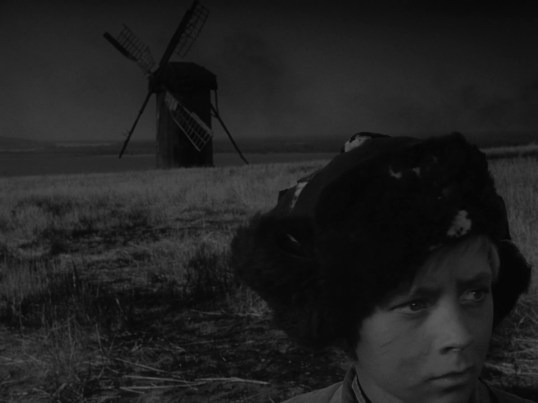
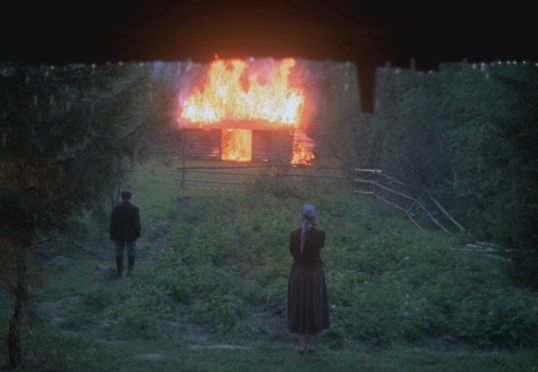
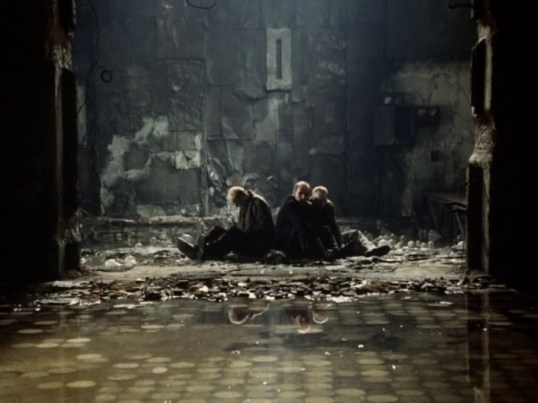
Ivan’s Childhood (1962, dir by Andrei Tarkovsky, DP; Vadim Yusov)

Solaris (1972, dir by Andrei Tarkovsky, DP: Vadim Yusov)

Mirror (1975, dir by Andrei Tarkovsky, DP: Georgy Rerberg)

Stalker (1979, dir by Andrei Tarkovsky, DP: Alexander Knyazhinsky)