Never Nominated: 16 Actors Who Have Never Been Nominated For An Oscar


Along with being one of the greatest actors who ever lived, the late Peter O’Toole had another, far more dubious achievement.  He holds the record for being nominated the most times for Best Actor without actually winning.  Over the course of his long career, Peter O’Toole was nominated 8 times without winning.

But, at least O’Toole was nominated!

Below are 16 excellent actors who have NEVER been nominated for an Oscar.  10 of these actors still have a chance to get that first nomination.  For the rest, the opportunity has sadly past.
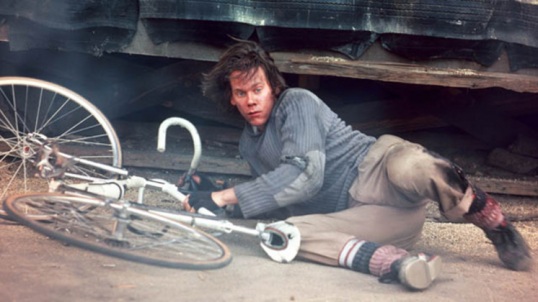
Quicksilver-photo_625px_8col

  1. Kevin Bacon

Is there anyone out there who doesn’t like Kevin Bacon?  Amazingly, despite several decades of good performances in good films, Kevin Bacon has yet to be nominated.  That said, he seems destined to be nominated some day.  If nothing else, he deserved some sort of award for being the most successful cast member of the original Friday the 13th.  (As well, 40 years after the fact, his cry of “All is well!” from Animal House has become one of the most popular memes around.)

2. Brendan Gleeson

This brilliant Irish actor deserved a nomination (and probably the win) for his brave performance in Calvary.  But, even if you ignore Calvary, his filmography is full of award-worthy performances.  From The General to Gangs of New York to 28 Days Later to In Bruges to The Guard, Gleeson is overdue for some recognition.

3. John Goodman

John Goodman deserved to be nominated this year, for his performance in 10 Cloverfield Lane.  He brought warmth to both Argo and Inside Llewyn Davis.  And he was absolutely terrifying in Barton Fink.  John Goodman is one of the most underrated actors working today.

4. Malcolm McDowell

It’s obviously been a while since Malcolm McDowell had a truly great role.  But who could forget his amazing performance in A Clockwork Orange?  For that matter, I liked his sweetly gentle performance in Time After Time.  Someone give this man the great role that he deserves!

5. Ewan McGregor

Ewan McGregor is an actor who is oddly taken for granted.  His performance in Trainspotting remains his best known work.  But, really, he’s been consistently giving wonderful performances for twenty years now.  Sometimes — as in the case of the Star Wars prequels — the films have not been worthy of his talent but McGregor has always been an engaging and compelling screen presence.  When it comes to playing someone who is falling in love, few actors are as convincing as Ewan McGregor.

6) Franco Nero

Franco!  If for nothing else, he deserved a nomination for playing not only Lancelot in Camelot and not only the original Django but also for playing Intergalactic Space Jesus in The Visitor.  I also loved his work in a little-known Italian thriller called Hitchhike.  Nero is still active — look for him in John Wick 2 — and hopefully, he’ll get at least one more truly great role in his lifetime.

7) Sam Rockwell

Let’s just get this out of the way.  In a perfect world, Sam Rockwell would already have an Oscar.  He would have won for his performance in 2009’s Moon.  He also would have received nominations for The Way, Way Back and Seven Psychopaths.  Sadly, Sam’s still waiting for his first nomination.  Again, the problem may be that he’s such a natural that he just makes it look easy.

Andy Serkis

8) Andy Serkis

Andy Serkis has never been nominated, despite giving some of the best performances of this century.  He should have been nominated for Lord of the Rings: The Return of the King.  He should have won for Rise of the Planet of the Apes.

9) Harry Dean Stanton

Harry Dean Stanton has been around forever and he’ll probably outlive everyone else on the planet.  He often seems to be indestructible.  Harry Dean is the epitome of a great character actor.  He’s a modern-day John Carradine.  And, just as John Carradine was never nominated, Harry Dean seems to destined to suffer the same fate.  Oscar may have forgotten him but film lovers never will.

10) Donald Sutherland

It’s hard to believe that Donald Sutherland has never been nominated for an Oscar but it’s true.  He probably should have been nominated for his work in Ordinary People and JFK.  Even his work in The Hunger Games franchise was an absolute delight to watch.  I imagine that Sutherland will be nominated someday.

Donald Sutherland and Kristen Stewart

Finally, here are 6 actors who sadly were never honored by the Academy and who are no longer with us:

  1. John Carradine

I mentioned John Carradine earlier.  Carradine was a favorite of many directors and he brought his considerable (and rather eccentric) talents to a countless number of films.  Among his best performances: Stagecoach and The Man Who Shot Liberty Valance.

2. John Cazale

Before his untimely death, John Cazale acted in 5 films: The Godfather, Godfather Part II, The Conversation, Dog Day Afternoon, and The Deer Hunter.  All five of them were nominated for best picture.  12 years after his death, archival footage of him was used in The Godfather Part III.  It was also nominated for Best Picture.  Not only is Cazale alone in having spent his entire career in films nominated for best picture but, in each film, Cazale gave a performance that, arguably, deserved to be considered for a Best Supporting Actor nomination.  Cazale was an amazing actor and it’s a shame that he wasn’t able to give us more great performances.

3. Oliver Reed

Oliver Reed was a legendary drinker but he was also an amazingly entertaining actor.  I’m not a huge fan of Gladiator but his final performance was more than worthy of a posthumous nomination.

Alan Rickman

4. Alan Rickman

When it comes to the late Alan Rickman, it’s not a question of whether he should have been nominated.  It’s a question of for which film.  I know a lot of people would say Rickman deserved a nomination for redefining cinematic villainy in Die Hard.  Personally, I loved his performance in Sense and Sensibility.  And, of course, you can’t overlook any of the times that he played Snape.

5. Edward G. Robinson

Edward G. Robinson was never nominated for an Oscar!?  Not even for Double Indemnity?  Or his final performance in Soylent Green?  Horrors!

6) Anton Yelchin

It’s debatable whether or not Anton Yelchin ever got a chance to give a truly award-worthy performance during his lifetime.  I would argue that his work in both Green Room and Like Crazy were pretty close.  But, if Yelchnin had lived, I’m confident he would have eventually been nominated.  We lost a wonderful talent when we lost him.

like-crazy-still02


Never Nominated: 16 Directors Who Have Never Received An Oscar Nomination


It’s a sad fact of life that not everyone who deserves an Oscar gets one.  For instance, Alfred Hitchcock received five nominations for best director but never won once.

That said, at least Hitchcock was nominated!  Some of our greatest directors have never even been nominated!  This list below is hardly exclusive but still, these 16 directors have somehow never been nominated.  Ten of them could still be nominated in the future.  Sadly, for six, the opportunity has forever passed.

  1. Dario Argento

Sadly, Dario Argento will probably never be nominated for best director.  None of his films — even the early, acclaimed work — were typical Oscar films.  But, consider this: Argento is one of the most influential directors of all time.  Regardless of what might be said about some of Argento’s more recent films, his earlier films are classics of their genre.  Deep Red, Suspiria, Inferno, Tenebrae — his work on any of these films would have been worthy of a nomination.

2. Andrea Arnold

This British director is responsible for two of the best films of the past ten years — Fish Tank and American Honey.  She deserved a nomination for both of them (and a win for American Honey).  Hopefully, she will be recognized in the future.

3. Tim Burton

I’m not the world’s biggest Tim Burton fan but he has a fan base that will follow him almost anywhere.  It seems like every year, we hear that Burton has finally made the film that will win him some Oscar recognition.  Remember Big Eyes?  As I said, I’m not a huge Burton fan but, if I was to nominate him, it would probably be for his work on Sweeney Todd.

4. John Carpenter

Carpenter deserved all sorts of nominations for his work in the 70s and the 80s.  Being the rebel that he is, Carpenter will probably never get the Oscar recognition that he deserves.  (He did win an Academy Award for Best Live Action Short.)

5. David Cronenberg

It’s hard to believe that this Canadian director has never been nominated.  While it’s obvious that the Academy would never recognize Cronenberg’s earlier work (even if he did deserve some recognition for that exploding head in Scanners), it still seems like he’s destined to be nominated eventually.

6. Terry Gilliam

Much like Tim Burton, Gilliam sadly seems to be destined to be one of those directors who will have to be content with a devoted fan base.  Sadly, as of late, Gilliam’s become better known for the film projects that were canceled than the ones that were actually produced.  I would have nominated him for Brazil.

7. Werner Herzog

How has Werner Herzog gone his entire career without receiving at least one nomination for Best Director!?  I would nominate him for the chance to hear the acceptance speech alone.

8. Christopher Nolan

Christopher Nolan is another director who I’m shocked to realize has never been nominated.  He certainly deserved a nomination for Inception.  Maybe, just maybe, he’ll finally get some recognition for Dunkirk.

9. Lars Von Trier

With his controversial aesthetic and his talent for offending the masses, Lars Von Trier will never be nominated, no matter how much he might deserve it.

10. Joe Wright

Personally, I think that Joe Wright is responsible for two of the best films of the past ten years, Hanna and Anna Karenina.  Unfortunately, both were left out of their respective best picture races.  Even when Atonement was nominated for best picture, Wright did not receive a corresponding nomination.  Fortunately, with Darkest Hour, Wright will have another chance this year.

Best Director Joe Wright

And here are six directors who are no longer with us.  Sadly, these six will never have a chance to receive their first Oscar nomination:

  1. Mario Bava

Much like Dario Argento, there was never really any chance that the Academy would actually honor Mario Bava.  That’s a shame because Bava truly was one of the greatest directors of all time.  Check out Black Sabbath and Shock for proof.

2. Stanley Donen

It’s hard to believe that Donen wasn’t even nominated for Singin’ In The Rain.

3. John Frankenheimer 

It’s also hard to believe that Frankenheimer never received a nomination.  While he directed his share of bad films, he also directed Seven Days in May, The Manchurian Candidate, Seconds, and Ronin.

4. John Hughes

Not even for The Breakfast Club or Ferris Bueller’s Day Off!  Hughes may have been snubbed by the Academy but his films practically invented an entire genre.

5. Michael Powell and Emeric Pressburger

This directing team was a major influence on Martin Scorsese.  Black Narcissus remains one of the most visually stunning films of all time.  The Red Shoes was nominated for best picture but Powell/Pressburger were snubbed.

6. Nicholas Ray

Everyone knows that Ray directed Rebel Without a Cause.  Personally, I think his work on Bigger than Life was even more worthy of a nomination.

Lisa Reviews An Oscar Nominee: The Champ (dir by King Vidor)


the_champ_poster

“I want the Champ!  I want the Champ!”

Oh good God, shut up you little brat.

Now, nobody actually tells 8 year-old Dink (Jackie Cooper) to shut up at the end of 1931’s The Champ.  I’d like to think that I probably would have said those words if I had been sitting in the audience but, in all honestly, I probably would have been crying along with everyone else.  I’m sure that a lot of people probably cried when The Champ was first released.

And really, it’s probably unfair to criticize Jackie Cooper for repeatedly wailing, “I want the Champ!” during the film’s final five minutes.  It’s actually probably one of the few authentic moments in the film.  It’s just unfortunate that Cooper’s voice was a bit shrill and, as a result, I found myself covering my ears.

As for what The Champ is about, it’s the story of a boy and his alcoholic father.  Andy Purcell (played with loutish charm by the never particularly subtle Wallace Beery) is a boxer.  He used to be the world champion and people still call him The Champ.  Of course, it’s been a while since he’s been in the ring.  Now, Andy just drinks and gambles and continually lets down his son.  However, Dink is always willing to forgive Andy and Andy does truly love his son.  He even buys him a horse, which gets named Little Champ.

It’s while at the stables that Dink meets an upper class woman named Linda (Irene Rich).  What Dink does not realize is that Linda is … his mother!  She was once married to the Champ but his drinking led to divorce.  Linda wants to adopt Dink and perhaps she should because The Champ really is not a very good father.  He even loses Little Champ in a card game.

Fortunately, the Champ has a chance to win the money needed to buy back the horse.  All he has to do is reenter the ring and beat the Mexican heavyweight…

It all leads to “I want the champ!” being screamed several hundred times in a handful of minutes, enough times to make me fear that I would be deaf before the film ended…

The Champ is an old-fashioned and rather creaky melodrama, one that hasn’t aged particularly well.  Director King Vidor specialized in films about the “common man” and The Champ often feels like it was adapted from the first draft of an unproduced Clifford Odets play.  It’s all very sentimental and so thoroughly lacking in snark or cynicism that, for modern audiences, it’s difficult to relate to.  I’ll leave it to you to decide whether that’s a good or a bad thing.

The Champ does hold a place in Oscar history.  Wallace Beery won the Oscar for Best Actor but, for the first time in the history of the awards, there was a tie and Beery shared the Oscar with Fredric March, who won for Dr. Jekyll and Mr. Hyde.

The Champ was also nominated for best picture but it lost to Grand Hotel, which also features Wallace Beery.

Lisa Reviews An Oscar Nominee: Capote (dir by Bennett Miller)


capote_poster

The first time I ever saw the 2005’s Capote, I thought it was a great film.

I guess that shouldn’t be a surprise.  I love movies about writers and I love biopics and, as the title indicates, Capote was both.  I’m also fascinated by true crime and Capote told the story of how Truman Capote came to write the first true crime book, In Cold Blood.  Add to that, I was (and am) a Philip Seymour Hoffman fan and Capote provided Hoffman with not only a rare starring role but it also won him an overdue Academy Award.  Finally, to top it all off, Capote also dealt with Truman’s friendship with Harper Lee (Catherine Keener), the author of To Kill A Mockingbird.  Seriously, a film that dealt with the writing of both In Cold Blood and To Kill A Mockingbird!?  How couldn’t I love that?  While everyone else was outraged that Crash beat Brokeback Mountain, I was upset that it beat Capote.

Needless to say, I was really looking forward to rewatching Capote for this review.  But when I actually did sit down and watched it, I was shocked to discover that Capote wasn’t actually the masterpiece that I remembered it being.

Oh, don’t get me wrong.  It’s still a good film.  At times, it’s even a great film.  I still think it would have been a more worthy Best Picture winner than Crash.  But still, there seemed to be something missing.  Much as with director Bennett Miller’s most recent film, Foxcatcher, there’s a coldness at the heart of Capote.  One can’t deny its success on a technical level but, at the same time, it keeps the audience at a distance.  In the end, we remains detached observers, admiring the skill of the film without ever getting emotionally invested in it.

Interestingly, the film suggests that the exact opposite happened to Truman Capote while he wrote In Cold Blood.  The film suggests that Capote got so invested in one of the killers at the center of In Cold Blood that the process of writing the book nearly destroyed him.  When we first see Capote, he’s at some social event in New York and he’s amusing his rich friends with charmingly risqué anecdotes about his other rich and famous friends.  As played by Hoffman, Capote is someone who is almost always performing.  It only with his friend Harper Lee and his partner Jack Dunphy (Bruce Greenwood) that he ever lets down his guard long enough to reveal who he actually is, a gay man from the deep South who was fortunate enough to escape.

That’s one reason why Capote grows close to Perry Smith (Clifton Collin, Jr.).  The subjects of In Cold Blood, Smith and Dick Hickcock (Mark Pellegrino) killed the Clutter family in Holcomb, Kansas.  Capote, who followed the case from their arrest to their eventual execution, becomes obsessed with Smith precisely because he sees Smith, with his dysfunctional background and his overly sensitive nature, as being who Capote could have been if things had gone just a little bit differently in his life.  Miller further makes this point by skillfully juxtaposing scenes of Truman dropping names and telling jokes at New York parties with the grim reality of life and death in Kansas.

Truman finds himself serving as a mentor to Perry.  (Hickcock is neglected by both Capote and the film.)  Of course, Truman’s also a writer and he knows that he needs an ending for his story.  As his editor (played by Bob Balaban, who seems to be destined to play everyone’s editor at some point or another) points out, Smith and Hickcock have to be executed if the book is ever to be completed.  Truman also has to get Perry to finally talk about what happened in the Clutter family farm.  As much as Capote seems to care about Perry, he’s ruthless when it comes to getting material for his book.  The film suggests that Truman Capote got his greatest success at the cost of his soul.

It’s a rather dark movie, which might explain why I was initially so impressed with it.  (I went through a period of time where I thought any movie with a sad ending was a masterpiece.)  Rewatching it, I saw that the film’s triumph was mostly one of casting.  Miller gets some seriously brilliant performances from the cast of Capote.  Yes, Hoffman is great in Capote but so is the entire cast.  Keener and Greenwood are well-cast as the only two people who have the guts to call Truman on his bullshit.  Chris Cooper gives a very Chris Cooperish performance as Alvin Dewey, the no-nonsense lawman who views Capote with a mix of amusement and distrust.  Clifton Collins, Jr. and Mark Pellegrino are both excellent as Smith and Hickcock.  In fact, Pellegrino makes such an impression that you regret the both Capote and the film didn’t spend more time with his character.

As previously stated, Hoffman won Best Actor but Capote lost best picture to Crash.  How Crash beat not just Brokeback Mountain but Capote as well is a mystery that Oscar historians are still trying to unravel.

Art Profile: Film Fun


Film Fun was a pulp magazine that ran from 1915 to 1942.  When the magazine started, the covers featured paintings of contemporary film stars.  When that didn’t sell, the decision was made to start featuring pin-ups on every cover and by 1922, Enoch Bolles was painting Film Fun‘s covers.  As you can tell by the covers below, Film Fun didn’t take itself too seriously.  It ceased publication in 1942, after the U.S. Post Office cracked down on the mailing of “salacious” material.

The covers below are naughty and innocent at the same time.  They’re also a lot of fun.  All of them were painted by Enoch Bolles:

01234567891011121314

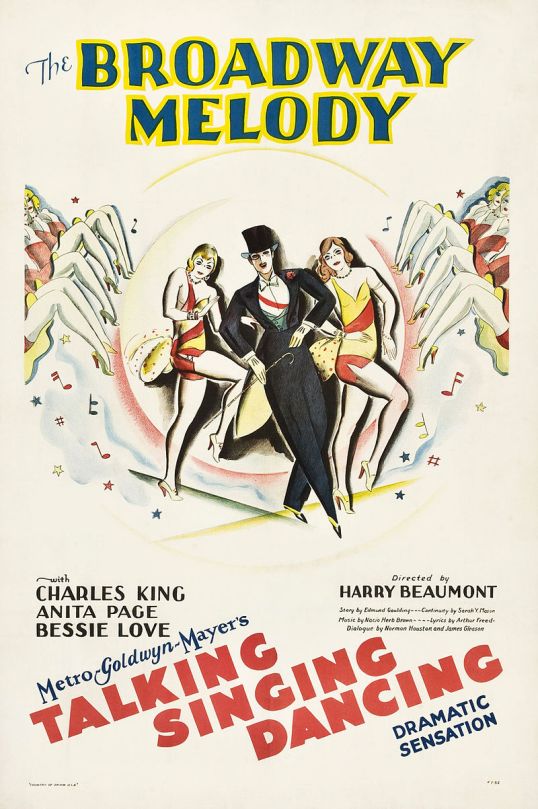
Lisa Reviews An Oscar Winner: The Broadway Melody (dir by Harry Beaumont)


broadway_melody_poster

Oh, The Broadway Melody.

Where to begin?

First released way back in 1929, The Broadway Melody is a historically significant film.  You really can’t talk about the development of film — especially sound film — without taking at least a few minutes to acknowledge The Broadway Melody.  It was the 2nd film to ever win the Oscar for Best Picture (or Best Production, as it was called back then) and it was the first sound film to win the Oscar.  (In fact, it would be 83 years before another silent film won Best Picture and it’s debatable whether or not The Artist can really be considered a silent film in the same way that Wings was silent film.)  It was also the first musical to win best picture and some people consider it to be the first true musical to have ever been produced.  It was such a huge box office success that it could be argued that The Broadway Melody is responsible for nearly every musical that followed it.

To say that The Broadway Melody tells a familiar story would be an understatement.  I’ve read a few reviews that have suggested that the clichés in this film really weren’t clichés until after The Broadway Melody was released but I’ve seen enough silent films to know that this is not the case.  It tells the story of two sisters who want to be stars.  After spending years working in vaudeville, they’ve been invited to perform in a revue that’s being produced by Francis Zanfield (Eddie Kane).

(I assume that Zanfield was meant to be a stand-in for Florence Ziegfeld, himself the subject of a later Best Picture winner, The Great Ziegfeld.)

The sisters are Hank (Bessie Love) and Queenie (Anita Page).  Hank is the driven one.  Hank is the one with the raw talent and she’s also the one who best understands how the business of entertainment works.  Her younger sister, Queenie (Anita Page), may not have Hank’s drive or quite the same level of talent but she does have beauty.  Guess who finds the most success?

Songwriter Eddie Kearns (Charles King) is engaged to marry Hank but soon, both he and Queenie find themselves falling in love.  Not wanting to hurt her sister, Queenie instead runs off with a notorious playboy named Jock Warner (Kenneth Thomson).

As I stated previously, The Broadway Melody has not aged well.  The fact that it’s one of the first sound films just allows contemporary viewers to hear the creakiness of the plot.  As impressive as sound film was to audiences in 1929, it’s obvious today that the cast and crew of The Broadway Melody were still struggling to figure out how to work with the new technology.  As a result the performances are still a bit too broad, which only serves to make the film seem even more melodramatic than it actually is.  As for the songs, they’re not particularly memorable.  I always enjoy backstage musicals but Broadway Melody is no 42nd Street.

I did appreciate the relationship between Bessie Love and Anita Page.  That was one of the few things about the film that felt real to me, perhaps because I have three older sisters.  Interestingly enough, when Anita Page died in 2008, she was the last surviving attendee of the first Academy Awards ceremony.

The Broadway Melody was named the Best Picture of 1929.  This was the year that the winners were selected by a committee and there were no official nominations.  Though the notes from the meeting indicate that there was some consideration given to awarding the Best Actress Oscar to Bessie Love, Best Picture was the only Oscar that The Broadway Melody received.

Check Out This Montage Of Every Best Picture Nominee!


2013 oscars

So, I was searching for short films about the Oscars on YouTube and look at what I came across.  This video was put together by All About The Oscar.  It’s a montage of every film nominated for best picture between 1927 and 2015!

Seriously, I love this!

Watch it below:

How many of these films have you seen?  I’ve still got a way to go but someday, I will be able to say that I’ve seen every single one.

(Except, of course, for The Patriot…)

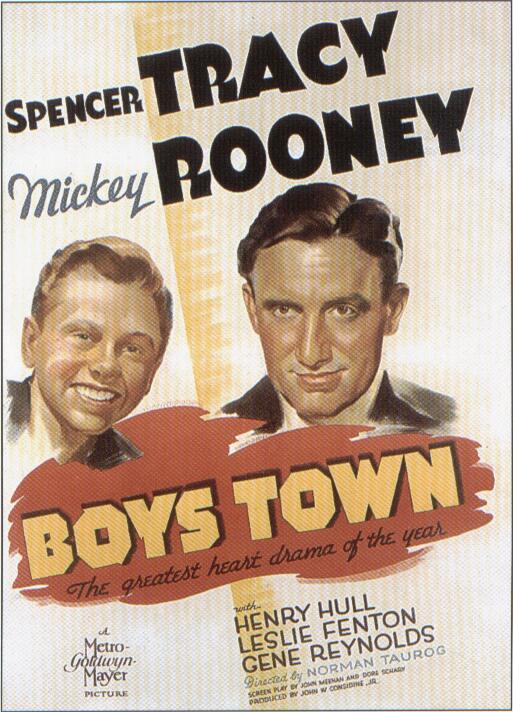
Lisa Reviews An Oscar Nominee: Boys Town (dir by Norman Taurog)


boys_town

Before writing about the 1938 film Boys Town, I want to share a story that might be false but it’s still a nice little story.  Call this an Oscar Urban Legend:

Boys Town is about a real-life community in Nebraska, a home for orphaned and homeless boys that was started by Father Edward Flanagan.  In the film, which was made while Father Flanagan was still very much alive, he was played by Spencer Tracy.  Boys Town was a huge box office success that led to the real Boys Town receiving a lot of favorable publicity.  When Tracy won his Oscar for Boys Town, his entire acceptance speech was devoted to Father Flanagan.

However, a problem arose when an overeager PR person at MGM announced that Spencer Tracy would be donating his Oscar to Boys Town.  Tracy didn’t want to give away his Oscar.  He felt that he had earned it through his acting and that he should be able to keep it.  Tracy, the legend continues, was eventually persuaded to donate his Oscar on the condition that he would get a replacement.

However, when the replacement arrived, the engraving on the award read, “Best Actor — Dick Tracy.”

That’s a fun little story, one that is at least partially true.  (Tracy’s Oscar — or at least one of them — does currently reside at the Boys Town national headquarters.)  It’s also a story that, in many ways, is more interesting than the film itself.

Don’t get me wrong.  Boys Town is not a bad movie.  For me, it was kind of nice to see a movie where a priest was portrayed positively as opposed to being accused of being a pederast.  In a way, Boys Town serves as a nice counterbalance to Spotlight.  But, with all that said, there’s not a surprising moment to be found in Boys Town.  It’s pretty much a standard 1930s juvenile delinquency melodrama.

The movie opens when Father Flanagan giving last rites to a man who is about to be executed.  (Boys Town takes a firm stand against the death penalty, which is one of the more consistent and laudable stands of the modern Church.)  The man says the he never had a chance.  From the time he was a young boy, he was thrown into the reform school system.  Instead of being reformed, he just learned how to be a better criminal.  Father Flanagan is so moved by the doomed man’s words that he starts Boys Town, under the assumption that “there’s no such thing as a bad boy.”

Father Flanagan’s techniques are put to the test when Whitey Marsh (Mickey Rooney ) arrives.  Whitey is angry.  He’s rebellious.  He tries to run away every chance that he gets and, during one such escape attempt, he even gets caught up in a bank robbery.  Can Father Flanagan reach Whitey and prove that there’s no such thing as a bad boy?

Well, you already know the answer to that.  As I said, there’s really nothing surprising to be found in the plot of Boys Town.  It’s just not a very interesting movie, though there is a great shot of a despondent Whitey walking past a several lines of former juvenile delinquents, all kneeling in prayer.  As Father Flanagan, Spencer Tracy is the ideal priest but his role is almost a supporting one.  Believe it or not, the film is dominated by Mickey Rooney, who gives a raw and edgy performance as the angry Whitey Marsh.

(That said, it’s hard to take Whitey seriously as a future gangster when he’s always wearing a bowtie.  Then again, that may have been the height of gangster style in 1938.)

Boys Town was nominated for best picture but lost to You Can’t Take It With You.

10 Horror Films That Should Have Been Nominated For Best Picture


Horror films!

Audiences love them but the Academy has never quite felt the same way.  True, there have been a few horror films nominated.  The Exorcist was a major contender.  Jaws was nominated.  So was The Sixth Sense.  Silence of the Lambs won.

But, for the most part, horror films have struggled to get Academy recognition.  While the Academy has recently shown a willingness to honor science fiction, the horror genre has yet to benefit from the decision to increase the number of best picture nominees.

Because I love horror and I love movies and I love lists, here are ten horror films that I think deserved a best picture nomination:

  1. Frankenstein (1931)

One of the most popular and influential horror films of all time, Frankenstein was sadly ignored by the Academy.  It’s certainly better remembered than the film that won best picture of 1931, Cimarron.

Psycho

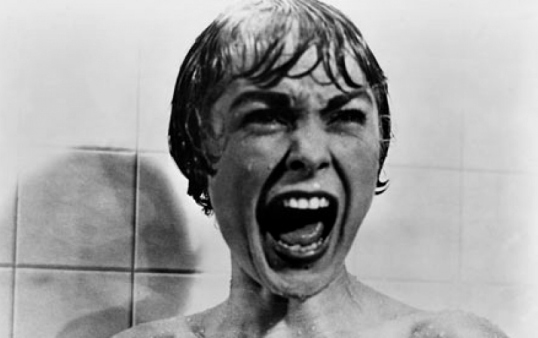
2. Psycho (1960)

Psycho may have received nominations for best director, supporting actress, cinematography, and art design but the film that made people afraid to take showers did not receive a nomination for best picture.  The winner that year was a legitimate classic, The Apartment.  But it’s hard not to feel that Psycho should have, at the very least, received a nominations over the other 4 films nominated.

429px-Night_of_the_Living_Dead_affiche

3. Night of the Living Dead (1968)

George Romero’s zombie classic may have set the standard for zombie movies to come but it was not honored the Academy.  The Academy was more comfortable with Oliver!

TheTexasChainSawMassacre-poster

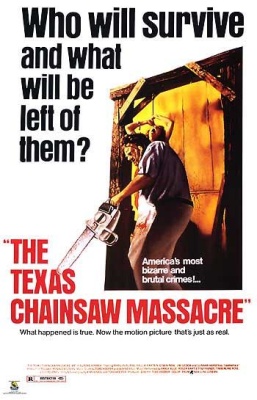
4. The Texas Chainsaw Massacre (1974)

1974 was a very good year for the movies and certainly, I would not argue that The Texas Chainsaw Massacre deserved a nomination over The Godfather Part II, The Conversation, or Chinatown.  But over The Towering Inferno?  That’s another story.

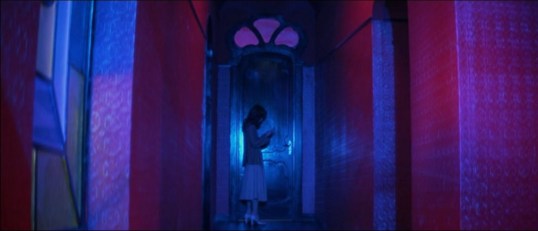
5. Suspiria (1977)

Oscar nominee Dario Argento?  In a perfect world, yes.

HalloweenIntro

6) Halloween (1978)

The night he came home … to Oscars!  If nothing else, John Carpenter’s score definitely deserved to win.

dawnofthedeadzombie

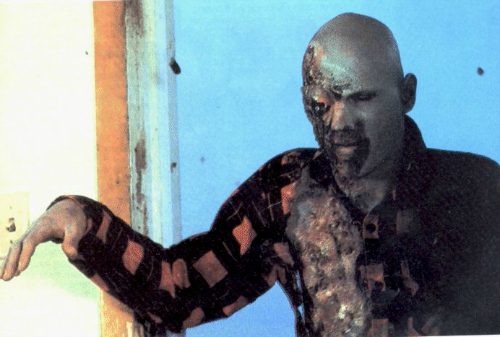
7) Dawn of the Dead (1979)

Few sequels have been nominated for best picture.  Dawn of the Dead definitely should have been one of them.  Who wouldn’t want to see, at the very least, Tom Savini’s speech as he accepted his special award for best makeup?

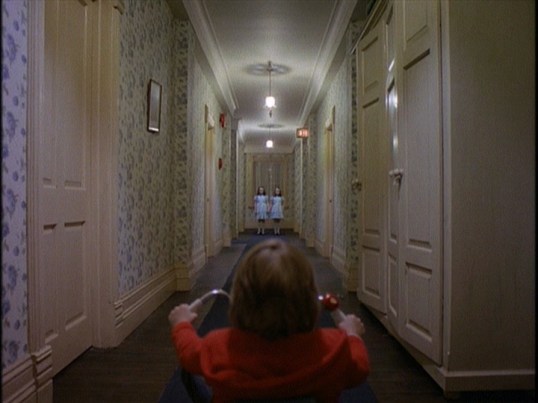
8) The Shining (1980)

Stanley Kubrick’s film may be recognized as a classic now but the reviews, when it was first released, were mixed.  So, I guess we shouldn’t be surprised that it wasn’t given any recognition by the Academy.  It’s a shame because I’ve watched The Shining a few dozen times and it still scares the Hell out of me.

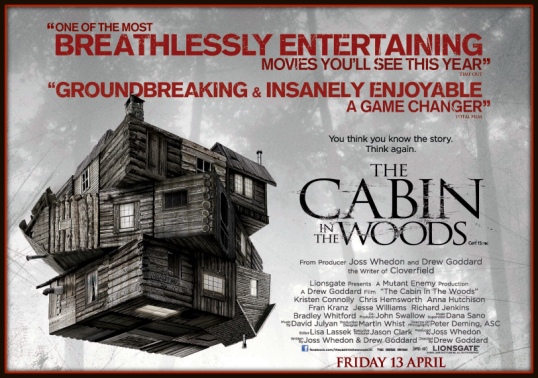
CabinInTheWoods

9) The Cabin In The Woods (2012)

One of the best films of the new century, this joyful tribute to the horror genre was sadly overlooked by the Academy in 2012.

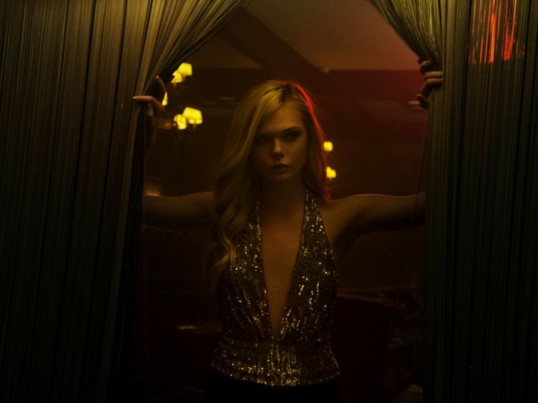
the-neon-demon-elle-fanning-900x0-c-default

10) The Neon Demon (2016)

Is Nicholas Winding Refn’s The Neon Demon truly a horror movie?  It’s close enough.  Though the film opened to mixed reviews, it’ll be recognized as a classic in another ten years.


Lisa Reviews An Oscar Nominee: Alfie (dir by Lewis Gilbert)


alfie_original

One night, in the UK, in 1965…

In a London flat, a phone rings.  Up-and-coming actor Terrence Stamp answers.  On the other end, the producers of an up-coming film called Alfie ask Stamp if he would be interested in playing the lead role.  In many ways, Stamp seems like the obvious choice.  After all, he already starred in the stage version of Alfie.  He knows the character and everyone knows that he’s going to be a big star…

And that’s why Stamp turns down the role.  The character of Alfie is an irresponsible and self-centered womanizer who, over the course of the play, has numerous affairs, arranges for one illegal abortion, treats almost everyone terribly, and, at the end of the movie, ends up alone.  Not only will the film’s risqué subject matter provide a challenge, even if it is being made in “swinging London,” but Alfie just isn’t a heroic figure.  He has some good lines.  He makes a few good jokes and, after arranging an abortion for one of his girlfriends, he realizes just how empty his life really is.  But, as written, Alfie is hardly sympathetic.

Stamp says he’s not interested in playing Alfie on screen and then he hangs up.

Two minutes later, the phone rings again.  Stamp answers.  It’s the producers of Alfie.  They ask to speak to his roommate, a cockney actor who was born Maurice Micklewhite but who, at the start of his acting career, changed his name to Michael Caine.

And that’s how Michael Caine came to star in the 1966 film, Alfie.

Alfie not only made Michael Caine a star, it also landed him his first Oscar nomination.  It was especially a popular film in the States, where it tapped into a youth culture that was obsessed with all things British and a desire, on the part of many filmgoers, to see films that deal with “adult” topics that American films, at that time, wouldn’t dare touch.  Though Alfie may seem rather tame by today’s standards (for a film about a man obsessed with sex, there’s actually not much of it to be found in Alfie), one can still see why it would have taken American audiences by surprise in 1966.  At a time when American films still starred Doris Day and Bob Hope, here was a British film about a working class cockney who screws almost every woman he meets, both figuratively and literally.

And really, it’s fortunate that Michael Caine accepted that role.  Along with Stamp, Alfie‘s producers also tried to interest Richard Harris and Laurence Harvey in the role.  All three of them would have brought a harder edge to the character.  However, Michael Caine has just enough charm to make Alfie likable, even when his actions are not.  Since a good deal of the film is made up of Alfie breaking the fourth wall and talking straight to the audience (and, often times, not exactly saying that most charitable of words), that charm is essential to the film’s success.  Michael Caine’s Alfie is self-centered but, at the same time, you never doubt that there’s a better man lurking underneath the surface.  You forgive Alfie a lot because, thanks to Caine’s performance, you can see the man that he’s capable of being.

Alfie is pretty much Michael Caine’s show but he’s ably supported by the rest of the cast, especially Jane Asher as a poignantly insecure hitchhiker and Shelley Winters as a cheerfully promiscous American.  And then there’s Denholm Elliott, who plays an abortionist with a seedy intensity that catch you off-guard and drives home the dark reality lurking underneath Alfie‘s charm.

For a film that is often described as being very much a product of its time, Alfie holds up surprisingly well.  It was nominated for best picture but it lost to something far more sedate, A Man For All Seasons.