Trash Film Guru Vs. The Summer Blockbusters : “Jurassic World”


jurassic-world-own-raptors-poster

“Everything old is new again.”

How many times have you heard that one? Well, in the case of the just-released (and record-setting in terms of its worldwide box office take) Jurassic World, it turns out that tired old adage is actually quite true, since director Colin Trevorrow has chosen to hew pretty closely to Steven Spielberg’s original model for this fourth installment in the previously-presumed- moribund franchise extrapolated from the works of Michael Crichton. There’s certainly nothing happening here that one could call overtly “new,” per se, but gosh — it’s been so long since Jurassic Park III  that it all just sorta feels new, ya know?

DLC00020-720x405

CGI technology has come a long way since the original Jurassic Park  made its debut in 1993, as well, and that’s a big factor — maybe even the biggest factor — in this new flick’s by-popcorn-movie-standards “success,” but don’t think that means I’m damning Jurassic World with faint praise. Truth be told, we just got back from seeing it in Imax 3-D and it’s got pretty much everything you’d ever want in a brainless summer thrill ride : superb effects, likable leads, drama, suspense, tension-cutting humor, nicely despicable (sorry, does that even make sense?) villains, and mile-a-minute thrills. My wife and I both left the theater smiling and I ain’t ashamed to admit it.

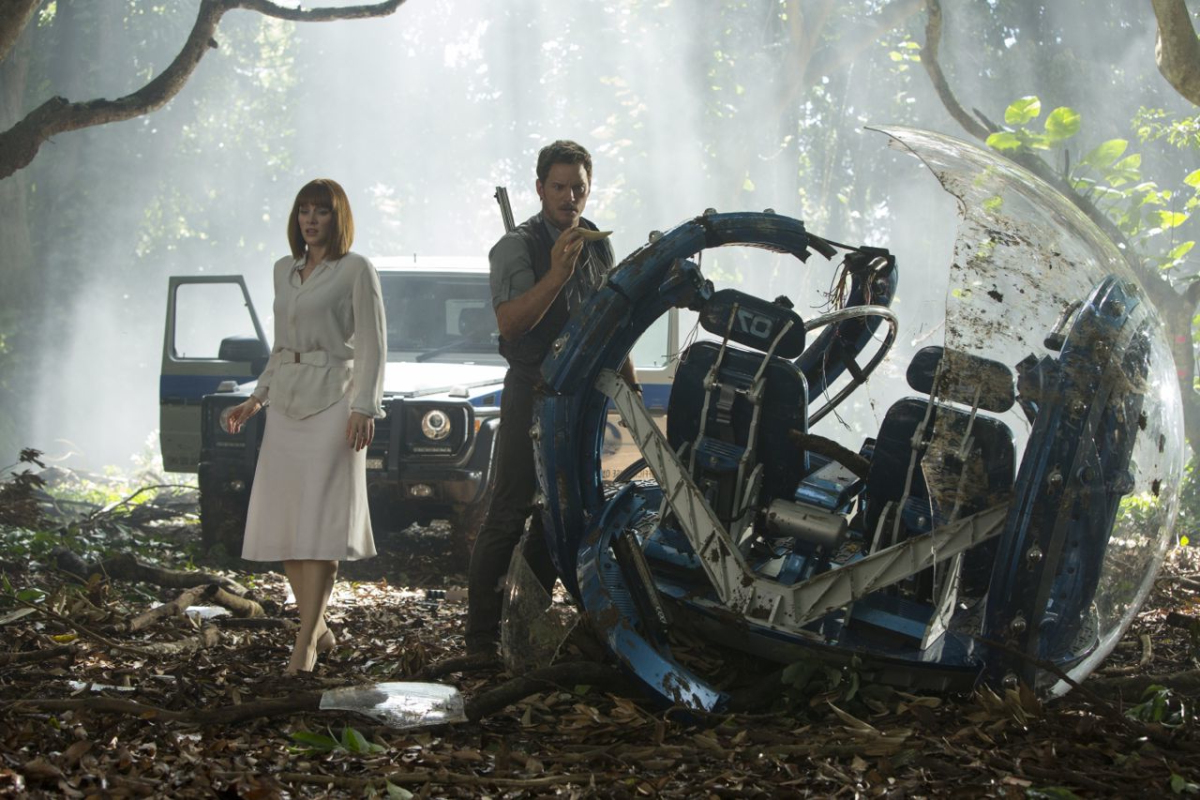
My only real gripe is one that I knew I’d have going in — Jurassic World continues the morally-questionable trend established at the series’ outset of using kids placed in danger (in this case brothers Zach and Gray, played by Nick Robinson and Ty Simpkins, respectively) as its primary focus/narrative crutch, with benevolent adults coming in to save the day (here represented by Chris Pratt’s  “dinosaur wrangler” character Owen, and Bryce Dallas Howard — who, goddamit, Hollywood is bound and determined to make a star out of yet! — as their hitherto- inattentive aunt Claire, who’s one of the park’s big-wigs), and I’m sorry, but if you don’t know why that scenario is inherently creepy to some of us, then you haven’t been paying much attention to the some of the uglier and more salacious rumors about Spielberg’s personal life that have been swirling around for decades now. And that I won’t repeat here. So let’s just move on, shall we?
ydln1orxqd4neeasuboo

In any case, that solitary-but-predictable qualm aside, the fact of the matter is that Jurassic World is expertly-crafted throwaway fun. Not every movie needs to re-invent the wheel to stand out, and Trevorrow wisely has that figured from the outset here. All we want from his big-budget extravaganza is pretty much the same sort of story that had us jumping in our seats all those years ago, and to feel the same sort of “rush of excitement” that we did back then and which the two previous installments in the series just weren’t able to capture. It’s a dinosaur movie, for Christ’s sake, so just give us a shit-load of dinos on the loose and we’re gonna be happy! How hard is that to figure out?
jurassic-world-pratt-howard

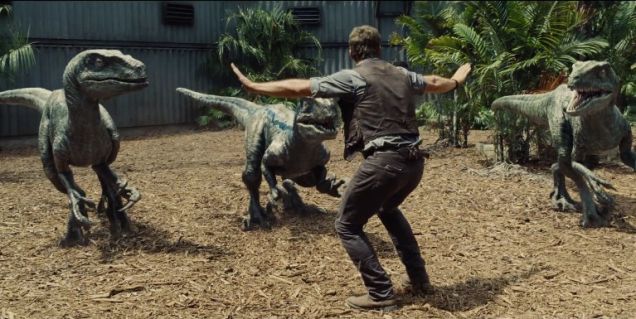
About the only  wrinkles to the formula here are the introduction of the new genetically-engineered “super-dinosaur” Indominus Rex, and the hare-brained scheme laid out by the villainous Hoskins (Vincent D’Onofrio) to train Velociraptors to be — uhhmmm — super-soldiers for the US army. But rich people with more money than sense employing unscrupulous lackeys and amoral scientists have been a Jurassic staple, in one form or another, from jump, and one might even argue that really smart people doing really dumb things has always been at the heart of these flicks. That’s okay with me if the end result is admittedly disposable fare done with this much gusto, flair, and panache. There are a million and one reasons to write off Jurassic World as derivative, senseless garbage,  sure — but when you’ve got five or six bloodthirsty dinosaurs battling it out for supremacy at the end, I don’t care about any of those intellectual (or, as is more often the case, pseudo-intellectual) arguments. I’m just having a damn good time.
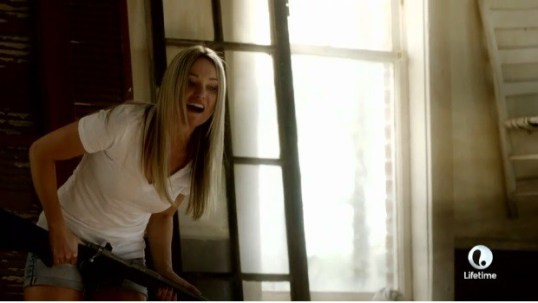
What Evelyn and Lisa Marie Watched Last Night #125: I Killed My BFF (dir by Seth Jarrett)


Last night, my best friend forever Evelyn and I watched the latest Lifetime film, I Killed My BFF.

(Watching a movie called I Killed My BFF with my BFF?  How could that possibly go wrong?)

shotter-620x350


Why Were We Watching It?

Evelyn and I love to watch the Lifetime original series, I Killed My BFF.  For those of you who may not obsess over Lifetime like we do, I Killed My BFF is a true crime show about best friends who end up killing each other.  Each episode features dramatic reenactments and the fun comes from trying to guess which friend will be the murderer and which friend will end up meeting a very gruesome end.

(I know it’s probably in bad taste to refer to a true crime show as being “fun” but … oh well.)

From the minute that Evelyn and I heard that Lifetime would be airing a film version of I Killed My BFF, we simply knew we would have to watch.

(According to the imdb, I Killed My BFF was originally titled The Neighbor.  I’m not sure if it was originally meant to have any connection to the I Killed My BFF series or not.  If I had to guess, I would say that Lifetime bought the film and changed the title to make it appear to be a spin-off of the I Killed My BFF series, in much the same way that Lucio Fulci’s Zombi 2 was specifically titled to fool European audiences into thinking that it was a sequel to George Romero’s Zombi, or Dawn of the Dead as it was known here in the States.)

Also, another reason Evelyn and I were watching the movie together is because that’s what BFFs do!  (Except when they’re busy killing each other, of course….)

What Was It About?

When blonde Shane (Katrina Bowden) meets redheaded Heather (Olivia Crocicchia) at the hospital, shortly after both of them have given birth, they quickly become BFFs.  Unfortunately, they both have their struggles.  Heather is bipolar.  Shane is ambitious but poor.  Of course, their biggest problem is that they are characters in a film called I Killed My BFF and that means that one of them is going to be dead by the end of the movie.

What Worked?

This was actually one of the better Lifetime films that I’ve seen this year.  The film looked great, director Seth Jarrett never allowed the film to drag, and both Katrina Bowden and Olivia Crocicchia gave good performances.  (Olivia Crocicchia, in particular, was heartbreaking in some of her vulnerable moments.)  Even the film’s score was pretty good!  All in all, this film was exactly what we want when we watch a Lifetime true crime movie.

What Did Not Work?

Part of the fun of I Killed My BFF: The Series is that you’re never quite sure which BFF is going to die until the last few minutes of each episode.  Unfortunately, the commercials for I Killed My BFF: The Movie revealed, ahead of time, which BFF was going to die.  They served as a HUGE spoiler.

Though it may seem nitpicky, by the time the murder occurred, Heather and Shane were no longer really friends.  This film should have been called I Killed My Ex-BFF.

“Oh my God!  Just like us!” Moments

Okay, so obviously you know that you’re taking a risk when you and your BFF decide to watch a movie called I Killed My BFF.  But it was still kinda freaky how much Evelyn and I had in common with Shane and Heather.  For instance, Heather had red hair and so do I!  Evelyn has pretty blonde hair and so did Shane!  Heather took a “gazillion meds” and so do I!  Evelyn looks good in red and so did Shane!  It was uncanny and a little disturbing!

After watching the movie, I assured Evelyn that I would never murder her and, after thinking about it for a disturbingly long time, Evelyn agreed that she would probably never murder me.  But then, every episode of I Killed My BFF begins with the BFFs saying the exact same thing!  Listen, I love my BFF but I’d be lying if I said that I didn’t spend all night looking over my shoulder.

Lessons Learned

Be careful when it comes to picking a BFF.  Apparently, some people just can’t handle the pressure of being a best friend forever.

I Killed My BFF2

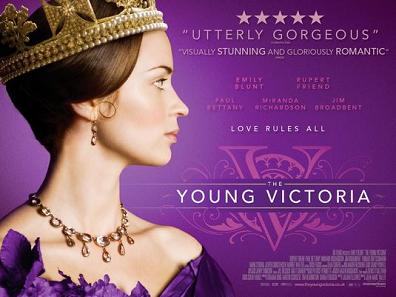
Embracing the Melodrama Part II #116: The Young Victoria (dir by Jean-Marc Vallee)


Young_victoria_poster

So, earlier, I was having a conversation with my BFF Evelyn and I discovered that we both have a massive girl crush on Emily Blunt.

And really, can you blame us?

First off, Emily Blunt is incredibly talented.  She’s one of those actresses who can play just about anyone and anything.  I have never heard or seen an interview with her where she seemed to be anything less than intelligent and witty.  She speaks her mind and projects an attitude of not really caring what other people think about her.  Add to that, she’s absolutely gorgeous and she has a body and a face to die for.  If I were to ever get a nose job (and that’s always been a temptation for me), I would definitely tell the surgeon to give me Emily Blunt’s nose.

Evelyn and I also love the fact that Emily Blunt always plays characters who kick ass, often times literally.  Whether it was in Looper or Edge of Tomorrow or the upcoming Sicario, one thing remains consistent.  You simply do not mess with Emily Blunt because she’s a fighter.

Finally, Emily Blunt gets to spend every night with Jon Krasinski!

Seriously, how can you not love Emily Blunt?

Emily Blunt first received attention as the result of supporting turns in The Devil Wears Prada and Charlie Wilson’s War.  Her first starring role — or, at the very least, her first starring role to receive wide distribution here in the states — was in the 2009 film, The Young Victoria.

The Young Victoria attempts to do for Britain’s famous Queen Victoria what Elizabeth did for Queen Elizabeth I.  It attempts to humanize an iconic figure and show that, underneath the popular image of Victorian refinement and emotional repression, Victoria was actually a passionate and headstrong woman.  And the film largely succeeds at doing that because Victoria is played by Emily Blunt.

Unfortunately, The Young Victoria is never quite as interesting as Elizabeth.  Whereas both films feature young queens struggling to prove themselves worthy of leading Britain, Elizabeth benefited from being conceived as a renaissance version of The Godfather.  Elizabeth was full of shadowy conspiracies, ominous whispers, and secrets.  When, at the end of the film, Elizabeth had solidified her hold on the British crown, you felt that she had truly accomplished something and that perhaps her victory was worth living the rest of her life as the Virgin Queen.

Whereas in The Young Victoria, the conspiracies basically amount to smug civil servants assuring themselves that Victoria won’t do something and then being shocked when Victoria does exactly what they weren’t expecting her to do.  And, while it’s undeniably fun to watch Victoria refuse to sign away her power and announce that she can decide for herself what her royal role should be, that’s largely because it’s always fun to watch Emily Blunt stand up for herself.

The majority of the film is taken up with Victoria being courted by Prince Albert (Rupert Friend).  Again, there’s no real conflict in Victoria and Albert’s relationship.  We know that Victoria is eventually going to marry Albert.  And, even when the two have an argument towards the end of the film, you know that they are going to reconcile.  What you may not be prepared for is a scene where Albert is gravely wounded while protecting Victoria from an assassin’s bullet.  That’s because it never happened.  A man did attempt to assassinate Victoria but he failed and Albert was not wounded at all.  But then again, why let history get in the way of a good story?

On the poster at the top of the post, The Young Victoria is described as being “gorgeous.”  And really that’s the main reason to see the film.  The film looks really, really good.  The costumes and the sets are wonderfully ornate.  The cinematography is vibrant and lush.  And Emily Blunt’s performance can rightly be called gorgeous.   By the end of The Young Victoria, you really don’t feel like you’ve learned anything new about Queen Victoria.  But you do appreciate Emily Blunt.

TV news you can use


Just my thoughts for PTV you can use.


You all remember what happened in early May, right? All the broadcast networks presented their shiney new shows for advertisers, in something called the ‘upfronts’. They gave us their schedules, what will be airing when….*record scratch* Wait, What? Only four weeks later every thing has changed!

Let’s start with ABC.

At the up fronts, ABC had “Of Kings and Prophets” airing in their 10 pm East/ 9 Central Sunday time-slot-of-death. (Remember 1600 Pennsylvania Avenue, The Gates, American Crime, Revenge? Yeah, me neither) But according to TVline, ABC has pulled “Of Kings and Prophets” for a re-cast, which, in my opinion, will mean a never air. (http://tvline.com/2015/06/02/abc-fall-schedule-quantico-sunday-replaces-kings-and-prophets//) Now “Quantico” which has had its own problems will move into the Sunday time-slot-of-death was originally scheduled to be Tuesday at 10 East/ 9 Central

And NBC:

Well, we were all looking forward to Melissa Georges’ heart wrenching “Heartbreakers” (sorry for the pun!) But NBC has decided to move up another Dick Wolf show in “Chicago Med.” (Okay, seriously! I am moving to Chicago and getting me a job in the PD, FD or Med field!) I digress, NBC has replaced “Heartbreakers” with “Chicago Med” on Tuesday nights, either show will get a significance bump from “The Voice” lead in. (http://deadline.com/2015/06/heartbreaker-pushed-melissa-george-pregnant-chicago-med-fall-launch-nbc-1201438347/)

For FOX and CBS, let’s give them credit! So far they have stuck with their schedules. For now…all schedules are subject to change!

In get your streaming news together:

Orange Is The New Black got released a bit early; not like the orange jump suit prisoners in New York! According to Variety and other sources, you can get out of jail early, or at least watch #OITNB early!

Arrested Development! According to HitFlix, (http://netflixlife.com/2015/06/02/report-arrested-development-season-5-to-hit-netflix-in-2016/) new episodes will be released in 2016…I only have one thing to say, Arrested Development!

In casting news:

Heroes: Reborn

Okay, I might be a lot excited about this show! But in fairness to me, I loved Heroes! But in the news, according to TVLine (http://tvline.com/2015/06/10/heroes-reborn-cast-cristine-rose-returning-angela-petrelli/) Cristine Rose will be reprising her role as Angela Petrelli. and I could not be happier.

Now, Daredevil

Yes, yes, YES! Not only will Vincent D’ be back, but according to CNN and other reports, (http://www.cnn.com/2015/06/09/entertainment/punisher-daredevil-walking-dead-jon-bernthal-feat/) Jon Bernthal (The Walking Dead
) will join the cast! Ok, I might be a little excited about Shane and his killing prowess!

In Memoriam this week.

I hope I do not have to do this often!

Lisa paid an amazing tribute to one of the all time greats, Christopher Lee this week! So saddened by his passing! (https://unobtainium13.com/2015/06/12/christopher-lee-r-i-p/)

But let’s not forget Ron Moody, can Fagin ever be played again the way Ron did? (https://www.youtube.com/watch?v=xWlHquk8si4) His interpretation of Fagin always leaves me breathless! Not what Charles Dickens did, but what Ron did with Fagin! How he transformed a character!

And Ornette Coleman
The only thing I can say about this amazing man is what he said about himself…”I don’t want to get paid, I just want to get heard, that is why I am broke”!

And I will be back next week with another news round up!

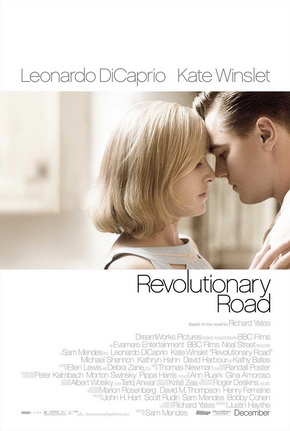
Embracing the Melodrama Part II #115: Revolutionary Road (dir by Sam Mendes)


Revolutionary_roadI have such mixed feelings about the 2008 film Revolutionary Road.

As you may remember, Revolutionary Road got a lot of attention because it reunited the Titanic lovers, Kate Winslet and Leonardo DiCaprio.  In Revolutionary Road, they would be playing the type of married couple that we all know Jack and Rose would have become if the boat hadn’t hit that iceberg.

Revolutionary Road also got a lot of attention because it was directed by Sam Mendes and it was a return to the “suburbs-as-Hell” genre of filmmaking that won Mendes an undeserved Oscar for his work on American Beauty.

And finally, Revolutionary Road was based on a 1961 novel by Richard Yates that had originally been declared to be unfilmmable.  After decades of being optioned and then abandoned, Revolutionary Road was finally coming to the screen.

With all that in mind, a lot of critics expected that Revolutionary Road would be one of the best films of the year.  When the film itself was finally released, there were a few ecstatic reviews.  There were predictions of Oscar glory.  But, for the most part, both audiences and critics had a somewhat muted reaction.  The film itself simply did not live up to all of the build up.

That said, Kate Winslet gave a great performance.  In the role of aspiring actress-turned-housewife-turned-prisoner April, Winslet gives a fierce and tragic performance.  The film revolves around April’s struggle to live her own life and pursue her own ambitions in a world that continually tells her that she should simply be happy and content to have a husband, two children, and a house in the suburbs.  When April describes her life as being full of “hopeless emptiness,” we all know exactly what she’s talking about.

Leonardo DiCaprio was a bit less convincing as her husband, Frank.  Then again, that’s not really a surprise.  DiCaprio is always at his worse whenever he has to play a “normal” character.  His screen presence is too off-center for him to be believable as a suburban conformist.  It was obviously good publicity to reunite DiCaprio and Winslet but that doesn’t change the fact that Leo is totally miscast.  Whenever Frank and April fight, Kate Winslet seems to be screaming from her very soul while DiCaprio is just shrill.  Admittedly, Frank is meant to be a shallow character but that doesn’t justify a shallow performance.

Throughout the film, Frank and April are constantly nagged by their real estate agent, Helen Givings (Kathy Bates).  Whenever Helen drops by the house, she goes “Yoo hoo!” in the shrillest way possible and the audiences is reminded that Sam Mendes is not a particularly subtle director.  That willingness to go over-the-top made him the perfect director for Skyfall but, in both American Beauty and this film, it just leads to some talented actors giving very bad performances.

Helen’s son, John (Michael Shannon), has one of those cinematic mental illnesses, the type that gives him the power to explicitly state each scene’s subtext.  John is also one of those overly theatrical characters who works a lot better as a literary conceit than as an actual character.

And really, I guess that sums up why I have never liked Revolutionary Road as much as I wanted to.  The film works whenever it focuses on Kate Winslet, precisely because she gives such a heartfelt and naturalistic performance.  However, at the same time, Winslet is so good that she exposes how artificial and theatrical the rest of the film is.  If only the rest of the production had followed Winslet’s lead, Revolutionary Road could have been something great.

For all the pre-release Oscar hype, Revolutionary Road was largely ignored when it came to the Academy Awards.  Michael Shannon received a surprise nomination for best supporting actor but otherwise, the film was snubbed.  Kate Winslet, however, did finally win an Oscar that year when she picked up the Best Actress award for her performance in The Reader.

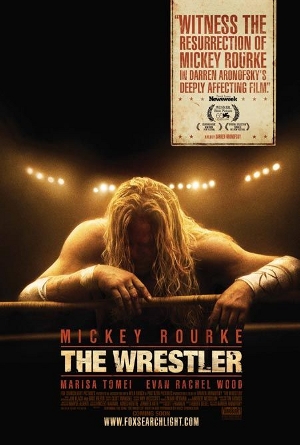
Embracing the Melodrama Part II #114: The Wrestler (dir by Darren Aronofsky)


The_Wrestler_poster

I’m always a little surprised by how much I like the 2008 film The Wrestler.

Actually, to be honest, I’m more than a little surprised.  I’m a lot surprise.  First off, The Wrestler takes place in the world of professional wrestling and that’s a world that I not only know nothing about but which I also have very little interest.  (My cousin Gustavo — Hi, Gus! — loved the Rock.  That’s about the extent of my knowledge.)  Add to that, The Wrestler doesn’t take place in the world of televised pro wrestling.  (I may know nothing about wrestling but I do know a lot about television.)  Instead, this is a world of backroom matches, broken dreams, and fading lives.

Secondly, The Wrestler features, as its hero, a man in his 50s who is still a total and complete fuckup.  The character of Randy “The Ram” Robinson (played, in an Oscar-nominated performance, by Mickey Rourke) is perhaps epitomized by the fact that, after going out of his way to try to reconnect with his daughter, Stephanie (Evan Rachel Wood), and setting up a dinner date so that they can finally talk and get to know each other, Randy ends up getting consumed with self-pity, getting drunk, getting high, getting laid, and ultimately standing up his daughter.  And whenever I see that part of the movie, I hate Randy just as much as Stephanie does because I know exactly how she feels.  Stephanie can’t forgive Randy and neither can I.

And yet, oddly enough, I still care what happens to Randy.  Randy is a former wrestling superstar, a guy who was big in the 1980s but now lives in a haze of obscurity and self-pity.  He now wrestles on the weekend, works a demeaning job at a super market deli, and occasionally plays an old video game which features him as a character.  His only real friend (and source of strength) is Cassidy (Marisa Tomei), a stripper who knows what its like to get older in a profession dominated by the young.

Randy does have one final chance at a comeback, when he agrees to an exhibition fight against his former nemesis, a  “villainous” wrestler known at The Ayatollah (Ernest Miller).  (It’s interesting to note that, outside of the ring, “bad guy” Ayatollah seems to be everything that “good guy” Randy is not, i.e., responsible, stable, and content with his life.)

However, there’s one problem.  Randy has a heart condition and he has been told that continuing to wrestle could kill him.  Will Randy give up the only thing that he’s ever been good at or will Randy potentially sacrifice his life to have one last chance to hear the cheers of the crowd?

Randy Robinson is another one of director Darren Aronofsky’s obsessive protagonists, a character who is so obsessed with something that he’s sacrificed everything else to pursue it.  Fortunately, Aronofsky is a master of making these type of characters sympathetic.  Over the course of the film, Randy fucks up so much that you really are tempted to just give up on him but Aronofsky directs the film with such compassion and Rourke gives such a vulnerable and emotionally raw performance that you find yourself giving Randy another chance despite your better instincts.  The film’s melancholy ending is effective because you know that it really is the only way that Randy’s story can end.

I’m always surprised to like The Wrestler.

But I do.

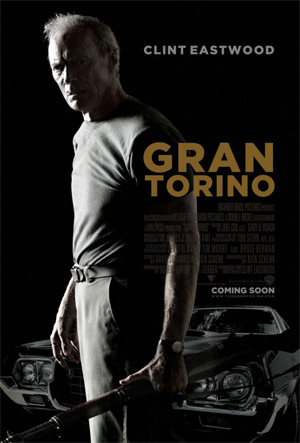
Embracing the Melodrama Part II #113: Gran Torino (dir by Clint Eastwood)


Gran_Torino_posterWalt Kowalski (Clint Eastwood) is a grumpy man.  And by that, I mean that he’s extremely grumpy.  Remember how grumpy Bill Murray was in St. Vincent?  He’s got nothing on Walt Kowalski.

Walt served in the Korean War and, five decades later, his experiences still haunt him.  After the war, he lived in Detroit and he worked on an assembly line.  He’s since retired but he still loves his old Ford Gran Torino, a car that he could very well have helped to build.  His wife has recently passed away and his children are eager to move him into a nursing home.  Walt is slowly smoking himself to death and the only person who visits him regularly is an earnest young priest (Christopher Carley, playing the ideal priest).

Just as Walt’s life has changed as he’s gotten older, so has his neighborhood.  The neighborhood is now dominated by Hmong immigrants.  When Walt catches Thao Vang Lor, a 16 year-old Hmong, attempting to steal his car, it leads to an unlikely friendship between Walt, Thao, and Thao’s sister, Sue.  When the same local gang that put Thao up to stealing Walt’s car subsequently attacks Sue, Thao wants revenge but Walt says that if Thao kills a man, it’s something that he’ll never recover from.  After locking Thao in his house, Walt goes off to confront the gang on his own…

And, since Walt is played by Clint Eastwood, you’d be justified in thinking that Walt’s confrontation would amount to a lot of quips and violence.  But actually, it’s the exact opposite.  Gran Torino does not find Eastwood in the mood to celebrate violence.  Instead, the film is a meditation on both the cost of violence and the impossibility of escaping one’s own mortality.

Whenever people talk about the 2008 Oscar race, the focus always seems to be on the snubbing of  The Dark Knight.  However, I would say that Gran Torino (among other films) was snubbed even more than The Dark Knight.  After all, The Dark Knight may have missed out on best picture but it still received 8 nominations and won an Oscar for Heath Ledger.  Gran Torino, on the other hand, received not a single nomination.

Don’t get me wrong.  I’m not arguing that Gran Torino deserved a best picture nomination.  It’s a fairly predictable film and some of the symbolism, particularly during Walt’s final confrontation with the gang, gets a bit too heavy-handed.  (Any time a character spontaneously strikes a crucifixion pose in a movie, you know that things are starting to get out of hand.)  But I would argue that Clint Eastwood definitely deserved a nomination for best actor.  In many ways, Walt is a typical Eastwood character but, right at the moment when we’re expecting him to behave like every other Eastwood character that we’ve ever seen, Walt surprises us by doing something completely different.  As a director, Eastwood subverts our expectations of Clint Eastwood as both an actor and a character.  As a result, the audience is taken by surprise by Walt, if not by the film’s plot.

I remember, at the time the film was released, there was some speculation that Gran Torino would be the last time we ever saw Clint Eastwood onscreen.  That proved to be false, as he subsequently starred in Trouble With The Curve.  However, even if it wasn’t his final acting role, Gran Torino still serves as the perfect monument to Eastwood’s unique screen presence.

Embracing the Melodrama Part II #112: The Curious Case of Benjamin Button (dir by David Fincher)


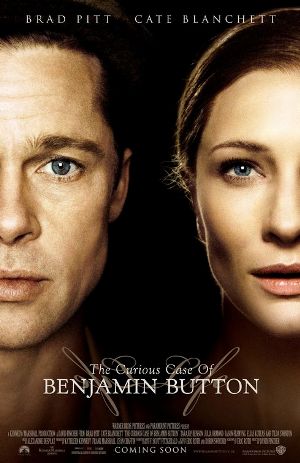
Curious_case_of_benjamin_button_ver32010 will always be considered, by many of us, to be the year that Oscar journalism first jumped the shark.  That was the year that a group of self-styled award divas (which Awards Daily’s Sasha Stone being the most obnoxious culprit) went batshit crazy over a film called The Social Network.  

From the minute that David Fincher-directed film premiered, the Sasha Stones in the world not only declared it to be the greatest film ever made but also insinuated that anyone who disagreed had to be stupid, crazy, and evil.  It actually got rather silly after a while.  That is until The Social Network lost best picture to The King’s Speech.  Suddenly, what was once merely enthusiastic advocacy transformed into fascistic fanaticism.  Suddenly, these people started to view the 2010 Oscar race (and each subsequent Oscar race) as a rather tedious battle between good and evil.  For these people, David Fincher represented the forces of good.  And Tom Hooper, the director of The King’s Speech, represented all that was evil.  They took this to such an absurd extreme that they not only subsequently heaped undeserved praise on Fincher’s bastardization of The Girl With The Dragon Tattoo but also unnecessary scorn on Hooper’s Les Miserables.

Of course, what was forgotten in all of that drama was that — before Hooper and The King’s Speech came along, the 2010 Oscar race was predicted be some to be a rematch between Fincher and Danny Boyle (whose 2010 film, 127 Hours, was indeed nominated for best picture, alongside The Social Network, King’s Speech, and Black Swan).  When Fincher and Boyle previously competed during the 2008 Oscar race, Danny Boyle’s Slumdog Millionaire defeated Fincher’s The Curious Case of Benjamin Button.

And indeed, the case of Benjamin Button was curious one!

Loosely based on a short story by F. Scott Fitzgerald, The Curious Case of Benjamin Button told the story of a man who aged in reverse.  When Benjamin is a baby, he has the wrinkled face of an elderly man.  When he’s a teenager, he’s walking with a cane.  When he’s middle-aged, he looks like Brad Pitt in Legends of the Fall.  (In that regard, it helps that Benjamin is played by Brad Pitt.)  And when he’s an old man, he’s a baby.  Though the film, wisely, refrains from offering up a definite reason why Benjamin ages in reverse, it hints that it could have something to do with a clock that was built to run backwards as an anti-war statement.

Benjamin is born in New Orleans in 1918 and raised in a nursing home by Queenie (Oscar nominee and future Empire star Taraji P. Henson).  The love of Benjamin’s life is Daisy Fuller (Elle Fanning when young, Cate Blanchett as an adult), a dancer who also loves Benjamin but who, unlike him, is not aging in reverse.  For this reason, Benjamin and Daisy cannot be together.  That’s the way tragic love works.

The film itself features a framing device.  Daisy, now an elderly woman, is dying and gives her estranged daughter, Caroline (Julia Ormond), the diary of Benjamin Button.  As Caroline reads, Hurricane Katrina rages outside.  I’ve never really been comfortable with the way that the film uses Katrina as a plot point, for much the same reason that it bothered me when Hereafter used the real-life Thailand typhoon and London terrorist bombings to tell its story.  The real-life tragedy of Katrina feels out-of-place in a story about Brad Pitt aging backwards.

As for the rest of the film, The Curious Case of Benjamin Button is … well, it’s a curious film.  Visually, it’s definitely a David Fincher film but, at the same time, there’s something curiously impersonal about it.  You almost get the feeling that this was Fincher’s attempt to show that he was capable of making a standard big budget Hollywood film without getting too Fincheresque about it.  Brad Pitt and Cate Blanchett have chemistry and they look good together but Fincher has never been a sentimental director and his heart never truly seems to be in their love story.  (Ben Affleck and Rosamund Pike in Gone Girl feel more like a natural couple than Brad Pitt and Cate Blanchett do in this film.)  There’s only a few scenes, mostly dealing with the more morbid aspects of Benjamin’s odd condition, towards which Fincher really seems to feel any commitment.

As a result, The Curious Case of Benjamin Button becomes a curious misfire.  It’s a film that struggles with the big picture but is occasionally redeemed by some of its smaller moments.  (The scenes with the elderly Benjamin as a dementia-stricken baby are haunting and unforgettable.)  Ultimately, The Curious Case of Benjamin Button is probably the weakest of the five 2008 films nominated for best picture but it’s still an interesting film to watch.

Christopher Lee, R.I.P.


Jinnah

The picture above is Christopher Lee in the 1998 film Jinnah.  In this epic biopic, Lee played Muhammad Ali Jinniah, the founder of modern Pakistan.  Up until yesterday, I had never heard of Jinnah but, after news of Lee’s death broke, Jinnah was frequently cited as being Lee’s personal favorite of his many roles and films.

Consider that.  Christopher Lee began his film career in the 1940s and he worked steadily up until his death.  He played Dracula.  He played The Man with the Golden Gun.  Christopher Lee appeared, with his future best friend Peter Cushing, in Laurence Olivier’s Oscar-winning Hamlet.  He played Seurat in John Huston’s Moulin Rouge.  He appeared in both The Lord of the Rings and the Hobbit trilogies.  He appeared in several films for Tim Burton.  He even had a small role in Martin Scorsese’s Hugo.  He appeared in two Star Wars prequels.  He appeared in the original Wicker Man (and reportedly considered it to be his favorite of his many horror films).  He appeared in Oscar winners and box office hits.  And, out of all that, Christopher Lee’s personal favorite was Jinnah, a film that most people have never heard about.

Unless, of course, you live in Pakistan.  When I did a google search on Christopher Lee, I came across several Pakistani news sources that announced: “Christopher Lee, star of Jinnah, has died.”

And really, that somehow seems appropriate.  Christopher Lee was the epitome of an international film star.  He worked for Hammer in the UK.  He worked with Jess Franco in Spain and Mario Bava in Italy.  He appeared in several movies in the United States.  And, in Pakistan, he played Jinnah.  And I haven’t seen Jinnah but I imagine he was probably as great in that role as he was in every other role that I saw him play.  Over the course of his long career, Christopher Lee appeared in many good films but he also appeared in his share of bad ones.  But Christopher Lee was always great.

It really is hard to know where to begin with Christopher Lee.  Though his death was announced on Thursday, I haven’t gotten around to writing this tribute until Friday.  Admittedly, when I first heard that Lee had passed away, I was on a romantic mini-vacation and had promised myself that I would avoid, as much as possible, getting online for two days.  But, even more than for those personal reasons, I hesitated because I just did not know where to start when it came to talking about Christopher Lee.  He was one of those figures who overwhelmed by his very existence.

We all know that Christopher Lee was a great and iconic actor.  And I imagine that a lot of our readers know that Lee had a wonderfully idiosyncratic musical career, releasing his first heavy metal album when he was in his 80s.  Did you know that Lee also served heroically during World War II and, after the war ended, helped to track down fleeing Nazi war criminals?  Did you know that it has been speculated that Lee may have served as one of the role models for James Bond?  (Ian Fleming was a cousin of Lee’s and even tried to convince Lee to play Dr. No in the first Bond film.)  Christopher Lee lived an amazing life, both on and off the screen.

But, whenever one reads about Christopher Lee and his career or watches an interview with the man, the thing that always comes across is that, for someone who played so many evil characters, Christopher Lee appeared to be one the nicest men that you could ever hope to meet.  Somehow, it was never a shock to learn that his best friend was his frequent screen nemesis, Peter Cushing.

Christopher Lee is one of those great actors who we assumed would always be here.  The world of cinema will be a sadder world without him.

Legends together

Legends together

Here is a list of Christopher Lee films that we’ve reviewed here on the Shattered Lens.  Admittedly, not all of these reviews focus on Lee but they do provide a hint of the man’s versatility:

  1. Airport ’77
  2. Dark Shadows
  3. Dracula A.D. 1972
  4. Dracula Has Risen From The Grave
  5. Dracula, Prince of Darkness
  6. Hercules in the Haunted World
  7. The Hobbit
  8. The Hobbit: Battle of the Five Armies
  9. Horror Express
  10. The Horror of Dracula
  11. Hugo
  12. Jocks
  13. The Man With The Golden Gun
  14. The Satanic Rites of Dracula
  15. Scars of Dracula
  16. Scream and Scream Again
  17. Season of the Witch
  18. Starship Invasions
  19. Taste The Blood of Dracula
  20. The Wicker Tree

Sir Christopher Lee was 93 years old and he lived those 9 decades in the best way possible.  As long as there are film lovers, he will never be forgotten.

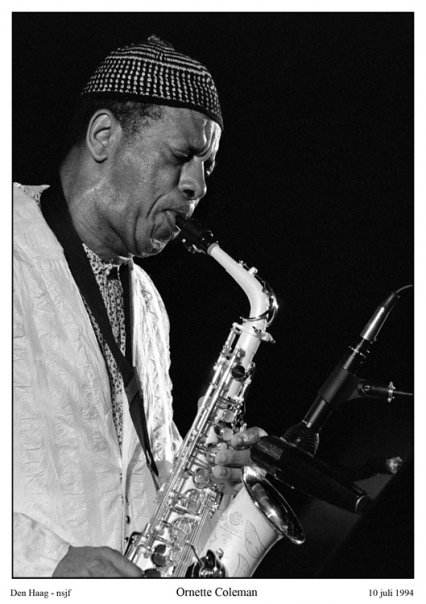
In Memory of Ornette Coleman


Ornette Coleman

On Thursday morning, jazz legend Ornette Coleman died.  He was 85.

My father loves jazz and I grew up listening to a soundtrack that included Miles Davis, Charlie Parker, John Coltrane, and Ornette Coleman.  Out of all of them, Coleman was his favorite.  As he would always say, no one else sounded like Ornette Coleman.

Ornette Coleman spent a lifetime reinventing both himself and jazz.  A tireless innovator and a fearless experimenter, Ornette Coleman returned jazz to its improvisational roots.  With his 1961 album Free Jazz: A Collective Improvisation, he not only popularized a new approach to jazz but gave it a name as well.  As Coleman himself once said, “For me, being an innovator doesn’t mean being more intelligent, more rich, it’s not a word, it’s an action.”

Rest in peace, good gentleman.