In the 1951 film, Bride of the Gorilla, Raymond Burr plays a plantation manager who commits a murder. Unfortunately, for him, the murder is observed by a witch who promptly puts a curse of Burr. Now, every time the sun goes down, Burr transforms into a gorilla and goes wild in the jungle.
Basically, it’s kind of like The Wolf Man, just with a less sympathetic protagonist and a gorilla instead of a werewolf. Just in case we missed the similarities, Lon Chaney, Jr. plays the film’s nominal hero, a police commissioner who suspects that something weird might be happening with Burr. Apparently, the plan was originally for Chaney to play the gorilla and for Burr to play the policeman but, because Chaney was dealing with a serious alcohol problem at the time, the roles were reversed.
Also in the cast, playing the role of Dina, is Barbara Payton, the tragic actress who is best known for being at the center of a love triangle involving actors Tom Neal and Franchot Tone. In 195000, Neal attacked Tone and beat him so severely that Tone spent 18 hours in a coma. Tone was notably shaky onscreen for the rest of his film career while Neal spent a few years in prison. After the incident between Tone and Neal, Payton could only get roles in B-movies like this one. Tragically, she would pass away, in 1967, of heart and live failure. She was only 39 years old.
The time is the 1930s and the place is New York City. Everyone wants to get into the Cotton Club. Owned by British gangster Owney Madden (Bob Hoskins), the Cotton Club is a place where the stage is exclusively reserved for black performers and the audience is exclusively rich and white. Everyone from gangsters to film stars comes to the Cotton Club.
It is at the Cotton Club that Dixie Dwyer (Richard Gere) meets everyone from Dutch Shultz (James Remar) to Gloria Swanson (Diane Venora). Shultz hires Dixie to look after his girlfriend, Vera (Diane Lane). Swanson arranges for Dixie to become a movie star. Meanwhile, Dixie’s crazy brother, Vincent (Nicolas Cage), rises up through the New York underworld. Meanwhile, dancing brothers Sandman and Clay Williams (played by real-life brothers Gregory and Maurice Hines) are stars on stage but face discrimination off, at least until Harlem gangster Bumpy Rhodes (Laurence Fishburne) comes to their aid.
The Cotton Club was a dream project of the legendary producer, Robert Evans, who was looking to make a comeback after being famously charged with cocaine trafficking in 1980. Having commissioned a screenplay by his former Godfather collaborators, Mario Puzo and Francis Ford Coppola, Evans originally planned to direct the film himself. At the last minute, Evans changes his mind and asked Coppola to direct the film. After working with him on The Godfather, Coppola had sworn that he would never work with Evans again. (When he won an Oscar for The Godfather‘s screenplay, Coppola pointedly thanked everyone but Robert Evans.) However, by 1984, a series of box office flops had damaged Coppola’s standing in Hollywood. Needing the money, Coppola agreed to direct The Cotton Club.
Evans raised the film’s $58 million budget from a number of investors, including Roy Radin. Roy Radin was best known for putting together Vaudeville reunions in the 70s and being accused of raping an actress in 1980. Radin and Evans were introduced to each other by a drug dealer named Lanie Jacobs, who was hoping to remake herself as a film producer. During the production of The Cotton Club, Radin was murdered by a contract killer who was hired by Jacobs, who apparently felt that Radin was trying to muscle her out of the film production.
While all of this was going on, Coppola fell into his familiar pattern of going overbudget and falling behind schedule. This led to another investor filing a lawsuit against Orion Pictures and two other investors, claiming fraud and breach of contract. When the film was finally released, it received mixed reviews, struggled at the box office, and only received two Oscar nominations.
With all of the murder and drama that was occurring offscreen, it is not surprising that the film itself was overshadowed. The Cotton Club is a disjointed mix of gangster drama and big production numbers. As always with post-Apocalypse Now Coppola, there are flashes of brilliance in The Cotton Club. Some of the production numbers are impressive and visually, this movie has got style to burn. However, among the leads, neither Richard Gere nor Diane Lane seem to be invested in their characters while the talented Hines brothers are underused. The supporting cast is full of good character actors who are all in a search of a better script. A few do manage to make an impression: James Remar, Bob Hoskins and Fred Gwynne as veteran gangsters, Nicolas Cage as the film’s stand-in for Mad Dog Coll, and Joe Dallesandro as Lucky Luciano. The Cotton Club is sometimes boring and sometimes exciting but the onscreen story is never as interesting as what happened behind the scenes.
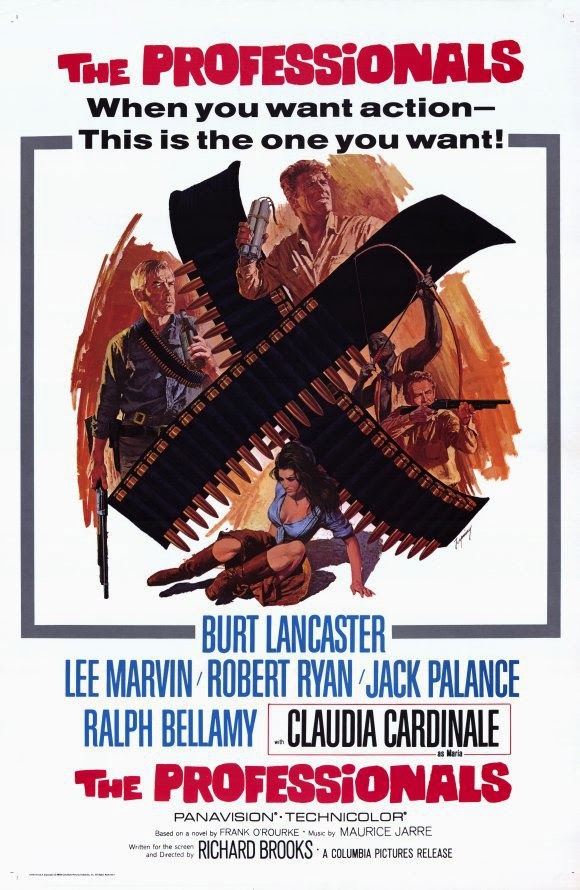
A quartet of macho mercenaries – Lee Marvin , Burt Lancaster , Robert Ryan , and Woody Strode – cross the dangerous Mexican desert and attempt to rescue a rich man’s wife kidnapped by a violent revolutionary in writer/director Richard Brooks’ THE PROFESSIONALS, an action-packed Western set in 1917. The film’s tone is closer to Sergio Leone’s Spaghetti Westerns than the usual Hollywood oater, though Leone’s trilogy wouldn’t hit American shores until a year later.
Rich rancher J.W.Grant (screen vet Ralph Bellamy ) hires the quartet to retrieve wife Maria (Claudia Cardinale) from Jesus Raza (Jack Palance ), formerly a captain in Pancho Villa’s army, now a wanted bandito. Marvin is the stoic leader, a weapons expert who once rode with Raza for Villa, as did Lancaster’s explosives whiz. Ryan plays a sympathetic part (for a change) as the horse wrangling expert, while Strode is a former scout and bounty hunter adept…
One of my earliest memories of staying up late and watching cheesy movies on local television was the sight of Robert Vaughn standing on a beach and cursing, “Damn you, Kennedy!” An echo effect kicked in, making the line: “Damn you, Kennedy Kennedy Kennedy Kennedy Kennedy!”
The name of the movie was Assignment — Kill Castro and sometimes it seemed like it came on every other night. The movie started with a title crawl that was so lengthy and so set the tone for the entire film that I feel it is worth quoting in its entirety:
From 1961, the year of the Bag of Pigs to today, the Government of the United States has been embroiled in a series of events which have continually led our nation to crisis after crisis and to the brink of war.
ASSIGNMENT — KILL CASTRO, a true story is one of the most confusing and frustrating historical events that might have led to a world power showdown. It happened yesterday! It happened today! It can happen again!
Names of persons and places have been changed to protect the individuals who were called upon to aid their country and in doing so placed their lives in jeopardy.
“I WILL GIVE ALL FOR THE LOVE OF MY COUNTRY … RIGHT OR WRONG! — G.W. Bell, Chief of Carribean (sic) Operations, Central Intelligence Agency”
This motion picture is dedicated to all people who desire to live in a free democratic society.
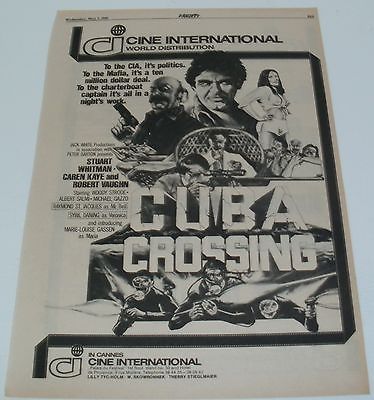
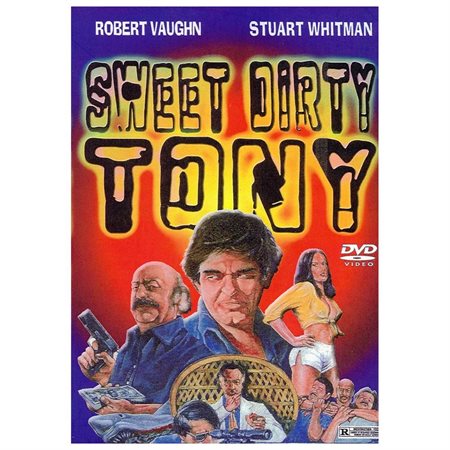
Robert Vaughn plays Hud, a former CIA agent who was involved in the original Bay of Pigs invasion. When the mysterious Mr. Bell (Raymond St. Jacques) and a gangster named Rossellini (Michael V. Gazzo) agree to finance an operation to kill Fidel Castro, Hud recruits a Key West bar owner named Tony (Stuart Whitman) to take him to Cuba. However, Mr. Bell and Rossellini are just using Hud to secretly smuggle heroin into Florida and, much like John F. Kennedy in 1961, they are planning on abandoning him on the beaches of Cuba.
The main problem with Assignment — Kill Castro is that we already know that Hud is not going to succeed in his mission because Fidel Castro is still alive and probably still bragging about how he sent Tony Montana to Miami. The other problem is that the movie does not make any damn sense. That title crawl was not kidding when it said the story was confusing and frustrating. Everyone is so busy double-crossing everyone else that it is hard to keep track. There has to be a simpler way to get heroin into Florida. Surprisingly, this incoherent movie was written and directed by the legendary editor, Chuck Workman, the same Chuck Workman who puts together those montages for the Oscars.
Kill Castro does have a good cast, though none of them are at their best. Along with Whitman, Vaughn, St. Jacques, and Gazzo, the cast includes Woody Strode, Albert Salmi, and Sybil Danning (whose last name is misspelled Daning in the end credits). Fidel Castro plays himself and the film’s ending is provided by cannibal turtles.
Assignment — Kill Castro was just one of the many titles that this movie was released under.
It was also known as Cuba Crossing,
Key West Crossing, The Mercenaries, and my personal favorite, Sweet Dirty Tony.
I record a LOT of movies. Probably around ten per week, more or less. And since I also have to do little things like work, exercise, cook, clean, breathe, etc etc, I don’t always have time to watch them all (never mind write full reviews), so I’ve decided to begin a series of short, capsule reviews for the decades covered here at Cracked Rear Viewer. This will be whenever I find my DVR getting cluttered, which is frequent! I’ll try to make CLEANING OUT THE DVR a bi-weekly series, but there are no guarantees. Monthly is more realistic. Anyway, here are five films from the 1930s to the 1970s for your reading pleasure.
“When the legend become fact, print the legend.” — Maxwell Scott (Carleton Young) in The Man Who Shot Liberty Valance (1962)
Though I understand and respect their importance in the history of both American and Italian cinema, I have never really been a huge fan of westerns. Maybe its all the testosterone (“A man’s got to do what a man’s got to do…”) or maybe it’s all the dust but westerns have just never really been my thing.
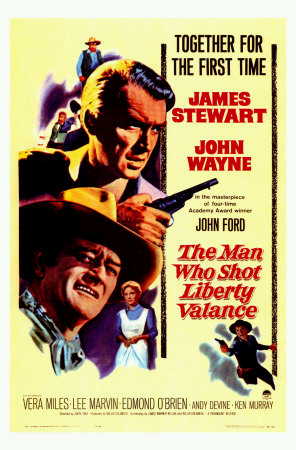
However, I will always make an exception for The Man Who Shot Liberty Valance, which is not just a great western but a great film period.
But you already knew that. It’s a little bit intimidating to review a film that everyone already knows is great. I even opened this review with the exact same quote that everyone uses to open their reviews of The Man Who Shot Liberty Valance. To a certain extent, I feel like I should have found a quote that everyone hasn’t already heard a thousand times but then again, it’s a great quote from a great film and sometimes, there’s nothing wrong with agreeing with the critical consensus.
The Man Who Shot Liberty Valance opens with a train stopping in the small western town of Shinbone. The residents of the town — including newspaper editor Maxwell Scott (Carleton Young) — are shocked when Sen. Rance Stoddard (James Stewart) and his wife Hallie (Vera Miles) get off the train. Sen. Stoddard is considered to be a front-runner to become the next Vice President of the United States. Scott is even more shocked to discover why the Stoddards are in town. They’ve come to Shinbone to attend the funeral of an obscure rancher named Tom Doniphon (played, in flashback, by John Wayne).
Sitting in the funeral home with Doniphon’s coffin (and having reprimanded the local mortician for attempting to steal Tom’s boots), Rance tells Scott why he’s come to pay respect to Tom Doniphon. We see, in flashback, how Rance first came to Shinbone 25 years ago, an idealistic lawyer who — unlike most of the men in the west — refused to carry a gun. We see how Rance was robbed and assaulted by local outlaw Liberty Valance (a wonderfully intimidating and bullying Lee Marvin), we discover how Rance first met Hallie while working as a dishwasher and how he eventually taught her how to read, and we also see how he first met Tom Doniphon, the only man in town strong enough to intimidate Liberty Valance.
At first, Rance and Doniphon had an uneasy friendship, epitomized by the condescending way Doniphon would call Rance “pilgrim.” Doniphon was in love with Hallie and, when he attempted to teach Rance how to defend himself, he was largely did so for Hallie. Rance, meanwhile, was determined to bring law and society to the west.
And, eventually, Rance did just that. When Shinbone elected two delegates to the statehood convention in the territory’s capitol, Rance attempted to nominate Doniphon for the position but Doniphon refused it and nominated Rance instead, explaining that Rance understood “the law.” When Liberty Valance attempted to claim the other delegate spot, Rance and Doniphon worked together to make sure that it instead went to newspaper editor Dutton Peabody (Edmond O’Brien). And when Liberty Valance attempted to gun Rance down in the street, Rance shot him.
Or did he?
That’s the question that’s at the heart of The Man Who Shot Liberty Valance. However, as a film, The Man Who Shot Liberty Valance is far less interested in gunfights than it is in politics. Perhaps the most important scene in the film is not when Rance and Liberty meet out on that dark street. Instead, it’s the scene at the statehood convention where the reformers (represented by Rance) and the cattlemen (represented by John Carradine) battle over who will be the territory’s delegate to Washington. Between John Carradine orating, the horses riding in and out of the hall, Edmond O’Brien drinking, James Stewart looking humble, and John Wayne glowering in the background, this is one of the best political scenes ever put on film.
When Rance first arrives in the west, there is no political system in place. With the exception of the ineffectual town marshal (Andy Devine), there is no law. The peace is kept by men like Tom Doniphon and, oddly enough, by Liberty Valance as well. (Whether he realizes it or not, Shinbone’s fear of Liberty has caused the town to form into a community.) What little official law there is doesn’t matter because the majority of the Shinbone’s citizens can’t read.
When Rance arrives, he brings both education and the law. He makes Shinbone into a town that no longer needs Liberty Valance but, at the same time, it no longer need Tom Doniphon either. Hence, it’s Rance Stoddard who goes from dishwasher to U.S. Senator while Tom Doniphon dies forgotten. Rance represents progress and unfortunately, progress often means losing the good along with the bad things of the past.
(It’s no coincidence that when Rance and Hallie return to Shinbone, the first person that they see is the former town marshal, who no longer wears a star and who, we’re told, hasn’t for years. Time has passed by.)
It’s a bittersweet and beautiful film, one that features four great performances from Stewart, Wayne, Marvin, and Vera Miles. Personally, I like to think that maybe Sen. Stoddard had a daughter who married a man named Smith and maybe they had a son named Jefferson who later made his way to the Senate as well.
Well, here’s your chance to, once again, tell me what to do. I’ve randomly selected 12 films from my film collection. Whichever film gets the most votes will be watched and reviewed by me next Tuesday, March 20th.
Here are the films up for consideration:
1) Black Jesus (1968) — This Italian film stars Woody Strode as an African rebel leader who is captured by his country’s right-wing, American-backed dictatorship.
2) Capote (2005) — Philip Seymour Hoffman was an Oscar for best actor for playing writer Truman Capote in this film that details how Capote came to write his true crime classic, In Cold Blood. This film was also nominated for best picture.
3) Chappaqua (1966) — In this underground cult classic, drug addict Conrad Rooks seeks treatment in Switzerland while being haunted by a scornful William S. Burroughs. This film features cameo from Allen Ginsberg, The Fugs, and just about every other cult figure from 1966.
4) Crazy/Beautiful (2001) — Jay Fernandez and Kirsten Dunst have lots and lots of sex. This was like one of my favorite movies to catch on cable back when I was in high school. 🙂
5) An Education (2008) — In my favorite movie from 2008, Carey Mulligan is a schoolgirl in 1960s England who has a secret affair with an older man (played by Peter Sarsgaard), who has plenty of secrets of his own. Co-starring Rosamund Pike, Emma Thompson, Alfred Molina, and Dominic Cooper (who is to die for, seriously).
6) Female Vampire (1973) — In this atmospheric and ennui-filled film from the infamous Jesus Franco, a female vampire spends the whole movie wandering around naked and dealing with the lost souls who want to join the ranks of the undead.
7) Nightmare City (1980) — In this gory and fast-paced film from Umberto Lenzi, an accident at a nuclear plant leads to a bunch of blood-thirsty zombies rampaging through both the city and the countryside. Hugo Stiglitz plays Dean Miller, zombie exterminator! Nightmare City is probably most remembered for introducing the concept of the fast zombie and for serving as an obvious inspiration for Danny Boyle’s 28 Days Later.
8) The Other Side of Midnight (1977) — Based on a best-selling novel, The Other Side of Midnight tells the story of a poor French girl who becomes a world-famous actress and who ends up sleeping with apparently every wealthy man in the world. Meanwhile, the man she loves ends up marrying Susan Sarandon. Eventually, it all ends with both a hurricane and a murder. Apparently, this film cost a lot of money to make and it was a notorious box office bomb. It looks kinda fun to me.
9) Peyton Place (1957) — Also based on a best-selling novel, Peyton Place is about love, sex, and scandal in a small town. Lana Turner is a repressed woman with a past who struggles to keep her daughter from making the same mistakes. At the time it was made, it was considered to be quite racy and it was even nominated for best picture. This film is a personal favorite of mine and it’s pretty much set the template for every single film ever shown on Lifetime.
10) Rosebud (1975) — From director Otto Preminger comes this film about what happens when a bunch of rich girls on a yacht are taken hostage by Islamic extremists. The film’s diverse cast includes Peter O’Toole, Richard Attenborough, Cliff Gorman, former New York Mayor John Lindsay, former Kennedy in-law Peter Lawford, Raf Vallone, Adrienne Corri, Lalla Ward, Isabelle Huppert, and Kim Cattrall.
11) Valley of the Dolls (1967) — Oh my God, I love this movie so much! Three aspiring actresses move to the big city and soon become hooked on pills and bad relationship decisions. Every time I watch this movie, I spend hours yelling, “I’m Neely O’Hara, bitch!” at the top of my lungs.
12) Zombie Lake (1981) — From my favorite French director, Jean Rollin, comes this extremely low budget film about a bunch of Nazi zombies who keep coming out of the lake and attacking the nearby village. Some people claim that this is the worst zombie films ever made. I disagree.
Please vote below for as many or as few of these films as you want to. The poll will remain open until March 20th and whichever film gets the most votes will be watched and reviewed by me.
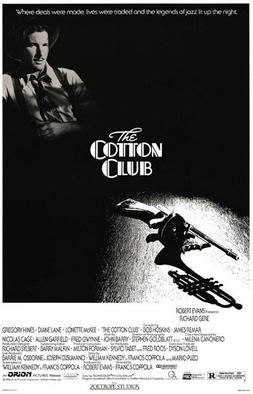 The time is the 1930s and the place is New York City. Everyone wants to get into the Cotton Club. Owned by British gangster Owney Madden (Bob Hoskins), the Cotton Club is a place where the stage is exclusively reserved for black performers and the audience is exclusively rich and white. Everyone from gangsters to film stars comes to the Cotton Club.

 One of my earliest memories of staying up late and watching cheesy movies on local television was the sight of Robert Vaughn standing on a beach and cursing, “Damn you, Kennedy!” An echo effect kicked in, making the line: “Damn you, Kennedy Kennedy Kennedy Kennedy Kennedy!”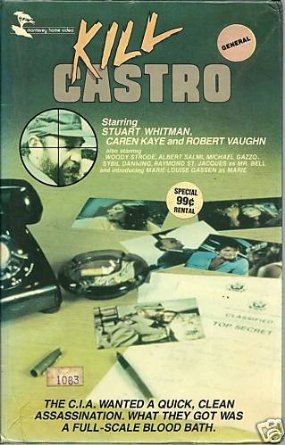
 Through the Shattered Lens