
“Tye Sheridan Is …. THE NIGHT CLERK!”
That’s not how The Night Clerk was advertised, though perhaps it should have been. This is one of those overheated melodramas that’s so sure that it’s making a bigger statement than it actually is that it becomes somewhat fascinating to watch. Usually, when we say that a film is fascinating to watch, we mean that it’s either fascinatingly good or fascinatingly bad. The Night Clerk is fascinatingly middle-of-the-road. It has opportunities to be good, largely due to the performances of Tye Sheridan and Ana de Armas. And it has opportunities to be bad, largely due to the direction and script of Michael Cristofer. Try as it might, the film never becomes truly good and yet it’s never truly bad, either. It’s just kind of there.
The title character is Bart Bromley (Tye Sheridan), a young man who has Asperger’s syndrome and who works as a night desk clerk at a hotel. He’s hidden cameras all over the hotel, so that he can observe the guests in their rooms. He even watches the guests when he returns to the home that he shares with his mother, Ethel (Helen Hunt). That’s undeniably creepy but we’re not supposed to hold that against Bart because he’s only watching the guests so that he can learn how to talk and communicate with other people.
(To be honest, the film is very lucky that Tye Sheridan was available to play Bart. As written, Bart is not a particularly sympathetic character. But Sheridan is such a likable actor and has such an appealing screen presence that you’re willing to overlook a lot of narrative inconsistencies where his character is concerned.)
Anyway, Bart ends up taking an interest in a guest named Karen (Jacque Gray) but, when Karen’s murdered, Bart becomes the number one suspect. Even though Bart knows that Karen was killed by a mysterious man who had a distinctive tattoo, he can’t reveal how he knows that information. When Bart is assigned to another hotel, he meets Andrea Riviera (Ana de Armas). Andrea seems to take an interest in Bart but is she sincere or is she somehow involved with the murderer herself?
Do I really need to answer that question for you?
And again, the film is lucky that Ana de Arams was available to play Andrea because Andrea is another character who wouldn’t be particularly sympathetic if she had been played by a less appealing performer. The film can never seem to make up its mind whether she’s a calculating femme fatale or a naive victim and it’s somewhat amazing that de Amas is able to give a good performance considering how badly Andrea is written.
The Night Clerk is one of those films that holds your interest while you watch it but it tends to fade from the memory as soon as it ends. Sheridan and de Armas are appealing actors but the film’s central mystery isn’t a particularly interesting one. When the mystery is finally solved, I was so underwhelmed that I kept waiting for another twist to suddenly pop up. Surely, I kept saying, it can’t be that simple. But yes, it is. Though the hotels are impressively trashy, the film itself has a rather flat, uninteresting look and director Michael Cristofer never really brings the story together. It’s a mess of a film but it does work as a testament to the talents of Tye Sheridan and Ana de Armas.
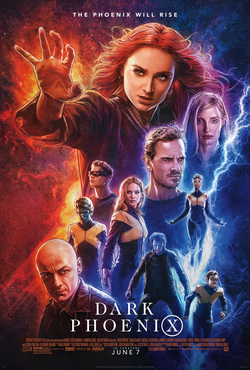
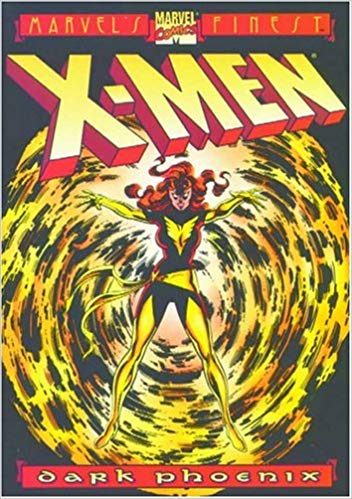

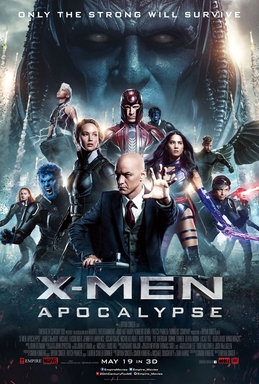 It is easy to forget what a big deal the first X-Men movie was in 2000. At a time when Joel Schumacher was still the industry’s go-to director for super hero films, X-Men announced that films based on comic books did not have to be campy, silly, stupid, or feature Alicia Silverstone. When X-Men was first released, critics and audiences were surprised to see a comic book film that was intelligent, well-acted, and actually about something.
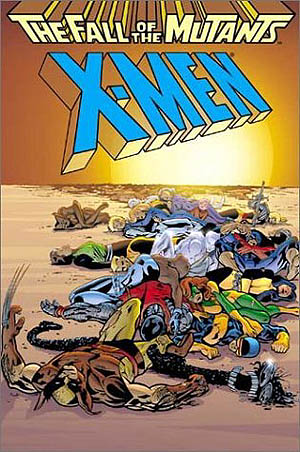 The success of X-Men has also led to a 16 year-old franchise of movies about mutants and their struggle to live in a world that fears them. X-Men: Apocalypse is the 9th installment in that franchise and it is based on the Fall of the Mutants storyline, which ran through several Marvel comics in 1988.
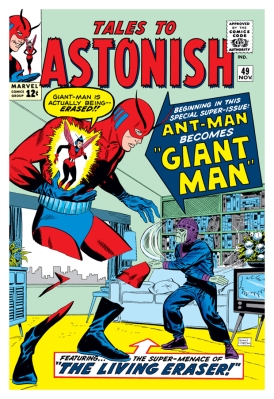 What’s interesting is that, even though Fassbender and McAvoy share a few scenes, this is the first X-Men film to not feature any sort of debate between Xavier and Magneto. Magneto, one of the greatest comic book villains of all time, is actually a little boring here and, without those debates, Apocalypse lacks the subtext that distinguished the best of the previous X-Men films. The emphasis is less on what it means to be an outsider and more on defeating Apocalypse. Unfortunately, Apocalypse is a great character in the comic books but he does not translate well into film. Unlike Magneto, who has several good and justifiable reasons for not trusting humanity, the film version of Apocalypse is portrayed as being pure evil and little else. His plan to destroy the world never makes much sense and he is almost as bland as Dr. Doom in the latest Fantastic Four reboot. Apocalypse could be any villain from any comic book movie that has been released over the past 16 years. He could just as easily be the Living Eraser.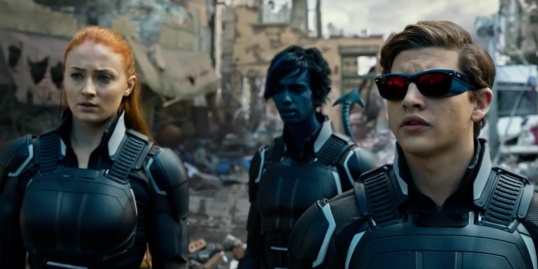







 Through the Shattered Lens