Having become the Dragon Warrior and the Champion of the Valley of Peace on many occasions, Po (Jack Black) has reached a point where its time for him to train others. All of this becomes complicated when Kai (J.K. Simmons), a former enemy of Master Oogway (Randall Duk Kim) returns to the Valley to capture the Chi of the new Dragon Warrior and anyone else that stands in his way.
The Legend of Korra geek in me hears the character of Tenzin whenever Simmons speaks in this film, only it’s Evil Tenzin vs. The Dragon Warrior. That alone was awesome.
Picking right up from Kung Fu Panda 2, Po is reunited with his birth father (Bryan Cranston), and discovers there are also other Pandas in the world. This, of course, causes a bit of tension for Po’s Goose Dad (James Hong) who raised him up until now. Can Po find a way to stop Kai? The theme of this film seems to be dealing with self discovery (as did the other films), but this focuses more on what we consider our Identity. Are we the role we take on from day to day at work or the role we have at home, or even a little of both? There’s also a nice family element to it as Po discovers what Panda life is like and deals with his Dads. Really young audiences may not exactly catch on to the theme, but there’s enough action and playful moments to keep them occupied.
On a visual level, the animation is beautiful. If you get a chance to see it in 3D, the Spirit Realm is a treat, with rocks and buildings floating around. The action scenes also move in a comic strip format, with the screen split in different ways to catch different elements. If you’re quick enough, you can catch it all. It can be jarring to anyone not used to it, I’d imagine. The Furious Five don’t have too much screen time in this one, save for Angelina Jolie’s Tigress, though it’s cute when you realize that some of the panda children in the village are played by the Jolie-Pitt kids. That was a nice discovery in the credits.
Musically, just like The Dark Knight Rises, Hans Zimmer takes what was a dual scoring effort (at least in the 2nd film) and makes it his. Though he’s assisted by Lorne Balfe (13 Hours: The Secret Soldiers of Benghazi), and drummer Sheila E. (Who worked with him on the Man of Steel score), it’s all Zimmer, really. Kai is given a nice theme to work with, one I can only describe as “Jazz Badass with Kung-Fu Swagger” and I enjoyed the music for the Panda village.
The only problem I had with Kung Fu Panda 3 was that it didn’t feel particularly epic in scope for me. In the first film, Tai Lung wanted to harness the power of the Dragon Scroll. In the second, the Peacock Shen brought cannons to decimate the Valley. This one was more personal and I enjoyed that, but it also felt like it could have been one of the Legends of Awesomeness episodes on Nickelodeon. It moved that quickly. Though it clocks in at an hour and 35 minutes — the same as the other films — it really whizzed by. It’s not a terrible thing at all, really, but I think I wanted something a little more.
Overall, Kung Fu Panda is a fun treat for the kids. While I didn’t go blind out of exposure to sheer awesomeness this time around, it gave me some inner peace and smiles.
We finally have the first official trailer for Alejandro G. Iñárritu’s follow-up to Birdman which won him a Best Oscar for Director in the 2015 Academy Awards.
He once again teams up with frequent collaborator Emmanuel Lubezki and has attracted the acting talents of Leonardo DiCaprio, Tom Hardy and Domhnall Gleeson. A film adaptation of the Michael Punke novel The Revenant: A Novel of Revenge which itself was based on and inspired by the incredible life of Wyoming frontiersman Hugh Glass (to be played by DiCaprio).
The film has been gaining some major buzz since even before the first teaser came out a couple months ago. Tom Hardy had to drop out of a major role in DC’s Suicide Squad when filming ran behind schedule on The Revenant. The film was also confirmed to be shot using only natural lighting which looks quite evident and beautiful just based on the scenes shown in the trailer.
Will The Revenant make it two in a row for Iñárritu? Or will another prestige films such as The Hateful Eight, also a western thriller set for December 25, 2015 release date as The Revenant steal it’s thunder?
We will just have to find out on Christmas Day (I know I’ll be watching one, the other or both that same day).
Ah, Berk. That fictional far away land where Dragons once plagued humans, until a young boy made friends with a Night Fury and changed everything.
How I’ve missed this place.
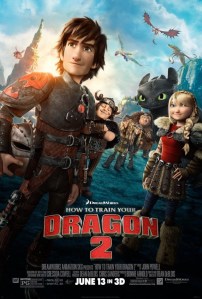
Fox & Dreamworks’ How to Train Your Dragon 2 brings us back to its dragon riding fun, taking place 5 years after the events of the first film. While the story doesn’t have the same level of depth as say, Kung Fu Panda 2, it still manages to be an enjoyable thrill ride when the dragons are taking flight.
Since this is an animated feature, let’s do visuals first. The animation is roughly the same as the original, with a bit of aging here and there for the main characters, but both the colors and the depth of field are a major standout. Cinematographer Roger Deakins (Skyfall) was brought back on board as a consultant for the lighting, focus and color tones and it definitely shows. If at all possible, this film should be seen in its 3D format. The flight sequences are a joy to behold and when they’re not flying, you shouldn’t find yourself squinting and pinching your nose too much. Chris Sanders wasn’t on hand this time for the writing and directing, although you can still see his designs all over the film.
Additionally, there were a number of technical changes that improved the process. Just as Pixar did with Renderman, Dreamworks ended up creating their own software, Apollo. Apollo uses two tools – Premo, which allowed the animators better control of characters through the use of Wacom tablets. Even more magical is Torch, a lighting system developed with Deakins’ assistance that allowed for more natural setups in animation. One of the best uses of this is when Hiccup is surrounded in a dark room and needs to use his sword to illuminate the area. It’ll be interesting to see how it’s used in other Dreamworks projects.
All of the familiar characters are back – Jay Baruchel’s Hiccup is a little older, and much wiser than in the original, with he and Toothless mapping the lands around Berk during their flights. Hiccup’s flair for gadgetry hasn’t left him, as in this film, the character is introduced almost as a medieval Batman. Between he, his father Stoic (Gerald Butler) and his girlfriend / Dragon Racing Champion Astrid (America Ferrera), they get the bulk of the screen time. His friends, played by Jonah Hill, Christopher Mintz-Plasse, and Kristen Wiig, felt more like cameos than anything else here. Then again, they really didn’t have that great a part in the first film. Toothless, the Unholy Offspring of fire and darkness itself, is still as cuddly and emotive as ever, despite not being able to actually speak. Through the film, both Toothless and Hiccup find themselves growing up in different ways and their relationship is at the heart of everything here. Hiccup and Stoic still have family issues, this time centering around Hiccup preparation for becoming Chief of the town after Stoic steps down.
When Astrid and Hiccup discover dragon hunters (Lead by Game of Thrones’ Kit Harrington, whose character here still knows nothing), they find a new evil on the horizon in the form of Drago (Guardians of the Galaxy and Blood Diamond’s Djimon Hounsou), who is building a dragon army to do some harm.
Where the movie may stumble is in its last act. It felt abbreviated to me, but as this is meant for children, I suppose it’s not meant to be that long of a film. Clocking in at 102 minutes, it moves fast. For a kid’s film, Dragon 2 rises to some interesting heights that even adults would appreciate. The film doesn’t assume you need to be retold everything you may have missed in the first film, though it does reference some elements of it. The themes of the story are coexistence (between humans & dragons), leadership, friendship and family, and they’re done well.
The race for Awards Season film releases has begun to heat up with trailers for American Hustle and The Butler already showing some major front-runners for the major awards at the end of the year.
We now have another trailer release for a film that looks to join in on all the end of the year awards scramble. It’s the latest film from George Clooney (doing a trifect as writer, director and actor) which sports an impressive ensemble cast that includes Matt Damon, Cate Blanchett, John Goodman, Bill Murray, Jean Dujardin and Bob Balaban.
The Monuments Men is based on the true story of archivers, museum directors, art restorers turned soldiers tasked with saving the cultural and fine arts treasures stolen by Hitler’s Nazi forces during World War II. As the war begins to turn again the Nazi’s this group of unconventional soldiers must prevent these treasures from being destroyed as part of Hitler’s “scorched earth” policy when it comes to the cultures he has deemed unworthy.
The film itself is adapted from the book The Monuments Men: Allied Heroes, Nazi Thieves and the Greatest Treasure Hunt in History by Robert M. Edsel. There’s a camp out there who doesn’t look at Clooney’s work as anything but OScar-bait whenever they come around every other year, but there’s no denying that the man can direct and act. The question now is whether The Monuments Men will finally give Clooney that final push into getting his first Best Director Oscar.
The Monuments Men is set for a December 18, 2013 release date.
Timur Bekmambetov is one filmmaker that can never be said to hold things back visually on any of his films. He has a style that can be called a combination of the Wachowski Brothers and Zack Snyder. Now one can read that and just groan. The Wachowskis and Snyder are not what one would call the paragon of the filmmaking community. What they do tend to do are create pop-friendly and consumer-friendly films. Whether thse films are of high quality is another thing altogether.
Bekmambetov is an interesting filmmaker from Kazakhstan (who could easily pass for what we imagine Genghis Khan to look like if he was still alive) whose brand of action films tend to focus on all style with little to no substance. For some audiences this just means dumb, brainless fare that has no reason to be paid to see, but I tend to think these same people who shout loudest about how these type of films are dumbing down it’s audiences secretly watch them like crack addicts once they’re on cable. Bekmambetov’s latest film, Abraham Lincoln: Vampire Hunter, definitely follows his unique action and storytelling template he’s established with past films as Nightwatch, Daywatchand Wanted.
The film lives and dies on the simple conceit that one of the United States’ greatest Presidents was also vampire hunter of some skill. We see how an encounter with the vampire which led to the death of Abe’s mother (who had died of the condition known at the time as milk sickness) propels him through the intervening years to plot revenge on the same vampire. It’s during a failed attempt at revenge that he’s noticed by one Henry Sturgess (played by Dominic Cooper) who sees another potential vampire hunter in the young man (adult Lincoln played by one Benjamin Walker who could easily pass for a very young Liam Neeson). We get the usual training montage where Sturgess teaches Abe the finer points in vampire hunting and killing. It’s only proper that Abe would end up picking the rail-splitting axe he’s more comfortable in using than the more practical firearms.
Abraham Lincoln: Vampire Hunteris almost a straight adaptation of Seth Grahame-Smith’s novel of the same name. Some minor subplots are discarded to keep the film moving in the one path the filmmakers and screenwriter (Grahame-Smith himself) decided to concentrate on. It’s this one thing that really pushes the film into a level that would win an audience to it’s cause or lose them altogether. This thing I speak of is the idea that slavery was due to the vampires who have set themselves as the so-called shadow aristocracy of the South and needed a ready source of food to keep themselves hidden from the humans. Yes, slavery was started and made into a near industrial level by vampires. This in turn moves Lincoln to move beyond just vengeance on the vampires who have affected his life from such an early age and instead go towards abolishing slavery from the country as a way to destroy the vampires once and for all.
These are heady ideas that doesn’t seem to fit well with historical facts and figures. Yet, the film does a good enough job of keeping things serious with just the right amount of over-the-top action sequences that Bekmambetov has become well-known for. One such action sequence involves Lincoln and a vampire having a chase scene involving a huge horse stampede. They fight in and amongst the stampeding equines and then on and above them. It’s a sequence that’s equal parts exciting and ludicrous that one just has to either sit back and enjoy it or stand up and walk out. Which is the film in a nutshell. One either goes all-in on the film’s story or folds mentally.
This is not to say that the film has no flaws. It has some glaring flaws that threatened to push the film over the edge of being a fun action flick into all-out dreck. For starters the vampires themselves made for good villains, but Rufus Sewell as the leader of the American vampires (who happens to call himself Adam) looked bored with the whole proceedings. There were brief moments when the charm that we expect from vampire leaders show, but it’s far and few between. Most of the time Sewell looks to be just standing in a particular scene looking bored. The rest of his clan of vampires are no better though Marton Csokas asBart, one of Adam’s lieutenants and main supplier of slaves, did such an over-the-top performance that one wouldn’t be surprised to catch a glimpses of scenery stuck between his teeth.
It’s really the performance by Benjamin Walker in the title role that keeps the film afloat. He has a commanding presence on the screen and he’s able to be convincing as Lincoln both as a young man and then as the elder statesman (some very good old man make-up effects that put the elder Peter Weyland make-up in Prometheus to shame). Mary Elizabeth Winstead as Mary Todd Lincoln also does a good job in what could’ve been a thankless role, but she didn’t look out of place in this peculiar period piece.
The action sequences themselves were choreographed well even though Bekmambetov was still relying a lot of his own brand of slo-mo to accentuate the cool kills Lincoln makes with his silver-coated axe. After awhile this gimmick began to get repetitious, but then again one shouldn’t be surprised to see such a thing over-used in a Bekmambetov film. If one has seen his three previous films then they should know what to expect. Yet, even this doesn’t detract from what this film ultimately turned out to be and that’s just plain fun despite lacking in the acting in certain roles and the sensational, some would say tasteless, use of the Civil War and slavery to tell a story about a vampire-killing President.
Abraham Lincoln: Vampire Hunterwill not make filmmakers like Christopher Nolan, Lars Von Trier and Michael Haneke quake in their shoes. It’s not a film that was made to win awards (though I can see it being nominated for best fight sequence in the MTV Movie Awards). What this film does seem to succeed enough in doing is be a fun and exciting film that rises above it’s source material on the strength of it’s lead and the action created by it’s filmmaker. For a genre film it certainly did a better job of mashing together disparate ideas than last year’s Cowboys & Aliens. Maybe if this film is enough of a success we’ll finally get some movement in the planned film adaptation of Seth Grahame-Smith’s other literary classic mash-up: Pride and Prejudice and Zombies. One can only hope.
Takenwas the surprise hit of 2009 as audiences bought into Liam Neeson as the baddest of badasses. One would rarely think of him as an action-thriller hero. He’s done tough guy, man of action roles in the past but they tended to be of the mentor types. It was the Luc Besson-produced Takenthat first made Neeson as a believable action hero.
The film was a simple enough revenge fare. One would thnk that the film’s ending was closure enough that a sequel wasn’t needed, but Hollywood won’t have none of that. It took a year or so, but soon enough 20th Century Fox purchased the rights to the sequel to Takenand quickly greenlit the project.
It’s now 2012 and Neeson’s former CIA black ops character, Bryan Mills, is back to do what he does best and that’s kill, torture and main (not in that particular order every time) every gangster and criminal who gets in his way as he tries to save not just his daughter (again), but his ex-wife as well as they vacation in that hotbed of spying and intrigue,
Istanbul. Luc Leterrier is not helming the sequel but another Besson protege in Olivier Megaton. Now with a name such as Megaton one should expect some explosive action and the trailer hints at such. Here’s to hoping that the film doesn’t go too overboard with the killing and maiming and torturing (again not in that order when they occur each and everytime).
Taken 2is set for an October 5, 2012 release date.
We get what could be the definitive trailer for Ridley Scott’s prequel to his Alien film.
This latest trailer is the international launch trailer and runs just a shade under 3 minutes. We definitely get a sense of what the film is about but not so much that it spoils the film’s entire story. Some have been anticipating this film since it was first announced and with each release of production stills and teasers the hype just continues to build. Then there are those who hate this film without even seeing it because they see it as either a cash grab or an attempt by a filmmaker to break a string of sub-par films.
I stand pretty much between these two camps. While I’ve always enjoyed Ridley Scott’s work even those he whiffs badly on I’m also hesitant to fully embrace this prequel as a can’t-miss without having seen it. So much about the Alienfranchise has been ruined by badly made sequels and mash-ups that it’s going to take something momentous to have me put unquestioned faith back into the franchise.
Maybe Scott returning to something he’s familiar with and having had learned more about filmmaking since the first film means he’ll bring something new to the franchise and help bring it back from the brink of mediocrity. Here’s to hoping that is the case. One thing I’m sure of is that he’s got an all-star cast to work with.
“Found footage” films have become all the rage of late. Many attribute this to the extreme popularity of the Paranormal Activity films of the last couple years, but I like to think it goes even farther than that. Even before the aforementioned horror series we got the found footage horror of both the Spanish horror series [Rec] and it’s Americanized version with Quarantine. One thing which we haven’t gotten to see use this style of storytelling is the superhero genre which still continues to go strong. Filmmaker Josh Trank and screenwriter Max Landis (Masters of Horror: Deer Woman) solve this lack of superhero/found footage film with their surprisingly well-made Chronicle.
The film begins with one of three high school seniors, the shy and troubled Andrew (played by Dane DeHaan), testing out his new video camera. We learn through this first ten or so minutes of the film that his only friend in school is his own cousin Matt (Alex Russell) and that his plans for the new camera is to videotape everything that goes on through his day at school and at home. We learn much about Andrew during these first minutes of the film. We see that his home life consists of him worrying about his very sick mother and trying to avoid the wrath of his drunken, abusive father. School life is not any much better as he’s bullied by other classmates and seen as a non-entity by the rest outside of his cousin Matt. It is his cousin who invites him to a rave party in one scene which will lead up to the two meeting up with a third high school senior, the very popular Steven (payed by Michael B. Jordan), and their discovery of something strange in deep in the woods.
We never get any full explanation as to the origin of the mysterious object the three teens find underground, but all we know afterwards is how it’s given Andrew, Matt and Steven the ability to move things with their minds. This new found ability is just the tip of the proverbial iceberg as all three learn more about their new found powers. Matt figures out that their power is like a muscle and constant use just strengthens and enhances what they’re able to do. All three react to having superpowers as all high school teenagers would when confronted with such a situation: they become giddy boys behaving badly.
They test out their powers on the unsuspecting public at the local mall parking lot and stores. It’s all pretty much harmless, teenage fun until an accident caused by Andrew shows all three the inherent dangers in their new abilities. Matt wants ground rules in how they use their powers with Steven following suit, but Andrew doesn’t understand why the need for them even though he’s remorseful of what he had caused. It’s the beginning of small cracks in the relationship between the three teens that would widen as the film moves into it’s second half with less joy and lighthearted fun and more darkness as one of the three begins to act out on his troubles both at home and in school.
Chronicle could almost be a coming-of-age story in addition to being an origins story that superhero films seem required to do. We see Matt, the cousin, grow from being the wannabe intellectual into someone genuinely caring about what is happening to his introverted cousin Andrew. Steven, the popular football captain and student body president, learns more about Andrew and how he his new friend’s troubled upbringing concerns him enough to try and bring Andrew out from his protective shell and make him more confident about himself. With Andrew we see a teenager who many would feel much sympathy for. He’s the kid who symbolizes the turmoil a growing teen must go through both emotionally and psychologically. Whether it’s rebelling from familial authority or trying to survive the dangerous waters of high school life. We can see ourselves in Andrew’s shoes and his reaction to finally having the ability to fight back against those who have made his life a living hell feed our own fantasies as teenagers to be able to do the same.
All of this would be moot if the film ended up being uninteresting, bland and boring. Fortunately the film doesn’t end up being any of those three. What we get is a fun and thrilling film which takes both the superhero genre and the found footage gimmick and adds some new wrinkles that combines towards a fresh new take on both. Found footage films have the unenviable task of convincing the audience that we’d believe someone would be lugging around a camera all the time and find ways to videotape every moment to create a believable narrative. It’s a leap in logic that will sink or swim these types of films. With Chronicle we see how their new abilities solves this particular dilemma in found footage stories. Being able to move things with one’s mind should make it easy to film yourself without having to hold the camera and instead have it floating and following one around.
The film also does a great job in building up these characters into believable ones with their own back stories and motivations. We’re not left with basic cutouts of what we think teenagers are in films. Max Landis’ screenplay goes a long way in turning these three into real teenagers and their reactions in their new powers were quite believable. How else would teen boys react to finding out they’re now superheroes, but behave badly and use them not for the benefit of others but to have fun.
The film could easily have gone the route of making them want to start helping others (though in Steven’s case he does try to help Andrew become more outgoing through the use of his abilities), but that would’ve felt disingenuous and unrealistic. Even the film’s dialogue seemed to flow naturally without having to resort to witty teen-speak that some writers think teen conversations are full of. It helps that the performances of the three actors playing the three teens came off as well-done. Dane DeHaan as the troubled Andrew comes off looking best of all three with his reactions to his own personal troubles coming off as real and not as some young actor trying too hard to try and impress.
For a found footage film Chronicle does a great job in recreating the look and feel of the three teens superpowers. Whether it’s moving things around with their mind or flying through the sky, the film makes each and every act look like something that could happen for real. The scenes of destruction which encompasses the climactic sequence of the film look very realistic and on the small-budget (when compared to most superhero films) come off as very impressive. The technique of each scene being part of video camera footage (whether they’re handheld HD cameras or smartphone footages) allowed for whatever CGI-effect used to look seemless and not artificial looking.
January and February have always been the dumping ground for films the studios either have little faith in or think don’t deserve the much more lucrative summer blockbuster and holiday season months. Chronicle manages to make its case that this would’ve been one film that could’ve done well playing around with the mega-budgeted blockbusters this summer and hold it’s own. It’s a film that takes a simple premise and creates something not just fun and exciting, but also takes a delve into the psyche of the teenage mind and all the pitfalls and dangers one can find themselves in navigating through it. Chronicle is one of the better films in these early months of the 2012 film season and overall probably one of the better one’s by year’s end.
This week leading up to the Christmas weekend has surely been quite a busy one for film fans everywhere. Earlier in the week we got to see the new trailer for The Dark Knight Rises (and to a lesser extent the trailer for Wrath of the Titans). That was soon followed a day later by the first teaser trailer for Peter Jackson’s upcoming return to the world of Middle-Earth with The Hobbit: An Unexpected Journey. Now we reach the triumvirate of awesome film trailers for the week with the release of the first official trailer for Ridley Scott’s return to the film franchise which made him a household name and helped redefined sci-fi (especially of the horror variety) films.
The trailer for Prometheus looks beautiful especially when viewed on 720p/1080p HD. It still doesn’t explain just exactly what the plot of the film is, but it does show some interesting imagery which harkens back to the original Alien from 1979. We even get to see a glimpse of the pilot chair where the “space jockey” sits and the very ship itself found by Ripley and the crew of the Nostromo from the first film. Even the trailer pays major homage to the original film by slowly revealing the film’s title one section at a time.
Scott has been saying that Prometheus is not a prequel to Alien and that it’s a film that could stand on it’s own without people needing to see the films in the franchise. So far, we haven’t glimpsed any of the typical xenomorphswhich defines the franchise. Time to see if they make an appearance when the film finally comes out on June 8. 2012.
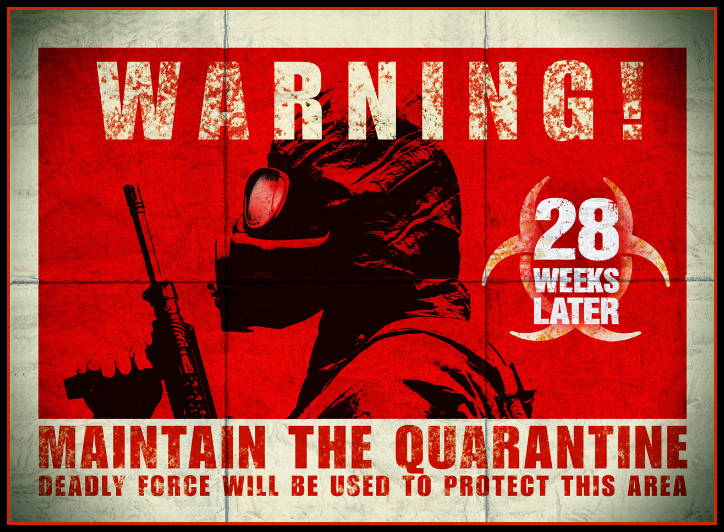
Danny Boyle and Alex Garland’s 28 Days Later was made in such a way that any sequel was almost destined to struggle in its shadow. Their film was not only one of the most influential horror films of the early 2000s, but also an exercise in experimental filmmaking and cinematic reinvention. It fused realism and terror through its digital photography, unconventional pacing, and minimalist score. Any follow-up would have to contend not just with its fresh twist on the zombie mythos (despite the infected not technically being zombies) but also its unique atmosphere, music, and stripped-down aesthetic. Against those odds, 28 Weeks Later manages to stand as an impressive and worthy successor—one that in some respects even surpasses the original.
Spanish director Juan Carlos Fresnadillo approaches the material with a clear reverence for Boyle and Garland’s vision while imprinting his own stylistic and emotional signature on the sequel. From the very first scene, Fresnadillo establishes a tone that blends despair and dread with human frailty. The film opens on a stunningly tense prologue in which Don (a gaunt and haunted Robert Carlyle) and Alice (Catherine McCormack) are living with several others in a rural cottage outside London during the first weeks of the Rage virus outbreak. In this sequence, Fresnadillo distills the central moral dilemma that runs through both films: whether to preserve one’s humanity through compassion or to surrender to pure survival instinct. When Don is forced to choose between rescuing his wife and saving himself, his decision—while horrifying to watch—feels horribly plausible. The following chase through open fields as he flees dozens of Rage-infected attackers captures the raw panic that made Boyle’s original so memorable, yet Fresnadillo shoots it with a sharper sense of chaos and movement. It sets the tone for a story that is both intimate in its human tragedy and apocalyptic in its reach.
Following this intense opening, the film transitions through an introductory credits montage that fills in the aftermath. Don’s escape was not the end of the story but the beginning of a grim reconstruction effort. The British Isles, we are told, were swiftly quarantined when it became clear the infection could not be contained. Twenty-eight weeks later, with the infected population presumed dead from starvation, a U.S.-led NATO force spearheads an ambitious effort to repopulate and rebuild. Led by General Stone (played with austere calm by Idris Elba), the military has converted London’s Isle of Dogs into a heavily fortified safe zone. This enclave represents both restoration and repression—a fragile bubble of civilization built atop the bones of horror.
Within this environment lives Don, now employed as a maintenance manager and struggling to suppress the guilt from his past. The arrival of his two children, Tammy (Imogen Poots) and Andy (Mackintosh Muggleton), who were abroad in Spain during the initial outbreak, reopens emotional wounds he had hoped were sealed. Their reunion, though heartfelt, carries an undercurrent of deception. Don’s explanation of their mother’s fate does not align with what the audience has already witnessed. This dishonesty propels the children into dangerous territory when they decide to sneak out of the Green Zone to retrieve personal belongings from their old cottage. While this act of recklessness fits with youthful impulses and emotional longing, it also feels like the film’s only contrived lapse in logic—an inevitable but frustrating horror trope that sets off the story’s next catastrophe.
What the children discover at the cottage reintroduces the virus in a shocking way. Without realizing it, they bring the Rage infection back into the supposedly secure refuge of London. As soon as containment is broken, the military response escalates with brutal efficiency. General Stone declares a “Code Red,” authorizing the use of extreme measures to eradicate the infected—including indiscriminate firebombing of civilian areas. These scenes echo not only classic apocalyptic tropes but also resonate as a grim reflection of post-9/11 militarism. Many viewers and critics interpreted this act of mass destruction as allegory for the United States’ War on Terror and the ethical corruption of occupation forces. Fresnadillo’s direction, while hinting at this reading, avoids heavy-handed political critique. His portrayal of military overreaction feels less ideological than tragic—a manifestation of fear, confusion, and the blunt-force nature of institutional power. The armed forces are not villains so much as desperate men trapped in an impossible moral quagmire. As in George A. Romero’s The Crazies, which 28 Weeks Later strongly recalls, the destructive consequences stem not from malice but from the futility of trying to maintain order amid chaos.
Where 28 Days Later focused on a small group of survivors and the intimate erosion of morality under crisis, 28 Weeks Later expands the scale dramatically. Fresnadillo transforms Boyle’s compact nightmare into a large-scale urban apocalypse. The sweeping aerial shots of a deserted London—bridges empty, streets silent—hammer home the desolation. When the city is engulfed in flames and gas clouds during the firebombing sequence, the imagery becomes both terrifying and grimly beautiful, a vision of civilization consuming itself. The sequel’s tone is darker and more nihilistic than Boyle’s film, which allowed a trace of optimism in its ending. Here, even innocence becomes a catalyst for doom: it is the children’s actions, driven by love and loss, that inadvertently reignite the infection and condemn the survivors to another wave of horror. This subversion of the “innocent child” trope underscores Fresnadillo’s bleak worldview—where sentiment and humanity, however noble, can still create destruction.
In several ways, 28 Weeks Later aligns more closely with Romero’s Living Dead films than with Boyle’s original. Though Boyle borrowed some of Romero’s thematic DNA, Fresnadillo fully embraces it. The infected may not be reanimated corpses, but the societal collapse, moral ambiguity, and recurring cycles of violence all trace back to Romero’s legacy. One of the sequel’s most striking qualities is its unflinching pessimism: even individuals acting out of love or duty become agents of devastation. The so-called survivors are reduced to primal instincts—running, hiding, killing—in a landscape where institutional power and human decency dissolve together. Fresnadillo makes the action kinetic without glamorizing it. His camera work, switching between chaotic handheld intensity and precise, panoramic destruction, keeps the viewer off balance, mirroring the unpredictability of the apocalypse itself.
The performances elevate the material beyond genre expectations. Robert Carlyle’s portrayal of Don is both gut-wrenching and terrifying. His character’s transformation—from remorseful father to infected embodiment of pure rage—serves as the film’s emotional and thematic anchor. Imogen Poots, in an early standout role, conveys resilience and vulnerability in equal measure, while Jeremy Renner delivers a strong supporting turn as Sergeant Doyle, the soldier torn between obedience and morality. Their performances, though sometimes confined within the film’s relentless pace, enrich its exploration of guilt, loyalty, and the futility of control.
Despite sacrificing some character depth for momentum, the film’s taut editing and grim atmosphere sustain tension throughout. Fresnadillo’s direction never loses sight of his central message: that humanity’s efforts to rebuild are perpetually haunted by its capacity for self-destruction. Even as the few surviving characters reach supposed safety, the final scenes undermine any hope of resolution. The closing image—infected sprinting through the streets of Paris—reminds viewers that, although the city itself appears intact and bustling in daylight, the Rage virus has now breached mainland Europe. This ending shifts the scale of threat from the quarantined British Isles to the broader continent, making containment and redemption feel like dangerous illusions.
As a sequel, 28 Weeks Later earns its place alongside 28 Days Later by honoring the original’s DNA while pushing its boundaries. It retains the visceral dread and societal commentary but broadens the lens to encompass collective failure rather than individual struggle. Fresnadillo’s approach feels colder and more apocalyptic, transforming the story into a study of fear’s infectious nature—social, political, and biological. While his film might not achieve the same creative purity as Boyle’s indie landmark, it succeeds in redefining the tone, expanding the mythology, and pushing the series toward a darker, more cinematic landscape.
In the end, 28 Weeks Later is both a continuation and an escalation—a relentless, despairing study of human fragility under crisis. Its pacing, performances, and imagery combine to create an experience that’s not only horrifying but profoundly unsettling in its realism. If 28 Days Later showed us the collapse of civilization, its sequel reveals the hopeless struggle to rebuild it. Few horror sequels accomplish that much, and fewer still end with such haunting inevitability.
 Having become the Dragon Warrior and the Champion of the Valley of Peace on many occasions, Po (Jack Black) has reached a point where its time for him to train others. All of this becomes complicated when Kai (J.K. Simmons), a former enemy of Master Oogway (Randall Duk Kim) returns to the Valley to capture the Chi of the new Dragon Warrior and anyone else that stands in his way.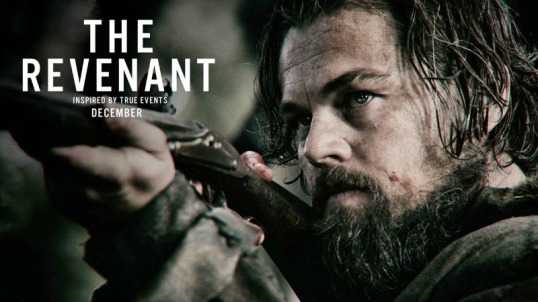


 Through the Shattered Lens