Late Night Retro Television Review: Pacific Blue 2.22 “Rumpelstiltskin”


Welcome to Late Night Retro Television Reviews, a feature where we review some of our favorite and least favorite shows of the past! On Tuesdays, I will be reviewing Pacific Blue, a cop show that aired from 1996 to 2000 on the USA Network!  It’s currently streaming everywhere, though I’m watching it on Tubi.

This week, the second season ends.

Episode 2.22 “Rumpelstiltskin”

(Dir by John B. Moranville, originally aired on April 20th, 1997)

Rumpelstiltskin.  That’s the nickname that FBI agent Tim Stone (David Lee Smith) has given to expert counterfeiter Laszlo Parkes (Josh Richman).  Laszlo and his three associates — Sheila (Heidi Lenhart, who was Jenny Garrison on California Dreams), Lana (Diana Barrington), and Bree (Jennifer Sky) — are passing the fake money all around Santa Monica.  Laszlo is planning on scoring a big drug deal.  Meanwhile, Bree and her boyfriend (Tim Griffin) are planning on taking out Laszlo.

Agent Stone requests that Cory and Chris be assigned to work with him.  It soon become apparent that Stone has more in mind than just work.  Chris likes Stone but Stone like Cory.  When Chris find out that Stone and Cory slept together, she throws a fit.   I’ve noticed that Chris really only has to modes on Pacific Blue.  Either she’s disturbingly robotic and unconcerned with civil liberties or she’s getting mad about something and threatening to go all-Fatal Attraction on somebody.  I’ve also noticed that the show’s writers are incapable of imagining Chris or Cory in a situation where they don’t end up falling for whoever they’re working with.

The funniest part of this episode was when word came in of a shoot-out so all the cops jumped on their bicycles and rode over to the scene.  Seriously, a guy was taking fire and instead of jumping in a car and speeding over there, everyone decided to ride their bicycles.  Somehow, the bike cops were able to take down the mob and also arrest Laszlo.  I always wonder how they get people to the jail after they arrest them.  Do they chain them to the bicycle or something?

After the shoot out, Tim and Cory enjoyed a romantic sunset and Tim promised that he would return soon.

And so ended the second season!

Wow, the second season sucked.  Here we are, about to start season 3, and I’m still struggling to tell everyone apart.  Chris and Cory still don’t have a personality.  Everyone still looks silly on their bicycles.  This show grows more pointless with each episode.

Next week …. we’ll start season 3!

Retro Television Review: Fantasy Island 7.12 “The High Cost of Loving/To Fly With Eagles”


Welcome to Retro Television Reviews, a feature where we review some of our favorite and least favorite shows of the past!  On Tuesdays, I will be reviewing the original Fantasy Island, which ran on ABC from 1977 to 1984.  Unfortunately, the show has been removed from most streaming sites.  Fortunately, I’ve got nearly every episode on my DVR.

The Island just hasn’t been the same without Tattoo.

Episode 7.12 “The High Cost Of Loving/To Fly With Eagles”

(Dir by Jerome Courtland, originally aired on January 21st, 1984)

Craig Bradshaw (Doug McClure) is an aging pilot and daredevil who comes to the Island because he wants to compete in one final competition before he gets too old to keep going up in the air.  His girlfriend (Christine Belford) doesn’t want him to keep risking his life.  In the end, Craig finally comes to peace with the idea of getting older and he also gets engaged.

This fantasy felt pretty familiar.  A lot of people have come to the Island over the years with the hope of winning one final competition.  Actually, that’s probably one of the more realistic recurring fantasies that this show employs.  Who wouldn’t want one last chance to win?  If I went to Fantasy Island, I’d probably want to return to my high school years and compete in another speech and debate or drama competition.  As for this specific fantasy, it’s always difficult for me to take Doug McClure seriously and this episode was no different.

As for the other fantasy …. yeesh!  Lynn Redgrave plays Kristen Robbins, a former advertising exec who was fired when she refused her boss’s sexual advances.  Instead of suing the guy, Kristen comes to Fantasy Island and tells Mr. Roarke that her fantasy is to fall in love and get married and start a family because that means she will never be sexually harassed again.  (For a 40-something veteran of the advertising world, Kristen is incredibly naive.)

Kristen meets Paul Horner (Alex Cord) and it’s love at first sight.  Paul is actually on the Island to interview Kristen for a job with his firm but instead, they have a night of passion.  The next morning, Paul tells Kristen that, before they had sex, he recommended her for a job in which she would be working with him in Hawaii!

Kristen asks Roarke to change her fantasy.  She now wants to get that job and work in Hawaii.  Roarke reluctantly agrees.  Kristen does get the job but the company decides that Kristen will be their sole representative in Hawaii and Paul will remain in New York.  Kristen asks Mr. Roarke to change her fantasy once again.  She doesn’t want the job, she just wants Paul.  (Keep in mind that she’s known for Paul for one day.)  Paul overhears and pretends to be a cad so that Kristen will take the job.

Now convinced that Paul is a compulsive womanizer, Kristen tells Roarke to change her fantasy back to taking the job.  Roarke tells Kristen she needs to make up her own damn mind and then tells her that Paul was only pretending to be a womanizing jerk.  In the end, Kristen decides to take the job and marry Paul.  Paul decides to continue working in New York.  As they leave the Island, they assure Mr. Roarke that they’ll make it work.

Yeah, good luck with that.

This fantasy irked me.  Kristen lost her job because she refuses to sleep with her boss.  I would rather have seen her get a revenge fantasy than a love fantasy.  At the very least, Roarke could have introduced her to a good lawyer.  Instead, we got a fantasy in which the main theme was that women are irresponsible and can’t make up their own mind.

This was not my favorite trip to the Island.

Scenes That I Love: Tony Soprano Dreams Of A House In The Sopranos


With our annual Horrorthon starting tomorrow, I thought that this would be an appropriate time to share a creepy scene that I love from The Sopranos.

The Sopranos was well-known for its dream sequences. For me, this dream from the season 4’s Calling All Cars is one of the best and scariest of the series. It’s full of menace and ominous atmosphere, from the minute we see Tony being led to the house by the deceased Ralphie. And then, when that mysterious shadow appears on the staircase — AGCK!

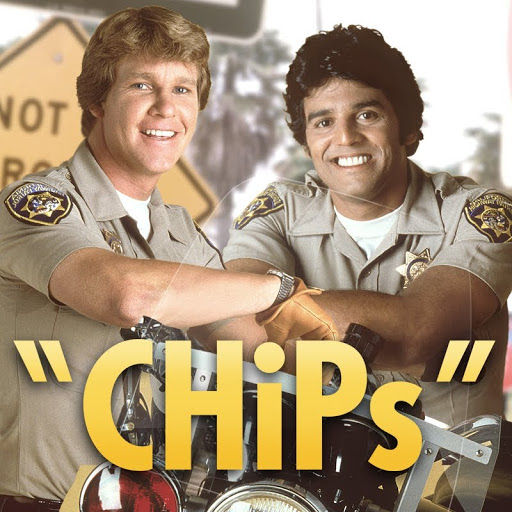
Late Night Retro Television Review: CHiPs 4.15 “Ponch’s Angels: Part Two”


Welcome to Late Night Retro Television Reviews, a feature where we review some of our favorite and least favorite shows of the past!  On Mondays, I will be reviewing CHiPs, which ran on NBC from 1977 to 1983.  The entire show is currently streaming on Prime!

This week, Ponch continues to train Melanie and Paula.

Episode 4.15 “Ponch’s Angels: Part Two”

(Dir by John Florea, originally aired on March 1st, 1981)

We pick up where we stopped last week.  A man and his girlfriend are stealing purses and wallets at the marina.  Three escaped convicts are in a deserted house and digging for buried treasure.  Ponch and Jon are having to train two new motorcycle cops, Paula (Barbara Stock) and Melanie (Trisha Townsend).  When last we checked in, Ponch was kissing Melanie.  This episode opens with Ponch telling Melanie that they can never kiss again.

Ponch and Baker continue to train Paula and Melanie.  Ponch decides to switch with Baker.  He trains Paula while Baker works with Melanie.  But then almost the entire highway patrol comes down with the flu and, when Baker is put in charge while Getraer recovers at home, Ponch finds himself to work with both Paula and Melanie.  Once again, it’s all on Ponch because it’s The Ponch Show!

It’s all a bit exhausting to try to keep up with, to be honest.  Ponch and Baker spend this episode wondering whether or not women actually could handle being motorcycle cops.  Baker especially seems to be confused at the idea of a woman driving a motorcycle.  One gets the feeling that Ponch is just mad because he knows he’ll get fired if he tries to make a move on either woman.  Almost this entire episode is made up of Ponch trying to keep track of who is riding with who.

Luckily, Paula and Melanie prove themselves by catching the purse snatchers and also helping to catch the escaped convicts.  Good for them!  At the end of the opposite, they toss their motorcycle helmets in the air and leap for joy.  The picture freezes while Ponch and Baker have a good laugh.

I was not surprised to read that this episode was meant to be a backdoor pilot for a Paula/Melanie show.  Stock and Townsend were both likable and they acted well opposite each other so I could actually imagine them starring in a fairly entertaining series.  It didn’t happen, though.  Maybe the network felt that Ponch and Jon didn’t need the competition.

This was an okay episode of The Ponch Show.

Retro Television Review: Miami Vice 4.22 “Mirror Image”


Welcome to Retro Television Reviews, a feature where we review some of our favorite and least favorite shows of the past!  On Mondays, I will be reviewing Miami Vice, which ran on NBC from 1984 to 1989.  The entire show can be purchased on Prime!

This week, season 4 comes to a close.

Episode 4.22 “Mirror Image”

(Dir by Richard Compton, originally aired on May 6th, 1988)

Trying to recover from the assassination of his wife, Sonny Crockett throws himself back into his Sonny Burnett persona.  As this episode starts, Sonny has managed to get close to a ruthless drug dealer named Gutierrez (Antonio Fargas).  When Guiterrez blows up a boat that is full of rival drug dealers, the Vice Squad assumes that Gutierrez died in the explosion.  They also assume that Sonny was lost as well.

They are incorrect.  Gutierrez got off the boat before the bomb went off and somehow, Sonny was able to survive being blown up without suffering any sort of physical injuries.  However, mentally, he wakes up with amnesia.  When Gutierrez’s doctor tells Sonny that he’s a drug dealer and this his last name is “Burnett,” Sonny believes him.

In Ft. Lauderdale, Sonny quickly moves up in the organization of drug lord Miguel Manolo (Tony Azito).  Now believing himself to be a criminal, Sonny has no hesitation about murdering anyone who he views as being a threat.  He kills Gutierrez in cold blood about halfway through the episode.  At the end of the episode, he shoots a corrupt detective (Chris Cooper) in cold blood.  Tubbs, who has been investigating Manolo, witnesses that final murder.  “SONNY!” he yells as Sonny escapes in a speedboat and season 4 comes to an end.

Season 4 was truly uneven, featuring some terrible episodes and also some episodes that were good but not particularly memorable.  Before I started this season, I read that it was considered to be the worst of Miami Vice‘s five seasons and, having now watched every episode, I can see why.  Sonny marrying Caitlin never made any sense.  Most of the villains were either generic or ludicrous.  Most of the episodes just didn’t have the style that made the first three seasons so memorable.  Even worse than the boring episodes were the ones that tried too hard to be quirky.  Trudy going into space was definitely not a great idea.  With all that in mind, this final episode was great.  The action was stylish, Don Johnson actually seemed invested in the story for once, and Phillip Michael Thomas got to show off his own skills as an actor.  If only the entire season had been this good!

As well, I should mention that, along with Chris Cooper as a bad cop, this episode also featured Julia Roberts as Manolo’s girlfriend.  Roberts didn’t really get to do much but, even in a small role, her screen presence was obvious.  It’s not a surprise she became a star.

Next week …. we’ll start the final season of Miami Vice!

Late Night Retro Television Review: Degrassi: The Next Generation 1.7 “Basketball Diaries”


Welcome to Late Night Retro Television Reviews, a feature where we review some of our favorite and least favorite shows of the past!  On Sunday, I will be reviewing the Canadian series, Degrassi: The Next Generation, which aired from 2001 to 2015!  The series can be streamed on YouTube and Tubi.

This week, Jimmy decides that Ritalin might be key to improving his jump shot.  Meanwhile, Liberty makes a fool out of herself

Episode 1.7 “Basketball Diaries”

(Dir by James Allodi, originally aired on April 29th, 2002)

This epiosde features two stories.  The weaker of the two, not surprisingly, focuses on Liberty and her desire to do the video announcements.  Ashley finally agrees to let Liberty do them before the big basketball game with Earl Grey Academy.  Liberty, of course, bombs.  Paige laughs because she thinks that Ashley set Liberty up.  Feeling guilty, Ashley gives Liberty some pointers and then allows Liberty to do the post-game announcements.  Liberty does much better and Ashley says that Liberty will be great when she starts regularly doing the announcements …. after Ashley graduates.

This storyline was a Liberty storyline so who cares.  During the first three seasons, Liberty was the most annoying character on the show and her storylines were always cringe.

Fortunately, the episode’s other storyline features Jimmy and Spinner.  Jimmy is worried about making the basketball team, especially with Ms. Kwan constantly on his back about reading Lord of the Flies.  Jimmy convinces Spinner to hand over his last Ritalin.  As a result, Jimmy goes crazy on the court and scores a lot of points but he also injures his teammate, Sean.  Meanwhile, Spinner loses focus and moons the gym.

So, the reason why I love this storyline is becuase it features every myth that people seem to believe about ADD.  For the record, the medication does not give you super powers and also most people don’t suddenly go wild just because they miss one pill.  I have ADD.  There have been days when I’ve forgotten to take my pills and, while there is definitely a difference in those days than the day when I do take my pills, I’ve still always managed to survive without breaking the law or crashing my car or doing any of the other things that always seem to happen on television.  Whenever I forget to take my pills, I usually end up doing something like deciding it would be a good idea to start doing daily late night retro television reviews on top of everything else that I have to do.

(The first time my mom ever took me to an appointment to get my perscription refilled, she said she could tell who was at the doctor’s office for ADD because we were the ones who couldn’t go 5 minutes without grabbing another magazine to look through.)

As for Jimmy, he wins the game but he still gets cut from the team because he’s not a good teammate.  That’ll teach him to take Ritalin without a perscription!

Retro Television Review: Homicide: Life on the Street 4.8 “Sniper, Part One”


Welcome to Retro Television Reviews, a feature where we review some of our favorite and least favorite shows of the past!  On Sundays, Lisa will be reviewing Homicide: Life On The Street, which aired from 1993 to 1999, on NBC!  It  can be viewed on Peacock.

This week, a sniper terrorized Baltimore.

Episode 4.8 “Sniper, Part One”

(Dir by Jean de Segonzac, originally aired on January 5th, 1996)

This week, Bayliss investigates a red ball!

Actually, the case turns out to be a red ball within a red ball!

And then it turns into a third red ball!

A red ball is a term used for a case that is going to draw a lot of media attention and which is going to result in pressure from the guys in command.  It’s an actual term, one that was introduced in the David Simon book that served as the inspiration for Homicide.  I’m pretty sure that the term was also used in The Wire, though perhaps not as much as it was used in Homicide.

It’s hard not to notice that, starting with the third season, there have been a lot of red balls on Homicide.  If one were to judge solely based on seasons 3 and 4, one might be justified in thinking that Baltimore was the serial killer capitol of the world.  That’s not really a complaint because most of the red ball episodes have been pretty entertaining.  Still, it’s very much a contrast to the first two seasons, where the emphasis was always put on gritty realism and the recurring theme was that, outside of the Homicide detectives, the media didn’t really care about the majority of the murders taking place in Baltimore because the victims were almost always minorities in economically disadvantaged neighborhoods.

This latest red ball involves a sniper who is gunning down people at random and leaving behind a hangman game at each location.  He’s trying to figure out a 9-letter word.  It’s an odd motivation but serial killers are odd people.  Bayliss, who is suffering from back pain and popping muscle relaxants like candy, gets the case because, as he continually reminds us, he was the one who answered the phone.  (Somehow, Bayliss does manage to get through the investigation without bringing up Adena Watson.)

While Bayliss tries to find a killer who shoots people at random, Russet deals with the brass.  Colonel Barnfather, who was originally quite enthusiastic about promoting her, now suddenly hates her and the episode ends with Russert getting demoted back down to being a detective.  (So, I guess that Giardello’s homicide squat will be getting a new investigator.)  Russert’s demotion felt like it came out of nowhere but, from a dramatic point of view, it made sense.  This show already has Giardello as the beloved boss.  It didn’t also need Russert in the role.

As for the killer, he is tracked down by his signature on the receipt that he signed when he purchased his chalk.  He turns out to be a nervous insurance agent who has a big house in the suburbs and who is playing a hangman game in his study.  When Bayliss attempts to negotiate with him and asks him to leave the study, the insurance agent asks for a letter.  “Uhmm …. B,” Bayliss says.  B turns out to be just the letter that was needed and the insurance agent promptly shoots himself in the head.

The word that he was trying to come up with turns out to be Eromitlab.  Look at in a mirror.

This was a good episode, even if it did sometimes go a bit over the top with everyone shouting, “We’ve got a red ball!” and the nonstop montages of the detectives swarming the streets of Baltimore.  I’ve really grown to love Kyle Secor’s performance as Tim Bayliss and this episode featured Bayliss at his loopy best.  For an episode about a serial sniper who ended up killing eight people, there was a rather odd sense of humor running through it.  This is an episode that started with Jay Leno coming in the Waterfront Bar.  (Munch tells Bayliss that Leno is probably sick of people treating him like he’s famous so they decide to ignore him until Leno gets mad and leaves the bar.)  When the first shooting is called in, the phone rings several times before anyone is able to answer, leading to Munch to question whether a murder has actually occurred if no one answers the phone.  Bayliss obsesses on his upcoming back surgery.  “Its says a possible side effect is death!” Bayliss exclaims, looking over the information about the operation.  Meanwhile, Brodie gets on everyone’s nerves with his big video camera.

Ominously, this episode with a second sniper climbing up to the roof of the building.  The red balls continue.


Scenes That I Love: Naomi Watts in Twin Peaks: The Return


Today, the Shattered Lens wishes a happy birthday to Naomi Watts.

In this scene from 2017’s Twin Peaks: The Return, Watts tells off to low-level hoodlums who have been demanding money from her husband.

Late Night Retro Television Review: Good Morning Miss Bliss 1.11 “Stevie”


Welcome to Late Night Retro Television Reviews, a feature where we review some of our favorite and least favorite shows of the past!  On Saturdays, I will be reviewing Good Morning, Miss Bliss, which ran on the Disney Channel from 1988 to 1989 before then moving to NBC and being renamed Saved By The Bell.  The entire show is currently streaming on Prime!

This is perhaps the dumbest episode of this show yet.

Episode 1.11 “Stevie”

(Dir by Burt Brinckerhoff, originally aired March 4th, 1989)

The world’s most popular pop singer (Suzanna Tara) is performing at her old middle school, JFK Junior High!  The world knows her as Stevie but Miss Bliss still calls her “Colleen Morton.”  Since Colleen/Stevie’s parents are no longer living in Indiana, Miss Bliss suggests that Stevie should stay with her.  Stevie agrees because, when you’re a millionaire who can literally stay anywhere, why wouldn’t you want to stay with a condescending middle school teacher?

During her concert, Stevie will be singing to one student who will join her on stage.  Zach wants to be that student, especially since he’s made a bet that he’ll kiss Stevie before the week ends.  Zach sends Stevie a letter, claiming to be terminally ill.  Stevie is touched.  Mr. Belding is touched.  Miss Bliss sees right through Zach and exposes him for being a liar.

When Zach goes to Miss Bliss’s house to apologize, he meets Colleen.  Like Zach, Colleen is also a damn liar and claims to be Miss Bliss’s niece.  Zach and Colleen talk about how Stevie is retiring to go to college.  Zach thinks that is crazy and I agree.  Colleen kisses Zach on the cheek.

Later, watching Stevie sing to Screech, Zach realizes who she is.  “I kissed Stevie!” he shouts.  Nikki tells him to get bent.

This was an annoying episode.  I could buy the idea of Stevie wanting to perform at her old high school but seriously, who would ever want to return to middle school?  Who remembers their middle school teachers?  Who would want to stay with Miss Bliss?  Add to that, this was yet another episode of Good Morning Miss Bliss that was so poorly lit that I almost went blind from the glare of Mark-Paul Gosselaar’s hair.

This whole thing was just dumb.

Retro Television Review: The American Short Story #17: The Greatest Man In The World


Welcome to Retro Television Reviews, a feature where we review some of our favorite and least favorite shows of the past!  On Saturdays, I will be reviewing The American Short Story, which ran semi-regularly on PBS in 1974 to 1981.  The entire show can be purchased on Prime and found on YouTube and Tubi.

This week, The American Short Story comes to a close.

Episode #17: The Greatest Man In The World

(Dir by Ralph Rosenbaum, originally aired in 1981)

In this adaptation of a James Thurber short story, a country boy named Jack Smurch (Brad Davis) briefly becomes a celebrity when he breaks Charles Lindbergh’s record for flying nostop around the world.  Two reporters (Reed Birney and John McMartin) are assigned to write a glowing profile of him.  The U.S. Secretary of State (William Prince) wants to make him a symbol of America.  The only problem is that Smurch himself is a violent and dull-minded habitual criminal who can barely fly his plane and who almost crashes when he comes in for a landing at the end of his flight.  Before he took off in his plane, the only person who cared about Smurch was his girlfriend (Carol Kane).  Even Smurch’s own mother says that she hopes that he crashes and drowns.  But once he manages to land, Smurch becomes a hero.  As the saying goes, print the legend.

Smurch, unfortunately, isn’t smart enough to play along with the hero routine.  At a meeting with the Secretary of State and the President (who is implied to be FDR), Smurch proves to be so obnoxious that he’s tossed out of a window.  He plunges to his death but he dies an American hero.

The final episode of The American Short Story was also the best, a wonderfully dark satire on the media and our cultural need for heroes.  Brad Davis’s naturally obnoxious screen presence — the same presence that made audiences enjoy seeing him get tortured in Midnight Express — is put to good use here.  Jack Smurch is such a jerk that you really can’t blame anyone for tossing him out that window.  If nothing else, it got him to stop talking.

The American Short Story was, overall, an uneven series.  Too often, the episodes failed to really capture the tone and style that made the original stories so memorable.  That said, there were a few good episodes, like this one.  If nothing else, perhaps this series inspired people to read the original stories for themselves.  That would have been the best possible outcome.

Next week …. something new will premiere in the time slot!  What will it be?  I’ll give you a clue — it’s set on the beach but it’s not Pacific Blue.  Let’s just say that some people stand in the darkness….