4 (or more) Shots From 4 (or more) Films is just what it says it is, 4 (or more) shots from 4 (or more) of our favorite films. As opposed to the reviews and recaps that we usually post, 4 (or more) Shots From 4 (or more) Films lets the visuals do the talking.
Today, the Shattered Lens wishes a happy birthday to the one and only Martin Scorsese! It’s time for….
6 Shots From 6 Martin Scorsese Films
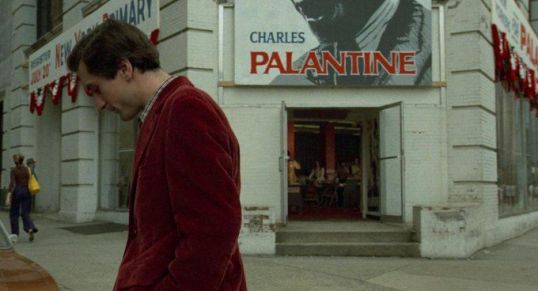
Taxi Driver (1976, dir by Martin Scorsese, DP: Michael Chapman)
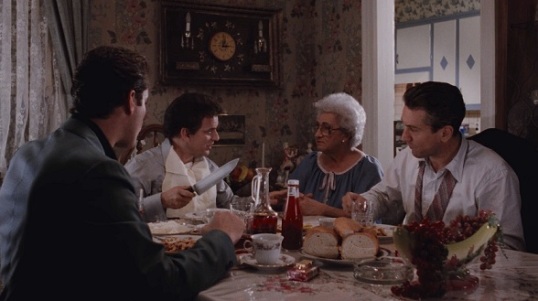
Goodfellas (1990, dir by Martin Scorsese, DP: Michael Ballhaus)
Casino (1995, dir by Martin Scorsese, DP: Robert Richardson)
Shutter Island (2010, dir by Martin Scorsese, DP: Robert Richardson)
Hugo (2011, dir by Martin Scorsese, DP: Robert Richardson)
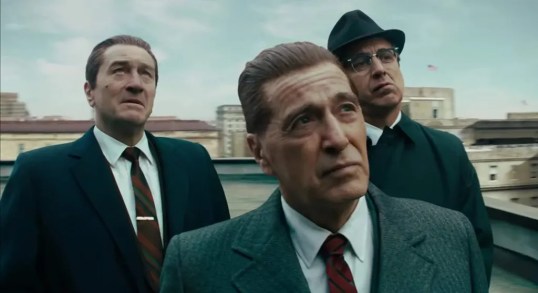
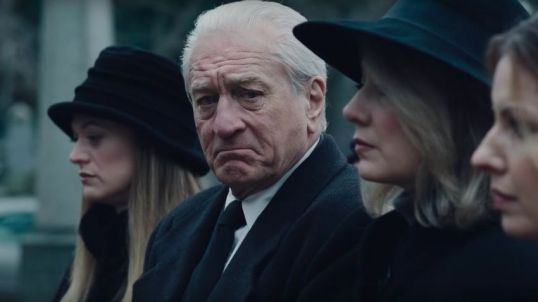
The Irishman (2019, dir by Martin Scorsese, DP: Rodrigo Prieto)
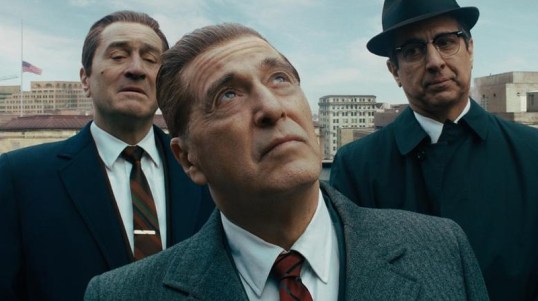
Today’s scene comes from 2019’s The Irishman. In this scene, Jimmy Hoffa (Al Pacino) asks a former rival for an endorsement to once again be president of the Teamsters union. Needless to say, things don’t get well. I’m on Hoffa’s side here. Showing up 12 and a half minutes late? Wearing shorts to meeting? Someone is definitely owed an apology.
Once you get over the admittedly jarring de-aging effect, this scene reminds us of what a great actor Al Pacino truly is.
4 Shots From 4 Films is just what it says it is, 4 shots from 4 of our favorite films. As opposed to the reviews and recaps that we usually post, 4 Shots From 4 Films lets the visuals do the talking!
Today, the Shattered Lens wishes a happy birthday to Al Pacino! It’s time for….
4 Shots From 4 Al Pacino Films
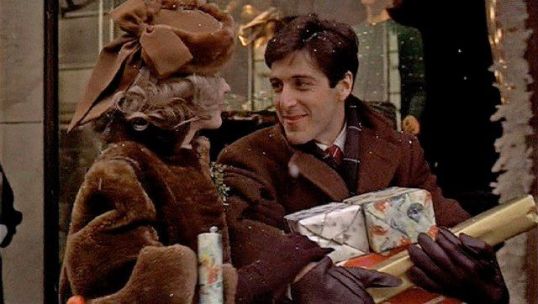
The Godfather (1972, dir by Francis Ford Coppola, DP: Gordon Willis)
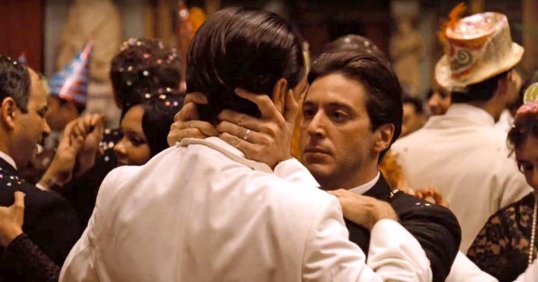
The Godfather Part II (1974, dir by Francis Ford Coppola, DP: Gordon Willis)
The Irishman (2019, dir by Martin Scorsese, DP: Rodrigo Prieto)
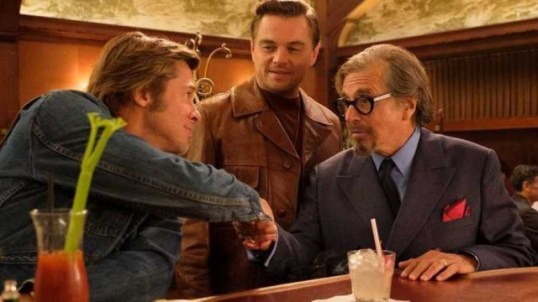
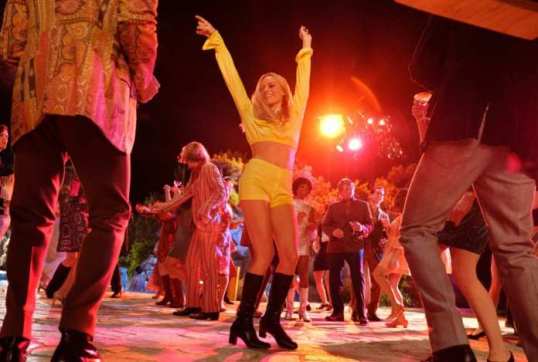
Once Upon A Time In Hollywood (2019, dir by Quentin Tarantino, DP: Robert Richardson)
I have no idea what this day is supposed to celebrate but I hope everyone has a good one.
There doesn’t seem to be any agreed upon way to celebrate Labor Day. A few people have the day off and they’re the reason why I decided to hold off on going up to Lake Texoma until this upcoming, holiday-free weekend. Personally, I think the best way to celebrate any holiday is with a film festival so here are my suggestions for your Labor Day viewing:
Red Menace (1949) — In this wonderfully atmospheric film noir, a former GI named Bill Jones (Robert Rockwell) finds himself seduced by the Communist Party. After he witnesses the head of the party murder a man who questions the wisdom of Marx, Jones and his lover go on the run.
Big Jim McClain (1951) — John Wayne takes on the commies! And you better believe that no one is more determined to keep America and its workers safe from communist influence than the Duke! This film features some lovely Hawaiian scenery and enough over-the-top propaganda to make any American proud.
I Was A Communist For The FBI (1951) — Based (I imagine very loosely) on a true story, I Was A Communist For The FBI is about an agent who spent nine years undercover as a communist. As a result, he lost his friends and almost his family but he also serves his country. Featuring a scene where a strike turns violent, there’s nothing subtle about this film but, as with Big Jim McClain, that’s a large part of what makes the movie so watchable.
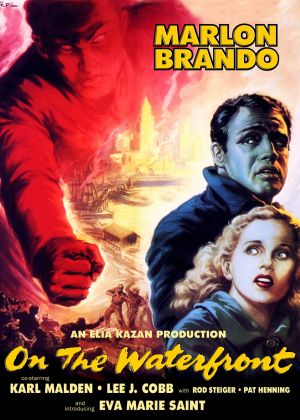
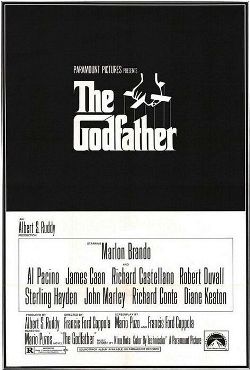
On The Waterfront (1954) — Marlon Brando won his first Oscar for this film about union corruption.
Dr. No (1962) — In his very first film outing, James Bond shows what a good job a true professional can do.
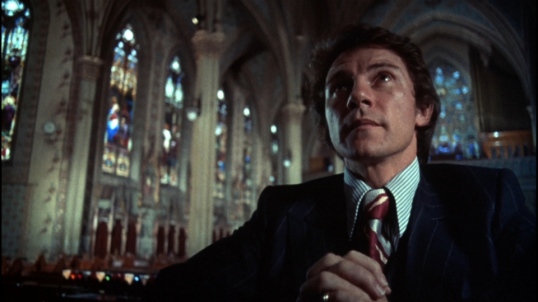
Blue Collar (1978) — In this gritty film from Paul Schrader, three auto-workers (played by Yaphet Kotto, Harvey Keitel, and Richard Pryor) discover that their union is even more corrupt than management. Consider this film to be an antidote to Norma Rae.
F.I.S.T. (1978) — After the success of Rocky, Sylvester Stallone played a thinly-disguised version of Jimmy Hoffa in this epic historical film. The film is poorly paced and doesn’t quite work but it’s interesting to see Stallone, post-Rocky, playing a character who isn’t necessarily all-that heroic.
Convoy (1979) — The film celebrate the independent trucker, the hard-working driver who doesn’t want to be tied down by either the unions or the law. Convoy is infamous for being an out-of-control production and yes, it is a bit self-indulgent. But who cares? When that convoy forms, you have to heartless not to cheer a little.
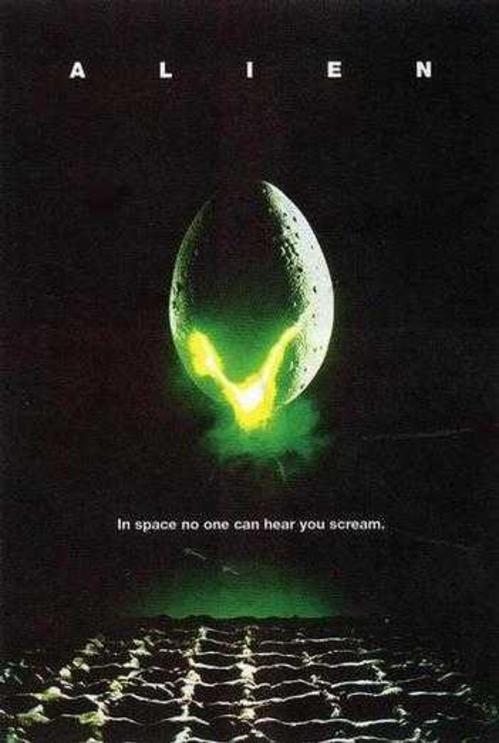
Alien (1979) — One of the best films about how much it sucks to have to work for a living, Alien follows a group of blue-collar workers whose lives are deliberately put in danger by a big, faceless corporation.
Last Exit to Brooklyn (1989) — A labor strike leaves a Brooklyn neighborhood reeling. This film is not for the faint-hearted.
Hoffa (1991) — Jack Nicholson stars as Jimmy Hoffa in this uneven but watchable film. This movie is unabashedly pro-Hoffa and therefore, it provides an interesting contrast to films like F.I.S.T. and Blue Collar.
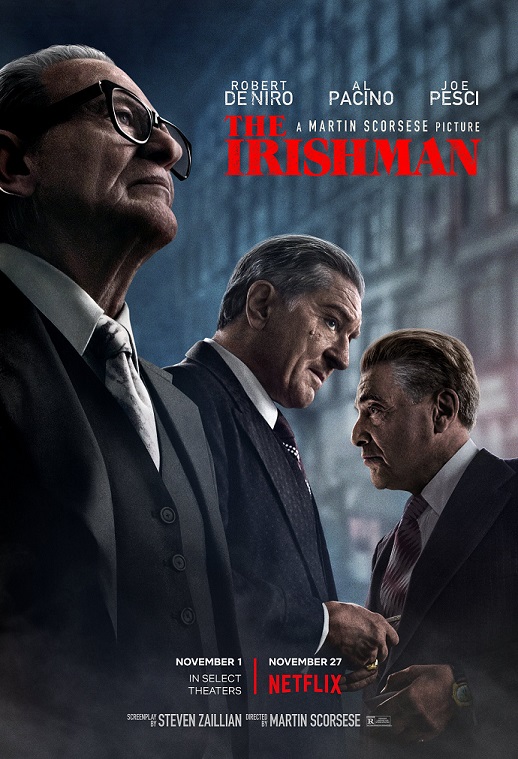
The Irishman (2019) — Despite all the criticism that it received when it was first released, TheIrishman is one of Martin Scorsese’s finest films. It takes a while to get used to the de-aging but Al Pacino’s performance as Jimmy Hoffa was brilliant. This film is one of the best looks at how the American labor movement lost its way.
4 (or more) Shots From 4 (or more) Films is just what it says it is, 4 (or more) shots from 4 (or more) of our favorite films. As opposed to the reviews and recaps that we usually post, 4 (or more) Shots From 4 (or more) Films lets the visuals do the talking.
Today, the Shattered Lens wishes a happy birthday to the one and only Martin Scorsese! It’s time for….
6 Shots From 6 Martin Scorsese Films
Taxi Driver (1976, dir by Martin Scorsese, DP: Michael Chapman)
Goodfellas (1990, dir by Martin Scorsese, DP: Michael Ballhaus)
Casino (1995, dir by Martin Scorsese, DP: Robert Richardson)
Shutter Island (2010, dir by Martin Scorsese, DP: Robert Richardson)
Hugo (2011, dir by Martin Scorsese, DP: Robert Richardson)
The Irishman (2019, dir by Martin Scorsese, DP: Rodrigo Prieto)
Released by Netflix in 2019 and clocking in at close to 4 hours, the Martin Scorsese-directed Best Picture nominee, The Irishman, is a film about many different things.
At its simplest, it’s a film about a very old man named Frank Shearan (played by Robert De Niro). Frank is an Irish-American from Philadelphia. Frank is a veteran of World War II and a former truck driver who was briefly a fairly important figure in the Teamsters union. He did a few years in prison. At the start of the film, though, he’s just another elderly man living in a retirement community. All of his friends are dead. His wife passed away years ago. His children never comes to visit. In fact, the only people interested in talking to Frank are the FBI but Frank doesn’t have much to say to them. That’s not to say that Frank isn’t talkative. For the first time in his life, he wants to talk to people but there’s no one left to talk to. The only people who listen are those who are required to do so. A nurse politely nods along as as he tells her about his old friend Jimmy Hoffa. (She’s never heard of him.) A priest listens to the story of Frank’s life and offers him absolution. At times, Frank looks straight at Scorsese’s camera and appears to be talking straight to the audience. Frank has a lot of interesting stories but who knows how truthful he’s being or if his memory can be trusted.
The Irishman, though, is not just the story of Frank. It is also a secret history of America during the latter half of the 20th Century. Frank may look old and harmless in that nursing home but, to hear him tell it, he was once acquainted with some of the most powerful men in America. He went from executing Italian POWs during World War II to executing hits for the Mafia in post-war America. Along the way, he became close to crime bosses like Skinny Razor (Bobby Cannavale), Angelo Bruno (Harvey Keitel) and Russell Bufalino (Joe Pesci), men who may not have been household names but who still wielded a lot of power. These are men who, Frank flatly states, fixed the presidential election of 1960 and who later quite possibly killed the man they had elected president. Frank also became a close associate of Jimmy Hoffa (Al Pacino), the labor leader who was reputed to have mob connections and who disappeared in 1975.
The Irishman is also a tribute to the modern gangster film, featuring role for nearly every living actor associated with the genre. De Niro, Pacino, Pesci, Keitel, Bobby Cannavale, Domenick Lombardozzi, Gary Basaraba, they’ve all played their share of gangsters in films and television show that were both good and bad. Having them all appear in one film together serves to remind the viewer of just how much of America’s popular entertainment has revolved around stories of organized crime. Even as the old school Mafia has declined as a real-world power, it’s become a permanent part of pop culture. Everyone loves a gangster, except for the people who actually have to deal with them on a daily basis.
Not surprisingly, considering the stars and the director, it’s a film full of smart, detailed performances. When the film was originally released, Pacino and Pesci got the lion’s share of the praise and they certainly deserved it. Pacino gets the best lines and brings some unexpected wit to his performance as Jimmy Hoffa. Pesci, meanwhile, finally gets to play a gangster who is not psychotic and shows that he can be just as compelling when he’s not raising his voice as when he is. Still, some of my favorite performances came from actors who one wouldn’t necessarily associate with a Scorsese gangster film. I liked the nervous humor that Ray Romano brought to the role of a corrupt union lawyer. I liked the seething resentment that Stephen Graham brought to the role of Jimmy Hoffa’s main rival in the union. (The scene where Graham and Pacino argue over who is more owed an apology for all of their past disagreements is both funny and, due to the people involved, somewhat frightening.) Jesse Plemons is poignantly dumb in his brief role as Hoffa’s stepson. Louis Cancelmi doesn’t get a lot of screen time but he steals every scene in which he appears as a paranoid hitman. (Cancelmi plays a character named Sally Bugs, proving that not everyone in the Mafia gets a cool nickname.)
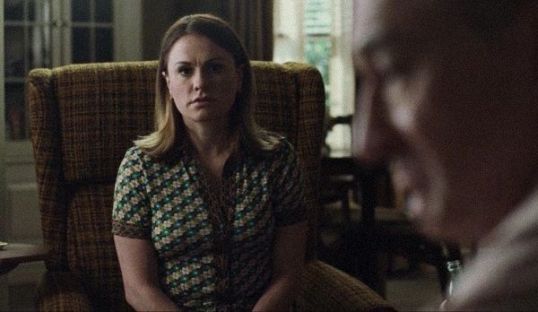
And then there’s Anna Paquin, who provides the film with its moral center. When the film was first released, many Twitter critics complained that Paquin, who played Frank’s daughter Peggy, only a had a handful of lines. It was one of the stupidest controversies of 2019, which is saying something when you consider how much time Film Twitter devotes to generating stupid controversies. Peggy doesn’t say much because she’s decided that she doesn’t want to be a part of her father’s life. From the moment that she first sees Frank beating up a store owner, Peggy knows that her father and his associates are violent men. She not only fears them but she resents the damage that Frank does to not only her family but to the families as other as well. The only one of her father’s associates who she likes is Jimmy Hoffa, because Hoffa cares about helping others. When Hoffa disappears, Peggy makes a decision to disappear from Frank’s life and Paquin’s withering stare says more than any lengthy monologue could. Peggy doesn’t say much because she knows that her words would be wasted on a man who she knows is a liar. The scene where she silently walks away from her now elderly father tells us everything we need to know about the emotional consequences of the life that Frank has chosen to live. Regardless of how many lines she did or didn’t have, Paquin gave one of the best performances of 2019.
Famously (or, depending on which critics you read, infamously), de-aging technology was used so that De Niro, Pacino, Pesci, and Keitel could play both the younger and the older version of their characters. At first, it can be a bit jarring. The de-aging works fine with Pesci and Keitel, both of whom are already supposed to be middle-aged when they first meet Frank. (Admittedly, Keitel only has a few minutes of screen time.) With De Niro and Pacino, it’s a bit less successful. Even when they’re playing younger versions of themselves, De Niro and Pacino still move and stand like old men. Fortunately, in the case of Pacino, his natural movie star charisma wins out over his obvious age. In the end, we believe that he’s Hoffa because we want to believe that all of our important historical figures were as interesting and entertaining as Al Pacino is in The Irishman.
And yet, ultimately, even the awkward de-aging works to the film’s advantage because it reminds us that we’re not necessarily seeing what happened. Instead, we’re seeing what Frank says happened. We’re seeing his memories, or at least what he claims to remember. It makes sense that, when Frank thinks about himself as a young truck driver in 1956, he would picture himself not as he was but instead as just a slightly less weathered version of who he would eventually become. Throughout the film, there are hints that Frank’s memory should not be trusted. Some of his stories are incredibly detailed while others — like when he transports weapons for the failed invasion of the Bay of Pigs — are a bit more vaguely presented. Is Frank lying or is he misremembering or are we just expecting too much detail from a man who is now essentially waiting to die? The film leaves that up for us to determine.
The Irishman is Scorsese at his most reflective. Compared to Goodfellas and Casino, The Irishman is certainly one of Scorsese’s less “flashy” films. But, on repeat viewings, it becomes cleat that The Irishman is the perfect conclusion to the gangster trilogy that began with Goodfellas and continued with Casino. All three of these films deal with someone who rises up the ranks in the mob while remaining, as a result of their ethnicity, an outsider. (Henry Hill and Frank Shearan are both Irish. Ace Rothstein was Jewish.) All three of them are briefly on top of the world and all three of them are left wondering how they’re going to continue their lives after their days at the top are over. In Goodfellas, Henry Hill makes no secret of his disgust at having to live in the bland anonymity of the suburbs. In Casino, Ace Rothstein ends the film with a mournful acceptance the fact that he will never return to his beloved Vegas. (“And that’s that.”) In The Irishman, Frank finally realizes that he has comes to the end of it all, alone and with nothing but death in his future. All three of them made their decisions and, in the end, all three of them are left to deal with the consequences. The trilogy goes from Henry’s anger to Ace’s depression to Frank’s acceptance.
It may seem strange to describe a film like The Irishman as being underrated, seeing as how it was nominated for 10 Oscars and got a Criterion release in record time. And yet, when the film first came out, there was a vague sense of disappointment to found in even some of the positive reviews. It was a Scorsese film that was so eagerly awaited and arrived with so much hype that there was no way it could live up to some of the expectations that had been set for it. (And, of course, there’s also a whole set of people who were predestined to dislike the film precisely because it was a Scorsese film and it was so anticipated.) It’s a long film and, while Netflix should be praised for allowing Scorsese the freedom to make his epic, it’s also not a film that should be viewed in bits and pieces on a tiny screen. The Irishman is a film that should be watched in one sitting and it’s definitely a film that most viewers should watch more than once. It takes more than one viewing to truly grasp the the world that Scorsese has recreated.
The Irishman was nominated for Best Picture. It lost to a worthy competitor, Parasite. Still, regardless of who took him the Oscars, The Irishman is a film that will live forever.
4 Shots From 4 Films is just what it says it is, 4 shots from 4 of our favorite films. As opposed to the reviews and recaps that we usually post, 4 Shots From 4 Films lets the visuals do the talking.
Today, the TSL wishes a happy birthday to one of the greatest director working today, the one and only Martin Scorsese! And that means that it’s time for….
26 Shots From 26 Martin Scorsese Films
(That’s right. We usually do 4. Scorsese gets 26. He deserves a hundred.)
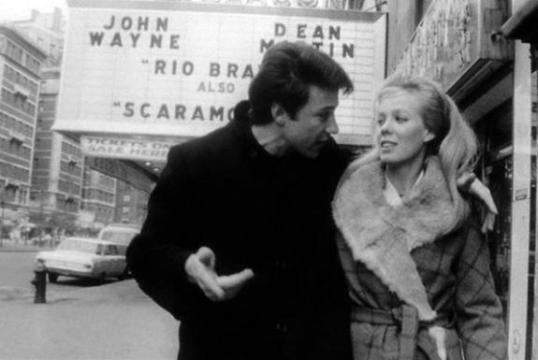
Who’s That Knocking On My Door (1967, dir by Martin Scorsese)
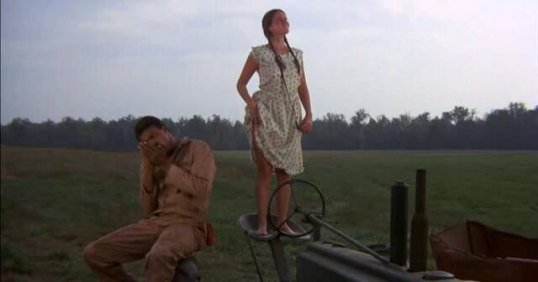
Boxcar Bertha (1972, dir by Martin Scorsese)
Mean Streets (1973, dir by Martin Scorsese)
Alice Doesn’t Live Here Anymore (1974, dir by Martin Scorsese)
Taxi Driver (1976, dir by Martin Scorsese)
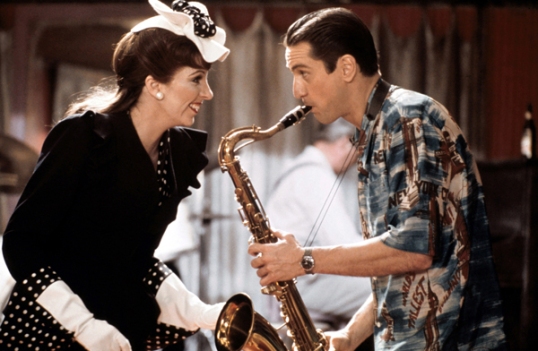
New York New York (1977, dir by Martin Scorsese)
The Last Waltz (1978, dir by Martin Scorsese)
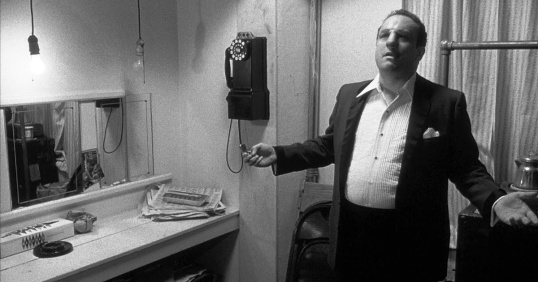
Raging Bull (1980, dir by Martin Scorsese)
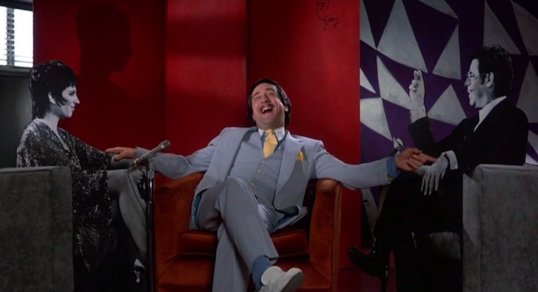
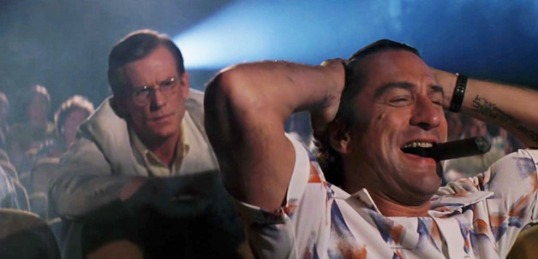
King of Comedy (1982, dir by Martin Scorsese)
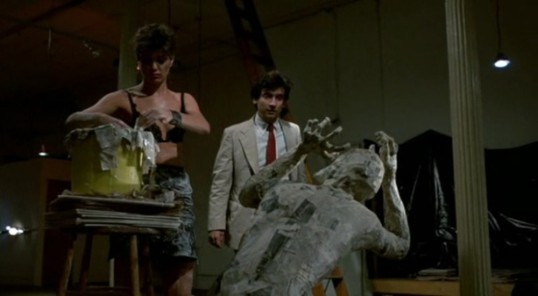
After Hours (1985, dir by Martin Scorsese)
The Color of Money (1986, dir by Martin Scorsese)
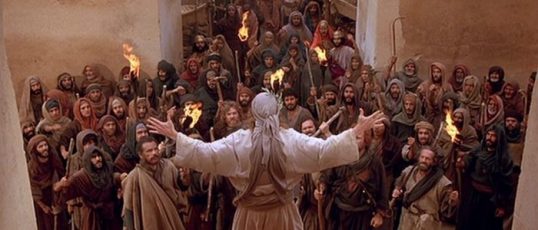
The Last Temptation of Christ (1988, dir by Martin Scorsese)
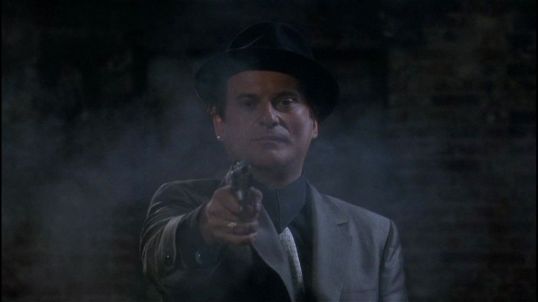
Goodfellas (1990, dir by Martin Scorsese)
Cape Fear (1991, dir by Martin Scorsese)
The Age of Innocence (1993, dir by Martin Scorsese)
Casino (1995, dir by Martin Scorsese)
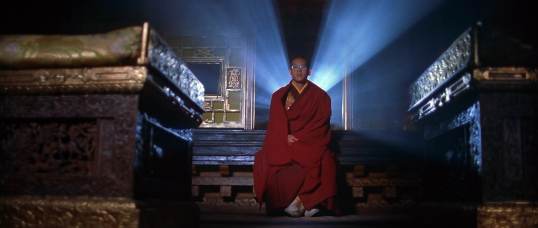
Kundun (1997, dir by Martin Scorsese)
Bringing out the Dead (1999, dir by Martin Scorsese)
Gangs of New York (2002, dir by Martin Scorsese)
The Aviator (2004, dir by Martin Scorsese)
The Departed (2006, dir by Martin Scorsese)
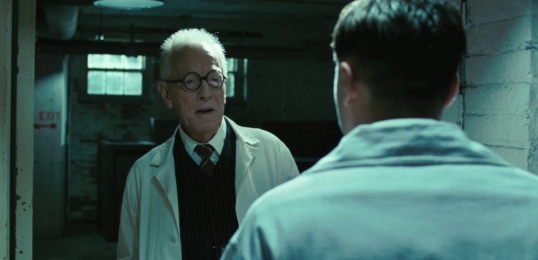
Shutter Island (2010, directed by Martin Scorsese)
Hugo (2011, dir by Martin Scorsese)
The Wolf of Wall Street (2013, dir by Martin Scorsese)
Below is a different list. This is what I wish would win tonight. These are the nominees that I would vote for if I was a member of the Academy. Now, to be honest, there were a lot of films and performances that I liked that were not nominated. My favorite film of 2019 was The Souvenir. It received zero Oscar nominations. But, for the purposes of this list, I’ve limited my choice to the actual nominees.
So, here we go:
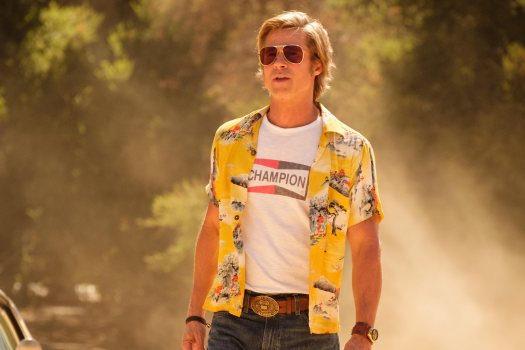
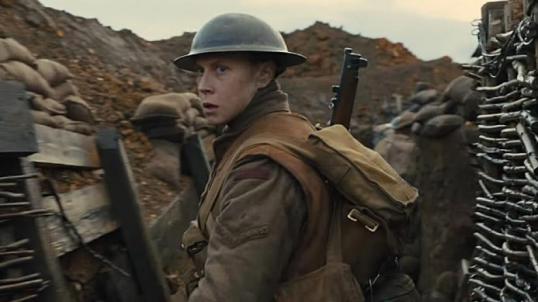
Best Picture — 1) Once Upon A Time In Hollywood 2) The Irishman 3) Parasite 4) 1917 5) Joker 6) JoJo Rabbit 7) Little Women 8) Ford v Ferrari 9) Marriage Story
Best Director — Quentin Tarantino, Once Upon A Time In Hollywood
Best Actor — Joaquin Phoenix, Joker
Best Actress — Scarlett Johansson, Marriage Story
Best Supporting Actor — Joe Pesci, The Irishman
Best Supporting Actress — Laura Dern, Marriage Story
Best Original Screenplay — Parasite
Best Adapted Screenplay — The Irishman
Best Animated Feature Film — I Lost My Body
Best International Feature Film — Parasite
Best Documentary Feature Film — The Edge of Democracy (which I didn’t even really like, it’s just the only nominee that I’ve seen)
Best Documentary Short Subject — Learning to Skateboard in a War Zone (If you’re a girl)
Best Live Action Short Subject — Nefta Football Club (that’s for you, Jason)
Best Animated Short Film — Sister
Best Original Score — 1917
Best Original Song — I Can’t Let You Throw Yourself Away from Toy Story 4
Best Sound Editing — 1917
Best Sound Mixing — 1917
Best Production Design — Parasite
Best Cinematography — The Lighthouse
Best Makeup and Hairstyling — Judy
Best Costume Design — Once Upon A Time In Hollywood
1. The Souvenir
2. Once Upon A Time In Hollywood
3. Uncut Gems
4. Luce
5. The Irishman
6. Parasite
7. The Lighthouse
8. Crawl
9. Dragged Across Concrete
10. Doletmite Is My Name
11. Avengers: Endgame
12. 1917
13. Joker
14. The Two Popes
15. The Aeronauts
16. Hustlers
17. The Report
18. Brittany Runs A Marathon
19. Rocketman
20. The Last Black Man in San Francisco
21. Apollo 11
22. I Lost My Body
23. The Farewell
24. Us
25. Midsommar
26. Spider-Man: Far From Home

















 Through the Shattered Lens