Retro Television Review: Homicide: Life On The Street 3.20 “The Gas Man”


Welcome to Retro Television Reviews, a feature where we review some of our favorite and least favorite shows of the past!  On Sundays, I will be reviewing Homicide: Life On The Street, which aired from 1993 to 1999, on NBC!  It  can be viewed on Peacock.
This week, the third season of Homicide comes to an end.

Episode 3.2o “The Gas Man”

(Dir by Barry Levinson, originally aired on May 5th, 1995)

The third season of Homicide was coming to an end and NBC was dragging its heels as to whether or not it would renew the show.  Homicide was critically acclaimed but its ratings were low, despite the efforts to make the show more audience-friendly during the third season.  Producer Barry Levinson grew frustrated with NBC’s refusal to tell him whether or not the show would be renewed.  Feeling that show was probably over, Levinson and showrunner Tom Fontana decided to do something truly radical.  They crafted a series finale that sidelined most of the major characters.

Instead, The Gas Man focuses on Victor Helms (Bruno Kirby) and his best friend, Danny Newton (Richard Edson).  Helms has just gotten out of prison, where he served six years after a gas heater he installed malfunctioned and caused the death of one of his customers.  Helms blames Frank Pembleton for the loss of both his freedom and his family.  (After getting released, Helms tries to talk to his teenage son but is rejected.)  Helms and Newton follow Pembleton across Baltimore, watching as he goes to work and to a fertility clinic.  While Pembleton is investigating the murder of a fortune teller, Helms and Newton sneak onto the crime scene and find both the murder weapon and the fortune teller’s severed head.  Helms takes both of them home and sends pictures to the Baltimore Sun, trying to taunt Pembleton.  Both the Sun and Pembleton assume its a hoax.  Eventually, Helms makes his move and, even with a knife to Pembleton’s throat, he realizes that he doesn’t have it in him to commit a cold-blooded murder.  He starts to cry.  Pembleton arrests him.  Life goes on.

This was an interesting episode.  The first time I saw it, I was a bit annoyed that the focus was taken off the lead characters.  But the more I think about it, the more I appreciate what Levinson was going for.  With this episode, he shows us what happens after the investigation and the conviction.  Victor Helms is angry because he feels, perhaps with some justification, that he was unfairly charged and convicted.  He’s obsessed with Pembleton but it’s clear that Pembleton doesn’t even remember him.  For Pembleton, arresting Victor Helms was a part of his job, nothing more.  For Helms, it was the moment that his entire life collapsed.  Bruno Kirby and Richard Edson both gave good performances as Helms and Danny.  Kirby captured Helms’s obsession but he also gave us some glimpses of the man that Helms used to be.  As portrayed by Edson, Danny’s loyalty to his friend was actually kind of touching.

Of course, it turned out that this episode was not the series finale.  Homicide would return for a fourth season, without Daniel Baldwin or Ned Beatty.  We’ll start season four next week!
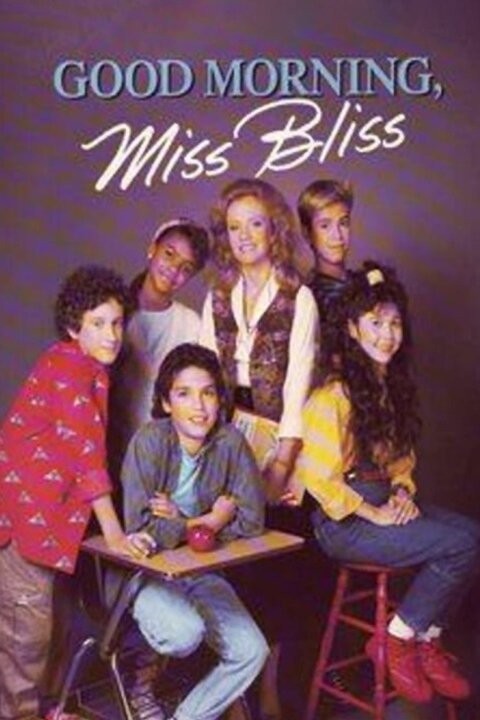
Late Night Retro Television Review: Good Morning Miss Bliss 1.3 “Wall Street”


Welcome to Late Night Retro Television Reviews, a feature where we review some of our favorite and least favorite shows of the past!  On Saturdays, I will be reviewing Good Morning, Miss Bliss, which ran on the Disney Channel from 1988 to 1989 before then moving to NBC and being renamed Saved By The Bell.  The entire show is currently streaming on Prime!

This week, Miss Bliss makes the mistake of trusting her students.  Zach Morris also learns a lesson about the Stock Market.  Mr. Belding learns better than to try to be nice to Miss Bliss.  It’s quite an episode!

Episode 1.3 “Wall Street”

(Dir by Burt Brinckerhoff, originally aired on December 14th, 1988)

Mr. Belding is concerned.  Miss Bliss is teaching her class a lesson about Wall Street.  Each of her students has donated $2 and the money has been used to buy a safe and dependable stock.  Belding doesn’t think that it’s good for the students to invest real money but, as usual, Miss Bliss just smirks away his worries.

However, Zach needs $300 to pay for a video camera that he damaged.  With the help of his friend Mickey (Max Battimo), Zach breaks into the classroom, gets on the computer, and invests the class’s money in potatoes.  He buys the stock on margin.  So, of course, when the stock tanks, Miss Bliss ends up owing $1,500.

“You just cost me my new car!” Miss Bliss angrily exclaims.

What car was Miss Bliss going to buy for $1,500?  It sounds like maybe they did Miss Bliss a favor, to be honest.

Miss Bliss gets angry and storms out of her classroom.  Mr. Belding comforts her and tells her that she’s a good teacher.  He jokes that something even worse will probably happen in the future.  Miss Bliss snaps that he should have just said, “I told you so.”

This exchange between Mr. Belding and Miss Bliss gets right to the heart of why I can’t stand Miss Bliss.  Mr. Belding is trying to help.  He compliments her.  He tells her that this sort of thing happen to every teacher.  He attempts to lighten the mood with a joke.  And Miss Bliss snaps at him.  Miss Bliss is someone who has no problem dismissing everyone else’s problems but, once something goes wrong for her, the entire world is supposed to stop.  Mr. Belding didn’t say “I told you so,” because Mr. Belding isn’t a condescending know-it-all, unlike a certain teacher who no longer afford a new car.

I liked this episode.  The overwhelming smugness of Miss Bliss meets the overwhelming self-absorption of Zach Morris.  The end result is Miss Bliss doesn’t get a car but she does get a bag of potatoes.  Miss Bliss even forgives her students for stealing from her.  To be honest, Zach is in the 8th Grade and most 8th Graders know better.  Add to that, Zach sneaks into the school to buy those potatoes.  Again, this is not typical 8th Grade behavior.  It might be time to get this kid some professional help because God knows what he’s going to be like when he reaches high school….

Lisa Marie’s Week In Television: 7/27/2025 — 8/2/2025


Big Brother 27 (24/7, CBS, Paramount, Pluto TV)

I’ve been writing about Big Brother over at the Big Brother Blog.

Diff’rent Strokes (Tubi)

On Sunday morning, I watched an episode in which Mr. Drummond was being sued by an employee who had lost out on a promotion because Drummond felt he had a responsiblity to give the promotion to a black executive.  At first, Willis was all in favor of handing out jobs based on race but then, when he was cut from the school basketball team to make room for a white player, Willis realized that he was actually against Affirmative Action.

I followed this up episode up with a two-parter in which Arnold wore a wire to take down two bullies at his school.  Is that really something that the police needed to get involved with?  Of course, the middle school bullies did appear to be in their mid-20s so maybe it was a good idea to get the police involved.

On Monday, I watched an episode in which Mr, Drummond gave a promotion to a woman.  Willis was all like, “How can you promote a woman!”  Kimberly thought the woman was going to try to steal her father.  It was a dumb episode.  I’m probably not getting the plot right because I was bored.  I followed this up with an episode where Arnold wanted to join a football team but the football coach was a jerk.  Mr. Drummond told the coach off.  Then, I watched an episode where a baseball coach wanted to recruit Willis but Mr. Drummond didn’t approve of the coach’s tactics.  Mr. Drummond was kind of a busy body.

Gordon Ramsay’s Secret Service (Hulu)

Gordon Ramsay helped a restaurant that was owned by a woman and only employed women.  The owner said that her goal was to empower women.  So, of course, she brought in Gordon Ramsay to save the restaurant.  This restaurant had a dead rat in the kitchen.  Close that place down!

The Prisoner (Night Flight Plus)

I watched two more episodes on Saturday night.  Rover is my favorite character.

Untold: The Fall of Favre (Netflix)

I watched this Netflix documentary earlier today.  It was about how Brett Favre went from being a beloved football hero to a somewhat shady figure of scandal.  It really didn’t dive that deeply into the story but I guess it worked as a reminder that a celebrity’s public self is often far different from their private self.

Untold: Johnny Football (Netflix)

Johnny Manziel was trending on twitter for some reason so Erin and I decided to watch this Netflix documentary about him.  The documentary explored why Johnny Manziel failed to make much of an impression as a professional football player.  The main reason would appear to be that he was kind of dumb.

Untold: Malice at the Palace (Netflix)

This was a documentary about a brawl that broke out during a basketball game.  It was interesting to watch, even though I’m not really into basketball.  Both the fans and the players came across as being spoiled and immature.  I recognized Metta World Peace from his brief stint on Celebrity Big Brother.

Watched and Reviewed Elsewhere:

  1. 1st and Ten
  2. The American Short Story
  3. CHiPs
  4. Degrassi High
  5. Fantasy Island
  6. Freddy’s Nightmares
  7. Good Morning, Miss Bliss (Review will drop in 90 minutes)
  8. Highway to Heaven
  9. Homicide: Life On The Street
  10. The Love Boat
  11. Miami Vice
  12. Pacific Blue
  13. St. Elsewhere


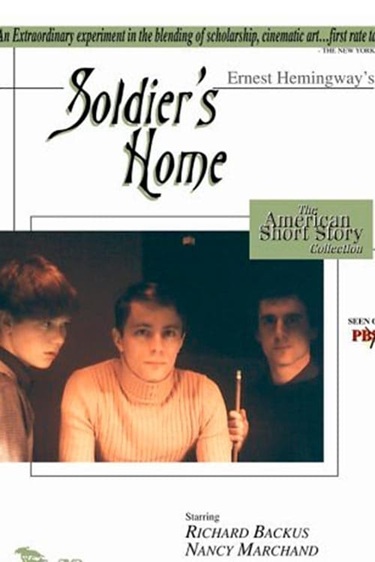
Retro Television Review: The American Short Story #9: Soldier’s Home


Welcome to Retro Television Reviews, a feature where we review some of our favorite and least favorite shows of the past!  On Saturdays, I will be reviewing The American Short Story, which ran semi-regularly on PBS in 1974 to 1981.  The entire show can be purchased on Prime and found on YouTube and Tubi.

This week, we have an adaptation of a short story by Ernest Hemingway.

Episode #9 “Soldier’s Home”

(Dir by Robert Young, originally aired in 1977)

Having gone from attending college to serving in the Army during the Great War, Harold Krebs (Richard Backus) returns home to Oklahoma.  He arrives home later than most of the other soldiers who served.  (He stayed in Europe until 1919.)  As a result, there’s no big parade waiting for him.  Everyone in town seems to have moved beyond the war and they no longer have much of a desire to talk about it.

Harold, who was once a popular and optimistic member of the town’s social set, no longer feels that he fits in.  He feels detached, watching people as they go about their lives but never feeling any desire to join them.  His mother (Nancy Marchand) pushes him to go out and date and have a good time but Harold feels lost, regardless of how much she prays for him.

Ernest Hemingway’s short story was one of the first to realistically deal with the feelings of soldiers returning from combat.  Though Harold doesn’t talk much about his experiences, one can tell that he saw and experienced things that left him scarred.  After surviving the horror of The Great War, there’s no way Harold can just slip back into his normal routine.

The adaptation sticks closely to Hemingway’s story.  Unfortunately, it doesn’t really find the visual style necessary to capture the power of Hemingway’s words.  Hemingway was a deceptively simple storyteller and Robert Young’s film is a fairly straight-forward portrait of a young man who doesn’t want to do anything, one that fails to truly capture the subtext of Hemingway’s story.  Richard Backus’s blank-eyed acting style worked well when he was playing a member of the undead in Deathdream but, in this one, he just makes ennui seem boring and petulant.  Nancy Marchand, not surprisingly, is far stronger in the role of his well-meaning but clueless mother.

As was almost always the case when it came to attempts to adapt Hemingway, it’s best just to read the original.

Late Night Retro Television Review: Freddy’s Nightmares 1.2 “It’s A Miserable Life”


Welcome to Late Night Retro Television Reviews, a feature where we review some of our favorite and least favorite shows of the past! On Fridays, I will be reviewing Freddy’s Nightmares, a horror anthology show which ran in syndication from 1988 to 1990. The entire series can be found on Plex!

Let’s see what’s happening in Springwood!

Episode 1.2 “It’s A Miserable Life”

(Dir by Tom McLoughlin, originally aired on October 16th, 1988)

Bryan Ross (a young John Cameron Mitchell, giving a performance that really can’t be described as being anything less than lousy) is the son of the owner of the Beefy Boy hamburger joint in Springwood, Ohio.  Bryan wants to go to college.  His dad (Peter Iacangelo) and his mom (Annie O’Donnell) want him to take over the family business and join them in singing “Chew me, eat me, you can’t beat me.”

Bryan is working the overnight shift alone when a scruffy man (Michael Melvin) pulls up to the drive-through on his motorcycle and threatens to kill him.  Bryan passes out but, when he wakes up, he’s got a throbbing headache and he keeps seeing blood dripping on the floor.  Bryan’s girlfriend, Karyn (Lar Park Lincoln, giving a good performance), takes Bryan home.  At his house, Bryan discovers his mom and dad are acting weird.  Bryan tries to convince his parents to let him leave home.  Dad tries to stick his head in the oven.  Mom tries to seduce her son and then climbs into the refrigerator.  On the radio, there’s a news story about “another” drive-by shooting.  What could it all mean!?

Oh, you know what it all means.  Even if you haven’t watched the episode, you know that the motorcycle man obviously shot Bryan in the head and everything that happens after Bryan leaves Beefy Boy is just his dying vision.  It’s not a bad idea but it’s ineffectively executed.  We don’t really know enough about Bryan or his parents for Bryan’s hallucination to carry any impact and, from what we do see, they all appear to be broadly-drawn caricatures.   This episode also commits the sin of introducing a memorable character — the man on the motorcycle — and then not exploring just who or what he was meant to be.

Bryan’s story was wrapped up in 20 minutes.  The second half of the episode dealt with Karyn.  Shot in the same drive-by attack that killed Bryan, Karyn ended up at the hospital and …. well, I guess her story was another collection of hallucinations that really didn’t add up to much.  The story was effective because hospitals are scary and Lar Park Lincoln gave a better performance than John Cameron Mitchell did in his story.  That said, the entire story was basically Karyn getting upset because everyone kept saying that her parents were on their way.  Finally, Karyn finally revealed that — you guessed it! — her parents were dead and that they died at the same hospital where she was taken after getting shot.  As the episode ended, Karyn saw her parents standing in the doorway and screamed and thrashed around in bed while the doctor and nurse tried to calm her.  And …. that was it.  I mean, is Karyn dead?  Is that why her parents showed up?  Is Karyn hallucinating again?  Much like a drunk frat boy, this story didn’t reach a climax as much as it just stopped.

As for Freddy, he showed up to introduce each story.  There was a cool moment where he emerged from the restaurant’s fry cooker.  For the hospital scene, he put on scrubs.  He didn’t actually interact with either Bryan or Karyn but he still took credit for their suffering.  I think Freddy was just bragging on himself.

This episode was pretty uneven.  For the most part, I’m just glad I don’t live in Springwood.

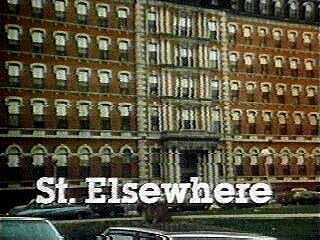
Retro Television Review: St. Elsewhere 2.9 “AIDS and Comfort”


Welcome to Retro Television Reviews, a feature where we review some of our favorite and least favorite shows of the past! On Fridays, I will be reviewing St. Elsewhere, a medical show which ran on NBC from 1982 to 1988.  The show can be found on Hulu and, for purchase, on Prime!

This week, St. Elsewhere makes history.

Episode 2.9 “AIDS and Comfort”

(Dir by Victor Lobl, originally aired on December 21st, 1983)

A city councilman named Anthony Gifford (Michael Brandon) has checked into St. Eligius under an assumed name.  He’s complaining about fatigue.  His lymph nodes are swollen.  His immune system seems to be shutting down.  Dr. White and Dr. Westphall look at the man’s x-rays and Dr. White says that it looks like Gifford might be suffering from a newly discovered disease that no one knows much about.  The name of that disease is AIDS.

“Could he be …. gay?”  Dr. White asks.

Westphall initially scoffs.  He points out that Gifford is married and has two children.  When Gifford is asked directly about his personal life, he admits to having affairs but is quick to say that they were all with women.  Westphall later says that Gifford is either lying or they’ve discovered something entirely new about the virus and they need to call the CDC….

Today, with all we know about HIV and AIDS, it’s a bit jarring to hear some of the dialogue in this episode.  Doing some research, I discovered that this was the first ever episode of network television to deal with the AIDS epidemic and that it aired at a time when there were still a lot of unanswered questions about how the disease was spread.  (For instance, the episode aired shortly after the HIV virus has been discovered.)

When words get out that Gifford is a patient at the hospital and that he has AIDS, panic erupts.  No one donates to the hospital’s blood drive because they’re scared the needles have somehow gotten infected.  Even usually sympathetic characters — like Luther and Dr. Fiscus — refuse to be anywhere near the isolation ward.  Gifford’s doctor, Peter White, requests that Gifford’s case be given to another doctor.  Later, White asks everyone is Westphall is mad at him.  Morrison replies that White acted unethically.  White blames his wife and her fears of him contracting the disease by being in the same room as Gifford.  (Not surprisingly, White is also the one who, because he won’t stop whining about his job, is responsible for word spreading about Gifford having AIDS.)

After spending nearly the entire episode denying it, Gifford finally admits to having had affairs with other men.  As he leaves the isolation ward, he’s besieged by reporters.  Getting in the elevator, he sees that someone has spray-painted “AIDS” on the wall.  Before he leaves, he asks Westphall how long he has.  Westphall grimly replies that most AIDS patients die within two years.

Later, while talking to Dr. Craig and Nurse Rosenthal, Westphall says, “Yeah, I know that’s how I felt about it at first. Then I started to think, Who am I? Why should any of us be penalized, fatally, for choosing a certain lifestyle, especially when you realize that it all boils down to chance anyway? And I tell you something I don’t give a damn for all this talk about morality and vengeful gods and all that. If you have AIDS, you’re sick, you need help. That’s all that matters. And that’s why we’re here, right?”

And yes, it’s a bit jarring to hear Westphall refer to being a gay as a “choosing a certain lifestyle,” but you again you have to consider when this episode aired and that it was also the first network television show to feature a storyline about AIDS.  When this episode aired, saying that “If you have AIDS, you’re sick, you need help …. that’s all that matters,” took a certain amount of courage.  For many viewers, this episode was probably the first they ever really heard about AIDS.

This episode dealt very honestly with AIDS.  It actually helped that all of the character didn’t have the type of “perfect” reaction that television shows often present characters as having.  Even Dr. Westphall, usually presented as being this show’s beacon of moral clarity, had to deal with his own prejudices.  When it comes to a controversial topic, television shows too often portray their lead characters as being saints.  This episode portrayed the staff of St. Elsewhere as being flawed and imperfect and, as such, it was a very effective and thought-provoking hour.

Late Night Retro Television Review: Highway to Heaven 4.7 “Amazing Man”


Welcome to Late Night Retro Television Reviews, a feature where we review some of our favorite and least favorite shows of the past!  On Thursdays, I will be reviewing Highway to Heaven, which aired on NBC from 1984 to 1989.  The entire show is currently streaming on Tubi and several other services!

This week’s episode of Highway to Heaven deals with death and is the best of season 4 so far.

Episode 4.7 “Amazing Man”

(Dir by Michael Landon, originally aired on November 11th, 1987)

When a cop who was trained by Mark is killed in the line of duty, his family becomes Jonathan and Mark’s next assignment.  While Lorraine Douglas (Jane Daly) comes to terms with being a widow and a single mother, her young son (Garrette Ratliff Henson) plays with an Amazing Man action figure and seems to be in denial about his father’s death.

This was a surprisingly low-key episode, up until the final few minutes.  That’s when Amazing Man came to life, in the form of Michael Landon wearing a super hero costume.  It says something about the sincerity and the likable earnestness of this show that this episode still worked despite having Michael Landon turn into a version of Superman.  I mean, really, it should have been a ludicrous scene.  It should have made my cynicism go into overdrive.  Instead, I couldn’t help but smile.  Landon’s big heart came through in this episode.

This was a well-done episode and certainly the best of season four so far.  That said, the one-year anniversary of my dad’s death is approaching and this episode was about a father dying and, as a result, it left me feeling rather depressed.  I don’t particularly want to spend too much more time thinking about this episode because, right now, that’s just going to make me more depressed.  That said, the important thing is that show’s the good intentions came through.  This was a sweet episode.  I hope everyone involved with it was proud of the final result because they had every right to be.

Retro Television Review: Malibu CA 2.24 “Scott A Go Go”


Welcome to Retro Television Reviews, a feature where we review some of our favorite and least favorite shows of the past!  On Thursdays, I will be reviewing Malibu CA, which aired in Syndication in 1998 and 1999.  Almost the entire show is currently streaming on YouTube!

Yes, this is from the first season. I don’t care. I refuse to waste my time looking for a second season advertisement.

This episode …. well, I don’t have much to say about it.  Find out why below.

Episode 2.24 “Scott A Go Go”

(Dir by Gary Shimokawa, originally aired on May 6th, 2000)

This is one of the Malibu CA episodes that has not been uploaded to YouTube so I can’t review it.  However, I can give you the plot summary from imdb:

Lisa tries to find out what Scott has bought for her birthday but he won’t tell. Traycee and Alex ask about the present and Scott tells them it’s rollerblades. The girls tell him Lisa has her heart set on an expensive Tiffany watch. Later Lisa asks Scott for some hints as to what his gift is and she mistakenly concludes he bought her the watch. She’s so overjoyed that Scott doesn’t have the heart to correct her. Scott wonders how he will pay for the $800 gift. Murray suggests that he come with him to the “Guys a Go-Go” club and audition as a male dancer.

Wow, that sounds awful!  Malibu CA is a show that is so predictably bad that just reading the plot description, I can already imagine Scott looking confused, Lisa overacting, and the audience going, “Wooo!” at Scott dancing.

By the way — Lisa has her heart set on a $800 Tiffany watch?  Really?  Lisa (the character, not me) might want to consider that Scott is a waiter!

Anyway, if this episode is ever uploaded to YouTube, I’ll do a proper review.  Until then, I’m just happy to have an excuse to not have to watch this show this week.

Late Night Retro Television Review: 1st & Ten 1.3 “All Roads Lead To Dayton”


Welcome to Late Night Retro Television Reviews, a feature where we review some of our favorite and least favorite shows of the past! On Wednesdays, I will be reviewing 1st and Ten, which aired in syndication from 1984 to 1991. The entire series is streaming on Tubi.

This week, the Bulls are on the road!

Episode 1.3 “All Roads Lead to Dayton”

(Dir by Bruce Seth Green, originally aired on December 9th, 1984)

The Bulls are playing their second game in Dayton!  It’s a road game and Coach Denardo tells all of the players that they are expected to conduct themselves like gentlemen on the road.

“Booooo!” the team replies.

Denardo replies, “I know but the owner’s a broad now….”

Speaking of Dana Barrow, she has a lot to deal with.  The Arcola Brothers are still trying to muscle their way into the team’s business.  Meanwhile, her ex-husband, Paul (now played by Ben Cooper), is determined to get his team back.  At the hotel in Dayton, he and his sleazy lawyer arrange for Dana’s drink to be drugged so that the hotel’s assistant manager can rape Dana while being filmed by a camera hidden behind a two-way mirror.  They plan to leak the tape to the press and claim that Dana is a nymphomaniac who shouldn’t be allowed to own an NFL team.  Fortunately, quarterback Bob Dorsey stops by Dana’s hotel room to discuss an offer he’s gotten to become a sports commentator and he proceeds to beat the hell out of the assistant manager, shatter the mirror, and give the camera the finger.  And he wins the game!

Take that, Dayton!

He even scores an extra touchdown, just so the Mafia won’t make any money on their bets.

Take that, Arcola Brothers!

The episodes of 1st & Ten that are on Tubi are apparently a combination of episodes that were edited for syndication and the original HBO episodes.  The version that I saw of All Roads to Dayton was clearly the HBO original, as there was significant amount of cursing and quite a bit of nudity.  I get the feeling that those were the two main reasons that 1st and Ten found success when it first aired.  It certainly wasn’t for the acting or the storylines, neither of which were especially noteworthy.  That said, I’m from Dallas and I’ve heard all the stories about the Cowboys and Jerry Jones so I imagine that this episode’s depiction of a football team on a road trip was probably fairly tame when compared to the real thing.

As for this episode, Dana was a bit too naive to be believed.  Delta Burke actually gives a good performance as Dana but the scripts continually let her down.  We’re only three episodes in and Roger, the team’s general manager, has planted drugs in her house, caused Bob to get seriously injured during practice, and drugged her so that she could be raped in her hotel room.  I would seriously be looking for a new general manager at this point.  On the plus side, I do like Geoffrey Scott’s performance as Bob Dorsey.  He’s charming without being smarmy about it.

Next week …. more football stuff, I guess.

Retro Television Review: The Love Boat 6.10 “The Man In The Iron Shorts/The Victims/Heavens to Betsy”


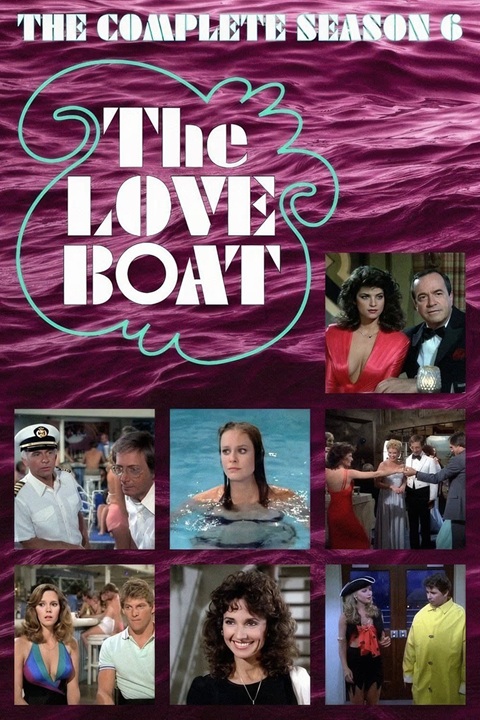
Welcome to Retro Television Reviews, a feature where we review some of our favorite and least favorite shows of the past!  On Wednesdays, I will be reviewing the original Love Boat, which aired on ABC from 1977 to 1986!  The series can be streamed on Paramount Plus!

This week, a woman struggles to forgive the son of a man who killed her husband.  Two women and a reverend try to balance attraction with the questions of faith.  And Gopher gets stuck in a suit of armor….

LOVEExciting and new!

Episode 6.10 “The Man In The Iron Shorts/The Victims/Heavens to Betsy”

(Dir by Jerome Courtland, originally aired on November 27th, 1982)

Gopher’s latest girlfriend, Gail (Taylor Miller), is on this week’s cruise.  She’s a history teacher and Gopher decides that the best way to impress her would be …. okay, I can’t believe I’m about to type this …. buy a suit of armor and surprise her by wearing it on the boat.  With Isaac’s help, he puts on the armor but — oh no! — he gets stuck in the armor.  He has wear his purser’s uniform over the armor.  The captain notes that Gopher has gained some weight and puts him on an exercise program….

There have been a lot of silly plotlines on The Love Boat but none as silly as this.  The problem is that it never makes sense that Gopher would have a suit of armor in the first place.  There a lot of presents that you can give someone who loves to study and talk about history.  I know this because I’m a history nerd myself.  A suit of armor, though, requires a bit too much of a suspension of disbelief,  It goes from being silly to being just stupid.

It also doesn’t fit in with the episode’s other big storyline, in which Webb Jones Jr. (Laurence Lau) fell in love with Vanessa Heinsely (Denise Miller).  The only problem is that Webb’s father was the drunk driver who killed Vanessa’s father.  Vanessa’s mother (played by Ruth Warrick) struggles to forgive Webb for the sins of his his father.  Luckily, Captain Stubing — a recovering alcoholic himself — is there to help.  This was a serious story about a serious subject and all of the actors handled it well.  But it seemed out-of-place when  mixed with scenes of Gopher trying to hide the fact that he was wearing a suit of armor.

Finally, Janine Turner and Sharon Gabet played two women who had a crush on a reverend (Robert Pine, the sergeant from CHiPs.)  Robert Pine was charming but it was hard not to feel as if Julie needed the reverend more than the two women.  At the very least, he could have gotten her off the cocaine and maybe he could have even convinced her to do something about her hair.

(Seriously, Julie’s hair has looked terrible this season!)

The good news is that Gopher eventually got out of that suit of honor and Vanessa and Webb managed to find love.  Even an uneven episode of The Love Boat usually has a happy ending and really, that’s all I want.