You might recognize today’s song of the day from the opening credits of Boardwalk Empire, the Martin Scorsese-produced show that starred Steve Buscemi, who is celebrating a birthday today.
It’s just a wonderful piece of music.
You might recognize today’s song of the day from the opening credits of Boardwalk Empire, the Martin Scorsese-produced show that starred Steve Buscemi, who is celebrating a birthday today.
It’s just a wonderful piece of music.
Happy birthday, Steve Buscemi!
In today’s scene of the day, from 1992’s Reservoir Dogs, Mr. Pink explains why he doesn’t tip. Only Steve Buscemi could make a non-tipper named Mr. Pink into the film’s most likable character.
4 Shots From 4 Films is just what it says it is, 4 shots from 4 of our favorite films. As opposed to the reviews and recaps that we usually post, 4 Shots From 4 Films lets the visuals do the talking!
Today, the Shattered Lens wishes a happy birthday to the one and only Steve Buscemi. It’s time for….
4 Shots From 4 Steve Buscemi Films
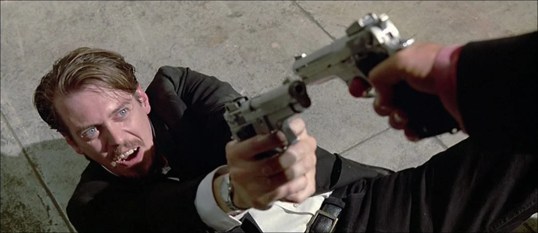
Reservoir Dogs (1992, dir by Quentin Tarantino, DP: Andrzej Sekuła)
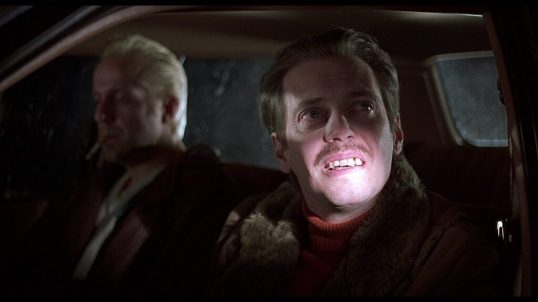
Fargo (1996, dir by the Coen Brothers, DP: Roger Deakins)
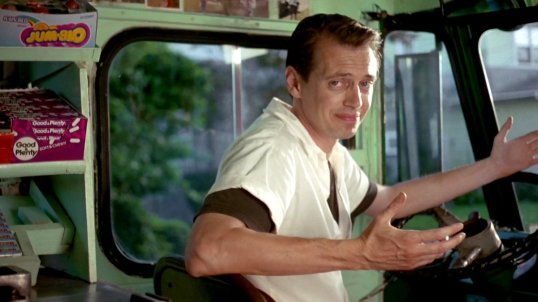
Trees Lounge (1996, dir by Steve Buscemi, DP: Lisa Rinzler)
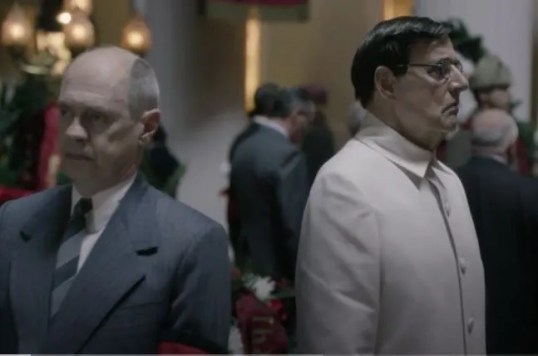
The Death of Stalin (2017, dir by Armando Iannucci, DP: Zac Nicholson)
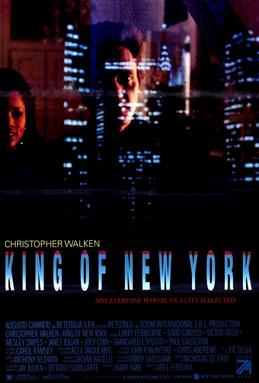 Drug kingpin Frank White (Christopher Walken) has been released from prison and is again on the streets of New York City. Frank might say that he’s gone straight but, as soon as he’s free, he’s partying with his old crew (including Laurene Fishburne, Steve Buscemi, Giancarlo Esposito, and others). While Frank’s agent (Paul Calderon) goes to all of the other city’s gangsters and explains that they can either get out of Frank’s way or die, three detectives (Victor Argo, David Caruso, and Wesley Snipes) make plans to take Frank out by any means necessary. Meanwhile, Frank is donating money to politicians, building hospitals, and presenting himself as New York’s savior.
King of New York is the epitome of a cult film. Directed by Abel Ferrara, the dark and violent King of New York was originally dismissed by critics and struggled to find an audience during its initial theatrical run. (It was lumped in with and overshadowed by other 1990 gangster films like Goodfellas and Godfather Part III.) But it was later rediscovered on both cable and home video and now it’s rightly considered to be a stone cold crime classic. Walken gives one of his best performances as Frank White and that’s not a surprise. The film was clearly made to give Walken a chance to show off what he could do with a lead role and Walken captures Frank’s charisma and humor without forgetting that he’s essentially a sociopath. Walken gives a performance that feels like James Cagney updated for the end of the 80s. What’s even more impressive is that all of the supporting characters are just as memorable as Walken’s Frank White. From Laurence Fishburne’s flamboyant killer to David Caruso’s hotheaded cop to Paul Calderon’s slippery agent to Janet Julian’s morally compromised attorney, everyone gives a strong performance. (I’m usually not a Caruso fan but he’s legitimately great here.) They come together to bring the film’s world to life. Everyone has their own reason for obsessing on Frank White and his return to power. I’ve always especially appreciated Victor Argo as the weary, veteran detective who finds himself trapped by Caruso and Wesley Snipes’s impulsive plan to take down Frank White. Frank White and the cops go to war and it’s sometimes hard to know whose side to be on.
Director Abel Ferrara has had a long and storied career, directing films about morally ambiguous people who are often pushed to extremes. Personally, I think King of New York is his best film, a portrait of not just a criminal but also of a city that combines the best and the worst of human nature. The action is exciting, the cast is superb, and Frank’s justifications for his behavior sometimes make a surprising amount of sense. Thought there’s occasionally been speculation that it could happen, there’s never been a sequel to King of New York and it doesn’t need one. King of New York is a film that tell you all that you need to know about Frank White and the city that he calls home.
Today’s scene is from Abel Ferrara’s 1990 gangster epic, King of New York. Featuring Christopher Walken and a host of familiar faces, it’s one of those scenes that simply just has to be seen.
Welcome to Retro Television Reviews, a feature where we review some of our favorite and least favorite shows of the past! On Sundays, I will be reviewing Homicide: Life On The Street, which aired from 1993 to 1999, on NBC! It can be viewed on Peacock.
This week, the Homicide detective finally arrest the shooter but can they get a confession?
Episode 3.15 “End Game”
(Dir by Lee Bonner, originally aired on February 10th, 1995)
Finally, the Homicide detectives have figured out who actually shot Bolander, Howard, and Felton. Gordon Pratt (Steve Buscemi), who lived at the apartment that the detectives were accidentally sent to, is a gun-obsessed pseudo-intellectual whose apartment is full of books that he’s probably never read and a picture of himself posing like Lee Harvey Oswald with the rifle he used to kill JFK. Pratt also has an outstanding warrant for his arrest, explaining why he panicked when the cops accidentally knocked on his door.
Here’s my question. Why exactly did it not occur to anyone to see who lived in Apartment 201 when the shootings first happened? I understand that they were focused on a different suspect but it still seems strange that, with all the detectives assigned to the case, no one bothered to check out the guy who lived in Apartment 201.
Anyway, Bayliss and Mitch Drummond drop in on Pratt’s parents, who own a farmhouse and insist that Gordon would never shoot anyone. Meanwhile, Pratt’s co-workers all talk about how much they hate his guts with one guy mentioning that Pratt went out of his way to antagonize people. Pratt is finally tracked down at a massage parlor.
The majority of this episode centers around Pembleton and Bayliss interrogating Pratt. It’s an obvious attempt to recapture the intensity of the first season’s Three Men and Adena and it actually succeeds, thanks to some smart writing and the performances of Andre Braugher, Kyle Secor, and especially Steve Buscemi. Buscemi plays Pratt as being the ultimate uneducated know-it-all, someone who has picked bits and pieces of philosophy and who has learned that, if you deliver your mundane thoughts with a sneering contempt, some people will assume that you’re smarter than you actually are. Pembleton and Bayliss have fun picking apart Pratt’s arrogance but — and this is what sets Homicide apart from so many other cop shows — Pembleton ultimately goes too far. When he takes a look at Pratt’s copy of Plato’s The Republic and realizes that it’s written in Greek, Pembleton can’t help but taunt Pratt and point out that, unlike Pratt, he can actually read ancient Greek because he was educated by “the Jesuits,” while Pratt didn’t even mange to graduate high school.
“I want a lawyer!” Pratt shouts.
At this point, I realized that I had gotten so wrapped up in the interrogation scene that I had totally forgotten about the fact that all of the evidence linking Pratt to the shooting was circumstantial. Without a gun or a confession, there’s not enough evidence to hold Pratt. He pleads out to his outstanding assault warrant and he’s free within a few hours.
“You got too cute, Frank,” Munch says, leading to Pembleton physically attacking Munch and then storming out of the station. Munch goes to the hospital to see Bolander (who has woken up from his coma but who has no memory of who Much actually is) and Bayliss is the only person left to take the call when Gordon Pratt turns up dead in the lobby of his apartment building, shot in the head.
Who murdered Gordon Pratt and was it a cop? That’s what Bayliss — who sarcastically declares “I love my job!” before heading to the crime scene — will have to figure out.
Great episode! Not only was it wonderfully performed but, just when you thought to yourself, “There’s no way Pembleton could get away with this in real life,” it turns out that Pembleton couldn’t get away with it on Homicide either. That’s what makes Frank Pembleton such a fascinating character. He’s a brilliant detective but, in this episode, he let his desire to embarrass Pratt get in the way of doing his job. “He who loses control loses,” Pembleton says and, in this episode, he lost control. Pembleton’s reaction is to storm out of the station in a huff, leaving Bayliss the task of figuring out who killed Gordon Pratt.
My money’s on Munch, just because of how upset he was when Pratt walked and also that it would make sense for Munch to avenge Bolander’s head wound by shooting Pratt in the head. We’ll see if I’m correct next week!
4 Shots From 4 Films is just what it says it is, 4 shots from 4 of our favorite films. As opposed to the reviews and recaps that we usually post, 4 Shots From 4 Films lets the visuals do the talking!
Today is Harvey Keitel’s 86th birthday! Harvey Keitel is one of the great, fearless actors of our time (BAD LIEUTENANT, anyone). He has been working hard since 1965, and he’s still going strong today, adding up to a career that spans 60 years and counting. His work for great directors like Scorsese and Tarantino has been vital to the quality and success of those films. I really came to appreciate Keitel when he had somewhat of a career resurgence in the early 90’s when I was in my late teens. He’s just a great actor who makes everything he appears in better.
Today, in honor of Harvey Keitel’s 86th birthday, here are 4 Shots from 4 Films!
MEAN STREETS (1973)
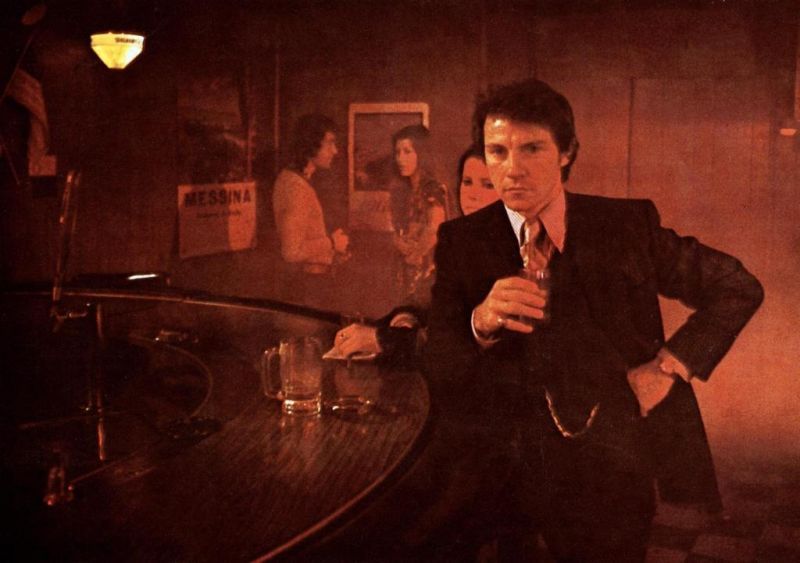
FINGERS (1978)
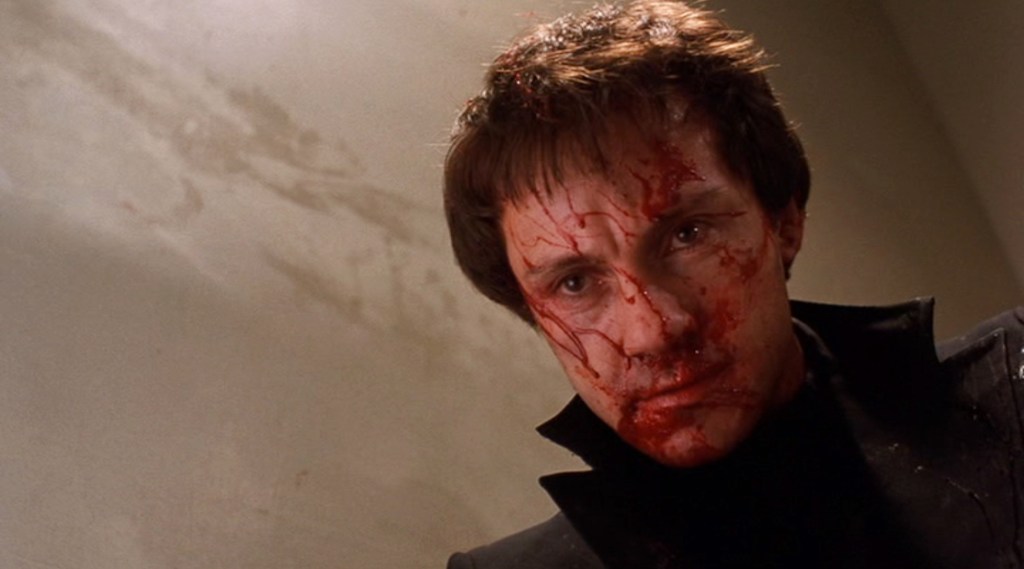
RESERVOIR DOGS (1992)
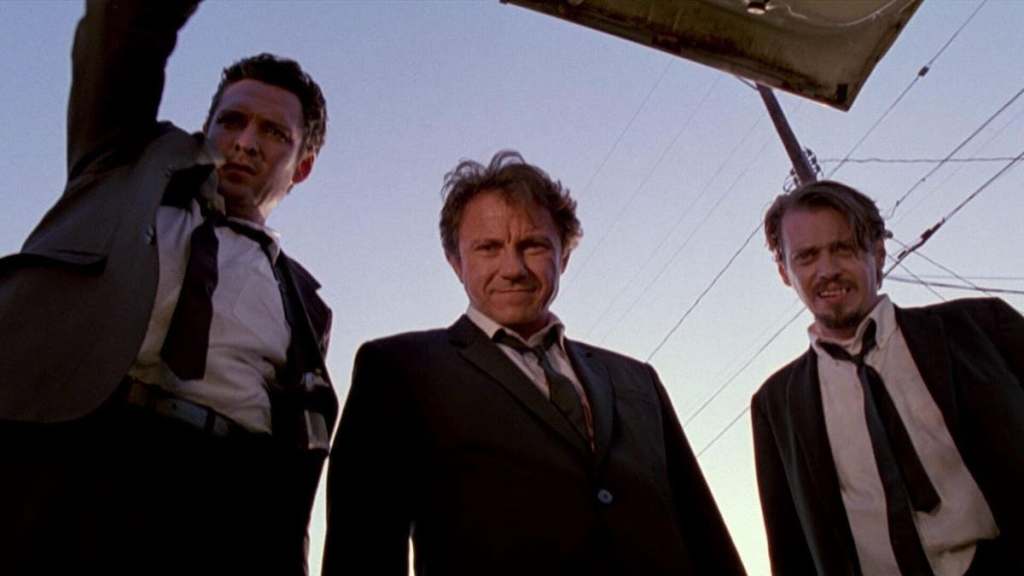
FROM DUSK TILL DAWN (1996)
2017’s The Death of Stalin opens in Moscow in 1953. Joseph Stalin (Adrian McLoughlin) calls into Radio Moscow and demands that he be sent a recording of the piano concerto that has just been performed live. The only problem is that no one bothered to record it while it was being performed. In a panic, the head of Radio Moscow announces that no one — not the musicians, not the exhausted conductor, and certainly not the audience — is allowed to leave until the orchestra has performed again.
Indeed, one of the recurring themes of The Death of Stalin is that everyone is terrified of their beloved dictator. The orchestra fears being executed for failing to recreate their performance. The members of the Central Committee fear being the next person to be purged from the ranks of Stalin’s government. The two guards that are posted outside of Stalin’s bedroom are so terrified of interrupting Stalin and getting on his bad side that they don’t investigate when they hear Stalin collapsing to the floor. When Stalin is found unconscious, the only doctors available are young and inexperienced because Stalin recently exiled all of the good doctors from Moscow. Even after Stalin dies from a cerebral hemorrhage, his reign of terror continues as all the members of his household staff are promptly executed to keep anyone from learning either the exact details of Stalin’s death or the way that the members of the Central Committee responded to his passing.
The Death of Stalin is a dark comedy that follows the members of the Central Committee as they scramble to protect their own positions after Stalin’s death. The humor comes from watching historical figures like Nikita Khrushchev, Vyacheslav Molotov, Lavrenti Beria, and Georgy Malenkov act like panicked junior executives who are desperately trying to save their own jobs during a corporate takeover. Of course, the stakes are a bit higher. Whoever succeeds Stalin will undoubtedly want to execute every other contender for the post. As with so many of Armando Iannucci’s works, the humor comes from watching very powerful people act in very immature and petty ways. While Malenkov (Jeffrey Tambor) tries to convince people that he actually is in charge, the brutal Beria (Simon Russell Beale) tries to bully his way into power and the wily Khrushchev (Steve Buscemi, giving one of his best performances) waits for his moment to strike. (Beria, it should be noted, is one of history’s greatest monsters and the film, while a comedy, does not shy away from his depravity.) Molotov (a hilarious Michael Palin) is so loyal to the Party that he says that Stalin was absolutely correct to have his wife executed just to then have Beria show up and reveal that Molotov’s wife is still alive. Meanwhile, Stalin’s idiot son (Rupert Friend) claims that it’s all an American plot while the rest of the Central Committee laughs at him behind his back. Only Georgy Zhukov (Jason Isaacs) seems to have full control of his emotions and his actions and it’s not a surprise to learn that, long after the events depicted in this film, purged from the Party. In The Death of Stalin, the leaders of Russia are obviously scared of anyone who is too competent at their job.
The Death of Stalin is not only a satiric portrayal of petty bureaucrats. It’s also a darkly humorous look of life in a dictatorship, where everyone is at the whim of whoever happens to be in charge at any given time. The film is full of power-hungry narcissists who use their ideology and their nationalism as a shield for their own ambitions. Everyone wants to control someone else. Even as mourners pass by Stalin’s coffin, they’re given orders on how to properly grieve and move. The film ends with a series of pictures of various people either having their faces scratched or, in some cases, just vanishing. In a free country, failure leads to humiliation. In a dictatorship, it leads to non-existence as the formerly prominent are suddenly erased from a history that no longer has a place for them. Ironically, of all the original leaders of communist Russia, it was Molotov who lived the longest. He was 96 when he died in 1986. If not for Stalin’s sudden death, he probably would have been purged and executed at the age of 63.
On this May Day, with so many people currently trying to rehabilitate the reputations of the 20th Century’s worst dictators, The Death of Stalin is must-watch.
Remember that time that Bruce Willis and a team of oil drillers saved all of humanity from a giant asteroid that was apparently the size of Texas?
Sure, you do! Everyone remembers Armageddon!
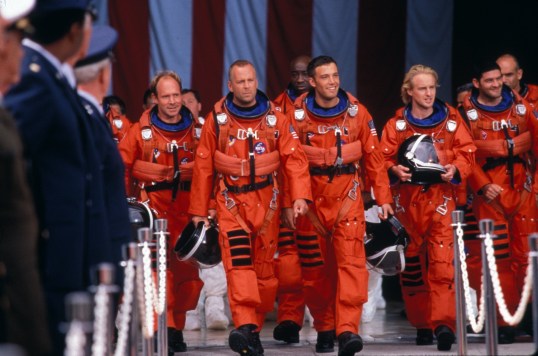
1998’s Armageddon is a film that doesn’t get a lot of respect but which everyone remembers. There’s been a lot of movies made about giant asteroids on a collision path with the Earth. Ever since scientists announced that a collision with a comet or an asteroid probably killed the dinosaurs, there’s been a somewhat irrational fear that the same thing could happen to us. Back in 1978, Sean Connery and Karl Malden tried to stop a Meteor (and failed). In 1998, the same year that Armageddon came out, Morgan Freeman, Robert Duvall, and Elijah Wood tried to stop an asteroid from causing a Deep Impact (and failed). Adam McKay made an entire film about everyone saying, “Don’t Look Up,” in an attempt to promote increased panic about climate change (and failed). (“I’m so scared!” Leonardo DiCaprio shouted and audiences responded, “Oh, calm down.”) And yet, it’s Armageddon — ridiculed by critics, endlessly parodied by other movies — that people use as their go-to source for commenting on the prospect of a mass extinction event. Mostly because, in Armageddon, humanity didn’t fail. Bruce Willis showed that asteroid who was boss!
Why do we love Armageddon? A lot of it has to do with the cast. Not only do you have Bruce Willis battling an asteroid but you’ve also got Steve Buscemi, Owen Wilson, Ben Affleck, Will Patton, Michael Clarke Duncan, Peter Stormare, William Fichtner, and a host of others working with him. You’ve got Billy Bob Thornton working ground control. You’ve got Liv Tyler, somehow managing to give a decent performance even while Ben Affleck attacks her with animal crackers. It’s not just the cast is full of familiar and likable actors. It’s that the members of the cast know exactly what type of film that they’re appearing in and they all give exactly the right type of performance for that film. They deliver their lines with conviction while not making the mistake of taking themselves too seriously. Bruce Willis announces that his crew will destroy that asteroid in return for never having to pay taxes again and he announces with just the slightest hint of a smirk, knowing that the audience is going to cheer that moment.
But really, the real reason why Armageddon has survived that test of time is because it’s just so utterly shameless. Director Michael Bay will never be accused of being a subtle director but Bay instinctively understood that Armageddon was not a film that demanded subtlety. Armageddon is a film that demands that constantly moving camera and all of those carefully composed scenes that were clearly made so they could be included in the trailer. It’s a film about big moments and big emotions. Unlike something like Deep Impact, it doesn’t get bogged down in trying to be better than it actually is. Unlike Don’t Look Now, it doesn’t degenerate into a bunch of histrionic speeches. Armageddon exists to make the audience cheer and it succeeds. It takes guts to include a slow motion scene of a bunch of kids celebrating in front of a faded Kennedy For President poster but Bay is exactly the type of director who can pull that off. Michael Bay’s style is not right for a lot of films. But it was perfect for Armageddon.
As I sit here typing this, there are some people panicking because there’s speculation that a meteor is going approach the Earth in the 2030s. It’ll probably miss us but who knows? But you know what? I’m not worried at all. I’ve seen Armageddon. So, on this International Earth Day, let’s remember the courageous men who saved this planet back in 1998.
Previous Guilty Pleasures
Photograph by Erin Nicole
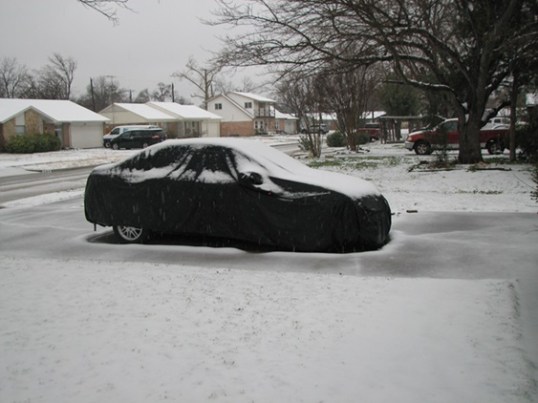
I am currently sitting in my bedroom, wrapped in several blankets and watching the snow fall on the other side of my window. I love snow, mostly because I live in Texas and therefore, I don’t get to see it that often. The most snow we’ve gotten down here, at least in my lifetime, was in 2021. That was when we got hit by that blizzard and had to deal with rolling blackouts for a week straight. That’s not a good memory but still, I love to watch the snow fall. Even during that blizzard, I still loved the fact that I could use the snow as a nightlight as I read a Mickey Spillane book and waited for the power to come back on.
Down here in North Texas, snow is exotic. In other parts of the country, it’s just a part of everyday life.
Like in the Dakotas for instance….
First released in 1996 and directed by the Coen Brothers, Fargo is a film that is full of arresting images. As soon as you hear (or read) the title, those images and the sounds associated with them immediately pop into your head. You immediately visualize the desperate car salesman Jerry Lundegaard (William H. Macy) trying to trick a customer into paying extra for the trucoat and insisting that “I’m not getting snippy here!” You see the film’s two kidnappers, Carl Showalter (Steve Buscemi) and Gaear Grimsud (Peter Stomare), getting on each other’s nerves as they drive from one frozen location to another. You remember heavily pregnant Marge Gunderson (Frances McDormand) investigating a snowy crime scene and gently correcting another officer’s “police work.” You flash back to the moment when Mike Yanagita (Steve Park) suddenly breaks down in tears and tells Marge that she’s a super lady. “And it’s a beautiful day,” Marge says at one point, wondering how so many terrible things could have happened on such a lovely day. And she’s right. It was a beautiful day. It was far too beautiful a day to discover one man stuffing another into a woodchipper.
Myself, I always think of the scene where Carl attempts to find a place to hide a briefcase full of money. It’s night. Carl’s been shot in the face but he has the money that he’s gone through so much trouble to collect. He runs into a field, looking for a place to hide it. The field is covered in snow. Every inch of the ground glows a bright white. Everything looks the same. But Carl still runs around desperately before picking a place to bury the suitcase. It doesn’t seem to occur to Carl that there’s no visible landmarks or anything that would ever help him to find the money again. He’s blinded, by the snow, by the pain of the bullet, and, like most of the characters in this movie, by his own greed.
Of course, Fargo is not a film about people behaving in intelligent ways. Greed, loneliness, and desperation all lead to people doing some pretty stupid things. Jerry thinks that the best way to pay off his debts and raise the money for a real estate deal is to arrange for his wife to be kidnapped so his wealthy father-in-law (Harve Presnell) will pay the ransom. His father-in-law, who obviously despises Jerry and would be happy for him to just go away, is convinced that he’ll be able to both get back his daughter and recover his money. (If Jerry had just spent a moment really thinking about his plan before going through with it, he would have realized his father-in-law would never just part with his money.) Carl thinks that it’s a good idea to partner up with the obviously sociopathic Grimsud. When a cop pulls over Carl and Grimsud’s car, Grimsud ignores the fact that Carl was talking his way out of the ticket and instead kills the policeman and then kills several eyewitnesses. (“I told you not to stop.”) Marge figures out what is going on but even she puts her life in danger by investigating a cabin without proper backup. The characters in Fargo frequently behave in ludicrous ways and almost all of them speak with an exaggerated regional dialect (All together now: “Oh yeah,”) but they also feel incredibly real. The sad truth of the matter is that there are people as greedy, dumb, and hapless in the world as Jerry. There are people like Carl and Grimsud. Even Jerry’s fearsome father-in-law is a very familiar type of character. People do thing without thinking and inevitably, they make things worse the more overwhelmed they become. Common sense (not to mention decency) is frequently the last thing that anyone considers. Fortunately, Marge is believable too. Marge at times almost seems so gentle and polite (“No, why don’t you sit over there?” she sweetly tells Mike when he attempts to get too close to her.) that the viewer worries about what’s going to happen to her when she gets closer and closer to figuring out what’s going on. Fortunately, Marge turns out to be much stronger than anyone, even the viewer, expected. The world of Fargo can be a terrible place but there’s moments of kindness and hope as well.
Fargo is both a comedy and a drama. The opening title card says that the film is based on a true story, which is a typical Coen Brothers joke. (The film was loosely inspired by several similar crimes but the story itself is fictional.) Carter Burwell’s dramatic score is both appropriately grand and also gently satiric. Jerry does some terrible things but William H. Macy plays him as being so naive and desperate and ultimately overwhelmed that it’s hard not to have a little sympathy for him. Jerry truly thought it would be so simple to pull off a complicated crime. (The poor guy can’t even get the ice off of his windshield.) As played by Steve Buscemi, Carl Showalter talks nonstop and he makes you laugh despite yourself. His shock at how poorly everything goes is one of the film’s highlights. It’s a funny film but it’s also a sad one. I always worry about what’s going to happen to Jerry’s son. Ultimately, of course, the film belongs to Frances McDormand, who gives a wonderful performance as Marge. She’s the heart of the film, the one who reminds the viewer that there are good people in the world.
Considering the film’s cultural impact, it’s always somewhat shocking to remember that Fargo did not win the Oscar for Best Picture. It lost to The English Patient, a film about a homewrecker who helps the Nazis. Personally, I prefer Fargo.

Fargo (1996, dir by the Coen Brothers, DP: Roger Deakins)
 Through the Shattered Lens