Audiences love them but the Academy has never quite felt the same way. True, there have been a few horror films nominated. The Exorcist was a major contender. Jaws was nominated. So was The Sixth Sense. Silence of the Lambs won.
But, for the most part, horror films have struggled to get Academy recognition. While the Academy has recently shown a willingness to honor science fiction, the horror genre has yet to benefit from the decision to increase the number of best picture nominees.
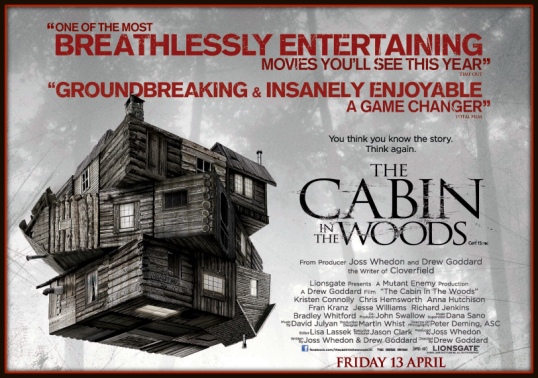
Because I love horror and I love movies and I love lists, here are ten horror films that I think deserved a best picture nomination:
One of the most popular and influential horror films of all time, Frankenstein was sadly ignored by the Academy. It’s certainly better remembered than the film that won best picture of 1931, Cimarron.
2. Psycho (1960)
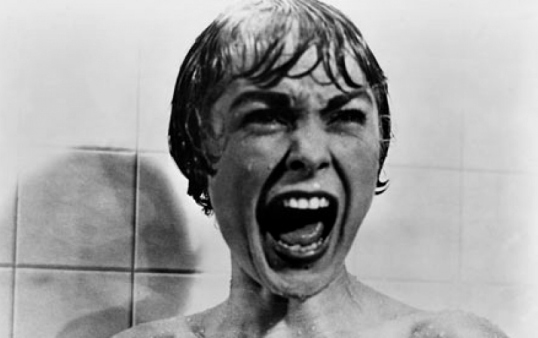
Psycho may have received nominations for best director, supporting actress, cinematography, and art design but the film that made people afraid to take showers did not receive a nomination for best picture. The winner that year was a legitimate classic, The Apartment. But it’s hard not to feel that Psycho should have, at the very least, received a nominations over the other 4 films nominated.
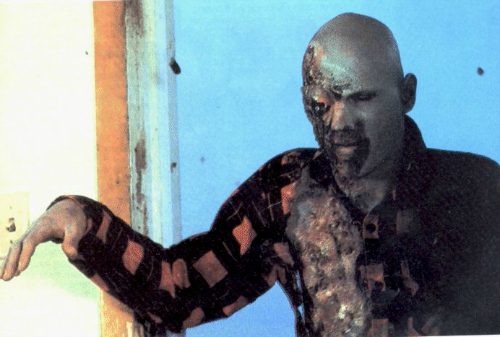
George Romero’s zombie classic may have set the standard for zombie movies to come but it was not honored the Academy. The Academy was more comfortable with Oliver!
Few sequels have been nominated for best picture. Dawn of the Dead definitely should have been one of them. Who wouldn’t want to see, at the very least, Tom Savini’s speech as he accepted his special award for best makeup?
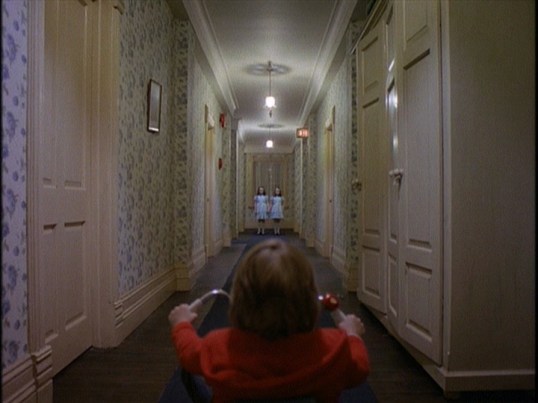
8) The Shining (1980)
Stanley Kubrick’s film may be recognized as a classic now but the reviews, when it was first released, were mixed. So, I guess we shouldn’t be surprised that it wasn’t given any recognition by the Academy. It’s a shame because I’ve watched The Shining a few dozen times and it still scares the Hell out of me.
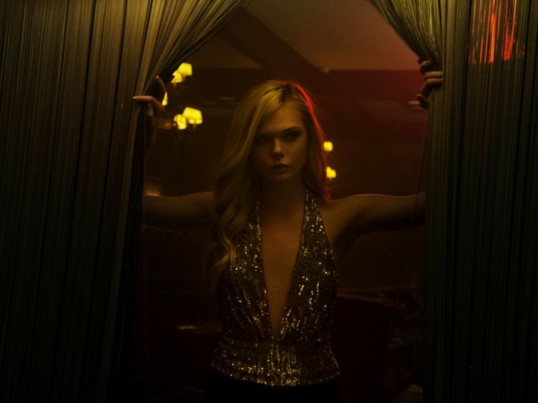
Is Nicholas Winding Refn’s The Neon Demon truly a horror movie? It’s close enough. Though the film opened to mixed reviews, it’ll be recognized as a classic in another ten years.
4 Shots From 4 Films is just what it says it is, 4 shots from 4 of our favorite films. As opposed to the reviews and recaps that we usually post, 4 Shots From 4 Films is all about letting the visuals do the talking.
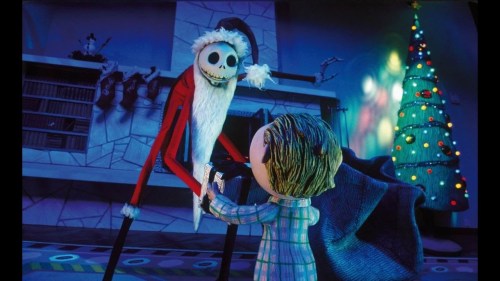
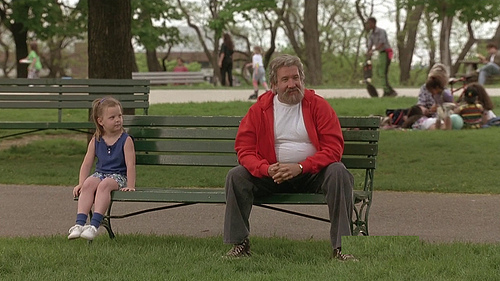
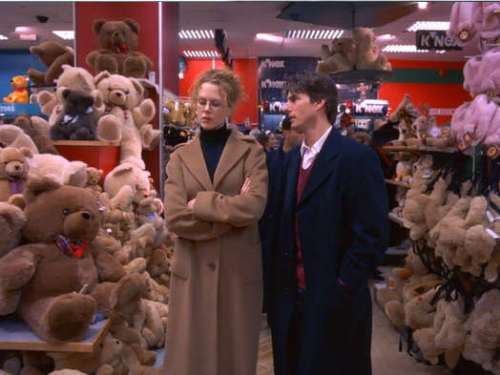
4 Shots From 4 Holiday Films
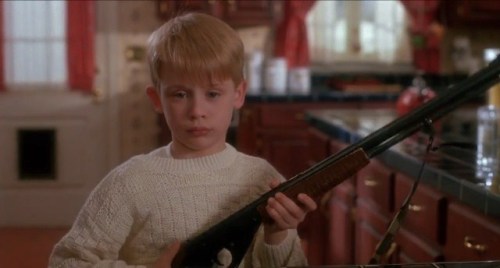
Home Alone (1990, dir by Chris Columbus)
The Nightmare Before Christmas (1993, dir by Henry Selick)
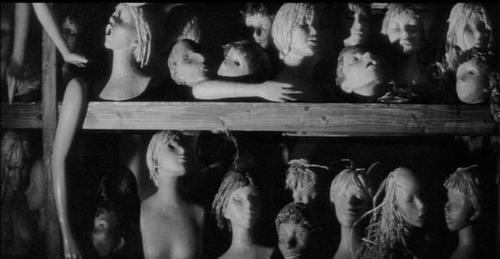
This October, I’m going to be doing something a little bit different with my contribution to 4 Shots From 4 Films. I’m going to be taking a little chronological tour of the history of horror cinema, moving from decade to decade.
It may seem strange, at first, that I am including the 1971 best picture nominee, A Clockwork Orange, in a series of Back to School reviews. Certainly, Stanley Kubrick’s iconic adaptation of Anthony Burgess’s novel is not usually described as being a film about juvenile delinquency but that’s exactly what it is.
Many viewers tend to forget that Alex (played by Malcolm McDowell, who was nearly 30 at the time) and his three droogs are all meant to be teenagers. (Only Michael Tarn, who played Pete, was actually a teenager at the time the film was shot. Warren “Dim” Clarke and James “Georgie” Marcus were both in their late 20s.) There’s even a lengthy scene in which Alex is interrogated by a social worker, P.R. Deltoid (Aubrey Morris). Viewers are usually so surprised when Deltoid suddenly grabs Alex’s crotch that they forget that the whole reason Deltoid even came to the flat was to find out why Alex had been skipping school. (“Pain in my gulliver,” was Alex’s oft-quoted excuse.)
So, make no mistake about it. Among other things, A Clockwork Orange is a film about both the problem of juvenile delinquency and the continuing debate concerning what the authorities should do about it. Stylistic and philosophical differences aside, A Clockwork Orange comes from the same cinematic family tree that’s given us everything from Rebel Without A Cause to Bully to Spring Breakers.
Of course, that’s not all that A Clockwork Orange is about. It’s a Kubrick film, which means that there’s several different layers to work through and multiple interpretations for what we see on-screen. For those who may not be familiar with the film, it takes place in a recognizable but futuristic England. (One of my favorite theories is that A Clockwork Orange was about what was happening on Earth while David Bowman was becoming the starchild in 2001: A Space Odyssey.) It’s a violent world, one where there appears to be significantly fewer people around than in the past. The streets are deserted and bombed out. Occasionally, when Alex returns to his home, he passes a mural of idealized working men creating a new world. This rather banal work of Socialist realism has been defaced by obscene drawings and mocking graffiti.
Teenage Alex spends his nights hanging out with his friends (or, as he calls them, droogs), Pete, Georgie, and Dim. They drink at the Korova Milk Bar and wear obscenely oversized codpieces, signifying this society’s obsession with outsized masculinity. When they speak (and when Alex narrates the film), they do so in a rhyming slang called Nadsat. Under Alex’s sociopathic leadership, they spend their nights raping women, beating the homeless, and fighting with other gangs. When Alex is not with his droogs, he enjoys lying around the house and listening to Beethoven (or “Ludwig Van” as he calls him).
After being betrayed by his droogs (who have tired of Alex’s cockiness), Alex ends up imprisoned for murder. However, Alex is offered an early release if he’s willing to take part in the Ludovico Treatment. For two weeks, Alex is drugged and forced to watch violent and sexual films while the music of Beethoven plays in the background. As a result of the treatment, Alex grows physically ill at the thought of both violence and sex but he can also no longer listen to Beethoven. Arguably, as a result of being cursed of his anti-social tendencies, he has lost the only non-destructive thing that he enjoyed.
Over the objections of the prison chaplain (who argues that robbing Alex of his free will is not the same as rehabilitating him), Alex is sent back into the real world and he quickly discovers that he now has no place in it. His parents have rented his room out to a boarder who is now more of a son to them than Alex ever was. The streets are full of men who were previously tormented by Alex and who now wants revenge. In perhaps the film’s most brilliant moment, Alex discovers that his former droogs are now members of the police force. Though they may now be wearing uniforms, Dim and Georgie are still as destructive and dangerous as Alex once was. The difference is that Alex was caught and cured whereas Dim and Georgie discovered they could do just as much damage as authority figures as they did as juvenile delinquents.
In fact, the only people who now care about Alex are the political dissidents who hope to use Alex to discredit the government. However, the dissidents aren’t particularly worried about Alex’s well-being either. He’s just a prop to be used for their own ambitions. Even worse, for Alex, is the fact that one of the dissidents is Mr. Alexander (Patrick Magee), a writer who lost both his ability to walk and his wife to an earlier assault committed by Alex…
(Interestingly enough, Mr. Alexander’s boyguard is played by David Prowse, who later become the ultimate symbol of government oppression when he was cast as Darth Vader in Star Wars.)
A Clockwork Orange is a brilliant film but it’s one about which I have very mixed feelings. On the one hand, you can’t deny the power of the film’s imagery. How many times has just the opening shot — of McDowell staring at us while wearing one fake eyelash — been imitated on TV and in other movies? How much of the film’s dialogue — from “pain in my gulliver” to “the old in-out” — has lived on long past the movie? Regardless of how many times I’ve seen A Clockwork Orange, the film’s electronic score (from Wendy Carlos) never ceases to amaze me. Finally, it’s a film that argues that free will is so important that even a sociopath like Alex must be allowed to have it and that, as the chaplain argues, true goodness comes from within and cannot be manufactured or regulated by a government agency. (It’s also a film that suggests that the government would be just as quick to use the Ludovico Treatment not just on the evil Alexes on the world but on anyone who dared to dissent from the party line.) As I’m something of a “Freedom of Choice” absolutist, that’s a message to which I responded.
(At the same time, A Clockwork Orange does not argue that Alex’s actions should be free of consequences. If anything, the film’s message seems to be that things would have been better for literally everyone if the government had just left Alex in jail, as opposed to trying to “fix” what was wrong with him.)
And yet, I have mixed feelings about A Clockwork Orange. I guess my main issue is that the film doesn’t always play fair. Malcolm McDowell is allowed to give a charismatic and well-rounded performance as Alex but nearly everyone else in the film is directed and written as a one-dimensional caricature. Whereas Anthony Burgess’s novel emphasized the very real damage that Alex did to his victims, the film tends to surround Alex with comedic grotesqueries. By both making Alex the only fully developed character in the entire film and then casting the energetic and charismatic Malcolm McDowell in the role, the film seems, at times, to come dangerously close to letting Alex off the hook for his worst crimes. It also leaves the film open to the oft-repeated charge of glamorizing sex and violence. (According to Roger Lewis’s biography of the author, that was Anthony Burgess’s opinion of the film.) For the record, I don’t think A Clockwork Orange is an immoral film but I understand why some people disagree.
For that reason, A Clockwork Orange remains a controversial film. In fact, I’m somewhat surprised that this subversive and deliberately confrontational film was nominated for best picture. It was only the 2nd (and last) X-rated film to receive a best picture nomination. Though it lost to The French Connection, A Clockwork Orange continues to be a powerful and controversial film to this day. Perhaps the biggest indication of A Clockwork Orange‘s success is that it’s still being debated 45 years after it was first released.
Today’s scene that I love comes to use from an underground 1965 film called Vinyl! Believe it or not, this adaptation of A Clockwork Orange was directed by Andy Warhol and predates the famous Kubrick film by 6 years!
This is a film that I hope to get a chance to review very soon but until then, check this out scene of Edie Sedgwick and Gerald Malanga dancing to Nowhere to Run by Martha and The Vandellas.
Watching her in this scene, it’s sad to think that, in just six years (and at the same time that Stanley Kubrick was releasing his version of A Clockwork Orange), Edie Sedgwick would die at the age of 28. Like all of us, she deserved much better than what the world was willing to give her.
4 Shots From 4 Films is just what it says it is, 4 shots from 4 of our favorite films. As opposed to the reviews and recaps that we usually post, 4 Shots From 4 Films is all about letting the visuals do the talking.
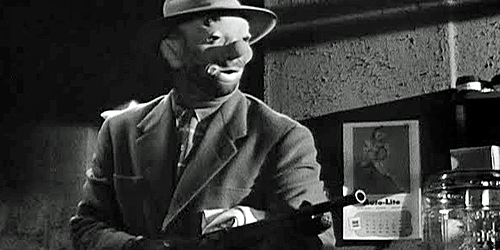
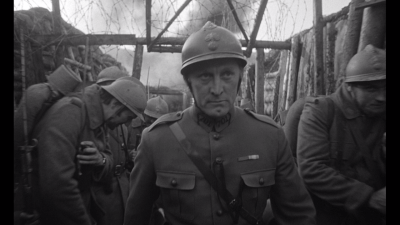
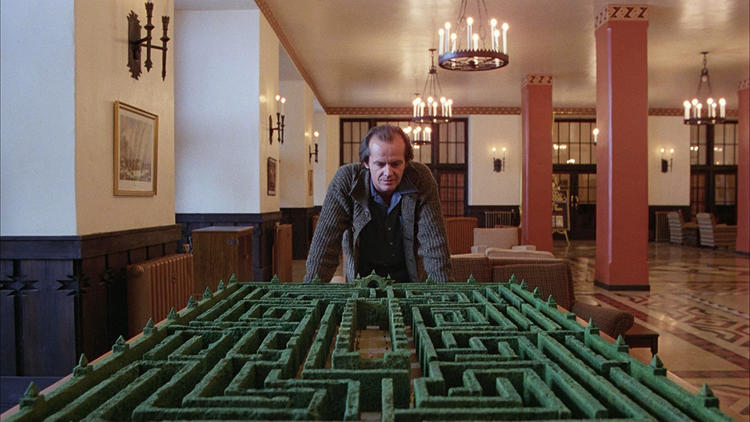
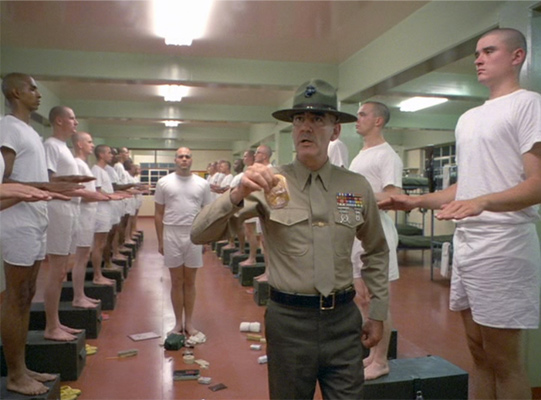
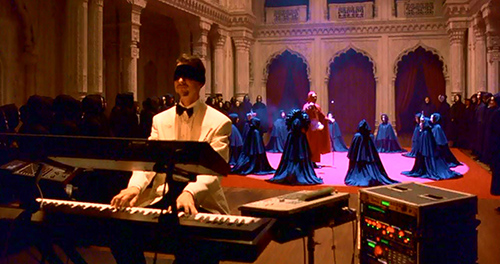
4 Shots From 4 Films is just what it says it is, 4 shots from 4 of our favorite films. As opposed to the reviews and recaps that we usually post, 4 Shots From 4 Films is all about letting the visuals do the talking. Stanley Kubrick was born on this date in 1928. Beginning as a photographer, Kubrick moved to motion pictures and became one of the most influential filmmakers in history. Here are 4 Shots from the early career of Stanley Kubrick, movie maker:
“It was in the reign of George III that the aforesaid personages lived and quarreled; good or bad, handsome or ugly, rich or poor, they are all equal now.”
— Barry Lyndon (1975)
As I may have mentioned yesterday on this site, Texas has finally caught up with the rest of this frozen country. Starting on Sunday night, it has finally been cold and wintry down in my part of the world! For two days straight, schools have been closed and the streets have been covered in ice. And, even though the temperature got slightly above freezing today, I have been told that I can expect to wake up tomorrow morning to a snowy wonderland.
And I hope that’s the case because I would love to stay home on Wednesday! Ever since the 31 Days of Oscar began, I have recorded so many movies off of TCM that I am running dangerously close to running out of space on the DVR. The best thing about being snowed (or iced) in is that it gives me an opportunity to watch some of those films.
For instance, I spent this afternoon watching the 1975 best picture nominee Barry Lyndon. And when I say that I spent an afternoon, I mean that literally. Clocking in at a little over 3 hours, Barry Lyndon is a film that’s so long that it even provides an intermission so the you can stand up and stretch your legs.
Seriously, I was really thankful for that intermission.
Which not to say that Barry Lyndon is a bad film. Far from it! It’s actually one of the best films to be included in this year’s 31 Days of Oscars. While I may have no first hand knowledge of what it was like to live in the 1700s, I can now say that I definitely have a clue on account of the fact that I’ve seen Barry Lyndon.
Directed by the great Stanley Kubrick and based on a novel by William Makepeace Thackery, Barry Lyndon tells the story of a penniless Irishman Redmond Barry (Ryan O’Neal) who, following a duel with a wealthy British captain, is forced to flee from his home. After being robbed by a highwayman, Barry joins the British army but, upon being sent to fight in Germany, discovers that he has no love for combat. As such, Barry deserts but is then captured by and forced to enlist in the Prussian Army. Once the war ends, Barry is order to spy on a professional gambler who the Prussians suspect might, himself, be a spy. Barry and the gambler soon become partners and travel around Europe together. However, Barry has decided that he now wants to marry into wealth and he gets that chance when he meets the Countess of Lyndon (Marisa Berensen), whose husband is dying.
And that’s when the intermission kicks in.
When we come back, Redmond Barry is now known as Barry Lyndon and appears to have everything that he’s ever wanted. However, while Barry may have been naturally lucky when he was poor, the opposite is true once he’s rich. Despite his new station in life, Barry is never truly accepted by his wife’s circle of friends. Furthermore, his son, Bryan (David Morley) is injured while out riding a horse and Lady Lyndon has a nervous breakdown as a result. Meanwhile, Barry’s stepson, Lord Bullington (Leon Vitali), hates him and spends most of his time plotting ways to get rid of his stepfather.
And, naturally enough, it all leads to one final duel in a barn, in which two men point guns while surrounded by the deafening sounds of hundreds of pigeons cooing.
I’m at something of a disadvantage when it comes to reviewing Barry Lyndon because I watched it on television and Barry Lyndon is one of those films that demands to be seen on a big screen. For all of the dramatic moments and satirical asides (this film has a wonderfully snarky narrator), Barry Lyndon is ultimately most concerned with recreating the past as authentically as possible. Watching this film, you really do feel as if you’ve traveled back to the 18th Century, where all of the rooms are lit by candle light and one’s station in life can be determined by the ornateness of his or her costume.
As I watched Barry Lyndon, I had to wonder — whatever happened to Ryan O’Neal? I recently saw O’Neal in a film called The Listand it was hard to believe that the terrible actor from that film was the same guy who starred in Barry Lyndon. Kubrick may not have a reputation for being an actor’s director but Ryan O’Neal gives a great performance in Barry Lyndon. (Compare O’Neal’s performance in the earlier Love Storyto his performance here and you’ll see how good a job Kubrick did when it came to directing O’Neal.) When we first meet Barry, he is an almost passive aggressive character, a cunning guy who has the patience necessary to wait for his opportunity to advance. It’s only during the second half of the film that Barry becomes a truly sympathetic character, redeemed by both his love for his son and the fact that all of his enemies are even worse than him. The strength of Ryan O’Neal’s performance can be found in the fact that Barry can be both amoral and sympathetic at the same time.
So, I’m glad that the streets were icy on Tuesday. I’m thankful because it gave me a chance to watch Barry Lyndon.
And yes, I’m also very thankful for that intermission.
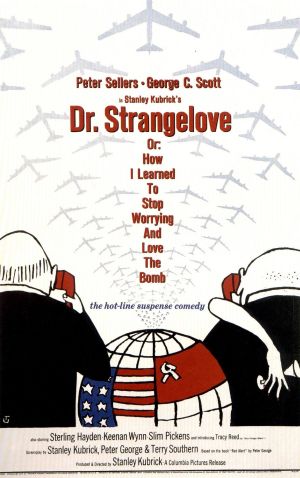
“Gentlemen! You can’t fight here! This is the war room!” — President Merkin Muffley (Peter Sellers) in Dr. Strangelove: Or How I Learned To Stop Worrying And Love the Bomb (1964)
The next time you hear someone bragging about how their favorite politician is an intellectual who always acts calmly and rationally, I would suggest that you remember the example of President Merkin Muffley, one of the many characters who populate the 1964 best picture nominee, Dr. Strangelove or How I Learned To Stop Worrying and Love the Bomb.
As played by Peter Sellers, Merkin Muffley is the epitome of rational political action. Speaking in a steady (if somewhat muffled) midwestern accent and always struggling to remain calm and dignified, Muffley keeps order in the War Room as the world edges closer and closer to apocalypse.
Just consider, for example, this scene where President Muffley calls the Russian leader (the nicely named Dimitri Kissoff) and explains that a little something silly has happened.
As Muffley explains in the above scene, Gen. Jack D. Ripper (Sterling Hayden) has gone crazy. Convinced that the Russians have been sapping his precious bodily fluids, Gen. Ripper has ordered a nuclear strike on Russia. Unfortunately, Russia has built a Doomsday Machine that, should Russia be bombed, will destroy the world.
While Muffley is at fist skeptical about a doomsday machine, his advisor, Dr. Strangelove (also played by Peter Sellers), explains that the doomsday machine not only exists but that it’s actually a pretty good idea. The wheelchair-bound Dr. Strangelove speaks in a German accent and appears to have lost control over the left side of his body. At random moments, his left arm shoots up in a Nazi salute. At other times, his hand tries to strangle him. Making these surreal moments all the more memorable is the fact that nobody in the War Room seems to notice or question them.
And, while it’s always tempting to dismiss a character like Dr. Strangelove as being an over-the-top caricature, the fact of the matter is that, following the end of World War II, several Nazi scientists ended up working for the U.S. government. In many ways, the U.S. space program was the creation of a bunch of real-life Dr. Strangeloves.
Of course, President Muffley and Dr. Strangelove aren’t the only roles played by Peter Sellers in this film. Sellers also plays Lionel Mandrake, a British officer who — as the result of an office exchange program — happens to be at Burpelson Air Force Base at the same time that Gen. Ripper orders the attack on Russia.
As famous as his Sellers’s performances as Dr. Strangelove and President Muffley may be, I actually think Mandrake is his best performance in the film. In many ways, Mandrake is the audience’s surrogate. He’s the one who gets to hear Ripper’s rambling explanation for why he launched an attack on Russia. He’s the one who has to try to convince the hilariously unhelpful Col. Bat Guano (Keenan Wynn) to help him find a quarter so he can call the Pentagon.
(“You’re gonna have to answer to the Coca-Cola company,” Guano says, before shooting open a Coke machine to get change.)
Sellers plays Mandrake as a parody of the traditional, stiff upper lip British army officer. Not only does that allow some great humor as Mandrake keeps a calm demeanor while listening to Ripper’s increasingly crazed monologue but it also allows Mandrake to be the only sane man in the movie.
(Of course, the whole point of Dr. Strangelove is that the world’s become so insane that one sane man can not make a difference. )
Sellers earned a best actor nomination for playing three different roles and he deserved it but, for me, the two best performances in the film come from Slim Pickens and George C. Scott.
Pickens, of course, is the bomber pilot who ends up riding an atomic bomb like a bull in a rodeo. As a character, Maj. Kong may be a bit too much of a spot-on stereotype but Pickens brings such sincerity to the role that it doesn’t matter. Oddly enough, you feel almost happy for him when he rides that bomb to his death. You know that’s exactly how he would have wanted to go out.
And then there’s George C. Scott, playing the role of Gen. Buck Turgidson. From the safety of the War Room, Turgidson looks forward to nuclear war and worries when President Muffley invites the Russian ambassador to join them. (“But he’ll see the big board!” Turgidson exclaims.) Turgidson is both hilariously stupid and hilariously confident. Perhaps my favorite Turgidson moment comes when he trips, falls, and stands back up without once losing his paranoid train of thought.
(Though he doesn’t have a big role, James Earl Jones makes his film debut in Dr. Strangelove. The way he delivers the line “What about Major Kong?” makes me laugh every time.)
50 years after it was first released, Dr. Strangelove remains a comic masterpiece of a nightmare, a film that proves that political points are best made with satire and not sermons.










 Through the Shattered Lens