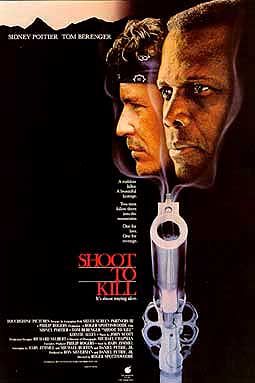
Film Review: Shoot to Kill (dir by Roger Spottiswoode)


I am not one for camping.

I’m actually kind of alone amongst my family as far as that’s concerned.  All three of my sisters enjoy spending the night outdoors, listening to sounds of nature and looking up at the stars.  They know how to set up tents and make campfires and they enjoy hiking and rafting and exploring the great outdoors.  Myself, I do enjoy occasionally spending the weekend up at Lake Texoma and I like the fact that, even though we live in the city, we still occasionally get to see wildlife running around.  I think possums are cute.  A few days ago, I squealed with delight when I saw that there was a raccoon hanging out in one of our backyard trees.  (“Don’t go near that thing, Lisa Marie!” Erin snapped as I reached for the den door.)  Growing up, I spent time in both the country and the city.  While I love living in the city, there’s still a part of me that’s still a country girl.  That said, I definitely prefer sleeping inside to outside.  The inside is safe.  The inside is comfortable.  The inside is free of creepy bugs that crawl on the ground.

Watching 1988’s Shoot to Kill definitely did not do much to change my opinion about camping.  In this thriller from director Roger Spottiswoode, Sidney Poitier plays Warren Stantin, an FBI agent who is obsessed with capturing a sadistic criminal who blackmails people into doing his work for him.  At the start of the film, the extortionist has forced a jeweler to break into his own jewelry store by taking the jeweler’s wife hostage.  Stantin’s attempt to capture the extortionist leads to the jeweler’s wife taking a bullet in the eye.  (AGCK!  Seriously, this guy is mean!)  Stantin traces the man to Washington State, where he discovers that the extortionist has committed another murder and stolen the victim’s identity.  The extortionist is now a member of a five-man fishing party that is being led by a local guide, Sarah Renell (Kirstie Alley).  Stantin teams up with Sarah’s partner, Jonathan Knox (Tom Berenger), and the two of them attempts to track down the group before the murderer among them makes his move.

The action cuts back-and-forth, between Sarah’s party and Knox and Stantin.  Most viewers will probably be able to quickly figure out which member of Sarah’s party is the killer but director Spottiswoode still creates a little suspense by casting actors like Richard Masur, Andrew Robinson, and Clancy Brown as the suspects.  All three of the actors have played their share of sinister characters.  (Andrew Robinson was the Scorpio Killer, for God’s sake!)  While Sarah leads the murderer though the wilderness, Knox teaches Stantin how to survive in the great outdoors.  As is typical with films like this, Knox and Stantin go from disliking each other to depending on each other.  Have you ever wanted to see Sidney Poitier get into a verbal altercation with a bear?  This is the film for you!

Shoot to Kill is a superior genre film.  The story’s predictable but it’s told so well that it doesn’t matter.  Kirstie Alley, Tom Berenger, and Sidney Poitier all give good performances as sympathetic characters.  As for the actor who turns out to be the killer, he gives a performance that is, at times, absolutely terrifying.  Shoot to Kill is an entertaining thriller.  Just don’t watch it if you’re going camping the next day.

Scenes That I Love: Tibbs Meets Endicott in In The Heat Of The Night


Today, we observe what would have been Sidney Poitier’s 97th birthday.

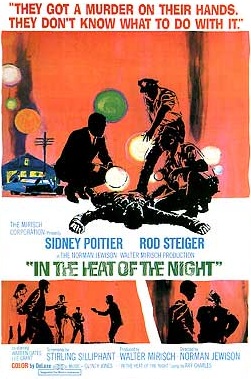
Today’s scene that I love comes from the 1967 Best Picture winner, In The Heat of the Night.  In this film, Poitier plays Virgil Tibbs, a Northern cop who reluctantly finds himself helping a Southern sheriff (Rod Steiger) investigate a murder.  Tibbs’s number one suspect is Eric Endicott (Larry Gates), who owns what was then a modern-day plantation.

In this scene, Tibbs interrogates Endicott, a paternalistic racist who simply cannot believe or accept that he is being questioned by a black man.  When Endicott responds to one of Tibbs questions by slapping him, Tibbs slaps him right back.

While Endicott’s slap was in the original script, Tibbs’s response was not.  At first, Tibbs was meant to turn the other cheek and leave the plantation without saying a word.  Wisely, Poitier approached director Norman Jewison and objected to that, insisting that Tibbs would respond in kind.  The scene was rewritten and it became one of Poitier’s best moments in the film.

10 Oscar Snubs From The 1960s


Ah, the 60s. Both the studio system and the production code collapsed as Hollywood struggled to remain relevant during a time of great social upheaval. The Academy alternated between nominating films that took chances and nominating films that cost a lot of money. It led to some odd best picture lineups and some notable snubs!

1960: Psycho Is Not Nominated For Best Picture and Anthony Perkins Is Not Nominated For Best Actor

To be honest, considering that the Academy has never really embraced horror as a genre and spent most of the 60s nominating big budget prestige pictures, it’s a bit surprising that Psycho was actually nominated for four Oscars.  Along with being nominated for its production design and its cinematography, Psycho also won nominations for Alfred Hitchcock and Janet Leigh.  However, Anthony Perkins was not nominated for Best Actor, despite giving one of the most memorable performances of all time.  The film literally would not work without Perkins’s performance and, considering that Perkins pretty much spent the rest of his career in the shadow of Norman Bates, it’s a shame that he didn’t at least get a nomination for his trouble.  Psycho was also not nominated for Best Picture, despite being better remembered and certainly more influential than most of the films that were.

1962: The Man Who Shot Liberty Valance Is Almost Totally Snubbed

The Man Who Shot Liberty Valance was not totally snubbed by the Academy.  It received a nomination for Best Costume Design.  But still, it deserved so much more!  John Ford, James Stewart, John Wayne, Lee Marvin, Vera Miles, and the picture itself were all worthy of nominations.  Admittedly, 1962 was a year full of great American films and there was a lot of competition when it came to the Oscars.  Still, The Man Who Shot Liberty Valance definitely deserved a best picture nomination over the bloated remake of Mutiny on the Bounty.  Today, if the first Mutiny on the Bounty remake is known for anything, it’s for Marlon Brando being difficult on the set.  But The Man Who Shot Liberty Valance is still remembered for telling us to always print the legend.

1964: From Russia With Love Is Totally Snubbed

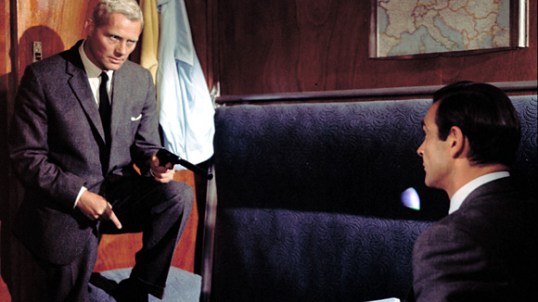
The same year that the Academy honored George Cukor’s creaky adaptation of My Fair Lady, it totally ignored my favorite James Bond film.  From Russia With Love is a Bond film that works wonderfully as both a love story and a thriller.  Sean Connery, Lotte Lenya, Robert Shaw, and Terence Young all deserved some award consideration.  From Russia With Love was released in the UK in 1963.  In a perfect world, it would have also been released concurrently in the U.S., allowing From Russia With Love to be the film that gave the the Academy the chance to recognize the British invasion.  Instead, Tom Jones was named the Best Picture of 1963 and From Russia With Love had to wait until 1964 to premiere in the U.S.  It was snubbed in favor of one of old Hollywood’s last grasps at relevance.

1964: Slim Pickens Is Not Nominated For Best Supporting Actor

Playing three separate roles, Peter Sellers dominates Dr. Strangelove: Or How I Learned To Stop Worrying And Love The Bomb.  But, as good as Sellers is, the film’s most memorable image is definitely Slim Pickens whooping it up as he rides the bomb down to Earth.  George C. Scott and Sterling Hyaden also undoubtedly deserved some award consideration but, in the end, Pickens is the one who brings the film to life even as he helps to bring society to an end.

1967: In Cold Blood Is Not Nominated For Best Picture

In Cold Blood, though not a perfect film, certainly deserved a nomination over Dr. Doolittle.  In Cold Blood is a film that still has the power to disturb and haunt viewers today.  Dr. Doolittle was a box office debacle that was nominated in an attempt to help 20th Century Fox make back some of their money.

1967: Sidney Poitier Is Not Nominated For Best Actor For In The Heat Of The Night

In 1967, Sidney Poitier starred in two of the films that were nominated for Best Picture but somehow, he did not pick up a nomination himself.  His restrained but fiercely intelligent performance in In The Heat Of The Night provided a powerful contrast to Rod Steiger’s more blustery turn.  That Poitier was not nominated for his performance as Virgil Tibbs truly is one of the stranger snubs in Academy history.  (If I had to guess, I’d say that the Actors Branch was split on whether to honor him for In The Heat of the Night or Guess Who’s Coming To Dinner or even for To Sir With Love and, as a result, he ended up getting nominated for none of them.)

1968: 2001: A Space Odyssey and Planet of the Apes Are Not Nominated For Best Picture

Neither one of these classic science fiction films were nominated for Best Picture, despite the fact that both of them are far superior and far more influential than Oliver!, the film that won that year.

1968: The Good, The Bad, and the Ugly Is Totally Ignored

Not even Ennio Morricone’s score received a nomination!

1968: Petulia Is Totally Snubbed

Seriously, I don’t know what was going on with the Academy in 1968 but it seems they went out of their way to ignore the best films of the year.  Richard Lester’s Petulia is usually cited as one of the definitive films of the 60s but it received not a single Oscar nomination.  Not only did the film fail to receive a nomination for Best Picture but Richard Lester, George C. Scott, Julie Christie, Shirley Knight, Richard Chamberlain, and the film’s screenwriters were snubbed as well.

1969: Easy Rider Is Not Nominated For Best Picture

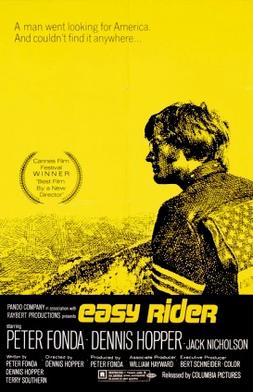
Yes, I know.  Easy Rider is a flawed film and there are certain moments that are just incredibly pretentious.  That said, Easy Rider defined an era and it also presented a portrait of everything that was and is good, bad, and timeless about America.  The film may have been produced, directed, and acted in a drug-razed haze but it’s also an important historical document and it was also a film whose success permanently changed Hollywood.  Certainly, Easy Rider’s legacy is superior to that of Hello, Dolly!

Agree? Disagree? Do you have an Oscar snub that you think is even worse than the 10 listed here? Let us know in the comments!

Up next: It’s the 70s!

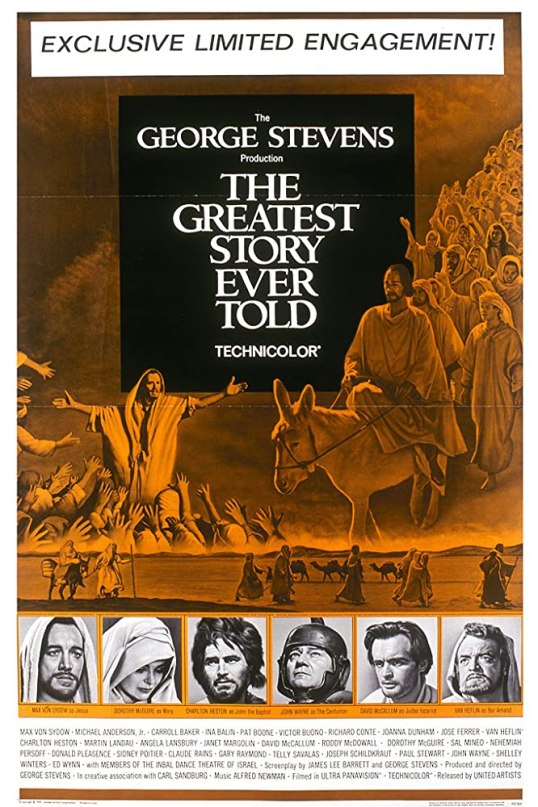
Film Review: The Greatest Story Ever Told (dir by George Stevens)


The 1965 biblical epic, The Greatest Story Ever Told, tells the story of the life of Jesus, from the Nativity to the Ascension.  It’s probably the most complete telling of the story that you’ll ever find.  It’s hard to think of a single details that’s left out and, as a result, the film has a four hour running time.  Whether you’re a believer or not, that’s a really long time to watch a reverent film that doesn’t even feature the campy excesses of something like The Ten Commandments.

(There’s actually several different version of The Greatest Story Ever Told floating around.  There’s a version that’s a little over two hours.  There’s a version that’s close to four hours.  Reportedly, the uncut version of the film ran for four hour and 20 minutes.)

Max von Sydow plays Jesus.  On the one hand, that seems like that should work because Max von Sydow was a great actor who gave off an otherworldly air.  On the other hand, it totally doesn’t work because von Sydow gives an oddly detached performance.  The Greatest Story Ever Told was von Sydow’s first American film and, at no point, does he seem particularly happy about being involved with it.  von Sydow is a very cerebral and rather reserved Jesus, one who makes his points without a hint of passion or charisma.  When he’s being friendly, he offers up a half-smile.  When he has to rebuke his disciples for their doubt, he sounds more annoyed than anything else.  He’s Jesus if Jesus was a community college philosophy professor.

The rest of the huge cast is populated with familiar faces.  The Greatest Story Ever Told takes the all-star approach to heart and, as a result, even the minor roles are played by actors who will be familiar to anyone who has spent more than a few hours watching TCM.  Many of them are on screen for only a few seconds, which makes their presence all the more distracting.  Sidney Poitier shows up as Simon of Cyrene.  Pat Boone is an angel.  Roddy McDowall is Matthew and Sal Mineo is Uriah and John Wayne shows up as a centurion and delivers his one line in his trademark drawl.

A few of the actors do manage to stand out and make a good impression.  Telly Savalas is a credible Pilate, playing him as being neither smug nor overly sympathetic but instead as a bureaucrat who can’t understand why he’s being forced to deal with all of this.  Charlton Heston has just the right intensity for the role of John the Baptist while Jose Ferrer is properly sleazy as Herod.  In the role Judas, David McCallum looks at the world through suspicious eyes and does little to disguise his irritation with the rest of the world.  The Greatest Story Ever Told does not sentimentalize Judas or his role in Jesus’s arrest.  For the most part, he’s just a jerk.  Finally, it’s not exactly surprising when Donald Pleasence shows up as Satan but Pleasence still gives a properly evil performance, giving all of his lines a mocking and often sarcastic bite.

The Greatest Story Ever Told was directed by George Stevens, a legitimately great director who struggles to maintain any sort of narrative momentum in this film.  Watching The Greatest Story Ever Told, it occurred to me that the best biblical films are the ones like Ben-Hur and The Robe, which both largely keep Jesus off-screen and instead focus on how his life and teachings and the reports of his resurrection effected other people.  Stevens approaches the film’s subject with such reverence that the film becomes boring and that’s something that should never happen when you’re making a film set in Judea during the Roman era.

I do have to admit that, despite all of my criticism of the film, I do actually kind of like The Greatest Story Ever Told.  It’s just such a big production that it’s hard not to be a little awed by it all.  That huge cast may be distracting but it’s still a little bit fun to sit there and go, “There’s Shelley Winters!  There’s John Wayne!  There’s Robert Blake and Martin Landau!”  That said, as far as biblical films are concerned, you’re still better off sticking with Jesus Christ Superstar.

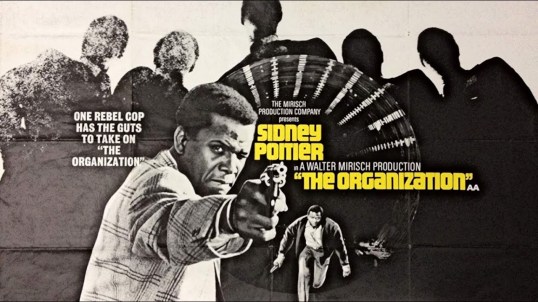
18 Days of Paranoia #14: The Organization (dir by Don Medford)


Sidney Poitier played Detective Virgil Tibbs for the third and final time in the 1970 film, The Organization.

This time, Virgil is investigating a murder at an office building in San Francisco.  It’s a very odd murder, in that an executive was shot, a security guard was bludgeoned, and even though it looks like there was a robbery taking place, nothing appears to have actually been stolen.  Since neither the company nor the executive were believed to be involved in anything shady, Virgil finds himself perplexed as to why any of this has happened at all.

Fortunately, the local urban revolutionaries are here to help!  They contact Virgil and Virgil reluctantly agrees to meet with the group, which is made up of the usual collection of angry 1970s activists — i.e., a dissident preacher, a reformed drug dealer, a guy who won’t stop yelling, and a woman who is obviously going to be killed before the movie is over.  The revolutionaries explain that they were the ones who broke into the office but they also say that they didn’t kill anyone.  Instead, they broke into the office because they wanted the police to investigate the break-in and discover that the company was a front for a bunch of drug dealers.  “The Organization” is flooding poor and minority neighborhoods with heroin and the revolutionaries want to stop them.  In fact, the revolutionaries have stolen four million dollars worth of heroin.  Now, they want Virgil to help them.

Even though Virgil is sympathetic to the revolutionaries, he’s still a cop and he can’t get directly involved with illegal activities.  Instead, he agrees to not arrest the revolutionaries and to continue his investigation, in the hope of bringing down the Organization.  It’s not going to be easy, of course.  There’s evidence that the Organization may even have agents inside the San Francisco police department.

As far as the Virgil Tibbs movies are concerned, The Organization is slightly better than They Call Me Mister Tibbs! but it’s nowhere near as good as the one that started it all, In The Heat of the Night.  Probably the biggest flaw with The Organization is that Virgil has to share the spotlight with the revolutionaries.  With the exception of Raul Julia (who plays a former drug dealer named Juan), none of the revolutionaries are particularly memorable characters and their plan for taking down The Organization is so unnecessarily convoluted that it’s hard to believe that Virgil would go along with it.

On the plus side, The Organization works fairly well as a conspiracy thriller.  It does manage to create a consistent atmosphere of unease and mistrust.  This is one of those films where people are constantly getting shot by unseen gunmen mere minutes after getting arrested and the fact that even cool and in-control Virgil Tibbs can’t save them does a lot towards creating a nice sense of paranoia.  The films end on perhaps the most downbeat note of all of the Virgil Tibbs movies, suggesting that, in the end, everything we’ve just watched was for nothing.


Other Entries In The 18 Days Of Paranoia:

  1. The Flight That Disappeared
  2. The Humanity Bureau
  3. The Private Files of J. Edgar Hoover
  4. The Falcon and the Snowman
  5. New World Order
  6. Scandal Sheet
  7. Cuban Rebel Girls
  8. The French Connection II
  9. Blunt: The Fourth Man 
  10. The Quiller Memorandum
  11. Betrayed
  12. Best Seller
  13. They Call Me Mister Tibbs


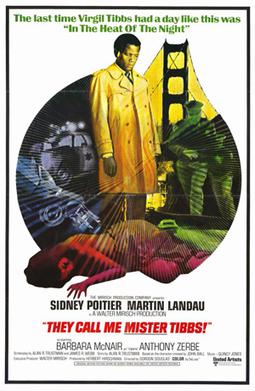
18 Days of Paranoia #13: They Call Me Mister Tibbs! (dir by Gordon Douglas)


The 1970 police procedural, They Call Me Mister Tibbs!, opens with a murder in San Francisco.

A prostitute has been found dead in a sleazy apartment building and, according to witnesses, she was visited, shortly before her death, by the Reverend Logan Sharpe (Martin Landau).  Rev. Sharpe is a prominent civic leader, an outspoken liberal who is a friend of the civil rights movement.  Sharpe is currently at the forefront of a campaign to pass a city referendum that will add a “mini city hall” to every neighborhood and will help to fight against the gentrification of San Francisco.  If Sharpe’s guilty, it will mean the death of the referendum.

Despite the fact that there’s a ton of evidence piling up against him and he kind of comes across as being a little bit creepy (he is, after all, played by Martin Landau), Rev. Sharpe insists that he’s innocent.  Yes, he’s been visiting prostitutes but he’s not a client.  No, of course not!  Instead, Sharpe explains that he’s simply counseling them and praying for their souls.  In fact, as far as Sharpe is concerned, this whole thing is just an attempt by the establishment to discredit his efforts to help the poor and underprivileged.

Heading up the investigation is a friend and supporter of Sharpe’s, Detective Virgil Tibbs (Sidney Poitier).  That may seem like a good thing for Sharpe, except for the fact that Tibbs is an honest cop and he’s not the type to let friendship stand in the way of doing a thorough investigation.  Tibbs admits that he supports Sharpe’s campaign and he wants the reverend to be innocent.  But Tibbs is all about justice.  Whether it’s teaching his son an important lesson about smoking or tracking down a potential serial killer, Virgil Tibbs is always going to do the right thing.

There are other suspects, all of whom are played by suitably sinister character actors.  Anthony Zerbe plays a criminal who lived near the prostitute.  Ed Asner plays her landlord, who may have also been her pimp.  Is Sharpe being set up by the powers that be or is Tibbs going to have to arrest a man whom he admires?

They Call Me Mister Tibbs! was the second film in which Sidney Poitier played Virgil Tibbs.  The first time he played the role was in 1967, when he co-starred with Rod Steiger in the Oscar-winning In The Heat of the Night.  In that film, Poitier was a Philadelphia cop in the deep south who had to work with a redneck sheriff.  In They Call Me Mister Tibbs!, Virgil is now working in San Francisco and he has to work the case on his own.

They Call Me Mister Tibbs! is a far more conventional film than In The Heat of the Night.  Whereas In The Heat of the Night had a wonderful sense of place and atmosphere, They Call Me Mister Tibbs! could just as easily have taken place in Los Angeles, Phoenix, or even Philadelphia.  With the exception of some slight profanity, They Call Me Mister Tibbs! feels more like a pilot for a TV show than an actual feature film.  Perhaps the biggest problem with the film is that there’s no real surprises to be found within the film.  You’ll guess who the murderer is within the first 10 minutes of the film and you’ll probably even guess how the movie will eventually end.

On the plus side, just as he did in In The Heat of the Night, Sidney Poitier brings a lot of natural authority to the role of Virgil Tibbs.  He’s actually allowed to show a sense of humor in this film, which is something that the character (understandably) couldn’t do while he was surrounded by bigots and rednecks during his previous adventure.  Virgil gets a few family scenes, where we watch him interact with his wife and his children.  The scenes feel out of place but, at the same time, Poitier plays them well.

With Sharpe attempting to get his referendum passed and the possibility that riots could break out if Sharpe is indeed guilty of murder, there’s a slight political subtext to They Call Me Mister Tibbs!  Sharpe’s argument that he was being set up by the establishment undoubtedly carried a lot of weight in 1970.  Still, this is ultimately a shallow (if adequately entertaining) film that, for the most part, is only made memorable by Poitier’s commanding performance.

Other Entries In The 18 Days Of Paranoia:

  1. The Flight That Disappeared
  2. The Humanity Bureau
  3. The Private Files of J. Edgar Hoover
  4. The Falcon and the Snowman
  5. New World Order
  6. Scandal Sheet
  7. Cuban Rebel Girls
  8. The French Connection II
  9. Blunt: The Fourth Man 
  10. The Quiller Memorandum
  11. Betrayed
  12. Best Seller

Lisa Reviews An Oscar Winner: In the Heat of the Night (dir by Norman Jewison)


The 1967 film, In the Heat of the Night, tells the story of two very different men.

Chief Gillespie (Rod Steiger) is the police chief of the small town of Sparta, Mississippi.  In many ways, Gillespie appears to the epitome of the bigoted Southern cop.  He’s overweight.  He loses his temper easily.  He chews a lot of gum.  He knows everyone in town and automatically distrusts anyone who he hasn’t seen before, especially if that person happens to be a black man or from the north.

Virgil Tibbs (Sidney Poitier) is a black man from the north.  He’s a detective with the Philadelphia Police Department and he’s as cool and controlled as Gillespie is temperamental and uncouth.  Tibbs has no patience for the casual racism that is epitomized by lawmen like Chief Gillespie.  When Gillespie says that Virgil is a “fancy name” for a black and asks what people call Virgil in Philadelphia, Virgil declares, “They call me Mister Tibbs!,” with an authority that leaves no doubt that he expects Gillespie to do the same.

Together …. THEY SOLVE CRIMES!

For once, that old joke is correct.  When a Chicago industrialist named Phillip Colbert is discover murdered in Sparta, Chief Gillespie heads up the investigation and, assuming that the murderer must be an outsider, orders Deputy Wood (Warren Oates) to check out the train station for any suspicious characters.  When Wood arrives at the station, he discovers Virgil standing on the platform.  Virgil is simply waiting for his train so that he can get back home to Philadelphia.  However, Wood promptly arrests him.  Gilespie accuses him of murdering Colbert, just to discover that Virgil’s a police detective from Philadelphia.

Though neither wants to work with the other, that’s exactly what Gillespie and Virgil are forced to do as they investigate Colbert’s murder.  Colbert was planning on building a factory in Sparta and his wife (Lee Grant) makes it clear that, if Sparta wants the factory and the money that comes with it, Virgil must be kept on the case.  Over the course of the investigation, Gillespie and Virgil come to a weary understanding as both of them are forced to confront their own preconceived notions about both the murder and life in Sparta.  In the end, if it’s impossible for them to truly become friends, they do develop a weary respect for each other.  That is perhaps the best that one could have hoped for in 1967.

I have to admit that it took me a few viewings before I really appreciated In the Heat of the Night.  Though this film won the Oscar for Best Picture of 1967, it’s always suffered when compared to some of the films that it beat.  One can certainly see that the film was superior to Doctor Dolittle and Guess Who’s Coming to Dinner.  But was it a better film than The Graduate or Bonnie and Clyde?  Did Rod Steiger really deserve to win Best Actor over Dustin Hoffman and Warren Beatty?  (Amazingly, Poitier wasn’t even nominated.)

To be honest, I still feel that In The Heat of the Night was probably the 3rd best of the 5 films nominated that year, superior to the condescending Guess Who’s Coming To Dinner but nowhere near as groundbreaking as Bonnie and Clyde or The Graduate.  The first time I watched In the Heat of the Night, I thought Steiger blustered a bit too much and the film’s central mystery didn’t really hold together and, to a large extent, I still feel like that.

But, at the same time, there’s a lot to appreciate about In the Heat of the Night.  On subsequent viewings, I came to better appreciate the way that director Norman Jewison, editor Hal Ashby, and cinematographer Haskwell Wexler created and maintained an atmosphere that was so thick that you can literally feel the Mississippi humidity while watching the film.  I came to appreciate the supporting cast, especially Warren Oates, Lee Grant, Scott Wilson, Anthony James, and Larry Gates.  (Gates especially makes an impression in his one scene, playing an outwardly genteel racist who nearly cries when Tibbs reacts to his slap by slapping him back.)  I also came to appreciate the fact that, while the white cop/black cop partnership has subsequently become a bit of a cliche, it was new and even controversial concept in 1967.

And finally, I came to better appreciate Sidney Poitier’s performance as Virgil.  Poitier underplays Virgil, giving a performance of tightly controlled rage.  While Steiger yells his way through the film, Poitier emphasizes that Virgil is always thinking.  As in the same year’s Guess Who’s Coming To Dinner, Poitier plays a dignified character but, here, that dignity is Virgil’s way of defying the demands and expectations of men like Gillespie.  When Virgil does strike back, it’s a cathartic moment because we understand how many times he’s had to hold back.

In the Heat of the Night may not have been the best film of 1967 but it’s still one worth watching.

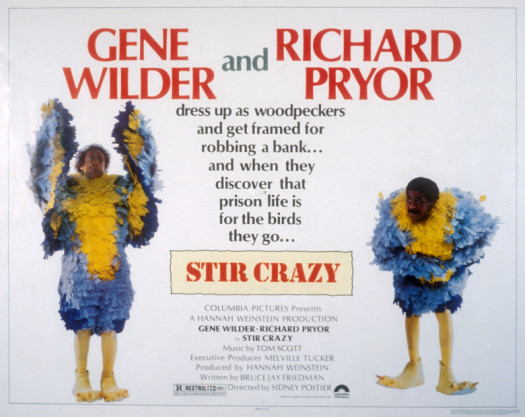
Brute Farce: Wilder & Pryor Go STIR CRAZY (Columbia 1980)


gary loggins's avatarcracked rear viewer

Gene Wilder  and Richard Pryor weren’t really a comedy team at all, just two incredibly funny comic actors who happened to work well together.  Both were stars in their own right, first appearing together in the 1976 comedy-thriller SILVER STREAK, with Pryor in the pivotal supporting role as a thief who aides the in-danger Wilder. Audiences loved the chemistry between the two, and of course Hollywood took notice. STIR CRAZY is not a sequel, but a funny film of its own allowing Gene and Richard to be their loveably loony selves.

New Yorkers Skip Donahue (Wilder) and Harry Monroe (Pryor) are a couple of buds who’ve both lost their jobs. Playwright Skip’s a dreamer, while aspiring actor Harry’s a realist, but somehow Skip talks his pal into leaving The Big Apple to seek fame and fortune in Hollywood. Their cross-country trek ends when Harry’s decrepit Dodge van breaks down in…

View original post 530 more words

Embracing the Melodrama Part II #23: The Defiant Ones (dir by Stanley Kramer)


Defiant_Ones_poster

Stanley Kramer is one of those old school filmmakers who directed several films that were acclaimed when they were originally released but who tends to be dismissed by contemporary film critics.  Kramer specialized in making films about social issues and he deserves to be applauded for attempting to look at issues that Hollywood, at that time, would have preferred to ignore.  However, as Mark Harris points out in his excellent book Pictures At A Revolution, Kramer started out as a producer and, even after he started directing, he never lost his producer sensibility.  As a result, a Kramer film would typically address issues that were guaranteed to generate a lot of free publicity but, at the same time, Kramer would never run the risk of truly alienating his audience by digging too deeply into those issues.  As a result, Kramer’s films have come to represent a very safe and middlebrow version of 50s and early 60s style liberalism.

Now, I have previously reviewed 4 Stanley Kramer films on this site and I have to admit that I was somewhat dismissive of most of them.  I felt that Ship of Fools was shallow.  I thought that Guess Who’s Coming To Dinner collapsed under the combined weight of a self-satisfied script and Kramer’s refusal to let Sidney Poitier’s character be anything other than idealized perfection.  R.P.M. is a guilty pleasure, specifically because Kramer was so out-of-touch with the film’s subject matter.  I did give Judgment at Nuremberg a good review, describing it as one of Kramer’s rare films that still holds up today.

And now, I’m going to give another Kramer film a good review.

Kramer’s 1958 film The Defiant Ones features a classic Kramer situation.  White Joker (Tony Curtis) and black Noah (Sidney Poitier) are both prisoners in the deep south.  Joker is an unrepentant and violent racist while Noah … well, Noah is Sidney Poitier.  He’s determined, he’s not afraid to speak his mind, and most of all, he’s dignified.  That’s not meant to be a complaint about Poitier’s performance in The Defiant Ones.  In the role of Noah, Poitier has a great screen presence and it’s impossible not to root for him.  Whereas Curtis tends to chew up every piece of scenery that he gets nears (and, again, that’s not really a complaint because Curtis’s overacting is totally appropriate for his character), Poitier keeps the film grounded.

When the prison bus that is transporting them crashes, Joker and Noah are able to escape.  Fleeing on foot, they make their way through the wilderness and attempt to hide from the police.  As quickly becomes obvious, Joker and Noah hate each other but, because the sheriff had a sense of humor, they have also been chained together.  In other words, they’re stuck with each other and, in order to survive, they’re going to have to learn to coexist.

No, it’s not exactly subtle but it works.

As a filmmaker, Kramer was never known for being visually inventive and, as a result, his films often had to resort to heavy-handed monologues to make their point.  But, in The Defiant Ones, the chains act as a great visual symbol for race relations in America.  Joker and Noah literally can’t escape from each other and they have to work together if they’re going to survive.  The chains make that obvious and, as a result, this is the rare Kramer film where nobody has to give a big speech to get across Kramer’s message.  As a result, The Defiant Ones preaches without ever getting preachy.

Though the film is dominated by Poitier and Curtis, it also features some excellent supporting work.  Lon Chaney, Jr, for instance, has a great cameo as world-weary man who helps the two convicts in their flight.  Cara Williams is surprisingly poignant as a lonely, unnamed woman who tries to both protect Joker and get rid of Noah.  And finally, there’s Theodore Bikel, playing the role of Sheriff Max Muller.  Max is the most surprising character in the film, the head of a posse that’s set out to recapture Noah and Joker.  As opposed to most of his men, Max is a humane and caring man who struggles to control the more bloodthirsty men who are serving under him.

Message films tend to get dated rather quickly but The Defiant Ones holds up surprisingly well.

http://www.youtube.com/watch?v=tkzgmgLl8qA

Back to School #3: Blackboard Jungle (dir by Richard Brooks)


http://www.youtube.com/watch?v=HA0_NRjx9KQ

You really can’t write about high school films without writing about 1955’s Blackboard Jungle.  While the film is often cited as being the first movie to feature a rock song on its soundtrack (Bill Haley’s Rock Around The Clock is played at the opening and the end of the film), Blackboard Jungle should also be remembered for being one of the first and most influential examples of the dedicated-teacher-in-the-inner-city film genre.

Blackboard Jungle tells the story of Richard Dadier (Glenn Ford), a newly hired teacher at an inner city high school.  As soon as he arrives for his first day at work, he meets his co-workers.  Josh Edwards (Richard Kiley) is another new teacher and is convinced that he can reach the students by talking to them about his valuable collection of jazz records. Mr. Murdock (Louis Calhern) is a burned out old cynic who believes that none of the students at the school have a future.  As Dadier quickly discovers, most of his fellow teachers have more in common with Murdock than with either him or Josh.

At first, Dadier struggles to reach his students, the majority of whom don’t see why they should waste their time in English class.  The head troublemaker, psychotic Artie West (Vic Morrow) sees the new teacher as being a rival and Dadier’s attempts to reach another student, Gregory Miller (Sidney Poitier), are made difficult by the racial animosity that dominates the entire high school.  Soon, Dadier is being targeted by his students and his pregnant wife (Anne Francis) starts to receive anonymous letters that imply that Dadier is having an affair.  It all leads to a violent classroom confrontation in which Dadier’s students are finally forced to pick a side in the battle between the forces of education and the forces of chaos.  (If that sounds melodramatic — well, it is kinda.)

It’s a little bit difficult to judge a film like Blackboard Jungle today.  We have seen so many movies about idealistic young teachers trying to make a difference in the inner city that it’s pretty easy to guess most of what is going to happen here.  In order to appreciate Blackboard Jungle, it’s necessary to understand that the only reason why it occasionally seems predictable is because it’s such an incredibly influential film.  And there are still moments in Blackboard Jungle that can take the viewer by surprise.  The scene in which Ford lists off all of the racial slurs that he doesn’t want to hear is just one example.  It’s hard to imagine that scene appearing in a movie made today.  (If it did, it would probably be played for laughs.)

That said, the performances in the film hold up surprisingly well.  Glenn Ford is a compelling hero and he and Anne Francis make for a likable couple.  Despite being 28 years old and having already played several adult roles, Sidney Poitier is a convincing high school student and, not surprisingly, he makes for a convincing leader.  However, for me, the film was dominated by Vic Morrow.

As played by Morrow, Artie Turner is a truly frightening villain.  In previous films about juvenile delinquency, the emphasis was always put on why the delinquent went bad and usually, the blame was put not on the teenager but instead on the environment around him.  He had bad parents or maybe he listened to too much jazz but, ultimately, he was not lost.  He was merely damaged.  However, Artie Turner has no convenient excuses for his behavior.  His parents go unmentioned.  When he’s exposed to jazz, he responds by breaking all of Mr. Edwards’ records.  Among all of Dadier’s students, Artie is unique in that he cannot be reached.  He’s a force of pure destruction and ultimately, Dadier’s success as a teacher depends less on reaching Artie and more on convincing his other students to reject Artie as a role model.

Blackboard Jungle may be a film that feels very familiar but it’s still one worth watching.

Artie Turner Acting Out

Artie Turner Acting Out