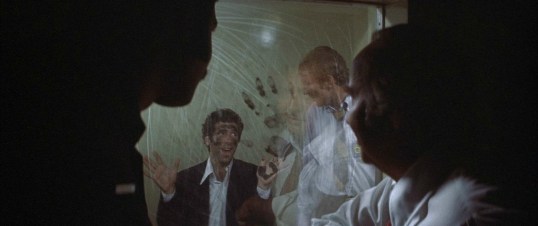
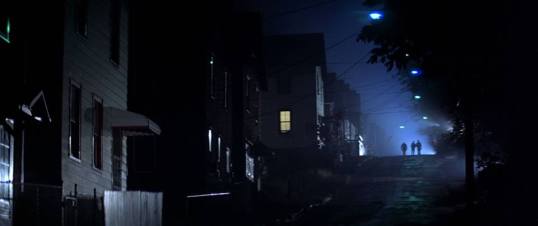
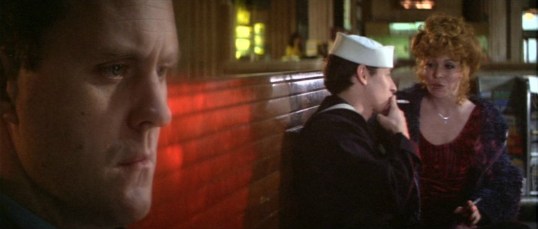
4 Shots From 4 Films is just what it says it is, 4 shots from 4 of our favorite films. As opposed to the reviews and recaps that we usually post, 4 Shots From 4 Films lets the visuals do the talking!
Today, we pay tribute to the legendary cinematographer, Vilmos Zsigmond. Born 90 years ago today in Hungary, Zsigmond got his start in the 60s with low-budget films like The Sadist but he went on to become one of the most in-demand cinematographers around. In fact, of all the people who started their career working on a film that starred Arch Hall, Jr., it’s hard to think of any who went on to have the type of success that Zsigmond did.
Zsigmond won one Oscar, for his work on Close Encounters of Third Kind. He was nominated for three more. He also received a BAFTA award for his work on The Deer Hunter and was nominated for an Emmy for his work on Stalin. He’s considered to be one of the most influential cinematographers of all time.
In honor of the memory of Vilmos Zsigmond, here are….
4 Shots From 4 Films
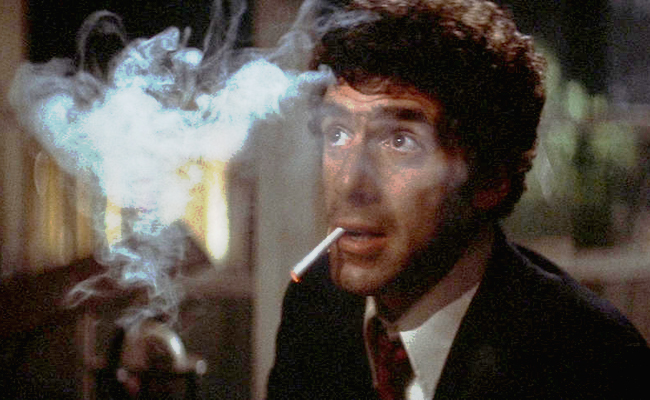
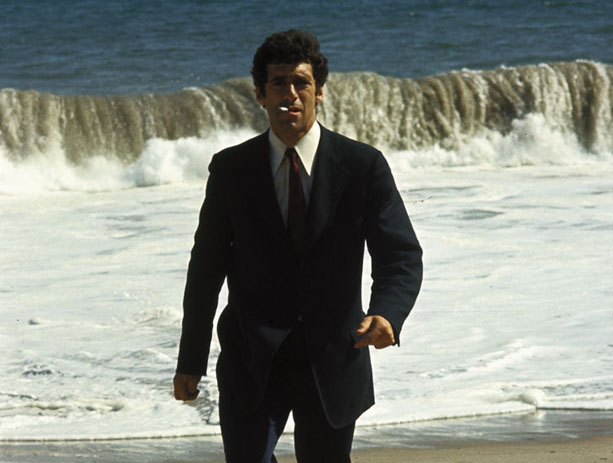
The Long Goodbye (1973, dir by Robert Altman, DP: Vilmos Zsigmond)
Close Encounters of the Third Kind (1977, dir by Steven Spielberg, DP: Vilmos Zsigmond)
The Deer Hunter (1978, dir by Michael Cimino, DP: Vilmos Zsigmond)
Blow Out (1981, dir by Brian DePalma, DP: Vilmos Zsigmond)
As the day draws to a close, I’m going to recommend one final film.
It’s not, by any means, a perfect film. In fact, it’s pretty damn imperfect. It’s a film that occasionally tries too hard to be profound. It’s based on a play and it never quite escapes its theatrical origins. What was undoubtedly exciting on the stage, drags a bit on the screen. It’s a fairly obscure film. I just happened to catch it on This TV a month ago and the main reason that I watched it was because of the cast.
But no matter! I still think you should watch this film if you get a chance.
The name of that film is Fool For Love.
First released in 1985 and based on a play by Sam Shepard, Fool For Love takes place over the course of one long night at a motel in the Southwest. Staying at the motel is May (Kim Basinger), who is hoping to escape from her past. Not eager to allow her to escape is her former lover, Eddie (Sam Shepard). An aging cowboy, Eddie shows up at the motel and tries to convince May to return with him to his ranch. As they argue, clues are dropped to the terrible secret that haunts their past. Martin (Randy Quaid), a buffoonish but well-meaning “gentleman caller,” shows up to take May on a date and finds himself sucked into the drama between her and Eddie.
Meanwhile, on the edge of every scene, there’s the Old Man (Harry Dean Stanton). The Old Man watches Eddie and May and offers up his own frequently sarcastic commentary. It becomes obvious that he not only knows about the secret in their past but that he’s determined that they not get together. Is the Old Man really there or is he just a figment of everyone’s imagination or is he something else all together?
As I said earlier, the film never quite escapes its theatrical origins. As well, while Shepard and Kim Basinger both give authentic and charismatic performance, they don’t quite have the right romantic chemistry to really convince us that Eddie would chase May all the way to that isolated motel. It’s hard not to feel that if May had been played by Shepard’s then-partner Jessica Lange or his Right Stuff co-star, Barbara Hershey, the film would have worked better.
And yet, even if it never comes together as a whole, Fool For Love is a film that should be seen just for its display of individual talent. Of the film’s five main creative forces, only Kim Basinger is still with us. Director Robert Altman died in 2006 while Sam Shepard and Harry Dean Stanton both passed away in 2017. While Randy Quaid is still alive, it’s doubtful he’ll ever again get the type of roles that earlier established him as one of America’s best character actors. Whenever I read another snarky article about Quaid hiding out in Vermont and ranting about the “star whackers,” I can’t help but sadly think about the perfect performances that Quaid used to regularly give in imperfect films like this one.
So, definitely track down Fool For Love. Watch it and pay a little tribute to all of the wonderful talent that we’ve lost over the last 10 or so years. Watch it for Robert Altman’s ability to turn kitsch into art. Watch it for the rugged individualism of Sam Shepard and the once-empathetic eccentricity of Randy Quaid. Watch it for Harry Dean Stanton, the legendary actor who, more than any other performer, seemed to epitomize the southwest and Americana.
Watch it and spare a little thought for all of them.
Disgraced former President Richard M. Nixon (Philip Baker Hall) sits alone in his study. He has a bottle of Scotch, a loaded gun, and a tape recorder. He is surrounded by security monitors and paintings. All but one of the paintings are portraits of former presidents, all of whom are destined to be more fondly remembered than Nixon. The only non-presidential painting is a portrait of Henry Kissinger. Over the course of one long night, Nixon drinks and talks. He talks about his Quaker upbringing and his early political campaigns. He rails against all of his perceived enemies: Eishenhower, the Kennedys, the liberals, the conservatives, and everyone in between. As he gets drunker, he starts to talk about the real story behind Watergate and why his resignation actually shielded the country from a greater scandal. As Nixon explains it, his resignation was his greatest act of patriotism, his secret honor.
A mix of historical fact and speculation, Secret Honor was one of the filmed plays that Robert Altman directed in between the flop of Popeye and his comeback with The Player. Secret Honor is a one-man show, with Philip Baker Hall and only Philip Baker Hall on screen for the entire movie. Though he looks nothing like Nixon, Hall gives an amazing performance. Hall’s Nixon is bitter, angry, full of self-pity, and occasionally even sympathetic. Altman’s stagey direction makes no attempt to hide Secret Honor‘s theatrical origins but it is impossible to look away from Hall’s mesmerizing performance.
(Secret Honor was made long before Hall found fame as a character actor. It was his fourth feature film and his first major role.)
Secret Honor will probably not change anyone’s opinion on Nixon. Nixon haters will find more to hate and Nixon defenders will find more to defend. But everyone will agree that Philip Baker Hall gives a great performance as one of America’s most controversial presidents.
What’s an Insomnia File? You know how some times you just can’t get any sleep and, at about three in the morning, you’ll find yourself watching whatever you can find on cable? This feature is all about those insomnia-inspired discoveries!
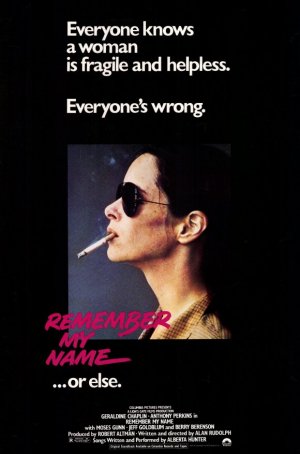
If you were having trouble sleeping last Tuesday, around one in the morning, you could have turned over to TCM and watched Remember My Name, an odd and sometimes frustrating little thriller from 1978.
Remember My Name opens with Emily (Geraldine Chaplin) showing up in a small town in California. From the minute we first see and hear Emily, something seems to be off about her. She views the world through suspicious eyes. Whenever anyone talks to her, you’re never quite sure whether she’s going be friendly or if she’s going to lash out. When she speaks, there’s something weird about her vocal inflection, as if she’s always struggling to figure out what she’s supposed to say. She seems to be separated from the world, almost as if she’s walking through a living dream and only talking to figments of her imagination. There’s nothing about her that feels at all authentic.
She moves into a small apartment and enters into a relationship with her handyman (Moses Gunn), a relationship that seems to be largely defined by her refusal to open up about herself. She gets a job at a grocery story that’s managed by a Mr. Nudd (Jeff Goldblum). Mr. Nudd mentions something about Emily knowing his mother. Apparently, they met in prison.
Soon, Emily is stalking a construction worker named Neil Curry (Anthony Perkins). When Neil spots her, he calls out her name and Emily runs away. And yet, Neil doesn’t bother to tell his wife, Barbara (Berry Berenson), about Emily. Soon, Emily is even breaking into the Curry home, silently shadowing Barbara as she walks through the house.
I described Remember My Name as being a thriller and I guess that, technically it is. There are a few moments of tension, especially when Emily is stalking Barbara. However, the film itself is directed in a detached manner by Alan Rudolph. Rudolph was a protegé of director Robert Altman (who also produced Remember My Name) and Rudolph’s approach is very Altmanesque, often to the detriment of the film. (Chaplin and Jeff Goldblum had both appeared in several Altman films, most famously in Nashville.) Though the film is dominated by Chaplin and Perkins, it’s still very much an ensemble film and the action plays out in a deceptively casual, almost random manner. It tries so hard to be Altmanesque that Remember My Name gets a bit frustrating, to be honest. Chaplin gives such a good and memorable performance and she works very hard to make Emily a character who is both frightening and, at times, surprisingly sympathetic but, for the most part, Rudolph’s technique makes it difficult to get emotionally involved in any of the action unfolding on-screen. Rudolph observes the action but refuses to comment on it. As a result, Remember My Name is occasionally intriguing but, just as often, it’s rather boring. Just like real life, I suppose. And, just like real life, it’s not for everyone.
That said, it was interesting to see Anthony Perkins playing a role other than a knife-wielding inn manager. Without resorting to any of the familiar tics or the neurotic speech patterns that typecast him forever as Norman Bates, Perkins plays Neil as just being a regular, blue collar guy and he actually does a pretty good job. Watching the film, I got the feeling that this was perhaps Perkins’s attempt to change his image. (Whenever Neil appears shirtless, both the film and Perkins seem to be saying, Check out this physique! Would someone only capable of playing a psycho have abs like this?) Neil’s wife, Barbara, was played Perkins’s wife, Berry Berenson. Neither one of them is with us any longer. Perkins died of AIDS in 1990 while Berry Berenson was on one of the planes that flew into the World Trade Center on 9-11. They both did good work in this film, as did Chaplin and Goldblum and, really, the entire cast. It’s just a pity that the film itself isn’t as good as the performances.
Earlier tonight, on TCM, I watched the 1968 science fiction film, Countdown.
Who will be the first man to walk on the moon? Will it be Chiz (Robert Duvall), who is a colonel in the Air Force and who has been training for years and who really should get the chance just because he has a really cool name like Chiz? Or will it be Chiz’s best friend, Lee (James Caan)? Lee may not have Chiz’s experience but he’s a scientist and selecting him would allow NASA to portray the mission of being one of peace as opposed to one of war. Add to that, Lee has a full head of hair and he looks like a young James Caan, who was an undeniably handsome man back in his younger days! I mean, seriously — who would you rather have as the face of the space program: Tom Hagen or Sonny Corleone?
Of course, it might not really matter who NASA picks because the Russians are determined to get to the moon as well. And you know what that means! If the Russians land on the moon first, they’ll turn it into a Socialist utopia and that’ll mean ugly architecture, bread lines, and a three-month wait for toilet paper. The stakes have never been higher!
Countdown was made and released at the height of the space race, at a time when Americans really did feel that they were competing with the Russians to be the first to reach the moon. (Of course later, it would be learned that the Russian space program actually managed to kill far more cosmonauts than it successfully sent into orbit.) It came out a year before Apollo 11 landed on the moon and Neil Armstrong became the first Earthling since Stanley Kubrick to ever step on the lunar surface. As such, it’s interesting to see how Countdown imagines the experience of exploring the moon. I won’t spoil who reaches the moon first but I will say that he moves remarkably quickly and with great ease for someone in a gravity-free environment.
Countdown is a good example of what I like to call a “time capsule” film. Seen today, it’s kinda slow and a bit predictable. For all the time that is spent on getting the astronauts ready to go into space, very little time is actually spent in orbit. This is a very Earth-bound film. And yet, if you’re a history nerd like me, it’s hard not to be a little bit fascinated by a movie like this. In everything, from its fashions to its dialogue to its cultural outlook, this is very much a document of its time. It may be a while until we have the technology necessary to travel through time. Until then, watching a film like this might be as close as I’ll ever get to experiencing what the straight, non-Hippie crowd was doing in 1968.
If you’re a student of film history, Countdown is significant for being one of the first films to be directed by Robert Altman. To be honest, if not for his name in the opening credits, you would probably never guess that Countdown was directed by one of America’s most influential and iconic directors. Altman specialized in making film that were almost defiantly iconaclastic and there’s very little of that to be found in Countdown. Admittedly, there are a few scenes that make use of overlapping dialogue and there’s a party scene that’s definitely Altmanesque. However, the only reason I really noticed that party scene is because I was specifically looking for evidence of Altman’s style. For the most part, the most identifiably Altmanesque element of Countdown is the casting of Michael Murphy in a small role.
The film is dominated by Robert Duvall and James Caan and, especially if you’re a fan of The Godfather, it’s undeniably fun to see these two acting opposite each other in something other than an epic gangster film. (Duvall and Caan also acted together in The Rain People and The Killer Elite and were reportedly great friends off-camera as well.) Duvall is especially good in Countdown, playing Chiz as a man torn between an innate sense of loyalty and his own competitive nature. The scenes between Duvall and Caan have a charge to them that occasionally bring some much-needed life to this film.
In the end, Countdown is a fairly forgettable film but it’s worth seeing as a piece of history.
(Lisa recently discovered that she only has about 8 hours of space left on her DVR! It turns out that she’s been recording movies from July and she just hasn’t gotten around to watching and reviewing them yet. So, once again, Lisa is cleaning out her DVR! She is going to try to watch and review 52 movies by Wednesday, November 30th! Will she make it? Keep checking the site to find out!)
The 1979 post-apocalyptic film Quintet aired on FXM on November 15th. I recorded it because this film is often cited as being one of director Robert Altman’s worst but I’ve also read some very passionate defenses of Quintet. Since I’ve enjoyed several of Altman’s films (Nashville, Gosford Park, Short Cuts, The Company, The Player, The Long Goodbye, and many more), I wanted to experience Quintet for myself.
I mean, seriously — a postapocalyptic sci-fi film from Robert Altman!? That would have to be at least interesting, right?
Anyway, I watched Quintet and to be honest, I wasn’t really sure what the Hell was going on for most of the film. Things made a bit more sense after I did a little bit of research and I discovered that Quintet was 1) inspired by a fragment of a dream that Altman had and 2) went into production despite not having a completed script.
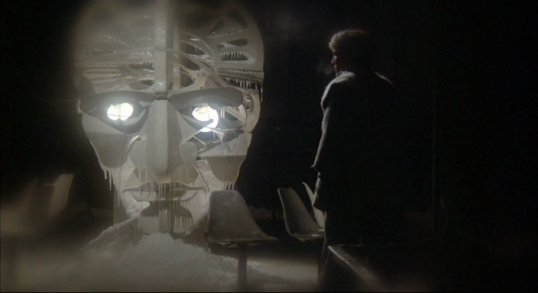
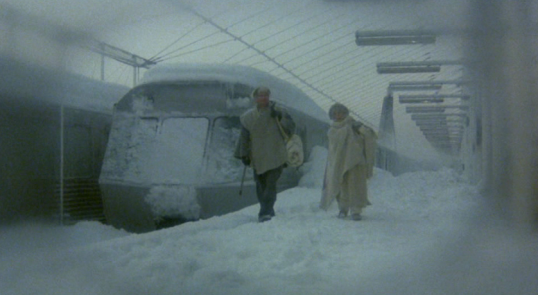
Quintet opens with a breath-taking shot of a frozen landscape. There’s been a new ice age. The entire Earth is frozen. There’s only a few hundred humans left and their number is rapidly dwindling. Some, like Essex (Paul Newman) and Vivia (Brigitte Fossey) spend their days hiking across the tundra and hunting seals. Others — like practically everyone else in the entire freaking film — spend their times in ramshackle villages, pursuing what little pleasure they can find while waiting to die.
In this new frozen world, the most popular activity — outside of getting drunk — is playing a board game called Quintet. I have no idea how Quintet is played, though the film is full of scenes of people playing it. From what we do see, it really doesn’t look like that fun of a game but I guess you can’t be picky when you’re waiting to freeze to death. I mean, honestly, if the world’s ending, I’d rather play a board game than charades.
Anyway, in one of the frozen towns, a group of people are having a Quintet tournament, with the rule being that, once you’re eliminated in the board game, you are also killed in real life. (And again, this is where it would have been helpful for the film to take just a few minutes to clarify just how exactly Quintet is played.) One of the Quintet players is killed by a bomb, which unfortunately blows up Viva as well. Seeking revenge (or, at least, I’m guessing that was his motivation because Paul Newman didn’t exactly give the most communicative performance of his career in Quintet), Essex assumes a fake identity and enters the tournament.
Soon, he’s running around the frozen landscape, killing people. He knows that the final player standing will receive a prize of some sort but he doesn’t know what the prize is. How deep! Or something.
Dammit, I really wanted to defend Quintet. I really did. Whenever I see a movie that has gotten almost universally negative reviews, my natural instinct is to try to find something good about it. And I will say this: visually, Quintet is fascinating. A lot of care was put into creating this frozen world and it’s interesting to note how every location is decorated by elaborate ice sculptors. The ice may be destroying civilization but it can’t squelch humanity’s natural creativity.
Unfortunately, Quintet may be well-designed but it’s also a painfully slow film. Just because the film takes place on a glacier, that doesn’t mean that it needs to move like one. The slow pace is not helped by the fact that many of the characters have a tendency to suddenly start delivering these faux profound philosophical monologues, the majority of which are about as deep as the typical Tumblr post.
Quintet stars Paul Newman, who was both an iconic movie star and a legitimately great actor. He spends most of Quintet alternating between looking confused and looking stoic. That said, it’s always interesting to watch an actor like Paul Newman slog his way through an artistic misfire like WUSA or Quintet. Let’s give Paul Newman some credit: he delivered his lines with a straight face. Just as Essex knew he was trapped on a glacier, Paul Newman understood that was trapped in Quintet. Both did what they had to do to survive.
Robert Altman was a great director but Quintet is not a great film.
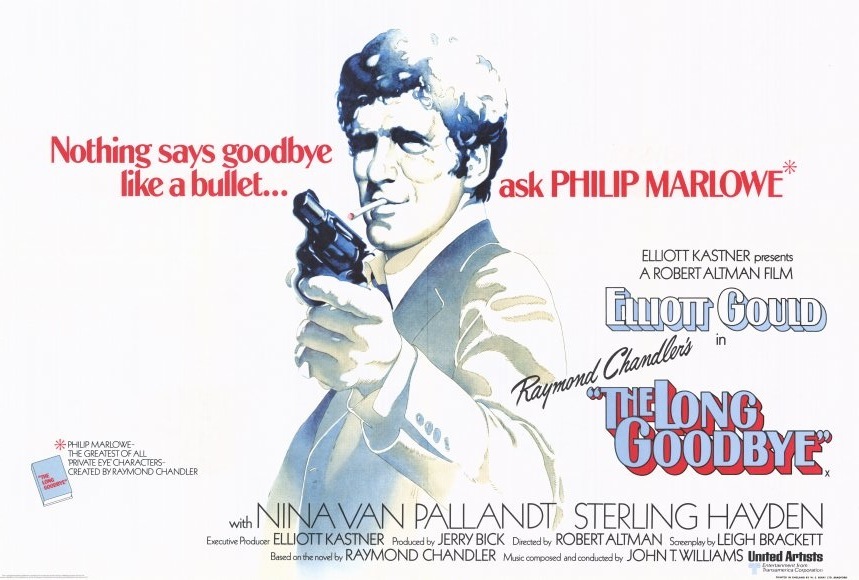
Elliott Gould was a hot Hollywood commodity in the early 1970’s. The former Mr. Barbra Streisand broke through in the 1969 sex farce BOB & CAROL & TED & ALICE, earning an Oscar nomination for supporting actor. He was marketed as a counter-culture rebel, quickly appearing in MOVE, GETTING STRAIGHT, LITTLE MURDERS, and Robert Altman’s M*A*S*H. But his flame dimmed just as fast, and his erratic onset behavior and rumored drug abuse caused him to become unemployable. When Altman decided to make the neo-noir THE LONG GOODBYE, he insisted on casting Gould as Philip Marlowe. The film put Gould back on the map, and though critics of the era weren’t crazy about it, THE LONG GOODBYE stands up well as an artifact of its era and a loving homage to Raymond Chandler’s hard-boiled hero.
Philip Marlowe is clearly an anachronism is 70’s LA, with his ever-present cigarette, cheap suit, beat-up ’48 Lincoln…
4 Shots From 4 Films is just what it says it is, 4 shots from 4 of our favorite films. As opposed to the reviews and recaps that we usually post, 4 Shots From 4 Films is all about letting the visuals do the talking.
Oh my God, it’s my birthday! True, this is the day of the year when I get presents and hear from a lot of wonderful people. That’s the wonderful part of the day! The only downside is that this is also the day of the year when I’m reminded that I’m an adult. But fear not, I know how to chase off any birthday angst. These 4 shots come from 4 films that always cheer me up.
(And, if you know me, you won’ be surprised by what they all have in common!)
4 Shots From 4 Films
Silk Stocking (1957, dir by Rouben Mamoulian)
Save the Last Dance (2001, dir by Thomas Carter)
The Company (2003, dir by Robert Altman)
StreetDance 3D (dir by Max Giwa and Dania Pasquini)
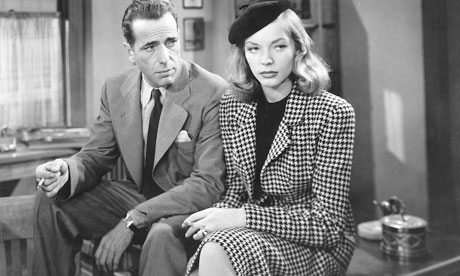
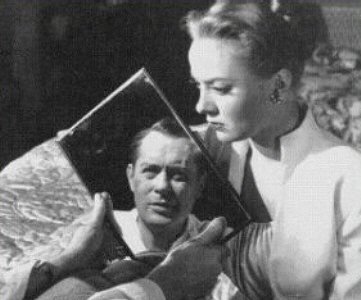
Happy belated birthday, Raymond Chandler. These four shots from four films show four different versions of Chandler’s most famous creation, P.I. Philip Marlowe.
Four Shots From Four Films
The Big Sleep (1946, directed by Howard Hawks)
The Lady In The Lake (1947, directed by Robert Montgomery)
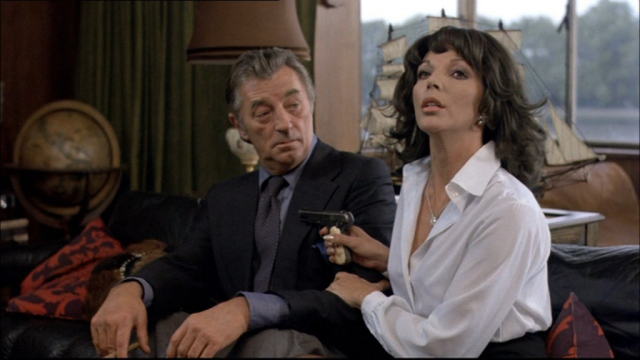
The Long Goodbye (1973, directed by Robert Altman)
“Oh we must be doin’ somethin right to last 200 years…”
— Haven Hamilton (Henry Gibson) in Nashville (1975)
The 1975 Best Picture nominee Nashville is the epitome of an ensemble film. It follows 24 characters as they spend five days wandering around Nashville, Tennessee. Some of them are country music superstars, some of them are groupies, some of them are singers looking for a first break, and at least one of them is an assassin. The one thing that they all have in common is that they’re lost in America. Released barely a year after the resignation of Richard Nixon and at a time when Americans were still struggling to come to terms with the turmoil of the 60s, Nashville is a film that asks whether or not America’s best days are behind it and seems to be saying that they may very well be. (That’s a question that’s still being asked today in 2015.) It’s appropriate, therefore, that Nashville both takes place in and is named after a city that everyone associates with perhaps the most stereotypically American genre of music that there is.
Nashville follows 24 characters, some of whom are more interesting than others. For five days, these characters wander around town, occasionally noticing each other but far more often failing to make any sort of connection.
Haven Hamilton (Henry Gibson) is a veteran star, a somewhat comical character who sings vapid songs about home and family and who smiles for the public while privately revealing himself to be petty and vain. His son, Bud (Dave Peel), is a Harvard graduate who acts as his father’s business manager. Oddly enough, Haven is an unlikable character until the end of the film when he suddenly reveals himself to be one of the few characters strong enough to keep Nashville for descending into chaos. Meanwhile, Bud seems to be a nice and modest guy until he takes part in humiliating another character.
Haven’s lover is Lady Pearl (Barbara Baxley), who owns a nightclub and spends most of the film drinking. Much like Haven, she starts out as a vaguely comical character until she finally gets a chance to reveal her true self. In Pearl’s case, it comes when she delivers a bitter monologue about volunteering for Bobby Kennedy’s presidential campaign.
Haven’s lawyer is Delbert Reece (Ned Beatty), an obsequies good old boy who is married to gospel singer Linnea (Lily Tomlin). They have two deaf children. Linnea has learned sign language. Delbert has not. Over the course of the film, both Delbert and Linnea will be tempted to cheat. Only one of them actually will.
And then there’s Barbara Jean (Ronee Blakley), a mentally unstable singer who has come to Nashville with her manipulative husband/manager, Barnett (Allen Garfield). Almost every character in the film wants something from Barbara Jean. A mostly silent Vietnam veteran named Kelly (Scott Glenn) claims that his mother knows Barbara Jean. A nerdy guy named Kenny (David Hayward) comes to Nashville just to see her perform.
Both Kelly and Kenny end up getting to know Mr. Green (Keenan Wynn), a rare Nashville resident who doesn’t seem to care about music. However, Mr. Green’s spacey niece, L.A. Joan (Shelly Duvall), is obsessed with having sex with as many musicians as possible.
Among those being targeted by L.A. Joan is Tom Frank (Keith Carradine), one-third of the folk trio Bill, Mary, and Tom. Unknown to Bill (Allan F. Nicholls), Tom is sleeping with Bill’s wife, Mary (Cristina Raines). Unknown to Mary, Tom is sleeping with almost every other woman in Nashville as well. When Tom takes to the stage at Pearl’s nightclub and sings a song called I’m Easy, the audience is full of women who think that he’s specifically singing to them.
Another one of Tom’s songs, the appropriately titled “It Don’t Worry Me,” is frequently sung by Albuquerque (Barbara Harris), who spend the entire film trying to get discovered while hiding out from her much older husband, Star (Bert Remsen).
Another aspiring star is Sulleen Grey (Gwen Welles), who is a tone deaf waitress who suffers the film’s greatest humiliation when she agrees to perform at a political fund raiser without understanding that she’s expected to strip while singing. Trying to look after Sulleen is Wade (Robert DoQui), who has just been released from prison.
And then there’s the loners, the characters who tend to pop up almost randomly. Norman (David Arkin) is a limo driver who, like everyone else in Nashville, wants to be a star. The hilariously bitchy Connie White (Karen Black) and the bland Tommy Brown (Timothy Brown) already are stars. (The character of Tommy Brown is one of Nashville’s oddities. He’s listed, in the credits, as being a major character but he only appears in a few scenes and never really gets a storyline of his own.) There’s the Tricycle Man (Jeff Goldblum), a silent magician who mysteriously appears and disappears throughout the film.
And, finally, there’s Opal (Geraldine Chaplin), an apparently crazed woman who is wandering around Nashville and pretending to be a reporter for the BBC. (It’s never specifically stated that Opal is a fake but it’s fairly obvious that she is.) How you feel about the character of Opal will probably determine how you feel about Nashville as a whole. If you find Opal to be a heavy-handed caricature, you’ll probably feel the same way about the rest of the film. If you find the character of Opal to be genuinely amusing with her increasingly pretentious musings, you’ll probably enjoy Nashville.
There is one more very important character in Nashville. He’s the character who literally holds the film together. He’s also the reason why I’m including Nashville in this series of reviews about political films. That character is named Hal Phillip Walker and, though he’s never actually seen in the film, he’s still the driving force behind most of what happens. Walker is a third-party presidential candidate, a man who seems to be universally admired despite the fact that his campaign appears to just be a collection of vapid platitudes. Walker’s campaign manager, John Triplette (Michael Murphy), comes to Nashville and sets up the Walker For President rally. That’s where Nashville reaches its violent and not-all-together optimistic climax.
Reportedly, Nashville is a favorite film of Paul Thomas Anderson’s and you can see the influence of Nashville in many of Anderson’s films, from the large ensemble to the moments of bizarre humor to the refusal to pass judgement on any of the characters to the inevitable violence that ends the film. Also, much like Anderson’s films, Nashville seems to be a film that was specifically made to divide audiences. You’re either going to think that Nashville is a brilliantly satirical piece of Americana or you’re going to think it’s a self-indulgent and self-important mess.
As for me, I think it’s great and I think that, after you watch it, you should track down and read Jan Stuart’s The Nashville Chronicles: The Making of Robert Altman’s Masterpiece. It’s the perfect companion for a great film.


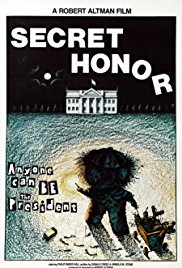 Disgraced former President Richard M. Nixon (Philip Baker Hall) sits alone in his study. He has a bottle of Scotch, a loaded gun, and a tape recorder. He is surrounded by security monitors and paintings. All but one of the paintings are portraits of former presidents, all of whom are destined to be more fondly remembered than Nixon. The only non-presidential painting is a portrait of Henry Kissinger. Over the course of one long night, Nixon drinks and talks. He talks about his Quaker upbringing and his early political campaigns. He rails against all of his perceived enemies: Eishenhower, the Kennedys, the liberals, the conservatives, and everyone in between. As he gets drunker, he starts to talk about the real story behind Watergate and why his resignation actually shielded the country from a greater scandal. As Nixon explains it, his resignation was his greatest act of patriotism, his secret honor.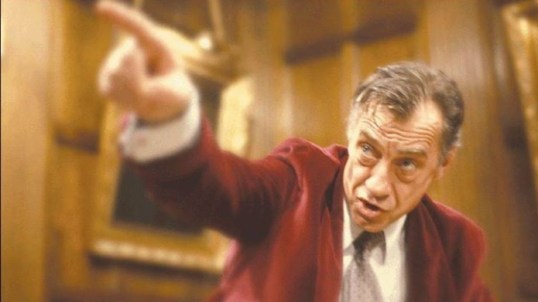





 Through the Shattered Lens