Film Review: The Delinquents (dir by Robert Altman)


First released in 1957 and filmed on a $63,000 budget in Kansas City, The Delinquents tells the story of Scotty White (Tom Laughlin).

Scotty is eighteen.  He’s not a bad kid.  He’s just a bit directionless and he’s got a slight rebellious streak.  Today, Scotty would not be considered to be that wild of a teenager but, by the standards of 1957, he’s dangerous.  He’s a criminal.  He’s a rebel.  He’s an outsider.  He’s a degenerate.  He’s a delinquent and it doesn’t matter how in love he and 16 year-old Janice (Rosemary Howard) may be, Janice’s parents don’t want Scotty anywhere near their daughter.  She’s too young to date, they say.  Scott’s got a bed reputation, they say.  Scotty is set to soon leave for college and he’s got his entire future ahead of him.  But it doesn’t seem like much of a future without Janice as a part of it.

Poor guy!  Is it any surprise that he ends up hanging out with two legitimate delinquents, Cholly (Peter Miller) and Eddy (Richard Bakalyan)?  At first, Cholly and Eddy seem like great friends to have.  They even come up with a scheme to allow Scotty to spend some time with Janice.  (The plan doesn’t work, of course.  But it’s the thought that counts.)  However, when the police show up to bust a wild delinquent party, Cholly and Eddy suspect that Scotty might be a rat!  When their attempts to get Scotty drunk enough to confess fail, they end up driving a passed out Scotty into the country so they can dump him on the side of the road.  However, they decide to stop to rob a gas station first.  Believe it or not, this leads to even more trouble.

It also leads to the question of why they couldn’t have waited to rob the gas station until after they got Scotty out of the car.  Watching The Delinquents, I came to suspect that many of the characters just weren’t that smart.  Seriously, how difficult is it to be a delinquent in Kansas City?  But as dumb as Cholly and Eddy were, Scotty was even dumber because he continually got outsmarted by the both of them.  Maybe Janice’s parents had a point about him….

The Delinquents is pretty much a standard youth-in-trouble exploitation film, one that owes more than a little bit of debt to Rebel Without A Cause.  The main reason why anyone would watch the film is because it was not only the directorial debut of Robert Altman but also the acting debut of Tom “Billy Jack” Laughlin.  And let’s give credit where credit is due.  Though I doubt either one of them would have claimed this film as an example of their best work, there is some obvious talent to found in The Delinquents.  Laughlin gives an appealing performance, even though Scotty’s an idiot.  And Altman keeps the action moving and even manages to come up with some visually striking sequences, like the opening jazz performance and the “wild” delinquent party.  Viewed today, The Delinquents is an interesting preview of what was to come for both Altman and Laughlin.  Though the plot is nothing special and it’s hard not to laugh at the portentous narration (which was apparently added by the studio and without Altman’s knowledge), The Delinquents is an energetic exploitation film and a reminder that even Kansas City had its mean streets.
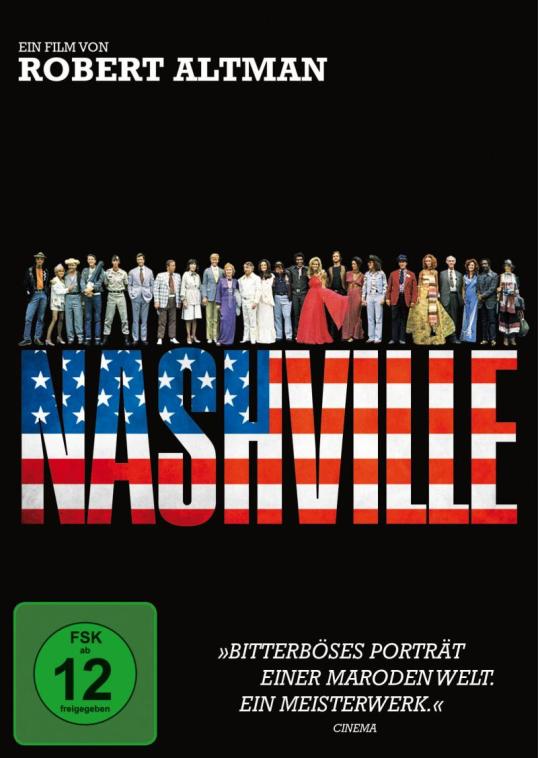
Scenes That I Love: The I’m Easy Scene From Robert Altman’s Nashville


Since today would have been Robert Altman’s 100th birthday, it only seems right that today’s song of the day should come from his best film.  In this scene from 1975’s Nashville, Keith Carradine sings I’m Easy as Altman’s camera finds each of his lovers in the audience, all convinced that Carradine is singing expressly to them.

This song won Nashville it’s only Oscar.  It also made Keith, who wrote the song, the only Oscar winner amongst the fabled Carradine family.


4 Shots From 4 Films: Special Robert Altman Edition


4 Shots From 4 Films is just what it says it is, 4 shots from 4 of our favorite films. As opposed to the reviews and recaps that we usually post, 4 Shots From 4 Films lets the visuals do the talking!

Today, we celebrate what would have been the 100th birthday of the great director, Robert Altman!  It’s time for….

4 Shots From 4 Robert Altman Films

MASH (1970, dir by Robert Altman, DP: Harold E. Stine)

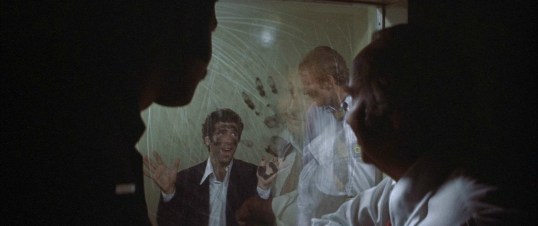
The Long Goodbye (1973, dir by Robert Altman, DP: Vilmos Zsigmond)

Nashville (1975, dir by Robert Altman, DP: Paul Lohmann)

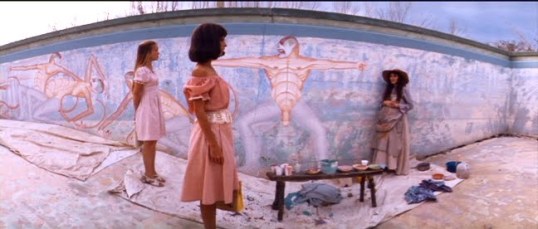
3 Women (1977, dir by Robert Altman, DP: Charles Rosher, Jr.)

4 Shots From 4 Films: Special Robert Altman Edition


4 Shots From 4 Films is just what it says it is, 4 shots from 4 of our favorite films. As opposed to the reviews and recaps that we usually post, 4 Shots From 4 Films lets the visuals do the talking!

Today, we celebrate what would have been the 99th birthday of the great director, Robert Altman!  It’s time for….

4 Shots From 4 Robert Altman Films

The Long Goodbye (1973, dir by Robert Altman, DP: Vilmos Zsigmond)

Nashville (1975, dir by Robert Altman, DP: Paul Lohmann)

3 Women (1977, dir by Robert Altman, DP: Charles Rosher, Jr.)

Short Cuts (1993, dir by Robert Altman, DP: Walt Lloyd)

Late Night Retro Television Reviews: Gun 1.6 “Father John”


Welcome to Late Night Retro Television Reviews, a feature where we review some of our favorite and least favorite shows of the past!  On Tuesdays, I will be reviewing Gun, an anthology series that ran on ABC for six week in 1997.  The entire show is currently streaming on Tubi!

Tonight, we finish up Gun!

Episode 1.6 “Father John”

(Dir by Jeremiah S. Chechik, originally aired on May 31st, 1997)

Father John, the final episode of Gun, is also one of its worse.  The only thing keeping it from being the absolute worst is that Robert Altman directed that episode that dealt with the country club presidency and then there was that episode with Daniel Stern as the guy having an elaborate Hollywood fantasy and, of course, there was last week’s episode with Kirsten Dunst…. actually, now that I think about it, of the six episodes of Gun that were produced, Father John is in the top 3 but only by default.

The episode stars Fred Ward as John Farragut, a newspaper columnist who is also a recovering alcoholic and who is always struggling to keep up with his alimony payments to his ex-wife, Joyce (Brooke Adams).  John doesn’t have much faith in the world but he has always worshiped his Uncle John, a priest for whom he was named.  When Uncle John dies, nephew John is shocked to discover that his uncle not only died with a lot of money hidden away in his room but that he also owned the pearl-handled gun that appears in every episode of this series.  What secrets were being hidden by Uncle John!?

Nephew John sets out to find out.  At first, he assumes that his Uncle must have been having an affair with a woman named Gloria (Angela Alvarado) but he then comes to learn that Gloria (whose real name is Gabriella) is a refugee who was rescued from a sex trafficking ring by his uncle.  Uncle John had the gun to protect Gabriella and now, it’s time for his nephew to continue to protect her.

It sounds pretty straight-forward and, to be honest, there really aren’t any unexpected twists in this episode.  That said, the episode itself is incredibly overwritten.  We not only get to watch as living John tries to solve a very simple mystery but, even worse, we have to listen to his narration as he tells us the details of what he’s doing.  Of course, we can already see what he’s doing so it all feels a bit redundant.  The narration itself is so hard-boiled that it feels almost like a parody of the detective genre and I found myself wondering why anyone would want to read anything written by a man whose narration is essentially a collection of clichés.  John Farragut is the type of guy who says, “If you sleep with dogs, you wake up with fleas,” as if he think he’s the first person to ever come up with it.  Surprisingly, Fred Ward is very much miscast as John Farragut.  With his weathered face and his weary tone, it’s hard to buy Ward as someone who 1) still hero-worships anyone and 2) would still be crying about having never met his father.  Farragut appears to be nearly 50 and he’s still whining about stuff that most people get over or have figured out by the time they graduate college.  Farragut’s actions often only make sense if you accept that idea that he is impossibly naïve about the world and that’s not the feeling one would ever get from a character played by Fred Ward.

With this episode, Gun ends on a boring note but, then again, it was never a particularly exciting series to begin with.  For all the notable actors who appeared in Gun, it’s hard to think of any stand-out episodes or performances.  If I had to rank the episodes, it would go something like this:

  1. Ricochet 
  2. Columbus Day
  3. Father John
  4. The Hole
  5. The Shot
  6. All The President’s Women

That’s not a very impressive list, to be honest.  Gun perhaps would have worked better if there had been some sort of continuity as far as the gun itself was concerned.  Perhaps the show would have worked if there had been a feeling of the gun following a natural journey from owner to owner.  Instead, it just randomly showed up in each story and sometimes, it was important and, far more often, it was just a prop.  The show certainly had nothing to say about American gun culture.  It was an uneven show.  The opening credits featured U2 covering Happiness Is Warm Gun and Bono’s overbaked interpretation of the lyrics felt appropriate for this show’s flashy but shallow style.

Next week, there will be a new show in this time slot.  What will it be?  Uhmmmm …. ask me next week.

Late Night Retro Television Reviews: Gun 1.5 “The Hole”


Welcome to Late Night Retro Television Reviews, a feature where we review some of our favorite and least favorite shows of the past!  On Tuesdays, I will be reviewing Gun, an anthology series that ran on ABC for six week in 1997.  The entire show is currently streaming on Tubi!

This week, the gun ends up at the bottom of a swimmin’ hole!

Episode 1.5 “The Hole”

(Dir by Ted Demme, originally aired on May 24th, 1997)

Yep, this episode of Gun centers around an old country swimming hole.  Every day, teenage Sondra (Kirsten Dunst) and her younger brothers, Brendan (Drake Bell) and Tad (Joe Pichler), head down to the Hole.  For Sondra, swimming in the Hole is a chance to escape from her life of living in a trailer park with her trashy mother (Carrie Fisher) and her pervy stepfather (Cliff Bemis).  For Brendan and Tad, going to the Hole is a chance to look for the treasure that they are convinced is at the bottom of the water.  It is true that there is something shiny in the Hole.  Sondra thinks that it might be the diamonds that she could use to finance an escape from the trailer park and a one-way trip down to Florida.  Actually, it’s the pearl-handled gun that’s been at the center of every episode of Gun.

(In this episode, it’s suggested that the gun has been at the bottom of the hole for over a year.  So, how did it end up in that town in the first place?  Is this episode taking place before or after the previous episodes?  I guess the simple solution is that it’s not the same gun as the gun seen in the previous episodes but the part of me that loves continuity is having a hard time accepting that.)

The gun belonged to James Munday (Johnny Whitworth), who has only recently been released from prison.  He was convicted of murdering his girlfriend and only the fact that he was a minor at the time kept him from being given a life sentence.  James claims that his girlfriend died as a part of a failed suicide pact and he’s convinced that the gun in the Hole can prove his innocence.

When James and Sondra meet, it doesn’t take long for them to fall for each other.  Sondra remains James of his dead girlfriend and Sondra, like of all of us, is attracted to brooding rebels.  However, when the rest of the town hears that James has been going to the Hole, a lynch mob is formed.  Dick Sproule (Max Gail), the father of the girl that James was convicted of killing, is soon at the Hole with a rifle in his hands.  Can James prove his innocence and will the town even care?

This episode was extremely overwrought and it featured every flaw that tends to turn me off of anthology shows in general.  All of the characters were broadly drawn.  The dialogue was way overwritten.  Director Ted Demme told the story with a heavy-hand and used slow motion as if he was under the impression that he was the first director to ever consider heightening the drama by slowing things down.  The whole thing just felt like a bad creative writing assignment.  Out of the cast, only Kirsten Dunst was able to really create a character who felt as if she had a life outside of the demands of the story.  Everyone else seemed to be a caricature.  In the end, James may have been a hot, brooding rebel but he was also kind of whiny.  That got old pretty quickly.

*Sigh*  Well, that’s another disappointing episode of Gun for you!  Next week, I’ll be reviewing the series finale.  Hopefully, this show will at least end on a worthwhile note.

Late Night Retro Television Reviews: Gun 1.4 “All The President’s Women”


Welcome to Late Night Retro Television Reviews, a feature where we review some of our favorite and least favorite shows of the past!  On Tuesdays, I will be reviewing Gun, an anthology series that ran on ABC for six week in 1997.  The entire show is currently streaming on Tubi!

This week, Robert Altman!  This will be good …. right?

Episode 1.4 “All The President’s Women”

(Dir by Robert Altman, originally aired on May 10th, 1997)

When it comes to the fourth episode of Gun, I have to admit that my expectation were high because this episode was the only one in the series to be directed by Gun’s producer, Robert Altman.  The story, about the womanizing president of a golf club, sound like it would be right up Altman’s alley and allow him to engage in the social satire for which he was best-known.

Unfortunately, the episode itself just isn’t that good.  In fact, it’s the worst episode of Gun that I’ve seen so far.  Watching the show, it’s easy to see that Altman directed it.  There’s several very Altman-like moments.  The show’s plot and its characters all tend to mirror Altman’s trademark obsessions.  That said, for all of Altman’s strengths as a filmmaker and a satirist, he was also a bit self-indulgent and this episode is basically 50 minutes of Altman patting himself on the back and bragging about how clever he is.

The film takes place at a golf club in Texas.  After the club’s president is bitten by a rattlesnake and then accidentally shoots himself in the foot while trying to kill the snake, Bill Johnson (Randy Quaid) is elected as his replacement.  Bill is friendly but shallow, a businessman who is all about prestige and showing off his wealth.  While his wife (Daryl Hannah) spends her time researching real-life presidents, Bill is having an affair with the former’s president’s widow (Jennifer Tilly) while also flirting with his new secretary (Dina Spybey).  Meanwhile, another former lover (Sean Young) is now his attorney while Sally Kellerman plays Jennifer Tilly’s mother and continually warns Bill to stay away from her daughter.

Bill is shocked to discover that someone is sending packages to the women in his life.  Jennifer Tilly receives the gun that was used to shoot the rattlesnake.  Darryl Hannah receives the magazine.  Sean Young receives the bullets.  If you can’t already guess that this is going to end up with Bill in his underwear on the 18th hole, being menaced by a woman carrying a gun, I don’t know what to tell you.

This episode just falls flat and it’s largely the fault of the cast.  Randy Quaid, at the very least, has a Texas accent but he’s not a convincing lothario.  The women all butcher their accents, with the majority of them sounding more like they’re from Georgia than Texas.  Most the cast goes overboard with their quirkiness while Altman directs in a meandering fashion that robs the episode of whatever satirical impact that it might have had.  It’s just a boring episode, regardless on the nails-on-a-chalkboard accents and all the overacting.  Watching this episode, I was reminded of why I usually can’t stand anthology shows.  They just seem to bring out the worst in everyone.

Next week, Kirsten Dunst guest stars.  Did Gun bring out the worst in her?  We’ll find out!

Late Night Retro Television Reviews: Gun 1.3 “Columbus Day”


Welcome to Late Night Retro Television Reviews, a feature where we review some of our favorite and least favorite shows of the past!  On Tuesdays, I will be reviewing Gun, an anthology series that ran on ABC for six week in 1997.  The entire show is currently streaming on Tubi!

This week, Gun welcomes …. JAMES GANDOLFINI!

Episode 1.3 “Columbus Day”

(Dir by James Steven Sadwith, originally aired on May 3rd, 1997)

The third episode of Gun does indeed features James Gandolfini.  Gandolfini play Walter Difideli, who seems to have quite a bit in common with Gandolfini’s best-known character.  Like Tony Soprano, Walter is proud of his Italian heritage, loudly discussing the superiority of men like Amerigo Vespucci and Christopher Columbus.  Walter makes it a point to stay home on Columbus Day so that he can properly celebrate.  Like Tony, Walter boasts about how he will always take care of his family and he also has something of a quick temper.  And, like Tony, Walter keeps a gun around the house.

However, there are a few differences as well.  For one thing, Walter is firmly on the side of law and order.  Unlike Tony, who lived in a mansion and never worried about the legality of his activities. Walter is very honest and, as a result, he and his family live in a crappy apartment.  Another big difference between Walter and Tony is that, while Tony always had a mistress, Walter is loyal to his wife, Lilly (Rosanna Arquette).  Walter is not one to cheat.  The only cheating in the marriage is done by his wife.

Walter works for TSA at an airport.  One day, he helps to chase down a terrorist.  Before the terrorist is captured, he tosses his gun — the Gun of the show’s title — into a janitor’s cart.  When the janitor later comes across the gun, he sells it to Walter for $50.

Walter wants Lilly to have a gun because he’s taking an extra job at night so that he can raise enough money to afford ballet lessons for their daughter and an engagement ring for his wife.  (When they were engaged, he could never afford to get her a ring.)  Lilly is unhappy about Walter refusing to let her work and instead expecting her to spend all of her time around the apartment.  But then Lilly meets one of her neighbors, a writer named Jack Keyes (Peter Horton).  Soon, she and Jack are having a passionate affair, one that inspires Jack to write a less-than-flattering shorty story called The Tryst.

Meanwhile, the terrorist’s collaborator wants to get the gun back and, after he finds out that Walter has it, he starts harassing Walter at work and later at his apartment.  The nervous Walter starts to carry around the gun with him.  When Lilly, upset over Jack’s short story, deletes all of his files from his laptop, the angry Jack goes down to Lilly’s apartment and kicks open the door.  What he doesn’t know is that Walter is waiting on the other side of the door, with his gun.  Jack ends up dead.  Walter is declared a hero for protecting his home.  Lilly submits Jack’s short story under her name and it gets published.  And the terrorist …. well, he’s just kind of forgotten about.

This was an unsatisfying episode, one that ended with a few too many loose ends still dangling.  (At one point, it’s revealed that Jack secretly films his encounters with Lilly but it’s one of those plot points that goes nowhere.)  An even bigger problem was that there really wasn’t anyone in this episode who seemed worthy of being the center of a story.  Walter was a hopelessly naïve blowhard.  Lilly cheated on her devoted husband and never appeared to feel the least bit of guilt about it, even after Walter gunned down her lover.  Jack was a jerk but it’s hard not to feel that he deserved better than to have his life’s work deleted by the whiny Lilly.  The performances were all good but none of the characters seemed to be worth the effort.

Still, for James Ganolfini fans, this episode does provide a bit of a dry run for Gandolfini’s legendary performance as Tony Soprano.  Imagine a world where Tony is a complete dunce and you’ll probably come up with this episode of Gun.


Late Night Retro Television Reviews: Gun 1.2 “Ricochet”


Welcome to Late Night Retro Television Reviews, a feature where we review some of our favorite and least favorite shows of the past!  On Tuesdays, I will be reviewing Gun, an anthology series that ran on ABC for six week in 1997.  The entire show is currently streaming on Tubi!

This week, on Gun, Martin Sheen plays a cop who might be investigating the final murder of his career!

Episode 1.2 “Ricochet”

(Dir by Peter Horton, originally aired on April 19th, 1997)

The second episode of Gun opens with the death of a Japanese businessman.  He’s found shot on a cliffside that overlooks the ocean.  The gun that shot him is discovered and taken by a homeless man named Lazy Eye Pete (Bud Cort).  Pete is a cheerfully eccentric type, one who sings for money and who is dedicated to taking care of his pet dog, Chester.  But, as soon as Pete gets that gun, his personality starts to change and he even ends up pulling the gun on a group of teenagers who were attempting to mug him.  In the end, Pete sells the gun to a friend of his.

Also searching for that gun is Detective Van Guinness (Martin Sheen).  Guinness, who suffers from ulcers and who takes his job very personally, has promised his girlfriend (Tess Harper) that he will retire from the force.  However, he doesn’t want to go out on a simple or an unsolved case.  Fortunately, for Guinness, he’s assigned the complicated case of the dead businessman.  Unfortunately, for him, his girlfriend is not at all amused by his refusal to retire.

Van’s partner (Kirk Baltz) thinks that the businessman was killed during a robbery but Guinness disagrees.  Guinness thinks that the businessman was murdered by either his wife (Nancy Travis) or his amoral attorney (Christopher McDonald).  The wife and the attorney are sleeping together and they’ve also come up with a plan to somehow fix the California state lottery.  (I couldn’t really follow what their plan was but then again, I’ve also never played the lottery.)  The attorney thinks that the wife is the murderer.  The wife thinks that the attorney is the murderer.  The truth is a bit more complicated but, in order to full understand what happened, Van Guinness is going to have to find that gun.

Though the plot was a bit too complicated for its own good (Seriously, what was going on with the whole lottery subplot?), the second episode was a definite improvement over the first episode, with director Peter Horton keeping the action moving at a steady pace and establishing the consistent tone that the previous episode lacked.  Ricochet played out like a true ensemble piece, splitting its attention between Martin Sheen, Bud Cort, Nancy Travis, and Christopher McDonald.  All four of the actors did a good job bringing their characters to life.  I especially liked Christopher McDonald’s amoral attorney.  Nobody plays a crooked attorney with quite the style and wit of Christopher McDonald!

Next week: Rosanna Arquette and James Gandolfini appear in an episode directed by the show’s co-creator, James Steven Sadwith.


Late Night Retro Television Reviews: Gun 1.1 “The Shot”


Welcome to Late Night Retro Television Reviews, a feature where we review some of our favorite and least favorite shows of the past!  On Tuesdays, I will be reviewing Gun, an anthology series that ran on ABC for six week in 1997.  The entire show is currently streaming on Tubi!

Produced by filmmaker Robert Altman, Gun was an anthology series that followed one gun from person-to-person.  Each week would feature a new cast and a new story.  The show itself didn’t catch on but, because of Altman’s prestige, is still managed to attract some prominent and interesting guest stars during it’s 6-episode run.

The first episode, for instance, brings the gun together with Daniel Stern, Ed Begley, Jr., and model Kathy Ireland.

Episode 1.1 “The Shot”

(Dir by James Foley, originally aired on April 12th, 1997)

The first episode of Gun opens with an unnamed dumbass purchasing a pearl-handed, .45 semi-automatic pistol.  When he takes it home, his kids are impressed but his wife threatens to kick him out if he ever fires the gun in the house.  Next thing you know, the dumbass is pretending to be Robert De Niro in Taxi Driver and pointing the gun at the television.  The final shoot-out from The Good, The Bad, and The Ugly leads to the TV getting shot.  The dumbass returns the gun.  Later, that night, someone breaks into the gun store and steals the gun.

Who stole it?  It turns out that it was just a guy who spends his time holding up convenience stores.  Unfortunately, his next attempt at a convenience store robbery does not go well, largely due to one aggravated customer.  Harvey Hochfelder (Daniel Stern) is already in an agitated state before the robbery even begins.  He just wants to leave Los Angeles for Virginia but, before he can leave, he had to stop off at the slowest convenience store in L.A.  Harvey loses it as soon as he realizes that the robbery is going to mean his escape to Virginia is going to be even further delayed.  When Harvey’s wife (Kathy Baker) enters the store, the robber is startled into first shooting at Harvey and then dropping the gun.  The robber runs outside and tries to steal Harvey’s car, with Harvey’s son and dog in the back seat.  Harvey grabs the gun and chases the robber down.  The robber crashes the car and Harvey holds him at gun point until the police arrive.

Harvey becomes a celebrity.  He even appears on the cover Newsweek, with the simple headline, “American Hero.”  Hollywood wants to make a made-for-TV movie about what happened in the convenience store, with Harvey playing himself and Kathy Ireland playing his wife.

Unfortunately, the friends of the robber are not happy that Harvey “fingered our homie” (yes, that’s actual dialogue) and they decide that they want to get revenge on Harvey.  When they force his car off the road and then pull guns of their own on him, Harvey diffuses the situation by offering them roles the movie.  Everyone wants to be a star!

Finally, the day of filming has arrived.  Under the guidance of the film’s director (Ed Begley, Jr.), Harvey prepares to climb into bed with a lingerie-clad Kathy Ireland….

Suddenly, Harvey is back in the convenience store, getting shot multiple times by the robber and expiring as a security camera records his final moments.  His entire time as a Hollywood star was just a dying fantasy which, honestly, was kind of obvious just by how cartoonish all of the Hollywood scenes were.

Well, as far as first episodes are concerned this was really, really …. bad.  Anthology shows are always a bit hit-and-miss and this episode was definitely almost all miss and no hit.  As good a character actor as he may be, Daniel Stern overacts to such an extent in this episode that it’s difficult to really have much sympathy for Harvey and the episode’s final twist largely fell flat.

The first episode of Gun is an almost entire …. dare I say it? …. misfire.