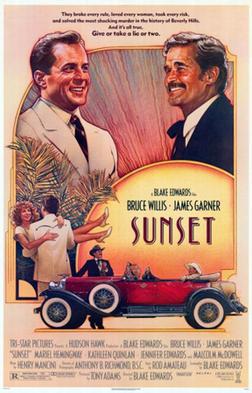
Sunset (1988, directed by Blake Edwards)


In 1920s Hollywood, famed comedian Alfie Alperin (Malcolm McDowell) has made the transition from screen stardom to working behind the scenes as a producer and studio head.  With the coming of the talkies and the death of silent cinema, Alfie plans to make his mark with an epic western starring Tom Mix (Bruce Willis) as Wyatt Earp.  The real Wyatt (James Garner) is hired to act as an on-set consultant.  Wyatt’s former girlfriend, Christina (Patricia Hodge), is now married to Alfie.

What Mix and Earp discover is that, despite his beloved public image, Alfie is actually a monster who is involved with organized crime and sex trafficking and who has the police on his payroll.  While searching for Christina’s missing son (Dermot Mulroney), Mix and Earp get caught up in a murder involving Alife’s sister (Jennifer Edwards) and a gangster named Dutch (Joe Dallesandro).  At the first Academy Awards are handed out in Beverly Hills, Tom Mix and Wyatt Earp prepare for the final showdown with their producer.

The idea behind Sunset was promising.  Wyatt Earp, a real cowboy who survived the end of the West, teams up with Tom Mix, a movie cowboy who is trying to survive the end of the silent era.  (Earp and Mix were friend in real life, as well.)  Bruce Willis comes across as being too contemporary in the role of Tom Mix but James Garner plays Wyatt Earp with a weary dignity and Malcolm McDowell does a convincing Charlie Chaplin impersonation.  Unfortunately, Blake Edwards’s direction allows the story to meander and the mystery itself is so full of red herrings that it’s impossible to follow.  Edwards didn’t seem to know if he wanted this movie to be a buddy comedy, an elegiac tribute to the end of the silent era, or a satire of Hollywood.  He tried to include elements of all three but the movie itself just doesn’t come together.  Only Garner and McDowell emerge from the film relatively unscathed.

Fortunately, for Bruce Willis, Die Hard was released just two months after Sunset.

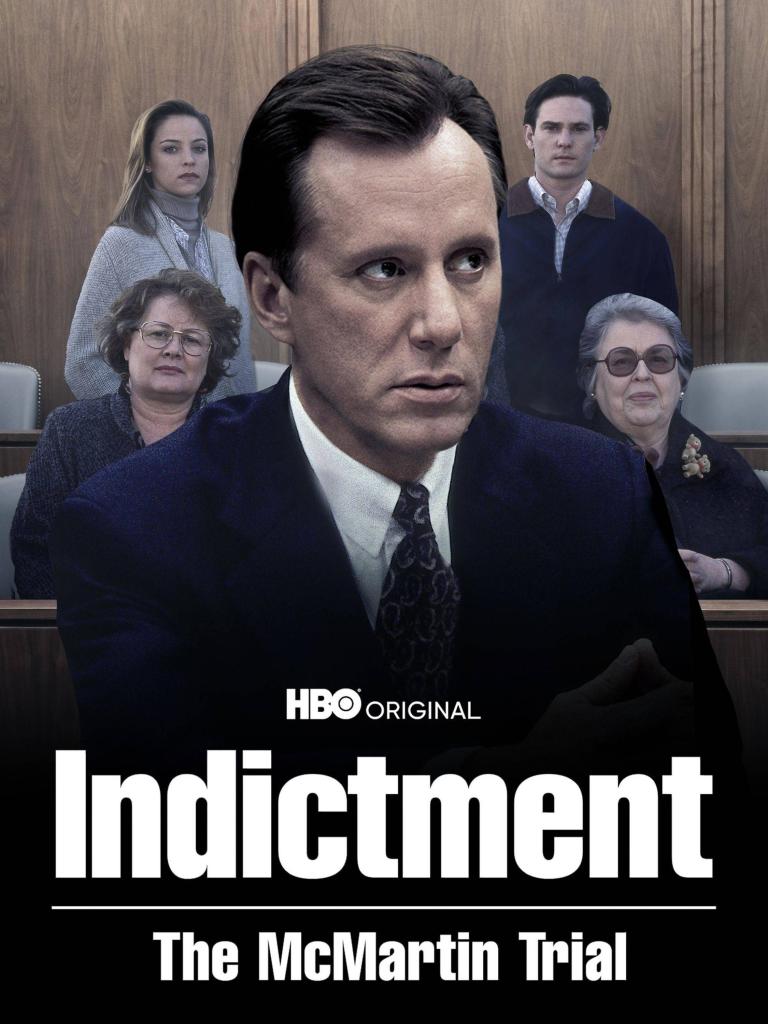
INDICTMENT: THE MCMARTIN TRIAL (1995)


Actor James Woods is great at portraying attorneys. Whether it be as the real life Assistant D.A. Bob Tanenbaum in the excellent T.V. Movie BADGE OF THE ASSASSIN (1985), the crusading hippie Eddie Dodd in TRUE BELIEVER (1989) or the namesake of the excellent TV series SHARK (2006-2008), Woods knows how to play that unique combination of intelligence, shrewdness, and sneakiness to perfection. In 1995, he further applied those skills when he portrayed real life attorney Danny Davis in the HBO movie INDICTMENT: THE MCMARTIN TRIAL. This movie is based on the McMartin day care sexual abuse case that began with horrific allegations in 1983 and ended in 1990 with zero convictions and all charges dropped. During that time, the McMartin Trial became the longest and most expensive series of criminal trials in American history. 

I’ll just go ahead and challenge any person to watch INDICTMENT: THE MCMARTIN TRIAL and not get filled with righteous anger about the complete failure of our judicial system. Add to that failure the complete breakdown of our media to cover events in a fair and impartial fashion with even the smallest shred of objectivity. Does any of this sound familiar? As good as James Woods is in the central role, the star of this film is the true story itself. We watch as various people in positions of authority and power act completely out of self interest, including Davis himself at first, with the pursuit of the truth or justice not even the slightest consideration no matter what the evidence suggests. In actuality, the truth was hidden by the prosecution in pursuit of convictions that never came. The shit that this family was put through with coerced evidence that had no chance of standing up to the slightest bit of scrutiny is disgraceful. It’s one of the most infuriating films I’ve ever seen and it’s just as relevant in 2025 as it was in 1995. The performances are spot on, beginning with Woods’ central performance as Danny Davis and moving on to Shirley Knight in a Golden Globe winning portrayal of Peggy McMartin Buckey, Mercedes Ruehl as prosecutor Lael Rubin, Lolita Davidovich as child therapist Kee MacFarlane, Sada Thompson as matriarch Virginia McMartin, and Henry Thomas as the odd but innocent Ray Buckey. Produced by Oliver Stone and directed by Mick Jackson (THE BODYGUARD, VOLCANO), this button pushing, thought provoking film would win both the Primetime Emmy and Golden Globe awards for best Made for Television Movie in 1995. It’s truly an excellent film and should be seen by any person interested in a fair judicial system or unbiased media.

#MondayMuggers present THE MEAN SEASON (1985) starring birthday boy, Kurt Russell!


Every Monday night at 9:00 Central Time, my wife Sierra and I host a “Live Movie Tweet” event on X using the hashtag #MondayMuggers. We rotate movie picks each week, and our tastes are quite different. Tonight, Monday March 17th, we celebrate Kurt Russell’s 74th birthday by watching THE MEAN SEASON (1985) co-starring Mariel Hemingway, Richard Jordan, Richard Masur, Richard Bradford, Joe Pantoliano, and Andy Garcia. 

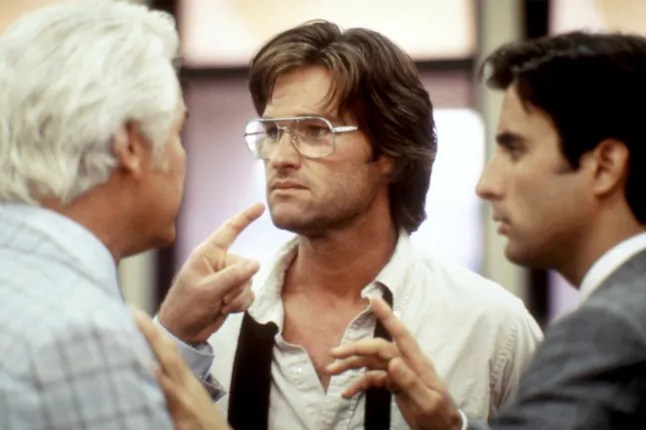
Kurt Russell plays Malcolm Anderson, a reporter for a Miami newspaper. He’s had enough of reporting the local murders, so he promises his school teacher girlfriend (Mariel Hemingway) that they’ll move away soon. Before Malcolm can hand in his notice, the murderer (Richard Jordan) from his latest article phones him. The murderer tells Malcolm that he’s going to kill again. The phone calls and murders continue, and soon Malcolm finds that he’s not just reporting the story, he is the story.

We thought it would be fun to join The Shattered Lens and make Kurt Russell our centerpiece for the day. There’s absolutely nothing more enjoyable to me than watching movies with friends. And If you enjoy Russell, Miami, and serial killer thrillers, you should like this one. So, join us tonight for #MondayMuggers and watch THE MEAN SEASON! It’s on Amazon Prime.

The trailer for the THE MEAN SEASON is included below:

THE UNTOUCHABLES (1987) – Happy 70th Birthday, Kevin Costner!


There was a time in my life, before I could drive, when I would beg my parents to stop at the video store every time we went to the neighboring town of Conway, Arkansas. The town I grew up in was too small to have more than just a gas station, so this movie buff had to take advantage of every trip to town. One night when we were headed home, my parents relented to my repeated requests, so we stopped off at Budget Video. I wanted to choose all the movies, but unfortunately mom and dad would also let my brother and sister choose movies from time to time as well. On this particular night, my brother wanted to rent THE UNTOUCHABLES (1987). I don’t remember what I was wanting, but I do remember that it was not THE UNTOUCHABLES. I probably pouted a little bit, but we ended up taking THE UNTOUCHABLES home with us. We turned it on that night, and I’ll gladly admit that I was 100% wrong. THE UNTOUCHABLES immediately became one of my favorite films. Great job, bro!

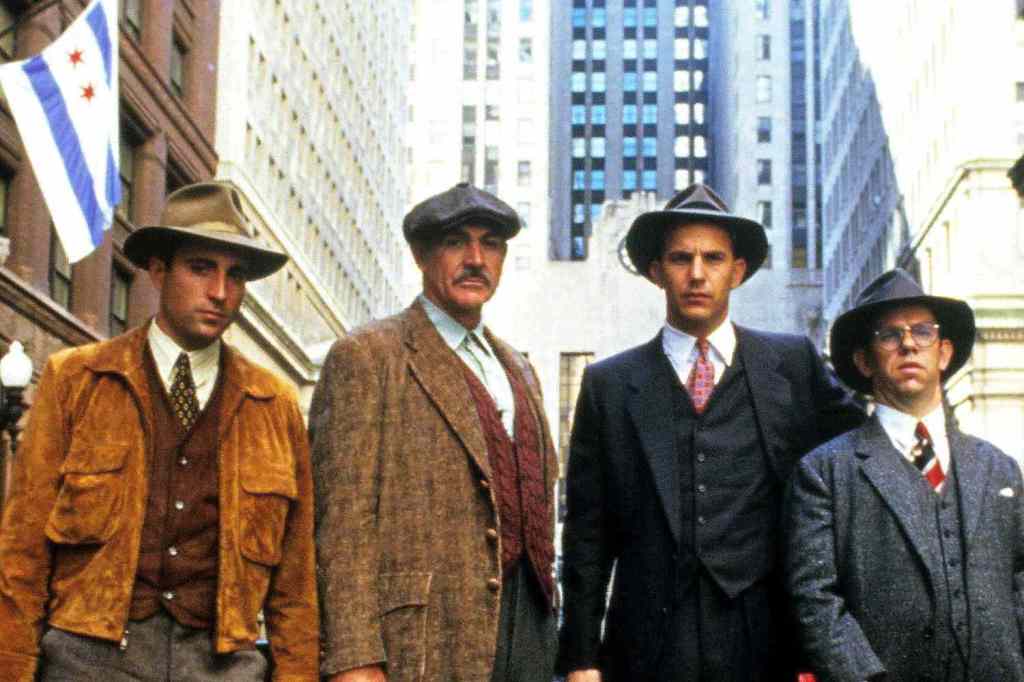
It’s 1930 and Prohibition is the law of the land in the United States of America. Treasury agent Eliot Ness (Kevin Costner) has been given the seemingly impossible task of bringing down notorious gangster Al Capone (Robert De Niro), who supplies booze to nearly all of Chicago. Capone doesn’t just supply the booze, he rules Chicago with an iron fist; and if you’re a local business who doesn’t want to buy his product, he just may blow your ass up! Ness’ job is made especially difficult due to the rampant corruption in Chicago, where everyone from the Mayor, to the judges, lawyers, and law enforcement officers are all on Capone’s payroll, making it pretty much impossible to trust anyone. In a complete stroke of luck, Ness encounters the honest Irish American policeman James Malone (Sean Connery) and asks him to join him in bringing down Capone. With Malone, Ness has found that honest and badass cop who’s not afraid to go up against Capone and his goons. Knowing that most of the police force is already compromised, the two men head to the police academy to try to find another honest cop. This turns out to be another great move as they come upon an Italian American trainee named George Stone (Andy Garcia), who’s a prodigy with a gun. Their last, and greatest move in this humble CPA’s opinion, comes when they accept accountant Oscar Wallace (Charles Martin Smith) to their team. Wallace is convinced that the key to bringing down Capone is trying to build a tax evasion case against him. He’s initially laughed at, but it’s soon apparent that this accountant knows his debits and credits, and his expertise may be just what’s needed to end Capone’s reign of terror once and for all.

I’ve always considered THE UNTOUCHABLES to be a near perfect film. One of the main reasons I find the film so perfect is the direction of Brian De Palma. I’ve been a fan of his “style” for so long, with films like DRESSED TO KILL (1980) and BLOW OUT (1981), but I think he just nails the material here. There are so many great scenes, but the “Union Station” sequence has to be one of the most perfectly choreographed sequences of all time. The building of the tension, the slow-motion shootout when the bad guys arrive, and finally the badass resolution all prove what an absolute master De Palma could be with the right material. De Palma claims that he made up the series of shots as he was filming the scenes at the train station, making the final product that much more impressive. And this all plays out against the background of a “lullaby theme” composed by the legendary Ennio Morricone (THE GOOD, THE BAD, AND THE UGLY). This is what “cinema” is all about.

THE UNTOUCHABLES has an amazing cast of actors to bring its “based on real events” story to life. Kevin Costner was just beginning to emerge as a movie star when this movie was made back in 1987. Especially as a younger actor, Costner was good at projecting both a certain innocence, tempered with the willingness to do what it takes to get the job done once his family and friends are put in danger. And what can you say about actors like Sean Connery and Robert De Niro?!! Connery is so charismatic, wise, and tough as the beat cop who shows Eliot Ness how to beat Capone… ”he sends one of yours to the hospital, you send one of his to the morgue!” He’s a beat cop because he’s incorruptible, and Connery projects that stubborn honesty perfectly. I’m so glad that Connery won an Oscar for this performance, as it would be the only time he would ever be nominated for an Academy Award. He’s amazing in this role, even if his accent is Scottish rather than Irish (a notable controversy at the time). Connery may have won the Oscar, but Robert De Niro matches him scene for scene. His ability to make Capone both charismatic and evil in equal measure is an example of what makes De Niro special as an actor. So many actors phone in these types of broad performances, but not De Niro. I also just think it’s cool that De Niro admitted that his performance was heavily influenced by Rod Steiger’s in 1959’s AL CAPONE. I love Steiger and consider this a wonderful tribute. Throw in a young Andy Garcia, the always underrated Charles Martin Smith, and a creepy Billy Drago as Frank Nitti, and you have one of the better casts ever assembled. I especially became a fan of Garcia based on his performance in THE UNTOUCHABLES.

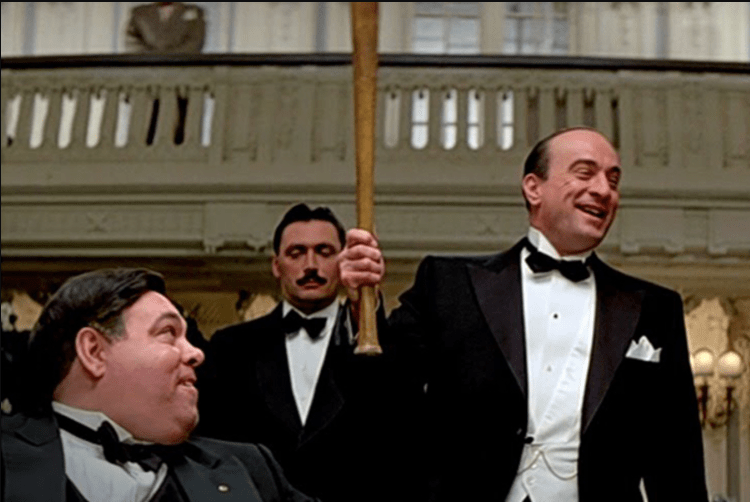
The last person I want to mention is the screenwriter, David Mamet. His screenplay is another perfect element of THE UNTOUCHABLES. The same man who has directed his own films like HOUSE OF GAMES (1987), HOMICIDE (1991), THE SPANISH PRISONER (1997), and SPARTAN (2004) knows how to write a great screenplay. There are so many amazing moments, from the “baseball bat” sequence to the “Stone recruitment” scene, and even Ness’ “he’s in the car” line about Frank Nitti, it’s a muscular screenplay full of big-time moments of audience satisfaction.

At the end of the day, THE UNTOUCHABLES is just a great movie. I still periodically thank my brother for picking it out that fateful day in the late 80’s, and it will always be one of my very favorites. It’s one of those movies that I recommend with zero reservations!

Check out the trailer below, and if you’re smart, you’ll watch one of the great movies of the 1980’s, Brian De Palma’s THE UNTOUCHABLES.

Film Review: The Chase (dir by Arthur Penn)


The Chase, a small-town Texas melodrama from 1966, opens with Robert Redford escaping from prison.

Redford is playing Bubber Reeves. Bubber, we’re told, has spent the last few years in a tough Texas prison, convicted of a murder that he didn’t commit. Now, he’s on the run and he’s probably returning to his hometown. His wife, Anna (Jane Fonda), still lives there, though Anna is now having an affair with Jake Rogers (James Fox). Jake is the son of the most powerful man in town, Val Rogers (E.G. Marshall). Jake also used to be Bubber’s best friend but now, he’s wracked with guilt about his affair with Anna.

Meanwhile, the townspeople are all worried that Bubber is going to seek revenge on the people who were responsible for him going to prison. Some of them know that he was actually innocent and some of them think that he’s actually the killer that he’s been made out to be but what they all have in common is that they’re worried about what Bubber’s gong to do when he shows up. Maybe they should have thought about the possibility of him getting mad and vengeful before they gave him a nickname like Bubber.

Anyway, Sheriff Calder (Marlon Brando) is convinced that Bubber is innocent but the townspeople still want him to allow them to gun Bubber down as soon as they see him. Sheriff Calder, however, is determined to keep the peace and make sure that the law prevails. He’s a man of unimpeachable integrity, working in a town full of people who are too cowardly to concern themselves with doing the right thing.

As everyone waits for Bubber to arrive. tempers come to the surface, a good deal of alcohol is consumed, and secrets are revealed. It all ends in tragedy, of course. One of the final scenes clumsily recreates the assassination of Lee Harvey Oswald. The Chase wouldn’t be an achingly self-serious film from 1966 if it didn’t.

There’s a few obvious problems with The Chase, the main one being that Robert Redford, who was 30 years-old when The Chase was released, looks surprisingly good for someone who has spent the last few years locked away in a tough Texas prison. Redford manage to escape from prison and run through a swamp without getting one single hair out of place. There’s nothing particularly dangerous about Redford in this film, which is surprising when you consider that The Chase was made just three years before Redford’s convincing turn as a laconic (if charming) killer in Butch Cassidy and the Sundance Kid. For The Chase to work, Bubber Reeves would have to be a force of nature but, whenever Redford’s on screen, you just find yourself wondering how someone who looks that good got stuck with a nickname like Bubber. The townspeople talk about Bubber like he’s a wild outlaw but Redford is just too laid back to pull it off. He comes across less like a wanted criminal and more like a California surfer who has somehow found himself in rural Texas.

As for the rest of the cast — well, there’s a lot of them. It’s a big ensemble film and good luck to anyone trying to keep track of who is related to who. Surprisingly enough, Marlon Brando is very convincing as a Texas sheriff, never allowing Sheriff Calder to turn into a stereotype. Less surprising is the fact that Robert Duvall, playing an frustrated husband, is also convincing in his role. Brando and Duvall, of course, would both go on to co-star in The Godfather. (Supposedly, when shooting of The Godfather began, Duvall was the only member of the cast with no fear of joking around with Brando, largely because they had bonded while working on The Chase.) Unfortunately, as good as Brando and Duvall are, they’re both let down in the hair department. Brando gets stuck with a hairpiece while Duvall is forced to go with a comb-over.

Some of the other performers are good and some of them are bad but none of them are particularly convincing as the residents of a small Texas town. James Fox, for instance, is very British. Jane Fonda and Angie Dickinson (cast as Calder’s wife) seem to be bored. E.G. Marshall is believably rich but never believably Southern. The other performers all tend to overact, especially once the people in town start drinking, shooting, hitting, and, in some cases, dancing. Somehow, Shelley Winters is not in the film, even though it seems like she should be.

The Chase was directed by Arthur Penn and written by Lillian Hellman. (The screenplay was based on a play and novel by Horton Foote.) Penn would follow up The Chase with Bonnie and Clyde and Alice’s Restaurant, two films that also dealt, for more successfully, with The Chase‘s themes of violence, community hypocrisy, and outlaw romanticism. Jane Fonda would go on to play Lillian Hellman in the 1977 film, Julia. For Julia, Fonda was nominated for an Oscar. For The Chase, she was not.

The Chase is one of those films that wants to say something important but doesn’t seem to be quite sure what. It’s a long and dramatic movie that doesn’t really add up to much. In the end, I think the main lesson to be learned here is not to allow your children to get a nickname like Bubber. There’s just no escape from a bad nickname.

Favorite Son (1988, directed by Jeff Bleckner)


During a reception on the steps of U.S. Capitol, an assassin kills Contra leader Col. Martinez (Geno Silva) and seriously wounds Sen. Terry Fallon (Harry Hamlin), an up-and-coming politician from Texas.  An eager media catapults Fallon to national stardom and the beleagued President (James Whitmore), who is facing a tough reelection bid, is pressured to replace the current vice president (Mitchell Ryan) with Fallon.

The FBI only assigns two of their agents to investigate the assassination, a sure sign that someone wants the investigation to just go away.  Nick Mancuso (Robert Loggia) is a crusty, hard-drinking veteran agent whose career is nearly at an end.  David Ross (Lance Guest) is his young and idealistic partner.  When Mancuso and Ross discover that Martinez was injected with the HIV virus just two days before the assassination, it becomes obvious that there is a bigger conspiracy afoot.  It all links back to Sally Crain (Linda Kozlowski), who is Fallon’s legislative aide and also his lover.  (Fallon has a wife but she’s locked away in a hospital.)  Sally has an interest in bondage, as Ross soon finds out.

Favorite Son was originally aired as a 3-night, 4 and a half-hour miniseries.  It was later reedited and, with a running time of less than two hours, released theatrically overseas as Target: Favorite Son.  As a miniseries, Favorite Son is an exciting conspiracy-themed film that is full of scheming, plotting, interesting performances, and pungent dialogue.  Target: Favorite Son, on the other hand, is disjointed and, unless you know the original’s plot, almost impossible to follow.  If you’re going to watch Favorite Son, make sure you see the original miniseries.  My mom taped it off of NBC when it originally aired.  That was the only way that I was able to originally see the film the way that it meant to be seen.  The entire miniseries has also been uploaded, in three parts, to YouTube.

Hopefully, the original miniseries will get an official release someday because it’s pretty damn entertaining.  Harry Hamlin isn’t really dynamic enough for the role of Fallon but otherwise, the movie is perfectly cast.  Robert Loggia is so perfect for the role of Nick Mancuso that it almost seems as if the character was written for him.  (Loggia did later star in a one-season drama called Mancuso, FBI.)  Linda Kozlowski seems to be destined to be forever known as Crocodile Dundee’s wife but her performance as Sally shows that she was a better actress than she was given credit for.  The supporting cast also features good performances from Jason Alexander, Ronny Cox, Tony Goldwyn, John Mahoney, Kenneth McMillian, Richard Bradford, and Jon Cypher.

Favorite Son may be over 30 years old but it’s still relevant today.  In the third part, John Mahoney gives a speech about how American voters are often willfully ignorant when it comes to what’s going on behind the scenes in Washington and it’s a killer moment.  Melodramatic as Favorite Son may be, with its portrayal of political chicanery and an exploitative national media, it’s still got something to say that’s worth hearing.


Goin’ South (1978, directed by Jack Nicholson)


Jack Nicholson was not an overnight success.

Nicholson was 17 years old when he first came to Hollywood in 1954.  Looking to become an actor, Nicholson toiled as an office worker at the MGM cartoon studio, took acting classes, and went to auditions.  It would be four years before he even landed his first role, the lead in the Roger Corman-produced The Cry Baby Killer.  When that film failed to become a hit, Nicholson spent the next ten years doing minor roles and occasionally starring in a B-picture.  He auditioned for some big parts, like Benjamin Braddock in The Graduate, Buck Barrow in Bonnie and Clyde, and Guy Woodhouse in Rosemary’s Baby, but his big break continued to allude him.  By 1969, Nicholson was so disillusioned with acting that he was planning to instead pursue a career as a director.  However, before Nicholson officially retired from the acting game, he received a call from the set of Easy Rider.  Depending on who you ask, Rip Torn, who had previously been cast in the role of alcoholic George Hanson, had either quit or been fired.  Bruce Dern, the first choice to replace Torn, was busy filming They Shoot Horses, Don’t They?  Nicholson agreed to step into the role and the rest is history.

Easy Rider may have made Jack Nicholson one of the world’s biggest film stars but he never lost his ambition to direct.  In 1971, he made his directorial debut with Drive, He Said, a film about campus unrest.  At the time, the film flopped at both the box office and with critics and quickly sunk into obscurity.  (It has subsequently been rediscovered and, in some cases, positively reevaluated.)  After the failure of Drive, He Said, it would be another seven years before Nicholson again got a chance to direct.

Nicholson’s second film as a director, Goin’ South, is a comedic western.  Nicholson plays Henry Lloyd Moon, an unsuccessful outlaw who used to ride with Quantrill’s Raiders.  When Moon is captured in Longhorn, Texas, he is sentenced to be hanged.  Fortunately, for Moon, Longhorn has a special ordinance.  Any man condemned for any crime other than murder can be saved from the gallows if a local woman agrees to marry him and take responsibility for his good behavior.  As a result of this ordinance, Longhorn is populated almost exclusively by single women and reformed outlaws.

While standing on the gallows, the cocky Moon is stunned to discover that none of the women want to marry him.  Finally, an old woman emerges from the crowd and announces that she’ll become Moon’s wife.  When Moon hops off the gallows and thanks her, the woman drops dead.  Fortunately, another, younger woman, Julia Tate (Mary Steenburgen, making her film debut), steps forward.

Once they’re married, the lecherous Moon discovers that Julia is a virgin and that the only reason she married him was so she could force him to work in the secret gold mine that’s hidden underneath her property.  The railroad will soon be taking over the land and Julia wants to get all of the gold before she leaves town for Philadelphia.  Though Julia, at first, wants nothing to do with Moon, he eventually wears her down through sheer persistence and the two fall in love.

Complicating matters is Deputy Towfield (Christopher Lloyd), who is upset because he feels that Julia was meant to be his wife.  Also, the members of Moon’s former gang (including Danny DeVito and Veronica Cartwright) show up at Julia’s house and discover the truth about the mine.

Goin’ South gets off to a good start.  The scene on the gallows, where Moon waits for someone to marry him and save his life, is genuinely funny and Nicholson and Steenburgen have a playful chemistry for the first hour of the movie.  Nicholson leers even more than usual in this film but the script is written so that the joke is always on Moon.  Much of the film’s humor comes from Moon always overestimating both his charm and his cleverness.  However, once Moon and Julia finally consummate their marriage, the movie loses whatever narrative momentum it may have had and gets bogged down with the subplots about Towfield and Moon’s gang.  There are funny moments throughout but the story gets away from Nicholson and the film is reduced to a series of set pieces, none of which build up to much.

Not surprisingly, Nicholson gets good performances from his cast, which is largely made up by the members of his 1970s entourage.  Along with Danny DeVito and Christopher Lloyd, longtime Nicholson associates like Tracey Walter, Ed Begley Jr., Richard Bradford, Jeff Morris, and Luana Anders all appear in small roles.  John Belushi plays the tiny role of Deputy Hector.  (Goin’ South was actually the first film in which Belushi was cast, though production didn’t actually begin until after Belushi had finished working on National Lampoon’s Animal House.)  Unfortunately, despite all of the good performances, the script doesn’t do much to develop any of the characters.  Belushi especially feels underused.  (Because Belushi had moved on to Animal House by the time the film went into post-production, Nicholson ended up dubbing several of Belushi’s lines himself.)

Drive, He Said was largely considered to have failed at the box office because Nicholson remained behind the camera so he took the opposite approach with Goin’ South.  Nicholson is in nearly every scene and he gives one of his broadest performances.  It works for the first half of the film, when Moon is constantly trying to get laid and failing every time.  But, during the second half of the movie, Nicholson’s failure to reign in his performance works to the film’s detriment.  When the movie needs Nicholson to be romantic, he’s still behaving like a horny cartoon. Whenever he looks at Mary Steenburgen, it seems as if his eyes should be popping out of his head, Tex Avery-style.  He’s an entertaining cartoon, but a cartoon nonetheless.  As a result, Goin’ South is often funny but it still feels very inconsequential.

Like Drive, He Said, Goin’ South was both a critical and a box office flop and it temporarily turned Nicholson off of directing.  It would be another 12 years before he would once again step behind the camera.  In 1990, Nicholson directed The Two Jakes, the sequel to one of his best films, Chinatown That would be Nicholson’s last film as a director.  Nicholson acted for another 20 years, following the release of The Two Jakes.  To date, he made his final screen appearance in 2010, with a supporting role in James L. Brooks’s How Do You Know.  Nicholson has disputed claims that he’s officially retired, saying that he’s instead just being more selective about his roles.  Even though it’s been ten years since we last saw him on screen, Jack Nicholson remains an American icon and a living legend.

Guilty Pleasure No. 36: The Legend of Billie Jean (dir by Matthew Robbins)


Two weeks ago, while I was sick in bed, I watched The Legend of Billie Jean, a deeply silly movie from 1985.

Okay, get this.  Billie Jean (Helen Slater) and her younger brother, Binx (an incredibly young Christian Slater), live in Corpus Christi, Texas.  Binx has always wanted to go to Vermont.  That right there should tell you just how silly this movie is.  Not only does it feature a character named Binx but it also features Texans wanting to go to Vermont.  I’m a native Texan who loves to travel but I can tell you right now that the last place I would ever want to go would be Vermont.  In fact, down here, we tend to assume that Vermont’s just a place that was made up by the media.  Bernie Sanders?  He’s just an actor.  Seriously, there’s no way that Vermont actually exists.

Anyway, after Binx throws a milkshake in the face of local bully, Hubie Pyatt (Barry Tubb), Hubie steals Binx’s scooter.  (If you’re stuck with a name like Hubie Pyatt, it seems kinda predestined that you’re going to grow up to be a bully.)  After getting nowhere with the police, Billie Jean returns home to discover that Binx has been beaten up and his scooter has been dismantled.  Billie Jean goes to Hubie’s father (Richard Bradford) to demand some money to get the scooter fixed.  Mr. Pyatt responds by attempting to assault Billie Jean, which leads to Binx shooting Mr. Pyatt in the shoulder.

So now, Billie Jean and Binx are on the run.

Joining them in their flight are two idiot friends (Martha Gehman and Yeardley Smith) and Lloyd (Keith Gordon), the son of the local district attorney.  Because this is a movie, Billie Jean quickly becomes a media superstar.  Everyone wants to meet Billie Jean.  Everyone wants to help Billie Jean.  A sympathetic police detective (Peter Coyote) is determined to capture Billie Jean without violence but that might be difficult with the media constantly getting in the way.

While hiding out in a motel, Billie Jean turns on the TV and watches the classic 1928 silent film, The Passion of Joan of Arc.  (I have to say that I’ve stayed in a few motels around Corpus Christi and never once did I turn on the TV and just happen to come across a classic silent movie.)  Moved by Renee Falconetti’s performance in the lead role, Billie Jean decides to cut her hair really, really short (though not as short as Falconetti’s).  I guess Billie Jean is supposed to be a 1980s version of Joan of Arc, which really doesn’t make any sense.  I mean, Joan of Arc heard the voice of God and led the French to victory over the British.  Billie Jean is just trying to get some money to get her brother’s scooter fixed and pay for a trip to the imaginary state of Vermont.

Meanwhile, Mr. Pyatt has recovered from his wounds and is now selling Billie Jean merchandise in his store.  The detective mentions how weird that is but Mr. Pyatt is just out to make some money.  Can you blame him?  The entire country is obsessed with Billie Jean!

As you might have guessed, The Legend of Billie Jean is incredibly silly but likable.   Despite having an inconsistent Texas accent, Helen Slater does a good job in the lead role of Billie Jean and it’s interesting to actually see Christian Slater before he developed the sarcastic style that, for better or worse, has come to define pretty much all of his performances.  Never for a second do you believe that Billie Jean would actually become a media superstar.  (Nor do you ever believe that she’s the type who would have the patience to watch a silent movie.)  I mean, when you get right down to it, it’s a pretty dumb movie.  But, when you’re sick in bed, The Legend of Billie Jean is a perfectly acceptable way to pass the time.

Previous Guilty Pleasures

  1. Half-Baked
  2. Save The Last Dance
  3. Every Rose Has Its Thorns
  4. The Jeremy Kyle Show
  5. Invasion USA
  6. The Golden Child
  7. Final Destination 2
  8. Paparazzi
  9. The Principal
  10. The Substitute
  11. Terror In The Family
  12. Pandorum
  13. Lambada
  14. Fear
  15. Cocktail
  16. Keep Off The Grass
  17. Girls, Girls, Girls
  18. Class
  19. Tart
  20. King Kong vs. Godzilla
  21. Hawk the Slayer
  22. Battle Beyond the Stars
  23. Meridian
  24. Walk of Shame
  25. From Justin To Kelly
  26. Project Greenlight
  27. Sex Decoy: Love Stings
  28. Swimfan
  29. On the Line
  30. Wolfen
  31. Hail Caesar!
  32. It’s So Cold In The D
  33. In the Mix
  34. Healed By Grace
  35. Valley of the Dolls

Cannes Film Review: Missing (dir by Costa-Gavras)


The 1982 film Missing takes place in Chile, shortly after the American-backed military coup that took out that country’s democratically elected President, Salvador Allende.

Of course, the film itself never specifically states this.  Instead, it opens with a narrator informing us that the story we’re about to see is true but that some names have been changed “to protect the innocent and the film.”  The film takes place in an unnamed in South America, where the military has just taken over the government.  Curfew is enforced by soldiers and the sound of gunfire is continually heard in the distance.  Throughout the film, dead bodies pile up in the streets.  Prisoners are held in the National Stadium, where they are tortured and eventually executed.  Women wearing pants are pulled out of crowds and told that, from now on, women will wear skirts.  The sky is full of helicopters and, when an earthquake hits, guests in a posh hotel are fired upon when they try to leave.  About the only people who seem to be happy about the coup is the collection of brash CIA agents and military men who randomly pop up throughout the film.

Again, the location is never specifically identified as Chile.  In fact, except for the picture of Richard Nixon hanging in the American embassy, the film never goes out of its way to point out that the film itself is taking place in the early 70s.  If you know history, of course, it’s obviously meant to be Chile after Allende but the film itself is set up to suggest that the story its telling is not limited to one specific place or time.

Charlie Horman (John Shea) is an American who lives in the country with his wife, Beth (Sissy Spacek).  Charlie is a writer who occasionally publishes articles in a local left-wing newspaper.  In the aftermath of the coup, Charlie is one of the many people who go missing.  All that’s known is that he was apparently arrested and then he vanished into the system.  The authorities and the American ambassador insist that Charlie probably just got lost in the confusion of the coup and that he’ll turn up any day.  Even though thousands have been executed, everyone assumes that Charlie’s status as an American would have kept him safe.  As brutal as the new government may be, they surely wouldn’t execute an American….

Or, at least, that’s what Ed Horman (Jack Lemmon) believes.  Ed is Charlie’s father, a businessman from New York who simply cannot understand what’s going on.  He can’t understand why his son and his daughter-in-law went to South America in the first place.  He can’t understand why his government is not doing more to find his son.  And, when he eventually arrives in South America himself, Ed cannot understand the violence that he sees all around him.

Working with Beth, Ed investigates what happened to his son.  At first, Ed blames Beth for Charlie’s disappearance and Beth can barely hide her annoyance with her conservative father-in-law.  But, as their search progresses, Beth and Ed come to understand each other.  Beth starts to see that, in his way, Ed is just as determined an idealist as Charlie.  And Ed learns that Charlie and Beth had good reason to distrust the American government…

Costa-Gavras is not exactly a subtle director and it would be an understatement to say that Missing is a heavy-handed film.  The Embassy staff is so villainous that you’re shocked they don’t all have mustaches to twirl while considering their evil plans.  When, in a flashback, Charlie meets a shady American, it’s not enough for the man to be a CIA agent.  Instead, he has to be a CIA agent from Texas who heartily laughs after everything he says and who brags on himself in the thickest accent imaginable.  When Charlie talks to an American military officer, it’s not enough that the officer is happy about the coup.  Instead, he has to start talking about how JFK sold everyone out during the Bay of Pigs.

As the same time, the film’s lack of subtlety also leads to its best moments.  When Beth finds herself out after curfew, the city turns into a Hellish landscape of burning books and dead bodies.  As Beth huddles in a corner, she watches as a magnificent white horse runs down a dark street, followed by a group of gun-toting soldiers in a jeep.  When Ed and Beth explore a morgue, they walk through several rooms of the “identified” dead before they find themselves in a room containing the thousands of unidentified dead.  It’s overwhelming and heavy-handed but it’s also crudely effective.  While the film itself is a bit too heavy-handed to really be successful, those scenes do capture the horror of living under an authoritarian regime.

(Interestingly, Missing was a part of a mini-genre of films about Americans trapped in right-wing South American dictatorships.  While you can’t deny the good intentions of these films, it’s hard not to notice the lack of films about life in Chavez’s Venezuela or the political dissidents who were lobotomized in Castro’s Cuba.)

Missing won the Palme d’Or at the 1982 Cannes Film Festival (an award that it shared, that year, with the Turkish film Yol) and it also received an Oscar nomination for best picture of the year.  (It lost to Gandhi.)

Film Review: The Mean Season (dir by Phillip Borsos)


From the very first few scenes of the 1985 film, The Mean Season, one thing is abundantly clear.  People are dying in Florida.

In itself, that’s probably not a shock.  Death is a part of life, after all.  Add to that, the majority of The Mean Season takes place in Miami, the seventh most populous area of the United States.  It makes sense that the more people you have living in one area, the more people are also going to end up dead.  That’s just the way things work.

Still, Malcolm Anderson is getting tired of all the death.  Played by a youngish and sexy Kurt Russell, Malcolm’s a journalist.  He covers the crime beat for the Miami Herald.  He spends all day reporting on death and violence and he’s finally reached the point where he’s burned out.  He and his girlfriend, a teacher named Christine (Mariel Hemingway), are even planning on moving to Colorado.  Malcolm says that he could be very happy working at a small town newspaper.  His editor (Richard Masur) doesn’t believe him and, quite frankly, neither do we.  Malcolm may say that he wants peace and quiet but it’s hard not to feel as if he’s fooling himself.

One day, Malcolm gets a phone call.  The voice on the other line (which belongs to character actor Richard Jordan) is deceptively calm.  The caller explains that he’s a fan of Malcolm’s work.  The caller also claims to be responsible for a series of murders that have recently taken place.  At first, Malcolm is skeptical.  After all, he gets calls from crazy people all the time.  That’s one reason why he wants to leave Miami, after all.  But then the caller starts to give Malcolm details about the crimes, details that haven’t been released to general public…

The killings continue and, after every murder, the caller contacts Malcolm.  Soon, Malcolm is appearing on the national news, giving carefully calculated interviews about what it’s like to be a celebrity.  Malcolm is soon on the front page of all the papers.  Malcolm’s happy.  His editor is happy.  But you know who isn’t happy?  The killer.  He didn’t go to all the trouble to kill those people just so Malcolm could get famous off of his hard work!  Soon, the killer is no longer content to just call Malcolm.  Now, he wants to meet face-to-face and maybe even get to know Christine as well…

The Mean Season is one of those movies that starts out well but then falls apart towards the end.  It’s not a spoiler to tell you that the killer eventually ends up kidnapping Christine.  You probably figured out that was going to happen as soon as I told you that Malcolm had a girlfriend.  (It doesn’t help that Christine is such an underwritten character that it feels like the only reason she was put in the film was so she could be used for one gratuitous nude scene and then get kidnapped.)   Once the killer kidnaps her, he goes from being a genuinely intriguing menace to just being a typical and overly verbose movie psycho.

That’s a shame because the first half of The Mean Season is really quite good.  The film makes excellent use of its locations, capturing the humid atmosphere of Florida in the summer.  As the killer, Richard Jordan alternates between being coldly calculating and surprisingly vulnerable without missing a beat.  (Interestingly, he appears to be personally hurt when he realizes that Malcolm doesn’t consider him to be a friend.)  Not surprisingly, Kurt Russell is likable as the conflicted Malcolm but his best moments are the ones where he suggests that Malcolm has become so addicted to fame that he’s almost hoping that the killer strikes again.  As the two homicide detectives who are assigned to keep an eye on Malcolm, both Richard Bradford and Andy Garcia are perfectly cast.  A scene where Bradford tries to comfort a child who accidentally gets in the middle of the search for the killer is the best in the film.  “We’re just looking for the bad guys,” he tell the traumatized child.  It’s small moments like this that elevates The Mean Season above the typical mid-80s serial killer film.

Seen today, The Mean Season — with its emphasis on newspapers — feels like a historical artifact.  If the film were made today, Russell would definitely work for either a 24-hour cable news channel or an online news site.  It actually would be interesting to see this story updated and retold for the age of clickbait.  Somebody needs to get on that and, while they’re at it, come up with the type of ending that an otherwise intriguing story like this deserves.