What Lisa Watched Last Night #175: Devious Nanny (dir by Devon Downs and Kenny Gage)


Last night, I turned over to the Lifetime Movie Network and I watched Devious Nanny!
Why Was I Watching It?

I’ve got a long history with Lifetime nanny films.  I’ve watched films about Bad Nannys, Betrayed Nannys, Nightmare Nannys, Evil Nannys, Killer Nannys, and Dangerous Nannys.  So, how could I resist something called Devious Nanny?

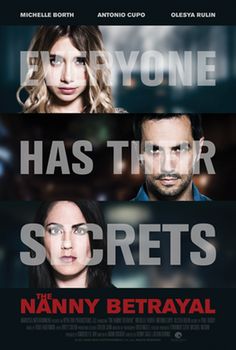
(Actually, it was apparently also called both The Nanny Betrayal and The Au Pair.  Devious Nanny, though is an improvement on both of those.)

What Was It About?

Elise (Michelle Borth) and Brian (Antonio Cupo) have it all.  Elise works at an art gallery.  Brian works in … well, I think it was advertising but I could be wrong.  All I know is that he worked in an office and he was worried about landing a big account and he wore a suit to work.  Isn’t that what they do in advertising?  Anyway, it’s a good job.  Brian and Elise have a nice house and an adorable son.  All they need to complete the picture is … an au pair!

Enter Amber (Olesya Rulin), who appears to be the perfect nanny.  She loves kids and she’s even okay with cleaning up around the house!  Of course, Amber did lie a little to get her job.  And she didn’t tell her new employers that she grew up in the foster system and that she has a history of mental instability.  Soon, Brian and Amber are exchanging lustful glances and people are turning up dead.

But here’s the thing.  I’ve seen enough killer nanny films that I immediately realized that it was probably significant that the film never actually showed Amber killing anyone.  So, is Amber the murderer or is it someone else?  The film is full of suspects!

What Worked?

It all worked.  This was the type of Lifetime movie that made me fall in love with the unique Lifetime aesthetic in the first place.  Well-acted and full of snarky lines, Devious Nanny also featured a rather clever last-minute plot twist.  The end of the film also features a line of dialogue that is perhaps the coldest sentiment over to be offered up in a Lifetime film.

Needless to say, this was a fun movie to live tweet.  Those of us on twitter last night had a blast trying to figure out who the killer was and who was going to be the next victim.

All in all, it was a very entertaining movie.

What Did Not Work?

It all worked!  At first, I was worried that the film would turn out to be just another Lifetime Nanny film but the script, by Adam Rockoff, was full of unexpected plot twists.  I’m going to guess that Rockoff has seen enough nanny films that he knew exactly what most people would be expecting and he very skillfully manipulated those expectations.

In fact, my only issue is that Lifetime aired this on Friday night and it didn’t really seem like they made much of an effort to publicize it.  Sometimes, I think Lifetime doesn’t truly understand just how many people love watching their movies.  They’ll promote the Hell out of some forgettable (and often regrettable) celebrity biopic but entertaining thrillers, like this one, rarely get the fanfare that they deserve.

“Oh my God!  Just like me!” Moments

I’ve been lucky, in that I’ve never had to work as an au pair.  I’ve also never been suspected of murder.  I guess I’ve just lived a sheltered life.  However, if any of that did happen to me, I would hope, when it was all over, that I could be as snarky about it as Amber.

Lessons Learned

Life’s not easy when you’re a nanny.
Music Video of the Day: Sweet Home Alabama by Caroline Says (2018, dir by ????)


First off, this not a cover of the famous Lynyrd Skynyrd song.

Though it is a song about living in Alabama, there’s a bit of sarcasm to be found in the title.  The song is about Caroline Sallee’s experience growing up in Huntsville, Alabama, a town that she would eventually leave for Austin, Texas.  The lyrics aren’t going to do much for Alabama tourism, if such a thing exists.

As for the video, the claymation was done by Sallee herself.

I just like trippy videos, especially when they’re done by people who live in Texas.

Enjoy!


Music Video of the Day: Texas Forever by Kevin Fowler (2016, dir by ????)


Admittedly, I’m not really a big country music fan.  My musical tastes pretty much start with EDM and end with more EDM.  But you know what?

Today is Texas Independence State and I love my home state.  So, it just seems right that today’s music video of the day should Kevin Fowler’s Texas Forever!

Enjoy the beautiful Texas scenery!

Music Video of the Day: We Ready (Dallas) by Moses Uvere


I’ll be honest.

The main reason why I like this video is because I recognize every location where it was filmed, from the DART Station to Reunion Tower to Forrest Lane to that stairs.  I think I even recognize the elevator.

Enjoy!

Lisa Reviews An Oscar Winner: Hamlet (dir by Laurence Olivier)


(With the Oscars scheduled to be awarded on March 4th, I have decided to review at least one Oscar-nominated film a day.  These films could be nominees or they could be winners.  They could be from this year’s Oscars or they could be a previous year’s nominee!  We’ll see how things play out.  Today, I take a look at the 1948 best picture winner, Hamlet!)

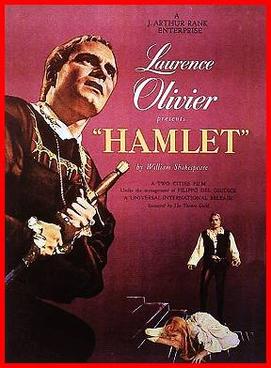
Hamlet is a film of firsts.

It was the first British production to win the Oscar for Best Picture.  In winning, it beat out three American films (Johnny Belinda, The Snake Pit, and The Treasure of the Sierra Madre) and one other British film (The Red Shoes).

It was also the first adaptation of Shakespeare to win Best Picture.  Of course, it wasn’t the first Shakespeare adaptation to be nominated.  That honor would go to 1935’s A Midsummer Night’s Dream.  Adaptations of Romeo and Juliet would be nominated in 1936, 1961, and 1968.  Henry V (which, like Hamlet, was directed by and starred Laurence Olivier) was a 1946 nominee.  Then there was 1953’s Julius Caesar.  The Dresser featured scenes from Shakespeare.  Shakespeare in Love imagined the circumstances behind the writing of Romeo and Juliet.  However, Hamlet was the first to win.

It also remains the only traditional Shakespearean adaptation to win.  West Side Story updated Romeo and Juliet while Shakespeare in Love … well, let’s just not get into it.

It was the first Best Picture winner to be directed by the man starring in the movie.  Laurence Olivier was nominated for both Best Director and Best Actor.  He lost the directing Oscar to John Huston but he won for his performance as Hamlet.  In winning, he became the first actor to direct himself to an Oscar.

Finally, Hamlet was the first of 24 films to feature both Peter Cushing and Christopher Lee!  In fact, this was Lee’s film debut.  Now, before anyone gets too excited, I should point out that Cushing and Lee don’t actually interact.  In fact, Lee doesn’t even speak in the film.  He appears in the background as a Spear Carrier and it’s pretty much impossible to spot him.  He has no dialogue and wasn’t even listed in the final credits.  From what I’ve read, I don’t think Lee and Cushing even knew each other at the time and, when they later met, they were surprised to learn that they had both appeared in the film.  For his part, Cushing plays Osiric, the courtier who everyone remembers because he had such a cool name.

It’s always fun to play “what if.”  Rosencrantz and Guildenstern do not appear in Olivier’s adaptation of the play.  To modern audiences, that might seem strange but, really, that’s just because we’re all familiar with the two characters from Tom Stoppard’s Rosencrantz and Guildenstern Are Dead.  When Olivier filmed Hamlet, he excised portions of the play in the interest of time.  (Hamlet uncut runs over four hours.  Olivier’s version clocks in at nearly three.)  Rosencrantz, Guildenstern, Fortinbras, and the second gravedigger are all dropped from Olivier’s version and, to be honest, none of them are particularly missed.

And yet … as I watched Hamlet, I found myself wondering what would have happened if Olivier had kept Rosencrantz and Guildenstern around and had cast Cushing and Lee in those roles.  It probably wouldn’t have happened, of course.  Cushing maybe but Lee was a total unknown at the time.  Still, how amazing would that have been?

As for the actual film, Olivier’s Hamlet turned out to be far more cinematic than I was anticipating.  Olivier’s camera snakes through the darkened hallways of Elsinore Castle while Olivier’s Hamlet veers between self-righteous fury and apparent madness as he seeks revenge on his Uncle Claudius (Basil Sydney).  As Hamlet grows more obsessed with death and vengeance, the castle seems to grow darker and the hallways even more maze-like, as if the castle’s changing shape to conform with the turmoil in Hamlet’s mind.  Among the cast, Jean Simmons is poignantly fragile as Ophelia while Eileen Herlie is the perfect Gertrude, despite being 12 years younger than the actor playing her son.  Olivier gives a wonderfully physical performance as Hamlet, killing Polonious with a demented gleam in his eye and literally leaping towards his uncle at the end of the film.

If you’re one of those people who thinks that Shakespeare is boring … well, Olivier’s Hamlet probably won’t change your mind.  One thing I’ve noticed about the “Shakespeare is boring” crowd is that nothing can change their minds.  But, for the rest of us, Olivier’s Hamlet is an exciting adaptation of Shakespeare’s more difficult play.

You won’t miss Rosencrantz and Guildenstern at all.  And seriously, Fortinbras who?

Music Video of the Day: Nobody Does It Better by Carly Simon (1977, designed by Maurice Binder)


Yesterday, veteran British film director Lewis Gilbert passed away.  Gilbert directed several films, in all sorts of different genres, but he’s probably best known for directing three James Bond films, including The Spy Who Loved Me.

Since The Spy Who Loved Me is one of my favorite Bond films, I thought it would be appropriate to pick Carly Simon’s theme song, Nobody Does It Better, for today’s music video of the day.  However, the closest that I could find to an “official” video was the Maurice Binder-designed title sequence from The Spy Who Loved Me.

Written by Marvin Hamlisch and Carole Bayer Sager, Nobody Does It Better was Carly Simon’s longest-charted hit and it’s a song that has continued to have a long life outside of the Bond franchise.  It was the second Bond theme song to be nominated for Best Original Song.

Enjoy!

Lisa Reviews An Oscar Nominee: Four Weddings and a Funeral (dir by Mike Newell)


(With the Oscars scheduled to be awarded on March 4th, I have decided to review at least one Oscar-nominated film a day.  These films could be nominees or they could be winners.  They could be from this year’s Oscars or they could be a previous year’s nominee!  We’ll see how things play out.  Today, I take a look at the 1994 best picture nominee, Four Weddings and a Funeral!)

(SPOILERS)

Four Weddings and a Funeral is truly an oddity.  It’s a romantic comedy that works wonderfully well, despite the fact that there’s next to no chemistry between the two leads.

Hugh Grant plays Charles, a neurotic bachelor who lives in London and who, despite having been in several relationships, has yet to marry.  As he’s explains it, he’s spent his life expecting love to hit him like a thunderbolt and it hasn’t happened yet.  Andie MacDowell plays Carrie, an American who has one of those vaguely defined magazine jobs that are so popular in romantic comedies.  Carrie and Charles meet over the course of … well, four weddings and a funeral.  From the minute they first meet, they are attracted to one another but the path of true love is never an easy one.  After spending the night with him, Carrie leaves for America.  When Charles meet her for a second time, she’s now engaged to Sir Hamish Banks (Corin Redgrave), a rather boring politician.

Hugh Grant is perfectly cast as Charles.  It can be easy to make fun of an actor like Grant, what with all the stammering and the carefully calculated charm.  But it works perfectly in Four Weddings and a Funeral, in which Grant manages to believable as both a hopeless romantic and a committed cynic.  Within moments of his first scene (in which Charles wakes up and realizes he’s late for a friend’s wedding), you forget that you’re watching Hugh Grant.  He is Charles.

On the other hand, Andie MacDowell never convinces us that she’s Carrie.  That’s not totally MacDowell’s fault, of course.  Carrie is an underwritten character, one who serves more as a plot device than anything else.  We’re never quite sure how she feels about Charles.  For that matter, we never understand why she’s marrying Hamish.  When she shows up at the film’s funeral, we’re left wondering if she’s really mourning or if she’s just showing up to be polite.  Carrie never comes to life and MacDowell never feels comfortable in the role.  When she gives a warmly received speech at her own wedding reception, the scene feels false because you never feel as if the words are coming from Carrie.

The film ends with Charles and Carrie finally getting together.  Charles both swears his love for her and asks if she’ll agree to never marry him.  We later see them in a snapshot, with a child.  But, despite all of that, you never believe that Charles and Carrie are going to stay together.  There’s just not enough chemistry between Grant and MacDowell to convince you that Carrie isn’t going to get bored and run off with whoever it is she meets at the next wedding she attends.

So, why does this film work so well?  It works because it’s a love story.  However, it’s not about the love between Charles and Carrie.  Not really.  Instead, it’s about the love between Charles and his friends.  Because of the way the film is structured, we only get to see how these people behave at weddings and a funeral.  We never really get to see what these people do for a living or what they’re like during the week.  In fact, we don’t even find out how they all became friends in the first place.

But it doesn’t matter.  The friendships feels real.  The friendships feels authentic.  You might not know how they all became friends but that doesn’t matter.  By the end of the movie, you feel as if you could go to London and possibly run into any of these people going about their daily lives.  They become real in a way that Carrie never does.

There’s Scarlett (Charlotte Coleman), who is Charles’s roommate and who gets flirty when she has too much to drink.

And then there’s David (David Bower), who is Charles’s younger brother.  Both the actor and the character are deaf.  One of the sweetest scenes in the film is when a woman who has been crushing on David attempts to show off her sign language skills.  Everything she signs is wrong but David’s sweet smile tells us all we need to know about how he feels towards her.

Fiona (Kristin Scott Thomas) and Tom (James Fleet) are siblings.  Fiona, who dresses in black, presents a hard exterior but, in one of the film’s more poignant scenes, she admits that the reason she’s never gotten married is because she’s been in love with Charles for ten years.  Tom is a goofy optimist, the type who never doubts that he’s going to find happiness no matter what.

Gareth (Simon Callow) and Matthew (John Hannah) are as close to being married as anyone within Charles’s clique of friends.  (Four Weddings and a Funeral was released twenty years before the legalization of same-sex marriage in the UK.  If someone views the film 50 years from now, they’ll probably wonder why, exactly, Matthew is always described, by those outside of his central group of friends, as merely being a “close friend” of Garth’s.)  Sadly, the funeral of the title is for the fun-loving Gareth.

It’s during the funeral, when Matthew reads a poem from Auden, that it becomes apparent that the heart of this film belongs not to Charles and Carrie but to their friends.  Ultimately, Four Weddings and a Funeral is a celebration of the bonds of friendship.  At the end of the movie, you’re happy, not because Charles and Carrie are finally together but because this unique and wonderful group of friends have all found each other.  Everyone should be so lucky.

Four Weddings and a Funeral was nominated for best picture but lost to Forrest Gump.

Lisa Reviews An Oscar Nominee: The Heiress (dir by William Wyler)


(With the Oscars scheduled to be awarded on March 4th, I have decided to review at least one Oscar-nominated film a day.  These films could be nominees or they could be winners.  They could be from this year’s Oscars or they could be a previous year’s nominee!  We’ll see how things play out.  Today, I take a look at the 1949 best picture nominee, The Heiress!)

“I have been taught by the masters.”

— Catherine Sloper (Olivia De Havilland) in The Heiress (1949)

I’m not going to spoil too much of the ending of The Heiress, beyond saying that those are the words with which Catherine ends the film.  Taken out of context, they may not seem like much.  However, after you’ve spent two hours with Catherine, her father, and the man who claims that he’s in love with her, these are perhaps seven of the most chilling words ever uttered.  When you hear them, you don’t know if you should cheer or be very, very afraid.  Myself, I had both reactions but, then again, I often do.

The Heiress, which is based on a play that’s based on a novel by Henry James, takes place in 19th century New York City.  Austin Sloper (Sir Ralph Richardson) is a widely admired and very successful physician.  He’s also a very cold man, one who has never recovered from the death of his wife.  He lives with his daughter, Catherine (Olivia de Havilland).  Catherine is shy and is continually told that she’s plain and boring.  She’s devoted to her father, though Austin is cruelly manipulative of her.  Catherine, who has never been in a relationship, has pretty much accepted that she’s destined to be alone.

Or, at least, she has until she meets Morris Townsend (Montgomery Clift).

From the first minute that Catherine meets him, Morris seems to be perfect.  He’s handsome.  He’s intelligent.  He’s witty.  He’s charming.  He’s Montgomery Clift, for God’s sake!  For Catherine, it’s love at first sight and Morris says that it’s the same for him.  Suddenly, Catherine’s life no longer revolves around her father.  Now, she dreams of marrying Morris.

Austin isn’t happy about this.  Despite showing his daughter nothing but disdain for most of her life, Austin suddenly become protective of her.  He says that Morris only wants to marry her because she stands to come into a great deal of money.  To prove his point, he announces that, if Catherine and Morris get married, he will disinherit Catherine and neither she nor her husband will ever get their hands on his money.

How will Morris respond to Austin’s threat?  Well, you’ll have to watch the movie to find out and you really should!  The Heiress is a great movie, featuring noirish direction from William Wyler and brilliant performances from by de Havilland, Richardson, and Clift.  Dr. Sloper may be a monster but Richardson plays him with so much authority that it’s hard to dismiss his worries about Morris, no matter how much you may want to.  Montgomery Clift, meanwhile, keeps you guessing about Morris’s intentions.  And, finally, the great Olivia de Havilland deservedly won an Oscar for her performance as Catherine Sloper.  Over the course of the film, Catherine goes from being a withdrawn wallflower to being a … well, I can’t tell you anymore.  I don’t want to spoil the film any more than I already have.  The ending will leave you shaken in the best possible way.

The Heiress was nominated for best picture but lost to All The King’s Men.

Music Video of the Day: Carl Sagan vs. Zeus by NOIA (2017, dir by Erin Vassilopoulos)


Who would win in a fight between Carl Sagan and Zeus?  Personally, I’m putting my money on Zeus because he was like a God and all and I think they pretty much win every fight they get into.

That, however, has nothing to do with this wonderfully strange little video, which I personally think deserves more attention than it has gotten.  So, I’m sharing it here.  Don’t ask me to explain the video.  I just like the imagery and the overall surreal feel of it all.

Enjoy!

TV Review: The Walking Dead 8.9 “Honor” (dir by Greg Nicotero)


So, has everyone seen the latest episode of The Walking Dead?  If not, why are you reading this review?  I ask because, on another site that I write for, I’ve got two people bitching at me for revealing too many spoilers about the shows that I review and, as a result, I felt the need to post an apology to those people.  As far as apologies go, it was fairly passive-aggressive and I’d hate to have to be that insincere on this site.  So, in other words, if you haven’t watched the latest episode of The Walking Dead, don’t read this review.  Thanks!

(Okay, I think I’ve rambled on long enough that anyone who didn’t want spoilers should have left by now.)

On Sunday night, the eighth season of AMC’s The Walking Dead resumed and oh my God, I have got such mixed feelings about what I just watched.  Before I go any further, allow me to share something that I tweeted back in April of 2017:

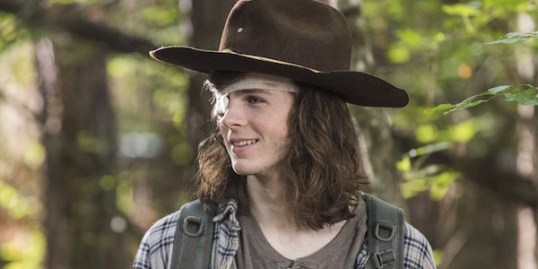
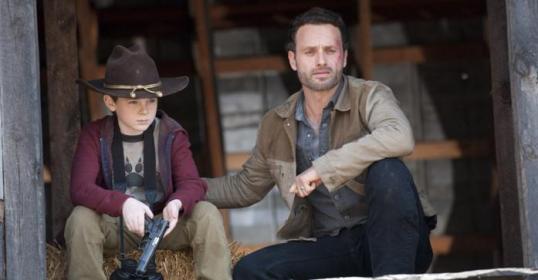
In other words, I can’t say that I’m shocked that Carl’s dead.  In fact, to a certain extent, I kind of respect the show for following through as opposed to coming up with some last-minute contrivance to allow Carl to live.  At the same time, I do think that the death of Carl has robbed the show of some potentially intriguing future storylines.  In the comic, Carl is still alive and he’s even bonded a bit with Negan.  During Season 7, the show seemed to be laying the foundation for that storyline but apparently, Negan’s going to have to bond with some other kid now.  Maybe Henry.  Maybe Judith.

I guess the main thing that bothers me about Carl’s death is that I really do feel that it was mostly due to the fact that the show’s pace has slowed down to such an extent that Chandler Riggs was getting too old to play the role. The Walking Dead has been on the air for 8 seasons but how many years have actually passed in the show?  It’s hard to say but really, it doesn’t seem like Carl should be any older than 14 or maybe 15.  Meanwhile, Chandler Riggs is closing in on 19.  It’s hard not to feel that the show’s producers decided to kill Carl off rather than maybe just wrap up a few storylines and have season 9 open with a “Four years after the defeat of the Saviors” title card.

Myself, I’ve frequently gotten annoyed with Carl as a character, even though I’ve always appreciated Chandler Riggs’s performance.  That said, Carl was one of the few characters left on the show with room to grow.  Rick is never going to change.  If Negan does become the friendly gardener that we saw in Carl’s fantasy, it’s going to have more to do with expedience than anything else.  Carl, though, was still discovering who he was and what he believed.  The majority of the characters have spent the last three or four seasons in a rut.  By virtue of being young, Carl was one of the few characters who actually had a chance of breaking out of that rut.

I mean, to be absolutely honest, I always assumed that the show would end with Carl shooting Rick before he could reanimate.  If you go all the way back to season 1, that’s the ending that the show has appeared to be logically building up to.  Now, I guess Judith will have to do it.

As for the episode itself … again, my feelings were mixed.  This episode was determined to wring every last drop of emotion out of Carl’s passing.  When it worked, it was largely due to the performances of Riggs, Danai Gurira, and the always underrated Andrew Lincoln.  At the same time, there was a part of me that started to resent just how much the show dragged out Carl’s death.  I know that AMC likes to do “super-sized” episodes of The Walking Death but, in this case, I think this episode would have been more effective if it had just been an hour.  Yes, that single gunshot was heart-rendering but, up until I heard it, there was a part of me that feared the show was planning to drag Carl’s death out over the entire rest of the season.

While Carl was dying, Carol, Morgan, and a few other people went off to rescue Ezekiel.  Gavin, who was always one of the most obnoxious of the Saviors, is now dead and yay for that.  Morgan has apparently decided that he’s okay with killing people again.  Morgan also apparently now has Jason Voorhees-style super strength.

It wasn’t a bad episode, though it certainly didn’t carry the power that it would have carried if it had happened during the fourth or fifth season.  On the one hand, I’ve always appreciated the fact that anyone can die on The Walking Dead.  On the other hand, characters die so frequently (and then pop up on the Talking Dead to say goodbye) that it’s now easy to get cynical about the whole thing.

In fact, it may be too early to say whether The Walking Dead handled Carl’s death the right way.  It depends on how this all plays out.  Will the show use Carl’s death as an excuse to go off in an unexpected direction or will we promptly get back to Negan chuckling and Rick giving speeches?  I’m actually looking forward to next week, just because I’m interested in seeing which Rick we’re going to get.  Are we going to get the crazy Rick who appeared after Lori died or are we going to get the catatonic Rick who showed up after Negan executed Abraham and Glenn?  Or maybe it’ll be the return of the Stoic Rick who shot zombie Sophia because he knew he had no other choice.  Which Rick will it be?

We’ll find out next week … hopefully.