There’s a lot of flies and a lot of trash in this video. There’s also some fireworks down at the bottom of the screen. At first, I thought that maybe they were meant to indicate that this video was taking place during the 4th of July. But then camera panned by that open briefcase and I saw all of that money. That’s when I decided that the video was probably showing us the spot where D.B. Cooper set up camp after he jumped out of that plane.
(Don’t know the story of D.B. Cooper? It’s an interesting one, check it out here!)
Then I went back and actually listened to the lyrics and I realized that probably wasn’t the case. Here they are:
American Guilt
Tape over the camera No more utopian videos Eyes painted on eyelids Viva la Mexico
Oh no Here it comes the American Guilt
Land of the expensive Even the nazis are crying History’s private property Viva la Mexico
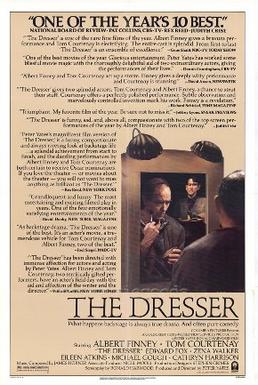
(With the Oscars scheduled to be awarded on March 4th, I have decided to review at least one Oscar-nominated film a day. These films could be nominees or they could be winners. They could be from this year’s Oscars or they could be a previous year’s nominee! We’ll see how things play out. Today, I take a look at the 1983 best picture nominee, The Dresser!)
Taking place during World War II, The Dresser is a story of the theater.
Sir (played by Albert Finney) was once a great and famous Shakespearean actor but that was a long time ago. Now, he is reduced to playing in regional theaters, traveling across Britain with a company made up of a motley collection of forgotten has-beens and never-weres. He can still draw an audience, one made up of elderly theater goers who remember seeing him in London and people who are merely looking for a distraction from the war. While bombs echo outside, Sir alternates between playing Othello and King Lear. Backstage, Sir talks about the memoir he’s going to write and barks out orders to the members of his company.
Though Sir’s overly florid style of acting may seem old-fashioned, there’s no denying that his talent. We don’t see much of his performance but, when we do see him, we never doubt his claim that he was once declared to the greatest King Lear to have ever appeared on the British stage. Onstage, Sir is in complete control. Offstage, he often struggles to remember where he is or what play he’s going to be performing. At one point, when he’s meant to be getting ready to play Lear, he puts on his Othello makeup.
Fortunately, Sir has a dresser. Norman (Tom Courtenay) doesn’t appear to have much of a life outside of taking care of Sir’s every whim. Perpetually high-strung but blessed with a biting wit and an all-important bottle of Brandy that he takes a drink from whenever Sir gets too difficult to deal with, Norman is the one who holds the theatrical company together and who, most importantly, protects Sir. When Sir can’t remember who he’s playing, Norman reminds him. When Sir harasses a young actress, Norman is the one who hushes it up. When Sir insults another actor (Edward Fox), Norman is the one who brokers a peace. When it’s time for Sir to play King Lear, Norman is the one who helps Sir to transform into Shakespeare’s most tragic monarch. Neither Sir nor the rest of the acting company seems to have much respect for Norman. The other actors consider Norman to be an ass-kisser and Sir … well, Sir doesn’t have much respect for anyone. But for Norman, a gay man living at a time when homosexuality was illegal in Britain, Sir’s theatrical company provides him with the only safe place he’ll ever find.
The Dresser is an adaptation of a stage play. (A few years ago, another version was produced for the BBC with Ian McKellen as Norman and Anthony Hopkins as Sir.) It’s a good film, though I imagine that it’ll be best appreciated by people who have actually worked in theater. Finney and Courtenay are both great and I also liked the performance of Edward Fox. That said, it’s definitely a filmed play the feels more appropriate for PBS than for a movie screen. As a result, it seems to be a bit of an odd pick for a Best Picture nomination. I imagine that, much like Birdman, it benefitted from being a movie about actors and performing.
The Dresser lost Best Picture to Terms of Endearment. It’s still worth seeing, if just for Courtenay’s final monologue.
For today’s music video of the day, we have I Was A Fool by Sunflower Bean.
While I never attended a dance quite as bad as the one presented here, this video still brings back a lot of memories for me. I’m sure I’m not alone in that. When you’re in high school, even the smallest bit of nonconformity makes you feel as if you’re challenging and changing the world. This video celebrates the intoxication of being young and rebellious.
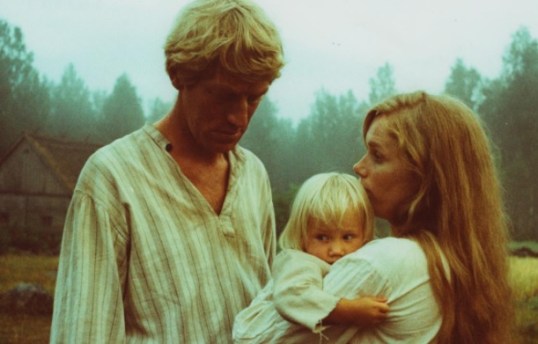
(With the Oscars scheduled to be awarded on March 4th, I have decided to review at least one Oscar-nominated film a day. These films could be nominees or they could be winners. They could be from this year’s Oscars or they could be a previous year’s nominee! We’ll see how things play out. Today, I take a look at the 1972 best picture nominee, The Emigrants!)
Since I’m currently dealing with either a really bad cold or the onset of the flu (let’s hope that it’s the former), I decided that Monday would be the perfect night to stay up extremely late and watch a 190-minute Swedish movie.
The Emigrants was released in Sweden in 1971 and it received an Oscar nomination for Best Foreign Language Film. Then, it was released in the United States in 1972 and it managed to receive four more Oscar nominations, including one for Best Picture. The Emigrants was the third foreign language film to be nominated for Best Picture, the first film to be nominated in multiple years, and also the first Swedish film to contend for the Academy’s top prize. (The following year, Ingmar Bergman’s Cries and Whispers would also become the second Swedish film nominated for Best Picture.) At the same time that The Emigrants was nominated for Best Picture, its sequel, The New Land, was nominated for Best Foreign Language Film. 1972 was an interesting year.
The Emigrants opens in 1844, in Sweden. Karl Oskar (Max Von Sydow) has married Kristina (Liv Ullmann). Like his father before him, Karl Oskar is a farmer. It’s an exhausting life. There is never enough food to eat. The weather is perpetually gloomy. The harvest is always disappointing. As poor farmers, Karl Oskar and his family face constant prejudice. In Sweden, the only thing more corrupt than the government is the church. After one of his daughters starves to death, what choice does Karl Oskar and his family have other than to escape to America?
As Karl Oskar’s brother, Robert (Eddie Axberg), explains, the best rice comes from the Carolinas. The best farmland is in America. In America, anyone can become rich. Anyone can walk up to the President and talk to him without running the risk of being imprisoned or executed. (In 1844, ordinary citizens could stop by the White House and make an appointment to see the President. This, of course, would change decades later, after a disgruntled office seeker shot President Garfield.) In America, Robert says excitedly, no one works more than 14 hours a day! Even slaves can own land and make their own money!
The Emigrants deals with their Karl Oskar and his family’s voyage to America. Karl Oskar and Kristina do not travel alone. Kristina’s uncle (Allan Edwall) is with them and hopes that, in America, he will be allowed to freely practice his religious beliefs. A former prostitute, Ulrika (Monica Zetterlund), is also with them, hoping a new land will mean a better life for both herself and her daughter. Even Robert’s best friend, Arvid (Pierre Lindstedt), going with them. It’s not an easy journey. Not everyone survives the voyage to North America but those that do soon find themselves in a young and untouched country where anything seems to be possible.
Swedish cinema has a reputation for being dark and brooding but those are two words that definitely do not apply to The Emigrants, which is about as positive a portrait of America as you could ever hope to see. Regardless of whatever tragedy may occur during the journey, this movie leaves no doubt that the journey was more than worth it. It unfolds at a pace that is perhaps a bit too leisurely but, at the same time, it’s also an achingly pretty movie with shots that bring to mind the best of Terrence Malick. In fact, there are times when the film is almost too pretty. It’s possible to get so caught up in looking at all the beauty around Karl Oskar and Kristina that you lose track of the story. Max Von Sydow and Liv Ullmann are both achingly pretty as well and, even more importantly, they’re believable as a married couple who are often equally in love and equally annoyed with each other.
It was interesting to go from watching The Grapes of Wrath to watching The Emigrants. If The Grapes of Wrath was an American nightmare, The Emigrants is about as pure a celebration of the American Dream as you’re going to find. It lost the Oscar for Best Picture to a far different film about the immigrant experience in America, The Godfather.
(With the Oscars scheduled to be awarded on March 4th, I have decided to review at least one Oscar-nominated film a day. These films could be nominees or they could be winners. They could be from this year’s Oscars or they could be a previous year’s nominee! We’ll see how things play out. Today, I take a look at the 1940 best picture nominee, The Grapes of Wrath!)
How dark can one mainstream Hollywood film from 1940 possibly be?
Watch The Grapes of Wrath to find out.
Based on the novel by John Steinbeck and directed by John Ford, The Grapes of Wrath tells the story of the Joad family and their efforts to neither get sent to prison nor starve to death during the Great Depression. When they lose their farm in Oklahoma, they head for California. Pa Joad (Russell Simpson) has a flyer that says someone is looking for men and women to work as pickers out west. The 12 members of the Joad Family load all of their possessions into a dilapidated old truck and they hit the road. It quickly becomes apparent that they’re not the only family basing all of their hopes on the vague promises offered up by that flyer. No matter how much Pa may claim different, it’s obvious that California is not going to be the promised land and that not all the members of the family are going to survive the trip.
Tom Joad (Henry Fonda) is the oldest of the Joad sons. He’s just been released from prison and he’s killed in the past. Having been in prison during the start of the Great Depression, Tom doesn’t realize how bad things truly are until he arrives home and sees someone he grew up with using a tractor to knock down a house. (It’s just business, of course. The owners of the house can’t pay their bills so the house gets destroyed.) The film’s story is largely told through Tom’s eyes and Henry Fonda gives a sympathetic performance, one the gets the audience to empathize with and relate to a character who is a total outsider.
As for the rest of the Joad Family, Ma (Jane Darwell) is the glue who holds them together and who refuses to allow them to surrender to despair. (And yet even Ma is forced to make some tough choices when the starving children of one work camp ask her to share her family’s meal with them.) Rosasharan (Dorris Bowdon) is pregnant while Grandpa (Charley Grapewin) is too sickly for the trip but doesn’t have anywhere else to go. And then there’s Casy (John Carradine), the former preacher turned labor organizer. Casy is not blood-related but he soon becomes a member of the family.
The Joads have a healthy distrust of the police and other authority figures and that turns out to be a good thing because there aren’t many good cops to be found between Oklahoma and California. Instead, the police merely serve to protect the rich from the poor. Whenever the workers talk about forming a union and demanding more than 5 cents per box for their hard work, the police are there to break heads and arrest any troublemakers on trumped up charges. Whenever a town decides that they don’t want any “Okies” entering the town and “stealing” jobs, the police are there to block the roads.
The Grapes of Wrath provides a portrait of the rough edges of America, the places and the people who were being ignored in 1940 and who are still too often ignored today. John Ford may not be the first director that comes to mind when you think of “film noir” but that’s exactly what The Grapes of Wrath feels like. During the night scenes, desperate faces emerge from the darkness while menacing figures lurk in the shadows. When the sun does rise, the black-and-white images are so harsh that you almost wish the moon would return. The same western landscape that Ford celebrated in his westerns emerges as a wasteland in The Grapes of Wrath. The American frontier is full of distrust, anger, greed, and ultimately starvation. (Reportedly, the film was often shown in the Soviet Union as a portrait of the failure of America and capitalism. However, it was discovered that Soviet citizens were amazed that, in America, even a family as poor as the Joads could still afford a car. The Grapes of Wrath was promptly banned after that.) John Ford is often thought of as being a sentimental director but there’s little beauty or hope to be found in the images of The Grapes of Wrath. (Just compare the way The Grapes of Wrath treats poverty to the way Ford portrayed it in How Green Was My Valley.) Instead, the film’s only hint of optimism comes from the unbreakable familial bond that holds the Joads together.
As dark as it may be, the film is nowhere near as pessimistic as the original novel. The novel ends with a stillborn baby and a stranger starving to death in a barn. The film doesn’t go quite that far and, in fact, offers up some deus ex machina in the form of a sympathetic government bureaucrat. (Apparently, authority figures weren’t bad as long as they worked for the federal government.) That the book is darker than the movie is not surprising. John Steinbeck was a socialist while John Ford was a Republican with a weakness for FDR. That said, even though the film does end on a more hopeful note than the novel, you still never quite buy that things are ever going to get better for anyone in the movie. You want things to get better but, deep down, you know it’s not going to happen. Tom says that he’s going to fight for a better world and Fonda’s delivers the line with such passion that you want him to succeed even if you know he probably won’t. Ma Joad says the people will never be defeated and, again, you briefly believe her even if there’s not much evidence to back her up.
Even when viewed today, The Grapes of Wrath is still a powerful film and I can only guess what it must have been like to see the film in 1940, when the Great Depression was still going on and people like the Joads were still making the journey to California. Not surprisingly, it was nominated for best picture of 1940, though it lost to Alfred Hitchcock’s Rebecca.
Usually, at the end of the Super Bowl, I post my ten favorite Super Bowl commercials. However, this year, most of the commercials were kind of bland. There were a few that were undoubtedly terrible and tasteless. I definitely could have done without the commercial that suggested the best way to honor Martin Luther King, Jr. was to buy a pickup truck. And there were a few commercials that were cute. Fortunately, we didn’t have any of the condescending “super woke’ commercials that we had to deal with last year. But, at the same time, there was a general lack of brilliance this year.
In fact, the majority of my favorite Super Bowl commercials were for movies and TV shows. But I already posted all of those. Posting them again would be … well, kinda of exhausting.
I was tempted to just not post a favorite commercial list this year but … well, if you know me and my tendency toward compulsive behavior, you know not making a list is never an option with me.
So, here are six commercials that I did like.
1. T-Mobile “Evil Babies Planning On Taking Over The World and Killing Everyone In Their Sleep”
I liked this commercial because it was hella creepy.
2. Doritos Blaze “Don’t Fuck With Peter Dinklage”
3. Mountain Dew Ice “Morgan Freeman: The Cold, Hard Truth”
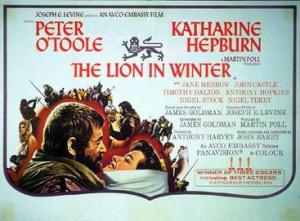
(With the Oscars scheduled to be awarded on March 4th, I have decided to review at least one Oscar-nominated film a day. These films could be nominees or they could be winners. They could be from this year’s Oscars or they could be a previous year’s nominee! We’ll see how things play out. Today, I take a look at the 1968 best picture nominee, The Lion in Winter!)
“I don’t much like our children.”
— Eleanor of Aquitaine (Katharine Hepburn)
“Oh God, but I do love being king.”
— King Henry II (Peter O’Toole)
“What family doesn’t have its up and down?”
— Eleanor of Aquitaine
To be honest, it’s tempting to just spend this entire review offering up quotes from this film. Based on a play by James Goldman and featuring a cast of actors who all specialized in delivering the most snarky of lines with style, The Lion In Winter is a film that is in love with the English language. As visually impressive as the film and its recreation of the 12th Century is, it’s tempting to close your eyes while watching The Lion In Winter and just listen to the dialogue.
The year is 1183. England has a king. His name is Henry II (Peter O’Toole) and he’s held power for a long time, through a combination of willpower and political manipulation. He’s married to Eleanor of Aquitaine (Katharine Hepburn), though he long since had her imprisoned. Before marrying Henry, Eleanor was the wife of Louis VII. Now, Henry’s mistress is Alais (Jane Merrow), the daughter of Louis and his second wife. In order to get Alais’s dowry, Henry has promised her half-brother, Philip II (Timothy Dalton), that she will be married to the next king of England. Philip, incidentally, is the son of Louis’s third wife. To be honest, it’s confusing as Hell to try to keep up with all of it but that’s medieval politics for you.
Of course, everyone knows that Henry II will not be king forever. He’s already 50 years old, which is quite an advanced age for 1183. Being king means that everyone, even his own family, is plotting against him. It also means living in a remarkably dirty and drafty castle. (If you’re looking for a film that celebrates the splendor of royalty, this is probably not the film to watch.) Henry has three sons, all of whom feel that he should be the rightful heir.
For instance, there’s Richard (a young Anthony Hopkins). Richard is Henry and Eleanor’s eldest son. He is a fierce, outspoken, and judgemental man. He describes himself as being a legend and a poet. He looks and acts like a future king. Of course, he’s also a bit of a pompous ass. Richard is Eleanor’s pick to be king, though Richard is always quick to equally condemn both of his parents.
And then there’s John (Nigel Terry). Early on, John is described as being “pimply and smelling of compost.” For some reason, John is Henry’s favorite. He’s also a sniveling weakling, the type who is never smart enough to know when his father is being honest or when his father is bluffing. Halfway through the film, he comes close to accidentally starting a civil war.
And finally, there’s Geoffrey (John Castle). Geoffrey is the smartest of the princes and the most manipulative. Of the three princes, he’s the only one who is as smart as both Henry and Eleanor. However, whereas Henry and Eleanor enjoy their complicated lives and manage to maintain a sense of (very dark) humor about it all, Geoffrey is bitter about his place as the middle child.
Christmas has arrived and Henry has temporarily released Eleanor from prison so that she can spend the holidays with him, his sons, and his mistress. Also coming over for the holiday is King Phillip II, eager to either take back his sister’s dowry or to attend her wedding to the next King of England. What follows is a holiday of politics, manipulation, and shouting. In fact, there’s lots and lots of shouting.
It’s a thoroughly enjoyable film, one that expertly mixes British history with domestic drama and dark comedy. Obviously, the film’s main appeal comes from watching two screen icons, Peter O’Toole and Katharine Hepburn, exchanging snappy dialogue. Hepburn deservedly won an Oscar for her performance as Eleanor. O’Toole should have won an Oscar as well but he lost to Cliff Robertson for Charly. In fact, O’Toole and Hepburn are so good that they occasionally overshadow the rest of the very talented cast. Anthony Hopkins and Nigel Terry both make indelible impressions as Richard and John but my favorite princely performance came from John Castle, who is a malicious wonder as Geoffrey. As easy as it is to dislike Geoffrey, it’s hard not to feel that he does have a point.
(Of course, in real life, both Richard and John would eventually serve as king while Geoffrey would die, under mysterious circumstances, in France. Reportedly, Philip II was so distraught over Geoffrey’s death that he attempted to jump on the coffin as it was being lowered into the ground.)
The Lion In Winter was nominated for seven Oscars and won three, for Best Actress (Katharine Hepburn), Best Adapted Screenplay (James Goldman), and Best Music Score (John Barry). It lost best picture to Oliver!
This song seems like a good one for Super Bowl Sunday. One team is going to win. The other team is going to have these boots walking all over them. Actually, I guess football player don’t wear boots. But maybe they’ll slip into some boots after the game is over. Who knows?
This song was written be Lee Hazlewood, who was originally planning on singing the song himself. Apparently, his version was meant to be even more aggressive than the version that was ultimately recorded by Nancy Sinatra. From Songfacts:
Hazlewood often drew inspiration for his songs from regular people. In a Blender magazine interview, he said he was in a Texas bar when some patrons started razzing an older guy about his younger girlfriend and how she controlled him. The man responded by putting his feet on a barstool and saying, “I know what you think – that she might be the boss. But I am the boss of my house, and these boots will walk all over her the day that I’m not.”
Lee had written the song for himself: “It was a party song I had written two or three years before that. It was a joke to begin with. I had written a beautiful song for her, ‘The City Never Sleeps At Night,’ and she wondered if it would sell. I replied, ‘Three times more than ‘So Long Babe,’ and that did 60,000. We’re building up your career.’ I changed my mind and put it on the back of ‘Boots’ and that sold 6 million.”
Nancy Sinatra recalled in the documentary The Wrecking Crew that Lee Hazlewood was going to record the song himself, but she talked him out of it. Said Sinatra, “When a guy sings it, the song sounds harsh and abusive, but it’s perfect for a little girl.”
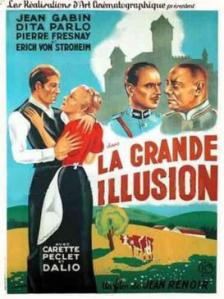
(With the Oscars scheduled to be awarded on March 4th, I have decided to review at least one Oscar-nominated film a day. These films could be nominees or they could be winners. They could be from this year’s Oscars or they could be a previous year’s nominee! We’ll see how things play out. Today, I take a look at the 1937 best picture nominee, Grand Illusion!)
A few things to consider when watching Jean Renoir’s La Grande Illusion:
It is considered to be one of the greatest French films of all time and yet, at the outbreak of World War II, it was banned by France pour la durée des hostilités. It was also banned by Nazi Germany, with Joseph Goebbles declaring it to be “Cinematic Public Enemy No, 1.” Italy followed suit, banning the film as well.
It’s a pacifist film but all of the main characters are soldiers.
It’s a war film but we never see any battles. We hear about them, of course. Characters cheer when they hear that their country has taken another town. Towards the end of the film, when a gun finally is fired, it’s jarring because it’s the first gunshot that we’ve heard throughout the entire film.
It’s a film about change, specifically the change brought about by the First World War. Captain de Boeldieu (Pierre Fresnay) may be French and Major von Rauffenstein (Erich van Stroheim) may be German but they both share the bond of being aristocrats. (After Rauffenstein captures Boeldieu, the two of them have a friendly conversation about their shared acquaintances.) Both of them serve in the army, not for ideological reasons but because they consider themselves to be patriots and tradition holds that aristocrats go to war for their countries. At the start of the film, both Boeldieu and Rauffenstein seem to be above the fighting but, in the end, both realize that the old ways — their ways — will not survive in the new world that’s being created by the Great War.
(In another scene, a group of Russian soldiers are excited to receive a care package from “the Czarina,” just to open up the box and discover that, instead of Vodka, they’ve been sent used textbooks. The soldiers respond by setting the box on fire. For audiences in 1937, it would be impossible to watch this scene without reflecting on the fact that the Czarina herself would soon be dead, executed by revolutionaries.)
Grand Illusion tells the story of three French officers, prisoners of war who hope to somehow escape and make their way to neutral Switzerland. Unlike the aristocratic Boeldieu, Marechal (Jean Gabin) is a member of the working class, a mechanic. Lt. Rosnethal (Marcel Dalio) comes from a wealthy family but, as a Jew, he is still viewed as an outsider. (Reportedly, Renoir specifically made Grand Illusion‘s most sympathetic and generous character Jewish as a specific rebuke to Nazi Germany and their policies.) It’s Rosenthal who gives meaning to the film’s title when he says, regarding the belief that the great war will end all other wars, “That’s just an illusion.”
All three of them are moved from prison camp to prison camp, until they eventually find themselves at the camp commanded by the man who first captured both Boeldieu and Marechal, Major van Rauffenstein. Rauffenstein explains that he was given his new post after being seriously wounded in combat and his movements are sometimes so stiff that he almost resembles a marionette, suggesting that war has reduced this proud man to merely being a puppet for his government’s war machine.
Grand Illusion is a film about the forgotten people who get caught up in the madness of war. The French POWs may say they want to return to the front but, when they meet a woman who has lost her husband and three brothers to the war, they are reminded that even “victory” comes with a steep price. Rauffenstein and Boeldiue may share much in common but ultimately, the only thing that the world cares about is that one is French and one is German. Grand Illusion was Jean Renoir’s eloquent plea for peace, issued a mere two years before Europe plunged into World War II.
In 1938, Grand Illusion was the first foreign-language film to receive an Oscar nomination for best picture. However, it lost to Frank Capra’s You Can’t Take It With You.
With the Super Bowl coming up tomorrow and everyone in this country currently obsessed with competition and victory, today seems like a good time to share this music video for Sleigh Bells!

 Through the Shattered Lens