Music Video of the Day: Boogie Shoes by K.C. and the Sunshine Band (1978, dir by ????)


I’m sure you’ll remember this song from the soundtrack of any film that’s set during the 70s.  I’ll always associate with John C. Reilly showing Don Cheadle a card trick in Boogie Nights.  I guess that’s appropriate since it’s Boogie Shoes and Boogie Nights.  “Don’t you worry about the evil spirits?” Cheadle asks Reilly shortly before Reilly runs off to help Dirk Diggler launch his musical career.

Apparently, this band was started in a record store.  The man who would eventually be known as KC worked at the store and I guess the band was made up with either his customers or his co-workers.  Either way, they came together to form The Sunshine Band and they spread happiness and cheer all throughout the cocaine-heavy 70s.  They’re still doing it, playing the nostalgia circuit.  Good for them.  Disco is forever.

(That said, the best band to form in a record store remains the Empire Records band.  SUGAR HIGH!)

This is another one of those videos that was originally a performance for a television show.  In this case, the show was American Bandstand. 

Dance and enjoy!

Lisa Marie’s Week In Television 1/2/22 — 1/8/22


As the first week of 2022 comes to a close …. I have yet to watch the fourth season of Cobra Kai!  What’s up with that?  Oh well, I’ll watch it next week.  This week, I was busy.  Next week, I’ll ignore everything else I need to do and watch TV.  How is that not a good plan?

Anyway, here’s what I watched this week:

Allo Allo (Sunday Night, PBS)

After being gone for a month due to pledge programming, Allo Allo returned to the PBS line-up on January 2nd.  Having escaped from the hospital, Rene returned to the café and dealt with Michelle’s latest scheme to get the airmen out of France.  It involved hiding them in a hollow bomb that would be dropped over England.  The only problem is the Resistance needed a place to hide the bombs.  Michelle, of course, volunteered Rene’s cafe.

While I continue to laugh at Crabtree’s mangled French, I also find myself looking forward to the every scene involving LeClerc and his attempts to disguise himself.  “It is I, LeClerc.”

The Amazing Race 33 (Wendsenday Night, CBS)

I wrote about the premiere of The Amazing Race here!
The Bachelor (Monday Night, ABC)

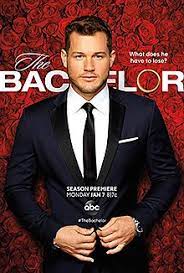
Big goofy Clayton is the new Bachelor.  Big goofy Jesse Palmer is the new host.  Honestly, we need more of a break between installments of this franchise.  Anyway, Monday’s episode featured Clayton meeting the girls and, of course, sending one of them home on the first night because she wasn’t there for the right reasons (plus, she was like sloppy drunk).  It was such an obvious set up.
Dexter: New Blood (Sunday Night, Showtime)

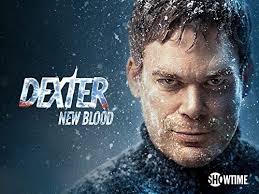
I reviewed the latest episode of Dexter: New Blood here!

Joe Millionaire (Thursday Night, Fox)

On this dating reality show, a group of women are competing to end up with one of two men.  One of the men is a millionaire.  The other isn’t!  The twist is that the women don’t know which is which.  Unfortunately, the viewers do know and that takes a lot of the fun out of the show.  It would be a lot more enjoyable if we were guessing along with the women.  Instead, we know that the farmer is actually very wealthy and the dude who looks like a European prince is actually a construction worker.

(To be honest, this show seems more like a parody of a reality show than an actual show.)

The first episode of this new edition of Joe Millionaire aired on Thursday.  One of the women was sent home because she followed one of the men on social media.  The show handled this development as if it was the most serious thing ever.  I guess sending one random person home on the first day is going to be a new dating show ritual.  Anyway, Joe Millionaire was pretty stupid.  The men were boring.  The women were boring.  The host is also the butler at the mansion where everyone is staying.  There was a lot of nonsense over whether or not everyone was there for the right reason.  (What is the right reason when it comes to stuff like this?)  Who cares?

I’ll probably watch it, though.  I just won’t talk about it on twitter.  It’ll be our little secret, my dear readers.  Sound good?

The Love Boat (Sunday Evening, MeTV)

The Love Boat and its enthusiastic crew completed their cruise to Alaska.  Everyone learned an important lesson about being too competitive and the importance of following one’s heart.  Yay!  Needless to say, it was a pretty silly show but sometimes, it’s good to watch something silly.

And Love …. won’t hurt anymore….

The Office (All The Time, Comedy Central)

I watched a few episodes from the fourth season on Thursday.  Michael hanging out in New York with Ryan was good.  The dinner party remains a classic.  I had to change the channel once we got to the one where Jim was playing golf with the client and, for some stupid reason, he brought along Kevin and Andy.  It never felt right whenever the show featured Jim actually working.

Open All Hours (Sunday Night, PBS)

After being off the air for the month of December due to pledge programming, Open All Hours has returned to the PBS lineup.  On Sunday’s episode, Arkwright longed for Nurse Gladys Emmanuel while Granville continued to stew in resentment.  I don’t blame Granville.  It couldn’t have been easy being a 40 year-old stockboy.  I always find myself wondering what Granville did to get sold into indentured servitude in the first place.

Shipping Wars (Tuesday Morning, A&E)

A&E is now showing the old, original episodes of Shipping Wars in the morning and new episodes at night.  I have yet to watch any of the new episodes, mostly because the old episodes got so annoying after Roy died that I can’t imagine that the new episodes could be any better.

Anyway, on Tuesday, I mostly had the show on for background noise.  I did notice that one episode featured a bunch of people pointing guns at Roy.  It was presented as being a very dramatic situation but if Roy was really going to be shot, I kind of doubt that Shipping Wars film crew would be allowed to just hang out while it was happening.  Eventually, it all turned out to be an elaborate prank.

Another episode featured Jen basically destroying a butter sculpture that she had been hired to deliver.  Apparently, this was no prank.  On the original Shipping Wars, Jen ruined nearly every delivery she was supposed to make.  It’s kind of odd that people kept hiring her.

The Twilight Zone (Sunday, SyFy)

SyFy completed its Twilight Zone marathon on Sunday.  I caught two of the marathon’s final episodes, both of which were from the season when the show had an hour running time instead of 30-minute.  The hour-long Twilight Zones tend to be uneven.  The first episode I watched was about a ship that came across as possibly haunted submarine.  It would have been an enjoyably creepy 30-minute episode but, at an hour, there was just too much obvious padding.  The second episode featured a young Dennis Hopper as a Neo-Nazi loser who finds success after a mysterious benefactor takes him under his wing.  The identity of the benefactor was obvious from the start (it rhymed with Jitler) but Hopper’s odd and unhinged performance made this episode memorable.

U.S. Figure Skating Championships 2022 (Saturday afternoon, NBC)

USA!  USA!  USA!
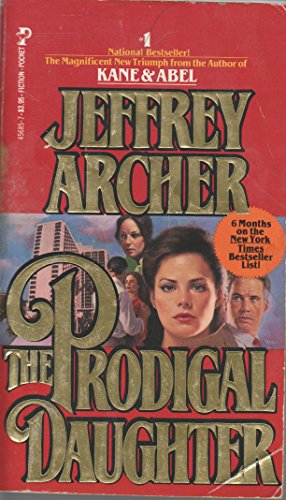
Novel Review: The Prodigal Daughter by Jeffrey Archer


First published in 1982, Jeffrey Archer’s The Prodigal Daughter is one of the many paperback novels that I recently inherited from my aunt.  It’s 485 pages long but, as I discovered earlier this week, it’s a quick read.  I got through it in a day and a half.

It tells the story of Floratyna Rosnovski, the daughter of Abel Rosnovski, a Polish immigrant who worked his way up from poverty and now owns a chain of luxury hotels.  Abel is enemies with William Kane, a WASP banker from a wealthy family.  Why are Kane and Abel enemies?  Well, it probably has something to do with the fact that they have ironic names.  Obviously, if your name is Abel, you’re going to mistrust anyone named Kane.  Beyond that, The Prodigal Daughter is a sequel to an earlier Archer novel called Kane and Abel.  I assume that Kane and Abel goes into more detail about the rivalry between the two men but all that really needs to be known, as far as The Prodigal Daughter is concerned, is that they hate each other.

Unfortunately for Abel, Floratyna grows up to fall in love with Richard Kane, the son of William.  Rejected by her father, Floratyna marries Richard and together, they make their own fortune by opening up a chain of stores.  Along the way, Floratyna is approached by a childhood friend named Edward.  Edward, who is obviously in love with Floratyna, recruits her to run for the U.S. House of Representatives.  At first, Floratyna struggles in Washington but soon, she wins the respect of her colleauges and learns to stop being such a leftist.  Eventually, she becomes a Senator and starts to look towards the White House.  But will a personal tragedy keep Floratyna from becoming the first woman to serve as President?

Reading The Prodigal Daughter, I found myself thinking about how Floratyna Kane lived an almost ludicrously charmed life.  Yes, there were some conflicts.  When she was a child, a group of her classmates made fun of her for being Polish.  She dated one jerk before she ended up with Richard.  Her wealthy father hates her husband but he still secretly helps them set up their chain of stores.  She deals with one great tragedy but she recovers from it after seeing a group of homeless veterans and realizing that at least she has a place to live.  Floratyna is a frustratingly passive character.  Her friend Edward finds her a safe congressional district to run in and essentially guides her political career.  Her subsequent success as a politician is largely the result of luck and coincidence.  The book even ends on a note of deus ex machina.  The book’s seems to suggest that the best way for a woman to become president is to passively wait for it to happen.  That’s not particularly empowering.

The Prodigal Daughter was written by Jeffrey Archer, a best-selling British author who was also a member of Parliament and who has a reputation for being a bit of a shady and disreputable character.  Archer’s prose is simple and rarely sings but, at times, his straight-forward approach to storytelling does pay off.  It makes for a quick read.  If nothing else, the book would seem to indicate that, early in his writing career, Archer understood that people with money are more fun to read about than people without.

Blast From The Past: The Outsider (dir by Arthur Wolf)


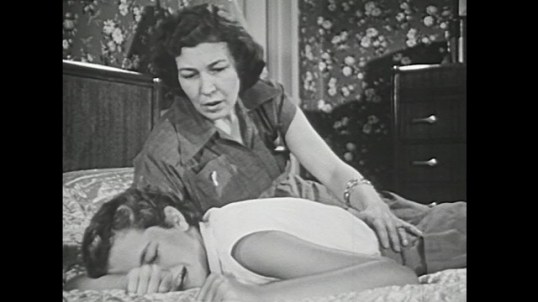
The year was 1951 and Susie Jane was struggling to fit in at school.  While everyone else was planning dances and hanging out at the malt shop, Susie was standing off to the side, quietly.  Why was Susie Jane such an outsider?  Was it the fault of her peers or was it her fault for being such a nonconformist?

This educational short, from Young American Films, puts most of the blame on Susie.  Yes, the film suggests, her classmates could have made more of an effort to include her.  But Susie also should have made more of an effort to fit in and she shouldn’t have been so quick to assume that everyone was against her.  Susie might think that Marcy is only calling the house to taunt her but Marcy is actually calling because she feels guilty and obligated.  

The short film may feel like one of the films that Herk Harvey made before directing Carnival of Souls but this film was actually directed by Arthur Wolf.  The narrator, I have to say, is a bit of a jerk and spends the entire film talking down to Susie.  Susie’s having a hard enough time without having to put up with all of that!  That said, the film also takes a very 1950s approach to the issue of fitting in.  Susie’s an outside because she’s shy.  No consider is paid to the idea that maybe Susie just isn’t interested in doing the same thins as everyone else.

From 1951, here is The Outsider.

Music Video of the Day: A Fifth of Beethoven by Walter Murphy (1976, dir by ????)


Based on Beethoven’s Fifth Symphony, Walter Murphy’s A Fifth of Beethoven …. oh, wait a minute.  I just got that.  Fifth Symphony …. A Fifth of Beethoven.  That’s clever.  How would Beethoven have felt about a disco version of his symphony?  I imagine Beethoven would probably sue for royalties.  The music business is cutthroat.

Anyway, this song is best known for appearing on the Saturday Night Fever soundtrack.  When Tony Manero and his friends step into the club, this is the song that’s playing in the background and it fits in perfectly with Tony’s view of himself as being a God among men.

The song was composed by Walter Murphy, who had previously been a jazz musician.  He played all of the instruments himself on the original recording but the song was still credited to Walter Murphy and The Big Apple Band because it was apparently felt that it was better to be known as a member of a band than a solo artist.

This video is from 1976.  Is that the Big Apple Band that Murphy’s performing with?  I don’t know.  It’s a good song, though.  For the longest time, I thought it was also the theme music for Judge Judy but then I did some research at the University of Google and I discovered that Judge Judy’s theme song was actually the Fifth Symphony.  I also discovered that Judge Judy was still alive so it was a productive session.

Enjoy!

Book Review: The War For Late Night by Bill Carter


Remember when Conan O’Brien was the host of The Tonight Show?

It occurred back in 2009, back when the Shattered Lens was just starting out.  After hosting the show for 17 years, Jay Leno stepped down as host of The Tonight Show.  Though he was never popular with critics and I don’t think I’ve ever met anyone who actually made it a point to watch him, The Tonight Show with Jay Leno was the number one in the late night ratings.  David Letterman may have had more cultural cachet but Jay Leno was the host that most late night viewers were watching.  Other comedians may have mocked Leno for his safe and non-controversial hosting but, obviously, it worked.

When Leno first left The Tonight Show, no one was surprised by Leno’s retirement because he had announced it five years earlier.  In 2004, NBC renewed Leno’s contract as host with the condition that Leno would step down in 2009 and that Conan O’Brien would become the new host of the Tonight Show.  The fear was that, otherwise, Conan would switch to another network and compete directly against Leno.  At the time, Leno privately complained that he felt he was being fired but, publicly, he announced that he was happy to hand the show over to Conan in 2009.  In words that would come back to haunt him, Leno announced, “It’s yours, buddy!”

In 2009, Conan took over last night while Jay Leno got his own primetime talk show, which aired every weeknight.  It was an odd arrangement, one that was undertaken to keep Leno from going to another network.  (NBC was apparently very paranoid about its talent hopping to to other networks.)  Not only did NBC have to rearrange its schedule to make room for 5 days of Leno but many observers suspected that the whole thing was essentially some Machiavellian network scheme to eventually once again make Leno host of The Tonight Show while destroying Conan’s viability as a potential competitor.  Regardless of why NBC did what they did, it didn’t work out.  Leno’s primetime ratings quickly tanked.  So did that ratings for The Tonight Show with Conan O’Brien.  O’Brien’s supporters said that Conan’s bad ratings were due to Jay being a bad lead-in.  Jay’s supporters said that Conan just wasn’t ready for the 11:30 slot and that Conan’s ratings had been going down for a while.  And while most television critics sided with Conan, NBC obviously sided with Jay, who had always been viewed as being a good and loyal company man.

NBC’s solution to the problem made about as much sense as any of their other actions.  It was announced that Jay would have a new late night show, a thirty-minute variety show that would air before The Tonight Show.  The Tonight Show would be bumped back by half-an-hour.  O’Brien objected to getting stuck with a later start time but it turned out that his contract gave NBC the right to move the show back by 30 minutes.  O’Brien resigned, writing an open letter to “the people of Earth,” in which he said that he would not take part in the “destruction” of The Tonight Show.  Depending on which side you were on, Conan was either being heroic or overdramatic.

How big was this story?  It was so big that even I knew about it, despite the fact that I didn’t watch any of the late night shows.  It was one of the first big cultural conflicts that I can remember blowing up on Twitter.  Twitter was almost 100% pro-Conan.  Meanwhile, Leno’s supporters tended to be older, they tended to not have much use for social media, and they tended to be a bit more pragmatic.  Jerry Seinfeld sided with Jay, saying that the only problem was that Conan wasn’t getting the ratings.  Jimmy Kimmel very publicly sided with Conan.  David Letterman let everyone know that they were now seeing the Jay Leno that he had always known.

It was a mess and no one came out of it untouched.  Leno returned to hosting The Tonight Show but his reputation with now irreversibly tarnished.  Conan moved to TBS and, while the critics respected him and his fans continued to love him, he never quite regained the cultural prominence that he had before The Tonight Show debacle.  Most of all, NBC came out of it looking worse than ever.  The entire reason for Jay’s early retirement announcement was to avoid conflict and controversy.  Needless to say, that didn’t work out.

Looking over it all, one can’t help but wonder how a group of industry professionals, people with television experience who were paid to know what they were doing, could have so dramatically screwed everything up.

Bill Carter’s The War For Late Night is probably the best place to look for the answer.  Published in 2010, mere months after Leno replaced Conan as the host of The Tonight Show, The War For Late Night provides an insider’s look at what went down in the corporate offices of NBC as well as what was happening in both the O’Brien and the Leno camps.  Carter also examines what was going on with the other late night hosts while O’Brien and Leno was battling for the future of Late Night.  The book deals with the unsuccessful attempt to blackmail Letterman (remember that?) and also provides an interesting reminder of how likable Jimmy Kimmel was before he got all self-important.

Though Carter appears to be Team Coco, the book itself is relatively even-handed.  Leno is not portrayed a monster and Conan is not transformed into a saint.  (Indeed, the books makes clear that the real villains were the NBC executives, who first screwed Leno by forcing him out when he was at the top of the ratings and then screwed Conan by refusing to give his version of The Tonight Show time to grow.)  Instead, the book suggests that the main reason for the conflict between the two hosts was that Leno and Conan had two very differing ways of looking at their job as host of The Tonight Show.  Jay viewed it as a job.  Conan viewed it as almost a holy calling.  In the end, Jay was incapable of understanding why Conan was so upset about what was happening while Conan couldn’t understand how anyone couldn’t be upset.  After reading Carter’s book, it seems like a foregone conclusion that NBC would side with Jay.  Management always prefers an employee who doesn’t make waves compared to one who does.

Towards the end of the book, when David Letterman tries to arrange for Conan to appear in a Super Bowl commercial with him and Jay, Conan snaps that Letterman doesn’t understand how upset Conan still is over what happened.  Conan says that he will never be ready to laugh about it and, having read The War For Late Night, you don’t doubt it.  The book succeeds at both explaining what happened and also revealing the human beings behind the conflict.  In the end, even if you understand Jay’s position, your heart breaks for Conan.

Cleaning Out The DVR: An American Dream (dir by Robert Gist)


Loosely based on a novel by Norman Mailer, the 1966 film, An American Dream, tells the story of Stephen Rojack (Stuart Whitman).  Rojack’s a war hero, a man who has several medals of valor to his credit.  He’s married to Deborah (Eleanor Parker), the daughter of one of the richest men in the country.  He’s an acclaimed writer.  He’s got his own television talk show in New York.  He’s been crusading against not only the Mafia but also against corruption in the police department.  He has powerful friends and powerful enemies.  You get the idea.

He’s also got a marriage that’s on the verge of collapse.  Deborah calls Rojack’s show and taunts him while he’s on the air.  When Rojack goes to her apartment to demand a divorce, the two of them get into an argument.  Deborah tells him that he’s not a hero.  She says he only married her for the money and that she only married him for the prestige.  She tells him that he’s a lousy lover.  Being a character in an adaptation of a Norman Mailer novel, the “lousy lay” crack causes Rojack to snap.  He attacks Deborah.  The two of them fight.  Deborah stumbles out to the balcony of her apartment and it appears that she’s on the verge of jumping.  Rojack follows her.  At first, he tries to save her but then he lets her fall.  She crashes down to the street, where she’s promptly run over by several cars.  The cars then all run into each other while Rojack stands on the balcony and wails.  There’s nothing subtle about the first 15 minutes of An American Dream.

Actually, there’s nothing subtle about any minute of An American Dream.  It’s a film where everything, from the acting to the melodrama, is so over-the-top and portentous that it actually gets a bit boring.  There’s no relief from the screeching and the inauthentic hard-boiled dialogue.  When a crazed Rojack starts to laugh uncontrollably, he doesn’t just laugh.  Instead, he laughs and laughs and laughs and laughs and laughs and …. well, let’s just say it goes on for a bit.  It’s like a 60s version of one of those terrible Family Guy jokes.

Anyway, the police don’t believe that Deborah committed suicide but they also can’t prove that Rojack killed her.  Meanwhile, within hours of his wife’s death, Rojack meets his ex-girlfriend, a singer named Cherry (Janet Leigh).  Rojack is still in love with Cherry but Cherry is also connected to the same mobsters who want to kill Rojack.  Meanwhile, Deborah’s superrich father (Lloyd Nolan) is also on his way to New York City, looking for answer of his own.

An American Dream is a very familiar type of mid-60s film.  It’s a trashy story and it’s obvious that the director was trying to be as risqué as the competition in Europe while also trying to not offend mainstream American audiences.  As such, the film has hints of nudity but not too much nudity.  There’s some profanity but not too much profanity.  Rojack, Deborah, and Cherry may curse more than Mary Poppins but they’re rank amateurs compared to the cast of Who’s Afraid of Virginia Woolf?  It’s an unabashedly melodramatic film but it doesn’t seem to be sure just how far it can go in embracing the melodrama with alienating its target audience so, as a result, the entire film feels somewhat off.  Some scenes go on forever.  Some scenes feel too short.  The whole thing has the washed-out look of an old cop show.

All of that perhaps wouldn’t matter if Stephen Rojack was a compelling character.  In theory, Rojack should have been compelling but, because he’s played by the reliably boring Stuart Whitman, Rojack instead just comes across as being a bit of a dullard.  He’s supposed to be a charismatic, two-fisted Norman Mailer-type but instead, as played by Whitman, Rojack comes across like an accountant who is looking forward to retirement but only if he can balance the books one last time.  There’s no spark of madness or imagination to be found in Whitman’s performance and, as a result, the viewer never really cares about Rojack or his problems.

Noman Mailer reportedly never saw An American Dream, saying that it would be too painful to a bad version of his favorite novel.  In this case, Mailer made the right decision.

Music Video of the Day: Disco Inferno by The Trammps (1976, dir by ????)


Burn, baby, burn!

I kid you not when I say that this song was supposedly written after a viewing of the 1974 Best Picture nominee, The Towering Inferno.  Now, of course, the song is also about the heat that rises from the dance floor while everyone’s out there moving and apparently, there are some who think that the song was meant to be a reference to the counter-culture’s cry of “burn, baby burn!”  Myself, though, I will always assume that this song is all about Paul Newman, Faye Dunaway, William Holden, Steve McQueen, OJ Simpson, and a cast of thousands trying to survive that towering inferno.

“You keep building them,” McQueen said to Newman, “and I’ll keep putting them out.”

Disco Inferno became a hit when it was included on the Saturday Night Fever soundtrack.  More recently, it’s become a hit-of-a-different-sort because of the Bernie Sanders presidential campaigns.  It turns out that “Burn, Baby, Burn” can also be heard as “Bern, Baby, Bern.”  I mean, no wonder he won Iowa.

(Did Bernie win Iowa?  I can’t recall.  Hey, remember when I said that I was going to vote for Marianne Williamson and everyone thought that I was being serious?  What was that all about?)

Anyway, The Trammps is one of those bands that actually had a few hits in their heyday but will probably always be associated with just this one song.  The Trammps are still performing, though they’ve split into two different groups, each one using the Trammps name.  The fires of the disco inferno will never be extinguished.

Enjoy!

International Film Review: Kapo (dir by Gillo Pontecorvo)


What turns someone into a collaborator?

That’s the question that is at the heart of the 1960 Italian-French film, Kapo.

The film opens in Nazi-occupied France, with 14 year-old Edith (played by 22 year-old Susan Strasberg) practicing the piano at her teacher’s house.  Edith wears the yellow star on her dress and, as she finishes her lesson, her teacher instructs her to be careful returning home.  Edith cheerfully states that she and her family have nothing to worry about.  Edith walks home and, as the opening credits roll, we follow her as she walks through what appears to be a very robust and busy city.  Other than the yellow star on Edith’s dress, there are no outward signs of the occupation in the city.  However, when Edith finally reaches her neighborhood, she sees that her family and her neighbors are being rounded up the Germans.

Edith and her parents are sent to a concentration camp but get separated as soon as they arrive.  Wandering around the camp, Edith meets another prisoner named Sofia (Didi Perago).  Sofia takes Edith to the camp doctor.  He arranges for Edith to switch identities with a non-Jewish prisoner who has just died.  Edith’s new name is Nicole and her yellow star is removed and replaced by a black triangle, which designates Edith/Nicole as being “asocial.”

Edith is transferred to another concentration camp, this one in Poland.  She comes to think of herself as being Nicole.  When another prisoner, Terese (Emmanuelle Riva), asks her is she’s Jewish, Nicole replies that she’s not.  Nicole quickly grows hardened to life in the camp and exchanges sex for food.  She becomes the lover of a guard named Karl (played by future spaghetti western mainstay Gianni Garko) and is made a Kapo, a prisoner who also works as a guard.  However, when Nicole then falls in love with a Russian prisoner-of-war and he asks her to help him and his comrades escape, she is forced to finally decide whether she is Nicole or whether she’s Edith.

To return to the question that started this review: What makes someone a collaborator?  That’s the question that Kapo attempts to answer and it’s a question that was undoubtedly close to  Director Gillo Pontecorvo’s heart.  Pontecorvo was one of the most political of the post-World War II Italian filmmakers.  He was born in 1919 and, as a child, saw firsthand the rise of Mussolini.  As a Jew, he also experienced anti-Semitism firsthand and, in 1938, he left Italy for France.  In France, he befriended Sartre and many other key members of the International Left.  He was reportedly emotionally and politically moved by his friends who left France to fight on the Republican side during the Spanish Civil War.  During World War II, he joined the Italian communist party and fought in the resistance.  It’s perhaps not a surprise that, in Kapo, Nicole’s chance at redemption comes about as a result of falling in love with a communist soldier.

Unfortunately, Kapo struggles to answer the question of why one would collaborate with the enemy.  The main problem is that Susan Strasberg is miscast of Edith/Nicole, never convincing us that she’s a naïve teenager or a hardened collaborator.  She’s also not helped by a script that continually reduces everything down to who Edith/Nicole happens to be in love with at any given point of time.  It also doesn’t help that Strasberg find herself acting opposite Emmuelle Riva, Gianni Garko, and other actors who all authentic in a way that she’s not.

Kapo is more valuable as an examination of the horrors of the camps than as a character study.  The film’s most powerful moment comes early on, when Edith/Nicole learns that, in the eyes of the Nazis, it’s preferable that someone be a criminal to being a Jew.  In that moment, the film captures both the brutal horror and the arbitrary absurdity of prejudice.  The scene is followed by another harrowing moment, in which Edith can only helplessly watch as her parents are marched to gas chambers.  In those brief moments, Kapo becomes an important film.  You may not remember much about Edith/Nicole but you will remember those scenes.

I should also note that, regardless of its flaws, the film does end on a powerful note, one that will leave many viewers asking how much they would be willing to sacrifice to do the right thing.  Would you sacrifice your life to save hundreds of others?  It’s a question that Edith/Nicole has to answer, though the film leaves it ambiguous as to whether her final decision was made by her or if it was made for her.  Still, the film’s final images do stay with you.

In America, Kapo received a nomination for what was then known as the Best Foreign Film Oscar.  In Europe, though, many critics criticized Pontecorvo for making a film that they felt sentimentalized the Holocaust.  Stung by their criticism, Pontecorvo’s next film, which would be considered by many critics to be his masterpiece, would be the documentary-style The Battle of Algiers, one of the most resolutely anti-sentimental political films ever made.

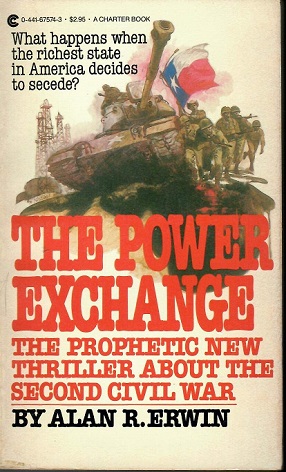
Novel Review: The Power Exchange by Alan R. Erwin


The Northern states are hit by a harsh and deadly winter, one that leads to a nation-wide blackout.  The residents of a Buffalo nursing home die while waiting for help that never comes.  Panics sets in across the nation as citizen realize that the federal government can’t solve all of their problems.  The President, a craven politician, puts the blame on the state of Texas, saying that the state has been hoarding its energy resources and not contributing their fair share to keep the rest of the country running.

With the President determined to make Texas into a scapegoat and proposing a series of new regulations designed to take control of the state’s natural resources, the people of Texas rebel.  The newly elected governor fights back, announcing that Texas is prepared to take advantage of the controversial clause in the article of annexation that he says gives the state the right to secede.  China and OPEC are quick to offer aide to the new Republic of Texas.  While the courts and Congress debate whether or not Texas has the right to leave the union, the CIA decides to take action into their own hands….

That may sound like a particularly paranoid take on today’s headlines but it’s actually the plot of a 1979 novel called The Power Exchange.  As a Texan, what can I say?  The idea of seceding from the Union has always been a popular one down here, even if it’s not something that we necessarily take seriously.  After all, we know that the rest of the States don’t really like us and, for the most part, we don’t like them either.  (Not me, though!  I love every state in the Union.)  So, why not secede and close the northern border and basically kick out anyone who complains about the weather or demands to know why we don’t have a Waa Waa on every street corner?  It’s an enjoyable little fantasy, even if it’s probably for the best that it will never happen.  For one thing, if Texas actually did secede, Austin would probably then want to secede from the Lone Star Republic and form the People’s Collective of Travis.  And if Austin seceded, Dallas would definitely follow, just so we could brag about how much better The Free Republic of Dallas was when compared to all of the other new nations on the North American continent.  Things would get messy.

The whole point of The Power Exchange is that it would be very difficult for Texas to secede.  Not only would there by legal issues but there would also be military conflict.  The new nation would have to make some deals with some less than savory characters.  In the book, it may be Governor Jack Green who masterminds the secession but it falls to Lt. Gov. Margaret Coursey to actually pull it off and she quickly learns that there is no easy way to declare your independence.  The book was written by political journalist so, needless to say, the sections about how secession actually works tend to get a bit overly technical.  Fortunately, there are also secret agents, assassins, and one out of nowhere sex scene that is tossed in to keep things from getting too dry.  One thing I’ve learned from reading old paperbacks is that every novel, regardless of the subject matter, had to have at least one sex scene randomly tossed in.  It’s kind of like when a character in a movie suddenly curses just to make sure that the movie gets at least a P-13 rating.

The Power Exchange was among the many paperbacks that I inherited from my aunt.  I read it the week after Christmas.  It was a quick read and fun little “what if?” scenario.