Agck! I hate spiders and today’s movie has got a lot of them!
Fortunately, it also has William Shatner and some lovely Southwestern scenery.
Still, if you have a thing about spiders, this film will probably scare the Hell out of you, which makes it perfect for October. Fortunately, William Shatner gives a very William Shatenerish performance and therefore provides some relief from all of the tarantula horror.
2022’s MiracleatManchester tells the story of a high school community that is brought together by one potential tragedy.
Brycen Newman (Kory Getman) is a high school student and an all-around athlete, a star on both the baseball and the football teams. But when he faints during baseball practice and also suffers a sudden nosebleed in the middle of class, his father (played by director Eddie McClintock) rushes Brycen to the hospital. He’s told that there’s nothing wrong with Brycen, beyond the typical teenage growing pain. Take a Tylenol and don’t worry about it, he’s told. That night, Brycen is woken up by a blinding headache. Another trip to the hospital reveals that Brycen has got a tumor in his brain. Brycen is continually given hope, just to have it snatched away. At first, he’s told that the tumor has been removed. But then the tumor comes back. Brycen goes through chemotherapy and even prepares to be sent to Florida so that he can take part in an experimental treatment. No one has much faith that Brycen is going to survive but Brycen’s fellow students rally around him. The football teams shaves their head in honor of Brycen. A priest leads a prayer ceremony in the stands. Journalist Miles Himmel (Nick Avila) follows Brycen’s story and reports all the details, even though he firmly does not believe in miracles. (He even snaps at his young daughter when he hears her talking about a miracle.)
While this is going on, a local mechanic named Ed Hanson (a nice performance from Daniel Roebuck) is fixing cars and, for veterans, charging on a dollar. His wife, who happens to be a nurse at the hospital, tells Ed that he need to get more rest and he needs to come up with a better financial plan than only charging people a dollar for thousands of dollars worth of work. Ed replies that he has no choice. He does it for the veterans and the needy. Good for Ed. We need more people like Ed in the world.
Miracle at Manchester is the type of low-budget, overly earnest filmmaking that typically brings out my cynical side but I have to admit that I actually teared up a bit while watching this film. Some of that is for strictly personal reasons. I lost my mom to cancer in 2008. Last year, I lost my Dad to Parkinson’s. Right now, I’m still in a state where even seeing a hospital room in a film will trigger my tears. But beyond that, it was a heartfelt story and also one that was (perhaps loosely, I don’t know) based on a true story. The film ended with the footage of the actual Brycen. It got to me.
Speaking of my father, after he died, I was organizing his estate and I was surprised to discover that he used to regularly give money to Make-A-Wish. Two representatives of Make-A-Wish appear in this film. Again, I can be cynical when it comes to various charities but Make-A-Wish seems like a good group of people. I’m proud of my Dad for supporting them.
Welcome to Late Night Retro Television Reviews, a feature where we review some of our favorite and least favorite shows of the past! On Saturdays, I will be reviewing Saved By The Bell, which ran on NBC from 1989 to 1993. The entire show is currently streaming on Prime and Tubi!
Good Morning Miss Bliss failed where it aired on the Disney Channel but Brandon Tartikoff, president of NBC, felt that the show still had a potential future on NBC. Specifically, Tartikoff felt the kids — Mark-Paul Gosselaar, Dustin Diamond, and lark Voorhees — and Dennis Haskins were the ones worth keeping around. As such, Hayley Mills was let go. Max Battimo and Heather Hopper were dropped from the cast. The show was retconned from taking place in Indiana to taking place in California. The show itself was retitled Saved By The Bell….
Episode 1.1 “Dancing To The Max”
(Dir by Don Barnhart, originally aired on August 20th, 1989)
This is it. This is the first episode of Saved By The Bell, the network morning show that would go on to dominate syndication for 20 years. That’s the thing about Saved By The Bell. It’s not necessary to have been anywhere close to being a teenager when this show began. It’s not necessary to have watched the shows when they originally aired. If you grew up in the 90s or the aughts, you knew Saved By The Bell. It was one of those shows that always seemed like it was airing somewhere. Even as recently as two years ago, it was airing on MeTV and there were frequent marathons on E! Today, it’s on Prime and Tubi. That’s not bad for a show that, if we’re to be absolutely honest, really wasn’t that good.
The first episode — which actually premiered in prime time before the show subsequently moved to its Saturday morning time slot — sets up the show. Zach Morris (I know that some people claim that it’s spelled Zack but I’ve always gone with Zach), Screen Powers, Lisa Turtle, and Mr. Belding have all been resecured from the Indiana Hell of Good Morning, Miss Bliss. Now, they all live in California and they all attend Bayside High School. They hang out at the Max, a tacky restaurant owned by a tacky magician named Max (Ed Alonzo).
Joining the ensemble are Jessie Spano (Elizabeth Berkley), Kelly Kapwoski (Tiffani-Amber Thiessen), and AC Slater (Mario Lopez). Both Slater and Zach have a crush on Kelly. Screech likes Lisa. A dance contest is approaching, one that is hosted by Casey Kasem. (All the teenagers on the show go crazy over someone who, realistically, most of them had probably never heard of. Max imitates Casey Kasem saying his name twice.) Screech wants to ask Lisa to be his partner but Lisa’s already been asked by someone else. Kelly can’t choose between Zach and Slater so they agree to have a dance-0ff. Uh-oh, Zach can’t dance! Maybe his childhood friend Jessie will teach him….
Jessie doesn’t have a date because she’s tall. When she tells Kelly and Lisa about being insecure about her height, they joke that she could become a basketball player. This gets a big laugh and I assume this episode aired before the WNBA was a thing. Eventually, Zach tells Kelly to enter the contest with Slater because he’s going with his best friend, Jessie. Meanwhile, Lisa sprains her ankle, get dumped by her partner, and ends up entering the contest with Screech.
It’s interesting to watch the character dynamics in this first episode. Jessie is not the straw feminist she would later become. Slater is a jock but still sensitive enough to comfort Screech. Kelly is actually portrayed as being somewhat shallow. Watching this episode, one gets the feeling that Zach and Jessie were originally meant to be the show’s main couple until someone decided that Zach and Kelly had better chemistry and that Jessie’s feminism and Slater’s chauvinism would make for an interesting combination. Lisa doesn’t like Screech but she doesn’t quite hate him as much she would in later episodes. Even more importantly, Zach is nowhere near as cocky as he would be in later episodes. He’s actually insecure about something.
As for the dance contest, Lisa and Screen dance “The Sprain” and they win, largely due to Slater and Zach bullying everyone into voting for them. “C’mon,” Casey Kasem announces, “let’s all do …. THE SPRAIN!” Everyone starts hopping on one foot and, at home, I cringe like you wouldn’t believe.
God, this was a stupid episode. And yet …. it was very likable. The young cast had a lot of talent. In this episode, even Dustin Diamond’s Screech is tolerable. I cringed at the extremely cheesy dance contest but I also smiled. I guess that’s the power of nostalgia. Sometimes, even the really bad things make you feel good when you rewatch them.
The Abbott teachers go to a baseball game! As our readers may have noticed, my sister loves baseball so I made sure to have her watch this episode with me. She enjoyed it, which made me happy. Myself, I found myself wondering why so many shows — like Abbott with Philadelphia or Dick Wolf’s Chicago shows — take place in cities that most American hate. Like, if I was ever told that I had to pick between Philadelphia or prison, I’d probably pick prison because at least there wouldn’t be as many people yelling. Yet, Abbott is often a rather charming show and I usually love It’s Always Sunny In Philadelphia. It’s just weird how these things work.
Hell’s Kitchen (Thursday Night, Fox)
Ugh, this episode made me physically ill. I don’t think I could ever be a professional chef, not if it means having to clean every inch of a fishing boat. (I cleaned my kitchen before watching this episode and my back was killing me by the time I was finished.) As for this episode and this season, it doesn’t seem like a single chef should be trusted to cook food for anyone. Chef Ramsay is doing a lot of yelling and I agree with him.
Law and Order (Thursday Night, NBC)
This week, yet another millionaire was murdered in New York City and there was yet another crazy defense that, for whatever reason, Maroun seemed to have sympathy for. As much as I usually like the “Law” half of these shows, the “Order” part often verges on self-parody. Between Nolan Price’s wimpy summations and Maroun’s eagerness to protect the criminals, I’m surprised they ever get a conviction.
Night Flight (NightFlight Plus)
On Saturday morning, I watched a video profile of KISS, a band that I really didn’t know much about. I enjoyed the juxtaposition between the fearsome makeup and their not-at-all fearsome music.
Snub TV (NightFlight Plus)
On Friday night. Jeff and I watched an episode of this 80s music show with our friends, Patrick and Dani. It was good music. You could dance to it.
Special Forces: World’s Toughest Test (Thursday Night, Fox)
This show is just not that interesting without Jussie Smollett crying about how nobody will accept that “I just want to move on” from filing a false police report. If it was really the world’s toughest test, I don’t think a bunch of out-of-shape reality show participants would be doing as well as they are.
Twilight Zone (Prime)
This week, I watched a few classic episodes — To Serve Man, The Monsters Are Due On Maple Street, Twenty-Two (“Room for one more, honey!”), Will The Real Martian Please Stand Up, Nick of Time, and Nightmare at 20,000 Feet. If the Twilight Zone is not a part of your October viewing, you’re doing Halloween wrong!
The Vanishing Ray (NightFlight Plus)
I checked in with this 1930s serial on Friday night. The bad guys were still after the vanishing ray and the good guys were still trying to protect it. As always, this chapter ended with a cliffhanger and an invitation to return to theater next week for the next installment.
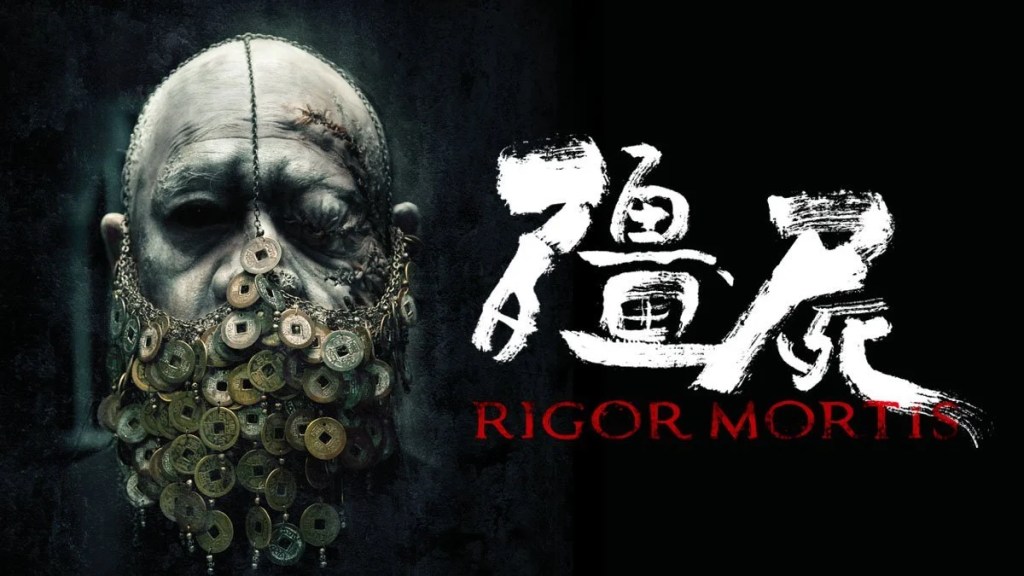
I’ve had the Hong Kong horror flick RIGOR MORTIS (2013) sitting on my shelf for quite a few years. I remember reading a lot about it when it first came out in Hong Kong back in 2013, so I just went ahead and bought it. There was a lot of talk about it resurrecting the Hong Kong “hopping vampire” genre of films that was very popular in the 80’s, led by movies like the MR. VAMPIRE series and ENCOUNTERS OF THE SPOOKY KIND 2. My personal favorite Hong Kong films are the “heroic bloodshed” gangster films featuring actors like Chow Yun-Fat, Lau Ching-Wan and Andy Lau, but I do enjoy the idea of hopping vampires. In the spirit of October and Halloween, I decided to tear open the plastic wrap and finally give it a go!
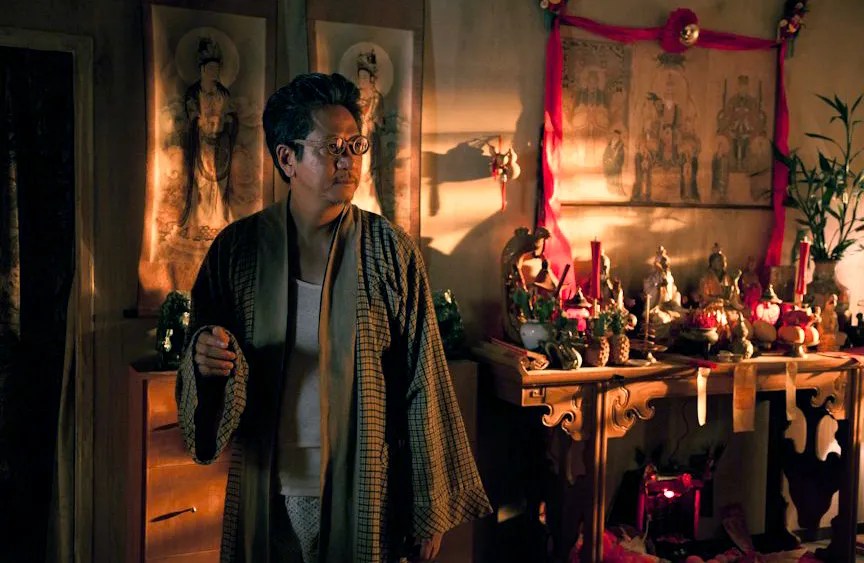
Actor Chin Siu-Ho (portrayed by Hong Kong actor Chin Siu-Ho in a Meta version of himself) is suicidal after his wife leaves him and takes away their young son. He moves into a huge, dilapidated apartment building and immediately hangs himself. As his hung body is convulsing and jerking around, the supernatural story immediately kicks in and a pair of twin sister ghosts, who just happened to die tragically in the same apartment, emerge and take over his body. Out of nowhere, Yau (Anthony Chan), a neighbor, busts through the door, cuts the noose, and smashes Chin against a wall, saving his life and driving the ghosts out in one fell swoop! Yep, there are strange things afoot in this apartment complex and Yau decides to fill Chin in on a couple of items. First, he’s a vampire hunter, but there aren’t really any vampires left in Hong Kong, so he mostly just cooks rice these days. Second, there are a lot of ghosts hanging around the building that won’t leave, but there’s really no reason to be that scared of them because most of them aren’t trying to possess anyone, with the twin sisters being a notable exception. Wouldn’t you know it though, around the same time they’re having this conversation, an older neighbor named Tung (Richard Ng) slips and breaks his neck. Rather than just letting him die, his devastated wife Mui (Hee Ching Paw) goes to see her neighbor Gau (Fat Chung), a master practitioner of the blackest of black magic. Soon Gau has Tung’s dead body covered in dirt, wearing a mask made of Chinese coins and being fed crow’s blood. In seven days, Gau tells the wife, your husband will be back. I won’t go into all the details, because there are a bunch, but soon people will start dying, a vampire will be hopping, Yau will be living up to his family’s vampire hunting legacy, and Chin will be fighting ghosts and vampires, only this time without a director yelling “CUT” when things get dangerous!
I truly appreciate a movie like RIGOR MORTIS. Actor-director-producer-singer Juno Mak was only 29 years old when he directed this film that truly does pay lots of respect to the popular MR. VAMPIRE series of films from the 80’s. His casting goes a long way in bringing back those nostalgic memories. Actors Chin Siu-Ho, Anthony Chan, Billy Chau, Richard Ng, and Fat Chung all appeared in the MR. VAMPIRE series, along with tons of other films during the golden age of Hong Kong cinema, and its fun for me to see them all here. Chin Siu-Ho especially sticks out to me because of the film he made with Chow Yun-Fat in 1986 called THE SEVENTH CURSE. And the image of a slow-motion Richard Ng, decked out in full Hong Kong vampire regalia, hopping his way towards some serious trouble, is pure fan service. That part had me sitting up with a smile on my face.
While the tributes to the Hong Kong vampire genre are all here, the tone of RIGOR MORTIS is decidedly different. Completely foregoing the elements of slapstick and comedy that existed in the 80’s films, Mak has made a moody, supernatural film that’s full of emotionally damaged characters in need of some sort of purpose or redemption. Most of the characters are incapable of dealing with the difficult events of their life even remotely in a positive way, and it’s their collective bad decisions that lead to so much of the death and destruction in the film. Chin doesn’t know how to deal with his divorce, so he tries to kill himself, unleashing the twin sister ghosts. Auntie Mui so hates the prospect of being alone that she wants to bring back her dead husband, unleashing the vampire. And when the vampire and twin sister ghosts join forces, things get really crazy! Now that I write out the things that Chin and Mui are dealing with, Yau’s situation doesn’t really seem that bad. Sure, he may not get to fight vampires like his dad did, but is that any reason to mope around? Chin tells him that he makes the best glutinous rice in Hong Kong, and since Chin has been a successful actor, I’m sure he’s had a lot of the best glutinous rice around. The compliment doesn’t move Yau in any way, with the man brushing it off as meaningless. It’s actually kind of sad that Yau finding his purpose requires a supernatural unleashing of evil and many tragic victims. Come on Yau!
Since Director Mak is going for melancholy horror, to be truly successful, a movie like RIGOR MORTIS really needs good performances from its cast, and it needs to be somewhat scary. Chin Siu-Ho is good as the former actor whose life has turned into a dumpster fire. He’s introduced to us wearing shades that would have been perfectly at home on Chow Yun-Fat’s face in the Hong Kong Classic A BETTER TOMORROW (1986). I enjoyed that nod to Hong Kong’s legacy of cool action stars. Thinking back on it now, I may have criticized his character’s moping around, but Anthony Chan’s performance as the vampire hunter Yau is probably my favorite performance of the film. He’s a man who doesn’t care, until he does, and then he’s all in. I also liked Kara Hui as a woman whose life was destroyed in the same apartment that Chin now lives in, and who now just kind of wanders around the building with her son Pak. Her character is somewhat peripheral to the main story, but there is definitely something appealing about her performance. Heck, it may just be that she’s really pretty. Old veterans like Richard Ng, Fat Chung, and Hee Ching Paw give solid, professional performances just as you’d expect them to.
So, the performances in RIGOR MORTIS are good, but is the film scary? I will say that if there would be any criticism I would level at the film, it’s the fact that I just didn’t find it very scary, or really even that spooky for that matter. The setting, the dilapidated apartment building, seems like a perfect background for jump scares, yet there are very few. Mak seemed to prioritize special effects driven visuals over sending shivers down our spines. That’s not necessarily a bad thing because Mak does find some true horror in his story. For example, one of the most horrific scenes in the film is our first real image of the dangerous vampire, whose fingernails grow in front of us as it sets its sights on a truly innocent young victim, a scene that proves that no one is safe in the world of this film. However, if you’re looking for a movie that’s going to make you jump throughout its hour and forty-five-minute runtime, this film did not have that effect on me.
Ultimately, I would give RIGOR MORTIS a solid recommendation to any person who might appreciate a modern take on Hong Kong horror films of the 1980’s. I’d also recommend it to people who enjoy visually impressive horror films that rely more on mood than outright scares. I probably would not recommend it strongly to those who insist on lots of gotcha moments in their horror films. For me personally, I enjoyed it very much, and I’m glad I finally got around to watching it. It may be time to pull out my old DVD of MR. VAMPIRE for a revisit!
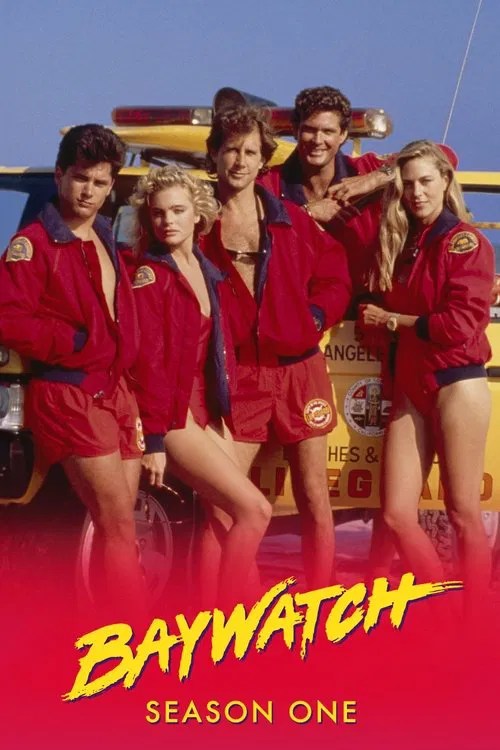
Welcome to Retro Television Reviews, a feature where we review some of our favorite and least favorite shows of the past! On Saturdays, I will be reviewing Baywatch, which ran on NBC and then in syndication from 1989 to 2001. The entire show can be purchased on Tubi.
Save me!
Episode 1.2 “Heat Wave”
(Dir by Gus Trikonis, originally aired on September 29th, 1989)
Not much of an episode this week, I’m afraid.
California is dealing with a heat wave and no one has air conditioning (really?) so everyone in Los Angeles is heading down to the beach so that they can relax in the hot sand. Eddie and Trevor keep giving each other the side eye because Eddie is a Baywatch lifeguard and Trevor is a country club life guard. Eddie tries to hit on a woman who has spent the entire day relaxing near his tower but it turns out that she’s visiting from Australia and only has eyes for Trevor. “Maybe next time,” she tells Eddie.
Craig is told by his boss that he has to choose between being a lawyer at a big firm or a lifeguard. Craig’s wife, Gina, suggests that Craig quit the law firm and become a beachfront lawyer. She says that he can still be a lifeguard and he can just use their kitchen table as his desk. I don’t know if I would be as understanding as Gina. Craig was making a lot of money as a big corporate lawyer, even if he apparently couldn’t afford to get an air conditioner.
(What the Heck, California? How are you surviving with air conditioning!?)
Meanwhile, two stupid kids get trapped in a storm drain. Mitch sends the junior lifeguards out to look for them. Hobie asks, “What can a bunch of junior lifeguards do?” Mitch replies that this is an opportunity for the junior lifeguards to go to all the places that they’re usually not allowed to go. So, basically, Mitch’s plan to find the missing kids is to put a bunch of other kids at risk. I guess that’s why he’s the lieutenant.
Luckily, the two dumb kids are rescued. One of the kids is the son of Steve Humboldt (Jeffrey Byron), a former Baywatch lifeguard. It turns out that Steve lost custody of his kid in a court case and he basically abducted him. But, after the kid nearly dies, Steve is like, “We’re going to call your mom and go home!” and that apparently makes everything okay under the “He Changed His Mind Afterwards” clause.
This was all pretty dumb. Stay out of the storm drain, kids! It’s not that difficult.
In 1957, the Commission — the governing board that regulated organized crime in America — seemed like it was on the very of collapsing. Bugsy Siegel was dead. Lucky Luciano had been exiled to Sicily. Meyer Lansky was more concerned with running his casinos in Cuba than with keeping track of who was angry with who in America. The ruthless Vito Genovese was moving in on everyone’s business and was suspected of being behind the assassination of Albert Anastasia and the shooting of Frank Costello.
Genovese, looking to solidify his control and perhaps bring some peace to the warring factions, called for a summit in upstate New York, at the estate of Joseph Barbara. Bosses from across the country gathered in Apalachin, New York. It started out as a nice weekend, with stories being told and fish being grilled. But then, suddenly, the cops showed up and 50 of the country’s most powerful mobsters made a run for it. Many of them ducked into the woods, where they were subsequently rounded up by the cops.
In the end, several mobsters were arrested and convicted of various crimes. All of those convictions were overturned on appeal. However, the arrests revealed to America that the Mafia wasn’t just an urban legend. Up until the bust at Apalachin, FBI director J. Edgar Hoover insisted that there was no such thing as the Mafia. After the bust, Hoover not only acknowledged that the Mafia existed but he also started a special division of the FBI to deal with it.
(Not that it did much good, of course. Being exposed still didn’t stop the Mafia from fixing the vote in Illinois during the 1960 presidential election.)
The 2019 film Mob Town details the events leading up to the Apalachin Conference. Robert Davi is properly intimidating as the ruthless Vito Genovese. The film’s director, Danny A. Abeckaser, plays Joseph Barbara while Jami-Lyn Sigler plays Barbara’s wife, tasked with putting together a dinner for a growing list of guests. Josephine Barbara goes from being happy about her husband working his way up the ranks of the mob to growing increasingly frustrated as the number of expected bosses rises from 30 to 50 and I have to say that I could very much relate to Josephine. Finally, David Arquette plays Edgar Croswell, the New York state trooper who figured out that something big was happening at the Barbara place. Croswell spends most of the film trying to get people to take him seriously. At the end of the film, he gets a congratulatory call from President Eisenhower. I’m enough of a history nerd that I appreciate any film that ends with a congratulatory call from President Eisenhower.
Mob Land was obviously made for a low-budget and it doesn’t always move as quickly as one might like. When Croswell isn’t trying to expose the mob, he’s pursuing a romance with Natalie (Jennifer Esposito) and Arquette’s permanently dazed expression doesn’t always make him the most convincing state trooper. It’s an uneven movie that traffics in almost every mob cliche but I can’t be too critical of it. Robert Davi was a more convincing Genovese than Robert De Niro was in Alto Knights. I appreciated the scenes of the Barbaras trying to get their place ready for the meeting. That was mob action to which I could relate.
For today’s horror on the lens, we have 1958’s The Brain Eaters!
In this noir-influenced tale of science fiction horror, a con-shaped ship crashes near a small town. Soon, the residents of the town are vanishing, just to return as mind-controlled zombies! This one clocks in at 61 minutes and it’s an enjoyable little B-movie. Like many films from the 50s, the main message seems to be that you should never totally trust anyone. They could be a communist. They could be an alien. They could be a Brain Eater!
Keep an eye out for Leonard Nimoy in an early role. Or actually, it might be better to keep an ear open. Nimoy isn’t easy to spot but you’ll recognize his voice towards the end of the film.
First released in 2009, ComeWhatMay tells the story of the Hogan family.
Judith Hogan (Karen Kelly) is an attorney at a prestigious law firm and has become so devoted to her work and her politics that her husband, a pro-life biologist named Don (Kenneth Jezek), is feeling left out in the cold. Don has written a book that argues that life starts at conception but he’s struggling to get it published and he knows that, even if he does find a publisher, he’ll probably lose his job as a result.
Meanwhile, their son Caleb (Austin Kearney) wants to transfer to Patrick Henry College so that he can join their championship moot court competition team. Judith agrees to pay for one year at PHC, on the condition that Caleb win the Moot Court Championship. If he doesn’t, she won’t pay for a second year and I guess …. well, I don’t know what will happen. I guess Caleb will have to go back to his old college. To be honest, it seems kind of petty on Judith’s part.
Judith has a lot on her mind because she’s going to be arguing an abortion case in front of the Supreme Court. Meanwhile, Caleb and his moot court partner, Rachel (Victoria Emmons), are going to be arguing for the repeal of Roe v Wade during their competition, despite Caleb’s fear that the moot court might not be willing to accept their arguments. Sitting on the moot court is the retired Supreme Court justice who wrote Roe v Wade. That would seem like a conflict of interest to me but what do I know? I went to a party school.
ComeWhatMay is a low-budget film, one that is made with more ambition than skill. It’s not the type of movie that’s going to change anyone’s mind about abortion and, if you’re pro-choice, you’ll probably be even more pro-choice after seeing this film. The film works best as a 90-minute commercial for Patrick Henry College. Seriously, the campus looks lovely! Watching this movie, I found myself missing college. There’s no better feeling that having your future ahead of you and also feeling like you know better than everyone else in the world. As for the acting, the cast was often amateurish, with the exception of Victoria Emmons, who gave a very earnest and likable performance as Rachel and who, at the end of the film, got to wear this floral dress that was just to die for.
Watching the film today, what’s interesting is how dated it seems. It’s 16 years old but, with its debate over whether or not Roe v Wade can be overturned, it feels like it might as well have been written and filmed a hundred years ago. We now all know that Roe v Wade not only can be overturned but, in fact, it would be overturned 13 years after this film came out. (Of course, the arguments that led to the overturning of Roe v Wade were a far cry from the largely emotional argument that Caleb and Rachel make in this film.) Seen today, ComeWhatMay feels like a time capsule.







 Through the Shattered Lens